Whether or not we get a garden in this year the stakes are not high.
Much as I enjoy produce resulting from my labor, I could get along without it a for a year, or two, if I had to. We are part of a strong food ecology and unlikely to go hungry or want for fresh vegetables.
Eventually the ground will dry enough for planting and what has become a dozen trays of waiting seedlings will find a home. There have already been some successes: the kale looks great, radishes have been good, and the sugar snap peas will produce an abundance. I’ll do what I can, when I can, reflecting the position of most gardeners in my area.
The marker for end of spring is moving my vehicle back inside the garage. We are weeks away from that.
On Sunday I planted what will be the last tray of seedlings at the greenhouse. My work there wraps up at the end of June and already I am on every other week duties. Where did the first five months of 2019 go?
The Blue Wind broccoli planted earlier has been a disappointment with less than half of the seedlings planted now growing well. Blue Wind plays a role in larger operations as an early broccoli. We’ll see what it produces, but unless the heads are spectacular, it will be the last of this experiment. Late planting of Imperial will better serve our needs.
In other failures, tomatillos have done little. I may get one plant from the starts. Heirloom tomato starts were iffy, with a couple producing only one or two plants. Rosemary germinated, but growth hasn’t taken off. These failures combined with late, iffy planting take a toll. In the end it’s part of being a gardener.
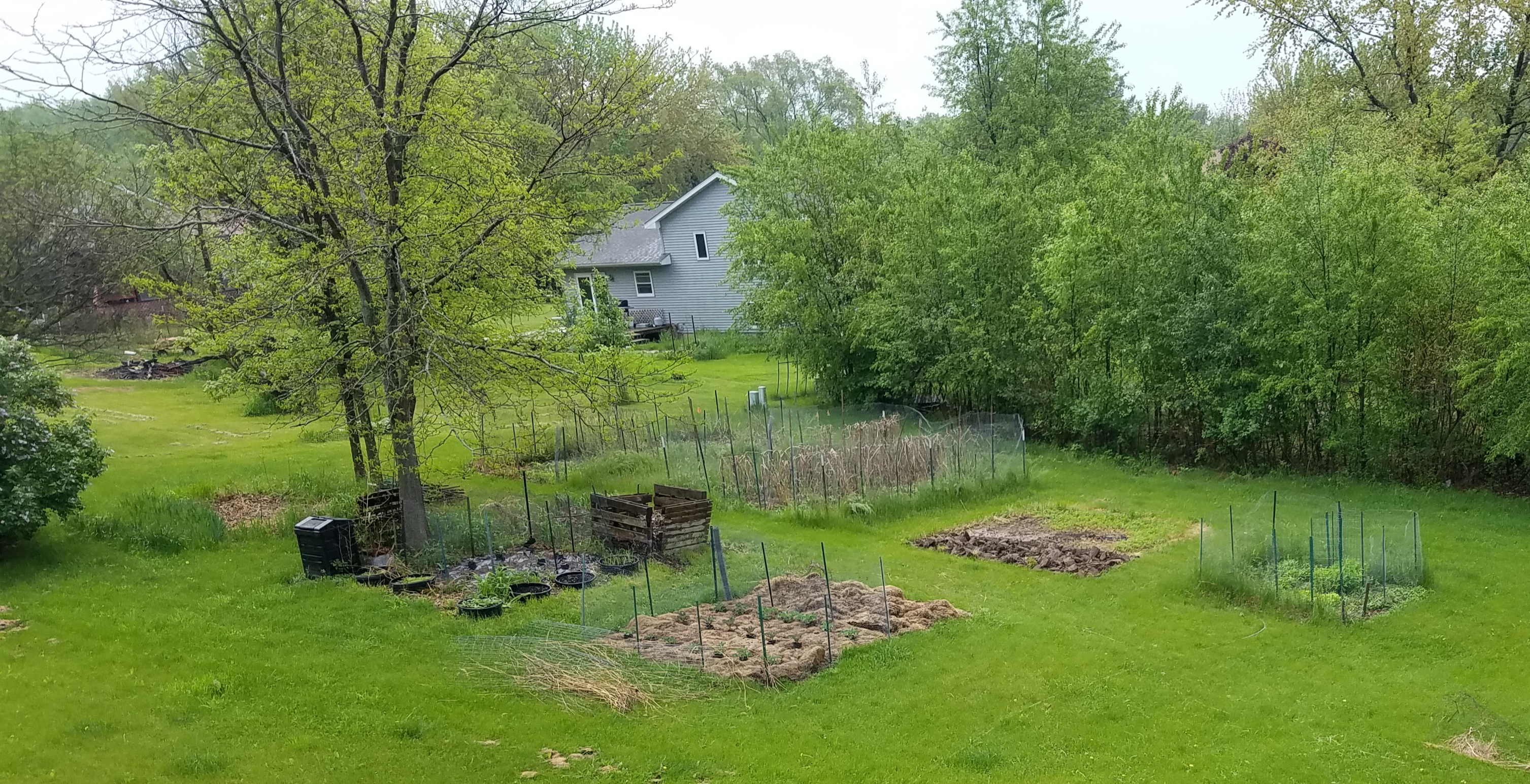
I pulled apart last year’s tomato patch and mowed it flat. The plan is for cucumbers, peppers, squash, eggplant and sundry crops to go in there. The soil isn’t turned yet and won’t be until I get the previous plot planted.
While I’m struggling to get a garden in, larger scale conventional farmers are having a time of it. Spring rain has gone on so long some are debating whether to put in a crop at all. I posted a link to a story about the issue by Thomas Geyer in the Quad-City Times. My post made over 3,500 impressions on Twitter. Find the article here.
People who rely on their farms for a living have had a struggle of a spring. My friend Carmen at Sundog Farm wrote the following to her CSA members:
As I’m sure you’ve noticed there have not been very many windows of sunshine in between rainstorms over the past month and half, so we’ve been seizing every opportunity when its dry enough to get in the field to plant. Despite the limited opportunities and that planting sometime ends up looking more like wallowing in the mud, we’ve actually been pretty happy with our progress! We’ve also been grateful to have hoop houses where we’ve been producing most of the spring crops, and where we can plant even when it’s wet outside. We are a little behind in getting plants in the ground, but so far we are pretty close to where we want to be and hoping for the best!
Some seasons hoping for the best is what is possible.
During Saturday morning rain gutters overflowed on both sides of the house. As soon as it stopped, I climbed up a ladder and cleaned them out.
The blockage was mostly leaves from the pin oak tree which sheds them with new spring growth.
At 67 years my roof-walking days are numbered. I’m thinking of my octogenarian uncle who died from a fall from his roof in Alabama. I’m somewhere in between roof-walking and having someone else do it.
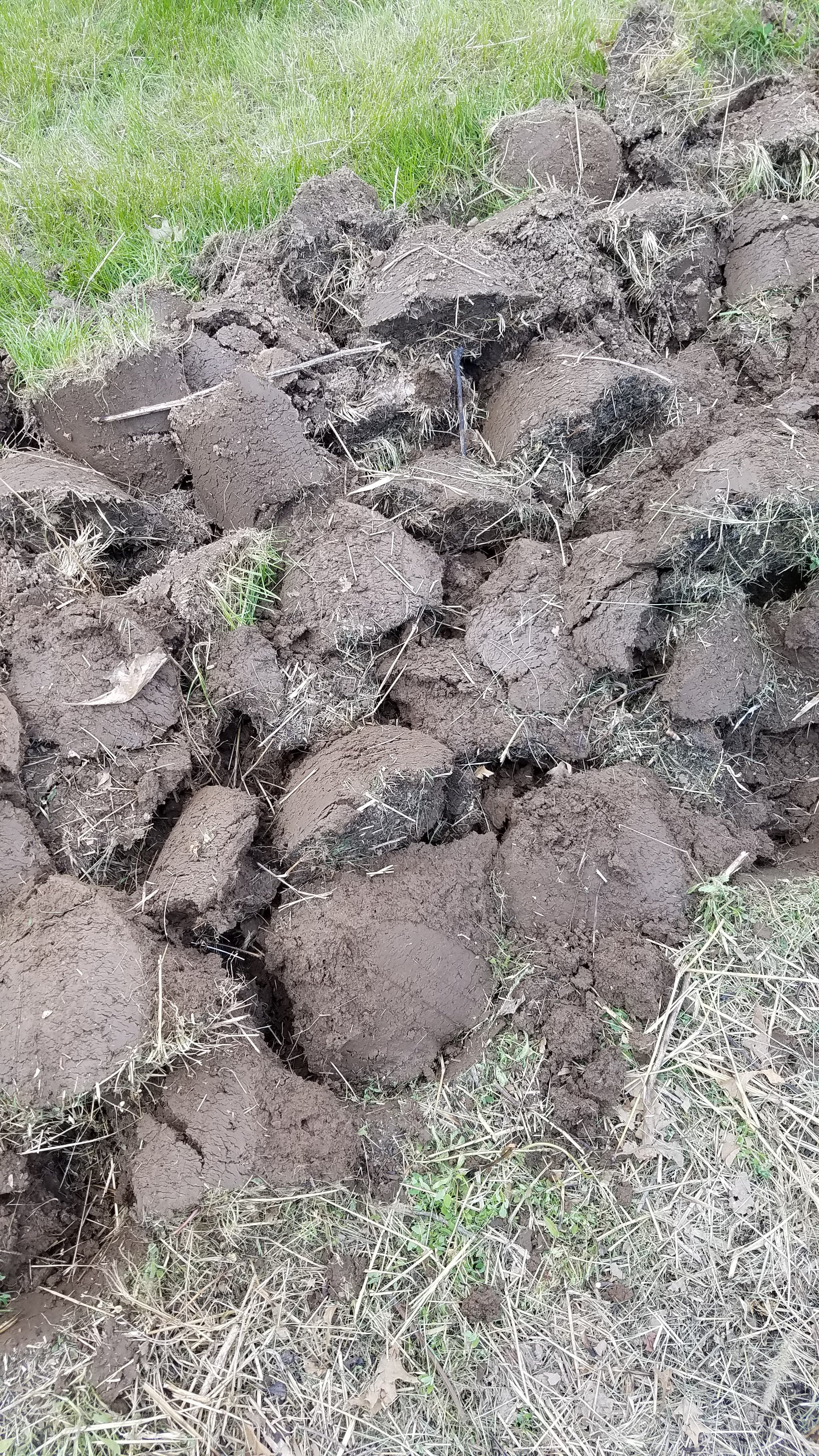
Garden ground continues to be too wet for tillage, the next task on my spring to-do list. I went through the lettuce seedlings in the garage, transplanting the best ones into larger containers, and turning the rest into dinner salad. I got my hands dirty with soil, just barely. This wet spring is getting old.
It was another light day at the farm with only 20 seedling trays to prepare. I had seven trays left in the greenhouse and brought the three with tomatoes home. More planting backlog.
At some point the rain will break and the ground will dry out. When exactly that is is uncertain.
On a glorious spring Monday I began spading the next garden plot. The soil was too wet to work so I stopped after four feet.
Excessive spring rain not only affects gardeners, farmers are feeling it too. Vegetable growers were either “mud-planting” or not planting at all. Less than half the anticipated corn crop was planted by May 12, according to Iowa Public Radio. It’s only the fifth time in the last 40 years that has happened.
I planted spring onions, Daikon radishes (KN-BRAVO, 49 days) and Rudolf round (24 days) and D’Avignon (21 days) radishes in three in-ground containers.
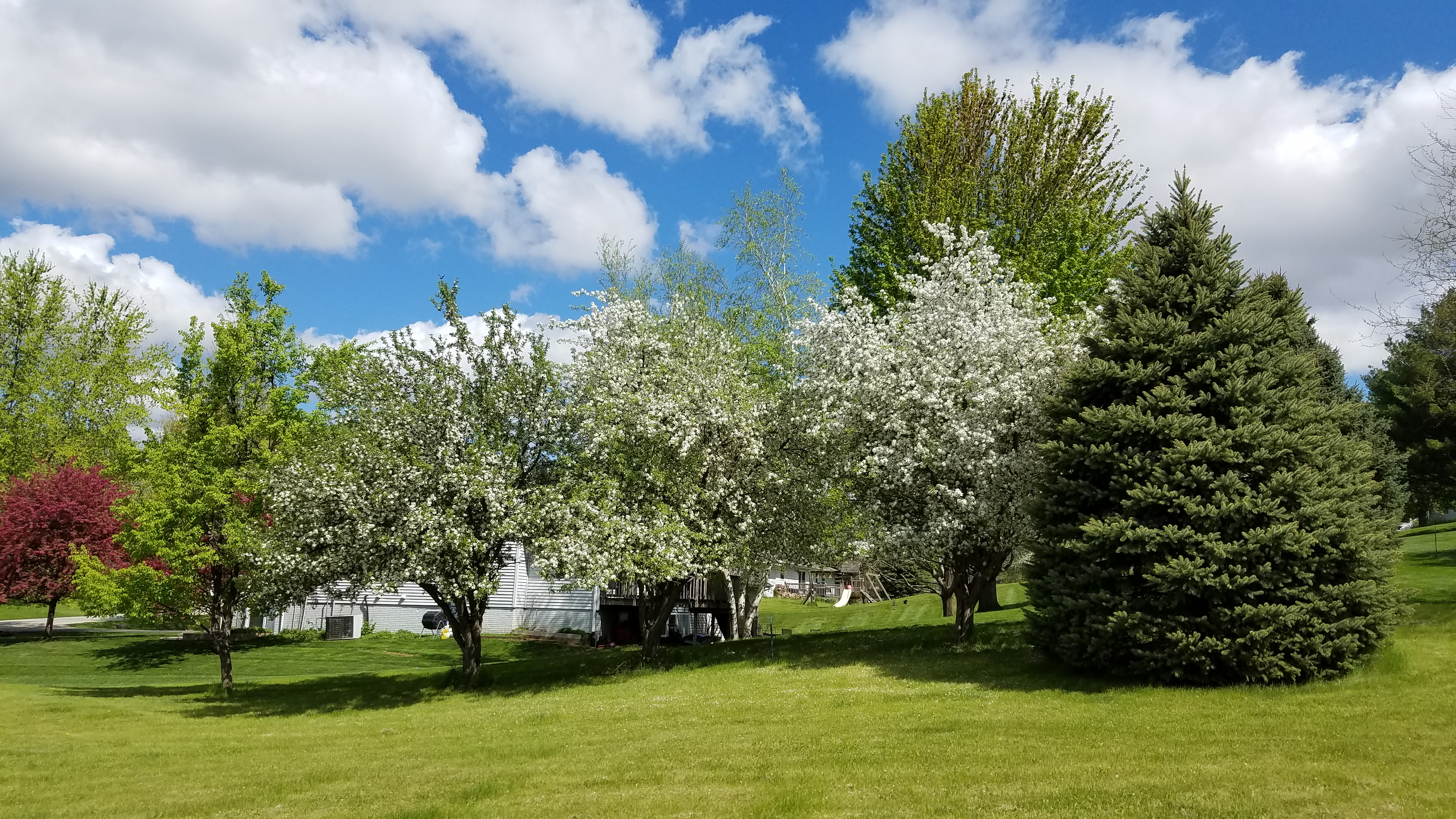
The apple blooms continue, although when the wind blows it is a snowstorm of petals creating drifts under the trees. This year has been one of the longer blooms I remember. There are so many blossoms it wouldn’t be bad if some of them didn’t pollinate, sparing me the chore of thinning the buds once they form. The good news is after the long growing season, there should be apples.
After my soil blocking shift Farmer Kate have me a guided tour of her farm. I took photos, which can be found on my Instagram account here. She farms about nine acres in large plots. A lot of it is planted and what isn’t remains in cover crops until its time. Although I’ve worked at Wild Woods Farm for a couple of years, this was the first time I saw the entire acreage.
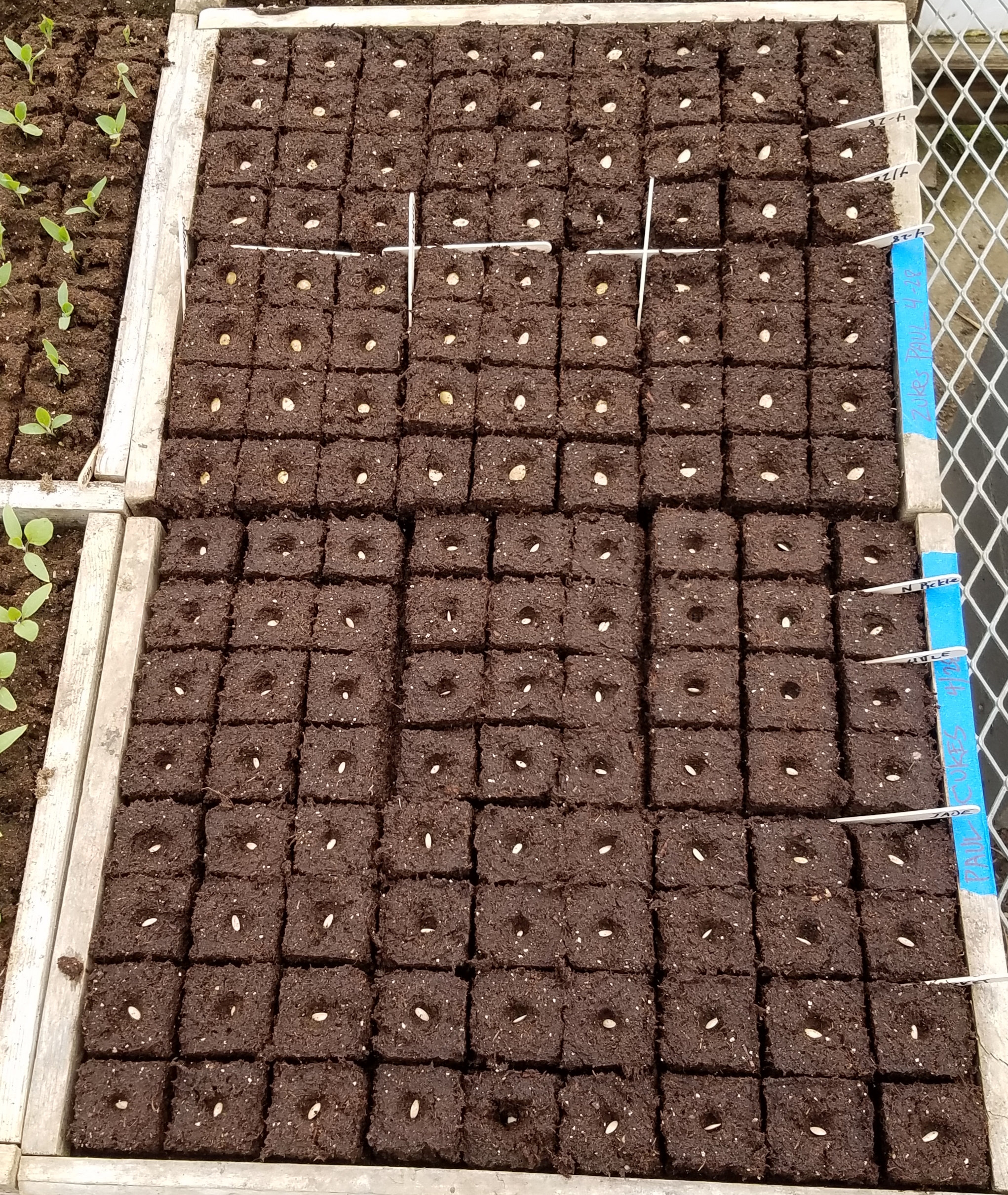
I started a tray of seeds that didn’t germinate well at the greenhouse. Yellow squash and tomatillo seeds did not germinate at all at the greenhouse. The squash looked a bit funny when I planted them, so I’m trying again. I also used up the arugula seeds, and planted a few blocks of okra and pumpkin as an experiment. Like many things in gardening, we experiment and watch the results.
I’m ready for the second wave of planting as soon as the ground dries. Then it will be a mad dash to get everything in. Even though rain holds us back, the season’s not hardly begun so there’s hope of a bountiful year in the garden.
Gardening is one of the most popular activities on the planet. Whether one lives in an apartment, in a single-family home, or on a farm, local food and flower production can be satisfying on multiple levels. A garden can be a source of nourishment, beauty, exercise, learning, and personal satisfaction. Gardening helps us to be sociable because almost everyone grows something or appreciates those who do.
Gardening is also a way of mitigating the effects of the climate crisis.
The Climate Reality Project posteda list of things gardeners can do to act on climate. They are easy to incorporate into a garden’s daily work. Here’s my take on their list.
Reduce or eliminate synthetic fertilizers
A few years ago I began using composted chicken manure to supplement compost from my bins. The resulting vegetables were dramatically better. This is the kind of fertilizer my local food farmer friends use and it is acceptable for certified organic crop production.
We don’t ask a lot of questions about where the chicken manure originates, and maybe we should, but Iowa ranks first in the United States for egg production with 57.5 million laying hens according to the Iowa Poultry Association. With an 18.2:1 chicken to human ratio, chicken manure is an abundant resource.
There are plenty of reasons to be wary of synthetic fertilizers, according to the Climate Reality Project. Chemical runoff from haphazardly applied fertilizer can drain into streams and lakes, making its way to our water supplies. They can disrupt naturally occurring soil ecosystems, and are a temporary solution to a long-term solvable problem.
When it comes to the climate crisis, fertilizer manufacturing is the issue.
“Four to six tons of carbon are typically emitted into the atmosphere per ton of nitrogen manufactured,” according to Dr. David Wolfe, professor of plant and soil ecology in the School of Integrative Plant Science at Cornell University.
Gardeners should be more conservative about nitrogen use in the garden. Using composted chicken manure to improve soil nitrogen levels can produce great results and avoid the greenhouse gas emissions of synthetic fertilizers.
Plant Trees and other perennials
When we built our home in 1993 there were two volunteer trees on our lot, a mulberry which remains in the northeast corner, and another that died and was replaced with a blue spruce grown from a seven inch seedling. In all I planted 17 of 18 trees here, of which 15 remain. We also have three patches of mature lilac bushes.
Atmospheric CO2 Levels
The benefit of planting trees is they remove carbon dioxide from the atmosphere and store it. Because of their long life and size, they store more carbon than other plants. Scientific data shows the impact of trees on our atmosphere. The NOAA Earth System Research Laboratory at Mauna Loa, Hawaii measures carbon dioxide levels in the atmosphere. Last Saturday, the level of atmospheric CO2 rose to 415.25 parts per million, higher than it has been since humans evolved. Click on the chart of monthly CO2 levels and you can see the impact of deciduous trees. While the overall level continues to rise, as the world greens up in spring, CO2 levels predictably, consistently fall. When leaves fall from the trees, CO2 levels rise again. The thing about planting trees is do it once and the focus can turn to other things.
Trees offer cool shade in the summer and protection from winter winds, so a well-placed tree can reduce emissions and energy bills associated with heating and cooling a home. Fruit trees provide an added bonus for gardeners.
Reduce water use
Science explains that the warmer temperatures associated with the climate crisis increase the rate of water evaporation into the atmosphere, drying out some areas and then falling as excess precipitation in others. This can lead to a cycle of water misuse in ever-drier areas, and plant diseases in regions where average annual precipitation is on the rise. In Iowa we have seen all of that, with the record drought of 2012, and severe flooding that got within 100 yards of our home in 2008.
Lawn and garden watering is estimated to account for 30 percent of all residential water use in the U.S., according to the EPA, and that number “can be much higher in drier parts of the country and in more water-intensive landscapes.” And as much as 50 percent of it is lost to evaporation, wind, or runoff. Water conservation is everyone’s business. I’m not sure why anyone would water a lawn, except maybe a golf course. I don’t play golf. It is better to let a lawn survive in varying temperatures and moisture levels. Thus far in Iowa that’s been possible.
I don’t use an irrigation system or sprinkler in my garden. To ensure adequate moisture to sustain plants in seven plots, I use grass clippings as mulch. Often there are not enough clippings so I’ve been experimenting with plastic sheeting for peppers, cucumbers and broccoli. I have successfully re-used the plastic for multiple years. I use a garden hose to water at the base of the plants and do so sparingly.
“Less frequent, deep watering also encourages deeper root growth to areas where the soil stays moist longer,” according to the Cornell Cooperative Extension. “If supplemental water is determined to be necessary at a specific time and location, be sure to use no more than is needed and minimize your use of potable water.”
Focus on soil health
I have gardened non-stop since we moved into a rented duplex after our 1982 marriage. I have gotten better at gardening, but the biggest improvements came after we ceased being renters and bought our own homes, first in Lake County, Indiana, and then in Johnson County, Iowa. Owning our home enabled me to better consider soil health and long-term investing in it.
When we moved here the living layer of top soil had been removed and sold by the developer, leaving a hard, heavy surface devoid of earthworms and other visible life forms. Gardening, by its nature, must address soil health because if there is no life in the soil, fruit and vegetables won’t grow as well. This is the lesson of row crop agriculture where the best soil has eroded and what remains is supplemented with synthetic fertilizers and other inputs to create an artificial environment for plant growth and pest control.
The story of climate change’s impact on soil health is mostly about changing precipitation patterns, according to the Climate Reality Project.
Extreme downpours can lead to runoff and erosion, stripping healthy soil of key nutrients needed to sustain agriculture. On the other end of the spectrum, frequent droughts can kill off the vital living soil ecosystems necessary to grow healthy crops – and of course, plants can’t grow without water either.
What a gardener wants is soil rich in microorganisms that will sustain plant life through drought and heavy rains. After years of work composting and working our garden plots we can see plenty of earthworms. They are the most visible aspect of a rich miniature biome that sequesters carbon and stores water to make irrigation less needed. Healthy soil helps a garden survive short-term drought and heavy rains by sustaining moisture in the ground near plant roots.
Not many gardeners I know use cover crops, but that is an option to increase soil health. Like most, I add compost in the spring before tillage until the bins are empty.
Reduce tillage
Over the years my relationship with gasoline powered tillers has been inconsistent. A low- or no-till approach to gardening can plays a big role in building the soil organic matter. The reason is simple, when you rototill the ground, you break up the soil ecosystem.
“At its most basic, no-till gardening is the practice of growing produce without disturbing the soil through tillage or plowing,” according to the Climate Reality Project. “In addition to locking up more carbon in the soil, this approach dramatically cuts back on fossil-fuel use in gardening. After all, gasoline-powered garden tools are emitters of CO2.”
The best way to say it is I’m in transition regarding tillage. I have always turned over all the soil in a plot with a spade. What varied over time was whether or not I used a tiller. Sometimes a rented or borrowed a large rototiller to do everything at once, sometimes I used a smaller sized tiller inherited from our father-in-law’s estate, and now I break up the soil with a hoe and rake. I’ve been changing my way of thinking.
Last year I made a tomato plot but instead of turning the entire plot over and breaking the clods of soil down with a hoe and rake, I made two-foot lanes for the tomatoes. The production was excellent. Not tilling the entire plot leaves some of the soil structure in place and in the long term, that’s better for soil health.
This is an ongoing experiment, but the obvious conclusion is less tillage is better.
Opt for hand tools
My main garden tools are shovels, a hoe, rakes, a post driver, and a bucket of hand tools. Eliminating use of a rototiller was an important step in reducing emissions and using the spade, hoe and garden rake to break up the soil provides exercise. I also plant crops in four waves: early (kale, broccoli, peas, carrots, beets, radishes), succession planting (spinach, onions, leeks, herbs, beans and celery), tomatoes, and late (cucumbers, zucchini, squash, eggplant and peppers). Spreading planting over weeks helps make the physical labor of using hand tools more tolerable.
With a large garden and yard it proved difficult to make the battery-powered trimmer work: I kept running out of charge. When it broke, I got a new gasoline-powered trimmer. I also use my gasoline-powered mower and a chain saw. I used less than five gallons of gasoline between the lawn mower, chain saw and trimmer this year. Not perfect, but consistent with a practice to reduce the amount of garden emissions.
Part of my strategy of lawn maintenance is to avoid the use of chemicals completely and mow less often, maybe once every three or four weeks. The benefit of this practice is the lawn becomes a habitat for local flora and fauna. The downside is I don’t get enough grass clippings in a season for mulch. After years of the practice, the neighbors haven’t complained.
Conclusion
The climate crisis is real, it is now, and we have to do something about it. The lesson I learned from being a member of the Climate Reality Leadership Corps is there are many way to contribute to solutions in our daily lives. Among the things we do in a day, mitigating the effects of climate change must be one of them. We are all in this together and even a gardener can do something to help.
On a sunny Friday among peak apple blossoms I cleared the fourth plot for a multi-crop gardening area.
The first three plots have early vegetables and are not completely planted. With eight trays of seedlings ready, and more in the greenhouse, it’s time to get them, along with seeds I’ve been holding, in the ground.
I don’t clear garden plots in autumn. I’ve read it’s best to leave them and let small rodents eat the weed seeds left behind. Clearing a plot becomes a bit of a spring production.
I remove the fencing, cages, fence posts and any non-organic debris. Then I gather brush generated since the last burn pile and burn it with straw from the plot. Once the fire dies down I run the mower over it with the deck as low as it will go. Yesterday this produced a 15 by 12 foot plot ready for planning, soil preparation, planting and fencing.
The plan is for spring onions, celery, spinach, lettuce, radishes, leeks, green beans, red beans, chives, arugula, basil, parsley and cilantro. The plan is written, now subject to further consideration and modification as I turn the soil, spade-by-spade and attempt to beat forecast rain.
This work is the core of who I am. I’m thankful to be able to do it.
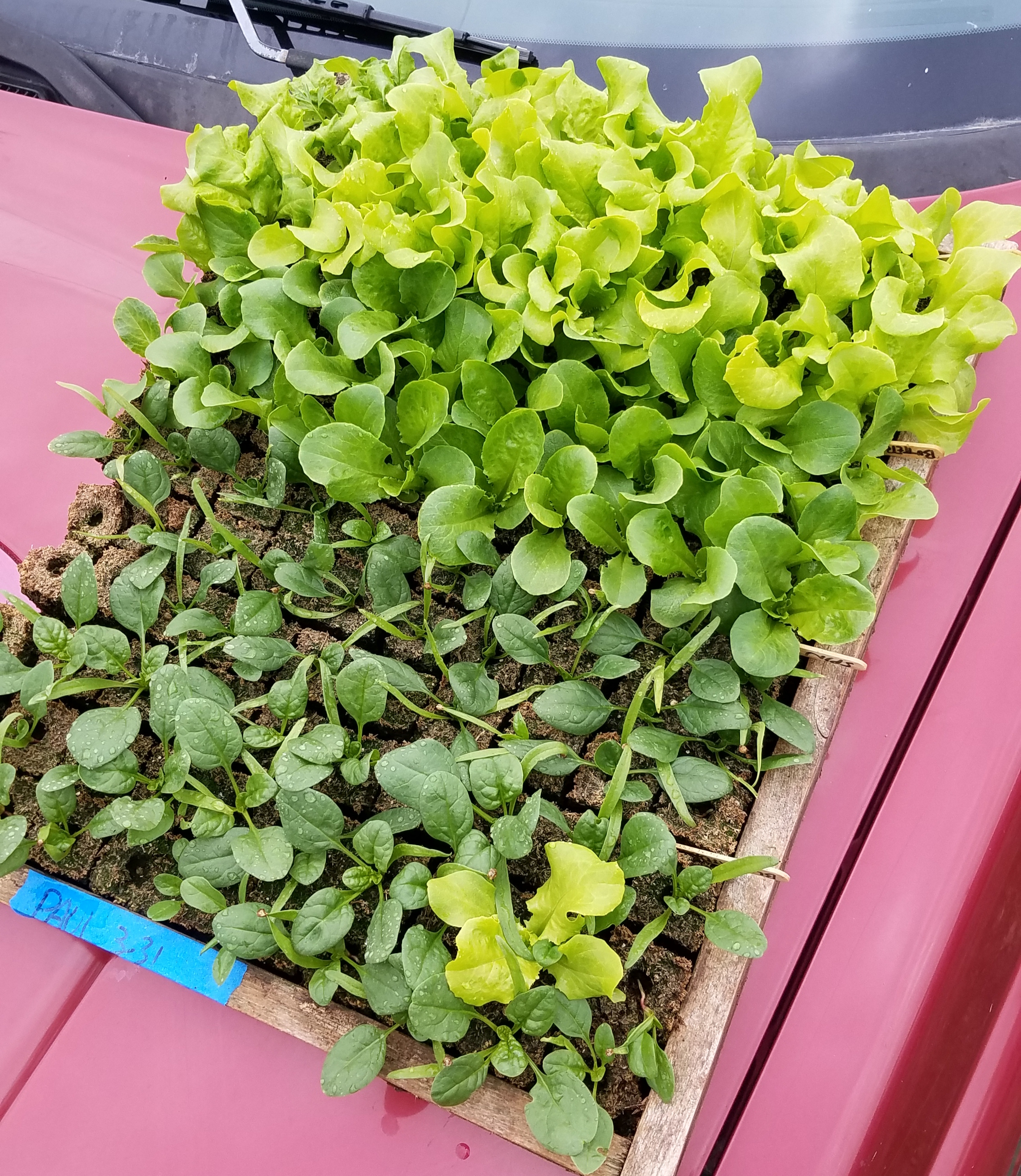
Tray of spinach and lettuce seedlings ready to plant in the ground.
Early planting is done… then it rained.
The ground has been too wet for planting so Friday became a day for weeding and staking the sugar snap peas.
I moved seedlings from the garage to the dining room to protect them from wind and rain while I worked my usual shifts at the home, farm and auto supply store. They are back outside waiting for the ground to dry. There is a lot of gardening to do over the next four weeks.
While the grass dried I drove across Mehaffey Bridge to the BioVentures Center in the University of Iowa Research Park. A friend arranged an impromptu round table discussion of affordable housing centered around Ohio Senator Sherrod Brown’s trip to Iowa to support his wife Connie Schultz. Schultz interviewed author Sarah Smarsh at an Iowa City Public Library fund raiser in the county seat that evening.
The round table consisted of community leaders introducing themselves and discussing issues raised by the recent purchase of a mobile home park by a group of out of state investors. The new owners plan substantial rent increases which current residents can ill afford. My role was to listen and learn.
Sarah Smarsh is author of the memoir Heartland: Working Hard and Being Broke in the Richest Country on Earth. My brief review after reading it last year is as follows:
I was skeptical at first about the reach of this book about rural poverty, hard work, and economic injustice. Yet, I was drawn in to a world I knew existed but hadn’t been articulated in such words. Smarsh’s story resonates with how I was raised, and with much of what I see in rural Iowa today. It was a marvelous read.
Several of my farm friends attended the event. We gathered under the marquee of the Englert Theatre for a photograph. Those who read Heartland felt as I did, that it articulated something about modern life in the Midwest that had been missing. We also concurred that Smarsh had drawn a clear line between what she presented in the book and her personal life which was not up for public conversation. After discussing the book we told jokes and laughed (a lot) in the marquee light before finding our ways home.
Some political friends attended the fund raiser, including my state senator Zach Wahls and his biggest fan, Chloe Angyal. I complained to Wahls I couldn’t remove his bumper sticker from my aging Outback. “American made, baby,” he responded.
I met Angyal who is a contributing editor to MarieClaire.com. We discussed her arrival in the Hawkeye state where she is writing a series of dispatches (here and here) related to the first in the nation Iowa caucuses and the unprecedented number of women running for president. Originally from Australia, she relocated to Iowa from Manhattan. After surviving the polar vortex and one of our coldest winters in years, she said she likes it in Iowa.
I didn’t get the lawn mowed, which means another morning of waiting for grass to dry, followed by the long process of bagging it up then mulching the kale. The forecast is sunny and clear. Hopefully the rest of the apple blooms will open, followed by pollination. Fingers crossed. I’m ready for a solid day’s work in the garden after Friday night smarshing it up in the county seat.
This Year’s Last Seedling Trays, Zucchini, Cucumbers and yellow squash.
When I returned from the farm Sunday afternoon I transplanted a dozen broccoli plants in the garden. Reserving a couple to replace failures, I gave the rest to my neighbor.
Continuing the minimal tilling experiment, I placed broccoli seedlings in a plot where cucumbers produced in abundance last year. I didn’t remove the plastic and used the same holes. The plot is shaded by the locust tree, so I’m not sure how this will turn out. Fingers crossed and hoping for the best.
At the greenhouse I seeded cucumbers, zucchini, and yellow squash, which is likely the last starts. Most everything else will be seeded directly in the ground in May.
I brought home a tray of lettuce and spinach for transplanting.
While inspecting the apple blossoms yesterday I spotted leaves growing from the stump where another apple tree was blown over in a straight line wind. I staked and put a cage around it to protect from being eaten by deer and from the mower. Not sure what’s next, but it was a very early apple and I may grow it to maturity if that is what it turns out to be.
The spring share for which I bartered at Local Harvest CSA begins today and runs for five weeks. I’m looking forward to a salad made with fresh, local lettuce and cooking greens for a pasta dish.
Apple Blossoms Before the Frost Click the photo to better see the blooms.
Apple blossoms began to open as news of an overnight freeze arrived.
I woke at 2 a.m. and checked the ambient temperature. 33 degrees — barely in the safe zone.
The impact of losing blooms before pollination would be another two years waiting for a crop.
The overnight forecast was a low of 29 degrees, which means there is a chance most of the buds will survive. These things are iffy, so I’ll go outside as soon as it is light and check the progress. Fingers crossed.
News from my fall job at the apple orchard arrived yesterday. They took out 500 trees from the oldest part of the orchard to be replaced with an as yet unannounced “season extender.” The orchard manager mentioned the challenges of starting a new fruit like raspberries, strawberries or blueberries in March at a Johnson County Food Policy Council panel on specialty crops. From the presentation I understand the new crop won’t be raspberries or strawberries, although I could just pick up the phone and call the owners and ask.
I ran into one of them at the warehouse club last week. Instead of the orchard, we talked about how the retail establishment used to sell dried mangoes of the kind they enjoyed while managing an orchard in China. Sadly, the supplier no longer carries that type, saying it is “unavailable from the distributor.” I confirmed my interest in working another season at the retail barn. She said they had already been discussing my return at a board meeting, so I had to come back. It is nice to feel needed, I think.
I could go another year without home grown apples if I have to. We have plenty of apple sauce, apple butter and apple cider vinegar to last. Working at the orchard is another source should frost take my blooms.
According to my weather app, the forecast changed to a low of 32 degrees since I began writing this post. Sunrise is at 6:06 a.m., in an hour and 20 minutes. As soon as dawn starts to break, I’ll be outside inspecting the blooms, hoping they made it through the night.
Seven of us worked in the germination shed at Sundog Farm on Easter morning.
The farmers were preparing dinner for their extended family. I brought them two quarts of home made vegetable soup for lunch in case they hadn’t thought about it with all the meal preparations. It was well received.
My broccoli is ready to plant, however, I seeded it in a tray with parsley, which is not. I brought the tray home to figure out how to make both plants grow optimally. Marginal planning on my part.
The peppers planted two weeks ago have not germinated which is slightly concerning. Peppers take longer but I’d hoped the plants would be emerging today. Tomatoes planted last week haven’t germinated either. That is to be expected.
Everything else is coming along, and the peppers may be coming along, only I don’t know it.
This is the first time planting beets in trays. It is a common practice so I’m giving it a go. There are now eight trays in the germination shed with the next up for planting being spinach and lettuce, maybe next week.
Arugula has tiny seeds. A gust of wind blew through the germination shed taking a batch of arugula seeds with it. Luckily there were more in the packet.
The other experiment this year is tomatillos. I had some from CSA shares last year and they keep in the ice box for a very long time. They are a great alternative to tomatoes for making salsa.
It was a clear, beautiful day, the kind farmers and gardeners want.
2019 Kale Bed with 21 plants ready for mulch and fencing.
Temperatures were ideal for yard work so I prepared the bed for kale.
It is important to get kale right because once established, it will produce leaves until November. Sometimes it even over-winters. It is worth the time to measure and plant according to the package instructions.
I put 21 seedlings in the ground and reserved a dozen in case some don’t survive. A neighbor wants some, and after that, I’ll snip the leaves and make a kale salad or two with the leftovers.
My process has a lot of steps after picking up the seedlings at the greenhouse.
I run the lawn mower over the plot to remove any tall grass.
This year I did a burn pile on this plot so using a garden rake I spread the ashes evenly over the surface.
Turn over the soil in bites the size of the spade. Do this by hand. A long-handled spade works best.
Spread fertilizer (composted, granulated chicken manure) evenly over the top. For a 10 x 12-foot plot I used a gallon and a half.
Using the garden rake, break up the clods of dirt until they are fine enough to rake somewhat smoothly.
Make a slight trench with rows three feet apart. Use a yard stick or measuring tape.
Using a hand cultivator, break up the dirt in the trench six inches either side of center.
Using a plastering brick laying trowel, knife the blade into the ground and pull the soil back until the seedling will fit in. Put in the seedling, then fill the hole by hand with loose soil. Measure distance to the next hole in the role as length of the trowel plus the length of blade. Finish planting.
Next I use six inch sections of field tile to protect the seedlings. These will be removed once the stem grows larger. Press each tile section into the ground. The idea is to prevent ground crawling and walking pests from biting the tender young plants.
Use the garden rake to even our the surface and remove compressed areas where the gardener knelt during planting.
Using metal fence posts, pound them into the ground with a post-driver.
Put up chicken wire ensuring to get the bottom to firmly touch the ground. Be sure to leave a place for a gate so you can access the ripe kale.
If mulch is available, mulch deep and completely. Return later if mulch is not available.
Finally water the entire plot thoroughly.
Sounds a bit complicated, but the process has served well during the last few years.





 Journey Home
You must be logged in to post a comment.