Categories
Kitchen Garden

Very Late Fall Cookery

Garden and Farm Vegetables

With winter solstice tomorrow afternoon, it’s getting late to be calling this autumn.

There are still fresh vegetables in the ice box and plenty of ideas for what to do with them. On Monday and Tuesday I binged on YouTube videos about street food in Pakistan and India, which led me to make a batch of egg fried rice.

To begin, I am shocked by how much oil or butter is used by these street vendors. It is well known that restaurateurs use a lot of butter in cooking. Eating in diners accepts a high level of saturated fats in food. But these videos? Oh My God! A quart of vegetable oil? Two or three cups of butter? It’s enough to give a person a heart attack… literally.

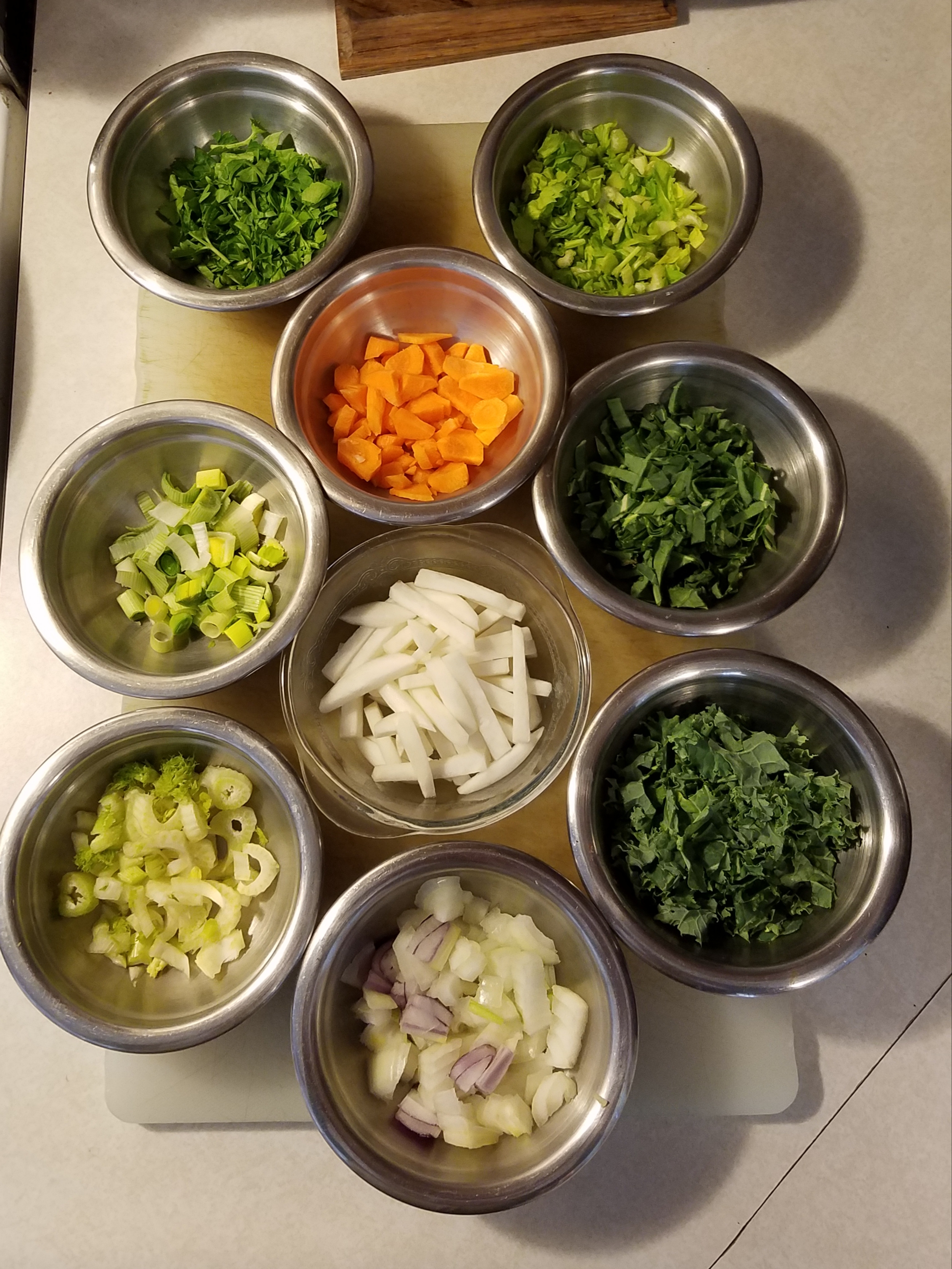
In an American home we don’t use so much cooking oil yet there are lessons to be learned here. I got out the wok and spent about half an hour prepping vegetables.

I found parsley, carrots, onion, celery, turnips, kale, collards, garlic, fennel and leeks and diced them up for stir fry. There was about four cups of leftover, cooked rice, enough to use four eggs.

If I keep making this dish I need to work on seasonings. I was tempted to add red pepper flakes to the oil in the beginning but resisted the heat to see what the other flavors would lend to the experience. I kept it simple with salt, ground black pepper, ground cumin and smoked paprika. It was good without hot peppers. 
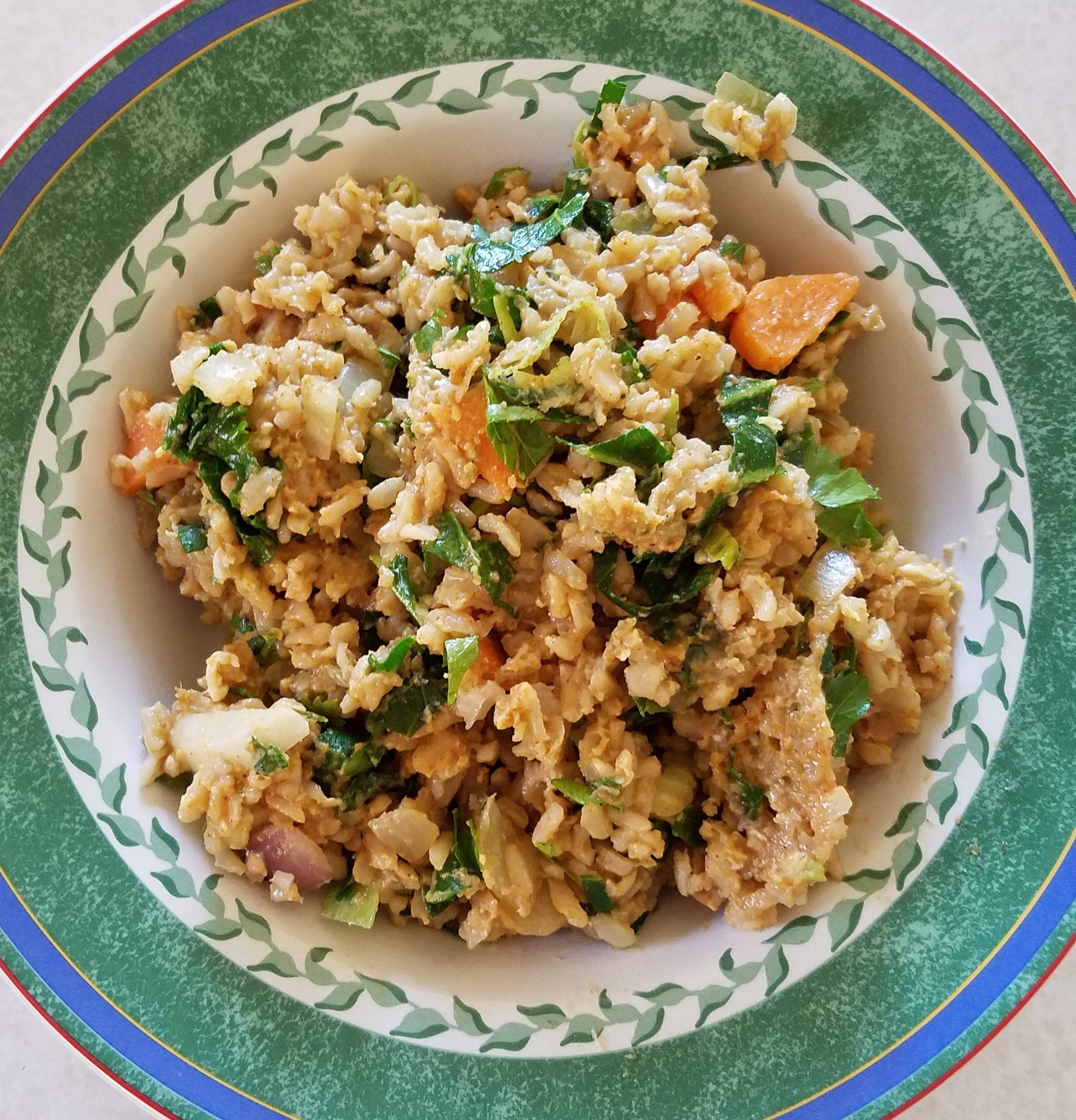
Egg Fried Rice with Local Vegetables

The rest is pretty easy. Place about four tablespoons vegetable oil in the wok and heat to temperature. Add vegetables one dish at a time in cook’s order (those needing most cooking first) reserving the parsley for finishing. Sauté and stir constantly until the vegetables begin to soften and add the eggs. Street vendors crack eggs directly into the wok, but I beat lightly in a dish and added them all at once. Stir constantly until the eggs begin to cook. Add the cumin and paprika at this point and incorporate. Add the rice and stir until the eggs are cooked and everything is incorporated and heated evenly. Add parsley and serve. Made four generous portions.

The kitchen was filled with the aroma of chopped fennel all day. In the finished dish it added a brightness that’s hard to describe. Stirring constantly helped prevent the eggs from creating a crust on the bottom of the wok and made cleanup easier. If I were to serve this as a side dish I’d reduce the number of vegetables to basic aromatics and some greens, maybe add some pine nuts. Stir fry is a flexible dish that can use up what’s on hand.

As fall turns to winter egg fried rice helped transition from ice box to pantry for food sourcing. I felt I learned from the experience of making it. In our kitchen, that’s what cooking is all about.

Categories
Kitchen Garden

Functional Tortillas

Second Batch of Tortillas

I made corn tortillas for the first time last week. They tasted okay, but weren’t the best. They served.

A tortilla press is forgiving but my dough texture and portioning needs practice. The second batch was better than the first, so there’s hope of better fresh tortillas.

Tortilla-making was not part of our family culture coming up. Mother began making tacos at home when she worked in the grade school cafeteria. She used store-bought tortillas and everyone liked them, including some of my friends who frequently asked, “when is taco night?” Those were the days when neighborhood grocery stores began selling more prepared food and eventually instituted a “Mexican section” in one of the aisles. Occasionally I make taco filling similar to what Mother made. When I do, it’s comfort food, plain and simple.

I’ve been buying raw flour tortillas from the warehouse club and make breakfast tacos once or twice a week. Home made tortillas provide better control of what goes into them.

Tortillas serve as a better delivery system than a slice of bread, or pouring stir fry on rice. Fillings can more interesting than tortillas. In the works is a kale, black bean and Guajillo chili sauce filling. My recent project of buying a press and warmer, Guajillo and New Mexican chilies, Mexican oregano and Mexican cheese is to develop new meal options. If it goes well, I’ll cultivate different chilies in the garden next year, although I’ve already ordered the seeds so there’s little doubt about that.

Tortillas are like the mathematical function that establishes relationship between inputs and outputs. At the beginning is the raw material from the garden. In the end, it can lead to a better life.

Categories
Writing

God Willing and the Creek Rose

Cruciferous Vegetables at Sundog Farm

The phone rang as I was preparing for a shift at the orchard.

Heavy rains had Rapid Creek flooding its banks and the nearby pumpkin patches. Apple trees on the south side of the creek would be inaccessible until the water receded, maybe Sunday, my supervisor said. We chatted a bit then I let her go to call the rest of the crew. They’d only need a few people for the anticipated number of customers.

Crates of bell peppers and onions were stacked downstairs waiting to be prepped for freezing, so there was plenty to do on an unexpected day off. Like most low-wage workers, when I don’t work, I don’t get paid, so I’m ready to work when the creek surge passes. Working in the kitchen, while important, yields no currency.

Fall Broccoli at Sundog Farm

The cancellation gave me a chance to arrive at the farm’s fall potluck dinner before the food was all eaten. I baked an apple pie from the orchard to share and drove over early for the first time in years. We toured the farm which was vibrant with fall colors. The food and company was excellent. I met new people and farm friends to hear their stories.

At home the ground was squishy with water. That hasn’t happened much since we moved to Big Grove. The garden continues to produce and I picked what is likely to be the last cucumber. I rely on my bartered CSA shares for fall cruciferous vegetables. Based on the visit there will be plenty this year.

Apple Pie for the Potluck from Wilson’s Orchard

Finding enough to eat has not been an Iowa problem. Ever since discovering and nurturing an ecology of food the abundance of nature became obvious and my focus turned local. What can I grow myself? What can I rely upon from my farmer friends? What can I get to improve the quality of our cuisine from the markets? Food ecology forms a framework upon which culinary culture is hung. Once recognized, nourishment flows like the rain that flooded the orchard and our yard.

2018 has been a year of weird weather and it is not finished. The state and municipalities did not adequately consider short, heavy downpours when designing our roads and infrastructure. Gravel roads were washed out after the storm. Flash flooding crossed major thoroughfares in the county seat. Call it what you will but the weird weather is taking a toll on food producers and their customers. We are all connected and the harm by changes in weather is obvious and everywhere.

It’s part of sustaining a life in a turbulent world.

Categories
Kitchen Garden

Fermenting A Vinegary Fall

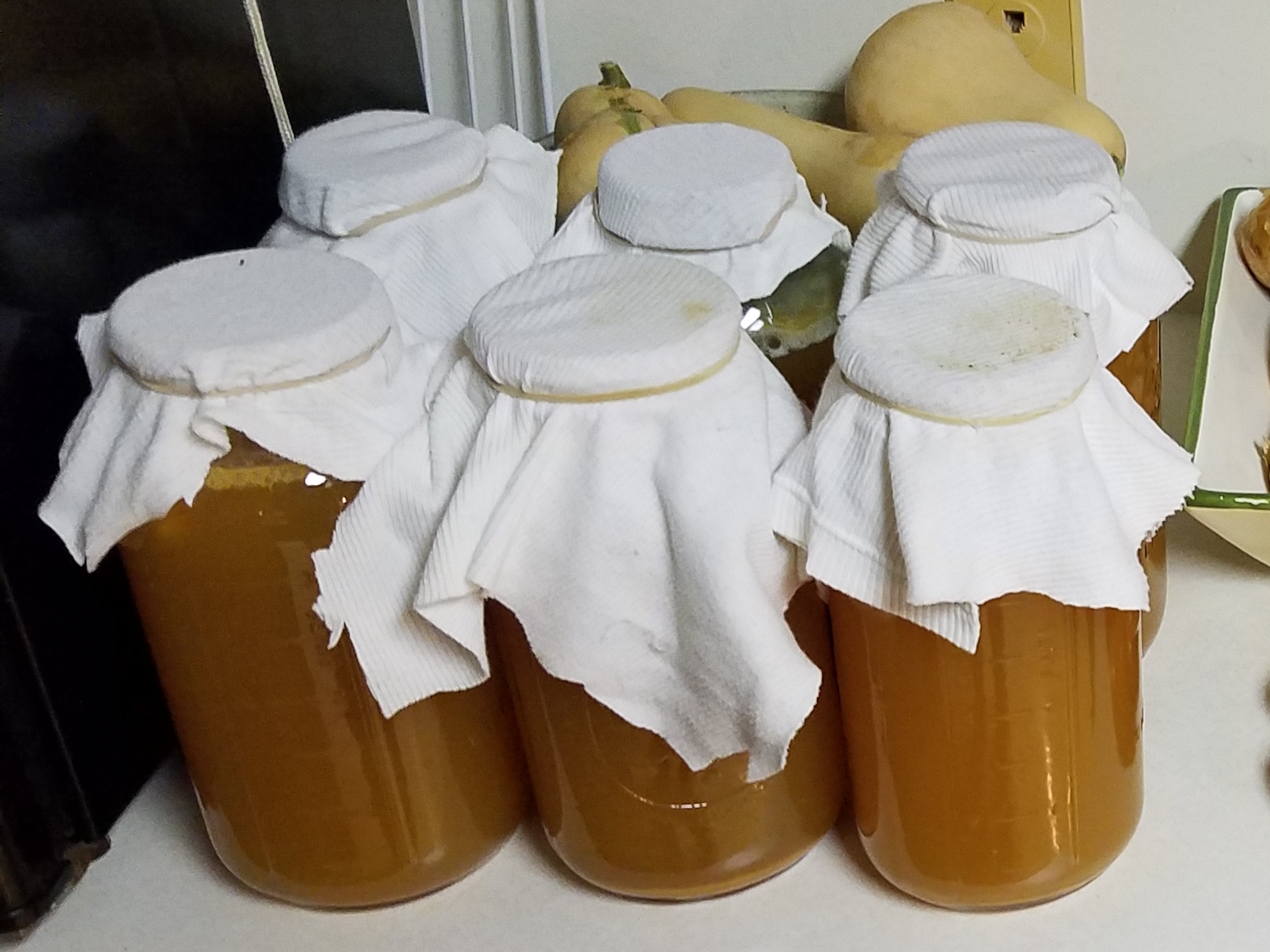
Fermenting Apple Cider Vinegar

We were busy at the orchard last weekend with perfect fall weather: sunshine and cooler temperatures. Throngs of people visited picking apples, buying apple products, and having fun with friends and family.

We are at peak apple cider sweetness this week. Gala and Honeycrisp apples make the cider sugar content highest of the year. A great time to make fermented products — cider vinegar for me. Since my apple trees did not produce this year, I bought four gallons and started vinegar on Saturday.

The mother of vinegar I use is traced back to the 19th Century. It’s a proven process and if one cares about flavor in a home kitchen, a necessary ingredient.

I haven’t written for a week, due mostly to my brother-in-law’s passing on Sept. 19. Jim and I started at the University of Iowa the same year, although I didn’t run into him after university until Jacque and I met. He married Jacque’s sister. A Celebration of Life is planned in October.

This year has been a challenge for many people I know. As our eyes turn toward the midterm elections we’re hoping to break the spell of this sour time. At least dilute it enough so it is more tolerable.

Categories
Kitchen Garden

End of the Garden

Rapid Creek, Sept. 11, 2018

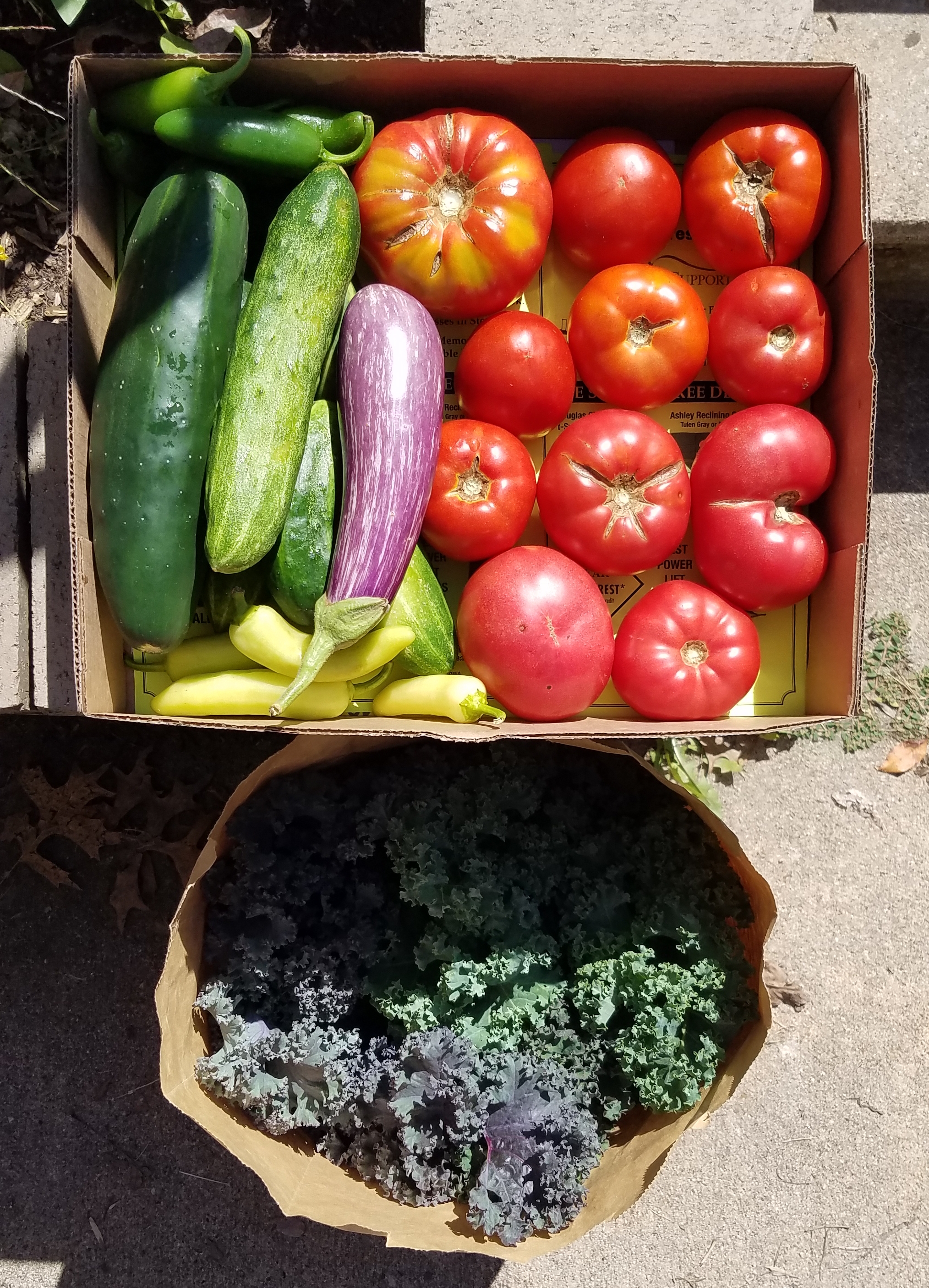
It’s down to eggplant, green beans, peppers, butternut squash and kale as the garden winds down in late summer. Four crates of tomatoes remain to be used, and the ice box, storage shelves and freezer are nearing capacity.

The next project is planning the garlic patch for October planting. I think it will go where the celery and cucumbers grew this year. It was a successful crop so I’m doubling the amount planted — all with seed from this year’s crop.

The Autumnal Equinox begins Sept. 22 this year. After that, the winter cycle of cooking and living mostly indoors is renewed. Garden cleanup will be after first frost, usually in the middle of October. Then there is collecting grass clippings for mulch and trimming branches from trees and shrubs for a winter burn pile.

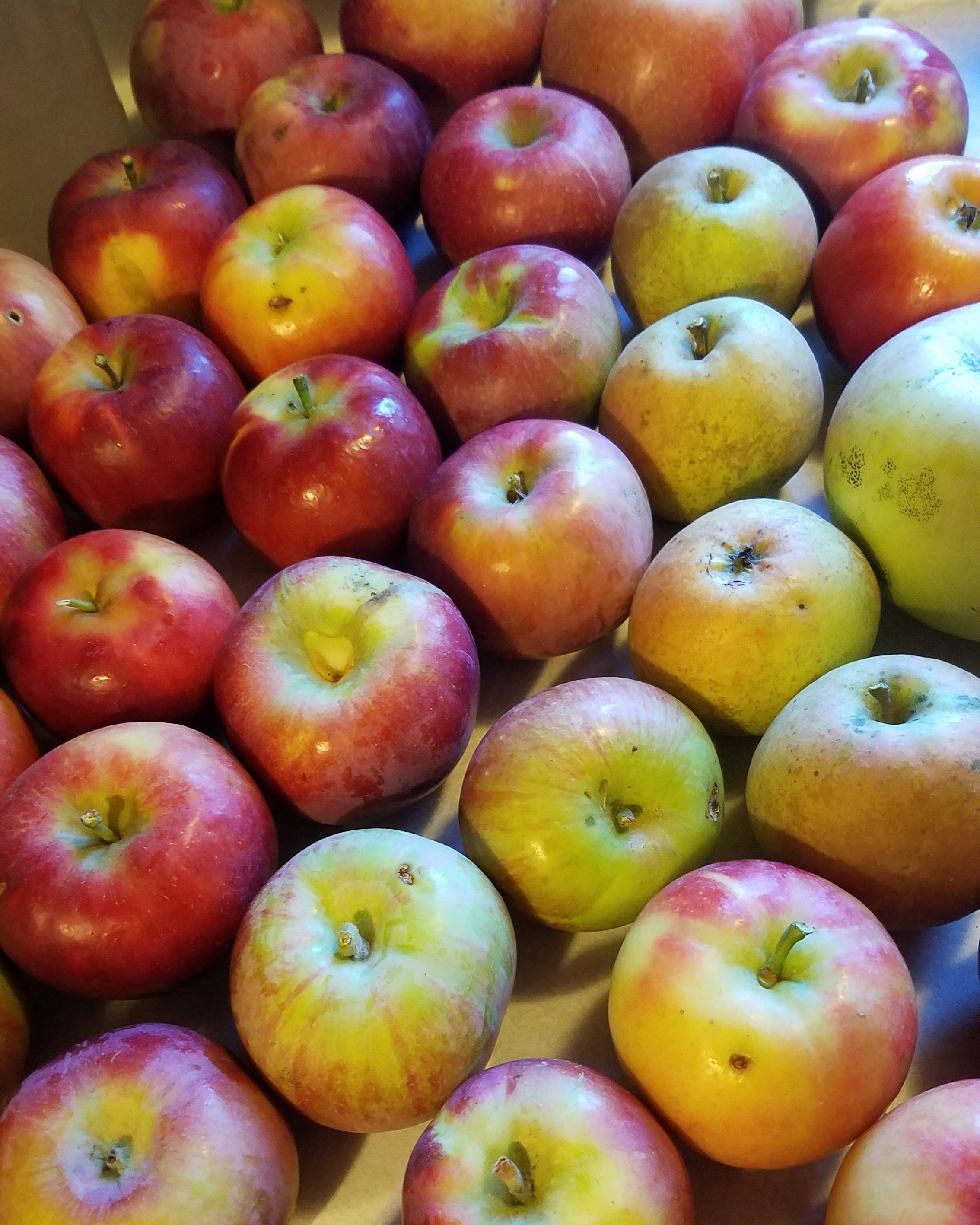
Apples, Sept. 11, 2018

Tuesday I made a trip to the orchard to pick apples and brought home more than a week’s worth in eight varieties. I had to stop picking before getting to all the ripe kinds because the bag was getting heavy. They will keep in the refrigerator… I hope.

There are seven weeks left in the apple season and I’m looking forward to all of them. There is nothing like my work as a mapper, helping guests find apples in our orchard. Last Sunday it was so busy, with perfect weather and pent up desire for customers to get outdoors, I began losing my voice after explaining the operation so many times. The harvest is a series of fleeting moments stretching toward a vanishing point.

The orchard has 100 varieties of apples that begin ripening in late July and continue until the last day of October. Pictured are Cortland, McIntosh, Wolf River, Jonagold, Honeycrisp, Hudson’s Golden Gem, and more. I’d say they were delicious and that would be an apple joke.

Vegetables for Library Workers

I took a care package to our library workers on the way to the orchard. Some of them work on Tuesdays and we didn’t want them to be left out of summer produce. They always appreciate fresh vegetables and this year favored Japanese cucumbers.

The garden has already been a success with some of the best crops I’ve yet grown in many varieties. Where there were failures (bell peppers, radishes, snow peas) there were big successes (tomatoes, celery, cucumbers, spinach, butternut squash, hot peppers). It has been a great year despite the weird weather.

Being in semi-retirement made a difference in preserving the harvest. An extra day or two during the week enabled me to take care of what was planted and process what came in the kitchen.

The plan is to do it again next year.

Categories
Kitchen Garden

Serrano Pepper Salsa

Serrano Pepper Salsa

We don’t need any more salsa in the house yet the abundance of hot peppers this year had me making this recipe… it’s a big batch.

My Serrano pepper crops failed the last couple of years so I’m glad to have more this year.

There weren’t enough of them in the ice box so I went to the garden and picked more. No Roma tomatoes either so I used Clementine, a two-ounce, orange colored tomato of which we have an abundance.

This year I froze the salsa and am not sure how it will turn out when I use it — an ongoing experiment in food preservation. I bagged up two-cup servings. The rest is in the ice box ready for use. The recipe made 17 cups of salsa.

Serrano Pepper Salsa

Ingredients
2 pounds Serrano peppers
3-1/2 pounds Roma tomatoes
1 pound yellow onions
24 ounces tomato sauce
1/4 cup salt
1/4 cup ground black pepper
1 large head of garlic

Technique
Clean and stem the peppers. Clean and prep the garlic, tomatoes and onions, cutting into large chunks. Put the vegetables into a blender in batches. Grind it until medium coarseness. Mix the end result thoroughly in a large bowl. Add the salt, pepper and tomato sauce and mix until ingredients are incorporated.

It is debatable whether to cook the mixture. I like it fresh, although if one wants to can salsa it should be brought to a boil, stirring constantly to keep it from sticking to the pan, and then cooked for ten minutes under medium low heat. After cooking, fill pint Mason jars with the mixture, leaving an inch of head room, and process for 15 minutes.

We’ll be in salsa for months with this recipe. Now what to do with the jalapeno peppers. I’ve already pickled and frozen enough to last until next year.

Categories
Kitchen Garden

Bowl of Summer – Cucumber Salad

Cucumber Salad

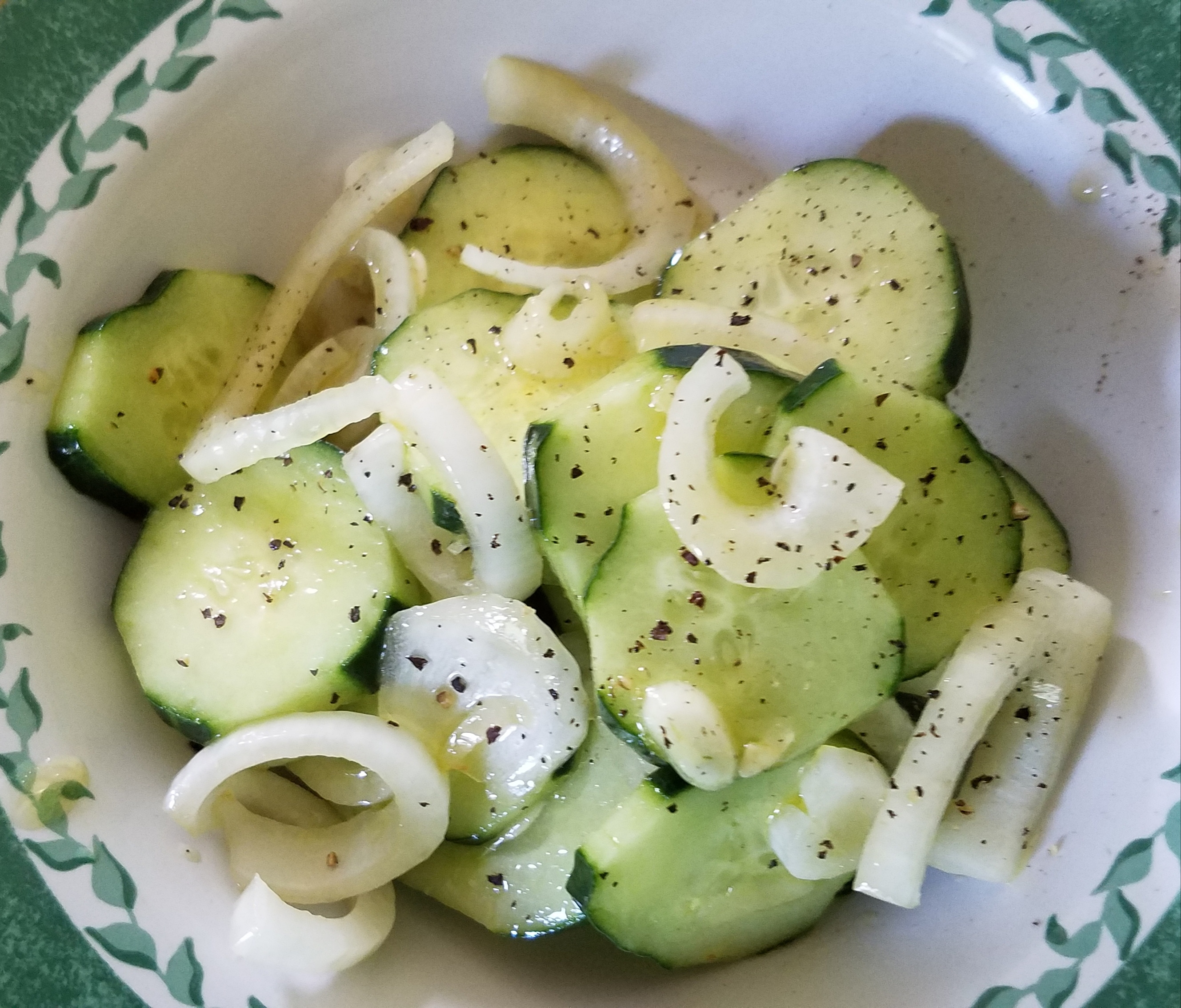
Cucumber salad is not even a recipe.

Peel them, slice and put them in a bowl. Add thinly sliced onions, extra virgin olive oil and your favorite vinegar, then salt and pepper to taste.

Mix gently then serve. It’s summer in a bowl.

When the garden produces them, we eat a lot of cucumber salads. This year I mastered the art of cucumber growing with a couple of simple things. First, I mulched as soon as I planted the seedlings. Then, I made sure deer had no access to the plants. I also put up cages and a fence for the vines to grow upward. The result has been abundant.

Other than in pickles, cucumbers don’t preserve well. They must be enjoyed in the moment, and sometimes that’s as good as it gets.

Categories
Environment Home Life Kitchen Garden

Gardening in End Times

Japanese Beetles Enjoying a Pear

I’ve been a gardener since we got married.

We planted a few tomatoes near the duplex we rented in Iowa City the spring after the wedding. As we lived our lives, raised our daughter, and sought economic stability, we either planted a garden or harvested what was there. When we owned a home, first in Merrillville, Indiana, and then in Big Grove, the garden got bigger and I became a better gardener. There is evidence in this year’s abundant harvest.

It didn’t come naturally even though gardening is elemental. The brief narrative of my gardener’s life.

As I step back from the working world to focus on home life what seems clear is society is moving at a startling pace toward disaster. Our industrial society consumes everything useful in nature, leaving us with foul air and water, depleted soil, polluted and acidified oceans devoid of marine life, and a warming world with all the consequences that yields. The earth will survive as it has. We people seem to be on the downside of our prominence. In multiple ways these are end times.

The Slovenian philosopher Slavoj Žižek asserts there is a chance for a new beginning in the terminal crisis in which human society finds ourselves. His arguments are not convincing to us regular humans.

What do we do?

What we have done is argue about approaches. Should we have a carbon tax? Should we ban abortion? Should we ban plastic straws? Is wind, sun, nuclear or natural gas a better source of electricity? Should we cut taxes and reduce government’s role in our lives? Should we become socialists, or even worse, democratic socialists? Should we let go of Hillary’s emails? Should we all just try to get along? Approaches don’t work and we should let go of them all.

The better question to ask is what story do we want to tell? As others have said, notably author Joan Didion, “We tell ourselves stories in order to live.” What narrative will take us out of the current crisis?

For me it’s “I’m becoming a better gardener.”

Regardless of pending social collapse we must go on with our lives. Partly to keep our sanity, and partly — importantly — to take steps toward a more livable world. We will never go back to the Iowa of 1832 before the great division and clear cutting began. What we can do is plant the seeds of a better life where we live. Our forebears left us a disaster. What can we do about it? Make the best of it with forward-looking narratives for the next generations.

I get it that many people don’t have means to do more than survive. When I see the abundance of our garden it’s hard to believe people go without a meal. Yet they do, in large numbers. We can feed a couple of them, but is that enough? It’s something.

The essence of the narrative is the verb to become. “I seem to be a verb,” R. Buckminster Fuller wrote. I seem to be that verb. We are not predestined to anything except our human span of nine decades, and that only if we are lucky. We live in an imperfect society that beckons engagement. I’m not sure working toward perfection is as good as doing something positive is. Knowing what to do requires a better narrative. One that hasn’t been invented for the 21st Century and beyond.

I plan to work on a better narrative, although garden in end times doesn’t seem too bad.

Categories
Kitchen Garden

Eggplant Season

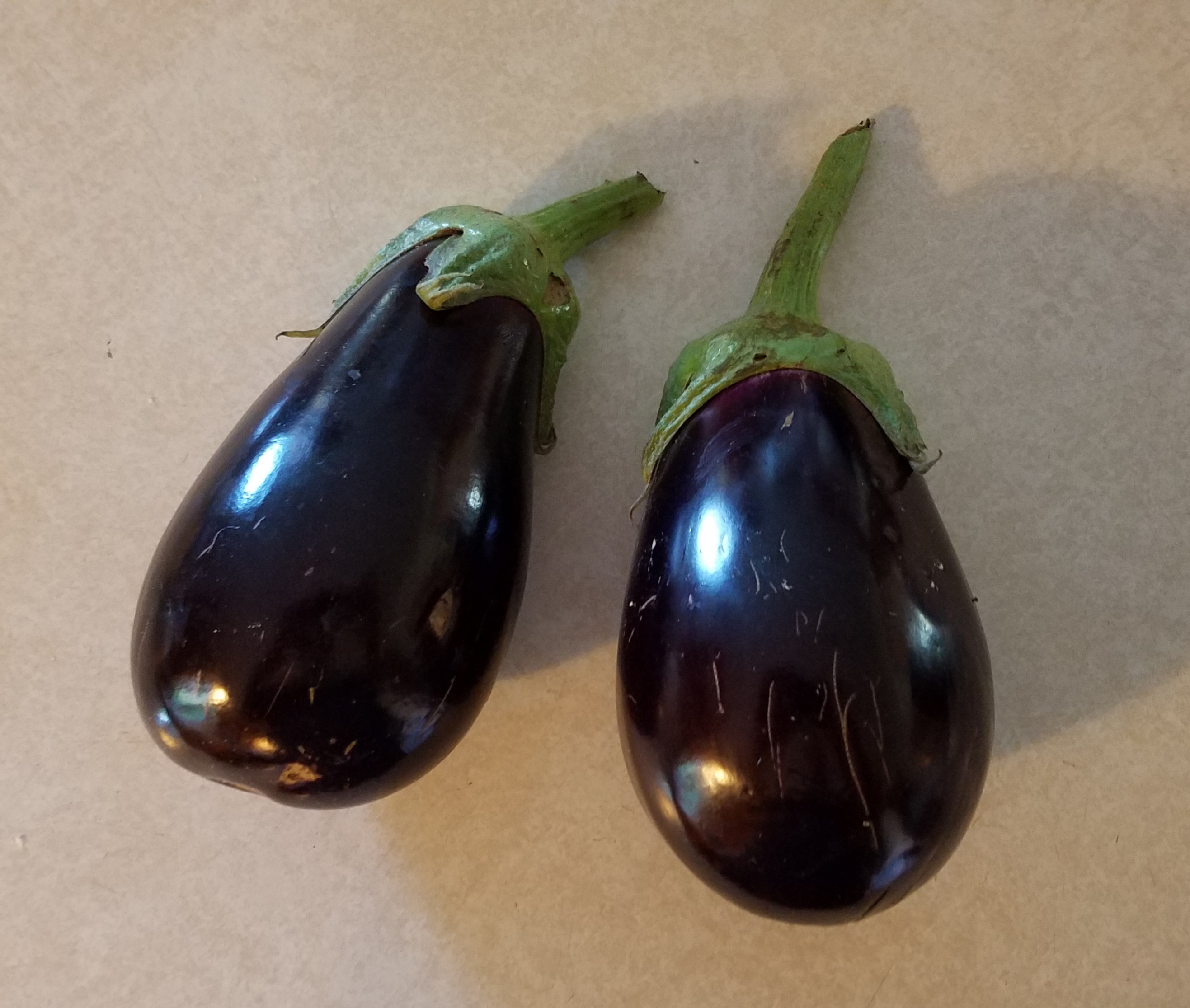
Galine Eggplant

By the time eggplant season is finished. everyone in the family is tired of it.

Here’s a simple, tasty recipe that’s not as much a recipe as techniques to use garden abundance in mid summer. The savory flavor will have diners coming back for more.

The first part is preparing eggplant slabs for the dish and for freezing.

Cut two half-inch slabs lengthwise from the middle of each eggplant and reserve the smaller portions from the sides. Skin on or off, your choice.

Lightly salt the slab of eggplant and drizzle extra virgin olive oil on it until both sides are coated. Place it on a baking sheet lined with parchment paper or a silicone mat. Cut slabs from all the large eggplants you have and line them up.

Place the pan in a 450 degree preheated oven and bake for 8 minutes. Take the pan out and flip each slab using tongs and put them back in the oven for another seven to eight minutes. Take them out and set the pan on a cooling rack.

Once cooled, what is not needed for the dish can be frozen, then bagged up in zip top bags for later in the year. Great to use these in Eggplant Parmesan.

Eggplant Dinner

The dish has three components: the eggplant slab, quarter inch slices of fresh mozzarella cheese, and a vegetable ragout.

The ragout is a way of using what’s available. Put a frying pan on the burner with a tablespoon of high smoke point cooking oil. I diced an onion, diced the reserved small slices of eggplant, finely sliced garlic scapes, fresh celery, and two hot peppers (jalapeno or Serrano). Any combination of what needs to be used up should serve. Sautee until the onions begin to soften.

While the vegetables are sauteing, grate half a large zucchini on a piece of parchment paper and set it aside. Halve eight to ten cherry or grape tomatoes and put them with the zucchini. Check the vegetables and once soft add the zucchini and tomatoes and stir constantly until the zucchini begins to cook. Don’t overcook the zucchini.

In individual baking dishes, or in a glass baking pan if you don’t have individual, line up one or two eggplant slabs per serving, depending on size. Next place a slice of fresh mozzarella on each large slab of eggplant. Top with the ragout and put another slice of mozzarella in the middle on top. Put the dish in to the oven and warm it for 10 minutes or until the cheese melts.

Take it out, transfer it to a plate, salt and pepper to taste, and the entree is finished. If you like, top it off with a poached egg.

Note: I did not use any seasoning other than salt and pepper and the dish was quite savory. If you have herbs and spices on hand, feel free to add your favorites.

Categories
Home Life Milestones

Remembering Donald Kaul in High Summer

Sweet Corn from a Roadside Stand

Sunday was a day to hang out on memory lane.

Sweet corn, tomatoes, cucumbers and Donald Kaul.

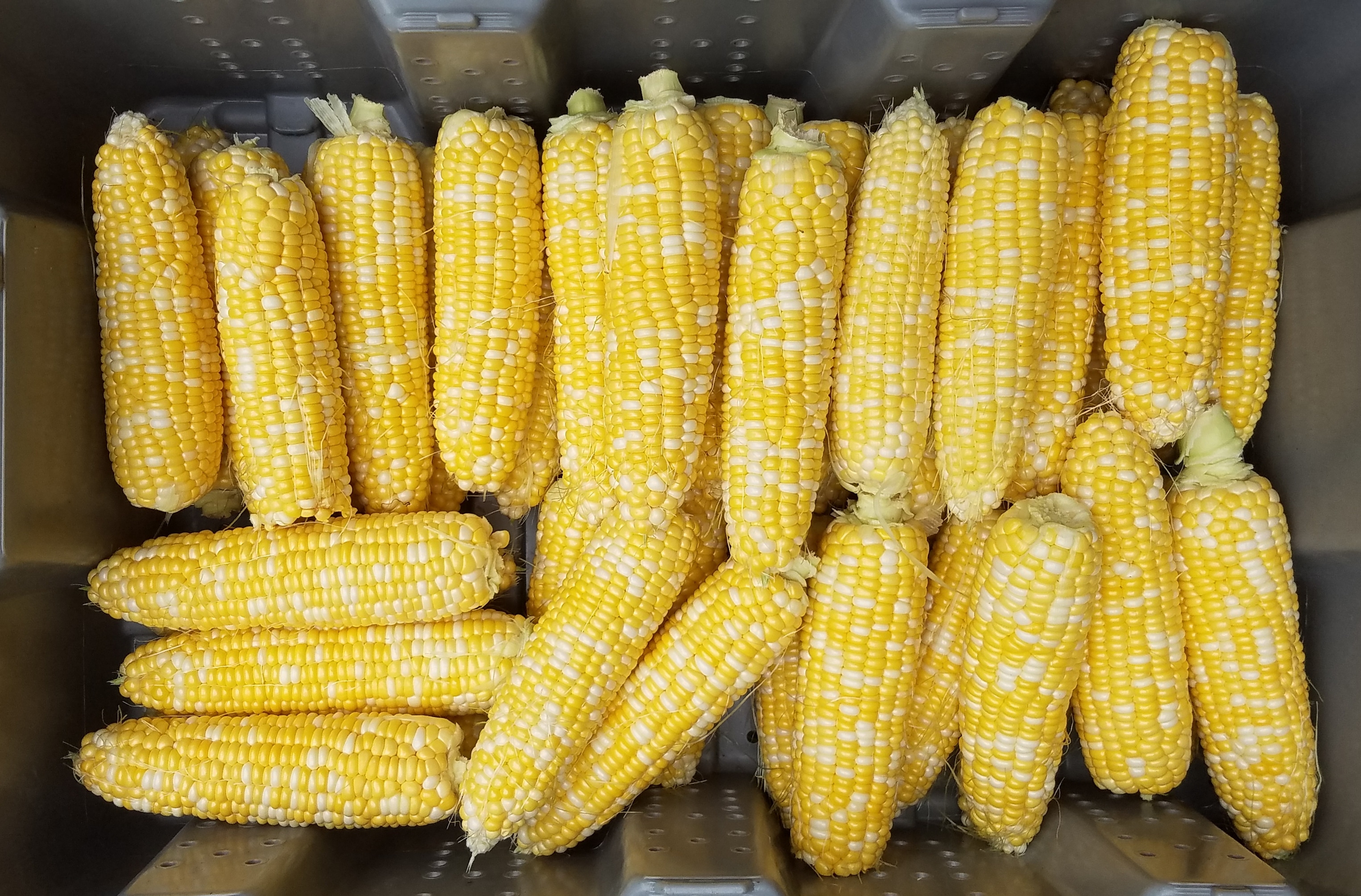
I bought sweet corn from a roadside stand and we had it for dinner with tomatoes and cucumbers from the garden, and thin slices of cheddar cheese from Vermont.

At some point after our return to Iowa in 1993, I decided to outsource corn growing. It takes up too much space and what space could be devoted to it produced a small crop. It was a good decision.

I cooked and froze the remainder of three dozen ears in two-cup portions in zip top bags.

We revisited stories of our lives during and after dinner.

How our cat would lick the cobs cleaned of corn kernels.

How putting up corn had been a long tradition — a family project.

How simple and good this year’s corn tasted compared to the past.

The trick to eating sweet corn is knowing how much to eat without getting a belly ache. The first ear was buttered, then sprinkled with lemon pepper seasoning and a little salt. Three ears is a usual portion. I ate four and went light on the salt. There were no ill effects.

Tomatoes

The arrival of sweet corn and tomatoes is the arrival of high summer. A short window — a couple of weeks max — when summer is good and we get a chance to be human again.

That’s something we need in this turbulent world.

In Iowa we also have the Register’s Annual Great Bike Ride Across Iowa, more commonly known as RAGBRAI, which began yesterday. Donald Kaul and John Karras were two Des Moines Register reporters behind the annual event. It was expected this year, and Kaul died of prostate cancer Sunday morning.

“On January 11, 2018, Kaul, an agnostic, revealed that the cancer in his prostrate has spread to his skeleton and that he will no longer take treatments,” wrote Des Moines Register columnist Kyle Munson. “He was in the end stages of his battle with cancer and didn’t expect to live beyond the year.”

The end came at 11:50 a.m., according to a local radio station.

The narrative of this year’s RAGBRAI seems already written, and it doesn’t include Kaul. There is time for some show of recognition on the seven-day tour. We’ll see what happens.

For me RAGBRAI was about the summer of 1973 when it started. An artist I met in Davenport invited me to her family’s home near the Catholic orphanage to meet her parents. Her brother was out in the garage when I met him too. He was talking about riding his bicycle across the state with the Des Moines Register. Over the Coffee, Kaul’s column, was popular in this household.

Today people prepare for months for the long endurance test the annual ride has become. Specialized, lightweight bicycles, meal plans, and training. Not in 1973 when the sequence of events was 1. figure out how to get to the Missouri River with the bike; 2. tighten up the hub axle nuts; and 3. air up the tires. I can’t recall, but I don’t believe he even had a derailleur gear on his bike. It was pretty simple then and proved to be enduring.

Kaul’s death on the beginning day of the 46th RAGBRAI is likely coincidence. In any case, he is memorable for his writing more than his promotion of bicycle riding.

In high summer, after our dinner of sweet corn and tomatoes, my wife and I discussed our interactions with Donald Kaul. She got his autograph in a bookstore in Iowa City, and I corresponded with him when he was a Washington, D.C. correspondent for the Register. He was a constant part of our Iowa lives. That will still be true now he succumbed to cancer.