First published on Nov. 7, 2010 on my blog Big Grove Garden.
Pepper Flakes
There is a natural urge to use everything. It gets suppressed by the modern American culture of throwing things away. In our house we often don’t have trash to take to the curb each week, but almost always have recycling to go out. American frugality has been in remission, but expect a comeback.
While working in transportation, I received a gift of some dried peppers in small plastic bags. Two bags have been sitting in the pantry for a while. In addition, I grew a long, thin and red pepper in the garden a few seasons ago. Some of these were dried and stored. In the box store yesterday, in the Mexican food section there were four feet of dried peppers in many different kinds. They were cheap and I bought two bags of the most abundant types. When I got home, I combined all of them and ground about half into pepper flakes. The one jar this produced will last a very long time. When I grind the second batch, it will go into small jars for gifts.
The challenge of American society will be to balance abundance with frugality. Waste not, want not is how it goes. I am afraid that we have not been understanding what we have been wasting, and it’s time we did.
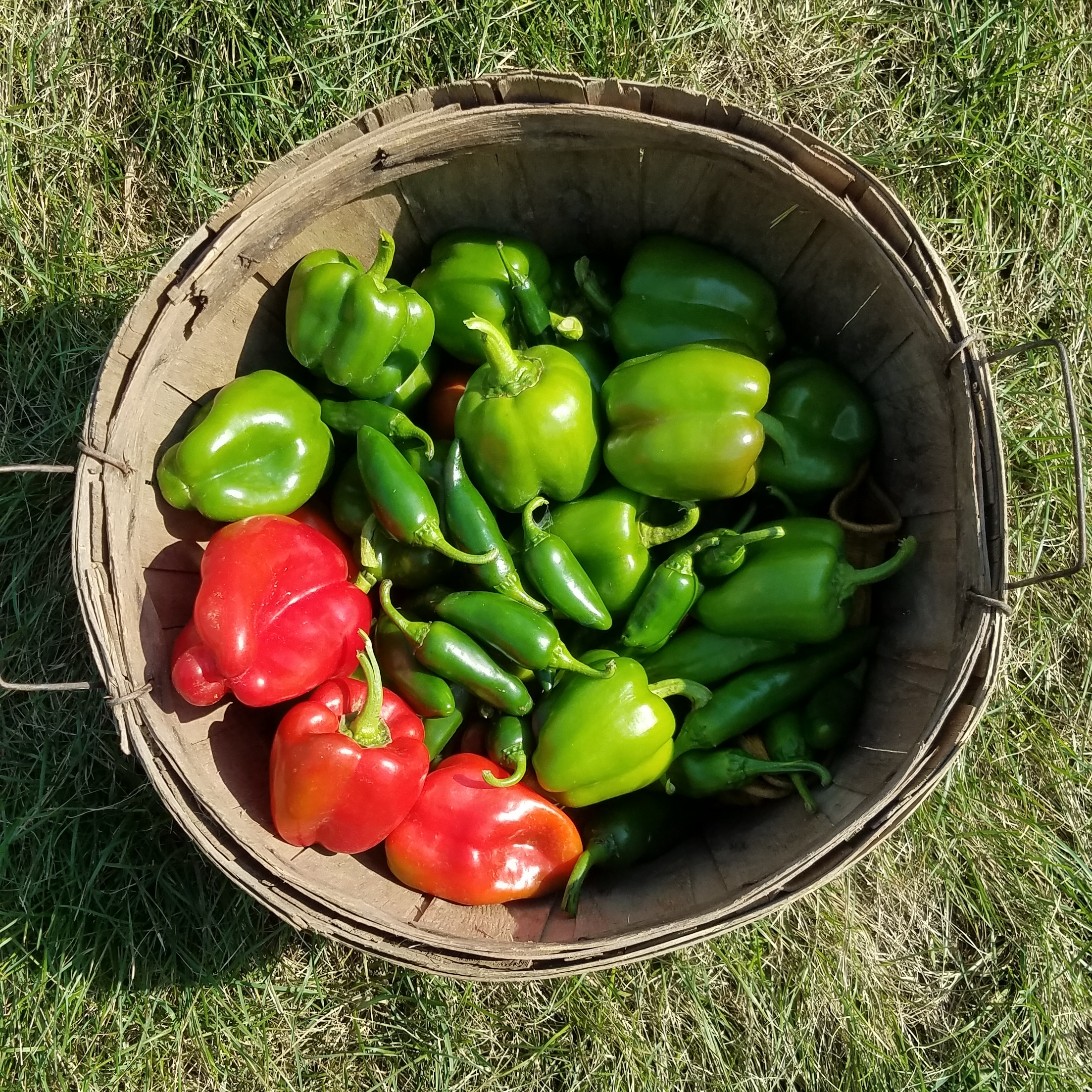
As we turn toward autumn tomatoes are finishing and peppers are coming on strong. I put up a lot of tomato product and am well-prepared to make it until next August. There is always a question of what to do with peppers. This year there are some new ideas.
Pickled jalapenos and hot sauce are traditional. I’ll also grind up what remains of hot peppers and mix it with salt and apple cider vinegar to use in lieu of fresh peppers in cooking. This worked last year so a repeat is in order.
Hot sauce and pickled jalapeno peppers.
I am backlogged with dehydrated hot peppers so no more this year. The main use is to grind for red pepper flakes. I have plenty on hand. I will re-hydrate the old ones next spring and use them to deter pests in the garden.
I grew Guajillo chili plants. The yield wasn’t what I hoped but will roast what there is, skin and coarsely chop them, and mix with apple cider vinegar, salt and garlic to use in Mexican-style cooking. I buy a commercially prepared version of this, so the idea has been in the works for a while.
Bell peppers will be cleaned, sliced in half and frozen in zip top bags. I don’t need many of these as there are some remaining from last year. The main use for bell peppers is for an afternoon snack. At two per day I could make it well into September with fresh ones for out of hand eating and cooking.
Arrival of pepper time also means the end of the garden is near. It’s hard to believe we’re already at that point in the growing cycle.
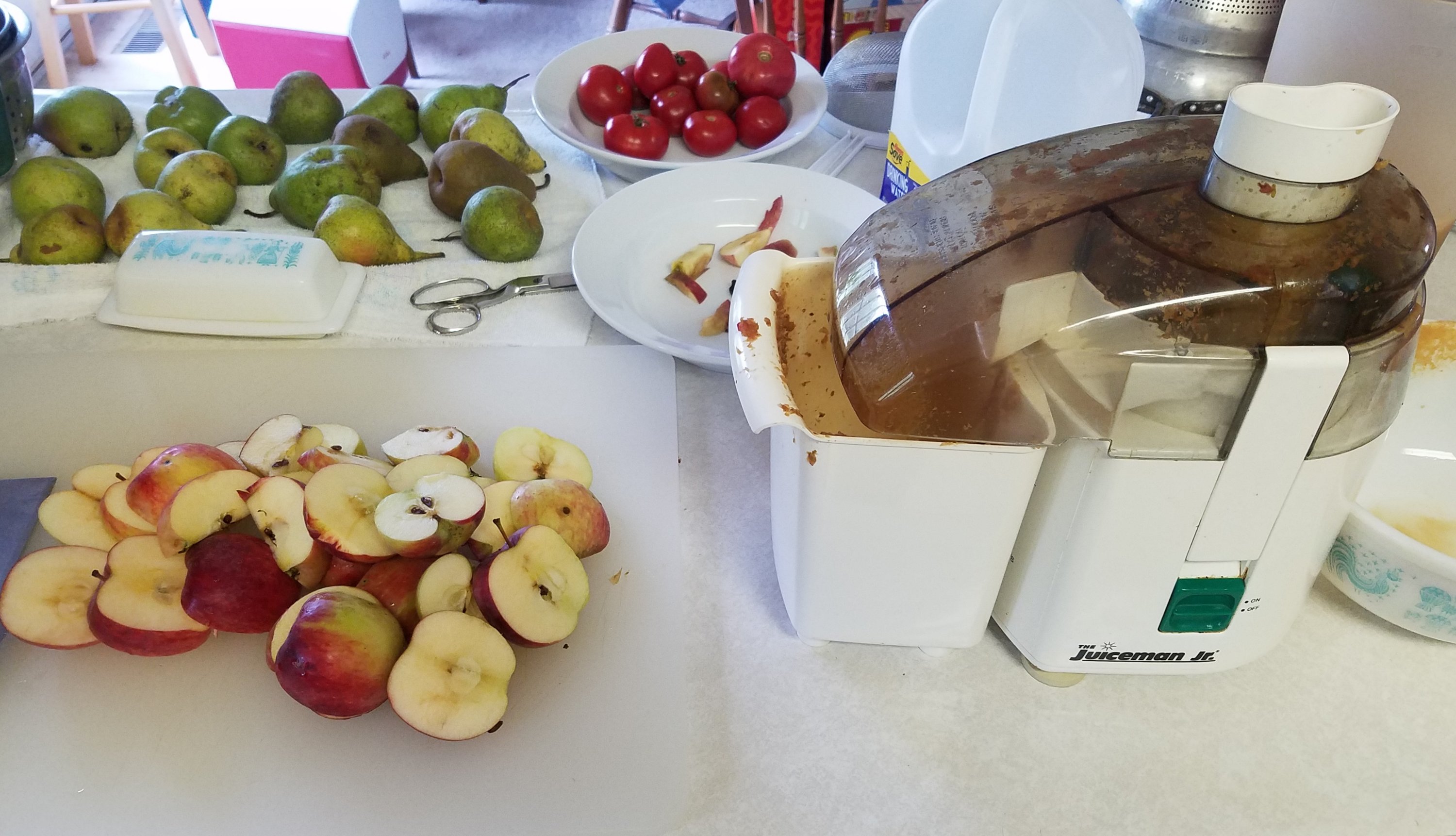
Turning two five-gallon buckets of EarliBlaze apples into juice for apple cider vinegar took about three hours including set up and clean up. Three half gallon mason jars are fermenting in the pantry, and a quart and a half of juice is in the ice box. I drank some of the juice with tacos for supper. It was a good day.
There was already plenty of cider vinegar in the pantry: seven liter bottles, two half gallon mason jars and a couple of smaller bottles in the cupboard near the stove. The goal is to make some vinegar with every apple crop because some years there is no crop. It has not been a problem because vinegar keeps and apples are abundant.
Apple Cider Vinegar
I’ve been making apple cider vinegar since a neighbor gave me some of the mother passed down through his family since at least the 19th Century. I call it “ultra local” because the apples were grown a few steps from the kitchen.
I spent a couple of hours on Wednesday delivering a “Drinking Water Health Advisory” to every home on our public water system. My shirt soaked through with sweat as I walked the two miles of roads. It was good exercise even though I didn’t enjoy some of the steeper hills.
About a dozen people were out in their yards, providing an opportunity to connect. While the news I delivered wasn’t the best, all but one of them had heard of the problem I posted via Facebook and email. Most were in good spirits and appreciated knowing what was going on regarding the water system. I met via conference call with our engineer and water system operator in the morning and laid out a simple plan to address the problem. Here’s hoping for a speedy resolution.
With Tuesday’s announcement that Christina Bohannan is running for congress in Iowa’s second congressional district, I’ve been reflecting on the congressional campaigns in which I’ve been involved. I began to get active when we lived in Indiana, helping Pete Visclosky get re-elected to a third term. He retired in January this year.
Rep. Jim Leach represented the area where I grew up from 1977 to 2003. He moved to Iowa City after redistricting for the 2002 election and was elected there twice. While he was Republican, the district wasn’t as partisan as it is now. When we lived in Indiana I saw Leach hold hearings on Whitewater in the House Banking Committee, which he chaired. After that I realized it was time for him to go. When he became my congressman in 2003, I began working toward that end. In 2006 we elected Dave Loebsack to the Congress where he served until this year.
The 2020 election was a disappointment because the congressional vote was evenly split. Democrat Rita Hart contested the results, but nothing came of it. Mariannette Miller-Meeks was sworn in to the 117th Congress. We are at the beginning of another campaign.
It is time to pass the baton to the next generation in congressional politics. With the isolation caused by the coronavirus pandemic, I did very little volunteer work in politics during the last cycle. Rita Hart made it to our precinct only during the last days before the election, with little enthusiasm for her candidacy. With the resurgence of the pandemic, I see that approach continuing. Besides, it is time to let younger, more engaged people manage campaigns. In the end I’d rather spend time politicking with my neighbors than get involved in the massive energy and expense of a district campaign.
Maybe it was the scent of the apples that evoked this political remembrance. That tasty sweetness which over time will be converted to vinegar. As I age, astringent flavor is more interesting than sweet. I crave it. I make it. I look forward to using the new batch of apple cider vinegar. I both know where it came from and the chef who makes it.
Making apple cider vinegar is part of a life worth living.
The food system is in transition and I believe the local food movement will come along with it.
The way Americans produce and consume food, with centralized growing operations at a distance from markets, is being forced to change because of a new and different climate. I believe changes will be positive over time, although they will take adaptation which will not be pleasant. The local food movement will focus on three types of operations: specialty growers, more complex farm operations centered around key individuals or a small group, and more kitchen gardens like mine. To some extent that structure already exists.
The ongoing, long-term drought made worse by climate change is taking a toll. The water shortage is acute in the Western U.S. because there has not been enough snow melt or rain. It should be called aridification rather than drought, because the changes are likely permanent. With the continuing water crisis, reservoirs and lakes across the west are at record low levels. A reckoning is coming and it means, among other things, higher prices and disrupted food supplies.
It’s not much better in Florida, Texas and Mexico. We long recognized growing lettuce and other produce in California and Arizona, and shipping it to the Midwest and East Coast, made little sense and was expensive in multiple ways. Have you ever tasted a Florida tomato? There are better alternatives. Because vegetables are grown with shipping in mind, taste has taken a back seat.
Producing food more locally is a natural reaction to disruption in food supply. In the settler days, before we had all these fancy supply chains, it was called “making do.” More people will grow some of their own food in backyard gardens, on decks and patios, or in community gardens. Not only does the food taste better, we can control the inputs to eliminate worry about pesticides and fertilizers. In the pandemic people lost some control of external events and one way they regained it was to become more self sufficient. So many people are preserving food that it has become difficult to obtain canning jar lids.
Labor is a basic problem the local food movement cannot solve. By growing food ourselves, the labor element is removed as we each invest labor to support our garden. Labor is an assumed investment and we scale personal labor in food production to fit our ambitions and the size of our garden or farm. Produce grown like this will meet some of our nutritional needs.
53 percent of Iowa corn goes to producing ethanol. If the country moves to electric vehicles, ready or not, adaptation is coming. The simple truth is either farmers find new markets for all that corn or adapt to other crops. Expect agricultural interests to oppose elimination of ethanol. Folks have proposed some of those crop acres be devoted to different kinds of produce, the kind people eat at the dinner table. However, it’s now or never to effect mitigation of climate change. There will be no choice but to adapt and land use is only one aspect of adaptation.
Climate change is real, it is having an impact on our lives, and unless we do something to reduce greenhouse gas emissions — on a large scale — it is going to get worse. Local food production can be part of the solution.
Rouge vif D’Etampes pumpkin from Johnny’s Selected Seeds.
Radicchio
I successfully grew radicchio this season, yet haven’t figured out how it fits into the kitchen garden. I pickled some of the leaves, added it to soup and stir fries, and besides saying I have it, there’s not much value in the crop. I have seeds leftover and may plant half a dozen head next season. Unless something happens in the kitchen to encourage the use, I won’t be buying more.
Rouge vif D’Etampes
These seeds produced four decent and visually appealing pumpkins. I haven’t roasted one of them yet although if the flavor is good, I’ll grow the remaining seeds next year. The trouble is pumpkins want to take over the space in which they are planted. They need their own plot. Regular Jack-O-Lantern and cooking pumpkins are ubiquitous in this area, so buying one is an easy solution to our pumpkin needs if the garden runs out of space. I still have two cups of frozen pumpkin flesh left from last season.
Cantaloupe
The seeds started but the vines didn’t do anything. Not sure of the reason but they were next to pumpkins, which may have dominated the smaller plant. Organic cantaloupe are available inexpensively at the grocery store, so this is another one that may be better to buy and use the garden space for something else.
Mustard Greens
Mustard grew well but it doesn’t fit in our kitchen. Because I want to have a variety of greens available, I’ll likely plant it for the third time next year. The main use has been to make pesto from the spicy greens. I also give it away.
Onions
The onion crop was what I wanted: plenty of onions in six varieties. I successfully started onions indoors, although next season the seeds should be started in December for a longer growing period before transplant. The starts I bought from the seed company performed well and I’ll get more in 2022.
Beets
Once again the beet crop mostly failed. I started them indoors and transferred them outside where a late frost killed most of them. I tried starting a second batch but it didn’t take. My goal is to produce enough to pickle a couple of quarts for the pantry. They taste so good, I’ll try again next year after reading up on cultivation practices.
Lettuce, tomatoes, peppers and the rest
The 2021 garden was my most successful yet. The variety of produce was good, as was the quality. I made planned improvements, including a patch of kitchen greens with kale, chard, mustard, turnips and kohlrabi. The container potatoes produced well. Garlic is still curing and the heads are large and appear to be disease free. I’ll use my own to plant next year’s crop. There were plenty of cucumbers, eggplant, and other crops to make the effort worth while.
Moving lettuce under row cover made all the difference. We had plenty of lettuce until a week or so ago. There is a fall crop growing now. I grew four or five crops of lettuce in succession.
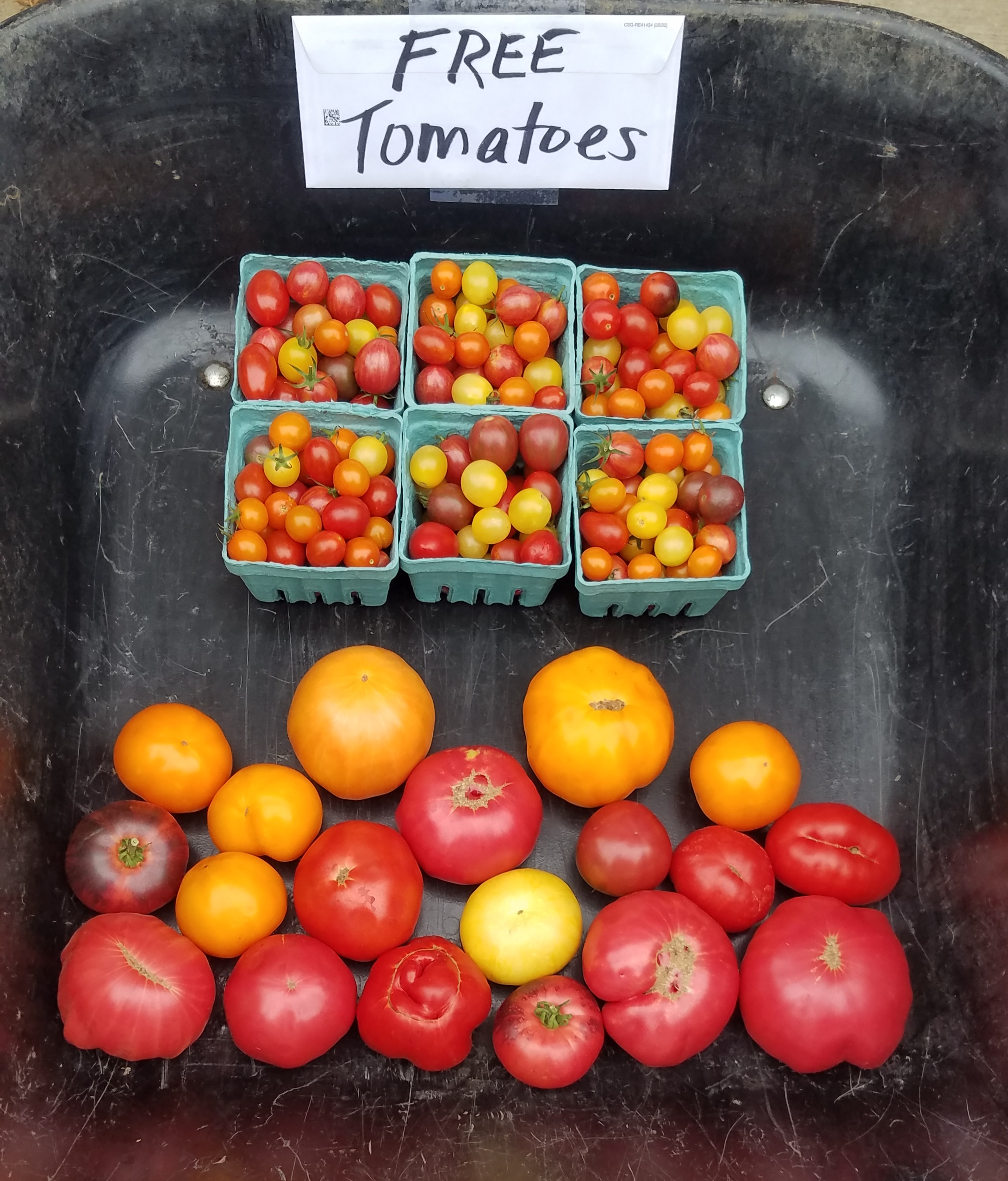
I grew the most tomato plants ever both in quantity and variety. The quality was excellent. I figured out how to vine cherry tomatoes so they produce a lot and are accessible and separate from the main tomato crop. The trick is planting them in a straight row. I used cages but one could use stakes and welded wire fence with the indeterminate vines. If I were buying new, I’d get six-foot fencing. There will be enough Roma-type tomatoes to can whole and plenty of slicers to give away. One thing I know is how to grow tomatoes.
The second year of the new pepper process produced good results. Ace is the main producer. I tried seeds sent free from a supplier for the rest, but it didn’t produce as expected. Watering peppers adequately is important. If I ever use drip tape for a crop, it would be for peppers first.
A gardener’s life is one of constant learning and experimentation. To be effective one has to spend time in the garden observing. We planted our first tomatoes at home in 1983 and grew a garden every year since then, except one. As I approach 40 years in the garden, I hope to continue for many more.
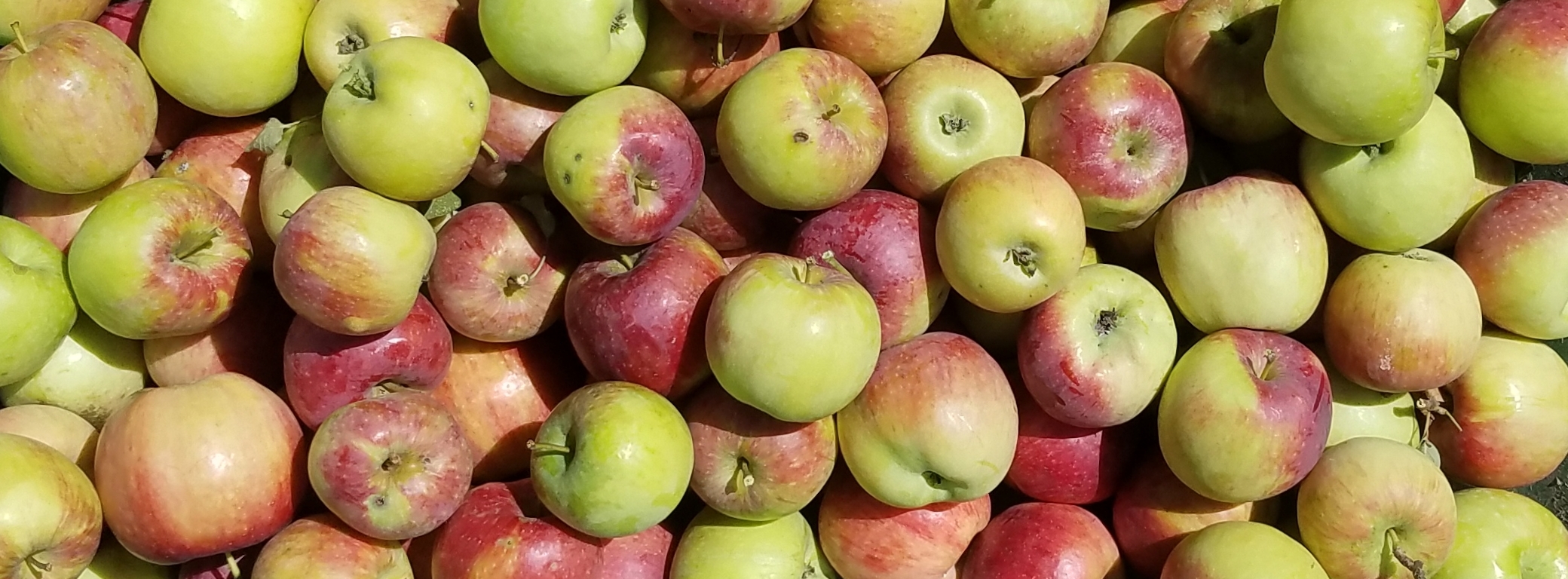
EarliBlaze apples are ready to pick. They are sweet and crunchy. I have two five-gallon buckets of them to make apple cider vinegar, although I’ve been eating down one of them and might need more.
Taking stock of the pantry, we don’t need any applesauce, apple butter, dried apples or any apple products really. Fresh eating, baking and cider vinegar will be the main uses of this August apple. A lot of them fall before they are ready to pick. Deer come each evening to help us clean them up.
When Red Delicious ripen during late September or early October, I’ll revisit the plan. I have at least one person who would like this year’s apple butter, so I may make more. Despite losing a major branch during the Aug. 10, 2020 derecho, and more during a strong wind storm this year, it will be a big crop.
I would have planted the orchard differently in the 1990s had I known what I know now about apple culture. I planted trees too closely together. The six original trees were two EarliBlaze, two Red Delicious, and one each of Lodi and Golden Delicious. Wind and disease took a toll and only one Red Delicious and two EarliBlaze remain.
The varieties I chose are not the ones I would pick today. Having worked at an apple orchard since 2013, I learned a lot about which trees do well in Iowa’s climate and how to plan continuous apple picking from late July to the first hard frost in late October. In addition, I would match the varieties to what I want to accomplish in the kitchen. Late apples are more attractive to us now and everything they mean: storage for winter, apple cider making, and of course, fresh eating. There are no do-overs for our home orchard. The main questions today are what else will be planted in our yard for fruit, and what will we do when the three trees I planted finally live their last days.
I decided to decline returning to work at the orchard this year. The reason is pretty clear. The coronavirus pandemic played a key role.
I changed my mind about working this fall and won’t be reporting for work on the 28th.
The main reason is the surge in the coronavirus pandemic in Johnson County. Hospitalizations increased close to bed capacity, there is an influx of 30,000 people to attend university (about whom we know little of their vaccination status), the University of Iowa cannot require vaccination for COVID-19, and the CDC rates our level of community transmission of the virus as substantial.
Since I wrote this, the level of community transmission has gotten worse.
In late summer, the whole garden seems to come in at once with apples being a key crop. There is pressure to deal with all of it. Not enough pressure to prevent us from enjoying the taste of summer.
Summer pasta made with yellow and orange tomatoes.
I could eat fresh from the garden pasta dishes all summer and hopefully will. At the same time, summer is turning toward fall so we’d best enjoy them while we can.
There have been crates and crates of garden tomatoes this season. I sorted a crate of yellow and orange, cut ripe ones into a dutch oven, and turned on the heat. My process for making tomato sauce is easy.
Cook the cut tomato pieces on the stove top until the skins begin to loosen. Depending on the variety I add a little liquid to the pan so they don’t burn. Carefully put the tomatoes into a perforated funnel to drain. Mine is an old-style farm funnel with a wooden masher. Once they drain, save the liquid if there is an immediate use for it, otherwise discard. (A kitchen can only use so much of it). Finally, process the drained tomatoes with the wooden masher, pushing the pulp through the funnel. This thickens the sauce without cooking it to death on the stove, making a fresher-tasting pasta sauce.
When the day began all I knew was to use some tomatoes for a meal. I found a bag of Gemelli dried pasta in the storage rack and decided that would be dinner.
There are countless variations to making pasta. In addition to pasta noodles prepared according to instructions on the bag, I used orange and yellow tomatoes, onion, garlic, basil and eggplant. Garnishes were cherry tomatoes and fresh parsley. Parmesan cheese is optional, which if left out makes this a vegan dish.
Here is my current process.
In a large skillet sautee onions and diced eggplant in extra virgin olive oil. When the onions begin to turn translucent, add two cloves of minced garlic. Salt and pepper to taste. Stir constantly until everything is cooked.
Add the fresh tomato sauce and incorporate. Add a generous amount of fresh or dried basil and re-season. There is variation in the moisture level of tomato sauce made this way. Cook it to the desired thickness.
When the pasta is done, reserve a third cup of pasta water and drain it. Add the noodles to the sauce along with the pasta water. Mix gently until the pasta is thoroughly coated. Add halved cherry tomatoes and freshly chopped parsley and toss until the tomatoes warm.
Serve with a vegetable side dish like steamed green beans, broccoli or cauliflower.
This was my dinner. I hope readers are also enjoying fresh from the garden pasta this summer!
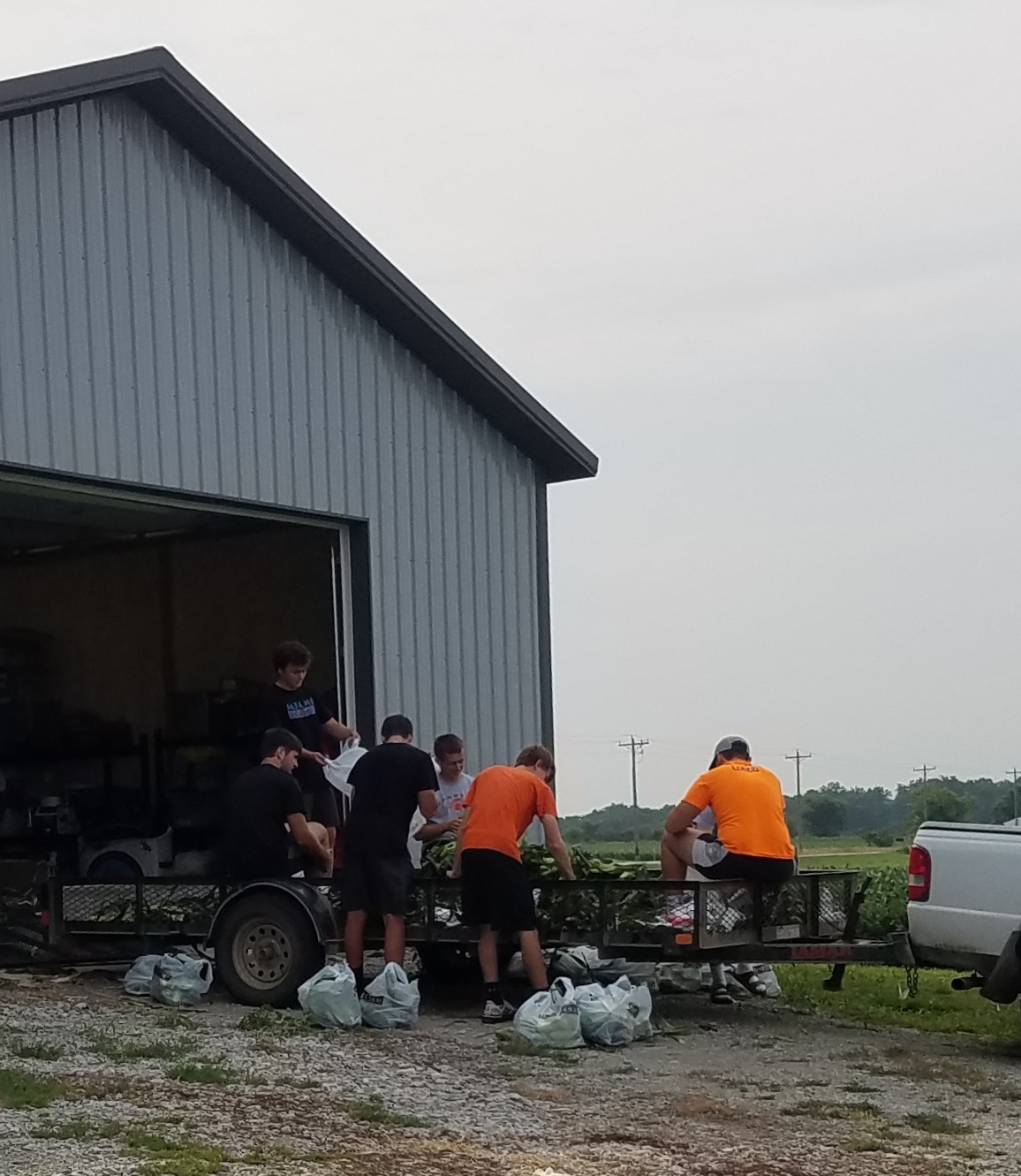
Young men bagging freshly-picked sweet corn at Rebal’s Sweet Corn farm stand.
The decision to buy sweetcorn and not grow it was easy. It takes a lot of garden space and my results haven’t been as consistent as one can buy at a farm stand. The farm stand where we’ve been buying sweet corn is closing after this season.
This will be our last year of selling sweet corn. Yes, the rumors are correct. After 35 years of business, we’re decided to bring it to an end. We’ve loved meeting all of you, and hopefully have provided the best sweet we possibly could. But it’s time for us to make a few changes in life. We’ve appreciated your business over the years, and all the wonderful comments you’ve given us. Wow! This is a hard post to write! Thank you all so much for your business, and we hope to see you one last time before the season ends and Rebal’s Sweet Corn comes to a final close.
They had corn on Friday so I bought ten dozen ears to freeze and eat fresh on the cob, on pizzas, and in leek and potato soup. Next year I’ll have to find a new grower but I don’t see re-visiting my decision to outsource this crop.
Leveraging the work of others is an important part of managing a kitchen garden. Rebal’s Sweet Corn fits into my local food paradigm of knowing the face of the farmer. We will miss them when they move on.
This year four tomatillo plants are producing an abundance of the fruit. Due to a paucity of recipes so many are not a good fit for our kitchen garden.
Mainly I used tomatillos in salsa to provide texture and their green color. I also slice or dice them to add to stir fry. Because there are so many, I will freeze what I can’t use fresh and see how that works in the coming months. In years past, the plants did not produce so many fruits. Next year I’ll reduce the number of plants.
I asked for recipe ideas on social media and the responses were honest yet not viable.
A common pairing is with the meat of hogs or chickens. As a vegetarian household, that’s not an option.
Another idea is to mix them with avocados and other ingredients for guacamole. This one winds me up because I’m in the camp of people who believe the rise in popularity of avocados also drives deforestation. How bad is the rapidly expanded avocado business?
The short answer is that avocado farming is causing deforestation, destroying ecosystems, funding drug cartels, and contributing to climate change. In Michoacán, Mexico, the biggest avocado producing region in the world, farmers are illegally razing pine forests in order to plant lucrative avocado trees. The native pine trees make up an irreplaceable habitat to indigenous species, including the iconic monarch butterfly.
Young people look at me askance when I say I won’t eat avocados because of deforestation resulting from their popularity. Nonetheless, I’m pretty firm in that view and have been weathered by askance looks over the course of many years. No guacamole or avocado toast for me.
The reality is there is already too much to do in the kitchen with hundreds of tomatoes lined up for processing. I put the tomatillos from the photo on a baking sheet and stuck them in the chest freezer to get them out of the way. When frozen, I’ll put them in a zip top bag until I’m ready to use some. There are many dozens of them remaining on the vines to be used fresh or given away.
We have two Mexican restaurants in the area and they have taken excess jalapeno peppers before. We’ll see what I harvest and maybe stop by one of them to present tomatillos as a gift. At least they won’t go to waste.
The onion harvest is in, sorted, cured and stored. There will be plenty of onions through winter and beyond.
The main lessons this year were to plant multiple varieties, keep them weeded and watered, and allow enough garden space to produce an abundance. The best results were from the starts purchased from Johnny’s Selected Seeds. I started my own from seed on Jan. 20, yet that wasn’t early enough. The fruit produced was smaller than the ones from the seed supplier, which are pictured above.
Onions started from seed, Rossa di Milano and Calibri Yellow, were small yet usable. I peeled, sliced and froze the yellow ones. They will be used mostly for winter soup. The small red onions are first to use for fresh eating in tacos and salsa, and sliced on sandwiches. Even though they are small, the flavor is outstanding. Every onion grown will find a home.
For the second year I produced a row of shallots, started from seed. They came out great. Shallots are long keepers and popular as gifts. If anything, I’ll plan to grow more shallots in 2022 and already bought the seeds.
I selected varieties mostly for storage qualities. I have had good luck storing Patterson, Ailsa Craig and Redwing, so they are repeats this year. Sierra Blanca is an experiment in white onions. All four varieties met growing expectations.
A bowl of onions is the heart of a kitchen. Growing one’s own onions is even better. There are four crates of onions in storage so our household is ready for cooking in the coming months.







 Journey Home
You must be logged in to post a comment.