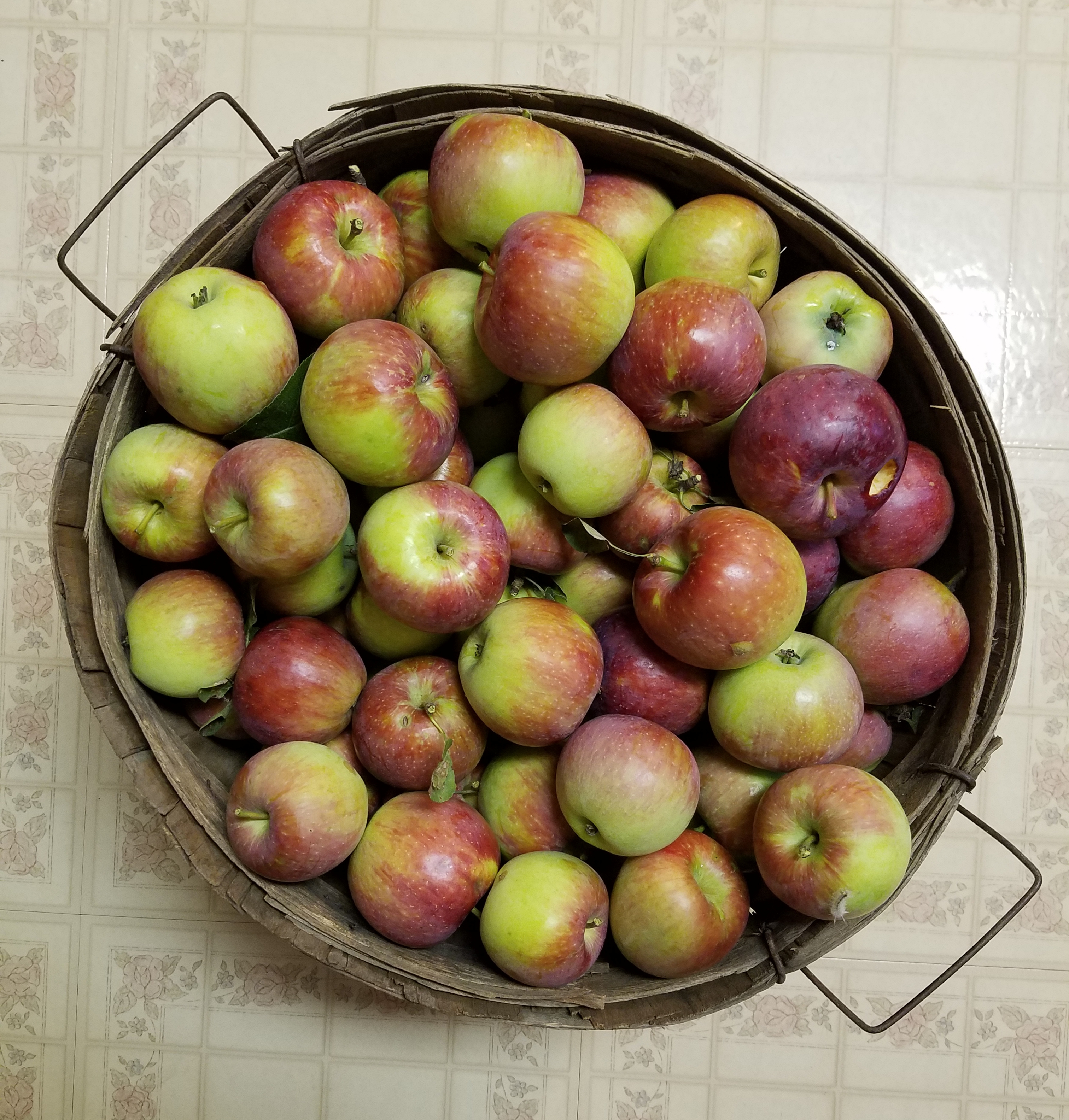
This year’s apple crop has been one of our best. That means an apple activity vortex beginning now until the last red delicious is picked in October.
The two earlier trees are ready to pick and best suited for eating out of hand, apple sauce, apple butter, apple juice for drinking and cider vinegar, and baked goods.
Red delicious apples are good for these products as well and hold up for slicing, freezing and drying. A bit of everything apple is planned this fall.
Working two paid jobs, seven days a week relegates apple chores, and other processing of pears, tomatoes, hot and bell peppers and the like to late at night or early in the morning. These will be busy days, no doubt.
Canning Soup and Jalapeno Peppers
I’m considering getting a second water bath canner to speed up the process. At seven jars per batch I’ve gotten the work done, but at 14 more may be accomplished in the same time. We’ll see how that goes. I’m ready to start canning.
Some lessons learned. In past years I’ve canned garden vegetable soup and have about 24 quarts on hand. That’s enough to last until spring so there’s little reason to can more. The same is true of apple butter. I need to use some of what I have to make room on the shelf so I plan to skip this year. 20 quarts of apple sauce remain in the pantry from previous years. I’ll make enough to get to three dozen. That should take us through to the next large apple crop.
Ending up in an apple vortex during the last lap in a workingman’s race is not bad. I’d say it’s delicious but that would be an apple joke.
The origin of my adult interest in cooking and gardening is time spent in a motel room in Thomasville, Georgia while implementing a logistics project at a large, nearby mining and manufacturing company.
I’d go into the plant early and stay late, returning home to Iowa only every other weekend. When I got back to my room, I turned on the television and fell asleep watching the TV Food Network.
That’s not to say experiences with my mother and grandmother played no role. They did, especially in our kitchen on Marquette Street where Mother prepared meals using familiar ingredients both fresh and prepared, and at Grandmother’s kitchen — first at the Lend-A-Hand and then at the Mississippi Hotel.
Rather than sustenance, food became an escape in my adult years.
In the 1990s I escaped into the T.V. During thirty minute segments I could forget extreme poverty and plain family restaurants that served a meat and three sides in rural Georgia, and engage in personality chefs who enjoyed what they were doing as locals did not. I had no kitchen so the interest was intellectual. I did learn techniques, some of which I would use later in our home kitchen. We don’t get Food Network any longer but it set me on a course for being the kind of home cook I am today.
Yesterday I made breakfast of steamed broccoli, fresh tomatoes and quesadilla — a gardener’s breakfast. In a social climate of political turmoil, disease, famine and extreme weather events food continues to represent escape as well as nourishment. Producing local food and dishes is a way of navigating diverse interests in a society that seems to have gone mad. Not only escape, but protection of who we are from those who would change us.
In western culture we begin each day with choices about food. The lesson I learned in Georgia, on the T.V. and in family kitchens is to choose fresh and local in order to sustain our lives, and there’s more. Make something of our choices. For a brief moment yesterday it was a gardener’s breakfast. Now to turn to today.
Between planning, planting and weeding a garden, and fall’s frosty end, lies a time to harvest, cook and preserve the results. So it is with our lives.
As humans we possess a unique ability to envision a future: one where we need supper and know we will need food later. We produce in abundance, fearing we won’t have enough. With modern food supply chains producing readily available foodstuffs in the United States this isn’t rational. In this sense, a gardener is an archetypal human living a life on urges, needs and wants we don’t fully understand.
Saturday Harvest in High Summer
The culture that produces a kitchen garden is complex, involving not just the gardener and soil, but seed producers, greenhouse operators, equipment manufacturers, chicken manure composters, potential future diners and others. A gardener is deeply engaged in human society. Much of our garden time seems solitary but isn’t. Animals wander nearby and we view the results when they eat garden plants and produce we’d hoped to harvest later. There is a daily drama of birds which are abundant in Big Grove. There is also a vast and little understood society of insects, some of which are annoying, a few deadly, and without others, the garden could not exist. A gardener embraces the complexity of life’s culture.
A gardener is not only a gardener nor does he or she seek to be. Each is just one iteration of humanity engaged in a broad society and we Americans are a peculiar bunch. We work hard, long hours whether it is at home or in a workplace and leave little time for enjoyment of the fruits of labor. Sometimes, like this weekend when I am between work at farms, we get time to ourselves to enjoy life lived how best we know. My story of Saturday is in four parts.
Predawn
My day begins around 4 a.m. and if I’m lucky, I got six or seven hours of sleep. I slept well Friday into Saturday waking only briefly to put in a load of laundry around 2 a.m. The routine was basic. Do stretching exercises, make coffee, say hello to spouse, go downstairs, and turn on the desktop computer to see what’s going on in the world. That’s not to say I didn’t already know. I use my mobile device in bed before turning on the light. Usually something new has happened since retiring the night before.
I wrote a series of tweets to better understand my memory of the Patient Protection and Affordable Care Act as it pertains to the false accusation it is a job killer. I recall local businessmen who said after the law went into effect they were in a position to add jobs but didn’t want to do so because they would have to provide health insurance per the ACA mandate. The assertion is the mandate killed these jobs and that idea got blown up into hyperbole of unprecedented proportions. Re-circulation of this idea is ongoing and rarely fact checked any more.
Businesses of a certain size should provide a health insurance benefit to employees or risk the possibility of being unable to recruit qualified staff. By defining the size at which to mandate health insurance, the law changed the business structure. In highly competitive local markets for landscapers, concrete workers, framers, heavy equipment operators and the like, employers faced a changed landscape. Operating on tight budgets, rather than embrace quality of life for employees they resisted change. The core problem lies in that the K-12 education system does a really poor job of preparing students to enter business. People carve out a niche, generate revenues and go out of business if they don’t properly manage risks or aren’t adequately capitalized. Small-scale operators I know are not educated in things we took for granted when I managed the profit and loss of a $12 million annual revenue transportation and logistics operation as part of a billion dollar corporation. The problem is not the ACA, or teachers. It is our education system doesn’t provide an adequate path for people to be successful owning and operating a business.
Pickle Fermentation
Outside
If there was no rain I water the garden shortly after sunrise. Without thinking it turned into weeding, then harvest and before I knew it the time was 11 a.m. The garden looks more like a weedy mess but inside there is abundance.
Before going outside I started soup to take for lunch at the home, farm and auto supply store, and mixed the brine for a batch of dill pickles.
I picked a box of kale for the library then went plot-to plot to collect what was ready. There were broccoli florets, leeks, onions and fairy tale eggplant in one. Jalapeno peppers, a bell pepper and cucumbers in the next. More broccoli and celery near the locust tree. Four kinds of tomatoes in the tomato patch. Basil is ready but I left it in the garden until I’m ready to make pesto.
Apples are sweet enough to eat out of hand, but not sweet enough to juice and ferment into apple cider vinegar. I picked the ripest for a batch of apple sauce. There are a lot of apples this year because of almost perfect pollination during spring. It should be a long apple season starting now.
I collected the harvest in a crate and placed it on the kitchen floor. There was another two hours of work cleaning the produce but that could wait.
Soup for Next Week’s Work Lunches
Short Trip
I try not to leave our property on weekends unless for work. Ours remains a car culture and we don’t have disposable income for shopping if we thought we had it before. Saturday I went to HyVee to pick up canned goods, pantry staples, organic bananas and Morningstar Farms frozen products we use. Organic celery is permanently on the shopping list although we have a lot of celery ripening in the garden. I picked three heads that morning so bought none at HyVee.
On the eight mile trip to town I noticed two sweet corn stands on Highway One.
One is the farm where we get most of our sweet corn, Rebal’s Sweetcorn. Supply was uncertain from their Saturday post:
It was tough picking this morning; we had to really search for the corn in this patch… we’ve got corn today, but it’s not a full load, so if you want it, try to get out here early. And, because of having to search to find the better ears, we might just let this one go and wait for the next. We’ve got 4 blocks (patches) coming up that look beautiful!!! The question is when they’ll be on… we’re checking them every day, so I’ll keep posting
They had plenty as I passed Southbound.
Lindsey Boerjan runs a seasonal road-side stand further south and was featuring sweetcorn and melons. I wrote an article about women farmers in the Sept. 22, 2015 Iowa City Press Citizen:
Lindsey Boerjan is a fifth-generation farmer living on the family-owned century farm where she grew up. She moved back in 2011 and farms alongside her aunt, uncle, husband and daughter, who run a beef cow and calf operation. To supplement income from beef sales, Boerjan raises chickens and operates a small community-supported agriculture project.
The CSA didn’t make it, although the road-side stand likely does better. I decided to stick with Rebal’s on my return trip.
A musician played for free will donations outside the entrance to HyVee. He seemed too young and inexperienced to be playing Folsom Prison Blues, although he was very musical.
Dinner Salad
Cooking
On arrival home I put away the groceries and started cleaning the morning harvest.
Leek stalks make a great vegetable broth base so I got out the large stainless steel pot. I added the leek leaves, broccoli stalks, a turnip — greens and root, kale and onion tops. I don’t usually salt vegetable broth and this time I didn’t add bay leaves. It cam out dark and flavorful — two and a half gallons.
Part of summer cooking is going through the ice box and making sure old stuff is used first. We have a broccoli abundance and need to do something soon with the gallon bags of florets. The freezer is almost full, so freezing more is not a good option.
I found some lettuce and decided to make a small salad and pizza for dinner. The salad is a work of art with two kinds of lettuce, kohlrabi, two kinds of tomatoes, cucumber, grated daikon radish, bell pepper, pickled jalapeno pepper, sugar snap peas and other items either from the farm or grown in our garden. Ironically I forgot to put some small broccoli florets on the salad.
I also made applesauce, salsa with tomato, garlic, jalapeno peppers and onion, and a cucumber salad of diced cucumbers dressed with home fermented apple cider vinegar, salt and pepper.
Our pizza process is to buy pizza blanks from the warehouse club and add toppings at home. Making our own pizza dough is no real work, but the convenience of a pre-made cheese pizza for $2.50 presents value. I added Kalamata olives and a diced red onion from the farm, then topped with Parmesan cheese. 15 minutes in a 425 degree oven plus a minute under the broiler and done.
This Morning
Everything on my list didn’t get done Saturday. I’m processing the vegetable broth in a water bath this morning and figuring out how to pack a summer’s worth of yard projects into today’s glorious summer weather. That is, I wrote stuff on my white board. Once I move outside into humanity and culture, I will likely forget about the plans and do what comes naturally.
Dan and I visited the Ciha Fen Preserve across the Cedar River in Johnson County on Saturday.
“The Ciha Fen Preserve is a sand prairie/savanna complex on a wind-deposited sand ridge,” according to mycountyparks.com. “It contains the Ciha Fen, which is one of the only two documented remaining nutrient-poor fens known in the state of Iowa. It has numerous rare plant and animals species.”
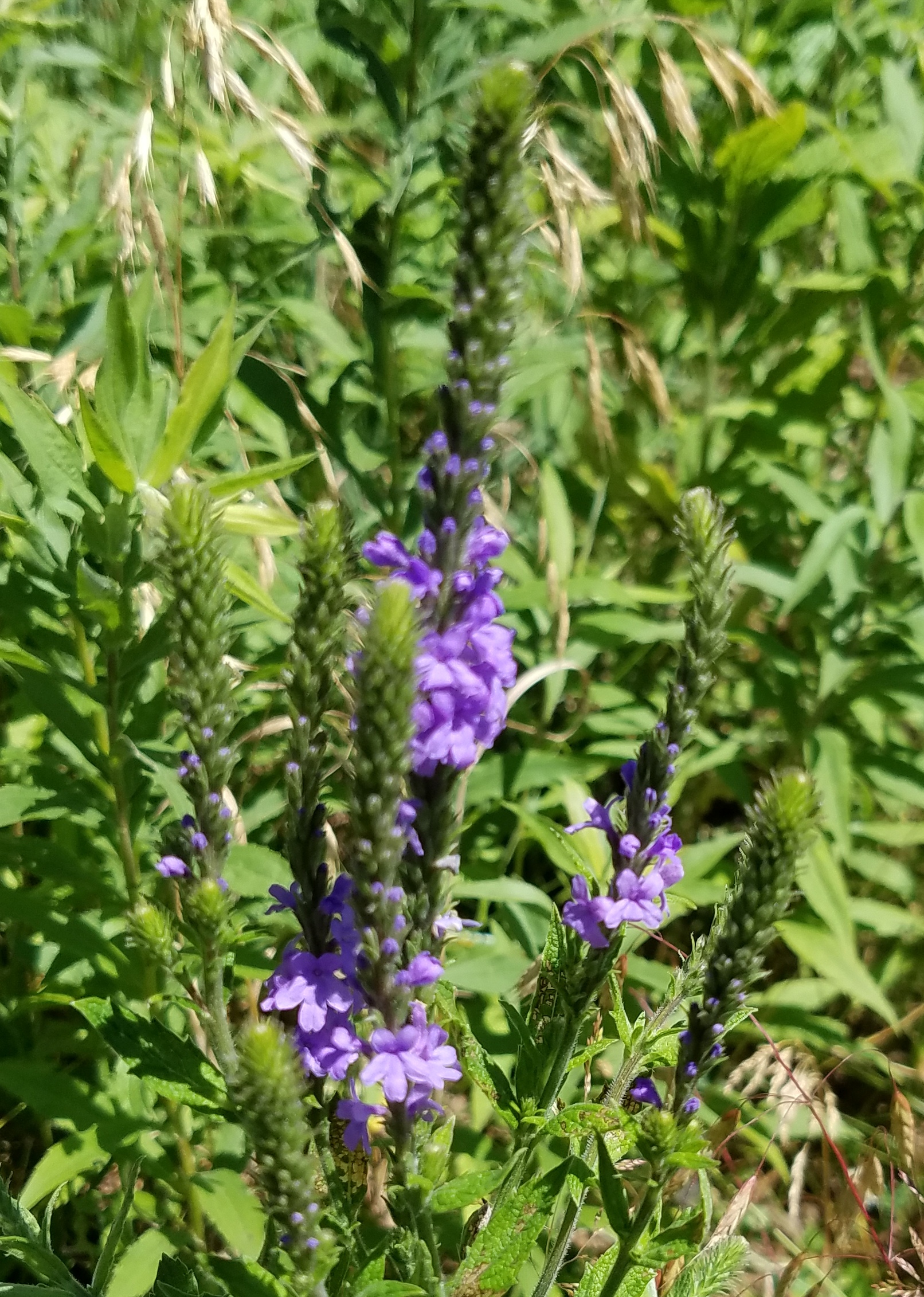
Wild Flower
It was a chance to spend part of the afternoon together. We were the only visitors when we stopped by.
When the Catholic parish opened a new grade school, Dan and his siblings transferred in from public schools. Since then we’ve done a lot together.
After lunch at one of our local Mexican restaurants we returned to the house to work in the kitchen. I put six pints of vegetable broth on the stove to process; made a spice mix using using cayenne pepper, Serrano pepper, curry powder and cumin; and made a batch of homemade sweet chili sauce for tacos. We wished we lived closer together to spend more afternoons like this. I sent him home with two paper grocery bags of vegetables and small jars of the spice mix and chili sauce.
Mexican Flag Enchiladas
Before he left, we toured the garden. The limbs of apple trees are filled with fruit, bending under its weight. There is a lot of growing left in the season and I’ll have to prop branches up so they don’t break. Japanese beetles are in the apple trees eating leaves and procreating. There are more of them this year than last, but it’s not the worst infestation we’ve had.
It’s a turning point toward summer. Spring garden planting is finished, leaving weeds to be pulled and crops to be grown and harvested. It’s time to begin work on the rest of the yard. That will be my July: pruning lilacs, cutting dead limbs from trees, and addressing the planting area in front of the house. I’ll start today, but not before I put the spring tools away and park my car inside the garage again. After watering the garden this morning, that’s next on a long to-do list.
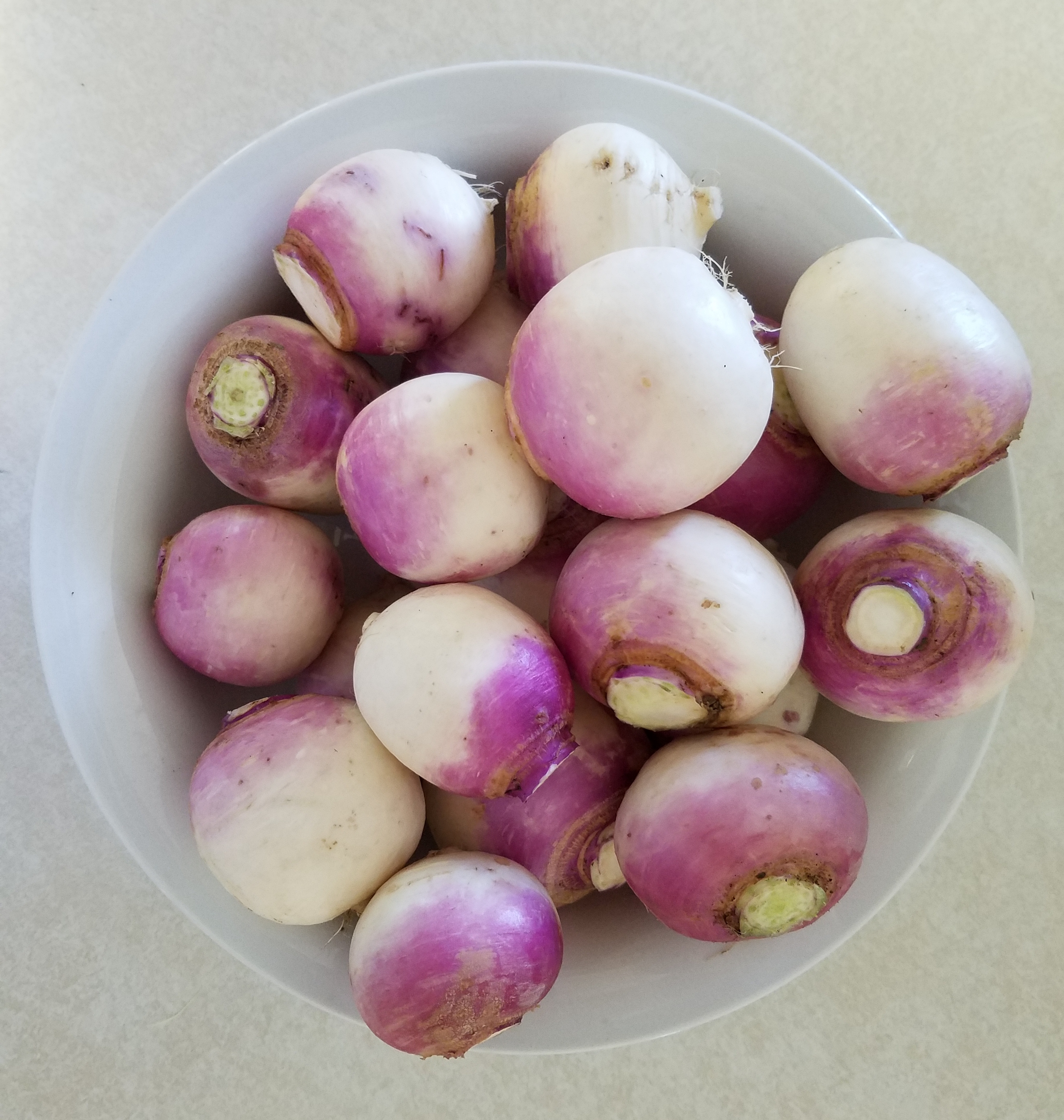
This year was the nicest crop of turnips I’ve grown. Here’s a bowl I prepped for storage in the ice box.
A few years back I started planting turnips for the greens to make canned vegetable broth. With this year’s abundance I’ve already put up about ten gallons of broth using earlier green vegetables.
I use turnips as an ingredient in soups and stir fry, and will occasionally mash one with other root vegetables as a side dish. I’m not yet to the Julia Child level of turnipery but can see it from here.
Saturday was harvest day and this year’s abundance is beginning to cut the grocery bill ($23 this week). I grow other stuff besides turnips. As a friend recently described it we have something of a kalepocalypse going on here. 42 plants was way too many.
There are other lessons from the garden, but no time for them now. I have to water and weed the garden before heading to the farms for the last day of soil blocking. They are starting crops for the fall share today.
Sunrise is in half an hour and the high ambient temperature is expected upper 80s to low 90s this afternoon.
I want to get as much garden work as possible finished before noon.
That means only a few minutes in front of the computer screen then outdoors.
I got a copy of the voting records from the May 30 special election in Solon. It can be a time suck and while very interested I set it aside to focus on the garden and other work at hand.
Yesterday at the home, farm and auto supply store I wrangled a squeeze chute. It is a large machine designed to hold cattle and horses stable, without injuring them, while they are examined, branded or given vaccines or other veterinary treatments. We sell only a couple of these expensive, specialized pieces of equipment each year. My objective was to take it out of the semi-trailer, reload it on a couple of pallets and traverse the bumpy parking lot from one corner of the store to the opposing one. I drove the forklift very slowly. Once in the outdoors display area, I lined it up with two others and locked it down. This is part of the “farm” aspect of our retail outlet. I managed the process without damaging the squeeze chute.
It was a work week looking toward the weekend. Now that Saturday morning is here it’s time to get outside. Here’s hoping for a good day in my kitchen garden.
After hours in the kitchen garden much remained to be done after Saturday.
Garden work began at 6 a.m. I moved to the kitchen at 3 p.m. and worked another four hours.
I was steadily busy throughout waking hours with only water breaks to sustain me.
I harvested kale and weeded the plot, replanted a failed tomato plant, weeded carrots, dug up two small plots to plant cayenne pepper and eggplant, harvested collards and put temporary fencing around them. I mowed the fifth plot and spaded soil in about a third of it. With the near 90 degree temperatures, I picked lettuce before it had a chance to bolt.
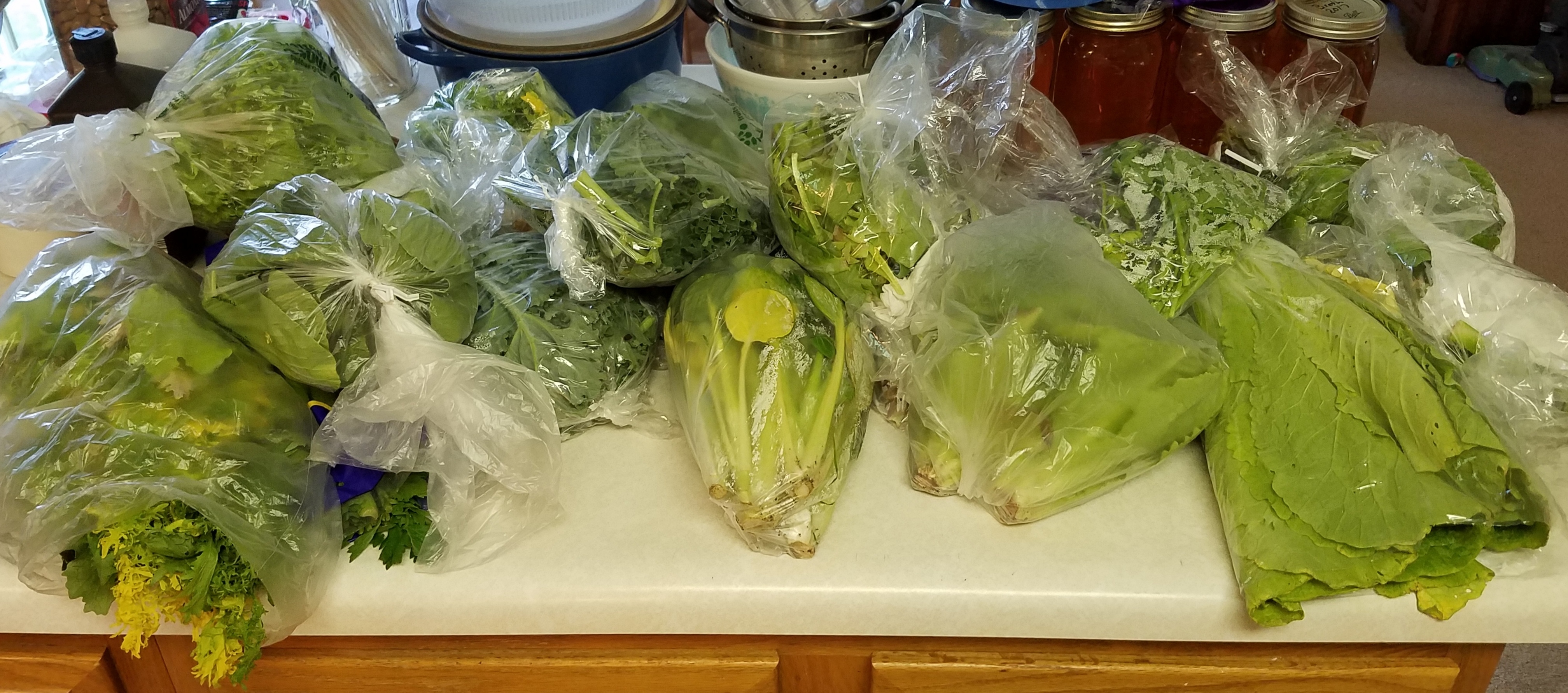
In the kitchen I cleaned lettuce, collards and kale and made dinner of a big salad. I steamed and froze the collards and emptied the ice box of every bag of greens and went through them. The goal was to make soup stock with the cooking greens. It was a dish too far. Organized, they went back into the burgeoning ice box.
Green Vegetables from the Ice Box
The highlight of the day was unexpected. The sugar snap peas are four feet tall and began to flower along the tops — as if an artist daubed white paint on a canvas, impressionist-style. I stopped and looked from different angles as sunlight faded flowery details. Beautiful.
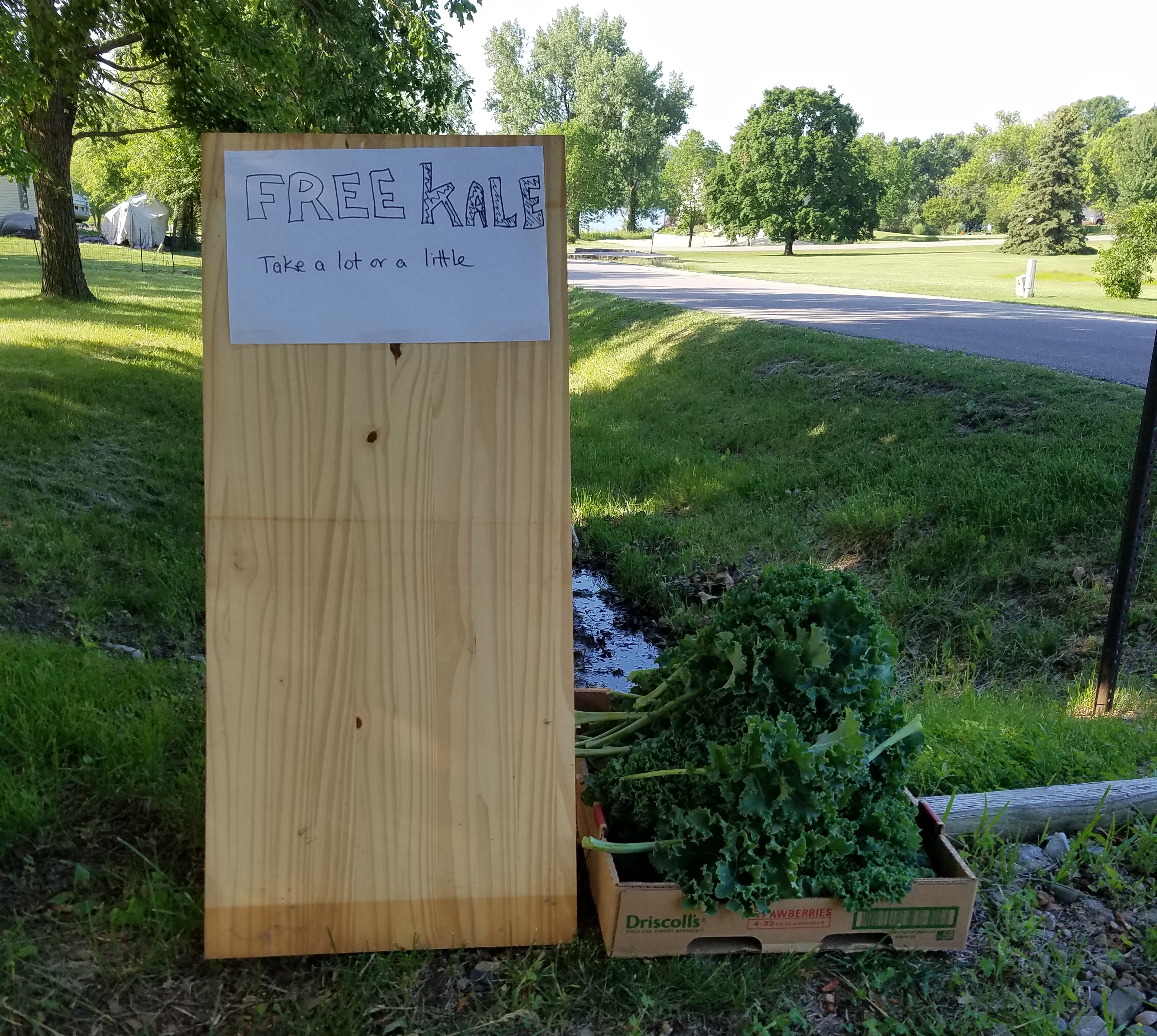
Roadside Kale Distribution
I harvested 12 kale plants and weeded the plot. It yielded two full tubs and more. I made a box of 24 leaves for the library workers and washed the small scarlet leaves to put them away.
I put some of the abundance by the road for neighbors and passers by to take. It was the city-wide garage sale day so the expectation was bargain-seekers would find this spot. It was gone in less than 15 minutes.
After a shower and clean sheets I slept eight straight hours.
On the plus side I was so engaged in our kitchen garden there was little time to think about much else. At the same time it was difficult not to feel like little got done despite evidence to the contrary.
Well-rested, the weekend cycle of watering, weeding and planting starts again. It’s what we do to sustain a life in a turbulent world.
I’m putting together a spring newsletter for inclusion in the June billing.
Less than half the people who live in our association participate in the Facebook or Google Groups, so a newsletter is our chance to reach out to almost everyone.
There are some things that bear repeating each year, and I’ll include them. I also want to try something different this month.
If you have a short bit of news to report related to what’s going on in the association, please forward it to me by Monday afternoon. If you have a question about the association, and it has broader relevance, I’ll include your question (with your name), and address it. Any tidbits of local history would be welcome. I’m looking to post things specific to our subdivision in which everyone would be interested or could learn from. To keep the budget low, I’m planning on a single, one-sided sheet, so let’s fill it up with useful and interesting info.
The reason for the holiday is to honor the men and women who died in military service for our country.
I hope you and yours have a safe and peaceful Memorial Day Weekend.
Regards, Paul
~ Email to our home owners association Google Group sent May 25, 2017
Over the weekend a storm broke off a branch in one of the maple trees. The branch wedged between two others 20 feet above the ground. I couldn’t remove it myself.
The tree service came yesterday with chain saws, ladders and loppers to bring the branches safely down. After work at the home, farm and auto supply store I cleaned up the site and built a brush pile next to the garden. I’ve been thinking of adding two more plots, so maybe, after I burn the pile, this is the time.
Not knowing better in 1993, we planted the maple too close to the house. It needs taking down according to my arborist and climber.
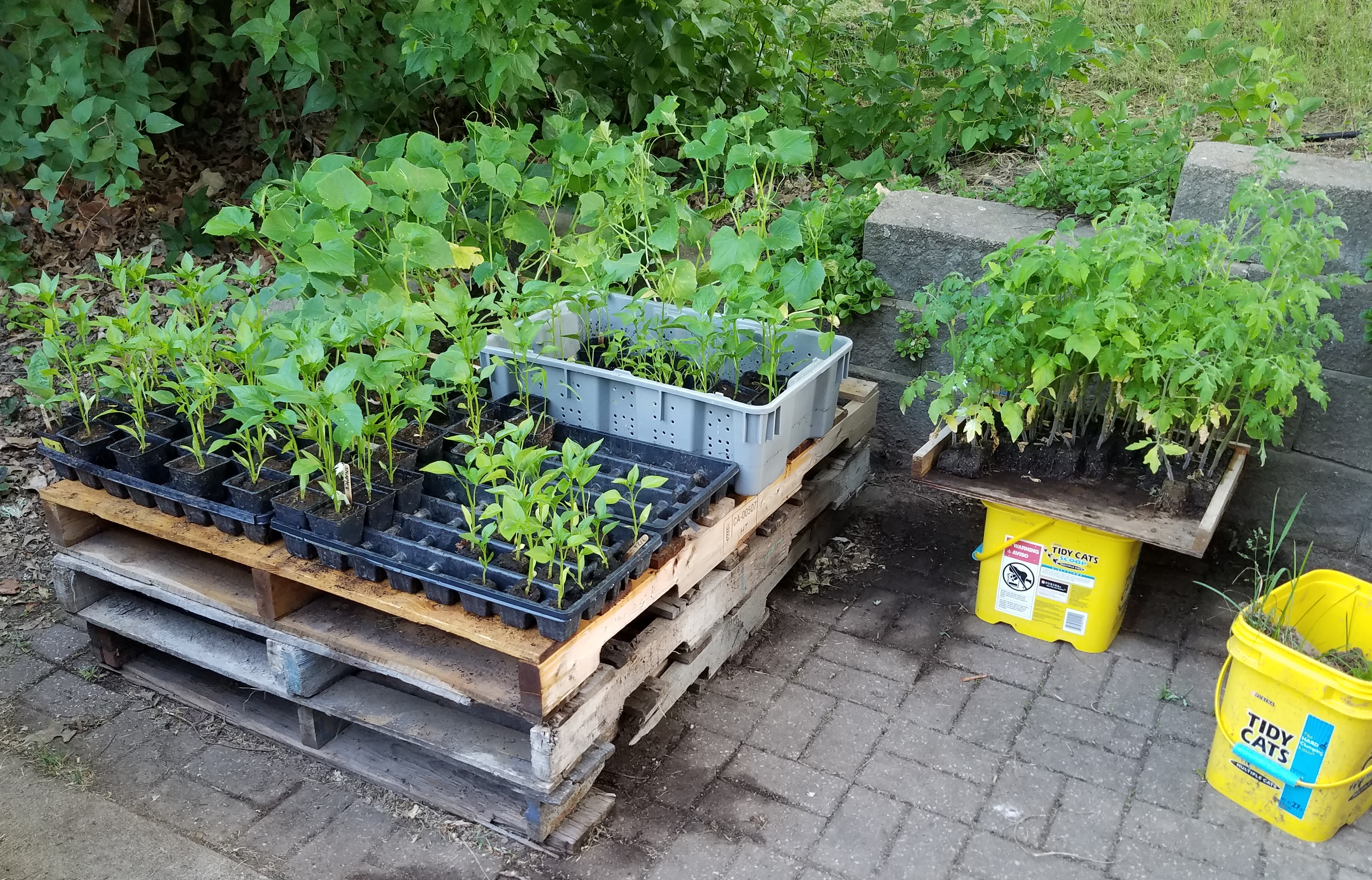
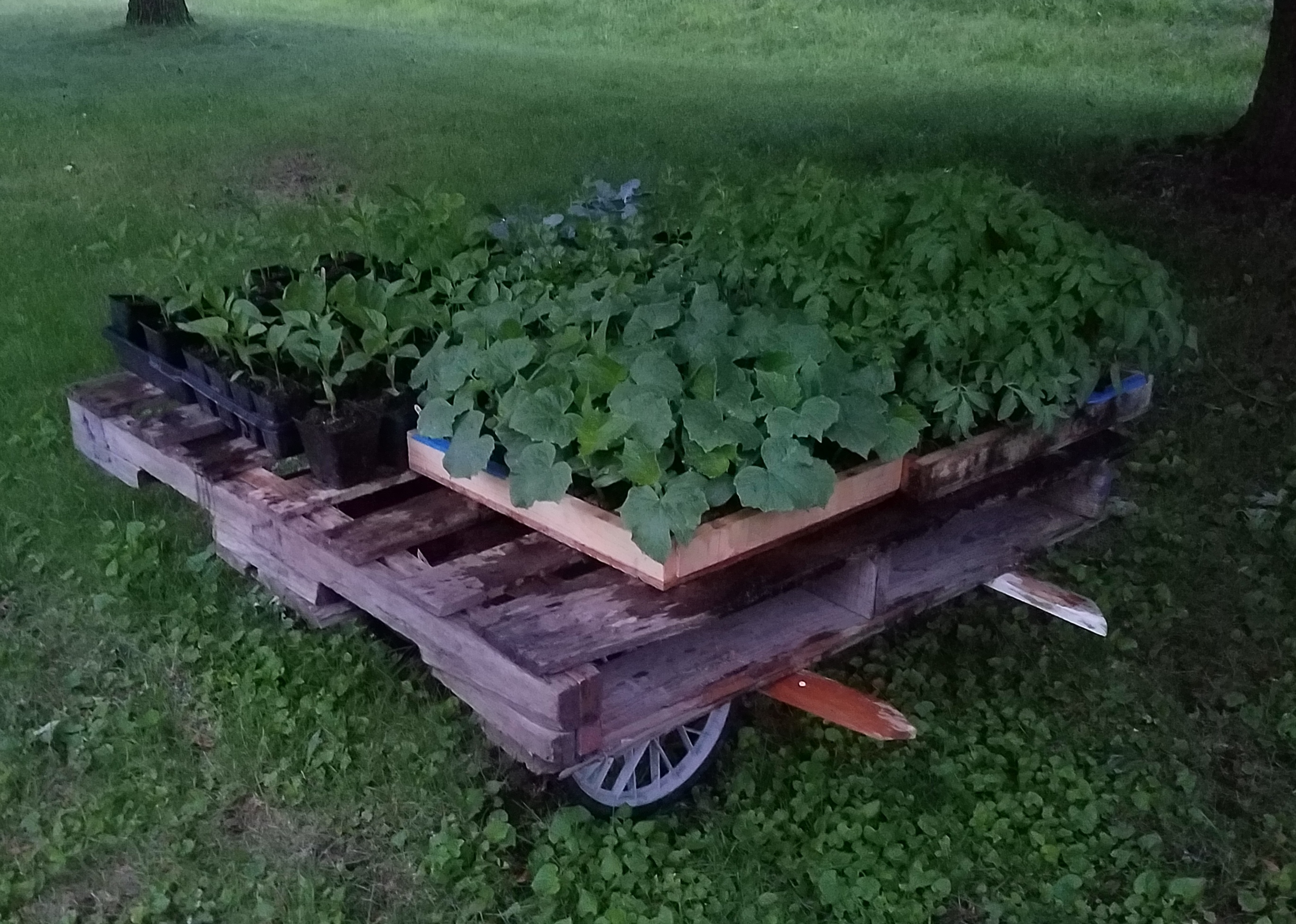
Seedling Cart
I’ve been working in the garden center at the home, farm and auto supply store. Foot traffic has been brisk with customers picking up flats of seedlings for flower and vegetable gardens. Working outdoor provided an opportunity to talk about gardening. I felt in my element.
At home, the lawn is overgrown and our garden is two-thirds planted. The seedlings are ready so I’m waiting for the intersection of dry-enough ground, time at home, and clear skies. As soon as that happens I’ll get more planted.
The weather forecast is for near-perfect spring weather. No rain and a high around 65 degrees.
The day began at 4 a.m. with reading and laundry. I moved the cars down the driveway and rolled the seedlings out of the garage before dawn.
There should be fewer seedlings on the cart by day’s end.
The lilacs are toward the end of the season. I stood inside the branches, lush with flowers, and let the scent envelope me.
Years ago our daughter kicked a soccer ball under the lilacs. For a moment I was distracted… I retrieved the ball then I saw her. This memory of her in sunlight from under the lilacs is part of me this warm spring day. I carried her with me as I prepared for a day of gardening.







 Journey Home
You must be logged in to post a comment.