We have fresh tomatoes with every meal, for snacks, and with everything.
We aren’t sick of them yet and work to preserve some of them is imminent. There’s a lot going on in the kitchen garden this August.
Sweet corn is in. Our local farm has had a spotty year, yet we’ve been able to freeze enough two-cup bags to make it until next year. Last night for dinner we had corn on the cob with sliced tomatoes — a classic summer combination.
First up in tomato preservation is to make a dozen pints of diced. This, combined with a backlog from previous years is enough to run the kitchen. I’ll also make as much tomato sauce as I can. Last year I froze it and that worked well. The freezer is filling up already so I may have to can some of it this year. Last year I froze small tomatoes whole and used them during the year to make sauce. I may try canning them whole to supplement the diced.
Yesterday I picked about two bushels of the first apples. A lot more wait on the trees. Our early apple is sweet and makes a great base for apple cider vinegar. I make a couple of gallons each year and the jars to do so are empty and just need cleaning. Our cupboard remains full of apple butter and apple sauce, so maybe a few jars of each is all I’ll make this year. They are good for out of hand eating as well. I’ll need to find a home for some of them or leave them to wildlife.
I froze enough kale for the year early in the season. What I harvest the rest of the year will be to give away or eat fresh. There is enough vegetable broth for the year, frozen jars of pesto, frozen okra, frozen celery, grated and frozen zucchini, and the hot peppers are beginning to come in. It’s been a good year so far.
The garden didn’t produce green beans. The plants look healthy and there have been flowers. Almost no beans have been produced.
The variety of red beans planted needs to climb and I thought they were bush beans. There are bean pods forming, so there will be some harvest. Next year they need a fence to climb on, if I plant them again. I planted beans mostly to fix nitrogen in the soil.
It seems like there can never be enough beets. I started some in trays and those fared much better than the ones sown in the ground. Will do more of that next year. For now I have one jar of pickled beets to last the year.
The tomato and apple harvest signal the garden’s impending end. There’s a lot of work to be done, but we enjoy the taste of fresh tomatoes as much as anything we grow.
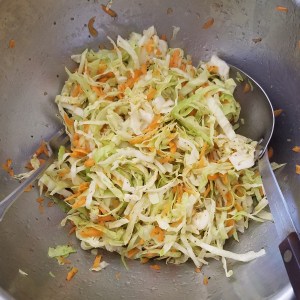
Mixing bowl with summer coleslaw made of local produce and my fermented apple cider vinegar.
Six weeks into summer 2019 we are over a hump, if not the halfway point.
I visited Paris in August 1974. It was hard to find a business open. Eschewing air conditioning we Americans find ubiquitous, Parisians fled the heat of August for the Mediterranean Coast and other breezy spots.
We could learn from that society.
My spouse visited her sister for the month of July. While she was gone I set the thermostat at 84 degrees compared to doing what we wanted in July 2018. The average monthly ambient temperature increased from 75 to 76 degrees Fahrenheit. Between running the air conditioner less and only one person active in the house, our electricity usage dropped by 37 percent in terms of kWh used. I appreciate the savings but I’d like her to return home more.
Summer in Big Grove Township has been reasonably nice with plenty of warm, sunny days, not enough rain, and an abundance from the garden. Friday the ditch had dried out enough I could mow the tall grass and get it looking more normal. The rabbit that lived there this year is likely frowning as rabbits do.
The yard grasses are in transition and need mowing, but not that much. I thought to do it yesterday and rolled up the garden hose near the house after watering in the morning. Not yet. Maybe today after my shift at the orchard. Maybe not as it is a low priority.
We planted our first garden in 1982 and grew or harvested something from our yard in the five places we lived since then. I’m getting better at it.
Cucumbers
We produced more cucumbers this year than we could eat and preserve. I determined a process using four varieties of seeds: two pickling, a Japanese-style cucumber and the utilitarian Marketmore. I made a gallon of fermented dill pickles as dill came in from my barter arrangement with Farmer Kate. The key to good pickles is the cucumber size. Once cucumbers get an inch in diameter they are too large for pickle making. Just don’t do it.
I made dishes of sliced cucumbers for potluck dinners, gave them away, and ate them as much as I could stand sliced raw, in mixed salads, and with lettuce greens when they were in season. There were plenty for sweet pickles but I overdid it last year and have more than a dozen leftover jars. I struck balance between the desire to use every bit of produce in the garden and how we eat them in season.
Tomatoes
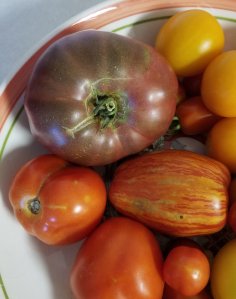
As I posted a couple days ago, we are waiting for tomatoes. The cherries are coming in Jasper, Taxi, Matt’s Wild, Grape, White Cherry and Clementine. The White Cherry, Jasper and Matt’s Wild are surprisingly sweet and delicious. The single Early Girl and Black Krim plants produced fruit. I’ve had a couple Speckled Roma which I found to have tough skin.
This year as last, I planted the rows too close together. I crawled under the seven-foot indeterminate vines and inspected. A lot of good sized fruit waits to ripen under the foliage.
The plants have less blight this year than last. I don’t know why but two things are different. We had extremely cold weather last winter. Perhaps the cold killed some of it off. I also applied diatomaceous earth to the ground after tilling to keep down the crawling bugs that love tomatoes. Perhaps it had an effect on the blight. So far, so good and if all continues to go well, we will have plenty of tomatoes for fresh eating, canning and gifts to friends.
Green Beans
By now we’ve usually had green beans but there are hardly any on the plants. The foliage looks great. There are flowers. No beans. Other area gardeners are experiencing the same thing with a reduction in yield. I picked exactly two beans from a 15-foot row.
Apples
After nearly perfect pollination and fruit setting the invasion of Japanese beetles has the apple trees looking like dirty brown lace. I wait for the fruit’s background color to get right and have been tasting them every other day. The first of two varieties is getting close. Fingers crossed.
A friend sprayed his apple tree with Sevin to kill a Japanese Beetle infestation. The pesticide works although it contains carbaryl, a known carcinogen banned in some European countries. “Aren’t you worried about eating the fruit?” I asked. “Nah!” he said. I continue to refrain from using insecticides, which offer a temporary abatement to the detriment of the environment and apple eaters.
It’s a race to ripeness with popilla japonica. If bugs eat too many tree leaves, inadequate sugar is produced for fruit to ripen. If fruit gets ripe on the tree and they can penetrate the skin, they will mass on it and eat it. There appears to be enough green leaf left to absorb sunlight adequately to ripen the apples. I plan to pick them the minute I find them ripe and ferment the juice to make apple cider vinegar. The second variety, Red Delicious, is for eating out of hand, and everything else apple-related.
The Joni Mitchell song comes to mind, “Give me spots on my apples but leave me the birds and the bees.” In our garden there are plenty of apples and an abundance of birds and bees with whom I enjoy co-existing.
With late planting and heavy spring rain the garden has been a mixed bag. A highlight of every year is arrival of tomato season and planning the use of what I expect will be a good crop.
The first tomatoes have ripened, and now we wait for the slicers and plums.
We eat them fresh, give some away, and prepare canned sauce, juice and diced with the rest.
As my worklife slows down, it seems there is more work to do in the yard and garden. Growing tomatoes doesn’t seem like work.
My last summer post for Blog for Iowa runs Friday and I am ready for what’s next, including a return to my usual topics in this space. I cross post here what I write elsewhere so a trickle of BFIA articles will continue until they all have been posted.
I begin work at the orchard this weekend for the seventh consecutive season. Hopefully we’ll have ripe apples and great conversations with our guests. It is blueberry season in Michigan and this weekend we will offer them fresh for the last time this year. We’re hoping Pristine, Jersey Mac and Viking get ripe by the weekend so our guests can pick them.
In July I signed up for a nutrition class paid for mostly by Medicare. The goal is to watch my blood sugar levels and develop better eating and exercise habits. A by-product of the classes has been losing ten percent of my body weight. I feel better and hope to stave off diseases of aging such as heart disease, stroke, diabetes, eyesight deterioration, influenza, pneumonia and the like. Fingers crossed. I still have a lot I want to do and good health is an important prerequisite.
As the sun ascends on another brilliant Iowa day the garden needs watering, and I want to get a trail walk in before leaving for the home, farm and auto supply store. There is a long to-do list needing attention as well. Thanks for reading.
I stood outside in early morning darkness where there was a refreshing yet decidedly warm breeze.
The overnight low was 80 degrees Fahrenheit. I’m not sure if that’s warm enough to hinder apple production but scientists believe at some point failure to cool adequately at night does impact taste and texture.
They don’t fully understand the impact of climate change on apple production. For the home fruit grower it’s one more thing for concern.
The breeze dissipated with arriving sun. The forecast is clear and hot with ambient temperatures rising to the mid-nineties. We’re getting used to the heat, especially after the 2012 drought.
After sunup I went to an apple tree, picked one and ate it. The sugars are beginning to form but it is still a “green” apple.
Tonight begins the two-day festival in the small city near which we live. The ambient temperature is expected to peak around 6 p.m. when things are just getting going. Tomorrow is the parade through town when it’s pushing 90 degrees. I’m not sure it is a good idea to attend this year so am skipping the famous hay bale toss tonight and will re-evaluate the parade in the morning. A friend from across the lakes in Big Grove Township is running for sheriff so I want to be there to support him.
It’s blazing hot! We have an air conditioner and refrigerator with an ice maker that both work. There are also three bushels of vegetables that need processing. There will be plenty of inside work to keep me busy now that the heat is here.
The challenge for a gardener is to use or preserve the abundance in a way that makes sense.
At the beginning of a gardener’s life-long journey, what that means is not clear. Clarity approaches as our interaction with a kitchen garden matures, planting to meet the anticipated demands of modern living — season by season, meal by meal.
Gardening is as much about cooking and eating as it is about genetics, crop inputs, pest control and horticulture.
Saturday morning I made more basil pesto to freeze and started the first batch of dill pickles. Friday I pickled beets and dried parsley for the cupboard.
The photo represents dinner last night. The veggie burger and ketchup are processed foods and the vegetables are locally sourced. I grew the squash and peas, a farmer friend grew the onion and carrots. It was a satisfying, seasonal meal. Cooking techniques developed through years of practice and study made it possible to reduce the amount of time needed to prepare these dishes. At the end of the day, this meal was nothing, a throw-off addressing our need to eat. This meal was also everything.
People frequently post photos of their meals and we enjoy viewing them on social media. It is a natural impulse that say what I’ve done has meaning beyond a single meal or dish. In a search for truth and meaning in life eating is important, or as my colleague at the orchard Matt Steigerwald said, “food is important.”
Like so many things in life it reduces down to the question what will I do with my life today? Living with a kitchen garden and enjoying its production is one important thing among others.
On a fine summer day conditions were perfect to harvest hay and garlic.
My CSA friends recruited volunteers to bring in the garlic and across the county farmers were baling hay in large round and small rectangular bales.
On Independence Day farmers came to town to buy cultivators, salt blocks, pumps, feed, big pedestal fans, bedding (for horses), air compressor parts, nuts and bolts, and other stuff of life. At the home, farm and auto supply store we also sold a lot of propane, grills and kayaks, but that was not to farmers, as a farmer plans his/her kayaking and grilling ahead of time.
The rain has been good enough my garden doesn’t need much watering. Predatory insects are noticeably in abeyance, I suspect because of the polar vortex and extremely cold temperatures last winter. Tomatoes look as good as they have in years. It is already hard to use all the cucumbers. There will be green beans, okra, hot peppers, eggplant, squash, kale, carrots and more by the time August is finished.
We love summer.
Actually, we love life even in the extreme weather brought on by our own assault on nature. That we have perfect conditions for haying and garlic harvesting may well be an anomaly going forward. It was enjoyable this year and will be for however long it lasts.
I viewed the president’s speech on the environment on YouTube. It was not about climate change, human-made or other. In fact, the speeches by the president and about half a dozen others were devoid of any mention of the science of climate change, or solutions to solve the climate crisis.
I feel certain the bait shop owner from Florida has seen improvement in his local environment by the administration’s work on red algae. His speech was unprepared and somewhat random, but a slice of Americana available for public consumption and that, maybe, was the point. There was praise for the president from his staff, including the despised Andrew Wheeler, current head of the Environmental Protection Agency. If one adds up everything in the 56 -minute event, if we didn’t know the science of climate change, it would be believable. The climate crisis was absent from the environment Trump depicted and that is the problem with the Trump administration.
What bothered me the most, as it does any time I listen to the president, it’s the assertion that covers up a lie. Wheeler was bragging on how many super fund sites have been deleted from the list. Were they actually cleaned up or just declared clean and deleted?
I agree with Al Gore’s analysis:
Sometimes it’s hard to tell the origin of hot weather. Is it coming from Anthropogenic climate change, or from politicians in Washington, D.C.? Maybe a little of both.
June’s last day marks the beginning of my hiatus from farm work.
The orchard’s chief apple officer confirmed they need me in the sales barn this year. My manager emailed me back to set a starting date. Apple season is set and I can focus on other things in July.
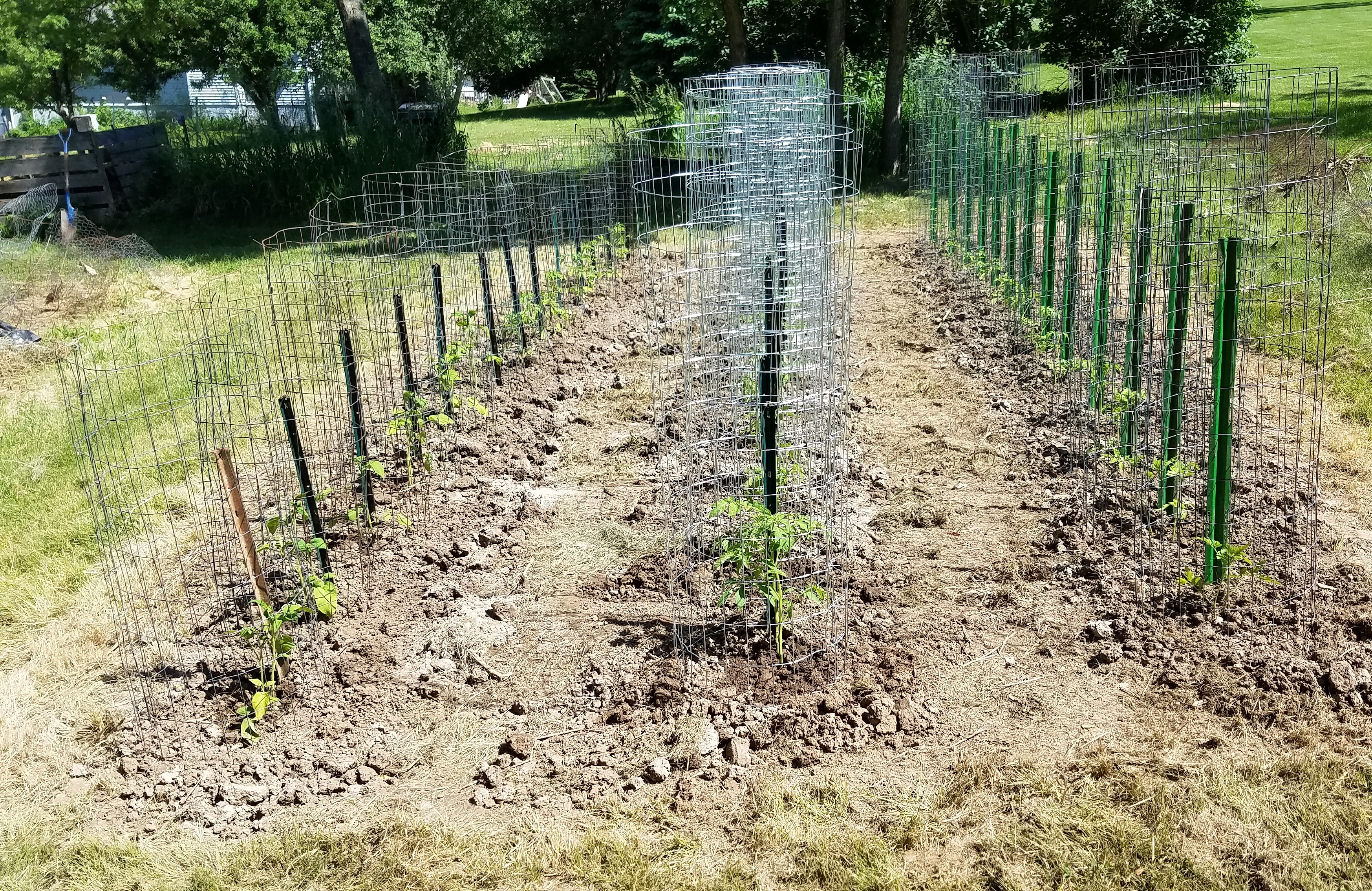
For the first time this year I made a “project run” to the commercial center in Coralville. I picked up a replacement faucet handle, a new light/vent fan part for a bathroom, some topsoil and grass seed to fill in the depression over the septic tank, a new bird feeder and a shepherd’s hook, and eight more 6-foot stakes to protect tomatoes from deer. I hope there will be more trips like that.
Weeding the garden is a never-ending task. I focused on the plot with beans and a variety of crops. Even the parsley seeds sprouted and I removed competition so they will grow to maturity. I saw several Japanese beetles in the basil so I harvested the big leaves. I also harvested kale, broccoli, green onions, radishes, parsley, beets and sugar snap peas. The ice box is crammed with containers of fresh greens and other vegetables. With my spouse visiting her sister for a few days I will be eating a lot of greens for a while.
I planted Table Queen Acorn squash (Ferry – Morse, 75 days) and Honey Bear Acorn squash (Johnny’s Selected Seeds, 85 days) in newly claimed space. Acorn is our favorite winter squash so here’s hoping they succeed.
The lawn was a field of clover which I harvested with my John Deere mower and grass catcher. Rabbits will find something else to eat, hopefully not my garden. I piled the clippings in the transition space near three oak trees I planted from acorns and will decide which vegetables get protection next. When weather turns hot, the lawn doesn’t produce as much, so it will be a couple of mowings before the garden is fully mulched.
My clothing was drenched with sweat by the time I finished the lawn. I hung my t-shirt and jeans to dry, took a shower, and focused on kitchen work the rest of the day. Processing today’s harvest took the most time.
I like this in between time for a lot of reasons. It’s a chance to let the dust of the first half year settle and figure out what is most important to sustaining a life in a turbulent world. Just like weeding, the non-productive energy-suckers need to be removed to free up what’s most valuable.
I returned nine empty seedling trays to the farm Sunday morning before my soil blocking shift.
The empty trays reflected clear weather and dry enough soil for planting. I had been worried seedlings would get root bound. I think I made it into the ground in time. I hope so.
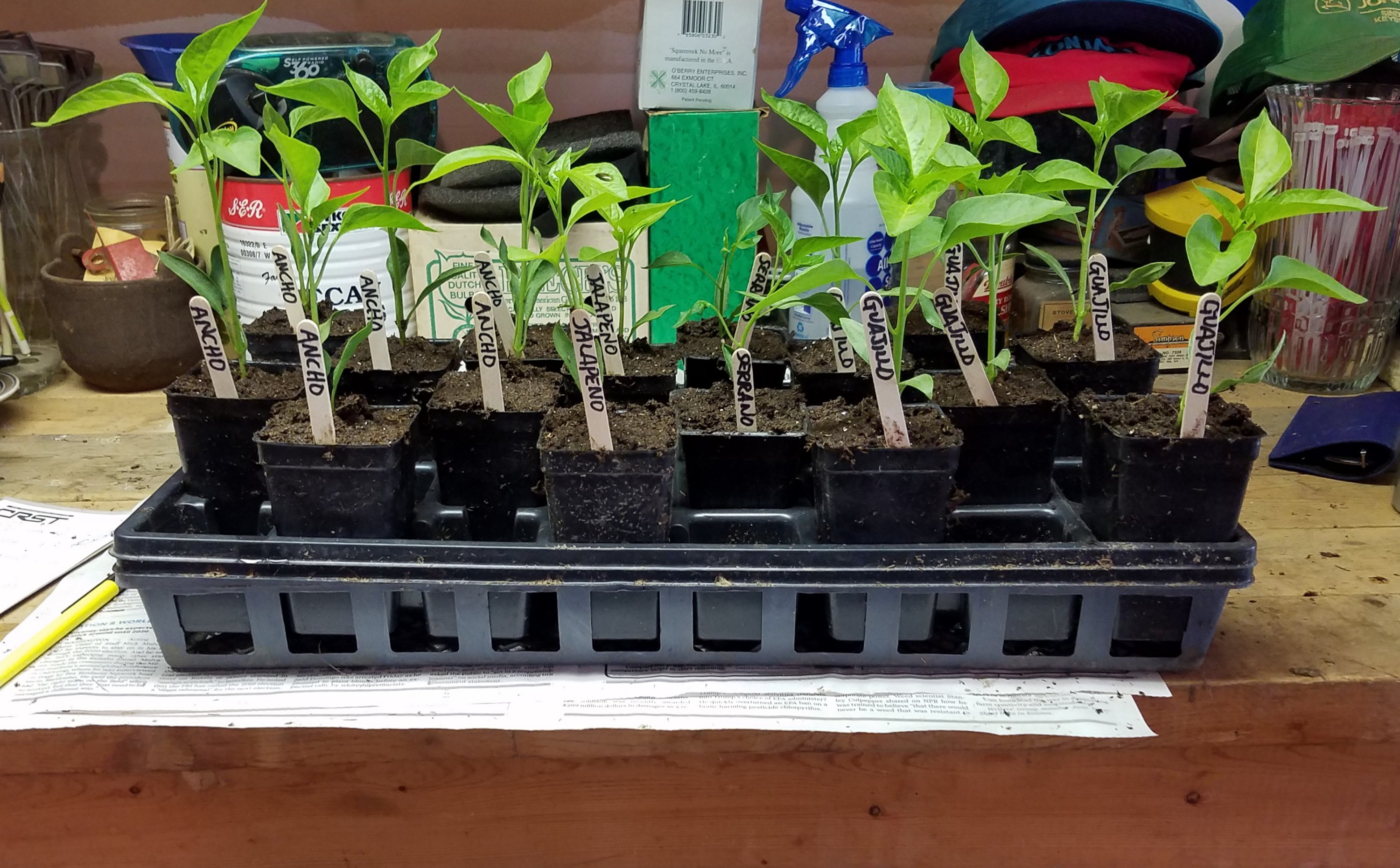
The last three days have been devoid of rain with mild temperatures. I worked outside a total of 15 hours, finishing initial planting in six of seven plots. Now I must find spots for garlic planting in late July, Ancho and Guajillo chilies, eggplant and winter squash. I retained several trays of extra seedlings in case there are failures. Starts of basil, parsley, cilantro and broccoli are ready for the second wave of those varieties.
Putting in tomatoes is a big production. I cleared a plot that had been inactive since fall. I dug two-foot wide trenches for the seedlings and prepared the ground with a hoe and rake, putting down fertilizer before raking. A big part of tomato planting is sorting seedlings grown in the greenhouse, seeing how they germinated and counting varieties. In the end I made 47 planting areas with one or two plants per cage in 21 varieties.
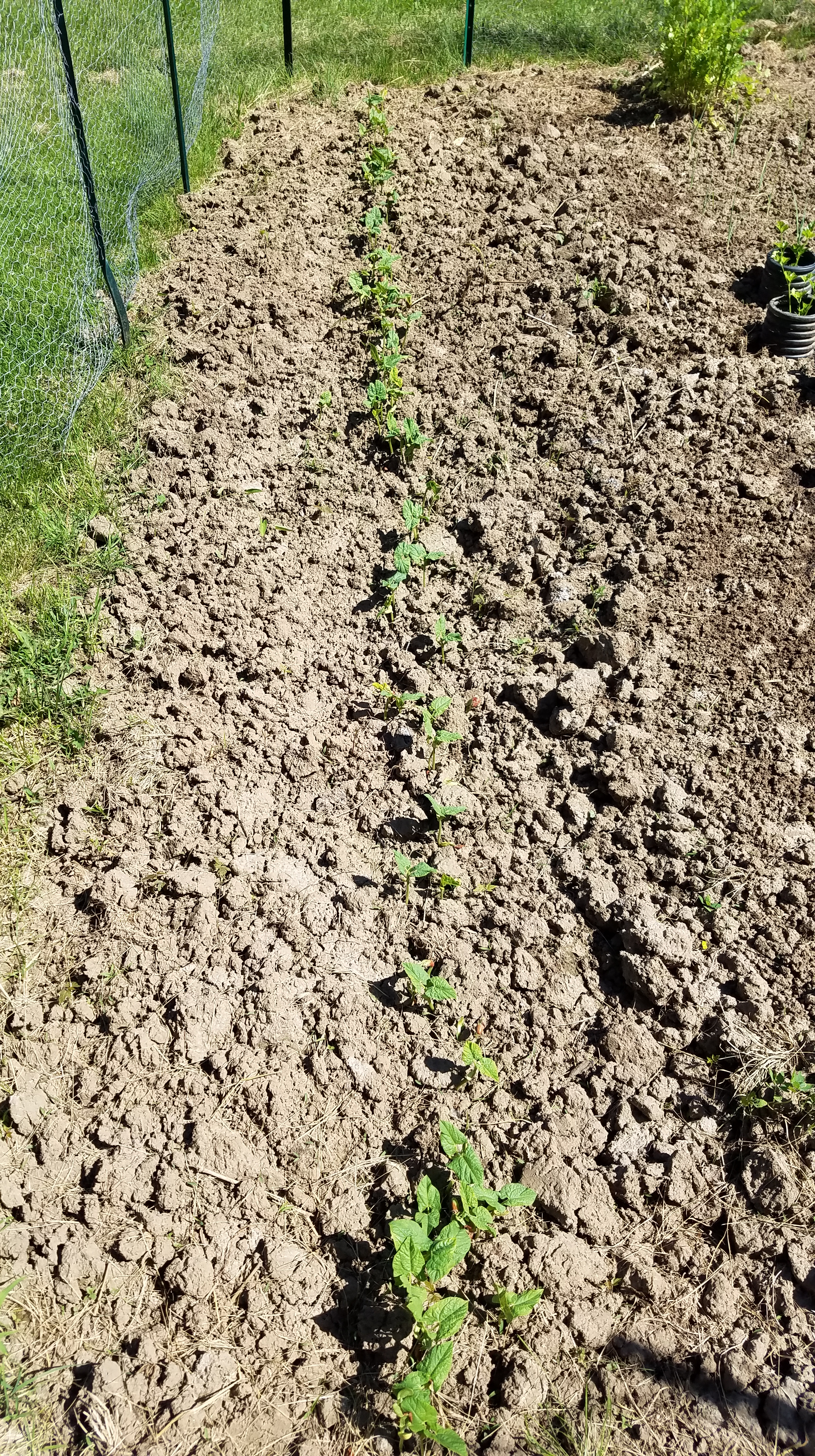
Row of Green Beans
This year I separated the cherry tomatoes into their own spot with more space between plants. The idea is to use that space to gather bowls of multi-colored fruit for the kitchen and for gifts. They are already blossoming.
Main crop slicers will be Brandywine and German Pink, both available from the Seed Savers Exchange. Plum tomatoes included Amish Paste, Roma, Speckled Roma and Granadero. I planted six varieties of cherry tomatoes with orange, red, yellow and white colored fruit. If the plots grow there will be plenty of tomatoes for fresh eating, gifts, freezing and canning.
Another big project was planting cucumbers. Planning included seed selection (Northern Pickling, Little Leaf Pickling, Jade and Marketmore) and downsizing the space from last year. I use 2 x 4 inch welded wire fencing to support plant growth and put seedlings close together. Everything survived the transplant. If plants are successful, there should be plenty of fresh and pickling cucumbers.
The last big planting was hot peppers. I made a patch of 15 plants and everything survived transplant. I have extra seedlings if some should fail. I selected jalapeno and Serrano for fresh eating and Bangkok, Red Rocket, Cayenne and Red Flame for drying. I also have Ancho and Guajillo chilies ready to plant once I figure out where. This will be an experiment in Mexican cooking if successful.
Spending time in the garden enabled me to watch the beans grow. From early Friday morning until late that night plants pushed out of the ground until the row was filled in. The same was true for the red beans, although they were a day later. It is something to watch the garden grow.
By Sunday afternoon I needed a nap. Today I’m rested and ready to get back into the garden for as long as the sun shines. The stress of too much rain is changing to worry about drought. We’re not there yet.
I ran into a couple of neighbors at the well house while receiving a shipment of chlorine for our water treatment plant. They were checking to see if the dehumidifiers had dried out the well pit after the rain. They had.
We got to talking about the wet spring, polar vortex and the weather generally and predicted we’ll be going into drought next. None of us were kidding.
Other than that I spent the day in our yard and garden. I finished planting the fourth of seven plots and have about a third of number five in. As long as the weather holds I’ll keep after it. The soil is a combo of dry and muddy which is the best we can do this spring.
It’s been five days since I left the property with my car. Spiders made a web in the wheel well.
I planted these seeds in the fourth plot on June 3:
I’ve never grown okra before, so fingers crossed. For the plant to be productive, once it starts fruiting, pods are to be picked once they are three inches long. Gotta get from seed to plant before I worry too much about that. The two rows of beans are a lot. The main purpose is to increase soil nitrogen for next year… and of course we’ll eat or preserve them. It’s the first time planting red beans for drying and storage. I have seedlings of cilantro and parsley, so this patch is for later on, assuming they germinate. There are never enough carrots.
Monday breakfast of scrambled eggs and sauteed bok choy with spring garlic, topped with green onions (scallions).
I picked the first green onions and used them for breakfast. There is a lot going on outside.
I left some of the volunteer garlic in the ground so we can get scapes. If my garlic stock from last year lasts, I’ll plant them as seed later in the summer to supplement the volunteers.
I inspected the apple trees and they fruited nicely. Apples form clusters of five blossoms which get pollinated if we’re lucky. When the fruit forms and starts tipping up, and the calyx closes, you know there will be a fruit. When we get to this point it is the time to cull the extra or non-productive fruits so the ones left will get decently sized. Because this pollination persisted for so long, I believe nature took care of the culling for me and rejected later pollination because the fruits are nicely spaced on the lower branches. That would be your folk-apple theory.
I’ll have to check in with the chief apple officer at the orchard when I next see him. I hope that’s soon.
Experimental row tillage to minimize damage to soil structure.
It was finally a day to spend outside in the yard and garden.
I planted Kentucky Wonder Bush beans (Seed Savers Exchange, 65 days) and transferred beets, arugula, lettuce and parsley into a single row next to the summer squash planted the previous day.
The garden plots have not dried out as well as I’d like. The urgency to get things in the ground had me doing the best I could to dig the semi-muddy soil and move seedlings and plant seeds in garden rows.
I’m using a technique I call “row tillage,” in which I dig more narrow rows to plant. I turn the soil with a spade, break it up with a hoe and then break it down further with a garden rake. Because the soil was still muddy, it didn’t break down as easily as I hoped but it got the job done. Hopefully soil structure is less damaged than if I were to dig up and rototill the entire plot. Because I mulch, there is no concern about weeds by leaving part of the plot untilled. If I had a mechanical tiller, I’d use it in the narrow rows. I may get one as I age or if garden tool-wielding bothers my shoulders or back. The technique worked last year with tomatoes, so I plan to use it more this year.
Culled hot pepper seedlings.
Culling hot pepper plants to pick the best starts is important. This year I plan rows with six ancho and six guajillo chili peppers. Seeds from Johnny’s Selected Seeds germinated well so there are extras. The rest — cayenne, jalapeno, Bangkok, Serrano, Red Flame and Red Rocket — will be planted two of each in a big bed. Ancho and guajillo are an experiment in Mexican cuisine. I use jalapeno and Serrano fresh and dry the rest. If the seasons proceeds well there should be plenty of them all.
Harvest was more turnips, parsley, beet leaves, and lettuce. I’m ready to spend another day and the forecast is clear skies. After a bit of desk work, I’m ready to make June 2 a gardening day as well.





 Journey Home
You must be logged in to post a comment.