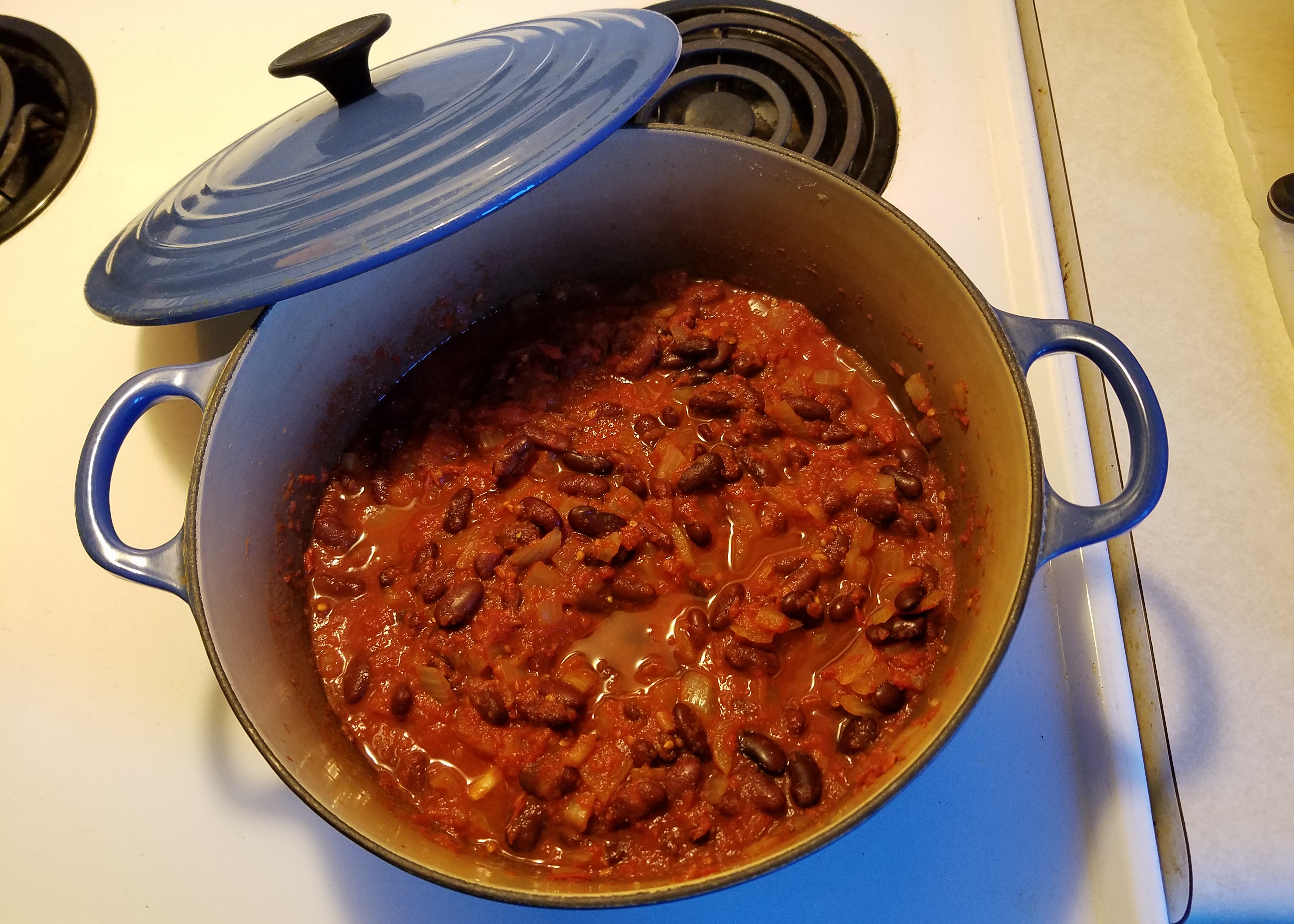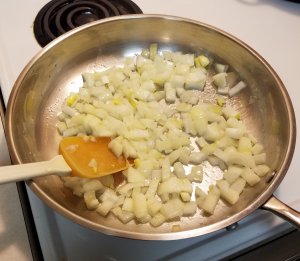
In a throwback to my work at a major logistics company I made a batch of vegetarian jambalaya for this week’s lunches.
The dish was born in Thomas County, Georgia as I was sequestered in a hotel for four months implementing a logistics project at a clay mining and processing plant. I had access to what was then called the TV Food Network and Emeril Lagasse. I made the techniques I learned my own.
Here’s a recreation of today’s recipe:
Ingredients:
2 tablespoons high smoke point oil
4 tablespoons butter
4 six-inch vegetarian sausage links sliced 1/4 inch on the bias
1/2 pound frozen sliced okra
2 cups diced onions
1 cup diced bell pepper
1 cup diced celery
4 cloves garlic minced
1 15 oz can red beans drained and washed
1 cup long grain brown rice
1 pint diced tomatoes
1 quart prepared vegetable broth
Salt, red pepper flakes, curry powder, prepared hot sauce to taste
In a Dutch oven, brown the sausage in cooking oil. Remove and set aside.
Melt the butter in the same pan and heat the red pepper flakes until aromatic.
Add the onions, celery and bell pepper. Saute until soft.
Add the garlic and stir together. Cook for five minutes over medium heat.
Season with salt, pepper, curry powder and hot sauce.
Add the pint of diced tomatoes and rice and stir together.
Add the quart of broth and bring to a boil.
Add the okra, beans and cooked sausage and mix everything together.
Cover and bring to a boil. Turn the heat to medium low so the liquid bubbles gently through.
When the rice absorbs the moisture, stir and serve with fresh, sliced green onions on top.
Makes six generous servings.
We have storage potatoes although it will soon be time to plant them in the garden.
I’d been thinking about gratin for a week.
Scouring cookbooks for a recipe, the dish appears to have fallen from grace from modern, comprehensive guidebooks in my collection. I settled on the simplicity of Julia Child’s Gratin Dauphinois from Mastering the Art of French Cooking.
I modified the recipe to use ingredients on hand — white sharp cheddar for Swiss, skim milk for whole — and otherwise followed her direction diligently. If you don’t know Child’s masterwork I encourage you to discover it today. My results from using her recipes have been timeless and always delicious.
What may be funny is I gave no thought to what to serve with the gratin. If I lived by myself, I would have eaten the gratin and called it a meal. The grace of being married 35 years is it encourages one to be a better person. We settled on a vegetarian chik patty and steamed broccoli as accompaniment. For beverage I drank cool, filtered water as my cold tapers off.
Saturday afternoons are my time in the kitchen. I miss the old routine of listening to Garrison Keillor’s A Prairie Home Companion while preparing dinner. I tune to the classical radio station but it isn’t the same. The scent of rubbed garlic from the baking dish arouses memories of past meals — especially those I prepared with our daughter when she lived in Colorado. Fond memories in a life that’s changing more each day.
We discussed plans for Thanksgiving dinner exactly three minutes.
It’s the two of us and we haven’t had chili with cornbread for a long time. We haven’t had an apple crisp this season either, so that will be our Thanksgiving supper along with a bottle of sparkling apple cider.
A person can eat only so many pizzas, bowls of soup, squash, rice and potato dishes in one month.
We don’t use the television much, so no Macy’s Thanksgiving Day parade, no movies, just us, chez nous with talk and naps. We get a signal from basic cable and have talked about getting a new television to replace the one that displays varying shade of red regardless of channel. The conversation was inconclusive.
People call it a holiday, but this year it’s merely a different day off work as I have to add Saturday to my schedule at the home, farm and auto supply store. A mid-week day of rest anyway… and some overtime pay.
We had a phone call with our daughter during which I was described as “Garrison Keillor-like” while telling a story about the orchard. Don’t know if that’s good or bad and I denied it. I claimed the Minnesota writer was much taller so how could I sound like him? The moniker stuck despite my denial. I’m okay with that.
I started talking about Minnesota where my Polish forebears bought land from the railroad. The only trip I made to the home place was the summer after Grandmother died. I brought back a turtle carved from pipestone for our daughter. She remembered the gift but not the context around it. We likely all have imperfect memories which should encourage us toward humility.
I understand why parents tell their children the same story over and over again. It’s a way of defining shared history. If we are honest, we craft the story to accurately reflect our experience, sanding off rough edges to help it along. Tricksters among us may misrepresent certain aspects of a story to see if listeners catch on. That’s part of the story telling craft, one that reinforces what is shared about our experiences. I believe we can be honest tricksters.
About now people are finishing their holiday feasts and winding down: viewing television, making phone calls, drinking coffee, putting away leftovers, et. al. I plan to read while the chili simmers, then make the apple crisp. It will go into the oven timed so it can be served warm.
Group of captured Allied soldiers on the western front during World War I representing eight nationalities: Anamite (Vietnamese), Tunisian, Senegalese, Sudanese, Russian, American, Portuguese and English. Photo Credit – Library of Congress
Most of Armistice Day was at home.
The forecast had been rain, however, a clear fall day unfolded and I planted garlic. Pushing cloves into the ground with my thumb and index finger, I made two rows and covered them with mulch retrieved from the desiccated tomato patch. It doesn’t seem like much, it’s my first garlic planting ever. If it fails to winter I have plenty of seed to replant in the spring.
Had I been more prescient about the weather I would have spent more time outside: mowing, trimming oak trees and lilacs, clearing more of the garden, and burning the burn pile. Neighbors were mowing. The mother of young children piled up leaves from the deciduous trees at the end of a zip line portending great fun. Instead, I spent the morning cooking soup, soup broth, rice and a simple breakfast.
Leaves of scarlet kale were kissed by frost leaving a bitter and sweet flavor. I harvested the crowns and bagged the leaves to send to town for library workers. Usable kale remains in the garden. It will continue to grow with mild temperatures. Leaves of celery grow where I cut the bunches. There is plenty of celery in the ice box so I didn’t harvest them and won’t until dire cold is in the forecast. An earlier avatar of gardener wouldn’t have done anything in the garden during November.
I picked up provisions at the orchard: 15 pounds of Gold Rush apples, two gallons of apple cider, two pounds of frozen Montmorency cherries, packets of mulling spices and 10 note cards. Sara, Barb and I had a post-season conversation about gardening, Medicare and living in 2017.
The morning’s main accomplishment was clearing the ice box of aging greens by producing another couple gallons of vegetable broth. I lost count of how many quart jars of canned broth wait on pantry shelves. For lunch I ate a sliced apple with peanut butter.
We live in a time when favorite foods are under pressure from climate change. Chocolate, coffee and Cavendish bananas each see unique challenges from global warming. In addition, recent studies show the higher concentration of carbon dioxide in the atmosphere is reducing the nutrient value of common foods. Our way of life has changed and will continue to change as a result of what Pope Francis yesterday called shortsighted human activity. He was immediately denounced in social media by climate deniers.
This week, Congressman Ron DeSantis (R-FL) introduced the HERO Act which purports to reform higher education. Specifically, the bill would open up accreditation for Title IV funding to other than four-year colleges and universities. In an effort to break up the “college accreditation cartel” DeSantis would keep current Title IV funding but add eligibility for other post K-12 institutions. States could accredit community colleges and businesses to be recipients of federal loans for apprenticeships and other educational programs.
Telling in all of this is that as soon as he introduced the bill, DeSantis made a beeline for the Heritage Foundation for an interview about it with the Daily Signal. Does higher education funding need reform? Yes. What are Democrats doing to effect change in higher education? That’s unclear. A key problem is progressives don’t have a network of think tanks and lobbying groups funded by dark money to counter the HERO act or the scores of other conservative initiatives gaining traction in the Trump administration.
Even though the 45th president seems an incompetent narcissist, the influence of a conservative dark money network within his administration is clear: in appointments to the Supreme Court and judiciary; in dismantling the Environmental Protection Agency, in undoing progress in national monuments and parks, in weakening the State Department, in potentially politicizing the 2020 U.S. Census, and much more. The reason for his success is his close relationship with wealthy dark money donors and the agenda they sought to implement since World War II.
Today is the 39th anniversary of my return to garrison from French Commando School. I returned with a clear mind, physically fit, and an awareness of my place in the world.
“I am ready to experience the things of life again,” I wrote on Nov. 12, 1978. “The time at CEC4 has cleansed me of all things stagnant. I will pursue life as I see it and make it a place where I pass with love and peace for all.”
We work for peace on the 99th anniversary of the Armistice. If people are not unsettled by evidence of climate change and a Congress that ignores it in favor of pet projects designed to please the wealthiest Americans, we haven’t been paying attention. The need to sustain our lives in a global society has never been clearer.
In our search for truth and meaning there’s nothing like making soup.
Each batch can be spontaneous yet based in traditional flavors and processes. Soup uses what comes in from the garden, is stored in the pantry and ice box, and our kitchen skills. A gardener makes a lot of soup.
It is honest food.
Friday I drove straight home from work at the home, farm and auto supply store and got started.
I wanted to glean the garden before the weekend’s hard frost. I brought in carrots, eggplant, tomatoes, kale, bell peppers, Red Rocket and Jalapeno peppers, basil and broccoli along with a five gallon bucket of apples.
I’ve had an idea about making crock pot or slow cooker soup for a few weeks. The idea is to do the prep work Friday night and set the temperature on high. At bedtime I would turn it to low, letting the mixture slow-cook overnight. I hope to can fewer big batches of soup while continuing to use up vegetables at the end of the span between fresh and compost. A crock pot makes enough for four to six meals.
It began with a cup of dried lentils and a third cup of pearled barley in the bottom of the crock. I turned on the heat and added a quart of home made tomato juice then got to work prepping vegetables:
All of the carrots from the garden and some from the CSA.
The remainder of a head of home grown celery.
One large yellow onion.
Bay leaves.
Two leaves of green kale, including the stalk finely sliced.
Small tomatoes, quartered.
Root vegetables: kohlrabi, turnip and potatoes.
A leek.
Several broccoli florets with stalks finely sliced.
Dried savory and salt to taste.
The vegetables went into the crock as I cleaned and cut them. When prep work was done I added a quart of home made vegetable broth and covered with water.
That’s it.
In the morning the soup was flavorful, thick and hearty. I had a bowl for breakfast, leaving more than a half gallon in glass jars for the ice box.
In a turbulent society there is no better way to sustain ourselves than with a bowl of hot soup.
Midst falling leaves, grasses turned brown, and apples dropping to the ground, I mowed for the first time in over a month. It may be the last cut before winter.
Monday I visited the vegetable farms where I work each spring and caught up with the farmers. Both farms want me to soil block next year. I plan to do it.
I picked up vegetables for which I bartered: a fall share at one farm, seed garlic, storage onions and potatoes at the other. We cooked a spaghetti squash for dinner and had sides of a burger patty and fresh green beans. I made pasta sauce with tomatoes, garlic, basil and onions. A jug of apple cider is in the ice box, but we didn’t open it just yet. It’s been hard to keep up with the abundance since the garden began producing and the summer vegetable share began. We could feed a larger family than we have.
Fund raising letters have begun to arrive via snail mail. If we had the cash, I’d contribute to each one of them: Practical Farmers of Iowa, Catholic Worker Houses in Iowa City and Des Moines, Veterans for Peace, Physicians for Social Responsibility, and others.
I called the snow removal contractor for our home owners association and the receptionist took a message. He’s out of town until Wednesday. She said they haven’t really started thinking about snow removal because they have been so busy. Isn’t that true for us all.
During the next six months I’ll be re-engineering our lives to live on our social security, transition our health insurance to Medicare, and slow down on work I do mostly for the paycheck. After a two-day retreat, I head back to jobs which have daily shifts until Nov. 3. I need focus so I get the transition right. That means something has to give.
With the current political and economic climate, most everyone I know seems to be in transition. Each week some new affront comes out of our federal government. The same would be true in Iowa if the legislature were in session. It’s a time to re-group and figure a strategy to deal with an aging frame, diminished income potential, and unwelcome changes in society.
My posts have slowed down. Although there is plenty to write about, life’s turbulence has increased making it more difficult. The existential threat to our way of life manifests itself more each day. We will survive the next steps if we take time to do them right. Writing in public may take a back seat to the tasks of living for a while.
Fall going into winter is a great time to do that.
Gardening is of light and shade, moisture and soil health, seed genetics and cultivation. It is an endeavor in which we can invest personal effort and a few resources to see practical results.
We garden in complex creation, only partly of our own making. Imbued with elements, animals, insects and microorganisms we don’t fully understand, this year’s garden plots brought new understanding, a bountiful harvest and a busy kitchen.
Gardeners become the verb “to garden,” and if lucky, become inseparable from the process of growing and cooking food. What was once new knowledge becomes embedded in daily actions that appear intuitive. We become the syntax of food production. Words can’t do justice to what gardeners experience and learn over decades. One sees it only in practice.
Pear Harvest 2017
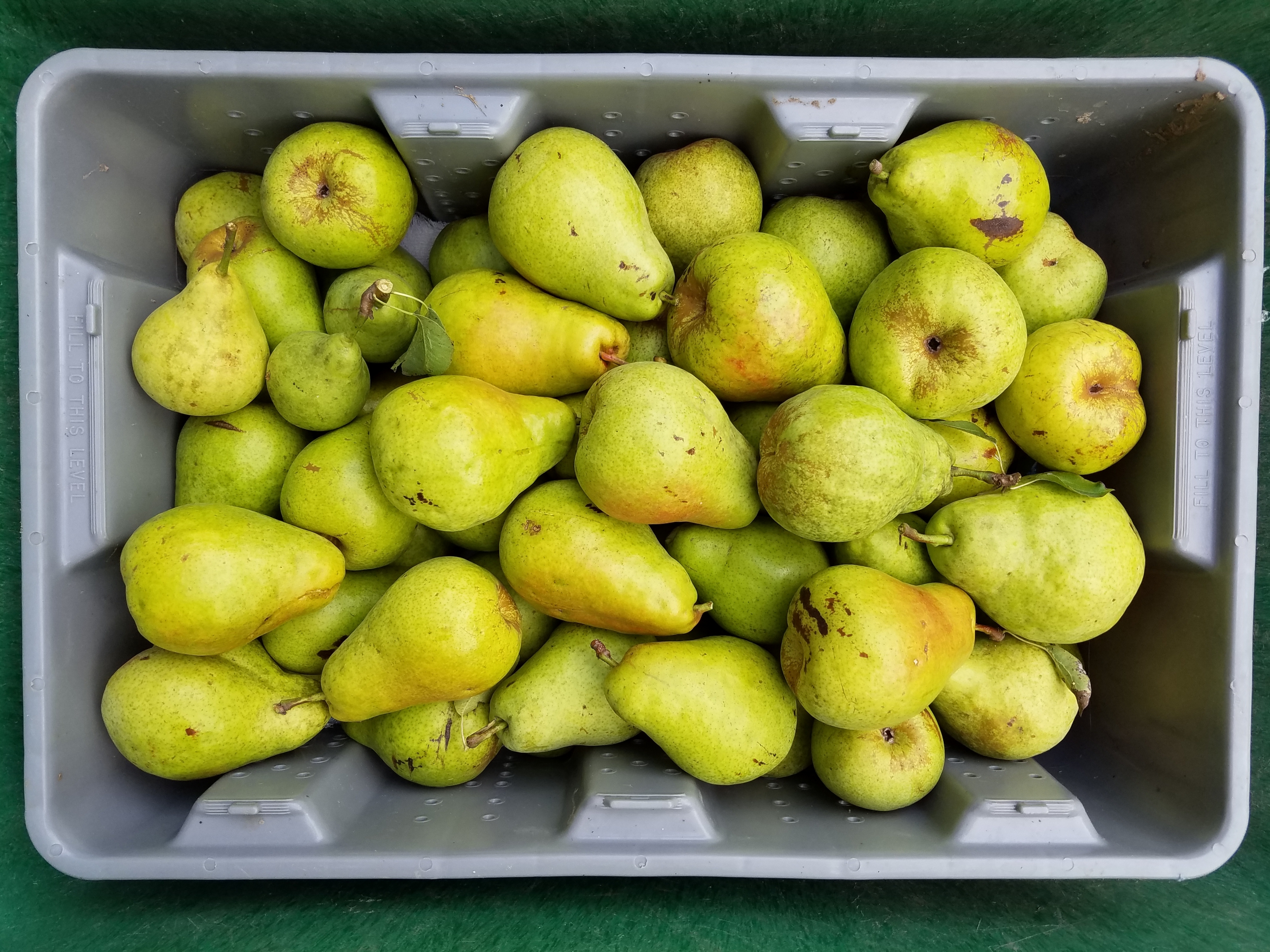
Last night I rushed into the house after work at the home, farm and auto supply store to change clothes, get the ladder, and pick pears before they all drop. We planted the tree at our daughter’s high school graduation party and have had some almost every year since they bore fruit. The season is very short as are our lives. We plan to enjoy the sweetness of fresh pears as long as we can.
Red Delicious apples are not fully ripe. I ate one while rushing around the back yard chasing pears and sunlight. Sugars are beginning to dominate starches and a couple more weeks on the tree will serve them well. After that it will be a mad rush to pick and preserve them. It could be another 1,000 pound harvest.
Second Growth Broccoli
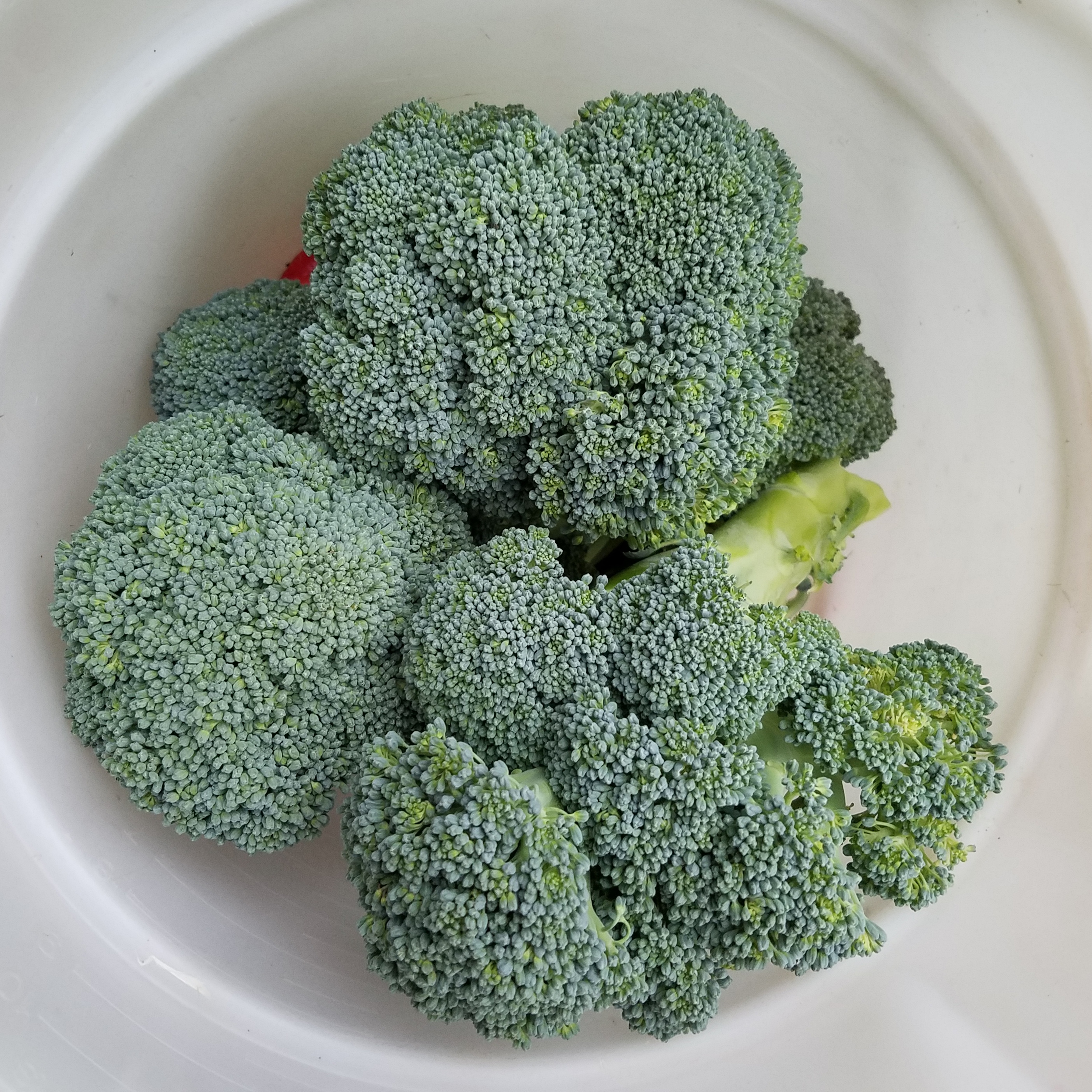
There were beautiful second growth broccoli heads, about eight of them. I broke them off by hand, cut and peeled the stems for work lunch.
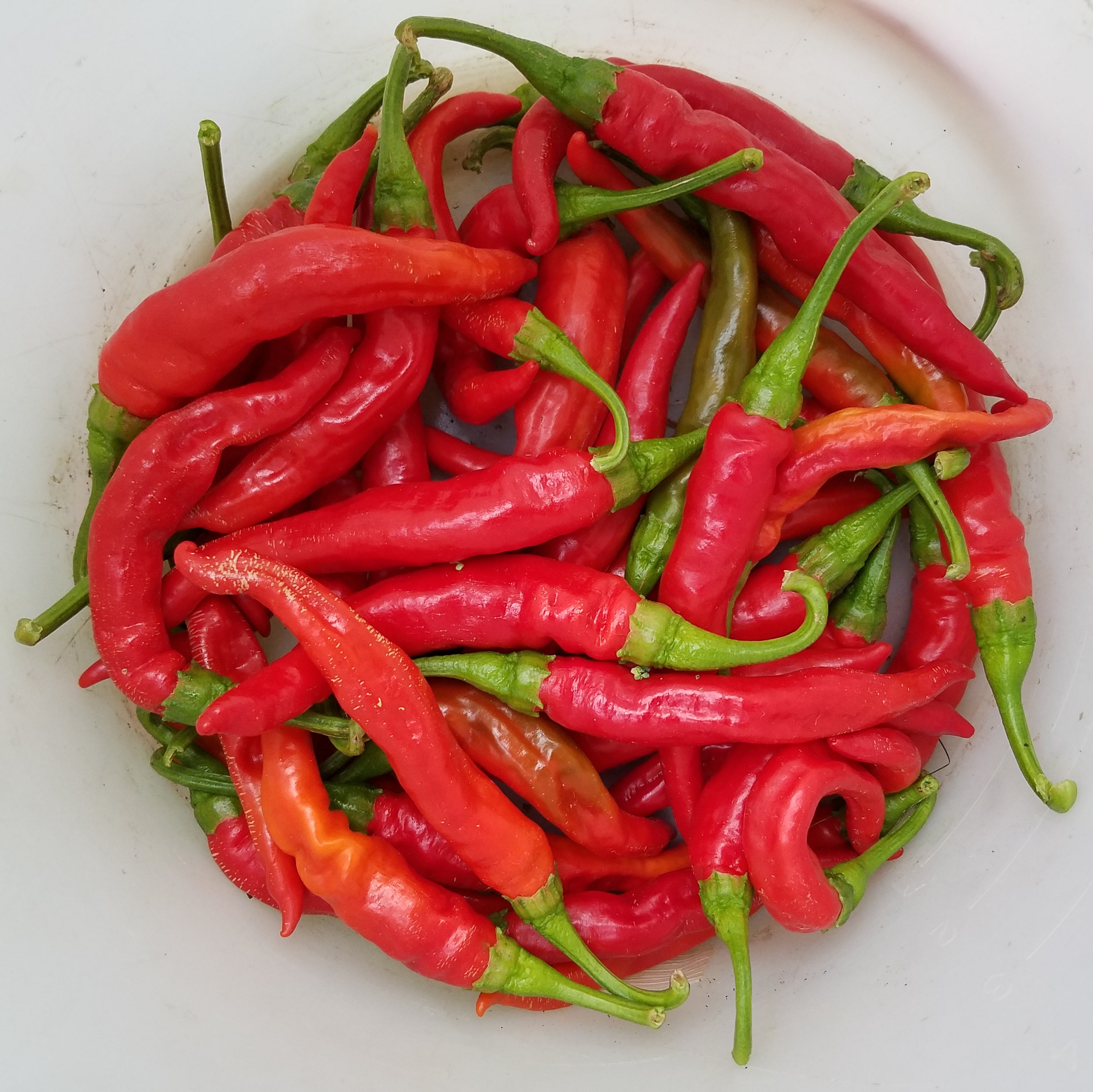
There were more Red Rocket peppers. I harvested the reddest ones, leaving many more to ripen. In the kitchen I took the others from the baking sheet in the oven (oven turned off) and carefully spaced them on the five trays of the dehydrator. I’ll dry them until they are ready to grind into red pepper flakes.
Someone brought cucumbers to the orchard on Monday. I took half a dozen (there were an inch thick and 5-6 inches long) and combined them with what was already in the ice box to make a second batch of fermented dill pickles. It takes 10 days if everything goes according to plan. Fingers crossed.
Monday I picked up two crates of tomatoes and two dozen quart Mason jars at Kate’s farm for canning. This is part of our barter arrangement in which she provides tomatoes, I process them, and we split them resulting canned goods. I sorted them Tuesday morning before my shift. Once spread out they filled four and a half crates instead of two.
I made ground tomatoes from the ones with bad spots as a base for pasta sauce. Here’s the process: Wash, trim and quarter the tomatoes then pulse in a blender until the big pieces break down. Put the blended tomato pulp in a juice funnel to separate liquid from the flesh.
After an hour, the split was 50 percent juice to 50 percent flesh. I put the results in jars and stored them in the ice box. I’ll can the juice and make pasta sauce while I work in the kitchen tonight or tomorrow night.
With two paid jobs and diminishing daylight there’s not much gardening time in my schedule. The lawn needs mowing and I plan to plant garlic in a week or two and there’s work to do preparing the soil.
It’s a rush until first frost, after which I may be able to slow down — but I doubt it.
This week is the biannual vendor show at the home, farm and auto supply store. We’ll be short staffed today and tomorrow while associates from Iowa and Wisconsin travel to Dubuque to attend seminars and discuss products and process with our vendors.
If it’s like last year, my work queue will build up and I won’t dig out until Thanksgiving. The days will pass quickly and my aura may be colored in shades of grumpiness.
Coffee helps.
This weekend — Labor Day weekend — is the unofficial end of summer and I’m ready to glean most of the garden leaving only kale and peppers until first frost arrives in October. I secured seed garlic from one of the farms and will plant in September. The garden has been successful, the most successful in memory. It has been encouragement to plan for next year.
Saturday and Sunday I made a large pot of vegetable broth with items mostly from the ice box: kale, collards, chard, celery, three kinds of summer squash, carrots and onions. The resulting product was dark and rich.
I made rice with the broth, poured some in canning jars, and made a big batch of lentil-potato-barley soup for work lunches. I used eight or ten leeks in the soup which made it slightly sweet. Growing leeks creates a wonderful availability for the kitchen.
Last night I picked tomatoes, peppers, celery and leeks while the water bath canner came up to temperature on the stove. I ate a Red Delicious apple from the tree. It was slightly sweet and mostly starchy. It is time to begin monitoring the fruit’s progress. The pear tree is close to ripe and will be picked this week.
There is plenty of kitchen work ahead.
So begins another day in the final lap of a working life. I’m heading to the kitchen where I’ll make a second pot of coffee before work. The hot beverage doesn’t resolve our challenges. It makes them more tolerable.
Hurricane Harvey from the International Space Station on Aug. 25, 2017. Photo Credit – NASA European Pressphoto Agency
Rain tapped the bedroom window this morning on the fringe of Hurricane Harvey.
It was a reminder of our connection to the oceans. They are absorbing heat from the atmosphere on a planet experiencing some of its warmest days in living memory. A warmer atmosphere holds more moisture and the result is intense storms like the Category 4 Hurricane Harvey.
In Iowa we adapt easily to hurricanes because of our distance from the coast. Needed rain benefits our gardens and farms. It recharges our surface aquifers. As the weather pattern moved over it seemed normal, not as devastating as it was when Harvey made landfall in Texas Friday afternoon.
Overcast skies and a slight rain depressed attendance at the orchard on Saturday. There were enough visitors to keep busy, especially in the afternoon when the sun came out. Sales seemed steady if light.
One of my favorite August apples is Red Gravenstein, a Danish cultivar. It was introduced to western North America in the early 19th century, according to Wikipedia, perhaps by Russian fur traders, who are said to have planted a tree at Fort Ross in 1811. Red Gravenstein is tart, juicy and crisp — great for eating out of hand.
The cider mill made the first press of apples for the sales barn. The gallon and half gallon jugs sold well. Over the years I’ve come to appreciate the changing flavor of our cider as we move through the apple harvest. I bought a gallon of cider and a dozen Red Gravenstein apples at the end of my shift.
I’ve been reading recipes for tomato catsup in old community cookbooks. After reviewing a dozen or so I went to the kitchen and created this sauce from the abundance of red bell peppers and tomatoes:
Red Pepper Sauce
Ingredients
Half dozen cored and seeded red bell peppers cut in quarters
Equal amount by weight of cored tomatoes one inch dice
One cup of malt vinegar
One teaspoon salt
One tablespoon refined sugar.
Process
Pour the vinegar into a saucepan and bring to a boil.
Add tomatoes and peppers.
Add sugar and salt.
Bring back to a boil and cook for 10-20 minutes until the vegetables are soft.
Strain the mixture. Retain the liquid to use as vinegar in salad dressings.
Run the vegetable mixture through a food mill and either serve immediately or bottle and refrigerate.
Recipe notes
To make a thicker sauce, either reduce it in the saucepan or add tomato paste.
I used malt vinegar because it was on hand. Absent malt vinegar I’d use homemade apple cider vinegar.
A gardener and farm worker has access to lots of summer vegetables, especially “farm seconds.” It is difficult to use them up before they turn to compost.
The recipe for roasted red pepper and tomato soup is simple and the results are sweetly tasty. It was born of an abundance of bell peppers and tomatoes.
I wouldn’t expect anyone to go to the market and buy ingredients for this dish. If one has the peppers and tomatoes, almost everything else is on hand in a well stocked kitchen.
Roasted Red Peppers
Make a batch or two of roasted bell peppers for the soup and to use in other dishes.
Preheat the oven to 450 Degrees Fahrenheit with the shelf in the middle position.
Cull the best red peppers from the lot, halve them and remove the membrane, core, seeds and any bad spots. Using a melon baller makes it super easy and more precise in removing all of the membrane. Peppers needn’t be perfectly halved. Put them skin side up on a piece of parchment paper on a baking sheet with sides. Nestle them close together to get as many as possible on the baking sheet.
Bake at temperature for 25 minutes and remove from the oven.
Using tongs, move the roasted peppers to a bowl and cover it with a plate. This process helps loosen the skin. Let them sit until they can be handled without burning fingers.
One-by-one take the pieces of pepper and remove the skin. Place them in a refrigerator dish and refrigerate until ready to use.
Roasted red peppers are an ice box staple during pepper season. For longer storage there are recipes for oiling and preserving them. They are so sweet and tasty they won’t last long in most households.
Roasted Red Peppers Before Removing Skin
Roasted Red Pepper and Tomato Soup
This recipe makes two quarts, enough to serve four – five people.
Add one cup vegetable broth to a Dutch oven and bring to a boil.
Add:
Equivalent of 5-6 large tomatoes, one-inch dice.
Enough roasted red peppers to approximately equal the weight of the tomatoes, maybe a little less.
Two tablespoons salted butter.
One six ounce can prepared tomato paste.
One teaspoon each dried spices including smoked paprika, granulated garlic and thyme. Fresh is better if you have it. Double the amount if you do. Herbs and spices are always to taste.
One tablespoon dried basil. Fresh basil is better. Double the amount if you have it.
Two tablespoons dried onion flakes.
One tablespoon sweetener. I used sugar because it was in the pantry.
Salt and pepper to taste.
Teaspoon of red pepper flakes, cayenne pepper or your favorite pepper spice (optional).
Stir to incorporate the ingredients, bring to a boil and turn down to a simmer. Cook until the tomatoes begin to soften. Don’t cook the tomatoes to death. You will want some bits of recognizable tomato granules in the final product.
Either transfer the mixture to a blender or use an immersion blender to smooth it to a pleasing texture. As mentioned, I like little bits of recognizable tomato and pepper.
Add one cup half and half and stir constantly until the soup is well-mixed and up to temperature.
Serve hot, garnished with fresh basil, a dollop of sour cream or snipped chives. Whatever looks appetizing and is available.
This recipe was fun to make and better than manufactured roasted red pepper and tomato soup in aseptic containers. Leftovers, if any, will keep for a couple of days.
You must be logged in to post a comment.