Categories
Writing

Imagining a Narrative

Early Spring Rhubarb at the Farm

It’s been difficult to imagine myself in a post worklife world.

When I left my last transportation job work no longer defined me. I could become something new and different. Ten years later work continues to occupy a role in my story. That’s not unusual in the United States. I also don’t think it is that good.

Mostly retired, a pensioner, I lack a forward-looking narrative. Living a life, working part time for wages, those are not worth narration. They are part of the human journey, the arc of which often seems uncertain.

So I drift… read and write. I will read and write as long as I’m able… and take care of necessities.

Framing a life in work was abandoned. The actuality of it proved harder than writing these words. If I spend time in public, outside the flickering light of lamps and screens… sunlight through the French door, I’ll want a narrative more than “I’m a pensioner.”

I like the word pensioner, yet it’s an unusual introduction. My pension is from Social Security, it is real, and it pays many of our expenses. It reflects more than 50 years of work, during which I contributed to the fund. “I am a pensioner” seems okay, but I wouldn’t lead with that because it sounds so awkward, so work-related. There is more to life than a reference to work that generated a pension.

I told a life story in my post Autobiography in 1,000 Words, which seems long for a personal narrative. I like the facts presented yet they doesn’t say who I am, who I’m trying to be. Maybe I’d better know that first.

Should I present as writer? People recognize me as such. I don’t like talking about writing projects, so no, I wouldn’t lead with that.

Should I present as a gardener? I garden and post about gardening in multiple places. Why does a personal narrative have to be about only one thing? It doesn’t.

To whom would I tell a personal narrative if developed? I think about Dunbar’s Number and the cognitive limits it suggests. If we only get 150 stable relationships because of physiological limits, why am I even worrying about a personal narrative? My 150 knows me and I know them. Isn’t that enough?

Last Saturday a group gathered at Old Brick in the county seat and discussed political advocacy. That’s where this post about personal narrative originated — I felt I needed an elevator speech as I introduced myself. We all need a brief chat about who we are when meeting people.

I am genuinely interested in meeting people and hope any conversations will be more about them rather than me. If I talk in terms of their interests, it’s because I’m curious about how people live their lives. I need to hold up my side of the conversation.

“Hi. I’m Paul, a pensioner from rural Johnson County. I spent 50 years in the work force and now I’m here talking to you. What’s your name?”

I don’t know, pretty lame. It’s a conversation starter, and could lead somewhere the way an ignition switch on an automobile begins a trip. It’s not flashy but may serve. Maybe that’s all that’s needed and I’m over thinking this. Maybe such a brief speech is enough.

The arc of life is bending toward the unknown — an opportunity to imagine what could be. Maybe that’s the narrative, at least it could be.

Categories
Kitchen Garden

Pivot to Gardening

Pruned apple tree

The first spadeful of garden soil revealed an absence of frost the length of the 10-inch divot — and plenty of earthworms.

It’s time to plant peas, lettuce, turnips — the early, albeit late vegetables.

It’s also pretty exciting. Like most people in my life I’m tired of indoors and ready to do more outside in moderate temperatures.

I rose at 4 a.m. and fell into a pattern of making coffee, heading to my work space and writing.

I read newspapers and checked social media. I wrote correspondence, emails and texts. I have three different blog posts started. Sometimes I finish a post before leaving the house. Sometimes a topic requires development so I’ll sketch an outline and work on it a few days. In any case, writing is a primary creative outlet and I value the work the first few hours of each day.

It’s only a fraction of the time and that’s where cooking, gardening and outside work comes in.

I made a two egg cheese omelet for breakfast. I’ve been viewing Julia Child’s French Chef videos about omelet-making and it made a difference in technique. Using high heat, slight agitation of the egg mixture as it’s cooking, and when to add ingredients to create the finished product. I hadn’t really considered those aspects of it before. It was a fine start to the day.

Outside I started making a burn pile, finished pruning the apple trees, and parked my car outside to leave garage space for spring. I cut back the sprouted trees in the flower bed to allow early bulbs to be seen. Spring is running late, but it’s coming fast. There will be plenty to fill my days going forward.

At the home, farm and auto supply store spring shipments arrive daily. On Thursday I unloaded truckloads of bagged dirt, large bundles of wooden fence posts, and an extra load of general freight from the centralized distribution center. It felt good to be outside in 50-degree temperatures.

I found a three-ring binder with brief writing about books I owned or read in the mid-1970s. From an entry on Dec. 2, 1975:

With reluctance I must admit my pursuit of literature outside my job has been minimal. I really haven’t been spending time at home reading. So, for the present, I am going to try a month, half a month anyway, with no poets. The daily reading is what is suffering most.

What I didn’t realize then was there would be a pivot point in life where I stopped pursuit of literature and started living it, where I read less poetry and started writing. This spring day is a reminder of that, made clear by the absence of frost in soil teeming with life and begging for something to grow.

Categories
Environment Home Life Writing

Starting Spring

Buckets of sand and salt near the garage door.

It felt good to be outdoors on Friday. The sky was clear and temperatures warmed enough to shed my coat. Green-up has begun.

We filed our income taxes with the Iowa Department of Revenue and the Internal Revenue Service. Earlier in the week I paid the second half of our annual county property taxes.

This morning I plan to walkabout our subdivision, inspect roads, and address concerns about water and sewer leaks. With the hard winter and significant ambient temperature swings, there is damage. Whatever needs fixing requires a plan and a budget. As a board member and trustee of our home owners association and sanitary sewer district I share responsibility for both.

We’ve done our part to support government services. Now spring can begin.

Outdoor work was sweeping up enough sand from the road in front of the house to refill sand buckets used last winter. I haven’t purchased sand in about five years. Because of the hard winter there was plenty available. A 50-pound bag of solar salt filled empty salt buckets.

I found the fan to blow air across the damp garage floor. It took about two hours for moisture to evaporate. Baby steps to start spring 2019.

Governor Kim Reynolds issued a disaster proclamation for Howard County Friday afternoon. The number of counties under disaster proclamations is now 53 (of 99), according to the press release. Current estimates of damage exceed $1.6 billion according to this morning’s Iowa City Press Citizen, although counties reported they have yet to fully assess damage within their jurisdictions. Governor Reynolds proclaimed nothing about what government would do to help mitigate the deleterious effects of climate change going forward.

My farmer friend from the home, farm and auto supply store reported the ground needs drying before getting into his fields. While the weather quickly became spring-like, the usual issues for row-crop farmers remain. My specialty crop friends also found the ground too wet to work. They are planting in their hoop houses which are traditional season-extenders.

Spring began Wednesday and is just getting started. We’re ready.

Categories
Living in Society

Political Bandwidth

Cup of Coffee with State Representative Bobby Kaufmann, Stanwood, Iowa, March 16, 2019

The 2020 general election will be challenging for a lot of reasons, not the least of which for me is deciding whether policy or politics is the most important part of it.

Politics is the art of what’s possible. I’m over the naive notion that policy matters more than politics, although the art of what’s possible has produced some problems.

Perhaps the best recent example of politics over policy was the Patient Protection and Affordable Care Act, which passed with only Democratic votes and has been fought tooth and nail by its opposition ever since. Voters want better health care, but the ACA was challenged from the beginning. It didn’t deliver better health care. The insurance premiums were expensive. The co-pays were high. The only talking point that persists is that more people who did not have access to health care were covered. Despite continuing feel-good stories about the ACA, its solutions were not so good. It was what was possible.

A policy-only approach to the 2020 general election is equally problematic. I believe it is mostly because of the decline in K-12 education, the rise in private and home schooling, and the dominance of FOX News and right-wing radio among people who continue to be radio listeners or view television broadcasts and cable. The electorate has been dumbed down and will swallow almost anything people hear repeated often enough. Making policy for a gullible electorate results in crap for legislation. When the court system finds such legislation deficient, as in the recent “fetal heartbeat” law in Iowa which was declared unconstitutional, the reaction from a dumbed down electorate is “impeach the judges.” Ill-informed notions of how government works are de rigueur and infrequently challenged.

Policy wonks talk among themselves in a bubble of their own making but their policy products are not often well received. What will stand the light of an open society? Getting out in it.

It is easier to think and talk about politics than to get out of a house or apartment and actually do something in political society. Once a person escapes the fencing of confirmation bias and faces actual people with differing views, a couple of things become immediately apparent. The biggest is a person no longer has internal debate, mistaking it for action.

We are on our best behavior in a gathering of diverse people — less likely to assert extreme positions. It is a moderating effect of social interaction. It is easy to generate excitement among a small group of friends with common interests. What is hard is persuading people much different from us our ideas have merit.

There is a tedium to working through issues with others which can take the fun out of problem-solving. In modern society we want our gratification and conclusions right away. Execution of them becomes a neglected afterthought. Working through issues together requires a commitment to process that isn’t part of ad hoc meetings in public. We are a society with decreasing respect for such group decisions. More characteristic of how it works is some of us would rather drop our policy bomb at a gathering — like a terrorist with no serious intent of further discussion or resolution — and having disrupted normal discourse, escape to our compound. It gets old, fast.

The radio spectrum is a good example of our politics. On the A.M. band there is one type of programming, on the F.M. another. There is satellite radio that bypasses the spectrum. All of them play a role. I currently have only four stations programmed on my car radio where I do most of my listening.

During my transportation career I traveled a lot. When with my boss in Pennsylvania, Georgia, or other godforsaken places, he would turn on the radio in the rental car, find Rush Limbaugh, and want to have a conversation with me about it. I refused to participate meaningfully. I viewed political talk in the workplace as unnecessary and unwanted when there was so much else to discuss regarding our business. He would hammer me about Robert Bork’s nomination to the U.S. Supreme Court which had occurred more than a decade earlier. I failed to mention I was a supporter of and had caucused for Ted Kennedy during the 1980 Iowa caucuses. Maybe it would have been better to rip the bandage off and get it all out there. Maybe I’d have lost my job, but maybe not.

On Saturday, a farmer friend and I met at her farm and drove over to Stanwood for a meeting with our state representative, Bobby Kaufmann. The obscure town along U.S. Highway 30 is home to some scrappy people: doomsday preppers, FOX News listeners, and citizens with tough personal stories. We were welcomed by a group of about 27, and are getting to know some of the regulars who attend these meetings. It was one of the best political meet ups I attended.

What made it good is after four elections, Kaufmann rose within the Republican Party which has a majority in the House of Representatives. Because of his leadership position, he knows what is going on with issues that are in the news. A person wants that in a politician. While Kaufmann and I don’t often agree, we find common ground. My questions were few and centered around issues that matter to me: water quality, state revolving loans for public utilities, IPERS, and that’s it. He’s a skilled legislator who can focus both on policy and the art of what’s possible. He paid for coffee and cinnamon rolls for anyone who wanted them.

The easy statement to make is we should balance our politics and policy. I’m not sure about that. A better approach is to recognize there is political bandwidth and tune in. We find opportunities to move the needle of policy a good distance through discussion with diverse groups of people. When that’s not possible, talk about what is. I believe that can be how bold change in society takes place.

It’s part of sustaining a life in a turbulent world.

Categories
Kitchen Garden Writing

40 Acres Sans Mule

Flooded Farm Near the Cedar River, Sept. 27, 2016

There is nothing magical about 40 acres in the 21st Century. Today’s American farmers can make a living on much less, largely because of crop diversification, technology, and emerging markets for locally grown food.

For a beginning specialty-crop farmer, 40 acres might be too much to handle.

“40 acres and a mule” entered the vernacular as a way of dealing with the question of what to do with newly freed slaves during and after the Civil War. Give them 40 acres and a mule to get started as free men, or so the line of thinking went.

In 1865, William Tecumseh Sherman provided for confiscation of 400,000 acres of land in South Carolina, Georgia and Florida, to redistribute in 40-acres parcels to formerly enslaved farmers. The arrangement did not persist, although even today, presidential candidates posit the United States should pay reparations for slavery.

While specialty crop farmers work hard, long days to make ends meet and sometimes take a job in town to provide enough household cash, they increasingly seek to own their future. To a person, that means buying land. In Iowa good farmland is expensive.

For farmers, the desire to create a farm on less than 40 acres has to do with start up capital. To make a go of it as a specialty farmer on 40 acres, that means $350,000 or more for land, another $100,000 or more for an on-farm dwelling, and more for at least one barn, a couple tractors, and other equipment for cultivation, mowing, tilling, fencing and general operations. Finding a banker to finance such an operation is difficult without collateral other than the land. There is also the hurdle of what to do with all that land. While a small farm can grow into 40 acres with success and over time, a beginning farmer has much to learn and the scale can be intimidating.

Shouldn’t there be opportunities to start a farm on less than 40 acres? The county board of supervisors said no. Couldn’t you move to another county? The market is in urban centers.

In Iowa farms have an agricultural zoning exemption. Beginning farmers seek the ag exemption in order to make ends meet on narrow gross margins. To be defined as a farm in our county, and get the exemption, 40 acres is required. Some of my farmer friends have been asking for accommodation of smaller farms for many years and none has been forthcoming from the county board. The future belongs to the young and they will not be stopped.

That brings us to House Study Bill 239, an act relating to the county zoning exemption for property used for agricultural purposes. Farms are defined as follows:

The bill provides that property is used for agricultural purposes if at least 51 percent of the annual gross revenue derived from the property comes from the growing, harvesting, or selling of crops and livestock raised and produced on the property or brought to the property and not more than 49 percent of the annual gross revenue derived from the property comes from the sale of agricultural experiences and other farm-related activities.

The number of acres defining a farm becomes irrelevant should the measure pass the legislature and be signed by the governor.

This bill amounts to an end run around the county board of supervisors. While it didn’t clear the state government committee this session, it remains eligible for consideration and debate next year in the second session of the 88th Iowa General Assembly.

A representative from our county made it to the bill’s subcommittee hearing on March 5. In what was described as a long, arrogant speech, the official characterized rural residents who had been working with the county board of supervisors as “loud complainers.” Not a good look for anyone, especially a county official.

Today was a great day of spring-like weather. We can feel it in the air as farmers prepare equipment, tend livestock, and prepare for another crop. Whether on 40 acres or 4,000 there are many common threads running through farming. Whether they will be defined according to the same standard is an open question. It’s time to see if the legislature can resolve the issue for beginning farmers, since the county won’t.

Categories
Environment

Flooding at Mill Creek

Cedar River at Iowa Highway One Sept. 27, 2016 at 11:36 a.m.

Mill Creek swelled its banks swamping nearby farm fields. It looks like the nearby city sewer system was spared inundation… for now.

Snow melt is everywhere in the county. Inches of packed snow yielded to ambient temperatures in the 50s and continuous rain. After a frigid, snowy winter the ice and snow pack is melting all at once. Snow was here Sunday and now is mostly gone.

Winter’s damage is being revealed. Our driveway buckled with the big swings in temperature. In one event, ambient temperatures swung more than 70 degrees in a day. Ice melted, then refroze under the cement, buckling the slabs leading to the road. Yesterday’s rain diverted inside the garage because of a buckle, requiring clean up to prevent further damage. Whether the buckled driveway will settle back down as it has before is unknown. It’s never been this bad.

The scale of the melt in a short period of time is what has Mill Creek flooding. Farmers removing buffer strips to grow a few more rows near the creek will take topsoil and farm chemicals downstream. It was foolish to sacrifice topsoil for a few more bushels of corn or beans. Farmers who did this likely didn’t see it that way even though flooding is not new to the area. Topsoil can’t be easily replaced but chemicals can.

Is this about climate change?

“A historic March blizzard is taking shape across Colorado, Wyoming, Montana, Nebraska, South Dakota, and North Dakota,” according to the National Weather Service. “Between one and two feet of snow is expected in some locations with wind gusts as high as 80 MPH.”

It is called a “bomb cyclone.” With hurricane strength, it has been forming over the Rocky Mountains and Great Plains, creating blizzard conditions and stranding hundreds of motorists.

“During the first 10 days of March, the Colorado Avalanche Information Center recorded more than 500 avalanches statewide (a record number),” wrote Jonathan Romeo in the Durango Herald. “For the season, a total of eight people have been killed in avalanches.”

Issues abound. Icebergs and open water were found on Norton Sound near Nome, Alaska where the Ititarod Sled-Dog Race finished this week. It’s raining in Greenland when it shouldn’t be. Global oceans are at the highest heat content on record. The planet is warming, there is no doubt.

It won’t take long for water to recede into the banks of Mill Creek. When everything melts at once, immediate damage is exacerbated, the duration shortened.

My colleagues with The Climate Reality Project are meeting this week in Atlanta to train another group of leaders. As newcomers join thousands of others, let’s work to mitigate the effects of climate change on humans. March has been a month where the evidence of climate change has come to the forefront. March has run only half its course.

Categories
Writing

Tuesday Snow Melt

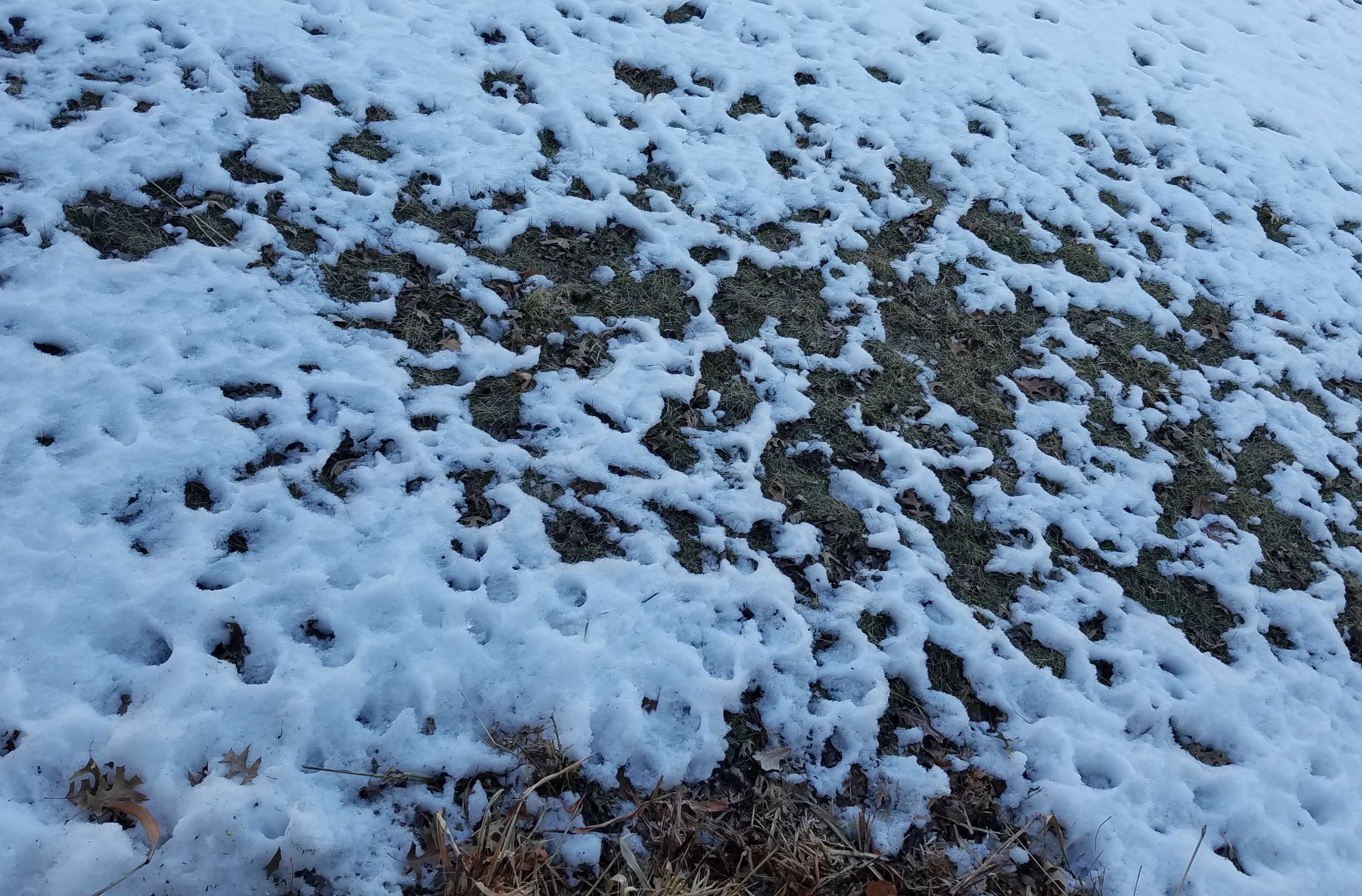
Snow Melt Patterned by Deer Hooves

Depressions in the snow pack made a Swiss cheese-looking melt outside the French door where we feed wildlife.

Deer are nocturnal grazers, eating what birds, squirrels and mice don’t, leaving their hoof prints behind in the snow.

We hope this melt is the end of winter. Despite problems with downstream flooding, we are glad to see it go.

It has been a solitary winter. So cold we didn’t feel much like leaving home. So snow-packed it was a struggle to get into the yard. The driveway buckled, providing new places for ice melt to pool. Reading, writing, cooking and hanging out were tasks to relish for the season. It is time to turn the page.

Categories
Environment

A Role for Tall Grass Prairie

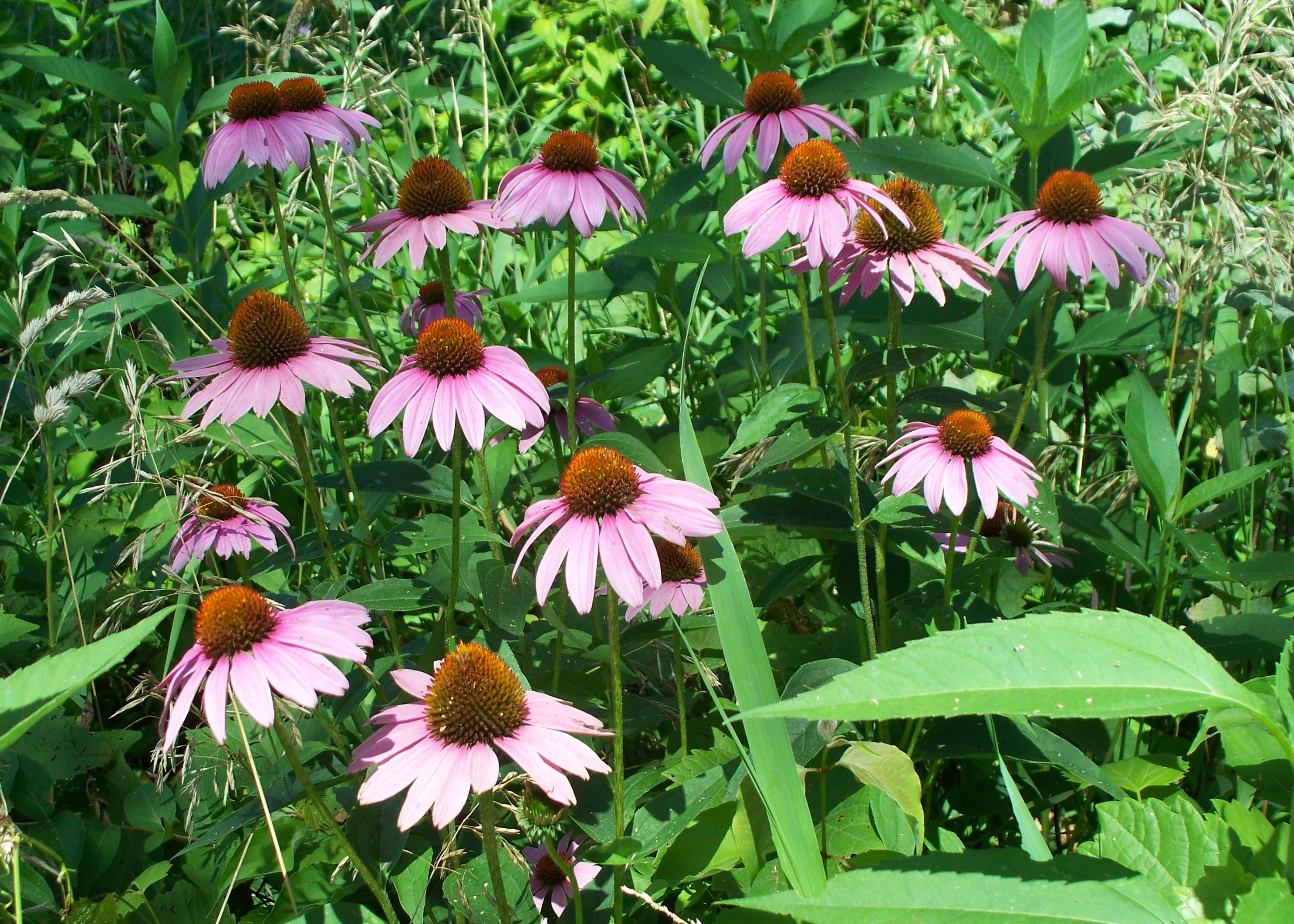
Wildflowers along Lake Macbride

Reading a book about tall grass prairie and savannas has me wondering why people bother preserving them.

Prairie used to cover more than 85 percent of Iowa land, according to the Neal Smith National Wildlife Refuge. Today less than one tenth of a percent of original tall grass prairie remains in the state.

In that context, the Iowa legislature considered a bill to prohibit setting aside new land for conservation with state money. After a popular outcry, the bill was suppressed last week before the first legislative funnel. There is substantial support among a diverse constituency for conserving prairie, savannas and woodlands. Such support drags political will along as best it can.

The Neal Smith National Wildlife Refuge is mostly replanted, which suggests human cultivation rather than a naturally occurring ecology. Which parcel is one of the many original prairie fragments at Neal Smith, and which a human tall grass garden? Presumably guides can point them out. There were no guides when tall grass prairie dominated Iowa landscape.

Either one participates in the culture of tall grass prairie or one doesn’t. It is a culture rather than nature. Throughout the state people and groups work to “restore the prairie” or “restore woodlands.” What does that even mean except as a style of gardening? Partly it means pulling garlic mustard plants and other invasive species during their early growth period. It means cutting down selected mature trees so saplings can survive to replace them. There is enough garlic mustard to make pesto for the whole state if such a delicacy were desired — all this cultivation is a lot of work. A lot of human work doesn’t seem natural.

The ecosystem that was our tall grass prairie relied upon burning the prairie to remove dead plant matter and stop the growth of trees that would shade plants growing close to the ground. Naturally occurring burns have been replaced with prescribed burns which are diligently considered and executed in a way that doesn’t catch whole neighborhood landscapes on fire. A local fire department has been summoned to put out a prescribed burn that got out of control more than a few times. Without burns a parcel of prairie or woodlands would cease to be what humans intended. I don’t know if a new and different ecosystem would be better or worse. If one is a believer in tall grass prairie, different is viewed negatively. Is that hubris?

We tend to forget the role vast herds of buffalo and other grazing animals played in the formation of tall grass prairie. Hooves kicking up dirt contributed to creation of the unique prairie biome. Animal grazing helped shorter plants gain access to sunlight and thrive. Animal droppings helped fertilize. Most of the land is fenced now with buffalo herds diminished and relegated to a form of domesticated hides, steaks, ground meat and sausages.

We are at the end of nature, Bill McKibben wrote in his 1989 book of the same name. There may be something to learn from remnants of tall grass prairie. There may be a human use for seeds from plants that survived and thrived on the prairie. If one is interested in the survival of tall grass prairie it is important to follow the work of people engaged in it. There is also a question.

How will we use our lives to mitigate the effects of global warming? Managing tall grass prairies is one check box on a long to-do list. My answer to “why bother” is that every bit of carbon sequestration has value and that’s what tall grass prairie accomplishes. My problem is under current land ownership policies and practices increasing the amount of tall grass prairie is not scalable quick enough.

I encourage people who seek to preserve parcels of prairie and woodlands to continue. If nothing else, it will improve our personal well-being and that is worth something in this turbulent world.

Categories
Home Life Writing

Used Book Sale and Other Necessities

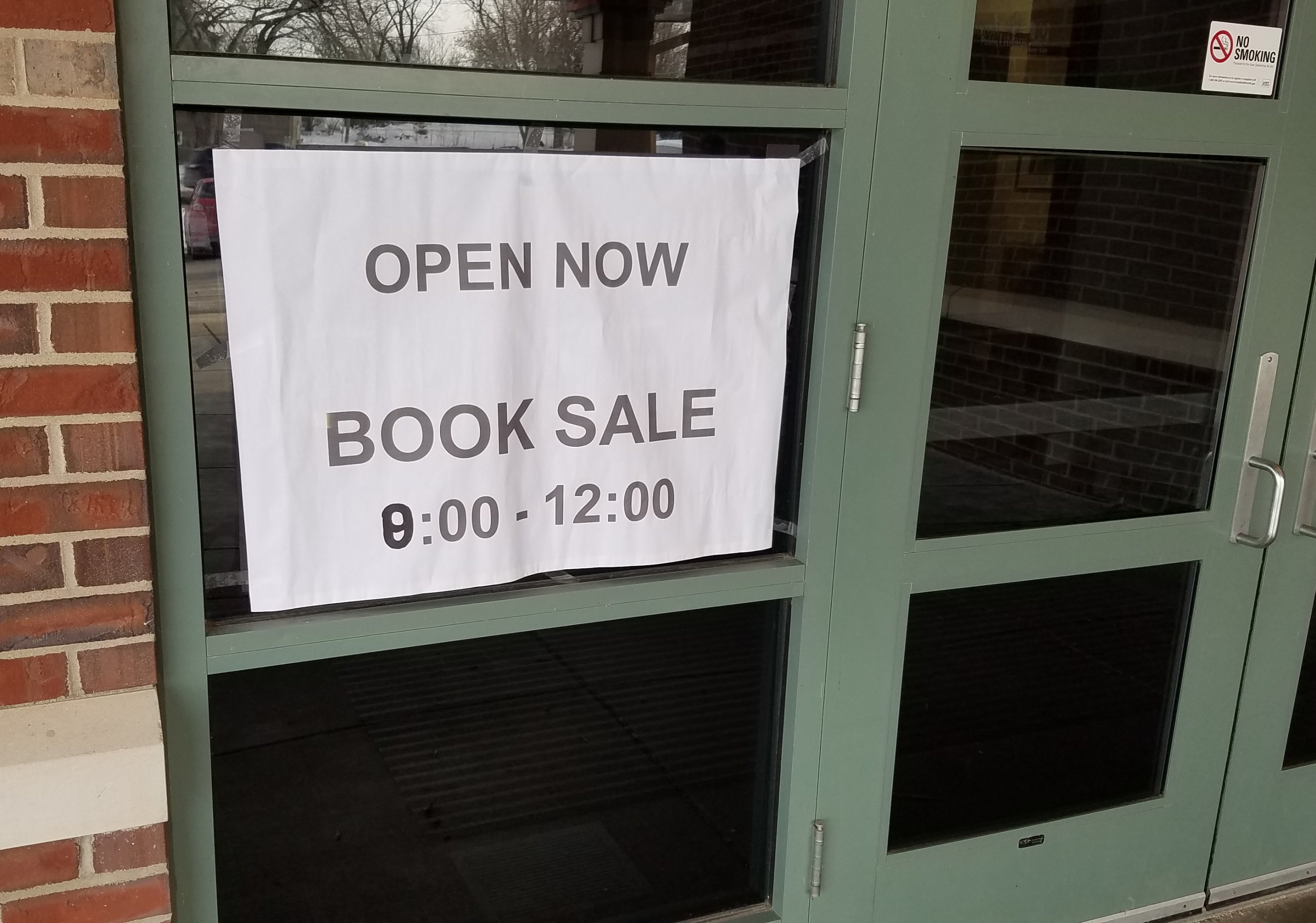
Sign for the Book Sale at the Solon Public library

Yesterday was the annual used book sale at our library.

In addition to clearing the stacks of unpopular or outdated books, the community donates books, media and labor to manage the sale.

Each item is reasonably priced and this year’s proceeds were about $800. That’s a lot of $0.50 and $1.00 books.

I spent ten bucks on ten past issues of the Wapsipinicon Almanac, three large format picture books about Yellowstone National Park, the Vietnam War, and the Marx Brothers, one fiction book, Water for Elephants by Sara Gruen, and a book of poetry, Songs of a Sourdough by Robert W. Service. I spent part of the afternoon reading Service’s poetry about the Yukon. First published in 1907, the copy I got is more than 100 years old. Thoughts of surviving bitter cold, wolves, pine trees, bonfires to stay warm, dog sleds, and the gibbous moon roamed my consciousness for the rest of the day.

It is doubtful I needed more books. The measure of a person’s library is less about reading or having read every book in it. A personal library is more a reminder of what we don’t know. I don’t feel guilty having more books than time to read them. I’m lucky to have a stable home life and the space to fit in a few more books after a used book sale in town. The house hasn’t exploded… yet.

I’ve been buying clothing this year. In 2018 I spent $281, and this year I already spent $150. T-shirts, jeans, socks and underwear, along with a few sweatshirts and woven shirts make up my wardrobe. For funerals and weddings I keep one pair of dress slacks, a good shirt, some neckties, two pair of shined shoes from when I worked in the Chicago Loop in 1991, and a blue blazer. Judging from what people wear to funerals and memorial services, I could get by with a decent pair of jeans, a woven shirt and a newer pair of sneakers.

There was a gift of four t-shirts and a sweatshirt from my spouse. The t-shirts are for the shepherdess to imprint next time she silk screens an image from the farm. I missed out last year because most of my shirts already had something printed on them.

The big 2018 expense was a pair of steel-toed boots to wear on my shifts at the home, farm and auto supply store. Last week, after my shift, I bought a new overcoat using my employee discount.

Me: I need a new coat.
Cashier: You really do.
Me: I know… big grease stains, broken snaps and zipper… it’s disreputable.
Cashier: Oh my!
Me: It will be my first Carhartt… this is Walls. Well I do have a pair of Carhartt bib overalls.
Cashier: Every man has those.

When I worked in the Loop I quickly wore out the pants in my suits. I picked styles where I could get multiple pairs of matching slacks. I don’t need fancy work clothes at the home, farm and auto supply store where the main issue is the quality of Wrangler jeans purchased on discount for less than $20. The denim must be of an inferior quality because holes show up in unexpected places after washing. Too, the radio and box cutter wear a hole just below my belt line on the left side. I asked the Wrangler sales representative about this at a recent trade show. He didn’t have any good answers except to buy more expensive jeans. I didn’t mention my low wages.

Food, shelter and clothing are traditional basic needs. Add potable water, clean air and sanitation and that’s still really basic. A good night’s sleep? Needed, but optional. Without these things, the need for survival dominates our daily lives. Education, healthcare, transportation and internet access are basic needs according to Wikipedia, but seriously, while important, those are extra when it comes to survival.

A lot of people would have us return to life as basic survival. For our family, years of hard work made us financially stable and built a foundation so we don’t often worry about survival. As long as there are used book sales and employee discounts at the home, farm and auto supply store we’ll be alright. Knowing a bunch of farmers and a good auto mechanic helps.

Wolves are mentioned in the history of Lincoln County, Minnesota where my grandmother was born. Wolves can be an issue, but mostly one read about in books about the Yukon… or Iowa and Minnesota at the time of settlement. As we live our modern lives it is important to remember there were once wolves, even if their meaning is lost for want of an education. Education is a salve for our worries. That’s part of why library used book sales remain important.

Categories
Environment Writing

Bird of Prey

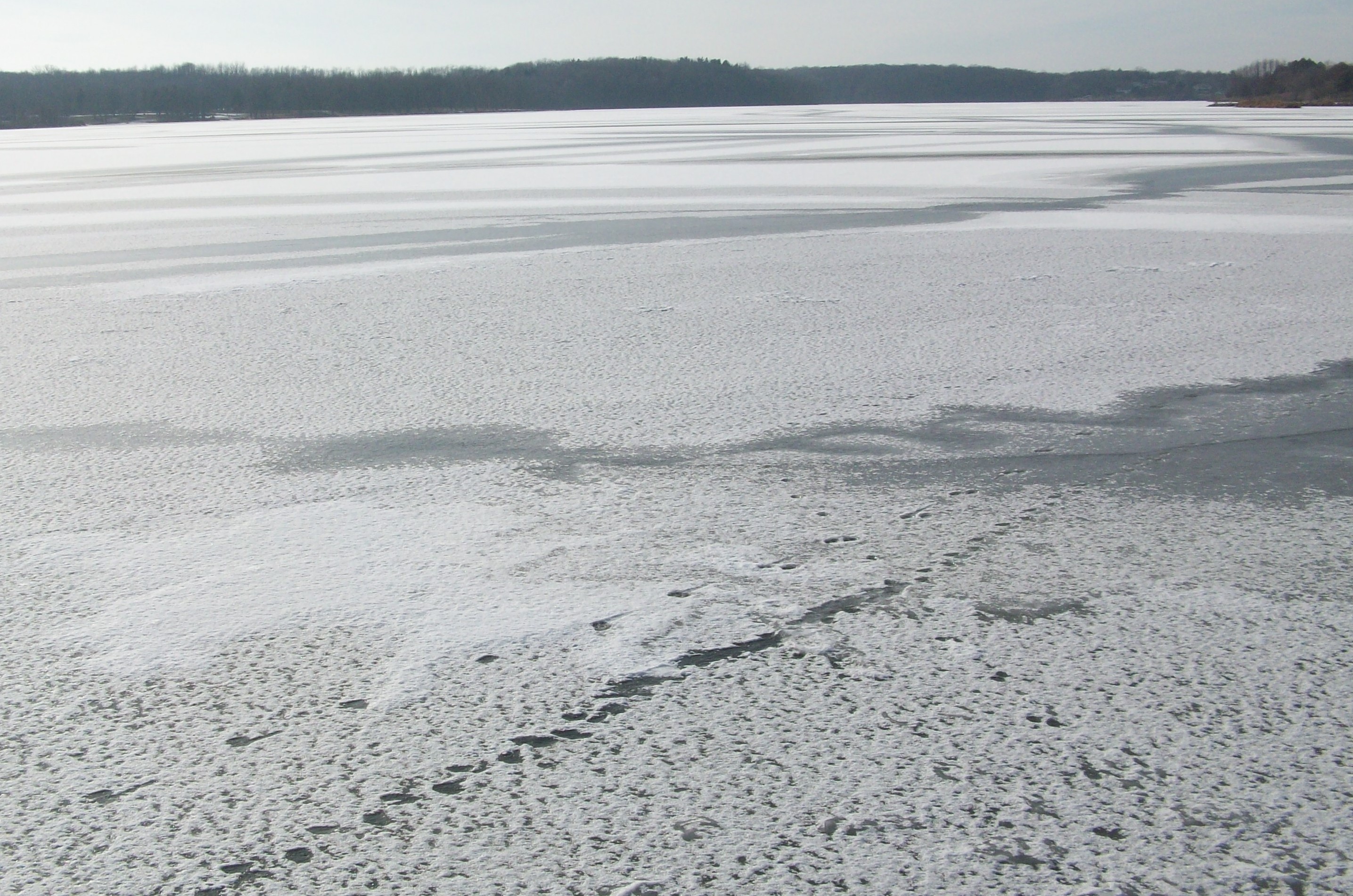
Sheet of Ice

There was no time to stop and get a photograph.

While eastbound on Highway 382, a large bird lifted from the ground within my headlights and dropped a recently killed rabbit. It hesitated, perhaps wanting to return to its prey, but not long enough for a collision.

I don’t know what species it was, but suspect it was an owl since it was two hours before sunrise. Owls live all around us in Big Grove and at night use the peak of our roof to observe the neighborhood and dine on small rodents.

As I continued around the lakes, then westbound on Mehaffey Bridge Road a deer crossed the road in front of me. I tapped the brakes. It was less dramatic than the bird of prey. I’m used to living with wildlife after so many years. I know what to do.

The lakes are covered with a smooth surface of ice, perfect for skating. With a couple more days of deep freeze, conditions should be excellent. The problem is no one I know ice skates any more and it is not a solitary activity. Time was we would clear a rink and sometimes start a bonfire. Importantly, it was fun. We’re getting older and other things occupy neighbors, busy looking at screens, I cynically suppose.

Wildlife appears to be flourishing. Maybe I’m just noticing. It is possible to step away from the screens and observe nature… a nature adapted to the built environment humans made since settling here in the 1830s. There was no risk of roadkill when there were no motorized vehicles or roads.

I don’t have much to say about the world outside our ecosystem today. Aren’t others saying enough? Suffice it that the 25-minute trip to work provides a window to the world around us.

I wonder if the owl returned for it’s dinner?