After work at the home, farm and auto supply store I drove to the farm and picked up the first spring share. In it were spinach, baby kale, Bok Choy, Choi Sum, broccoli raab, rhubarb, oregano and garlic chives.
Already my mind is swirling with cooking ideas.
I’ll prepare a breakfast omelet using greens seasoned with oregano and garlic chives. Most of the oregano will be dried and flaked for cooking. Garlic chives will be processed with cream cheese for a sandwich spread. In the mix is rhubarb jam, spinach casserole, and sautéed greens. There will be lots of cooking with this week’s abundance.
It’s the next stop on along the annual circle of local food.
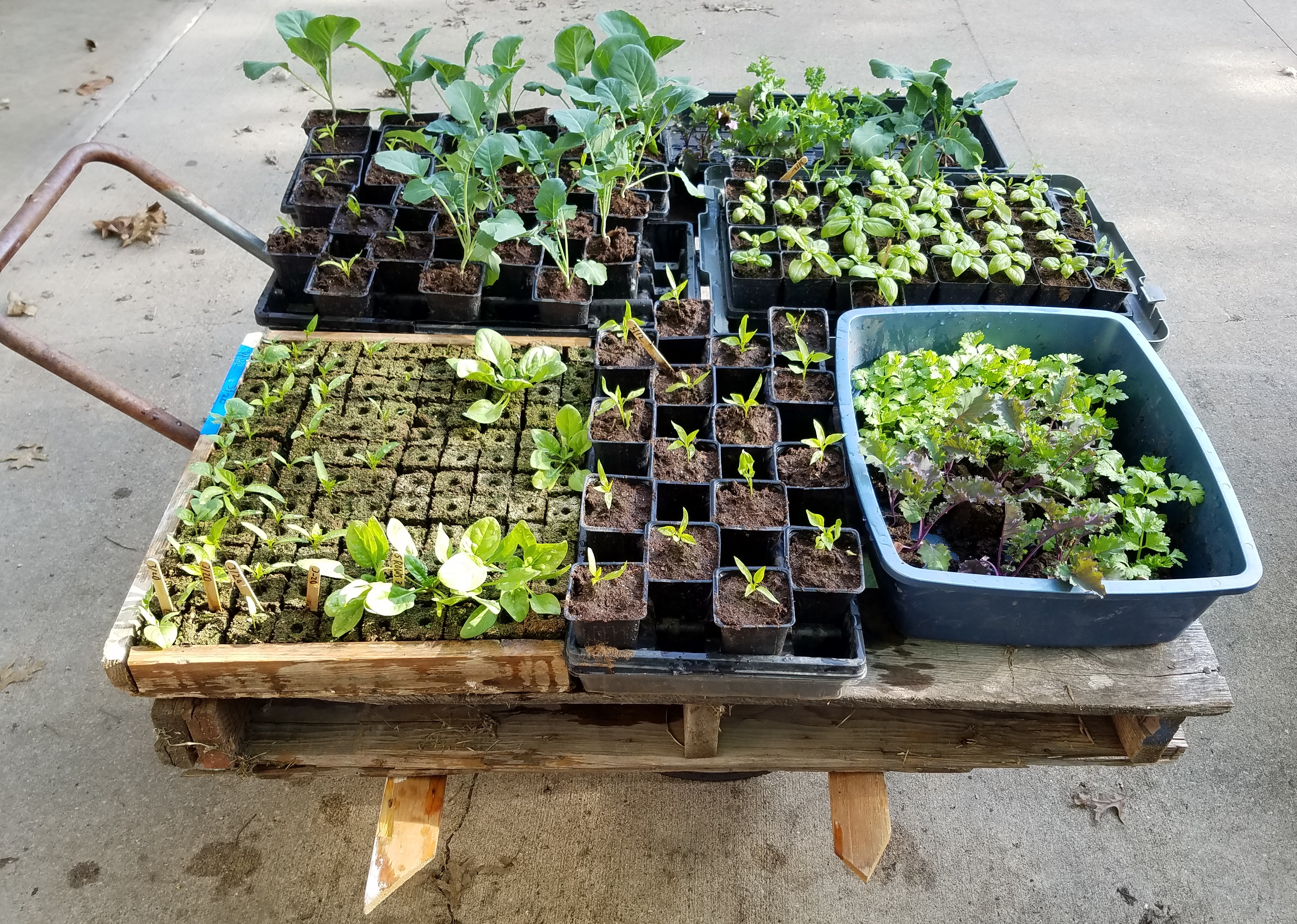
While at the farm I sorted through a stack of pallets used to deliver straw and hay and found two to bring home. I made a wheeled cart for summer crop seedlings finishing before the big May planting. The other will be used to organize the garage until Memorial Day. I’ve requested May 6 – 14 off work at the store to get planting done.
For the moment, life is about the weather — seeing how it unfolds and checking my weather app for forecast updates. It is also about forgetting the fray of politics for a while to become a practitioner of something useful — not only in Iowa but globally.
The first session of the 87th Iowa General Assembly adjourned sine die on Saturday morning after pulling an all-nighter to wait for Republican leadership.
The decision was about improving Iowa water quality and reauthorizing use of medical marijuana. They did nothing positive on water quality and may as well have let the current medical marijuana law expire, saving everyone the trouble. However, harassment by Iowa Republicans has become de rigueur.
The best part of this year’s adjournment is legislators won’t be in Des Moines doing more damage to family and friends. The dark cloud hanging over the capitol is they are just getting started and the second session could be worse.
“The final straw came this week when lawmakers decided that if my daughters become pregnant the state can force them to continue the pregnancy and give birth,” she wrote. “It’s a decision that sickens me to my very core, and not just theoretically.”
“I will not encourage my daughters to return or stay here, and I will hasten plans for my own escape,” she concluded. “Thanks to the General Assembly, Iowa is no longer a safe place for women or families.”
I’ll make my stand in Iowa. Unlike Lynda, I was born here and have nowhere else to go without being a refugee. At the end of this legislative session, we’ve weathered the storm and are beaten but not down.
It is fitting the session ended on Earth Day.
Around the world people rallied to support a scientific method in solving problems. Except for the Dunning Kruger effect, I’d recommend state legislators pay attention.
Apple Tree in Bloom
As has become custom on Earth Day, I minimized my carbon footprint and spent time in our garden. The calm winds and abundance of pollinators made conditions nearly perfect for setting apple blossoms. Small white petals already had begun to fall, giving hope that the new apple crop will eclipse all of the bad news from Des Moines.
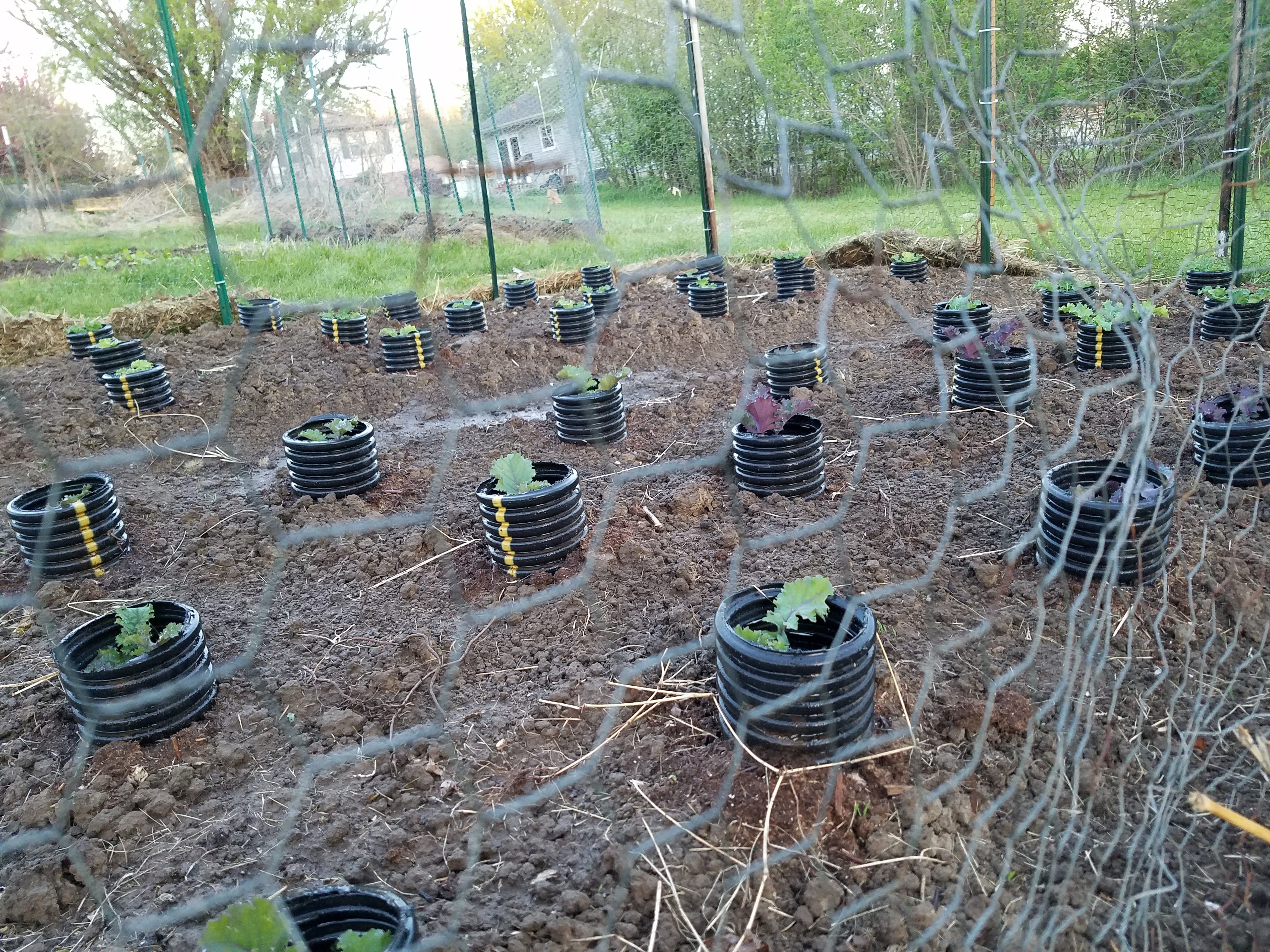
I gardened. Except for collards, all of the cold weather vegetables are planted. There is plenty of remaining space for crops to be planted after the last frost. I transplanted peppers into larger soil blocks to provide nutrients before going into the ground in a couple of weeks. I cleaned up four soil block trays to take back to the farm on Sunday.
I wasn’t alone. While Jacque was at work I did some neighboring and heard the sound of children playing, birds singing and bees buzzing. People took advantage of perfect spring weather to get outside. Social interaction enabled me to stop thinking about politics and I could focus on simple garden problems which were eminently solvable. It’s easy to see that the support for the pea plants was off center, exposing them to predators. Adjusting it took only a few minutes.
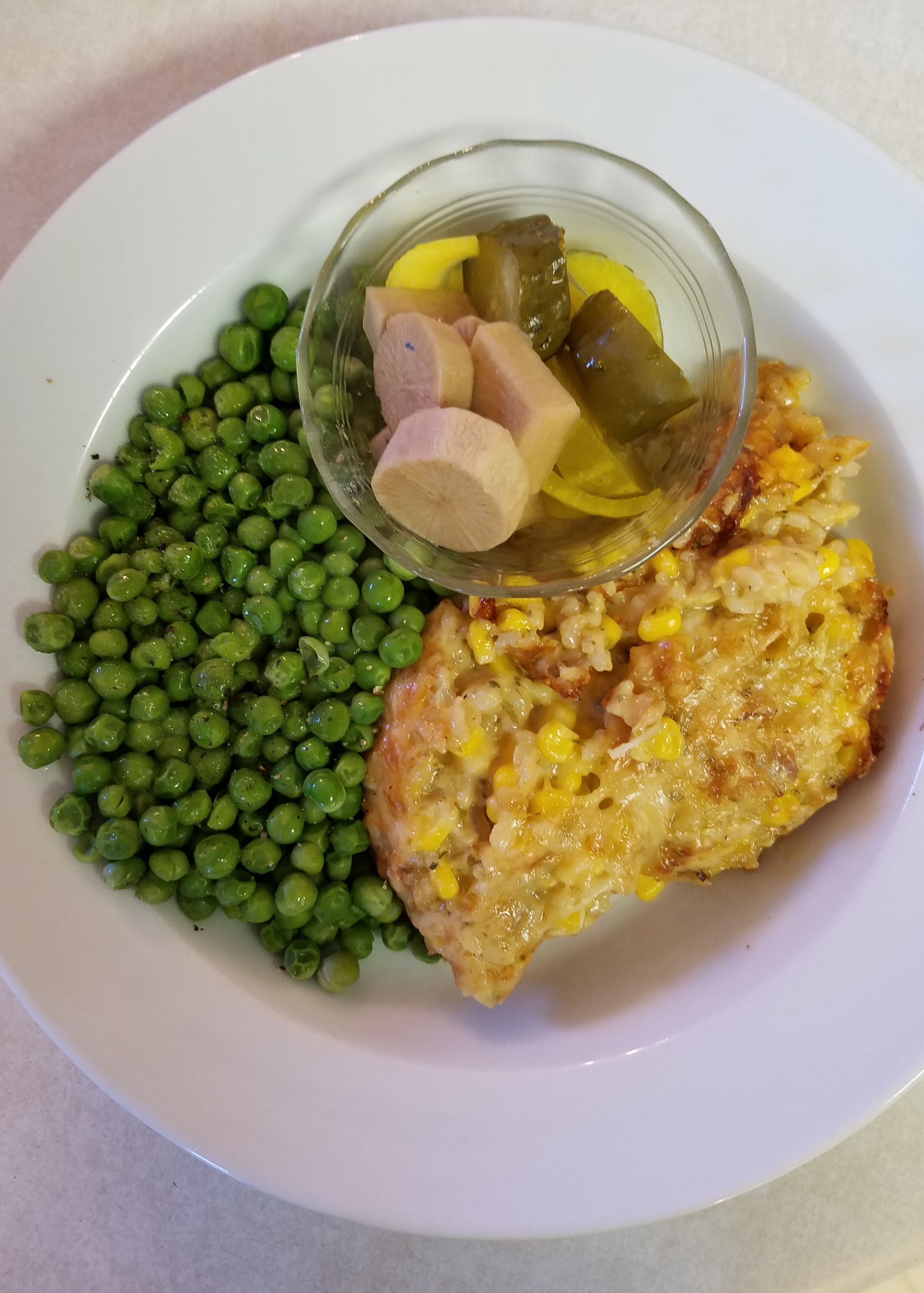
Corn-Rice Casserole, Peas and Pickles
Our garden and interaction with local food sources make the kitchen part of the garden. I made a simple supper of corn-rice casserole, steamed peas and a dish of home made pickles (onions, cucumbers and daikon radishes). Such meals go well in our household because they taste good with leftovers to be heated up for another meal.
As I entered the world of low wage work in 2013, I stepped back from most social commitments. It’s time to re-engage. This week I re-joined the home owners association board and was elected president. Comes a time for people to step forward and get involved in community. If we seek a better society, our work begins locally.
It’s part of what sustains us in a turbulent world.
Each of us defines community through our engagement in society.
Whether participation is passive, active, or in between, our lives and how we live them contribute in a meaningful way to how we live with others in a community.
Not everyone is a joiner. For some the focus is on the county seat, the state capitol, or the federal government. For some it is on school systems and the public library. For others it is the world of commerce — transportation, shopping, working a job. Many people just try to make it through each day with dignity. Community is broader than any one of these pursuits.
Misunderstanding our role in shaping a community and how we do and can contribute is a source of affliction in modern society. For me, the best remedy is getting involved at a local level. In consideration of that, I joined our home owners association board as a way to influence the place where we live. I wrote this note on the community Google group:
Association members:
Tonight at the regular monthly meeting of the Lake Crest Manor Home Owners Association Board of Directors I was appointed to the board and then elected as president to replace Bob Huber.
I appreciate the board’s confidence in electing me.
For those who don’t know Jacque and me, we moved here in August 1993 and raised our daughter who graduated from Solon High School in 2003. I “retired” in 2009 from CRST Logistics and currently work four different jobs in the community: at Theisen’s Supply in Coralville, at Local Harvest CSA, at Wild Woods Farm and at Wilson’s Orchard. Jacque works part time at the Solon Public Library.
I began serving on the board in 1994. My first tour of duty was ten years followed by a second tour from November 2009 until December 2013. I’m glad to be back for a third (I think). When we moved here we were told that everyone takes a turn on the board. While that turned out not to be true, I believe changing board members regularly is good for the health of our community. If you are interested in serving, there will be a position open at our next board meeting.
A couple of important things came out of tonight’s meeting.
Gene Lawson was elected treasurer to replace Rob Sprague who resigned effective May 1. Gene and Rob will be working together to make sure there is a smooth transition in our finances.
On Sunday, April 30, at 1 p.m. at the Solon Public Library, there will be a meeting about the boat docks. If you care about this issue it would be a good meeting to attend. The Iowa DNR made a proposal to change who is eligible for our dock spaces to include Lake Crest Manor Parts I and IV that are not part of our association. Note this is a proposal only. We will explain the proposal and get your feedback at the meeting. The board will get back to the DNR after the meeting saying that either 1). we accept it, 2). we reject it, or 3). we have a counter proposal. Since we lost our original grandfathered arrangement in 1998, the DNR has asserted more power in regulating our docks. This is a complicated issue so it’s best to attend the meeting if you are interested. Already there has been a lot of discussion about it by the board and in our community.
Tonight the board passed a motion to apply by May 1 to the Iowa DNR to add additional slips to our docks. I would point out a couple of things. 1). The DNR is open to adding dock space around Lake Macbride, so now is the time to secure that permission. 2). If we get approved for additional space we may or may not actually add it. There is some opposition in the association to the idea of adding dock space and those viewpoints should be considered. 3). The DNR approval of a request is not at the state park. Because of this, we may not get a response for this boating season. After a discussion the board decided to set a date certain for the application submission. I was the only board member to vote against the motion, with one abstaining.
I’m not planning to pepper you with constant emails. Just wanted to say hello to those in the Google group.
The best way to contact me about association business is via email. The response will be more timely than chasing phone mail messages, which is inevitable when dealing with a person holding four jobs.
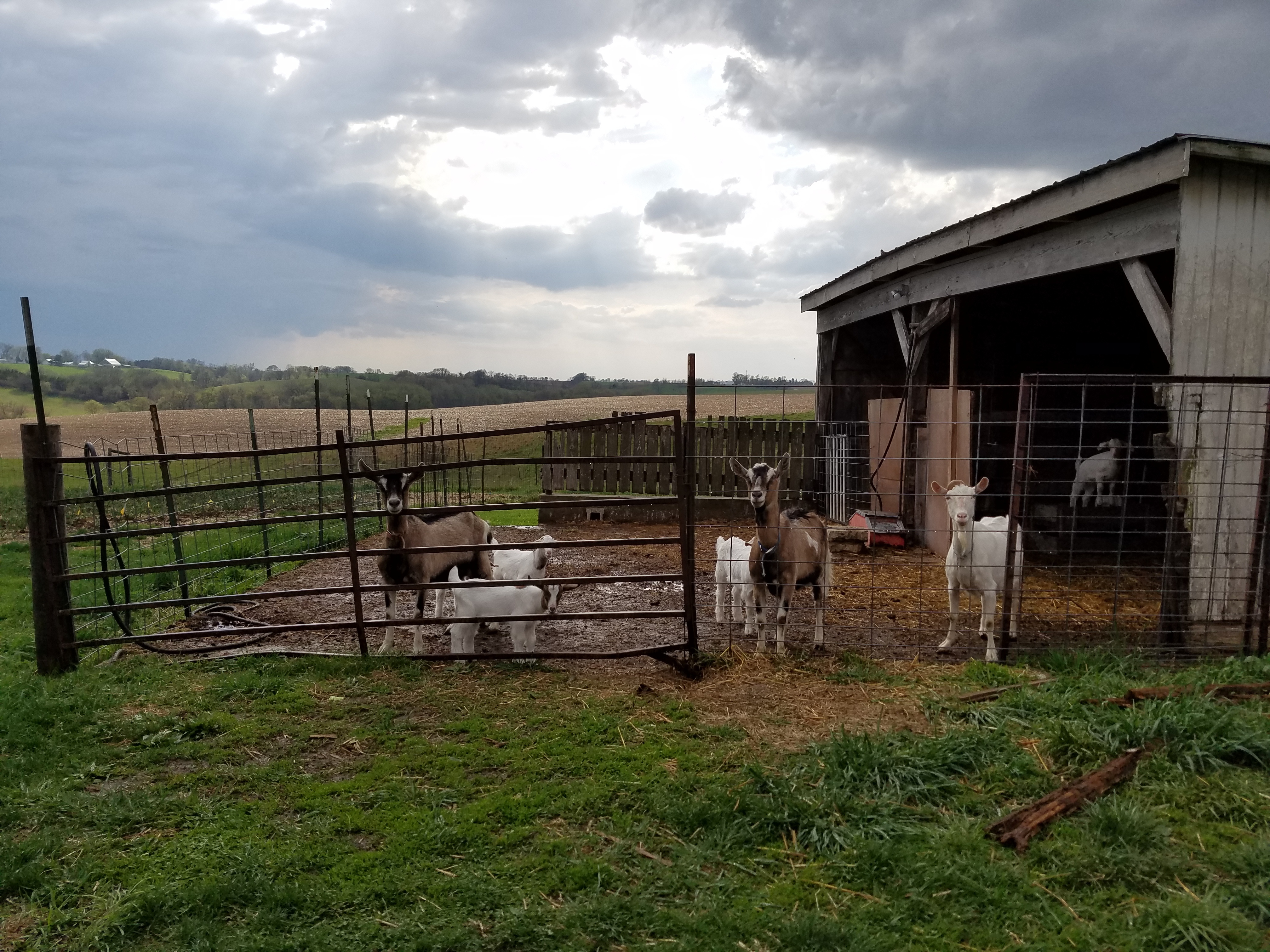
The sound of bleating lambs pierced the air during yesterday’s shift at the farm. It was a sad sound because we know their destiny.
Above is a photo of goats instead.
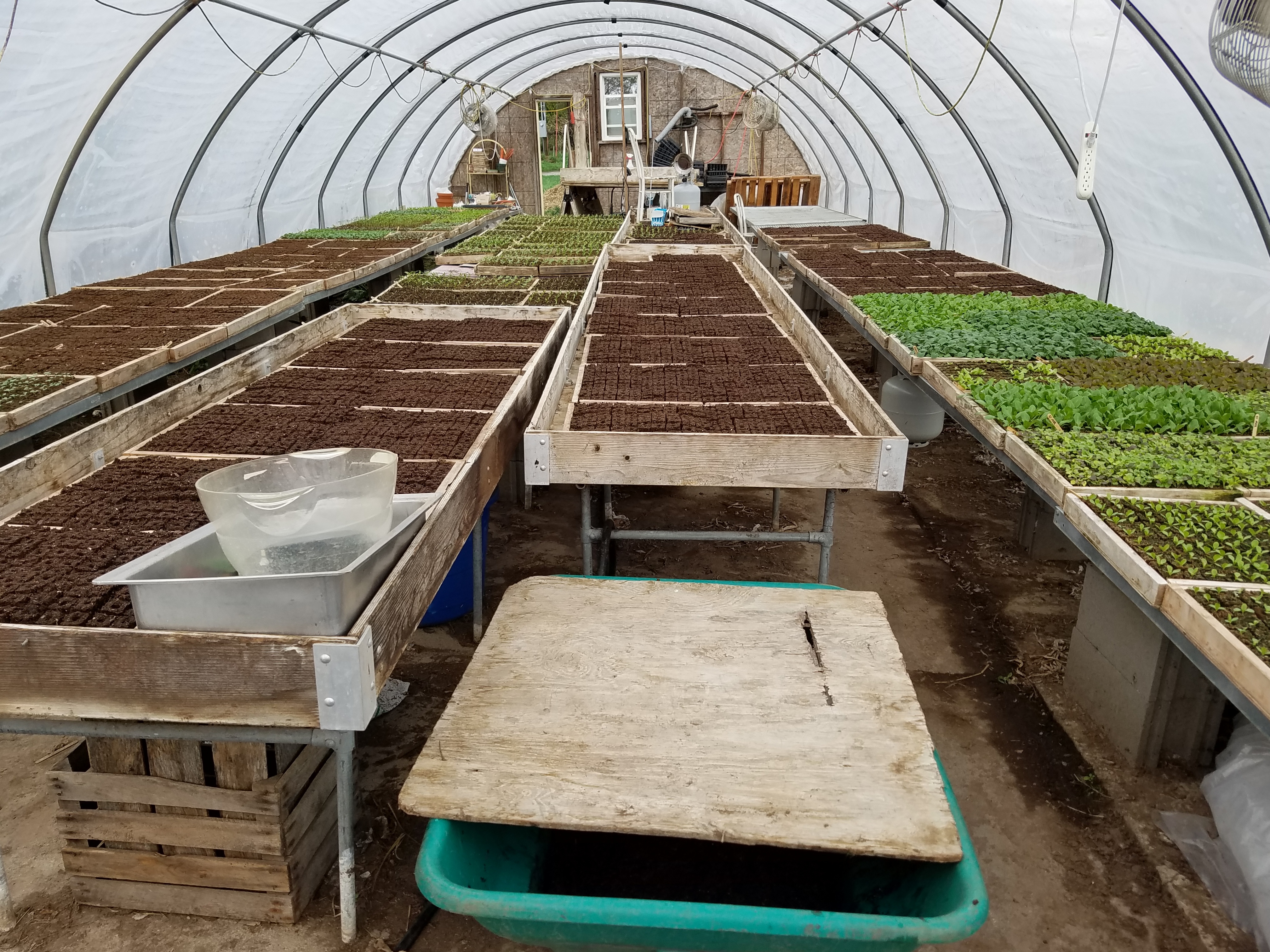
I made 60 trays of soil blocks for the germination shed. It’s time to transplant pepper plants from plastic trays where they germinated to individual soil blocks for finishing before planting. There are a lot of them.
Saturday, April 15 in the Germination Shed
I was to do 78 trays, but a thunderstorm blew over, dropping a brief torrent of rain and hail — enough hail to sting our skin. All of us —four people, two dogs and a cat — made our way into the germination shed to wait out the storm. It didn’t take long. The storm was an emphatic punctuation ending the day’s work.
Between Passover and Easter none of our lambs was sacrificed despite the popularity of leg of lamb as a holiday main course. On a farm we accept the reasons for raising lambs and goats, and the reality of thunderstorms.
I barter my work. Soil blocking yields participation in selected shares, notably the spring share which begins April 24, and fall shares from both farms. It is a way to leverage the high tunnel for early lettuce and greens, and to secure potatoes, sweet potatoes, cabbage, carrots, squash and other storage vegetables so I don’t have to grown them myself. We also exchange work canning tomatoes and freezing bell peppers with each receiving a share of the resulting jars or zip top bags.
I started seven trays of my garden seedlings in the germination shed, also part of the deal. I got bags of last year’s soil mix and onion sets that were part of the farm order. There are other sundry items: pallets saved from the burn pile, leftover partial trays of seedlings, and vegetables when there is over-abundance or if they are too imperfect for members. While no money changes hands, there is mutual benefit from barter deals. My car was loaded as I departed the farm.
The sound of lambs permeates spring days bringing with it both hope and mortality. It’s a hopeful and sad sound. One that leads me to prefer goats.
Between arrival home from the home, farm and auto supply store and sunset were three hours to work outside. I did.
I watered the garden, rolled up the garden hose, repaired the bird feeder, and emptied the kitchen compost bucket.
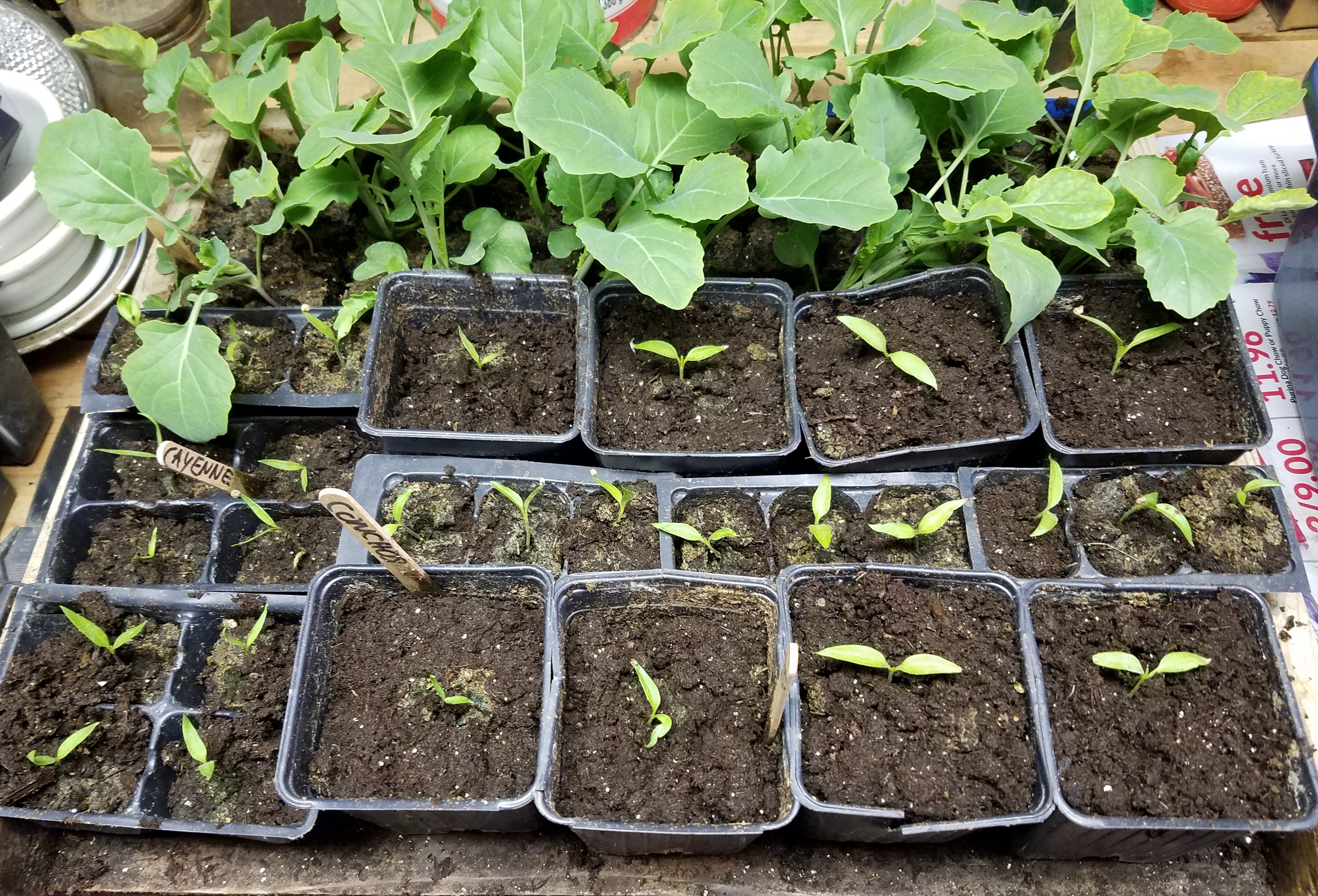
Broccoli and kale seedlings look good. After a third day of conditioning outside, they should be ready to go into the ground. I transplanted the hot pepper plants to larger containers. Three varieties in this batch: cayenne (8 each), conchos jalapeno (1 each) and early jalapeno (23 each).
It felt like I got something done. That’s saying something in a life consumed with work.
A gardener never knows what a season will yield. We keep busy planning and doing things to grow a crop to share with family, friends and neighbors. A window of daylight and temperate conditions can be well used on a week night.
It’s where we live — on the margin between hope and despair.
The weather on Saturday was perfect for getting into the field. Wind had dried the ground making it tillable.
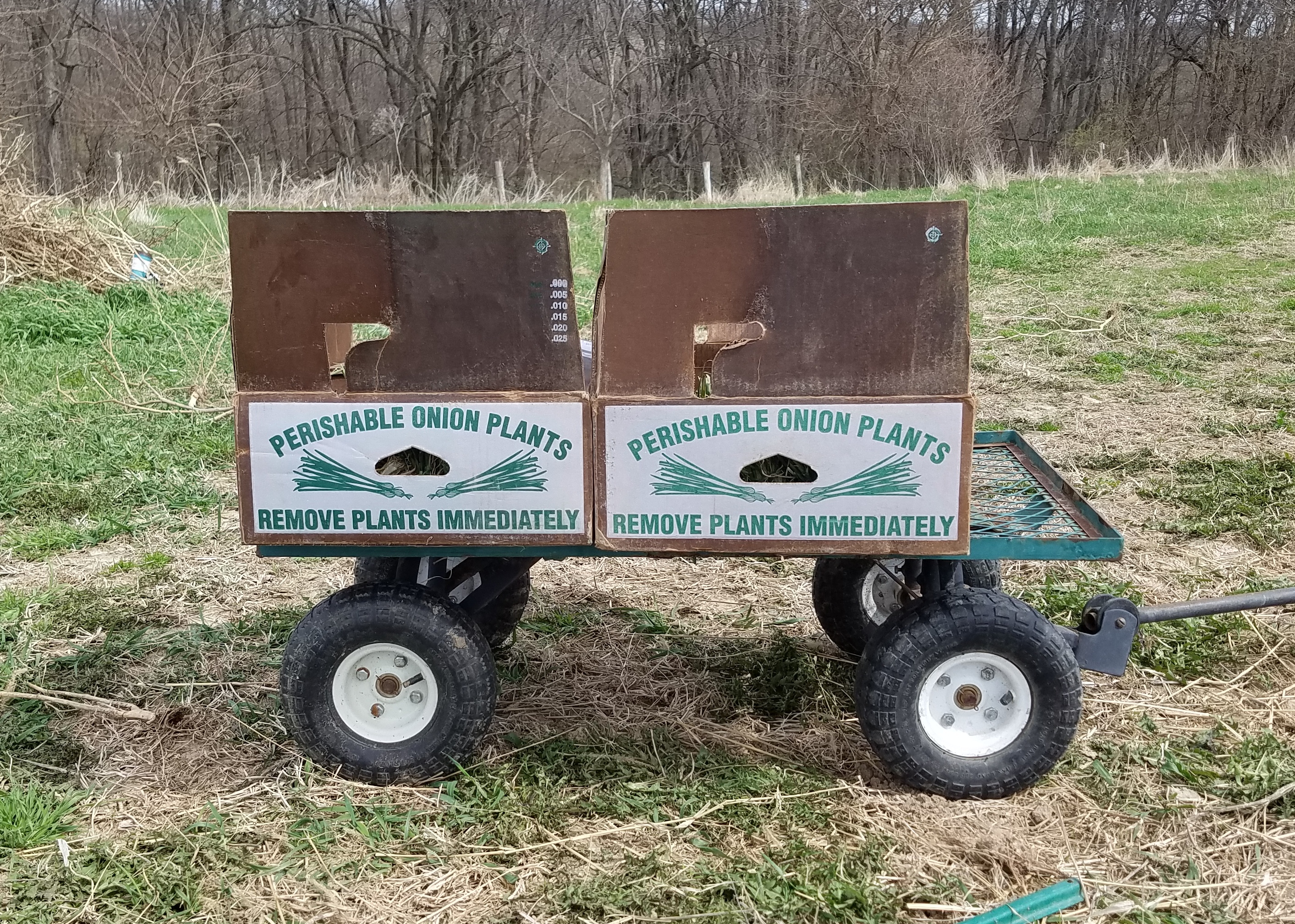
In the cycle of community supported agriculture projects, now is the time to plant onions — a key crop to share with members.
Most farmers I know were planting them — tens of thousands of onions.
I soil-blocked for the next planting in the germination houses — 4,608 at one farm and 4,320 at the other. I brought home two trays of kale, broccoli and hot peppers. The pepper plants will be transferred to larger soil blocks. The kale and broccoli will go into the ground this week after conditioning outside a few days.
Brought Two Trays Home for Conditioning
Saturday morning a group of about 20 people “pulled plastic” over a high tunnel damaged in a storm earlier in the year. We gathered at sunrise before the wind came up. I stayed until the bulk of the work was done. All the adults were either farmers or farm workers. Here’s what the new plastic looked like after the job was finished.
Repaired High Tunnel
I worked in the garden after returning home. There’s a lot to do. The carrots and lettuce are up. I planted potatoes in containers, peas in cages, and beets and radishes near the peas.
I measured the remaining space in that plot and determined 36 kale plants would fit. That’s the same number I planted last year, although I hope for a better yield this year. The kale plot will be 6 Vates, 6 Starbor, 12 Scarlet and 12 Darkibor. I grew way more than I’ll need and leftovers will be given away to friends and neighbors.
I decided to just keep working until I drop this year. Life is short and gardening and farming is a good way to use it. I was tired by Sunday night.
Oakland Cemetery, Big Grove Township, Johnson County, Iowa. Dec. 17, 2016
After an absence since 2010, I re-joined the Johnson County Democrats Central Committee on Thursday, April 6.
My neighbor and long-time Central Committee member Bob Huber moved out of Big Grove Precinct. That left us with zero representation so I stepped up to attend the tedious meetings and do the grunt work of engaging in local politics.
After being voted in, I was asked to say a few words about myself. This is kind of backwards, as the speaking should more properly be done before the vote. I talked about my time as a township trustee and how things were pretty quiet at the cemetery the trustees manage.
Some things haven’t changed about the Johnson County Democrats. In typical style, the slate of delegates to the Second District Central Committee could not be filled at the meeting. That’s another tedious, albeit important political task that needs doing.
My first impression is members of this central committee operate in a political bubble. I’ve not gotten beyond first impressions. With time, I will. If it is a bubble I will decipher and endeavor to pop it. People I met seemed like good people even if protected from the reality of Iowa politics by the liberal slant of the only county to vote for Jack Hatch as governor in 2014.
Our precinct went strongly for Hillary Clinton at the 2016 caucus and friends from that campaign also attended the meeting. A self-described representative of the Bernie movement announced an event. This represents first impressions but there continues to be a party divide between people who supported Sanders’ failed effort to win the Democratic nomination for president and/or Clinton’s failed effort to win the presidency. My advice, if anyone is listening, is it’s time to move on.
Two candidates for governor spoke at the meeting, Johnson County Supervisor Mike Carberry and Davenport Alderman Mike Matson. It is way too early to pick sides in the gubernatorial field. On the plus side, hearing these brief statements is part of attending central committee meetings.
We’ll see how it goes. Here are some tweets I made after the experience. Twitter is a much better medium for political reporting.
Sat next to a friend from Cedar County wearing the same home, farm & auto supply store logo on his jacket I had on my shirt. #iapolitics
One is not like the others. Field will self-sort soon. Matson out for me b/c wears US Army Ranger tab on T-shirt at @JohnsonCoDems cc mtg. https://t.co/sbOa6phpSk
Rain kept vegetable farmers out of their fields. The rule of thumb is wait four days after a rain for fields to dry. It rained all day yesterday.
Equipment is ready, truckloads of seed potatoes wait in bags, and farmers want them in the ground.
Conditions are ready to plant any cold weather vegetable once soil dries.
Traditional potato planting day is Good Friday, and some gardeners, including me, continue to follow that timetable. I’m growing in containers this year, so feel good about planting a bit early this weekend. I grow them in containers to keep burrowing rodents from getting the first pick and last year the technique worked.
In the break room at the home, farm and auto supply store a case was made not to grow potatoes at all.
They are cheap at the store. There is little difference between a freshly dug potato and a proper storage potato, they said. They take up space that can be planted with more desirable crops like tomatoes, squash and cucumbers. Nutritionally, potatoes are carbohydrates shunned in many modern households.
Leek and Potato Soup
Nonetheless, I persist in producing spuds for fresh eating and cooking. They are a small crop in a diverse home garden.
Growing potatoes — gardening generally — is a statement of resilience. A personal action running counter to a political class with which we increasingly disagree.
Let them ask their questions. What is a leek? Why grow potatoes? While they do, a family can be sustained with leek and potato soup in a way hard to find during a time of pre-cooked meals and convenience store restaurants.
Thinking and talking about potatoes is sublime as gardeners head toward dry ground and the weekend.
Progressives, farmers and environmentalists heard there is movement in the Iowa legislature to fund water quality and ears perked up — a natural impulse to interpret new events as supporting something we already believe or are working on, also known as confirmation bias.
56 percent of Iowans support increasing the state sales tax three-eighths of a cent to pay for water quality projects and outdoor recreation, according to a Selzer and Company poll reported by the Des Moines Register on Feb 12.
On March 14, Rep. Bobby Kaufmann (R-Wilton) introduced such a bill: the WISE (Water, Infrastructure and Soil for our Economy) bill House File 597.
After a three year implementation the tax would generate $180 million to fund Iowa’s Natural Resources and Outdoor Recreation Trust Fund, which was created by a 2010 amendment to Iowa’s constitution. It sounds pretty good. However, we shouldn’t let our confirmation bias help Republican efforts to tax the poor, cut the general fund, and support the failed Nutrient Reduction Strategy.
Rep. Chip Baltimore (R-Boone) had previously introduced a water quality bill (HSB 135) addressing structural issues related to the use of water quality funds. Baltimore favored spending funds on watershed programs such as the governor’s Nutrient Reduction Strategy. Kaufmann’s bill mandates 60 percent of funding be directed to “a research-based water quality initiative (that) includes but not limited to a practice described in the Iowa nutrient reduction strategy.”
When Governor Branstad created the Nutrient Reduction Strategy, in response to a federal requirement to address water quality, it was the least he could do. It was a way of tinkering around the edges of a water quality program, leveraging wide-spread concern about the need to act without changing the underlying structure of the system that creates excessive nitrate and phosphate loads in our water.
Branstad’s approach sucked up media attention and political will while doing little to address the root cause of the water quality problem.
“I welcome any legislative effort regardless of party that looks to protect the environment,” a progressive voter posted on Facebook. “While I agree that it is not fair that we have to take on the burden of trying to clean up after the farmers, I also know that they are a stubborn lot that hold great political power in Iowa. Therefore we need to be pragmatic and take whatever we can get while the Republicans are in charge.”
A lot of people would agree with this sentiment.
It’s clear solutions proposed in the Nutrient Reduction Strategy could work. They won’t work until either the strategy is compulsory, or there is funding to support broad participation.
“Republicans sometimes get accused of not being pro-environment, of not being pro-water quality,” Kaufmann said. “Well, this is our way of taking that bull by the horns and putting forth a good, tax-neutral water quality bill that puts guarantees in it that we can make sure dollars go to water quality.”
Despite Kaufmann’s work on the bill there are issues with the WISE approach to water quality.
Sales tax is regressive, which means it would be applied uniformly to all situations, regardless of the payer. Some might argue that everyone uses water so why shouldn’t everyone pay through sales tax? It is a straw man argument. A sales tax takes a larger percentage of income from low-income earners than from people causing this problem.
What’s worse than the regressive nature of sales tax is the Republican position any new tax must be revenue neutral. That means cutting the general fund budget. Where will the legislature find an additional $180 million in budget cuts after a year with three successive revenue shortfalls?
“Kaufmann admits there (are) still some questions about how the bill would affect other state programs,” Rob Swoboda reported in Wallaces Farmer. “But, he says, the only way the Republican-led legislature will pass a water-quality funding plan would be if the plan is revenue-neutral.”
Proposed budget cuts should be defined before advocating for the WISE bill.
There is no need to hold the agricultural community harmless in the pursuit of clean water. In 2013, when developing the Iowa Fertilizer Plant (a.k.a. Orascom) in Wever, Governor Branstad said, “the plant would create 2,500 temporary construction jobs and 165 permanent jobs and save farmers $740 million annually by cutting the price of fertilizer.” Whether or not there was a windfall in fertilizer savings farmers can afford to put skin in the water quality game.
“Where public money is needed (to fund water quality initiatives), consider an obvious source: the sale of farm fertilizer,” former state senator David Osterberg wrote in a May 25, 2016 column in the Des Moines Register. “If an urban person buys fertilizer for the lawn, there is a sales tax on the purchase. Farmers are exempt from the normal sales tax on fertilizer and a lot of other things. There is no reason for this exemption. Put the sales tax on fertilizer, earmark it to water-quality strategies and you have, conservatively, about $130 million a year to work with.”
While a majority of voters agree something must be done to improve water quality, political capital to act shouldn’t be diverted to supporting failed Republican policies just because they sound good or appear to support what we all believe.
A text message came March 20 while I was stopped at a traffic light in North Liberty.
“In total we need 22 120s this week so you actually might be able to do it all tonight!”
It was 4: 51 p.m.
The combination of daylight savings time and the vernal equinox provided a window to soil block at the farm after my shift at the home, farm and auto supply store.
Driving east on Mehaffey Bridge Road toward Solon and the farm, descending into the Coralville Lake and then the Lake Macbride dip in the road, I made mental plans on how to approach the work.
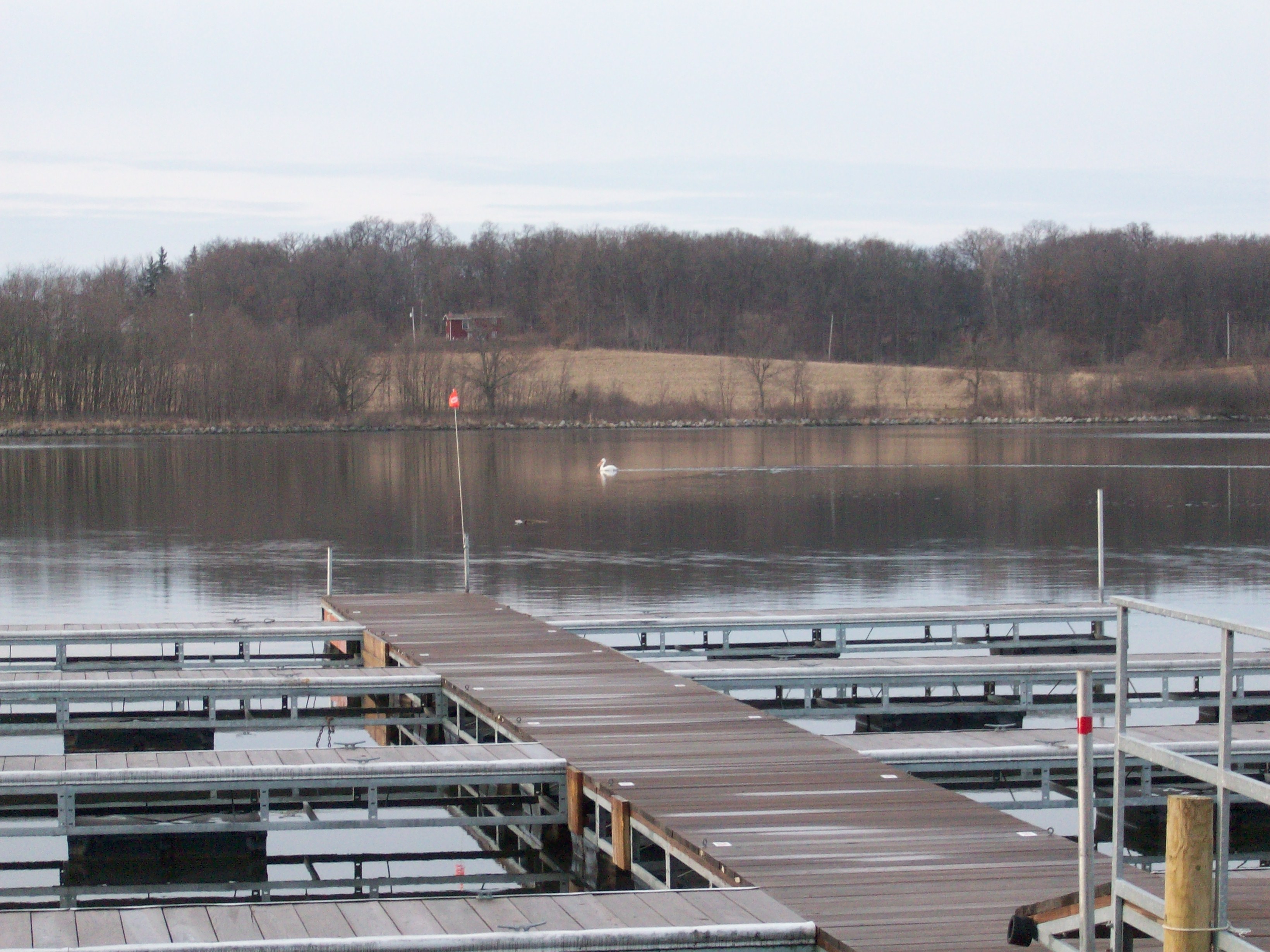
Pelicans had returned to the sand bars on the east end of the north branch of Lake Macbride on their annual migration. Their bright whiteness cheered the beginning of spring.
Sunset was at 7:18 p.m. It would be a push to get 22 finished by then. I made it, just barely.
I had planned to plant lettuce of my own, but waning sunlight made it difficult to see and separate the small seeds. I planted spinach instead. Chasing sunset is not always what we expect.
Garden Burn Pile
Yesterday I worked in the yard and garden, clearing one of the plots to make a burn pile.
The wind was negligible so I dumped a garbage can filled with shredded mailer envelopes and other paper at the base of the brush pile. It took one match to make the burn.
I got out the chain saw and cut down four volunteer mulberry trees that had grown 15 feet tall midst the lilacs. I hadn’t noticed them until last fall when sunlight from the Western sky highlighted them. They burned easily.
Tomato Cages Protecting Belgian Lettuce
I gathered the tomato cages and piled them over the Belgian lettuce planted in March. The seeds are germinating and popping through the damp soil’s surface. The cages will be there to protect the lettuce for three to four weeks before the tomato seedlings are ready to plant.
It was a great day to spend in the garden.
A neighbor visited. She said the president of our home owners association sold his house and was downsizing to move into town. There would be three vacancies on the board with other resignations. I spend 14 years on the board beginning in 1995 and told her I would consider joining the board for the third time. I explained that I would start working at the orchard again in August, returning to a seven-day-per-week schedule. She thought the board could cover my absence, if needed, for a while.
Early spring has been busy already. There is so much life in which to engage. Taking part is important and contributes to sustaining a life in a turbulent world.





 Journey Home
You must be logged in to post a comment.