Categories
Living in Society

What About Our Stuff?

Detail of the Centennial Building at 402 Iowa Avenue, Iowa City, Iowa. Photo Credit – The Daily Iowan.

The decision to close the Iowa Historical Society Research Center in Iowa City has been made. On Saturday, Aug. 23, I participated in a rally to reverse the decision in a packed room at the Iowa City Public Library. The main ask from the event organizers and from State Representative Adam Zabner, who represents the district where the building is located, was to sign the online petition to reverse the decision. Click here to sign the petition. There was more.

My takeaway is the decision to close the facility is pure amateurism. Archaeologist and historic preservationist Kathy Gourley questioned whether the dire financial picture the state reported is true. She presented information about negotiations with the state legislature last session to secure an additional $1 million in funding for the center. While the legislature only provided a half million, that is not chump change at the historical society. The main thrust of this decision was that “your history” doesn’t matter.

Jonathan Buffalo, historian and director of the Meskwaki Historical Preservation Department told friends, relatives and neighbors about the proposed closure. They replied, “What about our stuff?” The Meskwaki house a collection of early photographs at the Research Center. We might all ask the same question. Communication about the closure was a surprise to almost everyone who read or heard the news. There appears to be only the vaguest of plans for the move. A lack of transparency runs throughout.

Here’s the rub. The state archivist is not following professional procedures for closing a facility like this. Donors gave consideration to what items they may have donated to the State Historical Society. Part of the deal was the artifacts would be cared for in perpetuity. Instead of assuring the public that any change would meet this obligation, it’s been like, “Let’s go to Walmart and get us some plastic bags to haul what we don’t like to the landfill.” It is amateur hour.

Rebecca Conard, native Iowan and historian at Middle Tennessee University outlined some of those professional procedures during the rally. Things like looking at the Iowa collections as a whole and then making a transparent, public decision on what to do with items that are less relevant today than they were when donated.

What about our stuff? Will it go to a warehouse? Will it be discarded? There have been no good answers. If the state had considered the public impact of closing the Iowa City Research Center, they would have researched and provided some of the answers when they announced the change. They apparently didn’t. This made a difference that, in part, created the social anxiety on display at the Iowa City Public Library on Saturday.

Valued collections live in that building today. What will happen to archives of Meskwaki photographs, the Iowa Musicians Project, pioneer diaries, manuscripts, and the rest of the materials? Let’s hope they are not rendered into oblivion either by tucking them away on a shelf in a Des Moines warehouse or by discarding.

To learn more, read Trish Nelson’s backgrounder on the issue here.

Sign the online petition to reverse the decision to close the Iowa Historical Society Research Center at the Centennial Building click here.

~Written for Blog for Iowa

Categories
Living in Society

Giving Back

Sky at dawn on the lake.

Since our family moved to Big Grove Township, I volunteered to make lives better. Any monetary considerations were insignificant. A regular person does not volunteer in the community for the money. Part of living a sustainable life in rural areas is contributing to the general well-being. I did what I could. I felt blessed and had to give back to the community in which I lived.

Within the first year we arrived, the home owners association asked me to join the board. I did. These organizations get a bad rap. In our case, we managed the association like a small city. We provided a public water system, a sanitary sewer district, road maintenance, refuse hauling, and real estate sales and purchases. Over time, we upgraded the roads from chip and seal to asphalt, dealt with changing government standards related to arsenic in drinking water, reduced the number of wells from three to one, complied with changing Iowa Department of Natural Resources standards for wastewater treatment plant effluent, handled a lawsuit, and coordinated activities like road use and maintenance with neighboring associations. If the board doesn’t do these things, they don’t get done. Everyone is the better for such volunteer boards. I served, off and on, for over 30 years.

In 2012, when only one candidate was running for two township trustee positions, I ran a write-in campaign and won. Being a township trustee included managing emergency response and a volunteer fire department with other townships and the city. Toward the end of my tenure, we formed a new entity to manage emergency response. We maintained the local cemetery, and supervised a pioneer cemetery where the first person to die in the township was buried. This work helped me understand how tax levies work and how they were used to support things the county did not, things like a small fire department or saving someone’s life in an emergency. There was only a single conflict during my time on the board, about the main cemetery. All of the trustees showed up at the cemetery to resolve a dispute with an individual. No one wanted the job of township trustee and someone had to do it, so I stepped up.

When the local seniors group had an opening on their board, I volunteered and became its treasurer. This lasted about two years, but it provided insight into this segment of the community. Everything we did, from providing community meals to giving home bound people rides to medical appointments to arranging outings around eastern Iowa, served an often neglected segment of the population. It was a great opportunity to learn about the life of our senior citizens before I became one myself.

The contribution to society with the most personal meaning was financially supporting construction of the current Solon Public Library building, occupied in 2001. We didn’t really have the money in our budget yet having a decent public library is something we valued. We found the money to donate. The small city library went from being located under the city band stand, to a store front, to the old jail, to a modern building specifically designed to be a library. In the beginning, the library was staffed with volunteers from the Solon Young Women’s Club and the Solon Study Club. Today, there are full and part-time paid staff that work alongside volunteers. A library is something the whole community can use. I am proud to have helped build ours.

There are other ways I gave back to the community. Giving back is a personal value to hold dear in turbulent times. We should all find ways to give back to society in this Trumpian time of self-interest. If we don’t, who will?

Categories
Creative Life

Friday Photos

Wednesday was a day like this. Sky above the Solon Public Library.

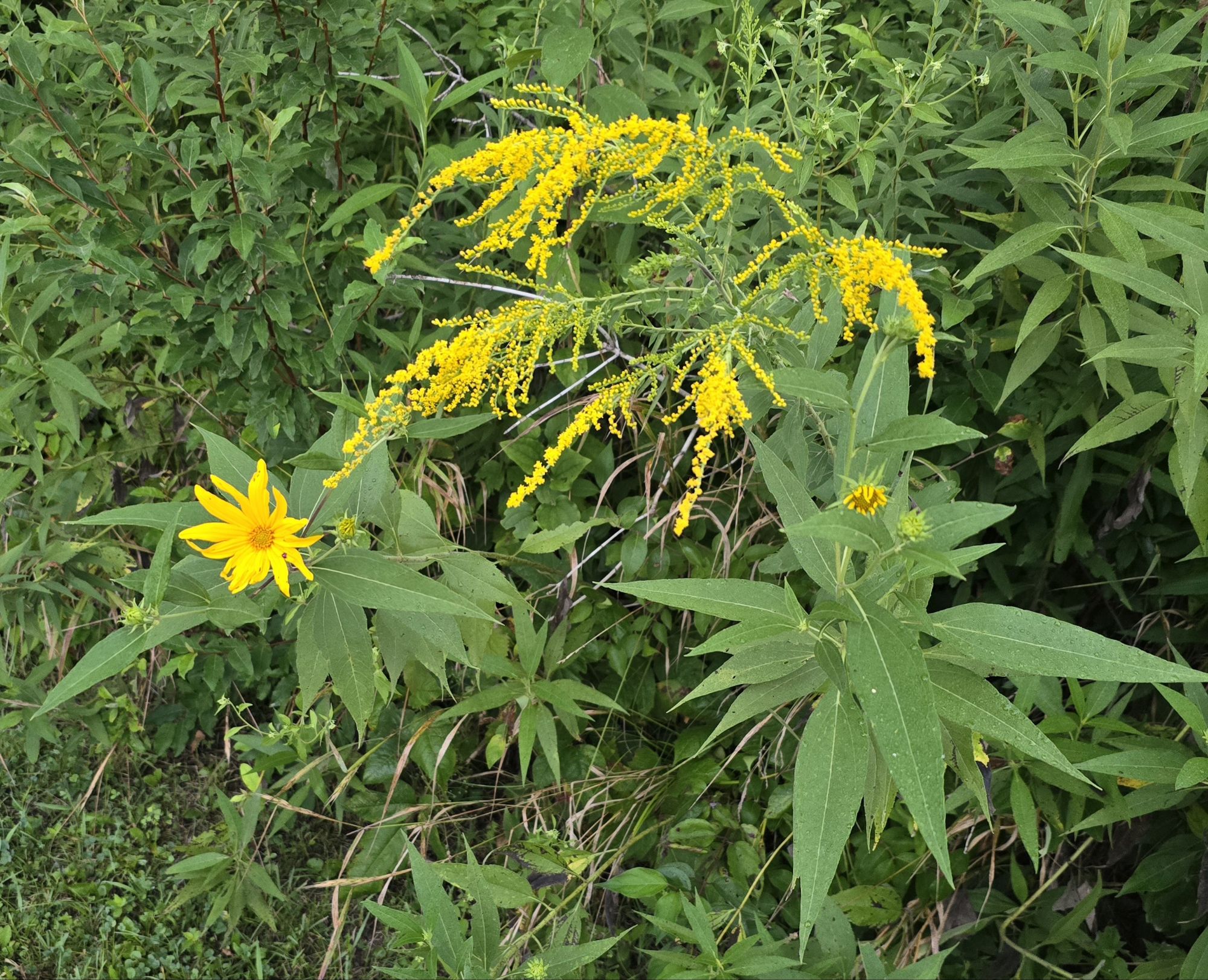
The hardest part of being an amateur photographer is making the images look different. For the most part, I prefer outdoors photography. Here a gallery of some of this week’s images.

Categories
Living in Society

Survivor with Plans

Bur Oak tree on Aug. 20, 2025.

The Bur Oak tree near the front of our property is one of the few of our 20 trees unaffected by the 2020 Derecho. Most of the others were blown over outright or began a slow dance with nature to see when their last leaf-out will be. Most of them will be gone in five years because of injuries sustained during the derecho. A lot of work went into planting those trees. I have memories of each of them and who worked with me when planting.

When I wrote the outline for my autobiography, I figured it would end with the coronavirus pandemic. Little did I know that Donald Trump’s assault on society as we know it would be a thing. After eight months, it seems clear the baton I will take up has to do with intellectual freedom, which best matches my skill set. What form it will take is to be determined. I’m going to a rally about saving the State Historical Society building in Iowa City this Saturday. I should see like-minded people there and be able to hook up and get started on developing an initial plan with others.

I expect to be active again soon. Like the oak tree, I expect to survive the storm.

Categories
Kitchen Garden

It’s Tomato Time

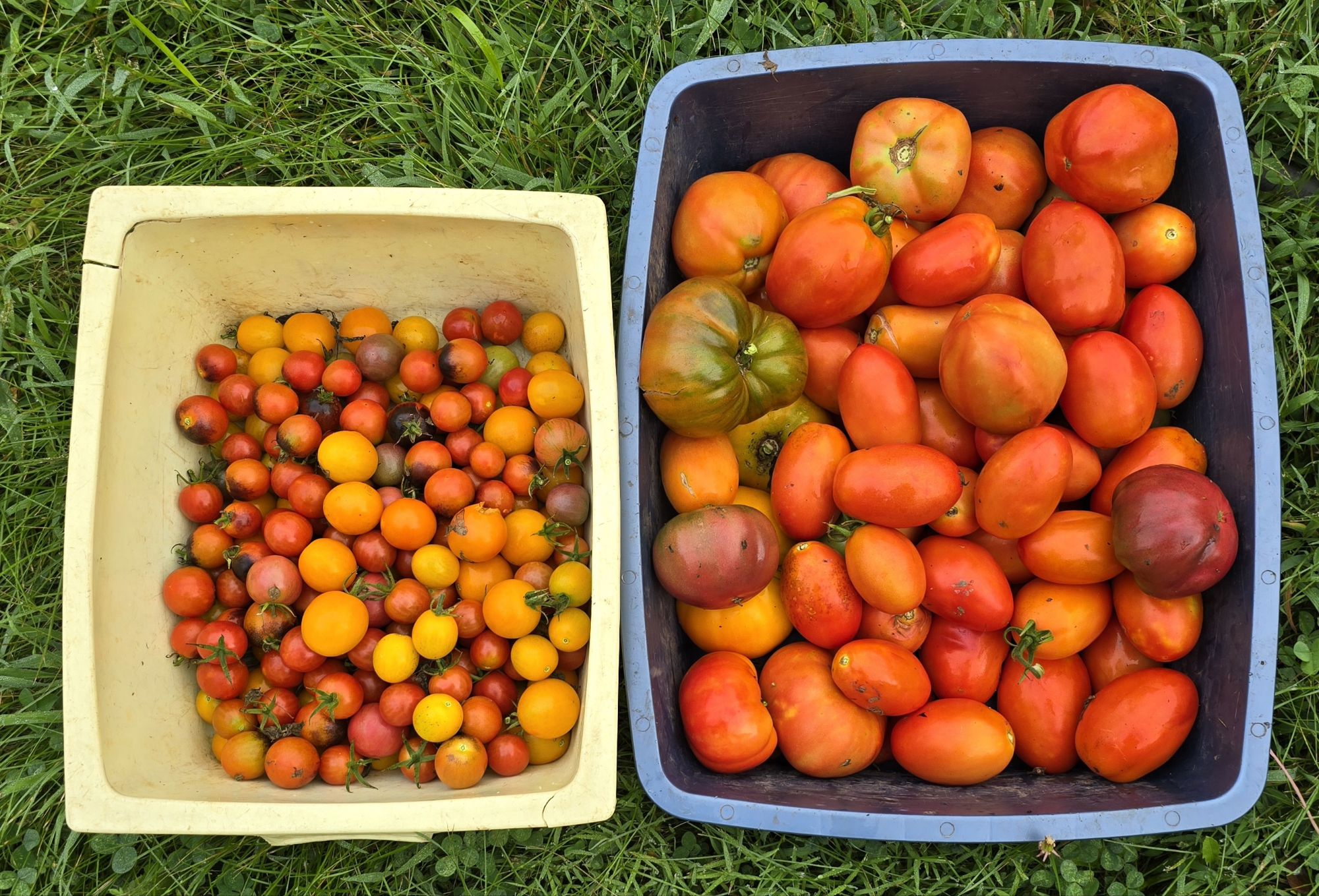
Tomato harvest Aug. 19, 2025.

Garden tomatoes are a highlight of the Iowa growing season. Growing them is a skill I learned and modified so there are enough for household needs, plenty to give to friends and family, and a generous donation to local food pantries.

There really is nothing like eating a garden fresh tomato a short distance from where it grew from seed and ripened.

For six weeks or so, we live in bliss.

Categories
Living in Society

Summertime Heat

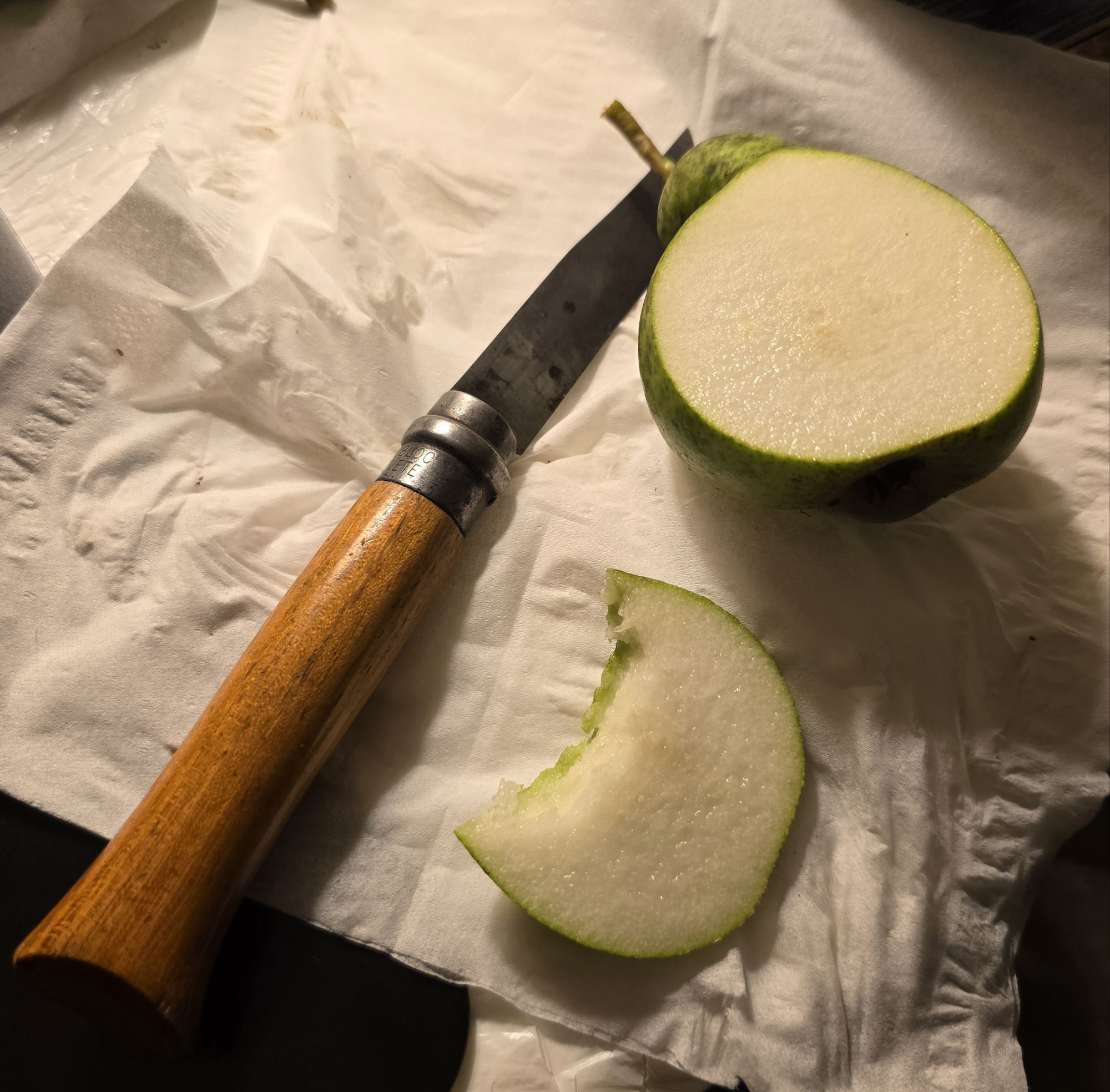
Pears are not ripe yet.

The last week has been a combination of ambient temperatures in the high 80s to low 90s, heat index of 105 or more, and thunderstorms. As a septuagenarian I stay inside with air conditioning once I finish early morning, outdoors chores to avoid passing out in the heat and humidity.

I took a box of cherry tomatoes to the community food pantry. My other Monday errands included filling the auto gas tank and lottery gambling. It was a quick trip, with exposure to people. I like the people part of it, and finishing while it’s relatively cool. Monday errands has become a thing in retirement.

It has been a struggle to mow the lawn, so the grass is growing long. I’ll need the cut grass for garden mulch and if nature dials down the humidity for a day or so, I’ll harvest it. I did manage to mow the ditch as it dried out, and before it got too hot. It was a workout.

When I was younger I would work strait through the heat and humidity. A few years ago I got woozy and had to lay down on the ground to recover. After that I decided to take better care of myself. As an Iowan I’m used to the heat and humidity. As a senior I learned to live another day.

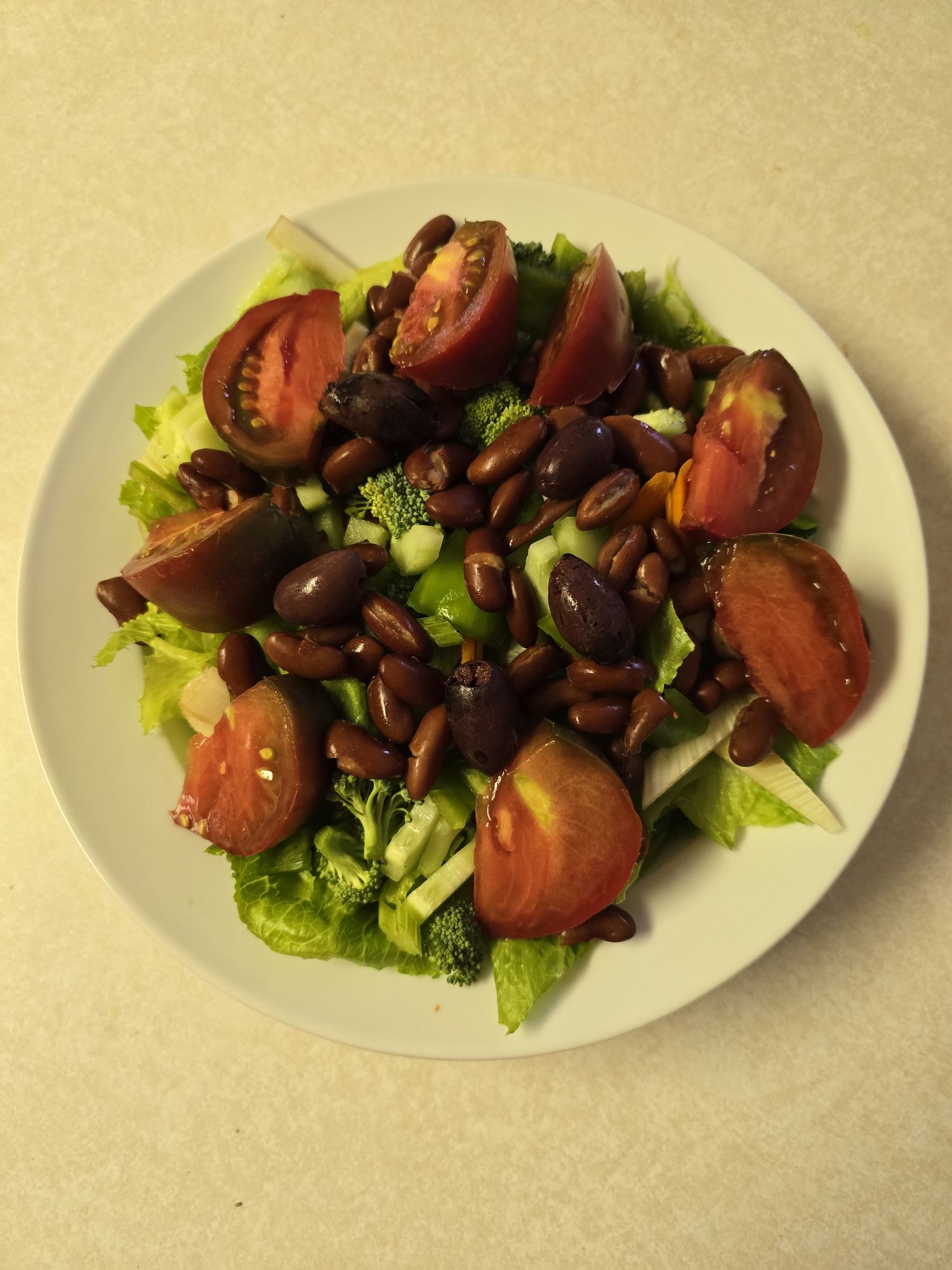
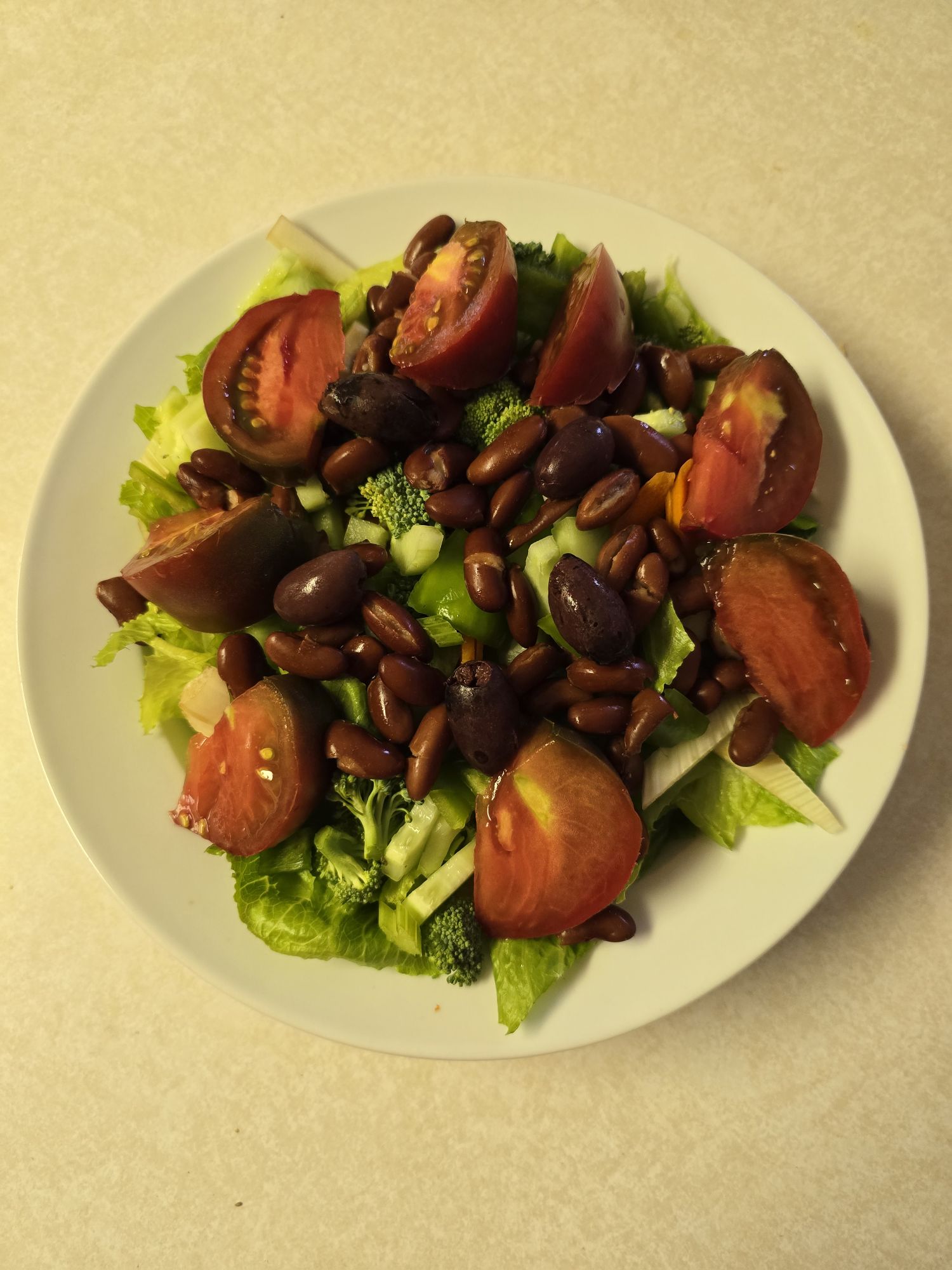
Then there are the big salad dinners of summer.

Big salad (before dressing) with fennel, celery, cucumber, tomato, bell pepper, and broccoli from our garden.
Categories
Creative Life

A Life of Photos – Part IV

Grandma Sarah Elizabeth (Dean) Miller’s bentwood rocking chair made from willow. She was my great, great grandmother. Photo taken by the author in 1983, Cox Hollow, Wise County, Virginia.

Sometimes we would go on a trip and take photographs. In fact, in my time, a trip and a film camera seemed to go together. Because I was able to purchase a camera with money from my newspaper route, I took photos when on family trips. When Mother and Father went on a trip they would take my camera. You go on a trip, you take some photographs to develop and show the folks back home. When trip photos got processed, we would sort and edit them. Sometimes we made them into an album. Simply put, trip photography was a cultural behavior with a beginning and endpoint and fixed technology for a trip’s duration.

I’m speaking of the pre-internet days. We got our first home computer on April 21, 1996. We didn’t do much with online photography until May 3, 2008 when I bought my first digital camera to make it easier to post on social media platforms. Back then, the process to put print photographs online had some obstacles, importantly, the lack of a scanner, which was expensive equipment. In 2025, with mobile device technology, that is all pretty seamless. It was not so in the 1980s and ’90s.

This photograph of Grandma Miller’s rocking chair was from a trip my spouse and I made to Virginia in 1983. The image records the artifact. There is a backstory. We both sat and rocked in the chair. We had a discussion about it with my great aunt Carrie who had possession of the rocker when we visited. We discussed it being made from local willow trees. I’m not sure, but believe I have a photograph of Grandma Miller’s daughter, Tryphena Ethel Miller sitting in it. (Spelling is “Tryphenia” on the 1940 U.S. Census). The chair is both an Appalachian artifact and a family heirloom. Forty years later, I don’t know what happened to it, although it may still be sitting on that front porch in Cox Hollow where we first saw it and took this photograph.

On that trip, my great aunt said she did not want her photograph taken. So many years later it is hard to remember the conversation. I believe it had to do with the Appalachian belief or superstition that there was a connection between a photograph and one’s soul or spirit. I was not trying to steal a part of Aunt Carrie’s soul. I respected her wishes and did not take a photo.

Also on that trip, my uncle, spouse and I visited Grandmother Ina Elizabeth Addington’s grave. She died in 1947 of food poisoning. She was also the granddaughter of Grandma Miller. My uncle got teary eyed while we were there visiting his mother, so I did not take a photograph of the grave marker just then. We returned the next day for that. Discretion is an important part of trip photography.

While trip photographs serve as a form of aide-memoire that conjures our living memory of what happened, so often they get separated from memory and stand as orphans. Their dependence on the photographer and the specific trip is a consideration in curating any photographic collection. In this case, I will likely put all the 1983 trip photographs that are not in an album in an envelope together and label it. Likewise, when considering which images to keep and which to label by writing a short note on the back, we can make a big difference when the photographer dies or leaves images behind. Deciding what to do in cases like this is a main task of this project.

This photograph has a date of July 1983 printed in red ink on the back. I added the following text: “Grandma Miller’s rocker. Made of willow. Grandma Miller was Tryphena’s mother.” A person needs to know more than a little context for that to make sense. Compared to most prints I have, those are a lot of words. Working through how and what to write on the back of prints is another main task of this project.

I could say a lot more about trip photography. As an organizing principle, it just makes sense to put all the images captured on a specific trip together. That doesn’t answer the question of passing along one’s heritage. I need to flesh this out in a future post.

~ Read all the posts in this series by clicking here.

Categories
Kitchen Garden

Arrival in a Thunderstorm

Sunset after a two-hour thunderstorm.

We have visitors from the east this weekend. On Friday they drove through an Iowa summer thunderstorm in an open-bed pickup truck laden with boxes of household goods for storage. The load was well tarped and secured. Some of the boxes got a few drops of rain, but mostly the first principle of transport came into effect: secure your load properly to avoid problems. We hardly used the tall stack of towels I got out to dry the boxes.

The lightning and thunder were exceptional. Enough of it to make a show. Not too much to worry. A few lightning bolts hit close to home, yet for the most part the storm did its work and moved through the area without incident. It saved me from worry about watering the garden.

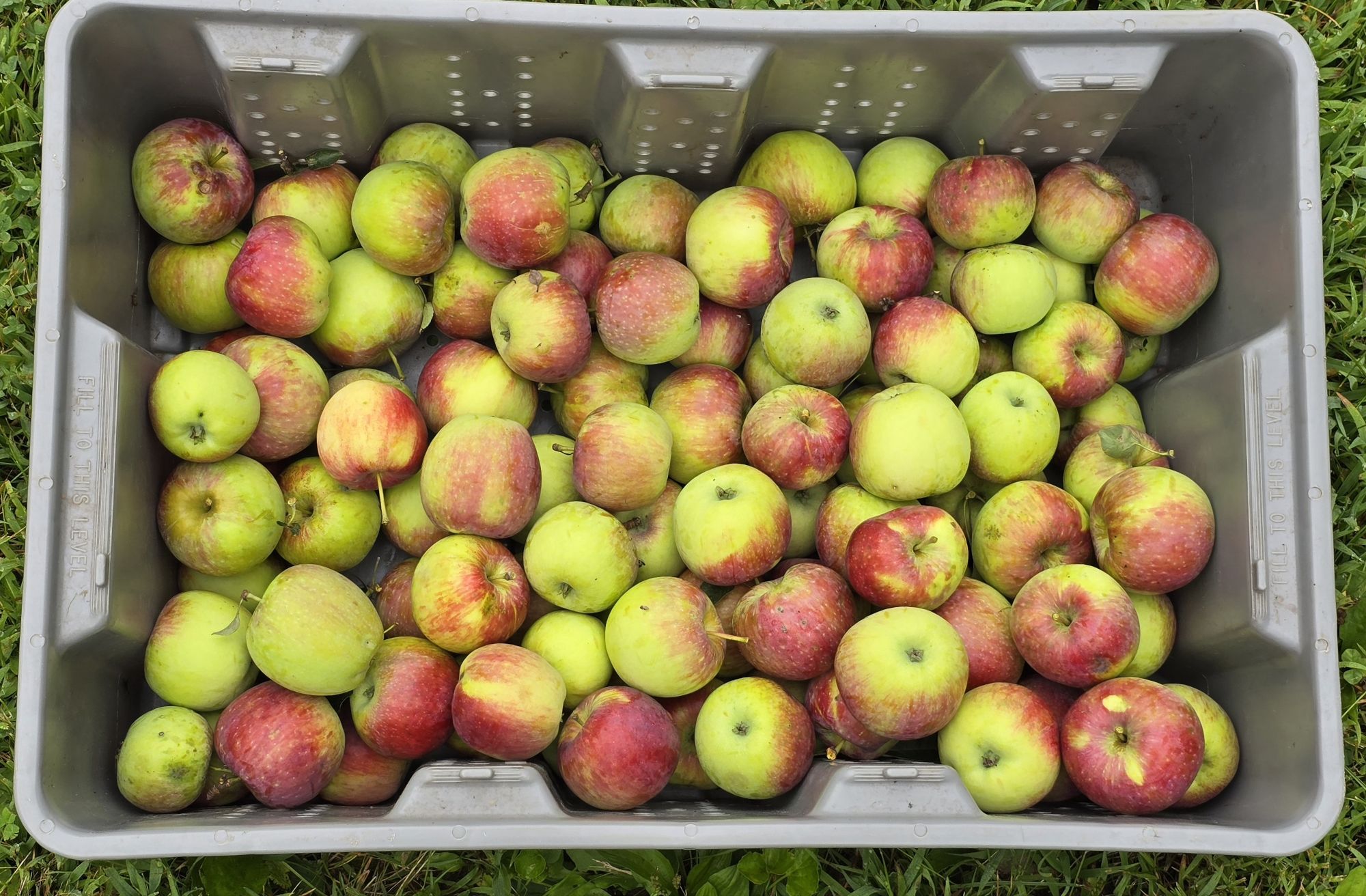
These August days are busy in the kitchen garden. Apples, pears and vegetables are abundant and both the garden and kitchen are full of them. I enter either place, and suddenly, four hours filled with work rush by. Being engaged in the conversion of nature to foodstuffs seems righteous. Neither “farmer” nor “gardener” nor “cook” are the right words to describe this. It is an amalgam of living in the present, tradition, education, and experience. I don’t feel any specific descriptor is needed.

We cleaned off the dining room table to sit and talk. I made a simple repast of cut garden vegetables, fruit, cheese, and crackers for the visitors. We talked about what we would accomplish this weekend, not thinking too much about the future or the past. As the United States has its authoritarian moment, such discussions define us… help us cope… make us better people.

It is an escape from the storm that has already moved on and left us living.

Categories
Living in Society

Vegetable Prices Jump

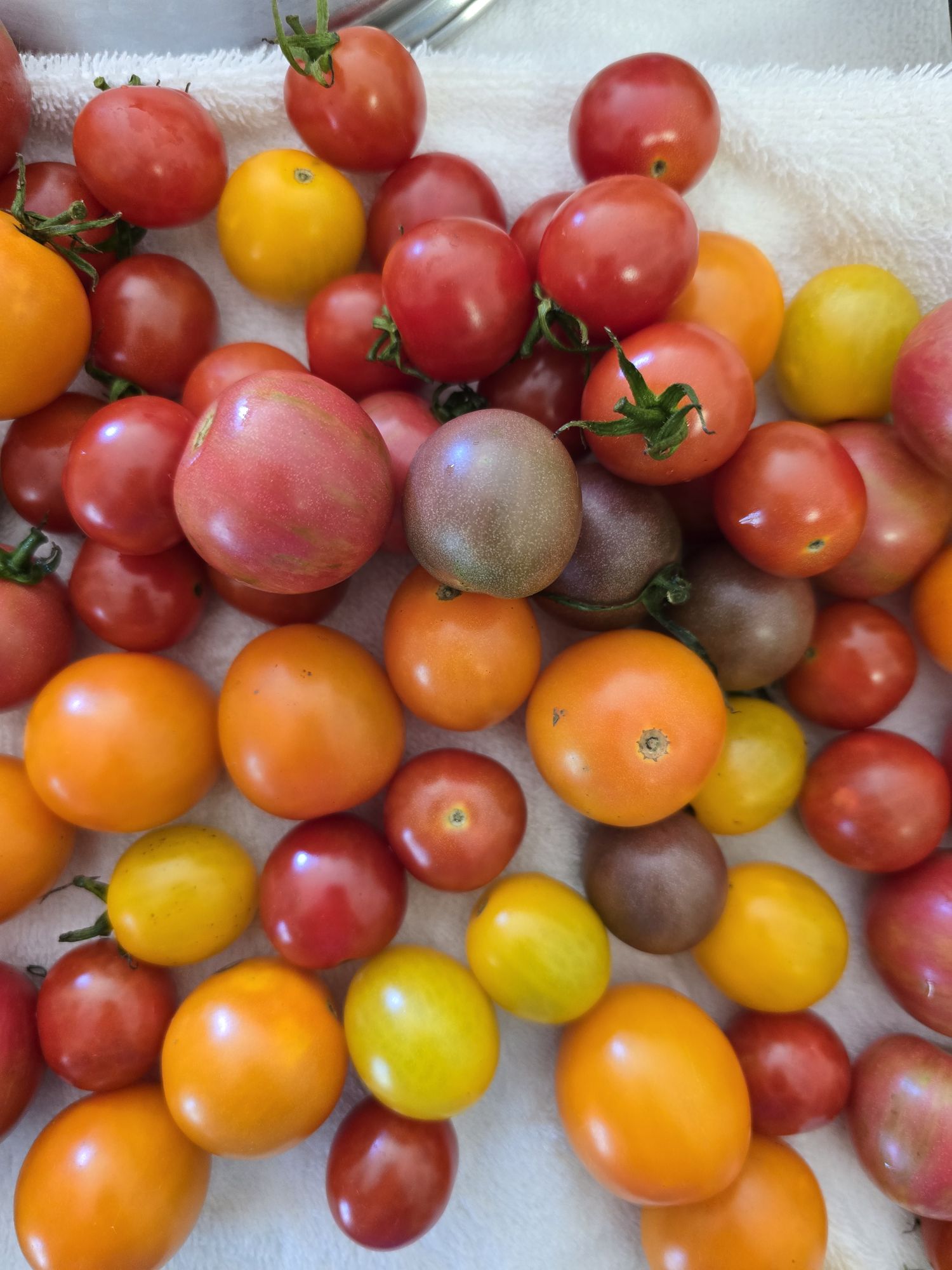
Cherry tomatoes picked Aug. 14, 2025.

When a person grows a garden they don’t think much about the price of vegetables at the grocer. All the same, when the Producer Price Index for fresh and dry vegetables jumped by 38.9 percent in July, everyone should stand up and take notice.

“The increase is the biggest one-month move for a summer month in almost a century,” according to NBC senior business correspondent Christine Roman. Why? Unpredictable weather, including drought. The ongoing roundup and deportation of immigrant agricultural workers. Tariffs on food. It is a commonplace that margins in the grocery business are thin. These disruptions in the process that produces our food have and will cause a price increase for consumers as wholesale purchasers pass through some or all of their additional expenses.

When I return from the garden with a tub of tomatoes, apples, or greens, I have forgotten how much I spent on the seeds, supplies and equipment to produce it. I looked at my spreadsheet and found it was $921, thus far in 2025 for the entire operation, including the repair bill for my John Deere. Is it a bargain? That question is out of the scope of my gardening. Learning to produce a year’s worth of garlic is a skill that is hard to price. I generate my own seed garlic, so there is almost no financial cost to produce it. Sweat equity is also difficult to price.

The increase in the Producer Price Index for vegetables is a bellwether for other things going on in the economy. Climate conditions, labor, and tariffs will impact pricing on items other than food. The conclusion to be drawn here is everyone should begin conserving resources if they haven’t already. I doubt this once in a century price increase is the last, and we will need every dollar we can squeeze from our budgets. Hear of belt-tightening? Feel lucky you still have a belt.

For now, the refrigerator and freezer are full. The pantry is as well stocked as it has ever been. Produce continues to grow in the garden and will continue until the first hard frost. I knew living on a fixed income would be challenging. I just wish our government would take its knee off our throat, back off, and give us space to breathe.

Categories
Creative Life

Friday Gallery

Some of this week’s photographs.