A repair person is scheduled to inspect and clean our furnace next week. I got a navy blue wool blanket out of storage and put it between the sheet and comforter on the bed. On the doorway to my writing table I put an old pink, white and green bedspread, printed with ballerinas in pointe shoes, to hold warmth created by a space heater. Winter is about keeping warm in Big Grove Township.
It’s not winter yet. I hope for a few more days of bicycling on the trails, a few more jogs on my 2.5 mile course, before being relegated to indoors exercise. Winds calmed this morning so maybe another trip to Ely. We’ll see.
The Nov. 3 election and the coronavirus pandemic are always in the background. One of those dissipates in 15 days. The pandemic, however, will be with us for a while. Experts say throughout 2021.
I’m ready to write this winter. With the garden idle, government in transition, and a pandemic all around us, there is no better time to hunker down behind my ballerina-covered shield against the cold and figure out where I came from, what I’ve done, and importantly, what work remains.
Demolition of the Kraft Heinz/Oscar Mayer Plant. Photo Credit – John Blunk
A childhood friend posted this photo of the meat packing plant where my maternal grandmother, my father and I worked in Davenport.
This is where Father died in an elevator accident in 1969. I wrote a long post about Oscar Mayer in 2015, here.
Seeing the photo evoked no emotions although memories came to mind. I recalled driving a forklift truck throughout the plant and working in refrigerated and freezer units, lard rendering tanks, the kill floor, and most other places during two summer stints at the plant. I remember the locker rooms, the butcher shop for employees, the clinic where cuts and lacerations were treated, and meeting with a union representative in a human resources conference room the first summer. Working there was some of the hardest physical labor in my lifetime.
The transition of Davenport began while I was still living there. The city went through some pretty rough times in the 1970s. When my cohort of high school friends returned home from college and university the summer of 1971 anyone who wanted a summer job found one in the city’s major businesses. I’m not sure that would be possible today. When the Mayer family sold the business to General Foods Corporation in 1981 it was the beginning of the end.
When Ronald Reagan became president the jobs environment in Davenport got much worse with large-scale businesses closing and moving toward cheaper labor including outside the United States. It is ironic that Reagan got his start in radio at the WOC studios in Davenport given the damage his administration’s policies later did to the city’s industrial base. Reagan lived in Vail Apartments where Grandmother lived in her last working years. He was no favorite son, that’s for sure.
As prominent as the meat packing plant was during my childhood and early 20s I don’t feel anything about the plant’s demolition. Big meat packers displaced the kill floor years ago, consolidating operations in much larger plants and introducing boxed meat products. When Iowa Beef Processors gained prominence, my uncle, who was a union butcher at a grocery store, went to work for them as a sales representative. He was well aware of the shady business practices of the company during and after the 1969 strike in Dakota City. I also remember the strike and what it did to Oscar Mayer.
We knew this year’s plant demolition was coming so the actuality of it is less meaningful. One more demolition in the transition of society into something else, something that favors capital and its wealthy investors. Yet our family made a life out of the meat packing business for a while… until we didn’t when big corporations took over.
No regrets, no feelings, yet a few memories remain. They are memories of growing up in a union household with a sense of fairness about our personal labor and its rewards. Like the building soon will be, those feelings are gone.
The general election is in 17 days. We can’t wait for the results.
Early voting is at record numbers, although Americans are not known for being big on voting. I read a Pew Research Center report that said in 2016 four in ten Americans who were eligible to vote did not do so. We, the people, are pathetic.
It’s not that nothing is at stake. The stakes are high. All the same, a lot of people do not vote and the republic is the less for it.
My sense of the 2016 election is a lot of folks who had never or rarely voted came out for Donald Trump, giving him an unexpected win. Turning out new voters is an important part of any political campaign because the pool of eligible but not voting voters is so large. The election of Trump turned politics as usual on its head.
Jen O’Malley Dillon, the Biden-Harris campaign manager, cautioned people about recent polling showing Biden leading overall by double digits. The race is much closer, she said. After being burned by polls in 2016, most politically active people are inclined to believe O’Malley Dillon and continue working to turn out voters until the polls close.
This cycle was complicated by the coronavirus pandemic. As election day approaches the COVID-19 case count, related hospitalizations and deaths hit new records. Because of the pandemic, Democrats have avoided normal voter contact such as door knocking and in-person events. Republicans have not. Whether this will make a difference is an open question. The Iowa Secretary of State decided, and the legislative council approved, to mail an absentee ballot request to every active voter in the state. This is encouraging eligible people to vote and record voter turnout is expected.
One of the things at stake in this election is control of the Iowa legislature. The most important reason is this General Assembly will approve redistricting maps for the state. This impacts both congressional districts and every state house and senate district. My state representative Bobby Kaufmann summarized the Republican position in a Feb. 26, 2019 newsletter to constituents. Here’s the full paragraph, unedited:
One of my many roles as State Government Chair is to protect our redistricting process. We currently use a nonpartisan model that allows a computer program to work with nonpartisan government staff to draw our lines. This model has worked great since its inception in 1980. Just like I told you I will protect IPERS from any harmful changes, I commit to you to protect our redistricting process from harmful changes. Unfortunately, Washington D.C has other ideas. The first resolution the new Congressional Democrat Majority has put forth would change our fair and nonpartisan process and would inject politics into it. House Resolution one establishes a new commission comprised of people registered with a political party. You can read the bill if you go to the Congressional webpage and type in “HR-1”. My message to Washington D.C. and the new Congress is to leave our system alone, stay in your own lane, and focus on the plethora of problems you have in DC – not meddling with the States. I don’t care if it is Republican or Democrat…leave Iowa’s outstanding system alone.
As we knew then, HR-1 wasn’t going anywhere. What does matter is Kaufmann’s statement is a distraction from what could happen under current law.
When the non-partisan government staff produces a new district map the legislature can accept or reject it without amendments. If rejected it then goes back to the drawing board for a second attempt which must address the issues raised with the first map. The legislature can accept or reject the second map without amendments. If the second map is rejected, a third is produced. This map can be amended by the legislature. Since 1980 the first map was accepted in 1991 and 2011, the second map was accepted in 2001, and a third map was accepted in 1981. There is a process if the third map is rejected, which hasn’t happened after four U.S. Census counts.
Republican pundit Craig Robinson posted on twitter he was willing to bet $100 a Republican legislature would accept the first map in 2021. That’s cold comfort for Democrats because a Republican-controlled Iowa House and Senate could reject the first two maps and tinker with legislative districts to produce a structural Republican advantage for the following ten years. Creating such a structural advantage is called gerrymandering, a nomenclature that upsets Iowa Republicans who hear it.
It would be better for everyone if we flipped the Iowa House to Democratic control, if for nothing else than to provide balance during the redistricting process. We had divided government in 2011 and the district map approved was judged to be a fair one. The current reckoning is Democrats must produce a net gain of four seats in the Iowa House to secure control of the body.
When we consider all the Americans who were eligible to vote in 2016 and didn’t, the discussion of redistricting is way into the weeds. Elections have consequences and if Republican legislators control the redistricting process there is no going back for another ten years. A lot can happen in ten years and preparing for them begins in the next 17 days.
A steady, westerly wind blew the last few days making the daily bicycle trip more challenging. I wore a hat under my helmet, a pair of gloves, and a sweatshirt to hold against the chill.
It has been good riding on the trails near our home since I changed the front tire and tube on Monday. I’m finding a 40-year old bicycle needs constant repairs and enjoy diagnosing problems and resolving them.
I have been thinking about participating in an event-style ride next summer, although I need to train for it if I do. Maybe a century ride, or a day of RAGBRAI if they resume operations. For now my attention turns toward winter. The change of seasons is in the air.
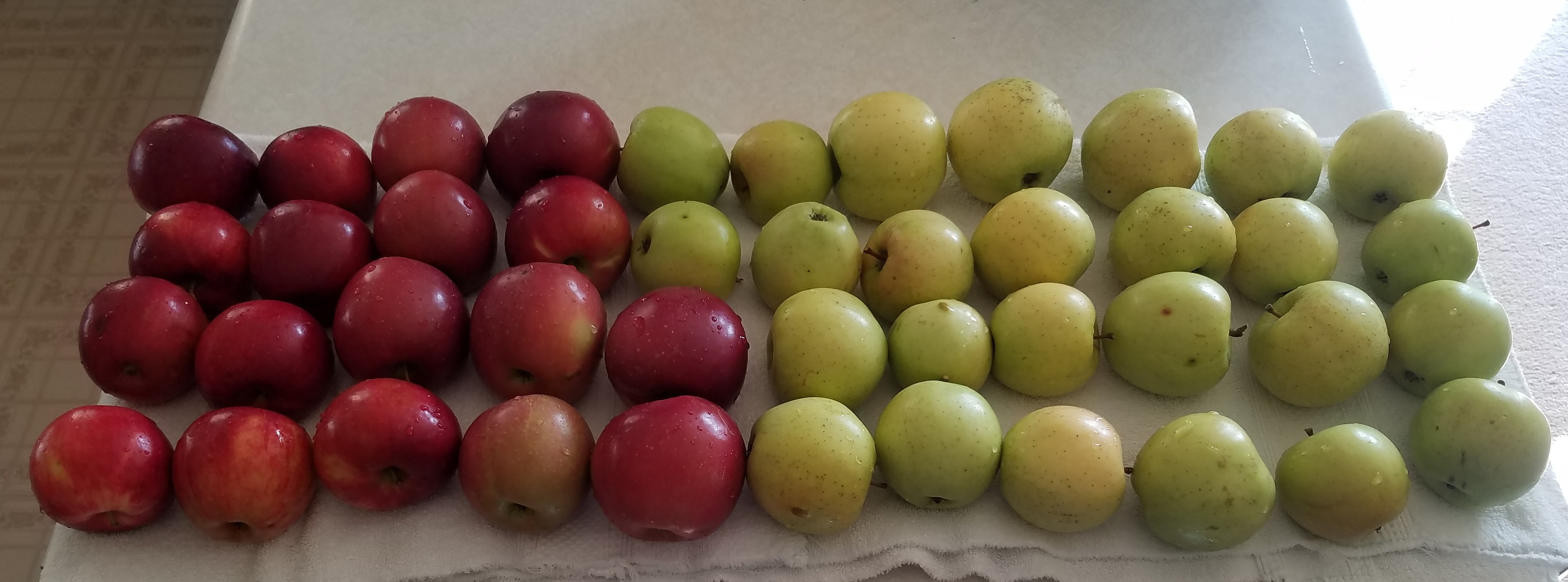
The orchard has the last apples of the season available this week. I picked Gold Rush from trees and got Jonathan and Enterprise in the display cooler. Gold Rush and Jonathan are for storage and the Enterprise will be converted to apple crisp or apple sauce during the next couple of days. It is hard to believe the season is already at its end. I am happy to have the nearby orchard to fill gaps in our home apple growing culture.
With cooler weather I turn from finishing the work in the yard and garden to creative work indoors. I filled in a couple of blanks on my autobiography outline yesterday. I hesitated to re-start the project during gardening season because I didn’t feel ready. With the combination of the coronavirus pandemic, a forced retirement, and winter’s approach I feel more ready than in a long time.
Politics took a holiday yesterday. There were at least four televised events yet I viewed none of them. On my to-do list is to obtain a digital television and set it up. The analog ones don’t really work. I am loathe to turn them on. Because I voted already my interest in details of candidate positions is waning.
It will be different if Joe Biden wins the presidential election. Having someone who uses reason, logic and careful deliberation for process will be refreshing yet something to which we haven’t been accustomed the last four years. The coalition of supporters Biden brought together is broad and deep. There will be Republican resistance to a Biden administration, yet any more, that’s to be expected and most people realize it. The moderator of Biden’s televised town hall meeting asked him what he would do if he loses the Nov. 3 election. Biden’s response, “I won’t lose.”
There will be wind but no rain according to this morning’s forecast: a fine day for pedaling against the wind. Such resistance is important to human progress. It makes us stronger and builds stamina. Both are qualities needed for the road ahead.
Temperatures seemed normal, rain adequate. When there were exceptions, dealing with them was easy and intuitive. Gardeners produced a great crop.
Meanwhile, the arctic is melting, the antarctic too. NOAA reported the third warmest September in the history of record-keeping. Drought and desertification plague many parts of the globe. Hurricanes and typhoons wreck havoc on lives. If the derecho effectively ended our garden production, damaged hundreds of thousands of acres of corn and bean fields, and destroyed half the tree canopy in nearby Cedar Rapids, well that’s a once in a lifetime kind of event… we hope.
A reckoning is coming for how we get our food. California’s Central Valley, which produced one fourth of the nation’s food suffers from drought with limited alternatives for securing water to grow crops. The Central Valley supplies 20 percent of the nation’s groundwater demand and is the second most pumped aquifer system in the U.S. These conditions for farming and food supply are not sustainable.
In March, soon after the governor signed the proclamation of disaster emergency, grocery stores began running out of food. Many people reacted by planting a garden or expanding the one they had. They joined community supported agriculture projects. Since then food supply chains worked to fill most of the shelves. Whether grocery retail sales will return to what they were is an open question. As the coronavirus pandemic continues, it is getting worse in Iowa, causing many to stay home when they can and develop alternatives to how and what they eat.
In Iowa we are blessed with a temperate climate. Converting from row crops to diversified agriculture should be done yet is not as easy as it sounds. Smaller farms require cheap labor to produce vegetables and livestock for niche markets. Mid-sized farms are constantly on the razor’s edge working to maintain profitable and diverse operations while avoiding the burden of large capital investments. Big farmers are stuck in a web of government subsidies, commodity markets, long term capital investments, and changing demand for food.
On March 13 I had lunch at a restaurant and a beer at a bar with my best friend. That was the last time I ate restaurant food or went to a bar. Cooking at home has become the norm, not just for me, but for many. That has an impact on food service companies that supply restaurants, and food processing companies that prepare food for distribution. We lost one of the anchor restaurants on our Main Street in town. There will be more business casualties unless people return to restaurant dining soon. With winter coming and the pandemic getting worse in Iowa, diners seem unlikely to return to restaurants until next spring or summer.
It comes back to Iowa’s temperate climate. It seems clear climate change is changing the way we live. As long as we have a temperate climate here we’ll survive.
In graduate school I interviewed people who survived the great depression. What they did then is what we have to do now: create a home industry that meets more of our needs and relies less on global supply chains that developed since World War II. Self-reliance should come easy for Americans as it was defined early in the history of the republic. What’s needed today is broad adaptation of a self-reliance approach to living.
The Centers for Disease Control and Prevention recommended everyone celebrate Thanksgiving virtually this year to prevent spread of the coronavirus. I suspect many Iowans will meet in person and contribute to spread of a disease that is out of control here. A temperate climate can’t help with that. What we can do is plant a garden, something our environment currently supports.
Editors Note: This is from a work file that resulted in the photograph and related art pieces. The main object was a mason jar with a print of this photograph and a poem inside. The poem can be found by clicking here. I was employed at Amoco Oil Company at 200 East Randolph Street in Chicago on Oct. 27, 1990 when I wrote this. By leaving work with an Iowa-based transportation and logistics firm I really had cut the cord on my Iowa roots, intending to go on living with our small family in Indiana or wherever life took us. Part of that new life would be what I called creative endeavor, or creative work with specific outputs. This piece marks a significant commitment to creativity. The text below is transcribed from my hand written notes without changes. It is only part of the document.
This piece is about hot sauce, but about more than that. It is about my vision as a person, family member and citizen of the global village for the next five years. But it is about my recipe for hot sauce, how I first learned it, and about my philosophy of life and art. First there will be the mason jar. Acquired at auctions mostly, and stored in our house. A container in which to put hot sauce.
The photograph of the ingredients a moment in time with my camera in the sun. Specific pieces of vegetables that gain significance when I take their image down on film and reproduce it on film. The instructions, so someone could make the hot sauce, then my written piece about the genesis and my vision.
The aspects, combined with the mail package and handling by the U.S. Postal Service represent a product of my creative endeavor.The first creative work for presentation to my small group of friends.
Not true really. Next in a series of creative endeavors is more like it.
Coping with modern life. It is not easy. In modern life, I have chosen to be an original, and in so choosing, have limited my contact with people outside work. I have become accustomed to staying within the borders of our property here in Lake County. I have taken to gaining weight. I have a vision of being a creative person who makes a significant contribution to society. That has long been my goal. But as another warm season comes to a close, I see I have accomplished little. The work with Amoco takes much of my time. I need to do better, work smarter, to allow more time for these home activities.
And all the while I ponder these things we get older.
Even with advances in electronic communication, those of us who take the coronavirus pandemic seriously have become increasingly isolated. Not everyone takes their chances of contracting COVID-19 seriously, which complicates things.
In Iowa, the governor’s approach to containing the virus has been mostly voluntary. The results speak for themselves. Last week the Iowa Department of Public Health released a White House coronavirus task force report. The Des Moines Register reported:
“Iowa continues to see more than twice as many coronavirus infections as the national average,” White House officials warned. “Community transmission has remained high across the state for the past month, with many preventable deaths.”
Since Governor Kim Reynolds’ March 9 Disaster Proclamation, more than 100,000 cases of COVID-19 have been identified (three percent of the population), and 1,471 people died from the disease. Mitigation of the coronavirus is not going well in Iowa.
Yesterday, while visiting the county seat to get bicycle parts, about nine in ten people wore a face mask on the streets, a marked improvement reflecting the seriousness of the pandemic. More generally, Iowa is not reporting similar face mask usage.
A retired physician sent some 3M-brand N95 masks. Their spouse, who is a practicing physician, couldn’t get an adequate supply at work so they purchased them in bulk. It’s a sad state of affairs when front-line medical workers, who deal with coronavirus infected patients daily, can’t get an adequate supply of personal protective equipment seven months into the pandemic.
Many of us are not afraid of the virus. We’re following the recommendations of experts, which is to stay at home as much as possible and wear a mask while practicing good hygiene in public. The stay at home part sucks.
It’s not that there isn’t work to do at home. I haven’t been to a restaurant since March, all social events were called off or restructured to maintain social distancing, and emails, phone calls and text messages have increased dramatically. Meetings are conducted on line using Zoom or Google Meet, or via conference call. It’s not the same as meeting in person, shaking hands, interacting with other humans. If the logistics of meetings are much improved, the personal nature of them is diminished. There is no end of the pandemic in sight.
In the spring my work at the farm was isolated from the rest of the crew because I was the only worker living off the farm. Moving most workers on-site was their reaction to staying COVID-19 free. The plan is working. I gave up my part-time retail job at the home, farm and auto supply store in April, and didn’t go back to the orchard in August. Retirement was forced upon me by the pandemic. My new potential cohort of retired seniors is not getting together as they once had. I wasn’t ready to give up the human interaction of the workplace, yet did in response to the risks of continuing.
I spend some time with neighbors who joke about wearing their Trump campaign face masks. They know I’m supporting Joe Biden and I’m used to the friendly political interaction. We don’t discuss politics that much. When one family’s child brought COVID-19 home from school, a pall fell on the neighborhood.
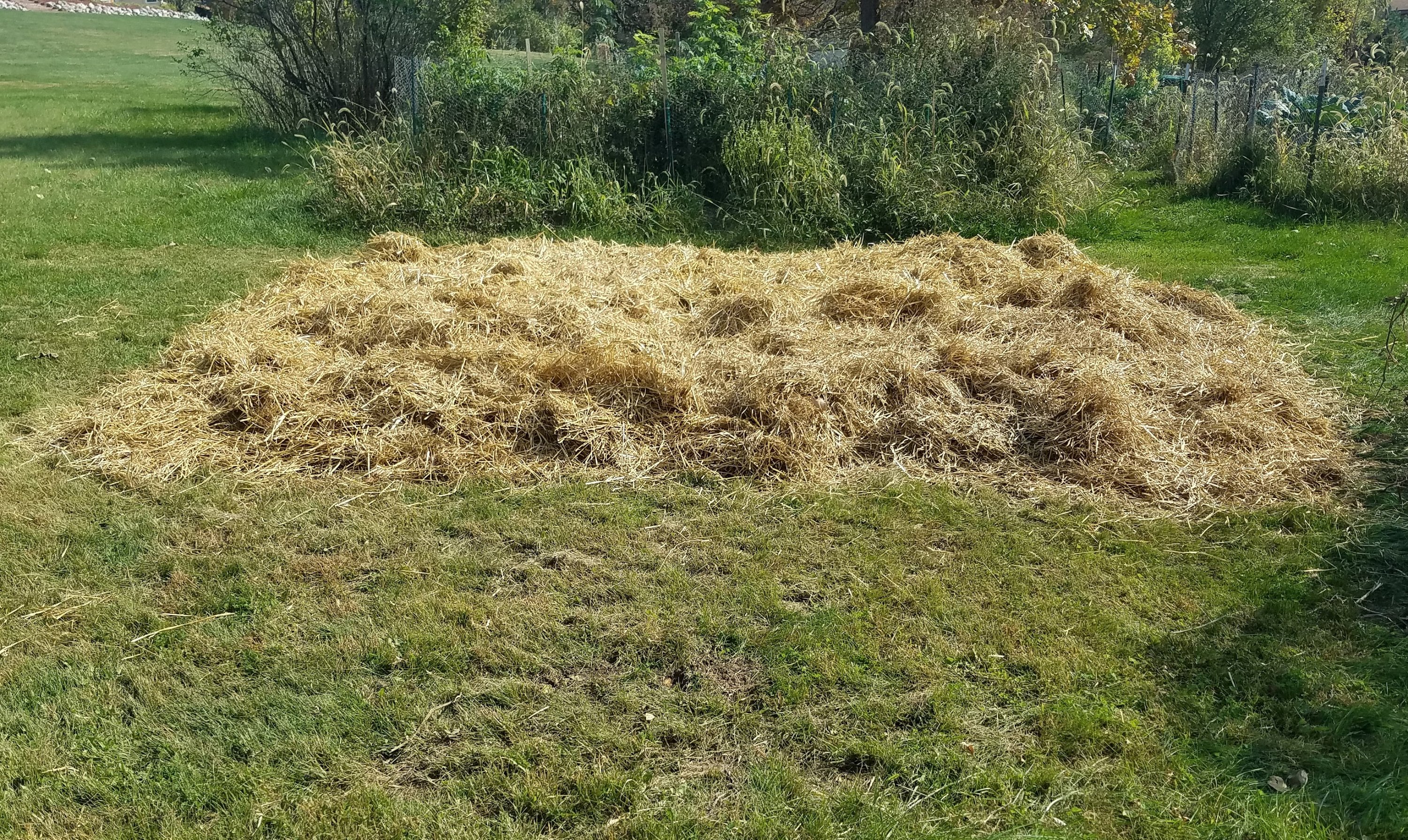
With winter approaching, 2021 looks to be isolating. I planted garlic last week and went to the metropolis to get straw bales for winter cover. Like the garlic cloves just planted, we are alive and and ready to spring to life when conditions are right. For the time being, we are isolated.
Going into the Nov. 3 election we hear a lot about “bipartisanship,” mostly from politicians wanting to get elected. I’m not sure what the word means any more.
A bill passed in the legislature with unanimous consent is technically bipartisan. Everyone realizes the technique is used to move daily business along rather than to more than cursorily agree on something such as the content of the bill.
There are clear divisions in our two-party political system. What is called “bipartisan” really isn’t more than an attempt to compromise our values. Compromise can be good in a democratic republic like ours. The trouble is we don’t share the same values and compromise that works toward complex solutions has recently been minimal and ineffective. Bipartisanship should be set aside so our elected officials can do what’s right. That’s a tall order.
When I was a township trustee we formed a 28E agreement to manage fire and emergency services for several townships and the nearby city. This is basic compromise. We formed a board of trustees with representation from the various governmental entities to formalize how we would approach services. It took more than two years from conception to signed agreement and in retrospect the increased public visibility of the public service, and better fiscal management, proved to be an effective solution. I’m no longer on the board of trustees yet I can read the minutes from their meetings in the newspaper. The new entity serves as an example of government doing what’s right.
Did trustees from the several townships and the city have political views? Of course they did. We were able to set that aside to work on a project that mattered to the entire community.
Our state and federal government should work more like our local townships do. The trouble is there are too many lobbyists with too much influence. In addition to lobbyists, there are the people behind them. I think it’s weird to have a page on the state legislature’s website that indicates how lobbyists view certain legislation. In Iowa, lobbyists have come to dominate the legislative process. The joke is the agriculture committees have to check with the Farm Bureau before doing anything. Lobbyists write bills that save legislators from doing their own thinking.
In the federal legislature the influence of lobbyists isn’t so obvious unless one walks the corridors of House or Senate office buildings. There lobbyists far outnumber regular people seeking their representative or senator. Going back to our 28E agreement, the only lobbyists for creation of the process were those who had a stake in its outcome, including the mayor, the fire chief and his deputies, the county attorney’s office, and other elected officials.
Our legislative process has been compromised by the influence of corporations and their lobbyists, including non-profit organizations. It takes so much money to run for office it is hard for candidates to decline their money. Those who do are handicapped out of the gate and risk being viewed as less than serious candidates because of the lack of fund-raising skills. Iowa’s 2020 Democratic U.S. Senate primary campaign was a case in point. The fact that Theresa Greenfield knew how to raise funds and did so played more of a role in her winning than policy positions embraced by so many. Money eclipsed politics every time and will for the foreseeable future.
Three weeks before the general election is not the best time to raise this. There is never a good time to raise it. Legislators deny contributions influence their votes yet it’s hard to believe them. We are so far from doing what’s right in so many areas of our governance it seems quaint to say it’s even possible any longer.
Let’s face it, our government is compromised and we need to do something about it.
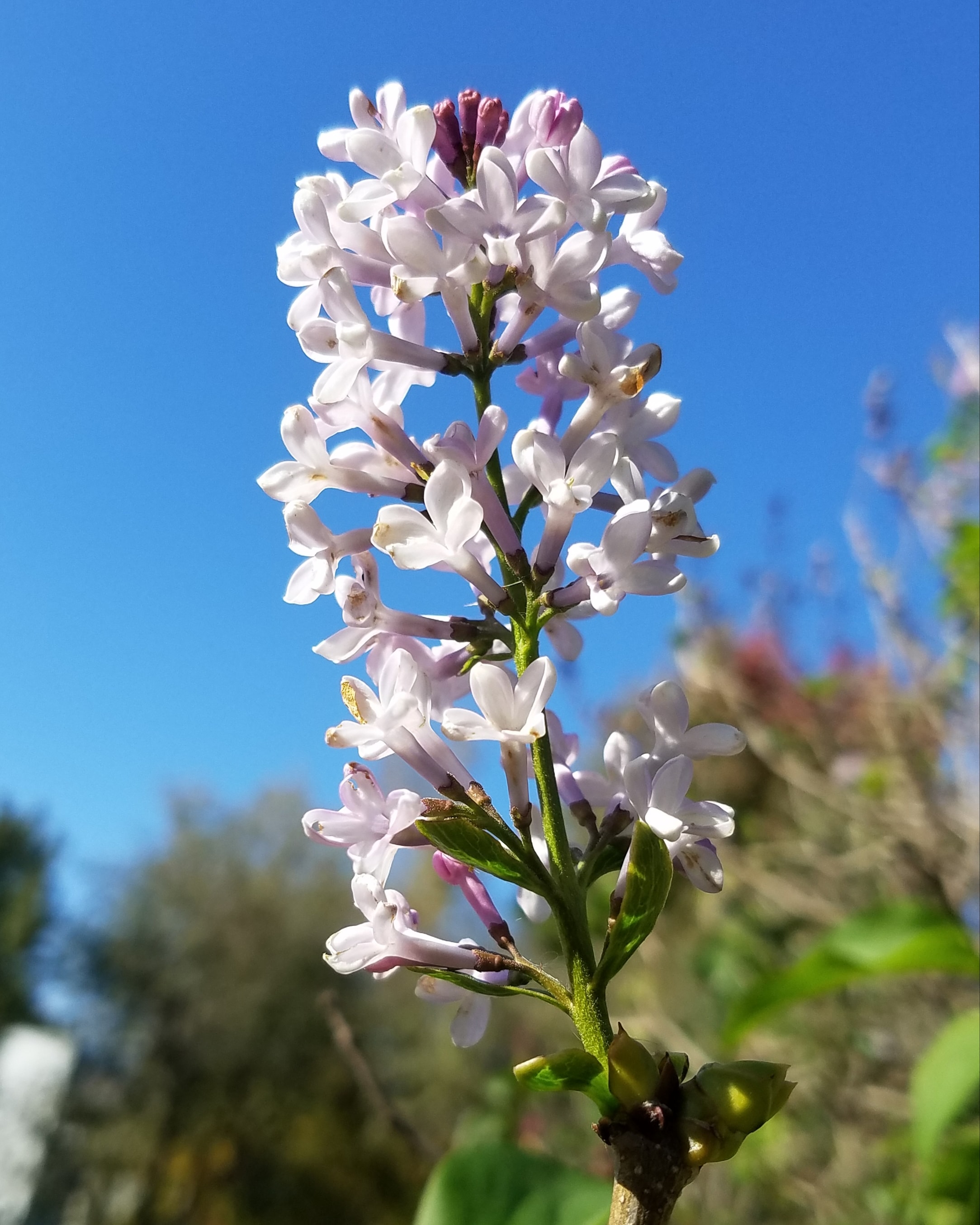
2020 has been stressful for trees and shrubs. Our lilac bushes are in bloom. It’s October.
I remember when autumn colors took my breath away. Stunning reds, yellows, greens and browns spread out across the other side of the lake.
It wasn’t breath-taking this year as I jogged along the state park trail.
The trees seemed sparse. More than last year. The yellow, brown and green colors were subdued or muted, as if the forest had one hella year like the rest of us. This side of the lake, tree damage from the derecho is everywhere. As winter approaches uncertainty abounds.
One hopes for catharsis on Nov. 3 yet I don’t know. Ticket sales from Broadway performances in New York have been suspended until May 2021. It seems like forever until then.
What Unites Us: Reflections on Patriotism by Dan Rather and Elliot Kirschner.
Because of Dan Rather’s long tenure at CBS News he reported on events that were important in my life and formative of a national consciousness such as one existed in the late 20th and early 21st centuries. His reflections on patriotism are staples of a certain view of the United States, one that is rapidly fading from sight. Rather’s framing of patriotism had hegemony for a long span. Such dominance is coming to an end. The frame has been broken.
There is a certain comfort in reading these essays. It is a false comfort because the United States has changed. We’ve entered a realm where, as Rather writes, what used to be valued no longer is. He asserts his view of patriotism is enduring. I remain skeptical.
We are a more diverse country where societal norms have broken down, resulting in an individualist, short-sighted view of what’s important. It’s everyone for themselves, exploitation of the commons on steroids, and wanton disregard for science that could prevent degradation of the environment.
In the crazy year 2020 has been with the coronavirus pandemic, ill-conceived foreign affairs, climate catastrophe, social unrest, and lack of proper governance, we need hope and Rather provides that. Yet it is not the hope we need. Looking forward our needs are more basic: survival is everything and our future survival as dominant species on the planet is in doubt.
In the maelstrom that is contemporary affairs What Unites Us is a fine meditation, a reminder of what once was. Reflection is important and useful, yet only if it spurs us into action to take care of ourselves and then work together with others in an increasingly integrated global society to improve our lot.





 Journey Home
You must be logged in to post a comment.