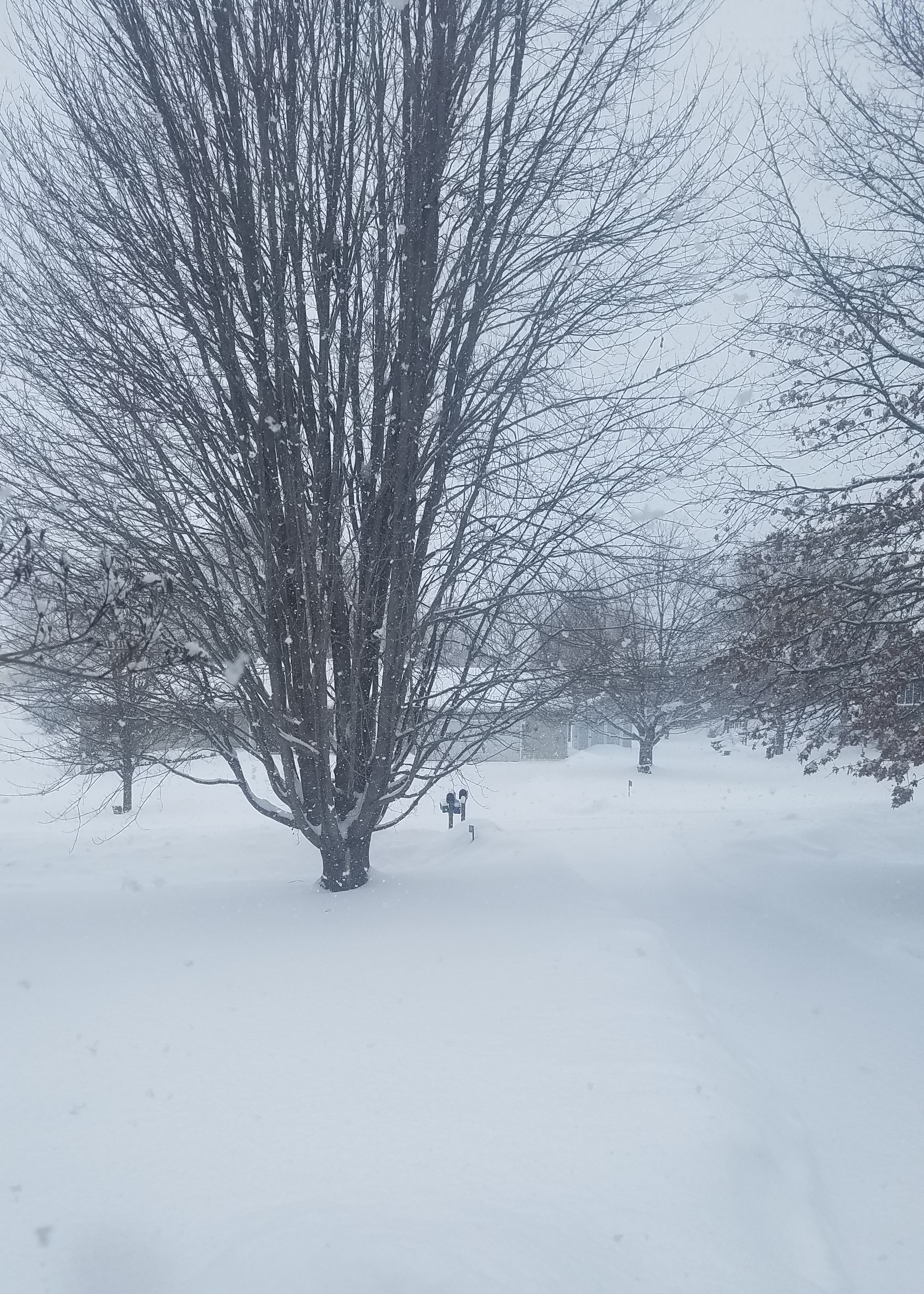
The ambient temperature is six degrees below zero. The February streak of subzero days is a record according to meteorologists. The headline on the Weather Channel website is “If you think it’s cold now, just wait until Valentine’s Day and next week.”
It’s cold, but not that cold. Overall this winter seems warmer than usual. Why?
We are not in the 35 below zero range we hit a couple of years ago. That was the cold spell that caused 70-degree temperature swings, began killing our Locust tree, and caused long-stable sewer and water pipes to break around the neighborhood. It’s not that cold yet.
We are also missing a strong cold spell at or below minus 20 degrees. I follow these cold snaps to identify when I should prune the apple and pear trees. We didn’t hit one last year and thus far haven’t this year. Combine it with the fact 2020 tied for the warmest year on record and perhaps one can see why I’m skeptical regarding the hubbub about how cold it is. I just walked on the driveway and it is a quiet, refreshing, albeit cold night. The kind that sets the stage for hope and human activity.
I will attempt to get the buckets of compost from the garage to the bin in the garden. However, there is no hurry because even if I do dump them, the compost will not decay much until the temperature warms. There is also an eight inch pile of snow on top of the composter to clear.
The coronavirus pandemic was a killer as it closes its first year. Thus far 2.4 million people globally died of the coronavirus. In the United States, 485,000. In Iowa, 5,236. Every one of the deceased had a name known by others. The coronavirus is a pestilence the likes of which there is no living memory, except maybe among a decreasing number of centenarians.
One can lose track of hours and days in the pandemic. Each human interaction takes on special meaning. It’s precious because there are so few of them, and those we have are mostly through electronic media. When a human calls, it’s a big deal. We are tempted to pick up the telephone when it rings, even though it is reasonable to predict the caller is a machine wanting to ID me as a potential customer to buy an extended warranty on my 1997 Subaru.
Hopefully we’ll get enough COVID-19 vaccine in the community so everyone who wants it can get it. The vaccine is proving effective overseas where the population of anti-vaccine folks is lower than in the U.S. If the vaccines are working, and it appears they are, there is hope of ending the pandemic. In the meanwhile, we’ll stay home, keep warm, and if we have to go out we’ll do so only when it is necessary, and wear a face mask and stay socially distant. Because we have pensions, we can afford to do this. Others are not so lucky.
There is pruning to do, although not as much as last time. The Aug. 10 derecho felled a large branch on the Red Delicious apple tree, so I don’t want to stress it much more than it is. No living creature want more stress right now. One day this week I’ll put on my overshoes, a warm coat, hat and scarf, and go on walkabout to check the yard and neighborhood. I’ll take my mobile device with me in case some human calls.
Forgetting to turn off the grow light before retiring to bed is a new bad habit. Seedlings need a daily rest from light, at least for 4-5 hours. I end up turning the light off around 3:30 a.m. when I return to my writing space for the day.
Learning to garden is a never ending process if one is any good at it.
This year the garden is in for big changes. The Aug. 10, 2020 derecho blew over the Locust tree and tilted one of the three Bur Oaks enough it should be taken down. I plan to cut two of the Bur Oaks to provide space for the remaining one to grow normally.
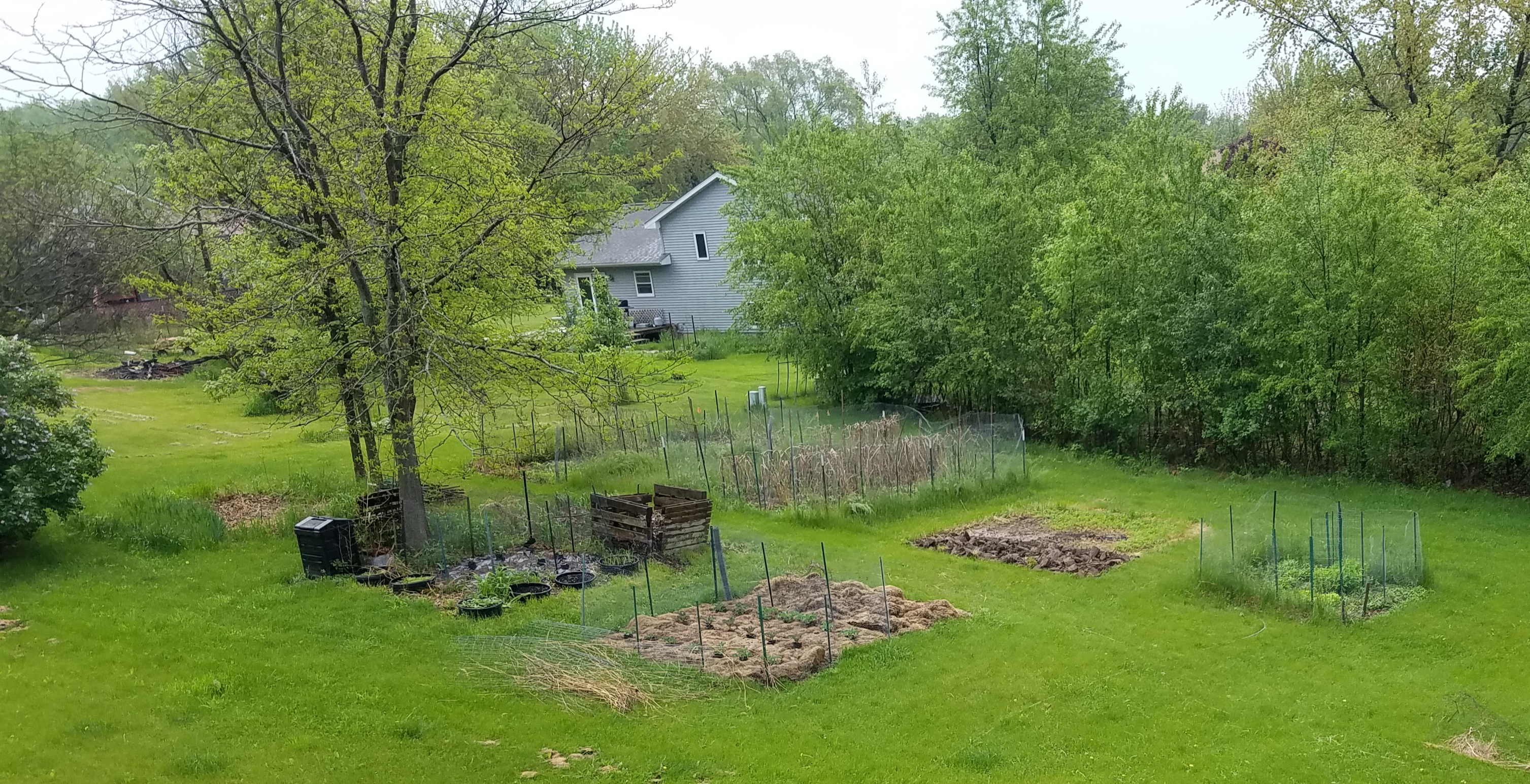
The derecho damaged a lot of fencing I use to discourage deer from jumping into the plots. There will be new stakes and new chicken wire fencing. If we had the resources, I’d install an eight-foot fence all around the garden with a locking gate. There are other projects begging for the money, so that plan is deferred.
The garlic patch is in, but the other plots are an open book. I will rotate cruciferous vegetables and beans. I need a whole plot for tomatoes and a small one for leafy greens. I ran out of garden onions this month, so I want to grow more this year and that will require a bigger space. No final decisions to be made until I plant Belgian lettuce on March 2, two weeks from now, if the snow melts.
The goal of having a kitchen garden is to produce food aligned with our culinary habits that helps meet a basic human need. We have to eat, no matter where, no matter how. It may as well be enjoyable. We’ve all eaten our share of food that doesn’t please our palate. A kitchen garden should address that.
There are inputs to address, other than the garden part of a kitchen garden. Perhaps the most significant is intellectual. Most people don’t frame such a construct although they should.
A kitchen garden is a reaction to the culture of consumerism. An important distinction is reaction, not rejection. I will continue to buy black peppercorns, nutmeg, vanilla bean extract, refined sugar, and all-purpose flour milled elsewhere. How else will we get such necessary ingredients?
For the time being, I’m ovo-lacto-vegetarian (most of the time), which means consumption of dairy products and the good and bad that goes with them. I’m not of one mind on this. For example, I’ll buy a gallon of skim milk from the local dairy 6.2 miles from my house, yet I’ll also stock up at the wholesale club for half the price. I take local eggs from the farm when offered, yet I also buy them at the club. Maybe it’s best to become vegan and eschew dairy altogether. I’m not there yet.
While I am a local foods enthusiast, and my diet centers around being that, I am not doctrinaire. Other people have to consume the results of my kitchen work, although during the pandemic that’s only one other person who I’ve known for going on 40 years. Despite several issues with his behavior and written output — including bigotry, racism and patriarchy — I like the Joel Salatin idea of a food shed. That is, secure everything one can that is produced within a four hour drive of home. I am also not doctrinaire about “food miles.” I’ve written often on the topic and if we work at it, we can secure most of our food produced within less than an hour drive from home.
During the pandemic we haven’t eaten restaurant food even once. If we get out of this thing alive, I see a return to restaurants as a social endeavor. I like our cooking better than any restaurant fare I’ve had the past many years. I expect the habit of cooking and eating at home will persist. How would restaurant dining fit into a kitchen garden? It would be an infrequent adventure in expanding our menu and spending time with good friends.
Another part of a kitchen garden is providing proper nutrition. That means research to understand nutrition enough to combat common diseases — diabetes and cardiovascular disease particularly. Portion control is also part of nutrition, related to maintaining a healthy weight. My research into nutrition was mostly a reaction to medical clinic visits. I sought to change the results of my blood tests regarding cholesterol and glucose through dietary adjustment. The approach has been to discover techniques and processes, then adopt them by habit to weekly meal preparation. Every so often I will consider nutrition in my diet. Mostly, once a new pattern is set, I follow it.
The influence of television and so-called celebrity chefs is part of the intellectual development I bring to the kitchen garden. Before I left my home town for university I spent almost no time in the kitchen learning how to cook. The first meals I prepared for guests were tuna and noodle casseroles made with condensed cream of mushroom soup from a can, once for Mother before leaving for military service, and once for friends at my apartment in Mainz, Germany. My early cooking years — in the 1970s — were trial and error and a lot of marginal, home-prepared meals. I recall at least one loaf of “bread” I used as a doorstop. It was baked while I was an undergraduate, interested in macrobiotic cooking, and didn’t understand how yeast worked.
I learned cooking mostly from television. In 2014 I wrote this about my experience on a work assignment in Georgia during the 1990s:
TV Food Network, as it was known, occupied my non-working time, and I developed an insatiable curiosity about food and its preparation. Emeril Lagasse, Mario Batali, Susan Feniger, Mary Sue Milliken, Julia Child and others prepared food on screen, and I was captivated, watching episode after episode on Georgia weekends. Food is a common denominator for humanity, and I couldn’t get enough. My involvement in the local food movement today has its origins in the contrast between that uninviting place in South Georgia and my food escape.
There is a broader point to be made than one person’s transient addiction to a television network while away from home. It is that American food pursuits, and the economy around them, continue to be based partly upon curiosity.
Curiosity About Food, Blog Post, April 17, 2014.
Over time, Food Network became more formulaic and less interesting. It also moved to a form of cookery competition that diverged from recipe preparation. I don’t tune in today. It opened my mind to the possibilities of food preparation and for that I am grateful.
The last part of intellectual development affecting the kitchen garden has to do with studying recipes. In my ongoing document mining I expect to purge my collection of hundreds of cookbooks. Partly because there are too many for reasonable use, and partly because I have learned the lessons from many of them. Which cookbooks have mattered most?
Like it is for many people, The Joy of Cooking by Irma S. Rombauer and Marion Rombauer Becker is a go-to book when I’m learning to cook a specific dish or vegetable. I continue to use it a lot. I frequently use Mastering the Art of French Cooking by Julia Child, Louisette Bertholle and Simone Beck. I keep copies of other reference books, but those are my main two.
For variety, I have cookbooks by Mario Batali, Giada De Lautentiis, Rick Bayless, Jeff Smith, and Anthony Bourdain, all of whom appeared on television during the period I watched cooking shows. These recipes produce food we like. I also use a few baking cook books, Bo Friberg’s The Professional Pastry Chef, and The King Arthur Flour Baker’s Companion. I’m currently working my way through some cook books used by local chef, the late Kurt Michael Friese.
I studied church and organizational cook books extensively. I adopted very few recipes from them so most are going to go. I’ll keep those that have some sentimental value, ones in which recipes by friends appear, and a set of a dozen or so from my old neighborhood in Northwest Davenport. The purpose of acquiring these cookbooks has been to understand the development of kitchen cookery beginning in the 1950s and ’60s. People used a lot of gelatin and lard back in the day, that’s for sure.
Whatever I learned from studying cookery reduces itself into repeatable main dishes made using understandable preparation techniques. A family only needs so many recipes. As I progress, the kitchen garden becomes more related to cuisine, one recognizable and uniquely our own. It is a cuisine tied to soil I made, the flavors that emerge from it, and the methods used to make it into dishes. The garden has already changed to better match what is going on in the nearby kitchen. That relationship will continue to evolve.
The journey home begins with an understanding of where we’ve been and ends, if we are lucky, with a pleasant reunion with family and friends. A kitchen garden works toward that end.
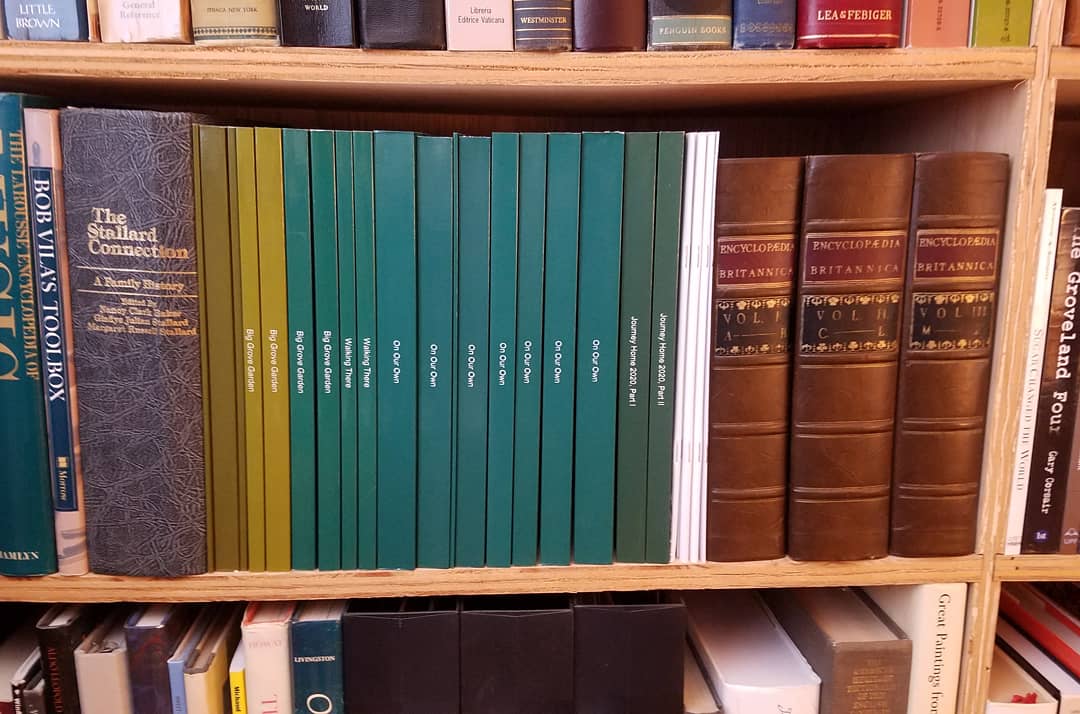
12-inches of blog books and a replica of the first edition of the Encyclopaedia Britannica.
When I wrote it was time to get a grip on the narrative of my autobiography in issue #4 I wasn’t kidding. It’s a flipping beast!
Sorry to report I’m nowhere near that goal and the thing keeps growing.
Because I have written so many autobiographical pieces over 50 years, I’m constantly finding new and important work to incorporate. I have to choose to either mine the artifacts or focus solely on writing. I don’t think it’s an either/or thing.
I’m leaning toward mining artifacts until I run the seam.
The writing is the most engaging part of this work so I can’t imagine avoiding it completely. Thing is I need to understand the scope of what is to be included and I’m nowhere near seeing the big picture.
Yesterday I was reading folders of my undergraduate papers. Was I ever an undisciplined student! I marveled at how a teacher would provide a three-page, single spaced, type-written response to one of my papers. I don’t know if they did it every time, or if I was getting special attention. In any case, it was remarkable.
At the same time, my Shakespeare teacher was exceedingly brief. He used a pack of 3 x 5 index cards for his lectures and they were stained with age and the nicotine tar from his constant tobacco smoking. We knew class was finished when he crumbled his cigarette package, after chain-smoking the remaining cigarettes, and threw it in the waste can.
It is remarkable I continued as a writer after the drubbing I received getting my degree in English. Nevertheless, I persisted.
To provide a better working framework for collecting past writing, I designed what I’m calling a book tree. It is a brief outline with the current 37 chapters, or sections where I can park existing writing as I find it. Half of the draft is migrated there. Once I run the seam I can take each chapter and create a better narrative that will build toward a rough draft. It’s going to take me all year to finish, although I knew that at the beginning.
It did help to lay out the 37 chapters. While it may not be the final number, it serves as a meditation guide for contemplating my life. The more I do that, the better will be the narrative. At least that’s what I believe mid-February in the project.
A version of tofu stir fry is basic to a vegetarian cuisine. I checked my archives and haven’t previously posted about this classic dish.
First, put on a pot of organic brown rice, or your favorite variety. I use home made, canned vegetable broth for this recipe. The ratio is two liquid to one rice. Always rinse the rice under cold water before cooking. Cook it low and slow.
I’ve taken to short-form videos and there is a teenager who posts about vegan cooking. I noticed how she cooks tofu. After cubing firm tofu, she coats it with corn starch, then seasons and bakes it. We avoid corn starch, so used arrowroot powder instead. It’s not the same, but it worked. When we made the dish in our early married life, we seasoned the tofu with Vegesal, which is no longer readily available. Today, I use onion powder, garlic powder and celery salt. The technique is to place the cubed tofu in a stainless steel bowl and gently toss it, first with the arrowroot powder and then with the seasonings. Do so until it is well coated. Spread it on a parchment paper-lined baking sheet and bake for 30 minutes in a 400 degree oven until the outside is browned.
We’ve been cutting the amount of added fat in our diet, and have taken to frying vegetables in some liquid, either water, broth, or tomato juice. Using extra virgin olive oil works too.
I’ve learned to limit the number of varieties of vegetables used in stir fry. Which ones is a new choice each time the dish is made. In the classic preparation I used the combination of onion, carrot and celery, along with bell peppers, snow peas, garlic, and a quarter cup of pine nuts. This is basic and what I was going for last night. For seasoning, I used salt and pepper to taste and a scant tablespoon of marjoram.
Almost any fresh or frozen vegetable would work in this preparation. I especially like broccoli and a leafy green vegetable. If fresh garden tomatoes are available, they are an excellent addition. If I were making it for myself, I’d begin with red pepper flakes in the cooking liquid. The main thing is to resist the temptation to put the whole ice box in the dish. Let the individual vegetables stand on their own. Let them be recognized. Do what makes sense. Be simple and elegant.
When the vegetables are done, toss in the baked tofu and mix gently. Serve on the brown rice and store the rest in the refrigerator for leftovers. We make extra brown rice to use in other dishes during the week.
Another variation would be to make some type of sauce to mix with the tofu and vegetables. The possibilities are endless, yet we usually keep it plain.
In Big Grove Township we have access to a local tofu maker and theirs is among the firmest I’ve found. For this dish one wants firm tofu. We tried the type sold by Trader Joe’s, which also works in this preparation.
So there you have it. A classic American vegetarian stir fry.
Kale, broccoli and collards germinated within three days. This is the first year using a heating pad and grow light indoors. My reaction is positive.
Already onions, shallots, leeks, basil and the cruciferous vegetables are in process. Despite more than a foot of snow on the ground the garden starts bring promise.
March 2 is the traditional day to sow lettuce seeds in the garden. If the ground can be worked, I will. Grandmother called this planting “Belgian lettuce,” regardless of the variety of seeds planted. With my new indoor setup I’ll be starting lettuce indoors as well, as soon as snow melts and the greenhouse can be assembled. Annual cycles of gardening have begun.
What’s different this year is the coronavirus pandemic. Iowa has had a slow start up in vaccine distribution with not much relief in sight for the near term. I know some of the places where vaccines will be available and as of yesterday, no appointments were available. The main impact is my decision to avoid working on the farm this year until being vaccinated. That means I’ll have to be more self-sufficient in my gardening. I believe I’ll be fine.
The outdoors temperature is forecast to remain cold for a while. Yet indoors, there is hope of a great garden.
An octogenarian friend talks about “shooting from the hip.” The way I take it is absent guidance, leaders will step up and help us navigate through difficult times together, leaving no one behind.
We need more of that because our political leadership is failing during the coronavirus pandemic and the resulting economic crisis.
Responding to a perceived need, and not any urging from government, my friend began organizing the logistics for a mass COVID-19 vaccination near where we live. With the structure in place, one hopes the supply of vaccine will be forthcoming. I expect it will be eventually.
People do plan for emergency response. They should. That such planning for a pandemic response appears absent from our government makes leaders among us shoot from the hip because the need is now, and it is real. Maybe that’s what our governor wants. She should just come out and tell us we are on our own. It is one hella way to go about a national and global crisis, though. It makes me wonder why we even have a government if it cannot respond adequately to a once in a hundred years pandemic.
With Al Gore and Company at the Climate Reality Leadership Corps training in Chicago in 2013
2021 will be a pivotal year. We have a new American president, a new Congress, and abundant hope for progress in arms control and in mitigating the effects of warming atmosphere and oceans.
Each person can do something.
No matter your background, I encourage readers to consider participation in one of the Climate Reality Leadership Corps virtual trainings this year. The April 22 training is United States-focused to align with the opportunity our new government presents. There will be a virtual Latin America-focused training in July, and a virtual global training in October. Here is Al Gore’s announcement video and a link to the training page for more information.
This is a unique moment in history for climate action. Learn what it takes to engage in US-based climate advocacy at this vital hour at the @ClimateReality Leadership Corps Virtual US Training this April. Sign up today:https://t.co/AfbCyrWxB9pic.twitter.com/q1eROiOyXB
The coronavirus pandemic has us cooking meals each night and nothing goes better with a bowl of soup made with pantry ingredients than warm from the oven flatbread.
The two people in our household consumed more all purpose flour during the last year than we have in a long time. I made a pizza each week, and am using up some gifted specialty flours — rice, almond, coconut, garbanzo bean — by blending them with all purpose to make flatbread.
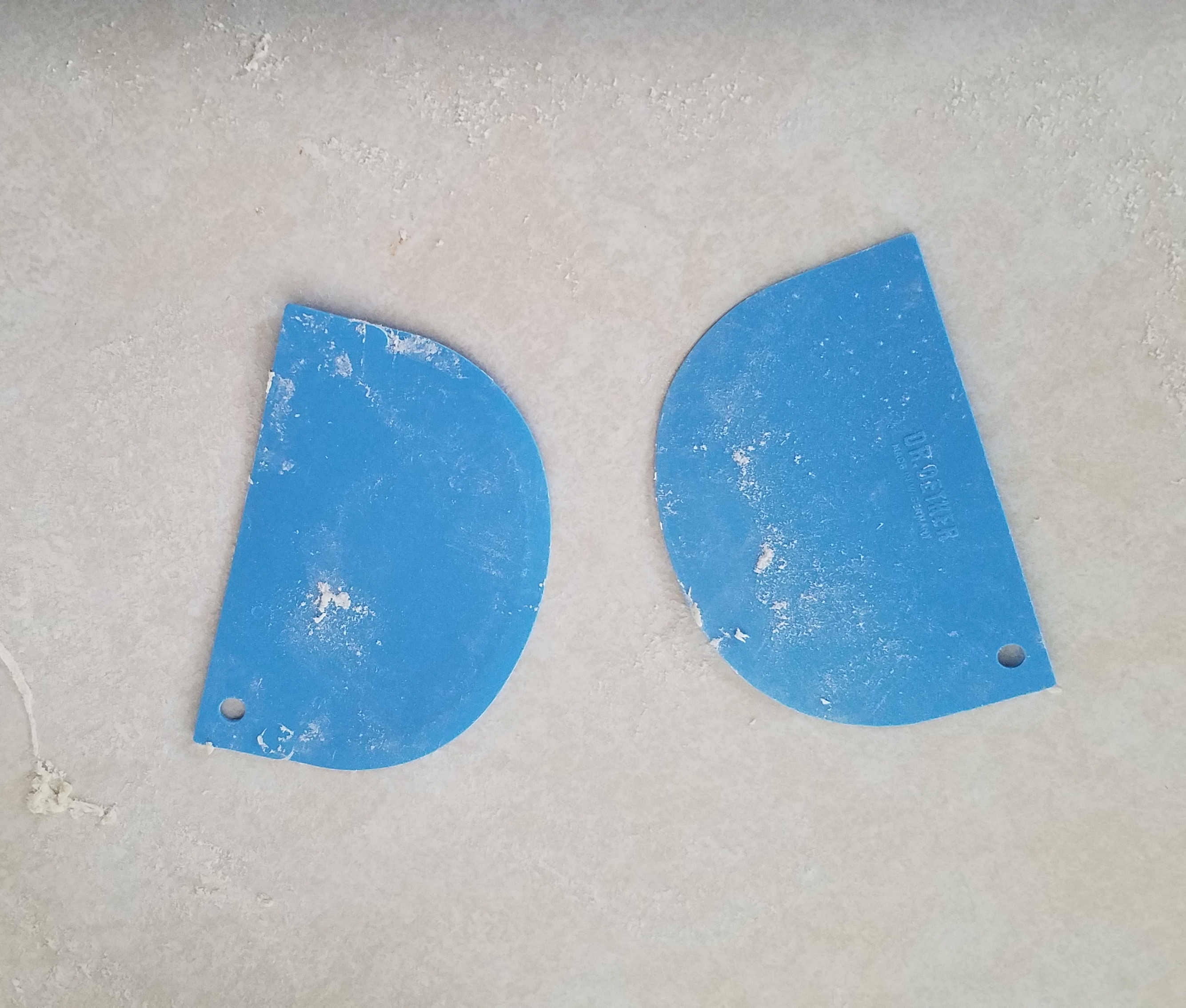
There is no dough recipe, just technique. To get started for a two-person loaf, a cup of warm water from the tap goes into a stainless steel bowl. Mix in a teaspoon of yeast, a scant teaspoon of sugar to feed the yeast, a dash of salt, and two tablespoons of flour. Let that rest for a few minutes, then apply cooking spray to a mixing bowl for the first rise in the oven. Turn the oven on to the lowest setting. I get out my two Dr. Oetker spatulas, bought in West Germany in the 1970s, and get to work, but they are more habit than need.
If I’m making a pizza dough, I start with a cup of all purpose flour. For flatbread I put a half cup of specialty flour in the bowl with the yeast mix and a half cup of all purpose flour. Using the spatulas, I mix and add flour until the stickiness of the dough subsides enough for it to come together. I flour the counter and knead, sprinkling more flour to relieve stickiness. I form a ball and put it in the rising bowl. Put a plate on the bowl and let it rise in the oven for an hour.
Take the dough out of the oven, set the rack in the middle, and preheat to 425 degrees. Punch the dough down and knead a second time on the counter. It will take more flour. Form the flatbread on a baking sheet and dock it. I use parchment paper to make clean up easier but an oiled pan will work, too. Cover the formed flatbread and let rise for 30-45 minutes until the change in shape is noticeable. Place it in the oven and bake for 12-15 minutes until the top begins to brown.
Serve plain or with butter, apple butter or another topping. To serve more people, adjust the water amounts by half a cup for each person. It is a quick, reliable accompaniment for any meal.
On Feb. 6, 2020, a 57-year-old California woman died suddenly after feeling ill for several days. She was the nation’s first known victim of the coronavirus.
Since then, more than 462,000 U.S. residents died from the virus, including more than 5,000 Iowans. Despite modern communications and improved record-keeping we don’t know the exact number of COVID-19 deaths. Causes of death can be complicated in normal times. Suffice it many have died of the virus, or complications from it, and it seems likely we will surpass the number of deaths during the 1918 influenza pandemic.
The combination of physical isolation and communication via social media has made the last year a weird one. Because of the isolation, especially by exiting my retail jobs, I felt healthier during this time than I have for a while. Social media, on the other hand, seems populated by people with their hair on fire about one or another aspect of the pandemic and government response to it. Of things I can control, turning social media off most of the time is one of them. The reduced diet of noise has been better for me. I recommend it.
A year after a national public health emergency was declared by the U.S. Department of Health and Human Services on Jan. 31, 2020, the death toll climbs, unrelenting. After surging, the number of hospitalizations were recently down in Iowa, which contributed to the governor’s decision to relax her recommended restrictions, according to news reports. Frequent email reminders from the state government, to take a survey and get tested for COVID-19 if needed, ceased some time ago.
In our area the senior citizens group is organizing logistics to do a mass vaccination (300 doses) at the Catholic Church in partnership with the local pharmacy. The idea is to help seniors with limited mobility get vaccinated. When doses of vaccine will be available is unknown. I signed up for the vaccine and to volunteer.
Friday afternoon, Iowa Governor Kim Reynolds issued a new proclamation of disaster emergency. Because of our age, we fall into the category “vulnerable Iowans.” Here is the governor’s guidance:
I continue to strongly encourage all vulnerable Iowans, including those with preexisting medical conditions and those older than 65, in all counties of the state to continue to limit their activities outside of their home, including their visits to businesses and other establishments and their participation in gatherings of any size and any purpose. And I encourage all Iowans to limit their in-person interactions with vulnerable Iowans and to exercise particular care and caution when engaging in any necessary interactions.
Governor’s proclamation of disaster emergency, Feb. 5, 2021.
This is Iowa. No mandates here. People are on their own. Just do the best you can.
The coronavirus pandemic is unlike anything I’ve known. So far, so good, despite a lack of political leadership in preparing for a potential pandemic, or, after it arrived a year ago, in mobilizing national resources to combat it. Iowa and the nation are playing catch-up.
For people in our group — financially stable, without major health risks, and able to live without working a job for pay — it is easy to figure out what we can be doing to stay healthy. Neighbors who contracted COVID-19 have recovered, except for those who died. There is no sense of everyone pulling together to get through the pandemic, which is disappointing.
We have become isolated in society, waiting to see the existential facts of what the virus is and what it does to us. It’s a sad day for a nation that mobilized to enter and win World War II. I suppose too many people don’t remember the people who fought that war to make the analogy meaningful. I remember and am doing what I can to help.
I merged two versions of my autobiography this week and that puts the word count over 60,000. I printed the 155 draft pages of the book on Friday and this weekend is time to get a grip on the narrative.
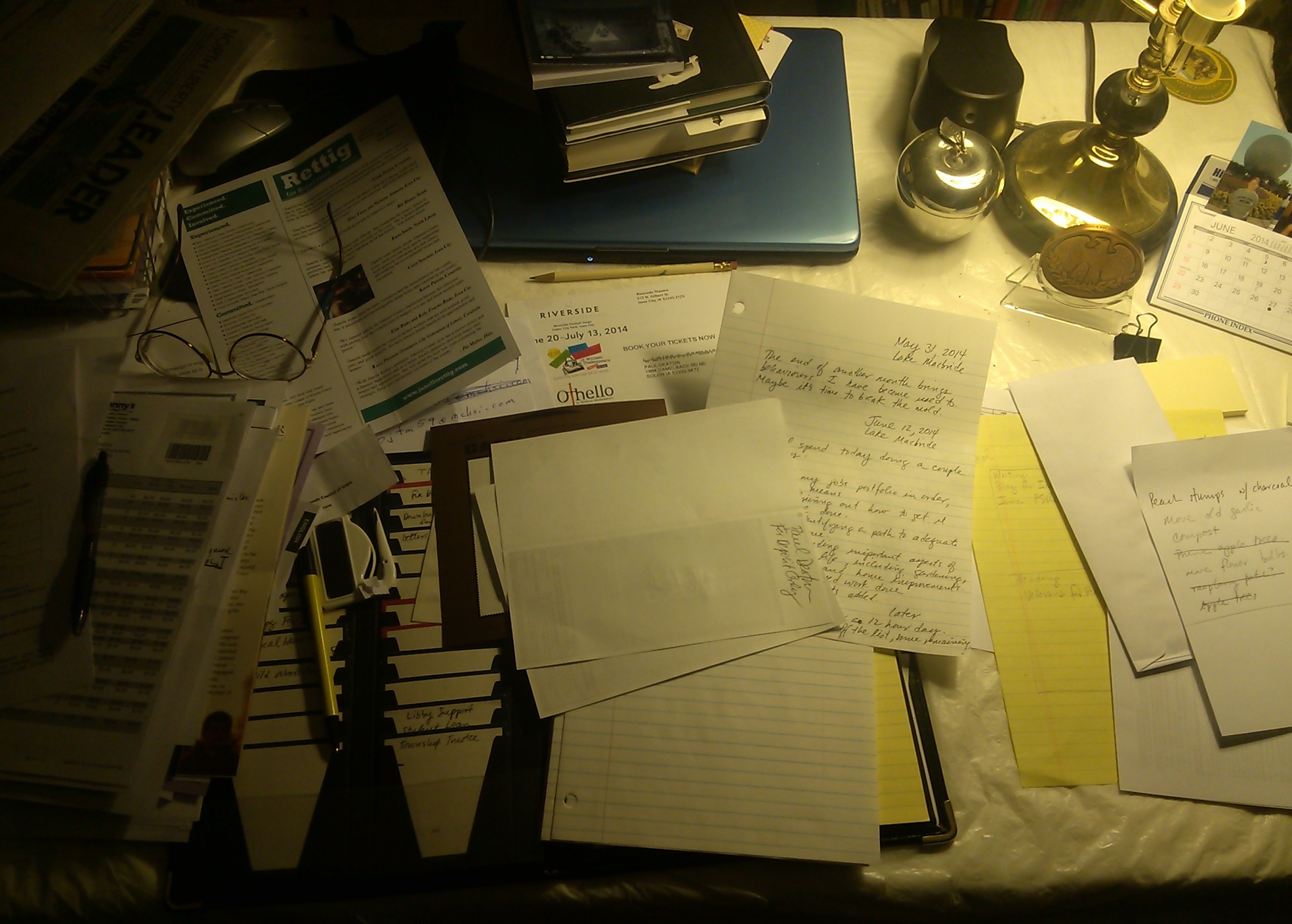
My hope is by reviewing everything page-by-page, I can identify structural deficiencies, make a list of sections that need to be written or improved, and generally grok the person I am and have been. A revision of the outline is in order and I’m getting out my 25-year old ScanCard organizer to keep track of what requires attention. I keep wanting to deny there is a lot of simple editing to do in the form of typos, sentence structure, word choice and the like.
I now have four main tools: 3 x 5 note cards, a draft, an outline, and the ScanCard system to keep track of where I am and what needs doing.
Between this blog, rushes, and additions to the draft book, I produced 106,254 words since Jan. 1. It’s definitely time to get a grip.
Readers may have noticed my posts about 19th Century Minnesota, which were related to that section of the book. To do adequate research took time, more time than expected. I happened on the work of John Radzilowski who studied the exact community where my family settled beginning in 1883. I bought two of his books about Poles in the Midwest. It was a balancing act to stick with my memory of what happened, and oral tradition, yet provide a broader historical context. I’m not done with that section.
What’s best about writing is forgetting about life outside my writing space and immersing myself in whatever topic is the day’s subject. Those hours are among the best. Crossing the 60,000 word count was also good.





 Journey Home
You must be logged in to post a comment.