On Sept. 22, 2008 The Cedar Rapids Gazette published my letter to the editor, titled, “Americans should reject new type of patriotism.” Too few people got the message, so here it comes again.
Americans should reject new type of patriotism
Most veterans don’t talk much about their service. Concerned that we might lose our lives in combat, we signed up and mustered out hoping to make the military a better place by devoting our best efforts to it in the defense of our values. We did it for duty, honor and country, and this is the essence of patriotism.
Patriotism does not belong to a political party. Veterans pay attention to where the country is going, engage in public discourse, and believe it is our responsibility to do so.
Yet there is a new form of patriotism that is unacceptable: the patriotism that proclaims “America first.” True patriotism concerns itself with ethics, law and devotion to the common good.The new patriotism concerns itself with the moral responsibilities toward other members of “our” group and by definition diminishes responsibilities toward non-members. New patriotism manifests itself in English-only legislation, poor treatment of returning casualties of war, and blindness to the effects of war on foreign populations.
New patriotism can accept extreme poverty, famine and genocide in African countries. New patriotism says, “what’s in it for me?” without regard for the impacts that wish fulfillment may have on the rest of society.
As a veteran, I will have none of this new patriotism, nor should any of us if we care about our country.
How should one deal with gaps in an autobiographical narrative?
Subjects of my narrative lived for years with slight oral, documentary or photographic record. As the author I must deal with the relative void found more frequently than not. What’s missing may be as important to a broader history as what is passed down. There can also be conflict about anything that is said, even about what is known. An autobiography writer has to decide what and how to present these gaps in the narrative. Presenting a broader history is not always the point.
For example, my maternal grandmother was baptized in 1898. The next known date in her life was the birth of her first child in Saint Paul, Minnesota in 1920. A couple of stories from her life on the farm survived. We don’t know when she married. Perhaps that date will be discovered. She had her second child in 1923. There are 20 years mostly void of record. There is no reason for an author to fill in the void, although one should acknowledge it.
Things known or passed down should be used as primary source material. That is more important than the missing record because what is known is what we lived with. As an example, we have a confirmation day photograph of one of grandmother’s sisters. That speaks to the way church-related events were special in their lives: a special outfit and a special portrait. Something like that is fair game for inclusion in my narrative even though it may not be specific to Grandmother. It informs cultural life on the farm.
Grandmother left home to work as a housekeeper in the Twin Cities, according to oral tradition. My cousins, the children of Grandmother’s first child, may have oral tradition passed down from their Minnesota origins. I don’t. I’m not sure how important those stories may be to my autobiography as they have not yet been part of my life. If we get together again, I’ll ask my cousins.
Some parts of the historical record exist and could be included. Things like birth, marriage and death dates. They create a time line upon which other things can be hung. Understanding twenty years of time, and identifying what Grandmother did during this period is difficult absent a historical record or oral tradition.
At least one historian studied the community my great, great grandparents helped found beginning in 1883. Things absent from oral tradition are included in those historical narratives: what subsistence farming was like, church life, social life, cooperative ventures, and others. The debate I have with myself is whether or not I would include historical work done by others, even if reasonably accurate, which lies outside oral tradition. It’s a choice which is useful if it explains background, not if it distracts from the primary narrative. I included a long piece on the Polish colony in Minnesota because it informs the life of my grandmother and by extension, mine.
Another example is my maternal grandfather’s work as a coal miner in LaSalle County, Illinois. We know he worked in the Cherry mine, and he worked long enough to contract black lung disease. Mother often told the story of him being a socialist and we didn’t really question it. Nor did we probe for additional details. The stories in a family’s oral tradition are fixed for the most part. I accepted them for what they were and try my best to retell them. Yet grandfather worked in the mine for a considerable amount of time and there are multiple histories of coal mining in Illinois which could possibly expand the narrative. Where I end on this is to tell what has been passed down in oral tradition and leave it there. The regional economic history is too complex to yield much specific to our family. In this case, I found it better to stay focused on my narrative.
Since I’m writing my autobiography, I have a wide range of options. The mistake historians sometimes make is to focus a narrative on what information is available. The autobiography writer lives in a different world with a canon of stories passed down orally. Because there is plenty about my life to tell, I want to keep the background information surrounding my family tree limited to what illuminates my character. I try to be faithful to the truth and to reality.
Some of the gaps will remain because empty space serves a purpose as important to narrative as the main thread. We needn’t fear a vacuum. We can appreciate what it adds to the story.
As of yesterday, there were 117,295 words written this year.
The gutters drained snow melt all day. High was in the mid-forties on Tuesday. We’ve been on restrictions for almost a year because of the coronavirus pandemic, it feels like something is going to bust loose as snow melts.
Feb. 22 the number of official U.S. deaths from COVID-19 passed the 500,000 death mark. For perspective, the Spanish Influenza killed an estimated 675,000 in the U.S. The population has more than tripled since 1918.
I’m scheduled for my first vaccine shot this weekend at the Methodist Church. The event was announced via email on Friday by the county senior center. Registration closed an hour later because there was so much demand.
Dr. Anthony Fauci expressed hope CDC would establish guidelines for people who get fully vaccinated. That would be nice, although Iowans are not good listeners to this type of guidance. Iowa has the lowest percentage of people fully vaccinated of any U.S. state. It’s also a month before we would get our second dose of vaccine. Perhaps CDC will tell us what post-COVID-19 society will look like by then.
A year of restrictions is a lot. Because of video conferencing people are more accessible than ever. While such human contact is sometimes welcome, it’s not the same as being together in person. I turn down more video calls than I accept. Once the novelty wore off, I went back to being myself only with less human interaction. That’s not really who I am, though, and I look forward to doing more in society than securing provisions to stay at home.
The melt continues. The ground above the septic tanks is already showing. It won’t be long before the snow is gone and the scent of spring is in the air. With so much snow remaining, it is hard work to slog through it to get to the composter. Maybe in a couple of days the snow will be gone completely. It’s time in more ways than one to move forward.
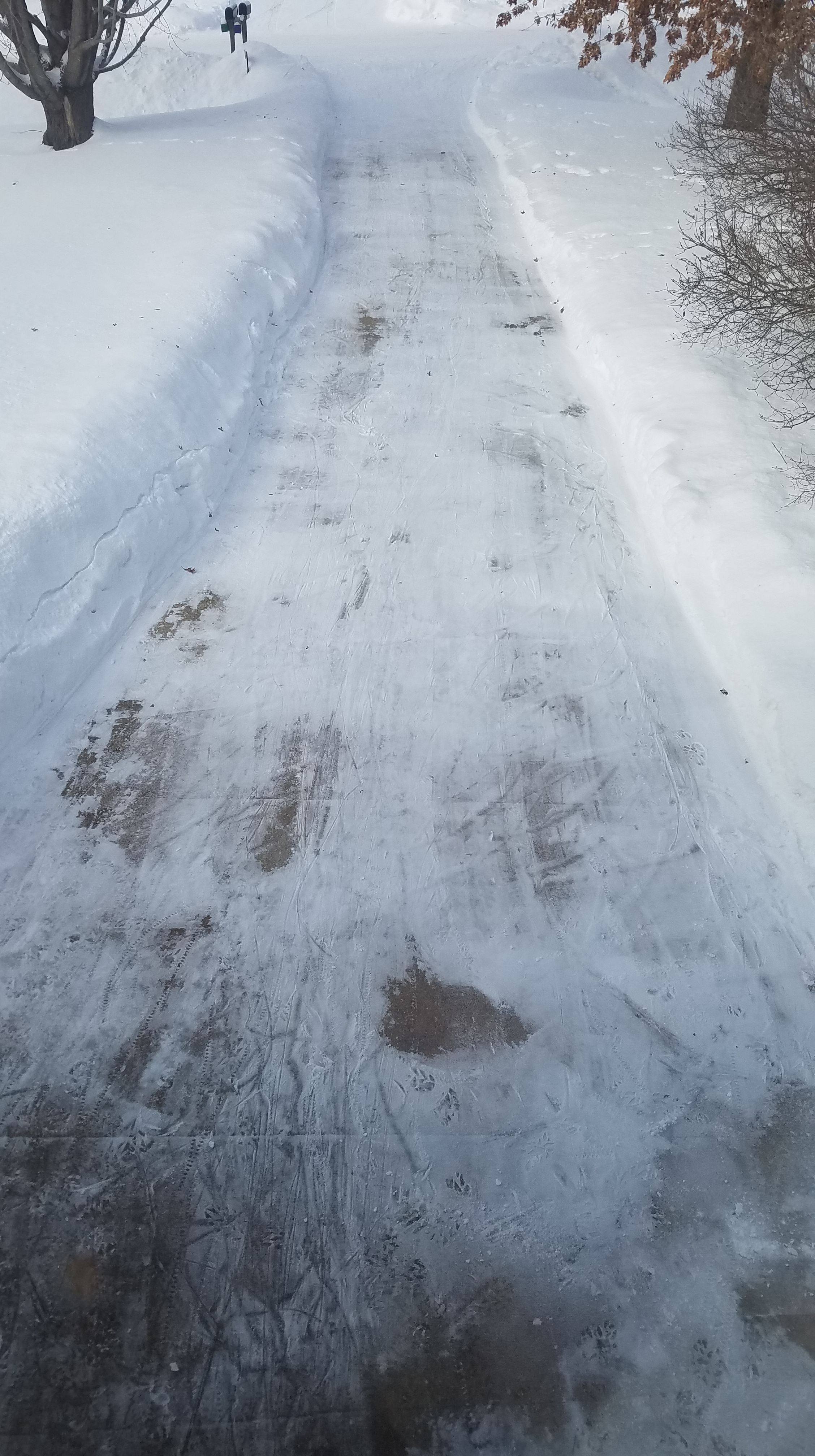
Driveway on Feb. 22, 2021. First day ambient temperature was above freezing since Feb. 4.
March 2 is the day to plant Belgian lettuce, according to family tradition. It’s garden lore from my Polish grandmother, one of the few tips from her about gardening I remember. This year, Belgian lettuce seems doubtful with more than a foot of snow on the ground seven days out.
If I can work the ground, I’ll plant it. It got warm enough to begin thawing on Monday, so fingers crossed. One has to ask where all the water will go. The answer is to late winter flooding.
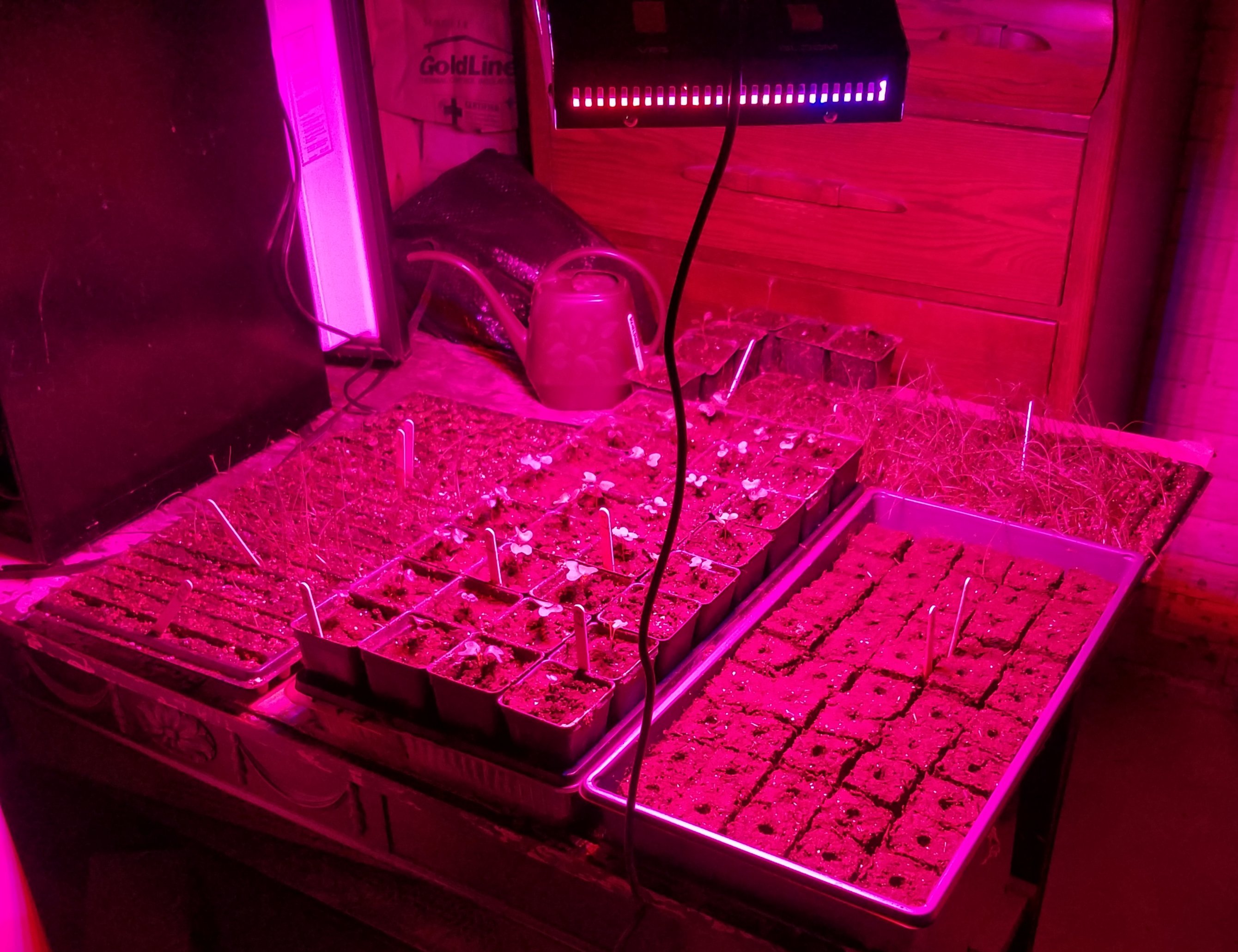
Indoors I transplanted brassica seedlings started Feb. 7 to larger pots. The 12 broccoli plants are intended for an early wave. I planted 30 more broccoli seeds in blocks for the main crop. I reduced the amount of collards and kale this year. If I had six each of the two varieties of kale and four collards, that would be enough. I also had six kohlrabi plants in this batch. I need to plant more Redbor kale seeds next planting session as only five seedlings survived.
20 celery seeds are planted. They take the longest time to germinate, although this year I’m trying a new variety and they are on a warming pad to aid germination. If I were still at the farm, I’d plant more and put them in the greenhouse. The table downstairs with the heating pad has only four spots for trays and only two of them heated. I’m learning self-sufficiency in this, my first year away from the farm in a long time.
I have the new, portable greenhouse still in its box. It will stay there until the snow on the brick pad melts. Once it is set up I can move some of the seedlings outdoors and use the space heater when it gets cold. There is plenty of time to get everything started.
We look forward to the thaw more this year than most.
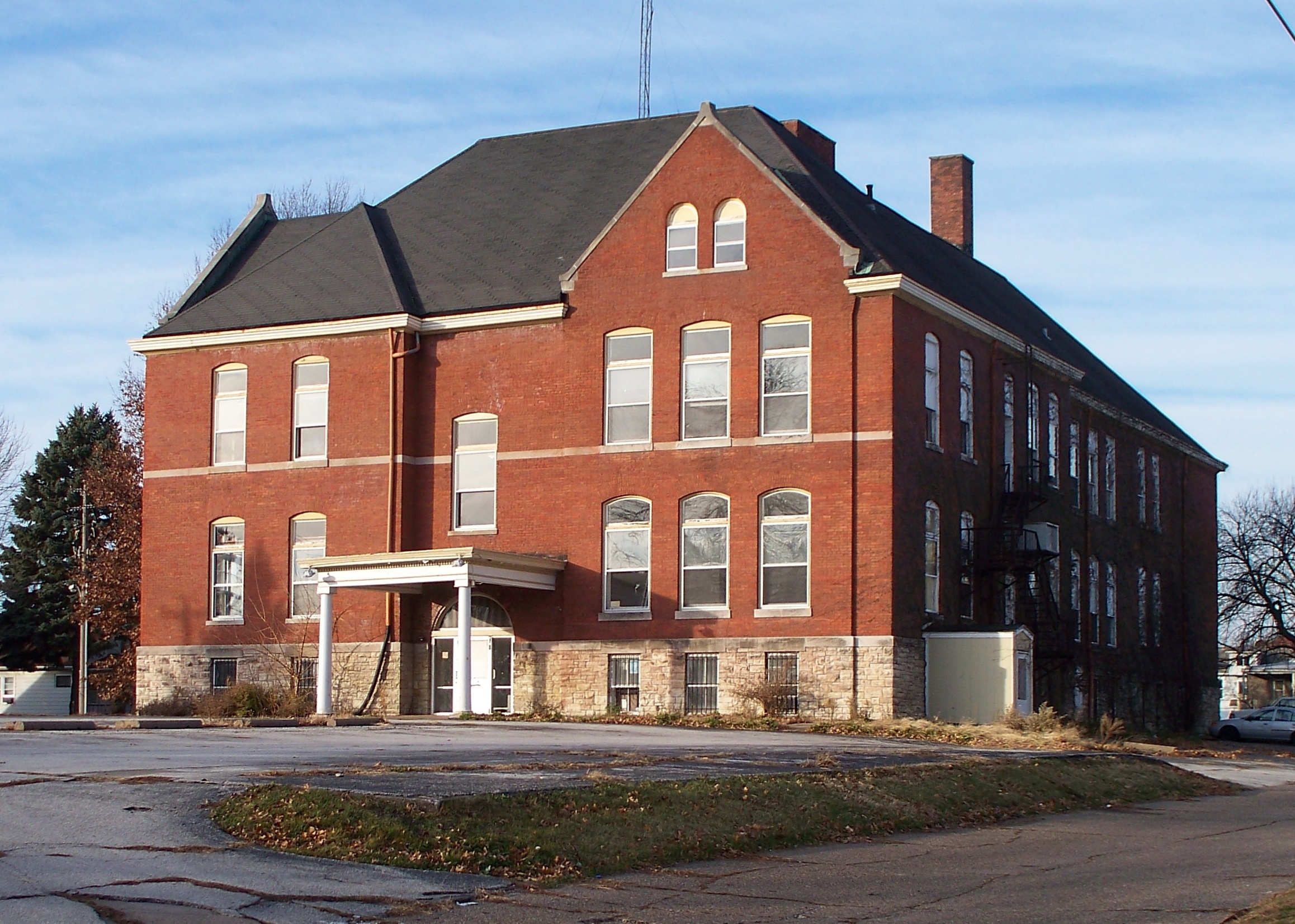
The grade school had a piano in the second floor gymnasium. I learned to play Brahms on it because when I started piano lessons, we did not have one at home. At the end of the school day I went to the gym and spent half an hour learning to play, usually by myself. Playing the piano seemed important in grade school.
I attended Holy Family School at the former Jackson School building from second to sixth grade, before the parish built the new school in time for seventh grade. Despite the short time there, I learned a lot of life lessons: how to get along with people, basic mathematics, how to use a dictionary, Palmer method of handwriting — usual stuff a grader learned.
My memories of that time remain clear and it was the most formative part of my childhood. It was there I socialized with other children beyond my neighborhood and developed relationships with teachers that meant a lot.
I recall negotiating snack purchases in second grade. By “negotiating” I mean it in the sense of navigating how to do it, determining how much they cost and where I would get needed funds. Since every student already knew each other, I appreciated that the teacher introduced me to the group and explained the snack process. At first I used pennies I found on the back porch. This gave way to an eventual allowance and work as a newspaper carrier to pay for my snacks.
In the third grade there was Roman Catholic Catechism. I still have the book. I remember we focused on mathematics in particular with Sister Hilda who lived in the second floor convent with other Sisters of Mercy. When I was old enough, I served as an altar boy in the convent, a privilege reserved for select students. It made me feel special.
In fourth grade we began to read in earnest. Mrs. Hild, whose daughter Carolyn was in my class, was encouraging. She read Charlotte’s Web and other books to us. We had a project to learn the language and read. We were issued a standard Webster’s New School and Office Dictionary, which I still have. It was a special purchase and each family had to pay for their copy. When we completed a reading assignment, we could choose a sticker to affix to the book. Mine was soon covered with stickers. My favorite sticker was of the Confederate flag. Our family was the only one with ancestry in Virginia, so I preferred it to the shamrocks and Biblical quotations. For me, the flag represented where we had come from, rather than promotion of human slavery. Confederate flag stickers were apparently hard to come by, although Mrs. Hild eventually found one for me. The meaning of the flag was never discussed, although Mrs. Hild and Mother discouraged my interest. Children of Irish and German descent made up the majority of my classmates. The German kids seemed more assimilated than the Irish. As a descendant of Virginians and Poles, I was an odd duck.
I recall my fifth-grade teacher had an infirmity and could not move one of her arms very well. There was a discussion of how the Sisters of Mercy looked out for her and accommodated her infirmity by providing classroom time. I didn’t feel the school was short of teachers, however, they benefited from the low cost of keeping nuns in the classroom.
In sixth grade, John F. Kennedy was assassinated. As a Catholic school, another Catholic being president meant a lot. I found out about the assassination at the corner of Fillmore and Locust Streets when the crossing guard told me. When I got to school the shades were drawn and we sat in silent prayer as we waited for additional news of the condition of the president. Later, in my dictionary, I filled in an additional line on a chart of the presidents of the United States, adding both Kennedy’s information and the beginning term of Lyndon Johnson. During my lifetime until that point there had been four presidents, of which three were Democrats. Of course, they were all in the shadow of Franklin D. Roosevelt.
I had a full life at the old Jackson School. I played with friends my age in the playground, games like marbles, foursquare, Olly Olly Oxen Free, and we took turns on the swing set. They blocked off 16th Street for use during recess. There were basketball hoops. I was in the chorus, which favored music from the motion picture The Sound of Music, which the nuns all enjoyed. I remember attending a concert by graduating eighth grader Dennis Gallagher who would later become a professional musician. I was two years behind him.
Things changed when we moved to the new school on Marquette Street. Most of the time I forget I took piano lessons. The guitar became my instrument and I liked it. Playing music on a guitar was more casual. It had a tolerance for variation. We were fortunate to have a school that could afford to teach music. It was assumed music would be part of the curriculum and I took advantage of it.
They were right: music should be part of a grade school curriculum.
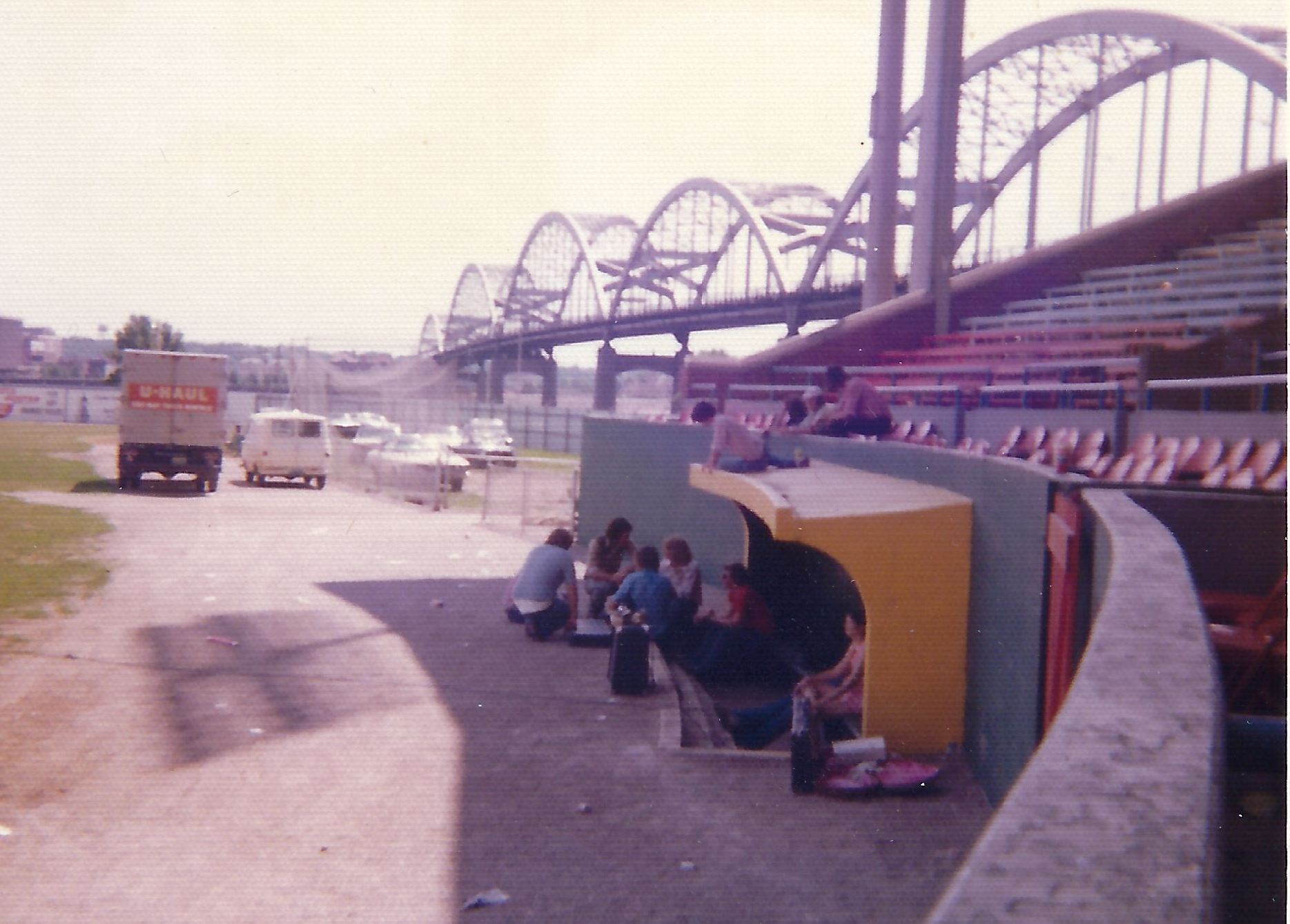
Preparing for a performance at John O’Donnell Stadium in Davenport, 1973.
Music was a significant part of my life until it wasn’t.
The beginning was clear as daylight: the Beatles performance on the Ed Sullivan Show, Sunday, Feb. 9, 1964. In December that year, Mother took me to the King Korn Stamp store where she traded stamps for a Kay guitar. The guitar was my birthday present. I played it frequently on my own, and by the eight grade with classmates in a concert where we performed The Cruel War.
I don’t know when my interest in music slipped away, but at some point I sold my Fender Telecaster to my friend Dennis and slid the Yamaha in its case under the bed. The expensive classical guitar I bought in Iowa City, my long-necked banjo, and the guitar I bought in Mainz, Germany are around. I’d have to look to find them.
If I had the talent, I would have become a professional musician. While I played a lot during the first twenty years, when I engaged in a career in transportation the music slowly died especially after we moved to Big Grove Township.
I started out strong, though. In high school I studied with the late Joe Crossen and practiced constantly. I joined the high school chorus and followed my neighborhood friend Denny Gallagher who went on to make music a career. There were many encouragements and a few opportunities to play.
When Father died, Mother settled with the elevator company, producing a small cash windfall for me. I bought a used Volkswagen micro bus, an electric guitar, two amplifiers, and a public address system. Some high school classmates and I formed a band and did a few gigs. We mostly practiced in one of our parents’ homes. By college graduation, I was ready to move on from the band.
I found some of our band playlists. Among the songs I remember playing were covers of Bertha by the Grateful Dead, Six Days on the Road, Let it Rain, Can’t Buy Me Love, Kansas City, All Along the Watchtower, Blue Suede Shoes, Thrill is Gone, and Don’t be Cruel.
When I made a Grand Tour of Europe I met some musicians who had arrived to perform in London. They encouraged me to buy a guitar and play with them. I did buy a guitar but left London after a week or so. We made the rounds of some agents, but nothing came of the joint endeavor. To have stayed with them would have voided my plans to see the artwork of European cities as I had planned.
I played the guitar all around the continent. It was suitable entertainment in the common rooms of youth hostels where I stayed. I met someone from Germany on the Mediterranean coast and we hit it off both in the types of music we knew and in improvisational style. Moments like those couple of performances made it worth toting the guitar around, wrapped in my blue denim jacket.
I did not take a guitar with me when I enlisted in the U.S. Army. I did manage to play several concerts using someone else’s instrument and have a photo of me with shaved head, in dress greens performing a number now lost to history. When I was stationed in Mainz, I bought another inexpensive guitar. During military service and afterward, I developed a playlist of Dylan (John Wesley Harding and I Shall be Released), Fred Neil (The Dolphins and Everybody’s Talking), John Renbourn (I Know My Babe), Tim Hardin (If I were a Carpenter and Lady Came from Baltimore), Leonard Cohen (Suzanne), Richard Fariña ( Pack Up Your Sorrows), Peter, Paul and Mary (The Cruel War) and Judy Collins (Cook with Honey). It was a lot of practice, but few performances while I made my way through being a mechanized infantry officer.
In graduate school I met Joe Pratt from California. Somewhere I have an audio cassette of us playing in our duplex on Taylor Drive in Iowa City. He was a big fan of Stan Rogers and I learned to play Field Behind the Plow from him. Joe also liked Steve Goodman’s arrangement of The Dutchman, and Jim Croce (I’ve Got a Name). He also knew the work of non-dead musicians.
Reading through the old playlists is a treasure-trove of memories. What happened? It wasn’t one thing.
The main issue regarding musical performance was the lack of venues. Once I made the decision not to become a professional musician, there were fewer opportunities to play, other than practicing. The question became “practicing for what?” Society had moved on from live performance in small venues to pre-recorded music or live acts playing stadiums and halls that could seat thousands of people.
Beginning in graduate school, A Prairie Home Companion became part of my musical life. I came to depend on it for musical inspiration. As locals like Greg Brown, Iris DeMent and Dave Moore performed on the show, that made it a connection to something visceral and real. When Keillor folded the tent in 2016, it was a real loss, something I continue to feel as the sun sets on each Saturday’s Iowa prairie.
One more thing, although the list could go on. There is a lot of worthwhile activity to fill our time. In the end music got pushed aside as writing, politics and work occupied more time. I have no regrets about this. I wouldn’t have expected it either. I didn’t expect it when I bought my Yamaha guitar at Cook’s Music Shop in Davenport before leaving for university.
In my writing room I have a long shelf of 33-1/3 RPM vinyl records. I measured 43 inches, although there are a couple more boxes in storage. Included in the collection is my parents’ copy of Meet The Beatles, issued in the United States on Jan 20, 1964, just before the Ed Sullivan Show performance. They bought the record and a small monaural record player that year. In 2018 I wrote about my relationship to music.
As my collection of records grew an issue arose: the distinction between being a music player and a music listener. It caused me some teenage consternation.
Blog post, Dec. 5, 2018.
I don’t know what is my current relationship with music. I don’t play musical instruments any more. I don’t sing much either. In fact, I don’t turn the radio on unless I’m in the car securing provisions, or to hear the news while preparing dinner. I guess I have just moved on to other things. I’m okay with that, yet for a while, music was it.
It’s been almost a year since the Iowa State Hygienic Laboratory reported the first three positive test results for COVID-19 in Iowa on March 8, 2020. The pandemic continues and I don’t know about you, but I’m getting cabin fever. The lingering snowfall hasn’t helped.
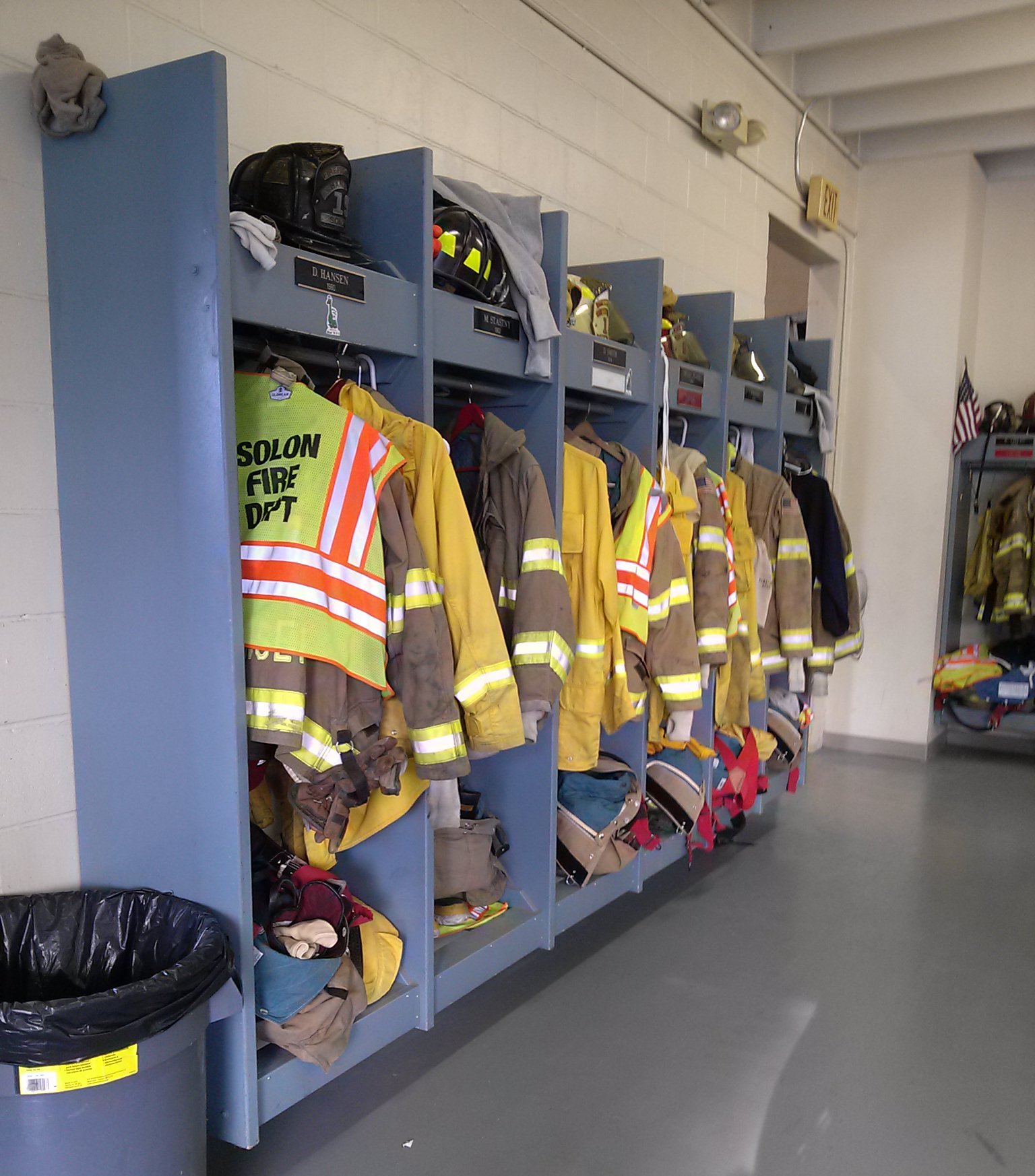
I read the report of fund raising challenges for a new fire station for the Solon Tri-Township Emergency Response Agency. The fund raisers can’t get in front of people due to the pandemic. While the $1.2 million raised so far is positive, there is a long way to go. I encourage people who can to give generously to this project.
Thursday I put on my Carhartt jacket, the U.S. Army-issued scarf I wore in the Fulda Gap, my seed supplier logo stocking hat, a pair of Army boots I got in basic training, my buckled overshoes, and ventured into the unbroken snow. It was more work than expected to deliver two five-gallon buckets of compost to the bin. I felt better once it was finished, some relief from cabin fever. Now I need to figure out how much I can afford to give for the fire station.
The new fire station is designed to better meet our needs. Our volunteer fire fighters could use the support. Please give what you can.
A year ago Governor Kim Reynolds signed a proclamation of disaster emergency regarding COVID-19. It’s still on. I had to get out of the house today to preserve my sanity.
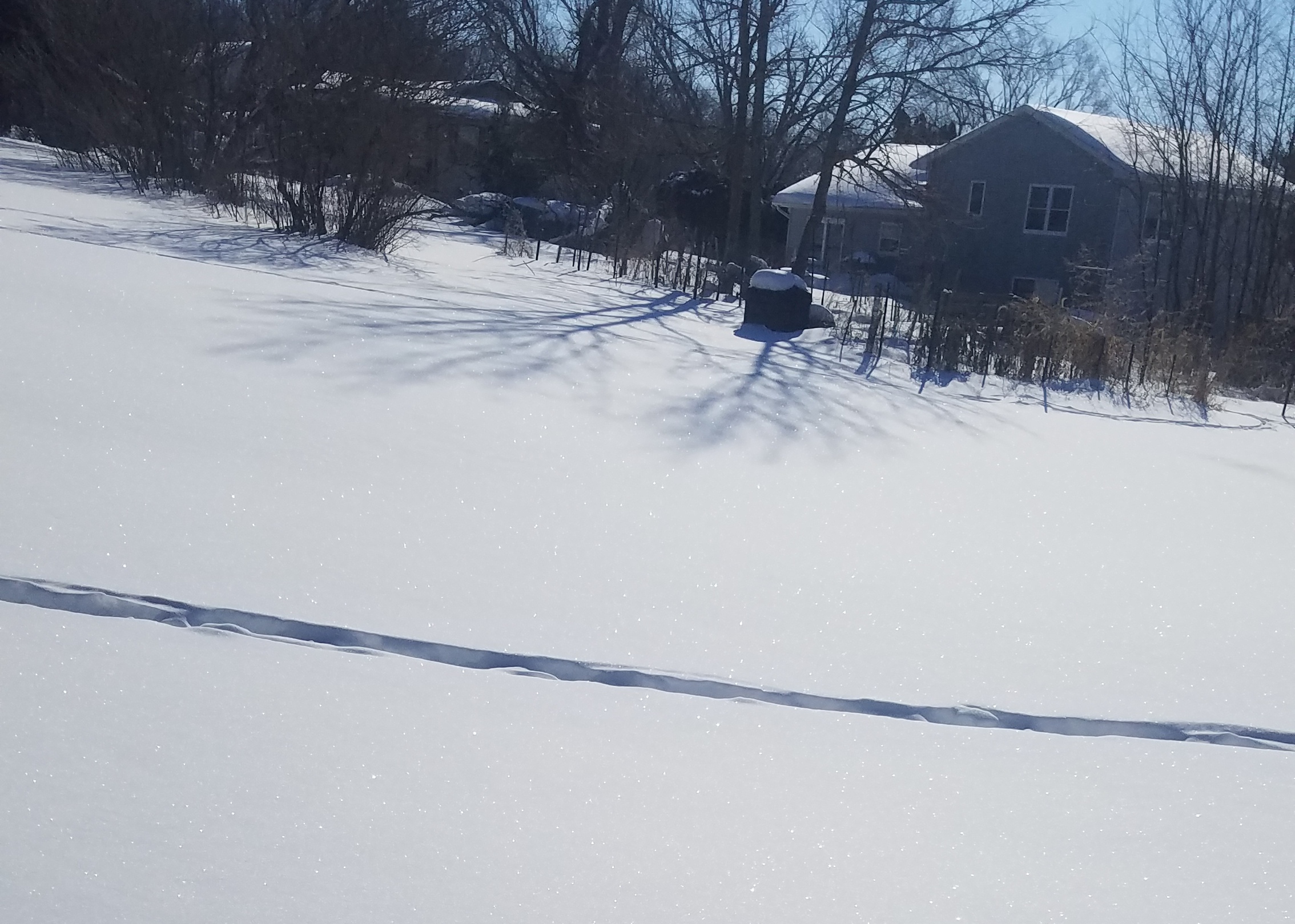
I put on my army boots with buckled overshoes bought in Indiana, my Carhartt coat from the home, farm and auto supply store, the U.S. Army issued scarf I wore in the Fulda Gap, my Johnny’s Selected Seeds stocking hat, and ventured into the unbroken snow. I found deer tracks and followed them to the black composter. It was a cure for cabin fever.
A large animal lay down in the snow near an apple tree, leaving a mark in the snow. I walked all around the house and emptied two five-gallon buckets in the composter. The ambient temperature was really comfortable and bright sunlight felt good. I wasn’t outside long, enough to break the spell.
On days like this it is tough to concentrate. I finished seasoning the new cookware and stored the pieces. I washed dishes, and viewed our daughter’s on-line stream. While there was plenty of work, I didn’t feel like doing much of it. Cabin fever.
Of course, it’s now tomorrow. A chance to begin work anew. Also it’s Friday, whatever cultural resonance that might evoke in the post work-a-day world of the coronavirus pandemic.
If one needs a palate cleansing after the bitter taste of the Trump years, Stacey Abrams’ Our Time is Now is just the book to read.
I didn’t know what to expect going in. I knew of her close Georgia gubernatorial race in 2018. I followed the Georgia U.S. Senate runoff elections last month and knew she played a role in voter turnout after declining to be a candidate herself. If anything surprised me about the book, it was how timely is Abrams’ message as the Biden-Harris administration gets to work.
There are some key takeaways:
She emphasizes the importance of counting everyone during the U.S. Census. Undercounting the poor, persons of color, and other disenfranchised U.S. residents serves to further disenfranchise them. President Trump attempted to politicize the U.S. Census. President Biden reversed Trump’s executive actions and seeks to give the Census Bureau needed time to make the best count possible. That means a delay in states receiving information required for their decennial re-districting process. Biden knows what Abrams suggested: the U.S. Census is important to restoring political power to people.
Abrams emphasizes that people should vote. She also criticized the voter targeting methods use in the 2016 and 2018 Democratic campaigns. Voter registration continues to play a key role in citizens gaining political power. It goes without saying voting does as well. The conclusion I drew from the book was that no voter should be ignored during campaigns.
The book refreshes our collective memory about voter suppression efforts by Republican lawmakers. Abrams’ story was she overcame systemic voter suppression during her Georgia gubernatorial campaign by the sheer number of new voters they activated. The permanent solution is for voters to take control of the electoral process by electing more Democrats at every level. With Democratic control of state legislatures, it is less likely voters will be suppressed.
As a child I learned the importance of civic engagement. Unlike most Americans today, I study the issues and candidates, and vote in every election. I don’t know what happened yet we need to return to that basic tenant of governance. If we seek to retain government by the people, participation is required. That is Abrams’ message.
I read a lot of political books and Abrams’ book is well-written and relatable. If we seek to move our country forward, elect more Democrats. Stacey Abrams has provided a roadmap in Our Time is Now.
I cleared the driveway of snow a dozen times this year, including yesterday. There has been snow cover for weeks and it is expected to continue. It’s the first real winter, the kind we had when I was a kid, in a long time.
The record-setting cold that has gripped the central U.S. has pushed snow cover across the 48 contiguous states to an all-time high in the 18-year database of the National Operational Hydrologic Remote Sensing Center.
Snow covers about 73.2 percent of the U.S. to an average depth 6 inches (15 centimeters), according to the agency. A year ago 35.5% was covered to an average depth of 4.6 inches.
Restricted at home during the coronavirus pandemic, there are new things to explore. While tracing an internet order, I noticed the delivery vehicle had a satellite tracking device which updated location every 10 – 30 seconds. For a while, in between reading passages in a book, I followed the truck around our area on the map, noting where it stopped and the routing. The driver used roads I don’t normally think of using. There were a lot of stops. Anticipating arrival of the package, I opened the curtain and watched her truck pull up. Curiosity satisfied, I’m not going to spend a lot more time at this yet it’s something new to break the pattern of living at home with just the two of us. A different aspect of life in Big Grove.
I spoke to the local medical clinic to confirm my upcoming blood test and follow up appointment. They will provide the COVID-19 vaccine once it becomes available. They didn’t know when that would be. If they have it by my appointment, I can get it then. That’s the second opportunity in our area once the vaccine supply chain starts flowing.
It appears the new president takes the pandemic seriously and we have a chance to return to normal. At a town hall meeting in Wisconsin last night, CNN reported this from President Biden.
President Joe Biden would only commit to a return to normal by next Christmas during a CNN town hall on Tuesday, saying he did not want to boost Americans’ hopes when he could not be certain of a still-early vaccine rollout.
The prediction of nearly another year in pandemic-dampened conditions was admittedly not optimistic. But Biden still said it was as good as he could offer with any level of confidence.
“As my mother would say, with the grace of God and the goodwill of the neighbors, that by next Christmas I think we’ll be in a very different circumstance, God willing, than we are today,” Biden said. “A year from now, I think that there’ll be significantly fewer people having to be socially distanced, having to wear a mask.”
He added: “I don’t want to over promise anything here.”



 Journey Home
You must be logged in to post a comment.