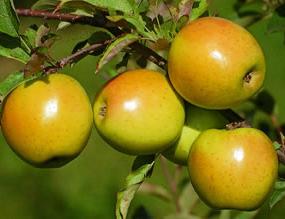
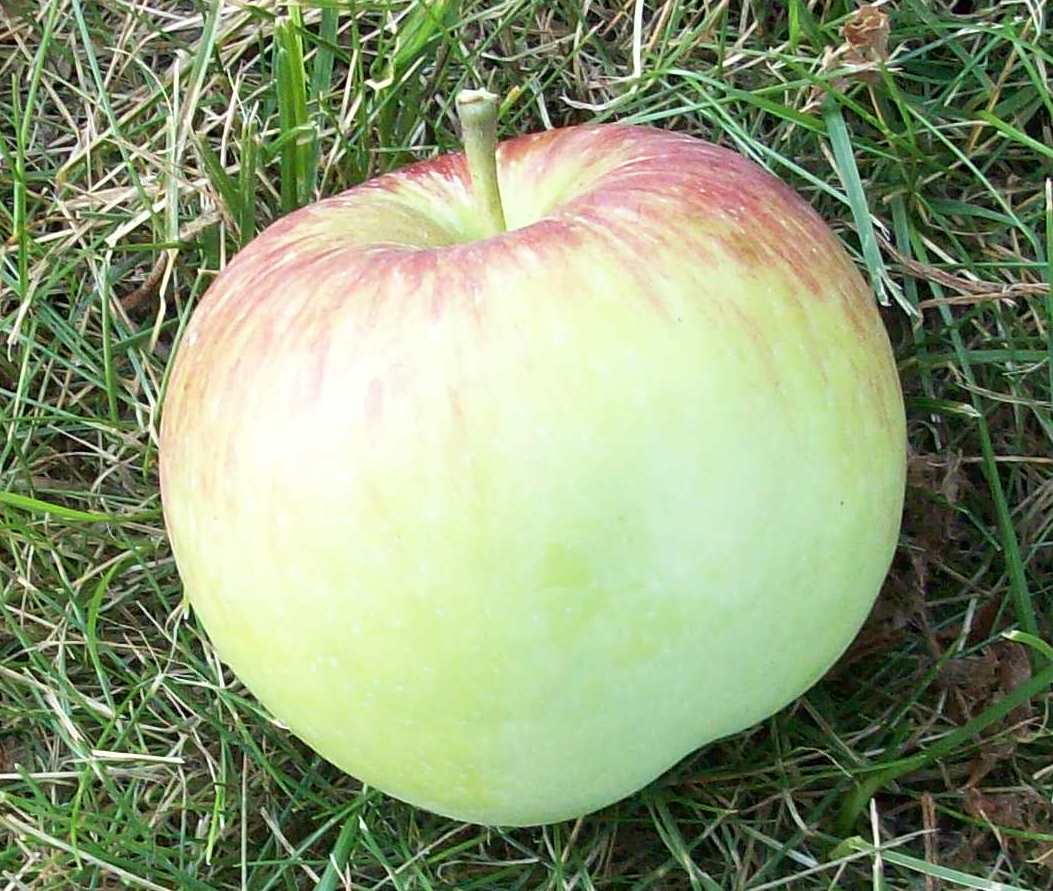
After a shift at the warehouse, I stopped at the orchard to get Honeycrisp apples. Contrary to what one sees in the mega market, they are seasonal, and the season is short. We hadn’t had enough.
The orchard staff was busy with a tour group, so I went straight to the display near the cooler in the sales barn. Sad remainders, absent of value besides pressing into cider, I ventured into the orchard wearing my white shirt, black slacks and blue shoes from the warehouse.
I had directed hundreds of people to the Honeycrisp groves the last two Saturdays. It was uncertain whether any could be found, but following my own advice, I looked near the trunk of the trees and was not disappointed. I picked eight pounds from two trees in a few minutes.
As I headed back, past the pumpkin patch, across the creek and up the hill, it was invigorating to be out in the orchard where ideas meet reality and bear fruit.
“I’ve been reading the paper lately,” said Kevin Samek to the Solon City Council on Aug. 6 during the citizens speak agenda item. “I’m a little concerned about the north sewer trunk.”
Samek had been reading my newspaper articles about the council and this long-standing community issue.
He went on to express his concerns about the way council was handling finances regarding the sewer line, and on a second topic said that public safety could be improved on Main Street by lowering the speed limit.
Council addressed his concerns by lowering the speed limit on Main Street from 25 to 20 miles per hour, and by unsuccessfully attempting to reach agreement with a developer over the sewer line at their Aug. 20 meeting. Samek filed to run for city council shortly afterward.
Two things about this story explain why some of us write in public.
Samek read my newspaper articles, and then did something about it, first by speaking to council, and then by deciding to run for public office. Informing and activating people to take action is what public writing is about. Whether we write for a newspaper, a blog, in social media, or appear on television or radio, the purpose is similar. We attempt to say something meaningful to readers and urge them to action.
The second important part of this story is that someone was there to witness the work of the city council and report on it. Often I am the only person seated in the gallery at council meetings and if I don’t write about them, it is doubtful anyone outside government would. Being there and having a point of view is important to restoring our Democracy. Writing publicly about what we witness is equally so. This is true not only for our government, but for much else in society.
As my summer job with Blog for Iowa ends, I urge readers to get involved with community life and take progressive action. We each have a unique perspective that is needed. There is a world out there and not enough people witnessing its reality and sharing it in public. Or, as Saul Bellow said more artfully, “there’s the most extraordinary, unheard-of poetry buried in America, but none of the conventional means known to culture can even begin to extract it.”
My hope is that people read what I wrote this summer and were moved to do something about issues that are important to them. As the political season turns to the fall campaign thanks for reading my summer posts. My advice is to never give up.
LAKE MACBRIDE— From the moment an apple falls from a tree, deterioration begins. Over 20 years of tending our small orchard, I learned to keep the ground under the trees picked up to discourage bugs and worms from spreading throughout the trees. Before the main crop is ready, there has been usable fruit on the ground. One recognizes when it is time to pick based on how many apples fall in a day. I brought about five pounds of apples to the kitchen to make vinegar.
Making vinegar is pretty simple. Core and cut away bad spots, including bruises, from a bowl of apples and juice them with a kitchen juicer. (One can also make apple cider, but securing and using a cider mill is a big production not suitable for small baskets of fallen apples). Strain the juice and pour it into a half gallon canning jar. Add part of the mother from the last batch, or a small amount of last year’s vinegar, and cover with a cotton cloth to allow it to breathe. I use a scrap of our daughter’s diaper, as the warp and woof is just right to let air out and prevent bugs from entering. Set the jar in a dark cupboard and leave it alone for a couple of months, inspecting it occasionally to see if the process is working.
A process byproduct is straining and bottling the last batch. A lot of mother was produced in last year’s effort, and what I couldn’t use went into the compost. The jars in the photo have vinegar from apple cider, the new batch and from apples juiced in the kitchen. The latter is by far the best tasting and most acidic.
Cucumbers and onions are in, so maybe a batch of refrigerator pickles to recipe test the results.
LAKE MACBRIDE— Possessed of a large frontal lobe of the cerebral cortex, I spend way to much time intellectualizing life instead of living it. This is not new, nor is it peculiar to me. It’s the human condition— a blessing and a curse. Memory is particularly important for a writer in that if one can’t conceptualize, writing would be impossible. Readers are important too, but that is another story.
The challenge of daily writing is to develop a story balanced between enough research and not too much. That research is in experiences new and old. For now, the source of ideas flows like a spring in an Appalachian hollow, providing a way of life for those who can tap it. One hopes the spring never runs dry.
My experience with Appalachian springs is personal. During a visit to the home place in Virginia shortly after our marriage, we visited family friends who lived a certain way in a hollow with a spring. The income they had was from watching my uncle’s four cows and tobacco fields while he was away working for an airline. The grounds and cow keepers had a government draw from a disability, which was being set aside to eventually buy farming equipment. Money was not a primary concern, although if they had it, they would spend it. So it is in Big Grove.
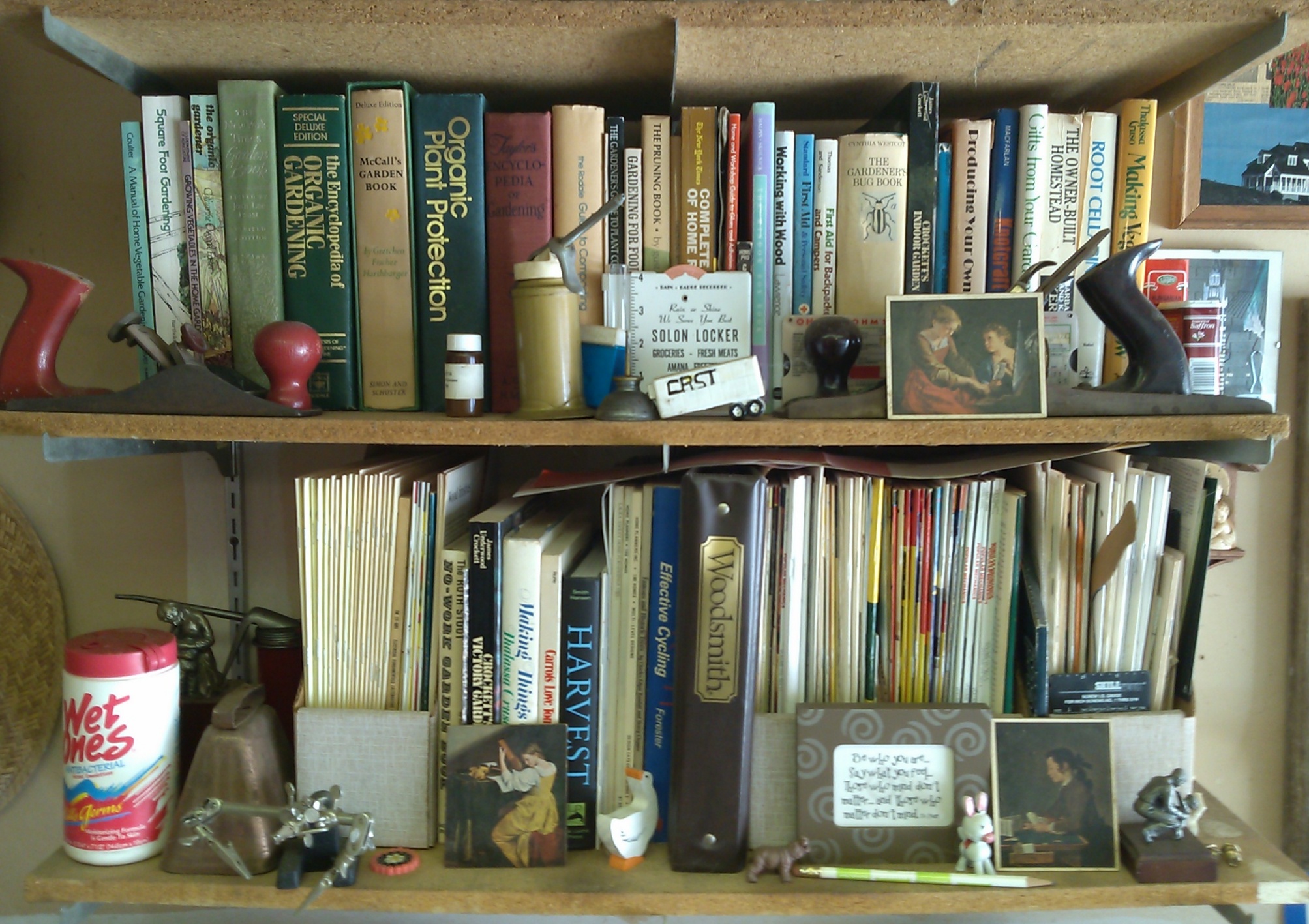
One might call the author a hoarder. Guilty as charged. I’m a hoarder of books and artifacts collected in diverse experiences around the U.S., Canada and parts of old Europe. The ideas about them reside within me, and that’s the true and deep reservoir of experience for writing. Often, it is research enough.
Occasionally one has to reach out for inspiration, and that’s where I land as summer ends and the fall harvest approaches. The persistent question, what’s next?
I’ve worked to create a process that sustains us over the near term, and now it’s time to produce something longer than a 500 word blog post with the process. Exactly what is an open question for the next month or so.
With consideration and review, contemplation and decision, a path forward will be mapped— toward new experiences and broader exposure of my writing.
The garden is producing a lot of tomatoes, with the cherry and plum varieties coming in. I picked a bowl last night, and those still on the vines continue to grow and ripen.
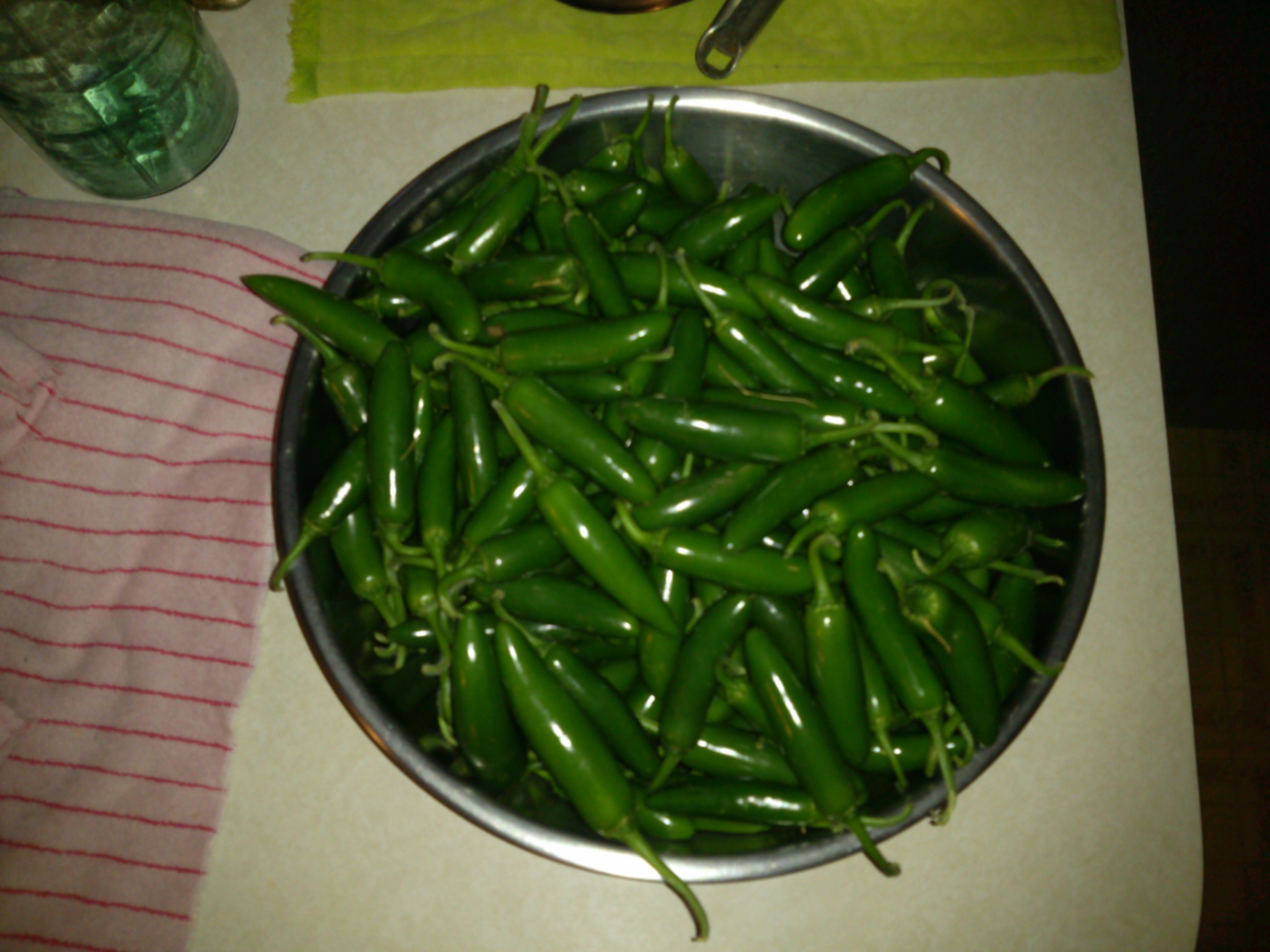
There was a mature jalapeno and a couple of Serrano, which with the banana pepper, garlic and onion from the CSA will make the base of a nice tomato hot sauce.
Marketmore cucumbers are forming on the vines. They’re at the stage where close monitoring is needed to pick them at the perfect size and before they balloon to gigantic. The celery is reaching a recognizable stage, and basil is ready. Despite the failures of this year’s gardening, there is a variety of produce to harvest.
News of the Listeria monocytogene scare in some California fruit reached Big Grove. We have a few plums past their prime in the ice box, so it was a good enough reason to compost them, even if there was little trouble from the rest of the box as we ate them. They looked so good in the store, that despite the long trip they made to Iowa, we bought and enjoyed them. Apples and pears will soon be ready in our garden, taking us away from a desire for imported fruit.
The advent of August tomatoes marks a turning point in the season. It’s time to plant the second crop of radishes, turnips, and spinach. That work is scheduled for in the morning.
A blatant commercial plug from my favorite fall workplace:
Hi All,
Its that time again. Tractor rides, turnovers, slushies, apples, and blueberries. We open for the season tomorrow, August 1 and will be open every day after that for the next three months. Open 10 a.m. to 7 p.m. through the end of September. Grab the kids, that crabby spouse and come on out and enjoy our bit of heaven.
This weekend features blueberries. Great big, tasty ones from Michigan. Bluecrop variety— the best there is. Get them by the pound or by the 10 pound box. Either way you’re in for a treat. Blueberries freeze extremely well, allowing you to enjoy them all winter long— great in cereal, on yogurt or just plain. $4/pound or $34 for a 10 lb box.
We also have Georgia peaches available. Great big, juicy and tasty. These peaches actually taste like peaches— imagine that! $2.50/pound or $42 for a 25 pound box.
On the treat side, on Saturday and Sunday you can add to your blueberry fix with a slab of Bevo’s Blueberry Buckle, warm and yummy. Or, go with a hot turnover with ice cream. Or a couple of cider donuts. Or heck, its been a long dry spell, do one of each! Apple cider slushies will be flowing as well — plenty to choose from.
On the frozen side, we have apple and cherry turnovers available in 8 packs as well as apple, cherry and blueberry pies.
This weekend looks to be GREAT weather. Come by and get your first tractor ride of the season or enjoy a stroll through the orchard. The crop looks exceptional this year. We dodged several hail storms, came within a degree of a major freeze and withstood straight line winds. Through it all, the apples survived and thrived and we have a great looking crop nice sized fruit with good color and flavor. Knock on wood.
What’s Pickin’
While the crop looks great, most varieties are at least a week later than normal due to the cooler temperatures this summer.
Pristine— in the words of Chug Wilson, “the first good eating apple of the season”. Pristine also make very good pies, for those of you so inclined.
Jersey Macs— an early McIntosh, GREAT for applesauce. Good flavored eating apple, but a bit on the tart side Dutchess of Oldenberg— quite tart. This is an old time apple in Iowa, one of the first that settlers found could withstand the tough winters here. Our crop of Dutchess is quite small this year
Hope to see you all soon.
Paul Rasch
Wilson’s Orchard, 2924 Orchard Lane NE, Iowa City, Iowa 52240
LAKE MACBRIDE— The allure of imagination is a writer’s arena. It can be a saving grace, enabling us to survive in a world gone mad. It can be a distraction from existential realities that beckon for attention. It is a blessing and a curse, perhaps the result of our too large brain combined with the relative security of life on the American plains. Perhaps it is simply a way to live.
Writers seek allure more than imagination, at least this one does. That moment when an idea rises on the horizon. A shiny object, not unlike a fashion photograph— each element prepared meticulously for our viewing, the scent of perfume imagined despite the reality of a two dimensional image on a screen. Allure is the well from which a writer dips a ladle and drinks.
You go in each morning, and there’s a blank page. Maybe it takes five minutes, maybe it takes an hour. Sooner or later you start writing, and then the words begin to flow. Where does that come from? You can’t pinpoint it. You always wonder, “Will it all stop tomorrow?” In that sense it’s spooky. In other words, you’re relying on a phenomenon that’s not necessarily dependable.
There is no shortage of things to occupy our attention. A recent story on the cable television business reported there are 10 million households in the U.S. that have an Internet connection, but no cable television. It’s enough people for Home Box Office to perceive a market and develop a direct sales, Internet delivered, bundle of subscription programs. Radio, then television, and now the Internet, have served to suppress imagination’s allure. Programming fills our attention capacity as we plug in to our favorite diversion. For a writer, this is a low level poison trickling into our veins, suppressing creativity. Allure vanishes leaving us feeling empty and used, yet craving more.
“No ideas but in things,” wrote William Carlos Williams. Would that it were so. His 20th Century produced a consumer culture in which people collected things without ideas. Certain die cast toys, boxes of pasta, tools, and my addiction— books and reading material. The result of someone’s ideas tangible and in our hands. Maybe Williams was warning us.
As we age, we become aware of our physical limitations and imagine more. Aging bodies become temples of memory to be filled by righteous and earthy memories. As our bones stiffen writers strive to avoid calcification of ideas. It takes work. We are not always successful.
“Memory believes before knowing remembers,” wrote William Faulkner. As we age, the hard drive of memory falls into disuse. We repeat old jeremiads in society, trying to get along. We can forget the allure of the imagination.
When a writer loses the ability to be drawn to the allure, one is no longer a writer. A scribbler maybe, a blogger definitely, a writer only in external artifacts and behavior.
We may be driven to package our awareness, like a gardener spending weeks in the kitchen canning and freezing produce for a winter of use. The jars on a shelf serve a purpose, the least of which is nourishment. They become another distraction from the allure of a life of imagination.
LAKE MACBRIDE— Rain was brewing when I went outside early this morning. One could sense it in the warm, electrified air. It came and poured two inches in the garden cart left outside to get washed out. The storm winked the power a couple of times, although not long enough to stop my work on a newspaper article. In all, it was a decent, if unneeded rain.
Temperatures in June averaged 70.3° or 0.6°above normal, while precipitation totaled 9.94 inches or 4.92 inches above normal, according to state climatologist Harry Hillaker. This ranks as the 55th warmest and third wettest June among 141 years of records. The only calendar months with greater statewide precipitation averages were July 1993 (10.50”), June 2010 (10.39) and June 1947 (10.33). The rainfall isn’t done for today.
I’m taking a break between two news articles due this weekend. Cleansing the writer’s palate with new words in a different frame. The first story is filed, and the second will be before going to the orchard to confirm my work during the apple season that starts today.
It is an unusual Saturday off from the warehouse. I cancelled outdoor work because of the forecast for more rain, so besides at-home work on the newspaper and two other gigs, the day is mine. My spouse is working this afternoon, so I’ll have the house to myself much of the day.
Yesterday I was invited to luncheon at the CSA. As a part time worker, I get included in special events and attend when my schedule permits. Eleven farm workers dined on pizza, coleslaw, steamed broccoli, zucchini cake and watermelon. Only a few ingredients came from off the farm. I opined that the watermelon was from Florida, but was guessing.
The pizza dough was turned red by adding beet puree. Topped with a tomato sauce, mozzarella cheese, sliced beets, onions, sliced hard-cooked eggs and basil, not only was it delicious, it was beautiful. The rest of the meal was standard, in-season local food fare, simply prepared.
I am working on a piece about Alice Waters and asked each farm worker individually if they knew who she was. Six of eleven (55 percent) did not recognize the name. On a farm where the major effort is organic, locally grown ingredients, and using them to create a specific type of cuisine, I was surprised more people had not heard of her. Waters is not as well known as some foodies might think.
A discussion of breaking vegetarianism led us down a weird conversational path. Someone said so many vegans and vegetarians break their eating habits with bacon. Most everyone at the table had some type of hog slaughtering experience, so for about 20 minutes that became our conversation.
When people live close to the means of production, the conversation seems reasonable. We covered home slaughtering of a market animal that died unexpectedly the day before shipping, working in a slaughter house, visits to confinement hog operations, a story about consumption of male hog gonads, chitterlings, lard rendering, using bacon grease in cooking, and many more topics. A porcine version of Moby Dick, if you will, told by people who know their subject.
I’m willing to bet fewer people would eat bacon if they knew where it came from.
Yesterday I transplanted celery and snipped off the leaves from the extra seedlings. It was the best tasting celery ever. We’ll see how much it produces. This morning’s rain should help.
SOLON— Can a community of about 2,000 people support two Mexican Restaurants? The founders of El Sol Mexican Cuisine believe it can.
Diego Rivera (no kin to the artist) is the former owner of El Sol and a related restaurant in Mount Vernon. With his former manager, Joel Vazquez, they hope to succeed with a new venture, Frida Kahlo Mexican Restaurant and Lucy’s Bakery, in a strip mall at the edge of town.
Corner of El Sol
Frida Kahlo de Rivera, namesake of the new restaurant, was a Mexican painter, perhaps best known for her self-portraits.
“Her work has been celebrated in Mexico as emblematic of national and indigenous tradition, and by feminists for its uncompromising depiction of the female experience and form,” according to her website.
Kahlo has been described as “one of history’s grand divas… a tequila-slamming, dirty joke-telling smoker, bi-sexual that hobbled about her bohemian barrio in lavish indigenous dress and threw festive dinner parties for the likes of Leon Trotsky, poet Pablo Neruda, Nelson Rockefeller, and her on-again, off-again husband, muralist Diego Rivera.”
Too controversial a symbol for a small town? Time will tell, but most local people don’t dig that deeply.
The issue may be that the space for the new restaurant is a graveyard to a succession of culinary failures, most recently The Dock Fine Dining. The new venture will test the viability of the strip mall space, however, Nomi’s Asian Restaurant and Subway have been successful a few doors down, and this pair of entrepreneurs has been successful in town with their first Mexican restaurant.
Rivera recently returned from a trip to a culinary school in Mexico where he learned about pre-Hispanic cuisine.
“When the Spanish arrived in Mexico, the Aztecs had sophisticated agricultural techniques and an abundance of food, which was the base of their economy. It allowed them to expand an empire, bringing in tribute which consisted mostly of foods the Aztecs could not grow themselves. According to Bernardino de Sahagún, the Nahua peoples of central Mexico ate corn, beans, turkey, fish, small game, insects and a wide variety of fruits, vegetables, pulses, seeds, tubers, wild mushrooms, plants and herbs that they collected or cultivated,” according to Wikipedia.
One hopes for authentic dishes that are reflective of more than standard Mexican restaurant fare. Having witnessed the development of this pair of restauranteurs, Frida Kahlo Mexican Restaurant and Lucy’s Bakery looks promising.
Main Street in SolonDeteriorating Building FrontSoutheast Corner of Main at MarketSouthwest Corner of Main at MarketMichigan CherriesPasta SaucePasta and Cherries
You must be logged in to post a comment.