Categories
Writing

7 Things About 2016

Hats and Rags
Hats and Rags

It’s Christmas Eve in Big Grove, the ambient temperature is about freezing, and we’re ready to bunker in, finish decorating our Christmas tree and prepare a traditional supper of chili and cornbread.

My Christmas wish is for peace on earth.

Elusive as that may have been during 2016, we can’t give up hope. Not now. Not like this.

As winter solstice brought longer days — increasing light imperceptible in each day’s cycle — it is time again to fly with eagles, gain a broader perspective, and thank people who are always in these written words if rarely mentioned — my wife Jacque, our daughter, my parents and my maternal grandmother.

Reading

I continue to read more on my phone and computer than I do full-length books. Nonetheless I managed thirteen books in 2016, the most important of which were authored by people I know: Connie Mutel and Ari Berman.

Methland by Nick Reding had the biggest influence, by a distance.

Here’s the list of books, most recent first:

Diet for a Hot Planet: The Climate Crisis at the End of Your Fork and What You Can Do About It by Anna Lappé; My Life on the Road by Gloria Steinem; Sapiens: A Brief History of Humankind by Yuval Noah Haran; Methland: The Death and Life of an American Small Town by Nick Reding; Give Us the Ballot: The Modern Struggle for Voting Rights in America by Ari Berman; A Sugar Creek Chronicle: Observing Climate Change from a Midwestern Woodland by Cornelia F. Mutel; Atlantic: Great Sea Battles, Heroic Discoveries, Titanic Storms, and a Vast Ocean of a Million Stories by Simon Winchester;  And Then All Hell Broke Loose: Two Decades in the Middle East by Richard Engel; Slavery in the Upper Mississippi Valley, 1787-1865: A History of Human Bondage in Illinois, Iowa, Minnesota and Wisconsin by Christopher P. Lehman; The Diary of a Napoleonic Foot Soldier by Jakob Walter; Old Man River: The Mississippi River in North American History by Paul Schneider; MiniFARMING: Self-Sufficiency on 1/4 Acre by Brett L. Markham; and Fast Food Nation: The Dark Side of the All-American Meal by Eric Schlosser.

Writing

I wrote 175 posts on On Our Own during 2016. I also sought increased readership by posting letters and articles outside my blog. Previous years’ posts garnered the most views. The most popular new posts (in descending order) were: We Like Amy Nielsen, Iowa Democrats Convene, Supervisor Race Update, Flesh Wound, and Living in the United States. Among my favorites were Into the Vanishing Point, Rural Door Knocking, and Palm Oil is Bad for Iowa.

For the fourth year I edited Blog for Iowa while Trish Nelson took a break, writing at least one post each weekday during August. My book review of Give Us the Ballot ran in The Prairie Progressive, a guest column ran in the Cedar Rapids Gazette, and I wrote two letters to the editor of the Solon Economist since the general election. I cross posted Next for Iowa Democrats on Bleeding Heartland, my first post there.

More outside publication is planned for 2017.

Working

Income from five jobs helped financially sustain us in 2016. Work at the home, farm and auto supply store provided health insurance and a regular, predictably low paycheck. In descending order of income were jobs at Wilson’s Orchard, Local Harvest CSA, Blog for Iowa and Wild Woods Farm.

Each of these jobs was good for a reason. Blog for Iowa encouraged me to write every day. Farm work helped me connect with others in the local food movement. The home, farm and auto supply store provided a venue for conversations with low-wage workers. I’ll seek additional income in 2017 and maintain relationships with each of these organizations.

The common denominator among these jobs is interaction with people. As I enter my last year of work before “full retirement,” I seek that as much as income.

Gardening

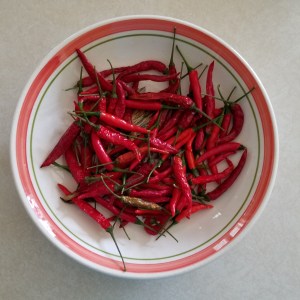
2016 was another improved year in our home garden. Among many experiments were growing root vegetables in containers (a success with carrots and daikon radishes), growing squash in the unused storage plot, and using sections of 4-inch drainage tile to protect young seedlings. Failures included bell pepper plants which succumbed to weed competition, and loss of tomato yield due to a lack of attention. The best crops included broccoli, celery, eggplant, tomatoes, Bangkok peppers, turnips, basil, sage, oregano and kale.

Ancillary activities included distribution of kale and a few other vegetables to local library workers and friends, and weekly posts about the garden on Facebook.

We raised adequate produce to serve the needs of our kitchen. I also learned a lot through collaboration with friends and neighbors.

Apples

I followed the 2016 apple season at the orchard and continued to develop our home apple culture. Our apple trees did not produce a crop this year.

The last of the 2015 crop is peeled, sliced and frozen, or turned into applesauce and apple butter. We have enough frozen apples left for a Christmas Day dessert. This year’s orchard apples were mostly eaten fresh.

I made more apple cider vinegar. The process was simple: I added Jack’s heritage mother of vinegar to apple cider from the orchard in half-gallon ventilated jars and waited. This year I added an eighth-teaspoon of brewers yeast to each container at the beginning. The benefit was hastened alcohol production and a superior final product. I also learned that a cooler temperature slows alcohol production and this can produce a better result. Today there are two gallons of apple cider vinegar in the pantry and another gallon and a half in production.

Politics

The general election did not produce the result many people, including me, wanted.

At the same time, a lot of acquaintances seek to become active and “do something” during a Trump administration. There is plenty of work to resist the expected rollback of what we value in society. Specifically, work toward protecting the environment, reducing the number of nuclear weapons, and ensuring social justice.

My term as a township trustee ends Dec. 31, so regarding politics, I can be an unencumbered agent of change. The next step is to leverage the opportunity the general election brought with it.

Retirement

The time since my July 2009 retirement from CRST Logistics can be divided into clearly defined phases. First came a period of social activism characterized by work with community organizations. It lasted until the end of 2011. Next was the political year 2012. After that, life found me working low-wage jobs to support my writing. That’s where I am today. In 2016 came a realization that in order to spend more time writing, I have to get past the finish line to “full retirement” as defined by the Social Security Administration. For me that’s in December 2017. I took the first step by signing up for Medicare this month.

2016 was a time to learn, work on writing, and do things that matter. More than anything, I have been writing. Everything else provided a platform or material for it. If 2017 presents significant challenges, there should be plenty to write about.
Categories
Writing

Wednesday at The Java House

Coffee
Coffee

A small group of writers met at The Java House in the county seat last night to consider what’s next. It was my first outing with friends since the general election.

Consensus was it’s too late to complain about the president elect and his coming administration. The election is over, the Electoral College meets Dec. 19 in each state to cast their votes, and electors are expected to vote for each state’s winners.

All of us supported Hillary Clinton yet Donald Trump’s margin of victory in Iowa was 9.4 points. The fact ours was one of six Iowa counties voting for Clinton was cold comfort.

At the same time there is energy from a variety of sources to resist Republicans and their agenda at all levels.

What are we willing to do?

As a low wage worker my main challenge is building bandwidth for community organizing. It won’t be easy in 2017, the last year before my “full retirement.” In addition to budgeting income from a half dozen seasonal jobs, I need time and energy to organize.

Other challenges include picking activities where my efforts can make a difference. I don’t know what exactly that means today. The focus should be less on issues and more about process — how we arrived in Trumpland, and how we get out.

Here is a short list of things a person can do:

Set aside regular time to work on community organizing.

Join together with friends to work on what matters most.

Set specific goals and timelines.

Meet new people.

Advocate for Democratic principles in public places, writing for publication in newspapers and participating in local media coverage of events.

Hold meaningful events that engage community members.

This list represents a small step toward being an occupier of the society Republicans have made on our historic turf. Something essential to sustaining a life in a turbulent world.

Categories
Writing

Arriving Home After Military Service

October 22, 1979
Davenport, Iowa

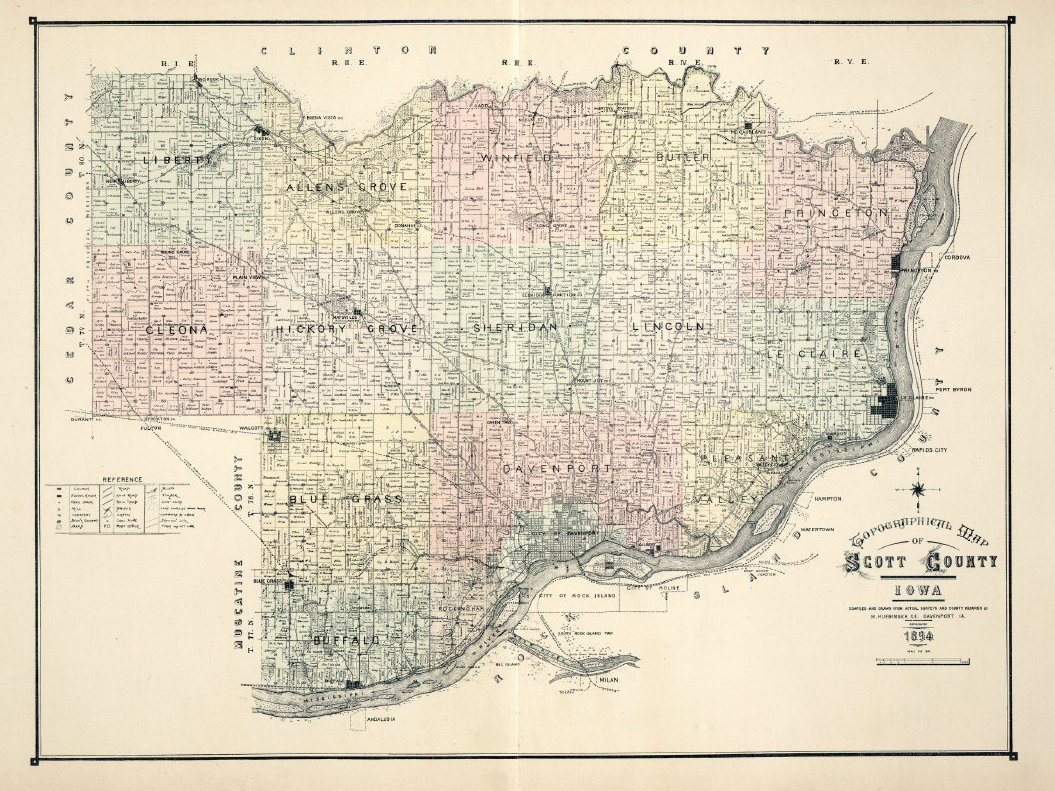
Scott County, Iowa Map - 1894
Scott County, Iowa Map – 1894

I’ve been in Davenport for just five days and already my mind is flooded with thoughts about projects to get involved with — many different activities. My mind is coming to be awake unlike it has been through the four years I have been in the Army. The potential for doing things is tremendous.

Northwest Davenport has changed during my absence. The Spudnut Shop is now a donut shop of a different name. Don’s Sport Shop now sells only bicycles. Northwest Drug Store closed its doors permanently and will be selling its goods within the week. Schlegel’s Rexall is now HAAG Drugstore, and Swan Drug Store sells more hospital hardware than anything.

Change is part of life and I guess it is to be expected. As you were — life is change. How it differs from the rocks.

It is about time to bring the writings in this journal to an end and begin filling the pages of a new book.

~ This is the second of a series of posts based upon writing in my journal.

Categories
Writing

Bob Darby’s Seedling

Bob Darby's Seedling
Bob Darby’s Seedling

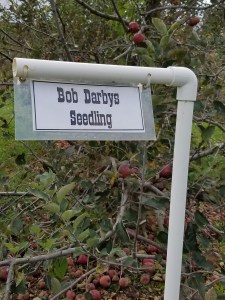
On the last shift of the season I walked in the test orchard picking apples.

20 minutes of bliss.

Beginning with a tree the orchard’s namesake planted in the 1980s, I picked a few there then added Connell Red, Regent and Sheepnose to my bag — about six pounds.

Bob Darby’s Seedling did not make the cut when the orchard expanded.  A lone tree sits at the head of the test grove — a reminder of the founder who collected saplings from friends and neighbors to graft to his own root stock as he increased the variety of apples to more than 120.

After cutting and tasting, the whole lot of fruit will be sauced in our kitchen.

Wilson's Orchard Oct. 30, 2016
Wilson’s Orchard Oct. 30, 2016

And so it is with this and many of the jobs I’ve worked after my career in transportation. It comes down to a beautiful fall day, enjoying the last harvest of this season, and hoping there will be another year.

On my way out of the sales barn the current orchard owner was repairing an extension cord. We live in the same political precinct so local politics was our first topic. Soon we began talking about our customers – how the long, lazy, end of season weekend produced more than its share of long conversations about apples and what people plan to do with them.

I helped a couple from western Virginia near where my father came up find fruit for apple butter. He moved to Iowa to find work when what he described as “Obama’s war on coal” took away his job in the mines. They bought a bushel. We had three separate conversations about coal country, apples, apple butter and getting by. Making apple butter is a family tradition not to be interrupted by the move north.

There were a dozen conversations like this one, each with people of different backgrounds and expectations about apples and local culture. Some found apples in the orchard and those who didn’t bought them from the cooler. I savored each conversation as it happened.

I asked my boss to work next season and he said, “absolutely.”

As long as I breathe air and need paid work to sustain our lives, that’s the plan. Hopefully Bob Darby’s Seedling will survive another year.

Categories
Writing

Sea of Humanity

Work Bench
Work Bench

Each week I dive into a sea of humanity and end up alone, in the morning, writing about what I have experienced.

Whether the output is political, journalistic, scientific, culinary, agricultural or just being alive, what I write is grounded in a contemporary life viewed through sixty-plus years of personal experiences. It’s all the same process.

Humans are a rough and rowdy bunch. It’s challenging to capture modern life in a way that does justice to its complexity. Photos are not enough, naturalism is fraught with issues. Endemic to it all is the platform and perspective our lives create which position us to view society in the raw.

It can wear a person out. It can also invigorate us.

Each week I’ve been exposed to thousands of people from all walks of life. It is difficult to understand every experience, nor would I want to. It is hard not to cling to positive experiences and ignore negative. Some I meet don’t get outside home much. Others spend much time in the public arena. There are friends, neighbors and relatives with everyone mixed into a seasonal soup of life. Each week represents different ingredients, different flavors.

What matters more to a writer is having something unique to say. We know better what is not unique — set pieces, articles written on contract, photos of cats posted in social media. What it is, and should be, is articulation of experience that creates an understanding of an aspect of a complicated society on our only home and water planet.

It is modern to take raw materials of life and craft them into something readable, usable, and of value. The process is not always positive and writers should be cognizant of their impact in a constantly changing society.

I recall June Helm with whom I studied anthropology. It is impossible for an anthropologist not to influence the culture he or she studies, Helm told us. I took two lessons from this. The transient writer must tread lightly where we travel and work hard to do justice to what has been studied and experienced. The emphasis should always be creating something of value to subjects and readers alike.

As I prepare for this week’s dive into humanity I’m not nearly rested enough. My bones and ligaments ache from age and overuse. My cardio-vascular system seems okay, but one never knows. I can’t see as well as I once did and the looking I’ve developed has me ignoring much that would engage me previously. Imperfect though my platform and perspective may be, I’m ready to jump from the cliff it represents, hoping to avoid the rocks, and go deep into the sea of humanity once again.

Categories
Home Life Writing

Last Bits of Work

Bangkok Peppers
Bangkok Peppers

Two hours before my shift at the orchard I was feeling punk. I went to work anyway.

While ringing up a dozen customers I felt light headed and a bit nauseous so my supervisor sent me home. She didn’t want whatever I had to infect other workers. Good call on her part.

After two four-hour sessions of sleep, I feel much better and am ready to head over again later this morning. Before I do, some last thoughts about this 96-hour staycation in Iowa.

I’m lucky to have worked a full career that paid our mortgage and helped put our daughter through college. There are plenty of people who work low-paid jobs like mine who don’t have that kind of financial platform for support. To make up the difference between income and operating expenses we’ve taken on some debt. We feel it’s manageable and have a plan to pay it off. Like most anyone should, we watch our cash flow. We also have been able to weather multiple challenges in recent years that would have sent others to the poor house if such a thing still exists.

Everything on my “deal-with list” has been addressed. Some things — car repairs, understanding and signing up for Medicare, writing about the Cedar River flood — came easily. Others — financial planning, longer writing projects, producing value from life as a sixty-something — present longer term challenges. What I wrote on Sept. 11 proved to be useful.

The key to dealing with this and everything else on my deal-with list is to take care of myself and not freak out. That I have this blog helps with the not freaking out part. There is solace in work.

I haven’t freaked out and am taking better care of myself as the staycation ends.

Sliced Red Zeppelin Onions

Canned goods were moved to the lower level where the storage rack is once again full. The production was less than in previous years, but focused on items we will use well over the coming months. Gardening is a perpetual process and this year produced in abundance. The trouble was August when I worked four jobs without adequate time to reap what I sowed. It was a learning point more than disaster and local farmers helped me make up for what was missed at home.

Remaining is fall yard work, home maintenance, financial planning, and most importantly writing. The reason for retiring in July 2009 was to enable my writing. I’ve gotten better at it and am ready for something longer, maybe book-length, which can be promulgated. That and ensuring our sustainability in a turbulent world remain on the deal-with deescalated to to-do list on my white board.

Better prepared to tackle today’s challenges, I’m hopeful. Hopeful about the lives of family members. Hopeful about the community of friends and acquaintances we’ve built here in Big Grove. Hopeful our country will make sound decisions during the Nov. 8 election.

Whatever the outcomes, the brief vacation this week helped get me back to who I am. I’m thankful for that and ready to engage in society again.

Categories
Home Life Writing

A Place To Work

Garage Selfie
Garage Selfie

Only after a couple of days away from daily routine can a person begin to be themselves.

That’s where I am this morning.

I crave a place to work.

Desire is a blessing and a curse. When we want something, we set ourselves up for disappointment. We may get it, but can’t always get what we want.

It is a difficult path to nirvana. I do my best to void consciousness of self. It persists. There are selfies.

Like Eugene Henderson we feel restless and unfulfilled, harboring a spiritual void that manifests itself as an inner voice crying out I want, I want, I want.

Work is a cure for that.

Busy hands make happy children and happy children build a new world.

That’s where I am this morning.

Childlike and craving a place to work.

Categories
Writing

First Folio: Important, but no Beowulf

First Folio Table of Contents

The Folger Shakespeare Library of Washington, D.C. sent copies of the First Folio of William Shakespeare’s plays on a 50-state exhibition in celebration of the 400th anniversary of the bard’s death in 1616.

The First Folio is the only reliable record we have of 18 of Shakespeare’s plays.

The exhibit is at the University of Iowa Libraries until Sept. 25.

I first heard of the First Folio in Father Harasyn’s freshman high school English class in 1966 when we read and memorized parts of The Merchant of Venice. I can still hear the voices of friends who went to work in quarries, at construction sites, and driving trucks reciting Portia’s quality of mercy speech from memory. It was the deepest dive into a single Shakespearean play I’ve had. May mercy fall like gentle raindrops from heaven on the graves of my departed childhood friends.

I’m not hopeful of getting to the county seat to view the exhibit. Let’s face it, First Folio is not that rare and is one of the most cited texts on earth. It’s commonplace. I viewed a copy at the Library of Congress where it was displayed near their copy of a Gutenberg Bible, a much rarer document.

First Folio is no Beowulf

Of roughly 500-750 copies believed to have been printed in 1623, about 234 are known to have survived. The printing process was “revise as we go,” which yielded many variants. When we think of a literary tradition that includes Homer, Sophocles, Euripides, Aeschylus, Aristophanes, the Gutenberg Bible and the Beowulf poet, 234 extant copies is a lot. The First Folio is no Beowulf in terms of rarity of manuscript copies.

My English major nags at me to see the exhibit. Yesterday I asked an orchard co-worker if she had seen the First Folio. The dialogue which took place between customers, much modified, went like this:

Me: Have you seen the First Folio?
She: No, not yet. My professor said it’s not that special. Why would he say that?
Me: Cancel his tenure, fire him, and get him to work digging ditches.
She: (Silence).
Me: Too extreme?
She: Yes. An apology would suffice.

I took an undergraduate Shakespeare course from the late Sven Magnus Armens at the University of Iowa. Born in 1921 to Swedish immigrants in Cambridge, Mass., Armens was a Tufts and Harvard graduate who served in the Coast Guard during World War II. His papers are located in the University Library Special Collections Department and of more interest to me than the traveling First Folio exhibit. I haven’t seen them either.

Known for walking his Great Danes around Iowa City, Armens was a chain smoker and smoked during our class. His hands were stained with tobacco and his classroom notes yellowed with age. By the time I took his course, he’d been at Iowa 20 years. We knew class was over when he crumpled his empty cigarette pack and threw it in the corner waste basket. A Shakespeare class seemed obligatory for an English major. Armens filled a slot and seemed delayed from life outside the classroom as he took us through several plays. His physical presence was as important as the texts we studied.

If we view the world through the window of Shakespeare’s plays, as Erving Goffman has suggested in The Presentation of Self in Everyday Life, the First Folio is important. Perhaps because of the way western society came up, Shakespeare has been ingrained in our lives like few other literary works. If some are dismissive of First Folio, one concedes there are other, Shakespeare-less, world literary traditions.

It is hard to escape the grip Shakespeare has on our lives 400  years after his death. Whether to view the First Folio exhibit, or not to view, has become surrogate for the struggle to transcend our roots and see the world in a different way. That is so Shakespearean and perhaps why I’m torn. The act of viewing would be a concession to Shakespeare preeminence, something for which I’m not ready.

The book will be opened to Hamlet’s speech, “To be, or not to be,” so maybe I should just get over it and go.

Categories
Home Life Kitchen Garden Writing

Into The Vanishing Point

Vanishing Point
Vanishing Point

A new perspective revealed itself from paths traveled daily.

Something showed through the uncut grass and garden in the light of a rising sun.

I should quit thinking and mow the damn lawn.

It depends. What time will I finish at the orchard? How will I feel after interacting with locals for a shift? Will the press of decaying produce draw me into the kitchen again? How guilty will I feel about letting grass grow long?

So much depends. If conditions are right — temperatures moderate, weather dry, and a couple hours of remaining daylight — I may mount the John Deere and make a first pass. The lawn is so long it will take at least two.

So much depends upon weather, capacity for work, and a will to sustain our lives in a turbulent world.

I looked up and saw the vanishing point through the middle of my garden for the first time in 23 years this has been our home.

It has been there all along, the work of the farmer who subdivided his homestead, the surveyors who platted the lots, and the home builders who positioned structures according to convention and restrictive covenants recorded at the county administration building. I played my part unintentionally by positioning my garden in the southeast corner of our lot.

It was hard to miss.

Yet it was there. I walked into it and am still here.

Categories
Writing

Friends and Bloggers – 2016

Woman Writing Letter

A goal of a writer should be to provide unique insight into contemporary society informed by life events. If what’s written is not so informed, then why bother?

At the rate internet memes are cranked out and distributed in conventional social media channels, a primary source for contemporary information and opinion, it is not easy to differentiate oneself from the vociferous hoards. Like an amateur anthropologist it is difficult to avoid tainting the insight with questions asked.

At the same time, there is no such thing as “objective” reportage. Those who have been through “new journalism” know that by now. Unique is not equal to unbiased. Tainted can be akin to seasoned, as in adding chervil leaf to a soup or casserole. We bloggers should seek to be a cross between Margaret Mead, Howard Zinn, Joan Didion and Hunter S. Thompson, with a dash of Truman Capote, Molly Ivins or Tom Wolfe added for extra measure.

There are two parts of this: reading and writing. Of these, reading to inform one’s point of view is the critical aspect requiring diligence. Following are some authors you may not have heard of who are worth reading.

Arnie Alpert is Co-Director of the American Friends Service Committee’s New Hampshire Program. He recently participated in a two-week fact-finding trip to Mexico focused on human rights. He posts at https://inzanetimes.wordpress.com/. I met Arnie at FCNL in Washington, D.C. while advocating for the New START Treaty.

Recent post: Central Americans are Running for Their Lives.

Carrie La Seur practices energy and environmental law on behalf of farmers, ranchers, and Native Americans, and does a little writing, from an office in Billings, Montana. I met Carrie while serving as a member of the Johnson County, Iowa Board of Health.

Recent post: Little Miracles Everywhere, or How Billings, Montana Got Its Bookstore Mojo Back.

Leilani Münter is a biology graduate, professional race car driver and environmental activist. I attended Al Gore’s Climate Reality Project Training with Leilani and a thousand others in Chicago in 2013.

Recent post: Since the North Carolina Department of Transportation Did Not Take Public Comments At Tesla’s Sales License Hearing in Charlotte Today, I Submitted Written Testimony.

Davis Shorr is a member of the Stevens Point, Wisconsin City Council and author of a new book, I Call Bullshit: Four Fallacies That Keep Our Politics From Being Reality Based. I met David while working on nuclear disarmament issues.

Recent post: Today’s Republican party is out of ideas.

Paul Street is an independent radical-democratic policy researcher, journalist, historian, author and speaker based in Iowa City, Iowa, and Chicago, Illinois. He is the author of seven books. I met Paul at a reading from one of his books in Iowa City.

Recent post: Miranda, Obama, and Hamilton: an Orwellian Ménage à Trois for the Neoliberal Age.

Rod Sullivan is a Johnson County, Iowa supervisor and blogger since 2007 at RodSullivan.blogspot.com. I met Rod while working on a campaign at the Johnson County Democrats office in Iowa City.

Recent post: August 30, 2016.

Lynda Waddington Sometimes dances in the rain. Often sings in the car. Always loves the journey. Columnist at The Cedar Rapids Gazette. Lynda was secretary of our Second Congressional District caucus for John Edwards.

Recent post: #DemsInPhilly — Finding Homelessness Everywhere.

~ Written for Blog for Iowa