Saturday was the first spring day with temperatures in the low 70s.
I spent a few hours raking and using the chainsaw, beginning yard clean up. More clean up remains but I’ve learned to take it easy until returning to better physical shape through the work.
I relished being outside at work so much. Excited to deploy the chainsaw, I forgot hearing protection until I was almost finished.
Neighbors hailed me from their yards and in passing by. The whole neighborhood seemed outside and alive. There was ice below matted leaves yet everything else indicated spring had definitely arrived.
Saturday had begun Friday by covering mixed beans with tap water to soak overnight.
Before sunrise I cooked the beans in homemade vegetable broth, then added carrots, celery, onion and bay leaves. The broth reduced so I added more — four quarts in all. It simmered all day yielding a deep brown color by supper time. A cup of soup with toasted bread, a small plate of cheese and pickles, and a glass of milk made the meal.
A week into April and nothing is planted in the ground. I surveyed the garden plots for a spot to plant peas and carrots and have ideas but no plan. I’m getting better with garden layout each year because of a shift from whimsically filling space to consideration of which plants go where and why. After yesterday there’s a lot of wood to cut for a burn pile, such cutting making space to think about sunlight, shade, soil health, animal traffic and mulch.
I had an epiphany while reading Mayor Pete Buttigieg’s memoir, Shortest Way Home, the March release of which coincides with his presidential campaign.
In the first chapter he described growing up in South Bend, Indiana, a place I frequented while working in transportation at about the same time.
It was a stretch to understand Buttigieg’s new narrative of something I knew well during the late 1980s. My conclusion after finishing the first chapter was I feel too comfortable with people closer to my own age with similar experiences. Like it or not, aware of it or not, a new generation of Americans has arrived and is already making change in a society I increasingly recognize only in memory.
I don’t know Buttigieg’s presidential chances among a large field with many experienced politicians, but I know this: I’d better join younger people in their efforts to improve society or get out of the way.
I’ve written about the struggle of young farmers regarding land use in our county. Some of them have been addressing the county board of supervisors since 2013 about the 40-acre rule which defines a farm. If a farmer farms on less than 40-acres here, by definition, it is not a farm, and therefore, the financial remedies of the Iowa agricultural exemption are unavailable. Having advocated with the supervisors during the run up to the most recent five-year land use plan, they are making an end run around them for lack of accommodation, seeking a remedy from the state legislature. Whether they will be successful this year is uncertain, but eventually they will reshape the law to better fit their vision of contemporary farming.
Congressman Dave Loebsack is in the same cohort as me, about a year younger. A relatively small group of us joined together in Iowa City to open his first campaign office for the 2006 election. Together we beat a 30-year incumbent Republican in the general election. Over time there have been complaints that Loebsack is not progressive enough. If one looks at his actual positions and votes, and hears it from him personally as I’ve been able to do because of our long relationship, that seems ridiculous. However, the new generation will have their way, maybe not now, maybe not in an orderly way after Loebsack retires, but their patience with perceived grievances won’t be bottled up for long. As Buttigieg’s narrative of South Bend in the late 1980s instructs, there is a different way of seeing things and it is not the view of white guys like me.
After the decennial political redistricting in 2010 Bobby Kaufmann won the first election in newly formed House District 73. He has dominated the district ever since, despite efforts by Dick Schwab (2012), David Johnson (2014), and Jodi Clemens (2018) to win the seat. Like him or not, he is the face of the new Republican party in Iowa and a popular figure in the district and around Iowa. That’s not to say he’s popular among Democrats and progressives because he mostly isn’t. Because he won four back-to-back elections he rose in the legislature and became the gateway for constituents to get things done. Will he support all of our initiatives? No. Will he listen? I found the answer to be yes.
I no longer see life through the eyes of a thirty-something. However, I’m willing to set aside my biases and predispositions if I can and spend time with men and women in their 20s and 30s to work on common issues. It’s the lesson I’ve learned from Pete Buttigieg’s candidacy.
There is so much needed to improve our lives and old solutions no longer work. To find our way, we need something different, and better. Our hope lies with the thirty-somethings who have arrived — like it or not.
It’s been difficult to imagine myself in a post worklife world.
When I left my last transportation job work no longer defined me. I could become something new and different. Ten years later work continues to occupy a role in my story. That’s not unusual in the United States. I also don’t think it is that good.
Mostly retired, a pensioner, I lack a forward-looking narrative. Living a life, working part time for wages, those are not worth narration. They are part of the human journey, the arc of which often seems uncertain.
So I drift… read and write. I will read and write as long as I’m able… and take care of necessities.
Framing a life in work was abandoned. The actuality of it proved harder than writing these words. If I spend time in public, outside the flickering light of lamps and screens… sunlight through the French door, I’ll want a narrative more than “I’m a pensioner.”
I like the word pensioner, yet it’s an unusual introduction. My pension is from Social Security, it is real, and it pays many of our expenses. It reflects more than 50 years of work, during which I contributed to the fund. “I am a pensioner” seems okay, but I wouldn’t lead with that because it sounds so awkward, so work-related. There is more to life than a reference to work that generated a pension.
I told a life story in my post Autobiography in 1,000 Words, which seems long for a personal narrative. I like the facts presented yet they doesn’t say who I am, who I’m trying to be. Maybe I’d better know that first.
Should I present as writer? People recognize me as such. I don’t like talking about writing projects, so no, I wouldn’t lead with that.
Should I present as a gardener? I garden and post about gardening in multiple places. Why does a personal narrative have to be about only one thing? It doesn’t.
To whom would I tell a personal narrative if developed? I think about Dunbar’s Number and the cognitive limits it suggests. If we only get 150 stable relationships because of physiological limits, why am I even worrying about a personal narrative? My 150 knows me and I know them. Isn’t that enough?
Last Saturday a group gathered at Old Brick in the county seat and discussed political advocacy. That’s where this post about personal narrative originated — I felt I needed an elevator speech as I introduced myself. We all need a brief chat about who we are when meeting people.
I am genuinely interested in meeting people and hope any conversations will be more about them rather than me. If I talk in terms of their interests, it’s because I’m curious about how people live their lives. I need to hold up my side of the conversation.
“Hi. I’m Paul, a pensioner from rural Johnson County. I spent 50 years in the work force and now I’m here talking to you. What’s your name?”
I don’t know, pretty lame. It’s a conversation starter, and could lead somewhere the way an ignition switch on an automobile begins a trip. It’s not flashy but may serve. Maybe that’s all that’s needed and I’m over thinking this. Maybe such a brief speech is enough.
The arc of life is bending toward the unknown — an opportunity to imagine what could be. Maybe that’s the narrative, at least it could be.
It felt good to be outdoors on Friday. The sky was clear and temperatures warmed enough to shed my coat. Green-up has begun.
We filed our income taxes with the Iowa Department of Revenue and the Internal Revenue Service. Earlier in the week I paid the second half of our annual county property taxes.
This morning I plan to walkabout our subdivision, inspect roads, and address concerns about water and sewer leaks. With the hard winter and significant ambient temperature swings, there is damage. Whatever needs fixing requires a plan and a budget. As a board member and trustee of our home owners association and sanitary sewer district I share responsibility for both.
We’ve done our part to support government services. Now spring can begin.
Outdoor work was sweeping up enough sand from the road in front of the house to refill sand buckets used last winter. I haven’t purchased sand in about five years. Because of the hard winter there was plenty available. A 50-pound bag of solar salt filled empty salt buckets.
I found the fan to blow air across the damp garage floor. It took about two hours for moisture to evaporate. Baby steps to start spring 2019.
Governor Kim Reynolds issued a disaster proclamation for Howard County Friday afternoon. The number of counties under disaster proclamations is now 53 (of 99), according to the press release. Current estimates of damage exceed $1.6 billion according to this morning’s Iowa City Press Citizen, although counties reported they have yet to fully assess damage within their jurisdictions. Governor Reynolds proclaimed nothing about what government would do to help mitigate the deleterious effects of climate change going forward.
My farmer friend from the home, farm and auto supply store reported the ground needs drying before getting into his fields. While the weather quickly became spring-like, the usual issues for row-crop farmers remain. My specialty crop friends also found the ground too wet to work. They are planting in their hoop houses which are traditional season-extenders.
Spring began Wednesday and is just getting started. We’re ready.
There is nothing magical about 40 acres in the 21st Century. Today’s American farmers can make a living on much less, largely because of crop diversification, technology, and emerging markets for locally grown food.
For a beginning specialty-crop farmer, 40 acres might be too much to handle.
“40 acres and a mule” entered the vernacular as a way of dealing with the question of what to do with newly freed slaves during and after the Civil War. Give them 40 acres and a mule to get started as free men, or so the line of thinking went.
In 1865, William Tecumseh Sherman provided for confiscation of 400,000 acres of land in South Carolina, Georgia and Florida, to redistribute in 40-acres parcels to formerly enslaved farmers. The arrangement did not persist, although even today, presidential candidates posit the United States should pay reparations for slavery.
While specialty crop farmers work hard, long days to make ends meet and sometimes take a job in town to provide enough household cash, they increasingly seek to own their future. To a person, that means buying land. In Iowa good farmland is expensive.
For farmers, the desire to create a farm on less than 40 acres has to do with start up capital. To make a go of it as a specialty farmer on 40 acres, that means $350,000 or more for land, another $100,000 or more for an on-farm dwelling, and more for at least one barn, a couple tractors, and other equipment for cultivation, mowing, tilling, fencing and general operations. Finding a banker to finance such an operation is difficult without collateral other than the land. There is also the hurdle of what to do with all that land. While a small farm can grow into 40 acres with success and over time, a beginning farmer has much to learn and the scale can be intimidating.
Shouldn’t there be opportunities to start a farm on less than 40 acres? The county board of supervisors said no. Couldn’t you move to another county? The market is in urban centers.
In Iowa farms have an agricultural zoning exemption. Beginning farmers seek the ag exemption in order to make ends meet on narrow gross margins. To be defined as a farm in our county, and get the exemption, 40 acres is required. Some of my farmer friends have been asking for accommodation of smaller farms for many years and none has been forthcoming from the county board. The future belongs to the young and they will not be stopped.
That brings us to House Study Bill 239, an act relating to the county zoning exemption for property used for agricultural purposes. Farms are defined as follows:
The bill provides that property is used for agricultural purposes if at least 51 percent of the annual gross revenue derived from the property comes from the growing, harvesting, or selling of crops and livestock raised and produced on the property or brought to the property and not more than 49 percent of the annual gross revenue derived from the property comes from the sale of agricultural experiences and other farm-related activities.
The number of acres defining a farm becomes irrelevant should the measure pass the legislature and be signed by the governor.
This bill amounts to an end run around the county board of supervisors. While it didn’t clear the state government committee this session, it remains eligible for consideration and debate next year in the second session of the 88th Iowa General Assembly.
A representative from our county made it to the bill’s subcommittee hearing on March 5. In what was described as a long, arrogant speech, the official characterized rural residents who had been working with the county board of supervisors as “loud complainers.” Not a good look for anyone, especially a county official.
Today was a great day of spring-like weather. We can feel it in the air as farmers prepare equipment, tend livestock, and prepare for another crop. Whether on 40 acres or 4,000 there are many common threads running through farming. Whether they will be defined according to the same standard is an open question. It’s time to see if the legislature can resolve the issue for beginning farmers, since the county won’t.
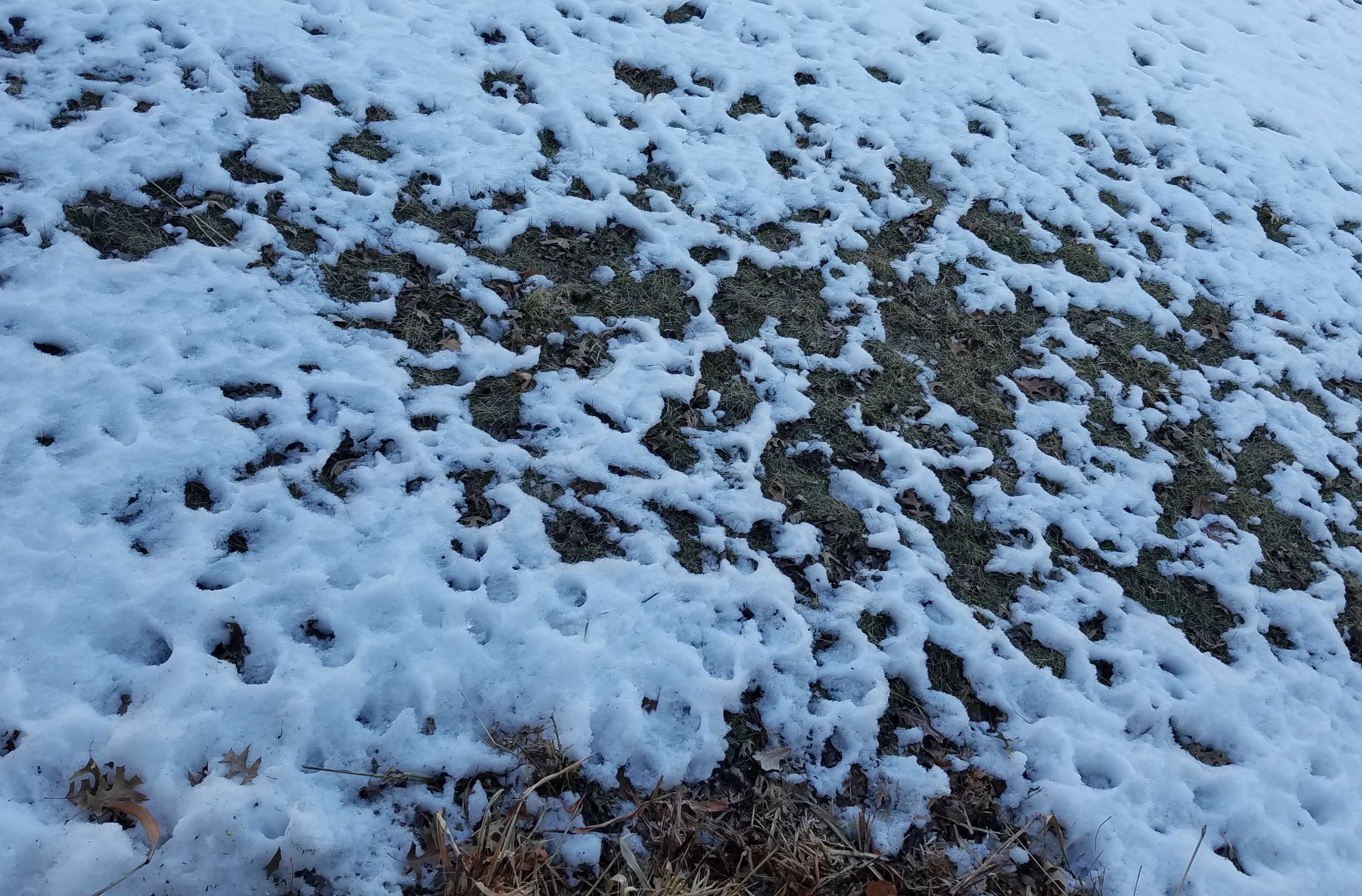
Depressions in the snow pack made a Swiss cheese-looking melt outside the French door where we feed wildlife.
Deer are nocturnal grazers, eating what birds, squirrels and mice don’t, leaving their hoof prints behind in the snow.
We hope this melt is the end of winter. Despite problems with downstream flooding, we are glad to see it go.
It has been a solitary winter. So cold we didn’t feel much like leaving home. So snow-packed it was a struggle to get into the yard. The driveway buckled, providing new places for ice melt to pool. Reading, writing, cooking and hanging out were tasks to relish for the season. It is time to turn the page.
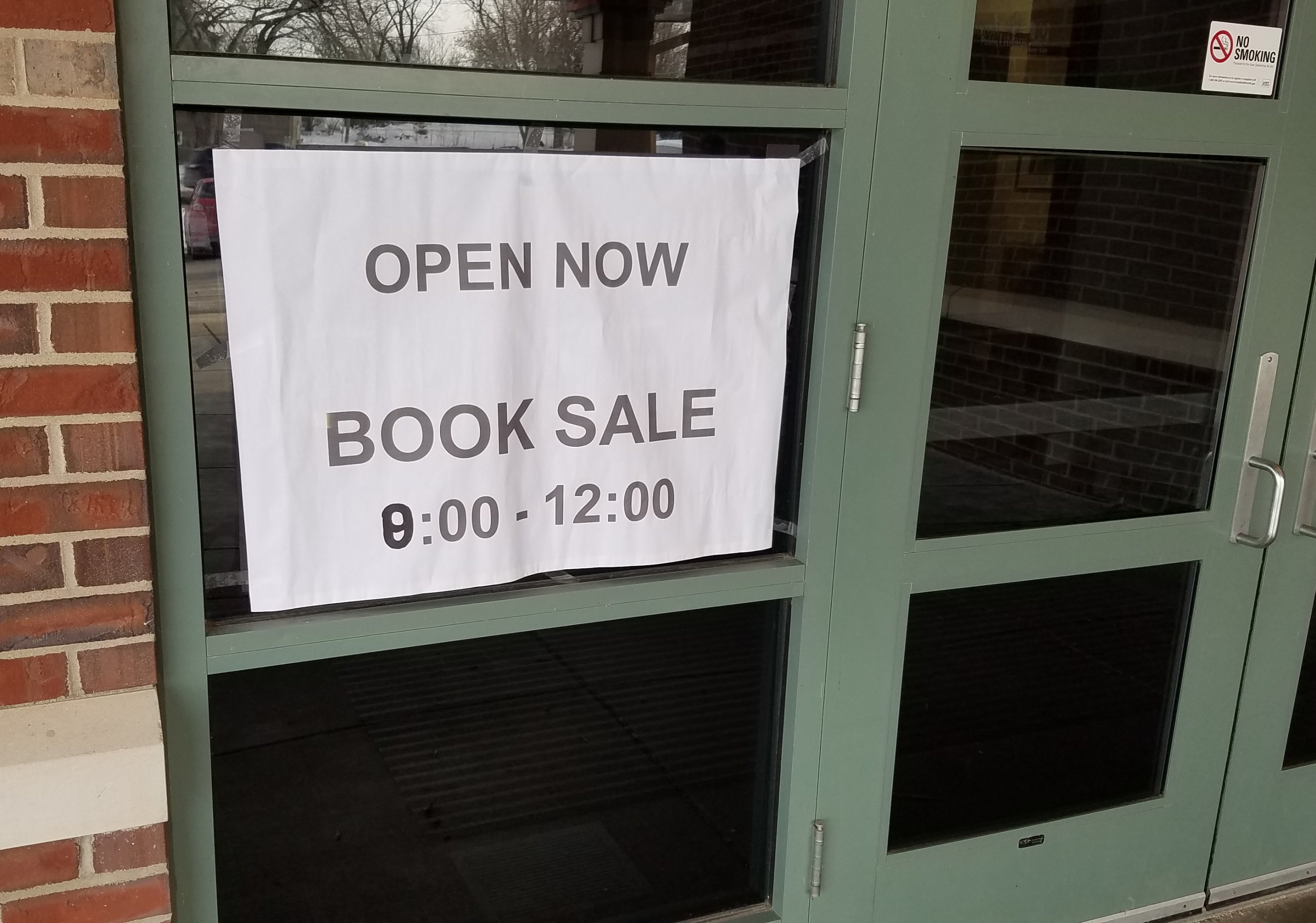
Sign for the Book Sale at the Solon Public library
Yesterday was the annual used book sale at our library.
In addition to clearing the stacks of unpopular or outdated books, the community donates books, media and labor to manage the sale.
Each item is reasonably priced and this year’s proceeds were about $800. That’s a lot of $0.50 and $1.00 books.
I spent ten bucks on ten past issues of the Wapsipinicon Almanac, three large format picture books about Yellowstone National Park, the Vietnam War, and the Marx Brothers, one fiction book, Water for Elephants by Sara Gruen, and a book of poetry, Songs of a Sourdough by Robert W. Service. I spent part of the afternoon reading Service’s poetry about the Yukon. First published in 1907, the copy I got is more than 100 years old. Thoughts of surviving bitter cold, wolves, pine trees, bonfires to stay warm, dog sleds, and the gibbous moon roamed my consciousness for the rest of the day.
It is doubtful I needed more books. The measure of a person’s library is less about reading or having read every book in it. A personal library is more a reminder of what we don’t know. I don’t feel guilty having more books than time to read them. I’m lucky to have a stable home life and the space to fit in a few more books after a used book sale in town. The house hasn’t exploded… yet.
I’ve been buying clothing this year. In 2018 I spent $281, and this year I already spent $150. T-shirts, jeans, socks and underwear, along with a few sweatshirts and woven shirts make up my wardrobe. For funerals and weddings I keep one pair of dress slacks, a good shirt, some neckties, two pair of shined shoes from when I worked in the Chicago Loop in 1991, and a blue blazer. Judging from what people wear to funerals and memorial services, I could get by with a decent pair of jeans, a woven shirt and a newer pair of sneakers.
There was a gift of four t-shirts and a sweatshirt from my spouse. The t-shirts are for the shepherdess to imprint next time she silk screens an image from the farm. I missed out last year because most of my shirts already had something printed on them.
The big 2018 expense was a pair of steel-toed boots to wear on my shifts at the home, farm and auto supply store. Last week, after my shift, I bought a new overcoat using my employee discount.
Me: I need a new coat.
Cashier: You really do.
Me: I know… big grease stains, broken snaps and zipper… it’s disreputable.
Cashier: Oh my!
Me: It will be my first Carhartt… this is Walls. Well I do have a pair of Carhartt bib overalls.
Cashier: Every man has those.
When I worked in the Loop I quickly wore out the pants in my suits. I picked styles where I could get multiple pairs of matching slacks. I don’t need fancy work clothes at the home, farm and auto supply store where the main issue is the quality of Wrangler jeans purchased on discount for less than $20. The denim must be of an inferior quality because holes show up in unexpected places after washing. Too, the radio and box cutter wear a hole just below my belt line on the left side. I asked the Wrangler sales representative about this at a recent trade show. He didn’t have any good answers except to buy more expensive jeans. I didn’t mention my low wages.
Food, shelter and clothing are traditional basic needs. Add potable water, clean air and sanitation and that’s still really basic. A good night’s sleep? Needed, but optional. Without these things, the need for survival dominates our daily lives. Education, healthcare, transportation and internet access are basic needs according to Wikipedia, but seriously, while important, those are extra when it comes to survival.
A lot of people would have us return to life as basic survival. For our family, years of hard work made us financially stable and built a foundation so we don’t often worry about survival. As long as there are used book sales and employee discounts at the home, farm and auto supply store we’ll be alright. Knowing a bunch of farmers and a good auto mechanic helps.
Wolves are mentioned in the history of Lincoln County, Minnesota where my grandmother was born. Wolves can be an issue, but mostly one read about in books about the Yukon… or Iowa and Minnesota at the time of settlement. As we live our modern lives it is important to remember there were once wolves, even if their meaning is lost for want of an education. Education is a salve for our worries. That’s part of why library used book sales remain important.
While eastbound on Highway 382, a large bird lifted from the ground within my headlights and dropped a recently killed rabbit. It hesitated, perhaps wanting to return to its prey, but not long enough for a collision.
I don’t know what species it was, but suspect it was an owl since it was two hours before sunrise. Owls live all around us in Big Grove and at night use the peak of our roof to observe the neighborhood and dine on small rodents.
As I continued around the lakes, then westbound on Mehaffey Bridge Road a deer crossed the road in front of me. I tapped the brakes. It was less dramatic than the bird of prey. I’m used to living with wildlife after so many years. I know what to do.
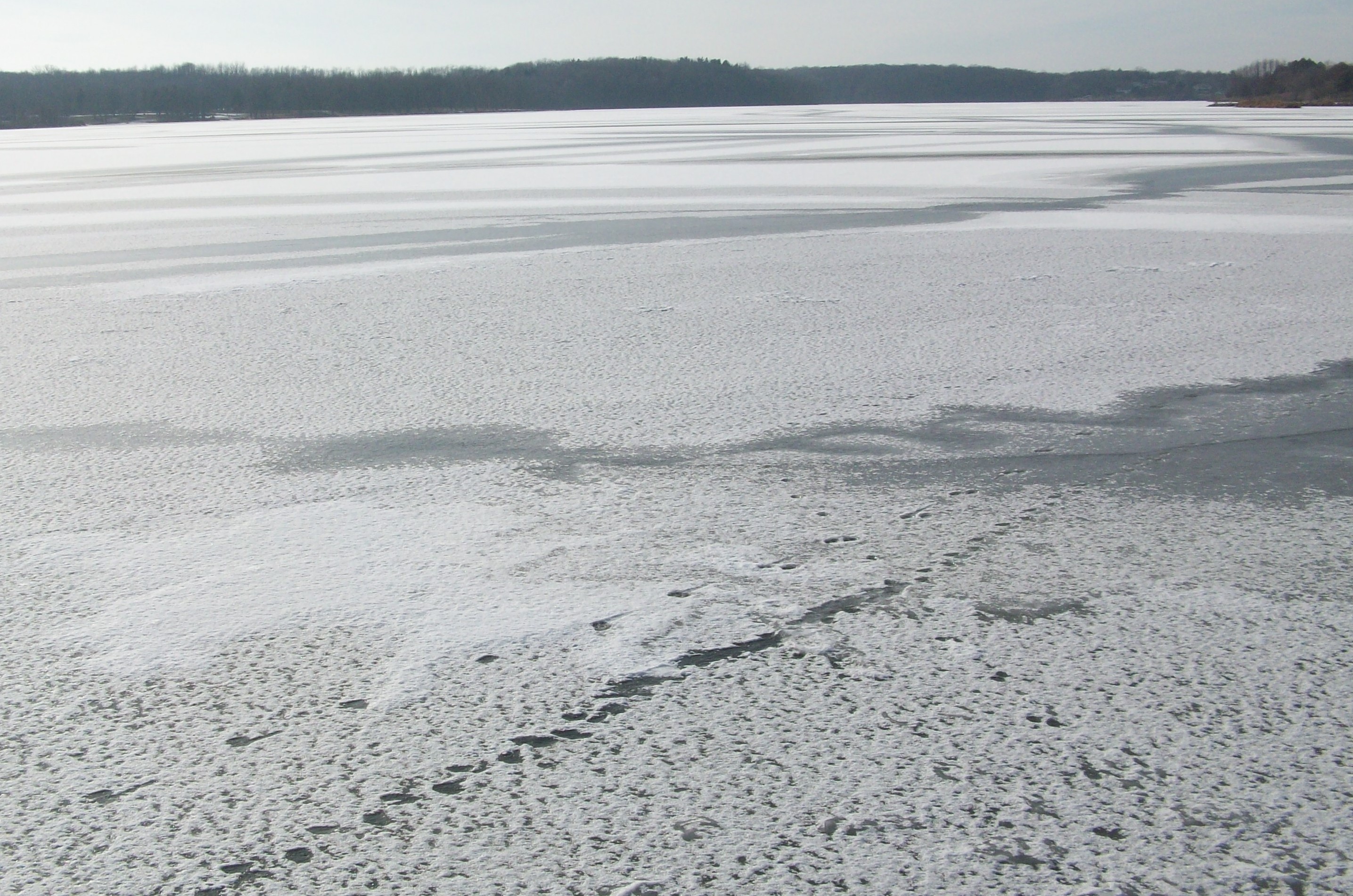
The lakes are covered with a smooth surface of ice, perfect for skating. With a couple more days of deep freeze, conditions should be excellent. The problem is no one I know ice skates any more and it is not a solitary activity. Time was we would clear a rink and sometimes start a bonfire. Importantly, it was fun. We’re getting older and other things occupy neighbors, busy looking at screens, I cynically suppose.
Wildlife appears to be flourishing. Maybe I’m just noticing. It is possible to step away from the screens and observe nature… a nature adapted to the built environment humans made since settling here in the 1830s. There was no risk of roadkill when there were no motorized vehicles or roads.
I don’t have much to say about the world outside our ecosystem today. Aren’t others saying enough? Suffice it that the 25-minute trip to work provides a window to the world around us.
The farmer sent a long text message. We delayed soil blocking because the forecast is cold overnight temperatures for the next week. The seedlings we might have planted would be at risk.
Lambing at the farm added a complication. Her sister posted a photo of a blanketed newborn near the furnace vent inside the house. If you didn’t know, farmers continue to bring livestock inside the house when needed and lambing is always a stressful time.
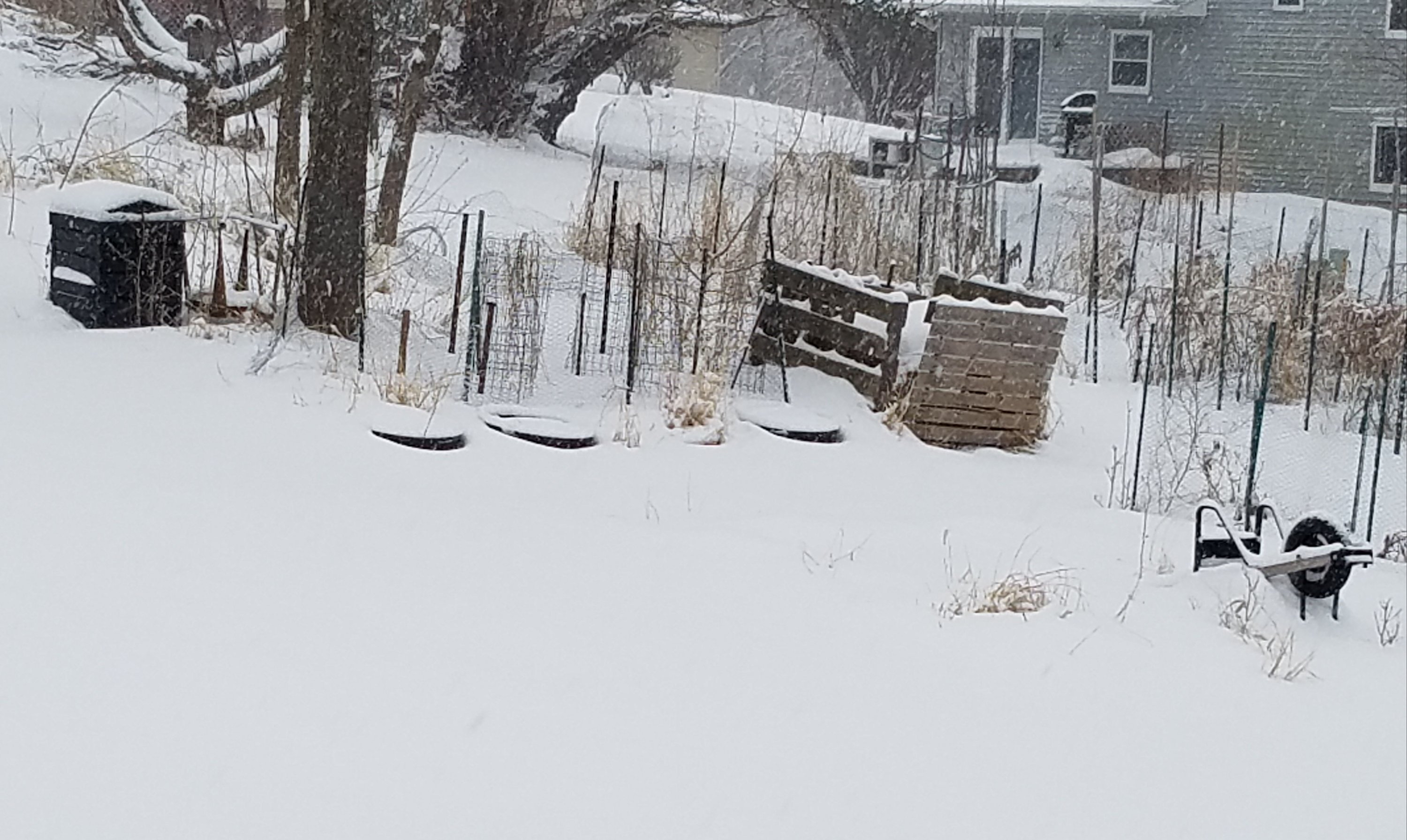
My Sunday schedule is now open and it is snowing.
Between two and three inches fell with more coming. I had planned to secure provisions in the county seat, but now I’m not sure. Even if I go, errands can wait until snow stops and roads are cleared in a few hours.
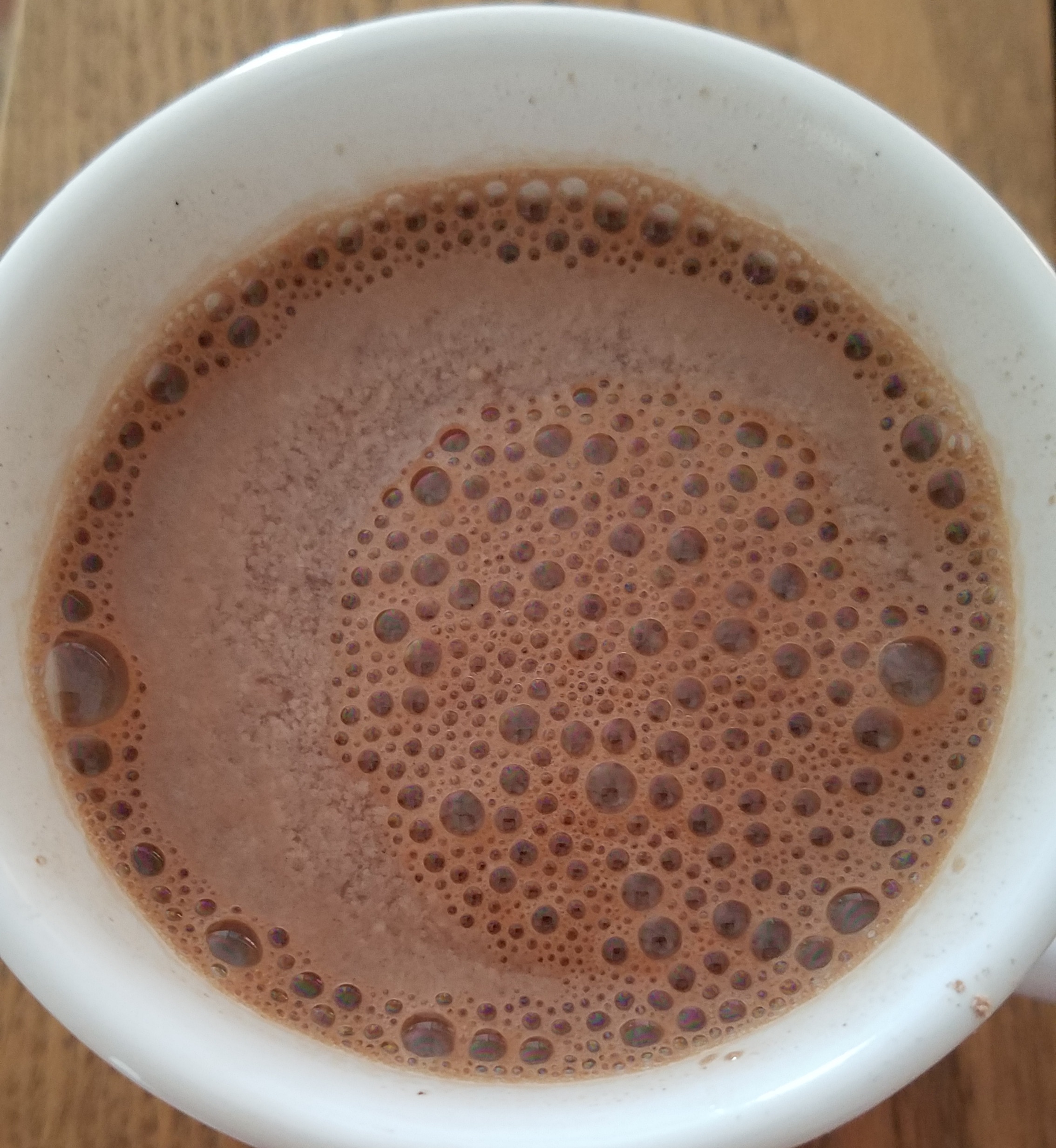
For breakfast I made an omelette using leftover taco filling. Except for the prep work it takes 20-30 seconds to cook an omelette. It’s so easy anyone can do it. On my first cup of hot cocoa, showered, shaved and nourished, I’m ready to turn to another day.
Unintentionally, I spend an early morning hour watching a 2003 documentary titled, Inside the Marx Brothers. The white-washed story recounted historical facts about the six brothers, leaving out the racism inherent in much of their work. I was a fan of the Marx Brothers before I left home to attend university. It wasn’t until later I realized the prejudices toward blacks and women contained in their films. I have VHS copies of most of their films, beginning with Cocoanuts and Animal Crackers, written by George S. Kaufmann and Morrie Ryskind. These were adaptations of the Marx Brothers successful Broadway shows with the same name. I can hardly stand to view them today. Like many of the acts that emerged from vaudeville, neither the actors nor the audiences were cognizant of their biases the way we can be today.
Marx Brothers films aired on television Sunday mornings in the 1960s. We watched the newspaper guide to see when the next one would air and looked forward to them. It was during that ten-year period from 1960 until 1970 that we became a T.V. family, with everything that meant at the time. On the playground before school my friends and I would play marbles or four square and discuss what was on television the previous night. It was formative in a way that moved us from the physicality of neighborhood play to an intellectual approach to abstractions in the world. It made part of who I am.
We didn’t think much about network commentary on current events. The Huntley-Brinkley Report was our daily source of news and we tried not to miss it. Fifteen minutes seemed an adequate amount of time to present the news. Our focus at home was more on the style of the co-anchors and the closure we found in their signature sign off each night, “Good night, Chet. Good night, David. And good night, for NBC News.” The report expanded to thirty minutes on Sept. 9, 1963, following the CBS Evening News with Walter Cronkite which did it first. At the time we didn’t understand how they were going to fill an extra fifteen minutes.
A couple hours after sunrise and snowfall stopped. Time to chart the rest of the day while cultural memories of the Marx Brothers, Walter Cronkite, and the Huntley-Brinkley Report circulate in the tribal background. Considering the role television played in the 1960s, I wonder why we abandoned it, almost never turning a T.V. on, except to watch the weather during a storm.
Food for thought while I dig out a lane to get to the county seat and complete errands.
After four hours digging snow in the driveway wind came up and I shut down the operation.
Mid-dig I made a cup of hot cocoa and took a break.
I made it to the road, gaining access for when I leave for a shift at the home, farm and auto supply store in a couple of hours.
The retail store is doing inventory. I expect a day of counting and recounting items with discrepancies between what was found by the scanners and what our computer system shows on hand. The recounting work will take several days.
I texted the farm where I’m scheduled to soil block on Sunday, saying the weather forecast looked dire and asking whether work would continue. The hydrant in the germination shed is usually frozen at this point so we would move soil blocking to the sheep barn where there is running water. It was uncertain she could keep the temperature in the germination shed warm enough to prevent the blocks from freezing at night. She’s researching cold and germination and will make a decision about pushing the schedule back a week by Saturday. The farm published the spring share schedule so the clock is ticking on these starts. The other farm where I work is scheduled to start soil blocking on Feb. 26.
We are having a real winter this year. A winter featuring wild variations in temperature. Variations that make weird noises in the house.
For now, with snow covering the garden, there is little else to do besides work indoors. We draw from the pantry, freezer and ice box for meal ingredients to use food as it nears the end of its storage life. We have a couple pounds of potatoes, a couple of apples, and vast amounts of onions, noodles, canned tomatoes, apple sauce, apple butter, pickles, sauerkraut, and dry goods. We aren’t wealthy but we won’t starve for a couple of months.
This year will be one of transitioning to full retirement. We have our financial structure in place and are gliding into the end of a worklife in society. In many ways, this is what I’d hoped for back in the day of the Whole Earth Catalogue and arguing with conventional farmers in undergraduate school about the efficacy of organic growing. While not in a hurry to complete the transition, we make changes with purpose. Each day taking us closer to what’s next with hope for a brighter future.


 Journey Home
You must be logged in to post a comment.