Categories
Writing

The Work of Writing

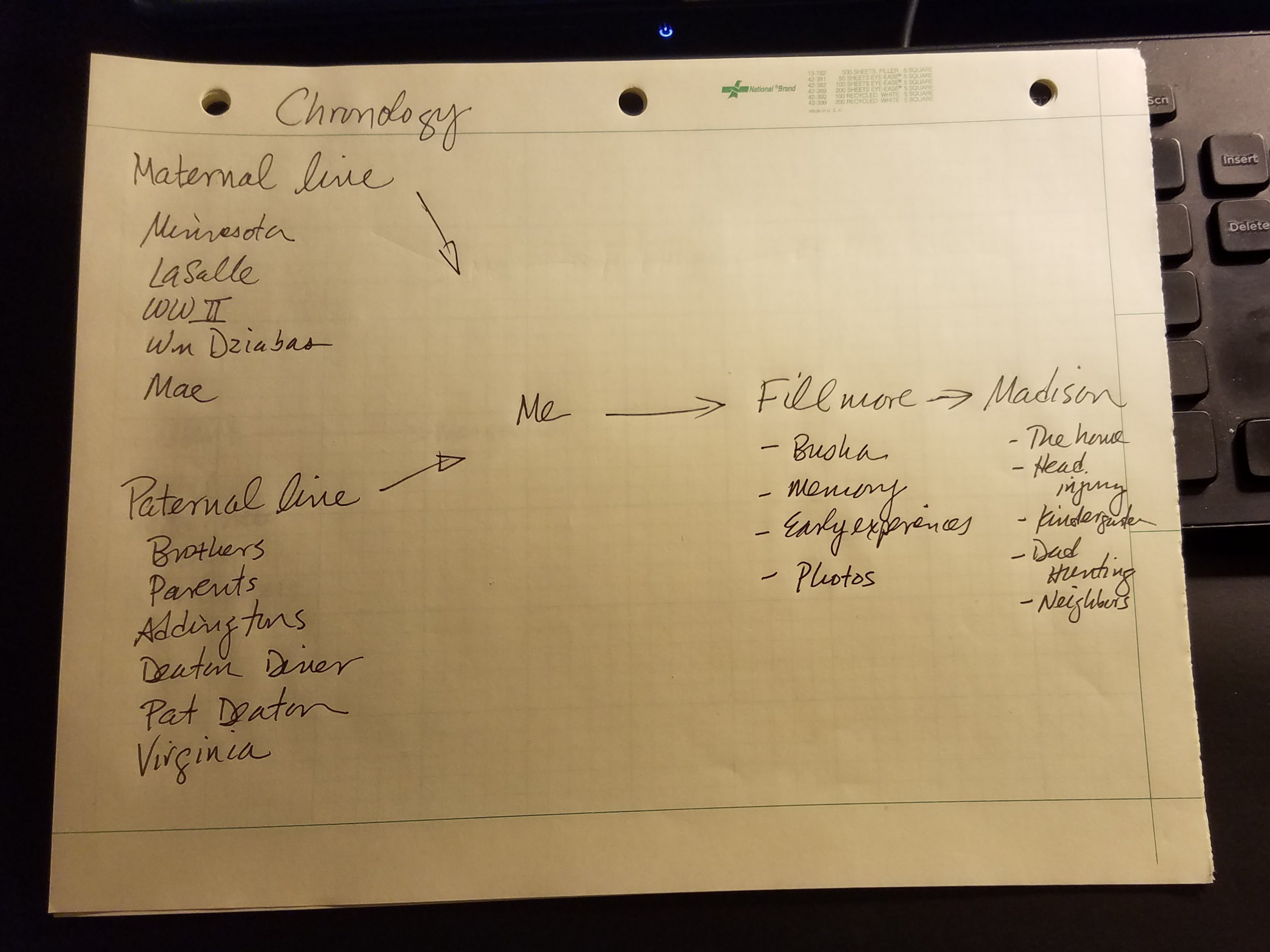
Draft Autobiography Outline

My ancestors first landed in North America in what today are the states of Virginia and Minnesota. I don’t know of any other connections but those two states.

My Virginia origins have obscure beginnings in the 17th Century. My Minnesota origins are tied to specific immigration from Poland in the 19th Century after the Civil War. I know a lot about these lines, but not as much as I may think.

Genealogy has been faddish for me. For a while a rush of interest. Then research halts and things sit for months or years. I enjoy discovering new artifacts, like the recent discovery of my parents’ wedding announcement in the newspaper. Such joy is insufficient to turn me into a consistent miner of artifacts and information. It’s been a hodge-podge endeavor from the get-go.

I hope to sustain an effort with the current memoir project. That means getting organized, developing a writing plan and sticking with it.

It is hard to determine a timeline, but necessary. Equally difficult will be choosing which parts to write about and in which order. I need to be in a place where the outline is finished and broken down into 1,000-word bites for drafting. I don’t know how long it will take to draft, edit and proof 170,000 words. Longer than expected, for sure.

The general rule is to write 1,000 words per day. By write, I mean draft because editing will take multiple amounts of the time drafting will. I expect as many as a dozen revisions, probably more. Likewise proof reading is important and time consuming. One has to get outside the narrative to a place where the literal words on the page mean nothing except for their correct spelling, grammar and elimination of redundancy and extra words. These things take time.

A couple of hours can produce 1,000 draft words with this type of work. That assumes a proper outline and work plan that puts the research into a semblance of order. It’s possible to do that.

So five steps: organize documents and artifacts, prepare an outline, create a first draft, edit and revise the draft, and proof read.

This spring is shaping up to be busy with the part time job at the home, farm and auto supply store, gardening, farm work, political work, community work, and the Food Policy Council. Somehow the memoir project needs to find a space. (I always forget to mention family. Why is that?)

I plan to continue writing this blog most days, but need to add a period of daily time to organize for writing the memoir. The photo above is a first attempt to get something on paper. There will be revisions as work continues to sustain this project.
Categories
Writing

Place to Hang a Narrative

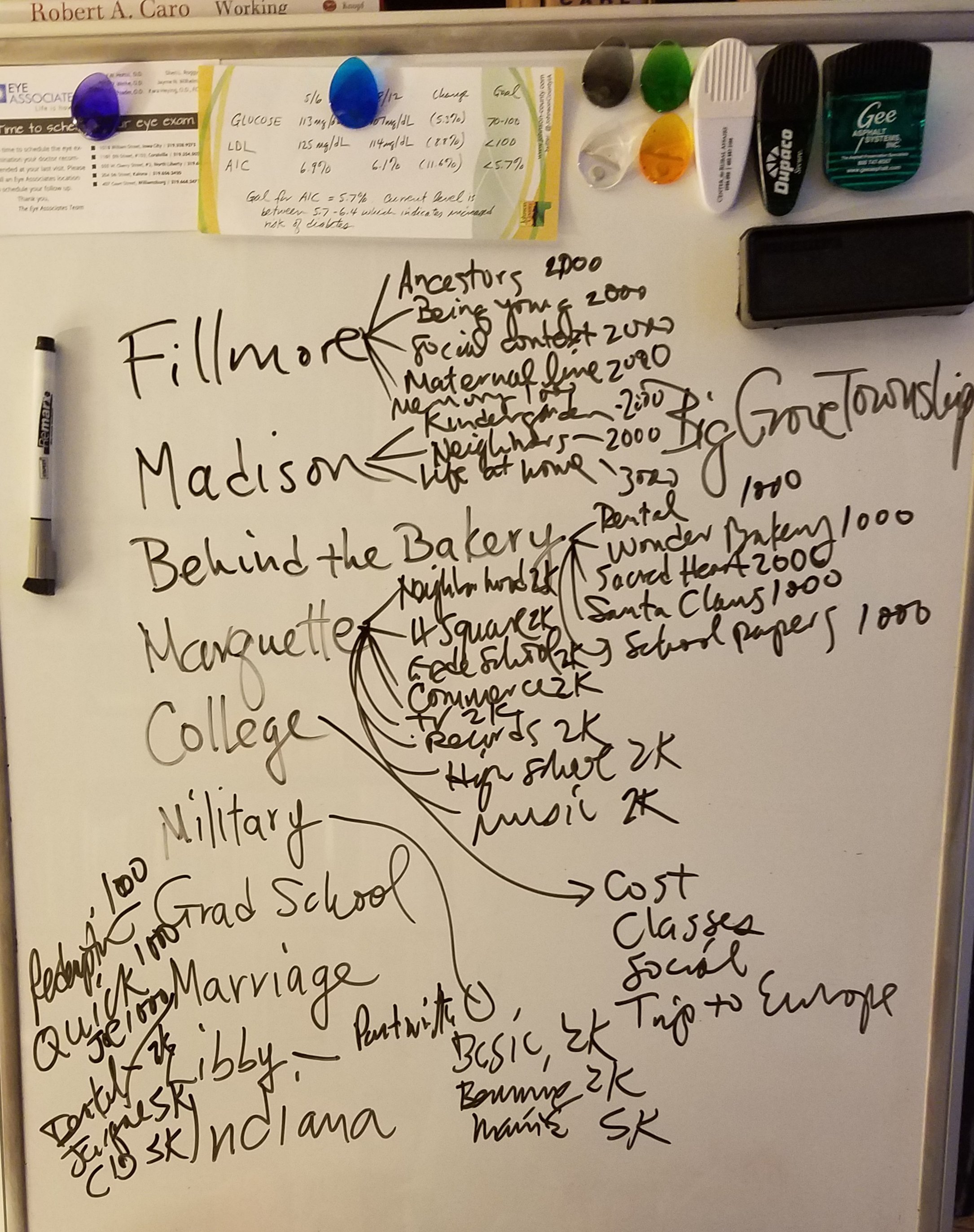
Draft Memoir Outline, March 3, 2020

While Super Tuesday elections and caucuses happened I was working on an outline for my nascent memoir. It’s one of many drafts.

As readers may have noticed, I’m posting almost every day on this blog. What’s lacking is getting a grip around my personal history so I can finish a longer autobiographical piece. With the recently discovered trove of letters I wrote to Mom, a lot of pieces from college until moving back to Iowa in 1993 are coming together.

I’ve forgotten more than I’ll ever know, so whatever I produce should have application beyond family and friends. I plan to tell the story as best I can once determining what it is.

That last part is important. I’m not used to telling my story other than recounting brief incidents in a long life. More thought about what my story is will be in order.

Some decisions have been made.

As far as length goes, 70,000 to 100,000 words. I have a 25,000 word fragment from a few years ago, and that will be edited down to fit the new narrative. There are many fragments in my files.

There will be two parts. The first part will be a chronological story that sets my life in a context of family, education, and public events. I don’t know the breaking point but it will likely be one of three: Father’s sudden death in 1969, enlisting in the U.S. Army in 1975, or finishing graduate school in 1981. I’ll write about all of those. Depending on the narrative, emphasis will vary.

John Irving is the model for what I want to do in this book as a writer. I plan to begin with the last sentence of the book and write toward that end. In coming weeks I plan to work on that last sentence.

Material for research seem abundant. Mother and her mother took a significant number of photos during my earliest years. There are enough to help remember what happened and when I gained awareness of a world outside myself. Likewise the internet is a resource for old clippings, genealogy, photographs and maps to fill in some of the gaps. Much of this early section of the book will be based on memory, which while fading, remains strong in many areas.

School life was important although aside from some of my undergraduate work there are not a lot of remaining written documents or artifacts. There aren’t many photos either. The focus here will include the few documents that survived coupled with memory. I attended five different schools in K-12 and each will have a place in the narrative. I’m most sensitive to the closeness I felt to grade school friends and how that changed when the nuns split some of us off in a separate class because they felt we were “college-bound.”

After undergraduate school I began writing journals and there is a continuous written and photographic record beginning 1974-1975 until the present. At that point the narrative will turn to what I’ve already written for source material. There is a lot of it.

The second part of the memoir is up in the air. The idea of the first part is setting a context for actions in the second part. A key event in Part II was my return to Davenport after military service and the brief time I lived near “Five Points,” the intersection of Division Street, West Locust Street, and Hickory Grove Road. I plan to write in detail about those months from November 1979 until summer 1980. It is a good fulcrum on which the pivot the narrative.

Part II will be more thematic, centered around family, work, travel, politics and intellectual progress while writing. How did I become a person who spends a couple of hours writing before beginning each day? While I disliked President George W. Bush immensely, I liked the format of his presidential memoir “Decision Points.” Perhaps something like that, but as I said, it’s up in the air right now.

There is an impetus to write this memoir now and while not close to final, yesterday’s work on an outline moved the enterprise forward.

Categories
Environment Living in Society Social Commentary Writing

Spring Is Late, But Coming

Garden in Winter

The driver delivering pallets of yard and landscaping stone, peat moss, and dirt said his spring deliveries are running about two weeks behind last year.

We just finished our annual inventory at the home, farm and auto supply store and are ready for incoming freight of garden supplies, utility trailers, wheelbarrows, fertilizer, three-point farm equipment, and the like. I unloaded a pallet of 50-pound bags of seed potatoes. The greenhouse will be installed in the parking lot next week. Spring seemed late to our suppliers but it’s almost here.

It’s more like we didn’t have a winter.

In a retail warehouse we notice the seasonality of commerce. Shelves fill with mowers, trimmers, blowers, chain saws and tillers. We received two tall pallets of box fans. Large ceramic pots were shipped in crates from Mexico. We have a delightful collection of ceramic and metal rooster art. This entire post could be a repetition of inbound inventory processed during my two days per week part time job. I have something else in mind.

The intersection of commerce, private lives, spirituality and society is where we spend most of our lives. In time, if we are lucky and talented, we create a process of living that ensures our survival. In Eastern Iowa it is pretty straightforward how one secures food, shelter and clothing: seek training and then work as a skilled professional, an entrepreneur, or for someone else. There is no guarantee of success but most people in my circle make it, including those who are forced to live in their cars because they are poor, or who sleep on someone’s couch for a while due to physical abuse at home. We live a privileged life despite the real problems people have.

There is a sense our process of living, for lack of a better description, is built by us, for us, and there is separation from what others do. That’s okay. If we have more in common than we believe, the articulation of a life can be a conscious effort with variations in the use of materials from a mass society. We make something of our selves. Such a process may seem individualistic, bordering on taking care of “me only,” but it is intertwined with the fate of the society which provides context.

I may subscribe to the local newspaper, but so do a thousand other people, our subscriptions and advertising giving life to the enterprise. In a few brilliant moments I find my life has not been consciously nurtured, nor has it been self made. It has been a collaborative undertaking in a social network from which I emerged and in which I remain rooted… kind of like the newspaper.

I read an article about the high cost of prescription drugs. The Congress is working to lower the cost of such medicine, yet to date their work has been an utter failure. People are skipping medically necessary prescriptions because of the cost, Megan Leonhardt of CNBC reported. There is another side to this issue.

Over the years I’ve had several conversations with physicians, and now my nurse practitioner, about taking prescription medicine. Just like finding a good auto mechanic or a reliable technician to work on my yard tractor, it is part of a process for living. Every time a medical practitioner suggested a prescription — either to control cholesterol or prevent Type II diabetes — I pushed back.

I have been able to address each diagnosis through behavioral changes coupled with regular visits to the clinic. These physiological conditions may persist, and at some point I may have to accede to medication. Last year I took a small step and began taking a low-dose aspirin in addition to my daily vitamin B-12 tablet. We’ll see how things go during my follow up appointment later this year. My point is when we focus on the failure of our government to properly regulate the pharmaceutical industry we neglect focus on a process for living. Having a process for living is more important than what our government does or doesn’t do.

I feel life in society all around me. Maybe that is a Cartesian outlook, one rooted in my earliest memories of reading at home before breakfast, after being an altar boy for Catholic Mass at the convent. Despite whatever separation I feel in intellectual outlook our future is inseparable from its context. The fate of our society is complexly intertwined. To separate a single strand of it in the form of an individual life, from the broader organism, would be to our mutual detriment.

I don’t understand how we will manage the many challenges we face — environmental degradation, climate change, economic inequality, the threat of conflict, and diminished natural resources. I do know that without a process for living that recognizes the web of life that engendered us, that brought us to this moment, we may not be up to the challenge. Humanity’s well-being will predictably decline. I’m not ready to say it is inevitable. I don’t believe it is.

Yet so much depends on the observations of truck drivers who pay attention to the variability in our lives — and together try to make them better.

Categories
Writing

Journal Entries After Grad School

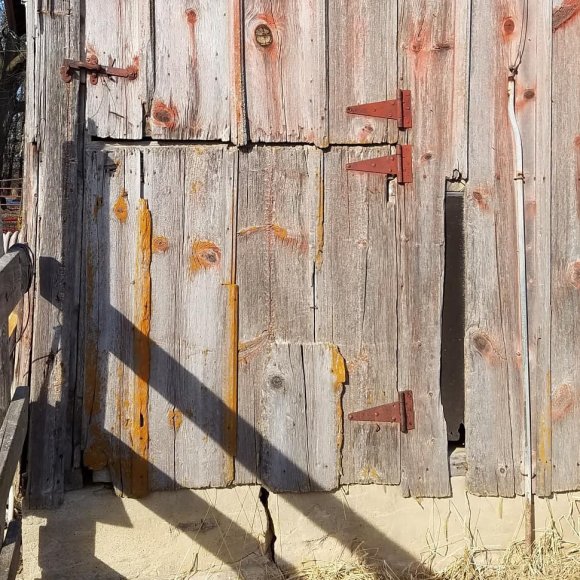
Wild Woods Farm Barn Door

28 July 1981
Iowa City

Last night and this morning I read Leaves of Grass by Walt Whitman. It has been some time since I last turned those pages, and with the facsimile first edition I have, I felt like the years had turned back.

It is a good book today and I think a large part of my own status is derived from or related to the past readings of this book. I can’t help but say amen to every line.

For what I perceive in Whitman is that life comes only by the individual’s bringing life to otherwise lifeless things. This is what I am about. Nice job Walt.

13 August 1981
Iowa City

First entry after beginning work. This is about right. Two weeks before I get started writing in my journal again. I guess I’m starting to get to where I can do other things besides work a job. I’m beginning to settle in. There’s a ways to go yet.

18 August 1981
Iowa City

The writers I read on writing say that the best time to write is in the morning when I first wake up. That’s not the way it will be. My writing will take place after a day of work in a job with lots of people contact, in a busy part of town, in close contact with a lot of other people, while I am engaged in a myriad of activities. I think all of this is the way it should be, a return to John Donne, perhaps, but a proper state of affairs. For we are always engaged in the world with others. We must be.

It’s time to look to the future. The first step is the publishing and distribution of Institutional Writings. I pick the books up tomorrow after work and will begin writing the passages for the receivers. As I approach thirty years, I make my commitment to life. To people. I consciously leave the past in the recesses of me memory to chart a course over unmarked territory. But I am not a pioneer, in a sense, I cannot be,for I join in my every action with all those who preceeded me. With the rest of humanity. In the most familiar terms, by those who share my culture. But these too are words that belong to the past. Here I go.

Categories
Writing

Note Cards to a Future Self

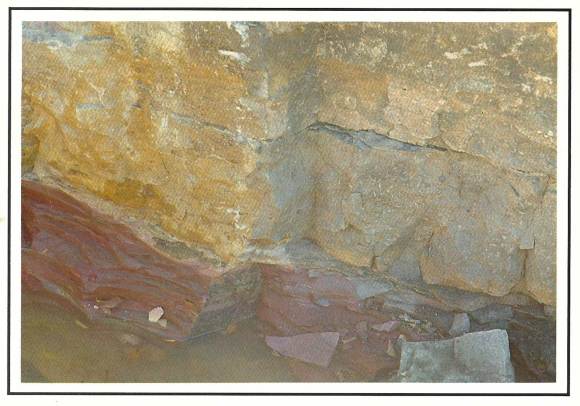
Spotted Quarry, Pipestone National Monument, Pipestone, Minnesota.

During our lives together I wrote Mother often in cards and letters. Following is the text of notes sent to her. Upon reflection, I sent them to a future version of myself as well.

April 10, 1982
Iowa City
Dear Mom,

There are times when I feel like Picasso looks in this photograph. It is a slow process, but I am making my way as a writer. I often am not sure what I am doing, but I know I have chosen the right path. One of my projects is writing a regional cookbook for one person. I would like it if you could pick some of your standard menu meals and write them down for me. I can remember some, but not all. Too, I want that dessert dish recipe you prepared last time I was in town. More later, I’m in Springfield 23-25 April. Paul

May 14, 1982
Dubuque
Mom,

Started the trip off with a bang by smashing into a 1982 Olds Cutlass in Dubuque. No injuries thank goodness, but I will have to spend the $200 deductible to get my truck fixed to drive at night. Other than that, I’m ready for this vacance. Paul

May 29, 1982
Iowa City
Mom,

Thanks for the shirts. You always pick out good stuff for me. Please let me know if I need to come to Davenport because of Uncle Dick. I can never tell. I do plan to make a Sunday trip this month, which weekend that will be is unknown now. Maybe the 6th or 20th. Thanks again. Paul

Iowa City
Mom,

Thanks for the pleasant holiday experience. As we walk boldly into 1985, let us keep discovery our goal, and our family in our hearts. While the burden of life slows us, let our hearts keep the warmth and light of our togetherness. Love always, Paul & Jacque

December 27, 1986
West Post Road
Mom,

Thanks so much for making this Christmas special. Elizabeth, Jacque and I had a memorable time, and we especially enjoyed sharing Elizabeth’s first experiences with you. Know that we love you, and care about you. We look forward to seeing you again soon in 1987, as we are reminded of that first Christmas so long ago, and its continuity into our own brief moment of life. Love, always. Paul, Jacque & Elizabeth

March 13, 1988
Merrillville, Indiana
Mom,

Rest assured that we will make the right choice here. The four years with CRST has been a valuable education. I sense, though, that it is time to move on. What will be the next step? I’m not sure yet. We’ll find out together. Paul, Jacque & Elizabeth

March 29, 1991
Merrillville, Indiana
Mom,

Thanks for the great meals and hospitality. Sorry I forgot to bring my wood clamp, but I will on the next trip. Also for about 2 hours work, I can smooth out the walls in the bathroom, to prepare the surface for the coming wall paper.
We will try to get there sometime in April so we can help with the yard as well as the other chores.I would like to photograph some of the old photos that trip so take this as a warning that we are coming. Talk later, Paul, Jacque & Libby

July 10, 1991
Pipestone, Minnesota

Busy and tiring day around Lincoln County. I stopped by here to learn about native Americans. As your grandparents got married in Wilno, the Indians lost control of the quarry pictured. More when we see you. Paul

July 18, 1996
Big Grove Township
Mom,

Finally hot, humid summer weather is here. I hope you are enjoying this Iowa summer as we are. The sweet corn will be ready soon. The green beans already in the freezer. Libby is rushing to finish her 4-H project which will be judged Saturday. Not much. Just summer in Iowa. Paul

Categories
Writing

Processing Old Letters

Cards

On a sunny winter day I found time to organize boxes of letters and cards to Mother by putting them in clear plastic sheet protectors and sorting them by date.

I wrote home the most while serving in the U.S. Army, with about 75 letters and cards over a four-year period. Along with my journal, a bankers box of files, and some photo albums, the period is well documented. It should lend help to efforts to consider and write about that period of my life.

In retrospect, when I was home for a day or weekend, away from Robert E. Lee Barracks in Mainz-Gonsenheim, I spent time alone writing at a table that was part of the furnishings of my bachelor officer’s quarters. This writing habit persists.

Non-military letters provide more interest. One from summer YMCA camp, a couple from my undergraduate years at the University of Iowa, a few from my 1974 trip to Europe, a couple more during graduate school, and a big batch from our married life beginning in 1982. The letters filled three binders.

It is possible to understand a life. My efforts at writing have a clear beginning in the need and want to write home during the time before build out of electronic communication systems. I recall my first journal, which was stolen at a youth hostel in Calais, France just after taking a hovercraft across the English Channel.

I made a decision to continue journaling while living in a one-room apartment on Mississippi Avenue in Davenport, before military service. That apartment was the first place I entertained Mother. The dinner dish I chose was tuna-noodle casserole, which she ate and said was good as only a mother could. That was in 1975.

As long as I am able I expect to continue to make coffee and settle at a writing table each morning for a couple of hours. These days I write emails, brief notes on cards, on social media, in a less frequently used journal, and on this blog. I don’t know how I came to this place. Yet it is part of who I will be in the 21st Century.

There are worse outcomes than that.

Categories
Writing

Toward Local Food Policy

Farmers Market Food

To prepare for my first meeting as a member of the Johnson County Food Policy Council, I read council recommendations for the Uniform Development Ordinance. There were two things:

Ag-Exemption should be available for local farmers with less than 40 acres.

Agritourism enterprises need zoning regulations that allow for innovation and creativity on farms in the unincorporated areas of the county.

After what seemed like a never-ending series of public hearings, comments, and input gathering from multiple constituencies, the Board of Supervisors accommodated these recommendations in the UDO, if not in a way county farmers expected or fully appreciated.

A group dissatisfied with accommodation on the 40-acre rule sought relief from the legislature in the form of preemption of local control on the ag-exemption. This landed in the Iowa Farm Bureau’s lap where it remains for the time being. The first agritourism application was heard in Planning and Zoning Feb. 10. The idea of chip and sealing two miles of gravel road to improve access was predictable, but unexpected by the land owner. The same group introduced HSB650 for state preemption of local control regarding agritourism. That bill cleared subcommittee Feb. 12.

These things will work through the legislative process, but having made the recommendations, having the board of supervisors accommodate them as they saw fit, and now with bills being proposed in the legislature and agritourism applications working through county departments, what is next for the Food Policy Council? That is my question.

After one meeting I’m not sure. Answering that question will be part of what the remainder of my term, which ends in June, will be about. If we come up with good answers, I will apply for a full, four-year term. If not, I have a garden.

The recent example of Grinnell Heritage Farm, which withdrew from wholesale grocery store sales and from a community supported agriculture project, is instructive about the needs of local food producers. Farm operations are a balancing between producing enough to meet customer demand and finding customers who are willing to do business at levels that meet the realities of harvest, quantity, delivery, and seasonality. Andy Dunham of Grinnell Heritage Farm provided the following to Cindy Hadish who blogs at Homegrown Iowan:

The reason for scaling back is primarily due to the lack of any larger retail and wholesale outlets. We have tried for years to get into Hy-Vee stores with very limited success. When individual stores do buy, they usually only take $30-50 in product, which doesn’t even cover delivery costs in most circumstances. We have had more than one instance in which the store would buy a case of kale, put our name on the produce case, and then stock conventional kale out of California under our name. Whole Foods is still buying, but at lower prices than five years ago. New Pi is shrinking. Food hubs are folding or not scaling up fast enough. We were in the strange position of being able to grow more than the market seemed able to bear; a position that I would have laughed at as being impossible five years ago.

What policy should the 15-member Food Policy Council recommend and support this year?

We need to return to the reasons we even make policy. Maybe the council has been doing that already.

Our county’s local food system, including a robust network of local food producers, a food hub, farmers markets, and wholesale business with restaurants and grocery stores, is not well organized. Our policy doesn’t exist that I have been able to find. It is too similar to the de facto national policy, which according to Ricardo Salvador, director of food and environment for the Union of Concerned Scientists, goes something like this: “Exploit people and nature for agribusiness profit.” We are better than that now and need to improve.

Any policy recommended must serve the public interest. There are significant issues that could be addressed, including policies related to hunger, obesity and Type II diabetes, environmental degradation for food production, land stewardship, labor exploitation, fair compensation, and appropriate farm labor regulation. The council must learn from best practices of local operators and consider a broader source of input that includes public health, preventive medicine, dieticians, other communities with a local food system, and accommodation for residents who need it.

People hate government folk and volunteer councils like ours telling them what to do. A friend advised me to, “avoid colonialism.” Where I come from, that means “putting on airs of superiority.” I’ll do my best as we discover what the council wants to do.

~ The author is an appointed member of the Johnson County Food Policy Council. Opinions herein do not represent the council.

Categories
Writing

Winter Lament

Onions and shallots

January and February are usually months to read books. I’m working on my fourth but it seems like I’m running behind.

Political work has taken a bite out of my time.

Ambient temperatures have been warm. Absent a cold spell of temperatures below zero, I’m planning to prune our fruit trees this coming cycle of days off. As I lean into retirement I work two days at the home, farm and auto supply store with five days in a row to do what I please. The days are filled with activity.

Sunday I’m scheduled to soil block at the farm, the first time this winter. I bought a small soil blocking tool for home use and planted onions and shallots. It’s the first time doing it at home and what the future holds as I wean myself from greenhouse use over the next few seasons.

Our ice box is getting down to carrots, turnips, bread, dairy and pickles. There are mostly jars of things. Light permeates the glass shelving, revealing what’s in the bottom drawer. Growing season is a couple of months away.

Our cooking is from the pantry and freezer. We have storage onions and potatoes and lots of garlic. Apples from our trees and the orchard have been gone a few weeks. There are plenty of canned goods. We have enough to last us until spring arrives, supplemented by weekly trips to the warehouse club and grocery store.

Winter in Iowa has changed. It’s weird. It’s not consistent from year to year. I try to adapt and still find the new experience a bit sucky. Are you winter or not? No response.

As I finish this post, a prelude to getting ready for work, I feel ready: ready for what’s next, ready for something different, ready to move on. In this winter morning I’m ready to emerge from my book-lined writing space and ascend to the kitchen, and all that happens there, midst a winter lament.

Categories
Writing

Who Am I?

Paul Deaton

I had a chance to introduce myself to a new group of people last night, so I thought I would share it here before the paper goes into the shredder. Here’s what I said to the Johnson County Food Policy Council last night:

I am:

  • Native Iowan living west of Solon.
  • Ten years since retiring from a 25-year career in transportation and logistics.
  • Two terms on the county board of health with four years as chair. Familiar with air and water compliance issues.
  • Blogger with 234 posts tagged “local food.”
  • Farm worker. In 2020 on Carmen Black’s farm and at Wilson’s Orchard. Eighth season at each.
  • Avid gardener with a large kitchen garden integrated with local food producers, grocery stores and other retail outlets.
  • 24 percent of our food dollars are spent on local food, not including my garden.
  • Mostly ovo-lacto-vegetarian.

These mini-autobiographies are getting easier to write as I age.

Categories
Home Life Living in Society Writing

Pivot From the Caucus

Palmer House Stable, Solon, Iowa, Feb. 8, 2020.

While the Iowa caucus news cycle lingers, I am already gone.

After a Saturday of political engagement — an interview with Michael Franken of Sioux City who is running for the Democratic nomination as U.S. Senator from Iowa, and a town hall meeting with my state representative Bobby Kaufmann — Michael Wines of the New York Times contacted me about my experience at the Big Grove precinct caucus. I told him the story… which is metastasizing.

The narrative is repeated so much I might resurrect a circus like Ringling Brothers and Barnum and Bailey to take it on the road. As locals know, circuses are an Iowa thing and four of the Ringling brothers were born in McGregor, Iowa. What more fitting outcome for the caucuses?

Nontheless I am pivoting away from politics. I’m in a position to do so because of great caucus turnout. I’m confident our four delegates to the county convention will show up. Two volunteers stepped up to participate as precinct representatives on the county central committee. Despite lingering interest in what we did, the news cycle will eventually move on. It’s time for me to go.

I unsubscribed from the county party weekly newsletter, thanking the public relations chair, and saying, “I have less need to stay abreast of what party insiders are doing.” There is life beyond politics.

Toward what will I pivot? Will a divot of politics follow?

Our big family news is on Feb. 5 we made the last payment on our daughter’s student loan. Including loan interest, our contributions, and her work study and scholarship, the cost of her four-year education was about $140,000. In the box of letters I sent Mom during college, I wrote my monthly bill at the University of Iowa was $50. Add in the scholarship I had and my college expense was about $6,800 for four years.

My freedom from politics will be used to become a better citizen. Monday I start a brief term on the county Food Policy Council. If that proves to be engaging, I’ll volunteer for a full, four-year term. I’m writing more for Blog for Iowa, have written up one interview, two more are done, and there may be more. I hope to have a better garden this year. I invested in an electric tiller, bought some rolls of mulching, and began planting onions on Friday. There are plenty more projects in the works. There are also the farm jobs, which have been reduced from three to two this season.

A group of us were sitting around a table in the break room at the home, farm and auto supply store on Wednesday. The discussion was about retirement as a couple of us have retired but continue to work because of the social engagement a job involves. Our store manager was there and he told me, “If I were you, I’d retire as soon as possible.” Depending on how the next couple of months go, I may take his advice and help on one of the federal election campaigns.

For now, I’m on to what’s next while sustaining ourselves in a repressive national political environment. Life will be better, at least I hope so.