Categories
Writing

Farmers Markets in a Pandemic

June 15, 2013 Farmers Market in Cedar Rapids

There is nothing better than buying a bunch of radishes at a farmers market, biting the root off one at the booth, eating it, then buying a few more bunches if they taste good.

The sights, sounds and smells of an open air farmers market are something unique. During the coronavirus pandemic the fun and experience of markets diminished as they closed and now are expected to become a place of accommodation as they begin sales again.

Nothing like a good old proclamation by the governor to suck the joy out of a farmers market:

SECTION TWO. Pursuant to Iowa Code § 29C.6(6) and Iowa Code § 135.144(3), and in conjunction with the Iowa Department of Public Health, I hereby order that farmers markets, as defined in Iowa Code § 137F shall not be prohibited as a mass gathering under the Proclamations of Disaster Emergency issued on April 6, 2020, or April 16, 2020, but only to the extent that the farmers market complies with the following requirements:

A. Farm Products and Food: The farmers market may only permit vendors who sell farm products or food. Vendors selling other goods or services are not permitted.

B. Entertainment and Activities Prohibited: Musical performances, children’s activities, contests, or other entertainment or activities organized by the farmers market or vendors are prohibited.

C. Common Seating Prohibited: Farmers markets must eliminate all common seating areas, picnic tables, or dining areas and shall prohibit vendors from having any seating for the public to congregate or eat food on the premises.

D. Vendor Spacing: Farmers markets shall space all vendor booths or assigned parking areas so that there is six feet or more of empty space from the edge one vendor’s assigned areas to the neighboring vendor.

E. Social distancing, hygiene, and public health measures: Farmers markets shall also implement reasonable measures under the circumstances of each market to ensure social distancing of vendors and customers, increased hygiene practices, and other public health measures to reduce the risk of transmission of COVID-19 at farmers markets consistent with guidance issued by the Iowa Department of Public Health, Iowa Department of Agriculture and Land Stewardship, Iowa Department of Inspections and Appeals, and Iowa State University Extension and Outreach.

Any other farmers market, festival, or community gathering of ten or more people that does not comply with these requirements is prohibited. Customers of farmers markets are strongly encouraged to engage in social distancing, wear a mask or other protective face-covering if unable to maintain a distance of six feet from others, practice good hygiene practices, and attend the market alone without other family members.

Who will venture to a farmers market at this point in the arc of the coronavirus pandemic? Iowa is projected to reach peak resource utilization and number of deaths per day about May 4 according to the Institute for Health Metrics and Evaluation. Once we reach peak, we will be only halfway through the number of positive test results and deaths from COVID-19. In other words, it will be at least six to eight weeks after peak before the incidence of cases and deaths tapers off to a level regular people are willing to risk exposure to do normal things like visit farmers markets.

Farmers markets have less to offer when stripped down to an economic exchange of money for food. Tasting radishes and the like will be restricted and impractical under the proclamation. Interaction between customers and farmers is a key aspect of a market and restricting it diminishes them. It is more difficult to get to know the face of the farmer when they are wearing a mask.

Farmers are developing other means to get to market while social distancing. Our local food hub developed and is implementing an on line ordering system to minimize human contact during the pandemic. While not the best, it does provide some market for growers and as a local solution can be more acceptable to local food seekers than the governor’s proclamation. Interest in community supported agriculture rose since the pandemic began with every operator I know full or expanded this season.

We hope the coronavirus will eventually recede into the background the way influenza has. Until there is a vaccine that works consumers are expected to be skeptical about going places that are not essential. Given the low level of trust people have in our government, no proclamation from the governor will change that.
Categories
Writing

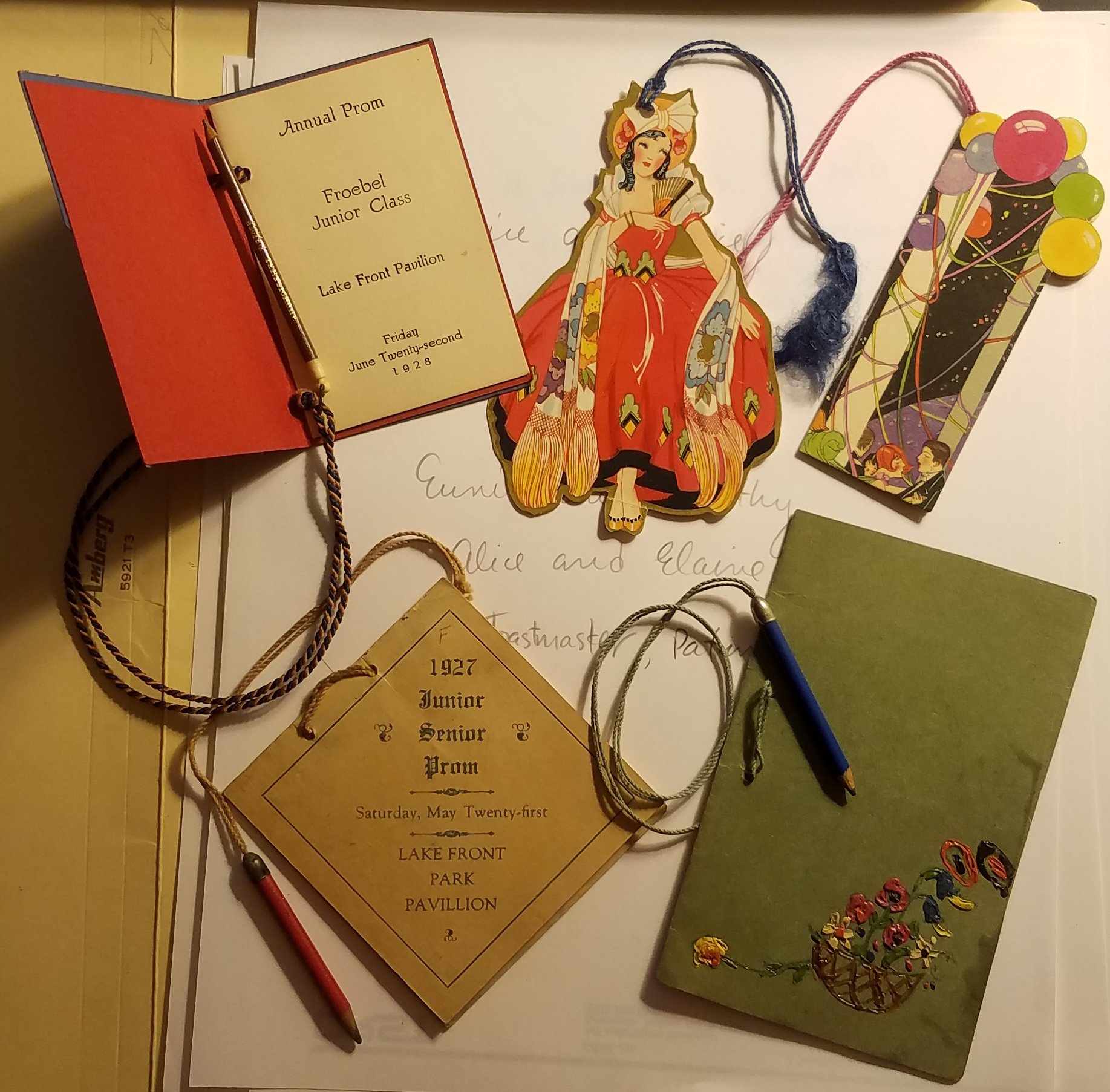
Poem from Dance Cards

The sound must have come
from the lake front pavilion
and the alumni dinner-dance.

To music by the
Play Boy orchestra
she danced with Rudy ten times.

Mrs. A.H. Jones sang the solo
after the toastmaster’s remarks.
Then the judge gave an address
after presentation of the class.

Present were officers, patrons,
sponsors and chaperones.

She danced with Alice,
Dorothy, Elaine and Eunice.

With dance cards spread
like an ornamental fan.

Black, red, green, yellow and purple
printed confetti specks
trace down to the image of balloons.

Categories
Home Life Writing

Toward Life after a Pandemic

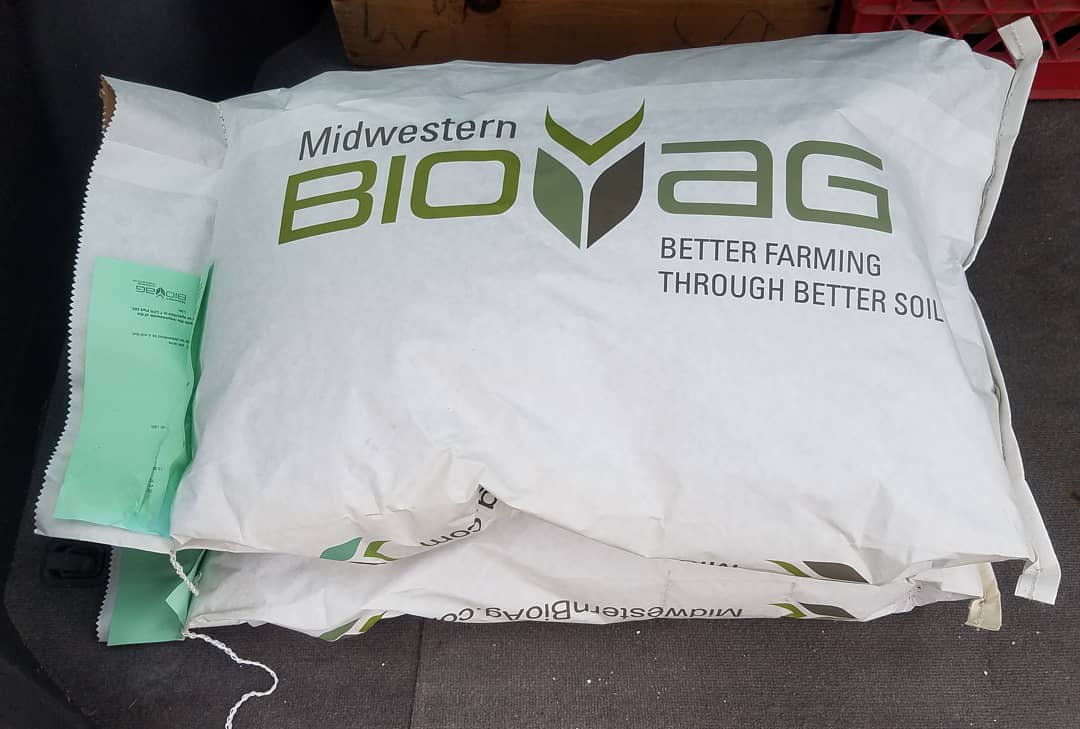
Aerobically composted chicken manure granules for garden fertilizer.

It rained overnight. The driveway was damp as I stepped outside to look at the sky. Clouds were clearing and the big dipper stood out, pointing to the North Star. We are not lost.

It’s a good day to live.

As of yesterday the official number of deaths from COVID-19 was 21,050. By official, I mean those submitted to the National Center for Health Statistics and recorded based on death certificates. There is a lag in the data as the coronavirus reaches exponential spread in the United States. It takes a while to prepare and submit death certificates.

Iowa is in dire shape. We’ve slowed growth of the bell curve yet a surprising number of cases in meat packing plants and care facilities drives the number of cases upward. According to the Institute for Health Metrics and Evaluation, “After June 26, 2020, relaxing social distancing may be possible (in Iowa) with containment strategies that include testing, contact tracing, isolation, and limiting gathering size.” June 26 is two months away. We’re not out of the woods, and we can’t see the edge of the forest.

I donned protective garb and went out. On Tuesday I went to the wholesale club to provision up on dairy, fruit and vegetables, and a few pantry items. Grocery shopping is my least favorite thing during the pandemic, so I got enough to make it another two weeks.

Yesterday I drove to Monticello to pick up two 50-pound bags of aerobically composted chicken manure crumbles for the garden. I followed their limited contact pickup procedure which was writing the check at home and turning it in after I backed up to the loading door. The warehouse worker loaded my trunk while I returned to the driver’s seat. I also stopped at the public library to pick up supplies for the volunteer project on which my spouse is working. No contact social distancing all around.

In a certain sense, we just crashed into the isolation that is social distancing. A couple of things clarified. I’m not sure I will return to work at the home, farm and auto supply store after my 30-day leave of absence. If I do resign, I doubt I’ll reapply any time soon. It also seems clear our pensions will pay our basic bills with something left over. We’ll continue to pay down debt, although likely at a slower pace.

My daily life remains an educated mishmash. My schedule from 3 a.m. until sunrise is pretty good. It’s the rest of the day that seems to have little planning. What holds me back is besides gardening and a few household maintenance items, I don’t know what will be my main direction after the pandemic recedes.

There is no going back to a life lived prior to the pandemic. These days are good preparation for living more with less resources. Maybe I will be able to retire from paid work. If retired, I’ll still need productive work. In the middle of the coronavirus pandemic it’s hard to determine what that is. Defining post-pandemic life will take deliberate planning. If I approach it with considered hesitancy, it’s because I know what’s at stake.

Categories
Writing

She Danced With Rudy 10 Times

Dance Cards from 1927-1928

She danced with Rudy at the Junior Senior Prom on Saturday, May 21, 1927, in the Lake Front Pavilion.

They quoted Milton on the dance card, “Haste thee, nymph, and bring with thee, Jest, and youthful jollity.”

Rudy signed it ten times, although toward the end of the event he began using ditto marks. Maybe she wrote his name, it’s not clear. The enthusiasm of seeing Rudy’s name written waned by music from the Play Boy Orchestra near Lake Michigan. Ditto marks came to mean something else for the cohort of their children.

The couple married and lived a long life. The reason I know and have these souvenirs is they were abandoned in a box I bought for a buck at their estate auction.

I can’t keep them forever either.

Outside after waking, the sky was clear, the stars bright. A lone aircraft made its way to the Cedar Rapids airport, crossing the starry night southwest of me. It violated a serenity of wonder… about the stars, about the dancing couple before the financial crash that ended the era.

I’m left with signatures on a dance card, but not the dance. It would take a partner to reenact the dance. My partner is sleeping and I’m alone under this starry night still full of wonder.

Categories
Home Life Writing

News Fasting

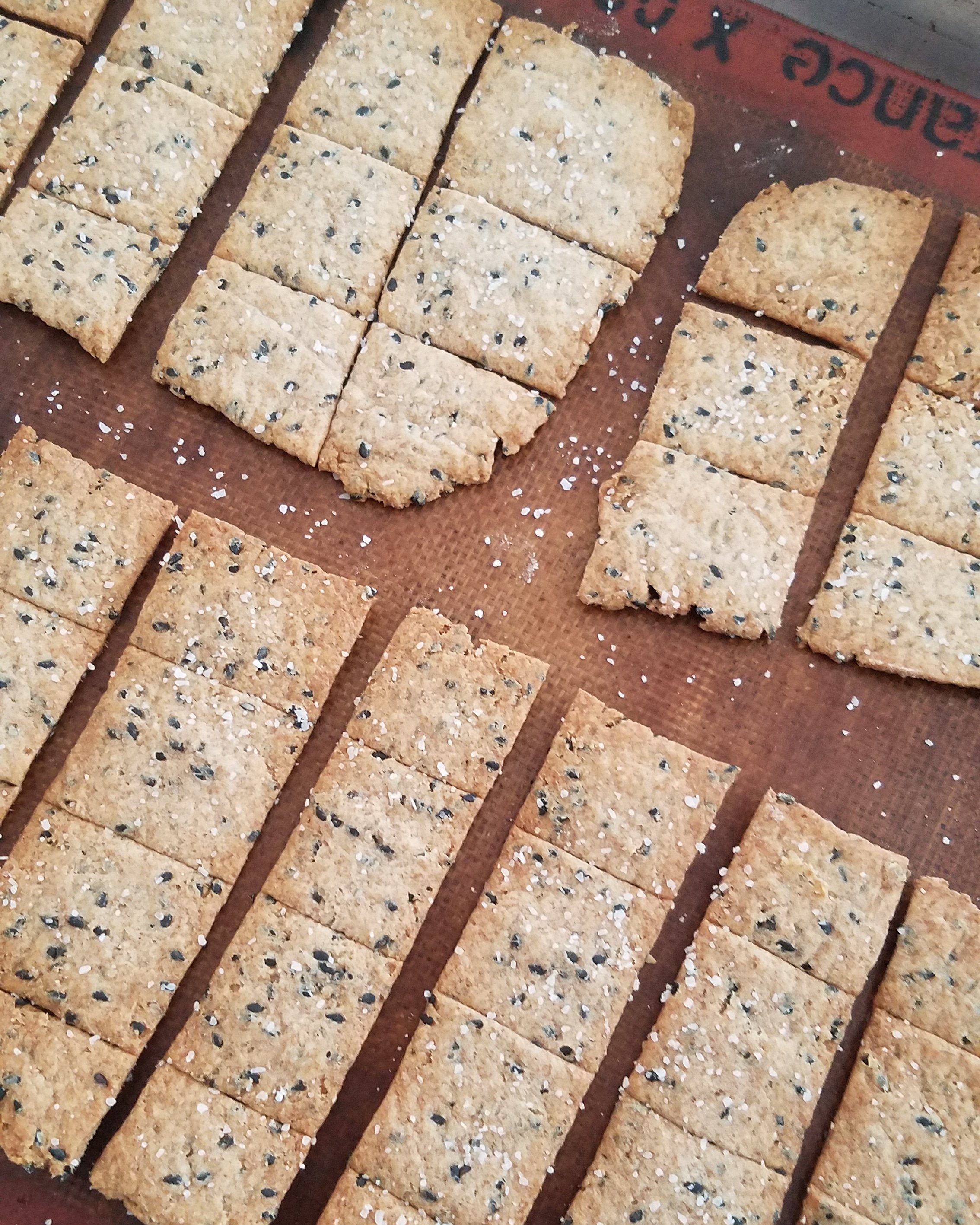
Homemade crackers.

At noon yesterday I decided to take a 15-hour break from reading news.

I got work done in the house, including making the crackers in this photo.

I slept through the night and feel ready to go. There is pent up demand to get outside in the garden, conditions are favorable, it’s all systems go.

Part of dealing with the coronavirus pandemic is managing time while social distancing. When the weather keeps us indoors for a couple of days we don’t want to go crazy. The news makes me crazy. Now that I recognize that, it’s possible to do something about it.

Once the sun comes up, it’s out to the garden I go.

Categories
Kitchen Garden Writing

Next Shoe to Drop

Seedlings waiting to be planted

One of the largest employers in Cedar Rapids, Collins Aerospace, announced salary cuts and furloughs in response to the coronavirus pandemic. They aren’t the first big company to do it.

Last night the Walt Disney Company, where our daughter works, announced furloughs beginning April 19 for union-represented cast members. There is a long list of corporations with furlough plans.

A month ago corporations were aware of the potential business risks of a pandemic. They froze things in place with some adjustments to see how the pandemic evolved. Next, they are taking steps to ensure longer-term financial survival and recovery. We’re a month into broad recognition of the pandemic which suggests business management believes, and we should as well, we are a long distance from exiting the restrictions imposed on our lives and returning to things like grocery shopping, buying gasoline, flying, visiting theme parks, and going to church without anxiety.

A team of Harvard researchers said models project social distancing may need to continue into 2022 to prevent medical systems from being overwhelmed by a resurgence of the novel coronavirus. The happy talk about “opening up the economy” rings hollow right now.

We go on living.

Yesterday I finished planting the main onion patch. That there is an onion patch is a change from previous years. By noon there were eight rows with seven varieties:

Red, yellow and white from the home, farm and auto supply store, varieties unknown but likely a July harvest.
Matador Shallots, Johnny’s Selected Seeds, 90 days from transplant.
Ailsa Craig Onion Plants, Johnny’s Selected Seeds, 95 days from transplant.
Patterson Onion Plants, Johnny’s Selected Seeds, 86 days from transplant.
Red Wing Onion Plants, Johnny’s Selected Seeds, 103 days from transplant.

All of the onion work is an experiment in being more successful in growing them. Red, white and yellow unknown varieties were from bulbs, the shallots from seeds, and three varieties of onions from Johnny’s are storage onions. Weeding and proper watering will be needed now and for the next three months until harvest.

It snowed last night. The temperature inside the portable greenhouse was 48 degrees this morning because of the space heater used overnight. The plants looked fine, although the cooler temperature will slow germination of recently planted seeds. Snowfall will delay planting in the garden as the soil was already too wet yesterday when I spaded a strip. We’ll see what the day brings, however, the snow should melt and if the lawn dries enough I could get some mowing done and use the clippings to mulch the garlic and onions. Lot of “ifs.”

On the tenth day of my unpaid leave of absence from the home, farm and auto supply store I’m waiting for the next shoe to drop so I can figure out how to manage our lives on the prairie.

I know gardening will be part of it yet there’s more to come.

Categories
Kitchen Garden Writing

Postcard From the 20th Century

Postmarked 1908

The coronavirus changed and is changing how we live, temporarily and permanently.

Today we don’t understand what is on the other side of the pandemic nor when that will be. I’ve been working to figure it out.

Ambient temperatures were chilly all day yesterday with a strong, consistent breeze. The ground was too wet to dig in the garden. It was a sunny and picture book spring day. Even though there is a lot to do outside, Monday wasn’t a day to do it.

In the garage I planted a third flat of spinach for the garden:

Bloomsdale Long Standing Spinach, Ferry-Morse, 45 days.

As if to show the economy was still operating, the United States Postal Service delivered my Practical Farmers of Iowa Spring Issue, a Land’s End catalogue, and a box of onion starts just when I need to plant them. I know what politicians mean when they say “open up the economy,” yet ask how does one re-start something that never shut down?

U.S. Treasury Secretary Steven Mnuchin announced yesterday personal stimulus payments had begun to be issued in waves with 80 million of them to be sent by Wednesday. The government knows how to spend our money, that’s for sure. If our household receives what we hear in the news that would be equivalent to three months take-home pay at the home, farm and auto supply store. (While I was typing the stimulus hit our bank account).

I ran an expense analysis of our household budget while dodging the windy work outside. With or without the stimulus payment we would be able to pay regular living expenses for the rest of the year without sacrificing our lifestyle. The coronavirus has me asking whether I should even return to my part time job.

In Iowa we don’t know the spread of COVID-19. We aren’t doing much testing. We have little visibility into what the governor or the Iowa Department of Public Health are doing. Yesterday Katarina Sostaric, state government reporter for Iowa Public Radio posted on Twitter:

Iowa’s #COVID19 testing is still limited and actual case numbers are likely much higher than those reported by the state. Today Gov. Reynolds said, “We’ve been in substantial spread for quite some time…you should just assume it’s in your community no matter where you live.”

Based on Reynolds’ statement I’m not comfortable returning to work after my unpaid leave of absence which ends May 5. The terms of the program are if I seek additional time off, I will have to resign. If I want to return to work after that, I have to reapply. If I do resign the chances of me re-applying are pretty slight. There’s ample time to consider this. Resigning is how I’m leaning today.

What would I do if I quit? Go on living.

Since the coronavirus, combined with Republican efforts to kill the postal service, have them on the brink, I will buy some postage and send a few post cards. Not sure that will save them, but it’s something. Every bit helps.

Categories
Kitchen Garden Writing

Back at the Greenhouse

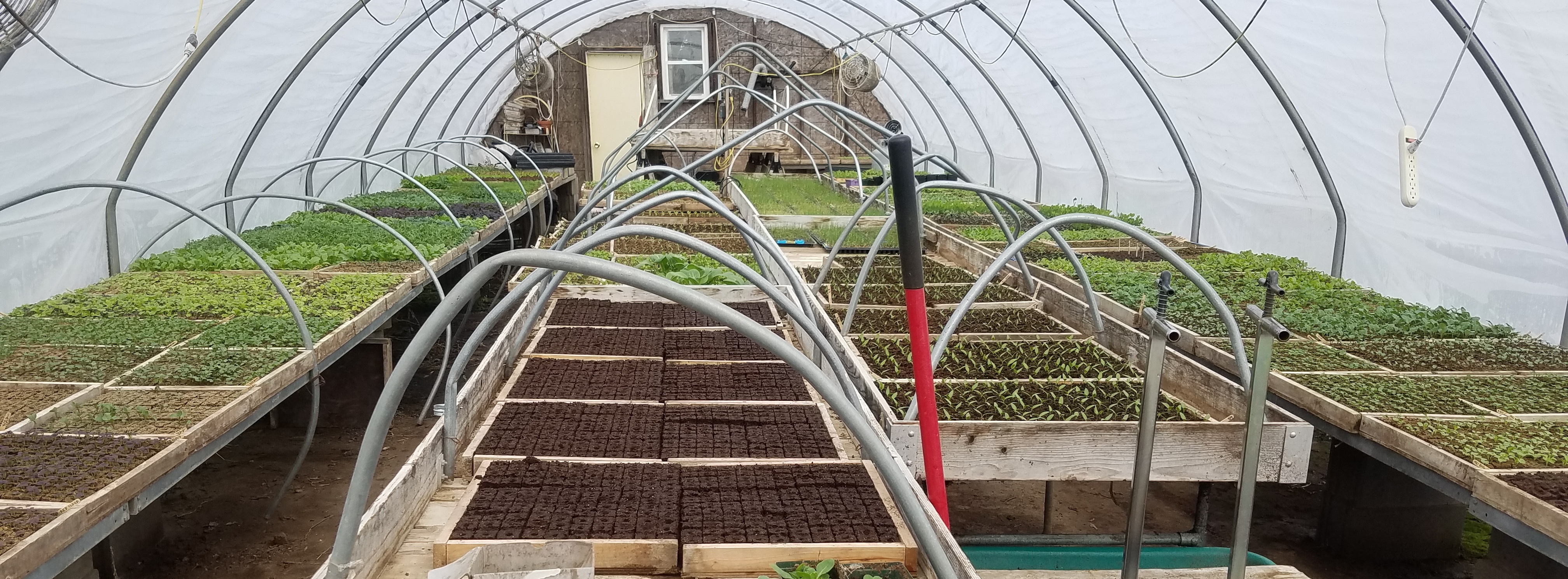
Greenhouse at Sundog Farm April 12, 2020

I’m still soil blocking at the farm and took this photo to prove it.

The coronavirus pandemic is impacting the food system dramatically. I didn’t think we’d be in such a position yet there are legitimate concerns about running out of food while large dairies and vegetable and meat producers destroy excess perishables because so many U.S. restaurant dining rooms are closed. One would think the distribution challenges could be resolved, although they haven’t yet been.

Our household will make it through the food supply turbulence, and I’ll make sure our neighbors do as well. Barring unexpected issues it looks to be a great garden year.

The combination of using a large greenhouse and my portable one makes things possible that weren’t last year. I’m starting more seeds at home and soon will see the result. A larger number of seedlings are growing at home than I’ve had this early. Also no worries about vegetable predators.

There are responsibilities with having a home greenhouse. Mainly monitoring internal temperature and watching the weather for strong winds. Too hot or too cold and seedlings in which so much was invested could perish. A strong wind could blow the structure over despite 200 pounds of sand buckets weighing it down. I used the Weather Channel app on my phone before, yet find myself checking it more often with a home greenhouse. Last night the temperature dipped below freezing so I hooked up a space heater to protect the seedlings.

Yesterday I planted in trays at the farm:

Cucumbers

Marketmore, Ferry-Morse, 68 days.
Tendergreen (Burpless), Ferry-Morse, 55 days.
Tasty Jade, Johnny’s Selected Seeds, 54 days
Little Leaf Pickling, Johnny’s Selected Seeds, 57 days.

Lettuce

Arugula, Ferry-Morse, 40 days.
Magenta, Johnny’s Selected Seeds, 48 days.
Buttercrunch, Ferry-Morse, 65-70 days.
Bibb, Ferry-Morse, 57 days
Parris Island Cos, Ferry-Morse, 68 days.

I also transplanted pepper starts from a channel tray to larger soil blocks.

Where I am deficient in technique, I’m learning needed skills at the farm. I’m re-engineering how I grow peppers as part of the barter arrangement with the farmer. I’m also learning how to produce a better crop of onions. As a result of this learning, I placed a heating pad and channel trays in the on-line shopping cart at the seed company. The seed company is not taking orders from home gardeners because of the pandemic. I won’t use them until next year in any case, so there is time. A bigger concern is whether they will ship my onion starts before planting time. Because of a need to keep their employees safe during the pandemic, their shipping process slowed down.

As usual I was tired after my shift at the farm.

I went home and took a shower, then it rained in the afternoon. Once the ground dries out, I’ll return to the garden. My hope is to harvest grass clippings for mulch before the lawn gets too tall. I don’t know about that if it keeps raining.

Categories
Kitchen Garden Writing

Spring Rain and Memory

Bluebells

A gentle rain fell after noon in Big Grove Township. Forecast to be a quarter of an inch, it continued into nightfall, slow and gentle. It was the kind of spring rain we need and have come to expect.

Neighbors worked in our yards in the morning: trimming trees, collecting brush, gardening and mowing. Children were supervised by parents and the sound of their laughter penetrated the neighborhood. With the coronavirus pandemic we checked in with each other, chatted some, maintained our distance, then returned focus to the work at hand.

After planting I picked up and cleaned garden fencing from where I laid it to prepare the garden plots. Rolled bundles are piled near the Bur Oak trees until needed. For now, nothing is growing above ground that wildlife will eat.

I seeded the last of the early crops in the ground before the rain started:

Chantenay Red Cored carrots, Ferry-Morse, 70 days.
Danvers #126 carrots, Ferry-Morse, 75 days.

The portable greenhouse is filling so I consolidated seedlings to make room for what I’ll bring back from the farm today. I gave a tray of broccoli and kale to a neighbor for their garden. Later I’ll post an offer of free seedlings for neighbors on our social media group. Kale is not as popular as I’d like and not everyone gardens.

Inside, I made luncheon of a cheese sandwich with a single slice of bread, spooned out some pickles, and turned to what would be the afternoon’s work.

I have two archival-style boxes of postcards containing hundreds collected from all over, maybe a couple thousand in all. Some were sent to me. Some purchased while traveling in the United States, Canada and Europe. Some bought at auctions for a dollar or two bid per bundle. When I visited second hand stores, if they had a postcard section I browsed for good ones. Post cards are an inexpensive collectible.

At some point I segregated those with more personal meaning from the boxes and put them in trunks with other memorabilia from those periods of my early life. Our parents used to take us to Weed Park in Muscatine, driving along Highway 61 from Davenport in our 1959 Ford. I have a photograph of Dad, my brother, my sister and me standing near the car with the Mississippi River in the background. I put the postcards of Weed Park in the trunk from the time before Father died.

I went through both boxes and looked at every card during a single, four-hour shift.

What strikes me about those hours is the nature of memory. Not only do I have memories evoked by artifacts, I have the sense of being in those places literally.

For example, today is the 75th anniversary of Franklin Delano Roosevelt’s death in Warm Springs, Georgia. In June 1976 four of us left Fort Benning, Georgia where we were taking infantry officer training and drove the 45 miles to visit. We saw the chair where FDR died and I bought a postcard from the gift shop.

I found the postcard in one of the boxes last night. It had the date and names of the other three soldiers who went with me written on the back. I saw myself in that room again, just like it was in the present. What is that experience? I had to look it up.

After consolidation, long-term memories are stored throughout the brain as groups of neurons that are primed to fire together in the same pattern that created the original experience, and each component of a memory is stored in the brain area that initiated it (e.g. groups of neurons in the visual cortex store a sight, neurons in the amygdala store the associated emotion, etc). Indeed, it seems that they may even be encoded redundantly, several times, in various parts of the cortex, so that, if one engram (or memory trace) is wiped out, there are duplicates, or alternative pathways, elsewhere, through which the memory may still be retrieved.

Therefore, contrary to the popular notion, memories are not stored in our brains like books on library shelves but must be actively reconstructed from elements scattered throughout various areas of the brain by the encoding process. Memory storage is, therefore, an ongoing process of reclassification resulting from continuous changes in our neural pathways, and parallel processing of information in our brains.

Shorter version: the postcard caused a group of neurons which physically comprised the memory to recreate it in real time.

This is particularly important when writing a memoir. Perhaps the hardest part of my work has been to resist the influence of today’s life on memories retained. Historians refer to this as presentism, or an “uncritical adherence to present-day attitudes, especially the tendency to interpret past events in terms of modern values and concepts.” It is important to learn how to live from memories and experiences we’ve had. In our search for meaning today, it’s important to refrain from assigning arbitrary values to our past. We have to let the memories exist and pay attention to what they are.

In the 50 years since Father died I frequently revisited the memory of the night men from the meat-packing plant arrived at our home to console Mother while we waited in our parents’ bedroom for news. I suppose the worst parts of those days after his death are blocked, or whatever psychological term represents that. I don’t want to put a name to that blocking process because while other memories physically exist in my brain, over the years I’ve adopted a view, or perspective about what that memory is. While that may provide comfort, when writing autobiography we have to work at retrieving that contemporaneous experience. It must be what it is. That distinction between the memory told and the actual memory is at the core of what I’m about in my writing.

When I woke last night to use the bathroom I thought about what I would write this morning. The shift of postcards prompted something… a lot of somethings. It’s not that complicated. In the rush of viewing memories prompted by a thousand or more artifacts, in a single sitting, we must get a grip on the quantity and manage it. In the end, though, do we need to do that?

Is it better to live in a hurricane of memories and hope for survival? It is better to confront the wind than hide from it. That is my only conclusion today, except for the notion I must post a photo of our Bluebells for complicated reasons.

Categories
Kitchen Garden Writing

Clearing the Garden

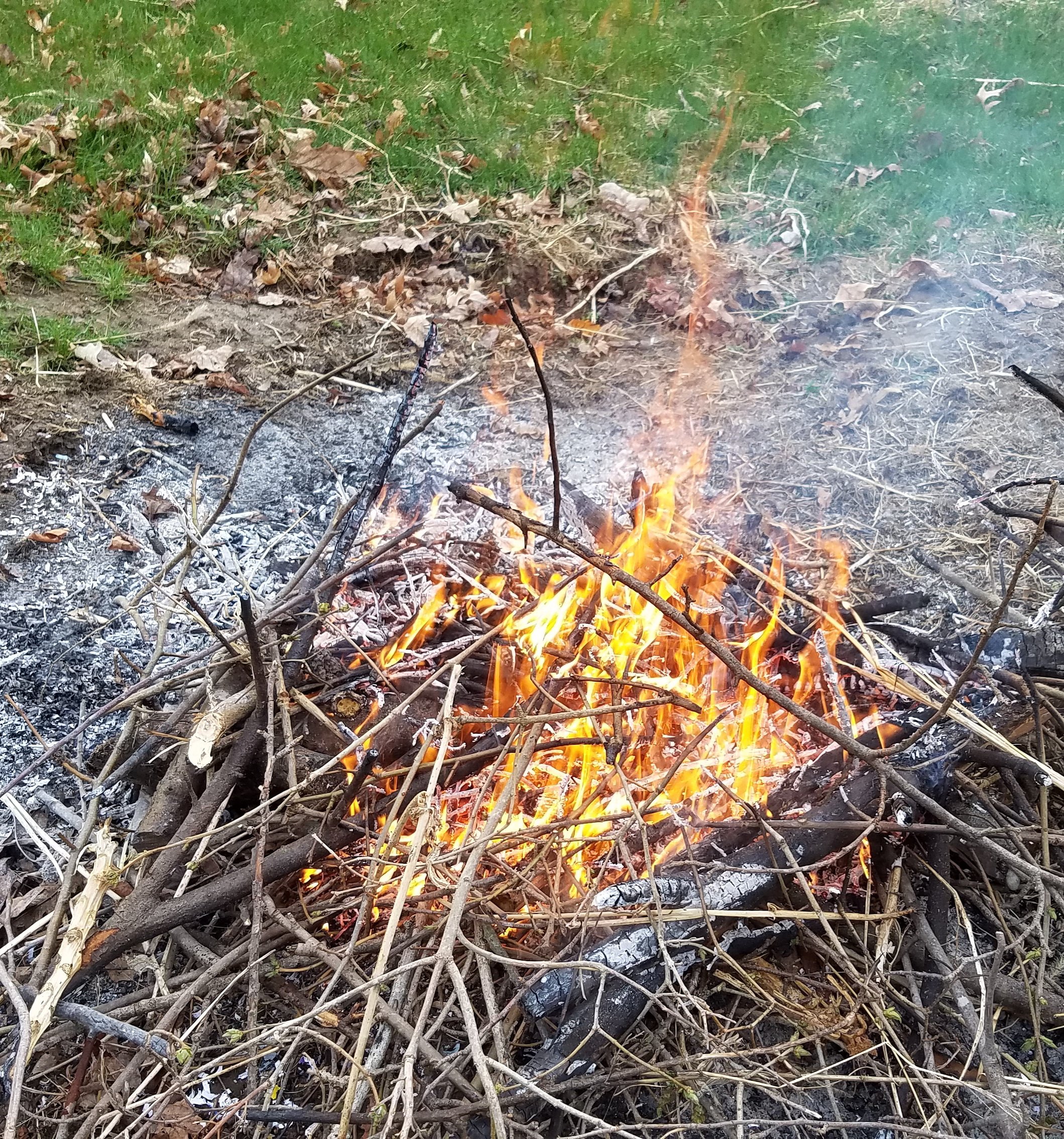
First Brush Pile Fire of 2020 Gardening Season

It took five and a half hours to plant two apple trees on Saturday.

I need to move the support stakes as I put them too close to the trunk. Hopefully they will be easy to remove as they have been in the ground less than 24 hours.

I planted bare root trees that arrived Friday from Cummins Nursery, Ithaca, New York:

Zestar! on G.210 root stock.
Crimson Crisp (Co-op 39) on G.202 root stock.

Here’s hoping for apples in a couple of years.

I burned the first brush pile on the to be planted kale plot. It was a clean burn. After sunrise I will spade and till the plot. I also want to plant potatoes in containers and sow peas, beets, carrots, radishes and turnips. If there is time, transplant the first batch of spinach seedlings. There is a lot on the gardening agenda as spring has arrived.

How should I use the time after waking until sunrise, not just today, but going forward? I’m not sure. Other than to continue doing what I am, it is difficult to envision changes from routine as much as they may be needed. I’m too unsettled to contemplate change.

People say it is normal to experience anxiety during the coronavirus pandemic. Knowing I’m normal is not reassuring and has made for restless nights.

The remedy will be to get lost in the work of putting in the garden. If I work longer shifts, maybe I’ll be tired enough at day’s end to sleep through the night. I’m a little sore from yesterday’s work as my spring conditioning regime in the garden begins. Engagement in a project has worked to relieve tension in the past.

It doesn’t help that I’m reading Anne Case and Angus Deaton’s new book exploring why capitalism is proving fatal for the working class with an uptick in mortality rates among white middle-aged Americans from what the authors call “deaths of despair.” There have been enough alcohol, opiod and suicide deaths in this group to reverse the 20th century trend of longer life expectancy. Other wealthy countries continue to see an increase in life expectancy in the new century. Americans do not. I’m looking forward to reading Case and Deaton’s analysis.

All this is not to say I find despair in daily life, I don’t. However, change is on the horizon. Unlike with the sunrise coming in an hour, it’s hard to know what to expect. I affirm today will be a gardener’s day with everything that means. That should be enough to move past the coronavirus engendered anxiety into something more meaningful.

I’m doing the best I can.