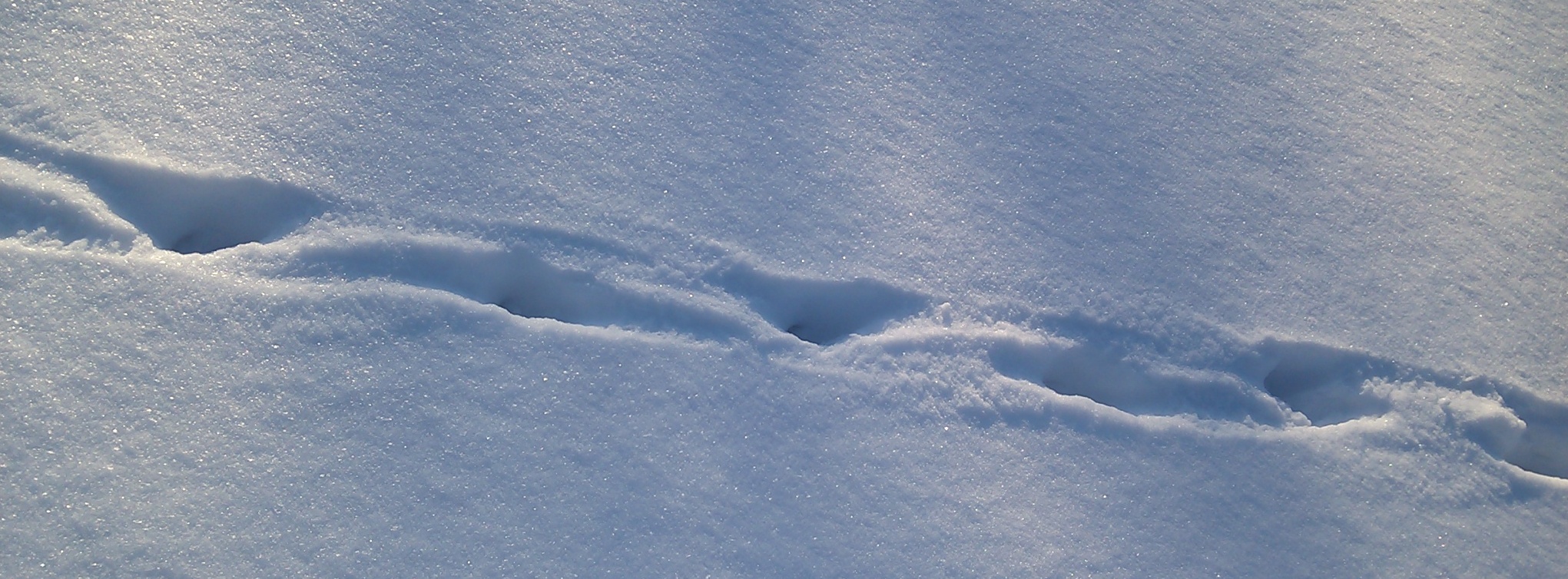
Snow fell in darkness leaving a thin blanket of white.
The pin oak tree began shedding last year’s foliage indicating warm weather activated new leaf buds and pushed out the old.
Seems weird to rake leaves in February. More to the point, it’s not normal.
In a couple of hours I return for a fifth season at Local Harvest CSA. The main spring task is soil blocking 72 and 120 cell trays for seed starting in the germination house. Part of my arrangement is keeping some of my own seedlings there. When I’m finished with the farm’s trays, I’ll make one 72 and one 120 tray for myself and seed them with kale, celery and basil. I’m hopeful they will do better than in the south-facing window in our bedroom. Getting my hands dirty with soil is a great way to get ready for spring, three weeks away by the calendar.
Other chores on my white board include doing taxes, computer file backup, cleaning the car, preparing the garden for spring and Belgian lettuce planting this week (traditionally March 2). I made extra servings of spaghetti with tomato sauce for lunches and want to make a batch of taco filling for breakfast on work days at the home, farm and auto supply store. There’s also more writing projects.
During a Climate Reality Project conference call on Thursday, a friend from Waterloo and I decided to work on a project with other friends from Waterloo-Cedar Falls. I’ve done two presentations there and look forward to more meaningful work. We’re planning luncheon, maybe next weekend.
This last lap in the workingman’s race looks to be action packed with local food, environmental and cash producing projects coming into focus.
Night’s snowfall melting in the sun makes way for budding plants in a grey and brown landscape. It is almost time to wipe the whiteboard clean and begin anew.
“Lordynges,” quod he, “in chirches whan I preche, I peyne me to han an hauteyn speche, And rynge it out as round as gooth a belle, For I kan al by rote that I telle.
My theme is alwey oon, and evere was
Radix malorum est Cupiditas.
~ Geoffrey Chaucer, The Pardoner’s Prologue
Chaucer’s Pardoner
Outrage at Iowa Republicans serves no useful purpose. Organize your family and friends, or your neighborhood or your social groups.
Resist.
In our house such endeavors begin by getting to work. Making contact with potential fellow travelers is part of it. So is rejuvenating our spirits. Most important before departing on a pilgrimage, we must question assumptions that led us here, those that lead us on. To flesh out faulty timbers of a political view rendered obsolete by the recent election will take effort. The same indulgences, relics and stones will not serve. Soon work will consume us. Before it does, check the compass and kit bag.
Spring will be here soon and winter’s work is not finished. Begin there. Today. Head outside with broom in hand and breathe the crisp air of our future… and organize.
Rain is the best natural resource left in Iowa, helping us grow crops without irrigation because of its abundance.
If other parts of North America can more deserving be called America’s breadbasket — Central Valley, Imperial Valley and Salinas Valley in California particularly — Iowa is due for resurgence because of abundant precipitation combined with California droughts.
Water shortages in California have reached crisis level and despite government actions may not be resolved. If Iowa farmers were to diversify we could overtake California as America’s breadbasket. Now I’m dreaming.
Rain has been a blessing to Iowa and is expected to be our future.
Beginning in 1832, after the Black Hawk War, the landscape of Iowa was transformed from a natural place to a grid of farm fields, cities and towns. Enhanced by global warming, and changes in the polar vortex and prevailing winds, it rains in Iowa — sometimes too much. Rain is all that’s left of what was once a natural world. I’d go so far as to say there is no nature, only sentient beings struggling to survive in this built environment.
No one begrudges Anthony Sells’ saw mill for processing the trees that gave a name to Big Grove Township where I live. There’s plenty of blame for the built environment to go around. It matters little how we got here. What matters more is answering the question what will we do next?
For me that means collecting rain in our yard and preventing erosion. Some rain will be stored in plant life, some in vegetables and fruit. Some will make it to the ditch and the nearby lake. Take what rain we need and release the rest into the Mississippi basin and beyond. Have faith in rain.
What’s here is rain. Rain remains, it’s covalently bonded electrons exemplary of our being. Let it rain.
~ Published in the Jan. 19, 2017 edition of the Solon Economist/North Liberty Leader.
Rain is the best natural resource left in Iowa, helping us grow crops without irrigation because of its abundance.
Rain has been a blessing and is expected to be our future.
Beginning in 1832, after the Black Hawk War, the landscape of Iowa was transformed from a natural place to a grid of farm fields, cities and towns. Enhanced by global warming, and changes in the polar vortex and prevailing winds, it rains in Iowa — sometimes too much. Rain is all that’s left of what was once a natural world. I’d go so far as to say there is no nature, only sentient beings struggling to survive in this built environment.
No one begrudges Sell’s sawmill on Old Mill Creek for processing the logs that gave a name to our township. There’s plenty of blame for the built environment to go around. It matters little how we got here. What matters more is answering the question what will we do next?
For us that means collecting rain in our yard and preventing erosion. Some rain will be stored in plant life, some in vegetables and fruit. Some will make it to the ditch and the nearby lake — a lot less than did when we moved here.
It’s important to consider rain and leverage its abundance. Take what we need and release the rest into the Mississippi basin and beyond. Have faith in rain.
If other parts of North America can more deserving be called America’s breadbasket — Central Valley, Imperial Valley and Salinas Valley in California particularly — Iowa is due for resurgence because of abundant precipitation combined with California droughts. Water shortages in California have reached crisis level and despite government actions may not be resolved. If Iowa farmers were to diversify we could overtake California as America’s breadbasket. Now I’m dreaming.
What’s here is rain. Rain remains, it’s covalently bonded electrons exemplary of our being. We consider the built environment and let it rain.
On Tuesday, Jan. 10, at 8 p.m. CST Command and Control will air nationwide on Public Television.
The film from director Robert Kenner, based upon the book by Eric Schlosser, is the story of a Titan II missile silo near Damascus, Arkansas. In September 1980 a technician dropped a socket and punctured a rocket upon which was mounted a five megaton nuclear warhead, initiating a near disaster.
A five megaton nuclear bomb is more powerful than all of the ordinance used in World War II, including the atomic bombs dropped on Hiroshima and Nagasaki, Japan.
Disaster was averted in Arkansas, but was it worth the risk?
While our president elect uses twitter to opine about nuclear weapons policy, our nuclear arsenal resides in real-world places subject to real-world threats and, as depicted in Command and Control, to accidents.
On Jan. 20, Donald Trump will gain access to the codes to launch a nuclear attack within four minutes, at his own volition, without approval from anyone else.
For his part, outgoing President Obama launched a $1 trillion program to modernize our nuclear arsenal over the next 30 years.
One has to ask, shouldn’t we abolish nuclear weapons instead of modernizing them?
Nuclear weapons are scary things. Rather than reacting impulsively and superficially to a complex issue, Blog for Iowa recommends you learn about an accident with a nuclear weapon from this 92 minute film.
“We could use some of that global warming,” a truck driver told me.
It was a joke. The ambient temperature was in the low teens and we both work outside as part of our jobs. If the weather were warmer our jobs would be easier. I thought it was funny.
“I don’t really believe in global warming,” he said after a pause.
“It doesn’t really matter if you do,” I replied. “Like it or not our climate is changing because of man-made global warming. It affects us even when it is cold.”
He seemed skeptical. Given a recent study published in the Proceedings of the National Academy of Sciences journal I should have expected his response.
Our perception of climate change and willingness to accept scientific evidence about it is shaped by what we experience, according to Scott Waldman, writing in Scientific American.
That means if one lives where weather is cooler than average, he is more likely to be a climate change skeptic, deferring to personal experience as a guide. If one lives where it is warmer than average, she is more likely to accept the science of climate change, also deferring to personal experience as a guide.
“When personal experience and expert opinion don’t align on a topic that’s not critical to an individual’s well-being, they’re going to go with their gut rather than what the expert tells them,” Robert Kaufmann, the study’s lead author said.
Kaufmann said it’s human nature to trust one’s own experience over scientific evidence or political wisdom.
“Unless it really affects my everyday life, I’m not going to spend time studying this issue, and I’m not necessarily going to believe scientists either, especially now that experts are held in such ill repute, but I’m going to make up my mind based on how I can see and feel climate change,” he said. “For many people, that is record-high and record-low temperatures.”
Such attitudes notwithstanding almost two-thirds of voters across all parties want the Trump administration and the Congress to do more to address global warming, according to Kaufmann.
I appreciate a good climate change joke in the middle of winter because it presents an opportunity to address the fact climate is changing because of human-made global warming, and there is scientific evidence to support it. The conversation is something we should have more often, yet people avoid talking about climate change.
“Most Americans say global warming is personally important to them, but don’t talk or hear about it much,” Edward Maibach and others from the Yale Program on Climate Change Communication wrote.
In “Is there a Climate ‘Spiral of Silence’ in America?” the authors found “more than half of those who are interested in global warming or think the issue is important “rarely” or “never” talk about it with family and friends (57 percent and 54 percent respectively).” Fewer than half of Americans say they hear about global warming in the media monthly or more, and only one in five Americans hear people they know talk about global warming at least once a month according to the article.
It’s pretty quiet out there regarding discussion of global warming and climate change.
“The future of the planetary conditions on which human civilization depends are reliant now more than ever upon scientists and innovators, businesses and civil society, and our collective efforts to accelerate the implementation of the solutions to the climate crisis that are already available and cost-effective,” former Vice President and Nobel Prize winner Al Gore wrote in Scientific American.
If that’s the case, and no one is talking about climate change, how can we create meaningful action to mitigate the effects global warming is having on us?
The good news is technological solutions to the problem are working as the price of renewable energy approaches parity with fossil fuels. In some markets, solar generation of electricity is cheaper than with fossil fuels. If technology will lead the business community to reduce the greenhouse gas emissions contributing to global warming, we are part of the way there. Technology alone won’t drive the change we need. To find political will for action, every voter should engage in the issues. What can we do?
For my part I’m going appreciate the value of a good climate change joke, and use them to break the ice on conversations about the need to act on climate. People may agree or disagree, but talking about global warming and climate change, and the science behind them, is as important as laughter on a chilly day, or a cold drink during a drought.
In this final 2016 post it was easier than last year to outline my writing plans.
The work I do to pay bills and support my writing has been tough mentally and physically. To cope with an aging frame and occasionally distracted mind I have had to focus. That meant planning, and then with discipline, working the plan. 2016 was a mixed bag and I expect to do better in 2017.
I seldom post about my personal life and family — at least directly. That leaves issues I confront every day as grist for the keyboard.
There are four broad, intersecting topics about which I’ll write during the coming year.
Low Wage Work and Working Poor
Not only do I earn low wages in all of my jobs, I meet a lot of people who do too. During the last four years I developed a framework for viewing how people sustain their lives without a big job or high salary. A focus on raising the minimum wage, wage theft or immigration status may be timely but most of what I read misses the mark. Stories fail to recognize the complexity with which low wage workers piece together a life. This subject needs more exposition and readers can expect it here.
Food Cultivation, Processing and Cooking
Living on low wages includes knowledge of how to grow, process and prepare some of our own food. My frequent posts on this topic have been intended to tell a story about how the work gets done. I plan to grow another big garden in 2017 and perform the same seasonal farm work. I sent off a membership form to Practical Farmers of Iowa this morning and expect my experience with that group to contribute to food related writing.
Nuclear Abolition
I renewed my membership in Physicians for Social Responsibility. We have a global footprint and as a member I have access to almost everything going on world-wide to abolish one of the gravest threats to human life. The president elect made some startling statements about nuclear weapons this month. The subject should hold interest and perhaps offer an opportunity to get something done toward abolition. The United Nations voted to work toward a new treaty to abolish nuclear weapons. They did so without the support of the United States or any of the other nuclear armed states. In that tension alone there should be a number of posts.
Global Warming and Climate Change
My framework has been membership in the Climate Reality Leadership Corps. Like with Physicians for Social Responsibility we have a global footprint with thousands of Climate Leaders. We have access to the latest information about climate change and its solutions. The key dynamic, however, is how work toward accepting the reality of climate change occurs on a local level. What researchers are finding is skepticism about the science of climate change originates in the personal experience of people where they live. If the weather is very hot and dry they tend to believe in climate change. If it is cold, they tend not to believe. Thing is, climate change and human contributions to it are not a belief system as much as they are facts. Global warming and climate change already affect us whether we believe or doubt.
So that’s the plan. While you are here, click on the tag cloud to find something else to read. I hope you will return to read more in 2017.
Some of us aren’t doing any soul searching after the 2016 general election.
Democrats lost, and as a Democrat that means something to me personally. Yet I know what I stand for and so do my friends and family.
Nothing about our beliefs was changed by the election of Donald Trump. If anything, we plan to work harder to advocate for what we believe is just.
Last week the president-elect and his daughter met with former Vice President Al Gore. Gore’s statement after the meeting was important as it pertains to mitigating the negative impact of man-made global warming and climate change on humans. It also applies more generally.
“Despair is just another form of denial. There is no time to despair. We don’t have time to lick our wounds, to hope for a different election outcome,” Gore wrote. “We have to win this struggle and we will win it; the only question is how fast we win.”
I share Gore’s optimism and so should people who care about leaving a better world for our descendants.
Who knows what President Trump’s impact on the environment will be?
To hold ground environmental advocates have claimed since the Nixon administration, we can’t ignore the renewed challenges presented by the mogul’s rise to power.
We don’t know what Trump will do, however, environmental advocates have been stroking against the current all along. The stakes are too high to give up now, nor will we.
We are stronger together so I plan to join with my colleagues at The Climate Reality Project for mutual support and direction. A perfectly timed kickoff is the 24 Hours of Reality webcast scheduled Dec. 5 and 6. I will tune in for at least part of it and encourage readers to do likewise.
Here’s what our chairman had to say after the election:
In every great struggle humanity has undertaken, the march towards progress has included both successes and setbacks. And the struggle to protect and save the Earth’s ecological system is no exception.
Today, I am as optimistic and resolved as ever that we will solve the climate crisis. Our collective efforts are dependent not on politics or ideology — or elections — but on our commitment to each other, to the health of our planet and to a sustainable future for all.
We must — and will — continue to find hope and joy in our work that will define humanity for generations.
Last night President-elect Trump said he wanted to be a president for all Americans. In that spirit, I hope that he will work with the overwhelming majority of us who believe that the climate crisis is the greatest threat we face as a nation.
I wish him well in these efforts and intend to do everything I can to work with him and his administration to ensure that our nation remains a leader in the global effort to meet this challenge. Moreover, there is reason to believe that it is not naive or Pollyannaish to hope for more than what we fear.
We have already made great strides to solve the climate crisis all around the world. The work that has been done by civil society, businesses, investors, and governments at all levels will continue to be driven by the fact that solutions to the climate crisis are not just vital to our planet, but are vital to our economy. The market forces driving the transition to a sustainable economy simply will not be slowed.
Less than a year ago, when the historic Paris Agreement was reached, we knew that our journey was only beginning. We knew this work would not be easy – indeed, more would be required. Now we know that our work must be redoubled.
Today, without regard to last night’s outcome, we must turn our focus to making the promises of the Paris Agreement a reality by embracing the forces that are already working to grow our economy and transform our energy future.
A sustainable future is in sight – but we cannot take it for granted. We must fight for the future we all believe in. Now, more than ever, our planet needs us – and I’m inspired by the knowledge that we’ll take the path forward together.
Al Gore
Founder and Chairman
The Climate Reality Project
Closer to home, I’ve long followed State Senator Rob Hogg who is an advocate for protecting the environment and a member of The Climate Reality Project. Recently elected minority leader in the Iowa Senate, Hogg offered this advice:
Continue to speak up with elected officials. A Doubting Thomas today can be a leader for climate action tomorrow. Remind Republicans of their successes including the Clean Air Act, the Montreal Protocol, and solar energy investment tax credits. Do not let them off the hook by ignoring them.
Midway through my seventh decade of life it is time to get more active. I am ready for what lies ahead and the road forward.
The weekend began with a trip to the COSTCO bakery where I bought 2.2 pounds of cookies after my shift at the home, farm and auto supply store.
I am celebrating my first Saturday without a work shift since July 26 with, that’s right, cookies!
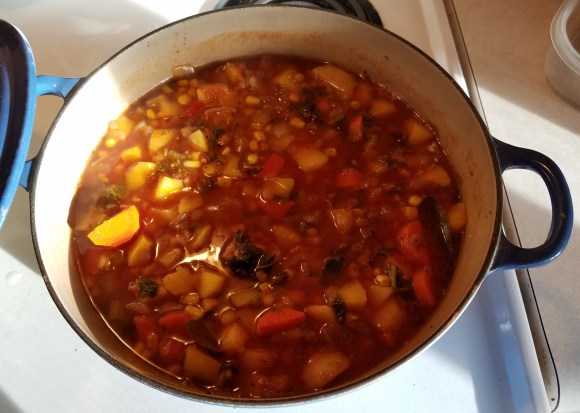
Saturday morning I made harvest soup from bits and pieces in the ice box, pantry and counter. With a sandwich it made a hearty lunch with three leftover quarts of soup for later in the week.
Hot peppers and kale
Gleaning the garden yielded sage, oregano, chives, kale, hot peppers, cucumbers and tomatoes.
After cleaning the vegetables there are bags of herbs and kale in the ice box, Bangkok peppers in the dehydrator, and a big bowl of Serrano and Jalapeno peppers in the ice box. More Bangkok peppers are ripening on the counter. Cucumber salad is in the works for Sunday as is an appetizer for the work dinner later in the evening. It is weird to be harvesting cucumbers and tomatoes in November.
I don’t fully understand the El Niño/La Niña cycle but the weather has been warm. Saturday’s harvest weeks after the normal first hard frost stands as evidence. Climate change is not about the weather per se but warming temperatures in the equatorial Pacific Ocean impact Iowa.
Assorted kale leaves
Photos of fresh produce compliment each day and help us forget about the impacts of changing climate. There is something to be said for a warm Iowa winter. It would be welcomed by most people I know.
The hard frost is coming and with it the end of the gardening season.
In the meanwhile we harvest what we can and make a life for ourselves on the Iowa prairie.







 Journey Home
You must be logged in to post a comment.