Categories
Work Life

Meat Packer Narrative

Ana Avendaño, November 2010

Editor’s note: An original version of this post appeared on Nov. 13, 2010. It has been edited because my writing wasn’t as good as I thought back in the day.

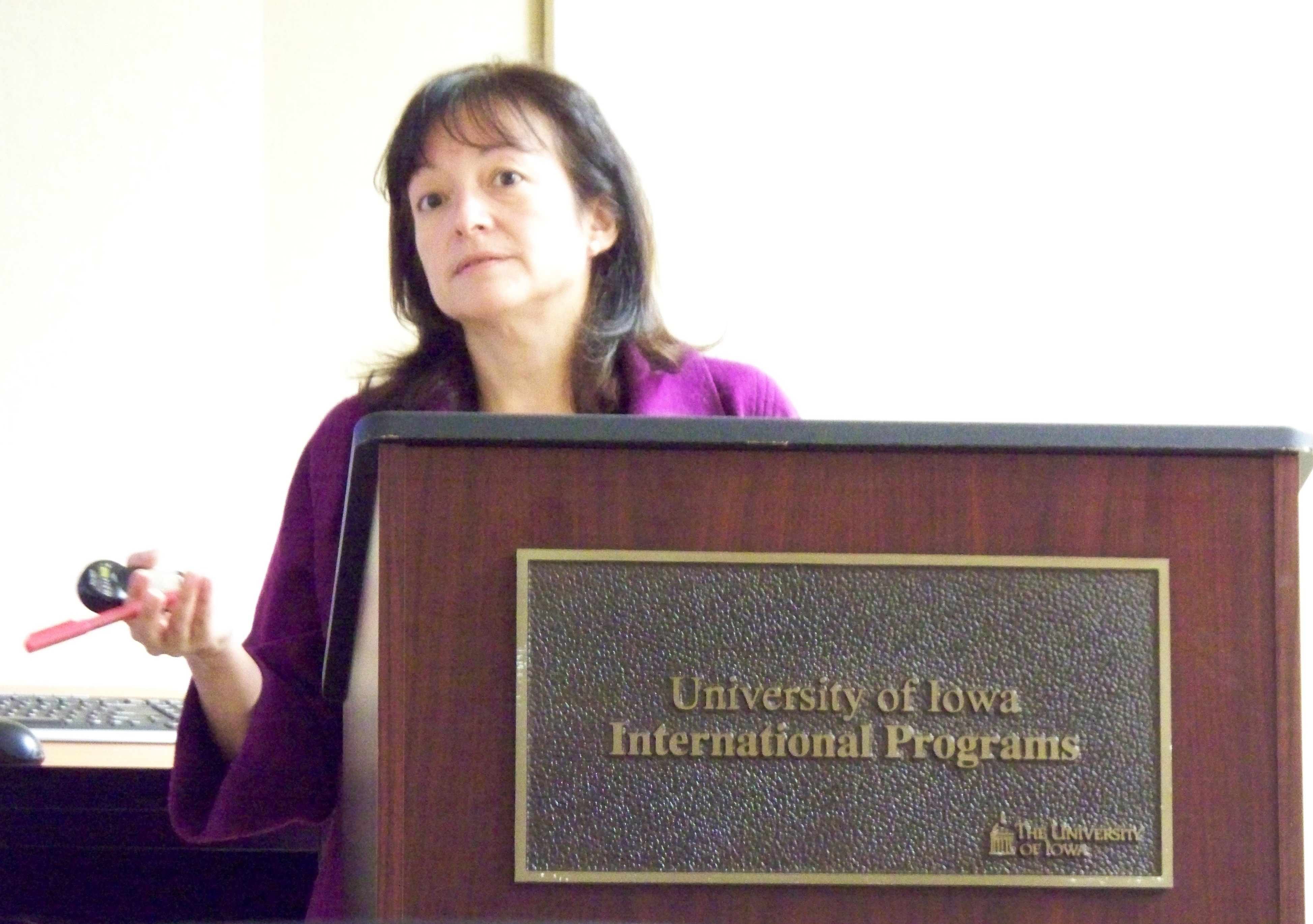
Clarity surfaced during a talk by Ana Avendaño, assistant to President Obama and Director of Immigration and Community Action for the AFL-CIO.

She was in Iowa City, talking about the meat packing industry. Her narrative struck me:

Back in the 1970s, meat packing workers were among the highest paid in the country, more highly paid than some auto workers. Multinational corporations, with a strategy of busting unions, began consolidating meat packers, creating a perfect storm for labor and a perfect outcome for themselves. Union workers were replaced with a continuous stream of lowly paid immigrant workers.

“The narrative of the meat packing industry is important to remember,” she said. An emblematic consequence of consolidation has been the immigration raids in Marshalltown and Postville.

Corporate advocacy to break labor unions is a global phenomenon, Avendaño said. “What corporations can’t do in a free market, they are doing through governance,” putting pressure on law makers to make labor law more favorable to their interests. She spoke of the International Monetary Fund and the World Bank as co-conspirators. They hold out loans to countries and “specifically require them to change labor laws in a way that hurts workers,” Avendaño said. “It is the hypocrisy of what we are living through today.”

I worked in a meat packing plant two summers while an undergraduate. It was easy to get a job there. I belonged to a union, the Amalgamated Meat Packers and Butcher Workmen of North America, and at $4.04 per hour, made enough money to get through the next school year. As Avendaño’s narrative suggested, wages were good.

The plant conditions were dangerous and work was physically challenging. My maternal grandmother and father had both worked in the plant and my father died in a plant accident. I never felt in danger, working as a millwright’s assistant in 1971 and on third shift cleanup crew in 1973. I got to see most of what went on throughout the plant and warehouses. It was not pretty.

Avendaño missed something. It’s true low cost operators like Iowa Beef Processors could perform the work cheaper and re-invent how meat processing was done. It’s true unions gave concessions until many of the jobs, especially slaughterhouse jobs, were consolidated in a much smaller number of places. It is also true that at a lower rate of pay, many Iowans no longer wanted to do this work. Enter immigrants.

As Avendaño spoke, adjusting her glasses, and pointing at the PowerPoint on the screen, it hit me. After my father’s death, while rummaging around in his basement workshop, I found a pay stub from his work at Oscar Mayer. He made less than $90 per week.

It was a different world then. How we acquired and made our food was different. Dad shopped at the company butcher because meat was fresher and less expensive. The rise of highly processed foods, farm subsidies that keep prices low, and the invention of a consumer society where we spend more than we earn using credit, had not begun. We made more food from scratch because many of the food items in today’s grocery store aisles did not exist. We lived close to the means of production and $90 per week was a living wage. We were working poor, but didn’t call it that. We had a decent life.

That is where the narrative unravels. Life was not about pay and benefits. It was about what else we did with our time. Even at those wages we couldn’t wait to get out of the plant. We knew we could do better with our lives than work on a production line. Avendaño was advocating improvements in a status quo that while needed for the betterment of workers were no solution to larger problems of corporate hegemony in our lives. It is as if we have stopped trying to improve society, so we can cling to the remaining dregs in a barrel of prosperity long drained by the wealthy class.

That morning, in the darkened room, it seemed a fool’s errand and that was my epiphany.

Categories
Work Life

Working for Women

Working at the Farm

I ran into my supervisor from the orchard at the home, farm and auto supply store. She stopped to buy dog food.

At the end of our conversation she asked me to consider returning to work in the fall. She paid for the food, slung the 40-pound bag over her shoulder and headed toward her vehicle and the next errand.

While driving home across the lakes, below aimless skeins of geese forming rough wedges, I considered women who were my supervisors over the years. Women were always better than men.

There is a clear division. When I worked in male dominated organizations like the military and in my transportation career, leadership was rough around the edges, sometimes just plain bad. It was as if men had less formal training in how to manage people, despite degrees from Northwestern, Cornell and Wharton. Women almost always understood their limits and knew what they were doing with a view to the long term. In the day-to-day of worklife, women were clear communicators focused on team results. It felt good to know my role and be part of a successful team.

Men, almost without exception, viewed work through a sports paradigm. With driving social styles, they often used brute strength to push an organization over a goal line. The focus was on results in each accounting period using whatever means were available. Women were no less aggressive in meeting objectives. The difference was it was more fun to work in a female-led environment.

My social style is driving, making the biggest challenge in being part of a team to slow down, listen and observe before taking off for a goal line on my own. I’m not afraid to lead and will. It’s more that tasks before us today require a more collaborative, sustainable approach.  The sports paradigm no longer cuts it.

The distinction between male and female supervisors should be superficial. That’s not been my experience.

By the time I arrived in our garage I was thankful for the many excellent supervisors I’ve had, both men and women. Among the women I’ve worked for I don’t recall a single clinker. I can’t say that about the men.

Categories
Work Life

Retail Rumors

Retail Space for Rent

After work at the home, farm and auto supply store I stopped at the warehouse club to get a few groceries. Shopping there is never a quick in and out because of my relationships with people from when I worked there. There’s is catching up to do every week and the expanse of concrete floor serves as our modern piazza.

A person can only get certain kinds of goods at a warehouse club, and some of my friends don’t have membership cards as they work there. A recurring conversation is about my 2015 move down the hill to the home, farm and auto supply store where the idea of pay with benefits takes on an other-worldly aura. My low wage colleagues shop there and like our store’s offerings. Yesterday’s conversation went a little differently.

We’re not over the closures of K-Mart, Sears and Paul’s Discount. We worry that J.C. Penney will close as well, concerns driven around available and reasonably priced goods. On low wages, we don’t shop at Tiffany & Company or Bloomingdale’s so it matters.

The rumor is a couple of shops at the outlet mall in Williamsburg are shuttering in January, and a couple more will close at the nearby Coral Ridge Mall. Consolidation and reduction of competition is not positive. Consensus was we’ll get by and pay more as we often do.

There is a certain inevitability to changes in retail. As stores carry a smaller number of items, it becomes inconvenient to drive here for one thing, there for another, making hard goods available on line more attractive and accelerating the demise of storefronts.

Chaos reigns in many retail establishments. We discussed nearby Kohl’s Department store where certain types of goods fall to the floor where customers trample them. That’s not a positive experience. If I had all day, we could have enumerated them all. Time drew short and we said pleasantries to end conversations in a sociable manner.

Our lives no longer inhabit the town square. In many modern cities, there is no town square. That’s so modern, so American.

Instead of spending time at the piazza we trade in rumors spoken among friends. Maybe society has always been that way and always will. It was yesterday, such self-awareness helping sustain our lives in a turbulent world.

Categories
Milestones Work Life

Bernardo Bertolucci and General Motors

Bernardo Bertolucci (77) died yesterday in Rome, Italy where he had been suffering from cancer. The bigger news was General Motors’ decision to reduce workforce and eliminate six car models, including the Chevrolet Volt rechargeable gas-electric hybrid.

What do they have in common besides their coincidence?

They both hit me where I live.

When I returned from military service I spent time viewing movies I missed coming up, including The Conformist. I became enamored of the film, its director Bertolucci, and its cinematographer Vittorio Storaro. On my cross-country trip from New Jersey, where my pickup truck had been shipped from Germany, enroute home to Iowa, I visited friends Diana and Dennis in Springfield, Illinois. Diana fed us cornbread and beans and Dennis and I went to see Francis Ford Coppola’s Apocalypse Now, with cinematography by Storaro. That night began an infatuation with cinema that continued through my return home and lingered into the early years of our marriage. Of the films I have seen, The Conformist ranks in my top ten.

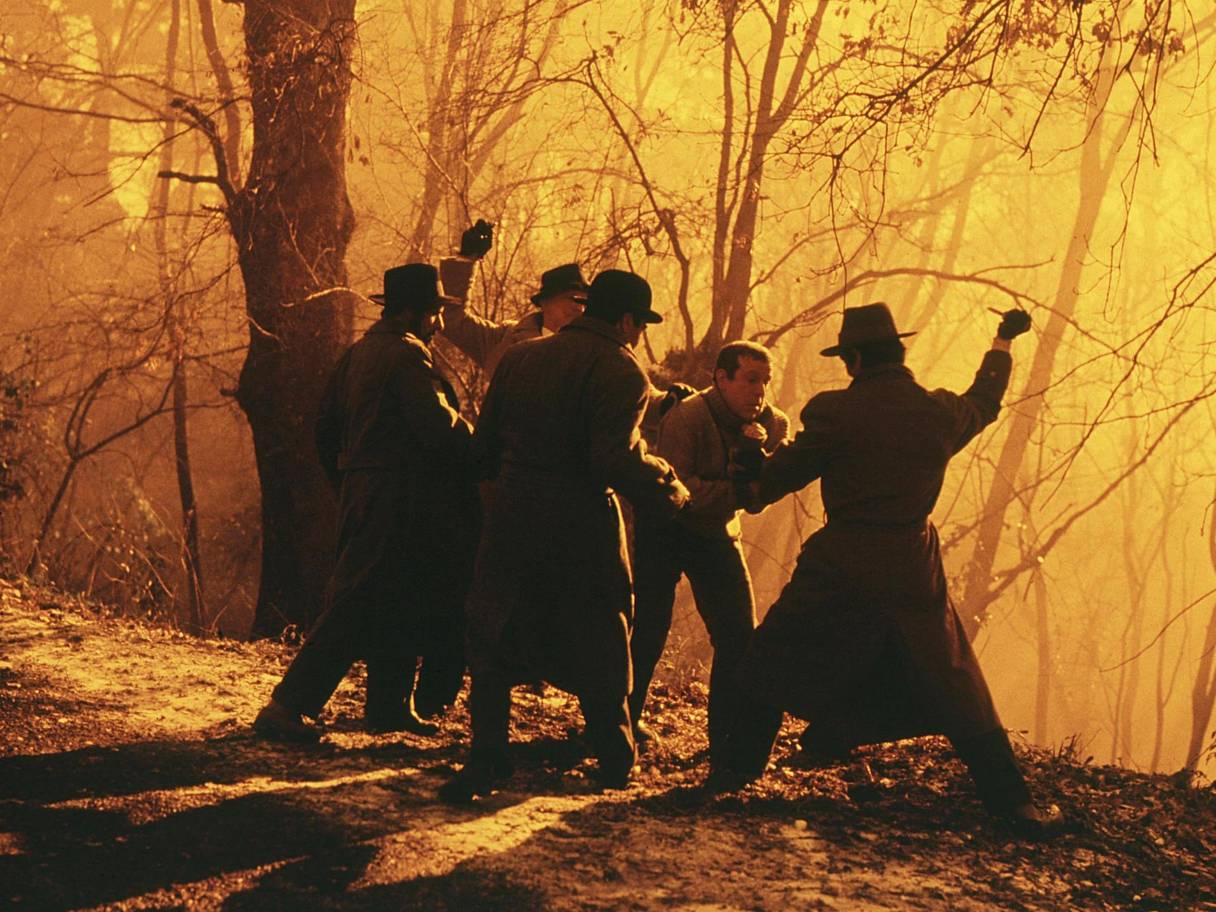
The Conformist

Partly The Conformist resonated with my short trips to Italy in the 1970s. More, though, it was Marcello Clerici, the vacillating, spineless protagonist who would kill his professor in a woods at the direction of the Communist Party. Who would want to be that? Not me. Not anyone. The impression the film made on my artistic consciousness persists. I will be forever thankful to Bertolucci for his contribution to this formative experience.

The General Motors announcement was a gut punch to anyone who lived and worked in the Rust Belt.

“The reductions could amount to as much as eight percent of GM’s global workforce of 180,000 employees,” Tom Krisher wrote for Associated Press.

What makes this pill tough to swallow is the damage that has already been done throughout the industrialized part of the country. I’ve written extensively about my experiences recruiting truck drivers in Illinois, Wisconsin, Indiana, Michigan, Ohio, New York and Pennsylvania during the period 1987 – 1993. I met thousands of people laid off from industry jobs. What makes the GM announcement different is what I experienced then was related to globalization. What’s happening now has to do with board room decisions emboldened by the recent Republican tax breaks.

The Conformist

There is talk unions will negotiate a better deal for workers as GM moves forward with their plans. How has that worked before? It hasn’t. The only union-related board member had been from the UAW health care trust, a position vacant since December 2017. The fund lost the board seat in October after selling a big chunk of GM stock.

Why would a person that drives a 21-year old passenger car care what GM does? When you’ve seen the faces of long-term employees who lost everything after a plant closing or down-sizing, you know what this announcement from GM means to workers. Only a cold, venal, rudderless being like Marcello Clerici could look on and not feel anything.

Categories
Work Life

Returning to Normal

Vegetable Soup on a Wintry Day

On Wednesday the front of my jeans was covered with pentachlorophenol mixed in an oil solvent. It rubbed off bundles of wooden fence posts at the home, farm and auto supply store as I was stocking racks and rearranging storage. It was dirty work that took all day. I earned about $100.

It is also dangerous work. The store has large display racks lining the east yard where fence posts await customers. I stocked them all. I raised bundles of 25-75 posts of various lengths and diameter six feet in the air with a lift truck, then positioned them and cut the metal bands to loosen them into the rack. One faulty move and a crushed hand could result. Except for the chemicals in my clothing, I finished unscathed.

Pentachlorophenol is used to protect wood from fungal rot and wood-boring insects. When a person installs a wooden fence post he or she hopes it is the last time for a life time and treated wood is the standard. I don’t even want to look at the Material Safety Data Sheet.

Life is returning to normal after the election, whatever that means.

I had coffee with a high school classmate at the new coffee shop in town. I ordered a triple mocha and the barista made it as well as anyone I’ve known. My friend and I discussed a wide range of topics including high school, the 40th reunion I helped organize in 2010, transition to retirement, and politics. Both of us had written for small newspapers and we shared our stories about covering city council and school board meetings. That seems to be a universal experience among writers. We spent 90 minutes before saying our goodbyes. I offered to help if he did more in politics. I think he is planning to finish the book he’s writing first.

It snowed last night although it won’t stick. I left the garden hose outside, thinking I’d use it again. I’d better bring it inside so it doesn’t freeze and break. There’s kale under the snow. If it survived, I’ll pick more.

A pot of vegetable soup simmers on the stove. I made corn tortillas yesterday. Vegetables remain in the ice box to be used up. My mind is not really on the weather, the garden hose, cooking, politics or whatever. I bought buttermilk at the grocery store to make buttermilk biscuits to go with the soup… supper.

This year has been a slide to third base. A crash landing in an open field. A dip in the pool of life. I’m not ready to quit. I have to find respite before going on. Like the MSDS mentioned above, I don’t even want to know what’s going on. Just take a break for a few more days and hope to be able to recharge and gear up for the next adventure. Hopefully there will be a next adventure.

Meanwhile snow melts into the drainpipe and runs down to the tile and then to the Lake which leads to the Gulf of Mexico. I’m focused on the sound of dripping.

Categories
Work Life

Getting Salt in the Last Week of Summer

Bee Landing on Wildflowers

Another week of summer and already I’ve turned to fall.

This is Jonathan apple weekend at the orchard, marking halfway through the retail and u-pick season. When I think of a red apple, I think of Jonathan. We grow half a dozen varieties, including the heirloom. Except for the 89 degree ambient temperature yesterday it is beginning to feel like fall at the orchard.

At the end of my shift at the home, farm and auto supply store I moved pallets of water softening salt from the storage yard to the load out area for customers. Temperatures were moderate and the wind felt good as I traversed the length of the building in the lift truck. My two days a week schedule is facilitating the transition to retirement by providing some income and giving those days purpose outside the home.

Someday, maybe soon, all this will change.

September’s remaining days will be packed. Finishing garden, yard and kitchen work, and preparing for a winter of writing. After the general election, once the apple harvest is in, I hope for full days devoted to writing. I’m encouraged to work through the interim with positive results. Invested in the present, I’m looking toward a bright future.

Living life as best we can in an turbulent world.

Categories
Environment Work Life

Working in the Heat

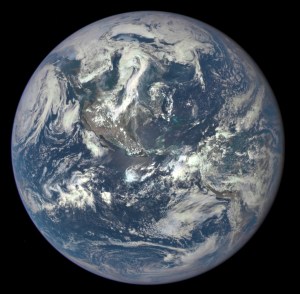
Image of Earth 7-6-15 from DSCOVR (Deep Space Climate Observatory)

Independence Day at the home, farm and auto supply store was a time to catch-up with organizing the warehouse, process expired pet food, reposition tall pallets of wood shavings, and generally clean up. The usual receiving activities slowed down as delivery drivers had the day off.

The store was pretty busy and comme d’habitude, management tried to feed us lunch: fried chicken with sides from a chain restaurant headquartered in Orange City.

I resisted. I also didn’t criticize because they were trying to be nice on the holiday we all had to work. We all should be nice when we can.

A couple of projects involved being outside in the blazing heat and humidity. I persisted and got the work done.

When working outside at home I get done early in the day to avoid mid day heat. I’ll work outside all day when the heat index is up to 90 degrees, but that’s the upper limit. With the heat and humidity we’ve been having that meant days indoors even though the sky was clear. It was weird.

According to this morning’s newspaper heat records are being set all over the world. In the Northern Hemisphere we’ve had the hottest weather ever recorded during the past week as a massive and intensive “heat dome” settled over the eastern United States.

In addition, the northeastern Atlantic Ocean is cooler than normal. Partly this means there may be less hurricane-strength storms this season. My worry is it’s being caused by melting of the Greenland ice sheet. If Greenland goes completely, the historical record shows the Atlantic meridional overturning circulation (AMOC) will slow down significantly or stop. That could mean disruption of the growing season in Europe and of their food supply. According to Scientific American, AMOC is the weakest it’s been in 1,600 years.

“The grand northward progression of water along North America that moves heat from the tropics toward the Arctic has been sluggish,” wrote Andrea Thompson. “If that languidness continues and deepens, it could usher in drastic changes in sea level and weather around the ocean basin.”

I think of the blue marble and how all of us on earth are connected.

“No single record, in isolation, can be attributed to global warming,” wrote Jason Samenow in the Washington Post. “But collectively, these heat records are consistent with the kind of extremes we expect to see increase in a warming world.”

There are so many signals and indicators of climate disruption in the global environment that such disclaimers may serve some editorial purpose but are immediately useless. The world is warming and there are consequences.

It’s about more than working outside on a humid and hot day at the home, farm and auto supply store.

Categories
Kitchen Garden Work Life Writing

Last Day of the Season 2018

Chicken at Sundog Farm

Beginning on Feb. 25, and 862 trays of soil blocks later, my 2018 farm work season ended today at Sundog Farm. I finished at Wild Woods Farm on Friday.

More than anything, farm work has been time with young people — doing the work and talking about crops, challenges, and everything else.

In my sixth year of soil blocking I kept up physically. I plan to do it again next year if able.

Now to take a break from farming until returning to Wilson’s Orchard for the fall season.

This will be the first summer in a long time we haven’t taken a share from the CSAs. Our garden is big enough to provide most vegetables and I’m confident of the yield. What we can’t get at home I’ll secure elsewhere. Getting enough to eat is never a problem when working in a local food system.

Next on the practical agenda is home repairs and cleaning. There is never a shortage of work for home owners.

It’s also an opportunity to resume writing. Each time I rejoin the project I lose track of everything else. Hours and days pass and like a coal miner I follow the seam wherever it goes. There is a lot more reading, thinking and organizing than writing at this point. I’ve forgotten more than I know about my own life and it can’t be re-lived, merely touched through a gauze woven of memory.

I began addressing the chronology. I’m not sure that will be the presentation. As I delve into the volumes of writing and artifacts collected since college a thematic approach seems better. It would be cultural aspects of growing up, education, work life, how we developed an ecology of living as a family, and my path toward social responsibility. It will also focus on what readers may find interesting.

Writing is exhilarating at a time when the rest of the world seems weary and worn down. What a great way to spend the rest of this summer.

Categories
Work Life Writing

Feel the Breeze

Western Sky at Sunrise

I’d rather have spent both of this week’s days at the home, farm and auto supply store in our garden. Temperatures were warm enough to work in shirtsleeves and the garden is way behind.

Outdoors tasks occupied my work day: unloading field tile and plant trucks, rearranging the yard, and moving tall pallets of pine shavings, first outside while unloading the truck, and then back inside as I made room in the warehouse.  We had trucks of merchandise from our main warehouse, a load of feed, and a truck from Missouri with odds and ends of a retail operation: ladders, pipe, light bulbs and sundry stuff. It seemed like I was on the lift truck the entire time.

The best part of the days was feeling a breeze through my hair as I drove from one end of the lot to the other on the lift truck. Father died on a lift truck at the meat packing plant. That thought is never far from me as I finish my days in the work force.

Now begins the rest of today: coffee with an elected official in the county seat and a shift of farm work. If I have the bandwidth, and thunderstorms hold off, I’ll work in the garden later this afternoon.

Categories
Kitchen Garden Work Life Writing

Wanting to Wake Up

Community Pond

At retirement plus 19 days I thought I’d be more productive.

Yesterday, after a shift at my desk and an hour-long visit with a neighbor and a team of surveyors, I took a nap… with long, deep sleep. Groggy when I woke, the better part of the day had escaped me.

More time to heal after a life of work.

It’s not like the main spring work of gardening was doable. Rain and ambient temperatures in the twenties and lower thirties gave me a chill most of the day. My farmer friends take advantage of every micro dry spell to plant a row of seeds or plow a field. A home gardener needs an ample period of dry ground and time to get in seed potatoes, early lettuce, radishes, turnips, peas and the like. Thus far the burn pile remains and the ground is unbroken, indicating there was a garden but little else. On the other hand, when the weather breaks, I’m ready.

Boxes of canning jars pile up as we draw down the pantry.

Last night Jacque and I went separate ways for dinner. She prepared a pasta dish with pasta made from lentil flour accompanied with a side salad. I prefer pasta made with semolina flour. These days a salad is organic greens from a specialty grocer, carrots, celery and home made dressing.  When she finished in the kitchen I made a dish I had been thinking about for a week.

Mother made a simple gravy with bacon grease, flour and milk. My supper was a variation of that.

The gravy recipe is easy: three tablespoons fat, three tablespoons flour to make a roux then two cups milk simmered on low heat until thickened. We cook vegetarian at home so I substituted salted butter for the bacon grease. Mother added cooked hamburger to the gravy but I wanted more.

Dinner preparation began with diced storage onions, bell pepper from the freezer and a four ounce can of sliced mushrooms from the Netherlands sauteed in extra virgin olive oil, seasoned with salt and pepper. When the onions began to soften I added two finely diced cloves of garlic from Kate’s farm and incorporated them into the vegetables.

Next was two cups of Morningstar Farms recipe crumbles stirred in until thoroughly thawed and mixed. When the ingredients reached the proper stage I made a well in the center of the frying pan and added three tablespoons of salted butter to melt. I added an equal amount of flour to make a roux. When the roux had cooked for a couple minutes I added two cups skim milk and stirred the mixture until everything was incorporated. I brought it to a boil and turned down the heat to a simmer for about ten minutes until the liquid thickened.

I toasted a slice of sourdough bread, diced it, and spooned the mixture on top in a big bowl. That and a couple of raw carrots was dinner… with leftovers. Comfort food from memories of Mother.

In the annals of human history yesterday wasn’t much. Two people getting along in a place where we’ve lived for 25 years.

“I feel as if I’m fixin’ come out of hibernation and need to work with friends on something meaningful,” I emailed a friend. “What that is will eventually manifest itself… I hope we can recognize it when it does.”

For now I wait for the weather to break, rest and heal.