Categories
Work Life

No Holiday When Working Poor

Christmas Lights
Christmas Lights

LAKE MACBRIDE— Christmas is a busy time for retail workers. The end of year holidays, stretching from Halloween until the Super Bowl are a key time for companies to close sales that impact annual results. A lot of part-time and seasonal workers are needed to get everything done.

The working poor I know have their hands full of wage-earning opportunities at multiple jobs. For most, having Christmas Day off is not a benefit. It is a time to bank wages for the slow times coming later in winter. If hours were available Christmas Day, many would gladly work them.

My previous retail work ended when I left home to attend college. It was a part-time job stocking shelves in the drug department of a box store. We handled everything from sanitary napkins to record albums. As long as I had money to fuel my car, eat out with friends once in a while and buy some personal items, most of the dollars went into savings for college. In retrospect, it wasn’t many dollars, but a dollar had more buying power in the late 1960s.

My high school job is an example of how some view the current role of low wage jobs in society. They are dreaming. It bolsters an argument to keep minimum wage where it is, or eliminate it altogether. The truth is today people pay living expenses from low wage jobs like I had, and work at more than one job to earn enough to keep the bill collector from their door. Low wages are not about getting people a start in their work life. Working poor is a never ending vortex of not enough money to pay expenses with little time for a break, let alone a vacation or holiday.

There is help for working poor and I don’t refer to government social programs. It is social networking. Car broke down? A loaner is offered. Don’t have a car? Rides are shared. Turned out of your apartment? There is a couch or extra room. Need a job? Maybe you can work where I do. Social networking has always been around. When working poor it is a necessity and way of life.

We live by the choices we make in life, and no one chooses to work poor. The progressive lament that working poor is wrong isn’t helping as life goes on and we make up for losing a day’s wages somewhere else as one of our employers closes for the Dec. 25 holiday. There is no holiday when working poor.

Categories
Home Life Work Life

Waiting in Winter

Waiting Room
Waiting Room

LAKE MACBRIDE— Part of writing a newspaper article is waiting for people to get back.

Phone calls are a mixed bag. I prefer email or text message responses because they allow me to consider my questions—and the subject to consider answers—before hitting the send button.

My stories are somewhat uncoupled from time so I like to get solid quotes which shine the best possible light on people interviewed.

I have half a dozen queries out, and it’s as far as I can go. I wait.

This year’s holiday season is already unlike any previous. Mom went in for surgery last week, and our daughter was here over the weekend because of her work schedule. It’s still eight days until Christmas.

Our decorations are up ahead of schedule, and that’s a good thing. With all of the family visits more regimented and some finished, there will be time to do other positive things.

My first order for garden seeds shipped on Monday. The Winterbor kale is back ordered, which is better than last year, when it wasn’t even available. The garden will get a good start, as I already have the starter soil and trays.

My first two responses have arrived via email, so I had better get back to my newspaper article.

Categories
Work Life Writing

Meeting at the Cemetery

Rural Cemetery
Rural Cemetery

BIG GROVE TOWNSHIP— There was trouble last night at the cemetery, the first such trouble since I was elected township trustee.

It had to do with who could be buried in whose plot, and the trustee who coordinates plot sales and burials wanted to discuss the issue. The funeral is Friday, so no time for dalliance. We are meeting at 8:30 a.m.

Two years into my term, being a township trustee has provided a steady stream of learning about our community. There has been time to consider things, and almost no controversy—just repeated expression of wills about what should get done and how. Any conflicts that surfaced were quickly resolved.

I’m confident we will figure this one out.

Yesterday it was shown that Mary Landrieu did have 59 votes to proceed on Keystone XL, and that’s all she had. The bill overriding the executive process on evaluation and approval of the project now goes into the dustbin of the 113th Congress. It likely will be back next congress.

I spent part of the last two days transcribing testimony to the Environmental Protection Agency (EPA) on reduction of greenhouse gas emissions, carbon dioxide particularly.

“I began my career as a summer intern at EPA 42 years ago under what has euphemistically become known as Russell House One,” Dianne Dillon Ridgely said. “I was a 19-year old kid. And what is most dramatic is much of what we addressed that summer—in terms of air pollution, in terms of the public’s engagement on power production—are exactly the same things, particularly in terms of coal, that we are still addressing and fighting 42 years later, and to me that is really a sad commentary.”

Ridgley is a 42-year veteran of governmental action (or inaction) on clean air and clean water, having been appointed by Presidents Clinton, Bush 41 and Bush 43 to international delegations to address environmental issues. We’re still addressing them. There is hope the EPA’s actions won’t be blocked by the 114th Congress, something the presumed Senate Majority Leader Mitch McConnell indicated is high on his to-do list. Time will tell, but I believe we are on the right side of history regardless of what the Congress does.

My last workday at the local paper was Sunday. It will feel a little weird to be able to focus on my writing on the weekends instead of proof reading the paper. The bucket of part time paid jobs is down to three, and one of those is finished the second week in December. When the number surged to eight last summer, it was too much to juggle. Having found a bottom, the goal for next year is to keep what remains, and use it as a base. In addition, I will seek paid writing jobs and temporary positions and opportunities that can add a few C-notes to the treasury each month. What remains is that I work to support my ability to write.

Hope against hope, I want to get out in the yard and mulch the leaves, and shorten the grass. For that to happen, the snow needs to melt, the yard dry out, and half a day of warmer temperatures roll in. In these days of crazy weather, that is possible, however improbable. That’s where this Wednesday finds me.

Categories
Work Life

Friday in Big Grove

Garden in Late Autumn

This week mine has been the life of a writer.

Every possible moment was spent producing copy. It is what I hoped for for so many years. A side-effect was the displacement of blog writing as I scurried to make deadlines and accommodate demands for my time. It’s good work if you can get it, and life-changing.

Whether paid work will persist is uncertain, but I felt confident enough to part ways with our local newspaper where I proofread stories and wrote articles about the school board, city council, and a couple of other topics. 39,100 words were filed in 44 stories since January with compensation of $2,125, or less than the amount of our property tax for the period. I’ll finish my last work there this weekend.

What’s next is freelancing for the Iowa City Press Citizen and a slate of business development activities to identify additional paid writing opportunities. I’d get that organized if it weren’t so busy writing.

There is the slate of work that is not writing also begging for my time. For now, that work pays the bills and flows into the well of experience from which I draw for writing. For now, it is enough.

What it has meant is less time to write here. I hope to return to regular blog writing soon. It is uncertain when that will be.

Categories
Work Life

Back Home

Carpentry Crew
Polish-speaking Carpentry Crew in Schiller Park

After three days and two nights in Chicago it is good to be home.

The tail end of a cold persists, but I feel much better after spending a couple of days with peers from around the Midwest making sales presentations. We’re selling blenders on the Black Friday weekend—something else writers do to pay the bills.

I watched this Polish-speaking carpentry crew in Schiller Park get started on a project while waiting for our first conference session to begin. I was impressed by the uniform white T-shirts without logos, and the speed with which the partition wall went up. Wonder if they were hiring?

The exigencies of self-employment are always tapping at us, urging for our attention. Today there is a lot of work in the pipeline, and with a bit of organizing, I’ll be at it—bottom to the chair and typing away as quickly as the stories permit.

Categories
Work Life

Drinking Country Politics

Legislative Forum in Coralville

CORALVILLE— The League of Women Voters forum last night was a bust for the candidates in my house district. The league puts on a good show at the table, but only a limited number of constituents were present, and the television feed went to only one of six county precincts in the district. Major outlets published limited accounts of the action, but mostly the evening passed and little news came out of the forum. It’s been that kind of year in the most local of local politics.

The forum enabled me to get away from writing and household chores for a while to socialize. I’ve never been part of the drinking culture that plagued more famous writers, and might have come into play if there hadn’t been the forum. I have been hearing a lot about drinking on the radio while driving across the lakes to work.

“I belong to the drinking class,” sings Lee Brice in his country hit “Drinking Class,” released in August. Country music today is full of stories about using alcoholic drinks to celebrate or escape unpleasantness in life. I hear enough of them during my 20 minute commutes to the warehouse to see the pattern.

“Monday through Fridays we bust our back,” the song goes. I don’t know who, except a small minority of people, works that kind of job, so the song seems more aspirational of lifestyle— a form of hope to define culture around externals that seem ersatz and manufactured.

“What I’m really needing now is a double shot of crown,” sings the protagonist in the Lady Antebellum song “Bartender.” On Friday night she seeks relief from a relationship gone bad. “There’s only one thing left for me to to do. Put on my favorite dress and sky-high leather boots, check the mirror one last time and kiss the past goodbye.”

The signs and symbols are archetypal. Shots of Jack Daniels and Patron, jeans that are painted on— stereotypical images of guys who get rowdy and women locked into frames we had hoped were long gone from the culture.

From “Aw Naw” by Chris Young:

Aw naw, somebody just bought a shot of that Patron.
Hang on, we’ve been here all night long.
Aw naw, it would be so wrong
If we didn’t dance one more song,
Show off those jeans you painted on…

“On” doesn’t rhyme with “song,” but we can accept it in the vernacular of bar culture. What impresses about this music is the way it draws from people’s everyday experiences to paint a picture of longing and possible fulfillment or caesura.

James Joyce’s “Araby” in Dubliners, is a variation on this theme, albeit a bit obscure for the drinking class. It’s more about me that this story came to mind.

What innumerable follies laid waste my waking and sleeping thoughts after that evening! I wished to annihilate the tedious intervening days. I chafed against the work of school. At night in my bedroom and by day in the classroom her image came between me and the page I strove to read. The syllables of the word Araby were called to me through the silence in which my soul luxuriated and cast an Eastern enchantment over me. I asked for leave to go to the bazaar on Saturday night.

Much different and yet similar. I’d rather listen to the song about lighting watermelon candles upstairs, “Doin’ What She Likes” by Blake Shelton. “Fixin’ up a pitcher of margaritas,” and then calling the fire department when the watermelon candles ignited the bathroom, is a different and more interesting kind of disappointment than in the Joyce story. To weave a story with that imagery requires talent, and it resonates with people.

I’ll continue to listen to country music in the car, but am not ready to join the drinking class. For now, the occasional political event will have to serve as release in a life of work.

Categories
Kitchen Garden Work Life

End of Season Work

Fall Colors
Fall Colors

SOLON— One was planning to harvest corn until Sunday, when he would turn to beans. Half the beans are already in and the fields have been too wet to get the equipment in the last few days. Talk is about how much propane will be needed to dry the harvest.

“It could easily run up to a thousand gallons,” he said. He plans to take a slower approach to erode less of his margin.

Another is cleaning up the fields and barns after a long season. Picking up and stacking tomato cages is the last big task before turning to livestock and wintering.

While no farmer, I’m still picking kale, peppers, apples and a few tomatoes, delaying the garden clean up for another week. There’s a lot to be done before settling inside for winter. People winter too.

Fall Colors
Fall Colors

Not really ready for winter and don’t want to be. Perhaps that’s why I let the scraggly bits of green shoots grow on top of the tomatoes. That’s why I hope for an ability to use more of the abundant kale. Eventually I’ll get the extension ladder out of the garage and pick the high apples. But I’m not ready for the last lawn mowing, mulching the garden, or inspecting the gutters one last time before the cold. Perhaps it all seems too much like death.

So not ready for that. I left the house.

Fall Colors
Fall Colors

The fall colors are just slightly past their peak, and still beautiful. They are breathtaking really, and hard to capture in digital images.

I drove to town to buy a newspaper because my first article appeared in the Iowa City Press Citizen this morning. While I’m mostly digital, having a print copy of my first still means something. I spent the last 75 cents in my pocket on a second copy.

There is a shift at the warehouse this afternoon. To get ready for a celebration, I pulled a couple of beers out of the box to chill while I’m working. Expiration date July 2014, so I hope they are not skunked. Is that still a thing?

Whatever end there is to this season, and it is palpable all around us, here’s a toast to the idea that it will not be our last trip around the sun. May we sustain our lives on the prairie for yet another year, with an abundant harvest, a great margin on our work, and fresher beer.

Categories
Living in Society Work Life

Driving Through West Branch

Meeting House
Meeting House

WEST BRANCH— After my talk at the Quaker school, I drove west through the darkened town. The streets were familiar as I had walked them each two years ago during a political campaign. I remembered faces and conversations as each one passed. It’s not my town, so I let the memories go into the night. I was ready to be home.

West Branch is the liberal center of Cedar County, with part of the city situated in Johnson County. There are two Quaker meetings, and the birthplace and presidential library of the first Quaker president, Herbert Hoover. The city is about more than Quakerism. There was no time for that as I drove into a western sky glowing from Coralville’s bright lights.

2012 was the worst heat and drought I remember. It was relentless. I wore shorts and blue short sleeve shirts to door knock during the campaign, covering almost every street in every town, and most unincorporated areas in the district. I approached farmsteads scattered midst the drought stricken corn to tell our tale. It was a scorcher and we lost the election.

Some say people receive their information about politics from the television, but I don’t know about that. I get most of mine from people I know or meet, experiences I have, and a few trusted news sites on the Internet. There is a headiness in being involved with politics, mostly from meeting the candidates, some of whom are recognizable in the broader society. The trouble is we can’t live our lives in isolation. Like it or not, we are connected to the body politic, and to accomplish things, one is required to engage.

Yet on some nights all we care about is getting home, and Saturday night, home was enough. That and driving through the darkness to something other than the ersatz illumination of a city on the horizon—toward sleep and tomorrow’s promise.

Categories
Work Life

Last Day at the Orchard

Pumpkin Display
Pumpkin Display

RURAL IOWA CITY— Saturday was my last day working as a mapper at the orchard. I enjoy the work a lot, and hope to get hired again next year, but for now, it’s over. The season continues through the end of the month, as soon, all the apples will have been picked.

As a mapper, I greeted visitors and helped them find apples in the u-pick operation. It was fun, and importantly, it was a chance to weave narratives, scores of times during a shift. I have been able to hone my story-telling skills by repeating and improving on the narrative of how to find the best apples. That part of the experience is best, in addition to working with other great people.

Yesterday was also the end of my farm work for the season. I’m down to three paying part-time jobs, and one of those ends in December. It’s time to look for something else to produce income now and in 2015. I have a sound financial model, now I need to execute it.

The coming weeks are expected to be a time of adventure, and exploration as I contemplate answers to the question, “what’s next?”

Categories
Work Life

Labor Secretary Finalizes Minimum Wage Hike

Home Care Worker: Photo Credit San Francisco Sentinel

On Wednesday, Oct. 1, Labor Secretary Thomas Perez issued a final rule raising the minimum wage for federal contractors to $10.10 per hour, effective Jan. 1, 2015. According to the Associated Press, the change will impact more than 200,000 workers.

The top ten federal government contractors in 2012 were Lockheed Martin, Northrup Grumman, Boeing, SAIC, Raytheon, General Dynamics, Hewlett Packard, Booz Allen Hamilton, Computer Sciences Corporation, and DynCorp International. They will feel the minimum wage hike a bit, but for the vast majority of Americans, especially the working class, the changes by the Labor Department will pass unnoticed.

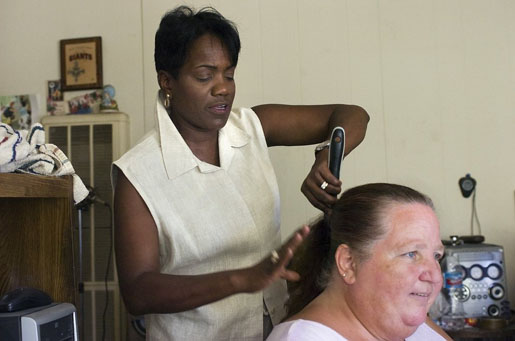
The Labor Department also announced that effective Jan. 1, 2015, most direct care workers will be entitled to receive federal minimum wage and overtime pay protections. Direct care workers are workers who provide home care services, such as certified nursing assistants, home health aides, personal care aides, caregivers, and companions.

This is how change happens: bit by bit, incrementally, and job by job.

While many hoped for big changes when President Obama was sworn into office, expectations were set so high, he had an impossible task to meet them. While some small companies may complain about the new federal minimum wage rules, it is a basic tenant of living in our country that companies that secure a federal contract should pay a reasonable wage. Likewise, the notion that home care is real work, and that when a person runs a business that provides home care, they should be subject to paying the federal minimum wage with overtime is obvious. The rules set by the secretary create a floor, one that has been needed for a long time.

People who operate businesses want to make a profit, and that’s no crime. Running a profitable business is something basic and needed in our society. The political debate has been about the amount of government regulation and subsidy, and the dynamic of our bicameral legislature has been to create an environment that favors large, corporate businesses in the post-World War II era. Businesses like the top federal contractors.

At the same time, there is an economy of low wage workers, like those that provide home care. Someone knows a friend or relative who needs care, and an agreement is reached for compensation. The amount of compensation may not be as important as providing the service, especially when people can’t afford professional care. Personal relationships enter into the picture. Often this work is done off the books.

My point is this. Between the publicized, formal programs of the Labor Department and the reality of daily life there is and always will be a gap. That’s where many of us live our lives. We should appreciate the work of the Obama administration to fix known problems like those related to federal contractor wages and home care workers. In the working class, we may view that as nice, but less relevant to our lives than all of the brouhaha suggests.

It is something that we even noticed President Obama did what he said he would with regard to setting the minimum wage for federal contractors. But then that’s what blogs are for.

~ Written for Blog for Iowa