Categories
Work Life

Plasma Sales and Politics

LAKE MACBRIDE— The Cumulus radio station in Cedar Rapids was advertising how a person could earn up to $340 per month selling their plasma. It’s enough money that it was worth a look to see if plasma sales could fit into our bottom line. It sounds kind of grim, but people do it all the time.

Plasma is the pale, yellow liquid portion of blood that helps our bodies control bleeding and infection. When one donates plasma, our blood is removed and the plasma separated before blood is returned to our body. We generate more plasma within a couple of days so twice a week donations are usually possible.

Donating takes about an hour and plasma collection centers make it easy with a straight forward, step-by-step process. Importantly, they explain how payment is loaded on a debit card. It is literally using one’s body as an ATM.

Several self-employed and low-wage earners in my circle use plasma sales to supplement monthly income. Got a toothache? Better schedule some sessions at the plasma center to get dollars to pay the dentist. One suspects residents of our nearby college town use the cash for cigarettes, sugary drinks and beer, but in any case, plasma sales can be a reliable and steady source of income if one meets the requirements for donating.

The money could be put to good use. For example, it could be used for political donations. That way, when a political telemarketer called, I would know my approximate annual budget, and be able to say, “Yes. I’ll donate that $100, which will take me four plasma sessions.” Politics would literally be based on blood money then.

We could go a step further and say that all financial contributions to politicians had to originate in plasma sales. There would be a natural limit to how much a person could donate, and a restriction could be placed on corporations that said something like, corporations can make political contributions, but such contributions must be paid via the plasma of shareholders, imposing a natural limit to money spent by corporations during political campaigns. I bet corporations would exercise their free speech differently under such a rule.

If my modest proposal about political contributions through plasma sales seems a bit edgy, I am pretty sure it would work. Importantly, it would set a human limit on political contributions. Having skin in the game would take on a whole new meaning. Most Americans are asleep at the wheel of politics, and would not contribute, so there is little danger of a glut of plasma on the market.

If times get tough, I’ll re-visit adding a plasma sales income line to our household operating budget. For now, I’m just glad I don’t have to do it.

Categories
Environment Social Commentary

Pelicans and Cranes

Crane at Mehaffey Bridge

LAKE MACBRIDE— The pelican migration is underway, and flocks of the white and black birds fly lazily— above our lakes and river— back and forth in a pattern I recognize, but can’t adequately describe. Pelicans appear here twice a year. I stopped during a trip to North Liberty to watch them fly near the construction site for Mehaffey Bridge.

I am leading a new life with my beater of a car. The radio has six preset buttons, of which four are set. I haven’t tested the cassette and CD players and listen mostly to a country station in Cedar Rapids owned by Cumulus Media. The music fits my new lifestyle, or seems to.

Country music on Cumulus gets me thinking. It is imbued with a certain familiar life, and while on a trip to work or to market, it is easy to suspend disbelief and listen. The songs are places where I don’t have to be me until Monday, people cope with loss as they drive your truck, and where “I found Jesus” rhymes with “I wrecked my first car. I tore it all to pieces.” Whether one likes the new country music or not, the snippets of reality are tangible, visceral the way manual labor is— stripping away the intellectual aspect of our lives. That may be the point of my predilection to hit number four on the presets most often— sometimes it is good to just stop thinking.

Consider the cranes. Man-made with engineering specifications that enable a reach four stories above the roadway to build the new bridge. They are built to fit the task, work from floating barges, and reach heights limited by design. Our lives today tend to be more like cranes than pelicans. Near these man-made lakes, we lean toward believing Bill McKibben, that we are at the end of nature. Except no one told the pelicans.

Beyond the fixed world of my used Subaru, with its country music tuner and enough life to keep me going for a while, are the flocks of pelicans, doing what pelicans do— part of which is inspiring us to believe there is more to life than what we find on main traveled roads needing an overhaul.

Categories
Home Life Kitchen Garden

Buttermilk Biscuits

Buttermilk Buscuits
Buttermilk Biscuits

Here is a new recipe for buttermilk biscuits. It produces a light biscuit with a crunchy exterior, and uses one-half pint of buttermilk, which is the smallest size sold in grocery stores.

Ingredients:

2 cups flour
4 tsp baking powder
1/4 tsp baking soda
Scant teaspoon salt
4 tbs cold butter, grated
1 cup cold buttermilk

Preheat the oven to 450 degrees.

Combine the dry ingredients in a mixing bowl, grating the butter directly into the dry ingredients using a box grater or equivalent. Using your fingertips, mix the butter into the flour. Don’t over-do it. Add buttermilk and make a dough, which will be sticky.

Turn the dough onto a floured surface and fold in half 8-10 times. This action causes the biscuits to be flaky and separate along the ghost of the fold after baking. Press the dough into a one inch thick slab. Cut with a 2-1/2 inch biscuit cutter and place on a baking sheet.

Bake until the biscuits rise and are lightly browned on top, about 14-15 minutes.

Categories
Home Life Kitchen Garden

Wisps of Morning Clouds

LAKE MACBRIDE— Wisps of clouds in the western sky are colored gray and pink, touched by white, against a blue sky. The leaves on the pin oak tree are falling, making way for this year’s growth. The lilac bushes, apple trees and every other plant in the yard are coming alive after winter dormancy. The driveway is damp with last night’s rain, and there is hope the garden will dry out enough to dig today. Not much hope, but some.

The temperature is forecast to peak at 55 degrees when I have to depart to cross the lakes to North Liberty around 3 p.m. In these windows of time— between now, and the next thing— we might make a life if we apply ourselves.

The cucumber, zucchini and yellow squash seeds I planted April 7 have germinated and are forming their initial two leaves. The tray of lettuce has grown, and the tomato seeds are still a bit spindly, but for the most part have four leaves, and should be ready to plant when the last frost is past. The experiment with seedlings is progressing acceptably.

After consulting with a farmer friend, I decided to wait to plant the turnip seeds in the ground, rather than start them in a tray. This year, I hope for a lot of turnip greens to make soup stock for summer and beyond.

I can  make a brush pile from the twigs and branches collected since last fall. That is, if the ground is too wet to dig. Take down the short chicken-wire fences where I started peas last year, and clear a spot for the burn. It is an hour’s work to be done mid-morning.

Under a clearing sky I’ll make a day of it— gardening and yard work— before crossing the lakes. This shore preferable to that, but both important to sustaining our life on the Iowa prairie.

Categories
Social Commentary

Seven Ages Revisited

LAKE MACBRIDE— One can like Shakespeare and dislike Erving Goffman, the sociologist who used a dramaturgical analysis to demonstrate a relationship between acts in our daily lives and the acting of actors in the theater. Goffman won awards and stuff, but knowing who he is and his seminal work, “The Presentation of Self in Everyday Life,” is like insider baseball in the 21st century.

With the proliferation of television, and its changing content over half a century— its lean toward programs with people acting out a reality— theater is often forgotten, except in schools and among devotees of the trade. Yet, Shakespeare endures, Goffman does not, the latter’s work being eclipsed by the popular notion that we “don’t need the drama.” In contemporary settings, drama is a thing, recognizable, and something eschewed, especially within the working class.

As much as I like it, “As You Like It,” where the seven ages of man speech is found, was not my favorite Shakespearean play. That honor is reserved for “A Midsummer Night’s Dream,” “Richard III,” or “The Merchant of Venice.” In any case, the seven ages may need an American revision to accommodate the post-industrial society. First, the setup,

“All the world’s a stage,
And all the men and women merely players;
They have their exits and their entrances,
And one man in his time plays many parts,
His acts being seven ages…”

Goffman has not ruined this, but close.

“At first the infant,
Mewling and puking in the nurse’s arms;”

No argument here, as being born and infancy represents our first age in society. In some American circles, people prefer a union nurse as a place for mewling and puking, but that number seems an infinitesimal compared to a global population of more than 7 billion people.

“And then the whining schoolboy, with his satchel
And shining morning face, creeping like snail
Unwillingly to school.”

Check with a grade schooler and you will find most like school, like their teachers, and like going to school. I don’t understand why children are so willing to leave home for school, but in the Midwest, they are. Of course the satchel has been replaced by a back pack as the back pack makers association has seen to that via an advertising campaign targeting schoolers.

“And then the lover,
Sighing like furnace, with a woeful ballad
Made to his mistress’ eyebrow.”

Such youthful expiration has become an extension of the age of the schooler. It may be the one place where drama comes into play, as a young lad will say or do almost anything, including being dramatic, to secure the heart (among other things) of his mistress. The male centric outlook of Shakespeare rubs the wrong way here, as acceptance of diverse sexual orientation has been becoming commonplace. Combine that with furnace-like sighing continuing beyond what seems reasonable through the dalliance of people who should know better for their age, and one can posit that the age of the lover is not clearly distinguishable from the age of the schooler, which goes on for much too long.

“Then a soldier,
Full of strange oaths, and bearded like the pard,
Jealous in honor, sudden and quick in quarrel,
Seeking the bubble reputation
Even in the cannon’s mouth.”

Soldier is the wrong metaphor for a 21st century age, as so few people serve as such. We hire our wars done by others, soldiers, mercenaries and contractors. We feed soldiers platitudes like “support the troops” and “honor their service,” as a further means of distancing ourselves from the horrors of war. Such distancing contributes to furtherance of a military complex that is already ubiquitous. There are seekers of “the bubble reputation,” and perhaps that is a better name for an age. The age of bubble seekers, where one spins a cocoon around a life fixed in gratification. A place where one can ask the question, what’s in it for me, with impunity.

“And then the justice,
In fair round belly with good capon lined,
With eyes severe and beard of formal cut,
Full of wise saws and modern instances;
And so he plays his part.”

The age of justice sounds so much like a time when people spend too much time viewing televised sporting events in a society abundant with sugary drinks and salted snacks. There is no justice here, except when people contract Type II diabetes and other diseases associated with the fat, sugar and salt they consume in excess. This age seems an extension of the bubble seeker age, only living life in the bubble we created, with some experience of what “works for me.”

“The sixth age shifts
Into the lean and slippered pantaloon,
With spectacles on nose and pouch on side;
His youthful hose, well saved, a world too wide
For his shrunk shank; and his big manly voice,
Turning again toward childish treble, pipes
And whistles in his sound.”

The age of bubble seeker redux akin to where the baby boom generation is today.

“Last scene of all,
That ends this strange eventful history,
Is second childishness and mere oblivion,
Sans teeth, sans eyes, sans taste, sans everything.”

Better known today as assisted living, followed by hospice. Society seems to be trending to replace the age of bubble seekers with the age of assisted living as early as possible, with 50-plus being the new age for admittance to some assisted living villages.

So there you have it. The seven ages of man reduced to five: infancy, schooler, bubble seeker, bubble seeker redux and assisted living. Ye gods, what have we become?

Categories
Work Life

On Manual Labor

LAKE MACBRIDE— A priest used to joke with me about doing manual labor. It was a pun comparing working with your hands to the common Spanish name Manuel. The context was work we were doing with undocumented immigrants, many of whom were from Mexico and countries further south. When one explains the pun, it loses something, and all that is left is hard work that someone has to do— and the living people make while doing it.

The kind of labor new immigrants perform, farm work, landscaping, roofing, housekeeping, restaurant work and others, is a basic component of society’s economic model, including in Eastern Iowa. From reading Peter Kwong’s book The New Chinatown, the propensity for immigrants, documented and non-documented, is to take any kind of paying work to pay for their passage, which sometimes included coyotes or snakeheads, and secure the possibility of American-style freedom. Some of my more cynical friends might say that America offers the freedom to work for less.

During my career as a manager, I performed little physical labor. Sure, we hauled groceries collected for the local food bank to the trucks, and after the 2008 flood hit Cedar Rapids, we helped employees muck out their homes, but the main work we did was office work. That I would now include manual labor in the mix of a sustainable life on the Iowa prairie is indicative of three things.

Manual labor jobs are available. In my case, from the conception of the job opportunity until hiring was less than a week. Once I began work, conversations with others revealed many job opportunities in a variety of settings. On some days it seems like every one of us is on the move from this job to a better job, and the manual work we perform is a compromise to bring in some cash now.

A certain level of fitness is required. Endurance, use of the extremities and normal musculoskeletal development are all important. My life has been blessed with good health, and relevant to manual labor, has been free of back injury. I can do the work.

When jobs pay below a living wage, the presumption, often unrealized by the worker, is that a broader social support network is needed to take care of the rest of life not covered by wages. Those that have such a social support network are more likely to get what they want out of working with their hands.

The sustainability model I described previously wouldn’t make sense unless there were some activities dotting the matrix. Manual work serves the need to prime the pump, enabling the model and allowing for entry into a progressive path to prosperity.

One comment. The literature on immigration and how people get started on a path toward the American dream is well documented by others with much better credentials than mine. What is different, and why I write about it here, is the transformational effect of having the experience, rather than living it vicariously, filtered by other writers and the media. This may be the only way to fully understand what manual labor means to economic progress. It may be the only way to sustain economic progress.

Categories
Home Life Kitchen Garden

Dreams of Marble and Granite

Bonnie Swearingen - Photo Credit: Jet Magazine
Bonnie Swearingen – Photo Credit: Jet Magazine

LAKE MACBRIDE— Right on schedule, thunder and lightning began to build around midnight as I crossed the lakes on Mehaffey Bridge Road. The county funded reconstruction of this road, and in a week or so, the direct route to the warehouse won’t be available until the roadwork is completed. The thunderstorm moved in after retiring to bed, and I followed the sound and light until I fell asleep.

I spent some time in the garden yesterday, although not much. The ground was too wet for planting radishes— the next outdoor vegetable. The lettuce and arugula have not sprouted yet, and I drove the fence posts into the mud-like soil, inspected the garlic, chives and oregano, and went back inside. The chives are big enough to split, which I will do when the soil dries.

Indoors, my basil, arugula and lettuce “bombs,” have sprouted, and the trays of seedlings need watering. The tomatoes are showing the third and fourth leaves, and soon will be sturdier than their current spindly presence. Planting my own tomato seedlings, and growing them to this stage is new ground, and it looks promising.

Either waking, or dreaming— maybe somewhere between— the Standard Oil Building in Chicago was on my mind this morning. I viewed it being constructed while in college, and worked there for the oil company. The bad decision to clad the exterior of the building with 43,000 slabs of Carrara marble was being rectified while I was there, replacing it with Mount Airy white granite. It was a big project, and ongoing for my entire tenure working for the then ninth largest corporation. The company easily afforded the $80 million price tag for the project.

Some say it was Mrs. John E. Swearingen, who wanted the marble. The spouse of Standard Oil of Indiana’s chief executive officer, Bonnie Swearingen, was active in the Chicago art culture, and was photographed with Mayor Daley, a host of celebrities and art patrons, such pictures appearing regularly in the Chicago papers. She likened her husband to Napoleon saying, “Napoleon isn’t really dead. He’s alive and well and disguised as my husband.”

One can’t blame her for the problems— the marble was too thin, the effects of acid rain were too harsh— but the building itself seemed a tribute to ego, hers and her husband’s. The marble slabs started falling off during construction.

Working with our hands frees a mind to wander, and mine is wandering down a lane that includes much of my past life. I don’t know if it is my life passing before my eyes during a steady march to the grave, or if memory is loosed, distracting me from present work, and saying something else. Exactly what, is not clear, except for the persistence of dreams about marble and granite.

Categories
Home Life Kitchen Garden

Rainy Monday

LAKE MACBRIDE— Rain fell against the bedroom window, framing the day for inside work. The forecast is for showers to end in an hour or so, with a chance of thunderstorms tonight. Today’s high temperature is expected to be 73 degrees. We need the rain, and welcome warm temperatures. Now that the ground thawed, moisture should soak into the topsoil for gardens, lawns, trees and field crops. I would have preferred to work outside this morning, but there is plenty to do inside. We’ll see how things go as the day progresses.

Yesterday, I made up more seedling trays. The CSA provided some used plastic trays which are now planted in yellow squash, cucumber and zucchini. They are situated near the south facing window in our bedroom, and there is not much room for more on the folding table.

To water the seedlings, I set up the lid of the recycling bin on a table in the garage and filled it halfway with water. I dunked the trays, one at a time, watering from the bottom. Each tray was warm to the touch as I carried it downstairs, evidence the south facing window was beneficial.

There is a significant investment of time in this year’s seedling experiment. Too, if the seedlings don’t sprout and mature properly, there will be the additional expense of purchasing from the farmers markets or grocery store. After cutting soil blocks at the CSA and seeing plants grow in the greenhouse, I gained confidence, and there is promise of success in most of the cells.

It has been 27 days since beginning my temp job at the warehouse. At the beginning, it wasn’t clear I could hack it, but that feeling has been overcome, and physical adjustments have been made and assimilated. With a start time of 3:30 p.m., the best hours of the day are mine to work on a multitude of projects at home. This inner focus, coupled with gardening, is what is needed most for the time being, while working toward a sustainable life on the Iowa prairie.

Categories
Work Life

From Middle to Working Class

Construction Site
Construction Site

LAKE MACBRIDE— Today’s usage of the phrase “middle class” is meaningless. It is a marker for a world dreamed up while writing talking points for political campaigns. A middle class so created, never existed. It was as if we took the broken theories promulgated during the rise of mass society, and switched things around so that economic means was the determinant of whether one was or was not in the middle class. With the one percent of wealthiest people at the top, and roughly 15 percent of people who live in poverty at the bottom, the 84 percent in between are now dubbed middle class.

In our cultural background is the idea that we were all created equal, and have innate talents, some more so than others, that could and should be developed so that by application of native skills we can rise and fall in society. The so-called American dream is centered around this notion.

To some extent, the story is re-enacted as occasionally a mail room clerk rises to become chief executive officer of a large corporation. Such instances of rise in a workplace are limited in number, increasingly so, as businesses consolidate, on a global scale, under fewer corporate CEOs. In this world, the society of business is better served by increasing the number of people available to become mail room clerks, at the lowest possible wages, than by creating opportunities to get out of the mail room. Such stories are important to keeping people in their place in the economic pecking order, and I suspect that is why they are so popular.

If “middle class” is a meaningless phrase, “working class” is not. The long story of immigration to North America includes countless people who traded work for passage across the Atlantic and a chance for freedom and prosperity. I am thinking of my own ancestors and their cohort, who arrived in the 17th century in what would become the state of Virginia. They came, not as landed gentry, but as working people, delaying start up of their own farms to work for someone else who needed labor, and to secure it would pay travel costs to secure indentured servitude. This story is also part of the American dream— that through individual efforts and sacrifice, a person could become a landowner, and thereby rise in society. There were likely more indentured servants that rose to become landowners than mail room clerks that became CEOs, but their story is told less often.

Indentured servitude doesn’t exist in the same way in the 21st century, but it serves as an example of how people will make deals with the capital class to get ahead. Such deals include working for a labor broker to earn less than a living wage, in some cases, less than minimum wage, so that business can have sufficient low-cost labor to meet its needs. Without a sufficient working class, the capital class would be out of business. Working class rights, not middle class rights, should be the focus of our political leaders. It’s not, at least that I can see.

If one sits in lunchrooms and listens to working class concerns, the conversations are not about the minimum wage, unions, or much at all to do with the relationship between labor and capital. The discussions are about personal relationships, health issues, post-traumatic stress disorder of veterans, and addiction to tobacco, crack and sugary drinks.

While being a member of the working class doesn’t provide a pension, or health insurance, or security of almost any form, it is how a large segment of Americans live. We ought to be hearing more about it from the corporate media, from politicians, and from each other. If we believe in the possibility of social progress, our focus should rightly be on the working class, as it is here that the American dream was born. Neglected, it is where the dream will die.

Categories
Work Life Writing

Sustaining a Creative Life

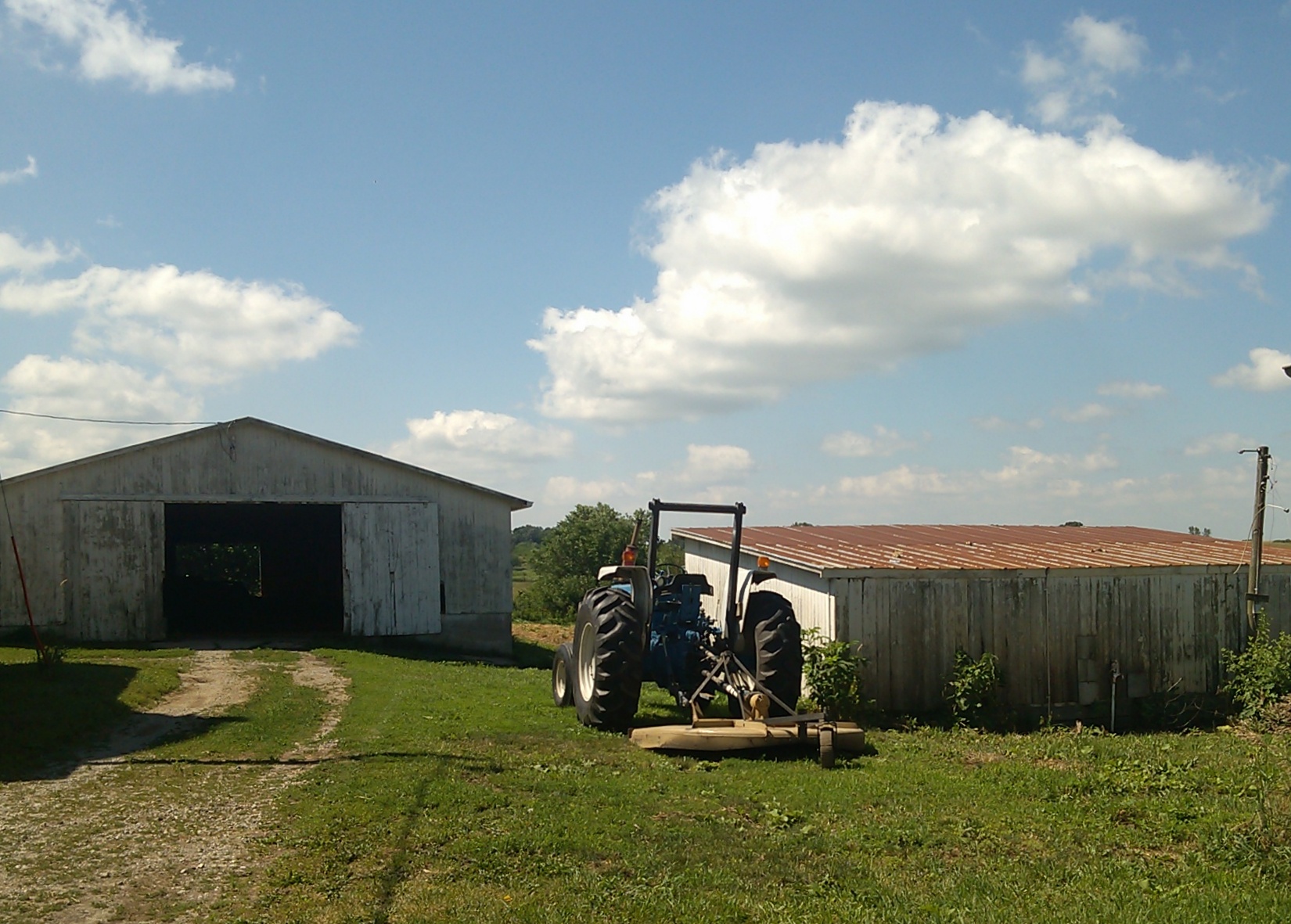
Barn WallLAKE MACBRIDE— Today, the key element in sustaining a creative life in Big Grove Township is magnesium sulfate, or Epsom salt. A thirty minute foot bath provides a form of relief few other things can provide. I recommend it, although for the most part, people already know about it, and for some it works, for others, not so much. Well-cared for feet are something we take for granted, but shouldn’t, because they are an important foundation to creativity.

When I was at university, I shared a house with a constantly changing group of creative people. We had our own rooms, and shared the living room, bathroom, and kitchen. Every once in a while we had a joint clean up activity, although housekeeping was not a priority. My contribution was to attempt to keep the kitchen clean, and recall doing a lot of everyone else’s dishes. I didn’t mind and enjoyed seeing pots and pans my grandmother had given me mixed in with everyone else’s kitchen gear.

Writers, poets, musicians, artists, a drum maker, a publisher, an aquarium builder, a travel guide and emerald seller, an auto mechanic, and guests of all kinds passed through the doors of that place. Some found notoriety in what would later become the city of literature, but mostly, people were not well known, except to each other.

I briefly shared my room with some buddies from Davenport. One went on to become a librarian. Another, who practiced martial arts, moved to California, and eventually got a credit on the Hollywood movie “The Matrix.”

A woman arrived halfway through my stay. She found a part time job, and spent every morning at a table in the entryway writing. As an early riser, I often ran into her, but tried not to interrupt. She hooked up with a poet, and eventually left with him for California, taking one of my grandmother’s saucepans with them on the train. I don’t think we called it hooking up during the early 1970s.

Later, the poet was known to sit at a typewriter with a gallon of cheap wine and write until he finished the bottle. This lifestyle is said to have led to his early death. I don’t know what happened to her.

That house was a place to camp out while pursuing other things. For me it was finishing a mandatory, but uninspiring bachelor’s degree. It was there I spent a morning tie-dying T-shirts while listening to my commencement address on the radio. I declined a job offer from the Oscar Mayer Company, which had provided a four year scholarship. When the summer ended, my sparse belongings went into storage, I took what money I had, converted it to American Express traveler’s checks, and went to Europe with my backpack for what began without a plan, but ended being twelve weeks of youth hostels, art museums and train rides. My backpack was stolen when I arrived in France, and that is another story.

There is no defined path to sustaining a creative life. Instead, we secure food, shelter and clothing, protect our health and well-being if we are able, and go on living. If we are creative, it is that spark of interest in society that sustains us, or can, if we recognize it— and Epsom salt and other common elements to help ease the pain of living.