Categories
Living in Society

Legislature to Convene, Life to Go On

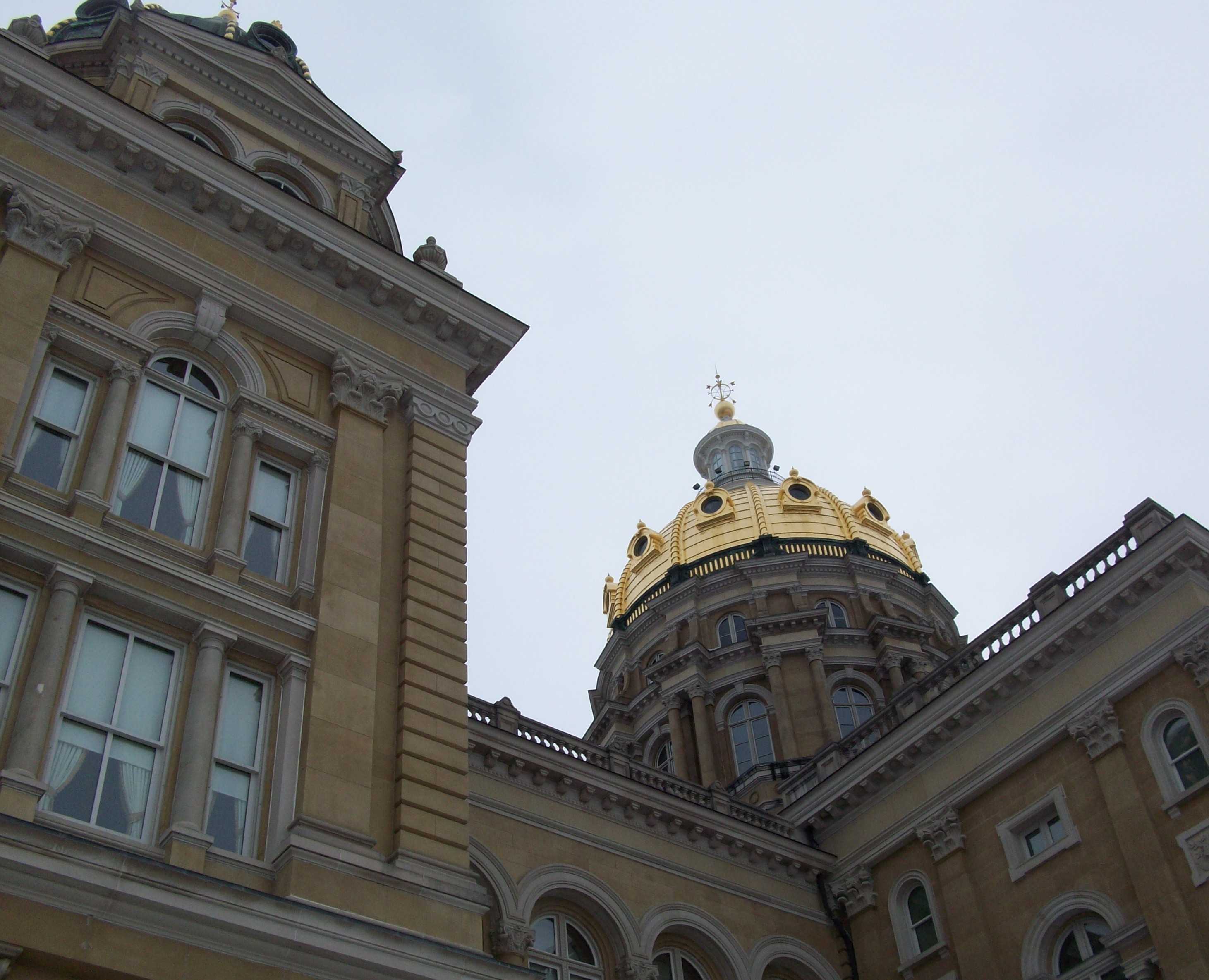
Capitol Dome

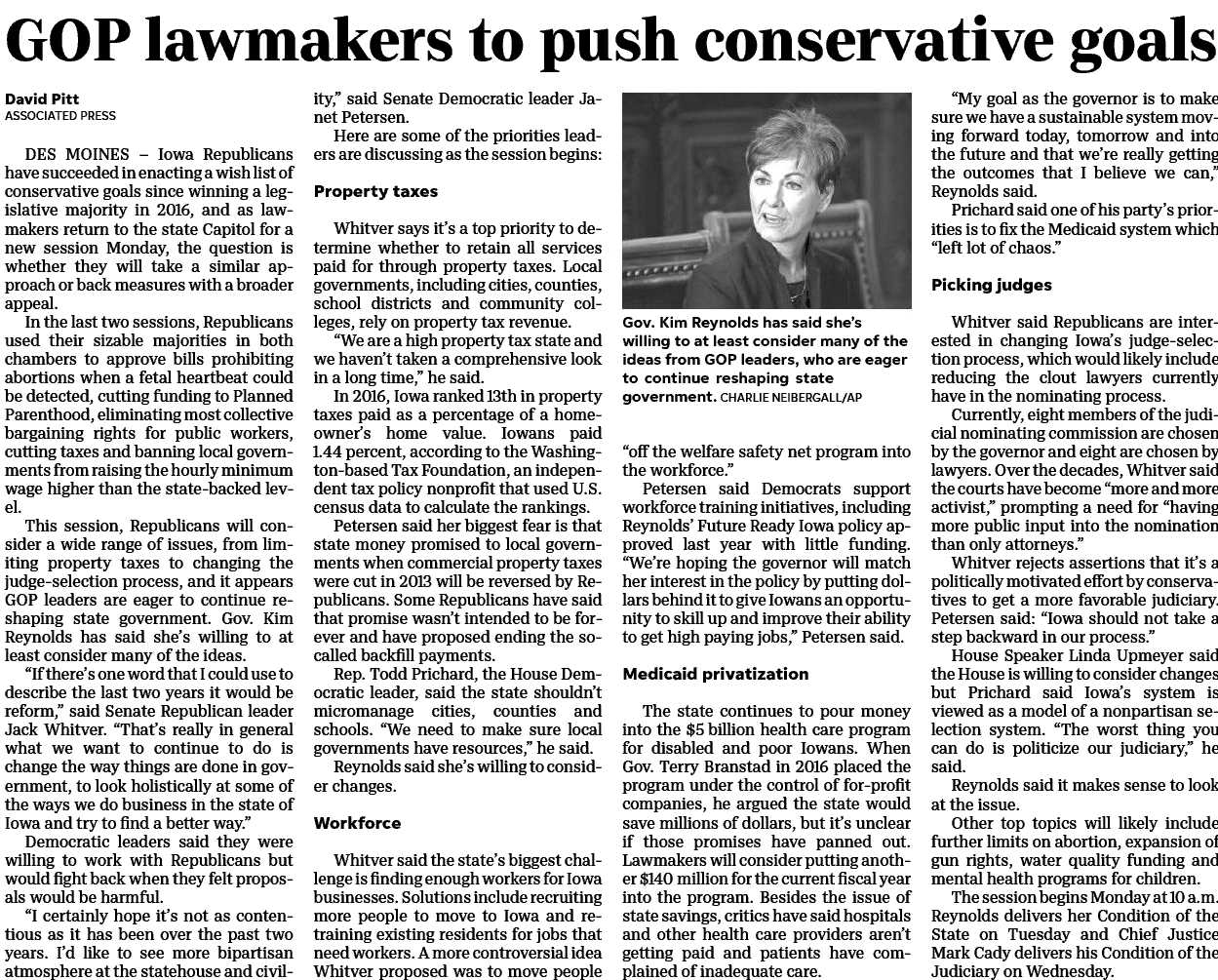
This morning our local newspaper, the Iowa City Press Citizen, ran an Associated Press story about Iowa GOP priorities during the legislative session convening today. The party is intent on re-making Iowa’s governance. By the end of this two-year general assembly they seem likely to touch every aspect of it.

We won’t hear much about Democratic priorities as Republicans continue to control both chambers of the Iowa legislature. What Democrats would have done this session faded into the history of the 2018 midterm elections. Those issues are likely to be forgotten and practically speaking, already have been. Former U.S. Senator Tom Harkin famously said government is like a car’s transmission. When in D (Democratic control) the state moves forward. When in R (Republican control) the state moves in reverse.We are a red state for at least the next two years and it’s up to the Republicans to make progress.

I certainly would hope the governor will reach out to Democrats,” Senate Minority Leader Janet Peterson told the Cedar Rapids Gazette. “I think there’s a number of issues where we can come together and come up with bipartisan solutions.”

Time will tell, although it won’t take much time for the truth about bipartisan possibilities to reveal itself.

In our household there are some concerns.

When the IPERS pension system completed its last biennial review, Republicans brought in a Koch Brothers backed organization called the Reason Foundation to assist. After public conversation about potentially changing IPERS, the backlash was such that House Speaker Linda Upmeyer is saying no changes are contemplated. Governor Reynolds publicly agreed. Politically, it would be dumb for Republicans to reverse course on IPERS during this general assembly.

Governor Kim Reynolds will support her predecessor’s decision to privatize Medicaid, one of the most contentious issues in the 2018 midterms.

“We got off to a bad start,” Reynolds acknowledged to the Des Moines Register. “We took on probably more than we should have. We should have phased it in. And we probably tried to — we talked too much about savings.”

Newly sworn in State Auditor Rob Sand has pledged to perform an audit of the state’s Medicaid program to supplement what his predecessor produced after the midterm elections.

Reynolds is right to a degree. The measure of success or failure of privatized Medicaid will be how clients, practitioners and health organizations are treated by the managed care organizations. The cost of Medicaid to Iowans will matter as well. By almost all accounts, service to these constituencies sucked immediately after implementation. The measure of Republican success in improving Medicaid privatization after a disastrous implementation will be the degree to which patients see less hassle receiving care the program was designed to deliver. The administrative aspects of the program, including timely payment of providers, will matter as well. Will the care get better? Will providers get timely paid? Will there be savings? It seems too early to tell.

One of the things we like about Iowa has been fairness in governance. We have proven and fair methods for nominating judges to the bench and for redistricting after the decennial U.S. Census. Voter rights came under attack during the last general assembly and it was recently learned voters who should have been able to vote were disenfranchised by clerical errors originating in the Secretary of State’s office. For Iowa to be Iowa, it is important to maintain fairness in governance which includes making voting as inclusive as possible. All three of these areas of governance are expected to be reviewed this year.

Republicans will do what they do. They don’t seem concerned about backlash and believe they are doing what Iowans want. They won the 2018 elections and now we get another chance to see how they govern. If the 88th Iowa General Assembly is like the 87th, I believe they won’t maintain their majority beyond the next election.

I’ll be watching for points of leverage to influence the legislature, like there was during the IPERS discussion. For the time being, life will go on as we sustain our lives in a turbulent world.

Categories
Environment Living in Society Sustainability

Day to Day Politics

2018 Top Instagram Photos

Last June I broke publicly from our state representative Bobby Kaufmann and endorsed Democratic candidate Jodi Clemens for House District 73 in a letter to the editor of the Solon Economist.

With a circulation of less than 1,000 weekly copies, I’m not sure my endorsement was widely read.

I went on to post three additional pieces critical of Kaufmann before the midterm elections. I am confident he saw the ones in the local newspaper. He won the election without breaking a sweat.

Today’s question is whether I should drive to town to attend his town hall meeting. The 88th Iowa General Assembly convenes tomorrow.

Yesterday I emailed Kaufmann my priorities for the session, mentioning three things:

  • The legislature should support ways farmers can produce more revenue per acre.
  • I questioned the need for more tax relief and encouraged him to find a permanent solution to the back fill problem Republicans created in 2013 when they altered property taxes for farmers and corporations.
  • I reminded him of our local issue of keeping the restriction on larger horsepower boat motors on Lake Macbride during boating season.

Of everything on my political wish list, these three things seem possible yet also insufficient. The better way to impact the legislature would have been for Clemens to have won the election. We came up short. It’s time to accept the results and move on.

In a Sept. 24, 2016 opinion piece in the Cedar Rapids Gazette I articulated what is most important in society: follow the golden rule, nuclear abolition, and mitigate the impacts of climate change. Under President Trump, none of these is going well in our government. My work continues regardless of who my elected officials might be. Politics by its nature will almost always disappoint and party affiliation of our leaders does nothing to change the primacy of these focal points for action.

I’m left wondering why I would attend today’s town hall meeting when there is other, more important work to do.

The legislative agenda is being set by Republicans. If Democrats were in charge, it would be much different. I don’t accept the mental construct that the opposition party should resist the party in power as an end goal for the Iowa legislature. Likewise the idea we are “holding elected officials accountable” by constantly calling and emailing them is off the mark. I’ve been in Senator Chuck Grassley’s D.C. office when such calls came in and the impact was a tick mark in a pro or con column on a tally sheet to be read by staff. Grassley gets his legislative feedback directly from Iowans in his annual tour around the state, and from the Washington, D.C. community of which he has long been a part. So it is with with local representatives. That’s a case for showing up today, although not a strong one.

When I wake each day I don’t think about politics until I read the newspapers. As humans we are attracted to conflict and there’s plenty of it recounted in news media. Republicans have been a long time coming to power. Now that they have it, they are remaking the state in their eyes, changing long-standing policy. That’s the nature of political power. The longer conservative Republicans maintain control of government the harder it becomes for Democrats to undo policy changes. With two more years under Republican hegemony it seems unlikely there is any going back to what used to be.


Snow stopped falling overnight. The driveway needs clearing then there’s community organizing work for the coming year. Our infrastructure needs maintenance and if we don’t do it, no one will. Isn’t that always the case?

It reduces to a simple maxim that guides me through life: there is no other, just the one of which we are all a part. That perspective gets lost in today’s political culture. Working to improve our culture is as important as anything else we do. Such work starts at home where I expect I will spend the day.

Categories
Living in Society

88th Iowa General Assembly – Is There Common Ground?

Iowa Capitol

Voters chose Republican control of the Iowa legislature last November and elected incumbent Republican Kim Reynolds governor. When the 88th Iowa General Assembly convenes next week, Democrats are expected to have limited influence over policy and law emerging from the state house.

We’ve been to this rodeo during the 87th General Assembly, and there is no reason to believe the efforts to remake our state in a more conservative mold will end. Is there common ground?

First, there is common ground, something forgotten during the politically divisive times in which we live. Among the most discussed issues during the general election were appropriate levels of funding for K-12 schools and higher education, improving water quality, encouraging a resilient system of agriculture, and bringing better fiscal discipline to privatized Medicaid.

There are other issues with less agreement that also require work. The legislature doubled corporate tax credits over the last five years and there is no evidence they are working to create jobs or improve Iowa’s economy. In 2010 voters approved a Natural Resource and Outdoor Recreation Trust Fund which hasn’t been funded by the legislature. In 2013, legislation mandated a “rollback order” shifting the property tax burden from businesses to homeowners and farms. The legislature has been budgeting a “back fill” to protect property owners and a permanent solution is needed. It seems likely the general assembly will produce an amendment to the Iowa Constitution to enshrine the verbiage found in the second amendment to the U.S. Constitution. To make any impact on these, Democrats will be required to work smart against tough opposition.

We live in a conservative part of the most liberal county in a conservative state. We have a Republican state representative and a Democratic state senator as we have since after 2010 re-districting. The message I have for them going into the 2019 session is simple. Hold the line on guns, tax cuts, worker rights, reproductive rights. Create a bipartisan initiative to help farmers produce more revenue per acre, and do things (anything) that makes sense and supports Iowa values.

We’ll see if they are up to the challenge.

Categories
Home Life

Cabin Fever

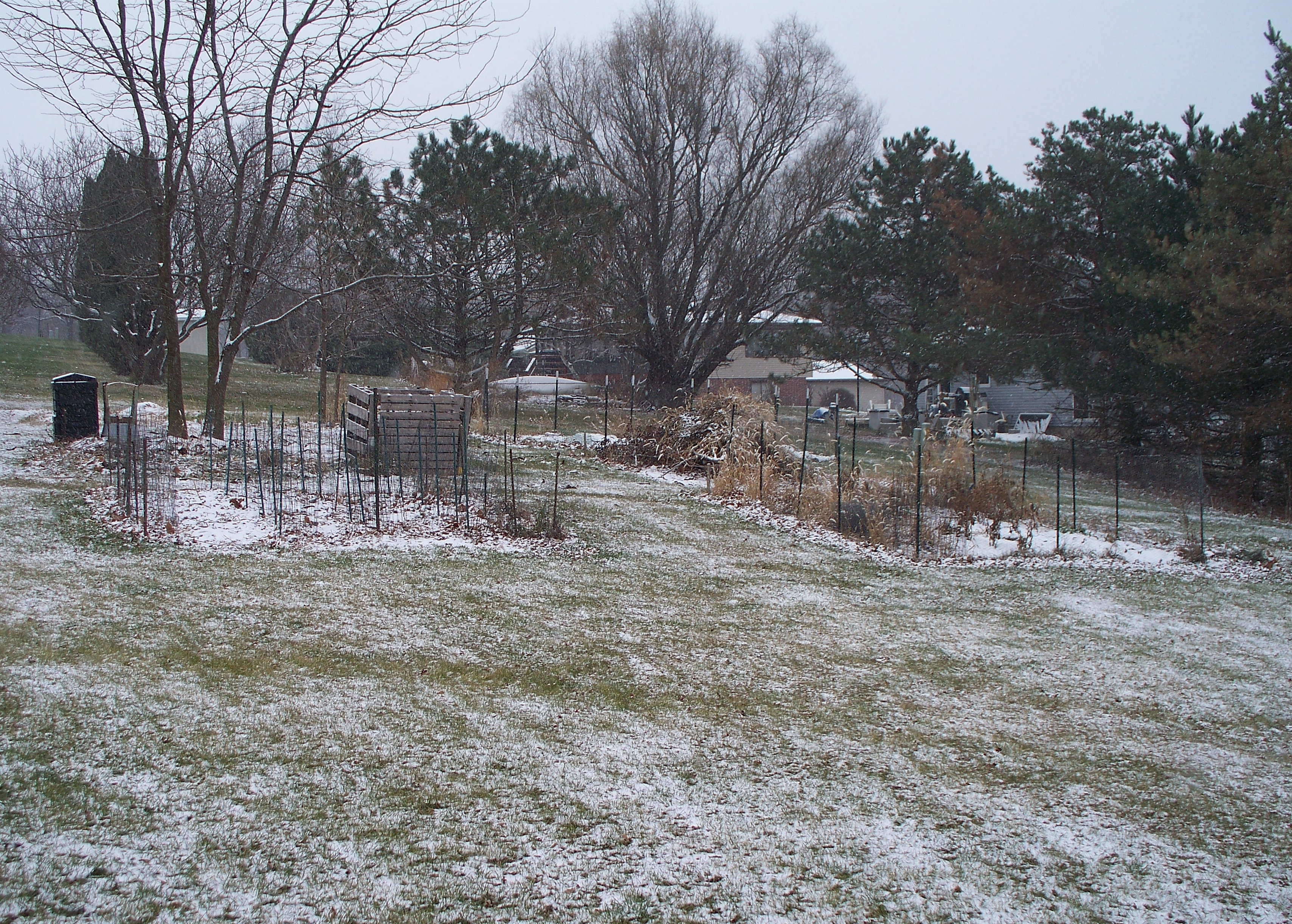
Garden in Winter

My to-do list has grown since retiring from my transportation career in 2009. The number of items on it was supposed to decrease yet it’s not.

After retiring that July 3, I engaged in life outside home in a way I hadn’t in a long time. I joined groups working on social issues. I joined the boards of some of those groups. I had a measure of freedom to pick activities from the broad palette found in a region with a large University town and Iowa’s second largest city. Almost ten years later I view that first retirement as a failure. I left a career and job but didn’t stop working.

This time, beginning with leaving full-time work last March and taking my Social Security pension, it is different. The stress of living paycheck to paycheck is relieved yet the to-do list sits quietly, awaiting action. I can’t get started and each day becomes a challenge to gain impetus on it. Why? I blame it on cabin fever.

“Retirement” is a story we tell ourselves in order to live. When I write, “career in transportation,” it stands for working 25 years in a series of jobs in that field. I worked to provide financially for our family. In quiet mornings of 2019 that narrative is stripped away leaving me mired in passing time. I have to work through it and get on track.

Part of the challenge is awareness. I’m of an age where every path chosen, every task undertaken, means another is pushed aside, maybe never taken up afterward. Perhaps it’s always been this way and I didn’t see it, wouldn’t acknowledge it. Choices made now have a different meaning — the bucket has limited capacity to hold our tears and sweat and I must choose carefully.

Of course that’s also some bullshit. That the door leading to the garage needs painting doesn’t go away. It will take several hours with buying supplies, prep, undercoating and finish. It can be fit into my schedule adding something positive to the quality of our lives. We only ever have the moment in which we live. There is no bucket of tears.

If I’m feeling cabin fever, not to worry. I’ve arranged start dates at the farms, and warmer weather will spark work on the garden. As warm as it’s been, I could work in the garden now, removing the weeds and fencing, organizing the plots. However, cold weather is coming, I hope. Once it gets below zero for a week, there is winter pruning to do… then a burn pile… then before you know it, back in the swing of things.

If we stay busy, cabin fever disappears. Our only challenge is to get started.

Categories
Living in Society

Julián Castro in Solon

Julian Castro Photo Credit – Department of Housing and Urban Development

SOLON, Iowa — A group of local, Democratic activists met with former Secretary of Housing and Urban Development Julián Castro on Jan. 7 at the Solon Community Center.

Castro was staffed by long-time political operative and former Iowa Democratic Party chair Derek Eadon on a brief tour of Iowa with stops in Cedar Rapids, Solon and North Liberty. Castro said he plans to announce his intentions regarding running for president in San Antonio, Texas on Saturday. It was clear the announcement will be he’s running.

The chairs of the Cedar and Johnson County Democratic Parties attended, as well as three current and former Solon City Council members. The gathering was intended to be intimate. We each had our turn asking questions and commenting on the prospects of a Democrat winning in rural Iowa.

Electricity service went out shortly after we’d gathered around some tables that had been pushed together. The outage extended throughout the city and included rural areas. We continued to talk in a room only partly illuminated by candle and mobile device light.

Castro doesn’t plan to accept political action committee funds in his campaign. Is he bringing a knife to a gun fight? He said he’s not and that sufficient funds could be raised from small-sized donations from individuals. Mayor of Swisher and Johnson County Democratic Party Chair Chris Taylor confirmed that eschewing PAC money included taking none from labor unions. In addition to campaign finance, Castro’s priorities include affordable housing, healthcare and infrastructure — core Democratic values.

While attendees were curious about Castro he repeatedly turned the tables on us, asking what our friends and neighbors were thinking and saying about policy. He was there more to listen than to be interrogated about his potential candidacy.

When my turn came to talk about policy, I said policy is less important to a presidential candidate as long it reflects core Democratic values. I suggested he could follow the lead of House Speaker Nancy Pelosi regarding policy. Castro, who was sitting next to me, seemed somewhat taken aback by the comment as Pelosi has been a lightening rod of criticism of Democrats. It was hard to gauge the reaction of others in the darkened room.

What about rural voters? Media, including major Iowa news organizations, have cast a rural versus urban divide among voters. The flight of Iowa young people to our biggest cities and out of state is no secret. At the same time there are rural Democrats who regularly show up at the polls. Castro acknowledged the need for outreach to every voter.

Julián Castro seemed genuine, honest and engaged. Those are qualities we need in a president. I appreciate the unique, Iowa opportunity to sit down with him and discuss issues of the day. At 13 months until the first in the nation Iowa caucuses the county party is already lining up meeting rooms. While it is not yet time for them there is light on the distant horizon. We hope it is the light of change.

Categories
Work Life

Working for Women

Working at the Farm

I ran into my supervisor from the orchard at the home, farm and auto supply store. She stopped to buy dog food.

At the end of our conversation she asked me to consider returning to work in the fall. She paid for the food, slung the 40-pound bag over her shoulder and headed toward her vehicle and the next errand.

While driving home across the lakes, below aimless skeins of geese forming rough wedges, I considered women who were my supervisors over the years. Women were always better than men.

There is a clear division. When I worked in male dominated organizations like the military and in my transportation career, leadership was rough around the edges, sometimes just plain bad. It was as if men had less formal training in how to manage people, despite degrees from Northwestern, Cornell and Wharton. Women almost always understood their limits and knew what they were doing with a view to the long term. In the day-to-day of worklife, women were clear communicators focused on team results. It felt good to know my role and be part of a successful team.

Men, almost without exception, viewed work through a sports paradigm. With driving social styles, they often used brute strength to push an organization over a goal line. The focus was on results in each accounting period using whatever means were available. Women were no less aggressive in meeting objectives. The difference was it was more fun to work in a female-led environment.

My social style is driving, making the biggest challenge in being part of a team to slow down, listen and observe before taking off for a goal line on my own. I’m not afraid to lead and will. It’s more that tasks before us today require a more collaborative, sustainable approach.  The sports paradigm no longer cuts it.

The distinction between male and female supervisors should be superficial. That’s not been my experience.

By the time I arrived in our garage I was thankful for the many excellent supervisors I’ve had, both men and women. Among the women I’ve worked for I don’t recall a single clinker. I can’t say that about the men.

Categories
Living in Society

Toward the 2020 Iowa Caucuses

Jimmy Carter at the Iowa State Fair, August 1976 – Photo Credit – Des Moines Register

I didn’t vote in the 1976 general election where the choice for president was between incumbent Gerald Ford and Jimmy Carter of Georgia.

1976 was the first election in which new Democratic National Committee rules were in effect to change the presidential nominating process. Iowa went first, Carter realized it, and he showed up with an aid at the Iowa State Fair that August to campaign.

I was in military training and couldn’t figure out where I’d be on election day. I was unfamiliar with how service members voted and there was no mention of voting as I trained to became a military officer at Fort Benning, Georgia.

In 1976 voting didn’t matter to me. I was doing my part to serve our country, and the national nightmare that was the Richard Nixon administration had ended. I felt comfortable with the electorate deciding between Ford and Carter without me.

Even with its problems, the nominating process that now begins in Iowa is more open than it was when Hubert Humphrey was picked as the 1968 Democratic candidate for president in a Chicago hotel room by a small group of cigar-smoking men.

In 2016 complaints about “establishment Democrats” tilting the caucuses toward Hillary Clinton were frequent. George McGovern and other architects of the current nominating process did reasonable work and shouldn’t be blamed for the rise of internet chat rooms, social media, and reporters that look for stories with an easy hook to garner clicks on the web. The rise of the internet had an impact on the Iowa caucuses by facilitating easy communication about almost any topic and promoting the rise of conspiracy theories like the one that something called “establishment Democrats” exists and is a force for no good.

It looks like the Iowa Caucuses will go first again in 2020, although that’s not guaranteed. It also looks like the field of Democratic candidates will be large, maybe as many as 20 men and women when we get into the thick of it. For Iowa Democrats, who wins the horse race here is insignificant compared to the need for party building.

Under Troy Price’s leadership, the Iowa Democratic Party made progress rebuilding its brand during the 2018 midterm elections. That work should continue. More than anything, the Iowa Democratic Party should encourage participation by all in the presidential preference part of an open caucus process. IDP should not forget their main role is to build the party, something sorely needed if one looks at Fred Hubbell’s 2018 election map.

With limited time and resources, a focus on party building instead of selecting and supporting our favorite pick for president is the harder choice. What I sense already is many active Democrats will start to hunker down behind their fave presidential candidates and leave party building to others. That is a recipe for failure. It doesn’t have to be that way.

I’m no longer a fan of having a presidential preference pick as part of the Iowa caucuses, mostly because it doesn’t accomplish what is needed most — building our party into a winning team. I know the consequences of giving up “first in the nation,” and am ready to let go. However, that’s not the process we have so I’m stuck dealing with reality. Dealing with reality is a narrative I can back.

I do plan to vote in 2020.

Categories
Home Life Kitchen Garden

Winter Soup to Relieve Punk Times

Garden in Winter

The end of year has been punk times without relief.

Some blame it on social media.

Social media users post they need a break. They want to cleanse their mind of the drivel, hostility and tumult often found in feeds they scroll.

How is “cleansing” possible? Social media is an addiction and once hooked, that’s it. Few want to make a permanent break from social media, so what’s really the point of a cleanse? A better idea is to exercise moderation when using social media. I think the ancient Greeks said something like this.

Some blame it on our president.

Sequestered in the White House, his spouse in Florida with their son, a phone nearby, he waits for Democrats to call. The current stalemate is the president’s doing, so why would they call? He lashes out with ill-informed, ill-mannered tweets. I don’t know anyone who would object if he took a break from Twitter.

Relief from punk times can be found in getting busy. Today I made a hearty winter soup.

Butternut Squash and Turnip Soup

  • One medium butternut squash, peeled and cut into half inch cubes.
  • Two large turnips peeled and cut into quarter inch cubes.
  • One cup thinly sliced celery.
  • One cup medium dice onions.
  • One quart tomato juice.
  • Vegetable broth to cover.
  • Quarter teaspoon each of ground nutmeg, allspice and coriander.
  • Teaspoon ground cinnamon.
  • One large bay leaf.
  • Salt and pepper to taste.

Cover the bottom of a Dutch oven with vegetable broth and add the celery and onion. Stir until the onions start to soften. Add the turnips and squash. Add a quart of tomato juice and spices with vegetable broth to cover. Bring to a boil then reduce heat to a simmer and cook until the vegetables are soft. Remove and discard the bay leaf. Use a blender to smooth the mixture and serve with a dollop of sour cream and finely chopped parsley or chives.

Warm winter soup to chase away these punk times.

Categories
Home Life

Build the Fire House

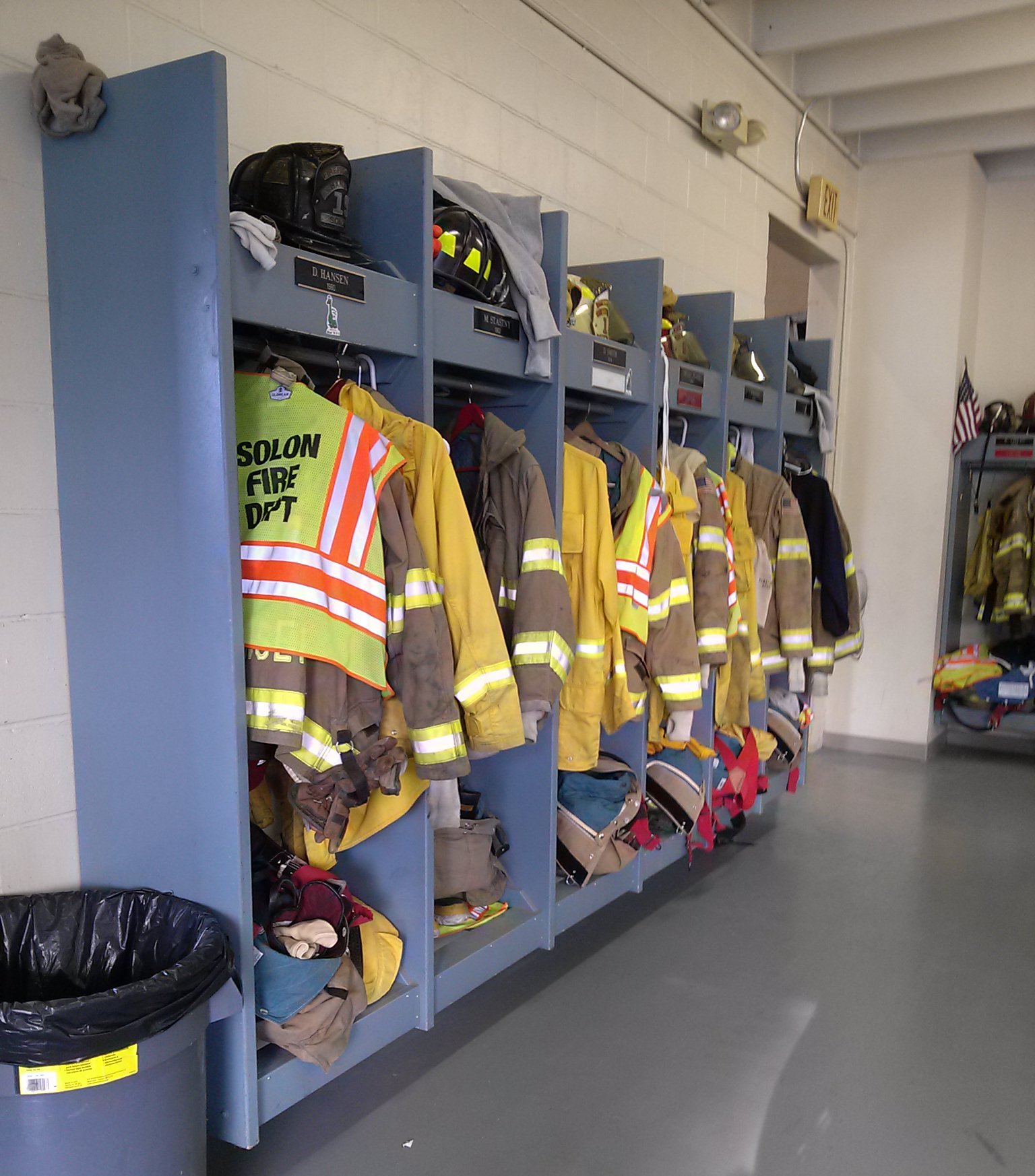
Firefighter Gear

I encourage readers to contribute financially to the fund to build a new fire station.

During my four years as a Big Grove Township Trustee, where part of our work was to manage the Solon Tri-Township Fire Department, it became clear the need for a new facility is real.

The current property tax levy will not cover the expense of building a new fire station along with everything else in the budget. Because the service is not managed by the city, exclusive use of city funds would be inappropriate. Management falls to the Solon Tri-Township Emergency Response Agency whose minutes are published regularly in the Economist.

Set funding issues aside and the need is there. When the current facility is ready for deployment on a call, equipment is crowded everywhere, potentially delaying response time. Additional space would make it easier for our firefighters to respond. Training is a crucial part of managing volunteer firefighters and the proposed enhancements to training facilities would serve that purpose.

At the Dec. 12 agency meeting, Chief Siddell reported 428 calls had been made in 2018, 50 more than they have ever made in one year. The combination of a growing need for emergency response and a volunteer fire department makes it important we provide what resources we can to support the effort.

Contributing to the capital fund to build the new fire station is a pragmatic way to do that. Any contribution would be welcome.

Find the campaign at www.solonfirehouse.com.

~ Published in the Jan. 10 edition of the Solon Economist

Categories
Living in Society

Dreaming of Tom Vilsack

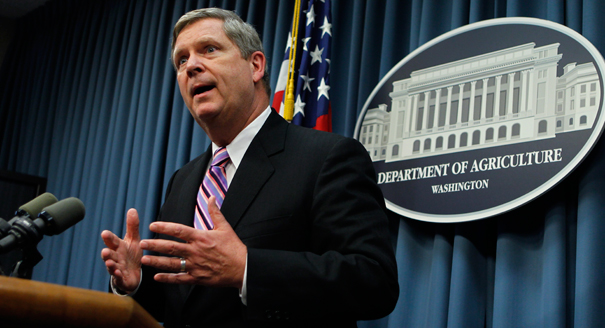
Agriculture Secretary Tom Vilsack

Last night I dreamed about Tom Vilsack, the former Iowa Governor and Barack Obama’s Secretary of Agriculture.

It wasn’t a nightmare. Vilsack provided a recommendation for three varieties of apple trees. Each contained the word “garam,” which isn’t a word I associate with apples.

I Googled elements of my dream this morning. The seasoning garam masala is used with apples in Indian cooking, but I found no evidence of such an apple variety. It was a dream.

With my involvement in politics I spent enough time with Vilsack that the mind has plenty of footage from which to draw images of us together. It made last night’s dream realistic-seeming. Yet there are no garam apples. There is Tom Vilsack and his politics, which are of interest going into the 2020 general election.

It would be tough for me to support a Vilsack nomination for anything.

My dislike of the man’s policy stems from a 2005 speech he gave on energy security at New York’s Council on Foreign Relations. He touted Iowa’s success at building six new coal and natural gas electricity generating stations. The coal plant in Council Bluffs remains a burr under my saddle. He mentioned cleaning up coal. Clean coal is a dirty lie. He discussed government intervention in the nuclear power industry to resolve problems that remain unsolved since Eisenhower’s Atoms for Peace initiative. There are cheaper, more environmentally friendly energy options available. He covered Iowa’s bipartisan darling, the Renewable Fuels Standard. Iowa should transition out of growing so much corn and soybeans into crops that yield a higher revenue per acre. It seems unlikely any 2020 candidate Vilsack could overcome my bias against him.

If Vilsack ran for president and won, he would be 70 years old upon inauguration. The problem with septuagenarians running for president isn’t their age, it’s their ideas. We need new ones. I’m haven’t heard any from Tom Vilsack.

If Vilsack ran against U.S. Senator Joni Ernst, her coalition would trample him. While Vilsack won 68 counties in 2002, Iowa, especially rural Iowa, has changed. I’m not a pundit or prognosticator. Just a guy who can’t see how Vilsack wins with increased politicization of geography where Iowans live. It seems doubtful Vilsack could match Fred Hubbell’s gubernatorial campaign performance state-wide.

Last night wasn’t a nightmare because Vilsack is not really that scary until one examines his policies in daylight. I don’t mind him populating my dreams because my personal interactions with him were mostly positive. Unlike most dreams, this one persisted into waking, and I believe that means something. Supporting another Vilsack candidacy would be possible only if we are asleep. I’m confident Iowa voters are not sleeping in the run up to 2020.