Going into a long weekend of spring catching up. I’ll return to regular posts soon.
Here’s one of my fave recordings of Rickey Betts playing Jessica. I heard The Allman Brothers Band play the song at the University of Iowa Field House on Nov. 9, 1973, shortly after it was released. They won a Grammy for Jessica. Enjoy!
Cup of Coffee with State Representative Bobby Kaufmann, Stanwood, Iowa, March 16, 2019
The 2020 general election will be challenging for a lot of reasons, not the least of which for me is deciding whether policy or politics is the most important part of it.
Politics is the art of what’s possible. I’m over the naive notion that policy matters more than politics, although the art of what’s possible has produced some problems.
Perhaps the best recent example of politics over policy was the Patient Protection and Affordable Care Act, which passed with only Democratic votes and has been fought tooth and nail by its opposition ever since. Voters want better health care, but the ACA was challenged from the beginning. It didn’t deliver better health care. The insurance premiums were expensive. The co-pays were high. The only talking point that persists is that more people who did not have access to health care were covered. Despite continuing feel-good stories about the ACA, its solutions were not so good. It was what was possible.
A policy-only approach to the 2020 general election is equally problematic. I believe it is mostly because of the decline in K-12 education, the rise in private and home schooling, and the dominance of FOX News and right-wing radio among people who continue to be radio listeners or view television broadcasts and cable. The electorate has been dumbed down and will swallow almost anything people hear repeated often enough. Making policy for a gullible electorate results in crap for legislation. When the court system finds such legislation deficient, as in the recent “fetal heartbeat” law in Iowa which was declared unconstitutional, the reaction from a dumbed down electorate is “impeach the judges.” Ill-informed notions of how government works are de rigueur and infrequently challenged.
Policy wonks talk among themselves in a bubble of their own making but their policy products are not often well received. What will stand the light of an open society? Getting out in it.
It is easier to think and talk about politics than to get out of a house or apartment and actually do something in political society. Once a person escapes the fencing of confirmation bias and faces actual people with differing views, a couple of things become immediately apparent. The biggest is a person no longer has internal debate, mistaking it for action.
We are on our best behavior in a gathering of diverse people — less likely to assert extreme positions. It is a moderating effect of social interaction. It is easy to generate excitement among a small group of friends with common interests. What is hard is persuading people much different from us our ideas have merit.
There is a tedium to working through issues with others which can take the fun out of problem-solving. In modern society we want our gratification and conclusions right away. Execution of them becomes a neglected afterthought. Working through issues together requires a commitment to process that isn’t part of ad hoc meetings in public. We are a society with decreasing respect for such group decisions. More characteristic of how it works is some of us would rather drop our policy bomb at a gathering — like a terrorist with no serious intent of further discussion or resolution — and having disrupted normal discourse, escape to our compound. It gets old, fast.
The radio spectrum is a good example of our politics. On the A.M. band there is one type of programming, on the F.M. another. There is satellite radio that bypasses the spectrum. All of them play a role. I currently have only four stations programmed on my car radio where I do most of my listening.
During my transportation career I traveled a lot. When with my boss in Pennsylvania, Georgia, or other godforsaken places, he would turn on the radio in the rental car, find Rush Limbaugh, and want to have a conversation with me about it. I refused to participate meaningfully. I viewed political talk in the workplace as unnecessary and unwanted when there was so much else to discuss regarding our business. He would hammer me about Robert Bork’s nomination to the U.S. Supreme Court which had occurred more than a decade earlier. I failed to mention I was a supporter of and had caucused for Ted Kennedy during the 1980 Iowa caucuses. Maybe it would have been better to rip the bandage off and get it all out there. Maybe I’d have lost my job, but maybe not.
On Saturday, a farmer friend and I met at her farm and drove over to Stanwood for a meeting with our state representative, Bobby Kaufmann. The obscure town along U.S. Highway 30 is home to some scrappy people: doomsday preppers, FOX News listeners, and citizens with tough personal stories. We were welcomed by a group of about 27, and are getting to know some of the regulars who attend these meetings. It was one of the best political meet ups I attended.
What made it good is after four elections, Kaufmann rose within the Republican Party which has a majority in the House of Representatives. Because of his leadership position, he knows what is going on with issues that are in the news. A person wants that in a politician. While Kaufmann and I don’t often agree, we find common ground. My questions were few and centered around issues that matter to me: water quality, state revolving loans for public utilities, IPERS, and that’s it. He’s a skilled legislator who can focus both on policy and the art of what’s possible. He paid for coffee and cinnamon rolls for anyone who wanted them.
The easy statement to make is we should balance our politics and policy. I’m not sure about that. A better approach is to recognize there is political bandwidth and tune in. We find opportunities to move the needle of policy a good distance through discussion with diverse groups of people. When that’s not possible, talk about what is. I believe that can be how bold change in society takes place.
It’s part of sustaining a life in a turbulent world.
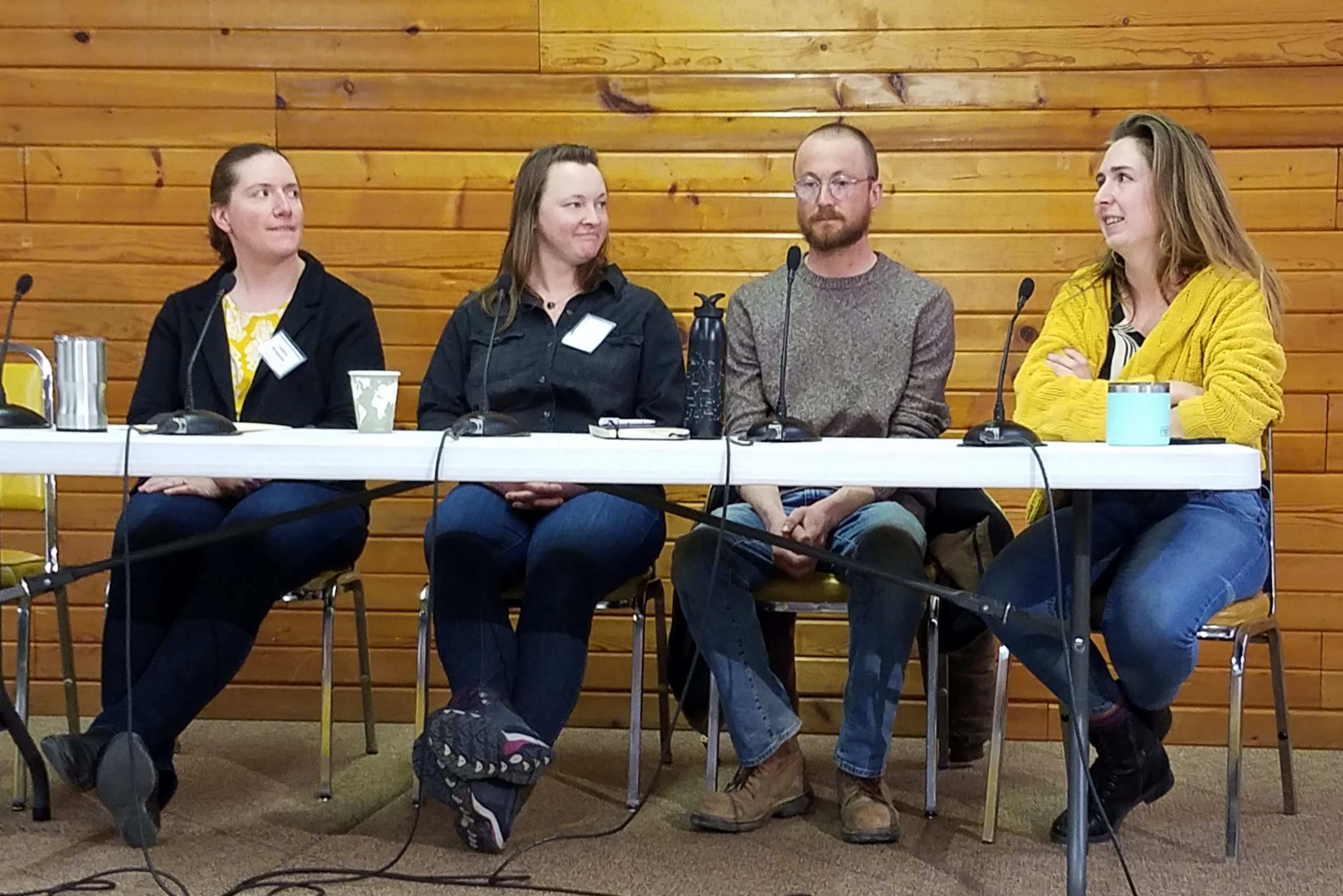
Colleen Bringman, Katie Biesendorfer, Kyle Tester and Carmen Black on a Specialty Crop Producer Panel in Montgomery Hall, Johnson County, Iowa on March 9, 2019
Ice and snow began to melt, exposing a small disk of grass over the septic tank. It suggested an overdue spring is arriving. After a long, hard winter I’m skeptical.
Time to get outside the house for something other than work.
Saturday became a series of renewed conversations with friends. Politics was part of three events in Iowa City and Coralville, coffee with Congressman Dave Loebsack, a forum hosted by the Johnson County Food Policy Council, and a fundraiser for Eric Giddens who is running to represent State Senate District 30 in a March 19 special election. I’d forgotten how many friends I have in the community.
Not everyone in Iowa has first in the nation caucus fever. Politics was discussed. It was local politics. The field of Democratic candidates for president is beginning to come into focus. While some have declared a candidate preference, many of us are anxious for spring to begin, such anxiety pushing aside the vagaries of the nascent Democratic presidential nominating process. I felt like a normal human by not thinking about presidential politics for a morning.
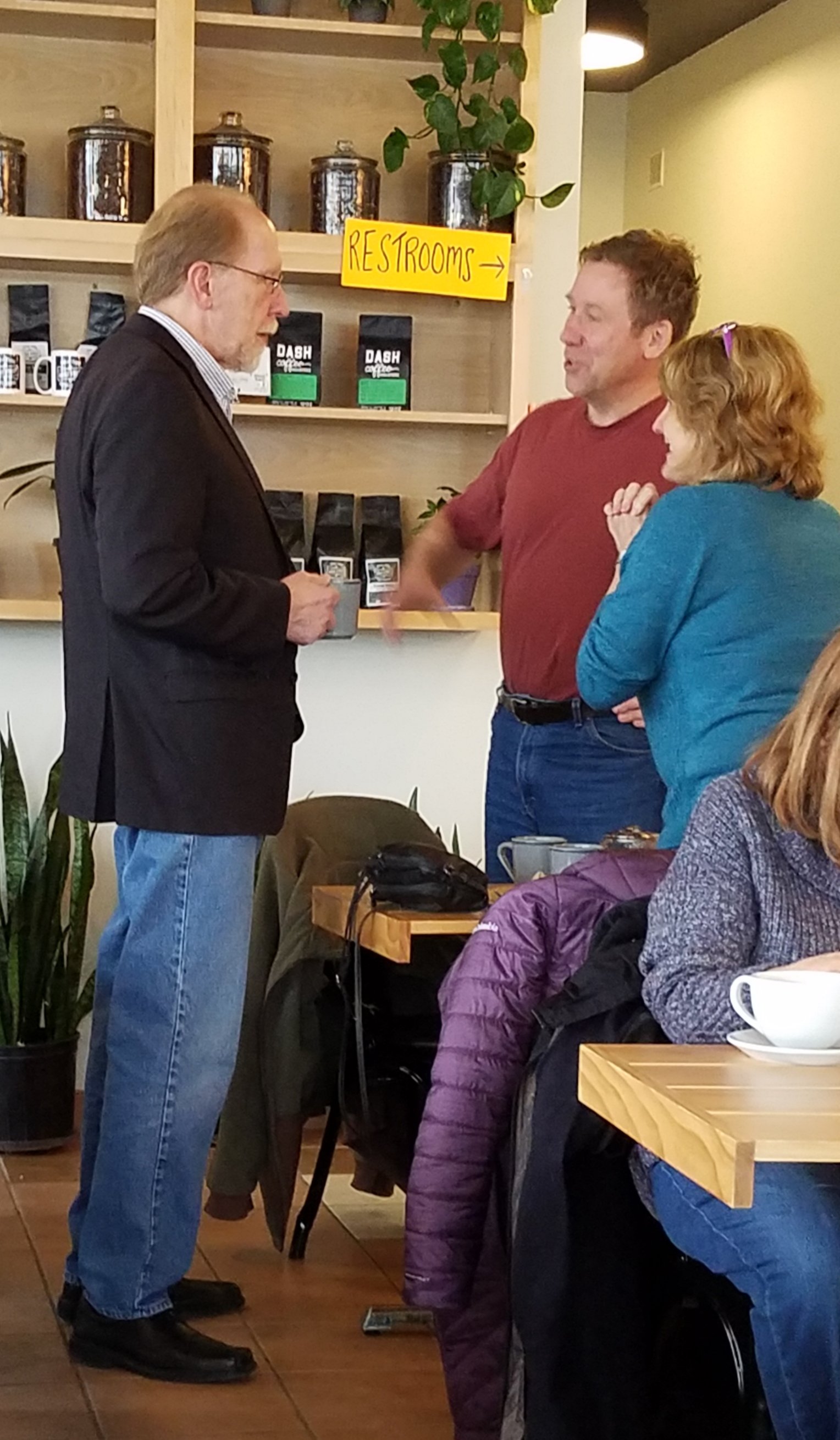
Congressman Dave Loebsack chatting with constituents at Dodge Street Coffee, Iowa City on March 9, 2019.
The first event was coffee with Congressman Dave Loebsack at a coffee shop co-located with a convenience store near Interstate 80. In a welcome turn of events, there was no speech. Loebsack spent the hour meeting individually with attendees without a set agenda. The event was very personal and individualized.
I overheard the retired college professor mention his age, 66 years. The average age of members of the 116th Congress is 58.6, according to Politico, so that makes Loebsack older than average. It seems unlikely he will have the longevity in the House of Representatives of the late John Dingell or other long-serving men and women. Who might replace him when he retires is an open question for constituents. The last few times I was with Loebsack he publicly mentioned his age or his potential retirement so it’s out there.
I didn’t have much to say to the second district congressman as we shook hands. He knows my issues: climate change and preserving Social Security and Medicare. We met during his first election campaign in 2006. He knows me, we share a common history, and that is something for a person who represents roughly 750,000 people.
From North Dodge Street I drove through the county seat to the fairgrounds where the Johnson County Food Policy Council was hosting its 5th annual forum in Montgomery Hall. My friends and colleagues Carmen Black of Sundog Farm and Kyle Tester of Wilson’s Orchard were both part of a specialty crop producer panel.
Black announced that HSB239 is advancing in the legislature. She later said the bill is expected to pass the Iowa House of Representatives. The intent of the legislation is to help small and new farmers overcome high land prices and get started in farming. The bill defines a farm by the amount of agricultural revenue a property produces rather than any set number of acres. Getting the agricultural exemption, which is part of the point of the bill, is crucial for small and new farmers.
I spoke to two of the county supervisors after the panel and brought the bill to their attention. Supervisors have a lot of issues on their legislative agenda and this bill was introduced without fanfare only last week. If adopted, HSB239 could have an impact on county land use policy and regulations.
I left Montgomery Hall, and a free luncheon from Local Burrito Catering, heading to the Iowa River Landing in Coralville where the fundraiser was in progress. I arrived as Iowa senate minority leader Janet Petersen was finishing her speech. The event was hosted by the three state senators who represent Johnson County, Kevin Kinney, Joe Bolkcom and Zach Wahls, who were all present. Wahls is my state senator. My intent was to drop in, write a check, and head home. So many people I hadn’t seen in a while were there so I spent most of an hour in conversations. Zach Wahls has proven to be accessible since we elected him last November. I encouraged him to continue his excellent communication about what’s happening in the legislature in various media.
As the gathering broke up I walked in a light, sweet rain to my car across the roundabout. I headed north on Highway One thinking, “I’ve got to get out more often.” I felt a longing to make more trips to the county seat. When spring arrives, maybe in April, I will.
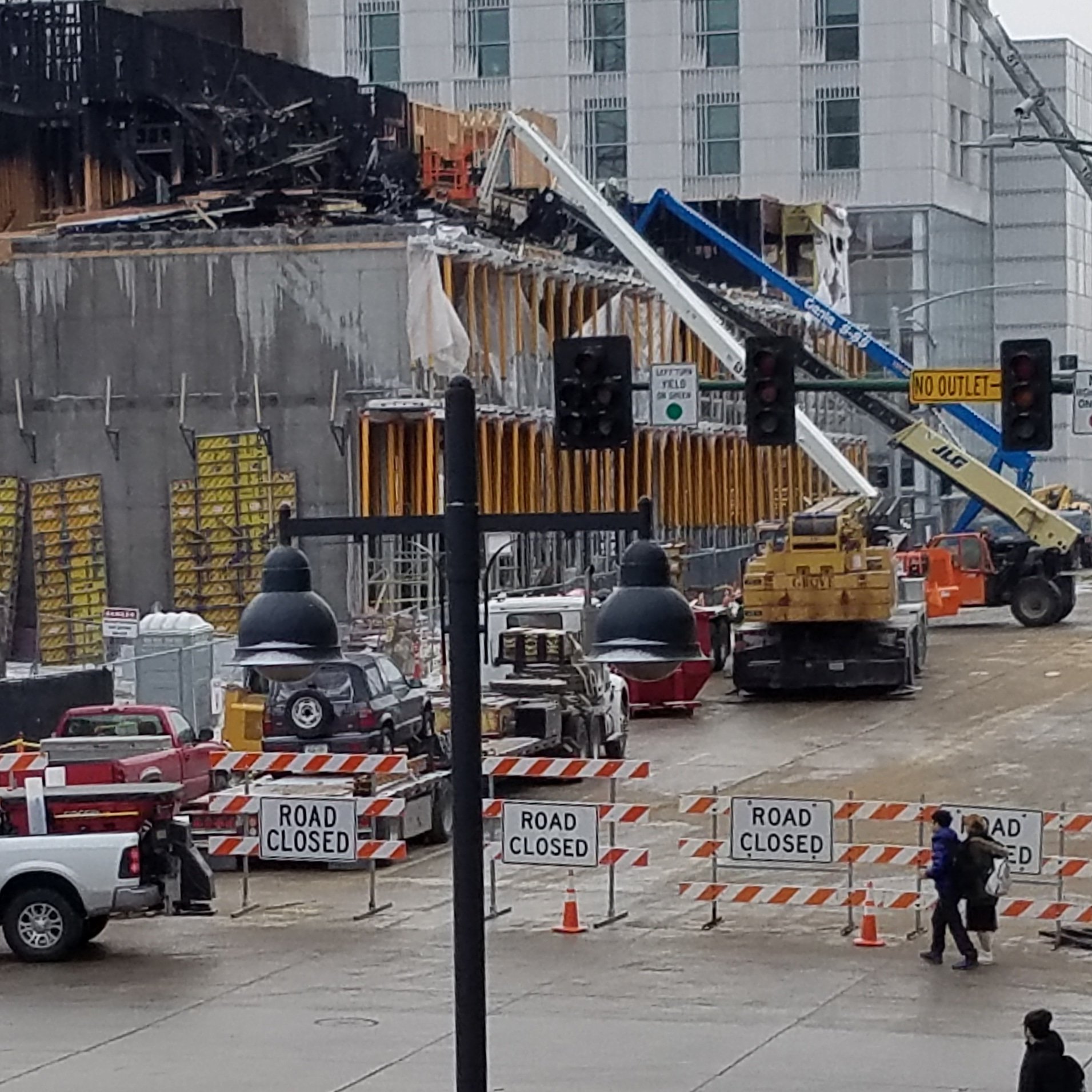
Aftermath of the Hieronymous Square Fire in Iowa City
Our county Democratic party held it’s odd-numbered year meeting last night.
We had little choice in the matter as the call came from state Democratic party chair Troy Price:
The Iowa Democratic Party calls upon each County Party to hold an Odd-Numbered Year Meeting, often called “Off-Year Caucus,” within the first quarter of the year of 2019.
The purpose of the Odd-Numbered Year Meeting is to nominate committee persons to fill precinct vacancies, to discuss priorities regarding platform resolutions, and to begin precinct-level planning for the remaining year.
This call is in accordance with the Iowa Democratic Party Constitution, Article II, Section 4 and has been issued by me as the Chair and approved by the State Central Committee.
All Odd-Numbered Year Meetings must be held by March 31, Price added, continuing the excessive use of capital letters. Bold type is mine.
Former State Senator Bob Dvorsky chaired our meeting. The chair and everyone who was a committee person was re-nominated and elected for another term. Our liberal central committee is mostly about fund raising, volunteer recruitment, and servicing the policy peccadilloes of central committee members. Thanks to the experience and efficiency of our chair, tedium, while present, was kept to a minimum.
State Representative Mary Mascher reported on the recently finished “funnel week” at the state house. There was good, bad and ugly. With Republicans in charge, there was more than enough bad and ugly to go around. As Mascher said, “Republicans took the fun out of funnel.”
There were legitimate victories for everyone in clearing bills from committees. Particularly important was HF608 which would create a uniform process in Iowa for determining which absentee ballots sent via U.S. Postal Service would be counted. Also important was a bill working toward a constitutional amendment to restore voting rights to felons once they paid their debt to society. Contrary to what we can read on social media, it is possible for Democrats and Republicans in the legislature to work together on common goals, and they do. Wish they would do more of it on key issues where we disagree.
Toward the end of the meeting, county chair Chris Taylor kicked off a discussion of deterioration of Democratic presence in rural areas. I piggy-backed onto his comments as did half a dozen others who represent rural communities on the central committee. I had previously explained the challenge Democrats have in rural precincts and quoted some of those election results in my short speech. Results of the recent special election of County Supervisor Royceann Porter place the rural-urban divide in sharp contrast.
It’s not that party officials don’t want to slow or stop the deterioration of support from rural voters, they do. County auditor Travis Weipert asked me after the meeting what could be done about the problem. Answers are hard to come by but it boils down to inclusiveness.
Part of the problem is an often-repeated narrative about electoral margins for which party officials pat themselves on the back. The narrative is a false one in the sense that if Johnson County and it’s margins were removed from statewide results in recent elections, those results would not change. The narrative does little to improve inclusiveness in the county and should be abandoned.
The county party should create a positive, welcoming environment for people who aren’t as involved in politics as central committee members are. Almost all Iowans spend some fraction of their time on politics and the rest of it avoiding the p-word. Democrats should hold signature events — the fall barbecue, the hall of fame induction — while realizing they have little impact on rank and file members of the community. When it gets to caucus day next February, regardless of the outcome, every Democrat should feel like their time was well spent trying to make a difference. As a first time caucus-goer told the group in 2018, “we have to do something.”
If I could recruit a replacement on the central committee, I would. I fill the seat because no one at our caucus would take the job. I’ll continue to recruit someone, all the while knowing it’s possible to flip the precinct from giving Trump a win in 2016 back to a place that elected Obama twice. It will take work and everyone being included. Staying in touch with the urban Democrats is part of that, although not a big one. The odd year caucus puts that in relief.
It runs counter to the Western Christian tradition but employees at the home, farm and auto supply store held a potluck luncheon on Ash Wednesday.
While others were submitting to dust from a priest’s thumb, my co-workers were feasting on loose meat sandwiches, deviled eggs and Amish Wedding fare in the form of pickled green beans and jalapeno-stuffed mushrooms. Tater tots revolved under the heating element of a shared pizza-cooking appliance.
One person brought red checkered tablecloths for our industrial tables in the break room, providing a festive look to the event.
The only penitence among my colleagues was related to over-eating.
The last Chevy Cruze rolled off an assembly line at the Lordstown, Ohio GM plant yesterday. I looked at photos of workers standing around the vehicle and had to look away. Too many memories of heartbreak among factory workers I’ve known. I conducted thousands of interviews with laid off workers when we lived in Indiana. Enough to understand the look in their eyes. Another sad day in the evolution of American manufacturing in the rust belt.
After work I stopped to secure provisions at the warehouse club, comme d’habitude. A farmer called me while I was contemplating the value of pre-cut aluminum foil sheets to be used wrapping root vegetables before baking. The issue was whether I needed a restaurant-sized box of 500 sheets rather than an inexpensive roll of aluminum foil to be replaced from the grocery store as needed. The farmer and I talked about legislation before the first funnel of the Iowa legislature. After 10 minutes we hung up and I decided to wait on the foil squares. I’ve been thinking about this for over a year.
Our county political party is re-organizing tonight. The meeting starts a little earlier than normal and word is the current party chair will seek another term. He’s the mayor of a small city near our border with Linn County. If he wants another term, I’ll vote for him. In our liberal county we tend to find a new chair each cycle, whereas counties with less Democrats in them tend to keep their party chairs for much longer periods of time. The chair has done a good job including old timers like me. The main work of the county party this year is preparing for the 2020 Iowa caucus. I know the drill, and since no one stepped up in 2018, I’m planning to run it again next February.
On my way home from work I noticed a number of homes along the route displayed political yard signs for the same candidate for city council in North Liberty’s March 12 special election. Placement is on or near property where signs saying “Lock Her Up” and “Trump-Pence” continue to be displayed more than two years after the 2016 general election. A reminder that even in the state’s most liberal county the overall political color continues to be red.
The best news this week was after my initial soil-blocking efforts at the farms I feel better with no soreness to report. Now if the frozen ice-pack that is our yard would thaw, I’d be ready for spring. It won’t be long.
Monday’s date was written on an almost completed to-do list. I failed to figure out why.
I think it was because South Bend Mayor Pete Buttigieg held two public events in the county seat. At 2:30 p.m. he was hosted by the University of Iowa Democrats at a local bar, and at 7:30 p.m. the Iowa City Book Festival and Iowa City Public Library hosted him in one of a series of LIT Talks where he read from and discussed his book, Shortest Way Home: One Mayor’s Challenge and a Model for America’s Future. Buttigieg is a Democrat running for president in 2020.
Glad I’m not obsessing with the horse race to be president. I also wish my memory was better.
The political news originates from Des Moines where the Iowa legislature’s “first funnel” is this week. That means bills must be introduced and passed out of committee to remain viable for debate during the remainder of session. That is, unless someone, typically in the majority party, wants to stick the language into the end of year bills to balance the budget and close the session. A bill is dead if it doesn’t pass the first funnel, but not dead, dead.
I checked the daily bill roster several times yesterday and found one I believe has merit pertaining to pioneer cemeteries. I wrote an email to the county supervisors:
Supervisors,
House Study Bill 234 pertaining to pioneer cemeteries was introduced to Representative Bloomingdale’s committee on Local Government today. I read the bill and find it to have merit.
I served as a Big Grove Township Trustee for one four-year term. We managed Fackler’s Grove Cemetery near Seven Sisters Road which meets the criteria for a pioneer cemetery outlined in the legislation. George Fackler is said to be the first person who died in the township and is interred there. The cemetery had been neglected for many years and despite efforts between the trustees and the Ely Historical Society, little progress has been made identifying the graves, if that’s even possible at such a late date.
The question the legislation poses is whether management of the county pioneer cemeteries should be by the township trustees or a centralized county commission for that purpose. I favor the commission approach because of its potential to make the county approach to pioneer cemeteries more uniform.
I realize you have a lot on your to-do list, but if this bill makes it out of the first funnel I hope you will support it.
Thanks for your work on the board.
Regards, Paul
Many bills were filed yesterday addressing fundamental issues with government. There was a bit of fluff, but you’ll have that.
This morning I wrote the chair and ranking member of the State Government Committee about HF 608 which is “an act relating to the tracking and counting of mailed absentee ballots.” The post office no longer uniformly postmarks mail but they do affix a bar code with a time stamp in it. This unresolved technical issue could have changed the 2018 general election results in House District 55 where a number of ballots that lacked a postmark, yet had a bar code, weren’t opened or counted. The law needs fixing to keep up with post office practices and so voters will not be disenfranchised by a minor process deficiency going forward. We’ll see what the legislature does this week.
Adults in Iowa spend some part of their time discussing politics and the rest of their time pretending politics doesn’t exist. Yesterday was a day to spend in political funnel land. I’m not sure I’m the better for it.
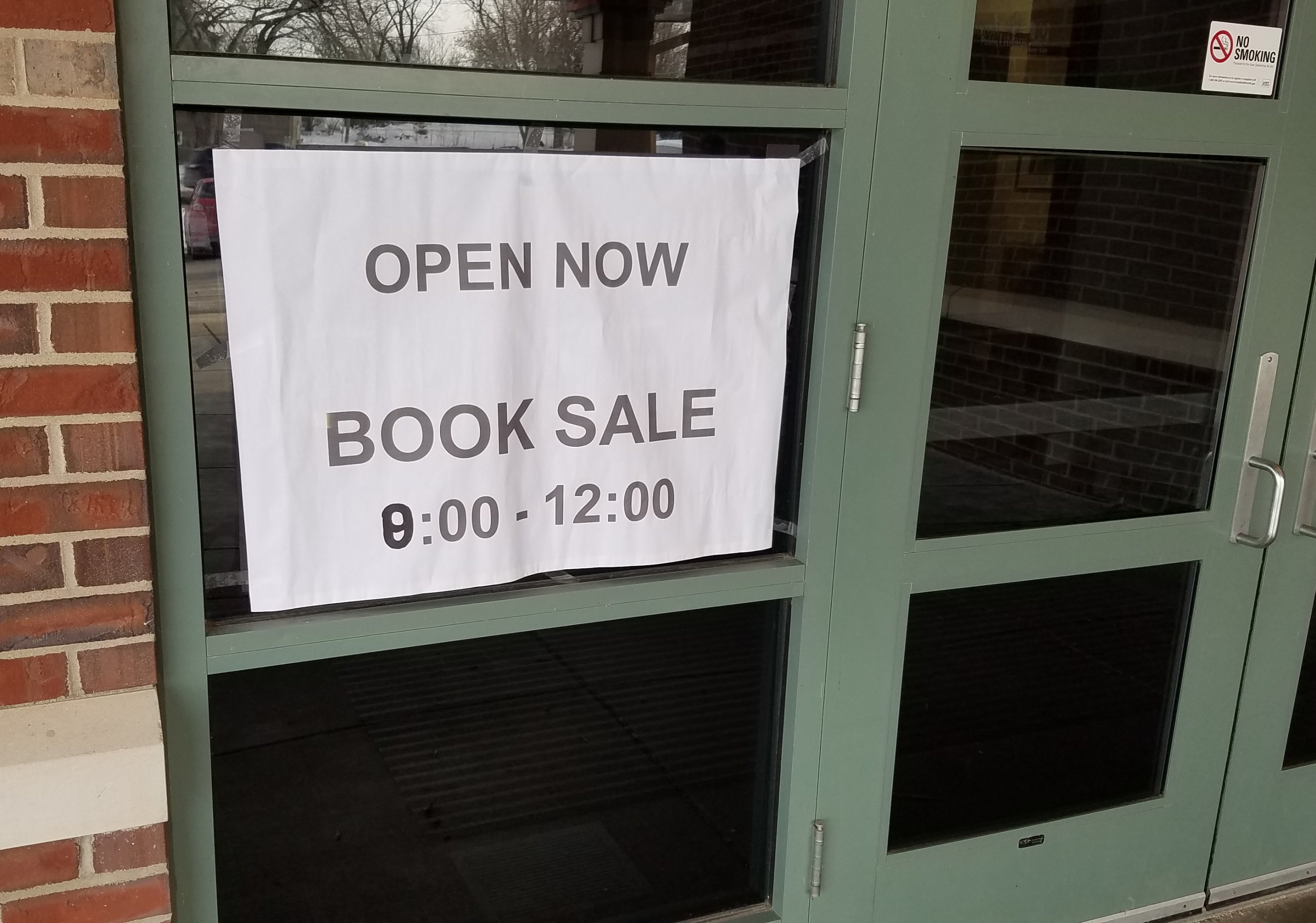
Sign for the Book Sale at the Solon Public library
Yesterday was the annual used book sale at our library.
In addition to clearing the stacks of unpopular or outdated books, the community donates books, media and labor to manage the sale.
Each item is reasonably priced and this year’s proceeds were about $800. That’s a lot of $0.50 and $1.00 books.
I spent ten bucks on ten past issues of the Wapsipinicon Almanac, three large format picture books about Yellowstone National Park, the Vietnam War, and the Marx Brothers, one fiction book, Water for Elephants by Sara Gruen, and a book of poetry, Songs of a Sourdough by Robert W. Service. I spent part of the afternoon reading Service’s poetry about the Yukon. First published in 1907, the copy I got is more than 100 years old. Thoughts of surviving bitter cold, wolves, pine trees, bonfires to stay warm, dog sleds, and the gibbous moon roamed my consciousness for the rest of the day.
It is doubtful I needed more books. The measure of a person’s library is less about reading or having read every book in it. A personal library is more a reminder of what we don’t know. I don’t feel guilty having more books than time to read them. I’m lucky to have a stable home life and the space to fit in a few more books after a used book sale in town. The house hasn’t exploded… yet.
I’ve been buying clothing this year. In 2018 I spent $281, and this year I already spent $150. T-shirts, jeans, socks and underwear, along with a few sweatshirts and woven shirts make up my wardrobe. For funerals and weddings I keep one pair of dress slacks, a good shirt, some neckties, two pair of shined shoes from when I worked in the Chicago Loop in 1991, and a blue blazer. Judging from what people wear to funerals and memorial services, I could get by with a decent pair of jeans, a woven shirt and a newer pair of sneakers.
There was a gift of four t-shirts and a sweatshirt from my spouse. The t-shirts are for the shepherdess to imprint next time she silk screens an image from the farm. I missed out last year because most of my shirts already had something printed on them.
The big 2018 expense was a pair of steel-toed boots to wear on my shifts at the home, farm and auto supply store. Last week, after my shift, I bought a new overcoat using my employee discount.
Me: I need a new coat.
Cashier: You really do.
Me: I know… big grease stains, broken snaps and zipper… it’s disreputable.
Cashier: Oh my!
Me: It will be my first Carhartt… this is Walls. Well I do have a pair of Carhartt bib overalls.
Cashier: Every man has those.
When I worked in the Loop I quickly wore out the pants in my suits. I picked styles where I could get multiple pairs of matching slacks. I don’t need fancy work clothes at the home, farm and auto supply store where the main issue is the quality of Wrangler jeans purchased on discount for less than $20. The denim must be of an inferior quality because holes show up in unexpected places after washing. Too, the radio and box cutter wear a hole just below my belt line on the left side. I asked the Wrangler sales representative about this at a recent trade show. He didn’t have any good answers except to buy more expensive jeans. I didn’t mention my low wages.
Food, shelter and clothing are traditional basic needs. Add potable water, clean air and sanitation and that’s still really basic. A good night’s sleep? Needed, but optional. Without these things, the need for survival dominates our daily lives. Education, healthcare, transportation and internet access are basic needs according to Wikipedia, but seriously, while important, those are extra when it comes to survival.
A lot of people would have us return to life as basic survival. For our family, years of hard work made us financially stable and built a foundation so we don’t often worry about survival. As long as there are used book sales and employee discounts at the home, farm and auto supply store we’ll be alright. Knowing a bunch of farmers and a good auto mechanic helps.
Wolves are mentioned in the history of Lincoln County, Minnesota where my grandmother was born. Wolves can be an issue, but mostly one read about in books about the Yukon… or Iowa and Minnesota at the time of settlement. As we live our modern lives it is important to remember there were once wolves, even if their meaning is lost for want of an education. Education is a salve for our worries. That’s part of why library used book sales remain important.
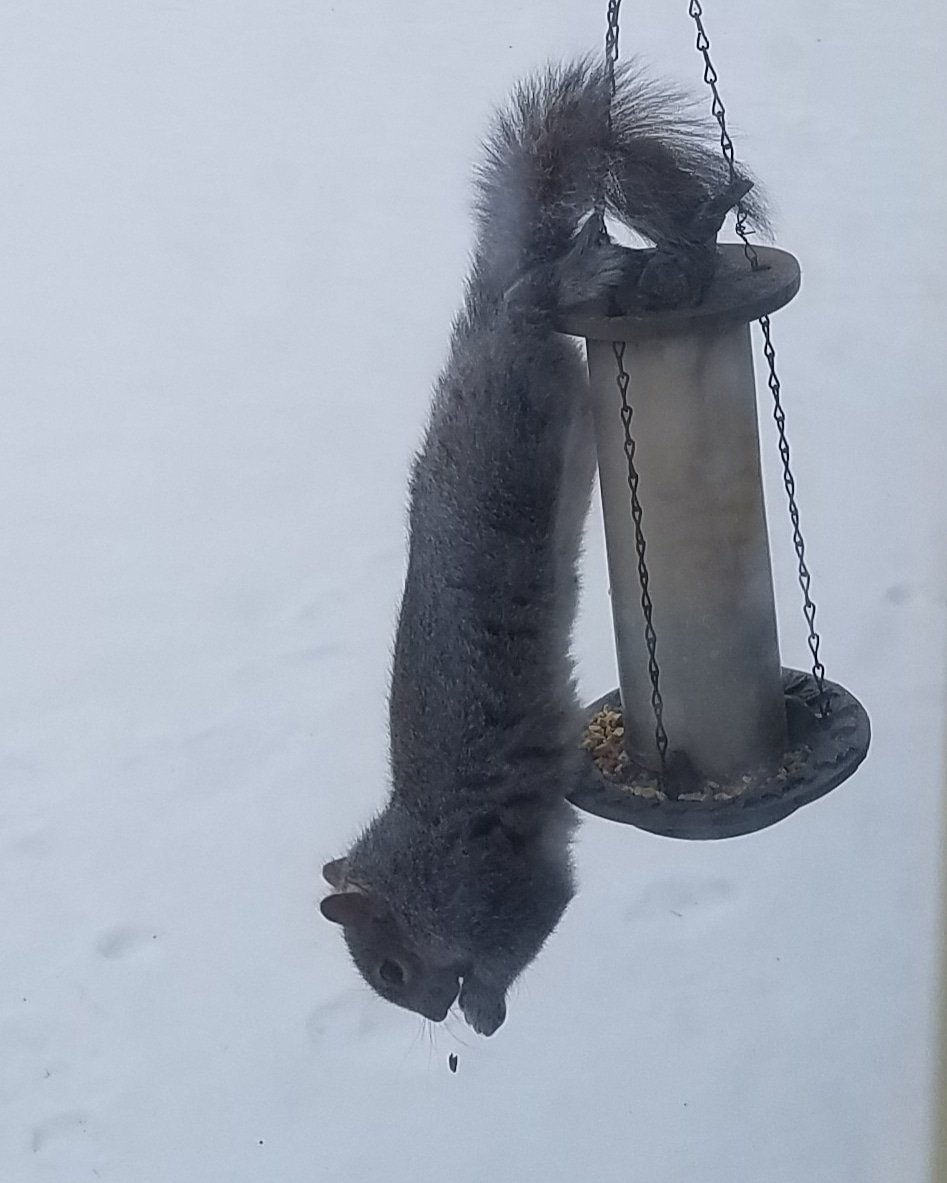
Squirrel Training for Acrobatic Work at Walt Disney World
I opened the door to the garage and turn signals on my car were flashing.
It was the first time in the garage yesterday and I feared having left something turned on, depleting the battery charge. I put the key in the ignition and it started.
At an undetermined point in the night turn signals and some dash lights started a slow blink. I couldn’t turn them off. I started the car and turned it off — still blinking. I started the car and drove it around the block — still blinking. Should I call my mechanic or troubleshoot and fix it myself?
I went to a computer and searched “1997 Subaru Outback lights blink when ignition off.” Some results came back and 83 people recommended a procedure to disconnect the battery, then reconnect it with the ignition turned on. It was simple and it worked. Make that 84 people recommend the procedure to reset the electrical system.
That I drive an old beater is not news. I bought it six years ago and with a good mechanic fixing things as they break, it gets me around. I feel a little like the Mercury astronauts running around Cape Canaveral before Florida car dealerships gave them Corvettes and such to drive, just another guy needing earthly transportation. As long as it is mechanically sound I don’t care what vehicle I drive. The astronaut dreams are extra.
Yesterday’s farm work shift cancelled because of a cold weather forecast the following week. CSA farmers who belong to Practical Farmers of Iowa gathered at a local restaurant to discuss their trade. I am a member but declined to go. I’m more interested in reducing the amount of farm work I do than in engaging more. Since I began earning a living wage last year the economic need for farm work went away. It’s mostly a social event any more despite the well-received work I do at the farms.
I woke early this morning, around midnight, and picked up my mobile device in the dark. There was a Washington Post alert from 11:24 p.m. saying Michael Cohen had prepared a written statement about his testimony today before the House Oversight Committee. In it, Cohen indicated Donald Trump personally signed the check to pay hush money to Stormy Daniels, and that Trump knew Roger Stone was negotiating with WikiLeaks to publish stolen emails from the Democratic National Committee during the run up to the 2016 general election. Trump and another of his attorneys, former New York City mayor Rudy Giuliani, have both accused Cohen of lying since then.
We’ll see what Cohen actually says while I work a shift at the home, farm and auto supply store. Like with Watergate, it would be hard to watch the proceedings live. If what Cohen said is true, the president has been lying to the American people. In today’s corrupt political climate I’m not sure what that means. If Trump were Nixon, we’d already have his resignation on our Resolute desk.
The store manager from the home, farm and auto supply store phoned Sunday afternoon to ask me to work on Monday. The colleague who assumed my full time job last spring was visiting family in Nebraska and bad weather closed roads across the state, including Interstate 80. She couldn’t make it back in time for her shift.
In Iowa, helping out is part of our culture. I said yes I’d work and rearranged my plans so I could.
In addition, the farmer decided the weather was bad enough she didn’t want people venturing out to the farm. The roads were iced over and the wind howled at 30 miles per hour all day. Her sister, the shepherdess, posted social media photos of installing a new anemometer and weather station. Its LED panel displayed the digital message, “hold onto your hat!”
As I was settling in last night, the Washington Post put up an article about White House plans to form an “ad hoc group of select federal scientists to reassess the government’s analysis of climate science and counter conclusions that the continued burning of fossil fuels is harming the planet.”
In other words, the Fourth National Climate Assessment told the story of how dire our future could be without climate action. Rather than doing something, the administration is arguing with their own scientists that global warming is not caused by burning fossil fuels. These are times that will fry men’s souls.
Which part of yesterday’s howling wind was an amplification caused by global warming? The answer doesn’t matter because it’s the wrong question. We know the deleterious effect of burning fossil fuels. We also know thawing permafrost, agriculture, methane releases during oil production, building construction, manufacturing processes, air transport, deforestation, landfill decomposition and other human activities contribute to greenhouse gas emissions and global warming. We can’t get bogged down in details when the bigger picture is we have an obstructionist government led by Republicans and their conservative, dark-moneyed think tanks who would interpret the howling wind as something else. The better question is when will voters do something to fix this?
Yesterday’s wind was the kind that calls for hunkering down until it ends. Eventually we will have a calm, sunny day and the opportunity to work as normal. Or maybe it is something else, as Bob Dylan sang in the 1970s,
Idiot wind, blowing like a circle around my skull
From the Grand Coulee Dam to the Capitol
Idiot wind, blowing every time you move your teeth
You’re an idiot, babe
It’s a wonder that you still know how to breathe.
Thread by thread the fabric of our lives is unraveling.
What we thought was permanent turns out to be fleeting vapors transformed to undue amounts of snow.
Everything about the unraveling is out in the open and more’s the pity.
In a press release yesterday, Governor Kim Reynolds indicated she ended her court battle regarding Iowa Code chapter 146C, otherwise known as the “fetal heartbeat law.”
“This was an extremely difficult decision, however it is the right one for the pro-life movement and the state of Iowa,” Reynolds said. “When I signed the Fetal Heartbeat bill last May, we knew that it would be an uphill fight in the courts that might take us all the way to the U.S. Supreme Court.”
“I think the Iowa Supreme Court got it wrong,” she said in the release, referring to the court’s decision to strike down the 72-hour waiting period included in the law.
Republican legislators plan to do something about the court getting it wrong. They plan to increase politicization of how Iowa judges are nominated to the governor by changing the composition of commissions that make those nominations. House Study Bill 110, and its companion, Senate File 237, have been introduced to that end.
Representative Mary Wolfe (D-Clinton) explained the issue in a Feb. 18 article in the Clinton Herald.
Here’s how our current system works: there are fourteen district court judicial nominating commissions — one for each of Iowa’s fourteen judicial districts. Each district court nominating commission is made up of five local citizens appointed by the governor and five local citizen-attorneys elected by local lawyers; the district’s senior judge acts as the chairperson of the commission. When a judicial vacancy arises in a judicial district, interested attorneys from that district submit applications and the members of the local judicial nominating commission, working together, select the two most qualified candidates to “send up” to the governor; the governor then chooses one of the two attorneys to fill the vacancy.
The Iowa Supreme Court process is similar in that it blends commission members appointed by the governor and chosen by attorneys, sending three nominees to the governor.
“The current system works,” Wolfe wrote. “Iowa’s non-partisan judicial nominating process is considered one of the best in the country, and our judiciary is consistently ranked in the top ten by many organizations (including conservative organizations like the U.S. Chamber of Commerce) in terms of expertise, efficiency and objectivity.”
“Rather than be distracted by a losing legal battle,” Gov. Reynolds said in yesterday’s press release about the abortion bill. “Now is the time to renew our focus on changing hearts and minds and to seek other ways to advance the cause of protecting the unborn in Iowa and around the nation.”
Among those “other ways” is to pack the courts. If the bills were to become law, all commission members would be selected by politicians.
I sent an email to my state representative on Sunday:
Bobby,
I don’t support the changes Rep. Steven Holt from Denison is proposing to the judicial nominating commission and the process for how judges are selected in Iowa.
Iowa Press ran an episode on Friday with Holt and Mary Wolfe from Clinton discussing their views on the matter and Holt did not make a substantial case for changing the process.
Holt repeated himself during the program, coming back to two things: that only 18.45 percent of attorneys vote on commission members selected by attorneys and that the voice of the people needs be heard. I believe the voice of the people has been heard in establishing the current process and it should not be changed without thorough vetting and public input. Most people I know aren’t even aware the change is being discussed. Your colleague Mary Wolfe made the case why Holt’s proposal is not good for Iowa and I agree with her.
I hope you will align yourself with moderates like Wolfe on this issue.
I appreciate hearing the schedule of your listening posts via email, so please keep sending the information. Thanks for your work in the legislature.
Regards, Paul
Kaufmann responded a few hours later, saying he would address judicial nominating reform in a public column in the near future. He is a member of the judiciary committee.
The simple truth is Republicans have the votes to do this and almost anything they want in the legislature. Elections have consequences and in 2018 Democrats fell short of re-taking a majority in the Iowa House and lost ground in the Senate. Republican Governor Kim Reynolds was elected for her first full term.
None of this is a hidden agenda now that the bills have been revealed. If changing the judicial nominating process was not a campaign issue in 2018 it is a legislative issue now.
Thread by thread, beginning in the 87th Iowa General Assembly, Republicans are unraveling the fabric of life in Iowa and this is just one more example. I believe this second two-year bite of the apple, the 88th Iowa General Assembly, will provide them the time they need and want to re-shape Iowa in the image of an insular group that ignores reason and would take our state backward.
Progressives, if we are to be successful, must row against the tide, never losing site of the shoreline, hoping our dreams and values hold together. On this snowy February day, under this governance, the veil of Maya wears thin.





 Journey Home
You must be logged in to post a comment.