Categories
Living in Society

Political Checklist – President

Jimmy Carter at the Iowa State Fair, August 1976 – Photo Credit – Des Moines Register

I try not to inflate the importance of Iowa’s first in the nation caucuses. Whatever it was, the caucus process is less personal today than depicted in the media or by campaign consultants. Gone are the days of a Jimmy Carter-style candidate appearing unannounced at the Iowa State Fair to meet and greet people.

I’m okay with that and don’t seek a return to those times. They weren’t that great and for the most part, our politics has become smarter.

If I get a chance to meet the Democratic nominee for president in 2020 that’s good, but not necessary for me to go on living. I feel confident the Democratic nominating process will pick a viable candidate to challenge the incumbent no matter how individual campaigns muck it up. Democrats I know favor support of the eventual nominee over any transitory enthusiasm for another candidate on caucus night.

When Iowa Republicans fielded 18 presidential candidates in 2016, I thought that really worked for them by increasing the number of events where Iowans could talk about politics. It solidified a sense of community among party members and is paying them dividends in state and federal government. Now that Democrats have fielded 22 23 candidates, what Republicans had doesn’t seem very likely. Let’s face it. We are too Democratic to develop that kind of culture.

The Democratic field is dividing into non-hierarchical tiers, like it or not. Here’s my take on for whom I might caucus as of this morning. Implicit is the idea I will finalize a choice and begin to work for a campaign after Labor Day. When I say “work for a campaign,” I mean in my political precinct.

Tier One: Possibilities

Given the long list, there are only three candidates I’d talk to my neighbors about supporting, Amy Klobuchar, Kamala Harris and Elizabeth Warren.

I’ve heard Minnesota Senator Amy Klobuchar speak in person (in the 2016 cycle) and like her a lot. There is also pronounced grassroots interest in her campaign among my fellow Big Grove Democrats. She won her re-election for U.S. Senate in 2018 with more than 60 percent of votes cast. If she is nominated and fails to beat the incumbent, her senate seat is safe. If she wins the presidency, it does not seem assured a Democrat would replace her. I’m remembering the Al Franken-Norm Coleman 2008 election which Franken won by about 300 votes.

Kamala Harris hasn’t been to Iowa very often, but my perception is she is running a campaign the way it should be done. She won her election for U.S. Senate in 2016 with more than 62 percent of votes cast. If she is nominated and fails to beat the incumbent, her senate seat is safe. If she wins the presidency, the expected outcome of an election to fill her remaining term in California would be a Democratic winner.

Elizabeth Warren is one of only two candidates I’ve heard speak this year. Her policies align closely with mine and her campaign is the only one that’s reached out to me personally about joining. I’ve been contacted multiple times, by multiple organizers. She has a large Iowa staff, which seems needed to win the 2020 Iowa caucus delegate count. She won re-election to the U.S. Senate from Massachusetts in 2018 with more than 60 percent of the vote. If she is nominated and fails to beat the incumbent, her senate seat is safe. If she wins the presidency, the expected outcome of an election to fill her remaining term would be a Democratic winner, despite the permanent stain on Massachusetts Democrats for failure to elect a replacement for Senator Ted Kennedy.

Tier Two: Go back to the Senate and build a Democratic Majority

It is not necessary for all Democratic U.S. Senators to run for president. I like each of them for different reasons, however, Michael Bennet, Kirsten Gillibrand, Bernie Sanders and Cory Booker should join Sherrod Brown and Jeff Merkley in declining to run for president and work to build a Democratic senate majority.

Tier Three: Like them a lot, just not for president

Pete Buttigieg should run for statewide office in Indiana. He seems to have a bright future ahead of him in Democratic politics but after reading his book and listening to a couple of speeches on the internet, my judgement is he’s not ready to become president. A career model he might follow is that of Evan Bayh who was elected Indiana governor, then U.S. Senator.

Jay Inslee’s all climate policy agenda may be what’s needed, it doesn’t seem viable in the general election.

Montana Governor Steve Bullock should run for the U.S. Senate against Republican incumbent Steve Daines in 2020.

Beto O’Rourke should run for U.S. Senate in Texas again, this time against Republican incumbent John Cornyn in 2020.

Joe Biden could do the most good for Democrats by speaking and raising money for the eventual nominee.

Tier Four: Just give it up

The remaining candidates should just give it up. I met Tulsi Gabbard, John Delaney and Julián Castro and have nothing bad to say about them. The others no doubt have many qualifications and credentials, but that alone doesn’t make for a presidential nominee. I’d reconsider someone if they or their staff reached out to me, but none of them seems to have Iowa staff presence at Elizabeth Warren level or even what’s needed. None of them has been otherwise able to gain traction.

Eight months from the Iowa caucus it seems premature to cast any of this in concrete. Picking a Democratic presidential nominee is low priority on my political checklist. More about that later.
Categories
Living in Society

Taking a Holiday From Politics

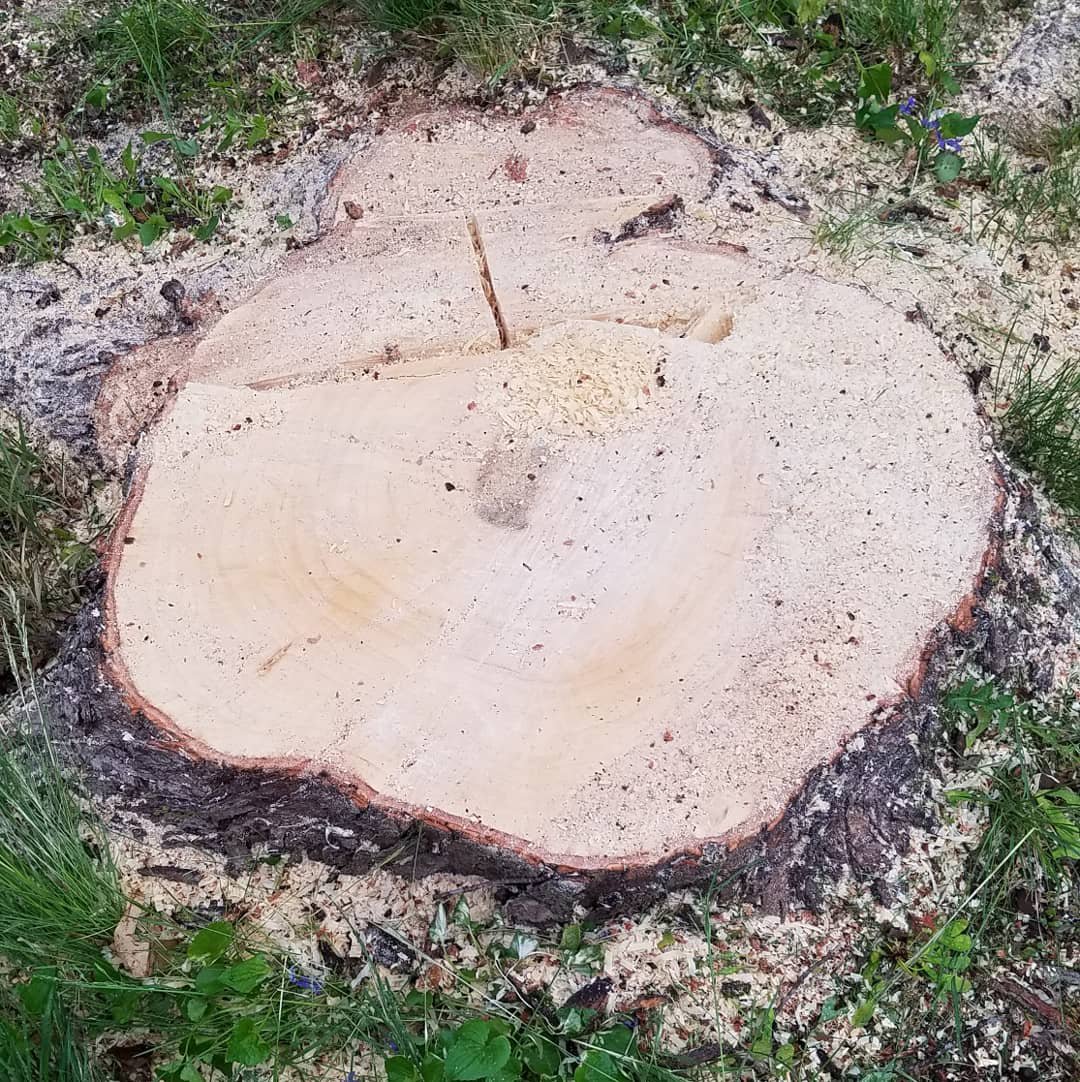
It Took 25 Years to Grow this Tree Stump

There’s not much to add to the national conversation about politics.

Our politics is broken, there’s a constitutional crisis, we have a do-nothing but bolster the richest people Congress, we spend money on defense like we have it, we’re pushing the envelope of livability in our environment, and the sodden features of elected officials are anything but endearing.

We could all use a break.

In Iowa the presidential candidates have been relentless with visits, events and policy proposals. I attended two events, Julián Castro and Elizabeth Warren, and it’s been more than enough. It’s not like there is an earth-shaking personal decision Iowans are required to make any time soon. The better question is who is inspiring enough to garner some of our hard-earned money and volunteer time? I’m drawing a blank. Spring’s slight window would be better spent on activities other than politics.

The allure of spring draws me toward nature… what’s left of it. Thankfully I’m not allergic and can build something in our home and local community. In such work I hope to find inspiration to support a better national political discussion again. Maybe in the fall.

For now, I’ll cultivate the life we’ve chosen in Big Grove, recognizing our connections with the broader world, but placing them on mute for the time being. I’ll write about an occasional political event but there’s plenty to talk about without them.

At least those are my thoughts this spring morning before the dawn.

Categories
Living in Society Social Commentary Writing

Unexpected Monday

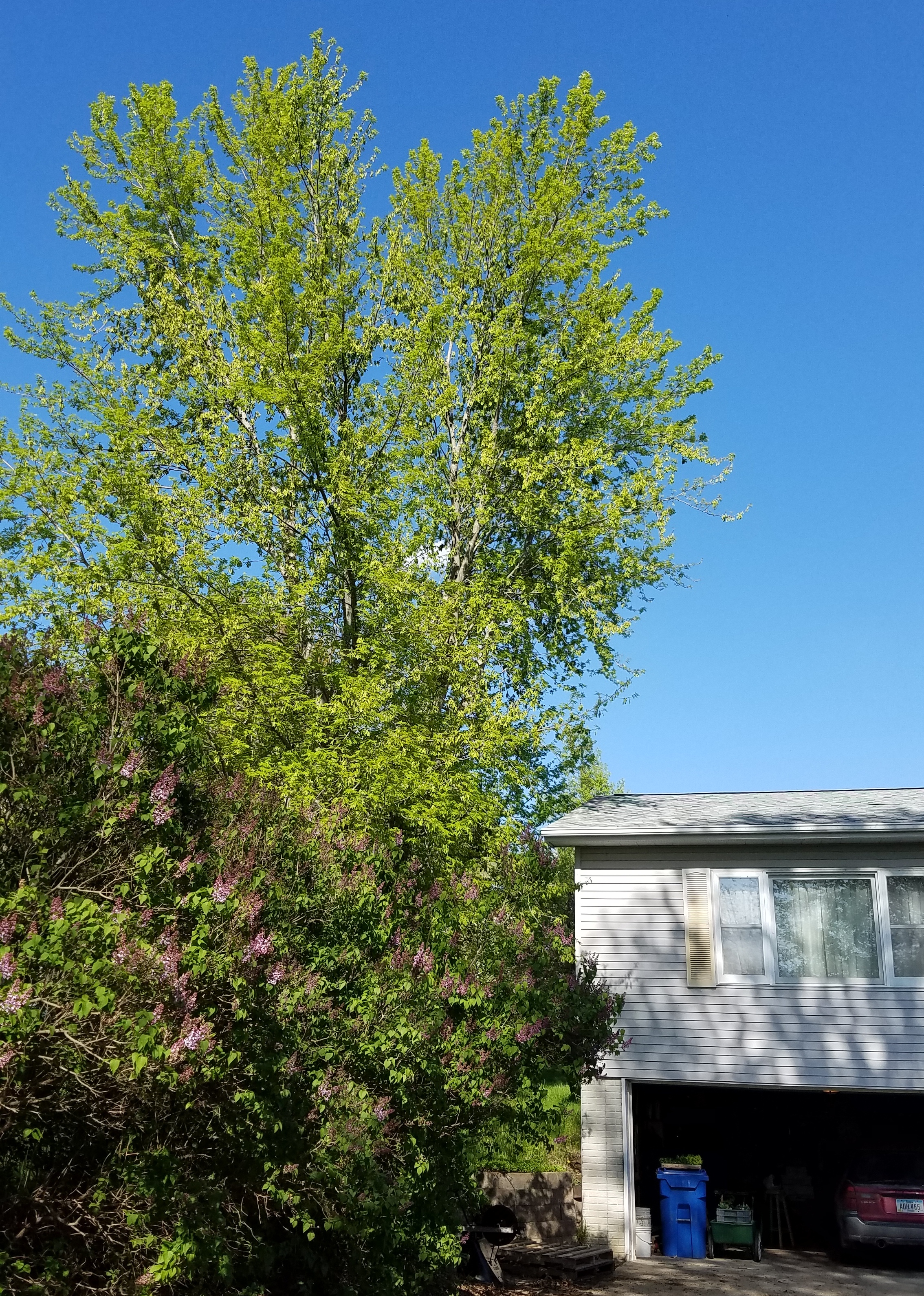
Maple Tree – Before

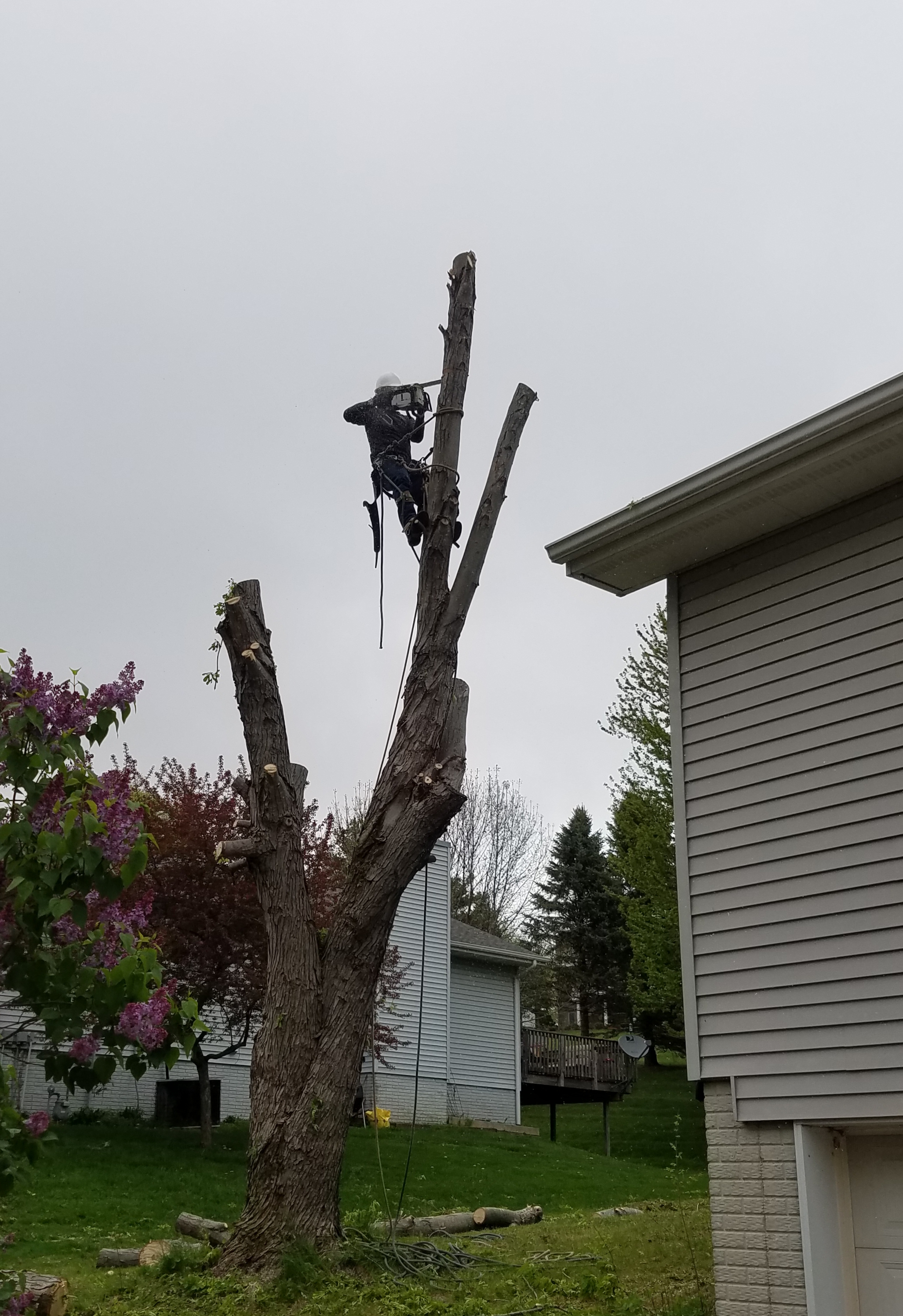
Monday didn’t happen as expected. There were three things involving arborists, health care and farming.

Without announcement, the arborist arrived to take down a maple tree I planted on the northwest corner of the house. Turns out I didn’t know what I was doing when planting the 12-inch, stick-sized sapling so close to the house in 1994.

Now fully grown, unusually strong winds already took out one of the main branches. We determined it would be less expensive to remove the tree than pay for a roof repair when limbs inevitably blew down on it.

It was a small way of mitigating the damage of the climate crisis.

The crew was four men with two pickup trucks to haul away brush and wood. The benefit of using an arborist instead of a tree service is the equipment is pickup trucks, ladders, and an array of Stihl brand chainsaws and old fashioned loppers. There is minimal soil compaction around the work site without heavy equipment and that’s important to a home owner.

Arborists at Work

The arborists took out the maple and trimmed the pin oak, finishing well before noon. Our next door neighbor engaged them for tree trimming and by the end of the day our corner of the neighborhood was looking good.

Monday’s main event was a trip to the local clinic to get checked out.

Last Friday someone called, saying I was overdue for a physical exam. They had an appointment the following business day, which in a small city is disconcerting. The hospital managing the clinic is already having financial difficulties. The fear is the clinic will close, making it neccessary to drive to the county seat for health care. I took the appointment.

We no longer have two physicians at our clinic as one was replaced with an ARNP or Advanced Registered Nurse Practitioner. I get that the United States is facing a physician shortage, and our ARNP fills a coverage gap. It makes sense to differentiate the skills being performed in a local clinic and find practitioners that closely match them.

I miss what I had for a very long time, a doctor with whom I established a relationship and could get to know in our community. I’m not saying it was great, or that we should go back. I miss it but am ready to move on, seeking an answer to the question how do people get treatment in a scenario in which part of every office visit is talking about how to pay for services?

Arborist at Work

I liked my ARNP. He explained something I hadn’t considered. He said I was scheduled for a physical exam and there would be a significant cost. I explained that’s what the Friday caller said I needed so I went with it. He changed the billing code and said, once a person reaches a certain age, the better course of action when seeking treatment is to come into the clinic for specific maladies, without getting a traditional physical exam. I have a history already, which when combined with age and lifestyle risks, along with my complaints, can determine a course of care without physical examinations as I’ve had previously. What their team did today was little different from what the last physician did, with the exception the prostate examination was delayed until the results of a panel of lab tests he ordered were known.

At 3:40 p.m. I drove to the farm to pick up our vegetable share of Bok Choy and Koji, Leaf Broccoli, Mixed Greens, Lettuce, Spring Garlic, and Garlic Chives. Each year I secure onion starts for our garden leftover once the farm has planted theirs. It was time. Usually I get a bundle or two of starts produced in Texas, but Monday was different. The farmers gave me two trays of locally grown starts still in soil blocks. It seemed a generous gift considering the work that produced them. I was thankful to have them.

A day that started with a headache from a 12-hour fast before my clinic appointment turned out for the better. I had a cup of coffee after the clinic and the day got progressively better. It was one more day of sustaining a life in a turbulent world.

Categories
Living in Society

A Sheriff’s Race for 2020

Brad Kunkel (right) Formally Announcing Campaign for County Sheriff

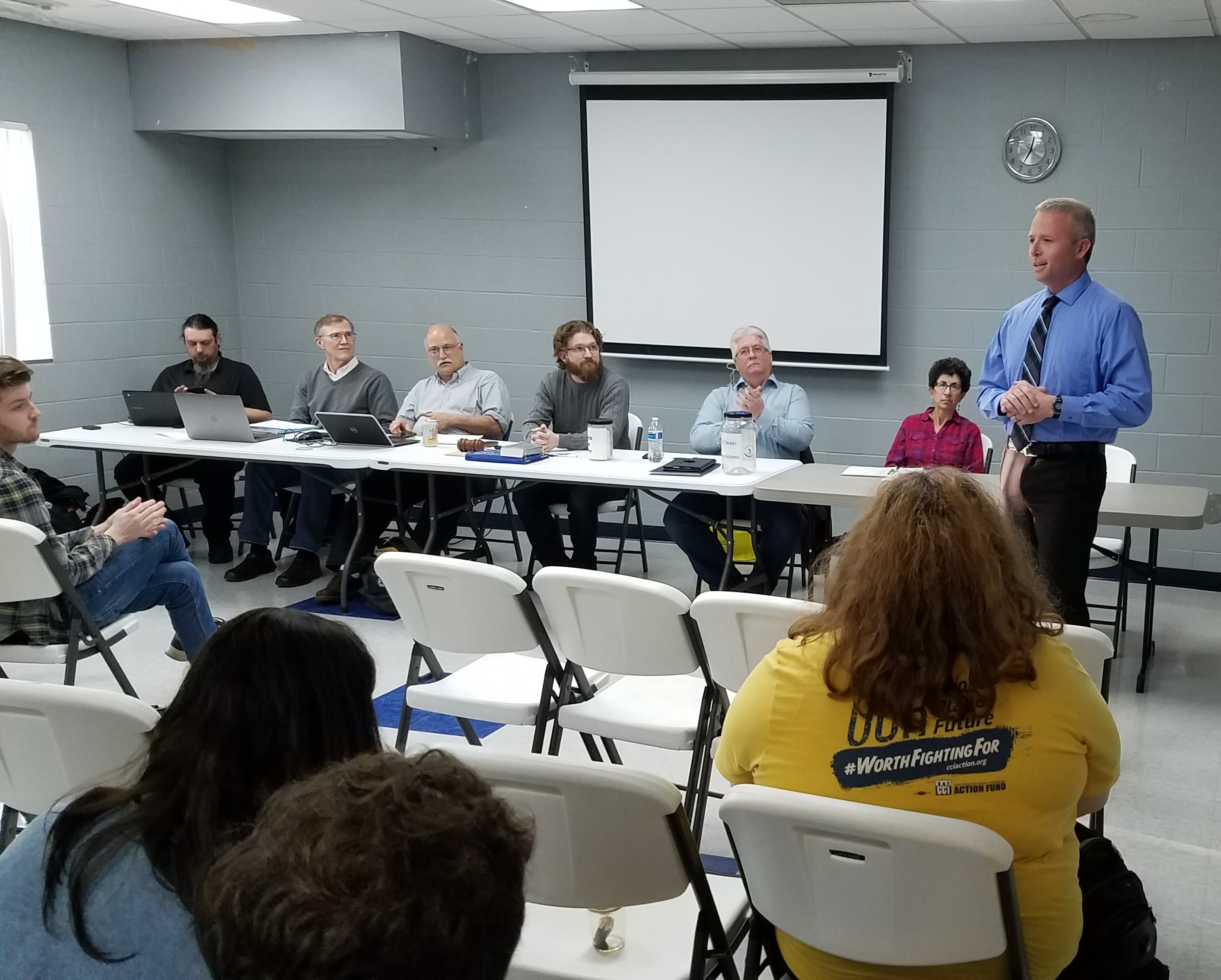
Big Grove Precinct has two voters elected to the Johnson County Democratic central committee, Brad Kunkel and me.

At the central committee meeting on Thursday, May 2, Kunkel formally announced his campaign to become sheriff when Lonny Pulkrabek retires at the end of his 16 years in office. Here’s a link to the Cedar Rapids Gazette’s coverage of his announcement.

I’ve known and followed Brad’s law enforcement career and work in the community for a long time. Kunkel has 18 years with the Johnson County Sheriff’s office where he is a detective sergeant. He participated when he could when we held political events in town, and was a Solon city councilor before moving to our rural precinct.

Having a sheriff’s race during the run up to the 2020 general election creates a different and welcome dynamic. By nature of the position, a candidate for sheriff must reach out to a broad slice of the electorate. Many voters who don’t normally participate in politics become active, increasing overall turnout. In addition, a sheriff’s campaign cuts across party lines to create its own electorate, different from races further up the ticket. Brad Kunkel is a solid candidate who has been active in Democratic politics.

The primary election is June 2, 2020 with the filing period opening March 2 for county offices.

Categories
Kitchen Garden Reviews

Rainy Days and Smarshing it Up

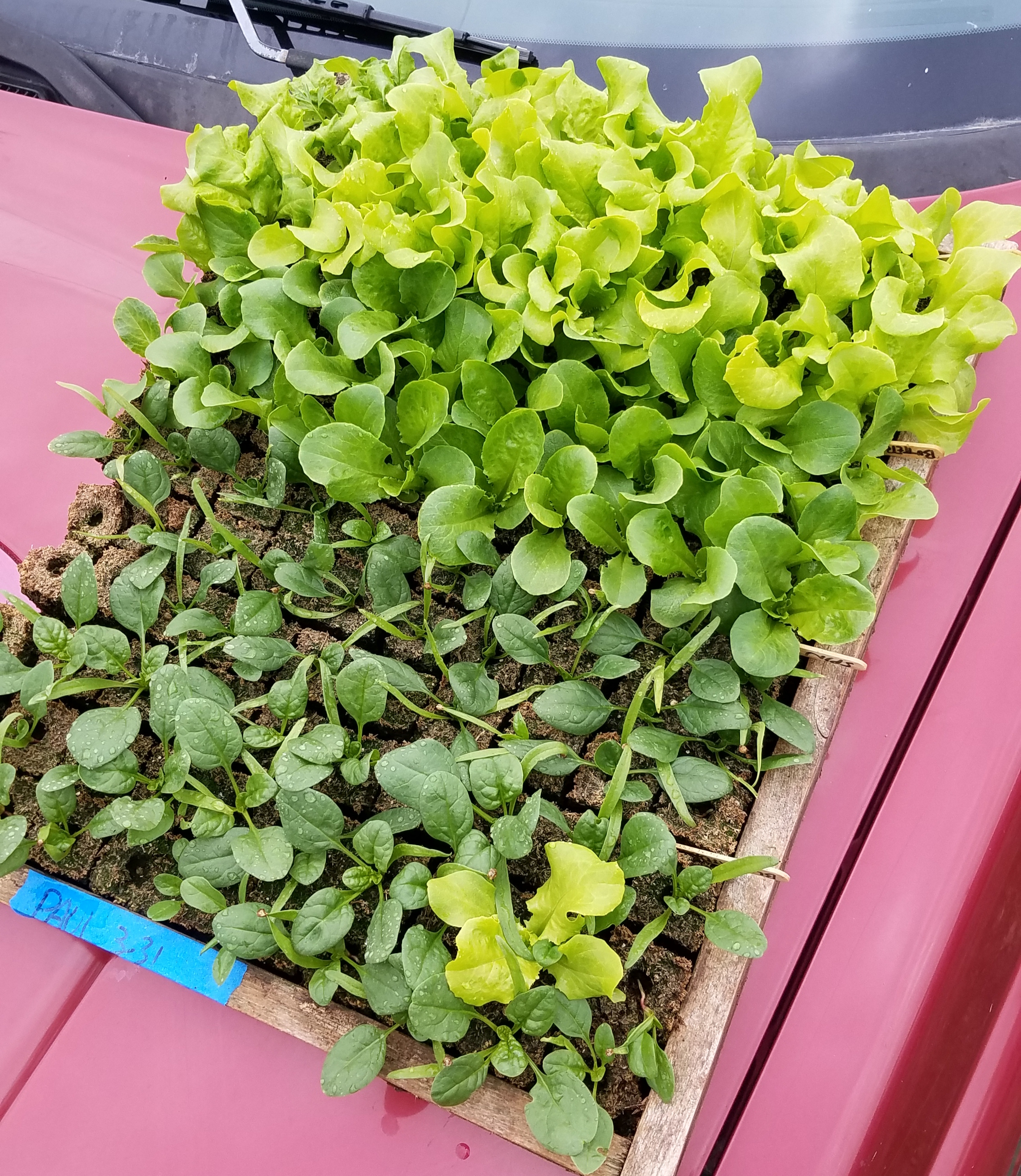
Tray of spinach and lettuce seedlings ready to plant in the ground.

Early planting is done… then it rained.

The ground has been too wet for planting so Friday became a day for weeding and staking the sugar snap peas.

I moved seedlings from the garage to the dining room to protect them from wind and rain while I worked my usual shifts at the home, farm and auto supply store. They are back outside waiting for the ground to dry. There is a lot of gardening to do over the next four weeks.

While the grass dried I drove across Mehaffey Bridge to the BioVentures Center in the University of Iowa Research Park. A friend arranged an impromptu round table discussion of affordable housing centered around Ohio Senator Sherrod Brown’s trip to Iowa to support his wife Connie Schultz. Schultz interviewed author Sarah Smarsh at an Iowa City Public Library fund raiser in the county seat that evening.

The round table consisted of community leaders introducing themselves and discussing issues raised by the recent purchase of a mobile home park by a group of out of state investors. The new owners plan substantial rent increases which current residents can ill afford. My role was to listen and learn.

Sarah Smarsh is author of the memoir Heartland: Working Hard and Being Broke in the Richest Country on Earth. My brief review after reading it last year is as follows:

I was skeptical at first about the reach of this book about rural poverty, hard work, and economic injustice. Yet, I was drawn in to a world I knew existed but hadn’t been articulated in such words. Smarsh’s story resonates with how I was raised, and with much of what I see in rural Iowa today. It was a marvelous read.

Several of my farm friends attended the event. We gathered under the marquee of the Englert Theatre for a photograph. Those who read Heartland felt as I did, that it articulated something about modern life in the Midwest that had been missing. We also concurred that Smarsh had drawn a clear line between what she presented in the book and her personal life which was not up for public conversation. After discussing the book we told jokes and laughed (a lot) in the marquee light before finding our ways home.

Some political friends attended the fund raiser, including my state senator Zach Wahls and his biggest fan, Chloe Angyal. I complained to Wahls I couldn’t remove his bumper sticker from my aging Outback. “American made, baby,” he responded.

I met Angyal who is a contributing editor to MarieClaire.com. We discussed her arrival in the Hawkeye state where she is writing a series of dispatches (here and here) related to the first in the nation Iowa caucuses and the unprecedented number of women running for president. Originally from Australia, she relocated to Iowa from Manhattan. After surviving the polar vortex and one of our coldest winters in years, she said she likes it in Iowa.

I didn’t get the lawn mowed, which means another morning of waiting for grass to dry, followed by the long process of bagging it up then mulching the kale. The forecast is sunny and clear. Hopefully the rest of the apple blooms will open, followed by pollination. Fingers crossed. I’m ready for a solid day’s work in the garden after Friday night smarshing it up in the county seat.

Categories
Work Life

Low Wage Work, the South Side and Me

At Sunset

The benefit of working in a low wage job is exposure to lives I wouldn’t otherwise know exist.

Every work day someone’s car has been repossessed, an abusive spouse called an associate at work, or someone lost their apartment with no ability to pay for a new one.

This a part of society people don’t see much unless one is living it. Government is not involved unless a trip to the courthouse or prison is part of the package.

During my transportation career I spent more than my share of time on the South Side of Chicago. Some folks decided to break into a trailer dropped in a neighborhood and attempted to take a refrigerator. The refrigerators were large and awkward to handle, and the Chicago police stopped the theft and pursued the would-be thieves through the neighborhood. A call from our corporate staff in Cedar Rapids resulted in my spending most of a day in arraignment court. The time there was life-changing. I knew Chicago experienced a lot of crime, but was in no way prepared for the endless procession of victims and their aggressors.

When our case came up on the docket, the prosecutor began by pointing at me, saying “a representative of the company” was present at the arraignment. If I hadn’t been there, the charges would have been dropped. While enjoying the narratives of the culprit chase and questioning about their identification the night of the crime, I had other responsibilities to pursue, such as finding drivers who would comply with company policy and park their trailers at our nearby secure terminal across the Indiana line.

I worked three months for a subcontractor of a subcontractor to the Whirlpool Corporation in North Liberty the spring of 2013. It was hard work and I found something better. There was constant employee turnover and I got to meet and spend breaks with a lot of transients during my tenure. There were no permanent employees of the temp service who wrote my paycheck, not even in our Cedar Rapids office.

A group from Chicago had set up shop off Penn Street in North Liberty, renting an apartment where friends, relatives and neighbors from Chicago stayed and rotated through. They had heard of job opportunities and cheap living in the Cedar Rapids – Iowa City Corridor and some of them worked at the temp service I did trying to find a permanent arrangement in Cedar Rapids. My informant was someone who participated in this operation. In addition to the work building kits for Whirlpool, he was a low-level loan shark and two-bit hustler trying to get ahead. He didn’t last long at the plant.

I started referring to the “Chicago contingent” with these folks specifically in mind. Unbeknownst to me my experience and others like it became the stuff of urban legends. So much so that Linn County Supervisor Stacey Walker addressed it in a presentation last week to Cedar Rapids’ First Presbyterian Church, titled, Dispelling the Myth of Chicago “Trouble-Makers.” The YouTube video is an hour long and Walker does a great job framing the issues.

As Walker explains, the phrase “Chicago trouble-makers” is dog-whistle for racism. Since my experience with the Chicago contingent was born out of personal experience, I hadn’t thought of it that way. The fellow employees at the temp service were trying to get ahead, and I don’t blame them for wanting to get out of Chicago. I didn’t know many of them as well as my informant, and it’s likely some of them had a recent criminal background, based on conversations in the break area. What I called their “operation” could not help but be noticed by others and civic attitudes toward it followed.

Our politics cultivates urban myths like the “Chicago trouble-makers” as a primary function. We’ve become so disconnected from our neighbors that rumor and innuendo displace human interaction and its role in society. My solution is to write about what I know from personal experience and challenge my own perspective as much as that’s possible. Once one engages in society it is possible to effect change. In fact, that may be the only way to do it.

Categories
Living in Society

Iowa Caucus Contagion

Caucus-goer

In 2000, the year the U.S. Supreme Court stopped vote counting in Florida and made George W. Bush our 43rd president, measles was declared eliminated.

Not so fast.

“From January 1 to April 26, 2019, 704 individual cases of measles have been confirmed in 22 states,” the Centers for Disease Control and Prevention reported last week. “This is an increase of 78 cases from the previous week. This is the greatest number of cases reported in the U.S. since 1994.”

Our political leaders are not solely responsible for a preventable disease outbreak that mostly affects children younger than 18. Concurrently, measles outbreaks are a sign of our political times. Vaccine-preventable diseases belong in history books not in 22 U.S. states.

My interest in the measles outbreak is driven by two terms I served on the county board of health. CDC was politicized under president Bush, whose administration censored its director, Dr. Julie Gerberding. However, if CDC’s army of health professionals reports an outbreak, we should take it seriously. As an Iowa Democrat that means picking smart leadership in the 2020 general election from township trustee to the White House. We have to change a political climate which produces social phenomena like communicable disease outbreaks.

20 Democratic candidates are running for president, with the incumbent the presumed Republican nominee. It’s hard to say who will emerge from the July 2020 Democratic National Convention as the nominee, but know this: there aren’t as many choices as one would think.

Joe Biden is making his third attempt for the nomination, Bernie Sanders his second. A squad of U.S. Senators has announced, as well as current and former mayors and U.S. representatives. There are even outliers like best-selling author Marianne Williamson, businessman Andrew Yang who supports a universal income, and second time aspirant Mike Gravel. With nine months to go until the Iowa Caucuses, most people I know planning to attend have it narrowed down to a few options.

This summer’s Democratic debates should clear some non-viable candidates from the field. The Democratic National Committee set criteria for participation on June 26-27 in Miami and July 30-31 in Detroit as follows:

  • Receiving at least 1 percent support in three DNC-approved polls. Those could be in early state polls — Iowa, New Hampshire, South Carolina or Nevada — or in national polls between the beginning of January 2019 and the two-week mark before the first debate (a candidate could fall short but then qualify for the second debate if they meet the polling threshold two weeks before the July debate).
  • Receiving donations from at least 65,000 unique donors with a minimum of 200 donors in at least 20 different states.

Say what you will about the criteria, they are straight-forward and concise. If a presidential candidate can’t get one percent in the polls or raise money, why would they receive further consideration? That makes July 31 the drop dead date for Democratic presidential candidates.

The challenge in our district is bandwidth. In addition to selecting delegates to the county, district and state conventions by presidential preference groups Feb. 2, 2020, Democrats do not have a stand-out candidate to run against Senator Joni Ernst in her first re-election. We need to find one because without a Democratic majority in the U.S. Senate, any Democratic president’s agenda would be hamstrung out the gate on inauguration day. In addition, Congressman Dave Loebsack announced his retirement at the end of his term. Multiple candidates are expected to announce for congress this spring and summer. Between announcement and the June 2, 2020 primary, name recognition and winning over primary voters will be essential for viable candidates. Even former State Senator Rita Hart, who ran as our 2018 lieutenant governor nominee in the state-wide race is hardly a household name. There is a lot to do to keep this seat in congress Democratic. How does one work on all of that at the same time?

Managing bandwidth is about staying focused on voters in my precinct. I seek to contribute to a welcoming environment at the caucus where I seem likely to be selected as acting chair. If that’s the case, I may not make a pick for president before the caucus. I can even see me throwing my support to a preference group that needs one more member to become viable. As long as the candidate has a “D” after their name, and is selected by the party, I don’t see the relevance of my personal preference. Digging into a shallow pool of colloquialisms, “we have bigger fish to fry.” There are also other, more populous, and impactful states to vote or caucus by Super Tuesday on March 3, 2020.

The number of views on this blog surged when I announced my pick of Hillary Clinton for the 2016 Iowa caucuses. While I’m tempted to try to make a splash again this year, Democrats seem resolute about replacing the incumbent president. It would be foolish to let personality, individualism, or my interest in clicks get in the way of that momentum. If I’m lucky, the party will find someone else to run the caucus and I can work for a presidential campaign during the run up. I’m not holding my breath.

The measles outbreak is unfortunate and we can’t deny the science of communicable disease unless we want to put everything we hold dear at risk. So it is with our politics. The country appears to be under a spell, and the most obvious person is not the witch. It’s time to do what we know is right to recruit and vote for viable candidates to take on the Republicans. We may lose but won’t get anywhere toward a more just society unless we engage and put our best energy to work.

As Hillary Clinton said, “We are stronger together.”

Categories
Living in Society

Elizabeth Warren in Tipton

Elizabeth Warren Meet and Greet in Tipton, Iowa. April 26, 2019

TIPTON, Iowa — 125 to 150 people showed for an Elizabeth Warren meet and greet at the Tipton Family Restaurant today.

The side dining room selected for the event usually seats about 25 diners. Staff cleared the tables and most chairs, and we crammed in like the crowded stateroom in the Marx Brothers movie A Night at the Opera. Not everyone fit and after the event I saw about 35 people in an overflow area waiting for their moment with Warren.

It was comfortable inside once everyone settled in place. I worked my way to the back of the room where my 6-foot, 1-inch height enabled me to see the proceedings.

Warren gave a 25-minute stump speech, which Robin Kash with Neighborhood Network News captured here. She took two questions outside before her speech and another four inside afterward. She used a microphone so we could hear all six. The demand for answers was much greater than allotted time. I’m a bit spoiled after hearing Hillary Clinton take 13 unrehearsed questions in Coralville back in 2015. Warren did well with her answers.

My impression of the event was as follows:

I’ve been to political events where there is a lot of excitement and this wasn’t one of them. The air was filled with resolve more than excitement, as if attendees felt we have to do something about the current president and events like this are the path. I knew at least a dozen non-staff people there and they either a). already support Warren, b). represent a constituency and are making candidate rounds asking specific questions, or c). people who want to participate in the caucus process. One attendee characterized her interaction as “dating” before the caucus.

Plenty of Warren staff and volunteers were on hand to register people and put colored identification stickers on our clothing. Except for the potential fire code violation the event was well organized. The Cedar County Democrats, under the leadership of party chair Larry Hodgden, should be proud of their work before and at the event.

Lots of folks wore media badges. I don’t know which outlets, but it was likely the candidate’s press pool. I didn’t see the reporter for the local paper, the Tipton Conservative, although he may have been there. The only blogger I knew was Dave Bradley of Blog for Iowa.

My question, while driving to the event along a gravel road running next to the Cedar River, was whether Warren is in or out for further consideration. I know Warren through her service in the U.S. Senate, and from her involvement in TARP and the Consumer Financial Protection Bureau. Her policy positions are strong and she’s smart. I was concerned more with her current age (69) and whether she displayed evidence of cognitive degeneration in such things as conceptual reasoning, memory and decline in processing speed. I’m not a physician, but I’m satisfied she’s fit to be president after hearing her give a speech and handle questions. In politics this is Kentucky windage more than a medical condition.

The only piece of news that came out of the event pertained to Newman Abuissa, a resident construction engineer with Iowa DOT, who told me he’s running for the Democratic nomination for the open congressional seat in the second district. I asked him, “Are you sure you want me to put this out there now?” He said yes. We scheduled time for an interview next week.

I did the same Gmail search for Abuissa I did for Veronica Tessler, and there were a lot more hits for Abuissa because he has been very active in Democratic politics ever since I’ve known him. I believe he’s the only person to date who said he’s actually running for Dave Loebsack’s seat, although Tessler formed a committee with the Federal Elections Commission and is giving it serious consideration as are Rita Hart, Kevin Kinney, Zach Wahls and others.

As I turned right at the cemetery onto Solon Road, and went past the Suchomel barn, I felt glad I had been to the event and hoped I could get back to a gas station before running out of fuel.

If you’d like to read my typo-laden twitter feed with more photos from the event, click here.

Categories
Reviews

Tallgrass Conversations – Book Review

“Prairie is among the most altered and threatened ecosystems in the world,” Thomas Dean of Iowa City wrote in a new book he co-authored with Cindy Crosby of Glen Ellyn, Ill. “Care of the world is always essential, and care arises from conversation.”

Tallgrass Conversations: In Search of the Prairie Spirit was released April 22 by Ice Cube Press. It is a compilation of Crosby and Dean’s recent writing and photographs of tallgrass prairie in the Midwest. Organized in a series of 26 conversations, the book touches on many of the current issues pertaining to preservation and restoration of tallgrass prairie.

Prairie used to cover more than 85 percent of Iowa land, according to the Neal Smith National Wildlife Refuge. Today less than one tenth of a percent of original tallgrass prairie remains in the state.

“Remnant prairie functions in a way we can’t replicate through planting prairie,” Crosby wrote. “We can educate ourselves about what we are losing. We can care for what remains. We can continue to plant prairie, then research, paint, write about and ensure tallgrass prairie is a part of future conversations about development, agriculture, and conservation.”

If one participates in the experience of tallgrass prairie as Dean and Crosby encourage us to do, it is decidedly cultural. They provide a window into current tallgrass ecosystems and their modern discovery and management. The authors want more writers and artists, poets and photographers to document what’s left of tallgrass prairie and enter into a conversation about what it means and what can be learned. They want to be partners in that conversation and the book serves as an example of how to begin.

“We hope you’ll enjoy seeing the various ways we invite you to think about some of these words and images that showcase the prairie spirit,” Crosby wrote.

To learn more about Cindy Crosby’s work, visit her website, Tuesdays in the Tallgrass: Exploring exterior and interior landscapes through the tallgrass prairie at https://tuesdaysinthetallgrass.wordpress.com.
Thomas Dean is senior presidential writer/editor at the University of Iowa, where he also teaches interdisciplinary courses.

~ First published in Issue 262 of Little Village

Categories
Living in Society

Is He a Socialist?

My Grandfather, the Socialist

My political fate was determined when I was very young.

My grandfather was a socialist, union coal miner who believed the means of production should be owned or regulated by the community as a whole. The very definition of a modern day socialist.

Easter Sunday I telephoned Mother who told me this story.

Grandfather, who had been divorced by Grandmother, came to Davenport to visit one weekend when I was about seven months old.

Holding me, he asked Mother, “Is he a socialist?”

Mother responded, “No Pa, he’s a Democrat like the rest of us.”

At the time I said nothing because I had not learned to speak English. My political future was thus determined without comment. It stuck: A Democrat, not a socialist.

I had coffee with a young reporter yesterday who asked my thoughts about what “socialism” meant to the 2020 election. The idea is that Republicans will hammer Democrats, right or wrong, for being socialists as much as they can, thus gaining traction among unwitting voters. I don’t think people who use the term “socialist” today understand what it means.

Socialism is a system of government like that in the Union of Soviet Socialist Republics which was dissolved in 1991. Most people in the USSR were poor compared to the United States and Europe. Artists and writers were sent to the gulags described by Aleksandr Solzhenitsyn, provisions were rationed, housing was inexpensive but derelict, abortion was encouraged as a method of social planning, and society was described as austere. What American in their right mind wants that?

Karl Marx noted a continuing struggle between the bourgeoisie and the proletariat, class warfare. Another way of describing it today is the difference between those who control the majority of our wealth and means of production, the one percent, and the rest of us. To describe Democrats as socialists is a distraction from the real problem of growing financial inequality. Maybe to distract is the Republican point.

Government working on common problems is a feature, not a bug of it. By the introduction of more money into our politics and elections, the wealthy have been able to control our government. We hope the duration of such control will be short.

Before I could talk, without my input, I was determined to be a Democrat and remained one. Make no mistake. The answer to Grandfather’s question is I am not a socialist, nor are the vast majority of Americans. To say otherwise is part of the problem with our politics: the truth doesn’t matter, and political rhetoric has strayed far from any reasonable form of veracity.

As citizens, we are better than that.