Categories
Writing

Blueberry Weekend at Wilson’s Orchard

Wilson's Orchard
Wilson’s Orchard

A blatant commercial plug from my favorite fall workplace:

Hi All,

Its that time again. Tractor rides, turnovers, slushies, apples, and blueberries. We open for the season tomorrow, August 1 and will be open every day after that for the next three months. Open 10 a.m. to 7 p.m. through the end of September. Grab the kids, that crabby spouse and come on out and enjoy our bit of heaven.

This weekend features blueberries. Great big, tasty ones from Michigan. Bluecrop variety— the best there is. Get them by the pound or by the 10 pound box. Either way you’re in for a treat. Blueberries freeze extremely well, allowing you to enjoy them all winter long— great in cereal, on yogurt or just plain. $4/pound or $34 for a 10 lb box.

We also have Georgia peaches available. Great big, juicy and tasty. These peaches actually taste like peaches— imagine that! $2.50/pound or $42 for a 25 pound box.

On the treat side, on Saturday and Sunday you can add to your blueberry fix with a slab of Bevo’s Blueberry Buckle, warm and yummy. Or, go with a hot turnover with ice cream. Or a couple of cider donuts. Or heck, its been a long dry spell, do one of each! Apple cider slushies will be flowing as well — plenty to choose from.

On the frozen side, we have apple and cherry turnovers available in 8 packs as well as apple, cherry and blueberry pies.

This weekend looks to be GREAT weather. Come by and get your first tractor ride of the season or enjoy a stroll through the orchard. The crop looks exceptional this year. We dodged several hail storms, came within a degree of a major freeze and withstood straight line winds. Through it all, the apples survived and thrived and we have a great looking crop nice sized fruit with good color and flavor. Knock on wood.

What’s Pickin’

While the crop looks great, most varieties are at least a week later than normal due to the cooler temperatures this summer.

Pristine— in the words of Chug Wilson, “the first good eating apple of the season”. Pristine also make very good pies, for those of you so inclined.

Jersey Macs— an early McIntosh, GREAT for applesauce. Good flavored eating apple, but a bit on the tart side Dutchess of Oldenberg— quite tart. This is an old time apple in Iowa, one of the first that settlers found could withstand the tough winters here. Our crop of Dutchess is quite small this year

Hope to see you all soon.

Paul Rasch
Wilson’s Orchard, 2924 Orchard Lane NE, Iowa City, Iowa 52240

Categories
Kitchen Garden

Cooking in Big Grove

Broccoli Florets
Broccoli Florets

The harvest is strong at the CSA and the abundance has been reason to engage in cooking again. It’s not that we haven’t cooked meals. It’s that there is so much to do in this brief time on the planet that like simmering pasta sauce from last year’s tomatoes, the activity was moved to the back burner.

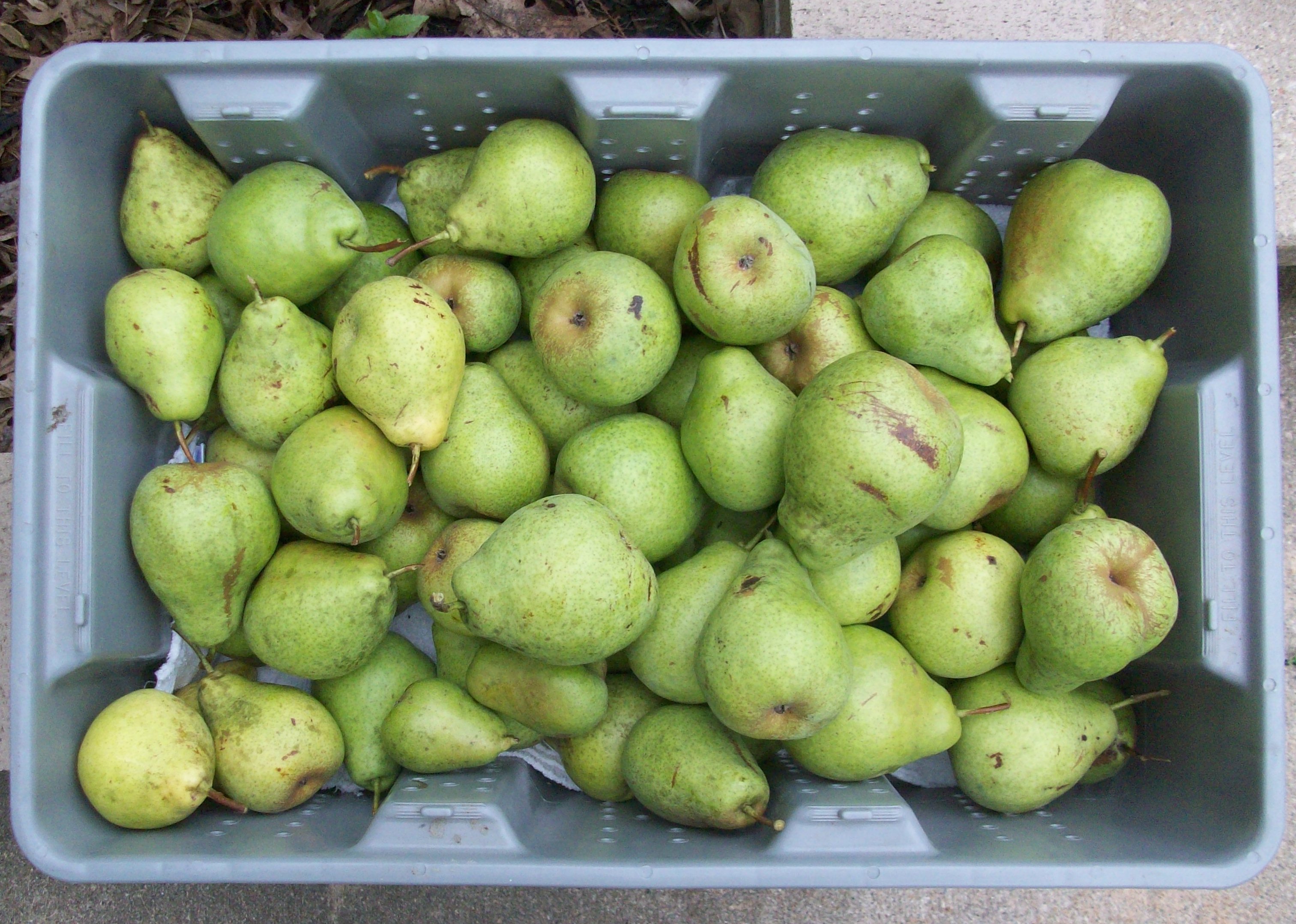
Our own garden looks to produce a lot of tomatoes, peppers, a few cucumbers, and some celery. There is also a lot of fruit on the apple and pear trees.

There may be an eggplant or two from our garden, kale enough to feed the entire subdivision, and whatever I manage to get in the ground for second crop. At the grocery store on Tuesday, zero is the number of fresh vegetables purchased because we have more than we can possibly use— local food luxury.

The garden got away from me this year, and yesterday I mowed down the garlic patch. The bulbs were too small for kitchen use, and there is a supply of garlic scapes in the fridge for daily use until the bulbs from the CSA have cured. If I get to it, I plan to spade the ground and cover it with grass clippings.

Eggplant is a blessing and a curse. I made a casserole of tomato sauce, chunks of sliced eggplant, fresh mozzarella, and a cooked mixture of onion, diced eggplant, zucchini, fresh cherry tomatoes and kale for dinner last night. It was very tasty, but a person can enjoy eggplant only for so long during the season. Eggplant produces abundantly in this climate, and the rounds I baked and froze last year went into this year’s compost. Will eat it at the beginning of the season, but for how long afterward is an open question.

There is also cabbage from the CSA. Coleslaw is a typical dish. During my recent pantry review, I found plenty of canned sauerkraut— enough to last another year. There is also soup aplenty, so we’ll be sharing the extra cabbage.

 Someone at the CSA made pickles with kohlrabi and freshly grated ginger. I’m seeking that recipe for refrigerator pickles as a way of dealing with an abundance of kohlrabi.

One of the several challenges for a local food system is to prepare the harvest into a portioned, nutritious meal, then to sustain that activity for the entire year. Ingredients are always a combination of garden, pantry, farms and merchants, but it is the knowledge and action of cooking that makes local food viable. Cooking is physical labor and practice more than head knowledge. In a local food system we get plenty of both.

Categories
Sustainability

Letter to the Solon Economist

Iowa City Nuclear Free SignCommemorating Hiroshima and Nagasaki Day

Aug. 6 marked the 69th anniversary of the atomic bombing of Hiroshima, Japan when between 60,000 and 80,000 people were killed instantly, with a final death toll estimated at 135,000.

Aug. 9 will mark the anniversary of Nagasaki where about 40,000 people were killed instantly by an atomic bomb, with a final death toll of about 50,000.
We won the war and the world changed forever.

What has become of our nuclear weapons program?

The report isn’t good.

Late night comedians ridicule the state of our nuclear complex, the foibles of its officers, and the many accidents it produced. An example was Vice Admiral Tim Giardina, the STRATCOM deputy chief in Bellevue, Nebraska, who was fired by President Obama last October after being caught passing counterfeit poker chips at a Council Bluffs casino. Comedy is not reality, and Giardina’s situation isn’t that funny.

Last week Russia violated the Intermediate Range Nuclear Forces (INF) treaty, which was signed by President Reagan, and ratified in 1988, by testing a ground-launched cruise missile. Cruise missiles are delivery systems for nuclear warheads.

While the treaty violation does not comprise a new threat in the tense relationship between the U.S. and Russia, it is troubling.

“It suggests that Russia is moving away from a long U.S.-Russia tradition of restraining the most dangerous weapons even as they have serious disagreements on all sorts of issues,” said Daryl Kimball, of the Arms Control Association.

Life is scary enough without nuclear weapons, so what’s an Iowan to do?

It’s time to prevent what we cannot cure, and call for nuclear disarmament.

~ Paul Deaton is a member of the Iowa Chapter of Physicians for Social Responsibility, U.S. affiliate of International Physicians for the Prevention of Nuclear War, a 1985 Nobel Peace Prize Laureate.

Categories
Writing

Allure on the Prairie

Canned Goods
Canned Goods

LAKE MACBRIDE— The allure of imagination is a writer’s arena. It can be a saving grace, enabling us to survive in a world gone mad. It can be a distraction from existential realities that beckon for attention. It is a blessing and a curse, perhaps the result of our too large brain combined with the relative security of life on the American plains. Perhaps it is simply a way to live.

Writers seek allure more than imagination, at least this one does. That moment when an idea rises on the horizon. A shiny object, not unlike a fashion photograph— each element prepared meticulously for our viewing, the scent of perfume imagined despite the reality of a two dimensional image on a screen. Allure is the well from which a writer dips a ladle and drinks.

Norman Mailer described the writer’s process:

You go in each morning, and there’s a blank page. Maybe it takes five minutes, maybe it takes an hour. Sooner or later you start writing, and then the words begin to flow. Where does that come from? You can’t pinpoint it. You always wonder, “Will it all stop tomorrow?” In that sense it’s spooky. In other words, you’re relying on a phenomenon that’s not necessarily dependable.

There is no shortage of things to occupy our attention. A recent story on the cable television business reported there are 10 million households in the U.S. that have an Internet connection, but no cable television. It’s enough people for Home Box Office to perceive a market and develop a direct sales, Internet delivered, bundle of subscription programs. Radio, then television, and now the Internet, have served to suppress imagination’s allure. Programming fills our attention capacity as we plug in to our favorite diversion. For a writer, this is a low level poison trickling into our veins, suppressing creativity. Allure vanishes leaving us feeling empty and used, yet craving more.

“No ideas but in things,” wrote William Carlos Williams. Would that it were so. His 20th Century produced a consumer culture in which people collected things without ideas. Certain die cast toys, boxes of pasta, tools, and my addiction— books and reading material. The result of someone’s ideas tangible and in our hands. Maybe Williams was warning us.

As we age, we become aware of our physical limitations and imagine more. Aging bodies become temples of memory to be filled by righteous and earthy memories. As our bones stiffen writers strive to avoid calcification of ideas. It takes work. We are not always successful.

“Memory believes before knowing remembers,” wrote William Faulkner. As we age, the hard drive of memory falls into disuse. We repeat old jeremiads in society, trying to get along. We can forget the allure of the imagination.

When a writer loses the ability to be drawn to the allure, one is no longer a writer. A scribbler maybe, a blogger definitely, a writer only in external artifacts and behavior.

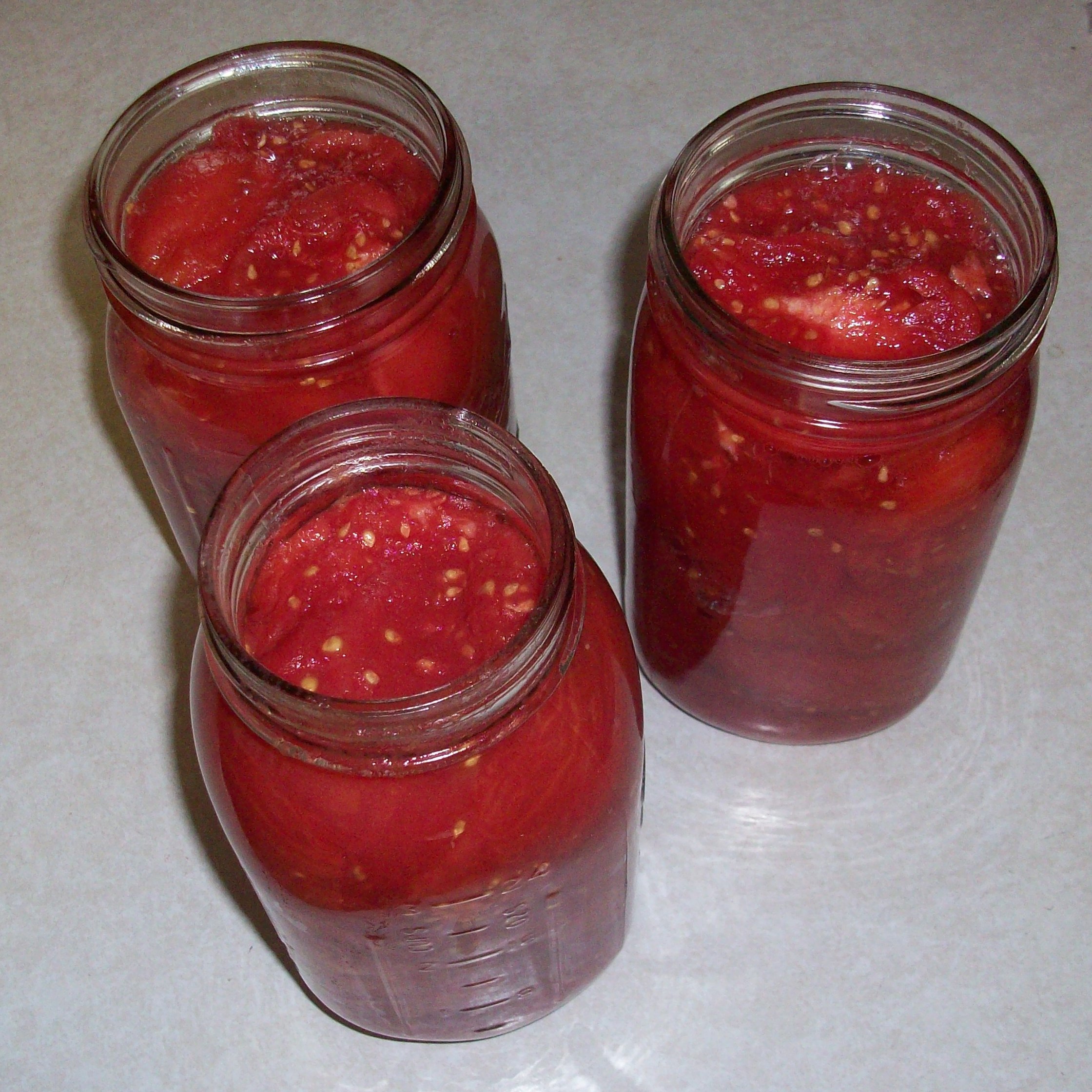
We may be driven to package our awareness, like a gardener spending weeks in the kitchen canning and freezing produce for a winter of use. The jars on a shelf serve a purpose, the least of which is nourishment. They become another distraction from the allure of a life of imagination.

Categories
Kitchen Garden

First Tomatoes

First Tomatoes
First Tomatoes

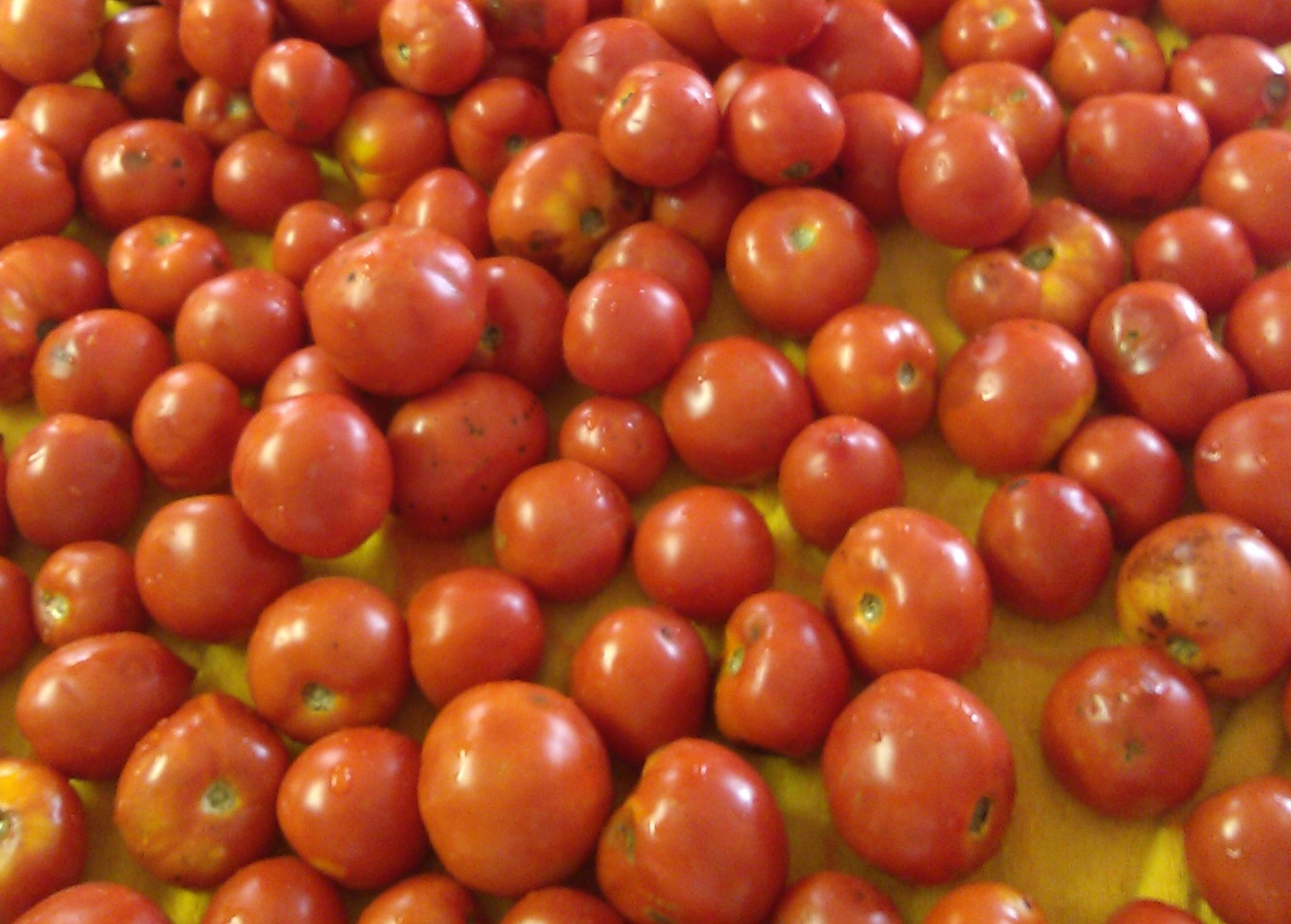
LAKE MACBRIDE— Earlier this week the first tomatoes were harvested from our garden. Two types of cherries which were sliced up and placed on a dinner salad. Few things are as good as a fresh tomato.

There are some 32 tomato plants in our garden and we hope there will be an abundant harvest. One never knows with the tomato blight, the uncertain weather, and bugs. We don’t spray anything on our tomatoes, and take what they will produce— less deductions for certain conditions. It has been enough.

First tomatoes are another benchmark along the year’s progress. Later this year than previously, but just as delicious.

Categories
Work Life

Independence

Iowa Sotbean Field
Iowa Soybean Field

INDEPENDENCE— Friday was a mini-retreat from paid jobs as I drove support for a small team of riders on the Register’s Annual Great Bike Ride Across Iowa (RAGBRAI). The first ride was Aug. 26 through 31, 1973, when people got whatever bike was in the garage tuned up and headed to the Missouri River for what was to become an annual event with thousands of riders on more expensive bicycles.

The day began at 4 a.m., and I arrived to pick up my team in Waterloo around 6:30 a.m. We waited and watched weather radar maps for a couple of hours until the storms passed. Rain held back Friday’s morning start, but in the end, it was a great day for being outside, and in Iowa.

The support driver drops the riders off at the day’s starting point, which was in Waverly. We met in Sumner for lunch, and then I drove to Independence to pick them up. I was also on standby should something happen to one of our riders.

I spent a few hours at the public libraries in Sumner and Independence, and then sat on the front steps of the U.S. Post Office watching riders pass, and waiting for my team to finish for the day. It was time to do something different and get away.

We ended at a church spaghetti supper put on for the riders. It is a big deal for non-profits when RAGBRAI comes to town, and riders seek to carb up for the next day’s ride. After dropping the team at the motel, I headed home, making it back after 9 p.m. It was a long, thoughtful day.

Here are some photos from the rest stop in Sumner, where we had lunch.

Meetup at the Post Office
Street Scene at Sumner
Letsche's Bike Shop Airs Tires
Letsche’s Bike Shop Airs Tires
Filling Water Bottles from a Hydrant
On Main Street
On Main Street
Street Pizza Makers
Street Pizza Makers
Political Pizza Server
Veggie Slice at Sumner
Leaving Sumner
Leaving Sumner

Categories
Environment Living in Society

Climate Change is Really Political

2012 Drought Conference

If one didn’t think the U.S. discussion of climate change was political, think again. U.S. Rep. David McKinley (R-West Virginia), added an amendment to a House appropriations bill to fund the Department of Energy and the U.S. Army Corps of Engineers that would prohibit the two agencies from using funds that would “design, implement, administer or carry out specified assessments regarding climate change.”

Another way to put it, from McKinley’s perspective, is if you don’t like science, ban it.

House Republicans took exception to the Department of Defense addressing the recommendations of the National Climate Assessment, and have added two agencies whose work is directly related to mitigating the effects of extreme weather to their list.

The floor debate captured the essence of the politics of climate change:

“Spending precious resources to pursue a dubious climate change agenda compromises our clean-energy research and America’s infrastructure,” McKinley said on the House floor. “Congress should not be spending money pursuing ideologically driven experiments.”

Speaking against the amendment, Rep. Marcy Kaptur (D-Ohio) said it disregards the research of the overwhelming majority of climate scientists.

“The Republicans, in general, don’t seem to trust the scientists,” Kaptur said. “This amendment requires the Department of Energy to assume that carbon pollution isn’t harmful and that climate change won’t cost a thing. That’s nothing but a fantasy.”

What next? Click here to read the rest of David Gutman’s coverage of this story in the Charleston, West Virginia Gazette.

And consider that June 2014 was the hottest month on record since records have been collected. Politicians like McKinley would deny the reality of human contributions toward global warming at the same time climate data released from the National Climatic Data Center of the National Oceanic and Atmospheric Administration, found that the worldwide average temperature over land and sea in June 2014 was 1.3 degrees Fahrenheit hotter than the 20th century average of 59.9 degrees. That is reality.

People seeking scientific proof of anthropogenic global climate change are barking up the wrong tree. The goal of science, if unlike McKinley, we accept science, is not to prove, but to explain aspects of the natural world.

Around 1850, physicist John Tyndall discovered that carbon dioxide traps heat in our atmosphere, producing the greenhouse effect, which enables all of creation as we know it to live on Earth.

Carbon dioxide increased as a percentage of our atmosphere since Tyndall’s time at the beginning of the Industrial Revolution. As a result, Earth’s average temperature increased by 1.5 degrees Fahrenheit.

The disturbance of the global carbon cycle and related increase in carbon dioxide concentrations in the atmosphere is identifiably anthropogenic because of the isotope signature of atmospheric carbon dioxide.

We can also observe the effects of global warming in worldwide glacier retreat, declining Arctic ice sheets, sea level rise, warming oceans, ocean acidification, and increased intensity of weather events.

It is no wonder almost all of climate scientists and all of the national academies of science in the world agree climate change is real, it is happening now, it’s caused by humans, and is cause for immediate action before it is too late.

Politicians like McKinley don’t get it, and advocate against reality. That’s nothing new for some members of the Republican Party.

~ Written for The Climate Reality Project

Categories
Environment Kitchen Garden

Dry Weather Returns

30 Pounds of Broccoli

LAKE MACBRIDE— When the ditch in front of our house dried enough to run the lawn tractor through, it was a sign that dry conditions were returning to Big Grove. 140th Street remains flooded, but most of the other roads in the county are passable. After an exceptionally wet and pleasant spring and early summer, the hot, humid weather has returned and we need rain.

Forcing myself outside, away from kitchen work, I pulled weeds from very dry soil before the day got too hot. I watered the vegetables, hoping dew and rain later in the week will nourish them— will be watering again before nightfall.

Broccoli Closeup
Broccoli Closeup

The last 24 hours has been what local food enthusiasts live for— securing broccoli for the winter, blanching and freezing it. It is work, with these outcomes: the best heads were kept fresh to cook later in the week; some of the best looking florets ever are processed and freezing; stems will be converted to soup, which then will be canned for later use; the freezer is getting a thorough cleaning of last year’s produce to make room, some of them going into the aforementioned soup; frozen rhubarb will be converted to sauce and canned; blueberries? Who knew?; and finally, vegetables that were frozen and are now coming in fresh will be composted.

Last night and today’s work is positive in so many ways.

That said, would it be better to buy frozen broccoli from the store during winter? When one lives close to the means of production, the answer is an emphatic no.

Categories
Living in Society

Iowa’s Summer Campaign Has Begun

Photo Credit BruceBraley.com

A small group of local, long-time political activists met last week with one of the 80 or so paid organizers for the Coordinated Campaign of the Iowa Democratic Party. Electing Bruce Braley as Iowa’s next U.S. Senator was at the top of our to-do list.

We don’t see each other often, but share the experience of working on election campaigns over many cycles. We know what it would mean if power in the U.S. Senate switched from Democratic to Republican leadership. If it’s up to us, that won’t happen, and each person at the meeting was willing to invest resources of time, money and thoughtful participation toward electing Braley to the U.S. Senate.

What does that mean in 2014?

It means participating in canvasses organized by paid staff, attending candidate and party-sponsored events when our schedule permits, and writing checks to campaigns when we have resources. That’s only part of the picture. Increasingly, it’s a small part.

More than anything, modern political campaigns require each of us be engaged in a community, without regard for political affiliation, and do things that make sense to advance our views. In rural communities especially, the human landscape of society doesn’t change enough from one election cycle to the next to pretend neighbors and friends don’t remember what was said in a letter to the editor, or at an event the last cycle. This persistence of memory can be a blessing and a curse in political campaigns.

Campaigns send a lot of requests for political donations, almost none of which get acted upon. The rationale is a variation on a theme that the numbers justify them. That is, if a request is sent to 10,000 people, there will be a financial return. This cycle, I am hearing more about Charles and David Koch, The Heritage Foundation and political action committees than ever. Campaigns keep sending the messages reinforcing a negativity that is hard to ignore.

At the grassroots, people understand the difference between a political action committee and a candidate, and at the end of the day, when there is an extra $25 in the checking account, a donation will go to a candidate, not a third party. Plenty of folks feel that way.

The summer’s string of parades, picnics, car races, music concerts, annual gatherings and county fairs is only just beginning, and political candidates are attending. We don’t put a lot of stock in what a particular candidate may say at an event, but there is an unspoken expectation they will show up in person from time to time, and that through these and other presences in person and in media, we will get to know them.

The weather has been exceptionally good for outdoors gatherings, and 2014 will be a summer to remember if for no other reason than that. Politics affects our lives, but we go on living.

Summer is the time to get involved with a political campaign, so start by checking out the Iowa Democratic Party. In case you missed it, Bruce Braley could use your help as well.

~ Written for Blog for Iowa

Categories
Social Commentary

Friday at the Town Festival

Hay Bale Toss
Hay Bale Toss

SOLON— The hay bale rises above the crowd to clear the bar. Main Street is packed for the hay bay toss— a farm-related activity in a festival put on where traditional farming, matters.

Bingo has begun, a band with a local lead singer is covering The Band Perry, and the beef and pork sandwiches are sold as quickly as the crew can make them.

The restaurants on Main Street offer specials during Beef Days, local beef, food, drinks and music, but the Cattleman’s Association is in the spotlight as the sun sets and we forget about our troubles for a while.