Categories
Kitchen Garden Living in Society

Farmers Talk Land Use

Ready to Exit Stage Left if Proceedings get Dull

The room was packed for the Johnson County Board of Supervisors public hearing on the County’s comprehensive plan. Current and would-be farmers were present and spoke about their profession. The hearing took two and a half hours.

Supervisors have been working on the plan for two years and would like to finish it and move on to what matters more, the Unified Development Ordinance, which codifies how the plan will be implemented. Last night’s public hearing brought the county closer to closure, even if the subject of land use will continue to be debated well beyond my years of walking the earth.

The main points were the 40-acre rule for definition of a farm is an obstacle to beginning farmers, and there is a wide difference of opinion regarding the role of animal feeding operations in producing the beef, pork and chicken non-vegetarians love to eat.

The Frequently Asked Questions page of the plan website addressed the first issue, “Will the new Comprehensive plan change the 40-acre rule?” Short answer is no. While officials expressed a desire to accommodate smaller farms during the process of developing the comprehensive plan, one expects the 40-acre rule to remain intact. A farmer can make a living on less than ten acres, especially if they can benefit from the State Code’s agricultural exemption from county zoning regulations. The path is unclear to enable farmers to acquire smaller parcels that would be zoned as ag exempt. There may not be a path, except by supervisors establishing special criteria and deciding each parcel individually on its merits. That’s no way to go. Not only is it labor intensive the politics of the board can and will change over time. People have spoken on the issue. Now it’s time to see what supervisors do.

If people want meat and meat products, livestock will be raised to meet demand. The words “concentrated animal feeding operation” have become a lightening rod of tumult about livestock production. Many do eat meat and few non-farmers want to live next to a livestock production facility. In any case, the State of Iowa maintains preemption over concentrated animal feeding operations. Under Republican control of government, preemption is here to stay. I doubt that would change under Democratic governance. People like their pulled pork, fried chicken, hamburgers and steaks, and it has to come from somewhere. Environmentally it would be better for humans to source protein from plants. If you believe they will over the near term, stand on your head.

The highlight of the hearing was a grader and son of a farmer who read an essay titled, My Barn. “I see my cows Jake and Nick coming up to me because they’re excited for me to rub their noses,” he said. “They feel as soft as a teddy bear.” The hearing engaged several livestock farmers. The ones who raised cattle and hogs took issue with persecution of their trade and the appellation “CAFO.” They said treatment of animals was humane on their farms.

There was insider baseball about the new map to accompany the comprehensive plan. My view is “whatever.” Let the supervisors decide based on best practices. There’s no going back to the way the land was before it was settled. It’s already been ruined by development and that happened in the 19th Century. The North Corridor Development Area has been designated as a buildable area in the plan in order to preserve county farmland. When one flies over it, it’s clear it has been settled from the outskirts of Iowa City and Coralville all the way to the county line. Everyone who has a strong opinion on the NCDA has an ox being gored. Speaker and naturalist Connie Mutel made the best case about how the new map was developed using “best practices.” Managing development in the county is like carrying water in a half empty leaking bucket.

Despite the serious nature of the presentations last night was fun. I got a chance to see friends and acquaintances in the context of working together to resolve issues of beginning farmers. That counts for something and in these turbulent times where would we be without that?

Categories
Home Life Living in Society Social Commentary

Shopping in Coralville

From a Shopping Trip in Coralville

I went on a shopping trip yesterday.

What of it, readers may ask. People go shopping all the time and some say our economy is predicated on consumers shopping.

That may be, however, in an hour and 12 minutes I spent 18 percent of our monthly budget on the stuff of living. It was a big deal.

The reason for the shopping trip was I took this week off from the home, farm and auto supply store to work on our garden. I usually dovetail shopping with trips to work. Garden time generated needs like a new 9-pattern spray nozzle to replace the one that began leaking, a dozen five-foot, light gauge fence posts for the garden, 100 feet of 4-foot chicken wire netting, and 50 feet of four-foot, 14 gauge, 2 x 4 welded wire fencing to make some additional tomato cages.

While there, I bought a new Stihl FS 56 R C-E loop handle trimmer. When the old, battery-powered Black and Decker trimmer broke I debated whether or not to acquire a gasoline or battery powered replacement. Two decision points. Even with two batteries the Black and Decker couldn’t trim the whole yard. Where the electricity to charge the trimmer batteries comes from is problematic.

We source electricity from the Linn County Rural Electric Cooperative and their generation partner CIPCO. More than two-thirds of electricity we use is generated by undesirable means: coal and nuclear. While the percentage of wind and solar CIPCO used increased in recent years, the Duane Arnold nuclear plant is a sore spot. The mix will change when the nuclear reactors go off line in the near future. I chose the most fuel-efficient of the Stihl line of household trimmers and expect to burn about two gallons of gasoline per season.

I stuck to my shopping lists even when I deleted the warehouse club list from my mobile device before arriving there. My mission was to find fruit. The selection of organically grown was very limited. Basically apples and bananas which both came at a premium price. I added a Dole pineapple on sale for $1.99 and a four-pound clam shell of grapes. The grapes weren’t the best — imported from Chile and treated — I won’t make that mistake again.

Finally I stopped at a large chain drug store on the way home. I go there three or four times a year to pick up personal hygiene items. The cost of razor blades has me thinking about letting my beard grow.

To acknowledge participation in consumer culture is essential. When I consider a history of my life, for good or ill, shopping has been part of it and an influence. When Father insisted on supporting César Chavez and the United Farm Workers’ grape boycott, we connected to the struggles of people who produce our food and learned a lesson about being a union family. That a gallon of milk cost $1.89 yesterday speaks volumes to the plight of family dairy farmers. That I get a discount for being employed at the home, farm and auto supply store is part of the reason I linger on into retirement.

This was my first big shopping trip of the year and may be the only one. It’s a small but important part of sustaining a life in a turbulent world.

Categories
Writing

Foundation for Writing

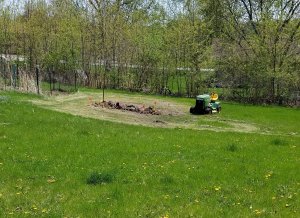
New Kale Plot

When the Catholic Church built the new school, seventh and eighth graders were segregated from friends with whom we had been growing up. A group of us were mixed together in an advanced program for college bound students as a nun explained at the time.

I didn’t like it and continue to harbor resentment even though it was 1964 and the segregation proved to be the foundation of my interest in a creative life.

During the course of our succeeding years, neighborhood friends and I would never again maintain the “old school” relationship. Mostly I’m over it, I guess. I do have writing which relies upon the distance from peers I learned then. A bit of alienation is essential for writing or public speaking to be worth much.

These days each morning begins with creative work. Reading, writing and coffee mixed together beginning around 3 a.m. It has been a chance to understand a world that is increasingly complicated. If the morning is productive, I feel positive the rest of the day.

End of Personal Journal

I work on a few projects off-line but the majority of what I write is available to readers. Otherwise, what’s the point. For many years, from my first trip to Europe in 1974, until this year I maintained a journal. As one can see in the image, those days are finished.

There is also newspaper writing which includes many letters to the editor and the freelance work I did a couple years ago. Some pieces were edited more than others. These days what I send to the papers isn’t hardly edited. I value it all.

Writing on-line has it’s points. There is a chance to edit what was written both before publication and afterward. I don’t blurt out incoherent rants on-line as I did when a journal was a place to let off steam. Social media, especially Facebook and Twitter, serves as a creative outlet as well.

At its core writing originates in isolation from and connection to society. The two aspects are needed for it to be any good. When I review old pieces I am tempted to edit them, and my punctuation over the years has been inconsistent to be kind, but they capture moments I remember and wouldn’t change. There are also those where I don’t perceive myself in the finished piece. If that’s positive or negative I’m not sure, but the writing seems really good when I rediscover those.

We carry a limited amount of stuff where we go. The transition from old to new school is one that’s always in my kit bag. It taught me how social forces and institutions can tear us apart, and sometimes provide the foundation for something equally good or better.

I hope to continue writing many more years.

Categories
Kitchen Garden

Garden Time

Pear Blossoms

Some garden plots need weeding, others need digging and planting. The lawn needs mowing for the mulch grass clippings and ground up leaves will make.

I took two days vacation from the home, farm and auto supply store to get some of this done. There are seven full days between now and when I return to tackle spring planting and yard work. Rain is forecast Wednesday. I know what to do today.

This is also the first day of early voting in the June 5 primary. My voting plans are flexible. Voting at the polls on election day is my preference, however, if I happen to be in the county seat I’ll head over to the auditor’s office and vote early. My mind is made up.

Once I mow the front yard, I’ll place political signs for candidates I support near the road for neighbors to see. According to a Des Moines Register article, Iowans don’t mind political signs in a neighbor’s yard.

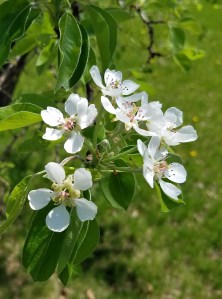
It doesn’t look like there will be apple blossoms this year. Last year was a big year for apples and recovery often takes two seasons. Will have to make the most of the pear tree which is currently in bloom, and leverage my work at the orchard for fruit.

Sauteed Bok Choy with Lemon

Last night I split bok choy lengthwise and sauteed it in butter and olive oil for a vegetable course. At the end I added lemon juice — too much lemon juice. We puckered up and ate them anyway.

Each year’s trace is unique, and the same. Bok choy is a reminder of spring we get from Carmen’s farm. She grows it in the high tunnel which we leverage when we buy a spring share. Once spring bok choy is finished, we move on to what’s next as Earth orbits the sun.

In the vast expanse of space we make a life six inches from our nose… with dinners at home and days in the garden in a sense of belonging. What else are we to do but live in concert with family, farmers, neighbors and distant energies of governance?

Answering that question is a life’s work — a way of sustaining our lives in a turbulent world.

Categories
Living in Society

Clean Up Day and the Midterms

New Kale Plot

There is a better way to change our politics and it has nothing to do with wave elections.

“The 87th General Assembly of Iowa will be remembered as one that made life more difficult for many Iowans, made their work worth less, and guaranteed their freedoms only if they agreed with those in power,” Rep. Chris Hall (D-Sioux City) posted on social media.

A number of legislators took to social media after adjournment sine die yesterday afternoon. My favorite was from State Senator Joe Bolkcom.

“The nightmare of the 2018 legislative session has adjourned!” he posted. “Time for an election!”

Democrats should set aside the idea of a blue wave breaking against the State of Iowa to remedy what ails us about our politics. In a time of atmospheric global warming a blue wave may well be hard to differentiate from the warmer atmosphere driving increased frequency and intensity of hurricanes, typhoons and other extreme weather events responsible for damaging our only home. A real tsunami damages communities and so it has been with the Republican wave election of 2016. A Democratic wave election would present the same sorts of issues.

Electoral politics is less about Republicans and Democrats than it is about building a coalition of voters representing 50 percent plus one of the electorate. According to the Iowa Secretary of State, current active voter registrations are 1,960,006. Democratic registrations are 590,035 (30 percent), Republican registrations 638,565 (33 percent), and everyone else 731,406 (37 percent). No one political party has a majority.

The better question than how to activate Democrats to win the 2018 midterm elections in a blue wave is how do we take our politics to a place where communities can work toward solutions to common problems? If Democrats (or Republicans for that matter) can do that, we will bring people together and win the midterms, setting the stage for a long period of governance. It seems clear  from the last general assembly Republicans have no interest in that. It’s up to the rest of us.

Community organizing is the better way. While the Iowa Senate and House debated the tax bill I did things with neighbors where politics didn’t come into view. We trimmed trees, planted shrubbery and repaired a retaining wall in our common areas. Others took trash bags and walked community roads inspecting the roadway and policing up trash. (Roads are going to require work this year). While attendance was light the action of doing something together was appealing and accomplished something positive. Because I’m active in politics, I knew the voter registrations of everyone there, Republicans and Democrats.  It brought us together as a community.

In every community organization with which I have been associated, people of all political strips have been involved. Whether it is recruiting someone into the organization, maintaining a budget, working on a campaign or project, political party affiliation has not been as important as the willingness to lend a hand. We need more of that in our politics.

If Democratic values will prevail during the midterm elections registered Democratic voters can’t do it alone. It is a faulty assumption to make that because we believe we are right, others will go along with us. We require a foundational relationship with others in the electorate to advance our common goals, no different from the group of retirees mending the wall in our commons, or gardeners donating produce to the local food bank.

Why don’t we do more of that? Democrats particularly, and Republicans increasingly, are driven by the intensity and excitement of political campaigns. We want to win. It’s a zero sum gain and I don’t know about you, but I’m tired of losers in a society we all share.

A community has shared problems requiring work and our politics in recent years moved to break down our willingness to work on them together. It used to be as easy as falling off a log. Today no one’s there to catch us and we’ve been the worse for it.

Let’s forget about the blue wave and work toward community with neighbors to repair what ails us as a society. Republican elected officials have abdicated that role. It’s up to the rest of us to step up.

Categories
Kitchen Garden

Farm Friday

Seedlings

Friday is my day to work with Farmer Kate near Iowa City.

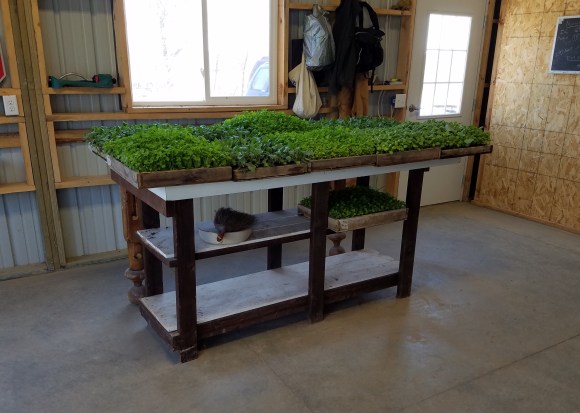
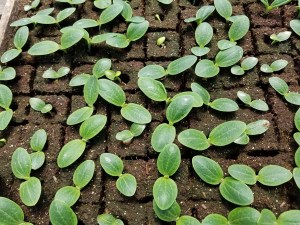
I made 30,288 soil blocks for plants at Wild Woods Farm this season. Add in additional work at Sundog Farm and my total production was 59,688 soil blocks since Feb. 25. That’s a lot of vegetable seedlings.

We’re planting lettuce, squash, cucumbers and zucchini which indicates we are more than halfway through spring production. Last year I finished at both farms on June 25 to get ready for the apple season beginning in August.

Cucumber Seedlings

Soil blocking is specialized. I use unique tools and soil to make the 72 and 120 block trays. This is my sixth year and I’ve incorporated soil blocked seedlings into our kitchen garden. Better propagation through this process makes a difference. Soil blocked seedlings are a part of growing better plants which produce great tasting vegetables. With retirement, healthy seedlings combined with additional weeding and better cultivation should result in higher yields. Importantly, it is all about freshness and flavor.

I receive fair compensation for my farm work. Over a few years we arranged a part barter – part cash settlement that works out for both parties. Each season has been a little different. This year I exchange labor for standard CSA shares in the spring and fall, then secure crates of tomatoes, potatoes, peppers and onions for preservation and storage. If my labor is more than that, I get a cash settlement. It is probably unnecessary to place a monetary value on these arrangements. Vegetable shares supplement our kitchen garden which produces much of what we need along with some specialty crops not grown on the farms. In turn, sourcing some crops from the farms reduces work in my garden. The arrangement is part of an ecology of food our household developed over time.

Over the course of spring, soil blocking at the farms has become part of our culture. I intend to continue as long as I can and the farmers are willing.

Categories
Kitchen Garden Living in Society

Hoping for Garden Time

My next shift at the home, farm and auto supply store is May 16. That schedule provides a solid block of time at home to work in the yard and garden.

If it rains, I’ll work inside. There is no shortage of work, although I’m not concerned with that now.

The 87th Iowa General Assembly has been a pisser.

When Republicans won control of the Iowa Senate during the 2016 general election everything changed. It wasn’t small changes. They had a vision of Iowa and executed their legislative agenda in support of it. They took a broadsword to almost everything that matters. They reduced taxes beyond belief and hobbled the state’s ability to generate sufficient revenue to balance the budget. Then, because of the revenue shortfall, they drastically cut services. In Iowa that means cutting education, health and human services, public safety, and governmental compliance. Tomorrow the legislature is expected to pass more tax cuts and a budget that as of this writing isn’t finalized.

The state sought to get more involved in people’s lives under Republican governance, seeking to control how counties manage the minimum wage, how residents protest, how communities work with the federal government, and managing reproductive rights under established law.

Almost none of this legislation during the last two sessions was bipartisan.

The legislative changes impact everyone, including our family. We are not better off for it now and the prospects for the future are dim. The Republican vision for Iowa is not widely shared, especially among the 30 percent of Iowa voters who register as Democrats.

That doesn’t mean we have given up, we haven’t. Participation in the four Iowa Democratic district conventions was the highest anyone can remember during a midterm election cycle. A number of groups rose in resistance to Republican governance immediately after the election. The Iowa Democratic Party fielded the largest number of house candidates this year in most people’s memory.

However, the obstacles to convincing Iowans that Republican governance leaves much to be desired are daunting. 800,983 Iowa voters, or 51 percent of the electorate, chose Donald Trump as president. The votes are there to flip the state Democratic if we can find them. When everyone is running for cover by registering no preference or retreating into small family networks, that is no small task.

Proverbs 16:29 informs us here, “A violent man enticeth his neighbour, and leadeth him into the way that is not good.” Republicans may have been successful in accomplishing much of their agenda in the 87th Iowa General Assembly. We don’t plan to let them get away with it for long.

Categories
Environment Kitchen Garden

Bringing Food Home

Farmers Market Food

A relationship with food in American society is complicated.

Some don’t have enough. Others are awash in calories. We each have a human need for nourishment and the ways we go about meeting it are as different as the families which engendered us.

A favorite childhood memory is when Mother went to work in the school cafeteria after the Catholic Church built a new grade school near our home. With other women like her, she took a list of ingredients based partly on government programs (including lots of cheese) and partly on a limited budget, and made meals that included such dishes as porcupine meatballs (hamburger and rice) and grilled cheese sandwiches with tomato soup. Father worked at the meat packing plant which had an employee butcher shop where he could buy beef, pork and meat products at a discount, and did. The idea of stretching hamburger by mixing it with cooked rice was a novelty in our household and eventually we implored Mother to make porcupine meatballs for us at home, just like the ones at school. She did.

This story of external culinary practices coming into our home is essential to understanding the rise of a diverse diet in American society. We see things out there, they look good, and we want them. Most people, including low-wage workers, have or find the means to get them.

Many books, careers and lives have been based on food in society. We are an individualized rather than generalized culture with regard to food acquisition, preparation and consumption. To a large extent, the rise of the modern mega grocery store has shaped our eating habits in ways no one would have expected. Much ink has been spilled about that and I’m less interested in regurgitating my slice of it.

What I do know is local food farmers work hard for the sparse income they garner. All farmers do. The local food movement of which they are a part is based on the hope more people will bring locally produced, raw ingredients produced in a sustainable manner into their kitchens, ice boxes and pantries. Enough people do for a small group of farmers to make a living.

In many ways the increased interest in local food is the same type of behavior that took place in our home in the 1960s. We experience surprise when our CSA share includes Broccoli Raab, Koji or Bok Choy. We learn how to eat and cook them and want more. It’s not that our home nourishment plan is boring. We want and enjoy the experience of creation as it relates to cooking and eating. We want that experience to be personal and shared with family. That is very American.

I concede promotion of local food is a form of consumerism no different from a tomato catsup purveyor who spends dollars on an advertising campaign to enhance sales. The same behavioral forces are at work. I’m okay with that.

Just so you know, I’m not bewitched by the allure of eating a kale salad, at least not yet. Suffice it to say the diversity and behavior regarding food in our household with its kitchen garden, farm sourcing and grocery shopping has some unique qualities that may not be of interest to the authors of the Michelin Guide, but make our lives a little better. That too is very American. That’s part of who I am, who we Americans all are.

Categories
Living in Society

From a Dizzy Place

State Capitol

I woke up dizzy on Tuesday and it delayed the start of my day for about six hours. By that I mean I didn’t get going until ten o’clock and had limited activity outside the house.

I feel better today, but sleep was broken around midnight by following the Iowa House debate on Senate File 359, “a bill for an act prohibiting certain actions regarding fetal body parts and providing penalties.”

Rep. Mary Mascher of Iowa City objected to the bill’s title after the final vote, saying it wasn’t the bill they debated. Nonetheless it passed with 51 votes after wheeling and dealing among Republicans and was immediately messaged to the Iowa Senate. Changes to the bill are reflected in S-5288. The play-by-play with role call votes on amendments and final passage is here.

What’s confusing to a lay person reading the day after House Journal is news coverage framed this debate as on the “fetal heart beat” bill which restricts abortion once a heart beat is detected in a fetus. There is much more to the bill than that.

Republican intent was to make the bill language just vague enough for the law to be challenged in the court system, hopefully taking the issue to the U.S. Supreme Court in an effort to overturn Roe vs. Wade. Whether that happened or will happen is foggy at best and beyond my pay grade.

My state representative is a “pro-life candidate” and voted for the bill. When we called him out on this position during the 2012 campaign our efforts did not move the needle in the final vote tally. At least it didn’t move it enough to win a majority of voters.

There is a lesson here about politics. The Republican Party of Iowa just passed the most extreme anti-abortion legislation in the country. There was no bipartisanship in the House vote. There was no middle ground. There was no moderate position here. Either a voter believes a woman has a right to choose an abortion in compliance with current law or they do not.

While I may have been dizzy yesterday I am not today. Last night’s vote, anticipated early in the session, brought clarity physical ailment can’t obscure. On this and many issues Democrats can run if they set aside hyperbole and focus on the fact this law was brought to us by Republicans. If we are able to do it we can flip the legislature and bring common sense and decency back to Iowa.

Categories
Kitchen Garden Writing

Green Washing and a Local Food System

Spring Onions

Wind came up yesterday and would not relent.

I planted onions and cilantro in the garden, transplanted some seedlings to larger pots, but that’s about it. The septic tank service arrived and pumped our solids tank while I trimmed the lilac sprouts from the space in front of our house.

Constant wind beating against me took its toll.

The first of five spring shares was ready yesterday afternoon from our CSA: Bok Choy, Koji and Broccoli Raab.

Both CSAs where I work are running behind due to weird spring weather. Carmen Black’s newsletter summed up where we are nicely:

First of all I want to thank all of you for your patience and understanding in starting a week later than planned! As I’m sure all of you can guess this weather has been very difficult to deal with on the farm. Two weeks ago it snowed, and today it’s eighty degrees! In addition to the swings in temperature its been the driest April on record, which means that everything we’ve finally been able to plant has needed to be watered immediately. Through all of this weather stress I’ve been very grateful to know that you all are so supportive of this farm, and will understand the challenges we’re facing in organically growing local veggies this spring.

First Seasonal Salad

Dinner was a salad to go along with pasta last night. Three kinds of greens and this year’s spring onions along with odds and ends of cold storage vegetables. It’s why we invest our time and resources in a food ecology.

The words “local food” mean less today than they did, and not what we thought they meant. I discuss local food with farmers and gardeners and I’ve heard the usage it is a form of green washing. Is “local food” a form of green washing? Maybe.

I know the produce harvested in our back yard is local food. With each passing season I see less significance. We want food we serve at home to be fresh, tasty and pleasurable. When we take a dish to a potluck, using garden produce gives a personal touch to a classic casserole. A kitchen garden like ours serves those things well.

“Local government can make policy that makes it easier to grow and consume #LocalFood,” Johnson County Supervisor Kurt Michael Friese posted on twitter.

If anyone is familiar with the local food system, Friese, a long-time restaurateur and food writer is. He is well positioned to make and implement policy that supports local food. But what exactly is that?

Breakfast Quesadilla with Homemade Salsa

Early on, local food referred to how and where food was sourced. There was talk about mitigating “food miles.” As I explained in a 2013 post, “Food distribution and related costs are a social construct that makes transportation seem inexpensive, or irrelevant to what we find in grocery store aisles.”

Where advocates of local food may have gone wrong is using the idea of food miles as a place holder for complex, flawed arguments. Costs are costs, and a producer has to recover his or her financial production costs when the consumer buys an item. Using any complex argument, including food miles, as a place holder seems a diversion. Such talk belongs more appropriately in a sales and marketing context as a form of puffery.

Read my entire set of arguments here.

The better framing for “local food” is to know the face of the farmer. Two years ago I wrote at length about what it means to know your farmer and practices they use. Here is the salient point related to green washing:

Driven in part by mass media, consumers are concerned about a wide range of food issues that include contamination with harmful bacteria; dietary concern about consumption of carbohydrates, fat and sugar; the way in which plant genetics are modified to improve them; and more. Partly in response to media campaigns, annual sales of organic food exceed $30 billion in the U.S. (USDA). The increase in organic market share from national advertising campaigns is significant. If you get to know your local food farmer, what you may find is they benefit from this marketing, but their customers come and stay with them because of a personal relationship with the farmer.

Local food is not exactly green washing, which is defined as “disinformation disseminated by an organization so as to present an environmentally responsible public image.” However, there is a lot of conflicting and sometimes contradictory information related to food. Plant genetics alone set off a firestorm of media and organizational controversy and spawned a new food labeling process under the aegis of the Non-GMO Project. Simply said, it’s complicated.

If a definition of “local food” is elusive, how our county defined a local food system may be as good as it gets:

In Johnson County we see the need to localize our food system – and we are working to create a healthy, intact system that lessens resource inputs, promotes worker’s rights and preserves the natural environment.

Yesterday’s wind blew a single-use plastic bag into our Ash tree where it got stuck and is flailing in the wind. Part of me is tempted to leave it there as a symbol of all that is wrong with our society. Then again, if I want it fixed, I’d better do something about it. So it is with the local food system.

Full Moon Setting Behind Clouds