Categories
Home Life

Music Trails

Gift from Toshi Seeger

After writing yesterday’s post I located the Yamaha guitar I bought for $300 in 1970. It was under the bed, covered in dust, with two broken strings sticking out of the case. I opened it, saw the guitar was virtually unchanged, then closed the lid and slid it back under the bed.

Not yet.

Last night a friend posted Instagram video of Greg Brown, Iris Dement, Dave Moore, Larry Mossman and Ben Schmidt playing music around a dinner table in someone’s home. Instagram is not the best medium for music. Nonetheless, it captured the moment well enough to believe it happened. Maybe that’s the point more than the tunes they played.

The last time I played with someone was during a trip to Montana in July 2010. We overnighted at a friend’s remote cabin. We had played together in a band while I was at university. He had an extra guitar and I struggled to keep up with the simplest chord progressions. By the end of the session I felt my skills could come back. That’s as far as it went.

A high school classmate’s family owned an old farmstead near Bellevue. When we first went there, there was no furnace and many rooms were empty. Over years the family fixed up the place, furnishing it with second hand beds and furniture. I remember the children made quilts for the beds. I attended a wedding reception there. It made a cozy family gathering place. My friend invited me to a meet up with a group of his college classmates. He took my guitar to a remote corner of the house to play by himself. We all want to get better at what we do, as did he. They sold the place years ago.

Being a musician, even a bad one, requires practice. More practice than seems reasonable. What I found was there were not enough venues in which to perform. I’ve played at coffee houses, on stage, for small gatherings, and at least one wedding, but most of the time I played alone, or when I was in one, with the band. There is a certain self analysis in music making. Did I hit the right notes? Did I miss anything? How could I phrase that better? Practicing music is like writing in that there is always a next draft, that is, until one performs. The performance stands alone in stark existential reality.

I’ve seen countless musicians perform in person. Among the most memorable was Andrés Segovia who played in Iowa City during the height of influenza season. The audience was coughing and hacking throughout his performance until Segovia stopped playing, took a handkerchief from his pocket, and coughed back. There was scattered laughter.

Perhaps the most famous person I’ve heard perform was Sir Elton John at the Cow Palace in San Francisco. Oracle hired him for the annual Open World conference attended by tens of thousands of people, including me. I was invited because our logistics company was installing a version of Oracle’s transportation management software.

During my time in politics music began to be associated with political events. When I managed a state house campaign we sometimes hired a musician to perform at fund raising events. Over time, I heard Carole King and Bruce Springsteen perform at big events for presidential candidates. I remember former U.S. Senator Tom Harkin singing “every day is a winding road” with Sheryl Crow at his annual steak fry. Can’t say I attended any of those events because of who was performing.

For now the guitar rests under our bed. It’s a question, I guess. Will I take it up to play again? It moves me toward practice and maybe performance, and that’s a form of progress even though I don’t yet know the answer. Before proceeding down the music trail I need to visualize it. With all the practice required, I don’t want to wander without a vision.

Vision comes slowly.
 

Categories
Home Life

Where Music Lived

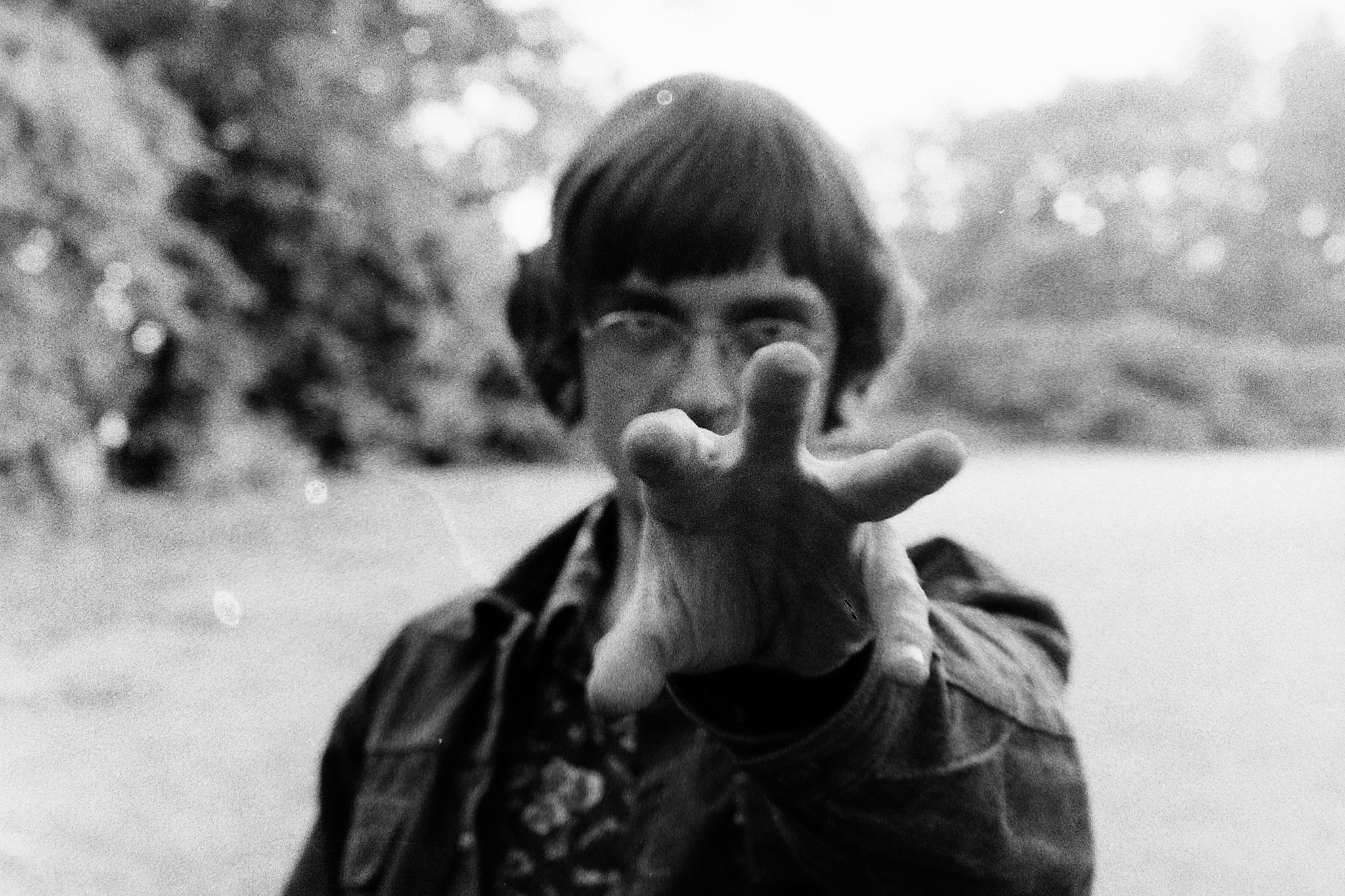
Showing off calluses on my fingertips Photo Credit – Mike Carron

During the last couple of decades the role of music in my life diminished. There was no plan, it happened on its own, without a recognizable nudge.

My guitars and banjo are tucked in safe places around the house, protected from the elements, largely unused. I sold my Telecaster to long-time friend Dennis. It has been a long time since anyone used the piano in the living room. My shelves of vinyl, cassettes and compact disks gather dust. Since the budget cuts on public radio, I can’t find a station that plays music in a range of eras and styles. In the car, my presets are country and classic rock. For the 25-minute commute to the home, farm and auto supply store I can stand them, mostly. The last musical concert I attended was a Celtic guitarist at the local library. I follow him on YouTube and that’s where I do most of my home music listening today.

It wasn’t always so. In first grade I served as emcee for a variety show at Sacred Heart Catholic School. I wore a bow tie and rehearsed my lines carefully. There were words I never heard before in the script. I introduced performances by my classmates, then wanted to perform.

When we moved across town in 1959 I took piano lessons at the grade school. I practiced in the upstairs gymnasium which also served as an auditorium, my rendition of Brahms bounced off the walls of a large, empty room at the end of the school day. My neighbor, a couple grades ahead of me, was a guitarist and played a concert for us graders before he left for high school. I thought he was cool, and he’s now one of the few people I know who make a living as a singer songwriter.

By eighth grade I was playing guitar. On a snowy day the year the Beatles came to America Mother took me to the King Korn stamp store where she traded books of stamps for a Kay guitar. I played my first concert of folk songs in eighth grade along with some neighborhood friends.

In high school, I took guitar lessons from the late Joe Crossen who played in a rock and roll band. After that, I tried to learn classical guitar at university but my fingernails weren’t good enough to make it work. After leaving Davenport in 1970 I felt music would be part of me. For many years it was. I don’t know what happened. This is not a lament or dirge. I accept life as I find it while imagining the future as it should be.

The other day Jacque and I were listening to different versions of The Dutchman, a ballad by Michael Peter Smith. We listened to his, Steve Goodman’s and Liam Clancy’s versions and it became clear Smith’s phrasing and tempo made the better experience, evoking an emotional response. We talked about the song which has been a favorite since early in our relationship. It was surprising how good Smith’s version was, when we’d only paid attention to Goodman all these years.

I’m awake early this morning, tapping on the keyboard. My sister in law stayed over last night after a brunch with friends in the Quad Cities. I don’t want to wake the house and keep the music turned off. Neither do I use headphones because I live in the moment at my desk. If there are noises in the house — the water softener cycling, someone walking to the bathroom, the washing machine running — I want to hear it. No muffled reality for me.

I don’t know about music any more. Every so often I find a song I like and listen to it repeatedly for a while. Then I get over the infatuation. What I mostly want is a feeling I should play music again. It’s not there yet. It may never be. I have a hard time visualizing it.

I remember traveling the Mediterranean coast with a young student from Germany in the 1970s. We had Eurail passes and rode trains from Barcelona, Spain to Genoa, Italy, playing guitars in our youth hostels until the host reluctantly said it was getting part curfew. I played lead to his rhythm and vocals, it was life as good as it gets, fleeting, transitory, in the moment. That can’t be captured again in the same way. Despite years and neglect, music can live within us. At least that’s my hope in late autumn.

Categories
Writing

Leaning Into What’s Next

Finding My Way

The second half of 2018 has been weird. A burden was lifted when Social Security checks began to arrive a year ago. With them came a view that new undertakings were possible, unlike at any time since I returned from Germany in 1979.

The next big thing isn’t as obvious in 2018 as it was in years past.

Maybe removing economic worry became the impetus for a new way of seeing the world — a complete segregation between who I am and work I do in society. I’m less worried about society and the focus is now on me. It’s new territory for someone who has been steadily busy since high school. What will this next act in life be?

I think of the famous speech from As You Like It although I’m not sure William Shakespeare’s seven ages of man still apply. When life expectancy was shorter they may have been relevant (in British Society), but with a longer span our lives are more diverse and such notion of ages antique.

There have been breaks in the continuum of my life. The time before school, then schooling through high school, leaving home for university and adventure, settling in with marriage and a career, followed by a long semi-retirement leading to this year when I applied for my Social Security pension and stepped back from working except when it interested me. By that reckoning I am beginning a sixth period although it doesn’t seem so clear cut. It seems downright foggy, the path vague.

After first retirement in July 2009, I had hope of starting a new career or my own business. That didn’t happen the way I expected. The question these days is how will I spend them? Each day is an open book, often isolated from the ones before and after. It is no way for a human to live.

This all came home after apple season when I reduced my work schedule to two eight-hour shifts at the home, farm and auto supply store each week. I’m hopeful to make a positive contribution during the sixth age of Paul. Already I’m autonomously getting started with next year’s garden, more writing and reading, and plenty of cooking. However, these things are a baseline in who I am, rather than the full result — a framework the contents of which aren’t visible in the chiaroscuro of mist-filled days and cloudy afternoons. Like a batter as the baseball is pitched from a mound, what to do next will become clear as I stand at the plate and consider the sphere and its rotations as it hurls toward the catcher’s mitt.

I expect I will write my way out of this. Not today, but soon. Once I do, Katy bar the door.

Categories
Living in Society Writing

Fair Redistricting Makes for Fair Elections

Big Grove Polling Place Nov. 6, 2018

The 2018 Midterm elections are over and I’m happy about the outcome.

I live in Big Grove Precinct, nestled around Lake Macbride, and here Fred Hubbell beat Kim Reynolds by two votes of 1,107 cast in the governor’s race. Why am I happy if Hubbell lost statewide?

Compare 2018 to 2014 election results in Big Grove when Terry Branstad won the precinct with 558 votes to Jack Hatch’s 367 (951 votes cast). Overall voter turnout increased by 16 percent in 2018, and almost all of the increase favored the Democratic governor. In a precinct where Donald Trump won by 54 votes, I’m glad to see we flipped back to Democratic in the governor’s race, even if only by two votes.

My opinion on these facts: the 2018 midterms were a fair election.

People are already gearing up for the 2020 election. At stake will be something that gets to the core of what makes for fair elections, a fair way to draw maps of congressional and legislative districts.

Iowa’s process where an independent, temporary commission recommends a district map to the legislature, which votes on it, is a fair one. Iowa has avoided gerrymandered districts (like Pennsylvania and North Carolina drew to favor a particular political party) largely because of our process.

No matter who wins the legislature in 2020 we should keep our statutory redistricting process to ensure fair elections, that is, if we want to strengthen our democracy. I want that and hope you do too.

~ Published in the Nov. 29, 2018 edition of the Solon Economist

Categories
Home Life

Thanksgiving Leftovers

Tacos

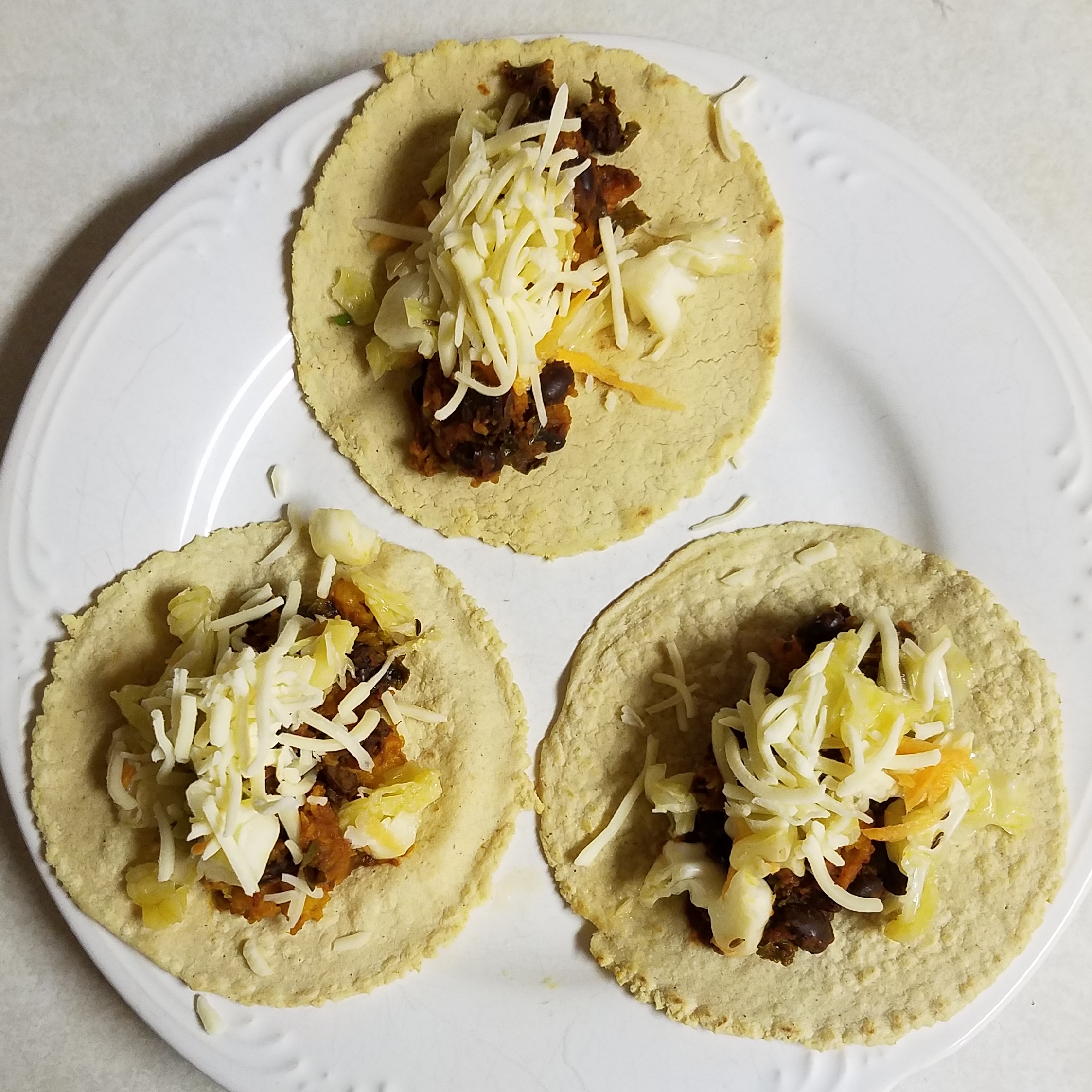
I put Thanksgiving leftovers in a plastic dish for my lunch at the home, farm and auto supply store.

Low levels of activity characterized the last week. Once I finished morning sessions at my writing desk, I didn’t leave the house much. I don’t like the thought of going to work today, yet two shifts each week provides structure and socialization. It would be easy to get disconnected from society where we live. It’s time to get going again with a trip across the lakes.

I made a slaw of green cabbage and daikon radish and put a serving in a plastic container to supplement the beans, kale and rice lunch in the other. I’m ready for my shift.

Yesterday the Cedar Rapids Gazette reported Devotay, the restaurant started by Kurt and Kim Friese, was shuttering Jan. 1, 2019. Frieses sold the restaurant last January and under new owners the tapas bar is not attracting enough customers. They plan to re-name the Linn Street restaurant, create a new menu and re-open. Tapas was a thing when I worked in the Chicago loop, and I’ve eaten paella in Spain, but today’s potential customers apparently don’t get it. Such is restaurant life in a county seat that hosts a large university with a transient population.

As I read the news, the letter carrier delivered a copy of Friese’s book A Cook’s Journey: Slow Food in the Heartland. When I ordered it, the web site said it was the last copy in stock, although it was published across the lake in North Liberty. They can probably make more as long as there is demand. I knew of Friese the food author, but never read him, ate in his restaurant, or ran into him around the county. I met him when he became more active in politics. He was a good writer and a great conversationalist. I still can’t believe he is gone.

To make sense of our food ecology, some knowledge of what Friese did is essential. Until his last days he was recruiting people to join the slow food movement. I doubt anyone can replace what he did because of his long tenure and specific knowledge. Devotay likely relied on this as well and was bound to change after they sold.

“Food is important,” chef Matt Steigerwald said when he opened Lincoln Cafe in Mount Vernon. While I didn’t know Kurt Friese’s food hardly at all, he left a legacy which is likely entwined in the Thanksgiving leftovers I packed for lunch. I intend to unpack his food legacy in my quest to understand the complex food ecology where we live.

But for now, I have to get ready for my shift.

Categories
Milestones Work Life

Bernardo Bertolucci and General Motors

Bernardo Bertolucci (77) died yesterday in Rome, Italy where he had been suffering from cancer. The bigger news was General Motors’ decision to reduce workforce and eliminate six car models, including the Chevrolet Volt rechargeable gas-electric hybrid.

What do they have in common besides their coincidence?

They both hit me where I live.

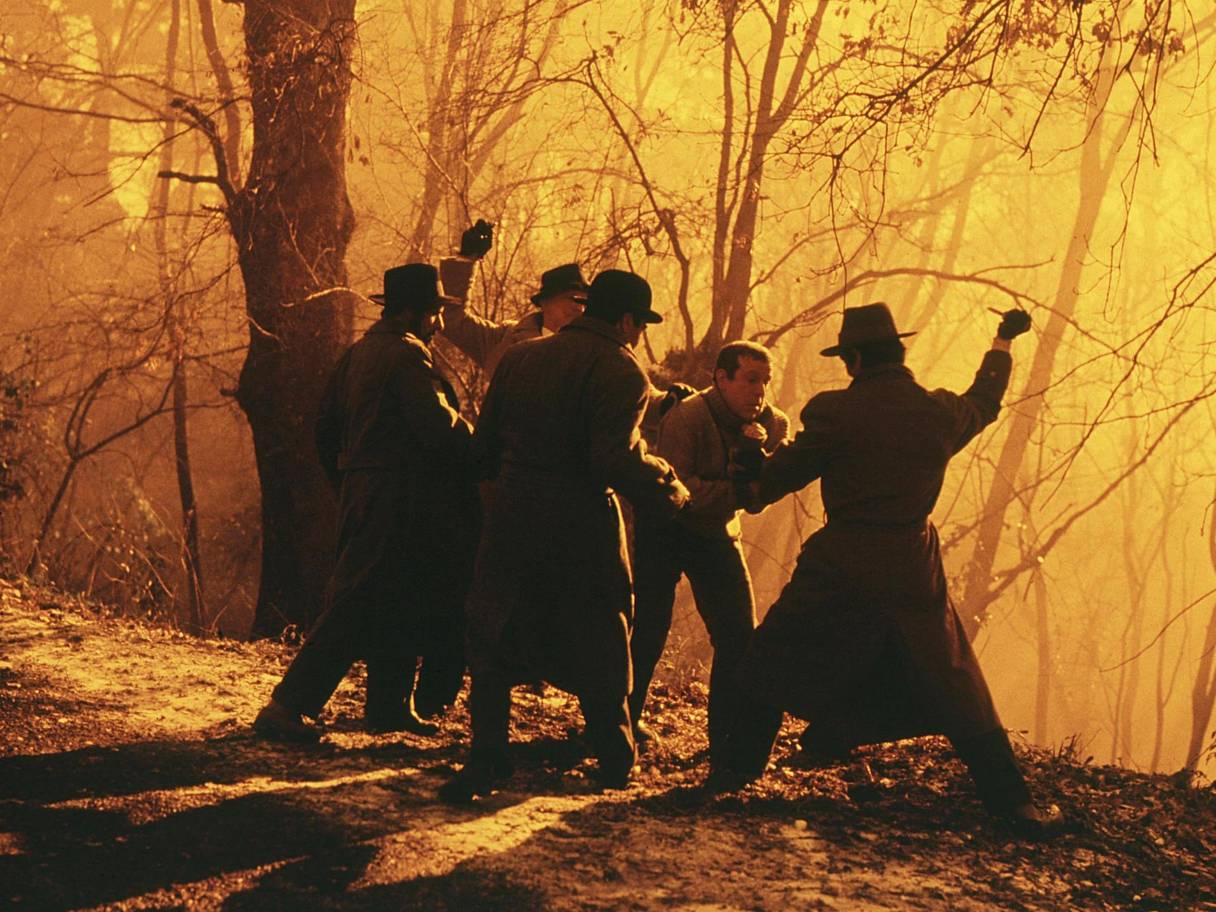
When I returned from military service I spent time viewing movies I missed coming up, including The Conformist. I became enamored of the film, its director Bertolucci, and its cinematographer Vittorio Storaro. On my cross-country trip from New Jersey, where my pickup truck had been shipped from Germany, enroute home to Iowa, I visited friends Diana and Dennis in Springfield, Illinois. Diana fed us cornbread and beans and Dennis and I went to see Francis Ford Coppola’s Apocalypse Now, with cinematography by Storaro. That night began an infatuation with cinema that continued through my return home and lingered into the early years of our marriage. Of the films I have seen, The Conformist ranks in my top ten.

The Conformist

Partly The Conformist resonated with my short trips to Italy in the 1970s. More, though, it was Marcello Clerici, the vacillating, spineless protagonist who would kill his professor in a woods at the direction of the Communist Party. Who would want to be that? Not me. Not anyone. The impression the film made on my artistic consciousness persists. I will be forever thankful to Bertolucci for his contribution to this formative experience.

The General Motors announcement was a gut punch to anyone who lived and worked in the Rust Belt.

“The reductions could amount to as much as eight percent of GM’s global workforce of 180,000 employees,” Tom Krisher wrote for Associated Press.

What makes this pill tough to swallow is the damage that has already been done throughout the industrialized part of the country. I’ve written extensively about my experiences recruiting truck drivers in Illinois, Wisconsin, Indiana, Michigan, Ohio, New York and Pennsylvania during the period 1987 – 1993. I met thousands of people laid off from industry jobs. What makes the GM announcement different is what I experienced then was related to globalization. What’s happening now has to do with board room decisions emboldened by the recent Republican tax breaks.

The Conformist

There is talk unions will negotiate a better deal for workers as GM moves forward with their plans. How has that worked before? It hasn’t. The only union-related board member had been from the UAW health care trust, a position vacant since December 2017. The fund lost the board seat in October after selling a big chunk of GM stock.

Why would a person that drives a 21-year old passenger car care what GM does? When you’ve seen the faces of long-term employees who lost everything after a plant closing or down-sizing, you know what this announcement from GM means to workers. Only a cold, venal, rudderless being like Marcello Clerici could look on and not feel anything.

Categories
Environment

Protect Our Planet, Protect Ourselves – 24 Hours of Reality

It’s a fact: Fossil fuels are driving a climate crisis and threatening our health. On Dec. 3 – 4, Climate Reality and former Vice President Al Gore will be joined by an all-star line-up of artists, thought leaders, and scientists for 24 Hours of Reality: Protect Our Planet, Protect Ourselves. Tune in and learn how we can make a healthy future a reality: https://www.24HoursofReality.org.

Categories
Environment

Act On Climate

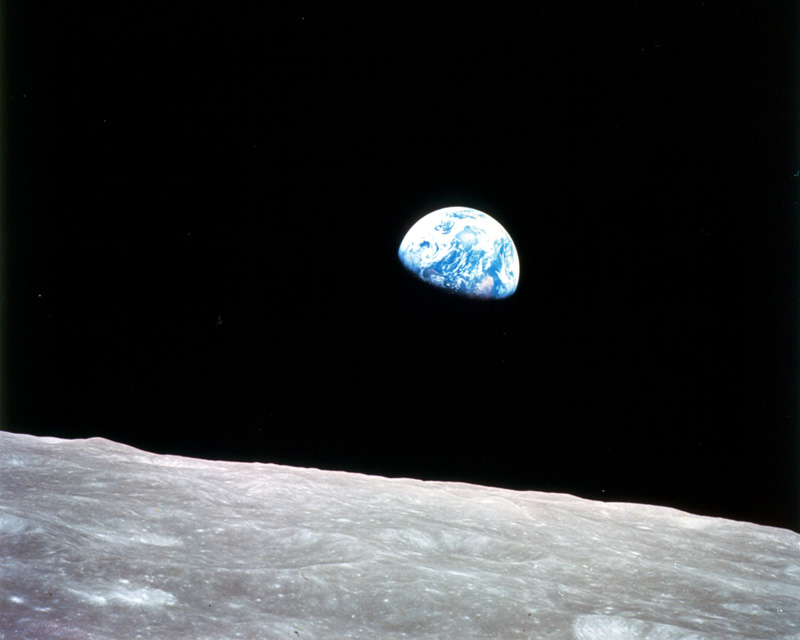
Earthrise by Bill Anders, Dec. 24, 1968

Every few years, interest in climate change spikes, according to internet search frequency reported by Google Trends. When the Intergovernmental Panel on Climate Change released their special report on the impacts of global warming of 1.5º C above pre-industrial levels on Oct. 8, searches spiked again. Searches are already trending downward.

Newspapers in our area ran stories about climate change, about one a day in recent weeks. Is there a new window of opportunity to act on climate? I doubt it. There is no window because the walls of the house we used to live in have been blown out.

It is time to act on climate.

Every environmental activist has a to-do list. Mine has four parts.

Reduce, reuse and recycle personally. I don’t seek to create a livable environment for me only as the late George Carlin derisively asserted about environmentalists. It is better to buy only food the household can use rather than let it go to waste. We live a life of making do with old clothing, old cars, and recycling single use bread and celery bags for our garden crops. It remains important to have a discussion with Waste Management about why they won’t recycle plastic. If enough people do it, maybe they will find a better way than baling and shipping it overseas or discarding it in landfills. This is a starting point for almost everyone.

Band together with like-minded people. We walk a tightrope in life in which the risks are many. On one side, we avoid the insularity of confirmation bias in which like minded people often find themselves. On the other, we are stronger together. A recent Stanford University study of 30 years of data about street protests found “citizen activism, which has been shown to impact state and firm policy decisions, also impacts electoral outcomes.” A single voice can be amplified if it joins a chorus of hundreds or thousands.

Advocate with elected officials to mitigate the effects of climate change. There is an art to political advocacy. Where groups have been successful, we found common ground with people of divergent backgrounds to unify around a single action. This is partly how we stopped two new coal-fired power plants from being built in Iowa. It is also how we changed the minds of legislators regarding new nuclear power plants in the state. Two tactics serve little purpose: contacting a legislator every time we disagree with any action they take, and group think of people who advocate for a carbon tax as their primary method to combat climate change. We must understand the diversity of solutions to the climate crisis, keep our powder dry for when it matters most, then act in unison.

Help educate people on the threat of unaddressed climate change. It goes without saying there is uneven understanding about the impacts of climate change in society. My popular post, Climate Change in 200 Words explains the basic science, about which there is little disagreement from even the most strident climate deniers. Where society gets hit hardest is in the impacts of warmer atmosphere and oceans. The news is full of examples. Few people have missed the fires in California, hurricanes in Florida, Texas and New Jersey, or the severe 2012 drought in Iowa. All of these events were made worse by global warming. Much of the intensification of our weather events is predictable and likely avoidable with societal action. Education is a valid and essential part of creating collective action to mitigate the effects of climate change.

Perhaps the important lesson about climate change derived from Google Trends is there are clear news hooks which can make climate action more likely. The problem hasn’t gone away and we can’t rely upon news events to precipitate our actions.

Whether we will act on climate before it is too late is unknown. What we do know is the human condition includes hope for survival and a better world. It is unrealistic to believe global societies will unite around a single course of action. Part of the brilliance of the 2015 Paris Agreement was it enabled every nation to participate in their own way toward a common goal of reducing greenhouse gas emissions. Whatever deficiencies existed in the agreement, it was a positive sign of what humanity is capable.

The IPCC special report is another scientific explanation we must act on climate before it is too late. This is my to-do list. What is yours?

Categories
Home Life Kitchen Garden

Into the Light

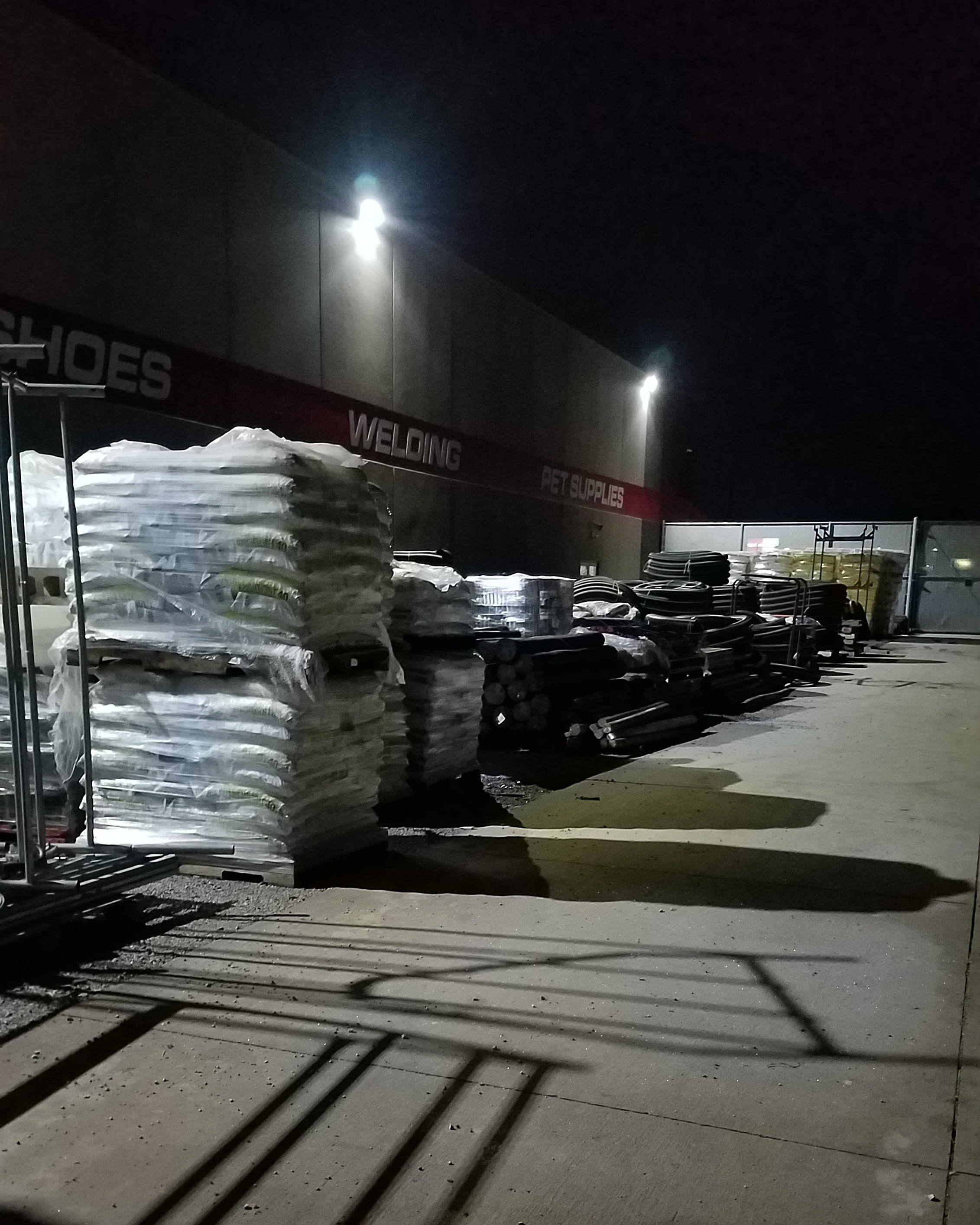
Black Friday, 4:30 a.m., at the home, farm and auto supply store

I spent much of Black Friday loading customer vehicles with large, bulky items that were on sale. It was often a three-person job.

Management had us come in an hour before the store opened at 6 a.m. to put the final preparatory touches on what is one of our biggest sales days of the year.

A crowd of shoppers waited when we opened. Given the types of merchandise we carry and aggressive pursuit of Black Friday market share, it was no surprise.

Throughout my shift shoppers arrived in vehicles containing bags of merchandise from other stores. We helped fill them up and all was good in retail world.

I was tired when I arrived home at 2:30 p.m., more because my early morning schedule was disrupted than the work I did at the home, farm and auto supply store.

First thing I did was make a batch of red chile sauce using dried New Mexico chilies.

We continue to have kale in the garden so the day before I planned a last-minute dish for our Thanksgiving dinner. Before I forget, here’s what I did:

Saute a diced medium onion in a frying pan. Add a couple of cloves of diced garlic. Once the onions and garlic are tender, add a pint of diced tomatoes and a tablespoon of Mexican oregano. When the sauce comes together, add a large amount of sliced kale leaves with the stems removed. I used three big leaves but more is okay because it will cook down. The stems can be sliced finely and added for more texture. Add a drained and rinsed can of prepared black beans. Season with salt to taste. Reduce heat to a simmer until the liquid has evaporated and serve hot as a side dish.

I had dinner of Thanksgiving leftovers and went to bed early. There will be a lot to do as we come into the light of this weekend.

Categories
Home Life

A Vegetarian Menu

What does a Thanksgiving menu look like in an ovo-lacto vegetarian household?

Deviled eggs, crudites and pickles

Roasted pumpkin seeds

Pickles and crudités

Deviled eggs

Vegetable Dishes

Wild rice pilaf

Baked sweet potato

Steamed green peas

Kale and black beans in tomato sauce

Desserts

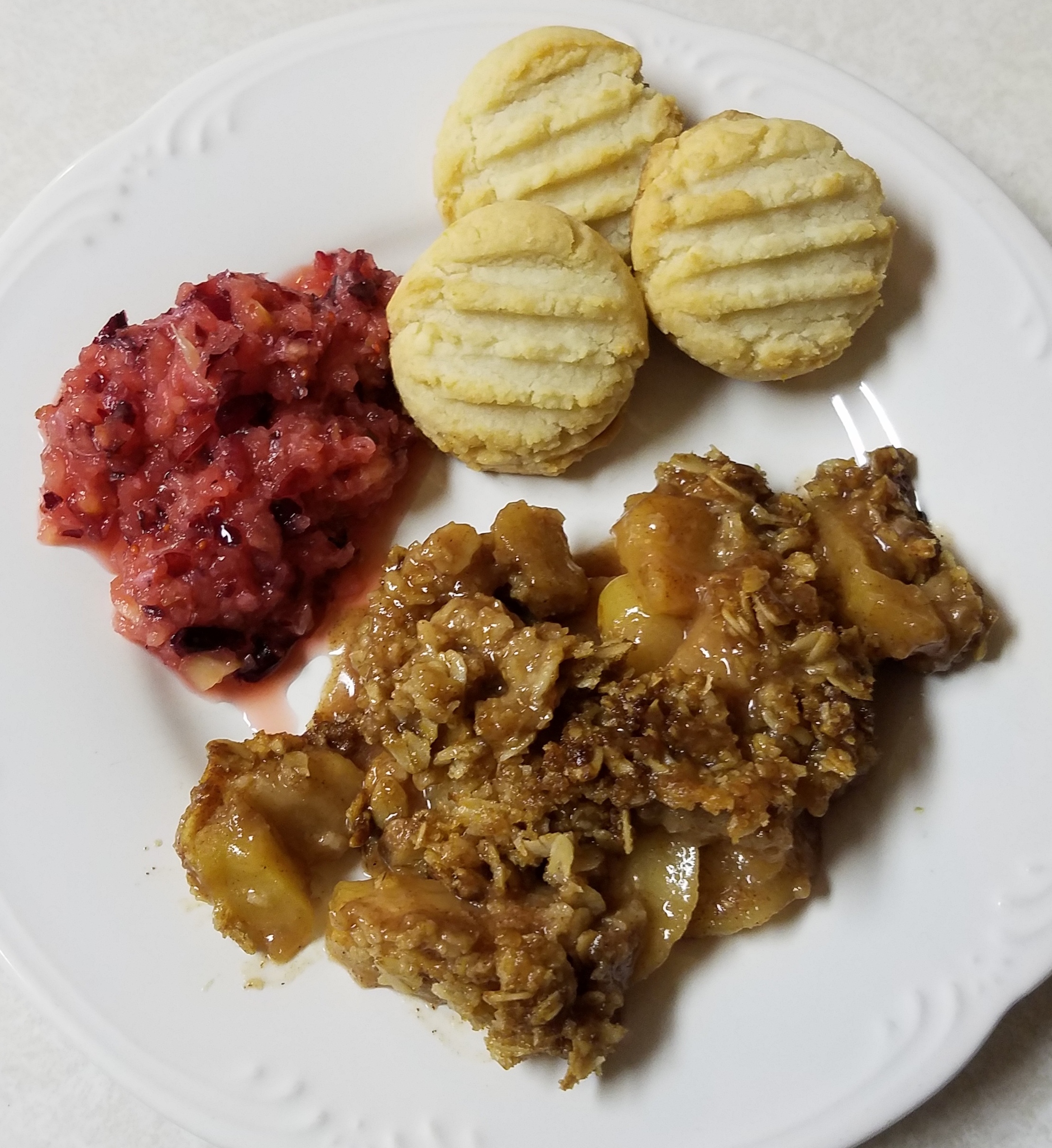
Cranberry relish

Apple crisp

Almond flour shortbread cookies

Sparkling apple cider