Categories
Writing

Defining Moments in an Iowa Life

Apple Harvest

Editor’s Note: This series of nine posts was written from Jan. 18, 2009 until March 15, 2009 as I considered my life and what else I might accomplish. They are consolidated below unedited and in the order I wrote them. I left my transportation career shortly after completing this series on July 3, 2009.

I. Each of us has a collection of moments from our lives that define who we are and what we can and will be. Our lives are not predetermined. We can effect change in ourselves and in our relationships in society. Too often, we can get caught up in the trivial and small minded conflicts of daily life. There are plenty of these. We need to be better than this for at stake is everything we hold to be important. Above all, we should strive to be engaged in our daily lives, less creatures of habit and more innovators of the ordinary. Today, in this moment, we have the power and potential to create a life beneficial to ourselves, but more importantly, beneficial to others. Defining moments have informed us in how to behave, and we owe it to ourselves to consider them from time to time.

My earliest defining moment was the day, at age 3-1/2, when a swing-set set up in the basement of our Madison Street home collapsed and injured my head. My parents were horrified. I remember the pool of blood on the basement floor, holding the thumb of the ambulance driver, taking ether dripped into a funnel to anesthetize me for the stitches to mend my gashed head. I am lucky to be alive. What I learned through the injury and recovery in the hospital was that there is an infrastructure of knowledge and caring to support us when things happen. I watched the routines of the hospital staff, the doctor checking up on me, changing room mates and bed linen, daily visits from my parents and the handling of my propensity to get out of bed and walk around. This experience assured me that although we are vulnerable, we are not alone.

Over the years, Doctor Kuhl would examine the scar on my forehead and talk about my recovery when I visited him in his office. Today, I don’t think of the scar, and suspect most people do not even notice it. What I do think about is that while we are not alone, we must be part of a society that helps protect those who are most vulnerable, including the injured and infirm. When I was very young, I made a withdrawal from this bank and now the debt needs repaying.

II. At Northwest Bank and Trust Company, while getting my first checking account, I was deprived of the knowledge that my father would die later that night at the meat packing plant. I had been working at a department store after school and had saved enough to want to spend some of it. The bank was open late on Fridays. I can still remember the light inside the bank and the help from the teller. To do this on my own was a big step and I knew it. As it turned out, it was a step I needed to take.

We were shocked when the knock came on the front door. Two men, Clarence from the union and another I can’t recall, were there to tell our mother what had happened. We kids waited in mom’s bedroom. We were all crying together that night. Life came at us that February morning, ready or not.

Death was somewhat abstract. We watched the fighting in Vietnam in the newspapers and on television. A grandparent had died and was buried at Saint Hyacinth’s in LaSalle. We heard about World War II from neighbors who had served. We knew we would not live forever, but we did not consider death as a present option. This started to change as I heard a newscaster report my father’s accident on television.

During the days leading up to the funeral an endless stream of people came to the house. Relatives, co-workers, friends with covered dishes and desserts, people from bars and restaurants near the plant, fellow students from the chiropractic college, our insurance agent, and many others. My father’s two brothers and sister came in their only joint visit to our house. My mother’s brothers and Aunt Dorothy drove non-stop from California. Even though my father had not finished his conversion to the Catholic faith, a funeral mass was held and the church was packed to capacity. Even the elementary school children filed into the balconies and back of the church. As I sat in the pew, listening to Monsignor Barnes, I realized that Dad’s death and his funeral were community events. I felt that I was part of the community and still do.

Whatever arguments I had with Dad ended that night. I still think of him from time to time and miss him when I do. I was lucky. Lucky that I was about to embark on my studies at the University of Iowa and lucky that mother had the means to support my brother and sister if I left. We talked about me staying to help instead of going to college. She released me from the nest and for that I will always be thankful.

As our lives continue, the lesson I learned that Friday night is that before you know it, life is over. If we want to accomplish something, we need to do it now, as there may not be a later. It is a lesson that I forget, but to which I always return. I had a hard taskmaster in that defining moment in 1969.

III. When news of the Woodstock Music and Art Fair hit the television, there were already tens of thousands of people in attendance. I was working at a department store and when Dennis offered to drive to Woodstock in exchange for gas money, I gave it consideration. I declined the opportunity because I was scheduled to work Saturday. His new GTO with the Hurst transmission would surely make it out to New York, but I had other things on my mind. Today and this weekend has felt like that August afternoon in 1969 with friends hopping planes and driving cars to the Washington DC to participate in Barack Obama’s inaugural events. Today, like then, I have to work. In a sense, not much has changed over the years.

Dennis and I did not go to Woodstock. What I learned was that the actual being there does not inhibit the participation. That decision making, the idea that the road to Woodstock started in a parking lot in Iowa made this remote event tangible and within the scope of our daily lives. I felt connected, even if I did not traverse the country to get there. As it turns out, Woodstock was so well documented that I learned enough about it to understand and participate vicariously. In the case of Woodstock, actually being on Yasgur’s farm did not matter and that is my point.

When we consider information about events arriving in our locale, that information has a basis in reality. As a participant in mass society much of what we learn and understand is molded by an ever changing media in many formats. In a sense, the gap between our inner eye and that of another is the same whether the person is sitting next to us on a couch or is a thousand miles away. When Rene Descartes said “I think, therefore I am,” he was not aware that there would be a Woodstock or an Obama inauguration but in that moment, in the parking lot of the Turn-Style department store, I became aware of the Cartesian outlook in a way that has become part of who I am. Living in society is not about us. It is about communicating through the unseen ether to others in engagement that is as old as civilization. It is something in which it is worth engaging.

IV. Richard Nixon announced his resignation from the presidency on August 8, 1974. I had no idea who Gerald Ford was, or what kind of leader he would be, but the next day, when he said, “My fellow Americans, our long national nightmare is over,” I packed my boy scout backpack and a baby blue bag my grandmother made for me with a couple of changes of clothes, a passport, $2,000 in American Express travelers checks, a sleeping bag and ten rolls of Kodak film and left for Europe.

After college, I shared an apartment with a fellow band member on Walling Court in Davenport, Iowa near the former home of jazz legend Bix Beiderbecke. I felt a strong sense of social responsibility and the moral outrage of youth in what I believed were the deception and lies of a man in whom the country had put its trust. Hearing Nixon’s address that night, in our small apartment was catharsis. I remember this feeling as I type here in Big Grove tonight. I was relieved that Nixon was leaving. More importantly, I felt that the many protests and demonstrations during the Vietnam war had finally borne fruit. Direct action to support a just cause could accomplish things, even force out a sitting president. It was a heady feeling. I wasn’t sure what would be next, but I felt that I could take a couple of months and find out what else was in the world.

That I began with Europe was no surprise: studying English literature in college, neighbors who had served in Europe during World War II and art history classes in high school and in Iowa City. Then, I believed that the United States was a derivative of the European experience. With my mother’s side of the family coming from Poland and my father’s from Virginia, it was not a stretch and my travels confirmed this. I saw Twelfth Night at the Royal Shakespeare Company in Stratford, England. I saw a poster of Bix Beiderbecke when I emerged from the Metro on the left bank in Paris. I ran into a friend from Davenport while taking a bus to the Piazza San Marco in Florence. I discovered a Europe that was familiar and a world small enough for these things to happen. At a youth hostel in Rome, a stranger took me over to the Vatican City and got me tickets for an audience with Pope Paul VI. I learned enough Italian so that when I traveled to Ravenna to see the Byzantine mosaics I could register for my room and order meals in the native language. I bought a cameo on the Ponte Vecchio in Venice, the same place mentioned by Shakespeare in The Merchant of Venice. Jacque wore that cameo at our wedding. I also saw the glockenspiel in Munich along with the place where the Israeli athletes were murdered by terrorists during the 1972 Olympic Games. I was moved by the Dachau concentration camp. I was enamored of the paintings by Vermeer. It was a busy trip, unplanned and random. With Eurail pass in hand, there was always another train to take me someplace new.

Yet it was that moment of seeing Nixon resign on television that opened up the possibilities of the world. I became aware that direct action, in concert with others I did not know, could engender change in society. I also learned that the people, places and things we read about can be grounded in a reality that is not that distant from where we live. We are connected to each other in unlikely ways.

I refused to purchase a copy of Nixon’s memoirs until after his death. I did not want him to benefit from my interest in his presidency. In a way, Richard Nixon, with his deceit, arrogance and imperial presidency, contributed to my awakening to the possibility of social change through direct action. This awakening led me to understand that what I had studied in school was grounded in reality. It was an unlikely connection for which, in retrospect, I am thankful.

V. In January of the bicentennial year I packed again and left for basic training at Fort Jackson, South Carolina. I had been living in a one room apartment near the Mississippi River and the combination of willingness to serve and the end of the Vietnam war led me to seek out the Army recruiter, enlist for Officer Candidate School and put aside concerns about risking my life by saying it was better for peace lovers to join the military and lead, rather than leave it to the likes of Lieutenant William Calley. Calley is the convicted war criminal who was responsible for the 1968 My Lai Massacre, and an example of what was worst about the military during the Vietnam era. We could do better than that.

The impression I made on the three member officer panel when I interviewed at the recruiting office could not have been good. It was probably the shoulder length hair, blue jeans and independent thinking that put them off. Truth is, they had a quota to meet, I met the requirements and had maxed out the proficiency tests. Even if I washed out of OCS, I would continue to have a military commitment as an enlisted service member and they had an enlisted recruitment goal as well. I was in.

Among the large group of us at Fort Jackson, I seemed to be the only one who had brought any money. I had withdrawn $200 from my bank account for expenses until payday came. I found that there was no significant need for money since food, shelter and clothing are complimentary with basic training. In fact, any outside clothes that we had brought had to be put in storage until we were finished with training. During the first week, we were eligible to take an “advance” and most did before we walked down to the post exchange. I bought a t-shirt with something like U S Army printed on it. Many spent every bit of the $25 advance as if it were the first money they had in months. For some, it probably was.

And that night came the shakedown. Two E-5’s who were on snowbird status, soon to leave the military, came into the barracks, turned on the lights and proceeded to inspect every soldier’s belongings, confiscating unauthorized food, adult magazines and other items deemed inappropriate for a soldier going into boot camp. This seemed odd in that these were the same non-commissioned officers who had walked us down to the PX, and they knew what we had bought. When they got to my area, one of them picked up my copy of the works of Geoffrey Chaucer, written in Middle English and thumbed through the hardbound book roughly, asking, “is this pornography?” I had bought the book for Stavros Deligiorgis’ course in Chaucer, and I recalled the professor reprimanding students who wrote notes in the margins. Given the nature of some of the characters and passages, and the frequent appearance of the Canterbury Tales on lists of banned books, I could have easily answer the sergeant’s question yes, but after consideration said “no” and this defined the moment.

The Canterbury Tales is not pornographic, but the actions of these two thugs may have been. I bit my tongue, holding back the moral outrage and blue language to survive the moment. These two piss ant crackers denigrated the best ideals of our armed forces and were emblematic of what was wrong with the post Vietnam military. I had walked among the graves of American soldiers at Arlington and the awe and respect I gained there was vaporized that night.

I took a breathe, and then realized that this was why I had enlisted. If we wanted to heal the wounds in the military, it was going to take a large rasher of tolerance to win the respect needed to effect change. If I was going to get into a position to influence the outcome of any future combat engagement, I had to get through training and not get kicked out for what would have been considered insubordination. Making change in society is partly about patience and perseverence. It is also about picking which fights to fight and that was the lesson I learned in this defining moment.

The early volunteer Army had its problems. When I was stationed in Germany, we found that the majority of our soldiers were tied into the illegal drug culture. It turned out that a group of non-commissioned officers was running a prostitution ring across the street from Lee Barracks. The deputy division commander, a brigadier general, was having an extramarital affair with an enlisted woman who worked for him. Those days were like excerpts from a painting by Hieronymus Bosch.

The coming of soldiers like Paul Gorman, John Galvin, Tom Carney and Norman Schwartzkopf represented a new path and one that ultimately transformed our military into a more effective organization. One that is more worthy of its heroic past. This work was difficult, and I was proud to have been a small part of it.

As we sat around camp fires, in jeeps in small villages and at the officers’ club, we knew that the next mission would be a war in the Middle East over oil. When I left the military, we were already evacuating Iran and getting ready for the conflict. Norman Schwartzkopf was a friend to many of my fellow officers, had received his first star and was heading our way. For me, oil was not worth fighting for. On a rainy October morning in 1979, I left for home, ready for what would be next.

VI. When I landed at McGuire Air Force Base, returning home from three years of living in Germany, my impression was that the United States was a dirty, cluttered place, ill settled and ill managed despite our 200 year history as a country. I compared this to Europe where I had walked along the crest of the Taunus mountains on a ruined wall where the northern border of the Roman Empire had once reached. My friends Larry and Debbie had an apartment in a castle built before the settlement at Jamestown. The United States seemed new, rough hewn and unfinished. I was hoping this applied only to New Jersey.

We arrived just after dawn, following the sunrise across the Atlantic and I immediately checked in at Fort Dix to finish my processing so I could get over to Elizabeth, New Jersey to pick up the yellow pickup truck I had shipped from Bremerhaven weeks earlier. My expectation was that I could get this done and get out of New Jersey that day and I did. I had taken 45 days of leave in conjunction with my separation, so I was still in the Army as I picked up my truck and headed west.

I don’t remember where I stopped, but late in the evening, jet lagged and tired, I got a hotel room for the night. I believe it was in Cambridge, Ohio. Almost thirty years later, it is hard to remember. I recall driving by Three Rivers Stadium where people were gathering for a game. I remember looking down a hill that led west and wanting to go there, despite my tired state.

I stopped in Springfield, Illinois to visit Dennis and Diana. Diana fed us cornbread and beans and Dennis and I saw the film Apocalypse Now in a theater. This film experience, after seeing half a dozen films in theaters in Germany and Patton with George C. Scott about a dozen times while on maneuvers, enthralled me, even if I did not understand Coppola’s work. It whetted my appetite for cinema in a way that few other events have affected me. I had been missing a lot while overseas.

Home again in Davenport, I rented an apartment at Five Points, which was a center for German immigrant culture while I was growing up. I had nothing but a few bags with me when I arrived in the apartment. I bought a desk and book shelves to set up a study. I bought a large round cocktail table like the ones fellow officers had in Mainz. I took delivery of the goods shipped from Germany and the items I had placed in storage before leaving for basic training. There were things from my mother’s house. I sorted through everything. I started attending a local film group’s screenings and tried to get involved in the local culture so as to start a new life. My friends had mostly gotten married while I was in Europe and I bought them all belated wedding gifts and made the rounds to catch up with them and learn about their new lives. I could not settle down.

I scheduled an event at my apartment for November 25, 1979, a wine tasting and dinner party. I was no cook, but planned on lasagna, since I could understand the recipe and had made it once while in Germany. I went to Gendler’s wine cellar and bought bottles of the various types of wine that were grown near my apartment in Germany. I invited people over, and found that I spent most of my time in the kitchen instead of with my guests. The dinner was well received and the drinking after culminated with a vote for the best and my cutting up my military identification card to signify my official exit from the active duty military.

Everyone stayed for a long time, my old friends from before the military, from high school, college and work. The evening was drawing to a close, and the men felt like they had not done enough drinking and asked me what else I had. What it was, inside my freezer, was a bottle of Jägermeister. The men gathered around the kitchen table and toasted the evening, our reunion and the days ahead. It was then that I knew it would be impossible to renew my life in the Quad Cities. It was a defining moment.

The feeling was described by Saul Bellow in his book Henderson the Rain King, “I want.” This desire had taken hold of me and I knew my life was not to be in Davenport. I went to Iowa City, applied to the Graduate College for the January session and was accepted into the American Studies program. I was eligible for the GI bill to help with the cost of the degree. I commuted for a while, then moved to Johnson County and have not looked back. For a moment, I felt my roots in that Five Points apartment, but the world was calling and I had to go and did.

VII. I got my masters degree in American Studies in a fever. I was determined to vindicate my undergraduate effort which was troubled by lack of direction and a desire to get out of school. I had money saved from my time in the Army and with the GI Bill, could afford to attend classes full time. I finished in 17 months with a 4.0 grade point average, without breaking a sweat.

I carried a clipboard I bought in Germany and kept notes on lined paper. I recall some classes favorably, especially Stow Persons’ class on American Intellectual History. But graduate school was about meeting a different group of people rather than the studies. I had a relationship with every person who attended the required American Studies seminar in the fall semester.

One of the many books I read was Berger and Luckmann’s The Social Construction of Reality. Wikipedia explains the book as follows: “The work introduced the term social construction into the social sciences. The central concept of The Social Construction of Reality is that persons and groups interacting together in a social system form, over time, concepts or mental representations of each other’s actions, and that these concepts eventually become habituated into reciprocal roles played by the actors in relation to each other. When these roles are made available to other members of society to enter into and play out, the reciprocal interactions are said to be institutionalized. In the process of this institutionalization, meaning is embedded in society. Knowledge and people’s conception (and belief) of what reality is becomes embedded in the institutional fabric of society. Social reality is therefore said to be socially constructed.”

What defined graduate school for me was gaining the understanding that while many talked about ideas, there was often no basis for their understanding of the subject. They would quote Berger and Luckmann’s work, but when asked, they said they had not actually read it. It turned out that I was one of a very small number who had.

This was the learning I had: that unless we are grounded in reality, the reality of the mundane, our conversation becomes nothing but the exhausted air of hollow lungs. I left graduate school convinced that I needed to get grounded and glad for the redemption of my undergraduate years.

VIII. Our relationship took a big step on our wedding day at the Unitarian Universalist Society of Iowa City on December 18, 1982. If one looks at the photograph of us standing in front of the church door, right after taking our vows, there is what happiness looks like. The day was also an embarkation on a search for truth and meaning in our lives like no other.

So, in the moment of that photograph, on a warm December day, with a small gathering of family and friends and a modest reception and wedding trip planned, we started the journey that together we continue. Words can’t capture how we felt except to say, it was a defining moment full of every potential that life offers.

IX. Through our lives, things happened, some more memorable than others. Who we are was defined when we were very young. In a lifetime, against the outlook of our youth, there are moments worth considering that have further defined our character. For me, after our wedding, it was finding the next job, the birth of our daughter, the decision to move to the Calumet region of Indiana, the decision to take a job at the oil company, spending a day with the president of the logistics company in West Chester, Pennsylvania, closing a $12 million dollar sale at work, our daughter’s high school graduation party, Grandma Perkins funeral and many more. At our core, some part of our childhood wonder persists and we measure ourselves against the hopes we had and the life we have realized. We are not ready to stop living.

Despite setbacks, much has been accomplished, and what is important is our life to come. We want, or need to be a part of society. What hurts most is when we are treated with disrespect in that society. Some disrespect is institutional and some is personal, and neither should prevent us from working in society towards a common good. This is our epiphany and our hope: our reason to continue living.

This month marks 25 years since I was first hired by my current employer. I have gained experience in our business and have been able to get by economically, even if I didn’t get ahead. Over the years, I left the company three times, in 1989, 1998 and 2003. Each time I left, someone asked me to come back and I did. That part of my life is drawing to an end.

Without a pension or substantial retirement savings, there will be no retirement for me as my mother has had, with income, health benefits and a stable economic life. When I consider social security, it has become the ultimate Ponzi scheme, designed with an outlook that has been proven unsustainable by our aging society and unsupportable by the young people who will have to pay into it. What I may have thought would be a “retirement” has become “changing jobs” and it getting to be time to make that change.

Accepting this situation, in late winter, in the morning quiet, getting ready to head into work for a Sunday session of finishing a software design project is a defining moment. What comes next will be up to us.
Categories
Writing

Into the Apple Vortex

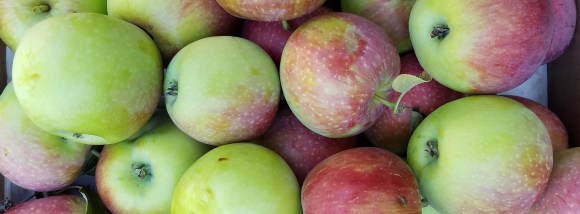
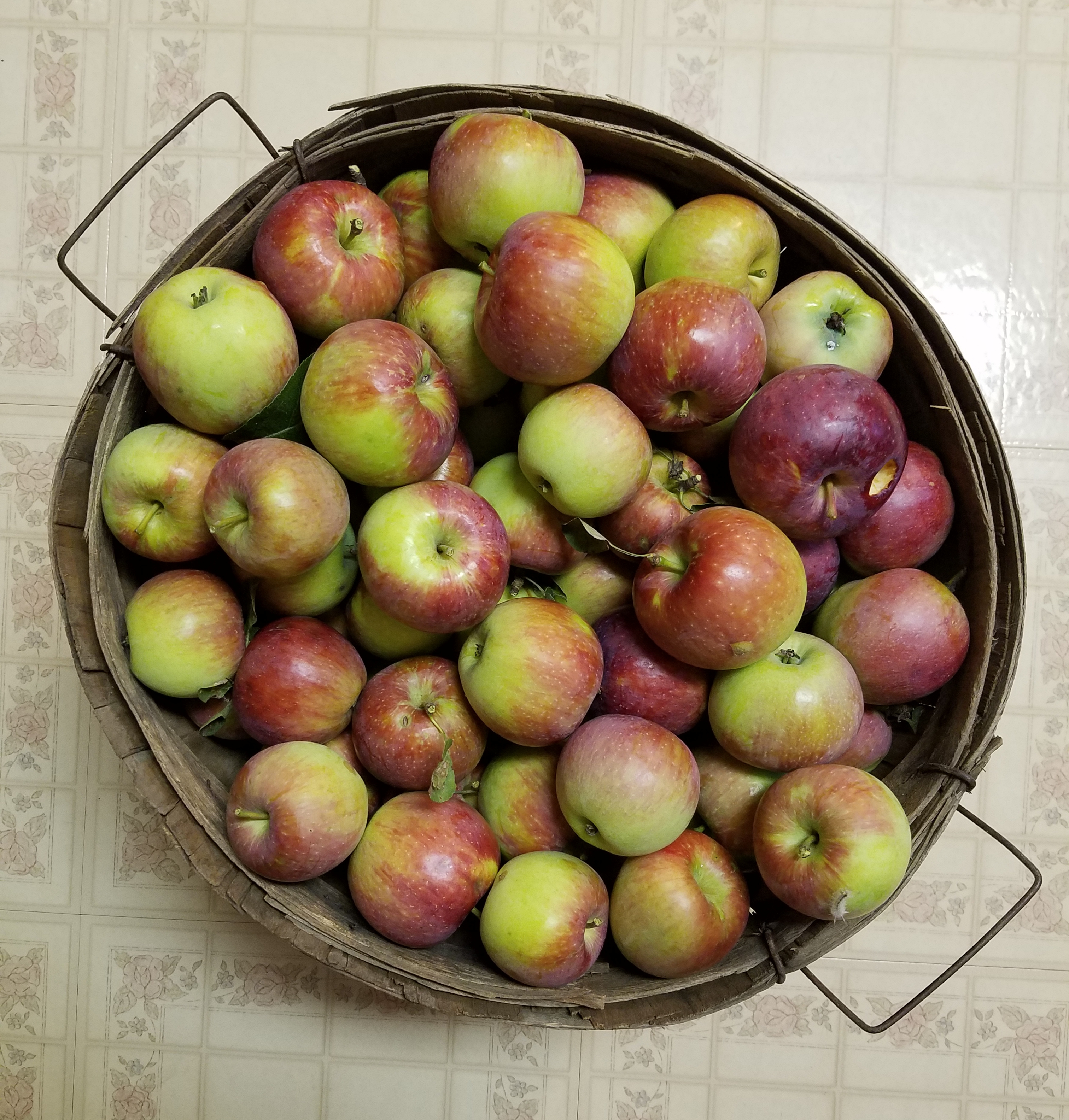
First Peck of Apples

This year’s apple crop has been one of our best. That means an apple activity vortex beginning now until the last red delicious is picked in October.

The two earlier trees are ready to pick and best suited for eating out of hand, apple sauce, apple butter, apple juice for drinking and cider vinegar, and baked goods.

Red delicious apples are good for these products as well and hold up for slicing, freezing and drying. A bit of everything apple is planned this fall.

Working two paid jobs, seven days a week relegates apple chores, and other processing of pears, tomatoes, hot and bell peppers and the like to late at night or early in the morning. These will be busy days, no doubt.

Canning Soup and Jalapeno Peppers

I’m considering getting a second water bath canner to speed up the process. At seven jars per batch I’ve gotten the work done, but at 14 more may be accomplished in the same time. We’ll see how that goes. I’m ready to start canning.

Some lessons learned. In past years I’ve canned garden vegetable soup and have about 24 quarts on hand. That’s enough to last until spring so there’s little reason to can more. The same is true of apple butter. I need to use some of what I have to make room on the shelf so I plan to skip this year. 20 quarts of apple sauce remain in the pantry from previous years. I’ll make enough to get to three dozen. That should take us through to the next large apple crop.

Ending up in an apple vortex during the last lap in a workingman’s race is not bad. I’d say it’s delicious but that would be an apple joke.

Categories
Living in Society

Hope is Alive in House District 82

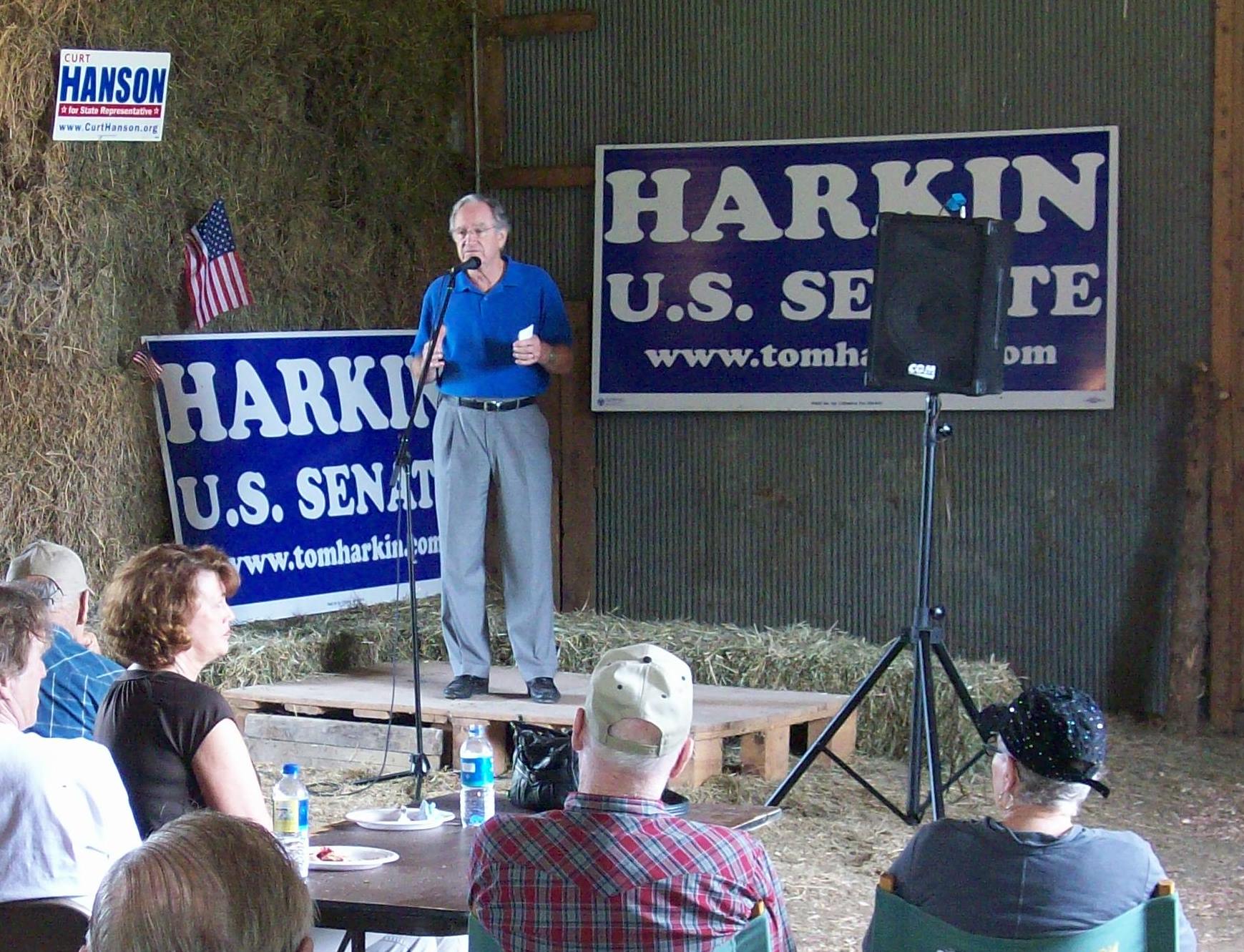
Senator Harkin Speaking at Aug. 2, 2009 Curt Hanson Fundraiser

What seems most important about last night’s Iowa House District 82 special election to replace Curt Hanson is Democrat Phil Miller won in a post-Tom Harkin era.

Iowa no longer has a Democratic U.S. Senator able to travel most counties, recount his local margin of victory to politicians and engage voters. When Harkin visited Dick Schwab’s 2012 house race in Cedar County, his presence didn’t tip the scale in our favor but gave us hope a Democratic candidate could win rural, conservative areas. A case could be made that when Harkin retired so did Democratic hopes for the state. Democrats fell apart, first by losing his U.S. Senate seat, and then by crafting a spotty effort to support Hillary Clinton for president. Given the scale of President Trump’s Iowa win, such hope is needed.

If you want election night analysis, read Bleeding Heartland’s detailed report on the numbers and potential meaning for Democrats by clicking here.

Here’s the crux: “Today’s result is proof that good Democratic candidates can still compete in Iowa’s smaller towns and rural areas where Republicans made huge gains up and down the ticket in 2016,” DesMoinesDem wrote.

It is significant that one of Iowa Republican Party chair Jeff Kaufmann’s stated goals for 2017 is to shore up support among “new Republican voters.” In a July 27 article in the Cedar Rapids Gazette he said of his “new voters,”

I’m worried about them because, in general, what they know is Republicans have control and Republicans aren’t doing what they promised, even though individual congresspeople and senators are doing what they have promised… The people that are less informed about the process, yes, I worry because it contributes to a climate that we’ve given you what you’ve asked for and we haven’t delivered.

I hope the House District 82 election results give Mr. Kaufmann something else closer to home to worry about.

The test for Democrats will be whether they can walk and chew gum at the same time in 2018. It is one thing to concentrate resources on a single race and win, quite another to turn the Iowa house, senate and governor’s office Democratic again. Democrats have done it in Iowa with mixed results. Governor Harold Hughes’ term beginning in 1964 was notable and largely successful. Governor Chet Culver’s 2006 term hangs like an albatross around neck of the Iowa Democratic Party.

Democrats can have a drink to celebrate Miller’s win thanks to Harold Hughes’ revamping Iowa’s alcohol control system and legalization of “liquor-by-the-drink.” This morning after they can hopefully develop momentum toward additional wins in 2018.

Dr. Phil Miller’s win last night provided evidence hope is alive.

Categories
Kitchen Garden

Food Sustains and Protects

Gardener’s Breakfast

The origin of my adult interest in cooking and gardening is time spent in a motel room in Thomasville, Georgia while implementing a logistics project at a large, nearby mining and manufacturing company.

I’d go into the plant early and stay late, returning home to Iowa only every other weekend. When I got back to my room, I turned on the television and fell asleep watching the TV Food Network.

That’s not to say experiences with my mother and grandmother played no role. They did, especially in our kitchen on Marquette Street where Mother prepared meals using familiar ingredients both fresh and prepared, and at Grandmother’s kitchen — first at the Lend-A-Hand and then at the Mississippi Hotel.

Rather than sustenance, food became an escape in my adult years.

In the 1990s I escaped into the T.V. During thirty minute segments I could forget extreme poverty and plain family restaurants that served a meat and three sides in rural Georgia, and engage in personality chefs who enjoyed what they were doing as locals did not. I had no kitchen so the interest was intellectual. I did learn techniques, some of which I would use later in our home kitchen. We don’t get Food Network any longer but it set me on a course for being the kind of home cook I am today.

Yesterday I made breakfast of steamed broccoli, fresh tomatoes and quesadilla — a gardener’s breakfast. In a social climate of political turmoil, disease, famine and extreme weather events food continues to represent escape as well as nourishment. Producing local food and dishes is a way of navigating diverse interests in a society that seems to have gone mad. Not only escape, but protection of who we are from those who would change us.

In western culture we begin each day with choices about food. The lesson I learned in Georgia, on the T.V. and in family kitchens is to choose fresh and local in order to sustain our lives, and there’s more. Make something of our choices. For a brief moment yesterday it was a gardener’s breakfast. Now to turn to today.

Categories
Work Life Writing

Winds of Change

Winds of Change

Just as the election of Barack Obama encouraged me to leave a 25-year career in transportation and logistics, the presidency of Donald J. Trump is stirring winds of change.

Where they will take our small family is uncertain.

Each year presents its challenges and successes. We’ve been able to hold on financially — by the skin of our teeth. There is more to life than money.

Because of a decades-long plan I rely on Social Security and Medicare, to both of which I began contributing in 1968. Whether they will be there for us long-term is uncertain. We are too deeply invested to back out now. We can’t let an unknown future stymie hope and aspirations.

The cycle of our lives is around work, gardening and health. Take paid work out of the picture and there should be an opening to do something different next year.

In 2009, when I retired from transportation and logistics, I took a path of civic engagement. I joined organizations and spent time working with people in society. The next retirement — beginning in spring — is expected to be one of reading and writing much more than I am able to do in hours stolen from days of hard work. There must be some form of civic engagement, but this time I expect it to be much closer to home.

Regardless of outcome, I’m repairing my mast, mending my sails, and ready to put the winds of the national culture to work at home.

Categories
Work Life

Rush to Winter

Ready to Go

Today begins a long stretch of work shifts on weekdays at the home, farm and auto supply store, and on weekends at the apple orchard — 96 days in a row.

I’m not ready but both jobs help pay bills. Work I have been doing on weekends will get shoved to weeknights and early morning. I’ve been here before. There’s nothing else to do but let go and fall into the rush.

The garden is doing reasonably well and my barter agreement will make work canning tomatoes and freezing bell peppers. Last year it was impossible to keep up with the garden and I lost more tomatoes than we harvested. With sunrise getting later, I’m also losing some of my early morning time outdoors. I’m not complaining. Just figuring out the best way to cope. The expectation is this year will be better than last.

At the end of the rush comes winter and a window for retirement. I reach full retirement age in December and my spouse reaches Medicare age in January. If we successfully negotiate these milestones, signing up for Medicare and Social Security, a financial burden will be lifted and we will be able to breathe easier for a while.

For now, it’s a rush toward familiar butunkown times. Hopefully there will be some fun and accomplishment along the way. Here we go!

Categories
Kitchen Garden

Caesura 2017

First Pick of Apples

Between planning, planting and weeding a garden, and fall’s frosty end, lies a time to harvest, cook and preserve the results. So it is with our lives.

As humans we possess a unique ability to envision a future: one where we need supper and know we will need food later. We produce in abundance, fearing we won’t have enough. With modern food supply chains producing readily available foodstuffs in the United States this isn’t rational. In this sense, a gardener is an archetypal human living a life on urges, needs and wants we don’t fully understand.

Saturday Harvest in High Summer

The culture that produces a kitchen garden is complex, involving not just the gardener and soil, but seed producers, greenhouse operators, equipment manufacturers, chicken manure composters, potential future diners and others. A gardener is deeply engaged in human society. Much of our garden time seems solitary but isn’t. Animals wander nearby and we view the results when they eat garden plants and produce we’d hoped to harvest later. There is a daily drama of birds which are abundant in Big Grove. There is also a vast and little understood society of insects, some of which are annoying, a few deadly, and without others, the garden could not exist. A gardener embraces the complexity of life’s culture.

A gardener is not only a gardener nor does he or she seek to be. Each is just one iteration of humanity engaged in a broad society and we Americans are a peculiar bunch. We work hard, long hours whether it is at home or in a workplace and leave little time for enjoyment of the fruits of labor. Sometimes, like this weekend when I am between work at farms, we get time to ourselves to enjoy life lived how best we know. My story of Saturday is in four parts.

Predawn

My day begins around 4 a.m. and if I’m lucky, I got six or seven hours of sleep. I slept well Friday into Saturday waking only briefly to put in a load of laundry around 2 a.m. The routine was basic. Do stretching exercises, make coffee, say hello to spouse, go downstairs, and turn on the desktop computer to see what’s going on in the world. That’s not to say I didn’t already know. I use my mobile device in bed before turning on the light. Usually something new has happened since retiring the night before.

I wrote a series of tweets to better understand my memory of the Patient Protection and Affordable Care Act as it pertains to the false accusation it is a job killer. I recall local businessmen who said after the law went into effect they were in a position to add jobs but didn’t want to do so because they would have to provide health insurance per the ACA mandate. The assertion is the mandate killed these jobs and that idea got blown up into hyperbole of unprecedented proportions. Re-circulation of this idea is ongoing and rarely fact checked any more.

Businesses of a certain size should provide a health insurance benefit to employees or risk the possibility of being unable to recruit qualified staff. By defining the size at which to mandate health insurance, the law changed the business structure. In highly competitive local markets for landscapers, concrete workers, framers, heavy equipment operators and the like, employers faced a changed landscape. Operating on tight budgets, rather than embrace quality of life for employees they resisted change. The core problem lies in that the K-12 education system does a really poor job of preparing students to enter business. People carve out a niche, generate revenues and go out of business if they don’t properly manage risks or aren’t adequately capitalized. Small-scale operators I know are not educated in things we took for granted when I managed the profit and loss of a $12 million annual revenue transportation and logistics operation as part of a billion dollar corporation. The problem is not the ACA, or teachers. It is our education system doesn’t provide an adequate path for people to be successful owning and operating a business.

Pickle Fermentation

Outside

If there was no rain I water the garden shortly after sunrise. Without thinking it turned into weeding, then harvest and before I knew it the time was 11 a.m. The garden looks more like a weedy mess but inside there is abundance.

Before going outside I started soup to take for lunch at the home, farm and auto supply store, and mixed the brine for a batch of dill pickles.

I picked a box of kale for the library then went plot-to plot to collect what was ready. There were broccoli florets, leeks, onions and fairy tale eggplant in one. Jalapeno peppers, a bell pepper and cucumbers in the next. More broccoli and celery near the locust tree. Four kinds of tomatoes in the tomato patch. Basil is ready but I left it in the garden until I’m ready to make pesto.

Apples are sweet enough to eat out of hand, but not sweet enough to juice and ferment into apple cider vinegar. I picked the ripest for a batch of apple sauce. There are a lot of apples this year because of almost perfect pollination during spring. It should be a long apple season starting now.

I collected the harvest in a crate and placed it on the kitchen floor. There was another two hours of work cleaning the produce but that could wait.

Soup for Next Week’s Work Lunches

Short Trip

I try not to leave our property on weekends unless for work. Ours remains a car culture and we don’t have disposable income for shopping if we thought we had it before. Saturday I went to HyVee to pick up canned goods, pantry staples, organic bananas and Morningstar Farms frozen products we use. Organic celery is permanently on the shopping list although we have a lot of celery ripening in the garden. I picked three heads that morning so bought none at HyVee.

On the eight mile trip to town I noticed two sweet corn stands on Highway One.

One is the farm where we get most of our sweet corn, Rebal’s Sweetcorn. Supply was uncertain from their Saturday post:

It was tough picking this morning; we had to really search for the corn in this patch… we’ve got corn today, but it’s not a full load, so if you want it, try to get out here early. And, because of having to search to find the better ears, we might just let this one go and wait for the next. We’ve got 4 blocks (patches) coming up that look beautiful!!! The question is when they’ll be on… we’re checking them every day, so I’ll keep posting

They had plenty as I passed Southbound.

Lindsey Boerjan runs a seasonal road-side stand further south and was featuring sweetcorn and melons. I wrote an article about women farmers in the Sept. 22, 2015 Iowa City Press Citizen:

Lindsey Boerjan is a fifth-generation farmer living on the family-owned century farm where she grew up. She moved back in 2011 and farms alongside her aunt, uncle, husband and daughter, who run a beef cow and calf operation. To supplement income from beef sales, Boerjan raises chickens and operates a small community-supported agriculture project.

The CSA didn’t make it, although the road-side stand likely does better. I decided to stick with Rebal’s on my return trip.

A musician played for free will donations outside the entrance to HyVee. He seemed too young and inexperienced to be playing Folsom Prison Blues, although he was very musical.

Dinner Salad

Cooking

On arrival home I put away the groceries and started cleaning the morning harvest.

Leek stalks make a great vegetable broth base so I got out the large stainless steel pot. I added the leek leaves, broccoli stalks, a turnip — greens and root, kale and onion tops. I don’t usually salt vegetable broth and this time I didn’t add bay leaves. It cam out dark and flavorful — two and a half gallons.

Part of summer cooking is going through the ice box and making sure old stuff is used first. We have a broccoli abundance and need to do something soon with the gallon bags of florets. The freezer is almost full, so freezing more is not a good option.

I found some lettuce and decided to make a small salad and pizza for dinner. The salad is a work of art with two kinds of lettuce, kohlrabi, two kinds of tomatoes, cucumber, grated daikon radish, bell pepper, pickled jalapeno pepper, sugar snap peas and other items either from the farm or grown in our garden. Ironically I forgot to put some small broccoli florets on the salad.

I also made applesauce, salsa with tomato, garlic, jalapeno peppers and onion, and a cucumber salad of diced cucumbers dressed with home fermented apple cider vinegar, salt and pepper.

Our pizza process is to buy pizza blanks from the warehouse club and add toppings at home. Making our own pizza dough is no real work, but the convenience of a pre-made cheese pizza for $2.50 presents value. I added Kalamata olives and a diced red onion from the farm, then topped with Parmesan cheese. 15 minutes in a 425 degree oven plus a minute under the broiler and done.

This Morning

Everything on my list didn’t get done Saturday. I’m processing the vegetable broth in a water bath this morning and figuring out how to pack a summer’s worth of yard projects into today’s glorious summer weather. That is, I wrote stuff on my white board. Once I move outside into humanity and culture, I will likely forget about the plans and do what comes naturally.

Categories
Environment

An Energy Revolution

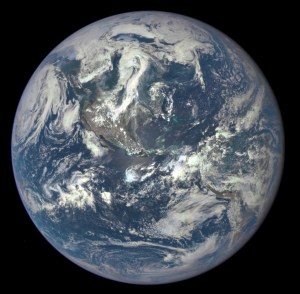
Image of Earth 7-6-15 from DSCOVR (Deep Space Climate Observatory)

A recent article at Nuclear News reminds us the world is on the cusp of an energy revolution.

“The cost of renewables like solar and cell batteries for electric vehicles are making the carbon-based economy obsolete, with the turning point only a few years away,” author Christina MacPherson wrote.

The age of centralized, command-and-control, extraction-resource-based energy sources (oil, gas, coal and nuclear) will not end because we run out of petroleum, natural gas, coal, or uranium,” Stanford University professor Tony Seba recently said. “It will end because these energy sources, the business models they employ, and the products that sustain them will be disrupted by superior technologies, product architectures and business models. Compelling new technologies such as solar, wind, electric vehicles, and autonomous (self-driving) cars will disrupt and sweep away the energy industry as we know it.

Seba sees oil consumption collapsing after 2020.

I wrote about coal in 2009:

When we consider the use of coal in Iowa, there are many of us who remember the coal trucks plying the streets and alleys of our childhood, dropping loads of the black stuff down chutes leading to a basement coal bin and then to our gravity furnaces. Through the winter, people shoveled coal into burning embers to heat their homes. Coal ash was shoveled out and in the spring, it was tilled it into gardens and spread on fields. Coal ash was also sent to dumps. On the farm, coal was purchased with seeds, feed and grain. It was part of a background to life that did not consider the potential harm to human health we now know it represents.

Those born in the 1950s and before have living memory of how natural gas replaced coal for home heating. The conversion was driven by much lower natural gas cost compared to coal. Similarly, lower costs of renewables will drive the move away from fossil fuels. We are almost at that point, as MacPherson indicated, and the business community is recognizing the reality by investing in renewables.

A recent article by Eva Zlotnicka for Morgan Stanley reiterates this point.

Economics and improving technologies, not regulation, are the driving forces behind many of the sustainability trends in global markets today. Our energy commodities team’s fundamental analysis of power-generation economics shows that longer-term coal can’t compete with natural gas or renewables, even on an unsubsidized basis. In a recent report, the team cut its 2017 coal-burn forecast by  around 4%, and now sees only a modest year-over-year improvement, with most of those gains lost by 2018, due to ongoing competition from natural gas and renewables.

The 45th president made much of reviving the coal industry during his election campaign. The trouble for him is the market is heading a direction that not even he and his fossil fuel friends can stop. He can roll back all the regulations he likes and the market will continue to drive the switch to renewable energy.

Many of us were disappointed when President Trump announced his decision to exit the Paris Climate Agreement. It was all hat no cattle.

There is almost no disagreement in the scientific community that fossil fuel use contributes significantly to planetary warming and related climate change. However, that’s not the point. What gave rise to the Industrial Revolution continues to work, and as renewable energy costs decline and become cheaper than the cost of fossil fuels and nuclear, bankers, manufacturers, and service industries will convert because it makes business sense to do so.

Add the public health, environmental, business and economic value of renewables together and a scenario where energy companies may start divesting themselves of coal and oil operations emerges.

How will the U.S. exit the Paris agreement? 45 didn’t say. Will his administration follow the four-year exit process outlined in the agreement, or will he remove the United States from the U.N. Framework Convention on Climate Change (UNFCCC), exiting in about a year? If the drivers of transformation in our energy system are economic, what whit of difference does his decision make?

The agreement posed no financial risk to the United States, according to Morgan Stanley. It seems doubtful other nations will follow the United States out of the agreement, although some may. The pursuit of the goals in the Paris Agreement by remaining countries, combined with the efforts of U.S. states and cities acting on their own, offer the best chance to reduce carbon pollution in the atmosphere.

Nonetheless, an energy revolution is going on and at this point little politicians do seems able to stop it.

Categories
Living in Society Sustainability

Iran Deal Ad Nauseam

Photo Credit: Des Moines Register

I can’t believe we have to cover this Iran sh*t again.

Point 1: The 45th president doesn’t like the Iran Deal. While he twice certified Iran’s compliance with the July 14, 2015 agreement between Iran, the P5+1 (the five permanent members of the United Nations Security Council—China, France, Russia, United Kingdom, United States—plus Germany), and the European Union, each time his State Department under Rex Tillerson undercut any positives.

“Today I’d like to address Iran’s alarming and ongoing provocations that export terror and violence, destabilizing more than one country at a time,” Tillerson said in April after the first certification. According to Time Magazine, he proceeded to lay out a long list of bad things Iran is doing, from sponsoring terrorism to oppressing its own people to violating U.N. constraints on its missile program. When it came to the nuclear deal, he said it failed to ensure Iran won’t become a nuclear state in the future and said the administration was conducting a “comprehensive review of our Iran policy.”

The comprehensive review was ongoing when Tillerson made the second certification last week. The 45 administration proceeded to impose more sanctions on Iran.

We get it. 45 called the agreement “bad,” “horrible,” “stupidest deal,” etc.

Point 2: There was no question Iran was pushing the limit of the Nuclear Non-proliferation Treaty (NPT). I posted about this March 5, 2010:

The reason Iran is in the news is reasonably straightforward. As signatory of the NPT, Iran has the right to the peaceful use of nuclear technology. The trouble is that in 2003, the International Atomic Energy Agency (IAEA) determined that Iran had not been forthcoming about its uranium enrichment program, as required by the NPT. The IAEA conducted an investigation and their Board of Governors reported Iran’s noncompliance with the NPT to the United Nations Security Council. The Security Council demanded that Iran suspend its enrichment programs. The Council imposed sanctions after Iran refused to do so. When the uranium enrichment facility in Qom was made public in 2009, this heightened awareness of Iran’s apparent belligerence precipitated the current discussions between the parties about further sanctions and/or diplomacy. The corporate media latched on to an easy news story.

Point 3: President Barack Obama chose diplomacy. He initiated discussions about nuclear non-proliferation with Iran. Crazy, no? To actually talk to Iran and engage the European Union and the P5+1 states in the deal. The deal was consummated and is in effect. It stopped Iran’s nuclear program. As 45’s administration indicated with its certification of Iran’s compliance, the Iran Deal is working.

Point 4: While 45 hasn’t fulfilled a campaign promise to dismantle the Iran nuclear deal, he remains deeply suspicious of it according to a Sunday article in the Los Angeles Times. The war hawks in Washington, led by former U.N. ambassador John Bolton wanted 45 not to certify compliance. On its own terms the agreement has accomplished its purpose of preventing Iran from enriching uranium to develop technology to make a nuclear weapon, things of which they were well capable in 2009.

On any given day one might say, “who knows what the hell Trump will come up with?” In a dangerous world we should be thanking President Obama for avoiding war with Iran and stopping its nuclear program, something that can’t yet be said about his successor in the Oval Office.

Categories
Environment

Act On Climate — Scary Edition

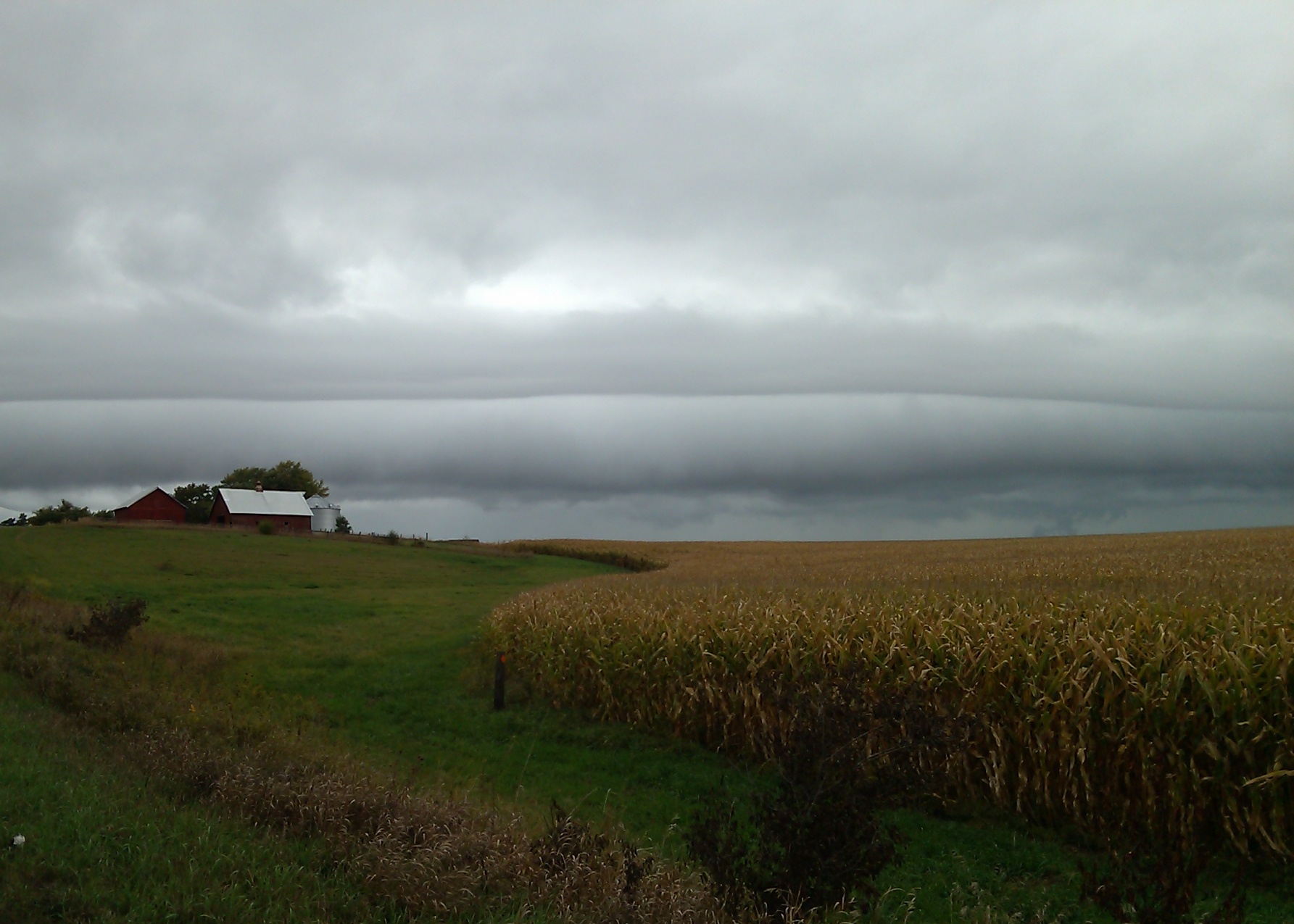
Thunderstorm Rolling In

You may have seen David Wallace-Wells’ New York Magazine article titled, “The Uninhabitable Earth.”

It’s a scary article with frightful truths circulating on social media.

Half truths according to Michael E. Mann, director of Earth System Science Center at Penn State. Mann wrote onFacebook:

Since this New York Magazine article (“The Uninhabitable Earth”) is getting so much play this morning, I figured I should comment on it, especially as I was interviewed by the author (though not quoted or mentioned).

I have to say that I am not a fan of this sort of doomist framing. It is important to be up front about the risks of unmitigated climate change, and I frequently criticize those who understate the risks. But there is also a danger in overstating the science in a way that presents the problem as unsolvable, and feeds a sense of doom, inevitability and hopelessness.

The article argues that climate change will render the Earth uninhabitable by the end of this century. Extraordinary claims require extraordinary evidence. The article fails to produce it.

Read Mann’s full take-down here.

If we are clicking on New York Magazine for our information about the threats of climate change then now, more than ever, it’s clear mental health care is needed in whatever healthcare bill Congress passes this year.

Taking action on climate (or anything else) based on fear would be as scary as Wallace-Wells’ article.

On Sunday, Al Gore was in the news about his climate work.

“Those who feel despair should be of good cheer as the Bible says,” Gore told Lee Cowan of CBS News. “Have faith, have hope. We are going to win this.”

The need to act on climate is all around us according to Gore.

“It’s no longer just the virtually unanimous scientific community telling us we’ve got to change,” he said. “Now Mother Nature has entered the debate. Every night now on the television news is like a nature hike through the Book of Revelation. People who don’t want to use the phrase ‘global warming’ or ‘climate crisis’ are saying, ‘Wait a minute. Something’s going on here that’s not right.'”

Gore is right. Don’t despair. Act on climate.

If you don’t know what to do, The Climate Reality Project provides an action kit to get you started. Click here to find it.