Categories
Environment

Ed Fallon, Bold Iowa and the Dakota Access Pipeline

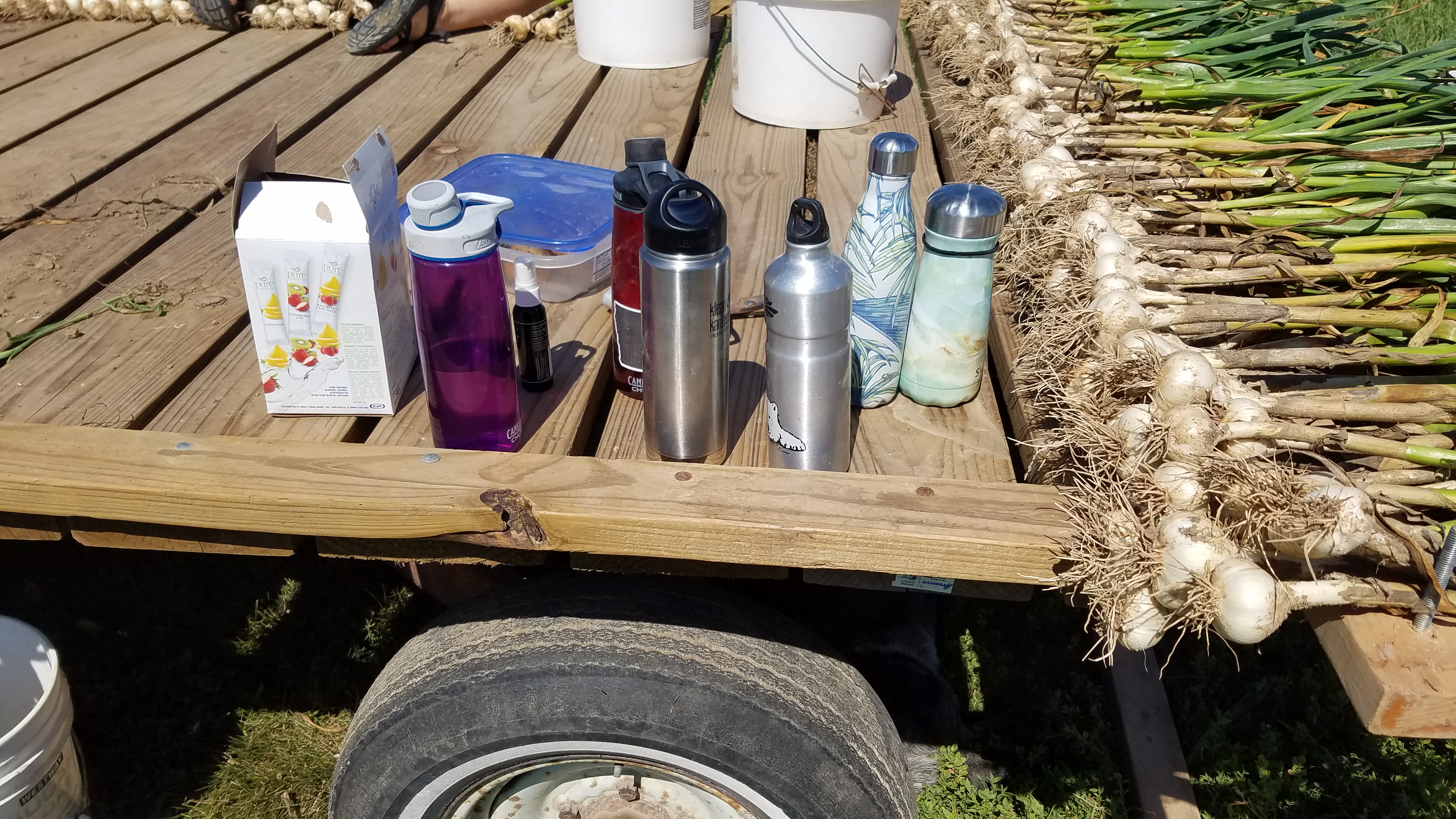
Ed Fallon in His Garden

Ed Fallon lives and works in Des Moines and has long been a friend of Blog for Iowa. Here’s an update on Ed’s current activities from an interview conducted last week via email.

We noticed you are affiliated with Bold Iowa. What is Bold Iowa and what attracted you to pitching your tent with them?

I continue to host the Fallon Forum and direct Bold Iowa. Bold Iowa grew out of the Bold Alliance, which was formed after the Keystone XL fight. Just a year after the alliance started, Jane Kleeb, founder of Bold Alliance, abandoned Alliance chapters in Iowa, Louisiana, Oklahoma and Virginia. We now operate as an independent organization.

What are you working on this summer and why?

We’re focused on supporting the landowners who have filed a lawsuit against the abuse of eminent domain to build the Dakota Access pipeline. Sierra Club is part of that suit. One of the ways we are supporting landowners is to raise awareness of the suit through The First Nation — Farmer Climate Unity March. We are also hosting a series of community forums, setting up editorial board meetings, sending out press releases, and encouraging people to write letters to the editor. If landowners and the Sierra Club prevail in the lawsuit, it could stop the oil from flowing through Iowa, North Dakota, South Dakota and Illinois.

Climate change has been in Iowa news this year more than recently. Have you noticed? If you’ve noticed, to what do you attribute the increased mentions in social and conventional media?

I’ve noticed, although the uptick has been small. Mostly, it seems some editorial boards and a few reporters are beginning to understand that climate change is not just another issue, that it’s a crisis that demands immediate attention.

What would you like our readers to do to support your causes during the remainder of 2018?

March with us Sept 1 – 8 from Des Moines to Fort Dodge, following the pipeline route through Story, Boone and Webster Counties. Contact media about the importance of the lawsuit and the urgency of climate action. Most important, vote in November for candidates who take climate change seriously.

Listen to the Fallon Forum live Mondays, 11:00-12:00 noon CT on La Reina KDLF 96.5 FM and 1260 AM (central Iowa). Add your voice to the conversation by calling (515) 528-8122.

~ First posted on Blog for Iowa
Categories
Writing

Carrying the Past

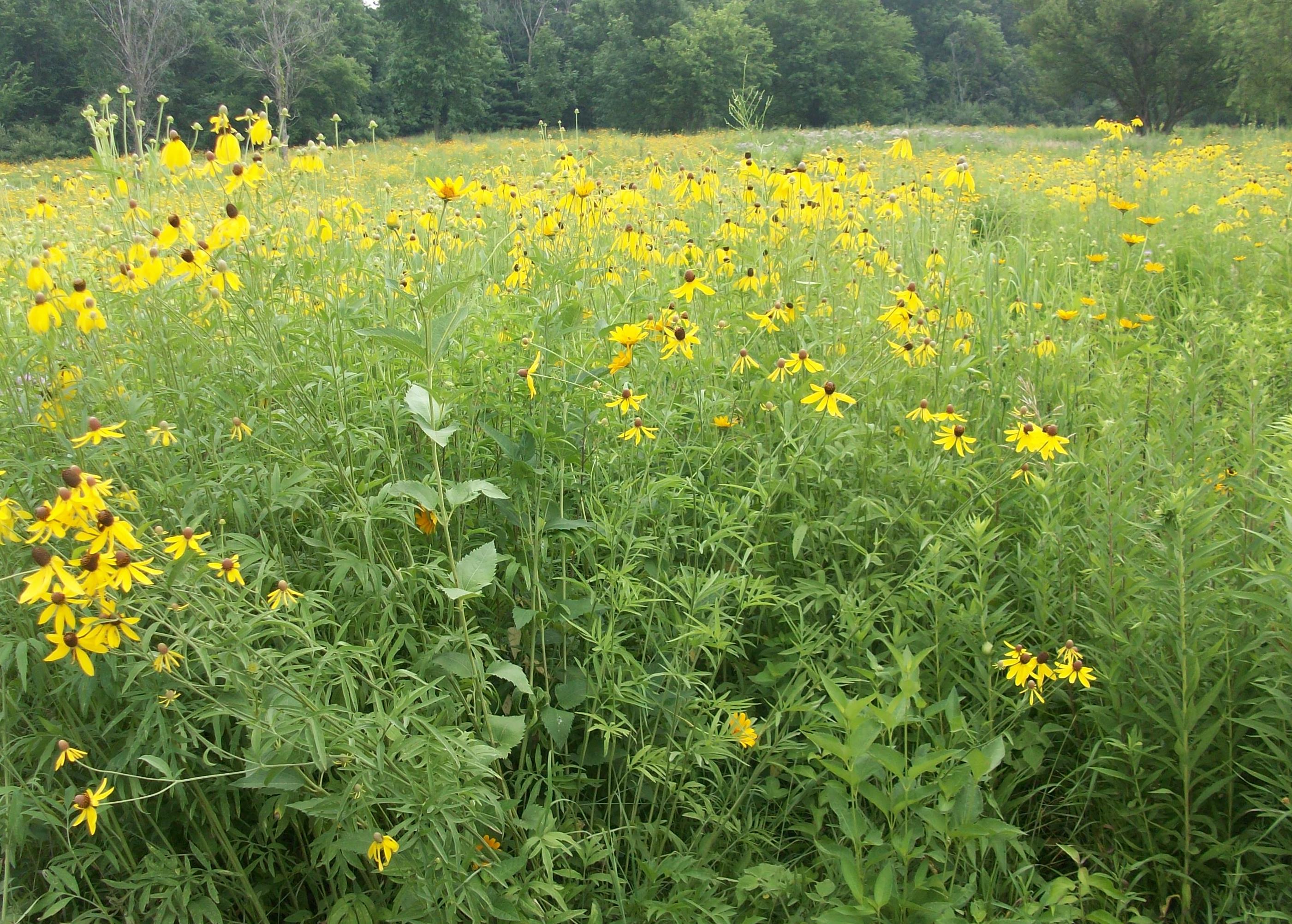
Field of Yellow Flowers

We live each moment in a march of time weighed down by our past.

Cognizant of what we experienced and hopeful for a future, we live lives drenched in the culture that engendered us and provided what sensibilities we have.

Living is not perfect and who knows what God sees when she looks down on us from the heavens?

Today and tomorrow I’m scheduled to work at the home, farm and auto supply store, then I’m off work until my shift at the orchard Aug. 4. Eight days to finish up summer projects (I hope) and prepare for the rush toward year end.

We carry our past with us — a rucksack of memories to help us live each day better. Sometime it becomes becomes a millstone. It draws our attention and delays us.

The past is the raw material of creativity when naivety serves no useful purpose in the matrix society has become.

It is okay to set the rucksack down on our way — to rest, drink water, and pick it up again. We are unwilling to leave it behind until the final curtain falls and that’s our humanity.

Categories
Sustainability

Break In At A Nuclear Weapons Storage Facility

Photo Credit – Pressenza International Press Agency

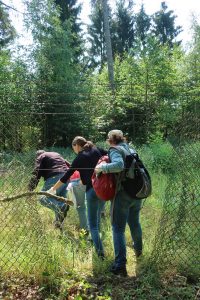
Last week, a group of peace activists gained access to a site on a German Air Force Base where 20 U.S. nuclear weapons are stored.

“The peace activists cut through razor wire and some other fences and several made it to the runway; three activists walked to a nuclear weapons bunker, and climbed up to the top where they were undetected for an hour,” according to the International Press Agency. “All 18 were eventually found by soldiers, handed over to the civil police, ID checked, and released from the base after 4-½ hours.”

This was personal.

One of the many jobs I had while serving in the Cold War Army was to standby in the event a nearby nuclear weapons storage facility suffered a break in or terrorist attack.

I was there when the Baader-Meinhof Gang, later known as the Red Army Faction, rose to prominence. I was stationed at a kaserne on the Rhine River during the “German Autumn” when Baader Meinhof and others committed murder, kidnapping, hijacking and more. Here’s a taste of what it was like where I lived from Wikipedia:

The German Autumn (German: Deutscher Herbst) was a set of events in late 1977, associated with the kidnapping and murder of industrialist Hanns Martin Schleyer, president of the Confederation of German Employers’ Associations (BDA) and the Federation of German Industries (BDI), by the Red Army Faction (RAF) insurgent group, and the hijacking of the Lufthansa airplane Landshut by the Popular Front for the Liberation of Palestine (PFLP). They demanded the release of ten RAF members detained at the Stammheim Prison plus two Palestinian compatriots held in Turkey and $15 million in exchange for the hostages. The assassination of Siegfried Buback, the attorney-general of West Germany on April 7, 1977, and the failed kidnapping and murder of the banker Jürgen Ponto on July 30, 1977, marked the beginning of the German Autumn. It ended on Oct. 18, with the liberation of the Landshut, the death of the leading figures of the first generation of the RAF in their prison cells, and the death of Schleyer.

Those were tense times. I remember German police cars on every corner and at every Autobahn exit during key moments in the drama that fall. Our unit was often on alert for potential response to an incident.

We were never called to secure a terrorist attack site. However, yesterday’s incident raises some questions about our deployment of nuclear weapons in Germany.

Why isn’t the United States working toward fulfilling our agreement in the Nuclear Non-proliferation Treaty (NPT) to eliminate nuclear weapons? Not only do we have a legal obligation, there is a moral imperative to do so.

Is Germany permitted to deliver U.S. nuclear weapons with their aircraft as part of NATO? Quoting from the article, “On this air force base, German pilots stand ready to fly Tornado fighter jets with U.S. B-61 nuclear bombs and could even drop them, on orders from U.S. President Donald Trump on targets in or near Europe.” Since Germany is not a nuclear state recognized in the NPT, it may be illegal for them to do so.

The incident at Air Force Base Büchel is not getting much press in the wake of today’s Donald Trump – Vladimir Putin meeting in Helsinki. Maybe it should.

~ First posted at Blog for Iowa

Categories
Kitchen Garden

Going Without a Share

Fermented Dill Pickles

The change in our local food ecosystem from last summer to this is hard to fathom.

We let go of the summer share from the Community Supported Agriculture projects to rely on our garden.

It was a big step and I feel much less stress from over abundance. Some days I’d like more lettuce, and some of the specialty crops, but there is plenty from our garden to fill the gap. Now that tomatoes, cucumbers, eggplant and peppers are beginning to come in, I don’t forecast any gaps.

What is hard to fathom is why the transition has been so easy. Maybe I’m getting to be a better gardener. Maybe I was due to go on my own.

Tornadoes tore through Marshalltown, Pella and Bondurant yesterday as I got off work at the home, farm and auto supply store. It doesn’t appear anyone was seriously injured or died, although damage to the communities was substantial. Photos and video posted on social media depicted a horrible scene. The Marshalltown Times-Republican newspaper got an issue out the next day despite the storm — practicing journalists they are.

Are these storms due to climate change? I don’t know. What I do know is the seasons are out of wack. A late spring, early high ambient temperatures, and more frequent storms make our climate exceedingly weird. We adjust, accommodate, but something’s different.

Ben Santer, an atmospheric scientist at the Lawrence Livermore National Laboratory, led a study of four decades of climate data that concluded human activity is disrupting our seasonal balance. That is, the seasons don’t proceed through time the way they did. It may be confirmation bias, but I doubt it. Eric Roston at Bloomberg wrote a more accessible article about the study here.

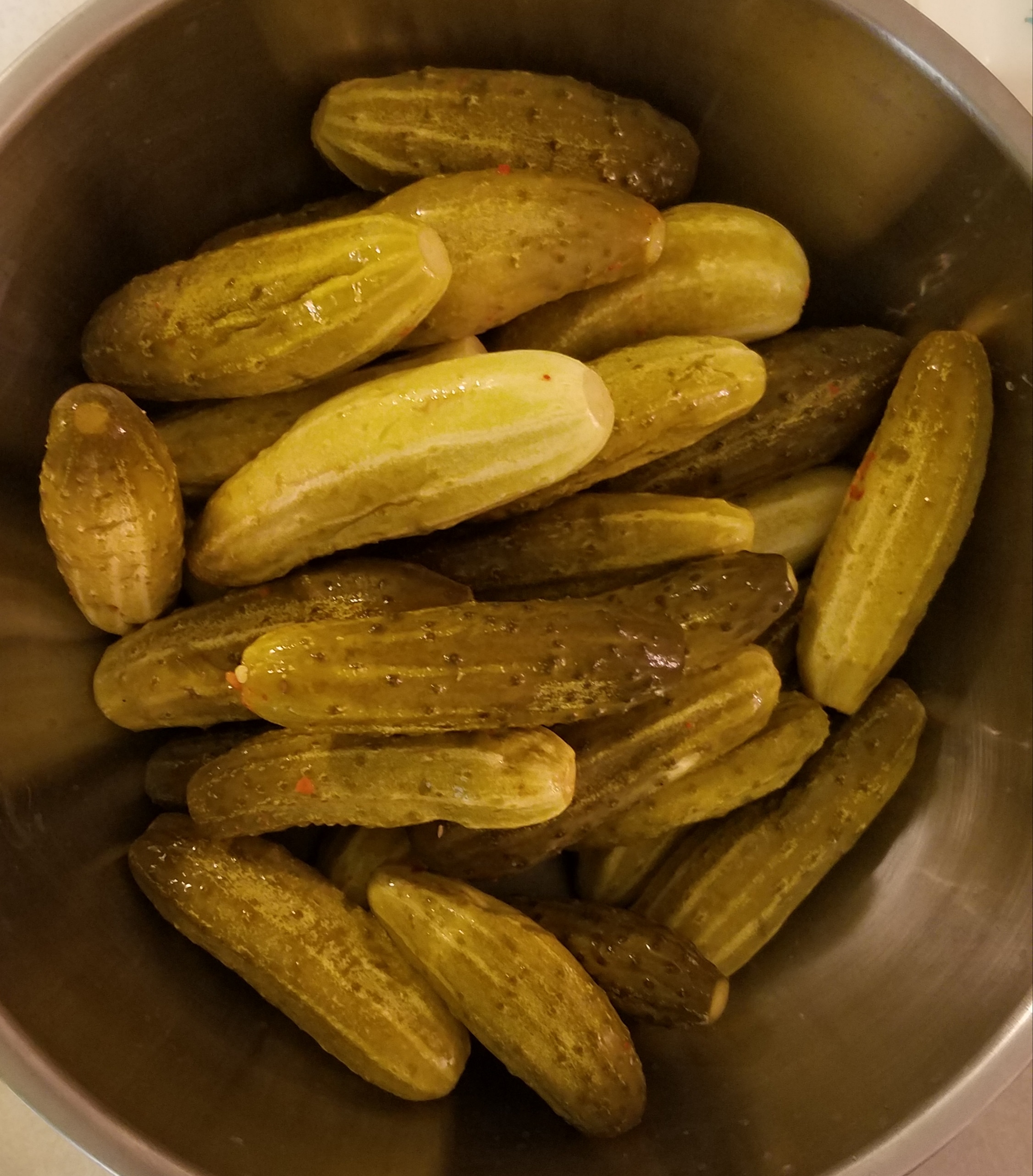
In the kitchen it’s cucumber day! A batch is sweating over a bowl and the crock is full of sweet pickles to be water bath processed tomorrow. The dill pickles in the photo took 13 days to ferment. It was worth every minute.

Categories
Environment Living in Society

The Great American Give Away

Coyote Natural Bridge, Grand Staircase-Escalante National Monument, Utah. Photo Credit – Wikimedia Commons

The Trump administration is giving away access to our public lands for discovery and exploitation of minerals and fossil fuel reserves. Conservatives and mining interests are setting a place at the table to get their share.

“Trump signed a pair of proclamations late last year reducing the size of the 1.35-million-acre Bears Ears National Monument by 85 percent and the 1.87-million-acre Grand Staircase-Escalante National Monument by roughly 50 percent,” according to Huffington Post. “It was the largest reduction of national monuments in history, with more than 2 million acres losing protections. Prohibitions on new hard-rock mining claims in those now-unprotected areas were lifted in early February.”

The administration’s assault on national monuments is upsetting on a number of levels. It is the culmination of an effort by conservatives to divest government control over national parks and monuments, something most of us thought was long settled.

It’s not settled at all.

A Canadian mining firm, Glacier Lake Resources, Inc., has staked a claim on land that was, until recently, part of Grand Staircase-Escalante National Monument in Utah. The Vancouver-based company said in a press release it plans to mine copper, cobalt, zinc, and other minerals from the Colt Mesa deposit about 35 miles southeast of Boulder, Utah.

On Feb. 2, four members of the Lamoreaux family, which owns a small mineral company called Alpine Gems LLC, staked an 80-acre claim near Butler Valley, southeast of Cannonville. On May 9, Alpine Gems staked three 20-acre claims in that same area.

Last week, Utah Senator Mike Lee introduced the Protecting Utah’s Rural Economy Act in the Congress. He explained in an opinion piece he wrote for the Deseret News. Here are two excerpts that provide the gist of it:

The looming danger for Utah’s rural communities comes from the Antiquities Act of 1906, which was originally intended to protect objects of historic and cultural interest, such as artifacts and religious sites.

Unfortunately, what was once a narrowly targeted tool for preventing looting on federal lands has become a weapon of faraway elites to use against hardworking rural Americans.

That is why I am introducing the Protect Utah’s Rural Economy, or PURE, Act. This bill would protect Utah from future abuses under the Antiquities Act by prohibiting the president from establishing or expanding a national monument in Utah unless the proposed monument has been authorized by an act of Congress and the state Legislature.

Rural Americans want what all Americans want: a dignified, decent-paying job, a family to love and support and a healthy community whose future is determined by local residents — not their self-styled betters thousands of miles away.

Lee’s argument is a genome away from political theorist and the seventh vice president of the United States John C. Calhoun’s arguments in support of slavery and state’s rights. Calhoun is remembered for defending slavery and for advancing the concept of minority rights in politics, which he did in the context of defending white Southern interests from perceived Northern threats, according to Wikipedia.

The Wilderness Society is challenging Trump’s proclamations in court and monitoring the progress of the companies seeking to extract minerals. It may not be enough.

Read more about The Wilderness Society’s efforts to protect our wild areas and fight back against the anti-conservationist movement at wilderness.org. If you are in a position to help financially, here is a link to donate to the Wilderness Society.

~ First posted on Blog for Iowa
Categories
Home Life Writing

Moving On to Fall

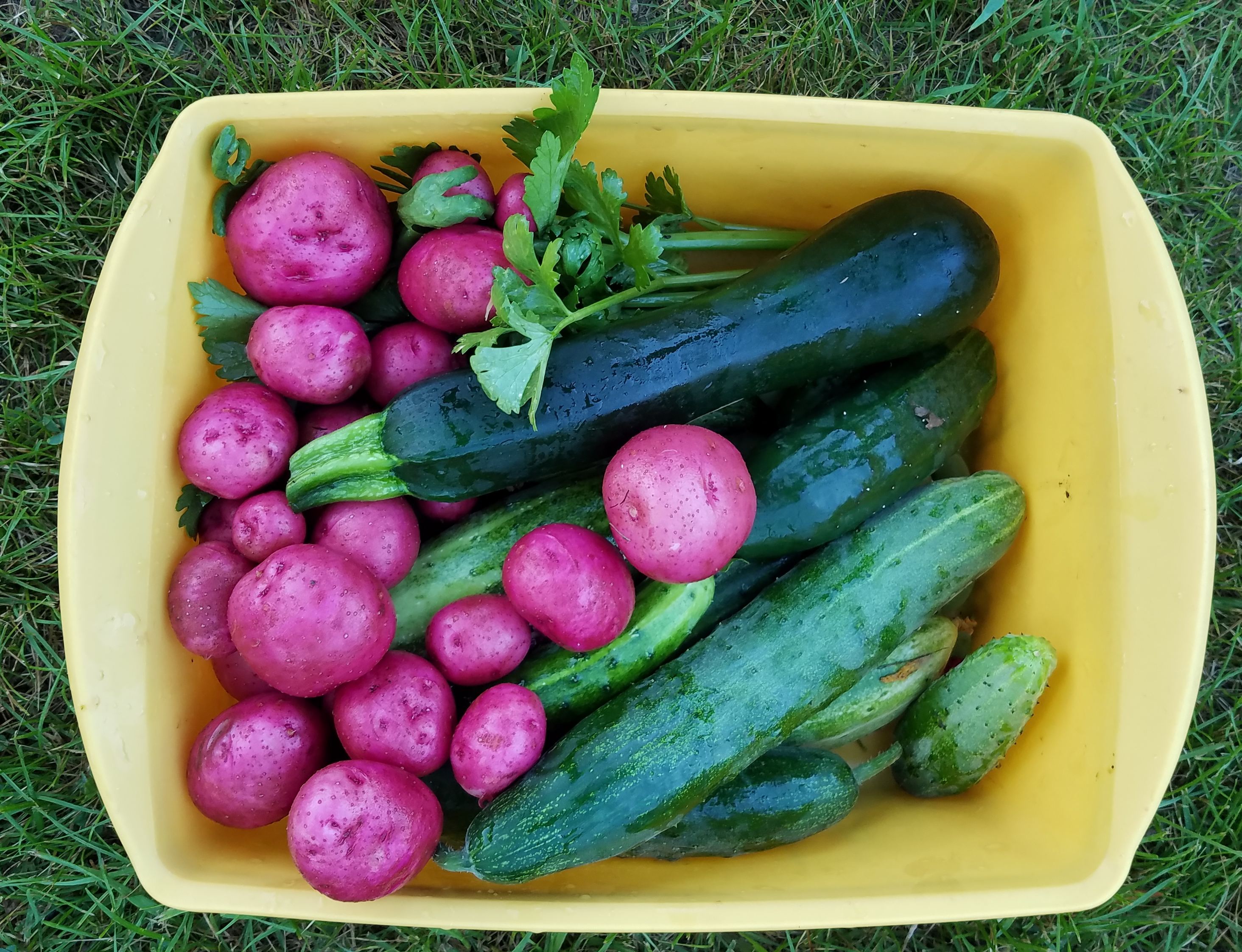
July 15 Harvest

My supervisor at the orchard called yesterday to ask me to work this weekend. I said yes.

We’ll be selling blueberries from Michigan for a few hours on Saturday and we’ll discuss plans for the upcoming season.

It is my earliest start in six seasons. It’s also a sign the year is on the back slope. Fall will soon arrive.

Being home more has helped make the garden our best ever. Just an hour a day after planting has been enough time. Some of the new techniques: using composted chicken manure for fertilizer, mulching pepper and cucumber plants immediately after planting, using a fence to grow cucumbers, and putting a deer fence around the tomatoes have facilitated Mother Nature’s growth. I still haven’t had to buy a single onion or head of garlic at the store this year. We are eating something fresh from the garden daily.

I’m used to having events to which to look forward. That means I’m not used to the five-day weekends semi-retirement and completion of spring farm work brought this July. I’ve been doing a lot of resting in between activities. I’ve made a conscious effort to reduce the number of activities. So resting outranks doing for the time being.

Based on more than 50 years in the workforce, I’m used to a scheduled shift being the focal point of each day. In retirement, that changes and will take accommodation.The idea is not to replace work shifts with other, different kinds of events. Rather focus on awareness of tasks being required and doing them as needs rise to the surface of our new lives together.

For example, I planted 48 celery plants. Yesterday I harvested five to see how they were growing. I trimmed the heads of bad stalks and used what was salvageable in a stir fry for lunch. The five cores, or what grocery stores call “hearts” I bagged and refrigerated for later. What I learned was celery is about ready for harvest and that means a big project of cleaning, trimming, slicing and freezing for winter use in soup and stir fry. That task is lingering and will rise up soon.

The point of retirement is to perform tasks like this in time, but when fancy deems best. It would be a waste not to get this done, but I’m reluctant to write it on my calendar. I’d rather wait for the right intersection of seasonable temperatures, personal energy and peak vegetable readiness. That time will reveal itself outside the unforgiving tyranny of a calendar.

Milkweed Pods Growing

Even the milkweed plants are doing well this year. I did little other than weed around them and cut away the vines wanting to grow up the stem. Several plants are forming seed pods. I’ll learn a little bit about them and harvest the seeds to grow more in a different spot. Someday I hope to see a butterfly caterpillar on one of them.

It looks like as I’m writing the presser in Helsinki, Finland with Vladimir Putin and Donald Trump is about to begin. A reporter claiming to be from The Nation has been forcibly removed. Neither leader is a fan of a free press, although both use it to their advantage when they can. We also know about the many journalists who “disappeared” under Putin. I’d rather look at butterflies than think about U.S. – Russian relations. It’s hard to avoid, just like it’s hard to stop thinking about my next work shift.

If we’re to change habits, we have to work at it. That may be why I continue to write these posts, work at the orchard, and at the home, farm and auto supply store… for now. My life would be worse without it.

Categories
Writing

New Potatoes and Cucumbers

Morning Harvest

The ambient outdoor temperature is 89 degrees and the heat index is 100. Another midday spent inside.

I feel caged.

Near sunup I harvested cucumbers and watered. I tasted a red tomato — they are not ready.

Won’t be long.

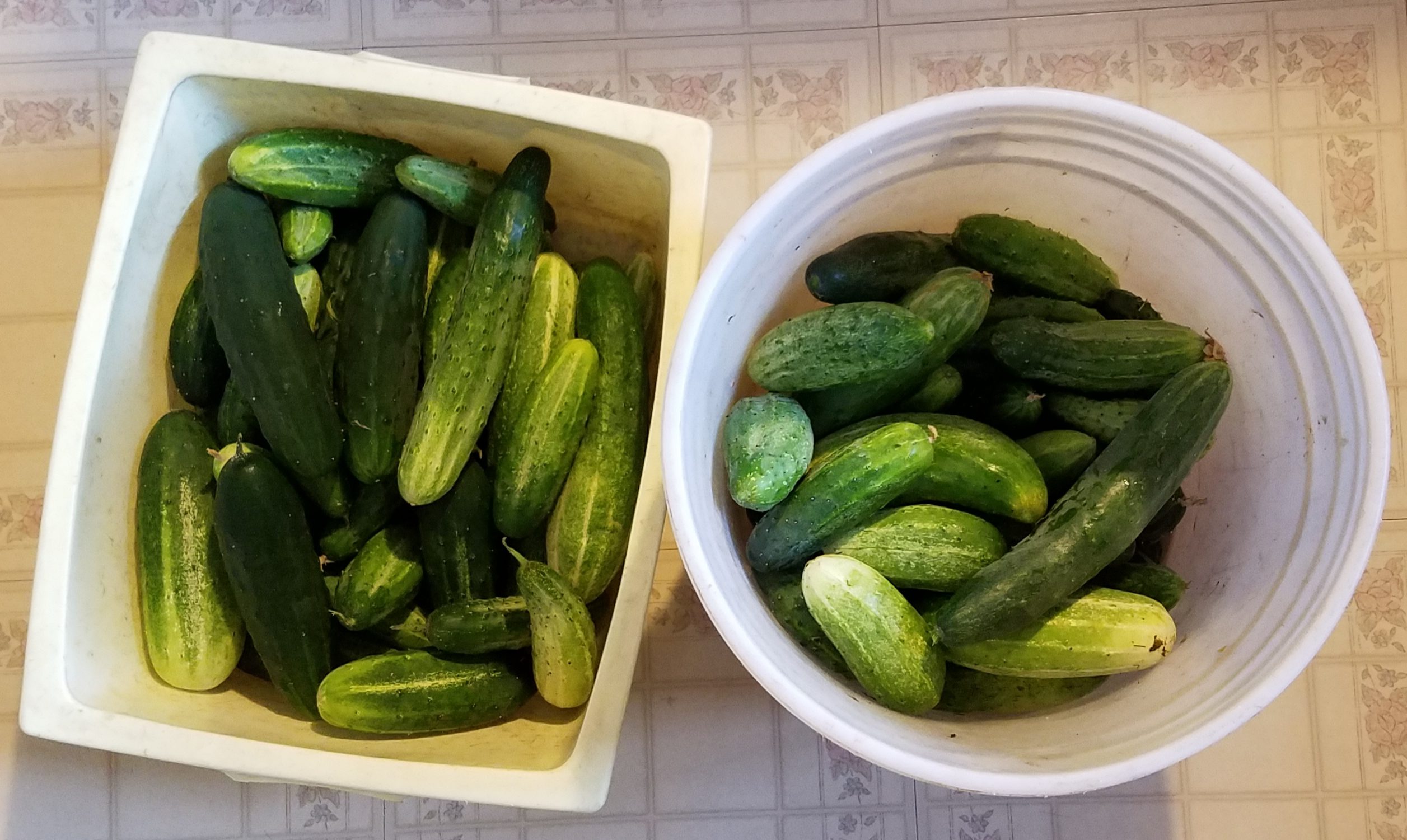
In the kitchen I emptied the crock of fermented dill pickles and started another batch. I washed and sorted cucumbers on the counter: first the dills, then sweet pickles, then some for eating, then a pile of too plump ones for juicing. There are so many cucumbers I could be selective. Soon I’ll run out of things to do with them… not yet.

I felt restless. I feel restless.

Cucumbers

I cleaned under the kitchen sink and returned the soaps, cleaning supplies and waste basket to their appointed places. I’m glad that work is done. I’ve been putting it off.

Using fruit thawed from the freezer, I made a smoothie for lunch with cow’s milk, kale, a banana and the fruit. It was satisfying…  and very blue.

There is only so much kitchen time a person can take before moving on.

Someone spotted water coming up through the ground near a main water line junction. I emailed our crew of well volunteers and we met near the leak. We saw water seeping up but couldn’t diagnose the problem. I told them I’d call our well service to come out and fix the leak. It was a productive exchange as I hadn’t seen some of them for a while. It was a chance to do something outside home. It will be an ongoing project for the weekend.

I came back. It got hot and here I am.

Our president had tea with Queen Elizabeth II today. I wonder if they had scones like she did with Ike. In Washington, D.C. Robert Mueller’s investigation produced 12 indictments of Russian intelligence officers who had been hacking U.S. computers in the run up to the 2016 general election. The hacking was with nefarious purpose and intent. The press event was at the same time the president was having tea. It will give him something to discuss with Vladimir Putin next week in Helsinki.

In the hottest part of the day I feel an urge to go somewhere else. I felt the same way when I lived near the main train station, the Hauptbahnhof, in Mainz, Germany, especially on weekends away from the kaserne. I would drive to the big box stores over in Wiesbaden… or maybe walk to the small grocery store down the hill and buy fresh fruit and a liter of Coca Cola. I had to time it right because they closed for a couple of hours in the early afternoon. About the same time it is now. I feel connected to those days 40 years ago.

I just got the call the well technician is on his way. Guess I can meet that urge… for now.

Categories
Writing

Writing My Way Out

Compost Bin

The culprit is a long, engaging worklife. The crime? Diminished creative output.

Early on I realized, with a few exceptions, creative endeavor doesn’t pay. To support it I took work… for over 50 years. We raised a daughter, built a home, worked outside home, and lived an often exhausting life.

Older, I’m not sure I’m much wiser. I’m worn down and less productive than I hoped to be. Yet the creative impulse persists. I hope to write my way out of the current situation into new energy and creativity.

I haven’t given up.

The wellspring of creativity has been several things, most important among them is meeting and engaging with new people. If we are to be successful as artists we need an audience. I’ve been lucky to find one on this blog and in our community. Relationships with people are important.

Here’s my problem. For too many years reading and writing has been a way of processing society and the world around me. Such processing engaged me and produced two results: a good quantity of writing and distraction from more specific creative output. At age 66 there’s no time for distraction so I must renew focus on writing.

Like the compost bin in the garden I keep throwing life experiences in, hoping to get to something elemental and nourishing. It’s time to spread compost on the garden plots and see what grows. No doubt there will be some weeds… and hopefully a flower or two… and vegetables for nourishment.

Life, its beauty and ugliness, is all around us. An artist must be able to perceive it, process and make something useful of it. On a summer Tuesday that’s what I’m hoping to do.

Categories
Kitchen Garden Living in Society

Garden is In

Friday Harvest

It may seem late yet I declared the garden planted on Friday.

We’ve already had a bumper crop of vegetables and we’re not even started with tomatoes, eggplant, peppers, green beans and more. There will always be garden work to do but for now it’s planted.

Time to turn to other things.

What I mean is between now and Aug 4, when orchard work begins, there is writing, household repairs and cleaning, and loads of work to improve our home life. At some point I switched from being a consumer to a doer and that makes the difference in my mid-sixties. I just stay home and do.

Water Bottles

Politics plays a role in current affairs and it’s much different than it was. My focus is to understand the complex world in which we live and work to make a positive impact. My themes haven’t changed (environment, social justice, economic survival, good governance) although my understanding of what needs doing has. During the re-election of George W. Bush I re-activated in politics. Each succeeding campaign was both learning and engagement. After seven campaigns, I enter my eighth with a deeper understanding of the role social networks play in determining winners and losers. I’m not referring to Facebook, Instagram and Twitter here, but broader social movements and the momentum they bring to an election.

The first Obama campaign, with its demographics analysis and targeted voter lists seems like ancient history. What Obama did can’t be replicated, even if we wanted. To better understand the electorate, we must knock on every door, hear every voter, and determine how to fix the broken politics endemic to our lives. Creativity and networking are important. We don’t know if what’s broken can be fixed in a generation. If we don’t start now, it may never be fixed.

Flower at the Farm

Politics is not everything. After only three hours at yesterday’s garlic harvest at the farm I felt a bit dizzy, presumably because of hard work in the sun. It was a temperate day, nonetheless, I played it safe and called it early. My point is I’m not getting any younger. Working a six or eight hour shift in the sun doesn’t work as well as it did a few years ago. Working smart is replacing working harder.

The rest of the year goes something like this. July is a month to work at home: advance my writing projects, get space at home to be more livable, and work to get the yard into better shape. August through October is work at the orchard. This year I may be taking on additional responsibilities, but for sure I’ll be there weekends and on Friday Family nights. November and December will be focused on writing. While this is going on, I’ll continue to work at the home, farm and auto supply store two days a week. Every dime of income has a place to be used at this point.

Declarations like mine about the garden are ephemeral. What matters more is a process of continual improvement in which life goes on as best we can make it until the final curtain falls. In the meanwhile, we expect there will be garden vegetables to eat.

Categories
Living in Society

Iowa’s Medicaid Toothache

I worked as an admissions clerk at the University of Iowa Dental Clinic after graduate school. We saw patients from all around Iowa — wealthy patients with private insurance, indigents with limited means, and everyone in between. Anyone who came to my desk was accepted for treatment. What I knew then seems poised for change.

Cuts to regents university budgets combined with an Iowa Medicaid administrative disaster led the university to cut off new dental patients on Iowa Medicaid because of difficulty collecting fees and complicated new rules.

“The dispute pits state administrators at the university against their counterparts at the Iowa Department of Human Services,” Des Moines Register reporter Tony Leys wrote last Saturday. “It is the latest skirmish in the bitter controversy over whether Iowa should have private companies run its $5 billion Medicaid program.”

Over 600,000 poor and disabled Iowans are eligible for Medicaid and most adults are covered by its “Dental Wellness Plan,” according to the article. Existing patients will continue to receive treatment. People with pain or swelling will receive emergency treatment at the clinic. As for the rest, the future is uncertain. Read Leys’ article for more details.

The University of Iowa Dental School likely changed since I worked there. What hasn’t changed is Iowa’s poor and indigent populations need our help. Under Republican governance the state is creating obstacles to limited, reasonable dental care offered under Medicaid.

Governor Kim Reynolds is looking into the situation, according to the article. Since she’s all-in on Medicaid privatization, it may be a case of what you see is what you get.

~ First posted on Blog for Iowa, July 5, 2018