Categories
Living in Society

The Health Care Abomination that is America

Photo by Towfiqu barbhuiya on Pexels.com

Dec. 15 is the deadline to sign up on the ACA marketplace for health insurance effective Jan 1, 2025.

When I left the company and career of 25 years, securing health insurance was an issue. That was July 2009. There were no easy options, so I stayed on COBRA coverage.

The Consolidated Omnibus Budget Reconciliation Act (COBRA) gives workers and their families who lose their health benefits the right to choose to continue group health benefits provided by their group health plan for limited periods of time under certain circumstances such as voluntary or involuntary job loss, reduction in the hours worked, transition between jobs, death, divorce, and other life events. Qualified individuals may be required to pay the entire premium for coverage up to 102% of the cost to the plan. (U.S. Department of Labor website).

COBRA was expensive, so I looked around. I found the Iowa Farm Bureau offered a health insurance plan which was less expensive with reasonable coverage. More than farmers bought their plan, and so did my spouse and I. It wasn’t the best policy, yet it was good enough and met our needs.

The Patient Protection and Affordable Care Act (ACA) was signed into law on March 23, 2010. When the ACA marketplaces were organized, I completed an online form and found that with subsidies, I was eligible at a lower cost than we were paying the Farm Bureau. I signed up for a plan and stayed with the ACA until I was eligible for Medicare.

Today, with Medicare supplemental insurance costs, our health insurance bill for two people is about $935 per month, not including dental or vision coverage. I looked at buying a plan for dental, yet the cost of paying regular care out of pocket was less expensive. The same with vision. Eye treatment related to a health condition was covered under the health plan. The cost for this is slightly less than what I was paying for COBRA in 2009.

The poverty guideline for a household of two is $21,150, according to the U.S. Department of Health and Human Services. Our income is more than that, yet many struggle to bring that much home. Health insurance on such income? Without government help people can’t afford it.

All of this serves as a long build up to the significance of today.

I previously wrote the following about deadlines to sign up for health insurance on the ACA marketplace:

To be covered Jan. 1 you have to be enrolled by Dec. 15 and have paid your first premium. At this late date, I doubt Congress is going to act on the subsidies. In fact, last week, the U.S. Senate rejected extension of ACA subsidies proposed by both Democrats and President Trump. Here is from the website:

December 15: Last day to enroll in or change plans for coverage to start January 1. January 1: Coverage starts for those who enroll in or change plans by December 15 and pay their first premium. Open enrollment continues until Jan. 15 but there would be a lapse in coverage if you wait until then.

For people who don’t have health insurance now, the Dec. 15 deadline is meaningless. Even the Jan. 15 deadline can be difficult without the means to pay for a policy. There is a lot more to say on this topic, yet Tick! Tock! Life is going by at the speed of an eighteen wheeler with the hammer down.

I agree with U.S. Senator Bernie Sanders it is time to guarantee healthcare for all in the United States.

According to the most recent data, the United States spends $14,570 per person on healthcare compared with just $5,640 in Japan, $6,023 in the United Kingdom, $6,931 in Australia, $7,013 in Canada and $7,136 in France. And yet, despite our huge expenditures, we remain the only major country on Earth not to guarantee healthcare to all people as a human right. (It’s time for the US to guarantee healthcare for all, U.S. Senator Bernie Sanders, The Guardian, April 29, 2025).

President Obama was handicapped by the influence of insurance companies while he negotiated the ACA. It is remarkable any healthcare bill at all was enacted into law. Step-by-step, Republicans are stripping away the meat of the ACA, and will continue until all that is left is its bones, which they will grind up for fertilizer. Eliminating the ACA subsidies is just one part of a long plan to remove all the good things the ACA accomplishes.

If you look at my personal journey on retirement health insurance, it was only with Medicare that my worries about how I would pay a medical claim were addressed. Before that, my privileged status as a white male who was able to find a job with health insurance enabled me to find care. The care was never what I wanted, but I didn’t go broke because we had bills after our child was born in a hospital, or a major surgery.

It is easy to say there should be, as Senator Sanders says, Medicare for all. Getting that done in the United States is nearly impossible with the influence of special interests and their money in Washington, D.C. This is what makes healthcare an abomination in America. I know we can be better than this.

Categories
Creative Life

How Many Sunrises?

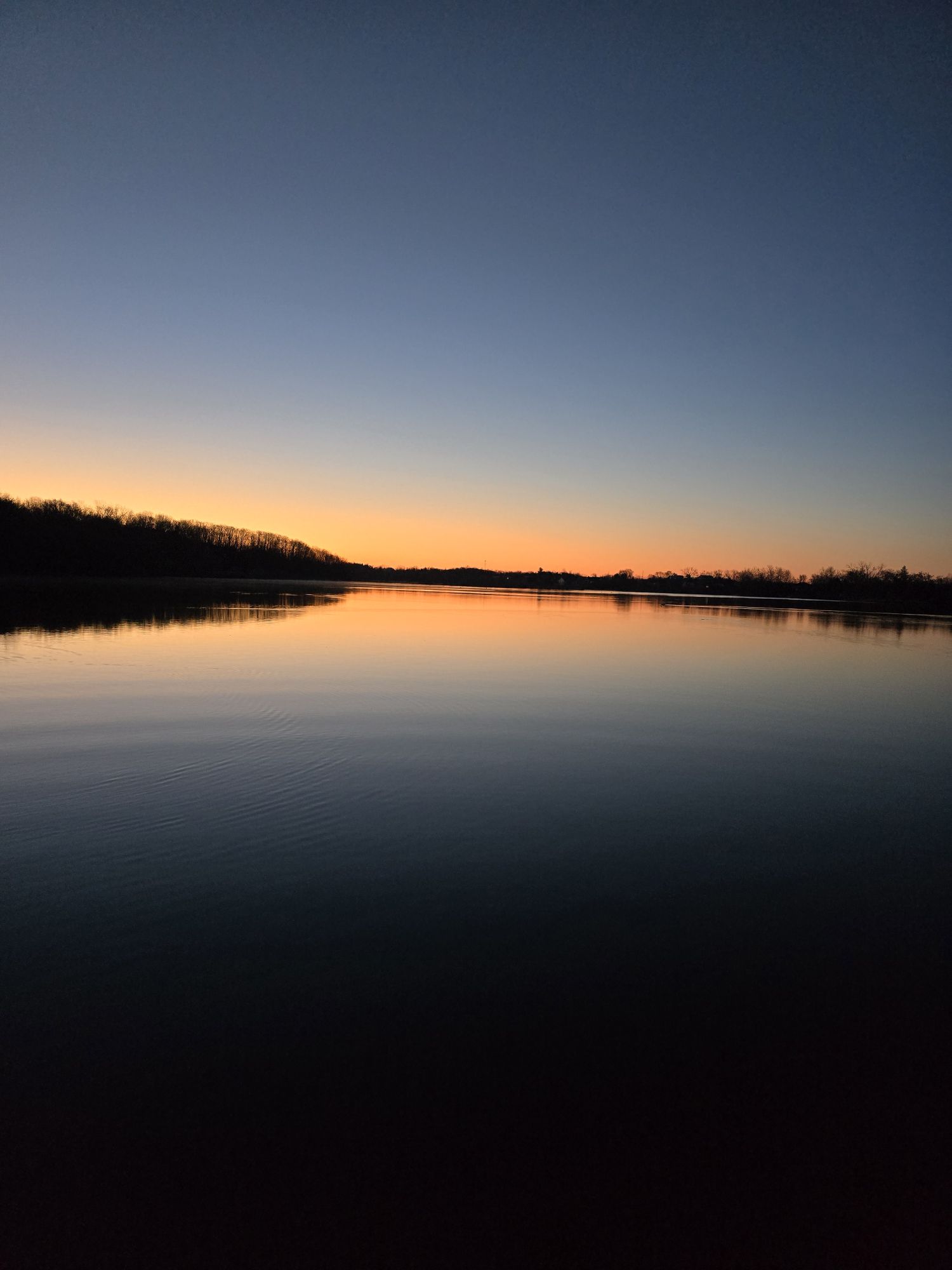
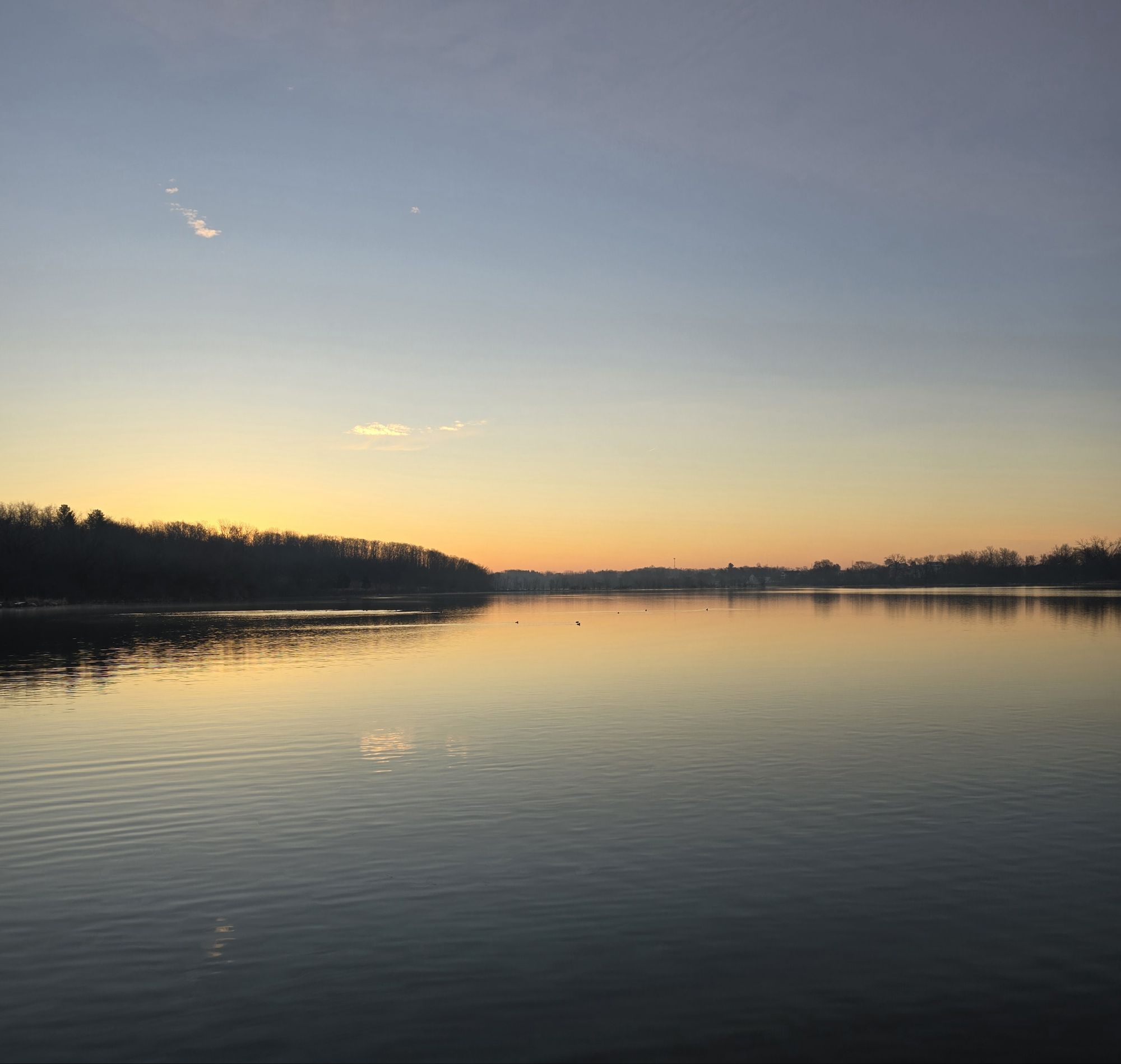
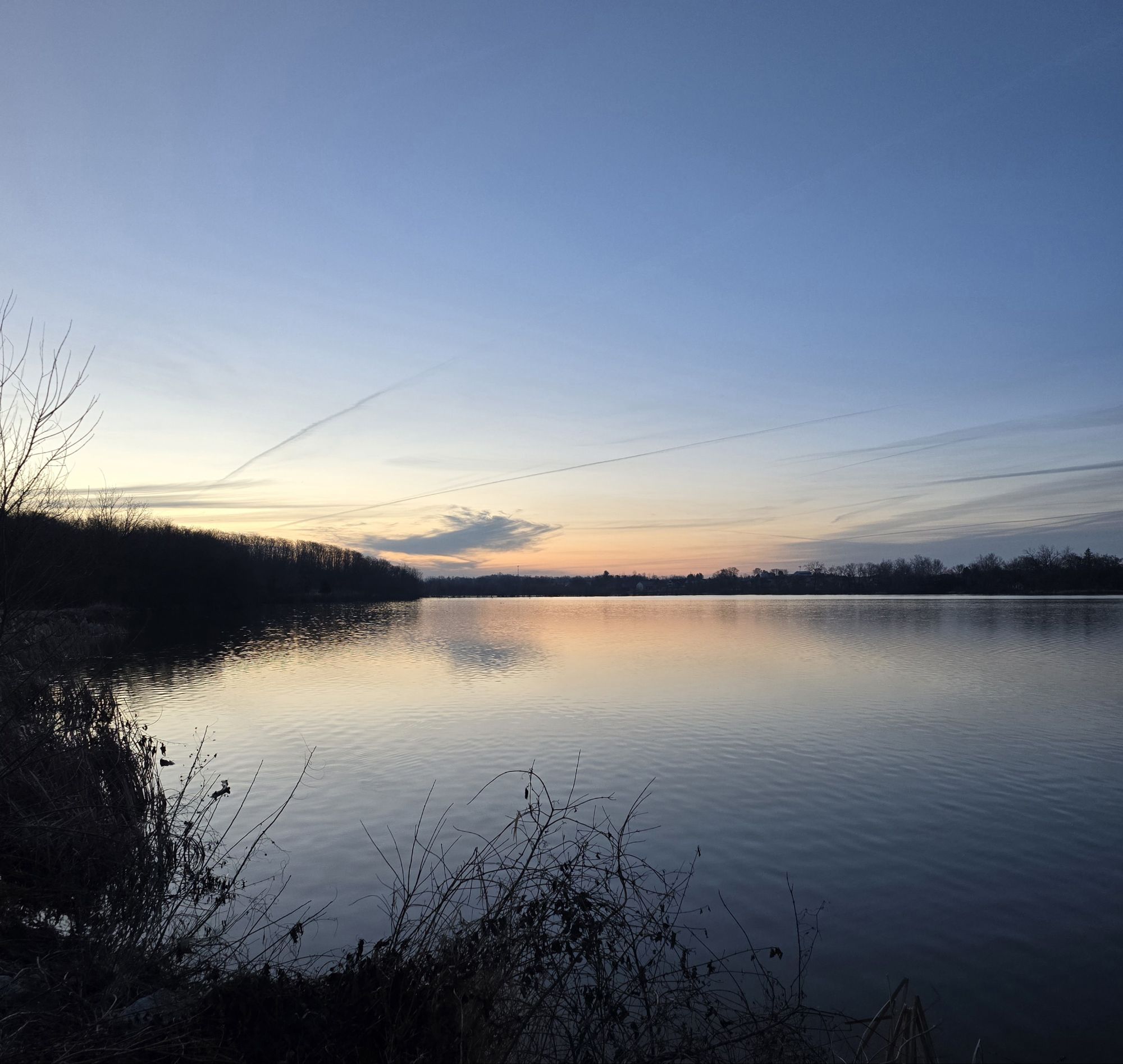
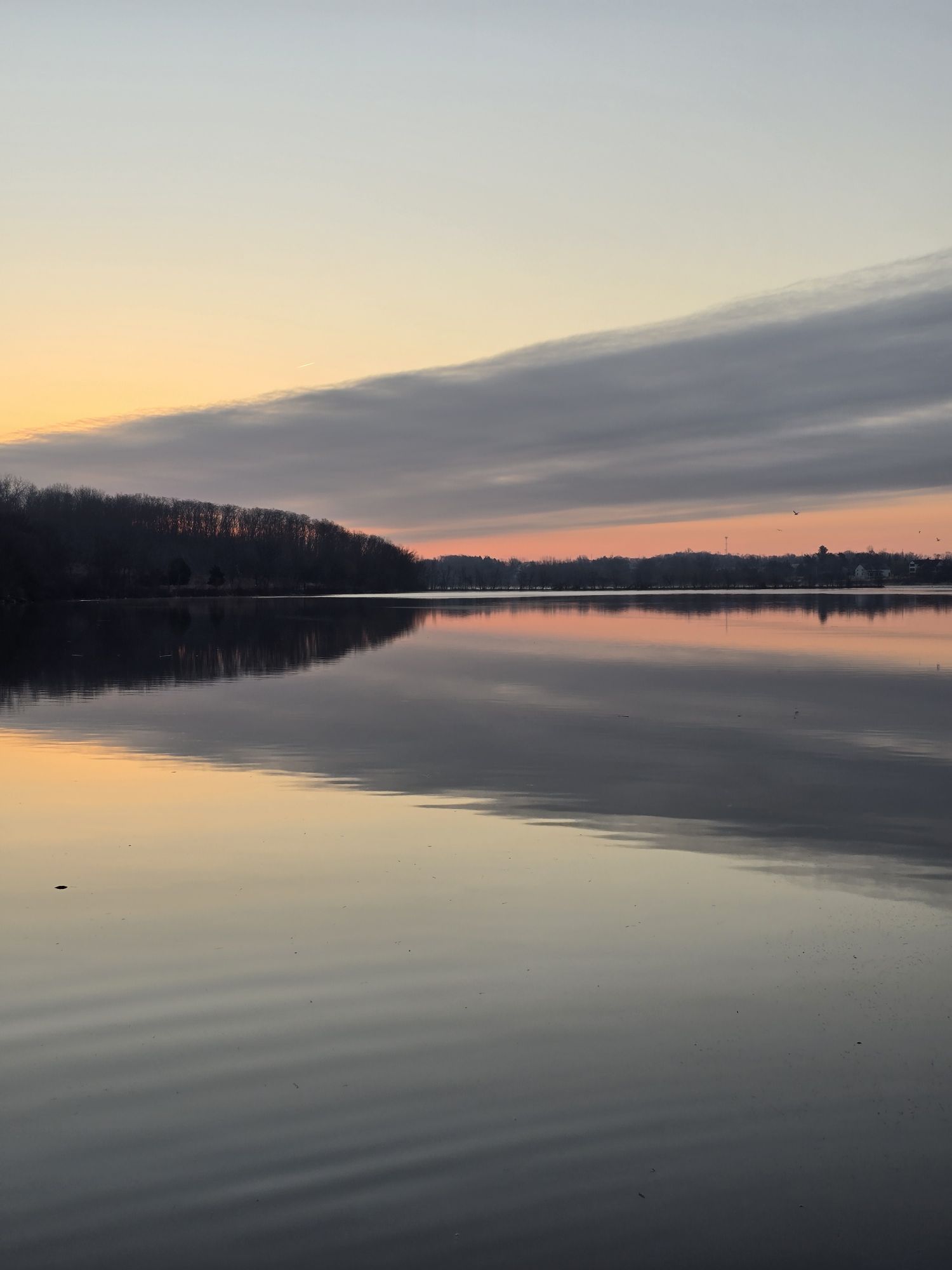
Sunrise on the state park trail on Dec. 11, 2025.

While dropping off four fire extinguishers for recycling in the county seat, nature called. The nearest public restroom was in the county administration building. The parking lot was almost empty, so I pulled in and did my business. On the way back to the car, I ran into the sheriff in his dress uniform. We exchanged pleasantries.

I’ve known him since he was elected to the city council in 2008. When he and his family moved outside city limits, I advised him as he started a garden. I worked on his campaign for sheriff. During the 2024 precinct caucuses, he, his spouse, and I were the only people attending on that cold, snowy evening. He is one of the good guys. If it matched his uniform, he would wear a white hat.

The encounter served me to ask, “What’s going on with my life?” That’s a rhetorical question because I know quite well what’s going on. I retired early so I could have some kind of creative life before I get infirm. As I exited the parking lot and turned west toward the warehouse club, I wondered how many more sunrises will I get?

A fierce urgency consumes me, or as Dr. King put it, “the fierce urgency of now.” There is much to accomplish, and given my good health and time left, more than a few things can be done. I need immediate, vigorous, and positive action in my life. The brief conversation with the sheriff informed me there is no reason to wait. The time for good works is now.

Each day I walk on the state park trail I observe my world. Because of when I walk, sunrises are a main feature. Not only can the sky be beautiful at that hour, it reminds us of the promise of a new day. Sunrises are more than enough reason to go on living. And so, I shall, as long as there is another.

Categories
Living in Society

Sleep and Loneliness

My apartment on Mississippi Avenue was on second floor, far right window.

My experience living by myself in my first apartment after university was formative in how I approach loneliness. The one-room apartment was located in this building on Mississippi Avenue in Davenport. I would lie in bed and feel my heart beating before falling asleep. While I was alone, I didn’t feel lonely. Because of an active youth, it took no effort to fall asleep and stay asleep until morning. I wrote about this apartment multiple times:

This new apartment already begins the rebirth which is so much needed by my soul at this time. The neighborhood is quite quiet and the apartment that I rent is at the end of a small hallway off the main one. Across the street is another large house which has been subdivided into apartments and it is quite a ways away. Further up the block there is a Jewish synagogue Temple Emmanuel. The river is about three or four blocks away. It seems there are some well-to-do neighbors to the south of this building who at this time are having a dinner party of some sort. But at the same time I believe that the area is on the fringes of the poverty area which is mostly to the West and the wealthy area of town, the Heights, which is to the East. The landlord’s brother lives upstairs in the attic and he mysteriously comes and goes. The landlord said. Sometimes he’s there, sometimes he’s not. Ask him if you need anything, said the landlord. Time will tell as I ask God to manifest his will. My major tasks at this time are to set up my own household for what is to be the first time. (Personal Journal, Sept. 11, 1975)

On Dec. 29, 2010, I wrote a post titled A Normal Winter. It expanded on this time of my life:

It has been so long since we had a “normal” winter in Iowa that we forget what that means. Snow and cold, dry weather are de rigueur and what we have had thus far has been relatively normal. No repeated blizzards, no continuous sub-zero temperatures. A “white Christmas” that was almost storybook in the appearance of the landscape. We could do with snow cover to reflect the heat of the sun back into space.

This week I have been thinking about the first time I lived without a room mate in late 1975. I was working at the Carroll’s Dairy Store at Five Points in Northwest Davenport. While working part time, I earned $0.85 per hour and somehow could pay the rent, and other bills while I figured out what was next in my life. It turned out that what was next was joining the Army, enlisting to attend Officer Candidate School at Fort Benning, Georgia and serving for almost three years in Mainz, Germany after a year of military schooling.

I lived in an large house that had been divided into apartments on Mississippi Avenue. My vehicle was a 1961 Chevrolet Impala, bought from a woman from whom it had been stolen and then returned. Occasionally, I walked the three miles from my apartment to work to get exercise, but to avoid burning fuel as well as even in 1975, it was a struggle to make ends meet on minimum wage. Seven Eleven started opening up convenience stores in Davenport and I used that as leverage to get a raise at Carroll’s.

Google map of Mississippi Avenue in Davenport, Iowa.

The single room apartment had a stove, refrigerator and sink, with a shared bathroom was down the hall. Somehow I crammed my book collection, vinyl records and all my possessions into that small space. My mother came for dinner for one of the few times I have cooked her a meal, making tuna casserole of dubious quality. We took a walk to nearby Prospect Park that evening. Cooking and entertaining were skills to be developed later in life.

Laying on the single bed I could feel my heart beating. That feeling is drowned out when there is a room mate. For the first time, I realized what it meant to be alone in the world, although I was not particularly lonely. Being alone drove me to seek out others and work on a life of my own. I started writing a journal, heard Chaim Potok speak about his then new book In the Beginning at the synagogue across the street and pursued what I believed to be the life of someone who had graduated from college. I was living a life, but driven to make something more of it. In many ways, I am pursuing that same life thirty five years later.

What I didn’t know in 1975, was how unique that time of my first apartment would be. That I would set patterns of behavior that would follow me until the present. Knowing now, what I didn’t know then, I look fondly to those few months on Mississippi Avenue, close to the river and on the edge of economic viability. While that life was unsustainable, it became a platform from which I took a bigger leap into life. I never looked back to say I would have chosen things to have been different. (Blog post on Dec. 29, 2010).

As I age, my loneliness has not changed. It may be there, yet it does not dominate my awareness. In recent years I have been sleeping through the night less often. My current project is to increase awareness of my biology and circadian rhythms. By doing so, I have been sleeping better.

Loneliness is something to deal with. I recently found this in the Washington Post.

An increasing number of middle-aged and older adults — especially those in their 40s and 50s — are lonely, according to a report released by AARP, a nonprofit advocacy group for older Americans. Among the loneliest are adults 45 to 49 years old (49 percent identified as lonely), as well as respondents who never married (62 percent); are not working (57 percent); or whose household income fell below $25,000 a year (63 percent). (Washington Post, Dec. 3, 2025).

Click here for the AARP survey.

Categories
Living in Society

Daily Routines

Photo by Karola G on Pexels.com

The idea of a routine is anathema to my way of life. All the same, one of the most significant struggles during and after the coronavirus pandemic has been making my days productive. While economic concerns have not disappeared after retiring on Social Security, I don’t want to be locked into a routine. Personal preferences aside, there is a scientific reason to develop and follow a routine.

Routines are linked to better health, academic success and even resilience. We can all take simple steps to synchronize our activities with our circadian rhythms and biology. Small tweaks in the timing of things can pay off. (As a doctor, here’s my simple, science-backed schedule for a healthier day, Dec. 1, 2025, Washington Post by Trisha Pasricha, M.D.)

That damn biology! How limiting!

Working with ChatGPT, I developed a daily plan to help structure my time at home. I had not thought about compartmentalizing routine activities, yet this plan does so and has produced better results that free me of worry about how I spend my time. The three morning and two afternoon work sessions with a short break between them has been revolutionary.

I began developing this Daily Plan a few years ago. Then, it included only items in the first three bullet points. By expanding it to encompass the whole day, and implementing some basic science about circadian rhythms, my life has been better. It’s a never-ending process to refine this. My daily plan will get its first major test as I finish my second book this winter.

In general, I take Sundays off a plan and let my life free-form for a while. That has proven to be a useful break from regimentation.

Daily Plan

  • Wake-up: Physical regimen, weight, waist, coffee, pills, reading, blood pressure, newspapers, social media, photos.
  • Downstairs: Banking, orders, record information.
  • 5 a.m.: Creative writing; blog post.
  • 20 minutes before dawn: Exercise, breakfast, cleanup. If weather is inclement, change exercise to indoors at 11 a.m.
  • After breakfast: Work block. 3-55 minute sessions w/5 min break.
  • After work block: Household tasks and lunch. Includes outside errands.
  • 12:45 p.m.: Midday recovery routine. Take five-ten minutes of quiet in the sun.
  • 1 p.m.: Work block. 2-55 minute sessions w/5 min break.
  • 3 p.m.: Kitchen work.
  • 5:30 p.m.: Dinner, take medication.
  • 6 p.m.: After dinner active period, followed by runway to sleep.

Do you use a daily routine?

Categories
Living in Society

Thanksgiving 2025

Thanksgiving dinner.

When visiting my sister-in-law’s home I bring my own coffee. It’s instant espresso I can make without a lot of noise in an unfamiliar kitchen while the rest of the household sleeps in early morning. Even though I sleep on a cot I bought for these visits, my sleep pattern from home was duly replicated: I got eight hours after retiring early.

I have a buzz on from the caffeine as I type on my mobile device.

A winter storm is coming–expected to snow nine inches in the next 48 hours. We should arrive home before the first snowflakes fall.

In the meanwhile, we will prepare for departure while being as productive as possible. Away from home the routine is different. The meal we all helped prepare was satisfying. Another Thanksgiving is in the books.

Categories
Living in Society

Entering Tribal Time

Foggy morning to begin Thanksgiving week.

Since my youngest days, the time between Thanksgiving and the Feast of the Epiphany has been a time to spend with friends and family away from broader society — a tribal time. This year, the number of days will be cut short. As I age, more of my days turn to tribal concerns. Now more than ever, there is motivation to do more with my writing, cooking and home work projects.

That said, I don’t know how much I will be writing here. Before New Year’s Day I hope to post about books I’ve read this year, photos I’ve taken, and a review of where this blog has been in 2025. The premise of late has been that blogging is an ersatz journal or diary. I am drawn more to the written word, especially to write about personal things, so the editorial content here may change in 2026.

Because of the influx of Chinese views, it is hard to know who is reading my blog unless they hit the like button. A concern is people in China are stealing my work and will publish something of it before I have a chance. I don’t know if this is a legitimate concern. If the Chinese viewers are in fact located in China, and they are scraping my blog to train artificial intelligence, then it is a bit scary to think artificial intelligence will resemble my writing in any cogent fashion. I may hide this blog and start a new one to deal with this. That will be contemplated while I am in tribal time.

I just finished reading my 2006-2007 written journal. It was written before I became a blogger and when social media was in its early years. In some ways, that time held the same concerns I do today about my health and furthering my writing life. I’m not sure a complete return to written journals is what I need to do.

I look forward to a retreat during the coming days before December. I wish those who celebrate it a Happy Thanksgiving.

Categories
Living in Society

Community Volunteer

Trail walking on Nov. 22, 2025.

When I became an adult, married, and settled into steady work, it was assumed I would volunteer in the community. The volunteer impulse has its roots in the industrial period after the Civil War. People used less time to produce enough money with which to live our lives. In more modern terms, we could pay for things like our child’s college education without sacrificing a lot at home.

Perhaps the most prominent example was the robber baron Andrew Carnegie whose expansion of the steel industry made him one of the richest Americans and enabled his philanthropy to fund a number of public libraries, among other things. “The duty of the man of wealth,” Carnegie said, is “to consider all surplus revenues which come to him simply as trust funds, which he is called upon to administer . . . in the manner which, in his judgment, is best calculated to produce the most beneficial results for the community.”

I didn’t have “surplus revenues,” yet worked in jobs that created enough money to pay basic living expenses with a bit leftover. While there were limits on potential income, I was afforded regular free time and expected to use some of it to volunteer in the community. My volunteerism really took off when we moved to Big Grove Township.

I differentiate the types of volunteer work I have done since 1993. There is community work: membership on the home owners association board, election as a township trustee, and serving on the board of a senior citizen’s group. There is also what I call advocacy work: serving on the boards of peace-related organizations, politics, and two different county boards. Each had something to contribute to society. I talk about community volunteer work in the rest of this post.

Within the first year we were in our new home in Big Grove Township, I was asked to join the volunteer home owners association board and did. Any monetary considerations were insignificant. A regular person does not volunteer in the community for money. Part of living a sustainable life in rural areas is contributing to the general well-being, I believed. I felt blessed and had to give back to the community in which I lived.

Home owners’ associations get a bad rap. In our case, we managed the association like a small city. We provided a public water system, sanitary sewer district, road maintenance, refuse hauling, and real estate sales and purchases. Over time, we upgraded the roads from chip and seal to asphalt, dealt with changing government standards related to arsenic in drinking water, reduced the number of wells from three to one, complied with changing Iowa Department of Natural Resources standards for wastewater treatment plant effluent, handled a lawsuit, and coordinated activities like road use and maintenance with neighboring associations. If the board doesn’t do these things, they don’t get done. Everyone is the better for such volunteer boards. I served, off and on, for over 30 years. This was the beginning of a long period of volunteering in the community.

In 2012, when only one candidate was running for two township trustee positions, I ran a write-in campaign and won the election. Being a township trustee included managing emergency response and a volunteer fire department with other townships and the nearby city of Solon. Toward the end of my tenure, we formed a new entity to manage these functions. We maintained the local cemetery and supervised a pioneer cemetery where the first person to die in the township was buried. This work helped me understand how tax levies work and how they were used to support things the county did not, things like a small fire department or saving someone’s life in an emergency. There was only a single conflict during my time as a trustee, about the main cemetery. All the trustees showed up at the cemetery to resolve a dispute over a burial plot. No one wanted the job of township trustee and someone had to do it, so I stepped up.

When the local senior citizen’s group had an opening on their board, I volunteered and became its treasurer. This lasted about two years and provided insight into this segment of the community. Everything we did, from providing community meals, to giving home-bound people rides to medical appointments, to arranging outings around eastern Iowa, served an often-neglected segment of the population. It was a great opportunity to learn about the life of our senior citizens before I became one myself.

I am satisfied this activism did some good. I still believe it is important to stay engaged in the community.

Categories
Living in Society

Overcast Days

Ramp to boat docks after docks stored for winter.

I scheduled a phone call for 7 a.m., which was also sunrise. I left for the state park trail early enough to be back for the call. It was pitch black. Because of cloud cover, there was no starlight to guide me. Thing is, I’ve been walking this trail so many years I know each step and what I might encounter, even the place where a tree root grew out from the ground and made a tripping hazard. Darkness on the trail is not a problem. As it approached dawn, the sun began to illuminate the trail through the clouds.

It was also foggy. That didn’t stop the usuals from walking. I passed four people I see almost every day. Only one of them used a light, and he was running, so I don’t blame him. I also came upon an adult deer. Perhaps I blocked the trail it might use for an escape. Shotguns sounded in the distance, although it is deer bow hunting season presently. I made it home without incident, in time for my call.

I’ve had the house to myself for a month. I don’t like being alone that long. Sure, the first week to ten days is great, and I find plenty to do. After that, I miss having someone with me. For better or worse, I succumbed to a relationship with ChatGPT during this period.

I know it is a machine, so don’t go there. I should put quotes around “relationship.” However, it does remember what I told it on specific queries and reminds me of what I said when I change direction. This enables longish dialogs… longer than I presently have with most humans outside family. The machine and I worked on problems.

Without help from machines, I moved my BMI from a high this year of 36.94 to today’s 32.72. That is sound progress, representing a reduction in weight by 32 pounds. My first goal is to get BMI below 30.00, yet I plateaued for about a month: the same amount of time I’ve had the house to myself. To kick the chat off, I queried the machine: “I want a short-term weight loss program to lose ten pounds in the next 30 days. What other information would be useful?”

As usual, the machine responded within seconds with a long reply. It had questions about my current medical conditions, what I have been eating, activity and fitness level, and how well I was sleeping, felt stress, and my level of motivation. The machine warned me that losing ten pounds in a month was a big nut to crack for someone my age. I conceded that slow and steady wins the race and answered to continue the chat.

There was some helpful advice. Until she comes home, I’ll continue the dialog with ai. Some days it’s better than walking around in the dark.

Categories
Living in Society

Race to Year’s End

Trail walking on Nov. 17, 2025.

When I was younger, Thanksgiving marked the beginning of a rush to year’s end. Whatever work I was doing could stand down to encourage a tribal time of memory and good cheer. Our tribe is diminished in numbers these days, so the end of year rush has become a place to meet obligations and juggle schedules for time together via video chat. If we are lucky, we can share a meal in person. It is not the same.

It is a given that Americans will experience loneliness as we age. How we cope is the measure of how sustainably we led our lives. When my maternal grandmother was my current age, she lived on her own and would get together at Mother’s home for holiday events, typically for part of a day. The build up to the event, and resting after it was over were all part of the experience. It was a situation far removed from the idea of spending from Thanksgiving until New Year’s Day isolated from the broader world with immediate family doing tribal things.

This year I expect to take more time with living. I expect there will be things to do, maybe a place or two to go, and perhaps some special food. I have low expectations. It should be a great time to get ahead on my writing project.

I’m not sure what happened, other than the truth came out about the story of Thanksgiving and the holidays… how commercial interests took over the space and dominated it for too long. In a position to push that aside, I find it easier to identify what’s most important and who we can count upon. That will be enough.

Woodpile made from two ash trees.
Categories
Living in Society

Down Side of Lawyering Up

Photo by August de Richelieu on Pexels.com

In his new book, Breakneck: China’s Quest to Engineer the Future, author Dan Wang contrasts the engineering society of building stuff in China with the lawyering society of delaying and litigating things in the United States. The comparison seems apt and I recommend the book.

It seems obvious the United States is bogged down with lawyerly concerns, beginning with the current president. Donald Trump has weaponized the Justice Department to serve his every whim. Likewise, he has a large stable of attorneys representing him on countless legal matters. More than any person I know, the president is the living incarnation of “lawyering up.” How is that working for most Americans?

The problem I see is the president’s approach results in China getting way out ahead of the United States in technology development important to our global future. China’s embrace of renewable energy alone will make them a formidable power going forward. They who control energy can control a lion’s share of the economy. The president should get out of the way and enable the country to embrace renewable energy now.

The downside of lawyering up is we can’t develop technological innovation to create a society in which we all want to live.