Categories
Kitchen Garden Writing

Green Washing and a Local Food System

Spring Onions

Wind came up yesterday and would not relent.

I planted onions and cilantro in the garden, transplanted some seedlings to larger pots, but that’s about it. The septic tank service arrived and pumped our solids tank while I trimmed the lilac sprouts from the space in front of our house.

Constant wind beating against me took its toll.

The first of five spring shares was ready yesterday afternoon from our CSA: Bok Choy, Koji and Broccoli Raab.

Both CSAs where I work are running behind due to weird spring weather. Carmen Black’s newsletter summed up where we are nicely:

First of all I want to thank all of you for your patience and understanding in starting a week later than planned! As I’m sure all of you can guess this weather has been very difficult to deal with on the farm. Two weeks ago it snowed, and today it’s eighty degrees! In addition to the swings in temperature its been the driest April on record, which means that everything we’ve finally been able to plant has needed to be watered immediately. Through all of this weather stress I’ve been very grateful to know that you all are so supportive of this farm, and will understand the challenges we’re facing in organically growing local veggies this spring.

First Seasonal Salad

Dinner was a salad to go along with pasta last night. Three kinds of greens and this year’s spring onions along with odds and ends of cold storage vegetables. It’s why we invest our time and resources in a food ecology.

The words “local food” mean less today than they did, and not what we thought they meant. I discuss local food with farmers and gardeners and I’ve heard the usage it is a form of green washing. Is “local food” a form of green washing? Maybe.

I know the produce harvested in our back yard is local food. With each passing season I see less significance. We want food we serve at home to be fresh, tasty and pleasurable. When we take a dish to a potluck, using garden produce gives a personal touch to a classic casserole. A kitchen garden like ours serves those things well.

“Local government can make policy that makes it easier to grow and consume #LocalFood,” Johnson County Supervisor Kurt Michael Friese posted on twitter.

If anyone is familiar with the local food system, Friese, a long-time restaurateur and food writer is. He is well positioned to make and implement policy that supports local food. But what exactly is that?
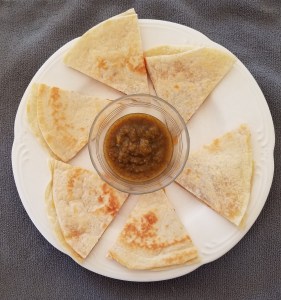
Breakfast Quesadilla with Homemade Salsa

Early on, local food referred to how and where food was sourced. There was talk about mitigating “food miles.” As I explained in a 2013 post, “Food distribution and related costs are a social construct that makes transportation seem inexpensive, or irrelevant to what we find in grocery store aisles.”

Where advocates of local food may have gone wrong is using the idea of food miles as a place holder for complex, flawed arguments. Costs are costs, and a producer has to recover his or her financial production costs when the consumer buys an item. Using any complex argument, including food miles, as a place holder seems a diversion. Such talk belongs more appropriately in a sales and marketing context as a form of puffery.

Read my entire set of arguments here.

The better framing for “local food” is to know the face of the farmer. Two years ago I wrote at length about what it means to know your farmer and practices they use. Here is the salient point related to green washing:

Driven in part by mass media, consumers are concerned about a wide range of food issues that include contamination with harmful bacteria; dietary concern about consumption of carbohydrates, fat and sugar; the way in which plant genetics are modified to improve them; and more. Partly in response to media campaigns, annual sales of organic food exceed $30 billion in the U.S. (USDA). The increase in organic market share from national advertising campaigns is significant. If you get to know your local food farmer, what you may find is they benefit from this marketing, but their customers come and stay with them because of a personal relationship with the farmer.

Local food is not exactly green washing, which is defined as “disinformation disseminated by an organization so as to present an environmentally responsible public image.” However, there is a lot of conflicting and sometimes contradictory information related to food. Plant genetics alone set off a firestorm of media and organizational controversy and spawned a new food labeling process under the aegis of the Non-GMO Project. Simply said, it’s complicated.

If a definition of “local food” is elusive, how our county defined a local food system may be as good as it gets:

In Johnson County we see the need to localize our food system – and we are working to create a healthy, intact system that lessens resource inputs, promotes worker’s rights and preserves the natural environment.

Yesterday’s wind blew a single-use plastic bag into our Ash tree where it got stuck and is flailing in the wind. Part of me is tempted to leave it there as a symbol of all that is wrong with our society. Then again, if I want it fixed, I’d better do something about it. So it is with the local food system.
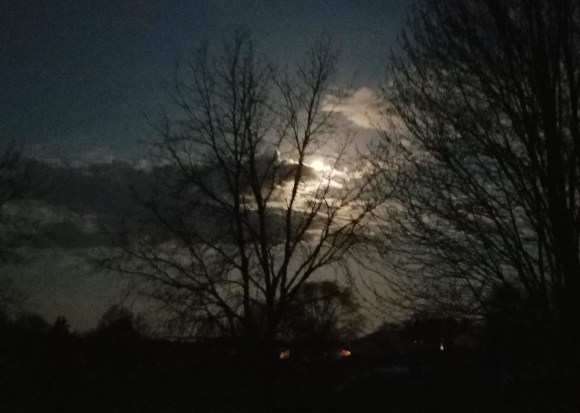
Full Moon Setting Behind Clouds

Categories
Home Life Living in Society Milestones Social Commentary

Layered with Sadness

Sundog Farm

In our neighborhood a preteen found his father collapsed in the yard and ran for help. Despite best efforts by his partner of 30 years, emergency responders, and staff at the University of Iowa Hospitals and Clinics, he died Sunday. The funeral is Friday.

A layer of sadness blankets places I go.

It’s not just the death of a neighbor. Cold weather is delaying farmers from getting into the field. Tension permeates everything. We laugh but avoid the reality that something has to give — perhaps delaying the spring share until plants grow. Perhaps something else. We are ready for the weather to break.

Temperatures today are forecast in the low thirties… again. It’s April 18 for goodness sake! The garden should be a third planted by now. It has been difficult to spend time outside, bundled up to keep warm. It’s not the cold as much as it is a nagging hesitancy to venture out into the cold spring.

When we moved to Big Grove, before we put curtains in the living room, I sat on the couch after a long day and watched airplanes make their approach to the nearby Eastern Iowa Airport. Even though my wife and daughter were nearby I felt alone and on my own from time to time. I picked myself up from the couch and engaged in a diverse life. Every so often the quiet in the house is overwhelming, even today. I feel isolated from what matters most. The feeling passes.

I had a physical examination in town, and my arms ache. In my left shoulder I got a pneumonia vaccine and in my right a shingles vaccine. Both require boosters down the line. I had blood drawn for lab tests by a nurse I’ve known more than a dozen years. Achy doesn’t really describe it. I removed the three bandages and piled them up on the night stand this morning. The shingles vaccine is doing its job making me feel sore and unsettled.

Doctor did a depression screening. I passed, that is, I don’t believe I’m clinically depressed… just a bit saddened by the layers of crap we have to live through. It’s partly politics but it’s more than that. It’s as if everything with which we marked boundaries of our lives is being razed, surveyor pins pushed out of place by construction’s bulldozers. All we can do is put the pins back and start over. That’s what I hope to do.

Eventually the weather will break and my farmer friends will get the crop planted. Visitation for my late neighbor is tomorrow. I’m to pick up a sympathy card and a couple of restaurant gift cards to give the family a chance to get out of the house for a while. We all need a break.

The layer of sadness is palpable. At the same time as long as we pick ourselves up and go on living we’ll be alright. at least that is what we hope.

Categories
Kitchen Garden Writing

Spring Burn Pile

Spring Burn Pile

Part of yesterday was spent outside — in the garden, working compost, cleaning buckets, collecting the bits of drainage tile used to support celery plants, tending the garlic, planting turnips and radishes.

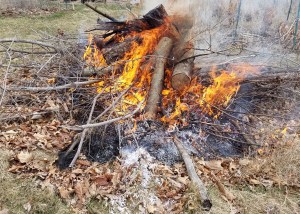
Using a bag of shredded office paper and a match, I started the burn pile created in the aftermath of an unusual wind storm last year. An arborist cut down the big branches and I sawed them into smaller logs and branches. The wood was dry and burned quickly even though it was covered with snow a couple days ago.

The first spring burn pile marks the beginning of gardening season.

I didn’t connect the garden hose as we are expecting freezing temperatures again this weekend. There is plenty of moisture in the ground to give the seeds a start.

A week ago I got a haircut. Partly it was too shaggy and in my eyes while working outside at the home, farm and auto supply store. Partly it was about casting aside the experience it represents for a new start.

My retirement March 16 has been something of a crash landing. Long anticipated, I know the major themes — writing, gardening, farm work, home maintenance and community organizing. I’ve had to add a need to deal with my aging frame and life systems. I made an appointment to see a medical doctor for a physical next week.

Even though I have more time, there never seems like enough to get what I want accomplished. With that in mind, I’ve come to believe what I said in February, that low income workers and retirees can’t afford social media. I posted this on Facebook this morning:

I’ve decided to end my relationship with the Facebook application on or about April 30. I joined in 2008 to follow our daughter and she deleted her account a couple of years ago. It’s not you fair reader, it’s me.

I listened to Mark Zuckerberg testify to Congress yesterday and his plans for dealing with public issues here. I have no interest in artificial intelligence reading my every post to determine if it is worthy according to Facebook criteria.

That said, I will miss the exchanges, likes and shares and appreciate your interest in what I’ve been doing. Facebook has been a creative outlet for me and I plan to channel those impulses elsewhere.

You are invited to continue to follow me elsewhere. I plan to keep my twitter account @PaulDeaton_IA and my WordPress account pauldeaton.com. If you are on WordPress click the button on my home page to add me to your reader, or click on the Follow Via Email button if you are not.

So that’s it. Hope to see you around… literally.

The burn pile was hot and I had to keep my distance while using a hoe to move partly burned branches to the top of it. By supper time it was a pile of white ashes with minerals returned to the ground and carbon released into the atmosphere. I plan to add another garden plot where the burn pile was.

We don’t know what tomorrow will bring. A burn pile reminds us all of the natural world is in transition. In a burn pile there’s no judgment, just the heat of released energy and beautiful, ever changing orange-yellow-blue flames.

In this moment that’s all we require to sustain ourselves.

Categories
Writing

Spring Reset

April Snowfall

We’re behind at the greenhouses.

The high tunnel is fully planted. The ground is too cold for transplants. Cooler temperatures retard growth of fledgling vegetable sprouts. There is no place to go with the trays of lettuce, kale and greens coming along. The greenhouses are full.

It made an easy weekend of farm work for me with 24 trays of soil blocks on Friday and 20 on Sunday, about half the usual volume.

My good news was after about four weeks, the celery seeds germinated! The depth of flavor of home-grown celery has become essential to our kitchen. Because I had given up on the first planting, ordered new seeds, and re-planted I was thrilled. I delayed planting pepper seeds as it is clearly not too late to get them started. Several inches of snow fell last night and dampened any prospect of gardening today.

What’s different this year is weather and work kept me out of the garden completely in late winter and early spring. In past years I’ve planted lettuce, potatoes, radishes, turnips and spinach by now. I’m past ready to get started. The cold temperatures look to break for a brief planting window tomorrow or Wednesday. I’m hitting the reset button on Spring.

Friends conversed about Facebook this weekend. So many want to delete their accounts. At the same time, we manage information and pages that make it seem important. We long for personal information posts and can’t give them up — a form of craving or confirmation bias. Our presence on the popular social media platform persists… for now.

24 days into retirement I’m not fully healed, but have bottomed out. I cleared the last hurdle of winter by filing our federal and state tax returns this morning. A path to creativity cleared of nagging concerns. Now for a slow, methodical climb to the light. A fall could be fatal. Hope springs if the season has not.

Daily writing is important. It provides a chance to work through wicked problems and understand, if not resolve them. It is also a chance to consider experience deeply. If this blog is a way of dashing off notes in the form of an electronic journal, I’m okay with that. I appreciate my regular followers and readers. There is something more. I’ve dedicated part of this new life to determining what it is.

On another day of waiting for Spring to break I’ll work at home and contemplate where I’m bound. Along with any view of the future is the baggage of a life lived. I’m not sure I need all that baggage any more.

Categories
Work Life Writing

12 Days But Who’s Counting

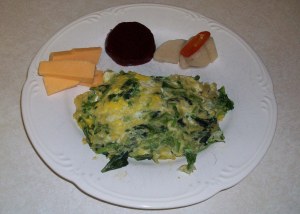
Asian Greens in Scrambled Eggs with Vermont Cheese and Pickled Bits and Pieces

After tangling with a schedule to reduce hours at the home, farm and auto supply store I concluded there were only three immutable weekly activities: writing (26 hours), paid work (16 hours), and farm work (12 hours).

Add an hour of prep time before work outside the home and these three activities fill 69 percent of available weekly hours. Everything else must fall in place behind these priorities. It is a rigid frame on which to hang everything else.

It’s already a 54-hour work week.

What’s missing is community organizing, the rest of food ecology, and home maintenance, all of which need to be squeezed into the remaining hours each week. Developing capacity to be more productive is part of this. It necessarily means doing better than using artificial stimulants or shoddy work in any activity area. It’s a plan.

Categories
Home Life Kitchen Garden

Late Winter in Big Grove

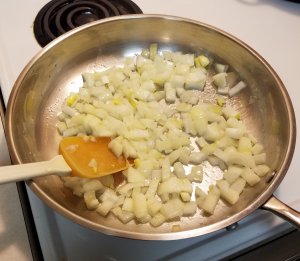
Sautéing onions for a casserole

It is time to use up fresh onions, garlic and potatoes, then rotate the canned goods so oldest jars are consumed first.

Winter means soup, casseroles, pasta and hearty meals made from pantry and ice box ingredients.

As the ambient temperature warms, we are ready to move into the new year’s fresh food cycle. But not so fast!

There are egg sandwiches, chili mac and soups to be made before spring buds.

I donned my LaCrosse rubber boots and toured the yard and garden.

The ground is too hard to plant lettuce. Garlic is not up. The only bit of sprouting green was flowers I transplanted from Indiana. Tips of green were frosted on those that emerged. A thick layer of sand lies on the side of the road. Time to sweep it up and save it for next winter.

At 13 days until the transformation of worklife, I’m spending time organizing time and tasks.

To be successful means purging old habits and developing new. The work seems much harder than it should be. While working at the home, farm and auto supply store I’ve developed some questionable habits around internet usage, resting and eating. They produced the current result, so they were not all bad. One only gets so many chances to start over.

There are two problems with my transformation. First, I’m limited to 12 hours per day of primary activity. Not everything I want to do will fit. Second, I’m not used to working 12-hour days. To get things done, I need to ramp up. The situation is complicated by keeping two days of paid work in the mix. We’ll find a use for the money, but I’ll also need to figure out how to get more productivity out of a day to meet overall goals.

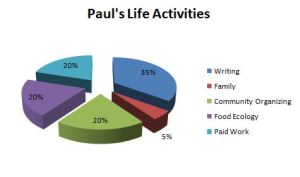
Paul’s Pie

Drawing the pie chart was fairly simple. Making that fit among rigid schedules of paid work, writing and farm work has proven to be challenging. Where I suspect this will end is with a hard schedule that includes writing, food ecology and paid work, leaving everything else flexible.

I’m committed to this now, so no turning back.

The week of the county party central committee turns into a session of drinking politics from a fire hose. As you can see in the pie chart, community organizing gets a 20 percent allocation of time and politics is a subset of that. I’ve limited myself to one social event per week and expect most of those to be related to politics for the next couple of months. I learned a couple of things:

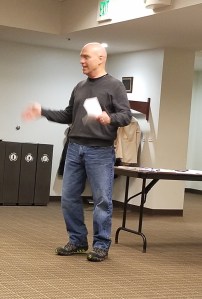
Rep. Dave Jacoby explaining plan to run 100 Democrats for 100 House seats.

Iowa House Democrats are planning to run 100 candidates for 100 seats in the midterm elections. We don’t usually run everywhere, so that makes this year different.

In the governor’s race, Democrats are working to win the primary. With seven announced candidates at the beginning of the filing period we’ll see if everyone files and if there is anyone else. It takes 35 percent of votes cast to win the primary. Cathy Glasson’s campaign is playing a side bet that the governor candidate will be chosen at the state convention with no one getting enough votes to win outright. The campaign claims to have won 30 percent of delegates at the caucus, which may or may not translate into 30 percent at the state convention after counties pick their delegates at the March 24 county conventions. 30 percent seems unlikely to win at the convention.

There are still too many geezers like me on the central committee. I’d gladly step aside and let someone else take my seat, but the truth is these women, millennials and newly registered voters who are supposedly playing a key role in the midterms don’t come to the meetings, don’t want the job. It’s a truism that flying at 30,000 feet, political strategists come up with all manner of demographic projections about the electorate. Our local elections of everyone up and down the ticket are made at a distance of six inches in front of our noses, rendering strategist musings moot.

Cold and frosty as the ground is today I can justify another day indoors to file our tax returns, work on community organizing and get caught up on everything else. However, it won’t be long before lettuce and potato planting. Next Sunday I start my first trays of seedlings in the greenhouse.

There’s everything spring brings and for which we yearn.

Categories
Writing

First Day at the Farm

First Day of Soil Blocking 2018 Photo Credit – Maja Black

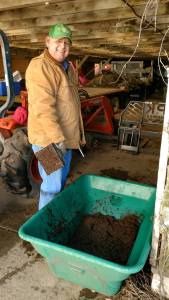
This is me soil blocking at Sundog Farm last Sunday.

Working at farms has been a spring ritual which helps me feel like part of a larger organization. The older I get, the more important that seems.

Farmers may seem isolated, but the farms where I work engage dozens of people in many roles. I met people from all over the world as a result of farm work.

It’s part of who I am and will be for as long as the relationships are sustainable.

It took about an hour of setup time as the water lines and hydrants remained frozen from winter. I settled on working in this doorway to the barn on top of a windy hill.

Once the lines thaw out, I’ll move to the germination shed.

Inside the barn, ewes were lambing and young ones kept escaping pens where they were isolated with their mothers from the flock. It’s a story as old as life.

Spring isn’t here yet, but I can’t wait.

Categories
Kitchen Garden

Garden is Planted, Dinner is Served

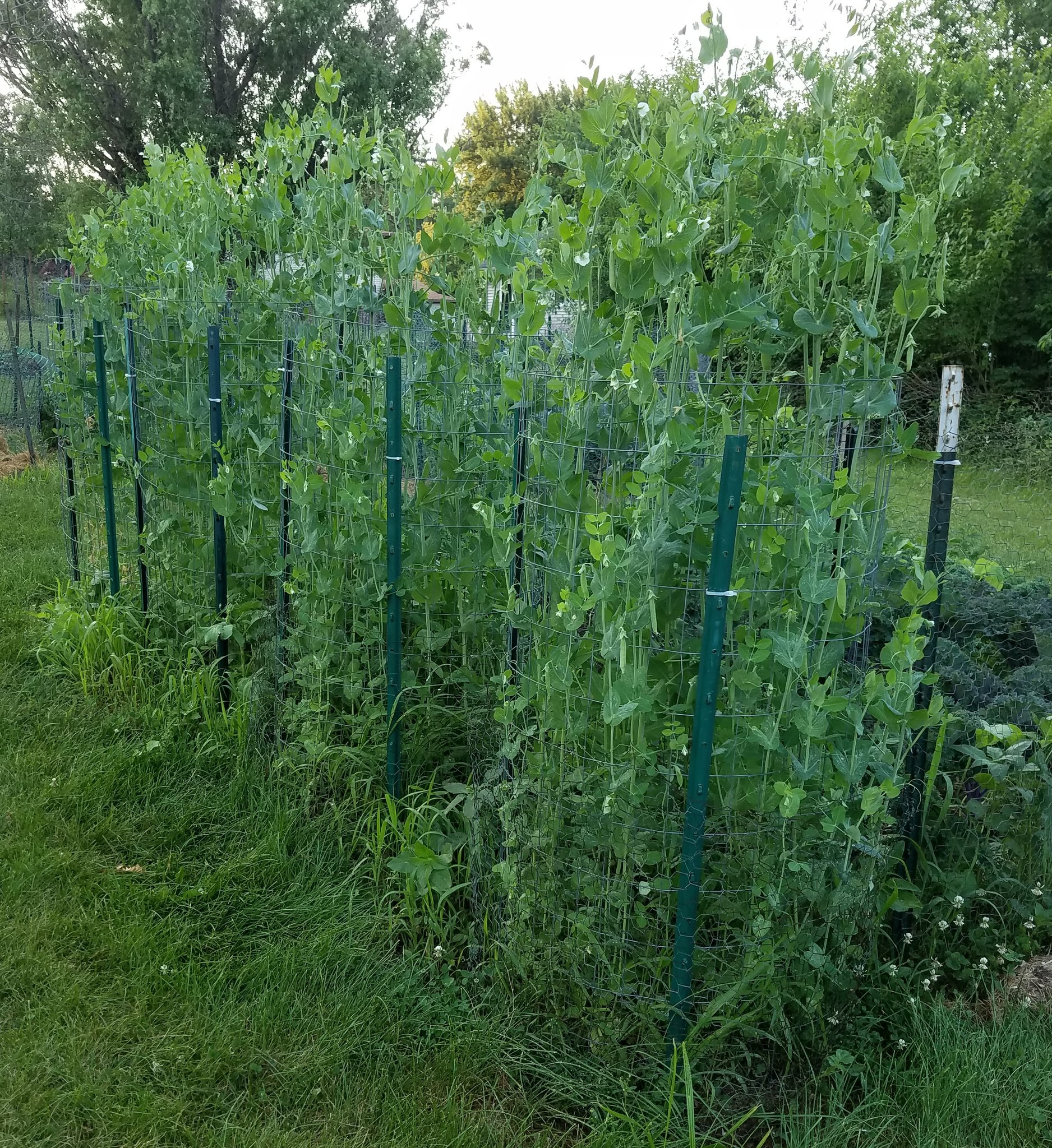
Six-foot Tall Sugar Snap Peas

Ambient temperature hit 91 degrees Sunday, about 20 degrees above historical average. The heat continues, drying the topsoil, creating want of rain.

An idea once held — the garden should be planted by Memorial Day — is outdated. As early crops come in, others will be planted. What’s more significant to yield than planting time is weeding, mulching — and with the heat, irrigation.

This year’s garden is four varieties of kale, sugar snap peas, radishes, beets, eight varieties of tomatoes, broccoli, three varieties of bell peppers, three varieties of hot peppers, winter and summer squash, basil, cabbage, collards, turnips, two varieties of celery, two varieties of carrots, six of lettuce, spinach, bok choy, daikon radishes, potatoes, onions, leeks, three cucumbers and of a pear and two three apple trees laden with fruit.

Our garden, combined with bartered shares in two CSA farms, will provide plenty of vegetables this summer. We should be set for a productive season.

Last night was what I had hoped for our kitchen garden.

I spot-watered plants that needed relief from the baking sun. Picking a turnip, I ate the small root and saved the greens. I picked a leaf of collards and headed inside to make this dish for supper.

Greens Hot Plate

Add high smoke point oil to a frying pan on high heat. Once the oil is hot add two cups thinly sliced Vidalia onions and season with salt, stirring constantly. (A pinch of red pepper flake would be a nice addition, allowing it to cook for a minute in the oil, but our cooking is capsaicin free until the finished dish reaches the table).

Prep greens — collards, kale, bok choy and turnip — by removing the thick stem and veins and tearing the leaves into bite-sized bits. Thinly slice the stems and add them to the onion mixture. Once the onions become translucent, add fresh garlic if you have it, although granulated works.

De-glaze the pan with vegetable broth. Stir and add the greens.

Add a quarter cup of vegetable broth and cover the pan to create steam. Once volume reduces in size to one third, remove the lid and mix the ingredients together. Re-season. Add a tablespoon of lemon juice. Continue gentle stirring until the leaves are tender.

In a large dinner bowl place a cup of warm rice. Using tongs, cover the rice with the greens mixture. Finish with thinly sliced spring onion, a drizzle of extra virgin olive oil and feta cheese. Season with salt and pepper to taste. Serve hot.

Categories
Environment

Green Up in Iowa

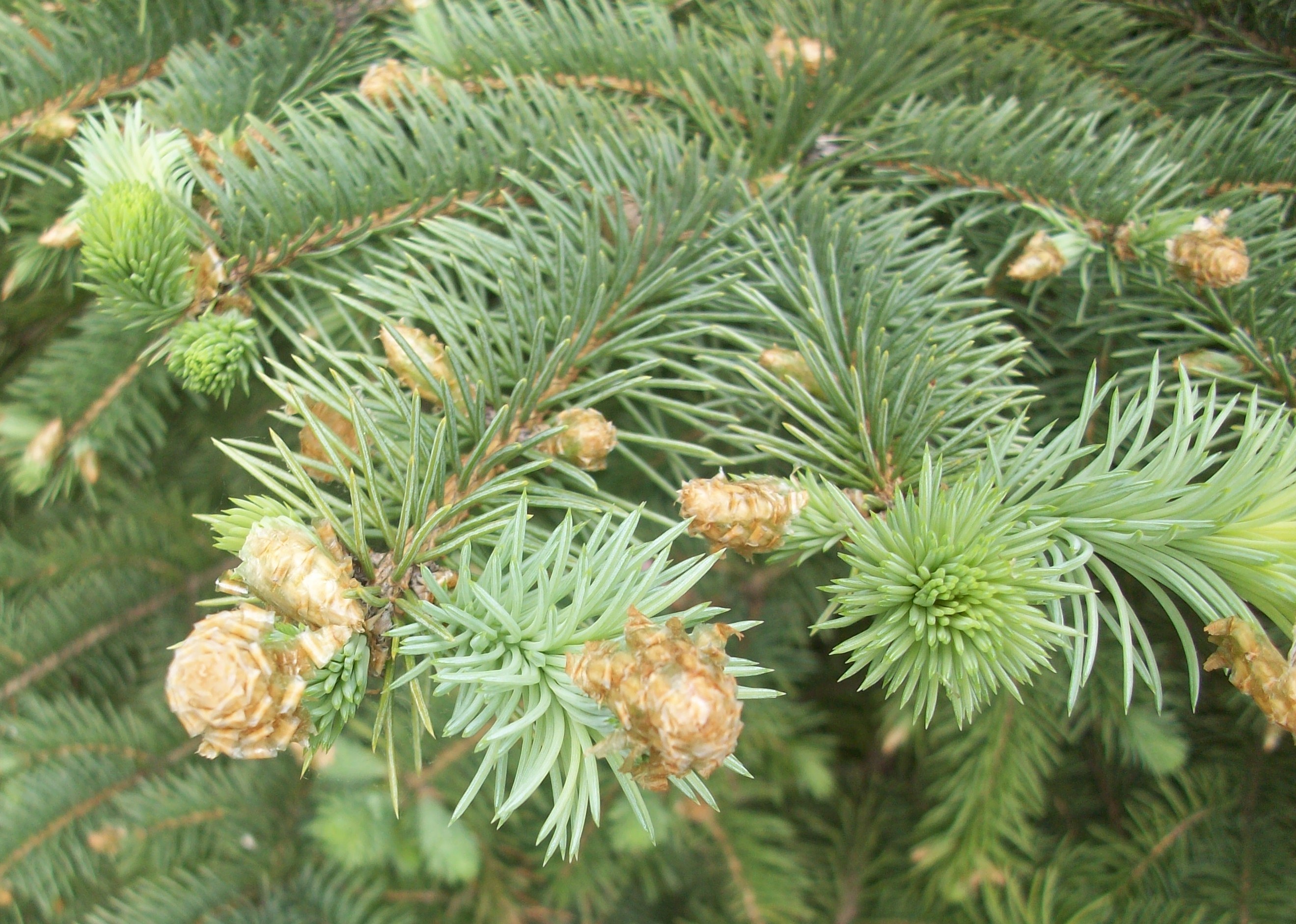
Blue Spruce Tree

The green up arrived as summer approaches and society wakes up in the season.

Trees leafed out and pasture grasses presented something new and hopeful.

Yesterday we drove south of Iowa City on Highway One. Despite a landscape ravaged by 19th century settlement and 20th century expansion, pleasant scenery appeared in every ditch and around each corner — spring at its best.

That said, the best of spring will yield to summer heat and industry.

Early spring has been a success. Our garden is two-thirds planted and already we have an abundance of greens and radishes. Fruit tree pollination went well. Apples and pears are about a half inch in diameter. I mowed the lawn, producing enough grass clippings to mulch the kale patch. Potato plants have grown almost three feet high. Our garden is producing well.

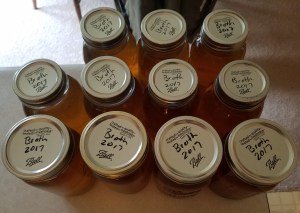
Spring Vegetable Broth

Because of barter agreements with farmers spring brought enough lettuce to make a salad every night, enough cooking greens to put up 15 quarts of vegetable broth, and rhubarb sauce for garnishment. Labor turned into food in a practical way.

Memorial Day weekend was a time for reflection and homelife. Our yard is alive. A domesticated cat attempted to catch birds. A deer lay in the grass by the broccoli patch leaving a pile of excrement as evidence of its presence. One of the two squirrels was hit by a vehicle on the road in front of our house. I found a new type of bug dining on spinach leaves. There is more action in nature just beyond my consciousness. I played my role as a human — bringing culture in the form of a fence to protect the summer squash I planted. I hung a flag above the garage door and honored our war dead.

The cycle of life is being disrupted by global warming. How climate will change in my lifetime is to be revealed. We’ll work to adapt if possible. Even so, for one long moment, the green up was evident.

I took it in, comforted by its arrival and wondering if it is sustainable.

Categories
Kitchen Garden

Planting Tomatoes

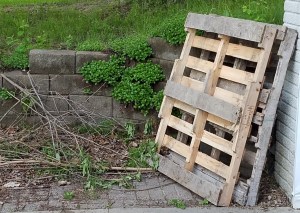
Garden Pallets

It took most of the day to plant the fourth plot in five varieties of tomatoes.

Using two pallets from Kate’s farm I sorted the metal stakes by size then pitchforked the grass clippings that have been on the plot since last fall.

There were numerous worms and grubs under the matted grass — a sign of  soil fertility.

Once the surface was cleared, I spaded the entire plot and applied about 30 pounds of composted chicken manure. I broke up the clods of dirt with a hoe, then used a garden rake to till the soil further. I resist using a mechanical tiller, partly to disturb the soil as little as possible, and partly because the expense is more than we can afford. I took several water breaks to stay hydrated.

Tomato Diagram

Once the ground was broken and tilled, I measured. I grew eight varieties of tomato seedlings: Italian, German Pink, Amish Paste, Brandywine and Supersteak are slicers. Black Cherry, Gold Nugget and Saladette are cherry tomatoes. This plot is for the five slicers with the three cherry tomato plants going somewhere else. I’ll use these tomatoes fresh in the kitchen with canning tomatoes coming from my barter agreement with local farms.

I dunked each seedling in a water bath immediately before planting. I dug a deep hole with a trowel and broke up the soil by hand as finely as I could to cover them. I doused each planting with water so they wouldn’t crisp in the sunlight and 80-degree ambient temperature. I re-applied the mulch and caged them. It took 15 stakes to cage 25 plants. The planting is done.

When the sun comes up I’ll check to make sure every plant survived. If some didn’t there are plenty of extra seedlings in reserve.

Tomatoes are a highlight of our summer garden. Taking a full day to plant them is okay, and the precautions against failure are many. Over the years I’ve become a better tomato grower but everything is conditional — on weather, on soil fertility, and on gardening culture. Fingers crossed, this should be a good year.