That yesterday was opening day in Major League Baseball, and day after tomorrow begins the Masters Golf Tournament in Augusta, were inescapable sports facts on social media.
Spring is about Derby Day for me. It’s a race to get the early garden work done by then so once the risk of frost is minimal the main seedling crops of tomatoes, peppers and the like can go into the ground.
Most years I have been able to take a break from gardening to watch the two-minute Kentucky Derby, taking in just enough of the pageantry to feel a bit queasy. The old saw is horse racing is the sport of kings and who wants or needs it? It’s just there.
Iowa political class member Jerry Crawford asserted last year he had two goals: delivering Iowa for Hillary Clinton and winning the Kentucky Derby. Hillary won the Feb. 1 Iowa caucuses, just barely, and his team Donegal Racing’s 2015 entry in the Kentucky Derby placed fifth. That’s about as close as my life gets to so-called kingmakers.
I’ve been hobbled in gardening by my hand injury. Yesterday I limited my work to planting seeds in trays and transplanting those grown — celery, broccoli and basil — into larger pots. No digging for me… yet.
It was 71 degrees in Alaska in late March, almost 80 degrees in Iowa yesterday. The Alaska temperature was highest in recorded history and not a good sign for the thawing tundra and its release of long banked methane gas.
While sports distracts many, for those of us listening to a different narrative such distraction puts many more at risk of stopping Earth’s engine of sustainability.
That matters even on this small plot in Iowa removed from much of the turbulence in society.
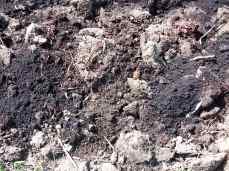
The first spadeful of earth was waterlogged. There was no frost more than a foot deep, so I’ll be ready to plant lettuce March 2.
My maternal grandmother called this planting “Belgian lettuce.” I follow the tradition whenever conditions permit. Reserving some lettuce seeds to plant in trays, the rest will be broadcast in a small plot. I will also plant some turnips — mostly for the greens.
The calendar shows it is winter, but spring is everywhere.
Starting a garden is not always easy, especially if one lives in a city.
The main thing is planting the first time and that can be a big step.
The good news is the potential to stumble is more related to attitude than anything else. There is hope. Here are a few bits to get started.
A gardening journey can begin with a trip to the public library to browse the stacks. A lot of gardening books have it all and my current favorites are The Iowa Edition of the Midwest Fruit and Vegetable Book by James A. Fizzell, and MiniFARMING: Self sufficiency on 1/4 acre by Brett L Markham. The former is a comprehensive look at crops that grow well in the Midwest. The latter presents aspects of the growing process with an eye toward sustainability. Because gardening is popular, libraries tend to have a wide selection of research materials and other resources. Remember. Gardening is engaging in a local food system and book learning is only part of it.
Gardening is about changing one’s relationship with the food as much as providing food for the table — process more than produce. A common mistake is inadequate attention to gardening’s social context. I’ve heard stories of people seeking solace in tilling the ground and nurturing plants from seeds to fruit and vegetables — a form of personal retreat. In most cases gardening involves others — family, fellow consumers, merchants, farmers and gardeners. Discussion of gardening issues and their resolution is endemic to the process and represents the broader context in which gardening occurs.
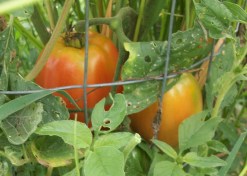
When people think of local food, most have sweet corn and tomatoes in mind. There is a lot more. A way to begin is to think about what fresh veggies and fruit to buy and which to grow. Because of the space it takes, I always buy sweet corn rather than grow it myself. The other way around with tomatoes and green beans. Squash takes a lot of space, and there are lots of great producers of it everywhere… another to buy. Bell peppers require a certain something I haven’t mastered, so I barter for mine, taking seconds from the farm. Why not buy local food when it is abundant, especially if you know the farmer and how the crops are grown?
If you have a small potential garden plot, I recommend picking 8-12 crops and focus on learning how to grow them well. Pick varieties to ripen throughout the season — spring greens and onions, a few herbs, cucumbers, tomatoes, green beans and kale are all easy to grow. The idea is to dip into the soil and experiment using available resources. Another part most people dislike is dealing with pests and predators. Use those books you checked out from the library and better yet, develop friendships with other gardeners and growers in your area — ask them questions, visit their farms. You’ll find gardening is one of the most popular activities and there is lots to talk about, especially when it comes to common problems.
With a positive attitude, there is little to lose in planting a garden. Once one turns the first spade of soil, there is a world worth experiencing in the microcosm of a back yard. Before long, you’ll be craving life in society to talk about your garden. It is about more than home grown fruit and vegetables.
Local food may be what’s grown in a backyard garden, herb jar or patio pot. It may be heirloom livestock raised in grass paddocks, supplemented with carefully selected feed, and served in a local restaurant. It is definitely vegetables and fruit, increasingly available at farmers markets and roadside stands, from community supported agriculture operations, and even in chain supermarkets.
The local foods “movement,” is less coordinated than what media make it out to be. However, there is a consistent theme: it is small scale, farmers are interdependent, and the face of the farmer is visible in every apple, tomato and ear of sweet corn.
Many of us notice the increased availability of local choices when stocking our kitchens, a sign the food system is changing. After leaving a corporate job in 2009, I had a chance to work on half a dozen farms and gained a closer view of what local food farmers do. It is hard work made worthwhile by a network of cooperation among producers.
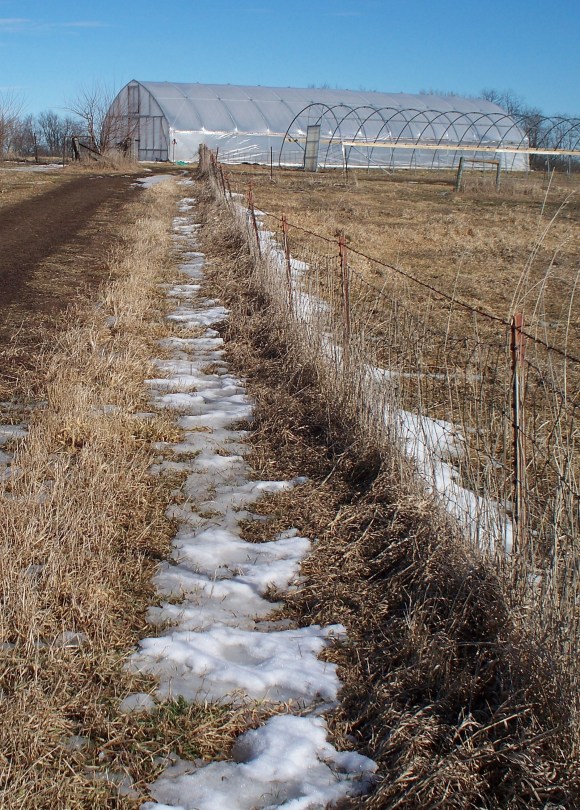
I met Susan Jutz, who operates Local Harvest CSA when two of her children were in 4-H with my daughter. Twenty years into the operation, Jutz has about seven acres in vegetables, pastures rented to local livestock producers, a large field in the Conservation Reserve Program, and a set of paddocks for her flock of ewes and spring lambs. Walking around the farm, you’ll find beehives, a greenhouse and a high tunnel, all adding to the economic structure of a farm using sustainable practices to produce shares for a medium-sized community supported agriculture project.
I began working at Local Harvest in March 2013 when I swapped labor for a share in the CSA. The work was physical, and I enjoyed it enough to return every spring since then. It was the beginning of understanding a local food network.
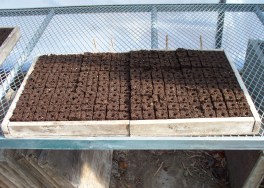
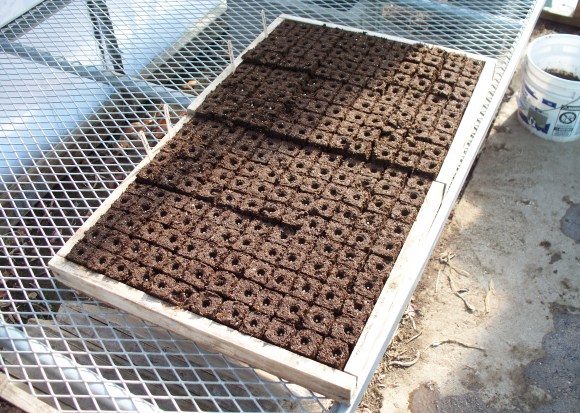
My first job was soil blocking in the greenhouse — making trays of small, square starter soil blocks where seeds are planted. In March, the ground is usually still frozen, yet I have to take off my coat and shirt in the warm workspace. The labor is physical, and a good opportunity to follow seeds turning to seedlings and then to crops with the season. Susan shared her greenhouse with other farmers with whom she cooperated to produce the contents of her member shares. Over time I worked on most of their farms.
One was Laura Krouse, owner/operator of Abbe Hills Farm near Mount Vernon, Iowa. Laura uses part of Susan’s greenhouse space in the spring and provides potatoes for Susan’s fall shares.
Because Krouse’s potato operation is large, she gains economies of scale. Using a tractor with a potato harvesting attachment, along with shared labor from other CSAs, and a large number of volunteers, she can harvest a field quickly. We harvested potatoes and washed them using a specialized root vegetable cleaner, bringing a load of potato-filled buckets back to Local Harvest for storage and distribution.
This is just one example of the cooperative ventures among farmers which include squash, eggs, carrots sweet corn and other vegetables for CSA shares.
While Susan and Laura have been operating for decades, since the local food movement got started in Iowa, the increased interest in local food is encouraging more farmers to enter the market.
I met Lindsay Boerjan who returned to her family’s century farm in Johnson County in 2011. To supplement family farm income, she used leftover material from a razed barn to construct raised planting beds. With manure from the cattle operation she runs with her husband and aunt and uncle, she planted the beds in vegetables for a CSA she began in 2015 with seven members. She hopes to grow her number of customers. Boerjan said she faced challenges as a female farmer.
“It’s predominantly an older male thing or career,” she said. “Should you want to make a career of it, it’s harder to wrestle in costs now the way they are.”
Boerjan is an example of a minimally financed operation, able to get started because she owns the land and is part of a larger farm operation. That Boerjan’s family owned the land and already farmed helped get her CSA going.
In January, Wilson’s Orchard in rural Iowa City announced it was entering the CSA market with a partnership with Bountiful Harvest Farm near Solon. Dick Schwab’s involvement in Bountiful Harvest is an example of a well-capitalized CSA start up. Schwab is a local entrepreneur who is involved in a variety of financial investments, including a timber business, an auto repair shop and more. He already hosted another CSA, Wild Woods Farm, on his acreage in rural Johnson County. He has experience, owns the land and equipment needed to operate a farm, and has a network of marketing contacts that include Wilson’s Orchard.
Knowing the face of the farmer has been part of the local food movement. Today, people want to know more about where and how food is produced. Getting to know a farmer was important at the beginning of the local foods movement in Iowa, and still resonates. At the local supermarket, buyers stock the produce aisle with locally produced items, along with a daily count of local food items on hand and a life-size photographic cutout of the farmers who produced them.
Driven in part by mass media, consumers are concerned about a wide range of food issues that include contamination with harmful bacteria; dietary concern about consumption of carbohydrates, fat and sugar; the way in which plant genetics are modified to improve them; and more. Partly in response to media campaigns, annual sales of organic food exceed $30 billion in the U.S. (USDA). The increase in organic market share from national advertising campaigns is significant. If you get to know your local food farmer, what you may find is they benefit from this marketing, but their customers come and stay with them because of a personal relationship with the farmer.
Whether you grow herbs on a kitchen window, belong to a CSA or garden a plot in the backyard, it is all part of a local food movement that is just getting started and depends on knowing the face of the farmer.
“Publishers are not accountable to the laws of heaven and earth in any country and regardless of my opinion, editors and publishers will print what they will.”
I wrote this in a letter to the editor of the Quad City Times in 1980 reacting to a popular feature section called Soundoff.
“(It is) little more than a vanity press for many of the writers,” I wrote. “It gets pictures, letters and opinions into print as a final goal; shouldn’t there be more to public voicing of opinion than that?”
This is more applicable today than it was three and a half decades ago.
What I learned in graduate school is the same statement can be applied to almost everything written in public. Reflecting on the Times experiment to make their pages more open to comments and retain readership, chaos reigned. What has changed since then is the emphasis on viewpoint in media — corporate, social or self published — which has been formalized. It’s not all good.
As I turn to the hard yet fun work of writing this year, I plan to journal my experiences in the food system here. Four years from full retirement, there are bills to pay and a life to live. I may pick other topics from time to time. I need to make the best use of every moment.
I’m writing off line as much as I can. While I don’t like to work for free as long as there is less cash than budget, I may occasionally post about those creative endeavors.
Thanks for reading this blog. Check out the tag cloud for your interests. I hope readers will be back often.
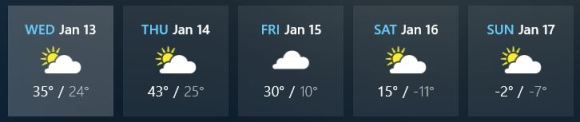
It doesn’t appear we will get a solid week of subzero temperatures this winter. Based on the five-day forecast I’m planning to prune the fruit trees on Sunday.
Would that growing food were all there was to worry about.
The challenge has been to assimilate a new work schedule at the home, farm and auto supply store into my writing schedule. Halfway through January, I’m no closer to a plan.
While it may seem self-indulgent, mentioning the word “I” so many times, unless I get this right, it’s curtains for my aspirations as a writer.
I won’t let that happen.
How to use the couple of hours in the morning, my break periods at work, and time in the evenings and on weekends for writing production needs definition. Family, our food system, maintenance on the property, and adding revenue have to be considered as well.
Confident I’ll get there, midweek before the cold it’s not clear how. Something will get figured out. I hope it will be sooner rather than later.
Sixty nine percent of adults age 20 and older were overweight during the period 2011 – 2012, according to the Centers for Disease Control. We hear constantly from medical professionals, dietitians, mass media, politicians, friends and family: to do something about being overweight — and we should — moderate our caloric intake and move.
Despite such commonplaces, something is amiss. It goes beyond notions of eating a “proper diet” and exercising, and most of us don’t really understand what’s right and what’s wrong. Many don’t even learn what is required to live well in the contemporary food culture.
As people move to urban areas — disconnected from how food is grown, processed and marketed — another layer is added to our food system. It includes dining out more often, claims and assertions in mass media about food and food products, and the reduction of daily life to a restricted set of patterns involving less exercise, more processed and prepared foods, and an abundance of food everywhere — unlike in many other places in the world.
Fixing the obesity problem requires more skill than eating and drinking until satiated. What guidance exists among food writers, health professionals and scientists comes under fire from almost every direction.
In the end, we must each make decisions about a personal cuisine or diet. Where will food be sourced? How much cooking will I do at home? How much should I rely on the convenience of an ingredient-based industrial food supply chain? How do I determine the difference between food that tastes good and food that is good for us? There are no easy answers and as time passes we make decisions and live our lives as best we can — making decisions by default.
The film In Defense of Food aired on public television Dec. 30, 2015. In it, author and food writer Michael Pollan takes nutritionism to task.
“Nutritionism is an alleged paradigm that assumes that it is the scientifically identified nutrients in foods that determine the value of individual food stuffs in the diet. In other words, it is the idea that the nutritional value of a food is the sum of all its individual nutrients, vitamins, and other components,” according to Wikipedia.
Pollan’s message in the film is we should “Eat food. Not too much. Mostly plants,” and pay less attention to nutritionism. While he has his critics, this seven word statement is as good as any other guidance I’ve heard as help for developing a family cuisine.
Pollan encourages people to eat meat, which is a bone of contention in urban circles, especially among vegans, vegetarians and environmentalists. He neither embraces nor rejects genetically modified organisms in the film, perhaps recognizing that the anti-GMO movement is more marketing than science. If one has been reading Pollan, his affection for bread is well known.
I follow Pollan and a few other food writers. What matters more is the choices made in our kitchen: how will we process the abundance of garden and farm? What cooking oil should we use? Should we buy lettuce at the grocer during winter? Should we eschew making big batches of food in favor of making enough at a time for a single meal? The questions can be endless, each decision of some importance.
For our family, getting started with local food has been an answer to these questions and more. It is easy to know the face of the farmer when it is visible in the bathroom mirror each day. As the circle of food producers and processors expands beyond our lot lines, it gets more complicated, but not impossible.
What’s needed most is to turn off outside influence from time to time and do what seems right. There is nothing to be afraid of. Food itself will help us find a better diet, especially when combined with the complex understanding of the world that comes with being human. Instead of trying to understand food culture, we may be better off to just go on living and take what comes. Going forward, that’s what I plan to do. That is, in addition to moderating caloric intake and moving.
The good news about finishing three full weeks at the home, farm and auto supply store is the company offers health insurance that meets the Internal Revenue Service “minimum value standard” for less money than coverage available through the government’s health insurance marketplace or elsewhere.
The bad news is all of the pay from this full-time job will fund health care insurance, co-pays and deductibles for our family if we seek any care. If we don’t need health care once the coverage goes into effect Feb. 1 that will leave us roughly $150 take home pay per week. We’ll need more than that to pay the rest of our expenses.
Ada Blenkhorn and J. Howard Entwistle wrote the song “Keep on the Sunny Side” in 1899:
There’s a dark and a troubled side of life;
There’s a bright and a sunny side, too;
Tho’ we meet with the darkness and strife,
The sunny side we also may view.
Most people know the version Mother Maybelle Carter sang on the 1972 record album Will the Circle Be Unbroken produced by William E. McEuan. I favor the original A.P. Carter version which hearkens back to our family roots in Southwestern Virginia. Dig deep enough and you’ll find we’re shirt tail relatives on the Addington side, which is Mother Maybelle’s maiden name.
Not only may we view the sunny side, keeping there will be the only thing that gives us hope. This first job sets a foundation upon which to build the rest of my worklife.
What else?
In the works are spring at the Community Supported Agriculture project, summer editing at Blog for Iowa, and fall weekends at the apple orchard. These were all discussed during my interview with the home, farm and auto supply company, so getting time off shouldn’t be a problem.
The most excitement I felt in a while was finding the Seed Savers Exchange 2016 seed catalog in the mailbox yesterday.
Someone gave me a packet of their scarlet kale seeds last year and it was a great addition to the garden. Too bad all of my customers are used to getting kale for free, or it could be a source of some income.
It is conceivable I could generate a thousand or so dollars from the garden this year by expanding the planting area and selling excess. Circumstances may have me doing that.
It is a reasonably warm fall day near the lake — a time for hope and getting lost in seed catalogs.
The local food movement is a growing group of individual operators struggling to make a living and an impact in a turbulent world.
It is a nascent system directly tied to our consumer culture, dependent upon disposable income and open mindedness in meeting humankind’s most basic need.
I spent six years in our local food culture and can say food we consume is not all local, and needn’t be. At the same time there are benefits of a local food system beyond better taste, eating fresh, and knowing the farmer who produced the groceries.
In our home fall canning leads to a pantry full of soup, tomatoes, hot peppers, sauerkraut, vinegar, apple sauce, pickles and sundry items from the garden and farm. The freezer gets filled with bell peppers, apples, broccoli and sweet corn. It is food – as local as it gets – driven by what is fresh, abundant and on hand.
Along with home processed goods are bits and pieces from all over the globe, each serving a purpose in our culinary lives. Putting ingredients together in a personalized cuisine is where the local food movement will live or die.
More people seek processed or precooked food because of a perception there is too little time for cooking. If adding kale to a smoothie seems easy, making a stir fry using kale is less so. Contemporary consumers want a quick and easy path to making meals and snacks, and don’t have the patience it requires to add new recipes to their repertoire. Cuisine as an expression of local culture has been tossed out the window by many.
Having worked in the local food system, whether at home, on a farm, or in a retail store, has been an important part of my life since retiring in 2009. It is a way of life to grow food for direct consumption or sales. Local food is also a jumble even if farmers and consumers want it to be more organized and systematic.
One operator runs a community supported agriculture project where members pay in the spring to help avoid a farm loan then share in the luck, good or bad, of the farm. Another sells chits which can be used to buy the face value of any goods at a local outlet framed as a “store.” Another grows specific crops to sell to restaurants, absorbing any financial risk. All of this leads us to a point where an onion isn’t only an onion anymore. And it’s not about the onion but the culture.
If someone could organize a local food system, there may be a living in it. That misses the point. Local food systems are intended to cut out the middlemen in the food supply chain. At the same time, faced with a need for scalability, most operators could potentially use the help of local food brokers.
While some of the figures of a sustainable, local food movement – Alice Waters, Joel Salatin, Fred Kirschenmann, and others – are well known, a sense of coherence or agreement on basic terms seems missing among local producers. It is as if operators would rather work inside the bubble of what works for them personally as long as it does work for them. In a way that is not much different from how corn, soybean, egg and livestock producers view their operations.
Where we go from here is uncertain. Something I hope to discover in the pages of this memoir of my experience in with our food system.





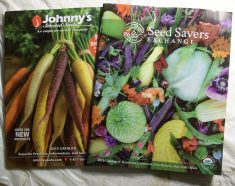 The most excitement I felt in a while was finding the Seed Savers Exchange 2016 seed catalog in the mailbox yesterday.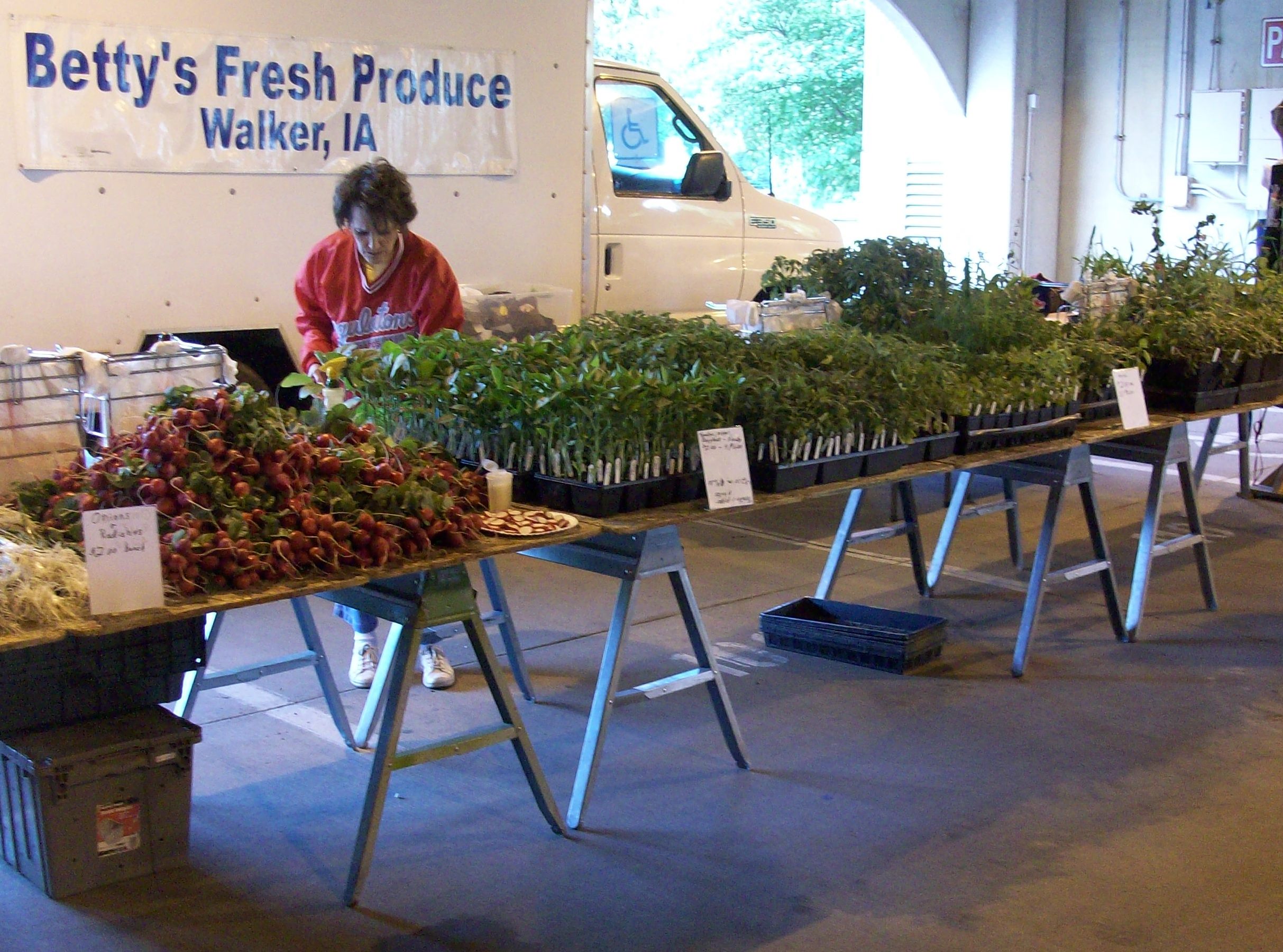
 Journey Home
You must be logged in to post a comment.