I was first to break the snow on 120th Street while driving east to the farm for a soil blocking shift. There were a lot of people in the germination shed participating in a complex bartering situation. I’m not sure any money would ever change hands.
I planted:
Parsley:
Extra Triple Curled, Ferry – Morse, 75 days.
Broccoli:
Blue Wind, Johnny’s Selected Seeds, 49 days.
The kale uniformly germinated since last week. I should have plenty of starts to cull, plant, and give away. No apparent action on the leeks and celery. They take longer to germinate.
I got out into the garden briefly this week. There is the usual spring week to do. The ground remains hard, even with the recent rain. Planting is a while away. Lettuce seeds are ready to go in.
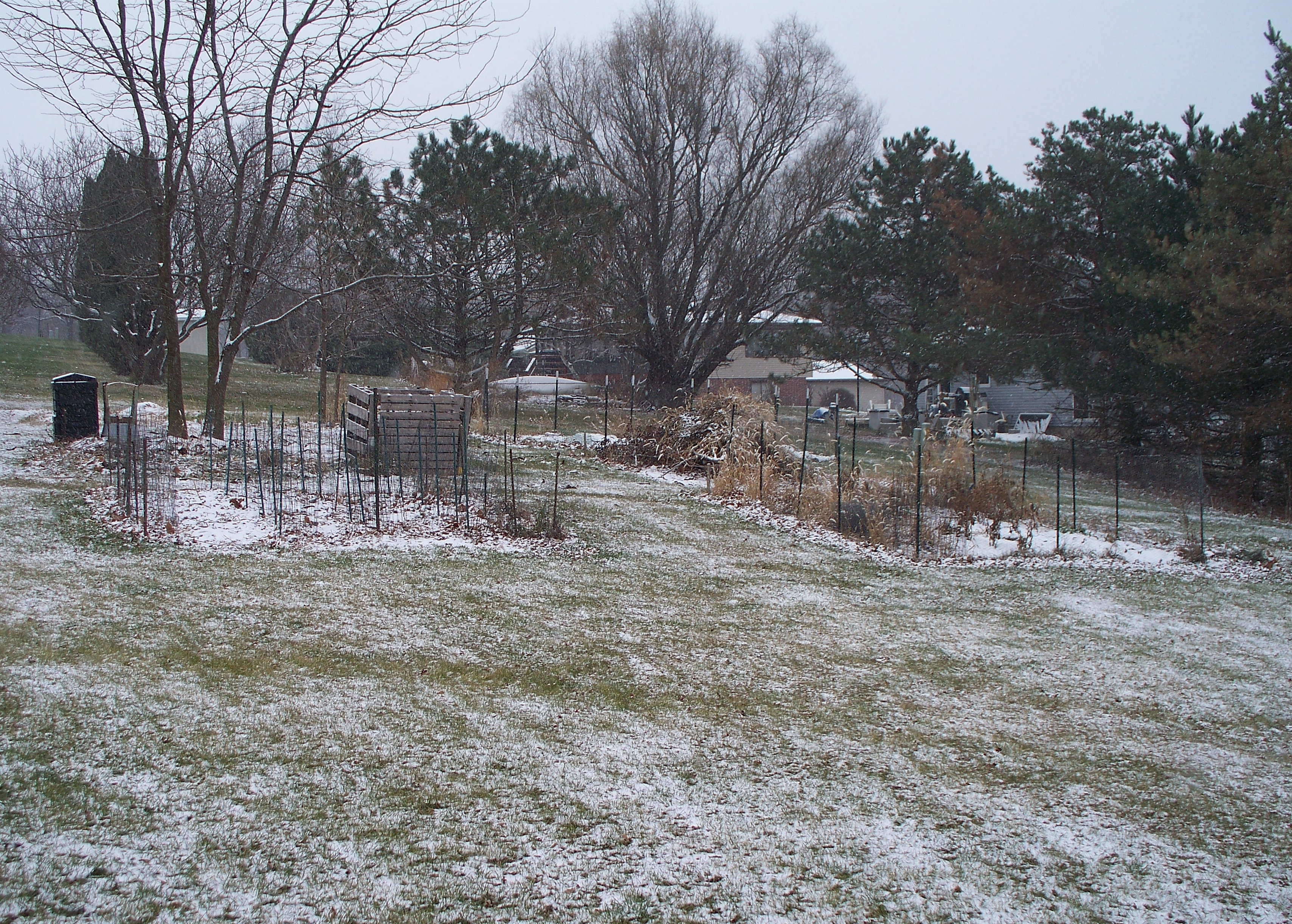
Summary: Recent rain melted most of the old snow but it ran off because the ground is still frozen. New snow fell last night. We’re running behind and so is everyone. I was asked what’s new in my garden this year. I have guajillo chilies and tomatillos planned. A Mexican food sub plot. Tacos and more tacos.
There is nothing magical about 40 acres in the 21st Century. Today’s American farmers can make a living on much less, largely because of crop diversification, technology, and emerging markets for locally grown food.
For a beginning specialty-crop farmer, 40 acres might be too much to handle.
“40 acres and a mule” entered the vernacular as a way of dealing with the question of what to do with newly freed slaves during and after the Civil War. Give them 40 acres and a mule to get started as free men, or so the line of thinking went.
In 1865, William Tecumseh Sherman provided for confiscation of 400,000 acres of land in South Carolina, Georgia and Florida, to redistribute in 40-acres parcels to formerly enslaved farmers. The arrangement did not persist, although even today, presidential candidates posit the United States should pay reparations for slavery.
While specialty crop farmers work hard, long days to make ends meet and sometimes take a job in town to provide enough household cash, they increasingly seek to own their future. To a person, that means buying land. In Iowa good farmland is expensive.
For farmers, the desire to create a farm on less than 40 acres has to do with start up capital. To make a go of it as a specialty farmer on 40 acres, that means $350,000 or more for land, another $100,000 or more for an on-farm dwelling, and more for at least one barn, a couple tractors, and other equipment for cultivation, mowing, tilling, fencing and general operations. Finding a banker to finance such an operation is difficult without collateral other than the land. There is also the hurdle of what to do with all that land. While a small farm can grow into 40 acres with success and over time, a beginning farmer has much to learn and the scale can be intimidating.
Shouldn’t there be opportunities to start a farm on less than 40 acres? The county board of supervisors said no. Couldn’t you move to another county? The market is in urban centers.
In Iowa farms have an agricultural zoning exemption. Beginning farmers seek the ag exemption in order to make ends meet on narrow gross margins. To be defined as a farm in our county, and get the exemption, 40 acres is required. Some of my farmer friends have been asking for accommodation of smaller farms for many years and none has been forthcoming from the county board. The future belongs to the young and they will not be stopped.
That brings us to House Study Bill 239, an act relating to the county zoning exemption for property used for agricultural purposes. Farms are defined as follows:
The bill provides that property is used for agricultural purposes if at least 51 percent of the annual gross revenue derived from the property comes from the growing, harvesting, or selling of crops and livestock raised and produced on the property or brought to the property and not more than 49 percent of the annual gross revenue derived from the property comes from the sale of agricultural experiences and other farm-related activities.
The number of acres defining a farm becomes irrelevant should the measure pass the legislature and be signed by the governor.
This bill amounts to an end run around the county board of supervisors. While it didn’t clear the state government committee this session, it remains eligible for consideration and debate next year in the second session of the 88th Iowa General Assembly.
A representative from our county made it to the bill’s subcommittee hearing on March 5. In what was described as a long, arrogant speech, the official characterized rural residents who had been working with the county board of supervisors as “loud complainers.” Not a good look for anyone, especially a county official.
Today was a great day of spring-like weather. We can feel it in the air as farmers prepare equipment, tend livestock, and prepare for another crop. Whether on 40 acres or 4,000 there are many common threads running through farming. Whether they will be defined according to the same standard is an open question. It’s time to see if the legislature can resolve the issue for beginning farmers, since the county won’t.
Megaton, Johnny’s Selected Seeds, 90 days.
King Richard, Johnny’s Selected Seeds, 75 days.
American Flag, Ferry-Morse, 150 days.
The garden continues to be snow covered. According to the National Weather Service, frost in the region is estimated to be 24 to 36 inches in the ground. Needless to say, until I can see the ground, I can’t dig in it.
Summary: The garden is running behind, the greenhouse is chilly, and the soil is frozen. Planting in the ground will be delayed until the soil can be worked. Hopefully the greenhouse starts will be successful. Garden work has begun.
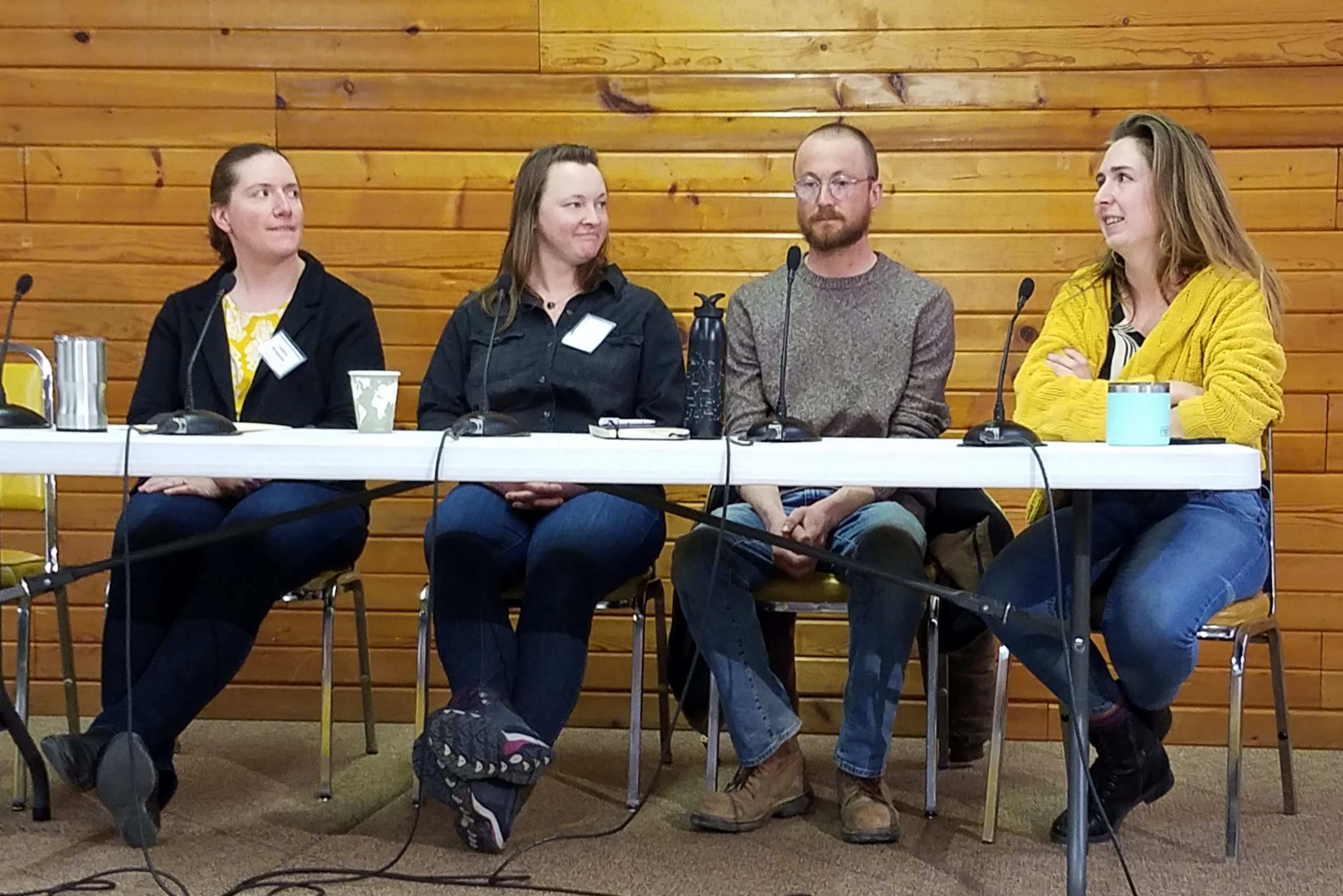
Colleen Bringman, Katie Biesendorfer, Kyle Tester and Carmen Black on a Specialty Crop Producer Panel in Montgomery Hall, Johnson County, Iowa on March 9, 2019
Ice and snow began to melt, exposing a small disk of grass over the septic tank. It suggested an overdue spring is arriving. After a long, hard winter I’m skeptical.
Time to get outside the house for something other than work.
Saturday became a series of renewed conversations with friends. Politics was part of three events in Iowa City and Coralville, coffee with Congressman Dave Loebsack, a forum hosted by the Johnson County Food Policy Council, and a fundraiser for Eric Giddens who is running to represent State Senate District 30 in a March 19 special election. I’d forgotten how many friends I have in the community.
Not everyone in Iowa has first in the nation caucus fever. Politics was discussed. It was local politics. The field of Democratic candidates for president is beginning to come into focus. While some have declared a candidate preference, many of us are anxious for spring to begin, such anxiety pushing aside the vagaries of the nascent Democratic presidential nominating process. I felt like a normal human by not thinking about presidential politics for a morning.
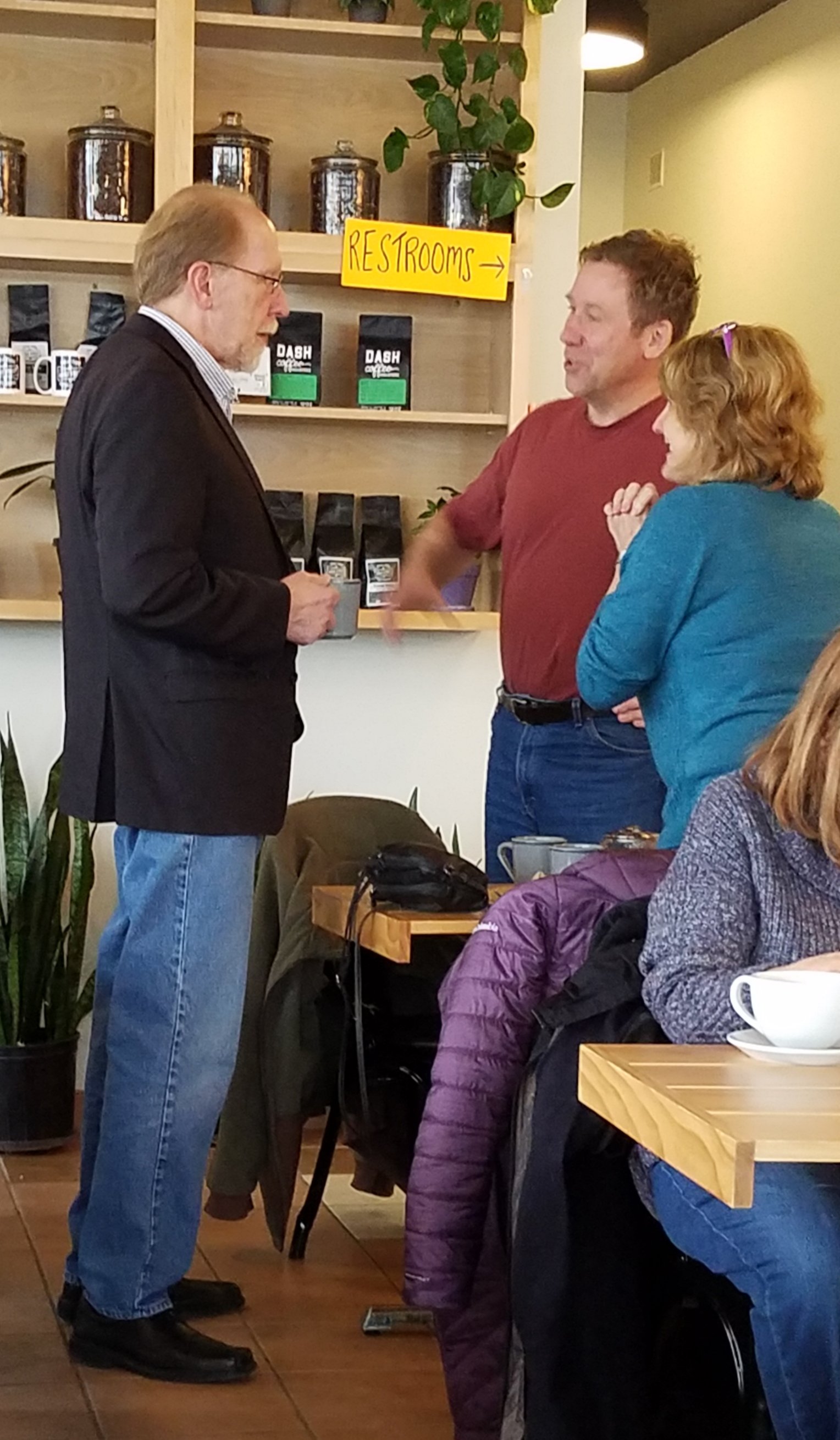
Congressman Dave Loebsack chatting with constituents at Dodge Street Coffee, Iowa City on March 9, 2019.
The first event was coffee with Congressman Dave Loebsack at a coffee shop co-located with a convenience store near Interstate 80. In a welcome turn of events, there was no speech. Loebsack spent the hour meeting individually with attendees without a set agenda. The event was very personal and individualized.
I overheard the retired college professor mention his age, 66 years. The average age of members of the 116th Congress is 58.6, according to Politico, so that makes Loebsack older than average. It seems unlikely he will have the longevity in the House of Representatives of the late John Dingell or other long-serving men and women. Who might replace him when he retires is an open question for constituents. The last few times I was with Loebsack he publicly mentioned his age or his potential retirement so it’s out there.
I didn’t have much to say to the second district congressman as we shook hands. He knows my issues: climate change and preserving Social Security and Medicare. We met during his first election campaign in 2006. He knows me, we share a common history, and that is something for a person who represents roughly 750,000 people.
From North Dodge Street I drove through the county seat to the fairgrounds where the Johnson County Food Policy Council was hosting its 5th annual forum in Montgomery Hall. My friends and colleagues Carmen Black of Sundog Farm and Kyle Tester of Wilson’s Orchard were both part of a specialty crop producer panel.
Black announced that HSB239 is advancing in the legislature. She later said the bill is expected to pass the Iowa House of Representatives. The intent of the legislation is to help small and new farmers overcome high land prices and get started in farming. The bill defines a farm by the amount of agricultural revenue a property produces rather than any set number of acres. Getting the agricultural exemption, which is part of the point of the bill, is crucial for small and new farmers.
I spoke to two of the county supervisors after the panel and brought the bill to their attention. Supervisors have a lot of issues on their legislative agenda and this bill was introduced without fanfare only last week. If adopted, HSB239 could have an impact on county land use policy and regulations.
I left Montgomery Hall, and a free luncheon from Local Burrito Catering, heading to the Iowa River Landing in Coralville where the fundraiser was in progress. I arrived as Iowa senate minority leader Janet Petersen was finishing her speech. The event was hosted by the three state senators who represent Johnson County, Kevin Kinney, Joe Bolkcom and Zach Wahls, who were all present. Wahls is my state senator. My intent was to drop in, write a check, and head home. So many people I hadn’t seen in a while were there so I spent most of an hour in conversations. Zach Wahls has proven to be accessible since we elected him last November. I encouraged him to continue his excellent communication about what’s happening in the legislature in various media.
As the gathering broke up I walked in a light, sweet rain to my car across the roundabout. I headed north on Highway One thinking, “I’ve got to get out more often.” I felt a longing to make more trips to the county seat. When spring arrives, maybe in April, I will.
More than at any previous time I feel a goal line was crossed when I left full time work last spring.
So what’s next?
I don’t anticipate buying a fancy television with new, matching easy chairs to put in front of it.
My late aunt and uncle had that. When we visited their Alabama home our conversations turned to the evangelical Christianity their family had undertaken. It was a distance from the socialist and Catholic household in which she grew up with her brothers and sisters. I suspect aunt and uncle watched FOX News, although we talked the entire visit without turning on the T.V. Dinner was a tuna-noodle casserole taking me back to a time I hardly remembered. Mom never made tuna-noodle casserole at home. My uncle died shortly after we left them and she died soon after that. All that’s left are memories.
My fear is if we had a digital television I’d sit back in an easy chair, watch too much, and my mind would succumb to the blather that invades people’s lives from cable news. I’d spend the rest of this life talking about, to and at the television.
There is only one answer to the question, and that’s to stay active physically, emotionally and mentally. That’s really a lie. There are plenty of answers, although doing these three things can form a foundation upon which an answer can be built. Maybe that’s what I’ll do.
Birds eat from the feeder and a freezing rain falls on the county. Snow melt is filling the ditches and running toward the lake. Soon there will be floods in Iowa as the crazy weather continues.
Tomorrow I return to the farm for the first round of soil blocking. They already started seeds in the house, but these will go into the greenhouse despite the coming cold spell. I’m waiting another week to plant celery. At 120 days, celery has the longest plant to pick cycle.
Will farm work bring catharsis to my search for truth and meaning? I don’t know, but I’ll be spending time with friends again and that means something.
I’ll get to see the lambs, those sad but cute creatures destined for someone’s dinner table. I’ll be careful not to get attached but new life is always a pleasure. That’s what I need in the rainy, snowy, flooded Iowa I call home as the cycle of the growing season begins anew.
Moving the goal posts once they are set is not a good option in retirement. We may only get one chance for new goals and it’s important to be sure. I’ll be thinking about that as I make the soil blocks tomorrow morning. I’m looking forward to getting started.
Is there a difference between being a cook and a chef?
An immediate answer has to do with training, tutelage, apprenticeship or working in a professional capacity. I know several chefs, and they are among the best in the area. I eat at their restaurants, appreciate their presentations, and respect what they have learned.
Cooks know their limits. My main goal is to get a satisfying meal on a plate, matched to the individual tastes of diners. Even in a small gathering there is rarely a single taste. Working with well-known diners, attempting the satisfying rather than the sublime, makes me a cook first — a journeyman raw food processor if you will.
Understanding flavors that produce great meals is important and flavor is foremost in the mind of a cook. Will the diners welcome a dish? What from the repertory will please? How do I use a seasonal vegetable? Will diners notice when the flavor stands out? Above all, will they eat it? We worry less about replicating specific dishes and more about the making the routine sublime.
I recently bought a large bag of Mexican oregano on line. Used in many dishes now that it is on hand and convenient, it is mostly an experiment with taco fillings, red sauces and stir fry. I like it because of the mild citrus flavor it imparts. Although I’ve been using it a couple of months, the experimentation is just getting under way. A cook’s process can be quite long.
Cooking has to do with ingredient sourcing, cooking techniques and trying dishes with varying seasonings. I feel little pressure for repeatable tastes so a dish can be listed on a menu. Being a cook is living life in each moment, a prepared dish as its own reward.
If I am a cook, not a chef, then so be it. I’d rather be a journeyman and get the work done.
Monday I made a big pot of vegetable soup using what has become a standard process.
Mirepoix of onion, celery, carrot and salt sautéed in a couple tablespoons of vegetable broth.
Potatoes peeled and cut in large chunks, a 15 ounce can of rinsed, prepared beans, a pint of diced tomatoes, a quarter cup of barley, a half cup of dried lentils, a few bay leaves, two cups frozen sweet corn, a quart of home made tomato juice and vegetable broth to cover. I added lots of potatoes and carrots for texture and flavor. Toward the end of cooking I added a cup of frozen peas.
The soup cooks up thick and hearty, just the thing for subzero temperatures the polar vortex is bringing our way tonight and tomorrow.
Other soups I make are similar, adding every kind of vegetable we have on hand — after harvest or after cleaning the refrigerator. The limited number of ingredients in this recipe standardizes the outcome into something recognizable and delicious. Importantly, it is repeatable.
Over the weekend I sorted recipes, an act of curation. I found I’m much less attached to dessert recipes. Over the course of a year I make a few batches of cookies, an apple crisp or two, maybe a spiced raisin or applesauce cake. Those recipes are well used and written in my red book. I love dessert, but not that much.
The dessert recipes I kept included blueberry buckle, a seasonal item we serve at the orchard after the first blueberries come in from Michigan. The recipe our bakers use is called “Betty’s Blueberry Buckle,” but the one I have will serve.
While in graduate school I conducted a series of interviews with a subject for a class on aging. She had a letter from William F. Cody inquiring about his legacy in Davenport. I kept her recipe for custard for the memory, although I’m not sure if and when I might use it.
I find it hard to dispose of artifacts of consumption, although about half of the unsorted pile of recipes went into the paper recycling bin. That I got rid of anything is a sign of progress. So many things compete for attention that piles of artifacts, like these recipes, sit around indefinitely.
Winter is a great time to enjoy a bowl of soup and sort through the detritus of a life on the prairie. I look forward to spring.
Snow began overnight and is expected to continue all day — the first real snow this winter.
We need more from winter, a week of subzero temperatures to kill bugs in the ground and to stop the sap flow in trees before pruning. Today’s snowfall gets us started, although the long-range forecast shows ambient temperatures well above zero the rest of the month.
We are ready to bunker in. We have reading piles, plenty of food, an internet connection, and an operational forced air furnace. I expect to drive my spouse into town for work so she doesn’t have to scrape windshields afterward. Having lived in Iowa and the Midwest most of our lives we know what to do.
Breakfast was kale cooked in a style of central Mexico with caramelized onions, finely chopped garlic and red pepper flakes. This recipe is worth trying because it allays the bitterness sometimes associated with kale, making a hearty and delicious vegetarian meal. Here’s what I did.
In a medium sized frying pan warm extra virgin olive oil on medium high heat. Cut three medium onions in half, slice them into quarter-inch ribbons, and add to the olive oil. Salt generously to taste. Once the mixture is cooking, reduce the heat and caramelize the onions. Finely chop three cloves of garlic and add them to the caramelized onions along with red pepper flakes to taste. Mix and cook just until the garlic loses it’s raw taste. Add one half cup of vegetable broth and a generous amount of kale. Cover the pan with a lid and let it cook for five minutes on medium low heat or until the kale is tender. Mix the ingredients thoroughly. At this point I laid two home made bean burgers from the freezer on top of the kale and covered again until the pre-cooked burgers were warmed through and the moisture evaporated. (If you want to use the kale mixture as a taco filling, the bean burgers aren’t needed). Transfer the kale and a burger to plates and top with Mexican cheese and fresh salsa. If you have it, freshly chopped cilantro would be a nice addition. The breakfast of champions.
Five weeks remain until soil blocking begins at the farms. It’s a chance to garage the car for days at a time and turn inward as if there is just us in the world. The snow is getting deep enough to shovel the driveway before heading to town.
Already it is becoming a productive, mostly indoors day. Winter at its best.
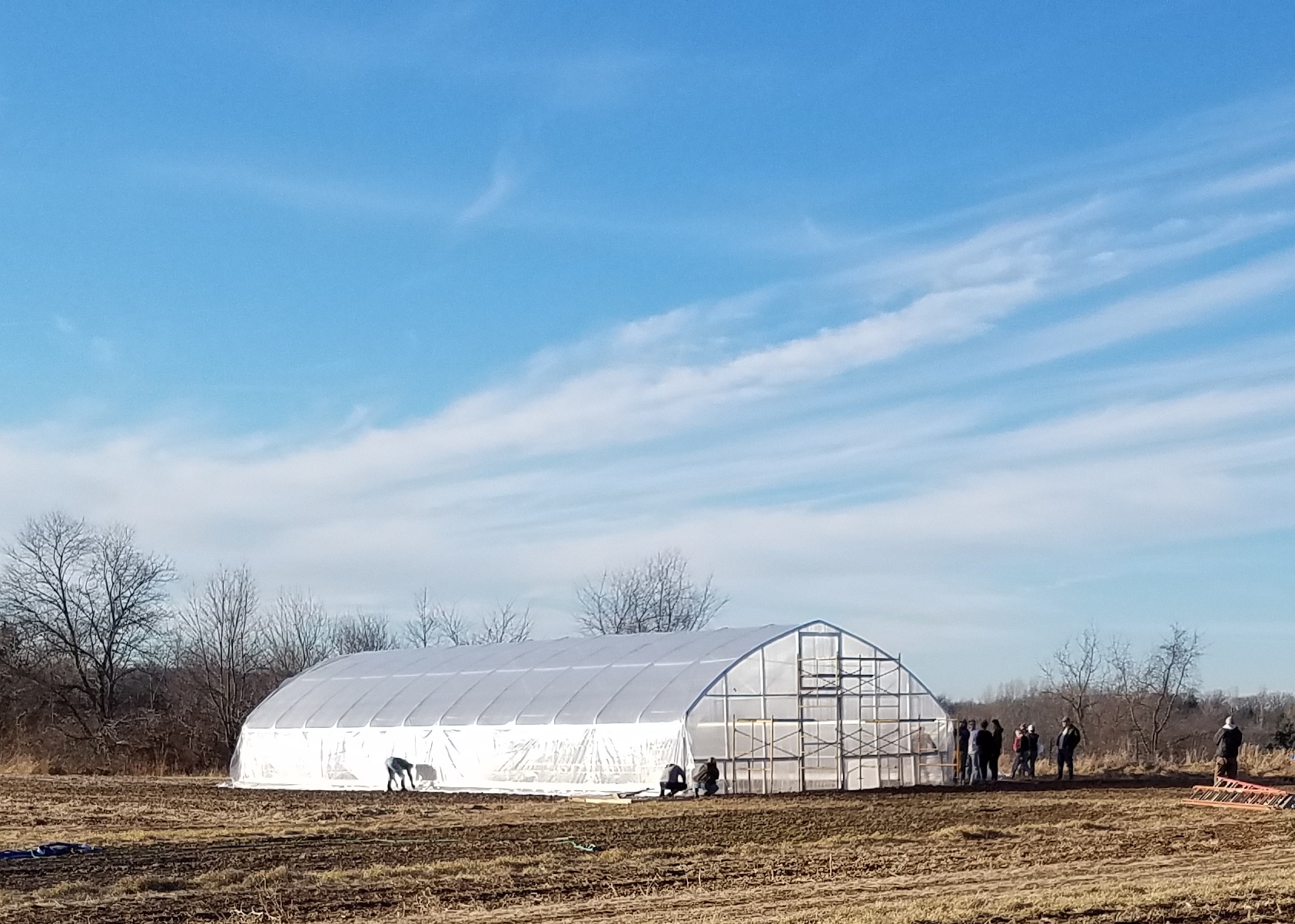
A lone bald eagle soared over Rapid Creek north of Wild Woods Farm. We were pulling plastic over the new high tunnel.
The eagle lofted in the wind as if it were summer. We would rather the wind died down until we finished. The project was well-organized and it took an hour and a half for 20 of us to get the plastic stretched over the aluminum frame.
Someone asked how many inches of frost were in the ground. That struck me as funny while standing in two inches of sloppy mud. We have yet to have a hard freeze this winter. Vegetable farmers have ordered seeds and as soon as they arrive plan to plant onions in trays. Spring planting will begin soon enough. With the ambient temperature at 50 degrees it doesn’t feel like we’ll have a winter even though an extended hard freeze would be good for farmers.
The fact of a warming atmosphere is all around us. Eagles attracted to open water in January is just part of it. Climate has changed, disrupting weather patterns we learned to expect coming up. Local vegetable farmers dealt with the weird weather last season and could use a break back to “normal” this year. A 50 degree January day may be a fluke — a welcome one for this project — but there have been too make flukes.
During wait time I finalized a spring soil-blocking schedule at the two farms. It was a productive day of catching up with friends in mid-winter… talking about spring.
The end of year has been punk times without relief.
Some blame it on social media.
Social media users post they need a break. They want to cleanse their mind of the drivel, hostility and tumult often found in feeds they scroll.
How is “cleansing” possible? Social media is an addiction and once hooked, that’s it. Few want to make a permanent break from social media, so what’s really the point of a cleanse? A better idea is to exercise moderation when using social media. I think the ancient Greeks said something like this.
Some blame it on our president.
Sequestered in the White House, his spouse in Florida with their son, a phone nearby, he waits for Democrats to call. The current stalemate is the president’s doing, so why would they call? He lashes out with ill-informed, ill-mannered tweets. I don’t know anyone who would object if he took a break from Twitter.
Relief from punk times can be found in getting busy. Today I made a hearty winter soup.
Butternut Squash and Turnip Soup
One medium butternut squash, peeled and cut into half inch cubes.
Two large turnips peeled and cut into quarter inch cubes.
One cup thinly sliced celery.
One cup medium dice onions.
One quart tomato juice.
Vegetable broth to cover.
Quarter teaspoon each of ground nutmeg, allspice and coriander.
Teaspoon ground cinnamon.
One large bay leaf.
Salt and pepper to taste.
Cover the bottom of a Dutch oven with vegetable broth and add the celery and onion. Stir until the onions start to soften. Add the turnips and squash. Add a quart of tomato juice and spices with vegetable broth to cover. Bring to a boil then reduce heat to a simmer and cook until the vegetables are soft. Remove and discard the bay leaf. Use a blender to smooth the mixture and serve with a dollop of sour cream and finely chopped parsley or chives.





 Journey Home
You must be logged in to post a comment.