A foundational aspect of our lives in Big Grove Township is reliance on others when it comes to food. We use the international supply chain which brings items closer to home so we can buy them at the grocery store.
At the same time, we spend 24 percent of our food dollars on products where we know the face of the farmer. That’s a lot more than most families and it results in a pantry full of staples like potatoes, onions, carrots, canned tomatoes, frozen vegetables, pickles and apple products.
Our regular habits prepare us for a month of quarantine without the coronavirus pandemic. We’d suffer for lack of milk and eggs, yet in a global society where millions go hungry each night, it’s more inconvenience than any kind of deprivation. We’ll get by.
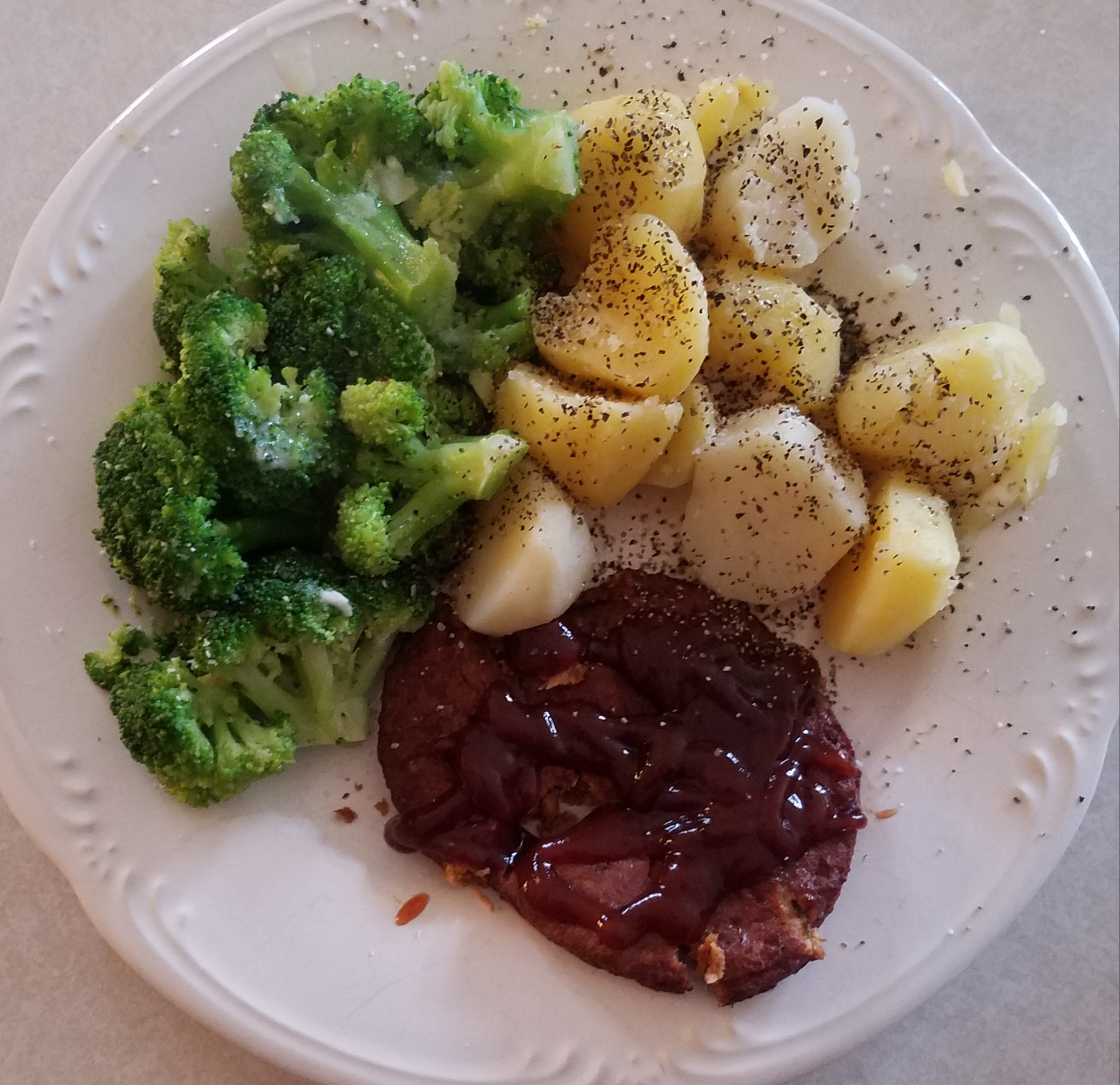
The meal in the photo is our home food story. One third Farmer Kate’s potatoes, one third frozen organic broccoli from the wholesale club, and one third a commercial, mass produced soybean burger from the grocery store. The garden broccoli crop wasn’t so good last year and we’ve depleted the freezer of our own. That’s where the food supply chain comes in handy.
I don’t know if I’ll venture to work at the home, farm and auto supply store tomorrow. After the management team arrives later this morning I’ll phone in and see what protections they offer employees. I work in the warehouse and am isolated from most customer contact. All the same, retail is a people-contact job and there is more risk there than in staying home. If I choose to stay home, there will be no compensation.
I’d feel better about the isolation if it were warm enough to work in the yard. Yesterday morning patches of snow remained on the ground. It should melt today as ambient temperatures are expected in the mid-forties this afternoon. Instead of working outside, I read and wrote in the usual places. About 5 p.m. I started peeling potatoes and making dinner. It wasn’t much, but will sustain us as we ride out the coronavirus pandemic over the coming weeks.
Most of the usual seeders were absent from the greenhouse as I made blocks for 3,840 seedlings. Those who did work tried to stay at least six feet away from each other, although it was hard given the confined space.
“You may be the vector,” I said to one.
“No, you are the vector,” they replied.
It was in fun, but a serious note rang heavy in the atmosphere. None of us wants to die from the coronavirus.
I worked mostly alone as the farmers tended sheep in the barn. There are now 45 lambs and they are not ready to be outside all the time. Before she left I reviewed my planting plan with the farmer, made adjustments, and planted the following for my garden:
I noticed the kale and broccoli planted March 1 germinated with a high rate. Some of the seeds planted last week have already sprouted, although it will take celery a couple weeks.
19,920 seedling blocks made during the first five weeks. The crew will begin transplanting to the high tunnel maybe this week.
Because of the coronavirus, people are stocking up on food and sundries in case they are quarantined. Local retail business is up compared to last year. The wholesale club has been rationing specific items.
The retail outlet where I work twice a week has a large table in the employee break room where we pass the time talking, looking at our mobile devices or yesterday’s newspaper, and eating snacks and lunches. The consensus among this group of employed yet low-wage workers was we could survive a month or more of quarantine without stocking up. It’s how we do.
When my uncle died, Mother found a large number of one-pound boxes of dried pasta in his pantry. A person is in the store, it’s cheap, so why not pick up a package? Years of accumulation like that reflects a certain type of affluence. For those of us with a stable home life the amounts build up. A person has to work at it to use up the pantry and freezer. It’s a form of food security.
If we were quarantined and had no access to new food, the first thing to go would be dairy products. Fresh milk and eggs would be most missed, although cheese and butter would not make it a month. This discussion is hypothetical since there is an ability to receive home-delivery of most grocery items in our community. My next door neighbor owns the grocery store in town so I’m not worried about running out of food if quarantined.
We have plenty of fresh onions, canned tomatoes, dried basil and olive oil to make it through a month of pasta dishes. There is plenty of applesauce and pickles. We have enough apple butter to last more than a year. Kale? there is plenty in the freezer along with other frozen vegetables from the garden.
We’d test how far ten pounds of flour goes. We’d see if the yeast in the ice box is still active. If the yeast isn’t active, there would be biscuits and corn bread made with baking powder as leavening. There would be a big batch of soup made from celery, carrots, onions and potatoes. We have five cases of prepared beans, a large bag of garbanzo beans, and plenty of rice. The freezer has frozen raspberries, aronia berries and blueberries. We’d find out what we have.
As indicated above, this is theoretical as the community would support us on quarantine. As we settle into a weekend spent mostly at home we have no worries about food security. Sustaining our lives on the Iowa prairie is what we do.
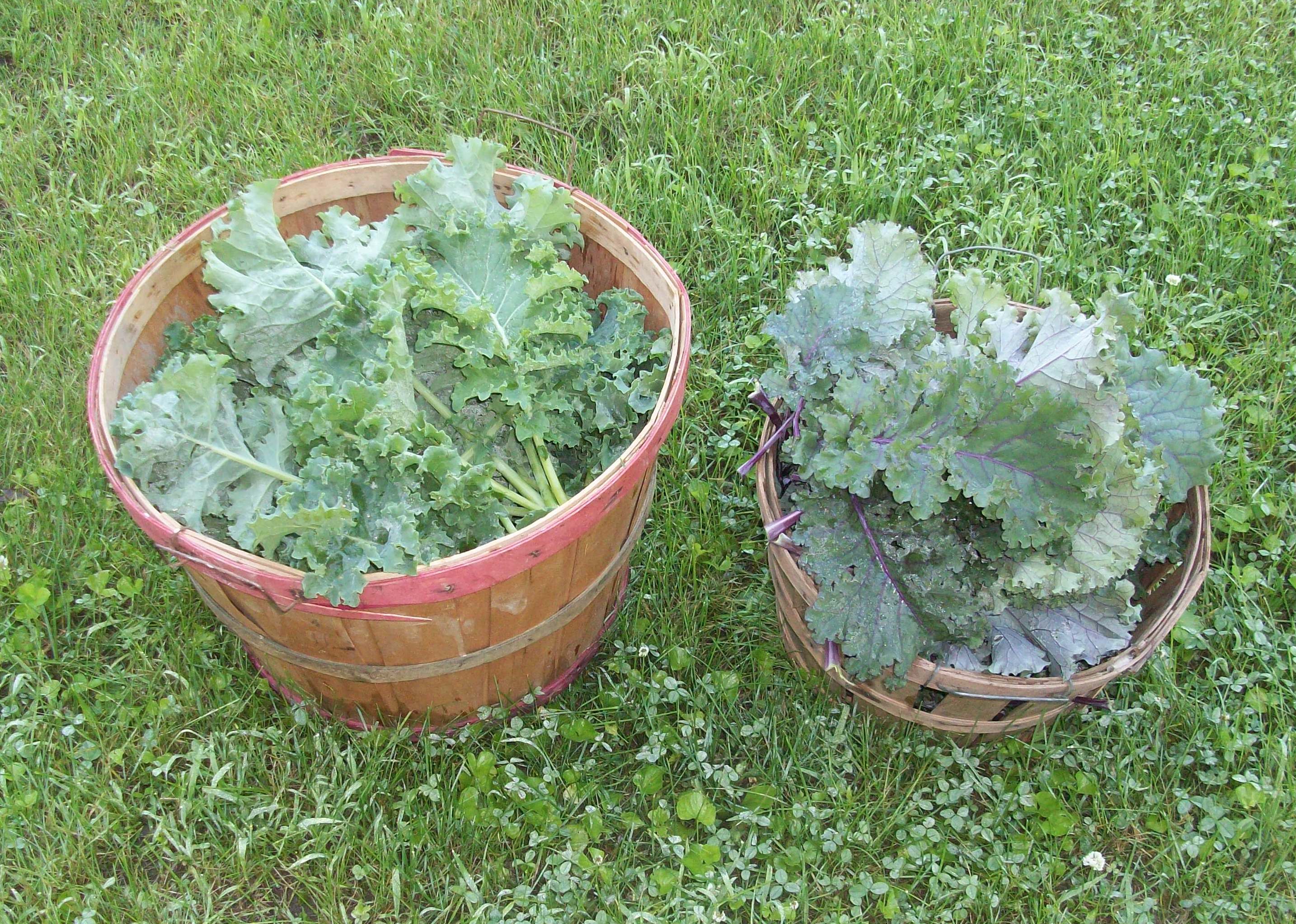
Kale is a money crop in my garden. By that I mean I learned how to grow it and have had success most years since. I distribute a lot of free kale to friends and neighbors. Today was the day to plant it along with broccoli. The varieties are:
Something was weird about the Calabrese seeds from Ferry-Morse. It appeared broccoli seeds were mixed with another kind, rendering the packet pretty useless for predictability. I planted some of each as the main broccoli crop will be Imperial anyway. We’ll see what happens.
Sundays in the greenhouse have become a day to which I look forward. The goats are due to drop kids any day, and of course we are well into lambing season. Our crew of five or six people works well together. I enjoy the conversation with twenty-somethings, although some of them will soon turn thirty.
I’m not sure the onions planted previously will make it. Some of them are tall and spindly. Others haven’t come up. The soil is damp so we’ll see how they come out. At this point if they fail I can get starts elsewhere.
My small, portable greenhouse arrived this week. Instead of keeping flats of seedlings on a short stack of pallets near the garage door and moving them inside at night, I’ll keep them here. I’m not sure how exactly it works, but look forward to learning.
The weather has made this year’s start better than 2019. Let’s hope it continues.
I planted our first Big Grove Township garden in Spring 1994. What I grew is lost in memory.
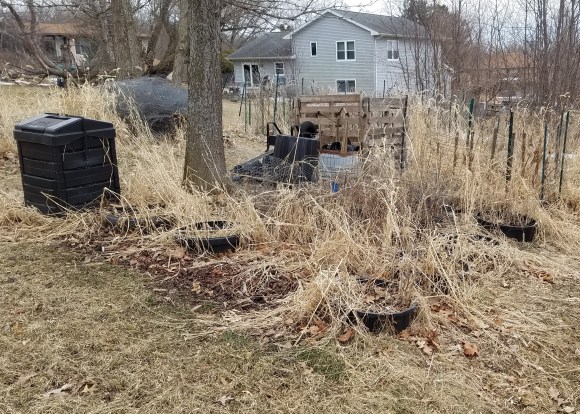
Yesterday the original plot looked a wreck with desiccated weeds and a hodge-podge of sunken containers, fencing, two composters, a wheel barrow, an old wash tub, six-inch pieces of drainage tile resting on a couple of pallets, and a locust tree. The locust tree was intended for transplant but it got away from me.
I don’t know if the locust tree will recover from last winter’s extremely cold temperatures. The tips of branches in the crown did not leaf out last spring. If it doesn’t recover I’ll take the tree out even though the shade it provides protects plants and conserves moisture during our increasingly hot, dry summers. The plot was not meant to be a permanent residence for trees.
A friend in Cedar County gave me black plastic tubs in which feed for their animals was delivered. I cut large holes in the bottom for drainage and buried them to grow potatoes, radishes, lettuce, basil and sundry root crops. Mostly it was for potatoes which when planted in the ground fed small rodents who thrive with us in the garden. The containers worked to keep them away from the roots.
Composters are necessary for a garden to turn organic matter into fertilizer. One is an open air composter made from pallets retrieved from the home, farm and auto supply store. Garden waste goes in there. The other is a sealed, black plastic container for organic household waste such as peelings, fruit cores, and other fruit and vegetable matter generated from the kitchen. That is, it used to be sealed. Over the years something got inside and has been pushing stuff out of the entry point chewed into the plastic. I should fix or replace it. Until I do it remains a place to dump the kitchen compost bucket and produces some usable compost. The next time I move it there will be compost.
If I had a garden shed I would not use the plot for storage. I continue to think about building a shed, but that’s as far as it has gotten. It won’t be this year, or probably next.
Despite all the useful clutter, the plot continues to be productive. Last year I grew broccoli, eggplant, radishes, basil and beets there. The year before I grew cucumbers. The containers are always busy with multiple crops each year. As I plan this year’s garden I see better utilization of this plot.
Ideas about 2020 in plot #1: Belgian lettuce on or about March 2; potatoes in containers on Good Friday; radishes in a container; a crop of something, cucumbers, eggplant, or maybe hot peppers to change from cruciferous vegetables planted here last year. These are ideas, and the beginning of planning. We’ll see how it unfolds, although Belgian lettuce seems certain a week ahead of the date.
I remember digging this plot in 1994, measuring the distance from the property line, a memory of nothing growing in the yard except grasses and a mulberry tree in the Northeast corner. I barely knew how to garden then. In the interim, my views of how to garden have changed for the better.
Based on the 15-day weather forecast, winter is finished. As temperatures climb and the remaining snow melts we had just better accept it we won’t have had much of a winter. It is time to lean into the growing season as soon as Mother Natures enables us. Soon it will be Spring.
I planted leeks in soil blocks at home today. They were,
King Richard, Johnny’s Selected Seeds, 75 days. One row of ten.
Megaton, Johnny’s Selected Seeds, 90 days. Three rows of ten.
American Flag, Ferry-Morse, 150 days. One row of ten.
This is a further experiment in starting plants at home. In the past I hadn’t paid attention to different leek growing times but American Flag is double that of King Richard. I double seeded King Richard and American Flag because they are from previous seasons. If both seeds sprout in each cell I’ll thin them.
Pulling plastic at Wild Woods Farm, Feb. 23, 2020.
Sunday a group of us gathered at Wild Woods Farm to pull plastic over the new greenhouse.
Pulling plastic takes a couple of experienced team leaders and a crew that can follow directions. The idea is to make the plastic covering as taught as possible then secure it with wiggle wire for years of use. The work proceeded as planned on a warm, clear and calm day.
It’s pruning time for grape vines, fruit trees, and any kind of tree. This weekend people were pruning in t-shirts because it was so warm. The concern is sap begins to flow before the cuts heal, creating an entry point for disease. Fingers crossed I got mine pruned in time. Folks are preparing to tap maple tree sap for syrup so we are at the in between time for finishing pruning.
My onions and shallots have sprouted and I moved them to the landing to get more light. They seem feeble at this stage. I’m not sure what else I can do but make sure they have moisture and light. This is the second year I tried starting them myself. The first didn’t produce usable onion sets. This year’s experiment is for the crew at Sundog Farm to start some of my shallot seeds as well to compare results. Eventually I’ll get this right, hopefully this year.
While garden and yard work beckons it is still winter. Piles of snow remain on the ground. Snow is forecast this week. There is hope for spring, but it is a false hope. It’s best to use the time to catch up on indoors work so when true spring arrives we are ready.
Panel of regional farm mentors. L. to R. Dayna Burtness, Nettle Valley Farm; Zachary Couture, Luthern Services in Iowa Global Greens; Alfred Matiyabo, Moving 4Ward Farm; and Derek Roller, Echollective Farm on Feb. 20, 2020 in North Liberty, Iowa
“The Johnson County Historic Poor Farm provides a public space for connecting to the land and local history through inclusive community-led opportunities,” said Vanessa Fixmer-Oraiz, farm project manager. She spoke at last night’s Johnson County Food Policy Council public forum where the poor farm was a featured topic.
This was my first forum as a member of the council. I brought a five gallon beverage jug, lemonade, coffee condiments, and a 20-pound bag of ice. One attraction of the event was a catered meal from a local food-centered restaurant. Attendance we good at about 80 people. We ran out of lemonade.
Solid ideas were discussed, centering around how to help beginning farmers get access to land, capital and markets. A number of “eaters,” a.k.a. consumers, were present, leading to discussions about pricing, quality, and health issues related to food. There was no lack of discussion and much of it was captured on audio-video or written down.
The county poor farm is not a priority for me. Some of the same people who attended a similar local food forum eight years ago were present last night. It seemed little progress has been made in establishing a vibrant local food system. The challenges are many, the approaches individualistic. There are activities, such as farmers markets and public events held at farms. This forum was an example of a public, food-related event. Discussion is positive, yet what is lacking is something to tie them all together in a coherent system. I don’t believe the poor farm will be that string of twine.
In 2017, the Johnson County Supervisors decided to revitalize the poor farm as a “New Century Farm.” The 3-2 decision was depicted as contentious by the local newspaper. Then supervisors Rod Sullivan, Mike Carberry and Kurt Friese voted to adopt this plan. Lisa Green-Douglass and Janelle Rettig did not. Friese died in office and Carberry lost his re-election bid, yet county support for the site persists. The forum was an opportunity to discuss how the poor farm might fit into a fledgling, disjointed local food system.
What made the 2017 supervisor meeting “contentious” was the discussion of affordable housing at the poor farm. Affordable housing is a key county issue, although I’m not sure of the benefit of sticking a development off Melrose Avenue, which is distant from the city-center and amenities like grocery stores. The poor farm is currently on the Iowa City bus route, but that route is being considered for elimination. There are logistical challenges to be addressed if the poor farm will be used for housing for people besides those who work or farm there.
One of the forum panelists, Alfred Matiyabo, gained access to land via the poor farm and this seems an excellent use of the resource. Land access is a key need of beginning farmers. More of that, as well as development of the planned trails and facilities, could create another valued farm incubator, conservation, and recreation site within the county.
My sense is two and a half years after adoption of the plan for the poor farm the community conversation is just beginning. As long as the supervisors have the will to fund activities, the project should be encouraged and supported. However, we can’t let it distract us from the bigger issue of engendering a local food system that matters in terms of satisfied consumers, economically viable farmers, and ecologically improved farming practices. The Historic Poor Farm fits in to the system, but is just one aspect among many.
The best part of last night was networking with friends and people I hadn’t met. If this is what being a member of the food policy council leads to, I’m ready for more.
The ten year old ran to the greenhouse to tell us, “There’s a lamb! I’m not kidding. She went to get the towel!”
The shepherdess left behind her power drill and rushed to the barn.
So began my eighth spring helping at Local Harvest CSA. More lambs dropped that evening and the goats are due soon. I’ve been around animals enough to recognize their pregnancy.
My job is to make soil blocks. I made enough for 3,120 seedlings. Once the seeds germinate and are established they will be transplanted in the high tunnel for a spring share of greens and lettuce. One of the farm partners was present planting flower seeds as well.
Yesterday had a couple of challenges. The hydrant outside the greenhouse was frozen so I carried water from another in buckets. The soil mix was frozen and required breaking up with a garden rake as I mixed it with water. Compared to previous February activities everything proceeded easily.
The seeding crew moved in and out of the greenhouse. There were a total of eight of us happy to be there and looking forward to spring.
To prepare for my first meeting as a member of the Johnson County Food Policy Council, I read council recommendations for the Uniform Development Ordinance. There were two things:
Ag-Exemption should be available for local farmers with less than 40 acres.
Agritourism enterprises need zoning regulations that allow for innovation and creativity on farms in the unincorporated areas of the county.
After what seemed like a never-ending series of public hearings, comments, and input gathering from multiple constituencies, the Board of Supervisors accommodated these recommendations in the UDO, if not in a way county farmers expected or fully appreciated.
A group dissatisfied with accommodation on the 40-acre rule sought relief from the legislature in the form of preemption of local control on the ag-exemption. This landed in the Iowa Farm Bureau’s lap where it remains for the time being. The first agritourism application was heard in Planning and Zoning Feb. 10. The idea of chip and sealing two miles of gravel road to improve access was predictable, but unexpected by the land owner. The same group introduced HSB650 for state preemption of local control regarding agritourism. That bill cleared subcommittee Feb. 12.
These things will work through the legislative process, but having made the recommendations, having the board of supervisors accommodate them as they saw fit, and now with bills being proposed in the legislature and agritourism applications working through county departments, what is next for the Food Policy Council? That is my question.
After one meeting I’m not sure. Answering that question will be part of what the remainder of my term, which ends in June, will be about. If we come up with good answers, I will apply for a full, four-year term. If not, I have a garden.
The recent example of Grinnell Heritage Farm, which withdrew from wholesale grocery store sales and from a community supported agriculture project, is instructive about the needs of local food producers. Farm operations are a balancing between producing enough to meet customer demand and finding customers who are willing to do business at levels that meet the realities of harvest, quantity, delivery, and seasonality. Andy Dunham of Grinnell Heritage Farm provided the following to Cindy Hadish who blogs at Homegrown Iowan:
The reason for scaling back is primarily due to the lack of any larger retail and wholesale outlets. We have tried for years to get into Hy-Vee stores with very limited success. When individual stores do buy, they usually only take $30-50 in product, which doesn’t even cover delivery costs in most circumstances. We have had more than one instance in which the store would buy a case of kale, put our name on the produce case, and then stock conventional kale out of California under our name. Whole Foods is still buying, but at lower prices than five years ago. New Pi is shrinking. Food hubs are folding or not scaling up fast enough. We were in the strange position of being able to grow more than the market seemed able to bear; a position that I would have laughed at as being impossible five years ago.
What policy should the 15-member Food Policy Council recommend and support this year?
We need to return to the reasons we even make policy. Maybe the council has been doing that already.
Our county’s local food system, including a robust network of local food producers, a food hub, farmers markets, and wholesale business with restaurants and grocery stores, is not well organized. Our policy doesn’t exist that I have been able to find. It is too similar to the de facto national policy, which according to Ricardo Salvador, director of food and environment for the Union of Concerned Scientists, goes something like this: “Exploit people and nature for agribusiness profit.” We are better than that now and need to improve.
Any policy recommended must serve the public interest. There are significant issues that could be addressed, including policies related to hunger, obesity and Type II diabetes, environmental degradation for food production, land stewardship, labor exploitation, fair compensation, and appropriate farm labor regulation. The council must learn from best practices of local operators and consider a broader source of input that includes public health, preventive medicine, dieticians, other communities with a local food system, and accommodation for residents who need it.
People hate government folk and volunteer councils like ours telling them what to do. A friend advised me to, “avoid colonialism.” Where I come from, that means “putting on airs of superiority.” I’ll do my best as we discover what the council wants to do.
~ The author is an appointed member of the Johnson County Food Policy Council. Opinions herein do not represent the council.




 Journey Home
You must be logged in to post a comment.