LAKE MACBRIDE— Part of yesterday was clearing the dead and dying squash plants from the garden and planting turnips and transplanting butternut squash seedlings. It is dicey as to whether the squash will produce because of the timing of first frost compared to the 110 day growing cycle. Too, the abundance of squash beetles have nowhere to go without the zucchini and yellow squash plants, so even though they had not found the seedlings this morning, one suspects they will visit and if they like it, attempt to stay.
In that plot, the Brussels sprouts are thriving, as are the three kinds of peppers, Swiss chard and collards. This is the most bountiful year of gardening we’ve had.
In the cool downstairs await six bins of tomatoes and two of broccoli for processing. This is part of a work for food arrangement with a local organic grower. Combine it with the approaching and massive apple harvest and there will be plenty of work to do.
Yesterday I planted three trays of seedlings: lettuce, kale, broccoli, kohlrabi and squash. There is plenty of time left during the growing season for these crops to mature, and I am particularly hopeful about new cucumbers for pickling.
As summer races toward Labor Day and October frost, there is much to be done in the garden and in life. We have to eat to live, and because of this summer of local food, there will be no shortage there. It’s enough to sustain a life on the Iowa prairie, at least for a while.
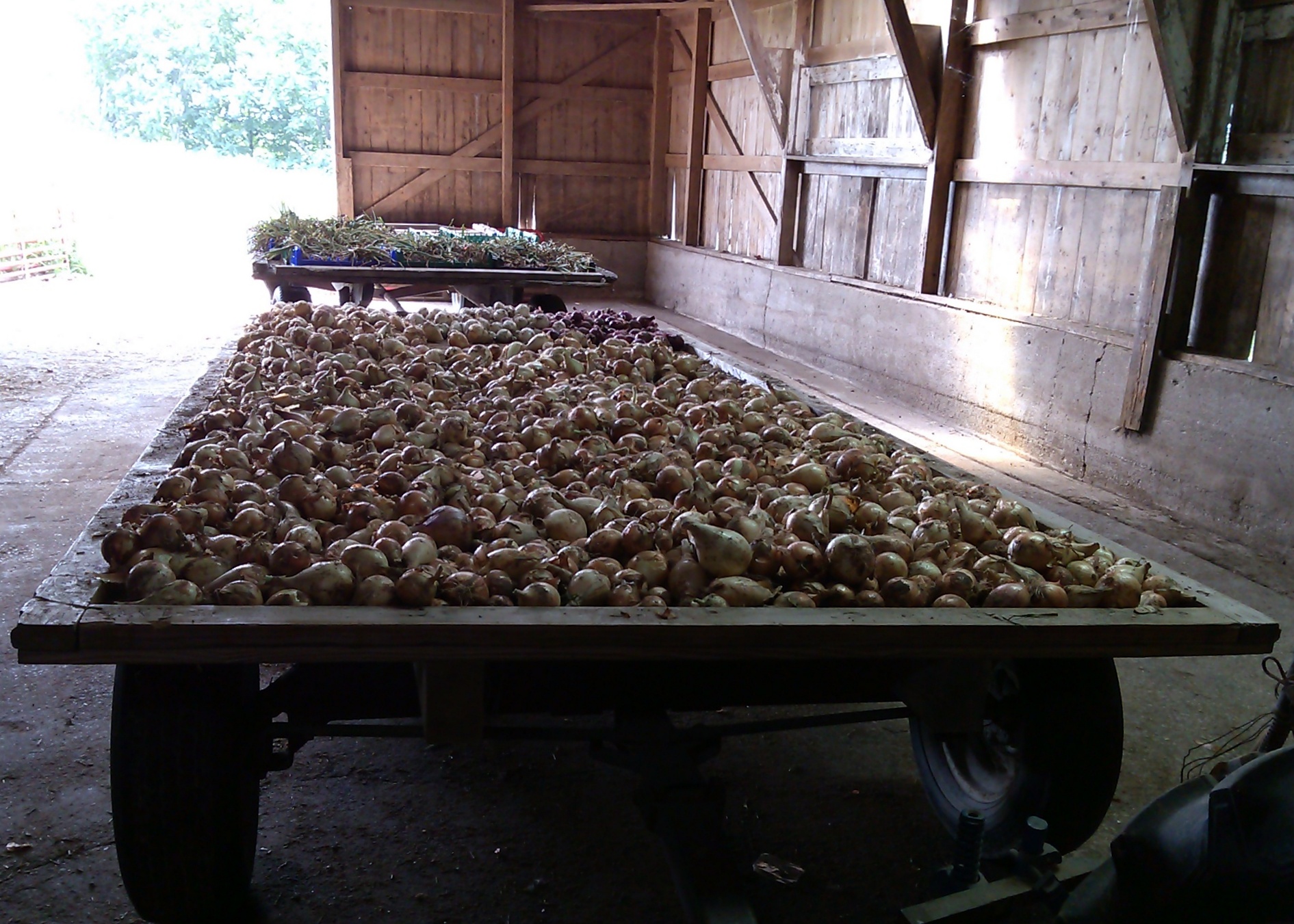
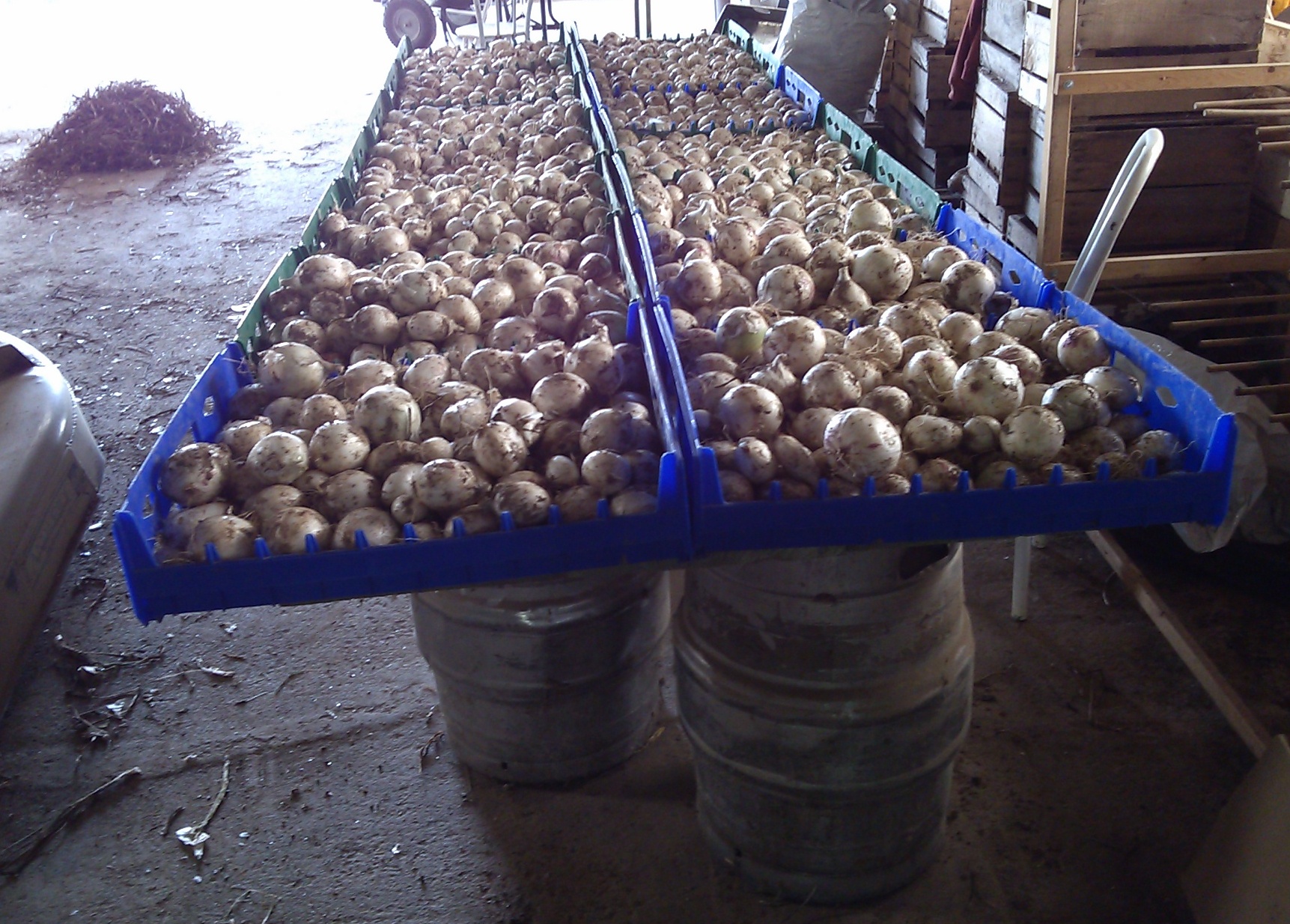
RURAL CEDAR TOWNSHIP— The onion harvest is in at the CSA, and more than two tons of white, red and yellow onions have been arranged in the germination house and barn to dry. Today begins the third day of trimming the excess leaves and arrange them for further drying. A few more four hour shifts and the project will be complete. Onions are one of the most popular vegetables, so the shareholders at the CSA will enjoy continuing to receive this bounty in their shares.
Trimming Onions
I filled the blank spaces in my garden’s cucumber row yesterday afternoon and gave the new patch a good watering. The zucchini are about done, the vines withering and yellowed. Same with yellow squash. There are butternut squash seedlings to plant, although I’m not certain they will make the 90-100 day window needed to mature— another experiment. Next weekend I begin paying work at a local orchard, helping with the weekend surge of city dwellers who come out for family entertainment and apples. That means this weekend will become a working time in the yard and garden, getting caught up on weeding, grass mowing, tree trimming, and preparing garden plots for the next iteration of planting.
White Onions
Fall crops will include turnips for the greens, radishes, lettuce and spinach for sure, adding to the most prolific of gardening years here in Big Grove. (Note to self: prepare more trays for germinating seeds).
My first crop of apples is getting close to ripe (there will be two harvests this year, plus pears), which means the CSA operator and I have to stay in touch with the work for tomatoes project so everything can get processed as it comes in at the same time. In my garden, the large tomatoes are beginning to ripen. We’ve been eating fresh tomatoes for about three weeks.
In the kitchen the storage space is filling up with onions, potatoes and apples, and the soup stock is getting used, making room for the approaching tomato harvest in a week or so. There is a lot to do before Labor Day.
LAKE MACBRIDE— Harvest season is accelerating, and there is more food available than we know what to do with. Through a complex system of work for food, gardening, barter and foraging, purchases at the grocery stores have averaged a ticket total of well under $20 consisting mainly of dairy, canned goods and sundries. It is down from an average closer to $100.
Last night we made a meal of a big salad that included lettuce, green peppers, kohlrabi, tomatoes and broccoli from our garden. The eggs came from bartering, the carrots from California, canned kidney beans from the grocery store, and everything else was part of my work for food deal at the CSA. That is, except for the dressing— balsamic vinegar of Modena (the less expensive stuff), first cold pressed extra virgin olive oil and salt and pepper. It is pretty exciting to have a salad with home grown lettuce in August, which is a result of my first attempt at sequential planting.
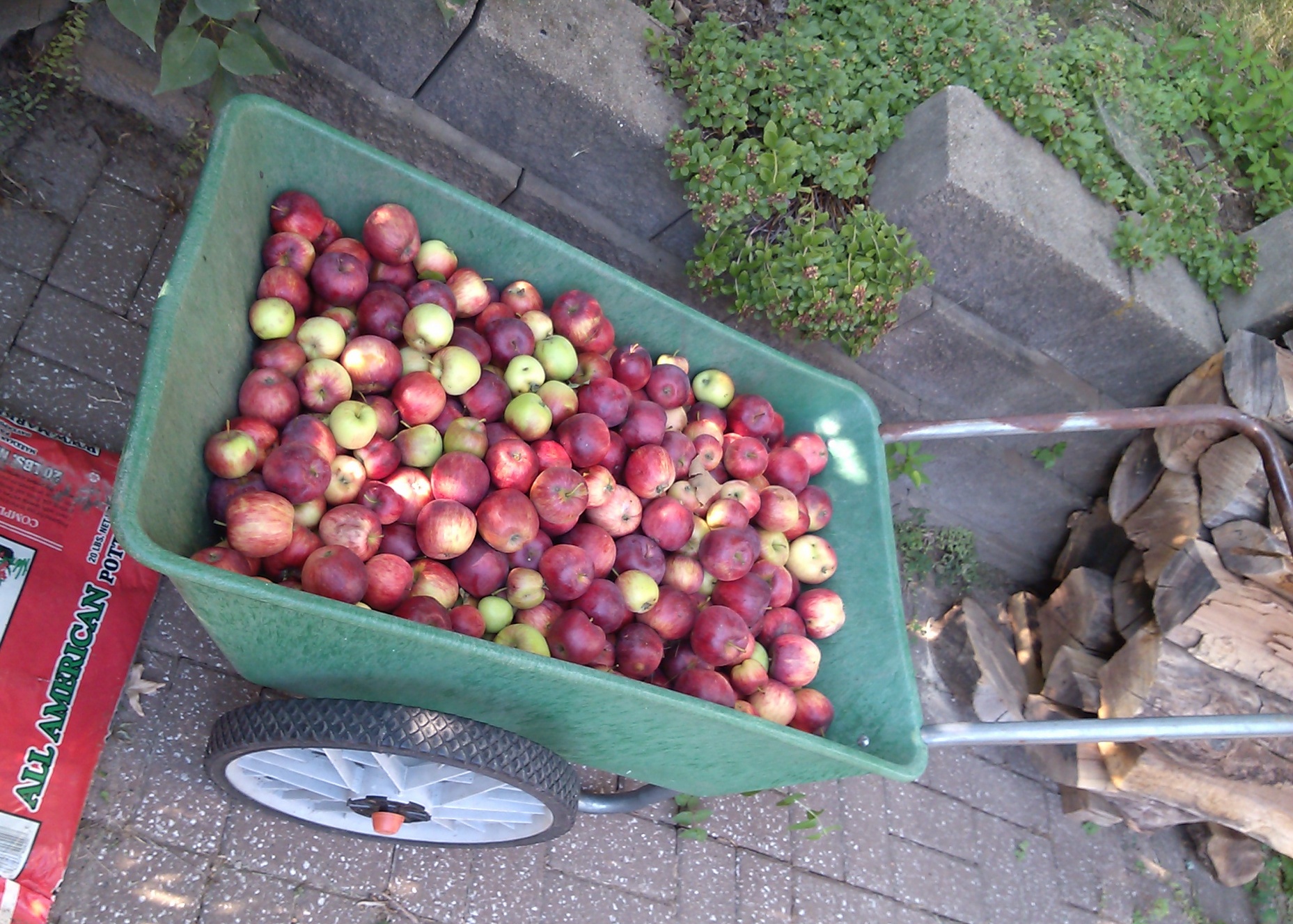
At the CSA, I picked half a bushel of ripe apples yesterday. On the kitchen counter a large bowl of them waits to be peeled and cut into slices for apple crisp. The apple harvest is going to be incredibly abundant this year, and will involve a lot of processing work. I am already thinking about grading the harvest into apples for hand eating, apple sauce and apple butter, juicers and livestock feed.
Likewise, with my work for food project with a second CSA, there will be an abundance of tomatoes for canning. We’ve been eating fresh tomatoes for a few weeks, and there is an abundance on the vines. We’ll be in tomato city soon.
The point in writing about this is to organize my thoughts and priorities. Without organization, the summer will be a hodgepodge of inefficiency. Too, if there is a chance to be a food broker, and leverage some of the abundance for sales, now is the time, despite being very busy. Even if a lot of other producers are thinking the same thing.
There is something about the transition of summer from celebration of Independence Day until Labor Day that is at the center of life. With the milder weather this year, cooler and wetter, we’ve had close to ideal growing conditions for home gardening. Every bit of food we can or freeze, is money in the bank. Now is the time to get this work done.
LAKE MACBRIDE— After cleaning out my email inbox, catching up on LinkedIn, twitter and Facebook, and skimming the scum from a batch of dill pickles, I walked outside evaluate the garden. Weeds are taking over again. It is disheartening how quickly nature attempts to return gardens to the wild. I pulled a few weeds, realizing tomorrow will be more of the same to preserve the yield. No worries, it’s part of being a gardener.
There were half a dozen zucchini; a yellow squash; peppers ready to pick— two green bell peppers, Anaheim and jalapeno; and stems of broccoli, enough for a meal. Hard to believe I was gone only three days. The cucumber seedlings planted Monday had an 80 percent survival rate, and the remainders will fill in empty spaces. Already a work queue is forming. Before continuing August’s work, for a few brief moments in the garden and orchard, I considered my experience in Chicago with the Climate Reality Project.
Gate 26
I know cults and utopian movements, and the recent gathering was neither. After spending an evening with disciples of the Rev. Sun Myung Moon in Munich, with charismatic renewal congregations of the Catholic Church in Ann Arbor, Mich. and in Belgium, and with the Rev. Tommy Barnett and his Westside Assembly of God in my home town, there aren’t many religious similarities. People gathered around a key speaker, and that’s about it.
These were not Rappites, Icarians, Shakers, members of the Amana Society, or of the Blythedale Farm community. Nor was it like what one finds in science fiction— the technology laden tales of Doc Smith, Walter Miller Jr. or Robert Heinlein. Comparisons drawn from these genres of society fall flat.
10 Percent Ethanol
A few so-called moles participated in the training, representatives of the oil and gas industry, deniers, and skeptics about global warming. Their reports about the conference have already begun to emerge. What these folks don’t seem to realize is they validate the fact that the Climate Reality Project poses a serious threat to the status quo of the hydrocarbon business. Their presence and criticisms make our group stronger, even if the hydrocarbon industry outspends the Climate Reality Project in its advocacy.
To resist arguments to act on climate change, the hydrocarbon industry has to understand them. Part of our participation includes an understanding that advocating for action about climate change does not occur in a vacuum. As is written in the Art of War, “it is said that if you know your enemies and know yourself, you will not be imperiled in a hundred battles.” What better way to know our opponents than to have them with us at the conference?
59th Street Station
That said, the Climate Reality Project is for the most part about Al Gore and his unique role in 21st century society. A number of attendees with whom I spoke pointed to Gore’s loss of the 2000 election as a reason for becoming involved with his movement. The slide show Gore produced, and is perpetually revising, is not a new story, but it is his story. His closing speech on day two of the conference was a compelling call to help prevent the Earth we know from slipping away from us. It was compelling because of who he is and who we might be.
Organizing for Action
Attendees agreed to perform ten acts of leadership related to the project during the coming year. Like many who were there, I’ll perform my share and more.
In the end, this movement is not about Al Gore. It is about living in a post-enlightenment society. It is a time when rational arguments have flown the coop, leaving the din of pundits and poobahs, and a dirty environment as a result of not understanding the global consequences of CO2 pollution. We can do something about that, and should. An answer lies in placing a value on carbon, which was my takeaway from the conference. Now the work begins anew.
LAKE MACBRIDE— The summer weather has been as good as it gets, a reminder of what it was like as a child, with endless days to play in the sunlight, safe and without worry. This summer has been unforgettable. Besides the weather, it has been a different and somewhat tribal life after turning to those with whom we live out our lives in the neighborhood.
A quick garden update. Removing the green caterpillars with a medical grade forceps did the trick of removing the pest, and the new leaves are growing bug free. The white butterflies are around, so there may be more, and I lost one plant, but the new growth looks great.
Cucumber Seedlings
Today, I harvested the rest of the green beans, composted the plants, and planted a row of cucumbers from seedlings. I planted the seed in pots on July 13, so they are two weeks from seed to seedling. The benefit of growing them this way is with the wet root ball, they can tolerate diverse conditions better to get off to a good start in the ground. They bring their own moisture with them to the initial planting. I watered them well and mulched. With my newly developed pickle addiction, I may plant more before summer is gone. There were some seedlings leftover from planting a row, so maybe next weekend.
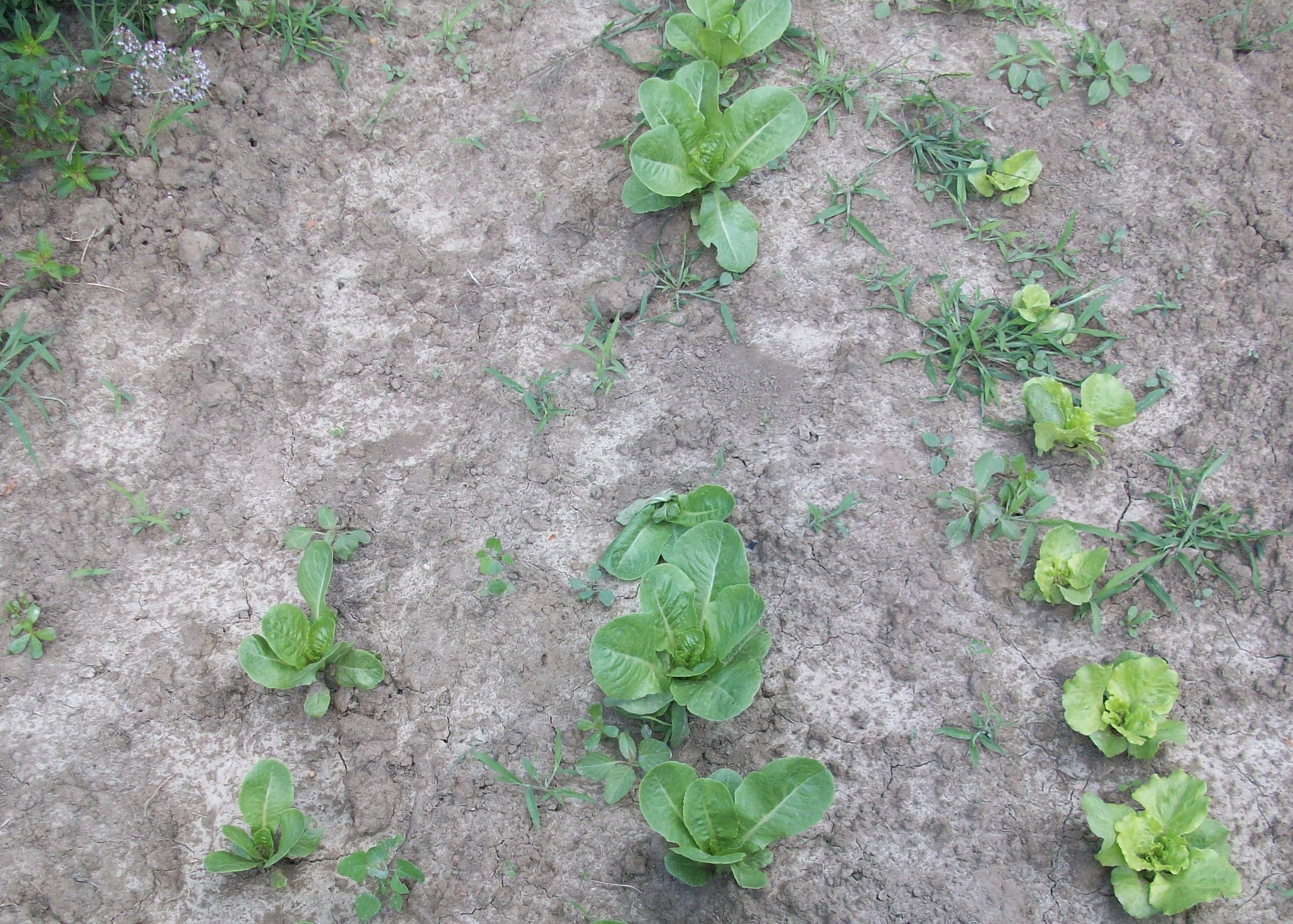
Three Rows of Lettuce
The current crop of lettuce is suffering. Not from the heat, or lack of water, but from disappearing. There used to be three full rows here, and some plants are missing. Not sure what is the pest, but it seems doubtful deer are jumping the fence as there are no deer footprints inside. Perhaps a rabbit, or something else. Whatever is left, will be enjoyed by the humans. The leaves are big enough to pick, so when I return from my trip, we’ll bring some in for a tasting.
Green Tomatoes
Finally, the tomatoes are maturing and three varieties have begun to ripen: two cherry tomatoes and Roma. Tomatoes have been the continuous crop in our garden, since the first duplex where we lived after our wedding ceremony. Perhaps there was a gap in Cedar Rapids, but not much of one. This year’s crop was the first I planted as seeds, and based on the results, I’ll do that next year as well.
Roma Tomatoes
The primary concern this year is to finish processing tomatoes before the apples come in. There are a lot of apples. I know what I want from the tomatoes: 12 quarts and 12 pints of tomato sauce, the leftover juice, 24 pints of diced tomatoes, and maybe a dozen pints of hot sauce using the cayenne and jalapeno peppers. Knowing how to approach it is half the battle.
Tonight for dinner, I made a pizza. Thin, wheat crust with tomato sauce I canned in 2011 mixed with fresh basil and salt. Toppings were half an onion from the CSA, thinly sliced zucchini, diced green peppers, sliced green olives with pimiento, halved cherry tomatoes and 6 ounces of mozzarella cheese. It is out of the oven, so I had better go sample.
LAKE MACBRIDE— As July draws to a close, much needed rain came last night, tapping lightly on the bedroom windows. Predawn, the driveway was wet, and the clouds had opened to reveal the waning gibbous moon which illuminated the landscape, reflecting its silvery light in pools of rainwater.
It seems halfway through the gardening season, and the spring abundance has turned to waiting— for the late lettuce to mature, tomatoes to ripen, and four or five varieties of peppers to fruit. The apple and pear trees are laden with fruit, weighing the branches so that I can’t get under them with the riding mower. Biting into a fallen apple, there was sweetness, but also the sourness of immature fruit. Not ready yet, but soon.
One Japanese beetle was spotted on an indicator plant I let grow in the garden, a weed the bugs favor. There was only one, and otherwise, the invasive species has left my apple trees and garden alone this year. Other gardeners and farmers in the area report the same thing. The only thing that changed from years they swarmed is that no one planted winter wheat in our area, favoring corn. This is anecdotal, but there seems to be a connection between winter wheat and an abundance of Japanese beetles showing up in our yard after the wheat is harvested from nearby fields. We dodged the bullet this year, and the apple harvest will be one of the best we have had.
The drama of a great gardening year has paused. We never know what today, or tomorrow might bring, and look forward to seeing how it unfolds as we reach toward winter. Winter. An unlikely topic now. Invoking it reminds us to live as best we can in the moonlight after rain has fallen.
LAKE MACBRIDE— The first two cherry tomatoes were ripe in the garden, so I picked them, along with three meals worth of green beans, two cucumbers, a bunch of kale, two stalks of broccoli and two kohlrabi. In addition, I planted more cucumbers and Swiss chard. There remains plenty to eat in our household.
It’s time to review the seed packets and plan the rest of the year’s planting. July 25 is the traditional day to plant fall turnips, and more radishes, green beans, cucumbers and spinach are in the works. The lettuce seedlings I planted about a week ago appear to be taking, and I’ll plant more before the summer is over. Because of succession planting, the salad days, where we can have fresh salads with dinner, may extend the whole summer. Here’s hoping.
When the morning garden work was finished, I cleaned up and drove to Lake Macbride State Park to sit on a bench and write. On an impulse, I stopped by a friend’s home where he was returning from a neighbor’s home with a bucket of just-picked Lodi apples. Lodi is one of the earliest producing cultivars, and the fruit is used in baking, applesauce and cider making. He offered and I took four to make a dessert. We chatted for a while, and then made arrangements to go foraging for black raspberries after supper.
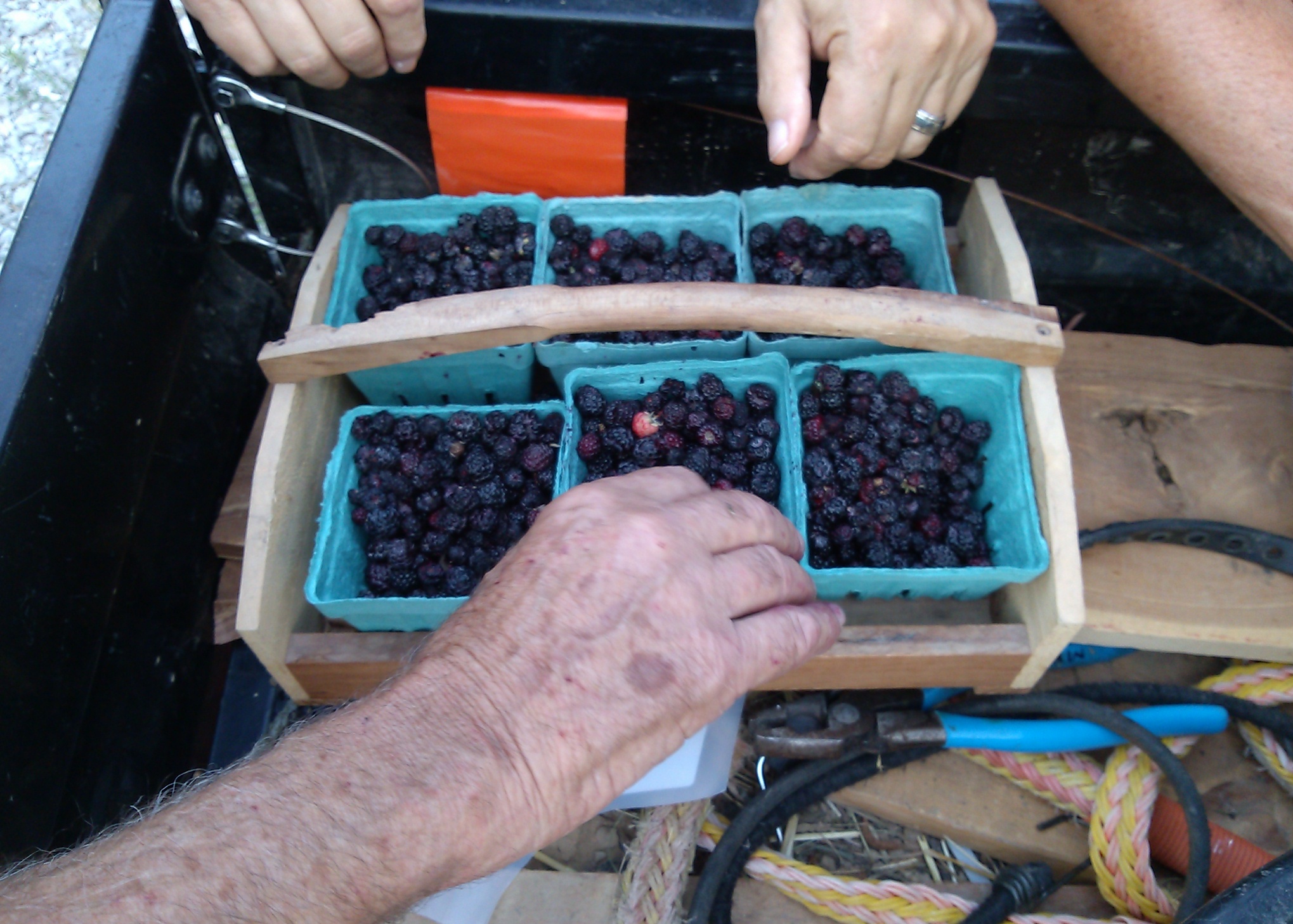
Black Raspberries
With the sun heading for the horizon, we met up and drove a few miles to a mutual friend’s acreage. We spent about 90 minutes trolling the wood line, where all kinds of produce was evident. Wild plums, hickory nuts, blackberries not ripe yet, and plenty of ripe black raspberries. We filled two gallon jugs and split the proceeds.
We toured the property owner’s garden and the apricots were ripe, falling from the tree. Like many gardens in the area, this year it is doing well.
On the drive home, we talked about the Michigan cherries due in at a local orchard on Saturday. I plan to stop by and participate in the summer cycle of fresh produce and the social life surrounding it. Not sure which I like better, and both seem inextricably intertwined.
LAKE MACBRIDE— Summer’s harvest has been bountiful and we are less than two weeks in. Keeping up with the vegetables we grow and get from the CSA, has been a challenge of cooking, preserving, refrigerator and freezer space, and rotation. Thus far, little that was brought into the house spoiled. We are thankful to have enough food to eat in a society where so many people go hungry. Even our small town of 2,037 souls requires a food bank, making adequate food for everyone a tangible, local issue.
Yesterday was the first pick of green beans and we steamed them for dinner. Over the years Asian aphids have been a pest for this annual favorite— to the extent I quit planting them for a while. This year they were pristine in the basket. Not sure what happened, but I suspect row-crop farmers didn’t care for the damage to soybeans, and “did something” during the past few years.
I picked broccoli for dinner, and some Swiss chard. Spinach is ready to harvest, the last before the fall planting. There is also lettuce ready to go and plenty of herbs. The apple trees are still looking good: no sign of dreaded Popillia japonica, or Japanese beetle, which during previous years had made its debut by the first of July. Last year was a horrible year with them, and they are sure to arrive soon.
A summer indulgence is to make pesto. The process is simple. Into blender put a cup of first cold pressed extra virgin olive oil, with equal amounts of chopped garlic scapes, basil leaves and kale leaves with the stems removed. Blend the mixture, adding enough olive oil to make it a liquid, or additional garlic and basil to thicken it. Then add a handful of pine nuts, half a cup of Parmesan cheese and salt to taste. Blend until the mixture is a thick puree. The recipe produced enough to fill Mason jars with pesto for the freezer. I reserved some for immediate use, of course.
The thing about pesto, is it can be made with a number of summer greens and herbs. It’s a way to preserve the summer harvest. The other thing is a person can consume only so much of the delicious spread/sauce at a time. For now, we’re living the high life and contemplating dishes, other than just spreading it on bread, in which to use it. Pesto pasta will definitely be one dish on the menu.
Once one is plugged into the local food system, there is little cost to make pesto, except for the olive oil, which is always a luxury. During the summer harvest, a gardener and cook can live in the lap of luxury, even on a limited budget.
LAKE MACBRIDE— Summer arrived and the battle for the cruciferous vegetables has begun in earnest. The progeny of the white butterflies— that were flitting about laying eggs less than two weeks ago— have arrived in large numbers. Too many to count, the small green caterpillars have done their damage to broccoli, Brussels sprouts, collards and kale leaves planted in the middle southern garden plot. They either like something or they don’t because the Swiss chard planted between the kale and collards was untouched by the caterpillars. The bugs also appeared in the spring vegetable plot where I put a few extra broccoli and kohlrabi seedlings. They don’t seem to bother the turnips, radishes and arugula, also cruciferous vegetables, although something else pokes tiny holes in those leaves.
I don’t have many defenses, except to limit the damage by picking off the caterpillars and dropping them into a bucket of soapy water. Because my fingers are so big compared to the bugs, I went to the medical supply house and bought a surgical grade, stainless steel forceps to aid me in plucking them off the leaves. It’s a nice piece of equipment.
I harvested all of the kale to get rid of one food source for them. It is now debugged, washed, dried and stored in the refrigerator. I have new collard, Swiss chard and kale seedlings ready to plant, so I need to consider where to put them. Outside the current colony/restaurant for caterpillar dining, methinks.
While I mull that over, I’ll make a smoothie with kale, strawberries, peach, Greek yogurt, honey and ice. By acting quickly, I got my share of the kale harvest and intend to enjoy it.
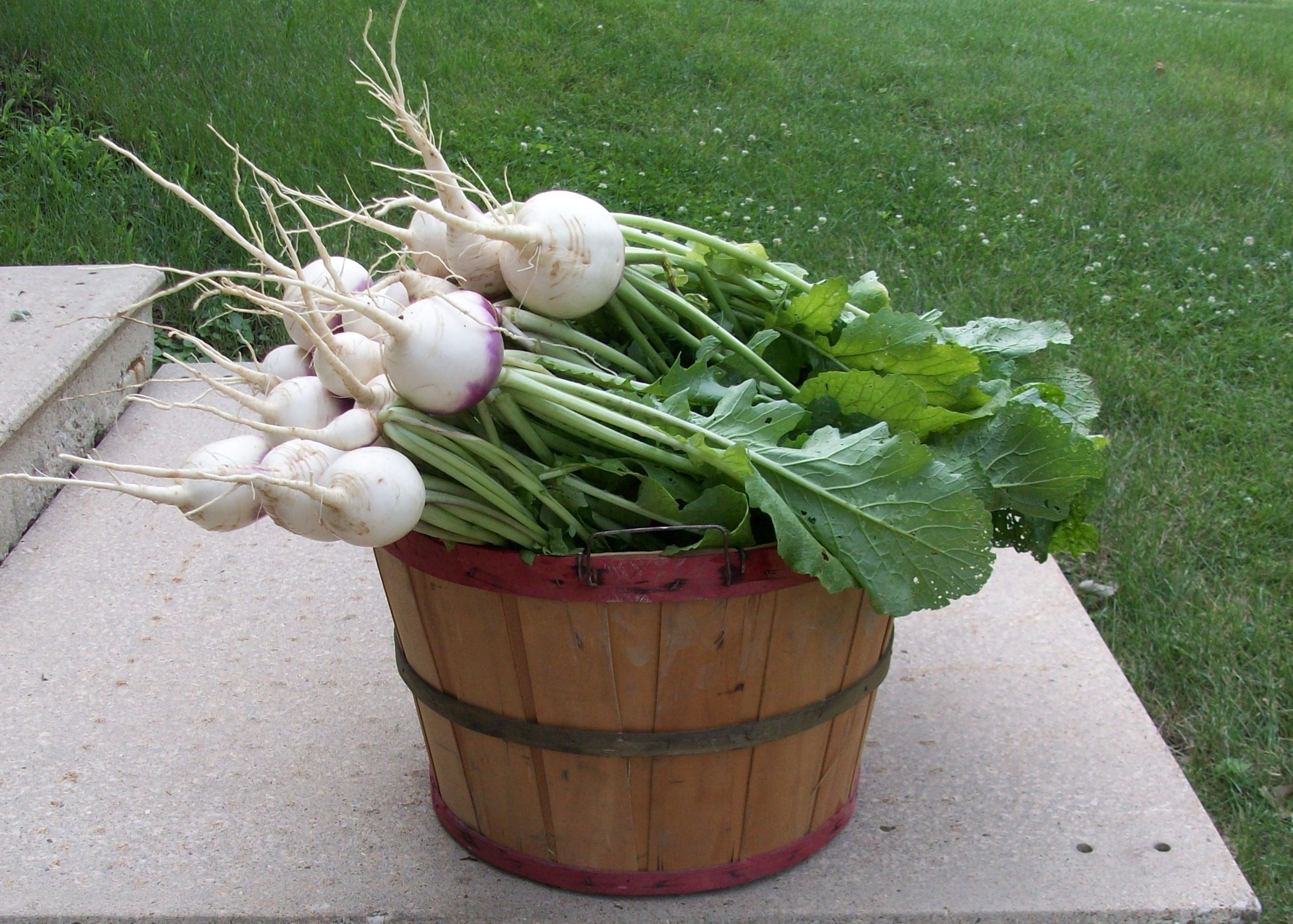
LAKE MACBRIDE— Today was the turnip harvest, and the crop was the best ever: plenty to use this season, and more to give away. There were so many greens that once I reserved a couple of gallons for soup stock, the rest went into the compost. It is turnip city over here.
We have a tradition to make soup stock in our household when the turnips are in. A large pot is coming to a boil on the stove. It includes, broccoli stalks, carrots, onions, celery, zucchini, yellow squash, bay leaves and importantly, the turnip greens which color the stock deep brown and add a delicious flavor. No salt is added until the stock is used in the final application. After cooking for a few hours, the stock will be turned off, to sit on the stove overnight, and canned in Mason jars tomorrow. In the past, I’ve used the cooked vegetables from stock making as a base for barbeque sauce, but I have several jars leftover from the last batch.
Great Grandmother with Turnips
With all of the large roots, we’ll have roasted root vegetables with turnips, potatoes and onions. If we had similarly size beets, those would be added. The recipe is easy— cut everything in half, approximately the same size. Coat with olive oil, salt and pepper to taste, and place open side down on a cookie sheet. Roast at 350 degrees for one hour or until done. It is a highlight of the season.
According to a CSA farmer, July 25 is the date to plant the second crop of turnips, and I’m about ready. One more row this year should be sufficient, and if I can find beet seeds, I’ll plant those as well. The question is how to arrange the spring vegetable patch for optimal July planting. A topic for another day as I bask in a successful harvest of a traditional vegetable in our family.










 Journey Home
You must be logged in to post a comment.