LAKE MACBRIDE— The Fourth of July was as perfect a day of weather as we get. Mostly clear skies, moderate temperatures, and low humidity. I opened the garage, turned on a fan to evaporate standing water left by the rain, and spent an inordinate amount of time mowing, then re-mowing to collect grass clippings for the garden. I trimmed the edges until the batteries wore down.
At the end of the day, the garage was straightened out and my car parked inside for the first time in a couple of months. Our lawn of mixed grass and prairie plants looked as good as it gets when it was done. Summer has turned.
With the closely cropped grass, hiding places for rabbits are gone and they were lurking around near the celery seedlings. I moved the seedlings inside for the night, and hopefully the rabbits will find something other than my garden to eat now that the clover is mowed and decomposing on a garden plot.
Some of the tomato plants are four feet high and there is an abundance of flowers. The prospects for a crop are good. Canning jars are at the ready.
I hung my old American flag from the garage door frame. It is getting faded after more than 35 years of service. A new one that flew over the U.S. Capitol is available, but I don’t want to re-drill the holes in the frame to accommodate it’s larger dimensions. Like me, the old flag will serve.
What’s next?
It’s time to break out a copy of The Great Gatsby and read it again now that summer has turned. Then what?
Fresh basil is in from the farm, putting a tomato-based pasta sauce in the kitchen queue. To be made with basil, garlic scapes, farm onions and whole canned tomatoes from last year. A little salt, and maybe some fresh oregano from our garden. Add a side salad, and there is dinner— for one night, and maybe leftovers for tomorrow.
But this is not really a plan. It is living in the present, which for now will have to do.
LAKE MACBRIDE— The Harvard Business Review wrote about the application of mise en place to daily planning. While most of us are not professional chefs, laying out the ingredients of a day and conceptualizing the execution can make us more effective in the way it aides the best chefs.
“What’s the first thing you do when you arrive at your desk?”asked author Rod Friedman. “For many of us, checking email or listening to voice mail is practically automatic. In many ways, these are among the worst ways to start a day. Both activities hijack our focus and put us in a reactive mode, where other people’s priorities take center stage. They are the equivalent of entering a kitchen and looking for a spill to clean or a pot to scrub.”
Like many people, I check my email, the Washington Post, BBC, Guardian and my twitter news feed before turning on the light in the bedroom. The problem is obvious. A friend wrote a note about a meeting next week, which I read around 3 a.m., and have been thinking about since. While interested in the content and potential outcome from the note, it was a disruption that could have been handled differently. The first thing I did after turning on my computer was to write a response.
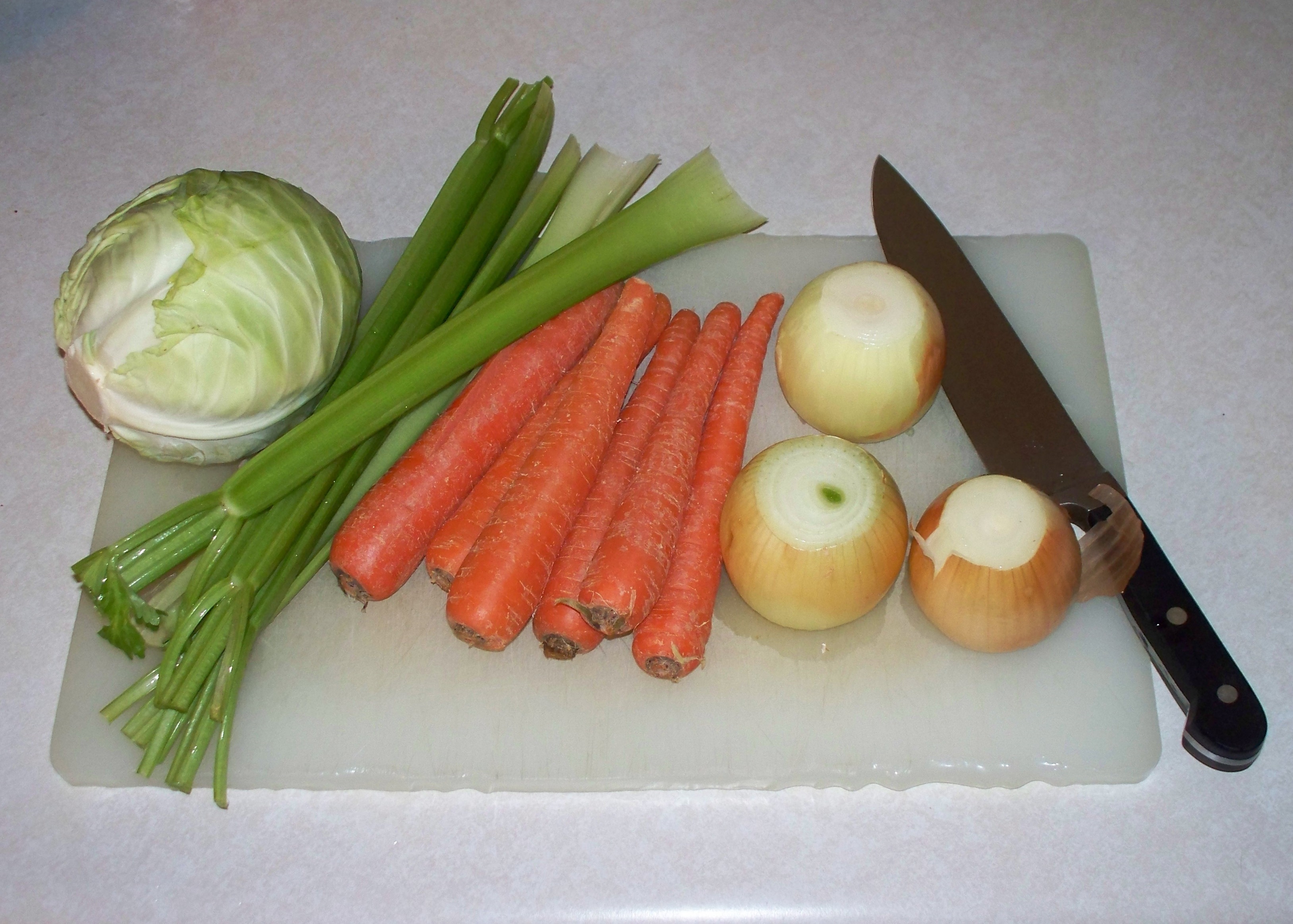
I’ll try mise en place as a planning tool a few times and see if it helps make my days more productive. Today is soup stock day— a perfect place to start.
As a writer, mise en scène is more engaging than mise en place. Borrowed from film theorists, mise en scène is a step ahead of mise en place in that it considers what goes into the camera frame and sound track, which when combined with cinematography and editing tells a specific narrative. Mise en scène sets the time and space of a creative narrative whereas mise en place is prep work to create a specific result. Both have measures of effectiveness, but mise en scène enables better creative possibilities.
It wouldn’t hurt to assemble and think about the elements of a narrative before writing, and to an extent we do that. Yet the process of writing is such that once we go down the rabbit hole of a particular topic, the outcomes have more diverse potential. We often don’t know where we will arrive, or how, at the beginning.
A case could be made that we should begin with the end in mind— not making that case here. Writing is a métier that includes processing diverse experiences and making some sense of them. It is impossible to know the end unless the piece is utilitarian the way a letter to the editor or newspaper article is.
Since writing is a lowly paid occupation— its meager income supplemented by farm and warehouse work— managing time is a must. Some may labor for days over a 500-word essay, but it is more important to crank it out, take the learning and improve during the next piece. Mise en place may help us do that more effectively with better results.
The phrase “summer reading” evokes when we took off from school, and had leisure time between Memorial Day and Labor Day. For some it still involves barbecuing, boating, swimming, vacations and a host of activities tied to youth. Today, people continue to summer, but briefly and in competition with the constant clamor of the exigencies of modern life. People are busy trying to survive and get ahead, all the time, and there is less time for reading. Here are a few of my picks for reading during summer 2014.
Books
The classic novel of summer isThe Great Gatsby by F. Scott Fitzgerald, and I recommend a second look.
My summer fiction reading will include The Home Place by Carrie La Seur. La Seur is the founder of Plains Justice and a practicing attorney in Billings, Montana, where she has family roots. The Home Place is La Seur’s first novel, due to be released July 29. A section of the book, can be found in New Voices in Fiction Sampler: Summer Selection, which can be downloaded free for Kindle here.
If you have not read Maya Angelou’s I Know Why the Caged Bird Sings, it is worth the time, even though it was published in 1969. “The first in a seven-volume series, it is a coming-of-age story that illustrates how strength of character and a love of literature can help overcome racism and trauma,” according to Wikipedia.
Poetry
Pick one poem, any one, and read it… aloud. Then read another. Go to the public library and find the poetry section. Spend an hour browsing through whatever comes into view. Readers will develop their own interests, but in my to-read pile are The Oldest Map with the Name America by Lucia Perillo, Collected Poems by Vachel Lindsay, Miracle Fair by Wisława Szymborska-Włodek, The Spirit Level by Seamus Heaney, An Inconvenient Genocide by Alicia Ghiragossían, and Scattered Brains by Darrell Gray.
Screen Time
Turn off the television. It won’t kill you. In our house, we haven’t disconnected from cable, but we shed the premium channels, including MSNBC, long ago. We rarely turn on the T.V. and life has been better. I suppose if we cared about the World Cup, we’d watch more.
That said, we have screen time, and using it efficiently is an important endeavor, equal in importance to the time we spend in the real world, talking and listening to real people. In many respects, time in front of the screen has replaced television and print media and can provide value.
LAKE MACBRIDE— It rained on plans to work in the garden and yard. So now, the long lawn will wait until the next dry, sunny day; weeds are getting respite from being chopped; and the garage is clean enough for one auto. After the last, I went upstairs to the kitchen and processed vegetables for a meal— dinner of fresh asparagus, rice, salad greens with chopped vegetables and a veggie burger. And radishes. And spring onions. And soup stock with vegetables past their prime— mixed greens, asparagus stems, onion, celery, carrot and bay leaves. Simple fare for a simple life.
I have written about 2,000 words in two articles today, making this my third. Writing brings a sense of calm and I need that now. Better medicine than the antibiotics for my frying pan burn or the iced tea with blended whiskey. Writing works through our tension and helps release one’s cares, at least for a brief time. We write to clarify things. To straighten out a turbulent life, and by creating a narrative, yield understanding. That’s what we hope.
It doesn’t always work that way. But for now… rain came, dinner’s ready to cook, and what else is there to do on the Iowa prairie?
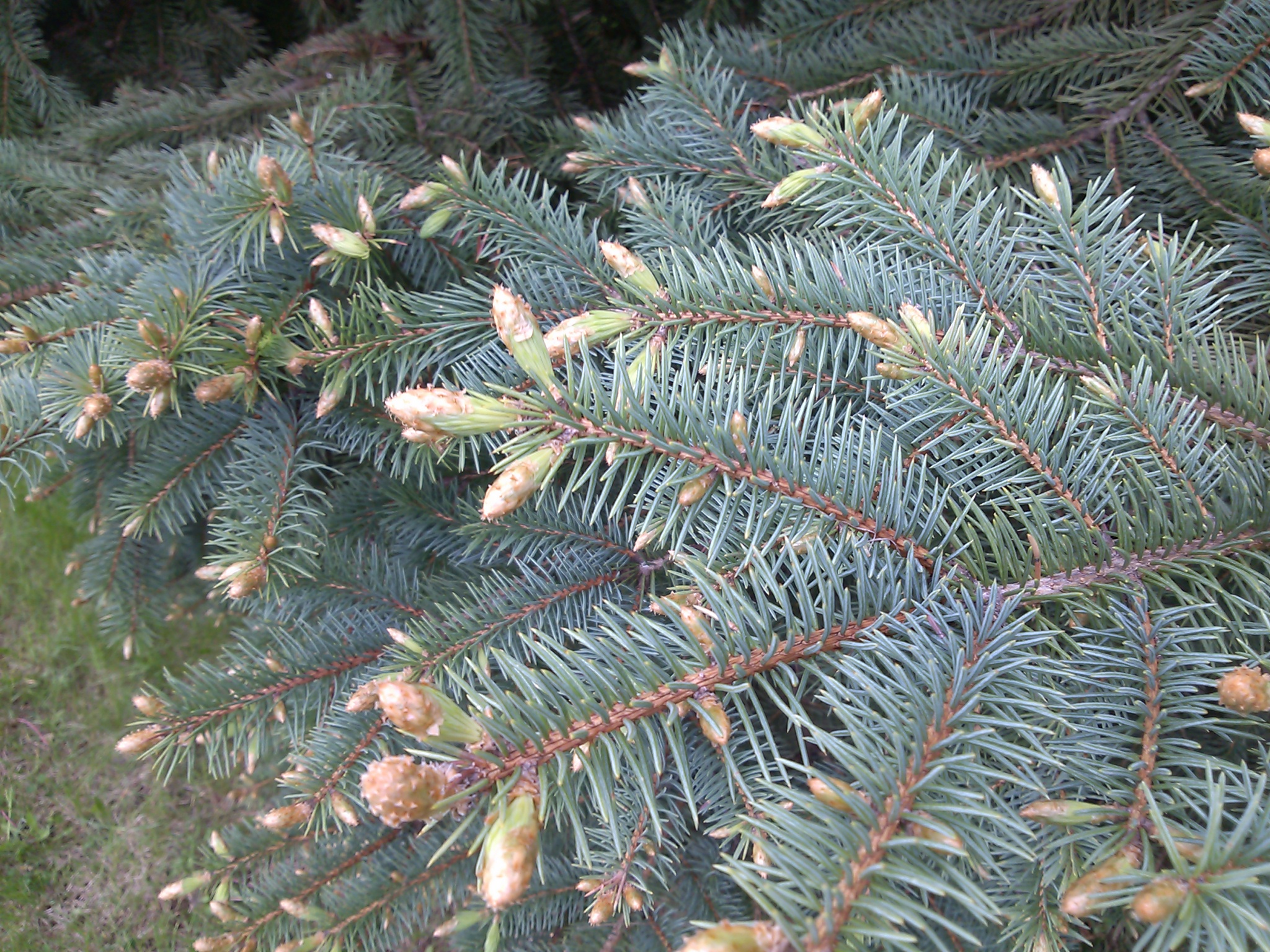
LAKE MACBRIDE— The Blue Spruce (picea pungens) showed new growth during my yard and garden walk. The tan-colored tips are breaking away, revealing young needles below. What was once a nine-inch seedling is now more than nine feet tall. It has been a nice, non-native addition. We are all transplants of a fashion. While it was not my intent when planting the Blue Spruce, it serves as a reminder of many recent trips to Colorado.
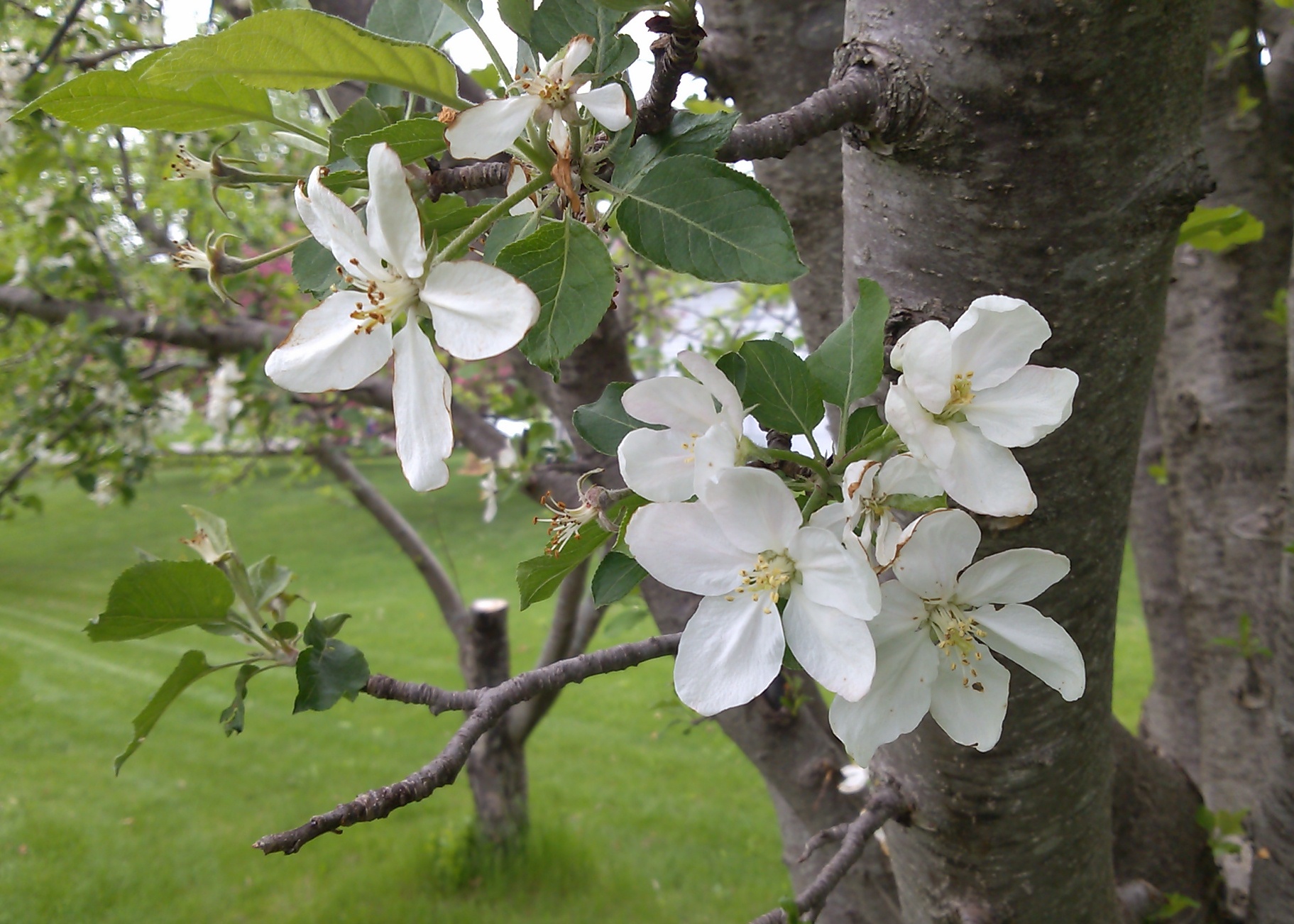
Apple Blossoms
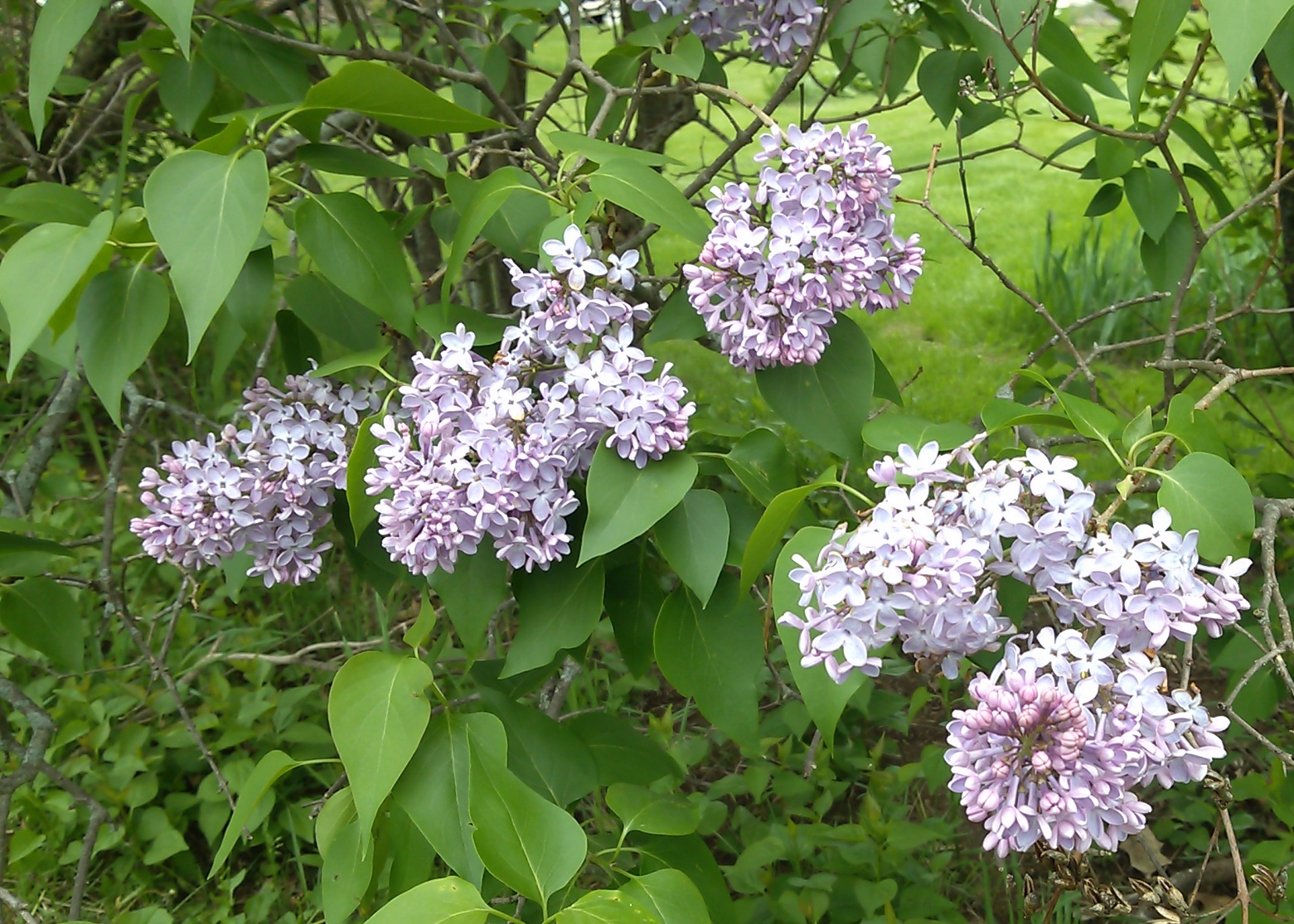
The lilacs and apple trees in bloom made the first lawn mowing memorable with fragrances that bond me to this place. The bare rooted plants from the nursery were dormant but have come alive and enliven me.
The mowing deck was set as high as possible during the first cut of lawn. The grass was long and my process is to prepare for re-cutting and collecting the clippings today. After the first cut, the lawn looks lush.
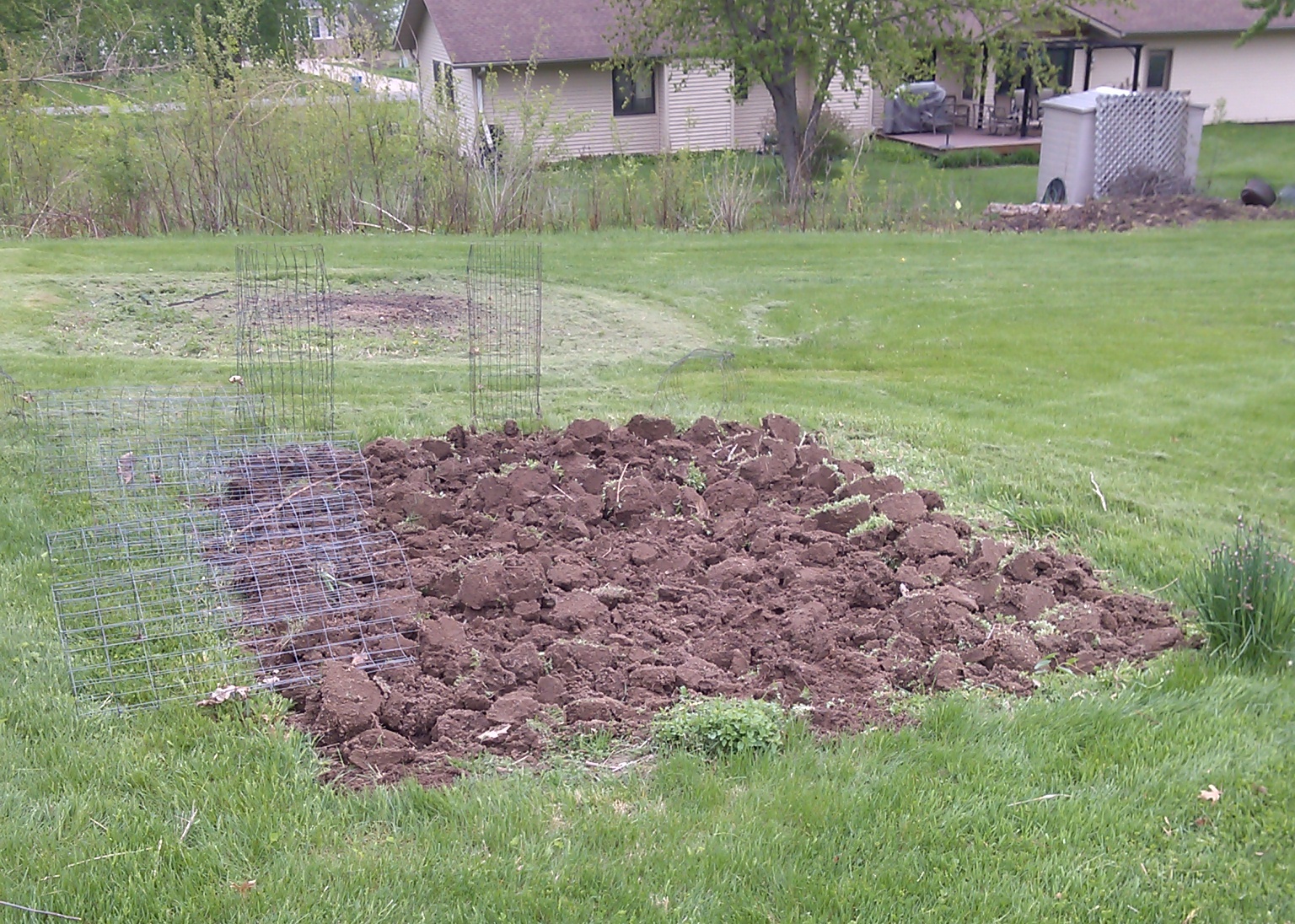
Space for 18 Tomato Plants
I spaded the first of two tomato plots. After working the soil with a rake, I’ll plant the first seedlings and dump the clippings directly on the plot as I cut them. I left a shallow row on the north end for existing chives and oregano. That space will be filled out with other herbs.
The tomato decision has been made. The first plot will be home to eighteen growing cages bonded together in couples on a single stake. This is to reduce the number of metal stakes used and optimize the space around them. One row will be the Martin (F1) Italian tomato which retains a variegated green and red color when ripe. The intent for this tomato is ketchup making, although that may change as they mature and we see what they taste like. The center of the plot will be three types of cherry tomatoes (Sweet Olive (F1) baby grape tomatoes, Black Cherry (OG), and Gold Nugget (OG) golden cherry tomatoes). The third row will be Olivade (F1) and Monica (F1) (OG), two tomatoes for use in sauces, and Rose (OG), an heirloom pink tomato. Unlike in past years, I plan to keep closer track of the varieties and how they produce.
Lilac Blooms
The other tomato plot hasn’t been finalized, but it will be some combination of Acer, Beefsteak and Best Boy planted in similar couples. The Beefsteak and Acer are slicers, and the Best Boy will be canned whole. Whatever tomato seedlings I don’t use will go to my sister-in-law’s garden.
A local chef is seeking spring garlic, and it looks like my plot will produce an abundance. Once it matures to spring garlic stage, I’ll harvest a couple of bunches and take it to his restaurant to barter for store credit.
LAKE MACBRIDE— Apple blossoms are in full bloom, and it never lasts for long. Once bees pollinate, the petals fall in snowy softness, carpeting the ground as quickly as they went from pink to bloom.
One of the farms where I work is an apple orchard— a resource for learning about my four trees. I recently sent a question via email.
“Can last winter’s pruning cause a lot of blooms this spring?
I pruned my trees and the Red Delicious tree is loaded with blooms like it was last year. Not sure the pruning helped that, but I was expecting very little fruit because it was a branch buster last year.”
The answer came promptly:
“I spoke to my dad about your question. He said that pruning and the number of blossoms aren’t directly related. The exact reason is quite a long answer, but he said that you must just have a good tree!”
That’s a good enough answer for me, “it’s a good tree.”
I did my first experiment in making flour tortillas at home yesterday. They came out more flatbread than tortilla, so it needs more work. Trouble is we’re not running a test kitchen here and need to consume what we cook. We’ll enjoy the flatbread, but wait a couple of weeks for round two.
The dough recipe included some baking powder, which leavened the bread. Next time, I’ll omit it and see if the result is more tortilla-like.
There is a zero percent chance of precipitation through sunset today, so hopefully the ground will dry out, enabling preparation of more garden space for transplanting. There is a lot to get into the ground before Memorial Day.
The row croppers took advantage of last week’s drying conditions, and according to the USDA crop report, 70 percent of the corn and 20 percent of the soybeans are planted, putting spring planting right on its traditional schedule.
Reflecting on time spent with Physicians for Social Responsibility (PSR) last week, I am glad I participated in their national meetings. My primary interest in the group is their long history of nuclear abolition work. Dr. Ira Helfand from Massachusetts has been a prominent figure in the nuclear abolition movement, and it was good to spend some time with him. Likewise, the Washington, D.C. staff was there, along with chapter leaders from around the country. The organization has expanded its reach beyond abolition to include the relationship between health and climate change, and toxic substances in the environment.
I broached the topic of the effectiveness of non-governmental organizations (NGOs) in effecting policy change. In today’s political environment, more people associate with NGOs, and a lot of people make a living doing that work. My concern is that in the perpetual chase for grant money, the number of funders is reducing, and whatever may have been successful last year, is out of step this year.
In Washington, there is a small group of people working on nuclear disarmament and they talk among themselves constantly. This includes people in NGOs, the U.S. and foreign governments and citizen advocates. I met a number of these people during my treaty ratification advocacy work in 2009. However, there is a certain self-interest they have in keeping conversations alive that perhaps may be better off placed on the back burner.
We are entering an era when regardless of which political party dominates the Washington conversation, the same work goes on, and currently it is work that includes refurbishing the nuclear weapons complex with a great diversion of funds. A person can’t be happy about that.
Nonetheless, while NGOs may not be as effective as I would like, they are currently the only game in town, so I plan to re-engage with PSR over the near term. The work will include rolling out a program on nuclear abolition to local Rotary clubs, working in between gardening and yard care sessions.
LAKE MACBRIDE— Jaime Oliver and Gennaro Contaldo taught me to make pasta without tomato sauce. The two television chefs went searching around London for wild rocket, brought it to Oliver’s kitchen, and made a simple pasta dish with it. That local greens could be the beginning of a pasta dish was a new idea I am adopting into my cooking.
We have an abundance of baby bok choy from the CSA and a large bag of leaves separated from the stems was the starting point for last night’s dinner.
Ingredients: a bread bag of roughly chopped baby bok choy leaves, three full heads of garlic peeled and sliced thinly, bits and pieces of aromatic vegetables leftover from salad making (carrot and bell pepper), a cup of grated Parmesan cheese, a half pint of last summer’s pesto thawed from the freezer, a roughly chopped large onion, and salt and pepper to taste.
Process: Bring a pot of water to boil for the farfalle. While the water is heating, perform the chopping work: rough chop a large onion, dice the carrot and bell pepper, rough chop the greens and peel and slice the garlic heads. This is a lot of garlic, and our kitchen has two dozen from last year needing to be used up before the spring garlic comes in.
In a large frying pan sauté the onions and carrots in olive oil. Add salt. Add the bell pepper next and when the onions begin to soften, add the sliced garlic, stirring to prevent the garlic from burning. Once everything is soft, add the baby bok choy leaves, turn down the heat and cover to let them wilt. Take the pan off the heat and let it rest until the pasta is done.
Drain the farfalle and put it in a large bowl. Add the cooked greens mixture, half a pint of pesto and a cup of grated Parmesan cheese. Mix gently with a spoon and serve, adding freshly ground pepper on top, and salt to taste.
Notes: The greens mixture is a form of mirepoix, and my ingredients were chosen because they were on hand: the operative principle in this local food dish. Farfalle is used because of the broad surfaces for the sauce to adhere. Most other forms of dried pasta would work well. Last summer I made and froze three different kinds of pesto based on what was coming from my garden. Any pesto would be fine in this dish. Other ingredients to consider would be pine nuts, fresh herbs, leeks or shallots.
LAKE MACBRIDE— The apple trees are in pink, which means the blooms will soon follow. Because my trees were not properly pruned until last winter, the number of blossoms will be low. Last year was the best ever for fruit, and 2014 tree energy is likely to be devoted to forming next year’s buds. Hopefully pruning cleared enough space for sunlight to encourage the fruit that does form.
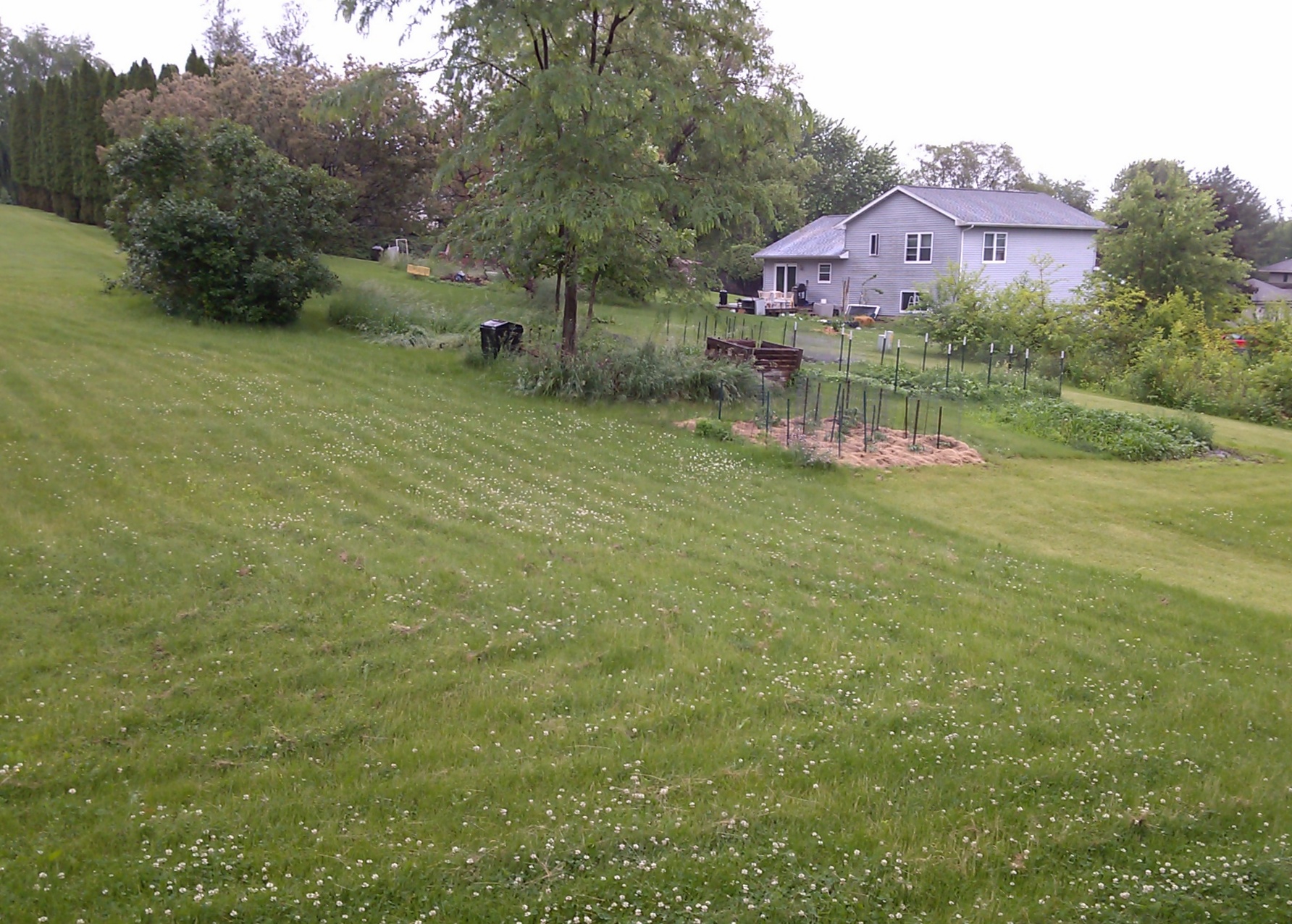
Neighbors are out mowing lawns, and I am usually the last to make the first cut. I stopped trying to get an even and lush green lawn, eschewing chemical applications ten or more years ago. I bag my Spring clippings to use as mulch in the garden. A former neighbor once told me I should leave it to mulch the grass, but why waste it?
Two years of drought have thinned the grass, leaving a patchy mess before cutting. Where deer droppings fell are mountains of green. Once I mow, it will all even out… at least enough to stay out of the neighbors’ attention.
After a shift at a farm I hope to spend a few hours in the garden fencing the recently germinated spring vegetables. There is a burn pile on top of a tree stump. If winds are calm, I’ll burn it, hopefully taking the stump with it. I bought a bag of “natural charcoal” to use as a stump remover. If the burn pile doesn’t take this stump out, charcoal will be next.
More than 1,000 seedlings are growing in our bedroom, way more than usual. I am re-thinking how to plant everything. Maybe two full plots of tomatoes if we can afford the new cages. With all the varieties, this may be the year to make the most of it. I also want to plant all the germinated bell pepper seedlings to increase yield. Peppers don’t grow uniformly and the more plants, the more chances for decently formed vegetables. The celery is developing, but at this stage looks very delicate. I’m thinking about cucumbers and squash, but I want to wait a bit before planting them until after the squash beetle eggs.
Here’s hoping for some time in the garden and yard squeezed in between paid job in this complicated schedule of a life on the prairie.
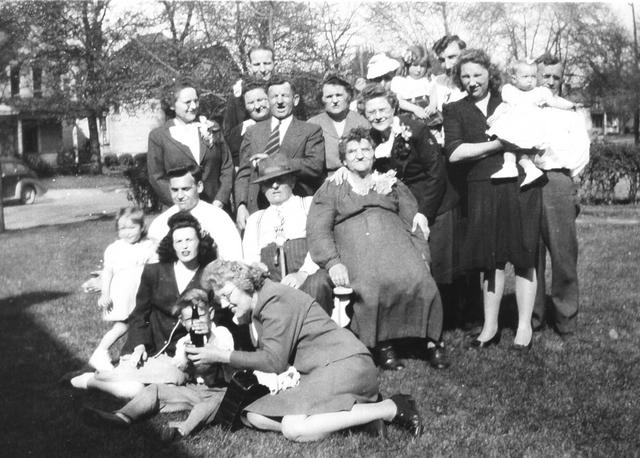
LAKE MACBRIDE— Easter was the biggest holiday after Christmas while I was growing up, although its importance diminished when I left home at age 18. This photo of my maternal grandmother’s parents— my great grandparents— typified the gatherings of an era that is gone.
Things are more casual today, and seldom do we gather on the lawn for a photo. If we did, our small family wouldn’t have many people in the image. A sign of the times and choices made when we were young.
Our next door neighbor gave birth to her third child on April 10 and yesterday she carried the baby in the yard while we talked about our shared lot line. The baby, swaddled in a blanket, didn’t make a sound. We walked the length of the line, discussing the easement and placement of gardens, hers and mine. The two younger children and her husband joined us. It was a pleasant moment in a life of neighboring.
The lettuce is not up in the garden. In fact the surface looks pretty dry. After the newspaper proof reading, I plan to spend the balance of the day preparing a bed for spring vegetables and working in the yard and garden. There is a lot to be done.
Lingering in the pre-dawn darkness, there is an hour to write, read and think before the rising sun of Easter morning.
LAKE MACBRIDE— Sunday and Monday rain was welcome and much needed. According to the Community Collaborative Rain, Hail and Snow Network, 2.7 inches fell. The ground remains too wet for planting, and this morning, temperatures dipped below freezing— it’s 25 degrees presently and too cold for outdoors work. There was a large crew at the farm yesterday, so the soil blocking for the week got done without me. If the ground dries later in the week, there will be planting, but for now there is a schedule gap— also welcome and much needed.
The sound of cello on my smartphone alarm woke me at 1 a.m. to view the total lunar eclipse. Still in my bedclothes, I pulled up the blinds and the sky was as clear as it gets. The eclipse had just begun.
I pulled on my jeans and a shirt, donned my winter coat, and went outside to witness the proceedings. The houses were mostly dark and moonlight reflected off the surface of the lake. Only the sound from a distant I-380 could be heard. I was the only person outside in my neighborhood. It was worth breaking deep sleep to watch as Earth dimmed the moon for a while.
There were spectacular images and a live stream available on the Internet, but I preferred my own view, filtered by the atmosphere and my aging retinas, captured on a handheld digital camera. Along with the light pollution from Cedar Rapids and Iowa City, the Milky Way could be seen. And so many stars.
Checking my email on the smartphone before heading back to bed, I found my state representative, Bobby Kaufmann, formally announced his campaign for re-election yesterday. That’s not really news, just a tick mark off a list of political events I am monitoring. The newspaper asked me to do interviews with the two candidates in the Democratic primary, and I accepted the assignment. The newspaper work gives me more reason to keep my views in this race to myself.
When I returned to bed, I slept a full five hours, and am ready for the day with the unexpected gift of a couple of hours to myself. A rarity in sustaining a life on the Iowa prairie.




 Journey Home
You must be logged in to post a comment.