Categories
Environment

Erasing the White Board

To-do List
To-do List

Snow fell in darkness leaving a thin blanket of white.

The pin oak tree began shedding last year’s foliage indicating warm weather activated new leaf buds and pushed out the old.

Seems weird to rake leaves in February. More to the point, it’s not normal.

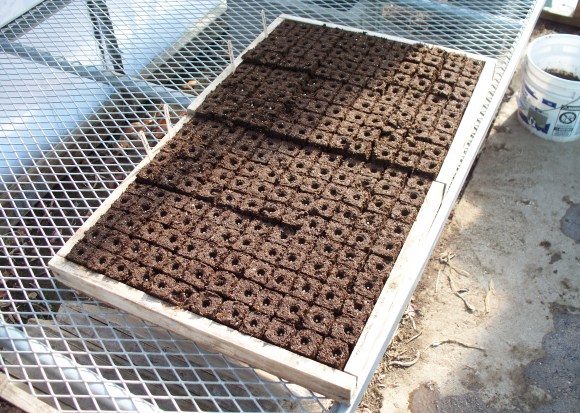
In a couple of hours I return for a fifth season at Local Harvest CSA. The main spring task is soil blocking 72 and 120 cell trays for seed starting in the germination house. Part of my arrangement is keeping some of my own seedlings there. When I’m finished with the farm’s trays, I’ll make one 72 and one 120 tray for myself and seed them with kale, celery and basil. I’m hopeful they will do better than in the south-facing window in our bedroom. Getting my hands dirty with soil is a great way to get ready for spring, three weeks away by the calendar.

Other chores on my white board include doing taxes, computer file backup, cleaning the car, preparing the garden for spring and Belgian lettuce planting this week (traditionally March 2). I made extra servings of spaghetti with tomato sauce for lunches and want to make a batch of taco filling for breakfast on work days at the home, farm and auto supply store. There’s also more writing projects.

During a Climate Reality Project conference call on Thursday, a friend from Waterloo and I decided to work on a project with other friends from Waterloo-Cedar Falls. I’ve done two presentations there and look forward to more meaningful work. We’re planning luncheon, maybe next weekend.

This last lap in the workingman’s race looks to be action packed with local food, environmental and cash producing projects coming into focus.

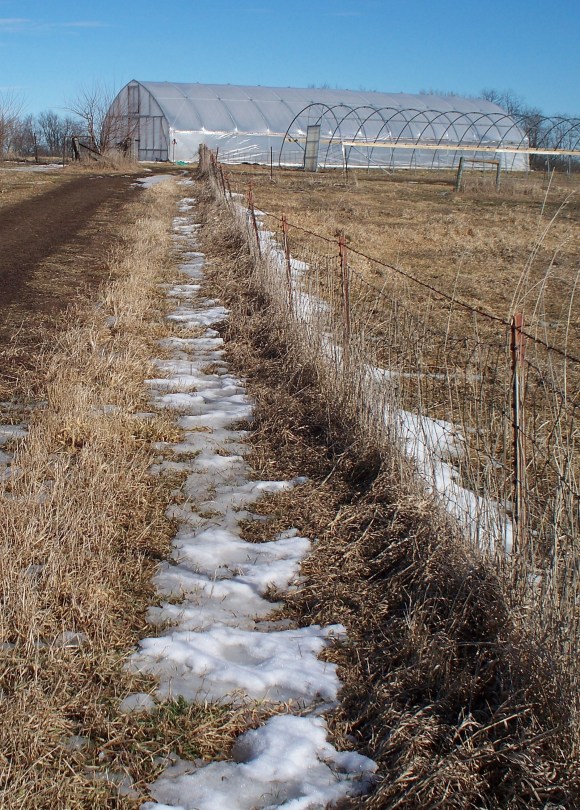
Night’s snowfall melting in the sun makes way for budding plants in a grey and brown landscape. It is almost time to wipe the whiteboard clean and begin anew.

Categories
Writing

Unsolicited Farm Advice

email-iconFrom:       Paul Deaton
Sent:         Sunday, Dec. 2, 2012 10:14 AM
To:            Farmer Kate
Subject:   Processing and other ideas

Kate:

Thanks for the kale and spinach. We had both for dinner last night, and now I have a whole refrigerator drawer full of kale, ready to make something. Very yummy, with the prospect of more yummy-ness.

It was curious that you brought up the food processing idea yesterday, as I had recently been thinking of something along those lines. I think a question you should ask is whether you want to become a food processor or stick to being a grower. The trouble most growers I know seem to have is scaling their operation to meet demand. If you focus on secondary things, like processing, it may dilute your efforts as a grower, and hold you back from getting to the peak earnings potential of your farm operation.

That is not to say you should not have an outlet for farm seconds, or do other things but run the farm, you should. But a different approach might work better for you and your limited staff.

Waste not, want not is John Wesley’s old adage. If you are not getting full yield out of the results your work, look for ways to off load part of it.

First, sell the second harvest (seconds and excess) outright, not worrying about what happens to it. Before we talked, I had been thinking about working out a deal with you and others to buy excess and seconds of produce wholesale. Partly I would stock my own pantry, but if there were a commercialization opportunity, the risk and time of developing it wouldn’t land on your shoulders. The problem of what to do with excess and seconds of tomatoes, peppers and onions, etc. by processing them has been solved repeatedly by others and there is significant commercial competition. As a grower, your income may be affected by that market, but how much direct exposure do you want before the idea is tested? My thought is to find wholesale buyers of your seconds and excess.

Second, find people to collaborate with you on things. The example you gave of someone canning tomatoes and paying you in kind was one idea you brought up. I like the idea, but don’t see how that could be scalable. If anyone ever calculates the work involved in home processing, particularly cost of labor, commercialization of this process seems unlikely, especially in light of commercial organic processors. At the same time, what is the value of this work to people who take part in the cooperative? My recommendation would be to pick a few collaborative projects to try each growing season. For example, if you find a great sauerkraut recipe, you might try commercializing that. Team up with someone who is willing to share the risk, plant some extra cabbage, and do it for one season. See how it goes. Have three or four of these projects during the 2013 growing season.

Third, people like the farm atmosphere. Look at Wilson’s Orchard and their apple turnovers. When people come out for the harvest, develop a “harvest season” event or series of events, and center it around a specific culinary or harvest theme. This may be complicated because of your proximity to Celebration Barn, with its limited number of annual events permitted there, but it is worth pursuing. Again, if you would do something like this, collaborate with someone else who can do the bulk of the work related to such an event. If you did it once and generated several thousand in revenue, would that be worth it?

Anyway, you didn’t ask for any of this, but I hope you find the ideas useful. I am going to do something to earn a living wage in 2013, so if you see opportunities for us to work together, please keep me in mind.

Thanks, Paul

Categories
Kitchen Garden

First Weekend of 2017

Seed Catalogues
Seed Catalogues

Temperatures are forecast in the single digits and low teens all weekend — fit weather for beginning the year.

My planned tasks include taking down holiday decorations and meeting with my friend Carmen to discuss a role at her community supported agriculture project this season.

I have a pile to take to our meeting: two seed catalogues and the Practical Farmers of Iowa convention booklet. This will be a year to barter labor for produce.

The year’s primary dynamic will be to conserve expenses and seek alternative ways to generate income. Beginning in 2012 I became more active in the local food movement. I determined that unless I devote more time to producing and marketing local food, it would be difficult to make a living in it.

That said, I hope to maximize production in my garden this year and use weekends to sell extra produce at the town’s farmers market. I had the same idea last year but didn’t get it done. It’s a good idea — turning vegetables and fruit into funds — one I want to put into practice as a sustaining way to generate enough money to pay my garden expenses as a starting point, and pay part of my retirement as an end goal.

If I can get to work this weekend, building a blueprint for this next chapter of my life will become easier.

Categories
Environment Kitchen Garden Sustainability Work Life Writing

On Our Own into 2017

Western Sky at Sunrise

In this final 2016 post it was easier than last year to outline my writing plans.

The work I do to pay bills and support my writing has been tough mentally and physically. To cope with an aging frame and occasionally distracted mind I have had to focus. That meant planning, and then with discipline, working the plan. 2016 was a mixed bag and I expect to do better in 2017.

I seldom post about my personal life and family — at least directly. That leaves issues I confront every day as grist for the keyboard.

There are four broad, intersecting topics about which I’ll write during the coming year.

Low Wage Work and Working Poor

Not only do I earn low wages in all of my jobs, I meet a lot of people who do too. During the last four years I developed a framework for viewing how people sustain their lives without a big job or high salary. A focus on raising the minimum wage, wage theft or immigration status may be timely but most of what I read misses the mark. Stories fail to recognize the complexity with which low wage workers piece together a life. This subject needs more exposition and readers can expect it here.

Food Cultivation, Processing and Cooking

Living on low wages includes knowledge of how to grow, process and prepare some of our own food. My frequent posts on this topic have been intended to tell a story about how the work gets done. I plan to grow another big garden in 2017 and perform the same seasonal farm work. I sent off a membership form to Practical Farmers of Iowa this morning and expect my experience with that group to contribute to food related writing.

Nuclear Abolition

I renewed my membership in Physicians for Social Responsibility. We have a global footprint and as a member I have access to almost everything going on world-wide to abolish one of the gravest threats to human life. The president elect made some startling statements about nuclear weapons this month. The subject should hold interest and perhaps offer an opportunity to get something done toward abolition. The United Nations voted to work toward a new treaty to abolish nuclear weapons. They did so without the support of the United States or any of the other nuclear armed states. In that tension alone there should be a number of posts.

Global Warming and Climate Change

My framework has been membership in the Climate Reality Leadership Corps. Like with Physicians for Social Responsibility we have a global footprint with thousands of Climate Leaders. We have access to the latest information about climate change and its solutions. The key dynamic, however, is how work toward accepting the reality of climate change occurs on a local level. What researchers are finding is skepticism about the science of climate change originates in the personal experience of people where they live. If the weather is very hot and dry they tend to believe in climate change. If it is cold, they tend not to believe. Thing is, climate change and human contributions to it are not a belief system as much as they are facts. Global warming and climate change already affect us whether we believe or doubt.

So that’s the plan. While you are here, click on the tag cloud to find something else to read. I hope you will return to read more in 2017.

Categories
Kitchen Garden Work Life

An Iowa Onion Trimmer

Curing Onions
Curing Onions

Between picture perfect onions and the compost heap lies an opportunity.

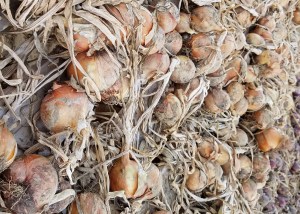
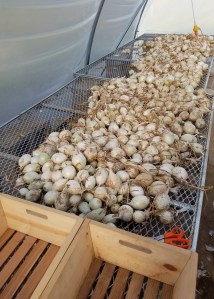
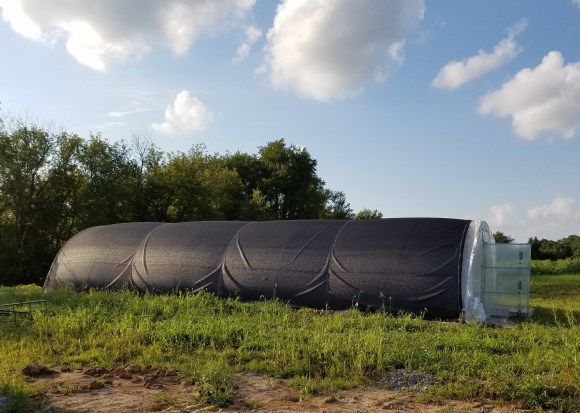
A friend grows onions using organic practices as part of a Community Supported Agriculture project. Onions are harvested from the field then dried in the greenhouse for storage. Sorting, trimming the tops and roots, and removing excess skin comes next.

As an experienced onion trimmer I work for farmers I know and trust. My compensation is an hourly rate above the current minimum wage plus all the seconds I can use. It’s a good deal, so I take it when offered. For an hour or two after a full time job at the home, farm and auto supply company, and on weekends after a shift at the orchard, I work in the onion shed.

Onion Trimming Work Station

The work is seasonal and temporary. Cognizant of potential competition from other itinerant workers, I work as quickly and as well as I can. The daily chore serves as respite from an intense schedule of lowly paid work that provides income destined mostly to corporations in exchange for stuff needed to operate the household: utilities, insurance, taxes, fuel and the like. I will have worked 100 days in a row by the November election — I’m not complaining, just sayin’.

At the end of each shift in the onion shed, I take home ten or more pounds of seconds. I remove the bad parts in our kitchen and am left with half the original amount in fresh onions. There’ no long term storage for these so they go into the ice box until used. If left on the counter, bad spots would quickly re-emerge.

Onion Shed
Onion Shed

I made and canned the first batch of vegetable soup with three pounds of fresh onions and a bit of everything on hand from the farm and garden. By the time the onions at the farm are in storage, there will be enough canned vegetable soup put up to last until the next growing season. Soup that can make a meal.

With the concurrent harvest of tomatoes and basil from our garden, I plan to make and can pints of marinara sauce using a simple, four-part recipe of tomatoes, onions, basil and garlic. Onion trimming blocks out time from vegetable processing, and some good ones will head to the compost bin before I can get to them. I am hopeful about getting a dozen pints of marinara sauce canned.

The life of an itinerant low wage worker lies on the margin between harvest and the compost bin, That’s true for a lot of professions, not just onion trimmers. If you think about it, that’s where we all live our lives in the 99 percent of the population that isn’t wealthy.

I’m okay with working a job with friends doing work that directly impacts our family’s sustainability. It may be easier to take a big job with responsibilities and varied compensation, but I’d rather deal with the questions like whether something can be made of each onion I encounter.

The pile of second represents hope in a tangible and meaningful way. What’s life for unless that?

~ Written for Blog for Iowa

Categories
Kitchen Garden

Farm Transition

View from the Barn
View from the Barn

RURAL CEDAR TOWNSHIP — Yesterday was the Practical Farmers of Iowa field day at Carmen Black’s Sundog Farm.

Carmen and Susan Jutz explained their farm transition process in a simple duet about bankers, government agencies, insurance companies and community.

Like everything Susan has done since I met her almost 20 years ago, the transaction of selling the farm had a home made feel to it. It looks like Carmen will continue that localized and home made culture.

Attendees walked the farm, with Carmen and Susan explaining pest control practices. Highlights included treatment for flea beetles, tomato blight, worms and cucumber beetles.

What I hadn’t thought about was providing proper space for air to circulate among tomato plants to prevent spread of disease. The wall of cherry tomatoes that blew over in yesterday’s storm is a good example. The wind caught the entire planting like a sail. If they were separated more, wind might blow through them, leaving them upright.

Susan’s eventual departure from the farm is another instance of my generation going home. On Sundog Farm there is a chance for sustainability as Carmen adds farm management to her experience. Opportunities like this are rare and Carmen appears to be making the most of it.

Categories
Kitchen Garden

Sundog Farm Field Day

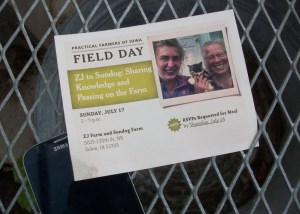
Field Day FlyerMy friends Carmen and Susan are hosting a Practical Farmers of Iowa field day called “ZJ to Sundog: Sharing Knowledge and Passing on the Farm” at Sundog Farm on Sunday, July 17, from 2 until 5 p.m.

The transition in farm ownership has been a long time coming and Sundog Farm is finally here.

Susan Jutz began Local Harvest CSA on ZJ Farm in 1996. After almost 20 years building a successful business and farm, she began looking for an opportunity to transition her farm to the next generation. The process was completed in May 2016, when Susan sold her farm and business to Carmen Black.

Carmen grew up nearby, was friends with Susan’s children, and had Susan as her 4-H leader. She has worked on the farm with Susan for five years. ZJ Farm has been the site for numerous Practical Farmers field day programs; this event will be the farm’s first as Sundog Farm.

The event will include a field tour and discussion with Susan and Carmen about their systems for pest management in vegetable production, including cabbage worms, cucumber beetles, flea beetles and tomato blight. They will discuss field scouting, cultural pest management, products they’ve tried and those they prefer. During the second part of the program, they will share their farm transition story.

Carmen has been part of the farm since I began working there in 2013. She called Friday to ask for help to begin the clean up in preparation for the field day. I spent part of Saturday removing weeds from around the old grain silos and barns and edging some of the fields. I was reminded of how far the farm had come since its days of being a conventional livestock operation before Susan began farming there. Sundog Farm should look good by next Sunday, so come to the field day, learn a small part about Iowa’s ongoing farm land ownership transfer, and wish Carmen well.

A potluck follows the program; bring a dish to share and your own table service. Please RSVP for the meal by July 14 to Lauren Zastrow at (515) 232-5661 or lauren@practicalfarmers.org.

Hosts:
Susan Jutz and Carmen Black
ZJ Farm and Sundog Farm
5025 120th St. NE • Solon • 52333
(319) 331-3957 • localharvestcsa@southslope.net
solonsundogfarm.com

Categories
Kitchen Garden

Why Not More Celery?

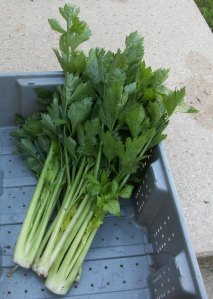
Freshly Picked Celery

Why don’t more Iowans grow celery?

More specifically, why don’t more Community Supported Agriculture projects produce it for members and local food farmers for restaurants and markets?

I’ve been asking this question of growers and the reaction has been surprise at my results and maybe an assertion they will try it. There is substantial demand for the aromatic vegetable in kitchens and restaurants yet the perception is celery doesn’t grow well in Iowa, so farmers mostly don’t.

Celery from my garden tastes better than regular or organic available at the grocery store. In addition, celery is in the Environmental Working Group’s Dirty Dozen fruits and vegetables for use of pesticides, ranking #5. Why buy California celery when we can produce our own at least part of the year? Having the best possible flavor is important to everything cooked with celery.

Celery takes about 120 days and requires adequate water, more than most vegetables. That means seeding trays planted in late February to produce the crop being harvested this weekend. I use Conquistador OG seeds from Johnny’s Selected Seeds in Winslow, Maine. (OG stands for organic). It took me a couple of years to get successfully from seedlings to the ground to a crop as I experimented with growing. This year’s crop has been the best ever.

I attribute success to using 4-inch drainage tile cut into 8-inch lengths to protect and support young seedlings. I mulch with grass clippings and weed regularly. Each morning I make sure a substantial dose of water is applied. Larger scale farmers shun this extra work, focusing more on crops that can be mechanized (like potatoes) or are popular among customers (like cabbage, tomatoes and peppers). The flavor of local celery, and growing it pesticide-free, make the extra work worth it.

Every head of celery will be used fresh this year. There were only a dozen from the garden in this experimental year and I shared some with library workers in town. Next year I plan to double production and if there is more than can be used fresh, preserve part of it.

In June at the Global Foods Market in Kirkwood, Missouri, I bought a jar of celery salad in a glass jar. The preparation uses celery, apple juice, walnut extract and vinegar and is an example of a shelf-stable item for winter consumption. For the time being, I expect to use everything fresh in soups, stir fry and Louisiana-style beans and rice.

If the local foods movement doesn’t wake up to celery, there is a market for sales to restaurants to pursue. If they don’t exploit it, I will.

Categories
Environment Kitchen Garden

Warp and Weft of a Garden

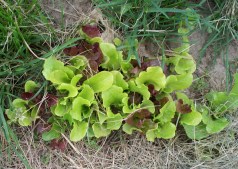
Spring Lettuce
Spring Lettuce

Farming is more than putting plow to furrow. It is a multitude of experiences, evaluations and decisions made over time.

The same is true for gardeners. Each garden, each plot, has its own micro environment and climate. Not only sun and rain, but wind, topography and history play a role.

This year a friend changed rented land for her community supported agriculture project and stories about her struggles are going around the local food community. The new soil hasn’t been worked for organic vegetables, and is recovering from row cropping. I believe — everyone is confident — she will persevere through the change. Yet it will be a setback in a business that operates on thin margins and more physical labor than mechanization. It’s when the going gets tough that farmers get going.

Over the last 23 years my Big Grove garden expanded from a single plot to six, and I’m looking at adding more. That doesn’t count the five fruit trees which have been a source of produce for a number of years. Yesterday the pear tree burst out in full bloom.

I mistakenly planted a locust tree in one of the garden plots. It has grow to maturity, providing shade for two plots at the same time the frequency and severity of drought has increased. Shade serves to protect cucumbers, herbs and greens from constant, intense sunlight in the absence of precipitation. It took me a while to realize what’s going on and leverage it. Now I couldn’t imaging growing without it.

There are a hundred small things like the benefits of a locust tree that converge in the plots of my garden. When I think of retirement — more often now than previously — I can’t imaging life far from a garden and the diverse intricacies of what sustains me and enables vegetables to grow.

My garden and I are the same warp and weft of life that sustains us all.

Categories
Writing

First Day at Sundog Farm

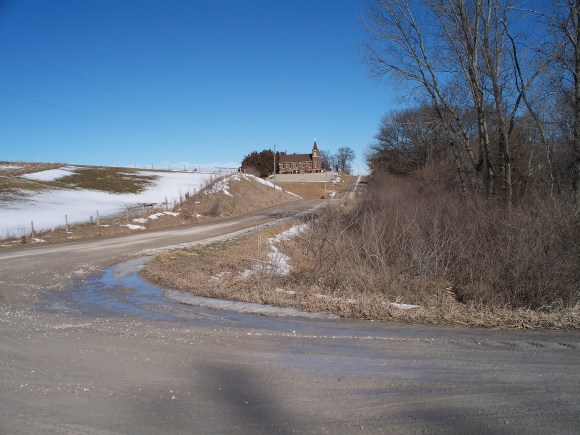
Rural Cedar Township
Shed Next to Tomato Cages
Five Gallons of Ice
Five Gallons of Ice
Crates Sunbathing
Crates Sunbathing
High Tunnel
High Tunnel
First Soil Blocks of 2016 Season