I am enjoying the discussion of how the City of Solon came to be named. Both versions—the newspaper’s “after the famous, ancient Athenian lawmaker and poet,” and Antonia Russo’s “Solon Langworthy, one of Dubuque’s Langworthy brothers”—have something to offer, even if neither considers the account mentioned by Harold Dilts in From Ackley to Zwingle: The Origins of Iowa Place Names, which says, “Solon…was named in memory of one of P.B. Anders’ sons. Anders and a Mr. Kerr founded and platted the town.”
The 1850 U.S. Census makes clear the P.B. Anders family was well established in Big Grove Township. Later accounts say the town was named in memory of his son, but no such child appears in the census, and no burial evidence in township cemeteries has been found.
As with many stories about the pioneering days of Big Grove Township and later Solon, there is no single “right version” of how the city was named. It is lost in history. Russo is right to tie the naming to Dillon’s Furrow, reflecting the networks through which people traveled and settled. That there are both a Solon in Johnson County and a Langworthy in Jones County is no coincidence. These names were part of a shared world, shaped by the same influences and carried along the same paths.
Why did 19th-century folk name people and places after an ancient Athenian? It reflected how Americans understood themselves and what they hoped their communities would become.
~ Submitted as a letter to the editor of the Solon Economist.
Postscript: I found the Anders marker on March 30, 2026, in Oakland Cemetery, Big Grove Township. It was difficult to read beneath the moss that grew there. The place where P.B. Anders name was is completely obscured by moss. On the side, it marked the grave of “Meline,” wife of P. B. Anders, who died in 1853. No other stones stood with it. If there had been more, they were gone. The name remained, but the family did not.
When I became an adult, married, and settled into steady work, it was assumed I would volunteer in the community. The volunteer impulse has its roots in the industrial period after the Civil War. People used less time to produce enough money with which to live our lives. In more modern terms, we could pay for things like our child’s college education without sacrificing a lot at home.
Perhaps the most prominent example was the robber baron Andrew Carnegie whose expansion of the steel industry made him one of the richest Americans and enabled his philanthropy to fund a number of public libraries, among other things. “The duty of the man of wealth,” Carnegie said, is “to consider all surplus revenues which come to him simply as trust funds, which he is called upon to administer . . . in the manner which, in his judgment, is best calculated to produce the most beneficial results for the community.”
I didn’t have “surplus revenues,” yet worked in jobs that created enough money to pay basic living expenses with a bit leftover. While there were limits on potential income, I was afforded regular free time and expected to use some of it to volunteer in the community. My volunteerism really took off when we moved to Big Grove Township.
I differentiate the types of volunteer work I have done since 1993. There is community work: membership on the home owners association board, election as a township trustee, and serving on the board of a senior citizen’s group. There is also what I call advocacy work: serving on the boards of peace-related organizations, politics, and two different county boards. Each had something to contribute to society. I talk about community volunteer work in the rest of this post.
Within the first year we were in our new home in Big Grove Township, I was asked to join the volunteer home owners association board and did. Any monetary considerations were insignificant. A regular person does not volunteer in the community for money. Part of living a sustainable life in rural areas is contributing to the general well-being, I believed. I felt blessed and had to give back to the community in which I lived.
Home owners’ associations get a bad rap. In our case, we managed the association like a small city. We provided a public water system, sanitary sewer district, road maintenance, refuse hauling, and real estate sales and purchases. Over time, we upgraded the roads from chip and seal to asphalt, dealt with changing government standards related to arsenic in drinking water, reduced the number of wells from three to one, complied with changing Iowa Department of Natural Resources standards for wastewater treatment plant effluent, handled a lawsuit, and coordinated activities like road use and maintenance with neighboring associations. If the board doesn’t do these things, they don’t get done. Everyone is the better for such volunteer boards. I served, off and on, for over 30 years. This was the beginning of a long period of volunteering in the community.
In 2012, when only one candidate was running for two township trustee positions, I ran a write-in campaign and won the election. Being a township trustee included managing emergency response and a volunteer fire department with other townships and the nearby city of Solon. Toward the end of my tenure, we formed a new entity to manage these functions. We maintained the local cemetery and supervised a pioneer cemetery where the first person to die in the township was buried. This work helped me understand how tax levies work and how they were used to support things the county did not, things like a small fire department or saving someone’s life in an emergency. There was only a single conflict during my time as a trustee, about the main cemetery. All the trustees showed up at the cemetery to resolve a dispute over a burial plot. No one wanted the job of township trustee and someone had to do it, so I stepped up.
When the local senior citizen’s group had an opening on their board, I volunteered and became its treasurer. This lasted about two years and provided insight into this segment of the community. Everything we did, from providing community meals, to giving home-bound people rides to medical appointments, to arranging outings around eastern Iowa, served an often-neglected segment of the population. It was a great opportunity to learn about the life of our senior citizens before I became one myself.
I am satisfied this activism did some good. I still believe it is important to stay engaged in the community.
Big Grove Township was established before Iowa Statehood. The first sawmill was built here in 1839 by Anthony Sells on Mill Creek. Put the big groves of trees together with the sawmill and you have us. The oak, walnut, hickory, ash, elm and cottonwood that once thrived among numerous pure springs were gone when we bought our lot here. What dominates is the culture we and others brought with us to an area where all trees indigenous to the Northwest once existed in abundance yet no longer do. There is something essentially American in that. We moved to Big Grove Township in August 1993.
There is a subdivision named Mill Creek today, suggesting this history. Throughout the area, people refer to early settlers and builders of homes instead of the people who now own those homes and live in them. The names Cerny, Beuter, Andrews and Brown persist, as does the more recent name of Don Kasparek upon whose former farm our home is situated.
On the vacant lot we purchased, there were scrub grasses and a lone mulberry tree. The tree appeared to have been planted by a bird’s droppings while it perched on a surveyor’s re-bar marker. The ground had a high clay content which suggested Kasparek had removed the topsoil before subdividing the plats. When he died in 2003, I recognized him in our association newsletter. We speak of him from time to time in the neighborhood, although not always in a positive way.
I looked at an old picture of a building on Main Street in Solon, the nearest city. In sepia tones, seven teams of horses and wagons are lined up in front of the building on the dirt street. We can make out the lettering on the shop windows: Cerny Bros Grocery, Cerny Bros Hardware, and Cerny Bros Feed. While the roads have been paved for many years, much of downtown and the surrounding area resonates with the area’s origins in history before automobiles.
We built our home during the record-breaking floods of 1993. Governor Terry Branstad described the extreme weather event as “the worst natural disaster in our state’s history.” At one point that summer, it rained 50 out of 55 days. The Des Moines Register published a commemorative book titled Iowa’s Lost Summer: The Flood of 1993. Extreme weather delayed construction of our home that summer, causing us to stay with relatives and in motels for about a month after we moved from our house in Indiana. We finally moved in, the same day technicians were hooking up electricity and cable television. I was used to severe flooding from growing up in Davenport where the 1965 Mississippi River flood broke records. I was not used to flooding, 1993-style.
I couldn’t believe who I was expressed itself in any of local history. My culture was what I brought with me, rooted in coal mining, factory workers, farming, home making, and the rural cultures of Virginia, Minnesota and Illinois. Our history as a family goes back on both Jacque and my families to the Revolutionary War. My line in Virginia goes a hundred years prior to the revolution. This seemed to have little relevance to local culture in Iowa.
That my ancestor Thomas Jefferson Addington is a common ancestor to the Salyer girls of the Salyer-Lee Chapter 1417 of the United Daughters of the Confederacy stands in contrast to the story of Maciej Nadolski working in coal mines in Allegheny, Pennsylvania after the Civil War and then buying land from the railroad in Minnesota. What of my father’s birth in Glamorgan, Virginia? What of the suppression of Polish culture by the Russians after 1865 that led to a massive migration of Poles to North America? If I weren’t here, we wouldn’t speak much of these things in Big Grove Township. Perhaps with time we will.
Dear Dennis,
The pioneer spirit! So much of popular culture lauds these people. Their hard work, and inquisitiveness have been amalgamated into a hagiographic portrait: the very founders of modern society. I take exception to this, rather, the importance and interest of the pioneers is over-emphasized. They struck new settlements in the wilderness, stayed 3-5 years, then sold out to move to Kentucky, then Indiana, then Iowa, then beyond. Restless, not enduring, their influence has been too much. I’d rather look at those who followed in their footsteps. Those who took the broken wilderness and made something of it, in many places the wilderness is, figuratively, still broken, transients residing there, waiting development. (Letter to Dennis Brunning, April 19, 1986).
If the 1980s was a time of our getting started, the 1990s were a time of work and supporting our family. We saved for our child’s college, and for our retirement. During the flood, we established ourselves. The time here was one of making a career and making time for family. We bought the home we could afford, and proceeded to fill it with boxes of stuff, many of which we do not now have a clue about what is inside. We are working on that as I write.
We took vacations, supported our child in high school activities, and took them to college. I worked for the income but took two long hiatus periods because of a nagging dissatisfaction. I had a retirement party and a cake in July 2009. We had been able to establish a financial foundation that, while not luxurious, was okay. All three of us were trying to make our way in a world that did not appear to care whether we succeeded or failed. I believed we were succeeding.
Iowa was one of the last areas settled by horse and wagons. If the United States is provincial when compared to the cultural centers of Europe, what then of us, twice removed from Europe? New York and Washington seem as removed as Paris and Bonn. So, culture in Iowa, even as we sit in Big Grove Township is not an indigenous thing. It is derivative, just as the language I write in is English. What I do, and experience from that point of view is indeed, as so many have said, provincial. But what about this? I cannot say because my life is based on study of western civilization. My view is it is no less pure, and beautiful and useful than the rigid cultures of Europe or the East Coast of the United States.
When I wrote journals, they were not the kind written by Samuel Pepys, or Henry Adams. They do follow journal forms as they came down. To say something new, and private: a creation in its own right. That’s what my writing was about. If it accomplishes nothing more than the calming of a Sunday afternoon, then it will have been of some use.
Creativity in Iowa often takes something of outside origin and incorporates it into a new creation, that is fed from the soil yet showing the genetic traces of the ancestor. This journal might be recognized as something it is not by an easterner or a European. Though nature has presented what it will, we must and will nurture nature’s presentation to our own new, creative intentions. I did not recognize this as we moved to Big Grove Township in 1993, yet that’s how things evolved.
By Aug. 6, I had begun journaling again:
I stopped keeping a journal some time ago. But now, in the basement of our unfinished house I take pen to paper and begin it anew. Here, in Johnson County, I hope for good things to take place.
I notice now… the ringing in my ears, the sounds of birds, and a car now and then driving in front of the house. It is a quiet place. There is much to do to make it a productive place. (Personal Journal, Big Grove Township, Aug. 6, 1993).
In late Spring 2025, while I’m digging in a garden plot or walking on the trail, my mind is consumed by how to pull everything in my autobiography together and bring the narrative to a close. Up to the time we moved back to Iowa, a chronological narrative seemed appropriate. Beginning here, in this place that was a vacant lot when we arrived, life got complex to an extent a time-based narrative doesn’t really capture those 32 years. There was no single narrative. And so it shall be in these closing chapters of this book.
Editor’s Note: Our arrival in Big Grove Township was marked by the first in a series of extreme weather events: the 1993 flood. It was called a once in 500-years flood, yet we would soon find out flooding had become more common, including the next 500-year flood event in 2008. I plan to weave at least six extreme weather events into my memoir, beginning with this chapter on Big Grove Township.
Big Grove Township was established before Iowa Statehood. The first sawmill was built here in 1839 by Anthony Sells on Mill Creek. Put the big groves of trees together with the sawmill and you have us. The oak, walnut, hickory, ash, elm and cottonwood that once thrived among numerous pure springs were gone when we bought our lot here. What dominates is the culture we and others brought with us to an area where all trees indigenous to the Northwest once existed in abundance yet no longer do. There is something essentially American in that.
There is a subdivision named Mill Creek today, suggesting this history. Throughout the area, people refer to early settlers and builders of homes instead of the people who now own and live in those structures. The names Cerny, Beuter, Andrews and Brown persist, as does the more recent name of Don Kasparek upon whose former farm our home is situated.
On the vacant lot we purchased, there were scrub grasses and a lone mulberry tree. The tree appeared to have been planted by a bird’s droppings while it perched on a surveyor’s re-bar marker. The ground had a high clay content which suggested Kasparek had removed the topsoil before subdividing the plats. When he died in 2003, I recognized him in our association newsletter. We speak of him from time to time in the neighborhood, although not always in a positive way.
I looked at an old picture of a building on Main Street in Solon, the nearest city. In sepia tones, seven teams of horses and wagons are lined up in front of a building on the dirt street. We can make out the lettering on the shop windows: Cerny Bros Grocery, Cerny Bros Hardware, and Cerny Bros Feed. While the roads have been paved for many years, much of downtown and the surrounding area resonates with the area’s origins in history before automobiles.
We built our home during the record-breaking floods of 1993. Governor Terry Branstad described the extreme weather event as “the worst natural disaster in our state’s history.” The Des Moines Register published a commemorative book titled Iowa’s Lost Summer: The Flood of 1993. Extreme weather delayed construction of our home that summer, causing us to stay with relatives and in motels for about a month after we moved from our house in Indiana. We moved in during August 1993. I was used to severe flooding from growing up in Davenport where the 1965 Mississippi River flood broke records. I was not used to flooding, 1993-style.
I couldn’t help but believe who I was represented itself in any of local history. My culture was what I brought with me, rooted in coal mining, factory workers, farming, home making, and the rural cultures of Virginia, Minnesota and LaSalle County, Illinois. Our history as a family goes back on both sides to the Revolutionary War. My line in Virginia goes a hundred years prior to the revolution.
That my ancestor Thomas Jefferson Addington is a common ancestor to the Salyer girls of the Salyer-Lee Chapter 1417 of the United Daughters of the Confederacy stands in contrast to the story of Maciej Nadolski working in coal mines in Allegheny, Pennsylvania after the Civil War and then buying land from the railroad in Minnesota. What of my father’s birth in Glamorgan, Virginia? What of the suppression of Polish culture by the Russians after 1865 that led to a massive migration of Poles to North America? If I weren’t here, we wouldn’t speak much of these things in Big Grove Township. Perhaps with time we will.
During Wednesday’s walkabout there was frost on the ground. It was clearly the last frost of spring. It’s time to plant warm crops in the ground and get ready for summer. Here we go!
Some parts of our lives stand out more than others. For me, the summer of 1996 was one of them.
At the transportation and logistics company, after taking every assignment offered — some I liked and others I did not — I was transferred back to operations as weekend manager. My schedule was Friday through Monday with three days off. I supervised everything that went on for a growing firm operating across North America.
Our daughter was coming into her own, finishing fifth grade that year. The new job enabled me to spend more time with her and I did.
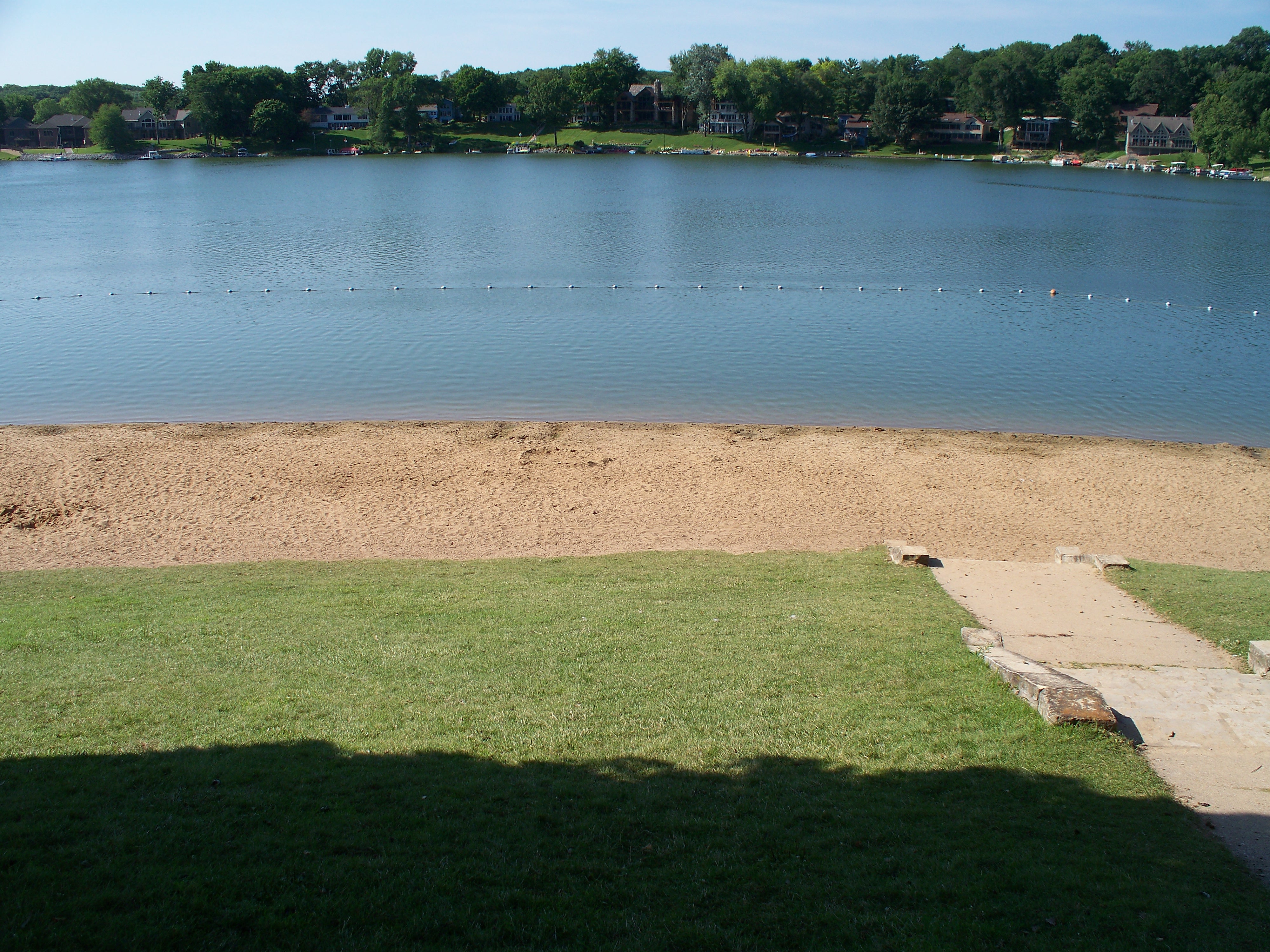
We didn’t go far from home. Mostly we went to the nearby state park. Sometimes we bicycled to town and had breakfast or lunch at a restaurant. Other times we drove to the beach and went swimming. We picked wild black raspberries along the trail. It was a great summer at the core of my memories from when she lived at home. We get only so many times like that.
As I prepare for a long day in the garden I’m heartened by memories of life with family. I think often about the summer of 1996. The present is much different. The state park trail is ravaged today compared to then. Derecho damage remains, and development continues to encroach on the natural beauty that once was here. Our patch of wild black raspberries is gone in favor of a junction for the natural gas company. Sad, yet changing times, I guess.
There was a time I enjoyed being in the country with its neat, rectangular farm fields, sunshine, and long vistas. No more. Farm operations result in contaminated water, which in turn closed the beach when we swam that summer. The beach has been closed the last few years. Likewise, the scent of livestock wafts over our house from time to time. Not often, but enough to remind us there are 24.8 million hogs in Iowa, or about eight per human. The popular phrase to describe what Iowa has become is “a low education, low wage, extraction economy state.” There is no longer anything bucolic about being in the country.
There is no going back to the summer of 1996, except in memory. Just as the Mill Creek sawmill cut up the original stands of forest to create today’s rural landscape, life has irrevocably changed. We have a choice: linger in memory or continue forward. Both have a role to play. As annual seedlings wait in the greenhouse for sunrise, human nature doesn’t give us much choice. We are compelled to start anew.
May we do so cognizant of what was lost, what we have, and what we may lose through neglect. My wish for today is to make new memories as good as those of the summer of 1996. It may be difficult, yet the possibilities are endless, at least that’s what we are told.
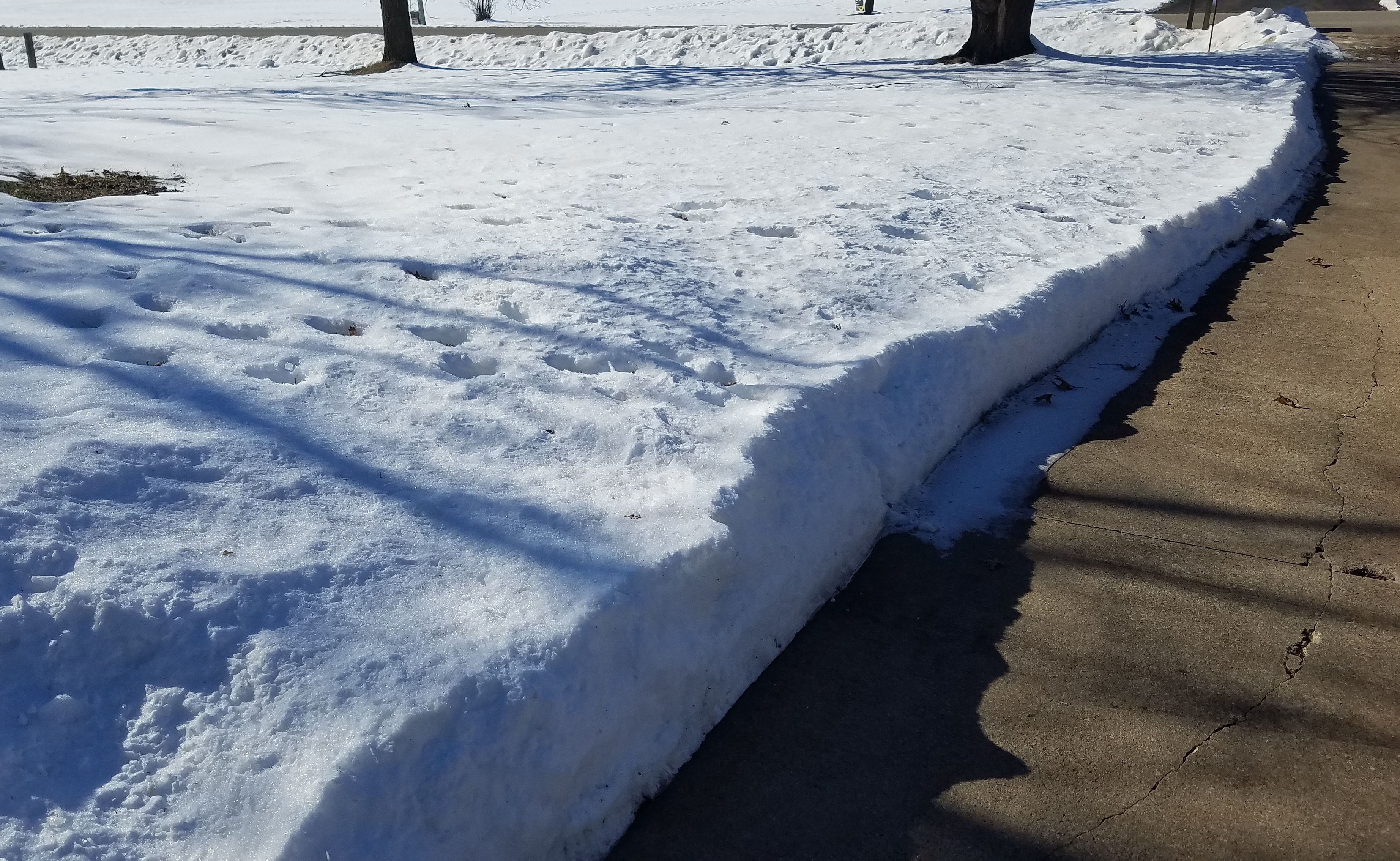
It’s been almost a year since the Iowa State Hygienic Laboratory reported the first three positive test results for COVID-19 in Iowa on March 8, 2020. The pandemic continues and I don’t know about you, but I’m getting cabin fever. The lingering snowfall hasn’t helped.
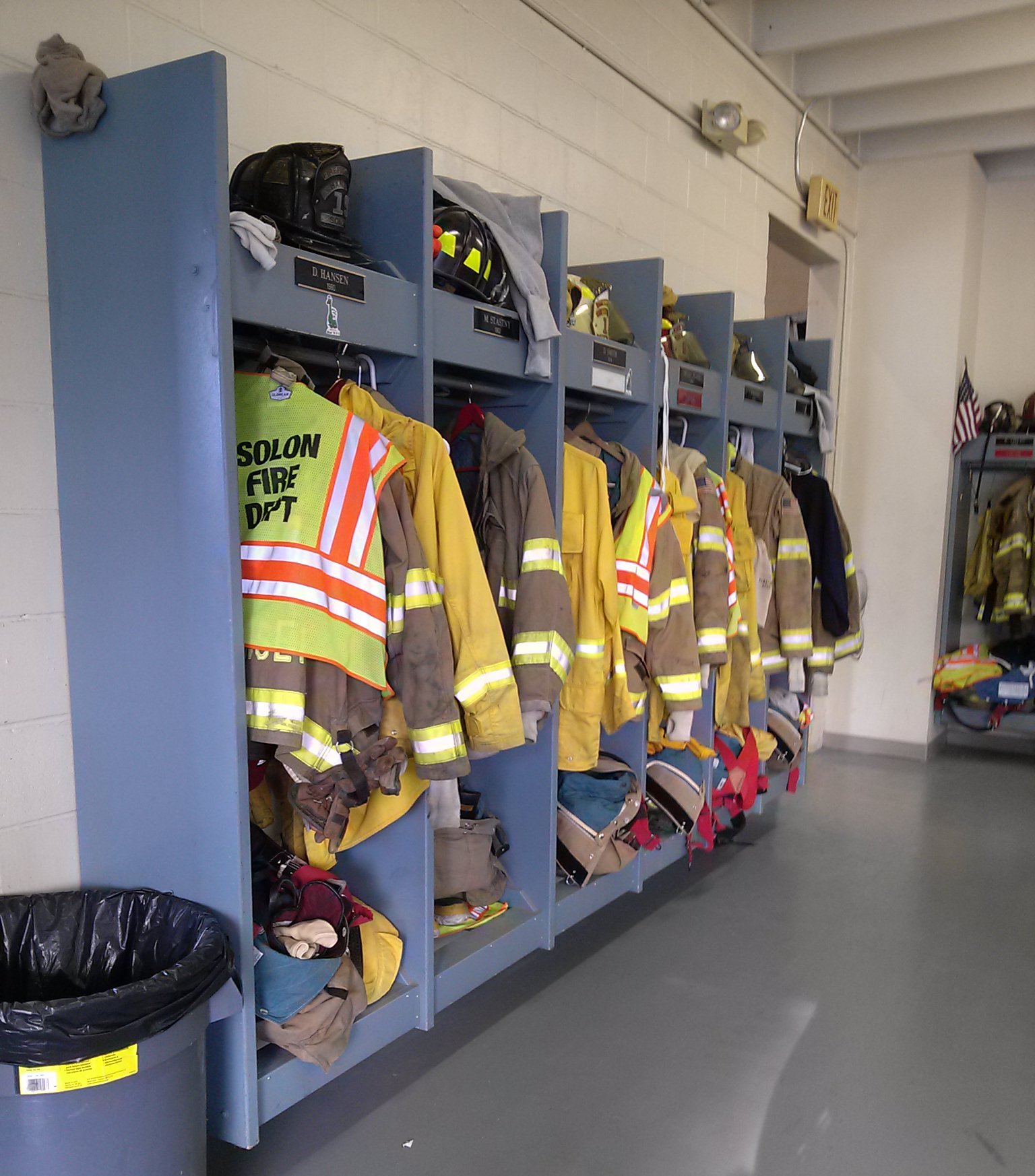
I read the report of fund raising challenges for a new fire station for the Solon Tri-Township Emergency Response Agency. The fund raisers can’t get in front of people due to the pandemic. While the $1.2 million raised so far is positive, there is a long way to go. I encourage people who can to give generously to this project.
Thursday I put on my Carhartt jacket, the U.S. Army-issued scarf I wore in the Fulda Gap, my seed supplier logo stocking hat, a pair of Army boots I got in basic training, my buckled overshoes, and ventured into the unbroken snow. It was more work than expected to deliver two five-gallon buckets of compost to the bin. I felt better once it was finished, some relief from cabin fever. Now I need to figure out how much I can afford to give for the fire station.
The new fire station is designed to better meet our needs. Our volunteer fire fighters could use the support. Please give what you can.
An octogenarian friend talks about “shooting from the hip.” The way I take it is absent guidance, leaders will step up and help us navigate through difficult times together, leaving no one behind.
We need more of that because our political leadership is failing during the coronavirus pandemic and the resulting economic crisis.
Responding to a perceived need, and not any urging from government, my friend began organizing the logistics for a mass COVID-19 vaccination near where we live. With the structure in place, one hopes the supply of vaccine will be forthcoming. I expect it will be eventually.
People do plan for emergency response. They should. That such planning for a pandemic response appears absent from our government makes leaders among us shoot from the hip because the need is now, and it is real. Maybe that’s what our governor wants. She should just come out and tell us we are on our own. It is one hella way to go about a national and global crisis, though. It makes me wonder why we even have a government if it cannot respond adequately to a once in a hundred years pandemic.
I spend plenty of time alone in nature. Mostly it is during walks, or jogs, or bicycle rides. There is no desire to spend an extended time there. “Nature” borders on the sad these days because of its degradation by humans.
When on my grand tour in 1974, I spent time alone. Unless I clicked with someone, it made little difference if I ever saw them a second time. Landing at Heathrow, taking buses, trains, private cars, and in one case, a hovercraft across the English Channel, most of my travels were with someone I met at a youth hostel or hotel, and then for only the time until our next destination. I enjoyed spending the end of each day with others at a hostel. By morning I was ready to venture on my own to interact with the places I’d come so far to see.
Things clicked when I met Gerhard on the green at the Royal Shakespeare Theatre in Stratford-upon-Avon. We met before a performance of Twelfth Night and hung out together afterward. He invited me to visit in Vienna when I made it there in six to eight weeks, and I did. I even tried to get a job in Vienna to extend my stay with him and his room mate from a small village in the Carinthia Alps. When I returned to Europe for military service, while living in Mainz, I took a train to Vienna to visit them again. We corresponded for a long time afterward.
Sometimes I met people I wanted to shake. I met Jorge from Argentina at a hostel in Munich. He was a decade or more older than me and literally falling apart as his partial plate broke twice while I was with him. He brought too much gear, as if he planned to live in some European city permanently, lingering for hours at a local cafe. “He carries with him such a large portion of Argentina that it will break his back someday,” I wrote.
My traveling companion is quite a mess. He smokes very much and eats chocolate and drinks coffee and doesn’t exercise much, all of which combined lead to his poor physical health. Today too, he broke his partial and as a result is walking with his front tooth missing. Also, his temperament makes him very slow and lethargic in moving, and more important, in his thinking. He cannot perceive the world as I do, but acts like a selfish mouse searching only within the egocentric world of self. I often wish to abandon him, but just as many times I see him as needing help. At any rate, I’ll travel with him for as far as Amsterdam.
Personal Journal, Oct. 22, 1974
While I was with Jorge I was encouraged to write more, take photos, travel, and etc. All things seemed better at first. We made it together as far as Heidelberg. He was missing his native Buenos Aires, and my patience with his encumbered companionship was wearing thin. I left him to travel to Cologne alone.
I’m reading a book called Notes from an Apocalypse by Irish author Mark O’Connell. In it he describes going off by himself to the remote Scottish Highlands in a form of pseudo right of passage or retreat. What he found was he couldn’t really get away from other people. A Royal Air Force airplane flew over his campsite, close enough to see and be seen by the pilot, who was on a training mission, or perhaps making a bombing run to Syria, he wasn’t sure which. So it is anywhere on the globe. The mark of we humans is everywhere. In Iowa that is particularly so.
When Big Grove Township was first settled, it was known for the saw mill on Mill Creek. The native oak, walnut, hickory, ash, elm and cottonwood that once thrived among numerous pure springs were long gone by the time we got here. Soon after the big grove was removed, so was the sawmill. Such is living in Iowa, a place with very few natural areas. Even the farmland across the state relies on artificial inputs to produce crops. Every place is subdivided and deeded to someone.
In modern life we can get time alone yet there is always something pulling us back into the maw of humanity. Lately, during the coronavirus pandemic, time alone means a flight into the imagination, into memory. I’m okay with that. If I yearn to do things in person with people, I also accept the restrictions designed to prevent spread of COVID-19. In a time of contagion we get plenty of time alone.
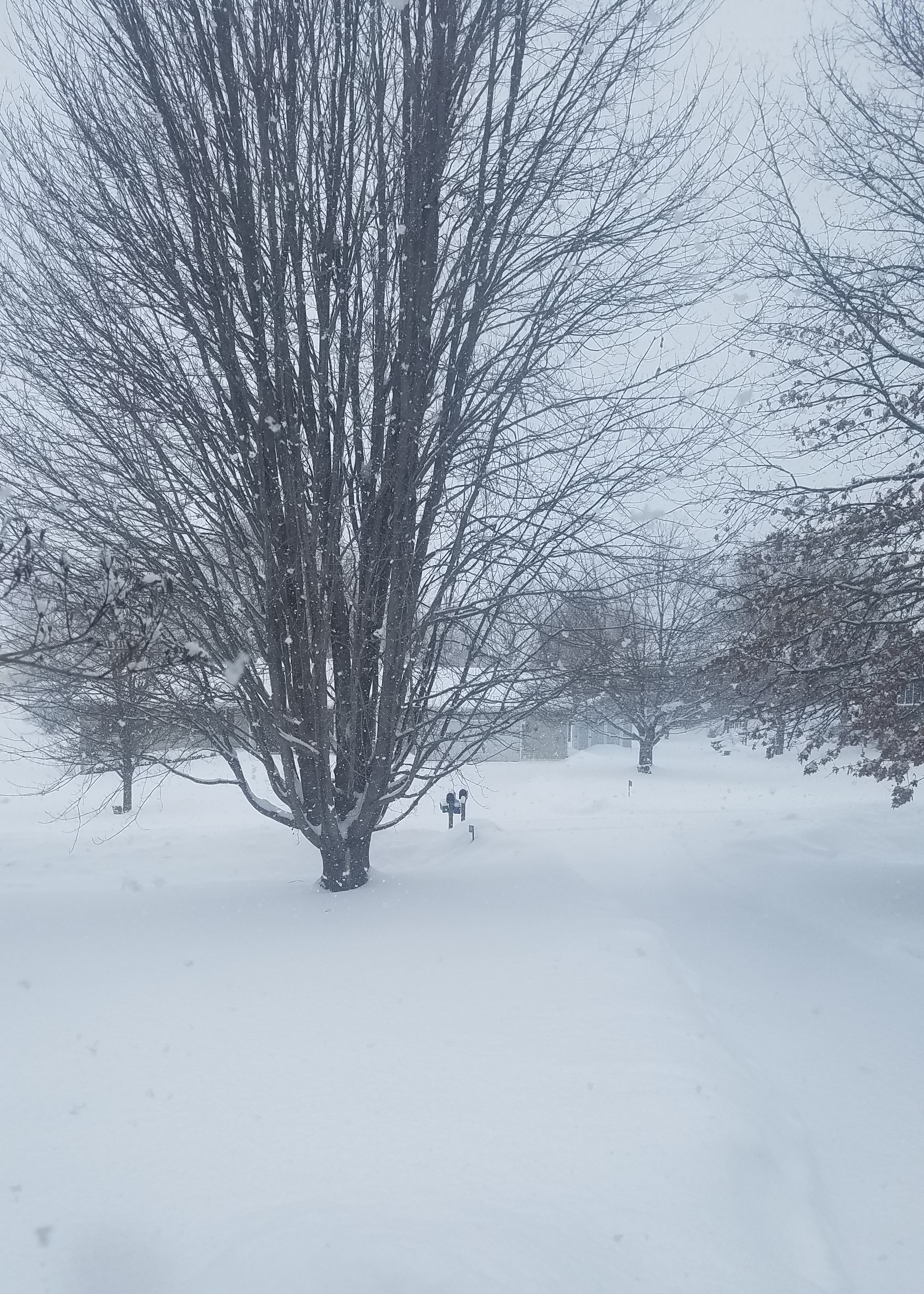
The snow has been on the ground for three weeks without a significant addition. In Iowa, drought conditions are setting in. It hasn’t been cold either. Ambient temperatures today were in the single digits and we’ve yet to have a deep freeze. More weirdness related to changes in global weather systems.
My day seems half wrecked as I worked all morning on a project related to the community wastewater treatment plant. It’s a shitty job (sorry), but someone has to do it.
After a quick shower, I’m ready for a couple of hours writing before making our go-to Friday night pizza dinner. I bought a fresh bell pepper at the market for an additional topping and to mix it up.
There are so many stories I want to tell and the rush of memories is a bit much. It seems a mad competition between writing stories down and the end of days. The engagement in writing takes me to a timeless place where I forget about sewer sludge and the limits of my humanity. I want to camp there for a long while. I forget about passing time and opportunity.
Yesterday I found an 1883 history of Johnson County on Google Books. It has a detailed account of the history of Big Grove Township. More than I’ve seen. I wanted to start writing about it immediately, adopting it to my narrative, adding sentences from other research. Instead, I bookmarked it to return once I’m ready to write that section. I felt proud of my discipline and a little sad because I didn’t just follow the vein. It’s like that with a lot of things.
I delayed my return to the farm until I get the COVID-19 vaccine. Because so much is in flux between the state and federal government, it’s hard to say when I might get it. My group, as defined by the Iowa Public Health Department, becomes eligible in the next phase, which begins Feb. 1. The question is whether there will be enough vaccine to meet demand. We have a large number of health professionals in our area and they are also a priority.
In the meanwhile, I reviewed last year’s garden planting schedule and copied it into my calendar so I’m ready to go when the greenhouse is up. That will be when this old snow melts, and hope of spring is in the air. Well, I’m hoping already.
In a first for this blog I’m publishing a post by another author. I met Kim Painter during her election campaign for Johnson County Recorder in 1998. She continues to serve as recorder. I have the Painter yard sign I put up back then but don’t use it any longer because she has run unopposed for reelection. Readers may recall I frequently write about Big Grove Township. The Cottage Reserve, the subject of this article, is located in our township.This article first appeared in The Prairie Progressive in print edition. It is reprinted here with permission of the author.
Business as Usual by Kim Painter
Once in a great while, though you think you know what your job is and what it means, the earth of the greater wide world beyond will shift, sending you off-balance in a signal moment of realization. Suddenly the job is not what you thought, but rather all that and much more. For me, it’s happened a few times. Once, when same-sex marriage went from being a contentious back-room LGBT community issue to a national, front-burner fastball coming hard across the plate. Suddenly the media spotlight was intense, emotions ran high, and I was operating at a whole different level than on a day-to-day basis. Day-to-day kept coming to be sure, but so did this other social and civil rights issue with a life and velocity all its own.
It happened more recently when a gentleman wrote to me asking for some assistance with a research project. The man was F. Wendell Miller Professor of History at the University of Iowa, Colin Gordon. He wanted all our deed document images from 1900-1950. It was a new kind of request, for which there was no current template.
He explained that he hoped to get the digitized images into a file to run through optical character recognition (OCR) software. He and his class would then scan for phrases like “the Caucasian race” to locate what we now call ‘racially restrictive covenants.’ Back then, they were called business as usual. I was hooked on the idea, and proceeded to work with our software vendor and county IT staff to load the entire 50 years of deed documents into a file for him. It was a privilege to play a small role, and it is a marvel that today, all documents of this sort in Johnson County and Iowa City are online and mapped. The work is found here: https://dsps.lib.uiowa.edu/mappingsegregationia/.
As I began this article I was struck to recall a third occupational epiphany, a personal one. Some 15 years ago, I was printing off some covenants and restrictions for a customer with questions about a potential property boundary dispute. The situation was unfolding out around Lake Macbride, at what is known as the Cottage Reserve. My eyes stopped on a page, widening considerably, as I slowly comprehended in full the following verbiage:
(6) The said Cottage Reserve area is hereby platted for the sole use and benefit of the Caucasian Race, and no lot or parcel of ground shall be sold, owned, used, or occupied by the people of any other race except when used in the capacity of servant or helper.
Please note the awful and purposeful use of the word “used,” as in “used in the capacity of servant or helper.” There’s no mistaking that meaning. People of color are able to occupy space on this property only if being used… by white people.
As if the above weren’t clear enough, consider the fast-following item (7). It prohibits the ‘keeping or maintaining of hogs, cattle, horses or sheep.’ So in near proximity to reserving the Reserve for the sole benefit and use of the Caucasian race, people of color are categorized alongside hogs, cattle, horses, or sheep.
Again, there is no mistaking the meaning. This is what we thought at the time. This is what we ordained and enforced in legal documents. It is a mark of racism’s insidiousness that such documents were so often mundane in one paragraph — stipulating maximum heights of garages or number and kind of outbuildings, delineating collective use of shared roads or wells—only to pivot in the very next to equating entire swaths of humanity to livestock, allowing their presence only if white owners were using them.
Often, when the topic of reparations is raised, one observes the heads of certain kinds of white people exploding, if quietly. People of that sort might seek enlightenment in these covenants and restrictions, which were stipulated in property transactions from the early 1900s until outlawed in 1948. They were of like kind across the nation.
Consider the financial implications of the sheer volume of parcels restricted in this manner. Tote up the generational losses of wealth caused by the absence of just one home and its plot of land from one family. Have you ever borrowed against your home and land? Think of all those who help kids through college by doing that very thing, and how many people of color had no means to do so. How many lost educations, how much lost income, what final tally of all the wealth lost forever to families over time? It is breathtaking to contemplate. And it all starts on pieces of paper, the day-today documents that come through an office as people buy and sell homes and property. It is that simple, and that monumental. In way, it mirrors racism itself.



 Journey Home
You must be logged in to post a comment.