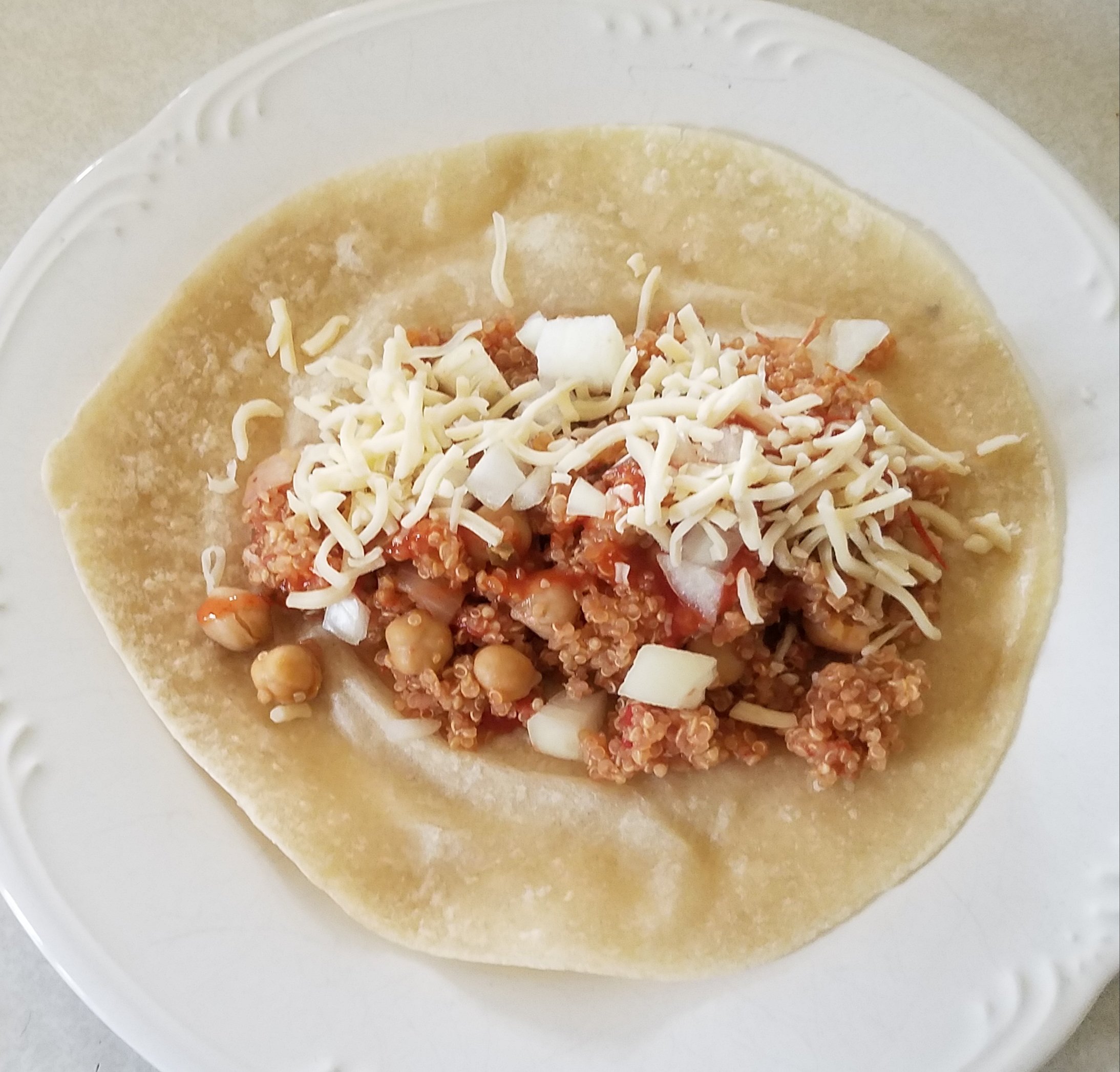
Taco with chickpeas, Spanish quinoa, raw onion, hot sauce and Mexican-style cheese.
Over the years quinoa accumulated in our pantry — jars and jars of it.
Occasionally I’d put a quarter cup in soups, yet the reality was none was being used. More came into the household via free giveaways at the home, farm and auto supply store, impulse purchases, and the like.
There was no answer to the question, “What does one do with quinoa?”
Now there is: Spanish quinoa.
I found a recipe for quinoa lentil taco meat on line. It required an ingredient called “Spanish Quinoa” and linked to a recipe. Spanish quinoa is what I call a “complex ingredient,” something requiring additional preparation before adding it to a main dish. I made a batch Wednesday and the results were satisfying. It will serve on it’s own as a side dish, or in combination with other ingredients as part of stir fry, taco filling or quick soup. Here’s the recipe:
Ingredients
1 teaspoon extra virgin olive oil
1/4 cup chopped onion
1 cup quinoa
1/2 cup diced tomatoes (drained)
2 cups vegetable broth
Process
Sautee the onions in a Dutch oven until translucent. Add the quinoa, tomatoes and broth, stirring until fully incorporated. Bring the mixture to a boil, turn down to a simmer, and cook until the moisture is absorbed, about 20-25 minutes.
Remove from the heat, fluff the mixture and it’s ready to serve on its own as a side dish. I made a double batch and stored the lot in a plastic tub in the ice box until needed.
Discussion
A person can make tacos of anything. For lunch I reheated the Spanish quinoa with leftover chickpeas and salsa in a skillet. Any taco topping would be good. In the photo I used with raw onions, hot sauce and Mexican-style cheese.
Possibilities are limited only by imagination. I’ll mix Spanish quinoa with beans, with frozen greens, with recipe crumbles, with eggs, with lentils, with anything that will give it more texture or protein. As the garden comes in there will be fresh arugula, beet tops, mustard greens and kale. This possible solution to a long-standing pantry dead-zone has potential to change things around in the taco-filling arena.
One more step in the culinary journey of a kitchen garden.
The coronavirus changed and is changing how we live, temporarily and permanently.
Today we don’t understand what is on the other side of the pandemic nor when that will be. I’ve been working to figure it out.
Ambient temperatures were chilly all day yesterday with a strong, consistent breeze. The ground was too wet to dig in the garden. It was a sunny and picture book spring day. Even though there is a lot to do outside, Monday wasn’t a day to do it.
In the garage I planted a third flat of spinach for the garden:
Bloomsdale Long Standing Spinach, Ferry-Morse, 45 days.
As if to show the economy was still operating, the United States Postal Service delivered my Practical Farmers of Iowa Spring Issue, a Land’s End catalogue, and a box of onion starts just when I need to plant them. I know what politicians mean when they say “open up the economy,” yet ask how does one re-start something that never shut down?
U.S. Treasury Secretary Steven Mnuchin announced yesterday personal stimulus payments had begun to be issued in waves with 80 million of them to be sent by Wednesday. The government knows how to spend our money, that’s for sure. If our household receives what we hear in the news that would be equivalent to three months take-home pay at the home, farm and auto supply store. (While I was typing the stimulus hit our bank account).
I ran an expense analysis of our household budget while dodging the windy work outside. With or without the stimulus payment we would be able to pay regular living expenses for the rest of the year without sacrificing our lifestyle. The coronavirus has me asking whether I should even return to my part time job.
In Iowa we don’t know the spread of COVID-19. We aren’t doing much testing. We have little visibility into what the governor or the Iowa Department of Public Health are doing. Yesterday Katarina Sostaric, state government reporter for Iowa Public Radio posted on Twitter:
Iowa’s #COVID19 testing is still limited and actual case numbers are likely much higher than those reported by the state. Today Gov. Reynolds said, “We’ve been in substantial spread for quite some time…you should just assume it’s in your community no matter where you live.”
Based on Reynolds’ statement I’m not comfortable returning to work after my unpaid leave of absence which ends May 5. The terms of the program are if I seek additional time off, I will have to resign. If I want to return to work after that, I have to reapply. If I do resign the chances of me re-applying are pretty slight. There’s ample time to consider this. Resigning is how I’m leaning today.
What would I do if I quit? Go on living.
Since the coronavirus, combined with Republican efforts to kill the postal service, have them on the brink, I will buy some postage and send a few post cards. Not sure that will save them, but it’s something. Every bit helps.
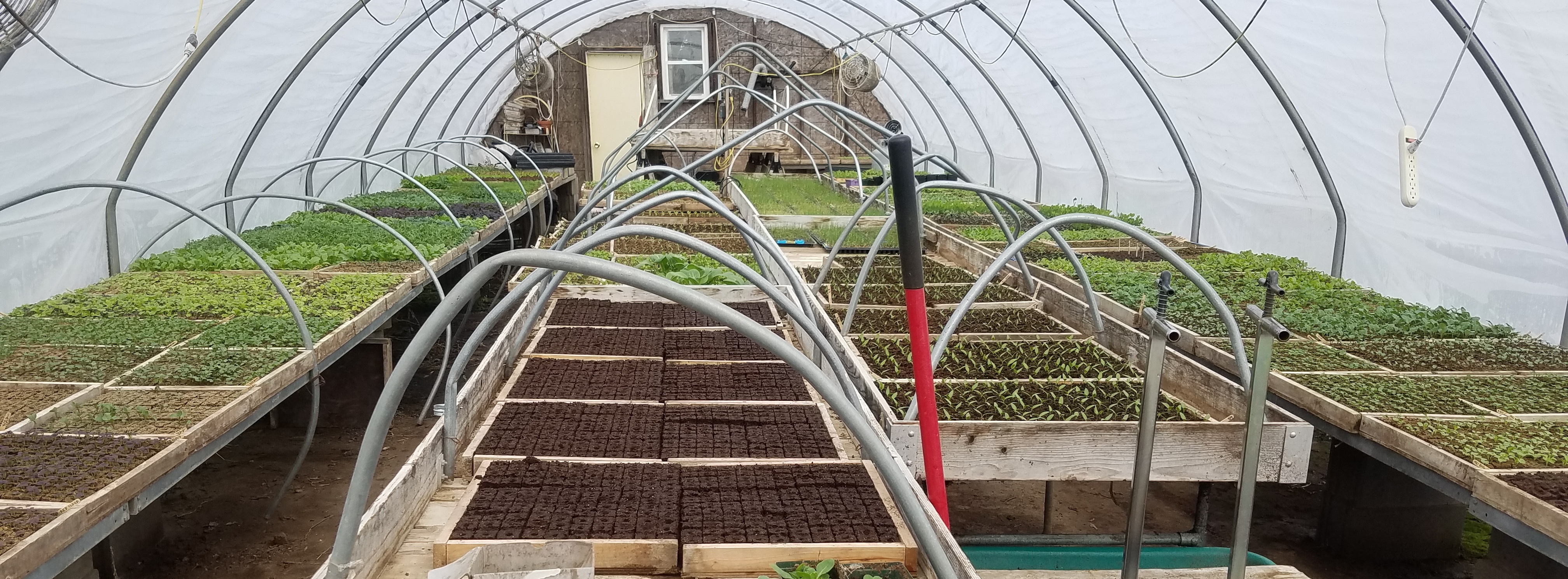
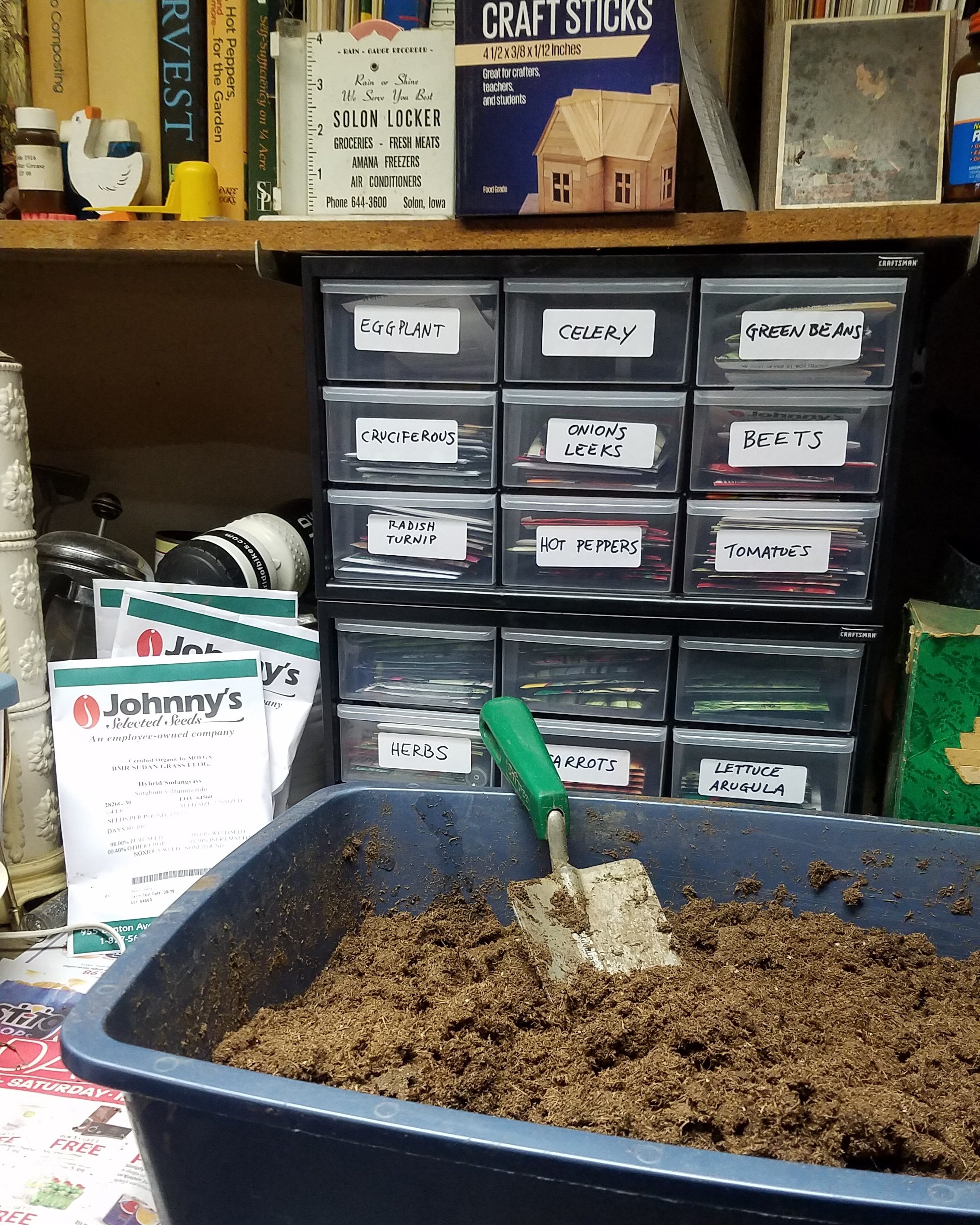
I’m still soil blocking at the farm and took this photo to prove it.
The coronavirus pandemic is impacting the food system dramatically. I didn’t think we’d be in such a position yet there are legitimate concerns about running out of food while large dairies and vegetable and meat producers destroy excess perishables because so many U.S. restaurant dining rooms are closed. One would think the distribution challenges could be resolved, although they haven’t yet been.
Our household will make it through the food supply turbulence, and I’ll make sure our neighbors do as well. Barring unexpected issues it looks to be a great garden year.
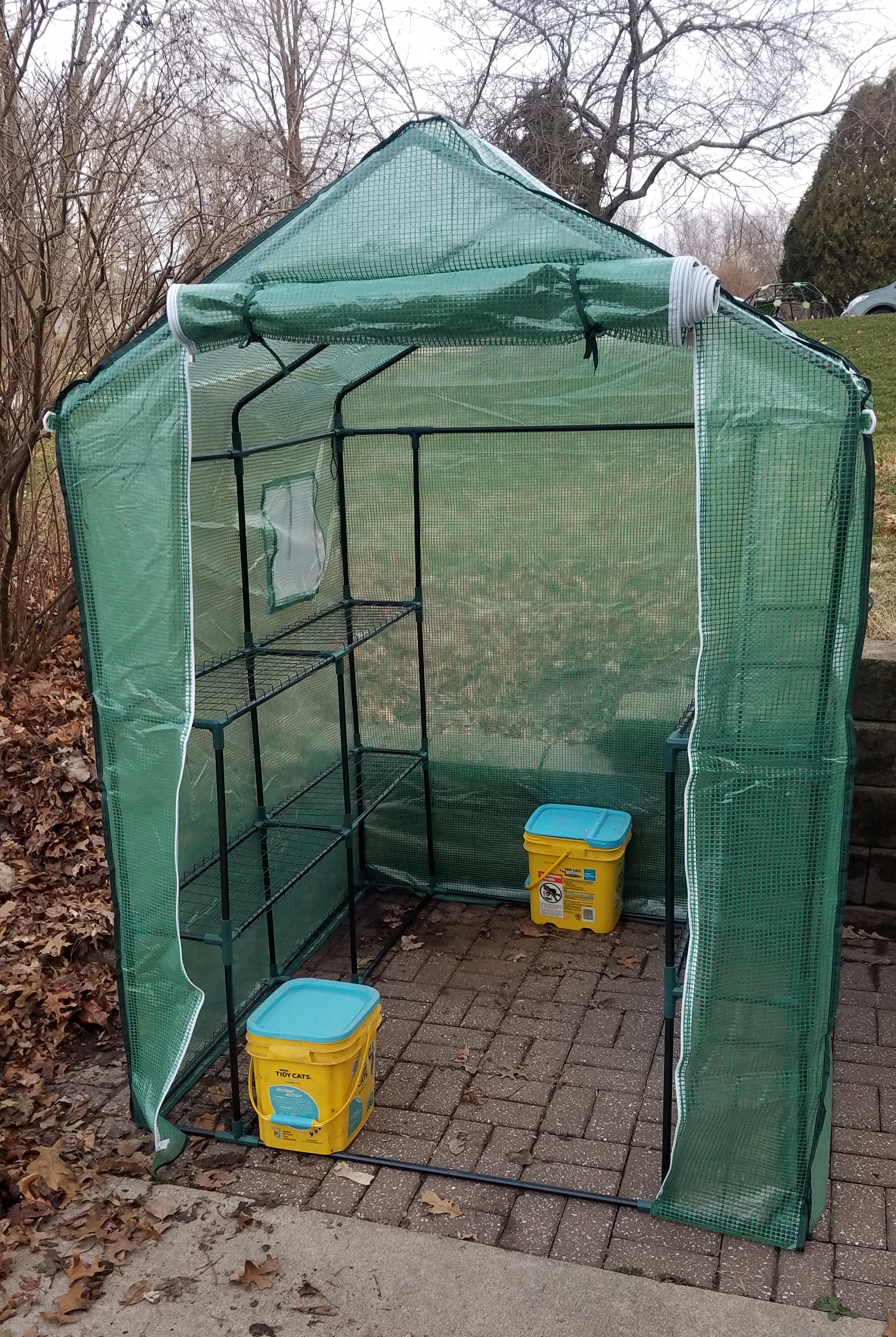
The combination of using a large greenhouse and my portable one makes things possible that weren’t last year. I’m starting more seeds at home and soon will see the result. A larger number of seedlings are growing at home than I’ve had this early. Also no worries about vegetable predators.
There are responsibilities with having a home greenhouse. Mainly monitoring internal temperature and watching the weather for strong winds. Too hot or too cold and seedlings in which so much was invested could perish. A strong wind could blow the structure over despite 200 pounds of sand buckets weighing it down. I used the Weather Channel app on my phone before, yet find myself checking it more often with a home greenhouse. Last night the temperature dipped below freezing so I hooked up a space heater to protect the seedlings.
I also transplanted pepper starts from a channel tray to larger soil blocks.
Where I am deficient in technique, I’m learning needed skills at the farm. I’m re-engineering how I grow peppers as part of the barter arrangement with the farmer. I’m also learning how to produce a better crop of onions. As a result of this learning, I placed a heating pad and channel trays in the on-line shopping cart at the seed company. The seed company is not taking orders from home gardeners because of the pandemic. I won’t use them until next year in any case, so there is time. A bigger concern is whether they will ship my onion starts before planting time. Because of a need to keep their employees safe during the pandemic, their shipping process slowed down.
As usual I was tired after my shift at the farm.
I went home and took a shower, then it rained in the afternoon. Once the ground dries out, I’ll return to the garden. My hope is to harvest grass clippings for mulch before the lawn gets too tall. I don’t know about that if it keeps raining.
A gentle rain fell after noon in Big Grove Township. Forecast to be a quarter of an inch, it continued into nightfall, slow and gentle. It was the kind of spring rain we need and have come to expect.
Neighbors worked in our yards in the morning: trimming trees, collecting brush, gardening and mowing. Children were supervised by parents and the sound of their laughter penetrated the neighborhood. With the coronavirus pandemic we checked in with each other, chatted some, maintained our distance, then returned focus to the work at hand.
After planting I picked up and cleaned garden fencing from where I laid it to prepare the garden plots. Rolled bundles are piled near the Bur Oak trees until needed. For now, nothing is growing above ground that wildlife will eat.
I seeded the last of the early crops in the ground before the rain started:
The portable greenhouse is filling so I consolidated seedlings to make room for what I’ll bring back from the farm today. I gave a tray of broccoli and kale to a neighbor for their garden. Later I’ll post an offer of free seedlings for neighbors on our social media group. Kale is not as popular as I’d like and not everyone gardens.
Inside, I made luncheon of a cheese sandwich with a single slice of bread, spooned out some pickles, and turned to what would be the afternoon’s work.
I have two archival-style boxes of postcards containing hundreds collected from all over, maybe a couple thousand in all. Some were sent to me. Some purchased while traveling in the United States, Canada and Europe. Some bought at auctions for a dollar or two bid per bundle. When I visited second hand stores, if they had a postcard section I browsed for good ones. Post cards are an inexpensive collectible.
At some point I segregated those with more personal meaning from the boxes and put them in trunks with other memorabilia from those periods of my early life. Our parents used to take us to Weed Park in Muscatine, driving along Highway 61 from Davenport in our 1959 Ford. I have a photograph of Dad, my brother, my sister and me standing near the car with the Mississippi River in the background. I put the postcards of Weed Park in the trunk from the time before Father died.
I went through both boxes and looked at every card during a single, four-hour shift.
What strikes me about those hours is the nature of memory. Not only do I have memories evoked by artifacts, I have the sense of being in those places literally.
For example, today is the 75th anniversary of Franklin Delano Roosevelt’s death in Warm Springs, Georgia. In June 1976 four of us left Fort Benning, Georgia where we were taking infantry officer training and drove the 45 miles to visit. We saw the chair where FDR died and I bought a postcard from the gift shop.
I found the postcard in one of the boxes last night. It had the date and names of the other three soldiers who went with me written on the back. I saw myself in that room again, just like it was in the present. What is that experience? I had to look it up.
After consolidation, long-term memories are stored throughout the brain as groups of neurons that are primed to fire together in the same pattern that created the original experience, and each component of a memory is stored in the brain area that initiated it (e.g. groups of neurons in the visual cortex store a sight, neurons in the amygdala store the associated emotion, etc). Indeed, it seems that they may even be encoded redundantly, several times, in various parts of the cortex, so that, if one engram (or memory trace) is wiped out, there are duplicates, or alternative pathways, elsewhere, through which the memory may still be retrieved.
Therefore, contrary to the popular notion, memories are not stored in our brains like books on library shelves but must be actively reconstructed from elements scattered throughout various areas of the brain by the encoding process. Memory storage is, therefore, an ongoing process of reclassification resulting from continuous changes in our neural pathways, and parallel processing of information in our brains.
Shorter version: the postcard caused a group of neurons which physically comprised the memory to recreate it in real time.
This is particularly important when writing a memoir. Perhaps the hardest part of my work has been to resist the influence of today’s life on memories retained. Historians refer to this as presentism, or an “uncritical adherence to present-day attitudes, especially the tendency to interpret past events in terms of modern values and concepts.” It is important to learn how to live from memories and experiences we’ve had. In our search for meaning today, it’s important to refrain from assigning arbitrary values to our past. We have to let the memories exist and pay attention to what they are.
In the 50 years since Father died I frequently revisited the memory of the night men from the meat-packing plant arrived at our home to console Mother while we waited in our parents’ bedroom for news. I suppose the worst parts of those days after his death are blocked, or whatever psychological term represents that. I don’t want to put a name to that blocking process because while other memories physically exist in my brain, over the years I’ve adopted a view, or perspective about what that memory is. While that may provide comfort, when writing autobiography we have to work at retrieving that contemporaneous experience. It must be what it is. That distinction between the memory told and the actual memory is at the core of what I’m about in my writing.
When I woke last night to use the bathroom I thought about what I would write this morning. The shift of postcards prompted something… a lot of somethings. It’s not that complicated. In the rush of viewing memories prompted by a thousand or more artifacts, in a single sitting, we must get a grip on the quantity and manage it. In the end, though, do we need to do that?
Is it better to live in a hurricane of memories and hope for survival? It is better to confront the wind than hide from it. That is my only conclusion today, except for the notion I must post a photo of our Bluebells for complicated reasons.
Tuesday was the last time I started the automobiles.
I plan a drive in each of them later today to make sure the batteries don’t drain. With gasoline selling for $1.259 per gallon I’ll don a protective mask and gloves and fill the one I missed while out to buy groceries.
It’s a maintenance mode of living as we wait out the coronavirus pandemic.
Strong gusts of wind had me bring the greenhouse seedlings into the garage yesterday afternoon. If it did blow over, I didn’t want to lose the work done since February. It’s still standing this morning.
Overnight ambient temperature dropped below freezing, so when I return the plants to their shelves after sunrise I’m going to run a space heater out to warm them. The forecast is ambient temperatures around 50 degrees after noon. The sun should take over warming by then.
The pandemic is real and people who own and operate small businesses are getting antsy. Under normal circumstances a small business owner is eligible for unemployment payments only if they pay in for themselves or their employees. Most sole proprietorship operators don’t.
There is discussion in the national media about stimulus bill funding for small business owner payrolls to make sure they make it to the other side of the pandemic. People I know in this situation, who have applied for unemployment to Iowa Workforce Development, had their claims denied. There is a lack of information about how this provision of the stimulus will work, or whether it even exists. Bottom line is the federal government’s response to the coronavirus pandemic has been too little, too late.
With non-essential business shut down three weeks ago, small business operators are having trouble making ends meet without their regular cash flow. Some are considering returning to work to resolve the stress. It’s easy to say that’s not a good idea during a period of contagion, but our household is financially stable and as such, mine is a perspective of privilege.
As retired workers, our family relies on our Social Security pensions. Politicians floated the idea of increasing Social Security payments temporarily this week. That doesn’t seem necessary. The main thing about Social Security should be to ensure that the trust fund is solvent now and beyond 2034 when if nothing is done it will begin to run out of money. That’s a worry for another day in light of the pandemic.
After Tuesday’s trip to the wholesale club we are provisioned so we can make it through the end of the pandemic. According to current projections the peak is expected to be April 27 although it will take some time past that date for the CDC or Iowa Department of Public Health to give us an all-clear.
For now, I’m focused on planting the garden. If the pandemic continues into summer, we’ll need the produce.
On a mild, clear Sunday I planted cool weather crops.
Arugula and lettuce planted in the ground March 2 are coming along. I tasted a tiny arugula leaf to confirm what it was. Mmmm. It won’t be long before I can make a pasta dish using fresh arugula with bow tie pasta.
In spurts of action with deliberate steps — a process developed as I slow down in the garden — I planted beets and turnips to fill out a patch near the early arugula and lettuce, and filled four containers with two varieties of potatoes, one with radishes and another with three types of onions from the home, farm and auto supply store to be harvested as spring onions. I filled out the onion container with basil seeds. It felt like I made progress.
I mulched the leaves remaining in the front yard, cleared off the plot which grew kale and cherry tomatoes last year, and removed the wire containers from the plot near the in ground containers. There’s more work to do as long as the rain holds off. I planted in soil:
Potatoes
Red Norland, ten weeks.
Kennebec, ten weeks.
Onions
Three varieties of bulb onions, three to four weeks for spring onions.
Turnips
Purple Top White Globe, Ferry-Morse, 55 days.
Purple Top While Globe (certified organic), Johnny’s Selected Seeds, 50 days.
Basil
Sweet Italian Basil, Ferry-Morse, 70 days.
Radishes
Red Meat, Johnny’s Selected Seeds, 50 days.
French Breakfast, Johnny’s Selected Seeds, 21 days.
Icicle Short Top, Ferry-Morse, 28 days.
Champion, Ferry-Morse, 28 days.
I removed the automobiles from the garage as I have each spring while planting the garden. I noticed my inventory of powered equipment increased. With a gas-powered trimmer, an electric tiller, two lawn mowers, and an electric and a gas-powered chain saw, it feels like I’m ready. The electric tiller is a concession to age, yet I admit it does a great job of preparing the soil for planting.
Sunday was gardening, as good as it gets. A fit thing to occupy ourselves as we maintain a distance from people because of the coronavirus.
It took five and a half hours to plant two apple trees on Saturday.
I need to move the support stakes as I put them too close to the trunk. Hopefully they will be easy to remove as they have been in the ground less than 24 hours.
I planted bare root trees that arrived Friday from Cummins Nursery, Ithaca, New York:
Zestar! on G.210 root stock.
Crimson Crisp (Co-op 39) on G.202 root stock.
Here’s hoping for apples in a couple of years.
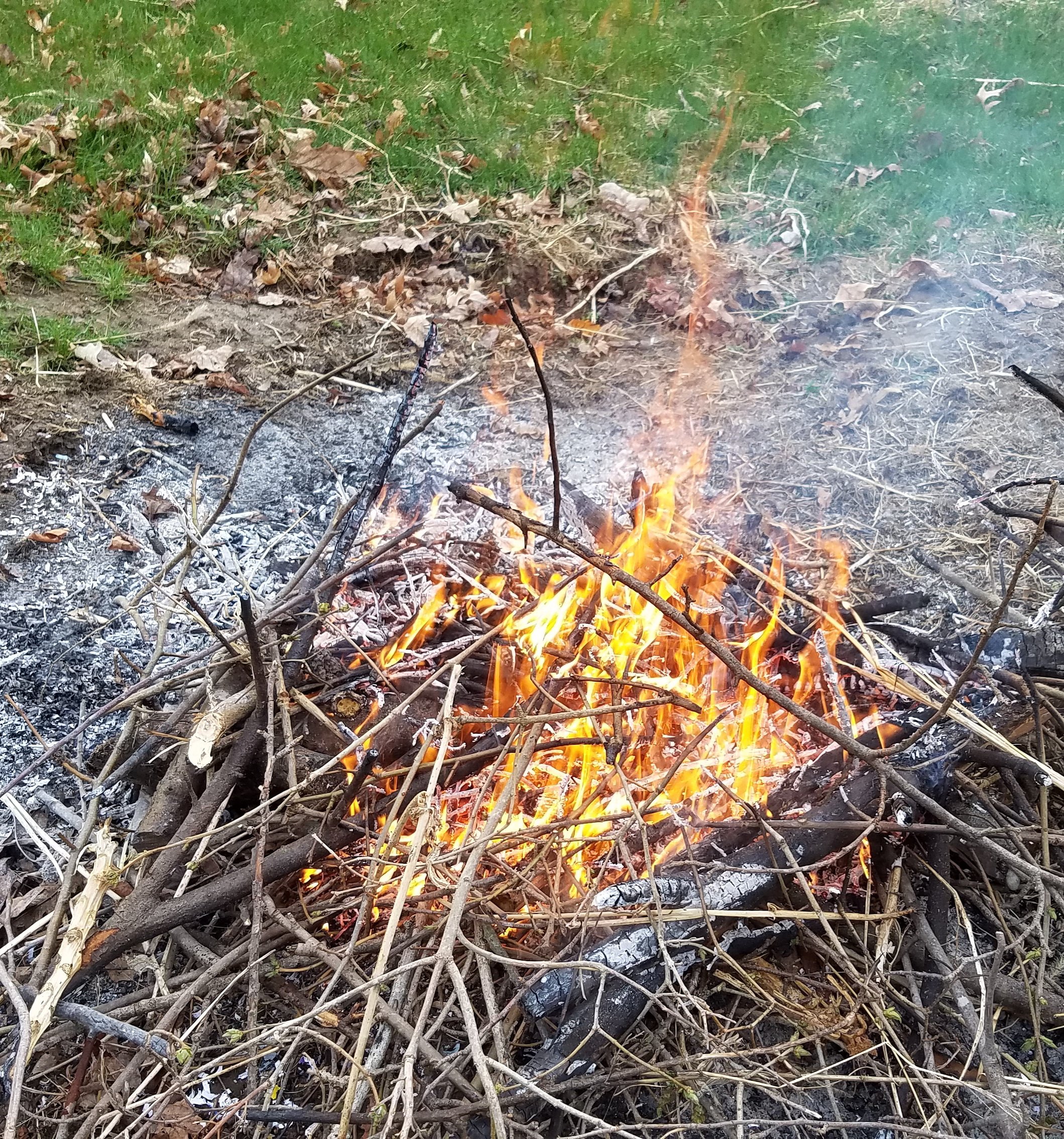
I burned the first brush pile on the to be planted kale plot. It was a clean burn. After sunrise I will spade and till the plot. I also want to plant potatoes in containers and sow peas, beets, carrots, radishes and turnips. If there is time, transplant the first batch of spinach seedlings. There is a lot on the gardening agenda as spring has arrived.
How should I use the time after waking until sunrise, not just today, but going forward? I’m not sure. Other than to continue doing what I am, it is difficult to envision changes from routine as much as they may be needed. I’m too unsettled to contemplate change.
People say it is normal to experience anxiety during the coronavirus pandemic. Knowing I’m normal is not reassuring and has made for restless nights.
The remedy will be to get lost in the work of putting in the garden. If I work longer shifts, maybe I’ll be tired enough at day’s end to sleep through the night. I’m a little sore from yesterday’s work as my spring conditioning regime in the garden begins. Engagement in a project has worked to relieve tension in the past.
It doesn’t help that I’m reading Anne Case and Angus Deaton’s new book exploring why capitalism is proving fatal for the working class with an uptick in mortality rates among white middle-aged Americans from what the authors call “deaths of despair.” There have been enough alcohol, opiod and suicide deaths in this group to reverse the 20th century trend of longer life expectancy. Other wealthy countries continue to see an increase in life expectancy in the new century. Americans do not. I’m looking forward to reading Case and Deaton’s analysis.
All this is not to say I find despair in daily life, I don’t. However, change is on the horizon. Unlike with the sunrise coming in an hour, it’s hard to know what to expect. I affirm today will be a gardener’s day with everything that means. That should be enough to move past the coronavirus engendered anxiety into something more meaningful.
The forecast was 100 percent chance of rain so I worked on the garden in the garage. I re-seeded dill and cilantro that didn’t germinate. I gave up on the shallots and onions which did not grow the way they should inside our home.
I planted new trays made from small shipping boxes lined with aluminum foil. The box of foil was printed with the date 1972. The improvised flats will serve. I planted:
There is a to-do list once the rain finishes and the ground dries out enough to till.
I text messaged the farm about Sunday’s seeding session and we called it off. The greenhouse is full. It’s too cold to put seedlings outside on wagons to harden. We texted back and forth for a while.
Text messages and phone calls are a part of farming that goes on regardless of the crop, almost every day. We stay semi-synchronized, although with a garden I’m very flexible.
My multi-colored Swiss chard didn’t germinate at all. The Fordhook chard didn’t germinate very well. If the seedlings that germinated survive transplant there will be enough chard from the garden for the kitchen. Celery takes the longest time to germinate and the report was it did. Things are looking good. There will plenty of green vegetables to transplant.
Yesterday they tilled and seeded carrots, peas, beets and spinach in the ground. I start my spinach and some beets in trays, but need to plant in the ground as soon as I can get in. Maybe over the next few days. After that, the next step is potatoes, then onions after the ground dries.
While working in the garage I began to dream.
I went on a reconnaissance mission to one of the training areas we used in Germany. I don’t recall where but I got to know Hohenfels, Baumholder, Fulda, Hofbieber, Dipperz and villages at the eastern entry point to the Fulda Gap.
My driver was Cheyenne and had just returned from leave where he attended a Sundance in Montana. I asked him if he ate peyote. He said he had. The driver was an E-1, the lowest enlisted rank. We had busted for getting into a fight and demoted him. He’d been our driver for almost a year. He was the best and the best we had. The peyote buttons remained between him and me. Our battalion commander didn’t want officers driving themselves, so he drove the M-151 quarter ton jeep.
Soon after I arrived in garrison the company motor pool sergeant who gave me a license to operate any piece of equipment in our unit. I’d had familiarization training at Fort Benning and qualified as a jeep driver at Fort Jackson, but the battalion commander was right, I didn’t know jack about fixing the jeep should it break down.
We drove up a ridge high above a valley whose name I can’t recall. It was a beautiful and calm place for reflection. I took notes and viewed the terrain through a pair of binoculars. We watched the clouds blow east up the ascent and over the ridge mid morning. As the valley cleared I finished the work we had come for and then drove back into a village to find lunch.
I don’t know why that experience came to me while planting cucumbers and lettuce. I’m thankful to have had it. It was a fitting dream while doing what I could to advance the garden.
After the first cases of COVID-19 were reported by the State Hygienic Lab on March 8 it took a while to understand the scope of the coronavirus.
The next day, Governor Kim Reynolds signed a proclamation of disaster emergency. Two days after that the World Health Organization declared the virus a pandemic.
The president set a 15-day federal stay at home order which has since been extended until the end of April. Tens of thousands of Americans could die from the virus. We’re all hoping the number is much less.
In Iowa six people died of COVID-19 as of this morning’s update on the Iowa coronavirus website. 183 people have confirmed cases of COVID-19 in our county and the six adjacent ones, or 43 percent of the Iowa total. While we don’t know precisely how the virus spread, it seems obvious reliance on a small number of employers (Collins Aerospace, University of Iowa, multiple food processors) resulted in local commutes that enabled it. During a press conference yesterday the governor noted, “the end is not in sight.”
Jacque hasn’t left the house since March 8, so I am the one with the most risk of contacting the virus. I studied how it is transmitted and have been careful to maintain social distancing and keep clean hands. When I’m out in public I avoid touching my face. Whenever I interacted with people I first ensured they made adequate precautions, then cleaned up when I arrived home.
At the home, farm and auto supply store the company cleans the store multiple times a day, although they don’t go to the extent the grocery store does in wiping down the conveyor belt at the cashier after each customer. According to an article in this morning’s Cedar Rapids Gazette, retail workers are most at risk because a. we are open for business, and b. a quarter of retail workers are age 55 and older and at more risk of contracting COVID-19.
Shopping trips? I don’t like shopping anyway so trips have been limited to the wholesale club, the grocery store, the gas station and to picking up soil mix to start and transplant seedlings at home. Because the cars are mostly parked we don’t use much gasoline. Each business I visited had a regimen to prevent spreading the coronavirus.
Outside I hear the laughter of children. I keep my distance. Occupied with writing, gardening and home life, the isolation from others is welcome even if the cause of it is not. I believe society will survive the pandemic. I also believe we will be changed by it. At least for a while, until we forget, and go on living as we have been for multiple millennia.
There is a 25 percent chance of rain beginning at 9 a.m., according to the weather application. I pulled the cars out of the garage so that space can be used for other projects if the forecast proves to be true. Despite the coronavirus epidemic the waste hauler is working today so I put the trash and recycling bins at the end of the driveway.
I made a taco for breakfast this morning and one of my go-to recipes is easy.
Nostalgic Breakfast Taco
When Mother began cooking tacos at home it was revolutionary. We hadn’t had that at home until the 1960s. The change was partly due to the rise of mass-produced, Mexican-style options at the grocery store. It was also a result of her work at the grade school cafeteria where they made dishes different from what we grew up with. Cafeteria work broadened our home food repertory. While we don’t eat beef in our home now, commercial soybean crumbles create a texture and flavor that reminds me of those early days when she made tacos for the first times. Here’s how it went this morning.
Two frying pans go on high heat. In one cook a pre-made organic flour tortilla. In the other heat a scant tablespoon of extra virgin olive oil.
Dice half a medium-sized onion and part of a frozen bell pepper. They go into the hot oil. You’ll hear the sizzle. Stirring constantly, season with salt, dried cilantro and powdered chilies. Cook until the onions and peppers are soft. Stir in a clove or two of minced garlic and cook until a garlic aroma rises from the pan. Stir for a minute or so and add one half cup of commercial frozen soybean crumbles. Stir until thawed and set aside.
Place the cooked tortilla on a dinner plate and garnish from the bottom up: a layer of Mexican cheese to taste, pickled sliced jalapeno peppers, salsa or hot sauce to taste. Put the fry up on top of the garnishes and serve with a beverage of choice.
I look forward to when garden cilantro and tomatoes are available. Tacos are a way to explore your palate and discover who you are. For me it’s a chance to remember standing around the kitchen in that American foursquare home with family while reflecting on how our lives have changed. Even on a rainy day that is positive experience.





 Journey Home
You must be logged in to post a comment.