The word “cooking” was on the calendar this afternoon. I went into the kitchen at the appointed time and stood there.
After a while I turned the radio to National Public Radio news, and stood there.
I stood there and let the quiet of a placid summer afternoon sink in.
Filling a wide-mouth Mason jar with ice, I drew filtered water from the icebox and drank.
I refilled the jar.
The green beans had gone bad, so into the compost. A moldy squash was removed to the compost bucket.
There were too many cucumbers, so the small ones were made into sweet pickles (I hope).
When I selected Brandywine tomato seeds last winter I had no idea the fruit would be so good. A dozen were lined up on the counter in the order of ripeness. I took the biggest one and made two slices from it. I diced one more that was injured from growing between wires on the tomato cage and piled it on top. With salt, pepper and feta cheese, it made two meals by itself.
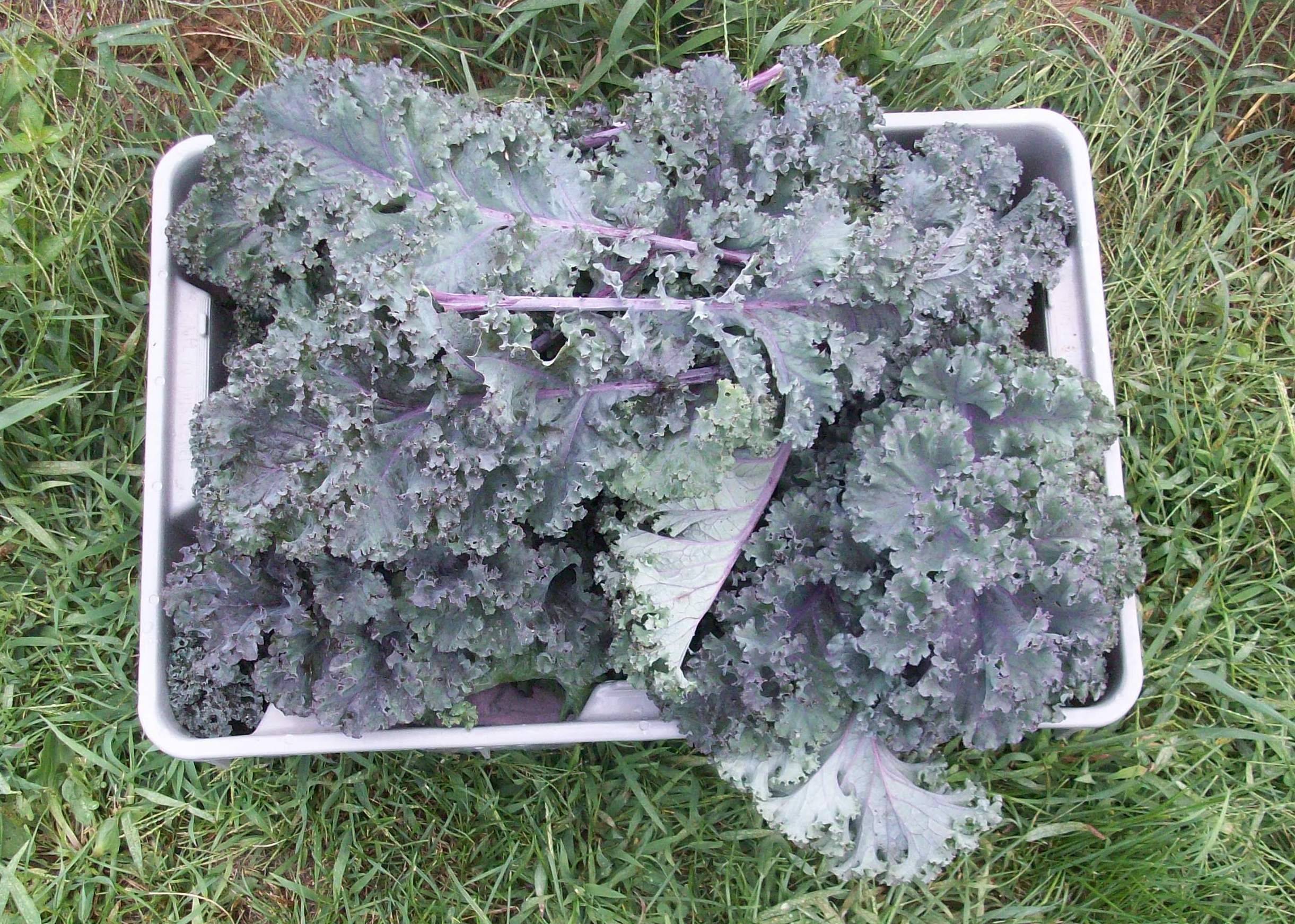
I cleaned and picked over a crate of kale and found a couple of green worms on the leaves. The predators have arrived. Removing my guests, I tore the leaves and filled up the salad spinner. The kale dried on the counter.
I stood there a while longer, but now I knew. The other dish would be a kale stir fry.
Slicing half an onion, seven cloves of garlic, and a yellow squash, I sauteed them in extra virgin olive oil until tender. Then I piled on the kale and stirred gently. First it turned bright green, then it wilted. It cooked down to two servings, which was just right.
The meal was satisfying, and unexpected. Which is what happens if one would but stand in the kitchen and live.
We live in the only home we planned and built. When I arrived in 1993, ahead of the rest of the family in Indiana, the lot was a vacant remainder of the Kasparek farm with two volunteer trees and tall grass.
A deal on another lot had fallen through, and there was an urgency to find a place to settle. This lot, with its proximity to Lake Macbride was to be it.
I remember sitting on the high wall after the contractor dug the lower level from the hillside, before the footings were in. A cool breeze blew in from the lake — the kind that still comes up from time to time.
Like our home, the lives we built here are a construct — decisions made, things accumulated and behaviors played out. As we live each day we make it anew from materials with which we’ve grown familiar. Over the next month, the construct will be under review, with new energy once things are shored up against what is expected to be a tumultuous future.
Some parts of life here were well-decided. The large 0.62 acre lot allowed our garden to grow and flourish, producing more food than we can eat and preserve given a busy life.
Others just happened.
So this week’s pledge is to get started on more conscious creative endeavor in this place we built 22 years ago.
On Thursday the Los Angeles Times reported a Costco member sued the retailer on allegations that it knowingly sold frozen prawns that were the product of slave labor.
The lawsuit, filed Wednesday in U.S. District Court in the Northern District of California, alleges that Costco was aware that the prawns it purchased from its Southeast Asian producers came from a supply chain dependent on human trafficking and other illegal labor abuses.
The suit, which seeks class-action status, named seafood producers Charoen Pokphand Foods Public Co. in Thailand and C.P. Food Products Inc. in Maryland as defendants.
Based on claims of unfair competition and fraudulent practices, the lawsuit seeks a court order stopping Costco from selling prawns without a label describing its “tainted” supply chain and from buying, distributing and selling products they know or suspect to be derived from slave labor or human trafficking.
If the allegations are true, the Costco halo with regard to labor relations should dim.
More than any other large retailer, Costco is in the good graces of members of the progressive community for its labor practices.
In January 2014, President Obama choose a Costco in Lanham, Maryland to advocate for an increase in the federal minimum wage because the retailer is “acting on its own to pay its workers a fair wage.”
“To help make that case, look no further than Costco,” said Thomas Perez, secretary of labor at the event. “Costco has been proving for years that you can be a profitable company while still paying your employees a fair wage. They’ve rejected the old false choice that you can serve the interests of your shareholders, or your workers, but not both.”
“Labor union officials and backers agree,” according to an article in USA Today, “saying other retailers, such as Walmart, could learn from the way Costco treats its workers and the results.”
Costco’s example is on the left end of the retail spectrum, and is set up to be taken down a notch. Slavery in its supply chain is nothing new as their shelves have long been stocked with canned tuna derived from a Thailand based fishing trade that sources from slave vessels. The Costco halo has protected it… perhaps until now.
When in high school I enjoyed having a tuna melt sandwich at Ross’ Restaurant in Bettendorf after working on the stage crew. The warm tuna salad, with a slice of melted cheese, served on toasted bread was sensually appealing and delicious. We are not in high school any more.
We live in a society where the mere mention of symbols of 19th century slavery creates cacophonous public debate. Just look at the recent news cycles regarding use of the Confederate battle flag in public places. It was a media firestorm with the defining act arguably being removal of the Confederate flag from the South Carolina state capitol grounds. Modern day slavery? Barely a word about it.
Whether Costco’s association with slaves in its supply chain will become an issue among its members is uncertain at best. As a society don’t like to take down the symbols in our hagiography, even if all large-scale retailers, including Costco, are far from saintly. We take comfort in developing patterns and relationships with our retailers, creating a refuge from a world that seems increasingly hostile. “I like this brand,” a consumer might say.
The argument comes down to the face of the farmer. When we discover the farmer is a slave, it requires action on our part. That is, unless we concede the world is so screwed up there is no hope.
I’ve never eaten a prawn, and don’t plan to start. If the lawsuit is successful, I’m not sure it will matter among prawn-eaters or other Costco members. However, progressives should care, and stop referring to Costco as a model for labor relations until it pledges, and lives up to the pledge, to take slavery out of its supply chain.
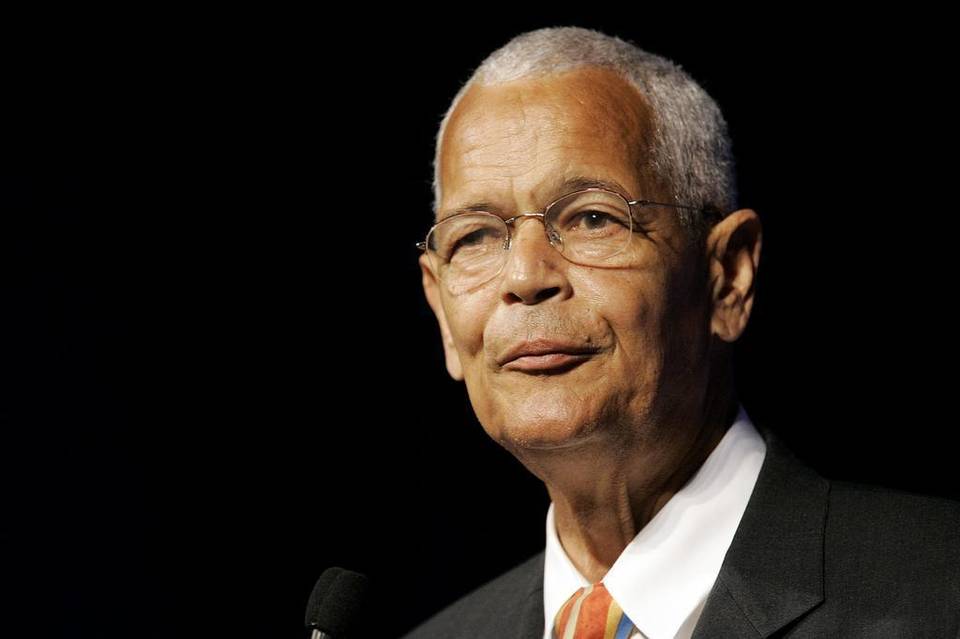
On Nov. 12, 1970 I heard Julian Bond speak at the University of Iowa Field House. My memory of the event is wondering why I should care about a Georgia legislator who found his way to Iowa, other than the classroom assignment to report on five university events that semester.
Hearing Bond’s speech changed me in ways that persist at his passing this week, leaving an indelible mark for which I am grateful.
When Bond joined Morris Dees and Joe Levin in 1971 to help found the Southern Poverty Law Center as its first president, I joined and followed the cases they took over the years.
At first, their work showed me how far out of touch I was with the legacy of the south. Why should I care about their 1972 plan to apportion voting districts in Alabama? If I knew then what I know now about redistricting I would have paid more attention.
As a result of their litigation in Nixon vs. Brewer, attorneys for the Center argued, “blacks made up one-fourth of the Alabama population but were unable to elect representatives of their choice under the current at-large voting system.” After a successful outcome in federal court, the state adopted the Center’s plan for apportionment. In 1974, 15 blacks were elected to the state legislature. This is the type of social justice for which I remember Bond.
Like most of my friends, I knew few people of color in my youth. When I was coming up our family visited the plantation where my father lived while attending high school in Tallahassee, Fla. My father’s ease with black acquaintances from his youth taught me acceptance of people as people with whom we have much in common. Bond’s example teaches that we need not just acceptance, but social justice.
Julian Bond was called home too early. His legacy follows the arc of social justice that has been part of public life for most of mine. I feel a sadness at his passing. Not for what he was, or for the loss, as much as for how far we have to go.
The Golden Delicious apple tree had been having trouble for a long time. Last night it took a hit as the combination of a fruit-laden branch attached to a disease weakened trunk broke off.
It was one of the last crop bearing limbs, so this winter the tree will have to come down.
It’s not a crisis. More a sign of what’s to come.
I planted six apple trees, including this one, after my mother-in-law’s funeral. The rest of the family drove to her home near Ames where I would join them once the bare root stock from Stark Brothers was in the ground. That was more than 20 years ago.
Since then, two more trees have been lost—this one makes three. The remaining trees produce enough fruit for our household which is loaded with cider vinegar, applesauce, apple butter and dried apples. We pick the best and leave or give away the rest. We’ll be fine.
Fallen Branch
After taking the photos, an hour in the kitchen produced juice for cider vinegar. I filled the two-quart jar that holds the mother for another season of fermentation.
We recently turned up a few old items of food. We have some vintage 2008 Duncan Hines cake mix, which I decided would be a reasonable vehicle to eat more apple butter. I made the lemon flavored one first. Squares of cake topped with vintage apple butter makes a delicious dessert. When I say “vintage apple butter” I mean the jars are labeled so the variety and circumstances from which the apples originated is known.
This morning I made a batch of tapioca. It’s not like pudding, but it is close enough that I plan to make more at least until the three boxes are used up. Not sure what prompted that purchase circa 2007, but the result, prepared according to instructions on the box was decent. If I can figure out the layers, it would be great to make a parfait. Perhaps to be served like ice cream.
The garden yielded a dozen cucumbers, the same number of Brandywine tomatoes, celery, green peppers and a few cherry and grape tomatoes. There is plenty of kale, but I’m letting the plants rest for a while before resuming regular harvest. No noticeable bugs have invaded… yet.
This report and its observations aside, it is a peculiar time.
The fallen apple tree branch is a reminder of the life’s brief span. Accepting the tree’s demise has long been avoided. Until this morning.
I accept it. Despite the downward curve of the arc, there is time to plant another tree. If not for me, then for whoever inhabits this plot of ground after we are gone. Looking forward to putting new stock in the ground.
Clear Lake, where the Iowa Democratic Wing Ding was held Friday, was an impossible venue for most Iowa working people.
Over 160 miles away in my case, driving there after work was not an option. To make up for the distance, I viewed the Des Moines Register webcast on my desktop. It wasn’t the same as being there, but it felt close in the twitterverse.
A key question for the Feb. 1 caucuses is who will show up, and this year one expects a significant number—not as many as in 2008—will not be activists. The campaigns will be judged by how well they organize and turn out their supporters that night. A failure to bring new people to the caucus process could be fatal for a candidate’s hopes. One of two tickets out of Iowa will go to Hillary Clinton.
Here are five take-aways from the Iowa Democratic Wing Ding.
What not to like about Martin O’Malley? Whether O’Malley can challenge Sanders for the second ticket out of Iowa is uncertain, but he is campaigning in a personal, energetic and personable way. He has had multiple bites at the policy-setting apple, and long time political activists, as well as quadrennial Democrats, can find a lot to like about O’Malley’s ideas and campaign tactics.
The Democratic political establishment is overly reliant on resources the eventual nominee will bring to the table. While Trump and Carson stage circus-like extravaganzas that bring new people into the political process, Democrats place stock in large, formal events like the Wing Ding which target existing political activists. Such events have a role. The better question is what are Democrats doing to bring new people into the process? Prove me wrong, but they aren’t doing much except dusting off the same old sawhorses for the post-caucus campaign. Is anyone else tired of hearing the name Jerry Crawford?
Bernie Sanders’ stump speech is getting old. Progressives are supportive of Sanders’ ideas, but the message is little changed since he appeared in Johnson County to support Bruce Braley before the midterm election. Maybe the idea of political revolution doesn’t need to change. His speech at the Wing Ding wasn’t helped by the fact he was losing his voice. The ideas remained strong, but delivery suffered. The novelty of Sanders is wearing off.
Chafee is actually a Democrat. If there is any question about Chafee’s allegiance to mainstream Democratic ideas, he inoculated the political bloodstream with his better than expected Wing Ding speech.
Hillary Clinton gets a ticket out of Iowa but her challenges lie ahead. In case you missed it, Hillary Clinton is a woman. Set aside all the policy ideas you agree or disagree with—your niggling objections—and it is much less than a sure thing the electorate will support a woman for president in the general election.
We live in a culture where women are considered to be second class citizens and worse. No one knows this better or has done more about it in public life than Hillary Clinton. She has done a lot globally to support women and girls, but the battle is not won. Far from it. Despite her impressive credentials, for reasons that include her gender, Hillary gets short shrift. Like many women, she will have to work smarter and twice as hard as the others to achieve her goals. The glass ceiling isn’t broken yet.
By Labor Day, most Democratic activists—people who invest time and resources into political campaigns—will have decided for whom they will caucus. Many already know or have signed up for a campaign. Some wear their preference on a T-shirt or car bumper. Others keep close counsel. The veil—already wearing thin—will be shed in a few weeks.
There is a desultory feel to this year’s caucus season, which began April 10 in Des Moines with speeches by Jim Webb and Martin O’Malley. Some show enthusiasm for their chosen candidate, yet most people I encounter are tuned out of politics. With each election the life cycle of interest in voting seems shorter.
As Iowans seek relief from summer’s heat and humidity we have had a chance to get to know the five Democratic contenders. Deciding which one to support will be easier because of Iowa’s first in the nation status. What everyday Iowans do about it is an open question.
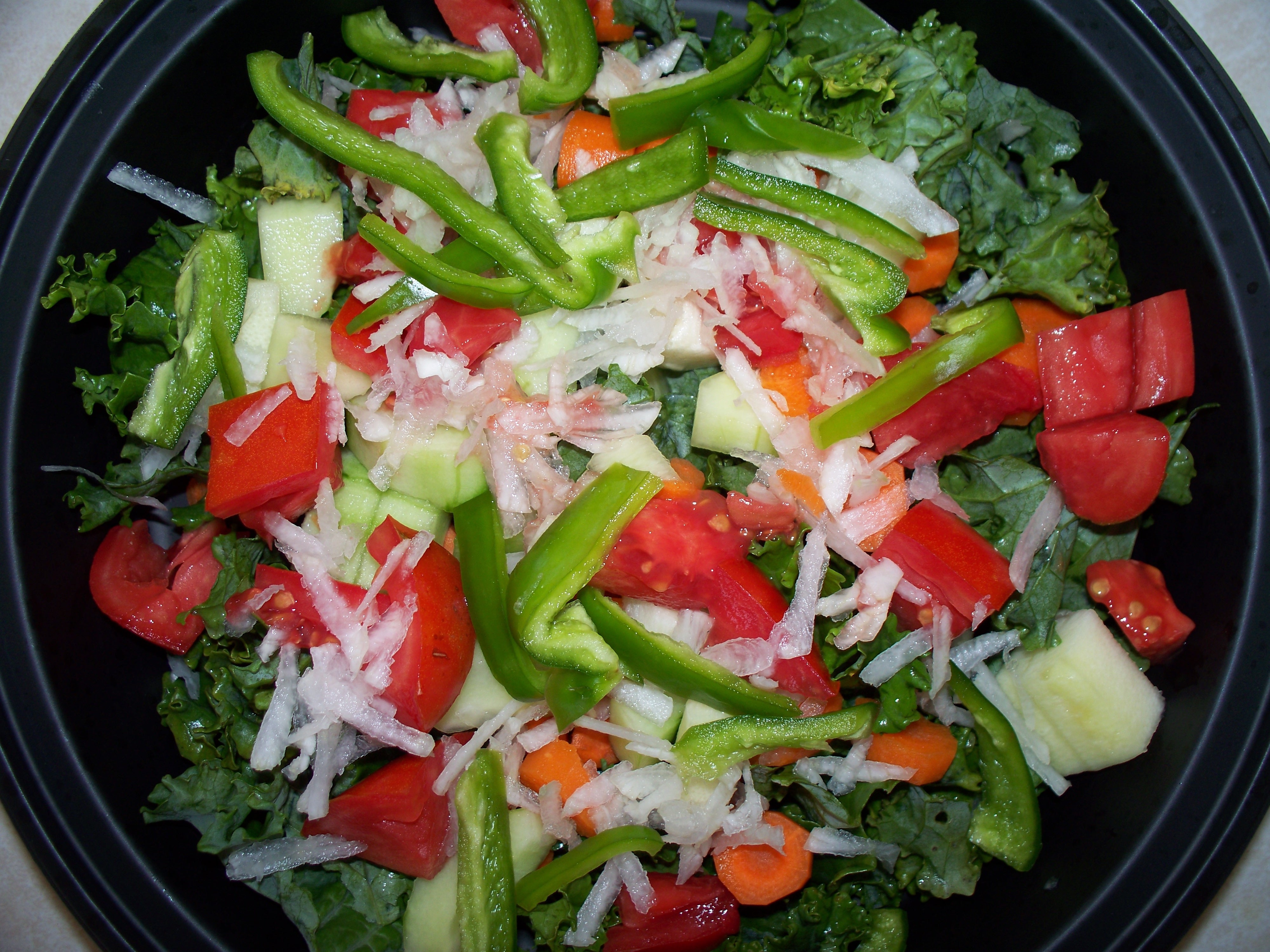
Ingredients for this kale salad were grown within 100 feet of our kitchen. It is as local as food gets.
We enjoy garden produce in high summer — when nature’s bounty yields so much food we either preserve or give it away. Any more our household gives away more than it preserves because the pantry is well stocked with previous years’ harvests.
Friends and family talk about the “local food movement.” In Iowa it is being assimilated into lifestyles that gladly incorporate ingredients from all over the globe. This assimilation has taken the local out of local food.
From an intellectual standpoint, it wouldn’t be hard to replace food grown in China, Mexico, California and Florida with crops grown here in Iowa. The number of acres required is surprisingly small. For example, local farmer Paul Rasch once estimated it would take about 110 acres to keep a county of 160,000 people in apples all year. The political will to encourage home-grown solutions in the food supply chain doesn’t currently exist. Until it does, rational, local solutions to food supply remain in the ether of unrealized ideas.
A vendor at the Iowa City Farmers Market was recently suspended for violating a rule that produce sold there must be grown by the vendor. Just walk the market and ask booth workers from where they hail. Often he/she is an employee or contractor working for a farm seeking coverage around many Eastern Iowa farmers markets. Too often they are anything but local growers. What’s been lost in this commercialization of local food is the face of the farmer.
Knowing where one’s food comes from is a basic tenant of the local foods movement. I enjoy working with local growers on a small acreage to produce food for families. At the same time, I seldom purchase a box of cereal from the supermarket even though I’ve seen the grain trucks queue up to unload at the cereal mills in Cedar Rapids.
For example, my garden doesn’t produce enough garlic for the year. I’d rather buy a supplemental bag of peeled garlic cloves produced at Christopher Ranch in Gilroy, Calif. than cloves lacking discernible origin at a farmers market. I know how Christopher Ranch produces their garlic. Absent the face of the farmer, there is value in understanding food origins, and that means some percentage of a household’s food supply will not be local.
There is a lot of marketing hype around “organic,” “GMO-free,” and “gluten free” foods, and this has to be impacting the customer base of local food producers. If consumers feel they can get a reasonably priced, “healthy option” at the supermarket, why make an extra trip to the farmers market, except for the occasional special experience? Why wouldn’t one pick up a bag of Earthbound Farms organic carrots when local growers can never produce enough to meet demand? At the same time, marketing hype is just what the name suggests.
Food security and sustainability are complicated. Before the local foods movement came into its own, it already is being assimilated faster than one can say snap peas. From a consumer standpoint the local came out of local foods some time ago, and it may not be back.
In August 1993, as we trucked our belongings inside, I set up a wooden desk bought for a buck after returning to Iowa from Germany. It’s in about the same place today, with an accumulation of junk piled on it.
It is time to clear the old desk and get to work making something from the artifacts of a life.
I have been a reluctant downsizer, but it’s time. The process will involve writing — autobiographical writing. It will also involve shedding the detritus of hopeful projects that lost their luster.
Few people care about a single, ordinary life unless some broader lesson can be learned from it. Even I don’t care about much of what happened in my life. The main focus is always on what’s here and now, and to some extent, what’s next.
A few projects seem particularly important.
In 2013 I wrote “Autobiography in 1,000 Words.” I’ll expand that post to 10,000 or maybe 25,000 words. Brief enough to read in a single sitting, but more details.
Prioritizing my reading list will be part of the process. Last year I read a short list of books. If that is the future, choosing carefully from many options ranks high on the to-do list.
Since re-purposing in July 2009, my writing has been short form. Letters to the editor gave way to blog posts, and freelance work for the Iowa City Press Citizen provides an outlet. My topics have been catholic and need focus. I expect to continue freelancing as I have been, but funnel down blog writing as I go through the accumulation of artifacts. At my age some things are more important than others and there is not time for them all.
Since the digital photography era began—roughly in 2007 for me—thousands of images have been stored on computers and external drives in our house. I worry about the future of such images, so some photo printing is in the works.
The project end-game is a productive studio space. A place to go for creative endeavor that would include music, writing, reading and other outputs. If the space produces an income, that would be great, but I don’t have high hopes for that.
It’s time to be hopeful again, beginning not far from where I’m writing this post. I cleared a space on the oak desk last night, so the work has begun.
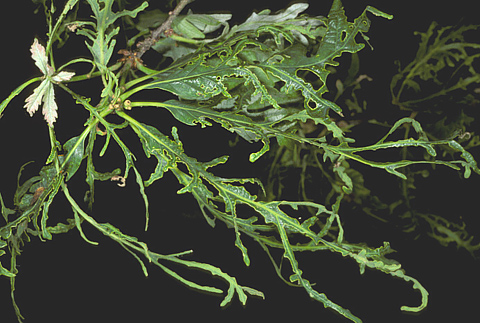
White Oak Leaf Tatters Photo Credit Plant Management Network
What to make of a study of the impact of herbicide drift from farming operations on oak trees?
In a peer reviewed 2004 study at the University of Illinois, Department of Natural Resources and Environmental Sciences in Urbana, Ill., scientists found drift of chloroacetamide herbicides is a possible cause of the leaf tatters syndrome in White Oak trees.
During the last few decades, white oak (Quercus alba L.) in the north central region have developed malformed spring leaves often called “leaf tatters.” The symptoms begin with the death of some interveinal leaf tissues, eventually leaving only the main leaf veins with little interveinal tissues present (See Illustration Above). Leaf tatters reduces the overall canopy of trees, making them more susceptible to other stresses. Leaf tatters has been reported in Illinois, Indiana, Iowa, Michigan, Minnesota, Missouri, Ohio and Wisconsin.
It’s a single study, probably not enough data to fully ratify the relationship, even if there is concern among foresters about how herbicide drift may be affecting stands of trees in both urban and rural areas.
The topic is worth more study than it is getting, as chloroacetamide is the active ingredient in a number of herbicides used with row crop corn and soybeans.
Preserving our woodland heritage is more complicated than letting a stand of trees go on as it has. Existing oak-hickory forests are being subjected to a wide range of stress including growth of invasive species below the canopy, and a lack of significant events, like forest fires, to remove mature trees, permitting new growth. After being in place for thousands of years, the oak-hickory forest will become a thing of the past without modern forestry management.
If there are other studies of the impact of herbicide drift on forests, I couldn’t easily find them. In fact, I had to contact an acquaintance to locate the study referenced in this post. Besides a small group of scientists and foresters, I don’t know who else is even looking at this.
What this study suggests to me, and to others whose opinion I value, is chemical drift from large scale farming operations can impact life in urban areas where most of the population lives.
As we escape rural areas in favor of cities we remain connected to what goes on in the country. Part of that, perhaps, includes maladies caused by chemical drift from large farms.
It is time we, as a society, spent time and resources determining what the relationship between chemical drift and our lives in the city is.
CORALVILLE — The Johnson County state Senate delegation — Bob and Sue Dvorsky, Joe Bolkcom, and Kevin and Deb Kinney — hosted their colleague, Senator Rob Hogg at a fund raiser Tuesday afternoon.
Under a tent erected on the manicured lawn of Backpocket Brewing in Iowa River Landing, about 30 local Democrats gathered to hear Hogg’s positive vision for our future.
“Let’s work and get Congress to function to solve problems,” Hogg said.
Hogg is exploring the possibility of challenging incumbent U.S. Senator Chuck Grassley in the general election.
Hogg mentioned key issues Iowans are concerned with in his fifteen minute speech: ending discrimination, raising the minimum wage, addressing infrastructure, youth employment, and creating a vibrant, full-employment economy that works for all Americans. He would address the social safety net, public health including mental health, and his signature issue of implementing proven solutions to address the climate crisis.
“During the next presidential term there will be four justices — Scalia, Ginsburg, Kennedy and Breyer — over the age of 80,” Hogg said. “The question is who do you want making the decision about who’s going to confirm the next justices?”
“We do not want to go backwards on the Supreme Court,” he added.
Foreign relations is an important part of serving in the U.S. Senate, Hogg said.
“We need a foreign policy for the U.S. that is strong, and smart, to promote peace and to promote global environmental sustainability out of our own self-interest,” he said. “We need the United States to lead the world on these issues.”
Challenging Grassley will be a daunting challenge if Hogg decides to run.
“I believe in making government work,” he said.
“You need to elect candidates who want to make Congress work, who want to make government work,” he said. “We also need a new kind of politics.”
“The easiest way to change the way we do campaigns in this country is to run a campaign in a different manner. To draw upon our country’s best traditions and values to build relationships, build communities, educate and empower people at the grassroots, put forward a positive vision for our future, and to win,” he said. “If we can do that, in that singular act, of climbing the mountain, shocking the world, upsetting a 42-year incumbent, in that singular act we can transform American politics forever and for good and for the better for the citizens of this country, and our future.”
People organization ideas and money are what it will take to mount a campaign Hogg said. He invited attendees to join his effort.
For more information about Senator Rob Hogg, go to robhogg.org.






 Journey Home
You must be logged in to post a comment.