For the third year I’m working as a mapper at Wilson’s Orchard near Iowa City. It is a u-pick operation all about apples and apple culture.
In my 5-6 hour shifts guiding people through the orchard to find what’s ripe and ready to pick, I hear countless stories of why they come, their plans for the apples they pick, and their relationship with America’s second most popular fruit (regrettably bananas are number one).
I work there for the people more than pay, and yesterday spent half of what I earned on ten pounds of Honeycrisp apples, and a bag of mixed varieties to turn into apple crisp and juice. Given the fact our home trees will produce an abundance of apples this year, its not about nourishment. Once one is part of the apple culture it’s hard to get enough.
As I write this post, a pot of apples is steaming on the stove top for sauce. The goal is to use up the first pick of early apples from my trees and mix it with a quart of leftover rhubarb sauce from the spring. If all goes well, I’ll process the result in a water bath, adding more quarts for storage before heading back to the orchard and another shift.
I left the job in the warehouse to spend time with friends selling apples and apple experiences. I started work about four weeks into the season, so this year will be short, maybe six weeks. Some of the people who stop by the orchard are the same ones I saw at the warehouse—tractor ride seekers, apple eaters, and families of all kinds.
Better to spend my time with these folks than at the end of an industrial food supply chain. A place where the apples are grown not far from where they are sold.
Environmentalists are having trouble wrapping their head around a president who visited Alaska above the Arctic Circle on Wednesday to speak on the need to mitigate the causes of climate change, while at the same time on Aug. 17 approved Royal Dutch Shell’s exploration and development of oil there.
It’s not that hard because the challenge of our time is the lack of political will to take action to reduce CO2 emissions in a culture dependent upon fossil fuels. The problem is politics, not physics.
Bill McKibben expressed the sentiment concisely:
It’s literally painful to hear Obama’s powerful words from Alaska and know that they’re so cheapened by his decision to let Shell drill
The Arctic drilling fight is less between enviros and oil companies than between human beings and physics https://t.co/351SRxv2SP#ShellNo — Bill McKibben (@billmckibben) August 30, 2015
It’s no use crying Bill McKibben’s tears.
In 2014, the U.S. used 6.95 billion barrels of crude oil with 27 percent being imported, according to the U.S. Energy Information Agency. That’s 19.05 million barrels per day, including biofuels. Most of it is for gasoline, diesel, jet fuel, heating oil and liquefied petroleum gas. (The EIA explains how the oil was used here).
During President Obama’s administration the U.S. took substantial action to reduce dependence on imported oil. During the eight years of President George W. Bush, the country imported 28.6 billion barrels of oil or 3.574 billion barrels per year on average. In 2014, the U.S. imported 2.68 billion barrels or 25 percent less than the Bush average.
The rub is that in order to reduce imports, the Obama administration encouraged domestic production through an all of the above strategy that included hydraulic fracturing and increased exploration and discovery like Royal Dutch Shell had been doing in the Arctic in 2012. The strategy worked, and has been revitalized, but at what cost?
Doing nothing about global warming is not an option. The Obama administration has been and is doing something significant. As much as some would like to shut down the coal trains, end hydraulic fracturing and stop drilling for oil – leaving fossil fuels in the ground – it is only beginning to happen under Obama. Whoever is president in 2017, an “all of the above” strategy would mean quite different things with a Democrat or Republican in office.
Scientists understand the basic physics of global warming, and mostly have since the mid-1800s. As long as there is demand for fossil fuels, there is no reason to think exploration and discovery by oil companies will end any time soon. The problem with denial is not so much with political climate deniers. The physics will out, hopefully not too late.
A bigger problem is denial of our addiction to fossil fuels. Most continue to use them like there is no tomorrow. A reckoning is coming and it will take more than renaming that mountain to climb it.
As we approach Labor Day, the lockout of United Steel Workers at six Allegheny Technologies plants is a sad commentary on the state of affairs of public sector unions.
“Management has locked out more than 2,000 workers in an effort to extract concessions on health and retirement benefits from union members,” according to Michael Hiltzik of the Los Angeles Times.
“ATI is demanding steep increases in out-of-pocket health care expenses and the elimination of pensions for new hires, essentially creating a two-tier wage and benefit system. In addition, ATI wants to expand the use of outside contractors and impose work rule changes that would turn workers into casual laborers, with irregular and unpredictable shift times, less access to overtime pay and worse working conditions,” according to Evan Winters of the World Socialist Web Site.
It is no secret that American business has been working to shed pension and health insurance liabilities, and for the most part has been successful during the post-Reagan era. If they had their way, companies would seek to eliminate most operational liabilities from having employees by outsourcing and using temporary, part-time workers without benefits.
That the company (through a third party) is able to offer temp workers as much as $3,000 per 84-hour week without benefits – plus a guaranteed layoff if a new contract between labor and management is signed – is a demonstration of the power of capital in this capital intensive industry. The average annual wage for a USW worker at Allegheny Technologies is $90,000, which includes mandatory overtime.
If $90,000 per year plus benefits seems like a lot, the work is physically demanding, dirty, repetitive and resoundingly dull. For long-time steel workers, it is a way of life, fraught with injury and physical deterioration. On a scale of wage justice, steel workers should be at the higher end of the range.
Yet the company can, and likely would pay a premium rate to keep the plant operating, albeit at a lower rate of efficiency, until the union contract is settled – or when the temporary workers are made replacement workers. Hiltzik called it a “race to the bottom,” and friends of labor would agree.
The union is damned if they do and damned if they don’t. On the one hand, some members believe USW leaders are too cozy with Allegheny Technologies management, according to Winters. Rank and file may or may not accept a deal presented for a vote. On the other hand, if there were no USW, management would long ago have made the changes they seek in this new contract.
In 2014, 6.6 percent of private-sector workers in the U.S. were union members, according to the Bureau of Labor Statistics. In Iowa, it is slightly higher at 6.9 percent, or 84,791 union members. As a right to work state, there are another 7,500 private-sector workers who are not union members, but work at a company where the pay and benefits are set by a union contract.
The Allegheny Technologies lockout is a case where each contract negotiation has become an opportunity to break the union, rather than to make adjustments in pay and benefits to serve both employees and the company. Because of the capital intensive nature of the steel industry, labor is required to keep plants operating. Just not workers represented by a union.
She wrote, “the FCC’s approach to net neutrality is a serious mistake,” adding, treating the Internet as a common carrier utility could “dramatically cut back the new investments needed for the next phase of the Internet economy.”
What a bunch of bunk.
Title II protections were authorized by a bi-partisan vote of the U.S. Congress, giving the FCC authority to protect net neutrality. What the FCC did was restore these protections after millions of people urged the agency to do just that.
The rules set in February haven’t hurt investment and there’s no plausible reason to suspect they will. On the contrary, companies like Comcast, Google Fiber, Verizon and AT&T have made new investments in their Internet networks since the ruling.
For example, Comcast is rolling out new gigabit fiber services, called “Gigabit Pro” to 18 million locations.
What the FCC rules have done is provide a regulatory framework upon which Internet service providers will have to compete for business. The result has been investment in infrastructure.
As Brown asserted, “investment means jobs,” so what’s the problem?
Thursday yielded six jars of hot sauce made from jalapeno peppers, onion, garlic and tomato, plus seven quarts of apple-rhubarb sauce. In addition, I made a quesadilla with finely diced jalapeno pepper and thinly sliced tomato, reheated a bowl of home made soup and had a bit of homemade tapioca for dessert.
The day was mostly about staying home and processing garden produce. There was a side benefit of clearing a little space in the refrigerator, as all but one jar of hot sauce was processed in a water bath. The lids sealed so the jars are ready for storage.
I hardly made a dent in the produce.
The Amish Paste, Rose, Brandywine and Beefsteak tomatoes are flavorful and abundant. Other varieties are producing as well.
The cooking hardly made a dent in the abundance.
It was the last day of my three-day holiday. Today I return to the warehouse for a final shift before changing to seasonal orchard work tomorrow. I hope to have more to say about my 18 months at the warehouse next week.
Now that the holiday is over, it’s time to generate income and figure out what’s next. I spent time preparing a studio for creative work by increasing the table space to work on things. I booked a couple of speaking engagement in October and need to prepare for those. There is never an idle moment on the prairie.
You’d think I had never been through an abundant harvest before. Bushels of fruit, tomatoes aplenty, and more kale than my regulars can eat in a year. Everywhere fresh produce is abundant as Iowa produced one of the best growing seasons ever for small-scale gardeners.
Most of yesterday’s outdoors time was spent picking pears and tomatoes. There are three crates full of apples and pears in the kitchen ready for processing, along with a counter full of tomatoes. The pressure is on to preserve some of this food for winter and beyond.
The branches on the Red Delicious apple tree are bending with the weight of the fruit. They are not sweet enough to pick, but when they are, there will be bushels more than can be used. People don’t generally like to receive home apples as gifts, but I plan to try to give some away.
The last of the basil made pasta sauce for an Italian spaghetti dinner. I used all of the small-sized tomatoes and it didn’t make a dent in the supply.
I ate several pears that were getting soft in the middle, scooping out the softness with a spoon. There is a short season for pears, and last year produced enough pear butter to last another year. Looking for a recipe for pear-apple-rhubarb sauce for canning, or maybe I will just mix them together and see what happens.
Days without need to leave the property are rare, but much appreciated. They provide time for a life as we choose to live it. Having the luxury of a family home, reasonably far from neighborhood noise, and large enough to create a generous space is just that — luxury.
Harvest days make one appreciate what we have, with hope to sustain our lives another season in Big Grove.
Tuesday was the first of three days of holiday in Big Grove. It began with commerce.
Meeting mercantile needs inevitably leads me to the county seat, and to people in the community I’ve known for years.
To get a long past due oil change I went to the Jiffy Lube on Highway One in Iowa City. “Jiffy” had been removed from the process, as each oil change takes 20 minutes, and they have crew enough to do only one car at a time. I left unwilling to wait an hour and headed to the Mobil 1 Lube Express on Riverside Drive, which I noticed for the first time on my drive in. In and out in 10 minutes. I asked the cashier, “is this place new?” “We’ve been here ten years,” he said.
Next stop the HyVee grocery store on North Dodge for two items, both of which they carry, but our main store does not: a certain size plastic storage bag, and whole mustard seed. I ended up paying more to get some Morton & Bassett brown mustard seed which proclaims it is “all natural, salt free, gluten free, non-GMO, preservative free, no MSG and non-irradiated.” I didn’t know irradiation was a thing with spices. I also picked up four links of vegetarian sausage for gumbo. There’s a bag of okra in the freezer that needs using. The new store is nice, but pricey.
Orchard Apples
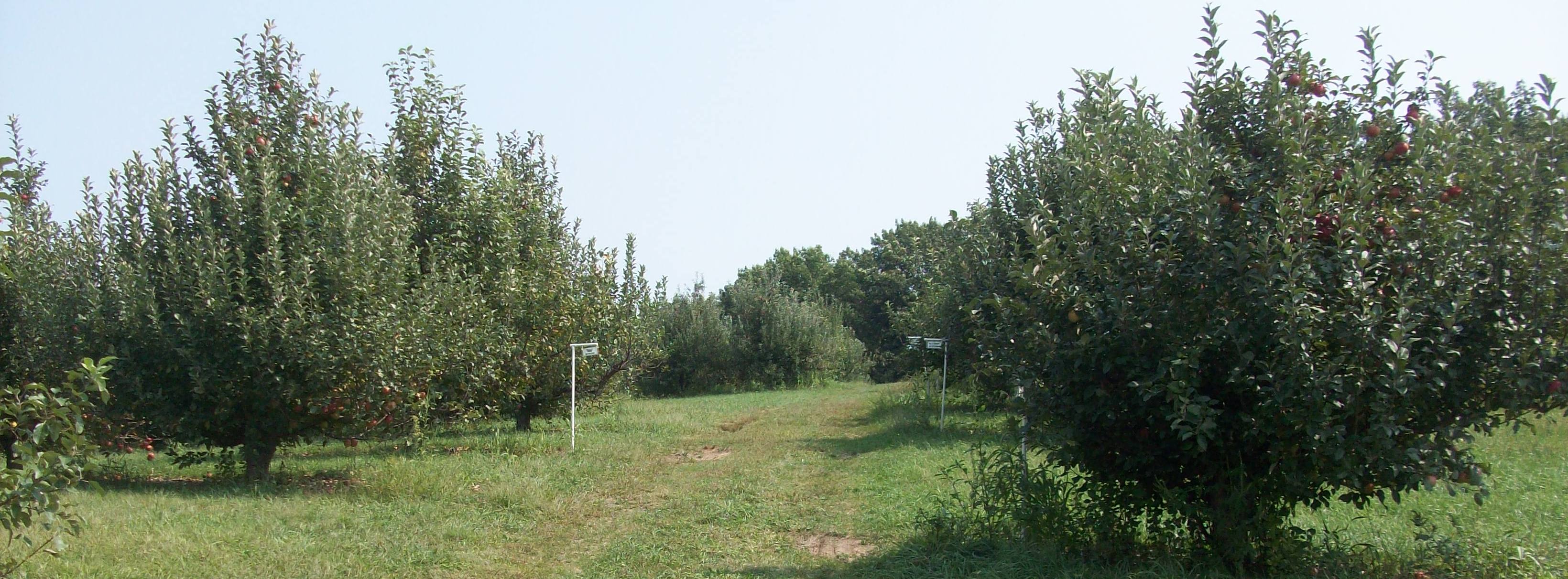
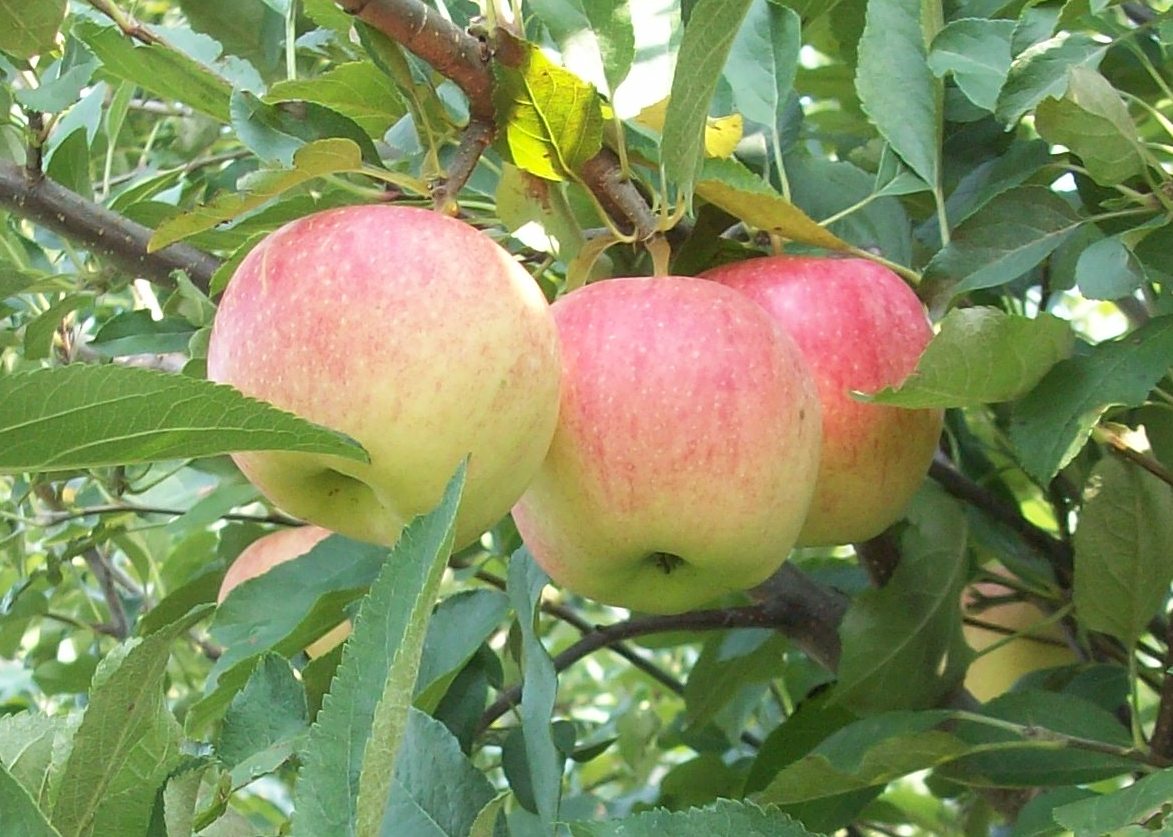
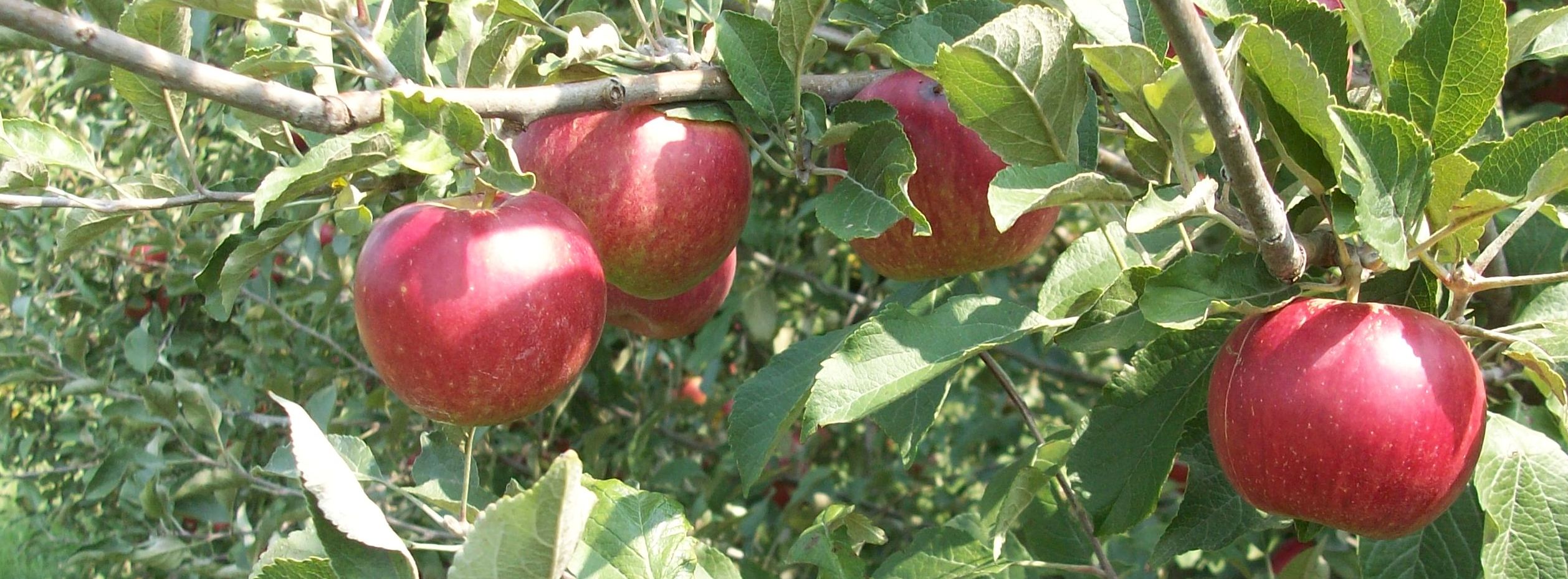
Turning east on Dingleberry Road off Highway One, I headed to Wilson’s Apple Orchard where I’ll spend the next six weekends as the mapper in a u-pick operation. I spent two hours walking through the 110 acres, re-familiarizing myself with the layout, the new groves, and which apples are ripe where. Gala are at peak now, and this Labor Day weekend is the Honeycrisp weekend. I tasted some Honeycrisp and they are almost there… just a couple of days away. The rough creek crossing was flooding over the rocks, so I rolled up my pants and felt the cool water running across my sandal-clad feet. When I got back to the barn, I was covered with sweat. I bought a gallon of fresh apple cider and a small bag of apples, and talked for a while to the manager while dripping sweat from my arms to the floor.
North on Highway One, Rebal’s Sweet Corn had their sign up so I stopped and bought a bag of ears. The farmer said there were two more patches to harvest. One for the Labor Day weekend, and the second was uncertain with it being so late in summer for sweet corn. It’s only the second time we’ve bought sweet corn this season.
The final stop was at the hardware store in Solon where I bought four boxes of canning jar lids and a box of rings. It’s more expensive there, but I enjoy my visits to get hardware close to home. The folks that run the store are making a business out of it, and there is something to learn about small town life each time I stop.
Once home, I picked tomatoes for dinner, which was sweet corn, thick-sliced tomatoes and apple cider. The whole day set me back $117.53 plus fuel.
A bargain vacation while sustaining a life in a turbulent world.
Hillary Clinton continues to lead the Democratic field in recent Iowa polling. Simply put, the remaining contenders seem unlikely to close the gap between summer’s end and the Feb. 1 caucus.
It’s possible, but unlikely, even if something new about Hillary comes up.
She has a proven ability to shed Republican faux scandals. The form they take once debunked is of distorted sound in the mostly right wing echo chamber. Rank and file Democrats aren’t listening, even if Democratic elites are. To the extent Clinton’s Democratic rivals bring them up, their campaigns are the less. Read Greg Sargent’s take on the elites here.
Media reports this week revealed “there was no policy prohibiting the use of a private email account at the State Department.” Like it or not, her State Department emails are expected to persist in the Republican lexicon, and real people will spend substantial resources working to gin up some trouble for Clinton, even though the State Department said she did nothing wrong.
Hillary’s polling in other states is not as favorable as it is in Iowa. Bernie Sanders edges her out in his backyard state of New Hampshire. If Sanders is viable in any respect, he should win New Hampshire. If he does not, it’s game over and Hillary Clinton will become the Democratic nominee
Gabriel Debenedette pointed out on Politico Hillary has the resources and more importantly boots on the ground in the Super Tuesday, March 1 states. One expects she will have the nomination wrapped up by then. According to Debenedette, she’s building a firewall there.
I hang out with an informal group of low-wage workers from time to time. One could call it a focus group, but that would be giving it more structure than probably exists.
There is pent up demand to talk about Donald Trump.
The other day someone mentioned his name and the mere mention unleashed comments from almost everyone. It was evidence of Trump’s mastery of popular culture — something that should be no surprise to anyone familiar with his long-running television program.
“Donald Trump is building his Republican presidential campaign staff in Iowa similar to his defunct NBC-TV series ‘The Apprentice’ — and his celebrity is making it easier on some fronts,” Todd Beamon pointed out on Newsmax.
What do members of the group say about Hillary?
“I don’t know if we can trust Hillary,” said one, confirming what the polls say. If Hillary is the nominee, the ones whose politics I know best will still vote for her.
Most only wanted to talk about Trump.
Labor Day will signal the end of summer and the beginning of the next political canvass for candidates working the process. The textbook method is to finish the second canvass in October when the end of year holidays are imminent.
Based on what I’m seeing in rural Iowa, the only Democrats working the process are Hillary Clinton, Bernie Sanders and Martin O’Malley. Will Iowa Democrats caucus for a party outsider like Sanders? Will Joe Biden make it three?
I don’t know, but as summer turns to fall, Iowa has been all about Hillary Clinton.
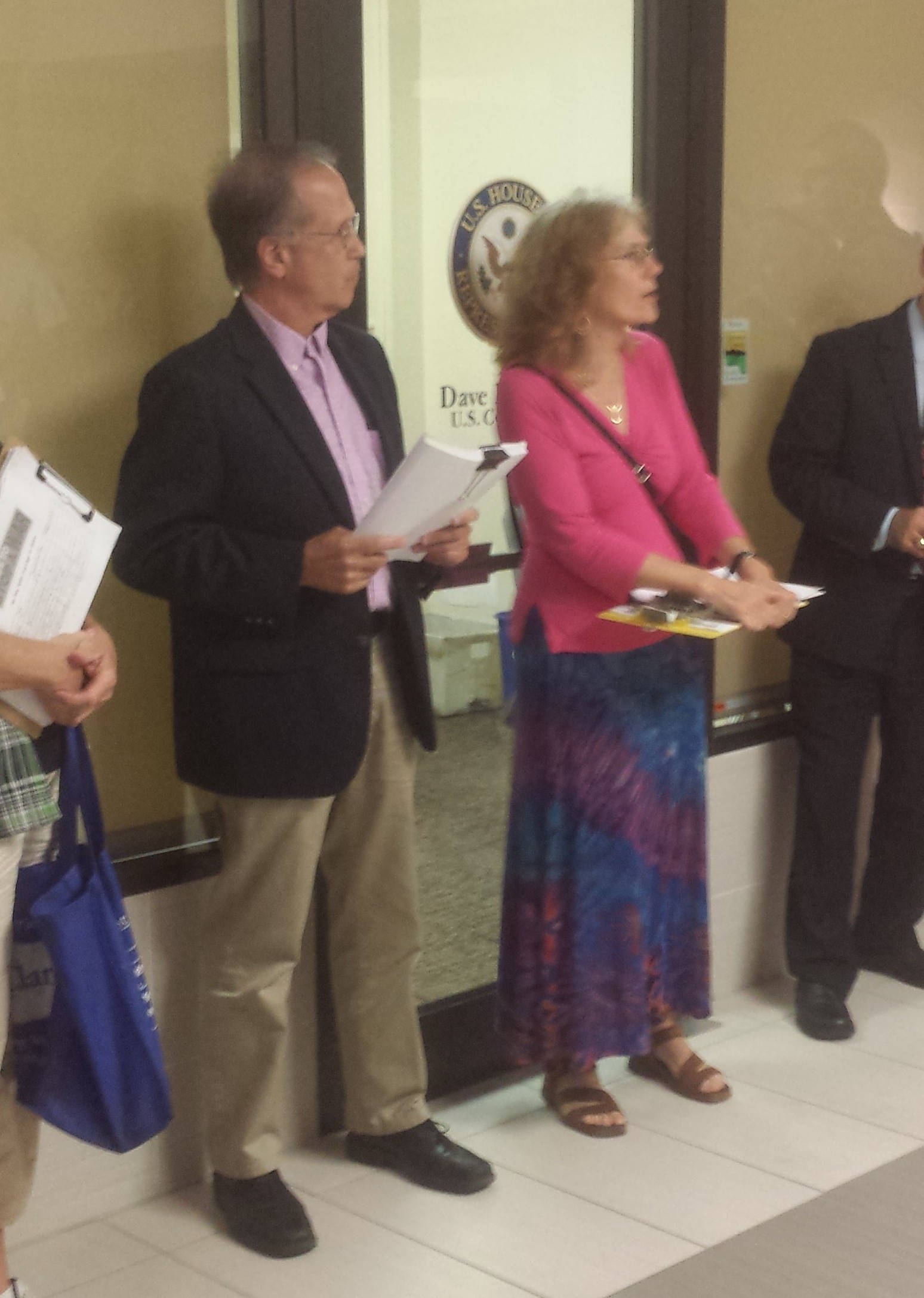
Dr. Maureen McCue speaking for the Iran Deal at Rep. Dave Loebsack’s Office
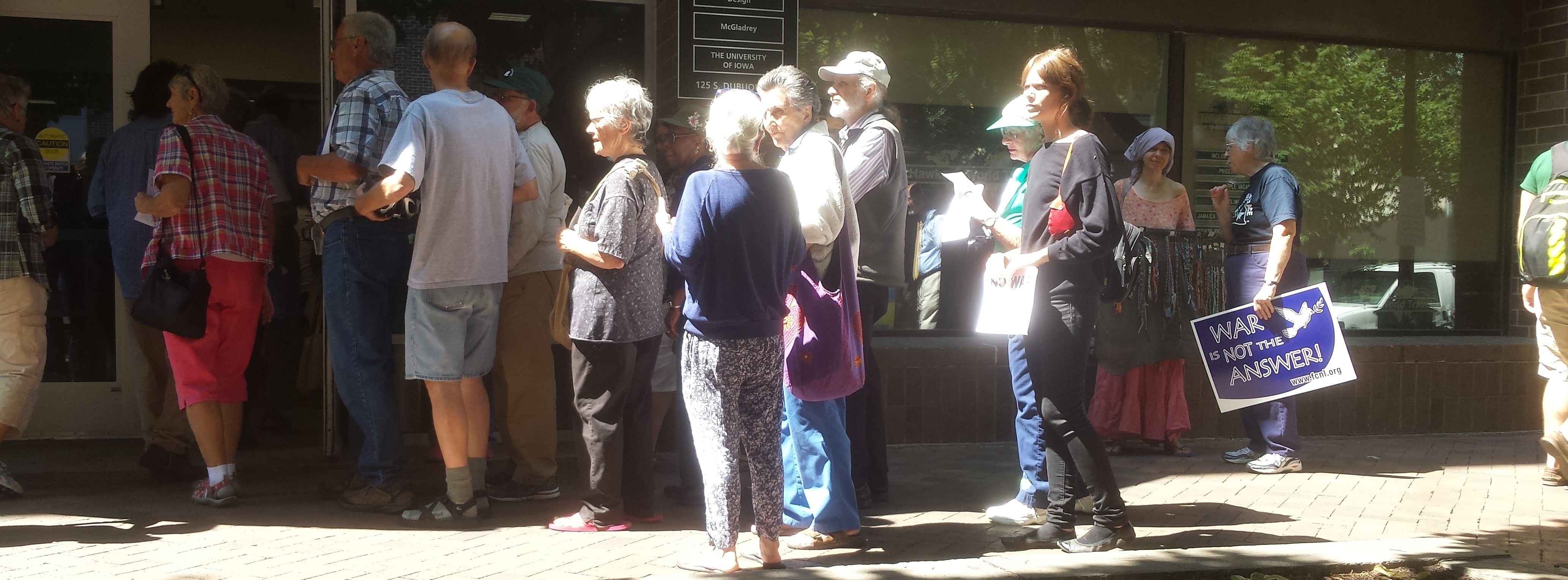
IOWA CITY – A group of peace-loving constituents assembled Wednesday afternoon in front of U.S. Congressman Dave Loebsack’s office to demonstrate support for the Joint Comprehensive Plan of Action negotiated between the P5 +1 nations and the Islamic Republic of Iran, also known as the “Iran Deal.”
The Iran Deal is designed to prevent Iran from enriching uranium to develop a nuclear weapon. If Iran complies with the agreement, they will get relief from sanctions that brought them to the negotiating table during the Obama administration.
Congress is expected to vote on approval of the Iran Deal as early as Sept. 9. Congressman Loebsack has not made a public statement on the matter, hence a concern of those assembled.
The gathering began with Dawn Jones, Wellman, serving as master of ceremonies. Jones helped organize the demonstration, which is part of a nationwide series of similar events under the MoveOn.org umbrella. At one point 55 people were in attendance, as well as the local FOX News/CBS Channel and a couple of videographers.
Dr. Maureen McCue, Oxford, board member of the University of Iowa Center for Human Rights and chapter organizer for Iowa Physicians for Social Responsibility, enumerated the benefits of the Iran Deal and urged Loebsack to vote for the bill. (Details of the Iran Deal are linked at this July 27 post).
Tom Baldridge, advocated for the Iran Deal on behalf of the Eastern Iowa Chapter of Veterans for Peace, as did Ann Stromquist of PEACE Iowa, Nancy Porter, John Rachow, Dan Daly and others.
Demonstrators Filing into Rep. Dave Loebsack’s Iowa City Office
After the speeches, Jones walked into the office and spoke to Dave Leshtz, district representative for Loebsack. The group was invited inside to present a petition calling for an aye vote on the Iran Deal.
“(Loebsack) has a strong concern that many of the people who are pushing for a ‘no’ vote are the same people that pushed us into a misguided war in Iraq,” Leshtz said. “He believes in diplomacy. It is better not to shoot first and ask questions later.”
The frustration of several in the group was that Loebsack had not taken a leadership position by speaking for the Iran Deal well in advance of the vote. Some hoped he could influence his colleagues in the lower chamber.
David Leshtz and Maureen McCue
“What’s holding him back from taking a position,” asked Shelton Stromquist, emeritus professor, University of Iowa American, Social and Labor History. “I just don’t understand. There’s broad support for this agreement. He comes from a progressive constituency. He hasn’t provided leadership on this or many other issues. What’s holding him back?”
I don’t know, Shel,” Leshtz said. “A vote will come. He will cast his vote. He may say something before. This (petition and demonstration) is helpful I think.”
Dan Daly, Iowa City, stressed that many in the room had helped Loebsack get elected in 2006.
“We want to stay positive. Urgency. Take action. Soon and very vividly, so more congresspeople can take cover behind his leadership,” Daly said.
Leshtz deferred to the congressman, who knows many of the demonstrators personally.
Both Iowa U.S. Senators Chuck Grassley and Joni Ernst are expected to vote “no” on the measure.
The greatest evil for a sixty something is theft of time. There is only so much of it — all here and now. There is also a sense we must create value with this limited resource.
How shall time be spent downsizing?
There are boxes to open — lots of them — each containing artifacts of this life, and potential villainy.
“When Prometheus stole fire from heaven, Zeus took vengeance by presenting Pandora to Prometheus’ brother Epimetheus,” according to Wikipedia. “Pandora opens a jar containing death and many other evils which were released into the world. She hastened to close the container, but the whole contents had escaped except for one thing that lay at the bottom – Elpis — or hope. That’s what I’m seeking as the downsizing of personal artifacts begins.
Sorting Station
There are two temptations leading to perdition.
The first is spending time with things that should be discarded. There was a reason to keep each one — such reasons eclipsed by the urgency of now.
The other is to discard something of value, an artifact worth keeping a while longer, with monetary value, or to pass along.
Some small percentage of the artifacts will go to our daughter, but we don’t want to load up her space with our junk. Too, some of the pieces will inspire new writing for this blog or other publication. There are books to read, artwork to contemplate, and relics of past lives wanting to be relived. I’d better make quick work of it or I’ll never finish.
It’s already going poorly as I was up in the middle of the night reading a history of World War I. I should know all of that by now.









 Journey Home
You must be logged in to post a comment.