Categories
Living in Society

Politics Takes A Holiday

Political Sign at a Business

The Bernie Sanders campaign is laying off hundreds of staff members, indicating either he is planning to throw in the towel after California, or that he won’t be placing people currently on his staff in local political organizations for the fall campaign. Maybe both.

The presidential nominating party may not be over, but most of the guests have left and the hosts have begun cleaning up the mess, getting ready for a return to normalcy, which in Iowa means organizing for the June 7 primary elections where there are contested races, and the fall campaign beginning after the Labor Day weekend.

Political campaigns will work through the summer, and there is a filing period in August, but each year, regular people engage in the election cycle later and closer to the election. For folks like me, politics takes a holiday after the primary elections until the fall campaign. We have lives to live.

I’ve written about the county supervisors race which has been reduced to a series of special interest forums in Iowa City and Coralville, along with fund raisers and whatever else each campaign sees fit to do.

I missed the first forum last night. Bottom line was I couldn’t afford the $5 in gasoline and an hour of driving on a work night. Stephen Gruber-Miller covered the forum for the Iowa City Press Citizen and here’s a link to his article. They say people in the county seat can access video of the event on their local cable television channel, but the service does not include Big Grove Township.

My trouble with picking three candidates for supervisor is besides the incumbents, I don’t share a view of the county with any of them. My relationship with the county seat is tenuous at best, although I likely benefit from the economic engine that is the University of Iowa. I’ll pick one of the two business people for my third vote and see what decision the urban centers make for me. No need to decide until late in the race, early June most likely.

The other primary election that matters is for U.S. Senate and I support State Senator Rob Hogg over three other candidates.

Politicization of our lives has become a detriment to living, so the compulsion I felt toward campaigns during the George W. Bush years is in remission. I work on issues, but like with the climate crisis, they represent human values and shame on those who politicize them or frame them in the false paradigm that is conservative vs. progressive. People like billionaire Tom Steyer is who I have in mind, but it applies equally to all of the billionaire class members.

Steyer Quote

My summer will be eking out a living on the margins of society, hopefully making enough money to live on, reducing debt, and finding joy in simple pleasures. We don’t need politics for that.


Categories
Kitchen Garden

Kale in Sunlight

Kale Seedlings Sunning

Yesterday was a spring day as good as it gets. I took advantage of it and worked outside.

The kale seedlings have been slow-developing, so I put them in direct sunlight. The day’s growth was noticeable. I transplanted the scarlet variety into bigger pots to give them room to grow. They were laggards of the three varieties and best liked in my distribution network. Indoor bedroom germination has never been optimal, but a few hours in sunlight made a difference. More seedling sunning is planned today.

Yesterday’s garden work included planting three kinds of onions, basil seeds, Easter egg radishes, leaf spinach and arugula. I’m moving on to conditioning the soil for everything else.

A sign of the times, I planted the last seeds in pots: zucchini to get a head start for early May transplanting. It won’t be long before the danger of frost is past and everything can go into the ground.

Something is growing in the carrot planters, but I’m not sure it is carrots. Will wait until the leaves show what they are.

The first cut of lawn is the best. The unevenness of early growth gets smoothed over to produce a transient, semi-manicured look. There is a lot of trim work to do, with minor clean-up. The clippings fell where they may providing mulch for the expected long and dry spell. I’m first to admit I don’t care for lawn mowing. The restrictive covenants require me to do it about twice a month.

The apple trees won’t have a good year. Two of them have zero blooms and the Red Delicious has only a couple dozen. The pear tree should bear fruit based on the abundance of blooms. There were plenty of pollinators flying around, including a bumblebee trying to fly up my pants leg.

I gave some excess onion sets to a neighbor and she reciprocated with some “walking onions.” They were ready to eat, but I stuck them in the ground next to one of the composters.

There is always more to do in a garden. We are thankful for each day of clement weather and sunlight.

Categories
Writing

Finally A Writing Plan

Notebook and Passport

The next non-internet writing project will be an autobiography in 10,000 words — taking the relative success of Autobiography in 1,000 words and expanding it to twenty 500-word parts as follows:

Birth and parents (1951 – 1954)
Earliest memories (Through 1957)
Kindergarten (1957 – 1958)
First Grade (1958-1959)
Marquette Street (1959 – 1970)
College (1970 – 1974)
Military service (1975 – 1980)
Graduate school (1980 – 1981)
Marriage (1982 – 1985)
A daughter (1985)
Cedar Rapids (1985 – 1987)
Indiana (1987 – 1993)
Living in Big Grove – Family (1993 – present)
Living in Big Grove – Career (1993 – 2009)
Living in Big Grove – Gardening (1993 – present)
Living in Big Grove – Empty nesters (2003 – present)
Living in Big Grove – Retirement from transportation (2009)
Visiting Colorado
Visiting Florida
Second Retirement

I’ve learned to keep the scope of things large enough to say something meaningful and small enough so the project can be accomplished. Using a short form requires focus. Focus brings clarity if I’m lucky.

Categories
Environment Kitchen Garden

Warp and Weft of a Garden

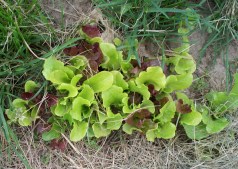
Spring Lettuce
Spring Lettuce

Farming is more than putting plow to furrow. It is a multitude of experiences, evaluations and decisions made over time.

The same is true for gardeners. Each garden, each plot, has its own micro environment and climate. Not only sun and rain, but wind, topography and history play a role.

This year a friend changed rented land for her community supported agriculture project and stories about her struggles are going around the local food community. The new soil hasn’t been worked for organic vegetables, and is recovering from row cropping. I believe — everyone is confident — she will persevere through the change. Yet it will be a setback in a business that operates on thin margins and more physical labor than mechanization. It’s when the going gets tough that farmers get going.

Over the last 23 years my Big Grove garden expanded from a single plot to six, and I’m looking at adding more. That doesn’t count the five fruit trees which have been a source of produce for a number of years. Yesterday the pear tree burst out in full bloom.

I mistakenly planted a locust tree in one of the garden plots. It has grow to maturity, providing shade for two plots at the same time the frequency and severity of drought has increased. Shade serves to protect cucumbers, herbs and greens from constant, intense sunlight in the absence of precipitation. It took me a while to realize what’s going on and leverage it. Now I couldn’t imaging growing without it.

There are a hundred small things like the benefits of a locust tree that converge in the plots of my garden. When I think of retirement — more often now than previously — I can’t imaging life far from a garden and the diverse intricacies of what sustains me and enables vegetables to grow.

My garden and I are the same warp and weft of life that sustains us all.

Categories
Kitchen Garden

Outdoors Weekend

Spring Flowers
Spring Flowers

It was a time to spend outdoors.

The sounds of children playing, dogs barking and yard equipment running dominated the air waves of an unseasonably warm and dry Saturday and Sunday. I heard hardly any of it as I dug in the soil, cleaned out the garden composter and planted.

Yesterday’s average temperature was 16 degrees above the historical average, and we’re running two inches of precipitation behind historical averages. At 80 degrees, the high temperature was well below the record of 93 degrees set in 1896. It was warm nonetheless.

In predawn darkness I watered the seedling trays and noted the peppers are beginning to sprout. It took about two weeks in our bedroom. I planted a tray of seeds for extras, including scarlet kale, tomatoes and Swiss chard. I think I’m done with seed planting, with the next step being transplanting selected seedlings into larger containers.

I prepared and installed containers of Yukon Gold and Kennebec potatoes behind the compost bins. I planted Cherry Belle and Rudolf round radishes and purple top white globe turnips in nearby rows. The small bag of red onion sets from the home farm and auto supply store went into the ground between the composter and the day lilies. I harvested about three cubic yards of compost which is piled up and ready to use. Things are shaping up nicely in the Locust tree plot.

It seems late for pea planting, yet I used up the remainder of my Sugar Ann Snap Peas in last year’s kale bed. Even if they don’t produce, if they sprout they will fix some nitrogen in the soil planned for tomatoes in about a month.

On Sunday I worked at the community supported agriculture project, soil blocking 30 trays for new seeds. There was a crew to plant seeds, tend the greenhouse and plant a number of trays of seedlings in the second high tunnel. I worked until my shoulders ached and will return tonight after my shift to finish the trays I couldn’t get done.

I was tired at the end of each day and glad to be alive in the garden.

Categories
Environment

Earth Day 2016

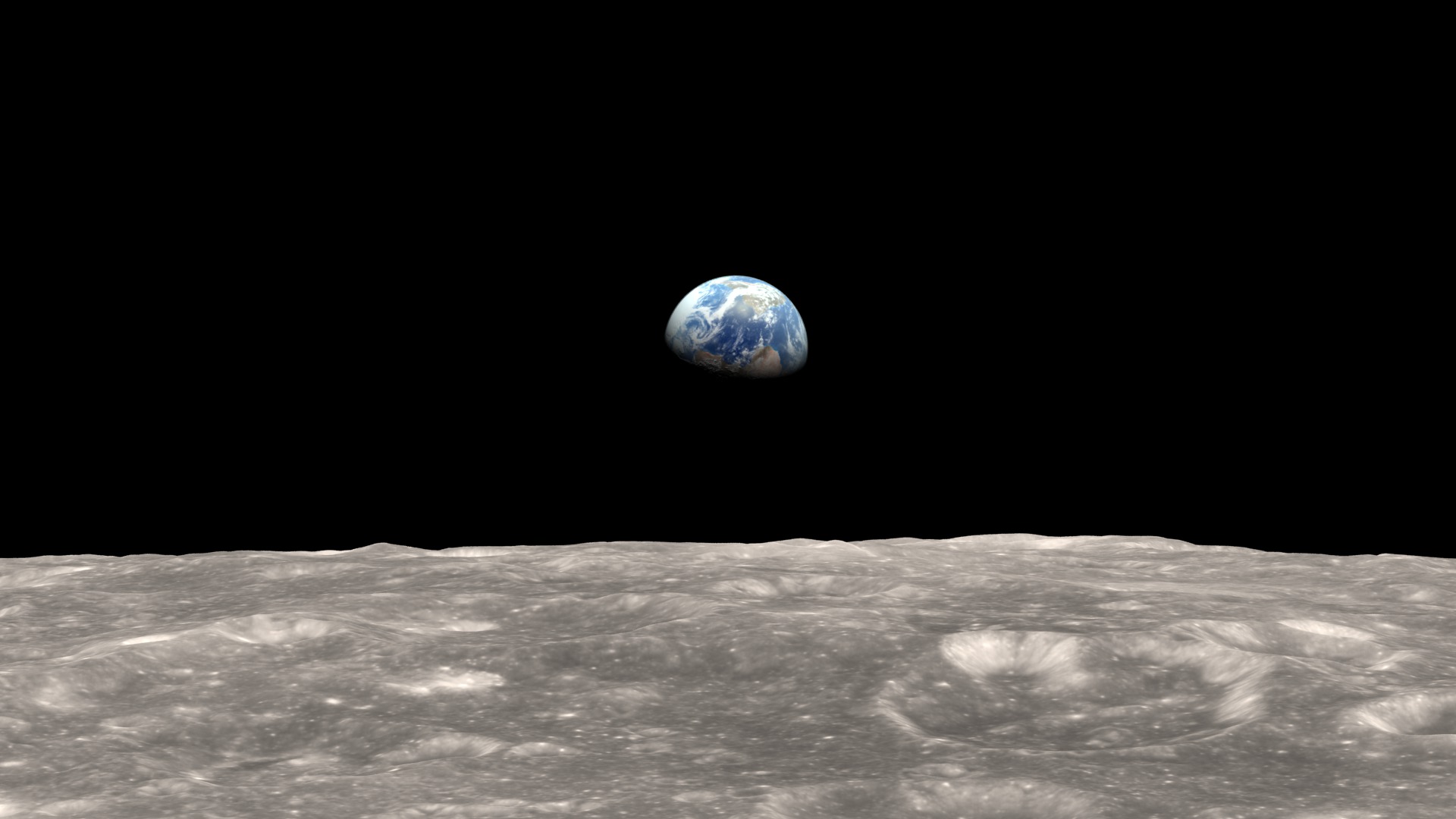
Earthrise Dec. 24, 1968

My participation in the first Earth Day on April 22, 1970 evolved in a convergence of social vectors. Among them was this Apollo 8 photograph of Earth above a lunar landscape by astronaut William Anders.

After viewing the photograph I felt conflicts and maladies in society were insignificant compared with what we have in common within our tiny, shared ecosystem suspended in the dark vastness of space. The photograph and its wide publication were a call to action to work for a common good. I still feel that way. It makes sense.

By spring 1970 we had witnessed the Tet Offensive, the My Lai Massacre, and renewed bombing of North Vietnam. We watched the violence of the 1968 Democratic National Convention in Chicago. We saw bits of Woodstock and Altamont in the media. We also landed men on the moon and returned them safely to Earth. At this convergence I didn’t know what to do, so joined with some high school classmates who were organizing Earth Day events. Earth Day was a common denominator.

What has Earth Day become?

Last week the Johnson County Board of Supervisors proclaimed April 17 through 23 Earth Week and announced two related events: an energy fair, and a local foods panel.

The focus on energy, CO2 emissions particularly, is well placed. We continue to use the atmosphere as an open sewer, discharging millions of tons of the greenhouse gases into it daily. Any reduction in electricity usage benefits the environment, even if the changes needed to solve the problem are trickier to accomplish than changing light bulbs.

Our food system is an obvious pick for Earth Day. Nine percent of greenhouse gas emissions come from agriculture according to the U.S. Environmental Protection Agency. It is a commonplace people need food to live, and the merging of Earth Day with the local food movement is an expected assimilation within normal spring activities. There are few better ways of appreciating Earth than getting one’s hands dirty in the ground, and spring in the Northern hemisphere is a great time to do it. It’s tough to see how planting a few trees, flowers or vegetables will rescue the environment, but as with electricity usage, every bit helps.

There is an entire menu of Earth Day related activities in our county.

Quoting Albert Camus in a recent opinion piece in the Washington Post, Kareem Abdul-Jabbar described why the 2016 election is important,

“This is no longer a prayer but a demand to be made by all peoples to their governments — a demand to choose definitively between hell and reason.” That is what the stakes of this election are: We are choosing between hell and reason.

In 1970 I thought we were already living a form of hell and the Earthrise photograph gave us hope. I would not have believed that in 2016 the Age of Reason itself would be on the brink of dissolution.

The good news is solutions to the climate crisis are working, particularly in the development of alternatives to fossil fuels to generate electricity and industrial power. The challenge is everything on our blue-green sphere is connected in a single ecosystem. What I do in my back yard has implications for living creatures around the planet.

Individuals in the U.S. are willing to do their part and what’s lacking is no secret: the political will to do straightforward things like ratify the Paris Agreement. Negotiated by 195 states within the United Nations Framework Convention on Climate Change, the agreement addresses greenhouse gases emissions mitigation, adaptation and finance starting in the year 2020. Some 120 nations are expected to sign when the agreement opens for signature this Earth Day.

Will the United States be among them? It’s an open question. Many politicians have indicated the United States should not participate in the agreement at all. Their rational doesn’t make sense, and that’s what Abdul-Jabbar was getting at. Reason the way most understand it is not in vogue in parts of our government.

Politics aside, Earth Day is a chance to revisit this iconic photograph. When we consider the big picture, as the photograph encourages us to do, little has changed since it was taken. Our troubles seem petty compared to the overriding fact we live on our only home and it’s much smaller than we often see.

Categories
Work Life

Breaking Fast

Garden in March 2011

After a week, I’m coming up for air.

Our daughter visited for four days — just over 96 hours. Once she was safely returned home, I was incapacitated with a headache, fever and dizziness for a full 48 hours.

Of course I went to work sick. That’s what low income people do.

I broke fast with some cornbread and milk for breakfast yesterday.

I also had the last follow up for my injured hand.

“Let me see you hand,” Doc said as he entered the examination room, barely closing the door.

After a quick look he said it was good and released me. Hand shake, fist bump and done in less than 60 seconds.

I like the efficiency and my employer likely does too.

I’m ready for work around the house and garden… work delayed by the last week’s events. I feel the pressure of being way behind, but still hope to get early planting done by Derby Day.

The forecast is great weather for working outside after my shift at the home, farm and auto supply store.

Categories
Living in Society

Supervisor Race Update

Rural Polling Place
Rural Polling Place

JOHNSON, COUNTY, Iowa — Last time I visited the county board of supervisor race, I had picked the two incumbents for the June 7 primary, Rod Sullivan and Lisa Green-Douglass, leaving one pick open.

The Johnson County League of Women Voters is hosting a public forum with the candidates on Wednesday, April 27. I plan to attend and listen to what each has to say.

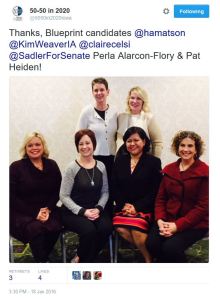
Pat Heiden 50-50-2020Pat Heiden is a blueprint candidate for 50-50 in 2020, a non-partisan group whose mission is to achieve political equity for Iowa women. Heiden said she was inspired politically when her parents hosted candidates like the late Harold Hughes at their home.

She seeks to give back to the community by running for office. This seems a tangible goal after more than 30 years working at Oaknoll Retirement Community.

Heiden is well connected and has a natural constituency. She has the support of former supervisor and state representative Sally Stutsman and retiring supervisor Pat Harney. She also has behind the scenes support from the significant political players who associate with 50-50 in 2020. Having three of five supervisors being female would not be a bad thing. Heiden has not been politically active.

The other leading contender for my third vote is Kurt Michael Friese, a local businessman and author. He chose not to run in the special election to fill the seat vacated by Terrence Neuzil. Lisa Green-Douglass won that election.

The strength of Friese’s campaign is his endorsement list. Some people I respect and know reasonably well, including Francis Thicke, Ron Clark and Jody Hovland, are publicly endorsing him.

At a recent event I overheard him tell another attendee he had the Laurie Tulchin endorsement. Tulchin is a member of the so-called Newport Road gang, a politically active, resource laden and well-connected group of people working to avoid development in the area around their homes. There is a conflict between the gang and the county land use plan which designated their area as open for development while preserving the farm land south of Iowa City. This endorsement will persuade some.

Friese’s name is widely recognized among city dwellers, but his universe of Iowa City is not strongly connected to mine. Despite the negatives, he is a contender for my third vote.

There are two in the also ran category, Jason T. Lewis and Mike Hull. Both are just getting their campaigns organized, so my prejudice is unfair.

Lewis works for the University of Iowa and we have enough influence on the board of supervisors from this dominating county economic engine. People I respect hold Lewis in high regard, but he’ll have to be persuasive at some level on April 27 to get my vote.

Hull is a medical helicopter pilot who got his flight training from Uncle Sam. He has been active in county veterans groups and had he inquired about or joined our chapter of Veterans for Peace, I might give him a second look. It seems doubtful a person who spends significant time with the American Legion will be my pick unless he is like Al Bohanan who served as a legion commander, is a member of Veterans for Peace and is very active in Democratic politics. Hull doesn’t appear to be like Bohanan.

My ballot in the primary looks pretty straight forward. Two incumbents plus one of two business people with a lean toward gender equity on the board. That could change by the election, and the League forum will be an important event to see how candidates handle themselves in public, and in reaction to each other.

Categories
Kitchen Garden

Heading Toward Derby Day

Photo Credit: Quad City Times

That yesterday was opening day in Major League Baseball, and day after tomorrow begins the Masters Golf Tournament in Augusta, were inescapable sports facts on social media.

Spring is about Derby Day for me. It’s a race to get the early garden work done by then so once the risk of frost is minimal the main seedling crops of tomatoes, peppers and the like can go into the ground.

Most years I have been able to take a break from gardening to watch the two-minute Kentucky Derby, taking in just enough of the pageantry to feel a bit queasy. The old saw is horse racing is the sport of kings and who wants or needs it? It’s just there.

Iowa political class member Jerry Crawford asserted last year he had two goals: delivering Iowa for Hillary Clinton and winning the Kentucky Derby. Hillary won the Feb. 1 Iowa caucuses, just barely, and his team Donegal Racing’s 2015 entry in the Kentucky Derby placed fifth. That’s about as close as my life gets to so-called kingmakers.

I’ve been hobbled in gardening by my hand injury. Yesterday I limited my work to planting seeds in trays and transplanting those grown — celery, broccoli and basil — into larger pots. No digging for me… yet.

It was 71 degrees in Alaska in late March, almost 80 degrees in Iowa yesterday. The Alaska temperature was highest in recorded history and not a good sign for the thawing tundra and its release of long banked methane gas.

While sports distracts many, for those of us listening to a different narrative such distraction puts many more at risk of stopping Earth’s engine of sustainability.

That matters even on this small plot in Iowa removed from much of the turbulence in society.

Categories
Home Life Kitchen Garden

Recipe Search

Kennebec and Yukon Gold Seed Potatoes

I called off work at the farm because of the six stitches in my right hand. I had hoped to resume soil blocking today, but not yet.

On deck is transplanting basil into larger plastic pots, preparing containers for potato planting, and radishes, turnips and spinach planted in the ground as the temperature rises to 70 degrees and rain holds off until late afternoon.

With these tasks I can set my own pace and take breaks if pain in my right hand returns.

Mercy Hospital Auxiliary Cookbook 1977

Over the years I’ve collected several hundred cookbooks, including one from the hospital where I was born. Published in 1977, Cooking For… Mercy’s Sake is full of ingredients and ideas I won’t likely use — American cheese, lard, meat and seafood, and a host of prepared food and food mixes.

Still, I search through the recipes, seeking the name of a contributor I know and recipes that can be adapted to our fresh food, locally produced lifestyle. The cookbook committee wrote this poem as introduction:

Recipes are certainly handy
When making cookies, pies and candy.
On the pages of this cookbook you’ll find
Favorite recipes of every kind.
We thank all our friends who took their time
To write their recipes, line by line.
Good luck to you and may you have fun
Trying these recipes, one by one.

On first reading, there’s not much there. Because of my relationship with the hospital I’ll give it another read to see if I can find something adaptable.

My life is about much more than food. While I write a lot about consumables, I’m also preoccupied with the journey — hopefully a long one — through my later working years to full retirement and old age. I didn’t think this would be the case, but as I finished writing for newspapers and took a full-time job there is an undeniable feeling that a corner has been turned. I know part of what’s around the corner and much is also a mystery. I’ll need nourishment along the way, but the unfolding journey is what life has become about.

My take on this is pretty simple, and it goes back to Joan Didion, “We tell ourselves stories in order to live.” I’m trying to make a life in that sense.

Didion explained, “We live entirely… by the imposition of a narrative line upon disparate images, by the ‘ideas’ with which we have learned to freeze the shifting phantasmagoria — which is our actual experience.”

I respect the narratives of others, but can’t adopt them as mine. It is about disengaging from established narratives and experiencing what’s next.

Each day is an adventure in that regard, one to seek joyfully.