Two corporations plan to install Carbon Capture and Sequestration technology to collect CO2 emissions at about 40 ethanol and fertilizer plants spread across Iowa. Next, they plan to permanently bury the resulting liquefied CO2 in deep rock formations in North Dakota and Illinois. I don’t know who is swallowing this malarkey. Almost no one is.
The CO2 pipeline is planned to cross Karmen McShane’s family land in Linn County.
“It’s heartbreaking,” McShane told Gannett’s Donnelle Eller for a story. “My dad is 77. My mom needs care. And he feels powerless (to fight the pipeline).”
There is a lot of that going around.
The pace of news articles on CCS is increasing. Eller wrote about it in Monday’s Iowa City Press Citizen and followed it with another article in Tuesday’s newspaper. Erin Jordan of the Cedar Rapids Gazette has been covering CCS as well. When the regular news coverage is frequent, we should read what paid media writers have to say. That’s what I’ll be doing to see how the process unfolds over the end of year holidays. This is my seventh post on CCS.
The Iowa oligarchy of agriculture decided to do this thing, so resistance may be futile unless more people than have become engaged. If McShane is typical, the train left the station and once ground is broken for the pipeline, there will be no stopping it.
As long as Iowa focuses on ethanol, industrial agriculture using manufactured fertilizers, and monoculture row crops and livestock, the environment will get worse. It is pretty bad already if one looks at water and air quality. Implementing CCS does not address any of this and is a distraction from needed action to address Iowa’s water and air quality.
CCS is premised on a vague statement that we must decarbonize the economy. People have written books on this, and just because two companies are spending big bucks on the project, the one-off process in Iowa does not address broader concerns about reducing the amount of greenhouse gases being released into the atmosphere as if it were an open sewer. As far as I can tell, the sole reason for the project is to protect agricultural oligarchs’ two children: corn ethanol production and fertilizer manufacturing.
To read the rest of my coverage of carbon capture and sequestration in Iowa, click here.
Every village has a well. I began helping manage ours in 1995 when I joined the association board for our village of 85 homes. It has been an interesting project. We don’t really call it a village, yet the size is right.
I used this morning’s walkabout to head up the hill to meet with a contractor about a maintenance job. Ever since our main contractor died it has been a challenge to find technicians to work on our specialized equipment.
We met and they explored the well house, took photographs and asked questions. Like those before them they would not commit to bidding on the job. Fingers crossed they do bid.
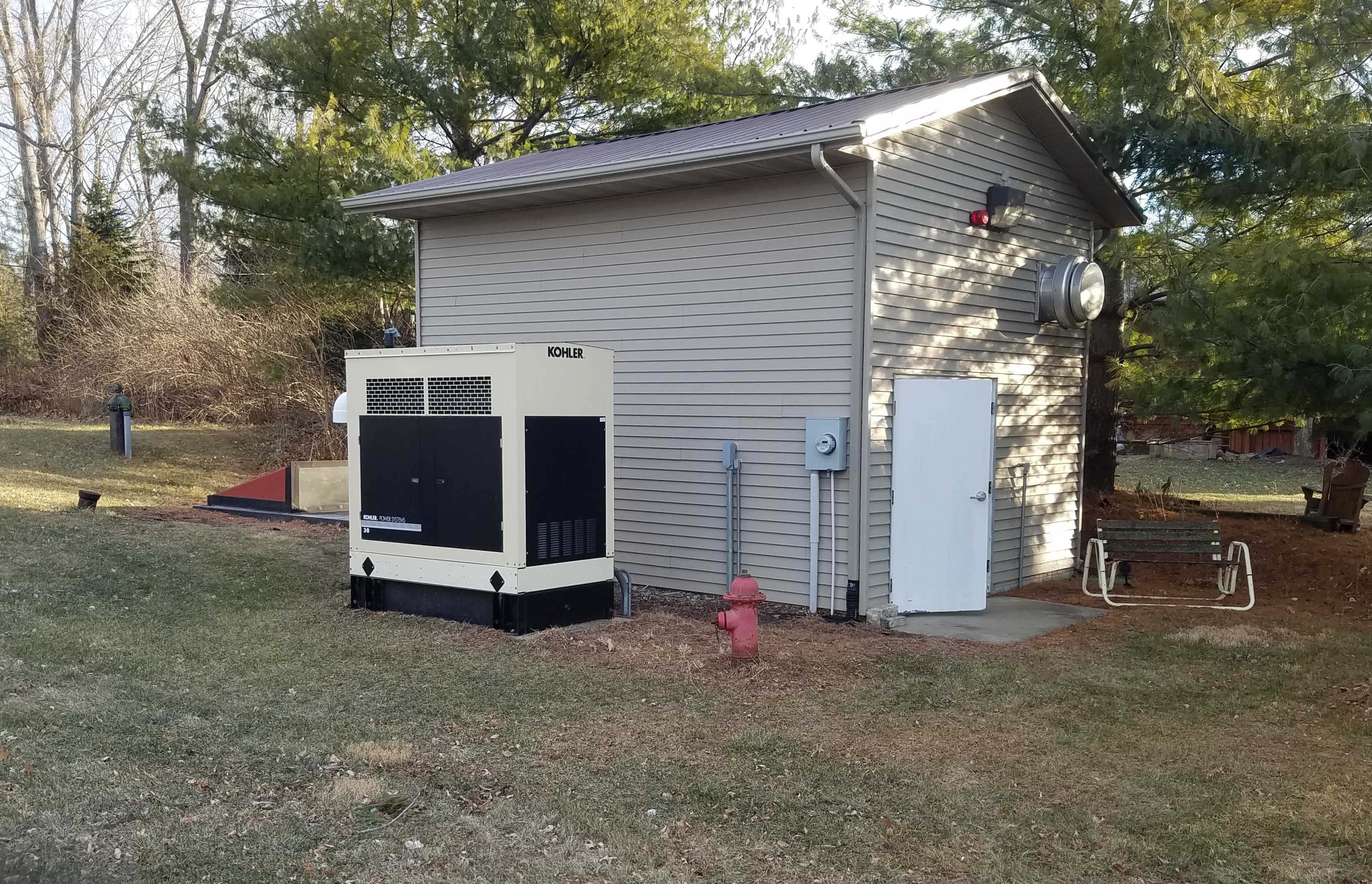
We have had issues with our mostly volunteer managed well. At one point we bought the generator in the photo so an outage wouldn’t cause us to lose water pressure. When we lose pressure for a period of time the Iowa Department of Natural Resources requires a testing protocol, which is a bit of a pain. We have enough volunteers so whenever electrical power is lost, someone runs up the hill and starts the generator so it’s back on line before running out of water.
Water is life. Every village has a well. While mostly unseen behind the tall pine trees the village well is at the center of our lives.
The coronavirus pandemic continues during a second holiday season. I had hoped to be done writing about that by now. The omicron variant of the virus informed me, “No, you are not done.”
Dr. Anthony Fauci, the nation’s leading infectious-disease specialist, said yesterday on CNN, “Unfortunately, I think that (record numbers of coronavirus cases and hospitalizations are) going to happen. We are going to see a significant stress in some regions of the country on the hospital system, particularly in those areas where you have a low level of vaccination.”
We had already cancelled a Christmas trip to be with our child and their close friends, because of increased incidence of COVID-19. Today I’m making a list for a trip to the grocery store to provision up with fresh vegetables so I don’t have to leave the property until the new year. I seek to minimize our exposure to the new, highly contagious variant of the coronavirus.
“It is going to be a tough few weeks, months, as we get deeper into the winter,” Fauci said.
Merry f*cking Christmas, y’all.
The Christmas Holidays in my childhood home were mostly a product of my maternal grandmother’s imagination. She was born and grew up on a remote farm in rural Minnesota. At a young age, she moved to Minneapolis where she worked as a servant. She and a man got together (and presumably married) and had two children. Her plain, difficult life was punctuated by the special occasions of weddings, baptisms, first communions, and religious holidays, especially Easter, yet Christmas too.
Part of her Christmas holiday culture was creating a tableau of the nativity, with a manger and ceramic figurines she molded, glazed and fired herself. My inheritance from her includes this sort of creating something from the dross of daily life, something in which we could participate and enjoy. She recognized the fleeting moments of those special days and the work that went into making them. Without her, the Christmas holiday would have been much different.
End of year holidays have been secularized. Instead of making tableaux from home made things as a celebration of religious culture, we insert figurines that came down from grandmother in what has become a hollowed out, personalized family tradition. These are essentially habits repeated for lack of something better to be doing. Am I cynical? No, not really. When we put out decorations, we enjoy the time remembering where special artifacts originated. With the decline in participation in formal religion, people now craft their own end of year holiday occasions which may or may not include such traditions.
Americans’ membership in houses of worship continues to decline, dropping below 50 percent for the first time in 2020, according to the Gallup organization’s eight-decade polling trend. That year, 47 percent of Americans said they belonged to a church, synagogue or mosque, down from 50 percent in 2018 and 70 percent in 1999.
In our household a number of special occasions mark the end of the calendar year. First is our wedding anniversary on Dec. 18, followed by the winter solstice, this year on Dec. 21. Christmas Eve is a time to make chili and cornbread, and on Christmas Day we make a special meal. If others are in the house, we may exchange gifts. My birthday follows on Dec. 28 which leads into New Year’s Eve. Dec. 31 involves a weak effort to stay up until midnight to ring it in. I usually have a drink. New Year’s Day is another special meal and by then all the leftovers from Christmas have been eaten. This year I plan to start a new tradition of starting onion seeds indoors on New Year’s Day.
As I age, there is a sense of loneliness and sadness as I survive more people I knew with each passing year. Coping with aging is increasingly present during the holidays. There are holiday phone calls, video chats, texts and emails. If we weren’t in the worst of the pandemic, I could engage with a local organization to help others. Such communication helps us cope.
Staying busy also helps. Garden planning is a natural undertaking for the holidays. I placed my first three seed orders and will work on another. In addition, I began a project in the garage to organize everything. Yesterday I discovered a drawer that was crammed full of telephone wire and connectors brought back from my father-in-law’s home in the late 1990s. He owned and operated a rural telephone company and I don’t recognize half of the tools and supplies. Land line telephones are in decline, so a lot of it will be sold at a yard sale or pitched. There is also plenty of reading and writing to be done to cope with loneliness.
The end of year holidays are much different from what I recall from childhood. I no longer believe there is a Santa Claus, even though I remember seeing him and the reindeer flying in the sky when I was in first grade. As we discover the new, electronic globe in which we find ourselves, there will be other changes. I predict end of year celebrations will continue. I expect to note the annual rites for many years to come.
When I wrote my Federal Elected Officials about climate change on Oct. 18, Congresswoman Mariannette Miller-Meeks was first to respond a few days later (see below). I did not know there was a Conservative Climate Caucus. She is a member and lifted the third paragraph of her response to me from the caucus website.
As long as she supports the beliefs of the caucus, there will be trouble reconciling my views with hers. In the long run, that’s okay. It is a starting point and we need to get going. We needed to get going 50 years ago.
The Conservative Climate Caucus was founded by Republican Congressman John R. Curtis (UT-03) in June this year with the following statement of beliefs:
What We Believe
The climate is changing, and decades of a global industrial era that has brought prosperity to the world has also contributed to that change.
Private sector innovation, American resources, and R&D investment have resulted in lower emissions and affordable energy, placing the United States as the global leader in reducing emissions
Climate change is a global issue and China is the greatest immediate obstacle to reducing world emissions. Solutions should reduce global emissions and not just be “feel good” policies
Practical and exportable answers can be found in innovation embraced by the free market. Americans and the rest of the world want access to cheaper, reliable, and cleaner energy
With innovative technologies, fossil fuels can and should be a major part of the global solution
Reducing emissions is the goal, not reducing energy choices
What We Do
Educate House Republicans on climate policies and legislation consistent with conservative values
Organize co-dels and staff-dels to better understand technologies and issues related to climate
Organize Member and staff briefings on conservative climate proposals
Bring Republicans to the table to fight against radical progressive climate proposals that would hurt our economy, American workers, and national security
Introduce Republican members and staff to leaders in industry, think tanks, and more
When it comes to hurting our economy, American workers, and national security, engagement of the federal government to address the climate crisis is essential. As long as Iowa focuses on ethanol, industrial agriculture using manufactured fertilizers, and monoculture row crops and livestock, the environment will get worse. It is pretty bad already if one looks at water and air quality. There is not much hope for the Conservative Climate Caucus as it was introduced, yet it’s what we have. It is an open question whether Democrats are up to the challenge of retiring Miller-Meeks after her first term. She is a strong campaigner and well known in the district. We have to begin somewhere, and soon. This may be it.
Email from Mariannette Miller-Meeks, Oct. 22, 2021.
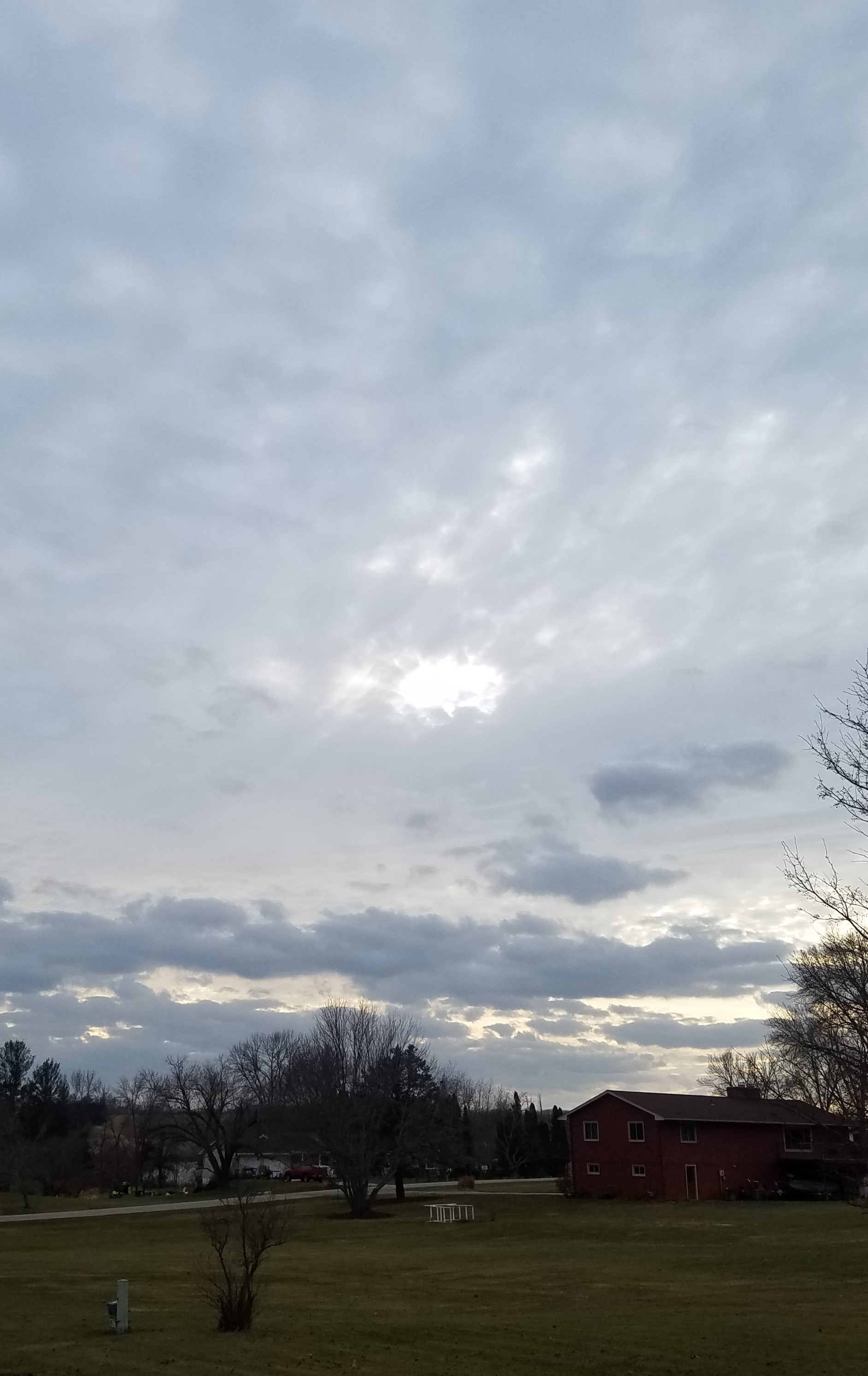
Sun shining through clouds the afternoon of the Dec. 15, 2021 derecho.
While Wednesday’s extreme weather manifested as a blustery thunderstorm in Big Grove, meteorologists have since categorized the multi-state storm as a derecho. It was nowhere as severe as the Aug. 10, 2020 derecho. (Update: The National Weather Service said it confirmed 43 tornadoes on Dec. 15, 2021. On Jan. 7, 2022 the number was revised to 61).
The good news is with generator and fuel standing by, and gallon jugs of bottled drinking water stored downstairs, we are ready. Practice makes perfect, as they say.
I spent 30 minutes chatting with a registered Republican, small business owner, and FOX News watcher this week. Things went well. We had plenty in common. The challenge is turning points of commonality into votes for progressive ideas. When push comes to shove, abortion is the dominant wolf in the pack. It is a firewall against political persuasion because if raised, the chat stops right there. People who oppose a woman’s right to choose raise the issue early in political conversations.
I have no choice but to interact with Republicans. They are and have been a part of our community since we lived here. During election cycles when I’ve had access to the voter rolls, I looked for the Democrats and increasingly they are in a minority where I live. I’m not complaining, just saying.
On a Zoom meeting with Iowa gubernatorial candidate Deidre DeJear last night, I asked what we should be doing to organize between now and the June primary. The response, somewhat predictably, was we should sign up to work on her campaign. It was her event, so I’m okay with that. A challenge remains unaddressed, though.
Democrats have three U.S. Senate candidates, two for governor, an unknown Democrat for the First Congressional District, and no declared candidate for either my state senator or state representative. There is a lot of work ahead if we want to elect more Democrats.
There is a case to be made the party primary election should be eliminated in favor of selecting candidates at a convention. It sounds undemocratic yet we could pick our people soon after the February precinct caucus rather than wait until June. That would give us four additional organizing months. We need every one of those in the current environment.
Back in the ancient days when megafauna roamed Earth, during the run up to the 2020 Democratic precinct caucuses, Iowa’s system failed to produce a clear winner in the presidential race. Instead results were delayed, the winner barely won the delegate count, and a loser asked for a recanvass of selected precincts. It wasn’t much better in 2016 when Hillary Clinton bested Bernie Sanders by a few delegates. There is no perfect system yet we can do better than the Iowa caucuses.
What I do, talking to Republican neighbors, is part of the political process yet I don’t see how it dovetails into the broader, state-wide politics. Politicians should concentrate on counting votes, yet there are endless conversations in all settings going on every day. These local conversations matter more than the vote-counting of politicians. They are valid and useful if sometimes frustrating. Often people who are different in political views put their best foot forward to get along in society. That may be all we have together. Democrats have yet to define our values in a way that resonates outside our clan.
I’m glad to have survived my second derecho. Now if I can survive our politics. That would be the rainbow at the end of a storm.
There is no getting around it: writers write about writing from time to time. Because of the coronavirus pandemic, writing and related tasks like reading, exercise, gardening and cooking have become my sole occupation. As I consider what is possible in 2022, writing and all that surrounds it will be a main part of my daily routine.
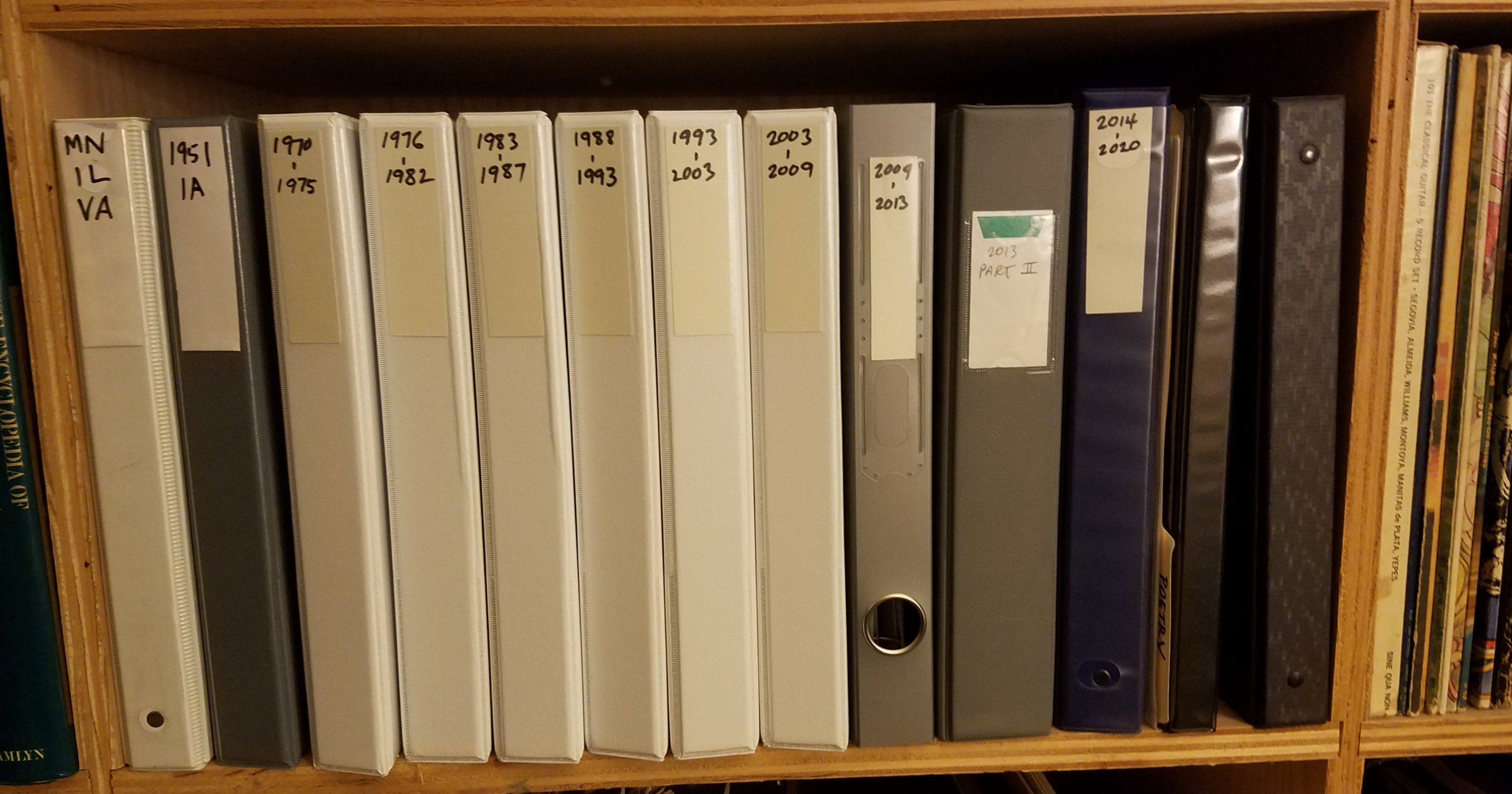
Work continues on the multi-year project that is my autobiography. The 13 three-ring binders in the photo are the containers for the first rough draft. The main 2022 project is filling them with a narrative. A key challenge is reviewing the source material in the form of files, journals, public writing, and internet searches. There is a lot of source material and a lot of reading ahead. Last year I wrote at least 1,000 words per day until April, then slowed down. Next year I hope to continue my progress almost every day until the first draft is completed. That may be in 2023 depending upon how 2022 goes.
For now I continue to write blog posts which are published here, on Blog for Iowa, and on a couple of other sites. The subjects have been varied yet they are comprised of two main topics: stories dovetailed into my autobiographical work and current affairs with an Iowa focus. I will have written about 350 posts in 2021, although I expect to slow down next year to focus on autobiographical writing.
At least once a month I plan to write a letter to the editor of the local newspapers. I may branch out with submissions to other papers in Iowa’s new First Congressional District, yet the best impact is closer to home. My primary topics are nuclear disarmament, the climate crisis, and current affairs. When I write to our local newspaper, the Solon Economist, the topics expand to more local issues like the fire station or recognizing local activities. All of my letters are cross-posted on this blog.
I am an email writer and occasional letter writer. I adopted email when I worked for the oil company beginning in 1989. From the beginning I saw it as a valuable medium. It really took off when we bought our first home computer in 1996. While I don’t have copies of most of my work emails, there is a trove of emails relevant to my autobiography dating to 1999. I will continue to write emails as a creative outlet, in addition to taking care of quotidian affairs.
I continue to maintain the journal started after college graduation. With the exception of the bound journal stolen from me in Calais, France, I have them all. I use it to record personal things that aren’t suitable for public consumption. Increasingly I monitor my health there.
Lastly, social media is a form of writing although we tend to view it as throw-away texts of little significance after posting. I expect to continue to post on Instagram, Facebook and Twitter. According to Twitch TV, in 2021 I posted 8,075 chat messages on the platform. My main goals for social media posting are to be kind, honest and thoughtful. I will also endeavor to re-read every post before hitting send.
I am lucky to have stable, adequate pension income after more than 50 years in the workforce. When the pandemic slowed everything down and raised a real risk of contracting COVID-19, stepping back from paid work was possible. For the coming year, I don’t foresee an initiative to take paid work as the coronavirus is still with us. That will enable me to focus on writing.
The forecast is fair writing weather ahead, depending upon what weather in real life does.
The more sunshine that falls on Carbon Capture and Sequestration plans of Summit Carbon Solutions and Navigator CO2 Ventures the better.
On Sunday, Erin Jordan of the Cedar Rapids Gazette reported something surprising: “Scientists with the Iowa Geological Survey say the state has the underground infrastructure for sequestration here, which would allow Iowa companies to keep more of the federal tax credits for CO2 storage and build fewer miles of new pipelines.”
If CO2 can be stored in Iowa, why build the contentious pipelines from Iowa to North Dakota and Illinois?
“Elizabeth Burns-Thompson, Navigator vice president of government and public affairs, said at a meeting last week Iowa isn’t suited for carbon sequestration,” Jordan wrote. Not so fast say Iowa scientists who produced a study of the matter.
My point in publicizing this article is 1). to thank Jordan for covering an important issue, and 2). what is the rush in building the Summit and Navigator CCS operations?
The climate crisis is an urgent matter now and will escalate in importance during coming years. Before we invest dollars in an unproven, complicated scheme to protect ethanol and fertilizer production in a decarbonized economy, perhaps government should take the lead in determining whether CCS will actually work. In other locations around the world it hasn’t, for example, in Chevron’s operation in Western Australia. Asking the current Iowa government to get involved in examining project viability is contrary to the direction legislators and the governor would take us.
While the federal government budgeted a significant amount of money for CCS, how exactly it will be used is a moving target. Reuters reported “California lawmaker Ro Khanna introduced a bill into the U.S. House of Representatives on Monday that would prevent investors from securing carbon capture and sequestration tax credits if the carbon is used to boost oil production.” Given the propensity of the Congress to support CCS, it seems unlikely Khanna’s bill will see passage. As Reuters reported, “The bill… reflects deep political divisions in Congress over whether and how carbon capture can be used as a tool in the fight against climate change.” Until the Build Back Better Act is passed CCS funding won’t be final. Even then it is subject to modification by the Congress.
As the public and members of news media engage in the Summit and Navigator proposals it should be positive for Iowans. To learn more, check out our updated resource page here. And let the sunshine fall.
Eight of the top ten new posts on Journey Home were about the Solon School Board election. It demonstrates that when a blogger covers something in which people have interest, there will be views. I’m thankful for people who follow all of my writing.
To get a fairer picture of which blog posts garnered views, I include my work at Blog for Iowa. If I mix the two together, here are my top posts for 2021.
10. Book Review: Equity. Aug. 30, 2021, Journey Home. A book review of Equity: How to Design Organizations Where Everyone Thrives by Minal Bopaiah.
9.2021 School Board Candidate Forum. Oct. 21, 2021, Journey Home. This post was coverage of the only school board candidate forum prior to the election. It includes a link to video of the forum.
8. Solon School Board Election. Sept. 19, 2021, Journey Home. My first post about the Solon School Board election.
7. Here Comes Carbon Capture Technology. Nov. 24, 2021, Blog for Iowa. One of a series of posts about Carbon Capture and Sequestration plans of Summit Carbon Solutions and Navigator CO2 Ventures in Iowa.
6. The Climate Crisis is Accelerating – Now What? July 6, 2021, Blog for Iowa. Encouragement to act on the climate crisis. “While we need to do everything possible to avert the worst effects of the climate crisis, the longest, most complicated journey begins with a single step.”
4. Is Jessica Reznicek a Terrorist? July 15, 2021, Blog for Iowa. “Jessica Reznicek, a 39-year-old environmental activist and Catholic Worker from Des Moines, Iowa, was sentenced in federal court June 30 to eight years in prison for her efforts to sabotage construction of the Dakota Access pipeline.”
3. SSB Candidates Respond. Oct. 9, 2021, Journey Home. A verbatim reprinting of Solon School Board candidate responses to my questions via email.
2. Book Review: The Hidden History of American Oligarchy. Jan. 19, 2021, Blog for Iowa. “In The Hidden History of American Oligarchy: Reclaiming Our Democracy from the Ruling Class, Thom Hartmann recounts three periods of increased hegemony of oligarchs in American society.”
1. A Nonpartisan School Board. Sept. 25, 2021, Journey Home. A look at the Solon School Board election through a partisan lens. Disclosure of party registration of the seven candidates.
Thanks for reading. Hope you will continue in 2022.
I beat my 2021 goal and read 54 books this year. I also developed a process to give prime time, early each day, to reading 25 or more pages. Either book reading is important in our lives or it isn’t, I reasoned. So I read books, almost daily. Book reading is an important part of any writer’s life. Here are those I found most useful and memorable.
Poetry: I re-read A Coney Island of the Mind after Lawrence Ferlinghetti’s passing on Feb. 22, 2021. An important part of my high school reading, it held up well. In addition, I read books of poetry by Amanda Gorman (The Hill We Climb), Gabriela Marie Milton (Passions: Love Poems and Other Writings), Charles Wright (A Short History of the Shadow: Poems), Gary Snyder (Turtle Island), and bell hooks (Appalachian Elegy: Poetry and Place). I read the memoir of poet laureate of the United States Joy Harjo, Poet Warrior.
Current Affairs:Under a White Sky: The Nature of the Future by Elizabeth Kolbert stands out in this category. Her writing is compelling and this book is relevant now. Other current affairs books I’d recommend are Persist by Elizabeth Warren, Running Out: In Search of Water on the High Plains by Lucas Bessire, The Decarbonization Imperative: Transforming the Global Economy by 2050 by Michael Lenox and Rebecca Duff, The New Climate War: The Fight to Take Back Our Planet by Michael E. Mann, and Don’t Even Think About It: Why Our Brains Are Wired to Ignore Climate Change by George Marshall.
Other Favorites:
Wilding: Returning Nature to a Farm by Isabella Tree
Vesper Flights by Helen Macdonald
Turning Pointe by Chloe Angyal
On Earth We're Briefly Gorgeous by Ocean Vuong
Poles in Minnesota by John Radzilowski
What I Mean by Joan Didion
Check out my Goodreads profile for the complete 2021 list by clicking here.
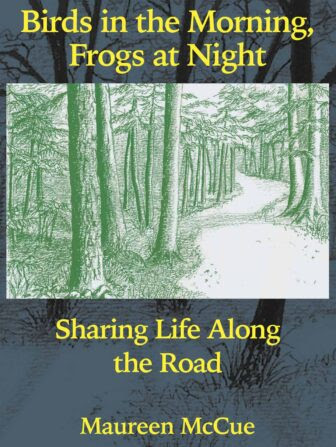
I met Maureen McCue, who just published a memoir Birds in the Morning, Frogs at Night: Sharing Life Along the Road, when we were both on the Johnson County Board of Health in 2006.
As soon as McCue arrived to become the board’s physician, she drove us to become quite busy both with required tasks like replacing the director, and voluntary initiatives like educating other county boards of health in the effects of coal-fired power plants on human health. Given our shared history, I didn’t know what to expect when the memoir was released earlier this year.
While much in the book is familiar, the author’s interpretation of events is fresh. The road in the title, along which life is shared, was the same one I drove many times to get to their home: all without incident or specific inspiration. I recall when the bridge was out and had to take the long way around. It was a road, a conveyance. Or was it? The central assertion of the book is it was more than that, a metaphor for a path forward from environmental degradation.
It is a book worth reading for a couple of reasons.
McCue creates a sense of place that is hers alone and explains its risks and rewards. We see life along her road with all its wonder and tragedy. There are a number of Grade B roads in the county, yet she made hers special by describing animal and plant life along with changing weather in which she found herself. She attempted to connect it to the broader world she experienced in international travel as a physician. One experiences the sense of place in the writing. That alone is enough to make Birds in the Morning, Frogs at Night worth reading.
Life along the road includes their adopted son Michael who has special needs, or as McCue put it, “The diagnosis according to specialists that day was ‘mild to moderate’ mental retardation.” Over the years I spent time with Michael. He is a unique person and a familiar face around the county. While I feel I know Michael well, it is unclear what, if anything he remembers of me when I approach him to engage. McCue’s narrative about caring for Michael is compelling and an engaging read for people with special needs children.
When professors and instructors leave university many have written books. Stow Persons’ The University of Iowa in the Twentieth Century, D.C. Spriesterbach’s The Way it Was: The University of Iowa 1964 – 1989, and others come to mind. I asked McCue about this retirement, book-writing phenomenon. She answered, “I’ve asked myself the same question, but it’s not so much about writing after retirement, it’s more like having the time and will to get it published — this book and it’s parts were weaving there way out of me over a long time. Writing happens whenever, but following it to the publisher takes a different kind of mind set and time line facilitated by retirement.”
There is an obvious comparison between Birds in the Morning, Frogs at Night: Sharing Life Along the Road and Cornelia F. Mutel’s 2016 bookA Sugar Creek Chronicle: Observing Climate Change from a Midwestern Woodland. McCue and Mutel are friends and share many elements in their lives, McCue said. I wouldn’t want to pick between them so I advise reading both.
Birds in the Morning, Frogs at Night: Sharing Life Along the Road is published by Ice Cube Press. Find it by clicking here.




 Journey Home
You must be logged in to post a comment.