Categories
Writing

On Not Being Vachel Lindsay

Writing About Apples

On June 23, 2009 I made my last business trip in a career with many of them.

Arriving in Chicago on the corporate aircraft, we drove to the Loop to explain the account transition precipitated by my retirement to our largest customer. The meeting took place at their corporate office in the Wrigley Building. We could see the recently completed Trump Tower Chicago through the windows. It had become time to change the skyline of my life.

I had taken to dozing off during staff meetings and lost interest in getting along with the other members of the management team. It was time to make my exit. I hoped to do so with some measure of grace and didn’t know what would be next.

Now, I do.

After years of experimentation, volunteering, and a portfolio of part-time and temporary jobs, I have begun to write in earnest, and intend to make something more than 500-1,000 word posts for publication in newspapers, on blogs, and in other outlets.

The first subject will be a memoir about the evolution of my understanding of local food over the last six years. The goal is a 25,000-word essay that can be combined with other short pieces into a self-published book. Book sales will become a way for people to contribute financially to my work at events.

As I embark on this adventure Vachel Lindsay is on my mind. His journey did not end well. I hope to do better.

Equipped with a reasonably sound memory, a sheaf of recent writing on food, labor, farming, gardening, cooking and agriculture, I’m ready.

At a thousand words a day, the essay should be complete by year’s end. Hopefully people will find it unique and worth reading. If I’m lucky, it will be a contribution toward expanding the local food movement.

Categories
Writing

Next Steps as a Writer

Sorting Station
Sorting Station

I plan to reduce my blog writing to one post per week to focus on a couple of larger writing projects off line.

This platform will continue to address sustainability issues. I hope regular readers will find future posts thoughtful and engaging.

The clock on this life is ticking, and there is a lot to accomplish during the next five years. Hopefully the results will be worth sharing.

I’ll continue to freelance for newspapers and post links to my on line work on my Facebook page. Like the page here if you want to follow along.

Thanks for reading.

Categories
Writing

Sunday Writing

Notebook and Passport

These days I wonder less about my readership than I used to. While my numbers are nowhere near the popular Jackie Collins who succumbed to breast cancer yesterday, I continually run into people who read my online work and provide positive feedback.

It’s not an income source, but it could be the start of something.

My Autobiography in 1,000 Words, has been the most popular post on On Our Own.

Some of my newspaper work gets more page views, and of course there’s the print version, but still, the autobiography post has gotten lasting attention through the almost two years it has been out there.

When a person writes, having an audience is an important part of it.

When he was in Cedar Rapids, Al Gore spoke about raising readerships and its importance in the post-Internet adoption era. He used Finnegan and Jackson Harries, identical twin brothers who developed the YouTube channel JacksGap: A Story Telling Project Inspired By Travel, as an example. The site has over 4 million subscribers.

Finn Harries sat at my table, and while I was supposed to be his mentor, he offered a lot more for me to learn than I him. When Finn Harries posts something, in any medium, people read and respond. They have been able to commercialize what they do, and that’s important to sustainability.

The limited amount of paid writing I’ve done has served my craft more than my wallet. What is a suitable goal for someone like me to generate income from writing?

It seems more important to work on readership. There may someday be enough readers to support formal publication of my writing, or lead to a paying gig. Gaining a readership is more important than an accumulation of posted pieces that get a couple thousand page views, which is where I am today.

That means continuing daily writing, and posting some of it on this blog. Learning my craft is important, but less so than understanding why people read me and mining that vein. Going forward that’s where I plan to spend my writing time.

Categories
Living in Society Work Life Writing

Thursday in the County

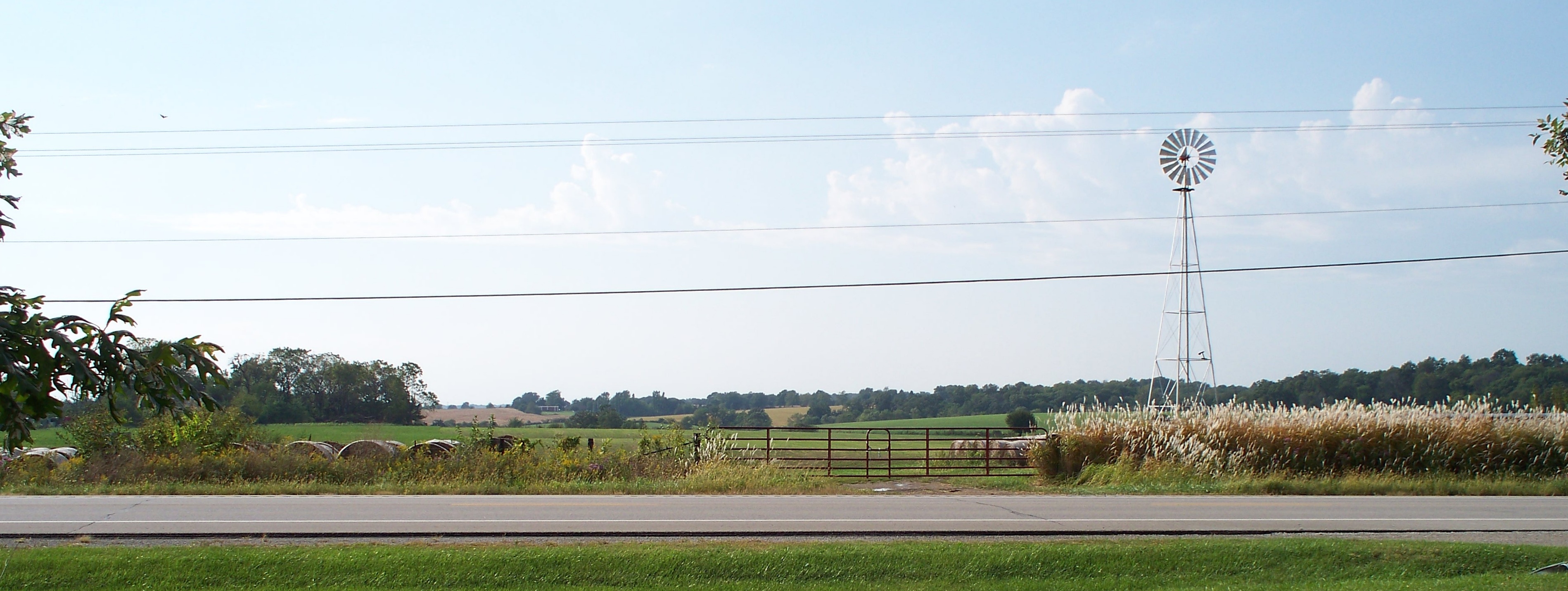
Along Highway One North of Iowa City

Leaves of soybeans turn, painting a landscape of green, amber and gold as the plants die, pods wither and beans dry in the field. Tall corn is also losing its green, its growing season done. Soon harvest will be here.

Freedom comes with being an unpaid blogger. Posting what I will with only the sense of propriety and culture gained over six decades restraining me, on days like today, I write about myself.

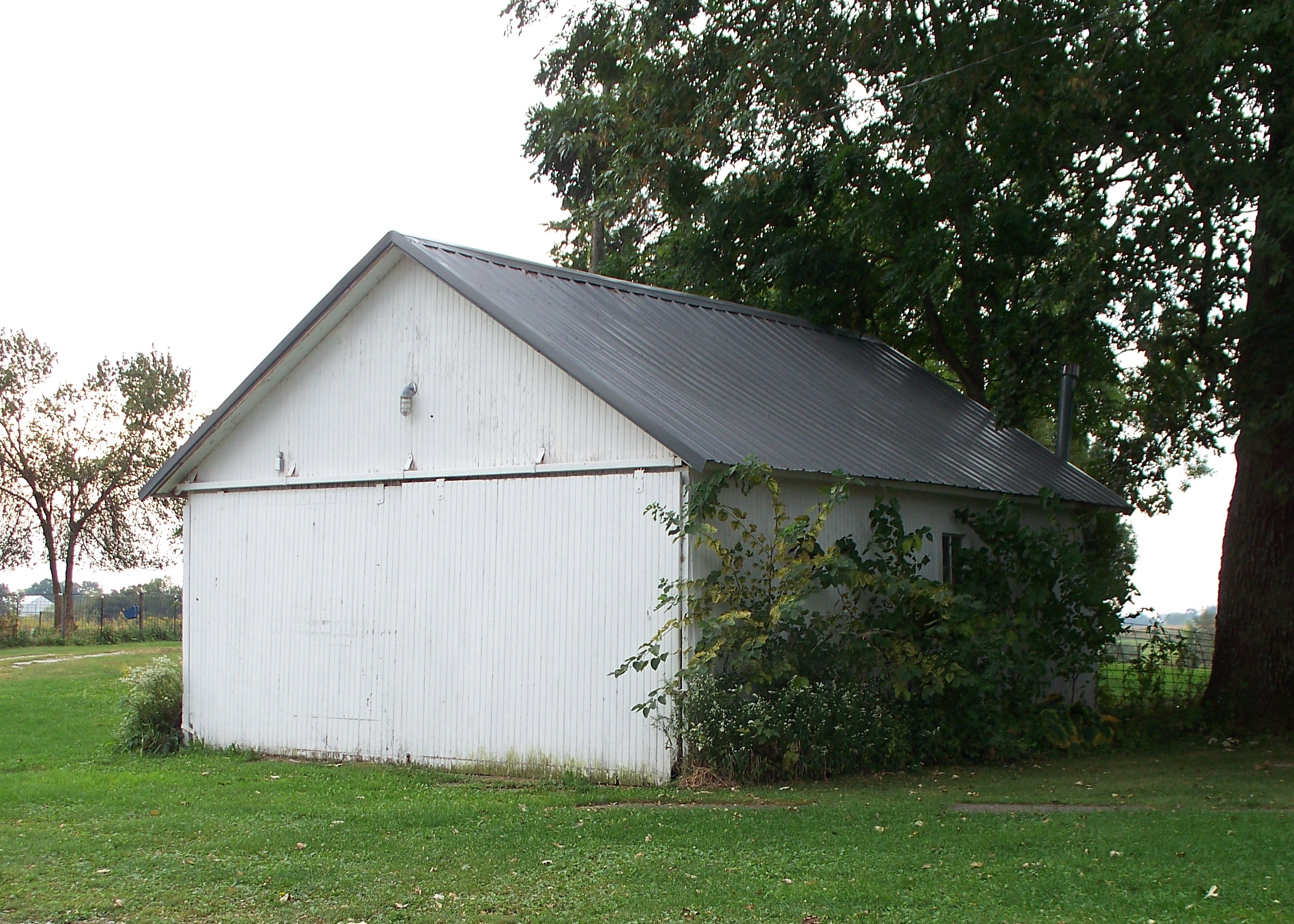
Outbuilding in Johnson County

Yesterday started with interviewing a farmer for a freelance article. Before going to the county seat, I interviewed another. When people talk about a “career” they often don’t consider how complicated a farmer’s life is. There is income from farm operations, but it often doesn’t cover the bills, so growing vegetables, selling eggs and becoming a sales representative for a national business are added into the mix.

People don’t farm alone. There is always a network of family and friends to lend a hand with the physically demanding work. It has been that way since we took the land from those who lived here before in the 19th Century.

Caucus Card
Caucus Card

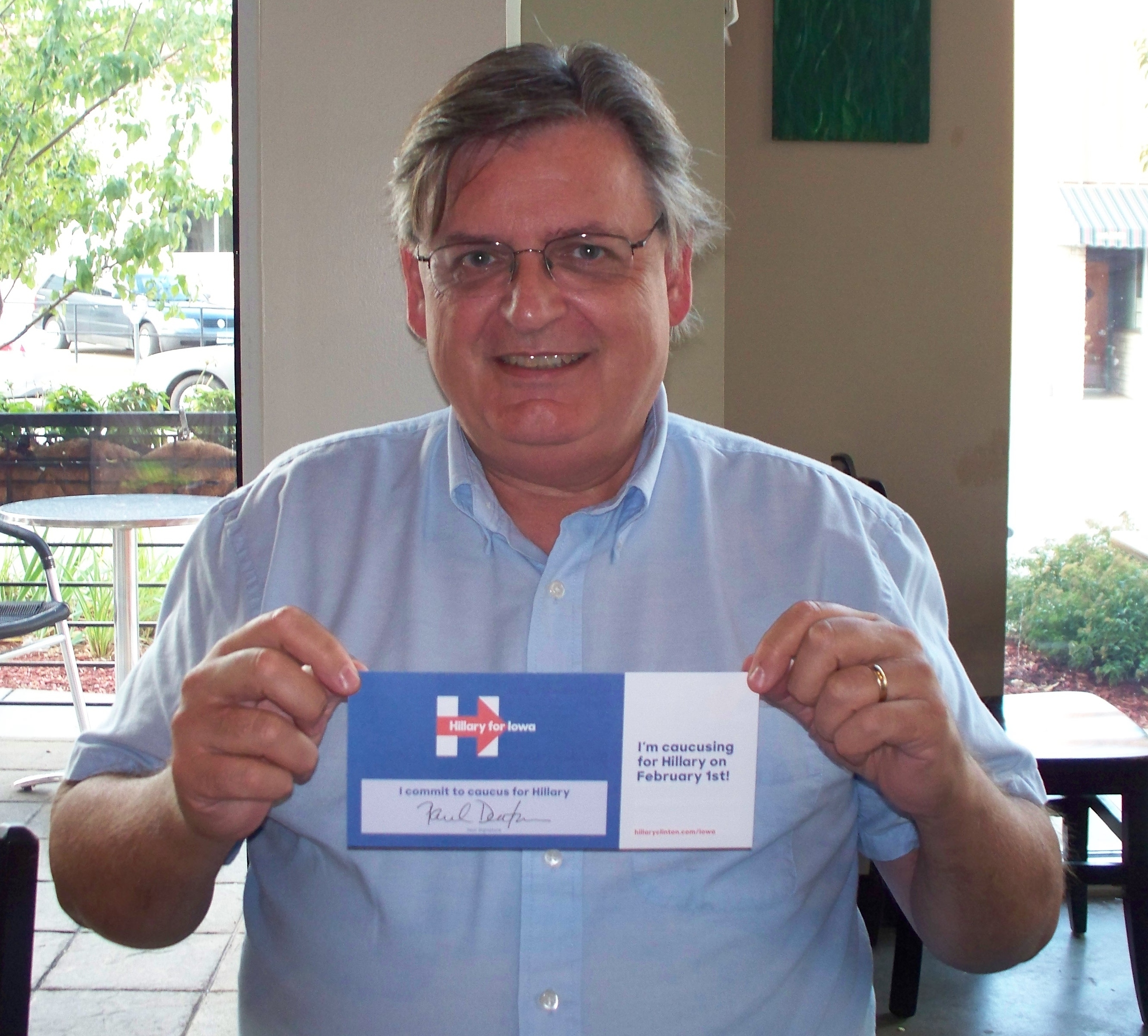
After the interview I drove into the county seat at Linn and Market Streets to meet up with organizers for the Hillary Clinton campaign. I signed a caucus card and offered to canvass some area people I know, bring food to their Iowa City office when I come to town, and help organize an event or two.

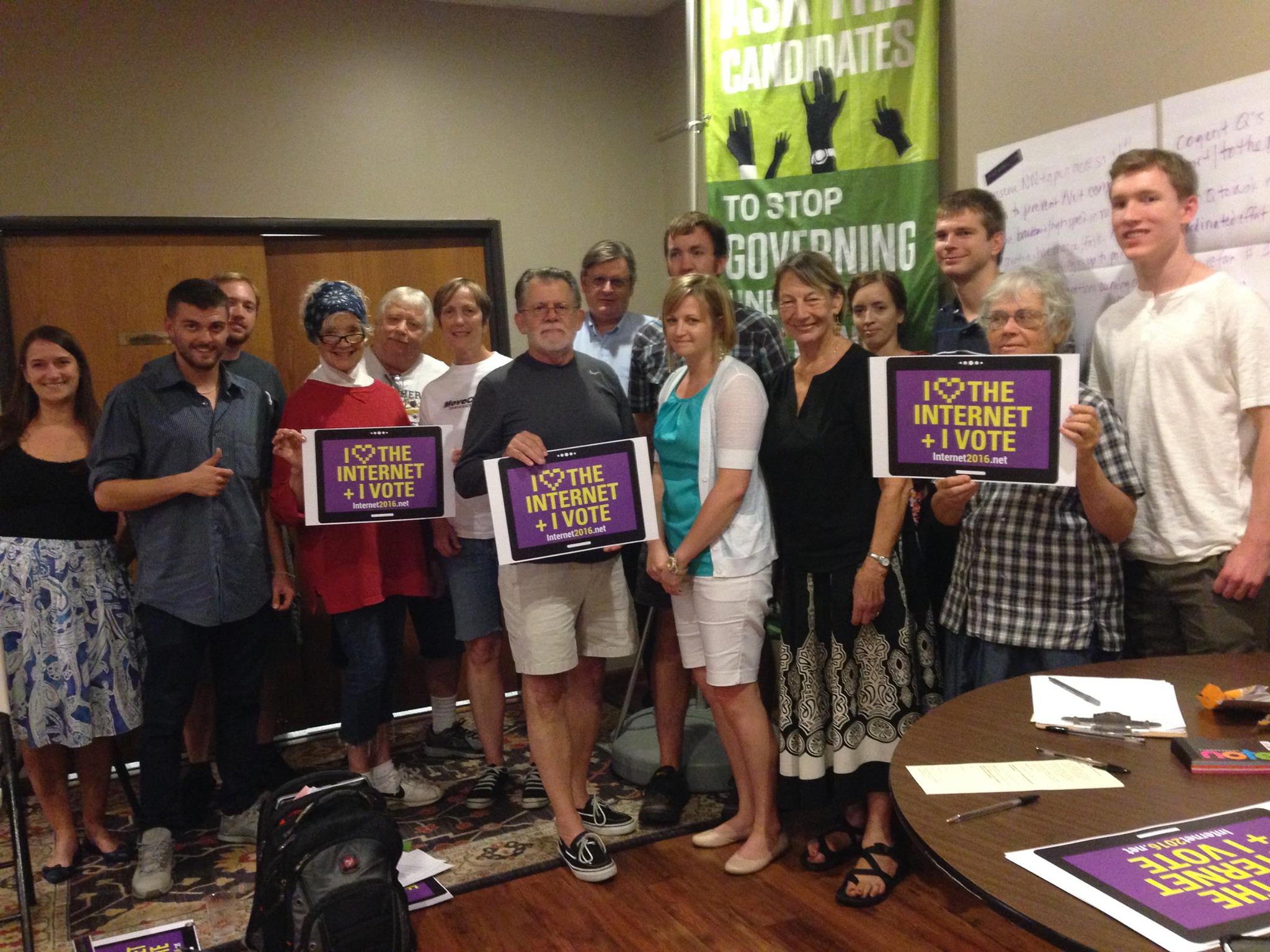
After that, I walked to Old Brick where Free Press Action Fund had organized a meeting about advocating for Internet access, affordability and freedom. More than a dozen people attended and at the end we took this group photo.

Free Press Action Fund Training at Old Brick

It was a long day, capped by getting caught in a rainstorm. Luckily it relented before getting thoroughly drenched.

Categories
Writing

Harvest Days

Daily Tomato Harvest
Friday’s Brandywine, Rose and Beefsteak Tomato Harvest

Each day for the last two weeks I picked an apple and tasted it. The crop of Red Delicious is abundant and I want to make sure when the majority is harvested they are at the peak of sweet crispness. We’re almost there.

The pear harvest was limited to what could be reached. The tree grew well above the house leaving some ripe pears beyond the reach of even my long picking pole. We have enough to eat fresh and some leftover for apple-pear sauce.

Tomatoes are coming in faster than they can be eaten fresh. The plan is to can smaller ones whole and the slicers diced. There should be plenty of jars to fill the pantry shelves. The by-products of juice and ground bits and pieces will make soup or chili, although there is a limit to how much can be canned and used over the next year.

The bell pepper plants are flowering again and celery continues to grow. The main job of deconstructing the garden in preparation for winter will soon begin.

But for now, it’s time to pick and preserve as much of the harvest as we can.

Categories
Writing

Under the Health Halo

Buy-Fresh-Buy-Local-300x115There is a big difference between working at a Community Supported Agriculture project and at the end of a gigantic retail food supply chain. I’ve recently done both and found there are inevitable problems for the former in the latter. It has to do with the health halo.

“The health halo effect refers to the act of overestimating the healthfulness of an item based on a single claim, such as being low in calories or low in fat,” according to an article in The Guardian.

Humans want a shorthand to navigating recurring life decisions, and often, after recognizing a sign, head down the path to acceptance.

I’ve witnessed multiple instances – more than I can count – of when a feature of a type of food, such as “no sugar added,” is presented, people ask the confirming question, “that means it’s healthy, right?” Consumers seem driven, at least in what they say publicly about it, to search for and purchase “healthy food.”

“The purpose of Buy Fresh Buy Local Iowa is to create a statewide marketing campaign to encourage the connections among locally grown food, the farmers who raise it, and the consumers who eat it,” according to its web site. The campaign has been largely successful.

The campaign’s success, beginning in Iowa in 2003, resulted in checking marketing off the to-do list for small-scale local growers. Hard work in a bucolic setting shielded some from the fact that when consumers seek healthy food options marketing plays a more important role than any single campaign can produce.

Buy Fresh Buy Local has not been enough to compete with vigorous marketing of “USDA organic,” “GMO Free,” “gluten free,” “100% natural,” “fat free,” “sugar free,” “no added sugar” and other healthier option campaigns of large-scale food producers. Big operators have substantial financial resources and invest a lot in advertising, including messaging about features of their products.

While the local foods movement has a recognizable marketing campaign, mega-food companies have relentlessly pursued customers with national campaigns that dominate the consumer culture of our society. They benefit from the health halo as I’ve described it, and from market dominance.

We all want to be healthy because, well… being unhealthy or sick can suck.

Today, Alice Waters will receive the 2014 National Humanities Medal for championing a holistic approach to eating and health, celebrating her integration of gardening, cooking and education. Maybe some of us want to be Alice Waters and join the slow food movement. I know I might.

Most of us don’t feel we have time for the slow food Alice Waters promotes. We look for shorthand markers along the way and settle for what we find available in the market place and in our kitchens.

If we want to eat healthy we often look for the health halo and bask in its glow long enough to make a purchase and get on to the next thing in our lives. This consumer behavior is exactly what mega food companies target in their marketing campaigns.

To “Buy Fresh Buy Local” I would add “grow your own” and “know the face of the farmer.” A CSA can make a business with a couple hundred members because of Dunbar’s number. Gaining broader acceptance in our consumer society will take more than the good idea to buy fresh and local. It will also take more than an image of saintliness.

Categories
Writing

Return to the Orchard

Wilson's Orchard
Wilson’s Orchard

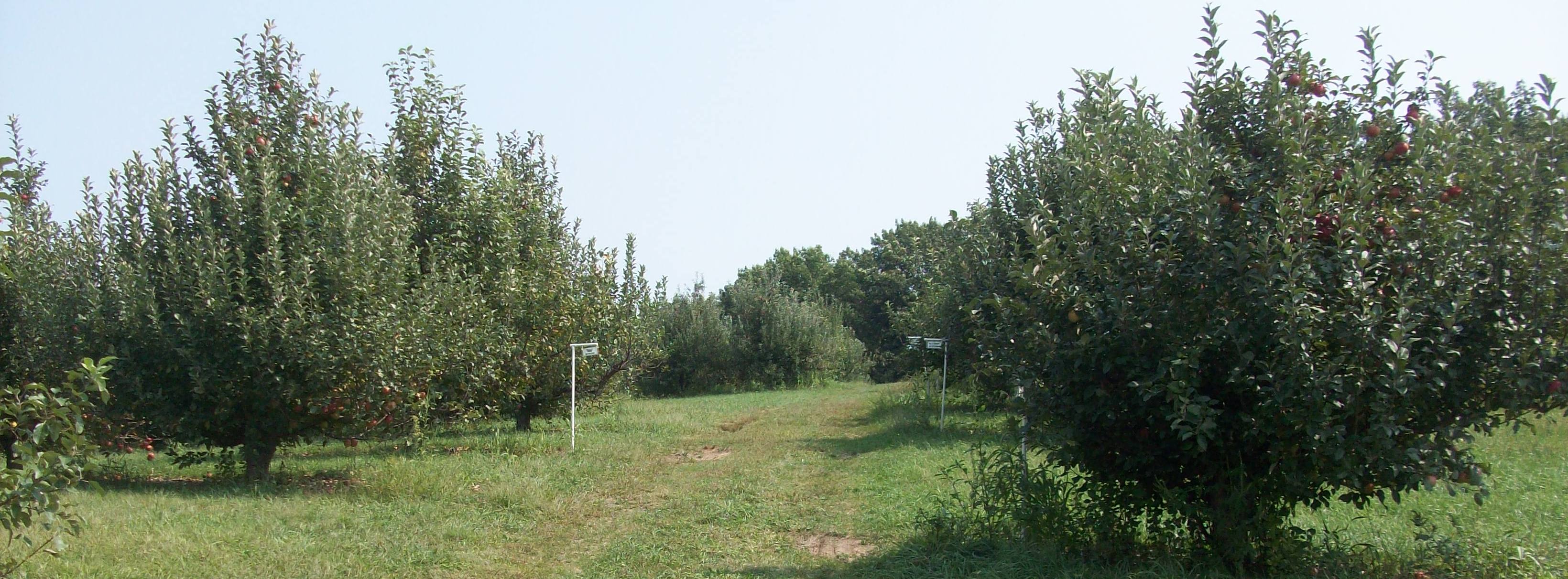
For the third year I’m working as a mapper at Wilson’s Orchard near Iowa City. It is a u-pick operation all about apples and apple culture.

In my 5-6 hour shifts guiding people through the orchard to find what’s ripe and ready to pick, I hear countless stories of why they come, their plans for the apples they pick, and their relationship with America’s second most popular fruit (regrettably bananas are number one).

I work there for the people more than pay, and yesterday spent half of what I earned on ten pounds of Honeycrisp apples, and a bag of mixed varieties to turn into apple crisp and juice. Given the fact our home trees will produce an abundance of apples this year, its not about nourishment. Once one is part of the apple culture it’s hard to get enough.

As I write this post, a pot of apples is steaming on the stove top for sauce. The goal is to use up the first pick of early apples from my trees and mix it with a quart of leftover rhubarb sauce from the spring. If all goes well, I’ll process the result in a water bath, adding more quarts for storage before heading back to the orchard and another shift.

I left the job in the warehouse to spend time with friends selling apples and apple experiences. I started work about four weeks into the season, so this year will be short, maybe six weeks. Some of the people who stop by the orchard are the same ones I saw at the warehouse—tractor ride seekers, apple eaters, and families of all kinds.

Better to spend my time with these folks than at the end of an industrial food supply chain. A place where the apples are grown not far from where they are sold.

Categories
Writing

Taking A Break – Shopping

Apples
Orchard Apples

Tuesday was the first of three days of holiday in Big Grove. It began with commerce.

Meeting mercantile needs inevitably leads me to the county seat, and to people in the community I’ve known for years.

To get a long past due oil change I went to the Jiffy Lube on Highway One in Iowa City. “Jiffy” had been removed from the process, as each oil change takes 20 minutes, and they have crew enough to do only one car at a time. I left unwilling to wait an hour and headed to the Mobil 1 Lube Express on Riverside Drive, which I noticed for the first time on my drive in. In and out in 10 minutes. I asked the cashier, “is this place new?” “We’ve been here ten years,” he said.

Next stop the HyVee grocery store on North Dodge for two items, both of which they carry, but our main store does not: a certain size plastic storage bag, and whole mustard seed. I ended up paying more to get some Morton & Bassett brown mustard seed which proclaims it is “all natural, salt free, gluten free, non-GMO, preservative free, no MSG and non-irradiated.” I didn’t know irradiation was a thing with spices. I also picked up four links of vegetarian sausage for gumbo. There’s a bag of okra in the freezer that needs using. The new store is nice, but pricey.

Orchard Apples
Orchard Apples

Turning east on Dingleberry Road off Highway One, I headed to Wilson’s Apple Orchard where I’ll spend the next six weekends as the mapper in a u-pick operation. I spent two hours walking through the 110 acres, re-familiarizing myself with the layout, the new groves, and which apples are ripe where. Gala are at peak now, and this Labor Day weekend is the Honeycrisp weekend. I tasted some Honeycrisp and they are almost there… just a couple of days away. The rough creek crossing was flooding over the rocks, so I rolled up my pants and felt the cool water running across my sandal-clad feet. When I got back to the barn, I was covered with sweat. I bought a gallon of fresh apple cider and a small bag of apples, and talked for a while to the manager while dripping sweat from my arms to the floor.

Apple SignNorth on Highway One, Rebal’s Sweet Corn had their sign up so I stopped and bought a bag of ears. The farmer said there were two more patches to harvest. One for the Labor Day weekend, and the second was uncertain with it being so late in summer for sweet corn. It’s only the second time we’ve bought sweet corn this season.

The final stop was at the hardware store in Solon where I bought four boxes of canning jar lids and a box of rings. It’s more expensive there, but I enjoy my visits to get hardware close to home. The folks that run the store are making a business out of it, and there is something to learn about small town life each time I stop.

Once home, I picked tomatoes for dinner, which was sweet corn, thick-sliced tomatoes and apple cider. The whole day set me back $117.53 plus fuel.

A bargain vacation while sustaining a life in a turbulent world.

Categories
Writing

Apple Tree Takes a Hit

Vroken Branch
Broken Branch

The Golden Delicious apple tree had been having trouble for a long time. Last night it took a hit as the combination of a fruit-laden branch attached to a disease weakened trunk broke off.

It was one of the last crop bearing limbs, so this winter the tree will have to come down.

It’s not a crisis. More a sign of what’s to come.

I planted six apple trees, including this one, after my mother-in-law’s funeral. The rest of the family drove to her home near Ames where I would join them once the bare root stock from Stark Brothers was in the ground. That was more than 20 years ago.

Since then, two more trees have been lost—this one makes three. The remaining trees produce enough fruit for our household which is loaded with cider vinegar, applesauce, apple butter and dried apples. We pick the best and leave or give away the rest. We’ll be fine.

Fallen Branch
Fallen Branch

After taking the photos, an hour in the kitchen produced juice for cider vinegar. I filled the two-quart jar that holds the mother for another season of fermentation.

We recently turned up a few old items of food. We have some vintage 2008 Duncan Hines cake mix, which I decided would be a reasonable vehicle to eat more apple butter. I made the lemon flavored one first. Squares of cake topped with vintage apple butter makes a delicious dessert. When I say “vintage apple butter” I mean the jars are labeled so the variety and circumstances from which the apples originated is known.

This morning I made a batch of tapioca. It’s not like pudding, but it is close enough that I plan to make more at least until the three boxes are used up. Not sure what prompted that purchase circa 2007, but the result, prepared according to instructions on the box was decent. If I can figure out the layers, it would be great to make a parfait. Perhaps to be served like ice cream.

The garden yielded a dozen cucumbers, the same number of Brandywine tomatoes, celery, green peppers and a few cherry and grape tomatoes. There is plenty of kale, but I’m letting the plants rest for a while before resuming regular harvest. No noticeable bugs have invaded… yet.

This report and its observations aside, it is a peculiar time.

The fallen apple tree branch is a reminder of the life’s brief span. Accepting the tree’s demise has long been avoided. Until this morning.

I accept it. Despite the downward curve of the arc, there is time to plant another tree. If not for me, then for whoever inhabits this plot of ground after we are gone. Looking forward to putting new stock in the ground.

Categories
Writing

Taking Local Out Of Local Food

Kale Salad
Kale Salad

Ingredients for this kale salad were grown within 100 feet of our kitchen. It is as local as food gets.

We enjoy garden produce in high summer — when nature’s bounty yields so much food we either preserve or give it away. Any more our household gives away more than it preserves because the pantry is well stocked with previous years’ harvests.

Friends and family talk about the “local food movement.” In Iowa it is being assimilated into lifestyles that gladly incorporate ingredients from all over the globe. This assimilation has taken the local out of local food.

From an intellectual standpoint, it wouldn’t be hard to replace food grown in China, Mexico, California and Florida with crops grown here in Iowa. The number of acres required is surprisingly small. For example, local farmer Paul Rasch once estimated it would take about 110 acres to keep a county of 160,000 people in apples all year. The political will to encourage home-grown solutions in the food supply chain doesn’t currently exist. Until it does, rational, local solutions to food supply remain in the ether of unrealized ideas.

A vendor at the Iowa City Farmers Market was recently suspended for violating a rule that produce sold there must be grown by the vendor. Just walk the market and ask booth workers from where they hail. Often he/she is an employee or contractor working for a farm seeking coverage around many Eastern Iowa farmers markets. Too often they are anything but local growers. What’s been lost in this commercialization of local food is the face of the farmer.

Knowing where one’s food comes from is a basic tenant of the local foods movement. I enjoy working with local growers on a small acreage to produce food for families. At the same time, I seldom purchase a box of cereal from the supermarket even though I’ve seen the grain trucks queue up to unload at the cereal mills in Cedar Rapids.

For example, my garden doesn’t produce enough garlic for the year. I’d rather buy a supplemental bag of peeled garlic cloves produced at Christopher Ranch in Gilroy, Calif. than cloves lacking discernible origin at a farmers market. I know how Christopher Ranch produces their garlic. Absent the face of the farmer, there is value in understanding food origins, and that means some percentage of a household’s food supply will not be local.

There is a lot of marketing hype around “organic,” “GMO-free,” and “gluten free” foods, and this has to be impacting the customer base of local food producers. If consumers feel they can get a reasonably priced, “healthy option” at the supermarket, why make an extra trip to the farmers market, except for the occasional special experience? Why wouldn’t one pick up a bag of Earthbound Farms organic carrots when local growers can never produce enough to meet demand? At the same time, marketing hype is just what the name suggests.

Food security and sustainability are complicated. Before the local foods movement came into its own, it already is being assimilated faster than one can say snap peas. From a consumer standpoint the local came out of local foods some time ago, and it may not be back.