Categories
Writing

Getting Started

On the Back Porch – Fillmore Street

I was born in a hospital established in 1869 by the Sisters of Mercy on Marquette Street in Davenport, Iowa. Marquette was one of the first streets laid out by city founder Antoine Le Claire.

I attended Kindergarten at Thomas Jefferson Elementary school at 1027 Marquette Street, and in 1959 our family purchased an American four-square home at 2025 Marquette Street, a block and a half from my birthplace on top of the hill, a block from the church where my parents wed and I was baptized and confirmed.

My parents married at Holy Family Catholic Church on Fillmore Street. According to Mother it was a quickly arranged ceremony with her brother serving as best man directly from work with butcher’s blood on his clothes. There were no photos of the newlyweds or wedding party.

The Sisters of Mercy and Le Claire provided an ever present background to life in my home town. I remember visiting the cemetery on River Drive where 1873 cholera victims were buried in a mass grave. Sisters of Mercy had tended the sick in a makeshift hospital at a downtown warehouse. That there was a “downtown” is attributable in part to the grid of streets Le Claire laid out in the old part of the city. Antoine Le Claire’s grave marker is prominent near the entrance to Mount Calvary Cemetery where many of my family members are buried.

Davenport was home until the death of my father in 1969 when I left to attend university in Fall 1970. I returned to Davenport for visits, for a couple of summers during college, after returning from an extended trip to Europe upon getting my B.A. in English, and after military service. Davenport was never again like it seemed during my early years. We don’t often have such brutal delineation in our lives as when Father died in an industrial accident. The times I considered returning permanently didn’t last.

Davenport and my life there defined who I am. It was not just the grid of streets where things were measured in blocks in the benevolent presence of nuns.

My earliest defining moment was the day, at age 3-1/2, when a swing-set set up in the basement of our Madison Street home collapsed and injured my head. My parents were horrified. I remember the pool of blood on the basement floor, holding the thumb of the ambulance driver on the ride to the hospital where I had been born, taking ether dripped into a funnel to anesthetize me for the stitches to mend my gashed head. I am lucky to be alive.

What I learned and came to believe through the injury and recovery in the hospital was that in a city there is an infrastructure of knowledge and caring to support us when things happen. I watched the routines of the hospital staff, the doctor checking up on me, changing room mates and bed linen, daily visits from my parents and the handling of my propensity to get out of bed and walk around. This experience assured me that although we are vulnerable, we are not alone.

Over the years, Doctor Kuhl would examine the scar on my forehead and talk about my recovery when I visited him in his office. Today, I don’t think of the scar, and suspect most people don’t even notice it. What I do think about is that while we are not alone, we must be part of a society that helps protect those who are most vulnerable.

When very young, I made a withdrawal from the bank of social responsibility and now the debt needs repaying. Who I became in life was partly attributable to my parents, however the influence of the Sisters of Mercy in a home town laid out by Antoine Le Claire is undeniable. It is also inescapable.

~ From a draft of a personal memoir about living in Iowa.
Categories
Milestones Writing

Friday in Spring

Retaining Wall

Fridays in Spring I soil-block for a farmer.

Yesterday I made 4,944 soil blocks which were planted in winter share. Leeks, broccoli and the like. It took four hours.

While driving north on Highway One I nodded off for a brief moment. After realizing it I sat upright, glanced in the mirror and concentrated on staying awake.

It’s not like I didn’t get a full night’s sleep Thursday… I did.

The combination of sun and repetitive work may have worn me out.

After arriving home I walked the garden, checked seedlings for moisture level, took a shower, and crashed into a two-hour nap. It’s become a Friday pattern.

Then I remember it was not soil blocking that wore me out but the news of Anthony Bourdain’s suicide in France.

Bourdain was a celebrity I liked. I read Kitchen Confidential a number of years ago and watched him on Food Network. In many ways, he is what I’d like to be as a writer, although with less inebriation. How little we know about celebrities. His suicide makes no sense. It may never make sense.

A memorable episode from Bourdain’s television work was when he returned to Borneo and got a chest tattoo on camera. He appeared to be drunk and uncomfortable. In a later CNN interview he recounted the process was much more painful than expected. We already knew that from the video. A reality came through in much of Bourdain’s work — one of his making. That’s why I liked him. The ability to depict a reality is essential to creative endeavor. Bourdain and his crew were masters at what they did. He’s gone too soon and will be missed.

I brought home a bag of groceries from the farm — lettuce, sugar snap peas, garlic scapes, kohlrabi, spring onions and kale. After napping I washed lettuce for salads and stored it in the ice box until supper time. I’m not sure what else got done. Maybe nothing, or something… whatever.

Fridays have been like that in spring.

Categories
Writing

In Fractions of an Inch

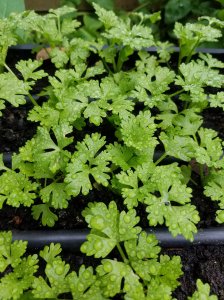
Tall Utah Celery Seedlings

A couple of weeks ago our association held a community cleanup.

We own a well, a wastewater treatment plant, two vacant lots, 25 acres of woods, roads, and sundry open spaces which require attention from time to time.

Teams policed up trash, landscaped near the well house, trimmed trees, inspected roads, and repaired a retaining wall around the community parking lot near access to the state park.

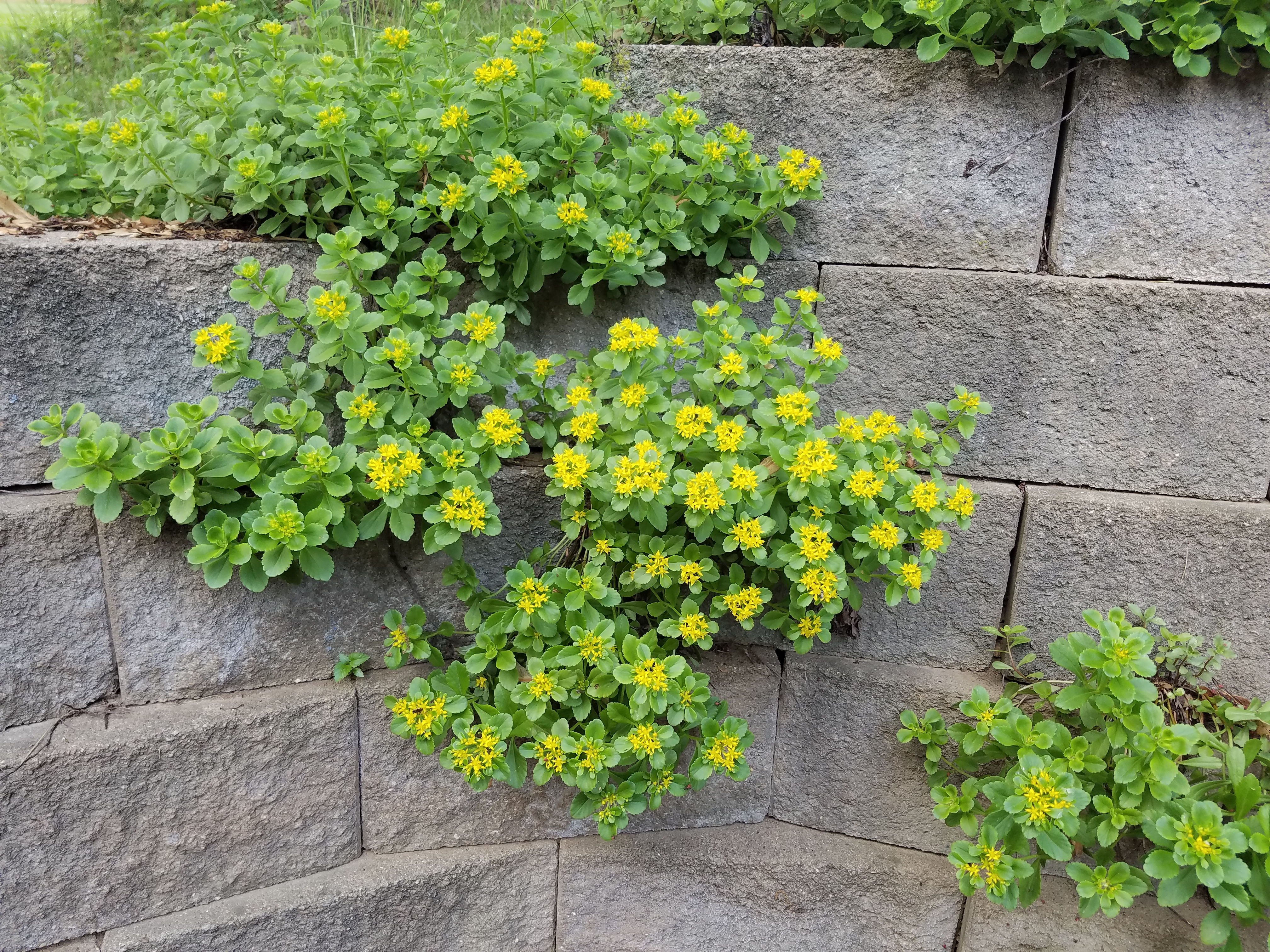
A group of us — men about my age — worked near an intersection where a tree blocked the view of oncoming traffic. We made quick work of the tree and piled the trimmed branches at the edge of the nearby parking lot. An adjacent retaining wall had fallen over and we couldn’t get the cement blocks to fit back into place. A retired contractor walked the short distance home and returned with a couple of paint scrapers to remove dirt built up along the joints of the blocks.

“It will only take an eighth of an inch,” he said.

We made short work of the wall and returned home for the rest of our day. As the African proverb says, “Many hands make light work.”

Our lives can be like these projects — they are our lives as we work them. We forget our origins and become crusted with habits accumulated in complex living to get by. To make a life work, we scrape off the residue of the past and make things fit in the present.

It rained yesterday and I went to town.

I recycled glass jars near the former grocery store on Dodge Street and drove into the county seat. En route I spotted a Charles Bukowski bumper sticker on a car not far from where John Irving lived and wrote during his early years.

There are always an abundance of construction detours in this UNESCO City of Literature. Parking in one of the ramps off Burlington, I walked past a construction site toward the jewelry store.

Wedding band in a pocket, I planned to resize it so it didn’t pinch and deform my ring finger more than it had. The jewelry store was gone… long gone from the look of it. I guess being a customer once every 36 years is not enough to sustain a local business. At first I didn’t know what to do.

I walked around the corner and found another jeweler. This one was established in 1854, 12 years after Iowa statehood. Staff was friendly and efficient. We determined one size larger would make the ring fit again. I’ll pick up the resized ring after farm work on Friday.

After waiting for an LTL carrier to back into the crowded construction site near the ramp I drove to Coralville.

This was my second shopping trip this month. The combination of adequate income, a worn out French press, and a wet, rainy day precipitated it. The fitting where the long rod of the plunger connected to the screen had become stripped with use. I researched on line and the Target store at the mall had what I wanted — something as close as possible to the French press I’d used for many years. It took me a while to locate it in the large box store.

I picked up a few items at other stores — necessities that fit our lives. I splurged on a bottle of Trader Joe’s organic ranch dressing. We usually make our own salad dressing but this is the season of spring salads and I craved something different. It cost $2.79. I visited the home, farm and auto supply store and bought three 16-quart bags of organic soil mix to transplant seedlings for further growth before planting. I appreciated the employee discount.

While rain kept me from gardening, the time was easy to fill with the habits of a creative life. We require a platform to create things the way my contractor friend kept tools to repair the retaining wall in his home workshop. Often that means fitting the bits and pieces of a seemingly random life into something stable and predictable — measured in fractions of an inch.

We depend on this more than we know.

Categories
Writing

Foundation for Writing

New Kale Plot

When the Catholic Church built the new school, seventh and eighth graders were segregated from friends with whom we had been growing up. A group of us were mixed together in an advanced program for college bound students as a nun explained at the time.

I didn’t like it and continue to harbor resentment even though it was 1964 and the segregation proved to be the foundation of my interest in a creative life.

During the course of our succeeding years, neighborhood friends and I would never again maintain the “old school” relationship. Mostly I’m over it, I guess. I do have writing which relies upon the distance from peers I learned then. A bit of alienation is essential for writing or public speaking to be worth much.

These days each morning begins with creative work. Reading, writing and coffee mixed together beginning around 3 a.m. It has been a chance to understand a world that is increasingly complicated. If the morning is productive, I feel positive the rest of the day.

End of Personal Journal

I work on a few projects off-line but the majority of what I write is available to readers. Otherwise, what’s the point. For many years, from my first trip to Europe in 1974, until this year I maintained a journal. As one can see in the image, those days are finished.

There is also newspaper writing which includes many letters to the editor and the freelance work I did a couple years ago. Some pieces were edited more than others. These days what I send to the papers isn’t hardly edited. I value it all.

Writing on-line has it’s points. There is a chance to edit what was written both before publication and afterward. I don’t blurt out incoherent rants on-line as I did when a journal was a place to let off steam. Social media, especially Facebook and Twitter, serves as a creative outlet as well.

At its core writing originates in isolation from and connection to society. The two aspects are needed for it to be any good. When I review old pieces I am tempted to edit them, and my punctuation over the years has been inconsistent to be kind, but they capture moments I remember and wouldn’t change. There are also those where I don’t perceive myself in the finished piece. If that’s positive or negative I’m not sure, but the writing seems really good when I rediscover those.

We carry a limited amount of stuff where we go. The transition from old to new school is one that’s always in my kit bag. It taught me how social forces and institutions can tear us apart, and sometimes provide the foundation for something equally good or better.

I hope to continue writing many more years.

Categories
Kitchen Garden Writing

Green Washing and a Local Food System

Spring Onions

Wind came up yesterday and would not relent.

I planted onions and cilantro in the garden, transplanted some seedlings to larger pots, but that’s about it. The septic tank service arrived and pumped our solids tank while I trimmed the lilac sprouts from the space in front of our house.

Constant wind beating against me took its toll.

The first of five spring shares was ready yesterday afternoon from our CSA: Bok Choy, Koji and Broccoli Raab.

Both CSAs where I work are running behind due to weird spring weather. Carmen Black’s newsletter summed up where we are nicely:

First of all I want to thank all of you for your patience and understanding in starting a week later than planned! As I’m sure all of you can guess this weather has been very difficult to deal with on the farm. Two weeks ago it snowed, and today it’s eighty degrees! In addition to the swings in temperature its been the driest April on record, which means that everything we’ve finally been able to plant has needed to be watered immediately. Through all of this weather stress I’ve been very grateful to know that you all are so supportive of this farm, and will understand the challenges we’re facing in organically growing local veggies this spring.

First Seasonal Salad

Dinner was a salad to go along with pasta last night. Three kinds of greens and this year’s spring onions along with odds and ends of cold storage vegetables. It’s why we invest our time and resources in a food ecology.

The words “local food” mean less today than they did, and not what we thought they meant. I discuss local food with farmers and gardeners and I’ve heard the usage it is a form of green washing. Is “local food” a form of green washing? Maybe.

I know the produce harvested in our back yard is local food. With each passing season I see less significance. We want food we serve at home to be fresh, tasty and pleasurable. When we take a dish to a potluck, using garden produce gives a personal touch to a classic casserole. A kitchen garden like ours serves those things well.

“Local government can make policy that makes it easier to grow and consume #LocalFood,” Johnson County Supervisor Kurt Michael Friese posted on twitter.

If anyone is familiar with the local food system, Friese, a long-time restaurateur and food writer is. He is well positioned to make and implement policy that supports local food. But what exactly is that?

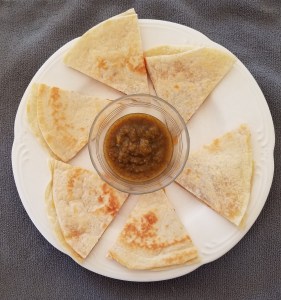
Breakfast Quesadilla with Homemade Salsa

Early on, local food referred to how and where food was sourced. There was talk about mitigating “food miles.” As I explained in a 2013 post, “Food distribution and related costs are a social construct that makes transportation seem inexpensive, or irrelevant to what we find in grocery store aisles.”

Where advocates of local food may have gone wrong is using the idea of food miles as a place holder for complex, flawed arguments. Costs are costs, and a producer has to recover his or her financial production costs when the consumer buys an item. Using any complex argument, including food miles, as a place holder seems a diversion. Such talk belongs more appropriately in a sales and marketing context as a form of puffery.

Read my entire set of arguments here.

The better framing for “local food” is to know the face of the farmer. Two years ago I wrote at length about what it means to know your farmer and practices they use. Here is the salient point related to green washing:

Driven in part by mass media, consumers are concerned about a wide range of food issues that include contamination with harmful bacteria; dietary concern about consumption of carbohydrates, fat and sugar; the way in which plant genetics are modified to improve them; and more. Partly in response to media campaigns, annual sales of organic food exceed $30 billion in the U.S. (USDA). The increase in organic market share from national advertising campaigns is significant. If you get to know your local food farmer, what you may find is they benefit from this marketing, but their customers come and stay with them because of a personal relationship with the farmer.

Local food is not exactly green washing, which is defined as “disinformation disseminated by an organization so as to present an environmentally responsible public image.” However, there is a lot of conflicting and sometimes contradictory information related to food. Plant genetics alone set off a firestorm of media and organizational controversy and spawned a new food labeling process under the aegis of the Non-GMO Project. Simply said, it’s complicated.

If a definition of “local food” is elusive, how our county defined a local food system may be as good as it gets:

In Johnson County we see the need to localize our food system – and we are working to create a healthy, intact system that lessens resource inputs, promotes worker’s rights and preserves the natural environment.

Yesterday’s wind blew a single-use plastic bag into our Ash tree where it got stuck and is flailing in the wind. Part of me is tempted to leave it there as a symbol of all that is wrong with our society. Then again, if I want it fixed, I’d better do something about it. So it is with the local food system.

Full Moon Setting Behind Clouds

Categories
Kitchen Garden Writing

Back to the Garden

Spinach Seedlings

No food is more local than a kitchen garden. I’ve got to get moving on mine after a late spring.

Everyone was in a good mood at the farms when I soil blocked Friday and Sunday. My farmer friends caught up last week by finishing onion and potato planting. Trays of seedlings are moving to wagons and then into the ground, thus clearing the greenhouse for what will be June and July crops. I started zucchini and cucumbers Sunday in the greenhouse.

The first spring share is today and in honor of it I’m composting my over-wintered lettuce.

A neighbor and I had a conversation about spinach and how it grows. She is changing her garden around as last year the zucchini they love developed powdery mildew. Her tactic is to plant the whole garden in corn to give the soil a break and let the fungus dissipate. Here’s hoping that works.

As for me, Monday is mine to do what I want. This week that will include getting our septic tank pumped, writing off line, gardening and yard care. It’s time to put winter behind us.

Categories
Writing

A Sense of Place

Moon Setting

Hearing the laughter of children; seeing wildlife in the backyard; digging dirt turned to soil by one’s hands; feeling a breeze, getting frostbite, dancing in the rain, watering a garden with our own sweat.

They make a place if we are lucky enough to understand.

Among the lakes, creeks, forests, farms, cemeteries and subdivisions there is something. Something imperceptible but there.

To know it is a sense of place. It is not natural but has its rewards.

Hearing the laughter of children; seeing wildlife in the backyard; digging dirt turned to soil by one’s hands; feeling a breeze, getting frostbite, dancing in the rain, watering a garden with our own sweat.

Categories
Environment Writing

Earth Day Weekend 2018

Earthrise Dec. 24, 1968

Earth Day is and will always be about this photo taken by the Apollo 8 astronauts on the first manned mission to the moon.

“The vast loneliness is awe-inspiring and it makes you realize just what you have back there on Earth,” command module pilot Jim Lovell said from lunar orbit.

With a perspective six inches from our noses, we often forget who we are and how we fit into the vast reaches of the universe. We are a speck in a place larger than we can imagine.

When I participated in the first Earth Day as a senior in high school, the idea we should work together for peace, reduce pollution, and care for the environment seemed obvious. Even much reviled President Richard Nixon got it — society had to do something to address clean air, clean water and endangered species.

Earth Day is a chance to revisit this iconic photograph. When we consider a broader perspective, as the photograph encourages us to do, little has changed on Earth since it was taken. Our troubles seem petty compared to the overriding fact Earth is our only home. We are all in this together.

As much as societies seek to delineate metes and bounds, there are no borders on the globe. There is only one society of which we are all a part.

This Earth Day I’ll be working at home in my garden. A late spring created pent up demand for outdoors work. For the last four weeks, one excuse after another delayed needed work, yet now I’m ready to release the floodgates.

Not before I consider this photo one more time.

Categories
Home Life Writing

Soft Landing

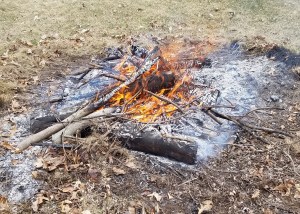
Burning Embers

It’s been 30 days since retirement and I’m up to my old tricks.

Like a hungry dog, I see things and want to be a part of them. “I’ll do this,” I say to myself and others. I run the risk of over-committing and letting people down. Importantly, I divert attention from priorities. New tricks should replace old but I’m not there yet.

Let the engine of life make a soft landing on this rain-soaked spring day. Focus until leaving for the farm in a few hours. In my second go-around at “retirement,” I’ve learned that lesson.

It’s not like I’ve kicked back in an easy chair. I agreed to stay on at the home, farm and auto supply store two days a week and never planned to give up farm work. I’ve written more and would like to write more still.

I’ve been in transition. Without good health life would be harder. I saw the dentist and tomorrow have an appointment with a physician for a physical. I got my car serviced, hair cut, and am planning a trip to purchase clothes. When I do, I’ll turn tattered attire into rags and recycle the denim and cotton. We’ve been living within our budget and the federal and state taxes are filed. The garden is behind this season, but there are seedlings in the greenhouse and garlic poking through the mulch. There will be a garden when the weather breaks. 2018 is a midterm election year and I plan to be more active this cycle than in recent years.

Days take on a rhythm and I’m no longer sure when a week begins and ends. Mostly, it’s been cold, I’ve felt it through to the bone, and there is so much to do before settling into a sustainable pattern. The weather will break and I feel ready to take off.

Slow down, you move too fast. Good advice for someone with my social style.

Categories
Work Life Writing

Feel the Breeze

Western Sky at Sunrise

I’d rather have spent both of this week’s days at the home, farm and auto supply store in our garden. Temperatures were warm enough to work in shirtsleeves and the garden is way behind.

Outdoors tasks occupied my work day: unloading field tile and plant trucks, rearranging the yard, and moving tall pallets of pine shavings, first outside while unloading the truck, and then back inside as I made room in the warehouse.  We had trucks of merchandise from our main warehouse, a load of feed, and a truck from Missouri with odds and ends of a retail operation: ladders, pipe, light bulbs and sundry stuff. It seemed like I was on the lift truck the entire time.

The best part of the days was feeling a breeze through my hair as I drove from one end of the lot to the other on the lift truck. Father died on a lift truck at the meat packing plant. That thought is never far from me as I finish my days in the work force.

Now begins the rest of today: coffee with an elected official in the county seat and a shift of farm work. If I have the bandwidth, and thunderstorms hold off, I’ll work in the garden later this afternoon.