Categories
Living in Society Social Commentary Writing

Poetry for a Life

Service Flags

Best wishes on Memorial Day from this veteran who made it home. As Mary Chapin Carpenter says on her series of songs from home, “Stay well, be peaceful, be mighty.”

I’ve written what I will about Memorial Day. Some of those words can be read here, here and here. I’ve soured on the American celebration of the spring holiday yet one thing I’ve learned is the death of our soldiers in combat is no abstraction. May they rest in peace.

Iowa is one of 24 U.S. states with uncontrolled coronavirus spread. That alone is reason to stay home, read, write, cook, clean and weed the garden. At some point we’ll get caught up with those homebody tasks and venture out of this pandemic pattern, but not yet.

For vegetable gardeners Memorial Day marks the end of spring planting. At the farm we are taking next week off from starting new seeds. The following week we’ll start the fall crop. In between rain showers I hope to get the cucumbers in — the last of my vegetable plots — and weed, weed, weed.

During a rainstorm I reviewed the books on the Reading List tab of this blog. I’m not reading enough poetry as poems comprise only 7.1 percent of listed books.

7.1 percent! I can’t get over that. I want to do better so I asked twitter: “I want to read more poetry. Which author would you recommend?”

The recommendations were pretty good.

When I received a payroll bonus from my part time job in high school I went downtown and bought two books of poetry at the M.L. Parker Department Store: The Complete Poems of Robert Frost and Carl Sandburg’s Complete Poems. I didn’t really understand poetry and still have my failings, but it felt important to mark the beginning of my nascent home library with something other than young adult books.

Over the years I’ve developed other favorite poets. Of those well-known, my favorites are William Carlos Williams and Vachel Lindsay. I also favor Charles Bukowski, Wisława Szymborska, Lucia Perillo, Adrienne Rich, Gary Snyder. Lawrence Ferlinghetti and Seamus Heaney. Of the classics I enjoy Geoffrey Chaucer and William Shakespeare but could never get myself to read Edmund Spenser’s The Faerie Queen, although feeling like I should have.

In response to my Twitter query our daughter recommended atticus so I signed up for the newsletter and followed him on Twitter. I’ll be looking for an opportunity to read The Truth about Magic: Poems.

Recommended by a follower in the UNESCO City of Literature are Amy Woolard and Jeremy Paden. Their books Neck of the Woods (Woolard) and Broken Tulips (Paden) are available so I’ll start with them when I can get my hands on a copy.

Another I’d not read is Mary Oliver, recommended by an Iowa farmer. I studied Oliver in response to the tweet and will obtain a copy of American Primitive for which she won the Pulitzer Prize. It is curious Oliver worked at the Edna St. Vincent Millay home for Millay’s sister. Millay was another recommended poet whose Collected Poems was already on my shelf. I’m building a pile of poetry on the dresser in the bedroom.

Emily Dickinson and Ted Hughes were recommended by a follower and fellow gardener in Canada. I pulled down copies of Poetry Is and Crow by Hughes and The Complete Poems of Emily Dickinson, edited by Thomas H. Johnson. Punctuation editing is an issue with works by Dickinson as we know. Hopefully Johnson’s edition will serve.

A local friend who lives part of the year in Italy recommended W.S. Merwin’s Garden Time. I will locate a copy and start reading Writings to an Unfinished Accompaniment which was already on my shelves.

Richard Eberhart of Austin, Minn. was recommended by another Midwesterner. On my shelves, rescued from a Goodwill Store in 1994, was a copy of the New Directions Paperbook edition of Selected Poems 1930-1965, which I am reading now. The iconography of these poems is very familiar.

If Memorial Day is the unofficial beginning of summer, 2020 will be the summer of poetry in a pandemic.

Categories
Work Life Writing

Writing About Work

Story Board

I began writing in grade school. The earliest remaining written document is a letter to my parents from YMCA Camp.

I reported having fun.

When reading those handwritten words, forgotten memories emerged. They reside in my brain like fossilized footprints from yesterday’s muddy garden. Such memories mean something. I can say with some certainty camp was fun.

When writing about worklife I seek several things. Partly I want to understand my own work history. It is more than a small chore to write a timeline of a life’s main events. Seeking that will aid telling my story.

More than a timeline I seek to understand why I worked and how it affected me. When I took my first job as a newspaper carrier the work was possible, something boys my age just did. I took a job in high school at a retail store called Turn-Style which was an entry into after school work life. It was possible and common among my classmates to have an after school job. Both of these early jobs funded activities that would have been less likely if I didn’t have income. The most significant activity Turn-Style funded was buying a used car and fuel to keep it going.

During the summer of 1971 I returned home from college. Like most of my male high school classmates I was able to find a summer job in industrial and manufacturing plants in the Quad-Cities. I landed at Oscar Mayer’s slaughterhouse working on the maintenance crew. It was dirty and hard work but in three months I made enough (at $4.04 per hour) to pay the sophomore year college expenses my scholarship didn’t cover. I learned how to clean a lard rendering tank among other valued skills.

After college the employment situation in Davenport seemed dire. Globalization was beginning to take hold, with some jobs moving to Mexico or overseas. It impacted the community with layoffs and those easy to find manufacturing jobs were less easy to secure three years later. I also did not want to get caught up in being a “shoppie,” working a career in manufacturing.

I didn’t have high expectations but after working a couple of low-wage jobs to make ends meet I enlisted in the U.S. Army and was gone for four years. Because of the G.I. Bill, I attended graduate school and got my M.A. in 13 months without other paid work. There were no good or exciting job options in 1981 after graduation so I applied and went to work at the University of Iowa.

After meeting my future spouse at the university, and getting married in 1982, I took a job in transportation and logistics with CRST Inc. in March 1984. I spent more than 25 years doing that type of work. I earned enough money so Jacque could work at home until she was ready to enter the paid workforce again.

Beginning in July 2009, I retired from CRST Logistics with a sheet cake and going-away gifts to enter a period of low wage work. In all I logged 24 different jobs and work activities since then — some paid and some volunteer. There was a lot of diverse experience in all that, about which I’ve written in this blog. What I’m left with today is being a blogger, writer, gardener and human.

While frequent blog posts are an important part of my writing, there is more. The coronavirus pandemic has been an opportunity to consider my writing and develop other projects including a memoir. I’m not finished working yet the number of paid jobs is close to zero as we enter the third month of the pandemic. It provides a perspective that might not have been otherwise possible.

As the sun rises on a forecast dry day I plan to work in the garden planting tomatoes, peppers and cucumbers. While I do, I will consider what’s next for me and the meaning of my years in the workplace. The pandemic isolation brings this into focus.

I hope what I write next is as meaningful as that letter to my parents written so many years ago. If it isn’t, at least we’ll have vegetables.

Categories
Work Life Writing

A 1960s Newspaper Boy

M.L. Parker Department Store

My first job in grade school was as a paper boy for the Des Moines Register.

I wanted a paper route. It was what boys my age did. After discussing it with Mother, she arranged the job by calling newspaper circulation desks. The Register route was available.

It was a long, morning route because the Register wasn’t as widely circulated as our home town newspaper, the Times-Democrat. I could ride my bicycle and get the papers delivered with plenty of time to get ready for school.

Before long, I changed to an afternoon Times-Democrat route located on Marquette Street between West Central Park and Locust Street. The Times-Democrat had morning and evening editions at the time. Less walking, more deliveries, and more money for me. I kept the route until high school when I was told it was time paper boys moved on to other things. Having a little money, maybe a couple of bucks a week, made a difference in my life and in the range of activities possible in grade school.

I made weekly collections from subscribers on Fridays. Some subscribers were the worst. They were never home on Friday and when I finally found them on other days they would deny they owed for multiple weeks. My collection pages had a coupon that indicated each week that was due so I knew where each account stood. I gave customers the coupon for a week after they paid. When they got four weeks behind and didn’t pay I called the newspaper to cut them off. My supervisor never wanted to do it because the newspaper had subscription targets. Statistically, the majority of my customers were nice and paid on time. However I do remember the deadbeats. In retrospect, my margins sucked but there was enough money to satisfy my nascent financial needs.

On Saturdays I paid my bill for the bundles of papers dropped on the corner of Marquette and Lombard Streets. I took a city bus from nearby Mercy Hospital to what was then a thriving downtown Davenport. I spent parts of every Saturday morning downtown, beginning at the newspaper office on East Third Street.

One of my favorite downtown places was the automat at the M.L. Parker Department Store where I occasionally bought a pre-made hamburger and warmed it under an infrared light bulb. We didn’t have such a heating device at home. I stopped at W.T. Grant, F.W. Woolworth and occasionally went to Petersen Harned Von Maur, inconveniently located across a busy Second Street. I also stopped at Louis Hanssen Hardware Store where they had a centralized cashier operation connected to the sales floor by a small trolley system.  There was a coin shop which was almost never open as early as I was downtown. The idea coins that passed through my hands on the paper route were worth more than face value was fascinating.

In 1964 a friend and I rode the bus downtown. After paying my bill we went to the local Democratic party office and stuffed envelopes for Lyndon Johnson’s presidential campaign. Our motivation was to trade labor for an LBJ for the USA button. After finishing with the Democrats we walked a couple of doors down to the Republican party office and did the same thing for a Goldwater button. The idea our families would vote Goldwater for president was ridiculous. Father had worked hard to organize for JFK and was doing the same for LBJ. It felt weird being in the Republican campaign office but I brought home a button which had “Au H2O” printed on it anyway.

My male schoolmates were also shoplifters at the downtown department stores. Having a steady income from my paper route, I never shoplifted. From time to time I met up with my mates at one of the movie theaters for a matinee. They compared the results of their thievery that morning. For a while they stole bottles of men’s cologne which they tried to sell me. What would I do with cologne? Retail managers wised up to what was going on and secured the products in display cases. That apparently ended such thievery.

My interest in meeting my friends was to see movies at a reduced price of 35 cents. Most of what we saw was related to World War II: The Longest Day, The Great Escape, The Bridge on the River Kwai, and others.  When the cost of a matinee went up to 50 cents, I felt we were being gouged.

One time we saw an ad for a movie in Rock Island about the Batman. Someone had compiled all 15 episodes of a Batman serial made in 1943 by Columbia Pictures. The Batman television show became a popular topic on the school playground, so we wanted to see the serials. We took the bus downtown and walked across the Centennial Bridge for the matinee. I told Mom what we were doing so she wouldn’t be surprised when I was gone for so long. I remember it was a very long walk across the Mississippi River although worth it because I now knew something others didn’t about the Batman.

In the mid-1960s working as a newspaper carrier expanded my horizons. I got to see how my customers lived and had a chance to explore a world outside the confines of our neighborhood. I found there was a broader world where everyone did not share the same values we did at home.

I felt the relationship with my manager was good, although my daily work was disconnected from him. I was always the last to know about sales promotions and newspaper policy that pertained to me. It led to an attitude that I would do my job as I saw best without worries about my supervisor or whether I was right or wrong in what I did. That proved to be a defining aspect of my character at the beginning of my work life. Being able to work on my own without regular, direct supervision became part of who I was and remained so for the duration of my work life.

My first work experience was positive and that made a difference as I progressed through life. Adapting to work in a positive manner was an important part of the working class home in which I came up. It prepared me for the challenges of a career yet to come.

Categories
Living in Society Social Commentary Work Life Writing

New Chances after a Pandemic

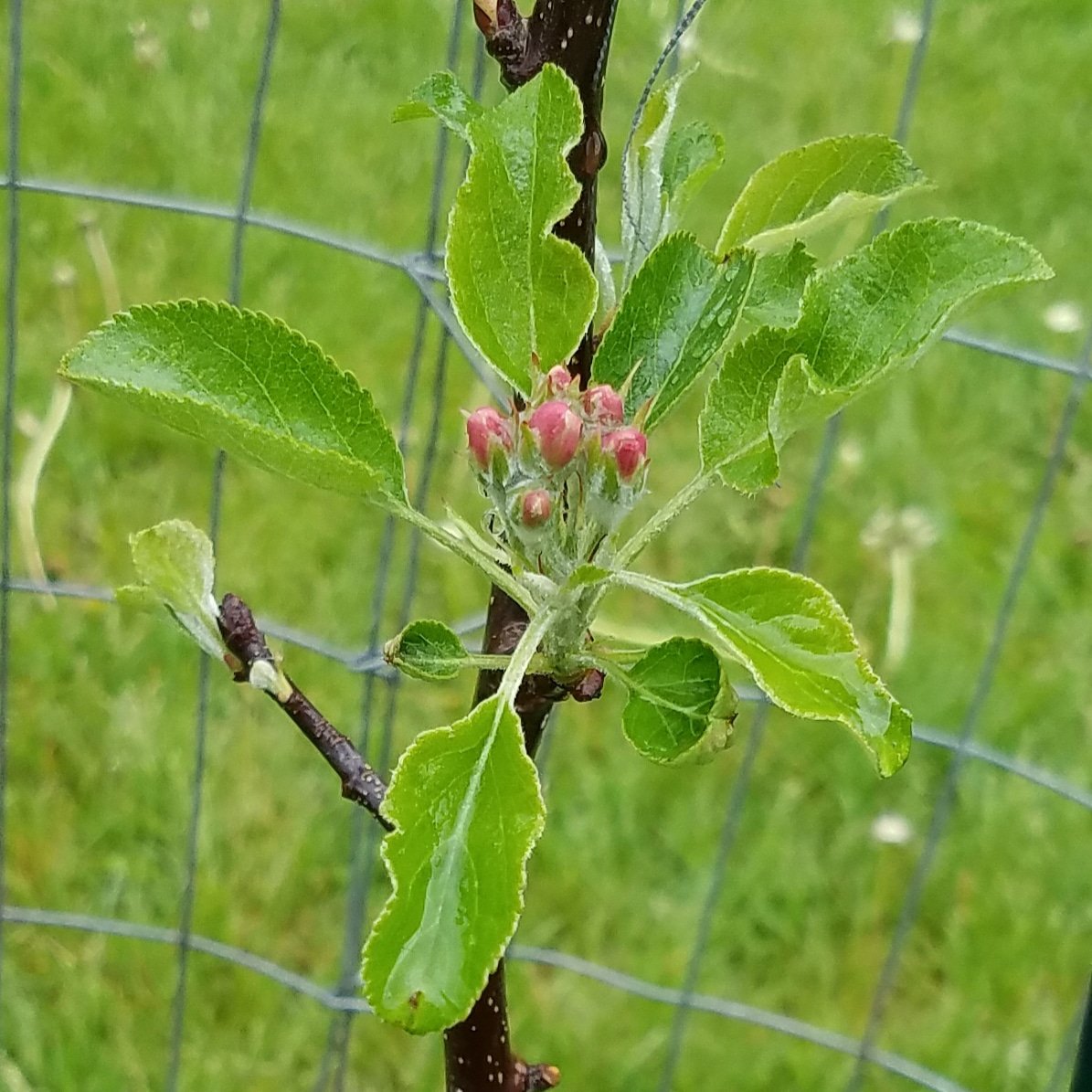
Apple blossoms ready for pollination.

It has been two months since the Iowa State Hygienic Laboratory in Coralville reported the first positive test results for COVID-19, the disease caused by the coronavirus.

We look forward to returning to a semblance of our pre-pandemic lives. We also know our lives won’t be the same as the pandemic could continue until there is a cure a year or two from now.

I could have continued to work at the home, farm and auto supply store. Because of my age I chose a voluntary COVID-19 leave of absence, then retired after the first thirty days ended. Not everyone has these choices.

One hopes a better society emerges from the chaos the virus and its inseparable economic depression have wrought. Our president’s reaction to the pandemic cost us the strong economy he inherited and caused preventable mass death. It is delusional to believe informed people will accept his work and re-elect him for another four years. We have to work to make sure someone else, presumably Joe Biden, is elected to stop the destruction caused by the current response to the pandemic.

There is also more to life than politics.

In a series of posts I plan to write about the worklife I have known and how it may change after the pandemic. There is a clear delineation of my personal work timeline into several periods.

When I began outside work in grade school as a newspaper carrier there were expectations of knowing what types of jobs were available and then securing them. After college graduation the workplace had changed, offering few positions in which I found interest. This led to frustration and then entering the military.

After returning from overseas I went to graduate school. When finished I found even less desirable opportunity than five years previously. When I eventually found work in the transportation and logistics field it was a compromise between what I wanted to do and producing enough income to support our young family. It was never the best, but it accomplished a degree of financial security.

When I took early retirement in 2009 I wasn’t sure what the future would hold. I used part of our retirement savings and entered a series of low-paying jobs that helped pay bills but did little else to advance us financially. I’ve written often about this and hope to bring a new perspective to it. During and after the pandemic there will be another phase of worklife. In some ways it is a journey home to being the person I was when this all began.

The president and governor say it’s time to reopen the economy and our lives. From my perch in Big Grove Township the economy never fully closed and the first wave of the pandemic is not finished. To understand how we can restructure our lives in society we must understand from where we are coming. That’s the hope of the next series of posts.

Categories
Home Life Writing

Don’t Cook Tonight

Great Grandmother in her garden.

When I was a grader, Mother would send me to the corner grocery store to secure provisions for the evening meal.

We had a corner grocery store. It was a block and a half away from home. There were no supermarkets within walking distance.

I don’t recall its name. A family owned it and the husband was the butcher. When it closed, run out of business by the multi-location Geifman Food Store that situated a block and a half away, they moved to the west end of town where the butcher was murdered in his store.

I was a paper boy for the Times-Democrat. The hyphenated name is from a 1964 merger into what eventually became part of Lee Enterprises and is now the Quad-City Times. I delivered the evening edition after school and the corner grocery was near the end of my route. At that time paper boys collected subscriptions directly from customers. When I finished weekly collections I’d stop at the store to buy a package of baseball cards or a candy bar. I remember a six-pack of 10 ounce bottles of Pepsi sold for 60 cents, the lesser known sodas bottled a few blocks away sold for 54 cents. Mother discouraged us from drinking soda.

The corner grocery store was an important part of our family life. Then it wasn’t.

Grandmother grew up on a farm and knew how to cook. She knew where food came from and how to prepare a live chicken. In our early years she lived near us, next door when I was a toddler, upstairs when I was in the first grade. After that she was a regular guest for Sunday dinners and special occasions like Easter when she checked in with her grandchildren and helped mom in the kitchen.

In the 1960s we began to eat more food prepared outside our home. Mom also began experimenting with different food preparations. We developed a taste for tacos and I recall the corner grocery didn’t carry some Mexican ingredients we liked, requiring me to walk to nearby Geifman’s. It was a sign of the end of the corner store.

In 1966 Joe Whitty moved to Davenport and ended up living with his young family in a rental the second house north from ours. It was across the street from a family that owned the dairy. He worked at the nearby hospital where I had been born, first as a baker, then as dietary director. He went on to establish a chain of pizza and ice cream stores. One of the ice cream stores ended up on the lot where the corner grocery store had been, although after I left Davenport.

On the other side of the church where I was baptized, about two blocks away from home and next to the Geifman Food Store, was a restaurant called Chicken Delight. They had a radio jingle, “Don’t cook tonight, call Chicken Delight.” The chain was founded in Illinois in 1952 and grew to have more than 1,000 locations. It was a take out and delivery only place and I don’t recall eating their chicken during the eleven years I lived at home there. Without the dining room we had little interest. If we had their product at home, I have no memory of it.

Chicken Delight was not known for its quality as each store followed their own cooking process, sometimes with their own equipment. That’s unlike the McDonald’s franchises which grew to prominence in the 1960s. McDonald’s prided itself on consistent quality in all their stores. They even had a “Hamburger University” near Chicago to train managers in how to operate with consistent results. Today there are not many Chicken Delight stores and most that remain are located in Canada. The women in our house knew how to make chicken and the family consensus was ours was better. Eventually one of the former neighbor’s pizza restaurants located in the Chicken Delight space.

That’s not to say we didn’t dine out in the 1960s, we did. We favored local, family run restaurants like Riefe’s Family Restaurant and Bell Eat Shop. Our parents knew both families. When McDonald’s built a restaurant on Brady Street we drove over there as a family once in a while. Their burgers and fries were different from Mother’s. They were cheap too. We ate in the car. We also drove to the A&W Root Beer stand where servers brought trays of food and drinks that hung on our car windows.  The rise of automobile culture made home delivery pizza popular and inexpensive.

Grandmother would take us to Bishop’s Buffet on special occasions. We enjoyed being able to pick what we wanted from a generous selection of items like Mom and Grandmother made at home. In some ways it was a form of nostalgia. Grandmother insisted on paying the bill. These family events were important to her.

That’s the range of our 1960s dining experience outside home. A lot has changed since then. When Grandmother was born in the 19th Century people cooked most meals at home or took a dish to a potluck for weddings, funerals or other occasions where they ate what others had prepared. Prior to the current pandemic food prepared outside home comprised more than half of American diets according to the USDA. When the coronavirus recedes I expect there will be a rebound in restaurant eating.

It takes work to remember these things. Memories are not always accurate. What is important now may not have been important then. In the end, it is up to the author to research and present each story leaning on known facts. We must resist the temptation to tell a story only because the narrative flows or with ideological intent. It is hard to listen to one’s own voice and ignore what others may have experienced or have to say about something. We each own our memories even though there are shared experiences. We must be true to ourselves.

I’d like to be writing more pieces like this. I hope I will.

Categories
Writing

Adjusting to the Pandemic

Apple blossoms on trees planted in 2020.

In an effort to move on to what’s next, here’s another post about the coronavirus pandemic.

Please bear with me. There is a “what’s next” although it will be different from what we would have expected a few months ago.

The threat of COVID-19 spreading into our household had me retire from the home, farm and auto supply store. It was inevitable I would do so soon. The pandemic flipped the switch. Now I’m done with outside-the-home work except for what I do in the local food system a few hours each week.

As I pointed out Thursday, we are in the pandemic for a couple of years or at least until a cure is in place. I believe there will be a cure in the form of a vaccine simply because there are so many bright minds and dollars being invested in this work. No one knows for certain how long it will take to develop and implement a cure, so if we’re smart, we will adopt a long-term perspective in order to keep our sanity.

For our household, with two retirees, resolution of the pandemic is to retire from society until there is a cure and life returns to some sense of “normal,” if that’s possible. While phone calls, social media, video conferences and the like will be an important means of communicating, it’s no substitute for every day activities to which we are accustomed. We yearn to return to those things and validate the Joni Mitchell lyrics from my college years, “Don’t it always seem to go that you don’t know what you’ve got ’til it’s gone.”

Returning to what was is not possible because the coronavirus is only the next in a series of pandemics expected as humans continue to exploit the natural environment and live in an increasingly connected society. To be resilient, our choices now have to prepare us for what I believe is that eventuality.

I don’t know what I would do if I were in my prime earning years like our daughter currently is. Our assumptions about what we are doing have to change. A simple truth is the life I wanted and thought I would have when I entered the post-college workforce was gone by the time I got there. What we’ve made for ourselves relies heavily on federal government programs of Medicare and Social Security. We are vulnerable to a major change in these programs, but so are a lot of people and I expect there will be sufficient political will to resist changes to the core programs of the pension and providing health care for the elderly.

For now, I’m working on projects: writing and gardening mostly. This in addition to checking in with key family and friends is a mainstay, one that will help me survive through the end of the coronavirus pandemic. If the future is uncertain, I am resolved to make it through. I appreciate readers sticking with me as I write to understand who I am and how we can adapt to the new world made for us in 2020.

Thanks for reading.

Categories
Writing

Farmers Markets in a Pandemic

June 15, 2013 Farmers Market in Cedar Rapids

There is nothing better than buying a bunch of radishes at a farmers market, biting the root off one at the booth, eating it, then buying a few more bunches if they taste good.

The sights, sounds and smells of an open air farmers market are something unique. During the coronavirus pandemic the fun and experience of markets diminished as they closed and now are expected to become a place of accommodation as they begin sales again.

Nothing like a good old proclamation by the governor to suck the joy out of a farmers market:

SECTION TWO. Pursuant to Iowa Code § 29C.6(6) and Iowa Code § 135.144(3), and in conjunction with the Iowa Department of Public Health, I hereby order that farmers markets, as defined in Iowa Code § 137F shall not be prohibited as a mass gathering under the Proclamations of Disaster Emergency issued on April 6, 2020, or April 16, 2020, but only to the extent that the farmers market complies with the following requirements:

A. Farm Products and Food: The farmers market may only permit vendors who sell farm products or food. Vendors selling other goods or services are not permitted.

B. Entertainment and Activities Prohibited: Musical performances, children’s activities, contests, or other entertainment or activities organized by the farmers market or vendors are prohibited.

C. Common Seating Prohibited: Farmers markets must eliminate all common seating areas, picnic tables, or dining areas and shall prohibit vendors from having any seating for the public to congregate or eat food on the premises.

D. Vendor Spacing: Farmers markets shall space all vendor booths or assigned parking areas so that there is six feet or more of empty space from the edge one vendor’s assigned areas to the neighboring vendor.

E. Social distancing, hygiene, and public health measures: Farmers markets shall also implement reasonable measures under the circumstances of each market to ensure social distancing of vendors and customers, increased hygiene practices, and other public health measures to reduce the risk of transmission of COVID-19 at farmers markets consistent with guidance issued by the Iowa Department of Public Health, Iowa Department of Agriculture and Land Stewardship, Iowa Department of Inspections and Appeals, and Iowa State University Extension and Outreach.

Any other farmers market, festival, or community gathering of ten or more people that does not comply with these requirements is prohibited. Customers of farmers markets are strongly encouraged to engage in social distancing, wear a mask or other protective face-covering if unable to maintain a distance of six feet from others, practice good hygiene practices, and attend the market alone without other family members.

Who will venture to a farmers market at this point in the arc of the coronavirus pandemic? Iowa is projected to reach peak resource utilization and number of deaths per day about May 4 according to the Institute for Health Metrics and Evaluation. Once we reach peak, we will be only halfway through the number of positive test results and deaths from COVID-19. In other words, it will be at least six to eight weeks after peak before the incidence of cases and deaths tapers off to a level regular people are willing to risk exposure to do normal things like visit farmers markets.

Farmers markets have less to offer when stripped down to an economic exchange of money for food. Tasting radishes and the like will be restricted and impractical under the proclamation. Interaction between customers and farmers is a key aspect of a market and restricting it diminishes them. It is more difficult to get to know the face of the farmer when they are wearing a mask.

Farmers are developing other means to get to market while social distancing. Our local food hub developed and is implementing an on line ordering system to minimize human contact during the pandemic. While not the best, it does provide some market for growers and as a local solution can be more acceptable to local food seekers than the governor’s proclamation. Interest in community supported agriculture rose since the pandemic began with every operator I know full or expanded this season.

We hope the coronavirus will eventually recede into the background the way influenza has. Until there is a vaccine that works consumers are expected to be skeptical about going places that are not essential. Given the low level of trust people have in our government, no proclamation from the governor will change that.

Categories
Writing

Poem from Dance Cards

The sound must have come
from the lake front pavilion
and the alumni dinner-dance.

To music by the
Play Boy orchestra
she danced with Rudy ten times.

Mrs. A.H. Jones sang the solo
after the toastmaster’s remarks.
Then the judge gave an address
after presentation of the class.

Present were officers, patrons,
sponsors and chaperones.

She danced with Alice,
Dorothy, Elaine and Eunice.

With dance cards spread
like an ornamental fan.

Black, red, green, yellow and purple
printed confetti specks
trace down to the image of balloons.

Categories
Home Life Writing

Toward Life after a Pandemic

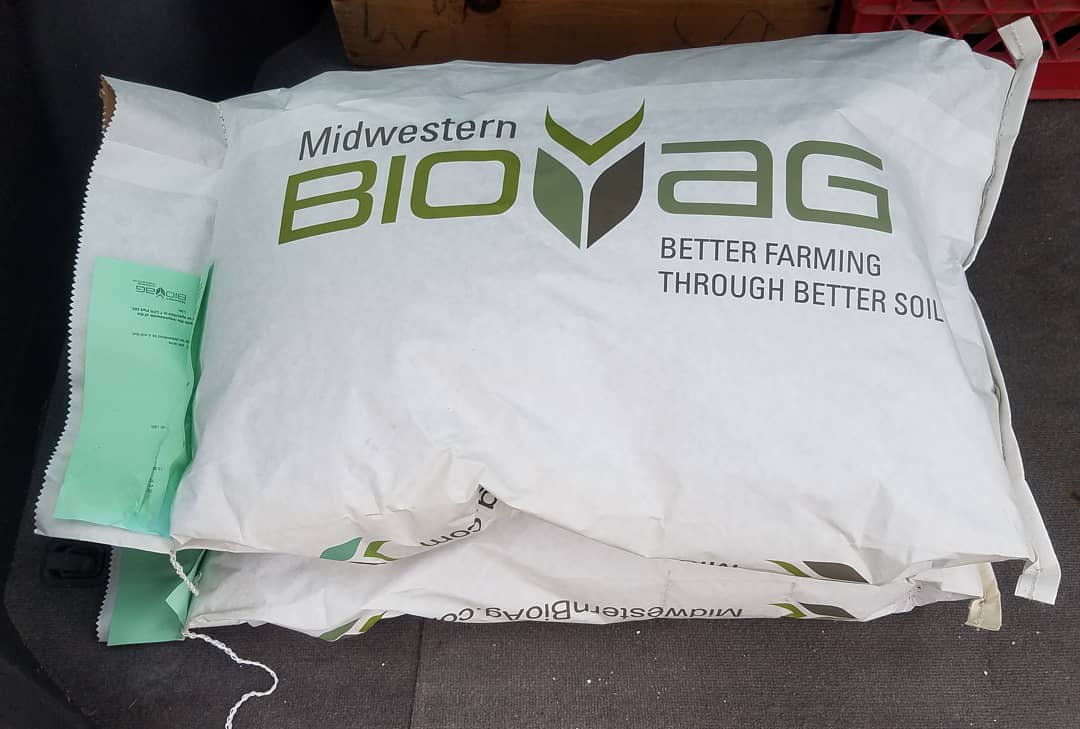
Aerobically composted chicken manure granules for garden fertilizer.

It rained overnight. The driveway was damp as I stepped outside to look at the sky. Clouds were clearing and the big dipper stood out, pointing to the North Star. We are not lost.

It’s a good day to live.

As of yesterday the official number of deaths from COVID-19 was 21,050. By official, I mean those submitted to the National Center for Health Statistics and recorded based on death certificates. There is a lag in the data as the coronavirus reaches exponential spread in the United States. It takes a while to prepare and submit death certificates.

Iowa is in dire shape. We’ve slowed growth of the bell curve yet a surprising number of cases in meat packing plants and care facilities drives the number of cases upward. According to the Institute for Health Metrics and Evaluation, “After June 26, 2020, relaxing social distancing may be possible (in Iowa) with containment strategies that include testing, contact tracing, isolation, and limiting gathering size.” June 26 is two months away. We’re not out of the woods, and we can’t see the edge of the forest.

I donned protective garb and went out. On Tuesday I went to the wholesale club to provision up on dairy, fruit and vegetables, and a few pantry items. Grocery shopping is my least favorite thing during the pandemic, so I got enough to make it another two weeks.

Yesterday I drove to Monticello to pick up two 50-pound bags of aerobically composted chicken manure crumbles for the garden. I followed their limited contact pickup procedure which was writing the check at home and turning it in after I backed up to the loading door. The warehouse worker loaded my trunk while I returned to the driver’s seat. I also stopped at the public library to pick up supplies for the volunteer project on which my spouse is working. No contact social distancing all around.

In a certain sense, we just crashed into the isolation that is social distancing. A couple of things clarified. I’m not sure I will return to work at the home, farm and auto supply store after my 30-day leave of absence. If I do resign, I doubt I’ll reapply any time soon. It also seems clear our pensions will pay our basic bills with something left over. We’ll continue to pay down debt, although likely at a slower pace.

My daily life remains an educated mishmash. My schedule from 3 a.m. until sunrise is pretty good. It’s the rest of the day that seems to have little planning. What holds me back is besides gardening and a few household maintenance items, I don’t know what will be my main direction after the pandemic recedes.

There is no going back to a life lived prior to the pandemic. These days are good preparation for living more with less resources. Maybe I will be able to retire from paid work. If retired, I’ll still need productive work. In the middle of the coronavirus pandemic it’s hard to determine what that is. Defining post-pandemic life will take deliberate planning. If I approach it with considered hesitancy, it’s because I know what’s at stake.

Categories
Writing

She Danced With Rudy 10 Times

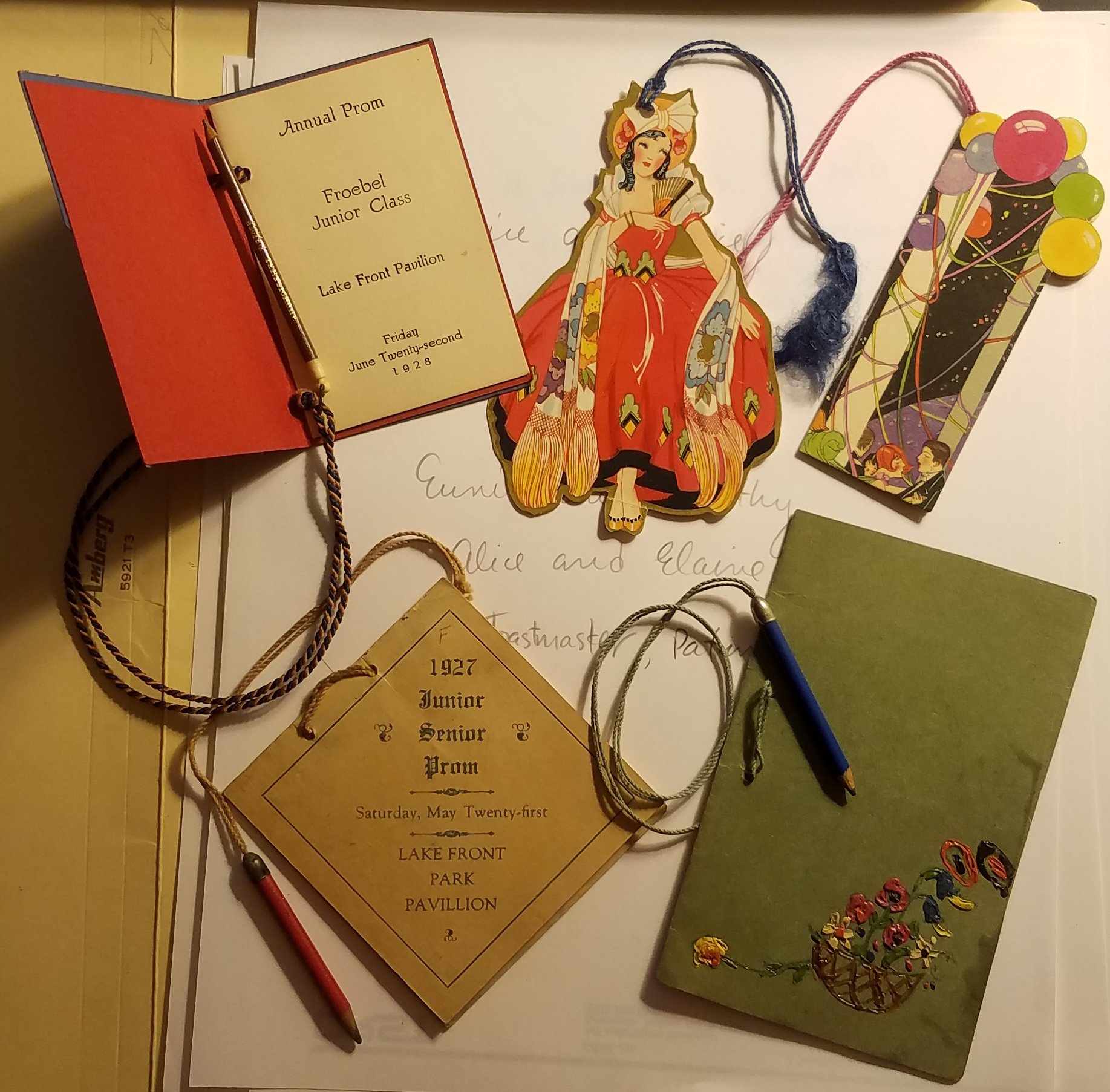
Dance Cards from 1927-1928

She danced with Rudy at the Junior Senior Prom on Saturday, May 21, 1927, in the Lake Front Pavilion.

They quoted Milton on the dance card, “Haste thee, nymph, and bring with thee, Jest, and youthful jollity.”

Rudy signed it ten times, although toward the end of the event he began using ditto marks. Maybe she wrote his name, it’s not clear. The enthusiasm of seeing Rudy’s name written waned by music from the Play Boy Orchestra near Lake Michigan. Ditto marks came to mean something else for the cohort of their children.

The couple married and lived a long life. The reason I know and have these souvenirs is they were abandoned in a box I bought for a buck at their estate auction.

I can’t keep them forever either.

Outside after waking, the sky was clear, the stars bright. A lone aircraft made its way to the Cedar Rapids airport, crossing the starry night southwest of me. It violated a serenity of wonder… about the stars, about the dancing couple before the financial crash that ended the era.

I’m left with signatures on a dance card, but not the dance. It would take a partner to reenact the dance. My partner is sleeping and I’m alone under this starry night still full of wonder.