Categories
Environment Living in Society

Climate Change is Really Political

2012 Drought Conference

If one didn’t think the U.S. discussion of climate change was political, think again. U.S. Rep. David McKinley (R-West Virginia), added an amendment to a House appropriations bill to fund the Department of Energy and the U.S. Army Corps of Engineers that would prohibit the two agencies from using funds that would “design, implement, administer or carry out specified assessments regarding climate change.”

Another way to put it, from McKinley’s perspective, is if you don’t like science, ban it.

House Republicans took exception to the Department of Defense addressing the recommendations of the National Climate Assessment, and have added two agencies whose work is directly related to mitigating the effects of extreme weather to their list.

The floor debate captured the essence of the politics of climate change:

“Spending precious resources to pursue a dubious climate change agenda compromises our clean-energy research and America’s infrastructure,” McKinley said on the House floor. “Congress should not be spending money pursuing ideologically driven experiments.”

Speaking against the amendment, Rep. Marcy Kaptur (D-Ohio) said it disregards the research of the overwhelming majority of climate scientists.

“The Republicans, in general, don’t seem to trust the scientists,” Kaptur said. “This amendment requires the Department of Energy to assume that carbon pollution isn’t harmful and that climate change won’t cost a thing. That’s nothing but a fantasy.”

What next? Click here to read the rest of David Gutman’s coverage of this story in the Charleston, West Virginia Gazette.

And consider that June 2014 was the hottest month on record since records have been collected. Politicians like McKinley would deny the reality of human contributions toward global warming at the same time climate data released from the National Climatic Data Center of the National Oceanic and Atmospheric Administration, found that the worldwide average temperature over land and sea in June 2014 was 1.3 degrees Fahrenheit hotter than the 20th century average of 59.9 degrees. That is reality.

People seeking scientific proof of anthropogenic global climate change are barking up the wrong tree. The goal of science, if unlike McKinley, we accept science, is not to prove, but to explain aspects of the natural world.

Around 1850, physicist John Tyndall discovered that carbon dioxide traps heat in our atmosphere, producing the greenhouse effect, which enables all of creation as we know it to live on Earth.

Carbon dioxide increased as a percentage of our atmosphere since Tyndall’s time at the beginning of the Industrial Revolution. As a result, Earth’s average temperature increased by 1.5 degrees Fahrenheit.

The disturbance of the global carbon cycle and related increase in carbon dioxide concentrations in the atmosphere is identifiably anthropogenic because of the isotope signature of atmospheric carbon dioxide.

We can also observe the effects of global warming in worldwide glacier retreat, declining Arctic ice sheets, sea level rise, warming oceans, ocean acidification, and increased intensity of weather events.

It is no wonder almost all of climate scientists and all of the national academies of science in the world agree climate change is real, it is happening now, it’s caused by humans, and is cause for immediate action before it is too late.

Politicians like McKinley don’t get it, and advocate against reality. That’s nothing new for some members of the Republican Party.

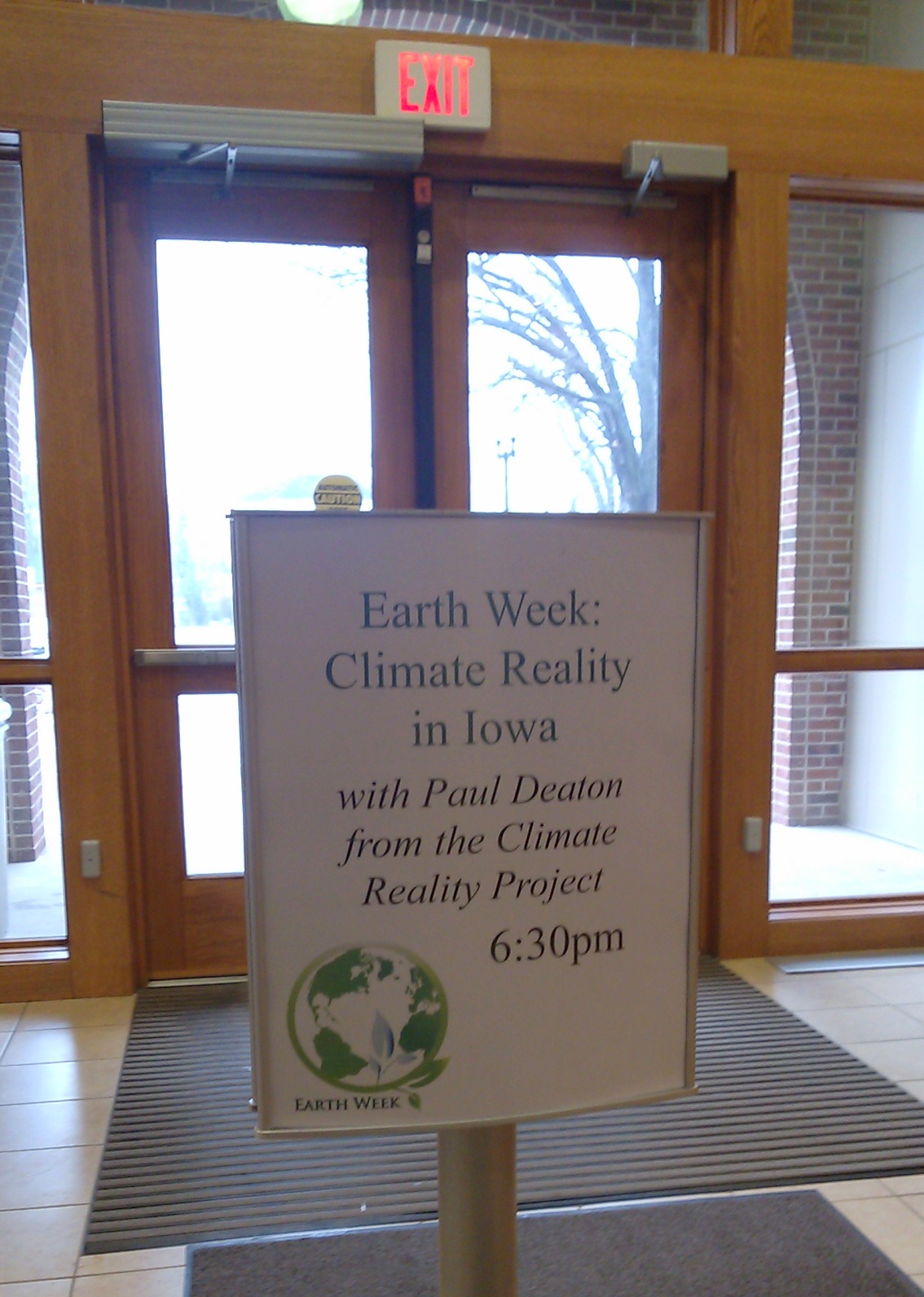
~ Written for The Climate Reality Project
Categories
Environment Kitchen Garden

Dry Weather Returns

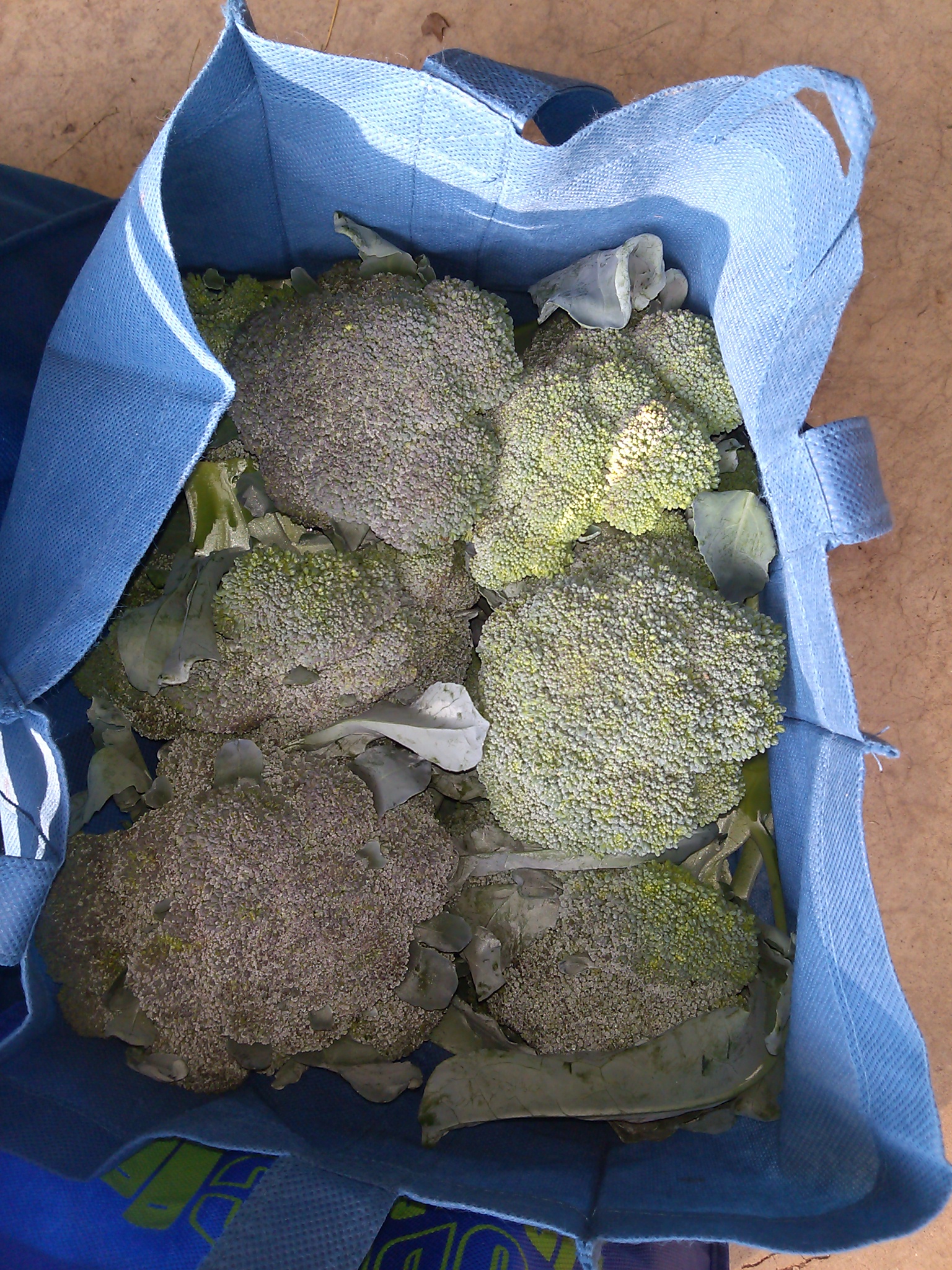
30 Pounds of Broccoli

LAKE MACBRIDE— When the ditch in front of our house dried enough to run the lawn tractor through, it was a sign that dry conditions were returning to Big Grove. 140th Street remains flooded, but most of the other roads in the county are passable. After an exceptionally wet and pleasant spring and early summer, the hot, humid weather has returned and we need rain.

Forcing myself outside, away from kitchen work, I pulled weeds from very dry soil before the day got too hot. I watered the vegetables, hoping dew and rain later in the week will nourish them— will be watering again before nightfall.

Broccoli Closeup
Broccoli Closeup

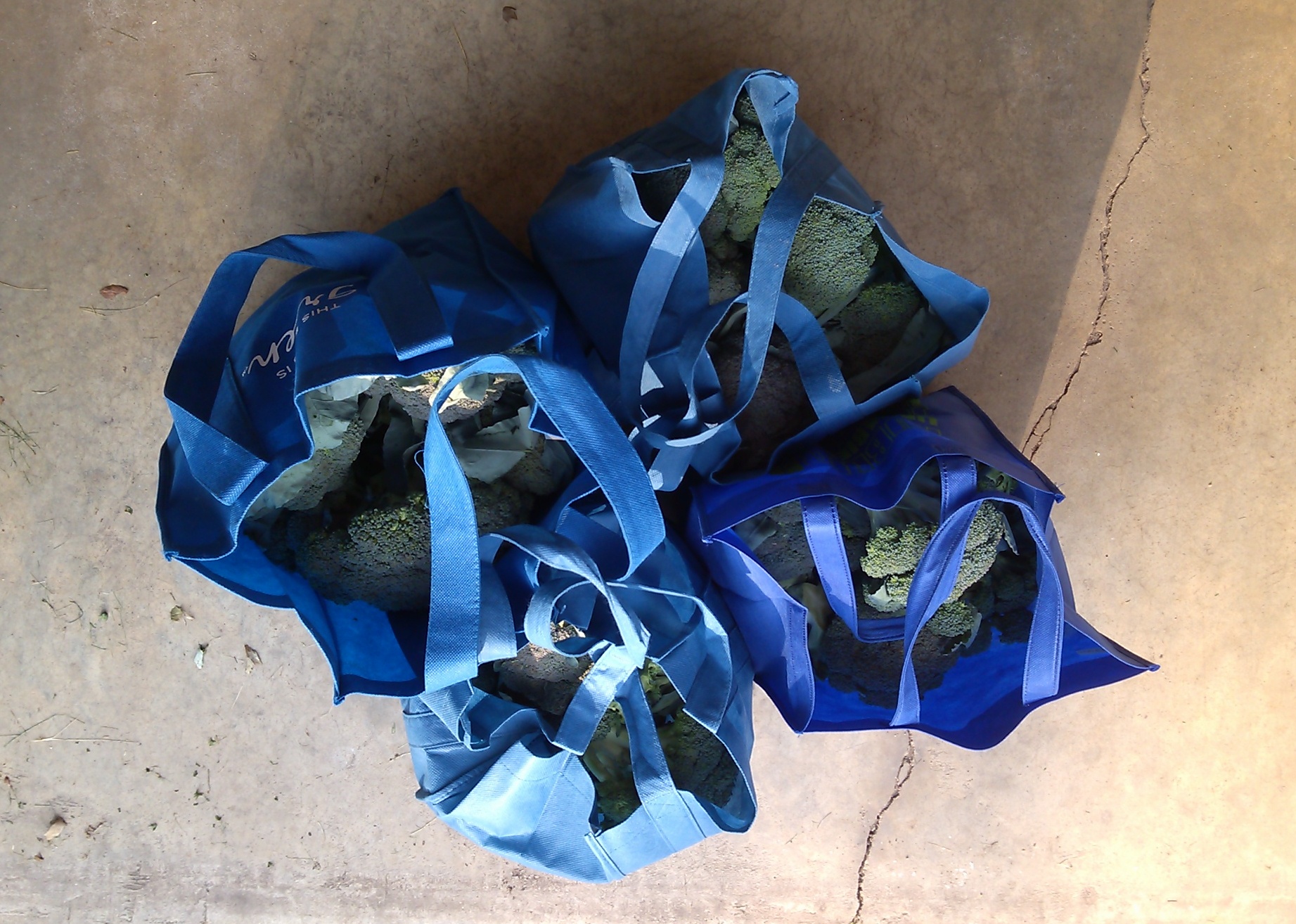
The last 24 hours has been what local food enthusiasts live for— securing broccoli for the winter, blanching and freezing it. It is work, with these outcomes: the best heads were kept fresh to cook later in the week; some of the best looking florets ever are processed and freezing; stems will be converted to soup, which then will be canned for later use; the freezer is getting a thorough cleaning of last year’s produce to make room, some of them going into the aforementioned soup; frozen rhubarb will be converted to sauce and canned; blueberries? Who knew?; and finally, vegetables that were frozen and are now coming in fresh will be composted.

Last night and today’s work is positive in so many ways.

That said, would it be better to buy frozen broccoli from the store during winter? When one lives close to the means of production, the answer is an emphatic no.

Categories
Environment

After the Storm

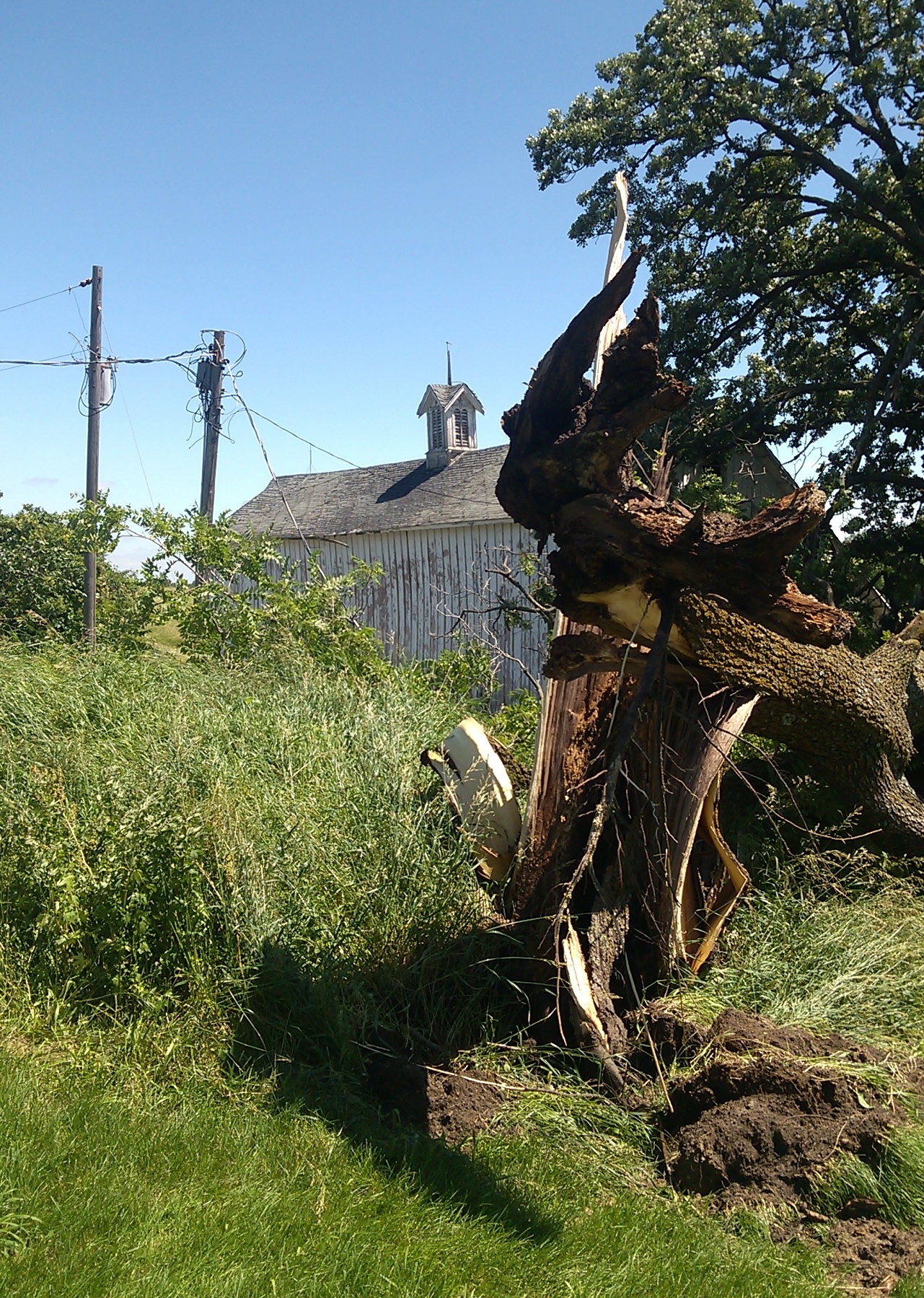
Storm Damaged Walnut Tree

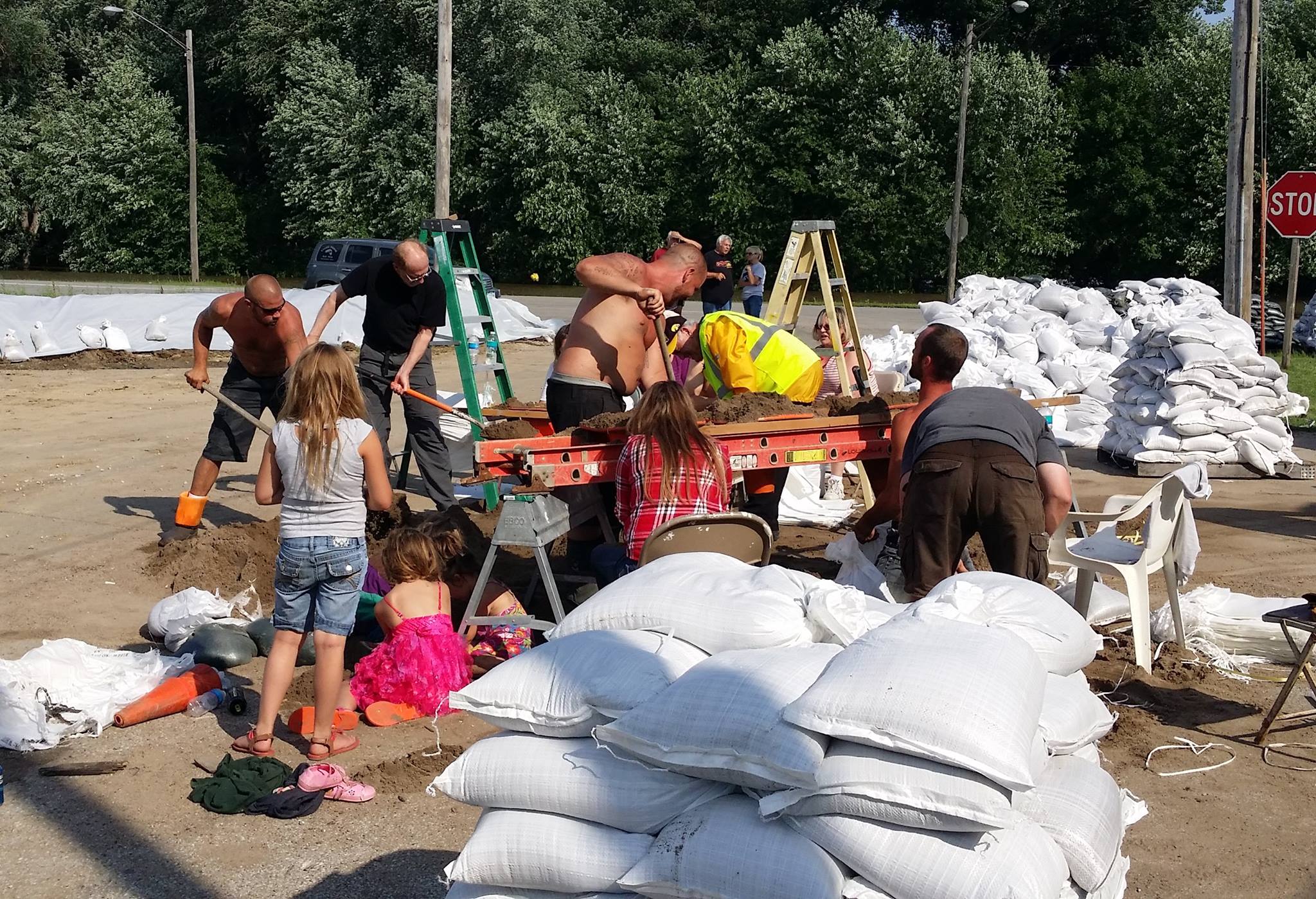
LAKE MACBRIDE— It’s June and Credit Island on the Mississippi River is expected to flood. Our U.S. Congressman was there yesterday to fill sandbags as part of an effort to prevent damage. Thing is, Credit Island has been flooding for as long as I can remember, and likely always will. People with businesses there should be used to it by now.

Part of the War of 1812 was fought on Credit Island, but I remember it more for the very flat golf course where my father, friends and I played from time to time. We would stop to hit a few balls into the river on the back nine.

Sandbagging on Credit Island

Our CSA had an old walnut tree knocked over by the storms. It rests on the electrical wire, waiting for the electric company to come turn off the juice so the tree can be chainsawed and removed from the main entryway.

The report isn’t published yet, but the state climatologist said yesterday that Iowa had its third highest June rainfall since record keeping began. What was bad about the recent storms was their intensity— made worse by our changing climate.

Locally there was not much damage. Last year’s extreme storms took out the weak trees and shrubs, so besides straightening a few tomato cages, there was little work to do in the yard. The rain is feeding a jungle that needs mowing soon.

Conditions look perfect for getting outside. Something one hopes to do soon.

Categories
Environment Writing

Dreaming of Zakuski

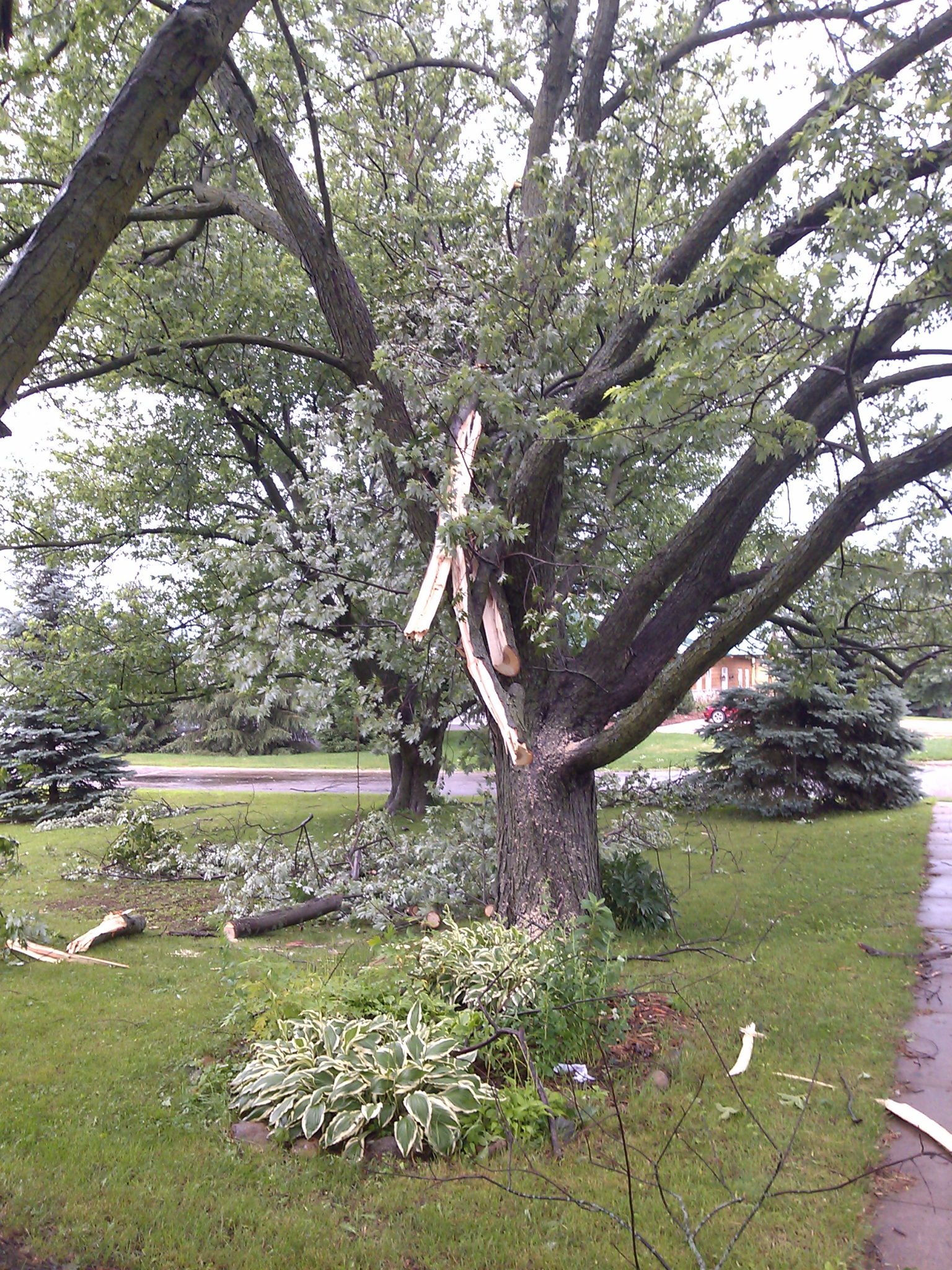
Storm Damaged Tree
Storm Damaged Tree

LAKE MACBRIDE— In a perfect world, friends would come over and we’d share vodka, zakuski and conversation for an evening.

Even though we have a bottle of Stolichnaya Vodka purchased in the 1980s in the basement (an inch or so has evaporated), and the fixings for a dozen or more little plates in the refrigerator and pantry, getting intoxicated by sweet, sour and savory hors d’oeuvres following shots of vodka is not going to happen.

Yet I imagine—damn you frontal lobe, your machinations and your dreams.

But there it is. In chilled small shot glasses, a dose of vodka followed by a homemade multigrain cracker spread with pesto.

An interlude of conversation while the next course is prepared.

A shot of vodka, and a small plate of beets and daikon radishes pickled with jalapeno peppers. More conversation.

A shot of vodka, and a tiny ceramic cup with rhubarb crisp. More conversation and a slight buzzing sensation.

A shot of vodka. A mixture of Kalamata olives, pickled chard stems and capers, served on small plates from the thrift store. And so it would go.

Except it’s not going to happen. The toll of vodka would be too much, though the conversation and releasing of inhibitions tempting. Who in today’s consumer society pays a visit to chat with zakuski? If our doorbell rings at all, it is a canvasser, not friends seeking to share tales of our lives on the Iowa prairie.

The world outside is of fallen trees and washed out ditches from last night’s extreme weather, part of a bleak day with multi-colored sky.

At a political event in town last night, about a fourth of the attendees cancelled due to the weather.

Trees were down all around the lake. Mill Creek rose up out of its banks.

“Our giant old walnut tree came down in the storm taking my farm’s main power line with it as well as my yard light pole,” came the report from our CSA. “The amazing thing is we still have power but until REC gets out here to shut off the power we have live wires on our driveway and the tree is blocking our road. Given the size of the tree I suspect it will take us several days to get the driveway cleared.”

Two trays of seedlings for the garden blew over, leaving work to salvage them this morning—the least of problems in a storm-wrecked world.

One dreams of zakuski, and lives in the material world with its fallen trees, blocked roads and disruptions, seldom stopping for the human possibilities dreams create.

It’s time to spread the pesto on plain toast and get on with the day.

Categories
Environment

Hegemony of Bad Ideas

Sunset
Sunset in Colorado

LAKE MACBRIDE— Leadership on what matters most for our future will come from outside the United States. It’s not that Americans are bad people— for the most part, we aren’t. However, many of us have mistaken the advancement of bad ideas as the right ideas, and there is a difference.

The most recent example was last week’s vote on an amendment to the National Defense Authorization Act (NDAA). The NDAA is one of the few pieces of legislation that still works through the legislative process the way most of them did back when Congress did more legislative work. Rep. David McKinley (R-WV) offered an amendment which would “prevent the White House from sending funds to the U.S. Global Change Research Program National Climate Assessment, the Intergovernmental Panel on Climate Change’s Fifth Assessment Report, the United Nation’s Agenda 21 sustainable development plan, or the May 2013 Technical Update of the Social Cost of Carbon for Regulatory Impact Analysis Under Executive Order 12866.” McKinley questions the validity of climate science research generally, but, according to his website, also argued that reducing the use of coal wasn’t worth the harm it would do to the economy. The amendment passed the House, and is expected to advance to the Senate.

I understand coal country better than most mid-westerners. My family tree has long roots in Appalachia, predating the discovery of coal in Boone County, West Virginia by John Peter Salley in 1742. My career in transportation and logistics took me to Boone County and I learned about its dependence on coal. When the Coal Valley News announced our truck driving school, it was front page news, next to a story about United Mine Worker layoffs in the county seat.

Meeting with businesses, the governor’s office, the school board, local residents and others, I got to know the issues around coal. People didn’t like the mine owners and operators, but were dependent upon them. If life has changed from company-owned coal camps for most, coal camps still exist along with poverty and an extreme dependence on coal to extract a life. The question, “what are we supposed to do without coal?” resonates there if answers don’t.

There is no greater good in McKinley’s legislative work, and there is little point in arguing with climate deniers like him. The preponderance of evidence is that climate change is real, it is happening now, and its effects are causing harm. As the business community wakes up, we are increasingly able to place a dollar figure on the social and economic costs of global warming and related climate change. Economics will drive action to mitigate the causes of climate change, as making a profit remains paramount for businesses. Like it or not, West Virginia, part of mitigation of global warming means drastic reductions in the amount of coal used across the globe.

At the same time, bad ideas like McKinley’s have enough support to advance, making the U.S. Congress less relevant in addressing the most important issue of our time. That’s why I say leadership on climate change, as well as on nuclear abolition and other threats to life as we know it, will come from outside our country. For whatever reason, too many Americans embrace bad ideas to sustain the political will for positive change.

What I don’t get about West Virginia and coal country is that while there is a church in almost every neighborhood, another argument should resonate equally with self-serving economic interests, but doesn’t.

If God is the author of creation and wants humans to do anything, high on the list would be to care for creation. We have not upheld that responsibility even though it transcends politics. Instead, people like McKinley look to mammon for their inspiration, forsaking all of us in the process.

Belief in God is not the same usage as belief in climate change, because the efficacy of the harm done to humans by climate change will out regardless of what people believe or don’t believe. Like many concerned citizens I feel we must wake up to the threat to human health posed by climate change before it’s too late. If the U.S. won’t lead, then others will, because taking action won’t wait for U.S. politicians to get on board with the obvious.

Categories
Environment Sustainability

Iowa Hosts Physicians for Social Responsibility

Student Physicians for Social Responsibility in Cedar Rapids
Student Physicians for Social Responsibility tour Kirkwood Community College

CEDAR RAPIDS– Iowa played host to the national organization Physicians for Social Responsibility (PSR) from May 6 through 10 at the Hotel at Kirkwood.

Iowa held center stage for meetings convened by national and international leaders of the 52 year old, Nobel peace prize winning organization. Thanks to the kind attention and assistance of the many expert hotel staff and the Kirkwood Community College affiliated training programs, this remarkable, first ever, national PSR gathering concluded a successful meeting on Saturday, May 10.

Those who attended the meetings work to address and reduce the humanitarian and health risks posed by the growing threat of nuclear weapons, the changing climate, and toxic environmental degradation. These first time visitors, initially quite skeptical about Iowa, were especially appreciative of its many unique offerings, both practical and recreational, available in and around the Kirkwood campus and the greater Cedar Rapids area.

The intractable challenges of our times were addressed in the meetings with U.S. Senate staff, Iowa elected officials, and online participants followed by experiences arranged by the Hotel at Kirkwood staff. Participants concerned about sustainability were able to visit and learn from the Kirkwood wind turbine and training center, the new Cedar Rapids LEED certified library with its green roof and inviting community center atmosphere, and the Kirkwood gardens and greenhouse. These tours, combined with the tasty, locally sourced and produced meals at the hotel, and an evening at the Cedar Valley Winery all served to showcase Iowa’s forward looking spirit and renew participants hopes for the future.

The troubled world presents us with so many new dangers and challenges. But the practical and creative talents of Iowans, especially those involved in Kirkwood’s uniquely integrated educational programs, services, entrepreneurship, and hotel partnership, manifest ample reasons for a positive outlook.

Board members, chapter leaders, staff and students from across the country join Iowa PSR in extending our deepest appreciation and gratitude to our hosts in Iowa. A special thanks to Tom Larkin of Senator Tom Harkin’s office, State Senator Rob Hogg of Cedar Rapids and State Representative Sally Stutsman of Johnson County. PSR leaders departed Iowa renewed by the gracious hospitality, insights and new sense of possibility gained by their experience.

~ Written for Blog for Iowa

Categories
Home Life Sustainability

Apple Blossom Time

Red Delicious Apple Tree

LAKE MACBRIDE— Apple blossoms are in full bloom, and it never lasts for long. Once bees pollinate, the petals fall in snowy softness, carpeting the ground as quickly as they went from pink to bloom.

One of the farms where I work is an apple orchard— a resource for learning about my four trees. I recently sent a question via email.

“Can last winter’s pruning cause a lot of blooms this spring?

I pruned my trees and the Red Delicious tree is loaded with blooms like it was last year. Not sure the pruning helped that, but I was expecting very little fruit because it was a branch buster last year.”

The answer came promptly:

“I spoke to my dad about your question. He said that pruning and the number of blossoms aren’t directly related. The exact reason is quite a long answer, but he said that you must just have a good tree!”

That’s a good enough answer for me, “it’s a good tree.”

I did my first experiment in making flour tortillas at home yesterday. They came out more flatbread than tortilla, so it needs more work. Trouble is we’re not running a test kitchen here and need to consume what we cook. We’ll enjoy the flatbread, but wait a couple of weeks for round two.

The dough recipe included some baking powder, which leavened the bread. Next time, I’ll omit it and see if the result is more tortilla-like.

There is a zero percent chance of precipitation through sunset today, so hopefully the ground will dry out, enabling preparation of more garden space for transplanting. There is a lot to get into the ground before Memorial Day.

The row croppers took advantage of last week’s drying conditions, and according to the USDA crop report, 70 percent of the corn and 20 percent of the soybeans are planted, putting spring planting right on its traditional schedule.

Reflecting on time spent with Physicians for Social Responsibility (PSR) last week, I am glad I participated in their national meetings. My primary interest in the group is their long history of nuclear abolition work. Dr. Ira Helfand from Massachusetts has been a prominent figure in the nuclear abolition movement, and it was good to spend some time with him. Likewise, the Washington, D.C. staff was there, along with chapter leaders from around the country. The organization has expanded its reach beyond abolition to include the relationship between health and climate change, and toxic substances in the environment.

I broached the topic of the effectiveness of non-governmental organizations (NGOs) in effecting policy change. In today’s political environment, more people associate with NGOs, and a lot of people make a living doing that work. My concern is that in the perpetual chase for grant money, the number of funders is reducing, and whatever may have been successful last year, is out of step this year.

In Washington, there is a small group of people working on nuclear disarmament and they talk among themselves constantly. This includes people in NGOs, the U.S. and foreign governments and citizen advocates. I met a number of these people during my treaty ratification advocacy work in 2009. However, there is a certain self-interest they have in keeping conversations alive that perhaps may be better off placed on the back burner.

We are entering an era when regardless of which political party dominates the Washington conversation, the same work goes on, and currently it is work that includes refurbishing the nuclear weapons complex with a great diversion of funds. A person can’t be happy about that.

Nonetheless, while NGOs may not be as effective as I would like, they are currently the only game in town, so I plan to re-engage with PSR over the near term. The work will include rolling out a program on nuclear abolition to local Rotary clubs, working in between gardening and yard care sessions.

Categories
Environment

Farming and Climate Change

PSR - IowaPrepared Remarks for the “No Talent, Talent Show” at the National Physicians for Social Responsibility Leaders Meeting in Cedar Rapids, Iowa, May 9, 2014.

Farming and Climate Change

Welcome to Iowa.

In Iowa, where we hold the first in the nation political caucuses, we view political discourse as a talent. I heard Mitt Romney speak down the hall from here in 2010, so this argument remains an open question. Whether political discourse is talent will be for our out-of-state guests to determine tonight. My subject is farming and climate change.

One can’t help but notice the bucolic setting in which we find ourselves tonight at this first ever national meeting of Physicians for Social Responsibility in Iowa. Within walking distance, the spring images of agribusiness play out in real life: plant genetics, row cropping, fertilizers made from natural gas and associated nutrient runoff— a chemically intensive food production system developed in the industrial era. It features enormous single-crop farms and animal production facilities based on a misguided hope of feeding the world from these fields.

Expand the circle several miles, and a few dozen small farms engage in sustainable practices, have crop diversity, use cover crops to enrich the soil, muck out barns for manure to spread on fields, and produce pasture fed meat and dairy products along with vegetables. The contrasts between the two models couldn’t be more different even if they have the same roots in Iowa’s fertile soil.

In Iowa, agriculture connects us to the rest of the world. When Russia, Ukraine and Kazakhstan suffered a drought in 2010 and stopped wheat exports, neighbors of mine planted winter wheat almost immediately on the news. The dead zones in the Gulf of Mexico can be traced directly to our land. When Iowa trade missions visit China, South Korea and Japan, the framing is export of commodities that include pork, beef, corn and soybeans. When our cultural missions visit Africa it is partly to propagate plant genetics and row crop methods, displacing native staple foods with corn and soybeans in the ersatz colonization we call international development.

It’s all good… or is it?

More than most people, Iowa farmers deal with the reality of the effects of climate change and I want to spend the rest of my time on their resistance to mitigating the causes of climate change.

During the drought of 2012, more than 6,500 daily heat records were tied or broken in the United States, including in Iowa. July 2012 was the hottest month on record in the United States. I was engaged as a political consultant that summer, and the work took me out among farm fields on a daily basis. I learned what stressed corn looks like and came to understand what drought means to crop production. That year, U.S. corn production decreased by almost 20 percent.

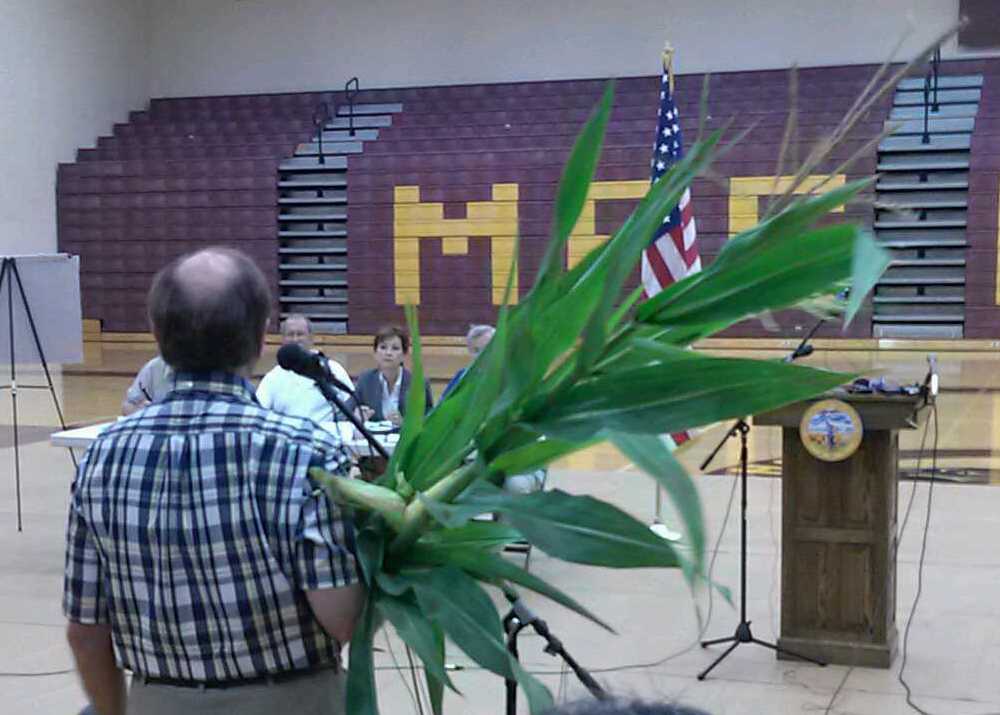
Conditions were so bad the governor called a meeting in Mount Pleasant to discuss the drought. Invited speakers included farmers from Iowa agricultural groups: the Cattleman’s Association, the Pork Producers, Corn Growers Association and the Iowa Soybean Association. None of my sustainable farmer friends were invited.

Their comments were similar: the way farmers would deal with the effects of the drought would be to plow the crop under, capitalize the loss over five years, and start planting again the next year. Not once during the meeting were the words climate change uttered by anyone. Iowa agriculture doesn’t connect the dots between extreme weather and how it is made more frequent and worse by global warming. They just deal with it as best they can.

Iowa Farm Bureau economist Dave Miller provided some clarity about where farmers are coming from at a recent conference in Des Moines. Miller is a farmer who also ran the now defunct Chicago Climate Exchange, a company that made a market in carbon with companies who voluntarily adopted a cap on CO2 pollution and traded carbon credits toward that end.

“If there is no profit in farming, there is no conservation in farming,” said Miller. “You can’t pay for conservation out of losses,” he added. Farming economics drive farming behavior and what he said to close his remarks has broader significance:

“Capital investment horizons are three to 20 years, but my farming career is 20 to 40 years. The climate conditions and those things are millennial.”

There it is, the Iowa resignation that climate change may be real and happening now, but what’s a person to do about it since it is much bigger than my life?

From the perspective of a single life of economic struggle, it is difficult to raise our heads and connect the dots between an industrial society that includes farming and its production of greenhouse gases that contribute to the droughts and extreme weather that make our lives worse.

This is where Physicians for Social Responsibility must step in and connect the dots. With education, by framing actions, by pointing to the health consequences of global warming and the changes in our climate it is producing.

We must do this with an eye toward the future, and an avoidance of alarmist rhetoric that deniers use against us. We must make it a tangible behavior in our daily lives. The words are familiar. We must use our standing as health professionals and recommit to preventing what we cannot cure in every action we take in constant vigilance of the gravest threats to humanity.

Thank you.

Categories
Environment

Environment for Change

Corn Field
Corn Field

LAKE MACBRIDE— Green up has come and blossoming trees paint the landscape with their white and red petals. Back in the day, when work took me to Georgia and Tennessee, I managed to see dogwood in bloom most years. It was ersatz when reminders of spring were close by if we could have but recognized them.

Spring weather has been dicey and farmers are adapting. One farmer got sick of the fields coated with a thin layer of mud and headed into the house to stop looking at it. For some, planting began yesterday. With modern technology, the whole state could be planted in under a week— one of the ways farmers have adapted to global warming and climate change, although most wouldn’t talk about this.

The central question regarding global warming and climate change is whether people will join together and do something about it. Some are, and more will, but most don’t connect the dots. A common obstacle to progress has been that some people feel the problem is too big to deal with. There is no denying it is a complex problem that doesn’t lend itself to easy solutions.

What’s a person to do? Go on living.

If we don’t take care of ourselves first— by sustaining our lives together— we have little to offer. Taking care of ourselves is not optional.

At the same time, being self-centered is not good for us, or for society. There is plenty to occupy our bodies and minds on earth, and while some days we just get by, on others we rise to our potential and contribute something to a greater good. If this were a cafeteria, I would have another serving of the latter.

Life in consumer society may resemble a cafeteria, where we get a choice on everything, but it is not that. We have a home place, and somehow it has gotten to be a storage shed rather than a center for production. Once we make our choices, then meaningful articulation of our life becomes more important than accumulating additional things.

In the end, the case for taking action to mitigate the causes of global warming and climate change will be made by the environment itself. The environment doesn’t care much about humans.

It will become abundantly clear, and some say we are already there, that humans control our environment in a way we couldn’t when the population was much smaller. Logic won’t make the case to sustain what we have. It will be made of our existential experience and awareness that our lives have meaning beyond answers to the questions where will I stay tonight, and what will be my next meal. When people go hungry or without a place to sleep, it is difficult to think about much else, making change nearly impossible.

We live in an environment ready for change and there’s more to it than singlular voices on the platted land.

Categories
Environment Sustainability

Changing Sprockets

Sign Post Near the Exit

LAKE MACBRIDE— It is time to shift gears from the environment to nuclear abolition— two aspects of the same thing. It’s a false choice to pick one over the other, as mismanaging either could have dire consequences for life as we know it. There are so many causes; and limited time.

What environmental and nuclear abolition advocacy have in common is they are global movements where the U.S. has taken a back seat.

Francesca Giovannini, the program director of the International Security and Energy Program of the American Academy of Arts and Sciences, summarized the as-is situation with nuclear weapons in an article for Rotary International.

Although we live in the Post-Cold War era, we remain trapped in a nuclear weapons-reliant world order in which the maintenance of active nuclear arsenals provides ultimate assurance of both survivability and destruction. Today, we talk much less about nuclear weapons than we did during the bi-polar era and the public globally is generally unaware of the continuous existence of thousands of nuclear warheads targeting cities and populated neighborhoods across the globe.

Rotarian at Work
Rotarian at Work

The Rotary Action Group for Peace announced  a collaboration between International Physicians for the Prevention of Nuclear War and Rotary International:

Nobel Peace Laureates International Physicians for the Prevention of Nuclear War and Physicians for Social Responsibility offer educational resources to Rotarian Action Group for Peace members interested in sharing information about nuclear weapons and peace with their Rotary clubs.

I am pleased to be part of the speaker’s bureau created to support the collaboration and look forward to reporting these new activities  going forward.