Categories
Environment Living in Society Sustainability

Day to Day Politics

2018 Top Instagram Photos

Last June I broke publicly from our state representative Bobby Kaufmann and endorsed Democratic candidate Jodi Clemens for House District 73 in a letter to the editor of the Solon Economist.

With a circulation of less than 1,000 weekly copies, I’m not sure my endorsement was widely read.

I went on to post three additional pieces critical of Kaufmann before the midterm elections. I am confident he saw the ones in the local newspaper. He won the election without breaking a sweat.

Today’s question is whether I should drive to town to attend his town hall meeting. The 88th Iowa General Assembly convenes tomorrow.

Yesterday I emailed Kaufmann my priorities for the session, mentioning three things:

  • The legislature should support ways farmers can produce more revenue per acre.
  • I questioned the need for more tax relief and encouraged him to find a permanent solution to the back fill problem Republicans created in 2013 when they altered property taxes for farmers and corporations.
  • I reminded him of our local issue of keeping the restriction on larger horsepower boat motors on Lake Macbride during boating season.

Of everything on my political wish list, these three things seem possible yet also insufficient. The better way to impact the legislature would have been for Clemens to have won the election. We came up short. It’s time to accept the results and move on.

In a Sept. 24, 2016 opinion piece in the Cedar Rapids Gazette I articulated what is most important in society: follow the golden rule, nuclear abolition, and mitigate the impacts of climate change. Under President Trump, none of these is going well in our government. My work continues regardless of who my elected officials might be. Politics by its nature will almost always disappoint and party affiliation of our leaders does nothing to change the primacy of these focal points for action.

I’m left wondering why I would attend today’s town hall meeting when there is other, more important work to do.

The legislative agenda is being set by Republicans. If Democrats were in charge, it would be much different. I don’t accept the mental construct that the opposition party should resist the party in power as an end goal for the Iowa legislature. Likewise the idea we are “holding elected officials accountable” by constantly calling and emailing them is off the mark. I’ve been in Senator Chuck Grassley’s D.C. office when such calls came in and the impact was a tick mark in a pro or con column on a tally sheet to be read by staff. Grassley gets his legislative feedback directly from Iowans in his annual tour around the state, and from the Washington, D.C. community of which he has long been a part. So it is with with local representatives. That’s a case for showing up today, although not a strong one.

When I wake each day I don’t think about politics until I read the newspapers. As humans we are attracted to conflict and there’s plenty of it recounted in news media. Republicans have been a long time coming to power. Now that they have it, they are remaking the state in their eyes, changing long-standing policy. That’s the nature of political power. The longer conservative Republicans maintain control of government the harder it becomes for Democrats to undo policy changes. With two more years under Republican hegemony it seems unlikely there is any going back to what used to be.


Snow stopped falling overnight. The driveway needs clearing then there’s community organizing work for the coming year. Our infrastructure needs maintenance and if we don’t do it, no one will. Isn’t that always the case?

It reduces to a simple maxim that guides me through life: there is no other, just the one of which we are all a part. That perspective gets lost in today’s political culture. Working to improve our culture is as important as anything else we do. Such work starts at home where I expect I will spend the day.
Categories
Environment Kitchen Garden

Gathering on a Farm

Farmer Kate’s High Tunnel

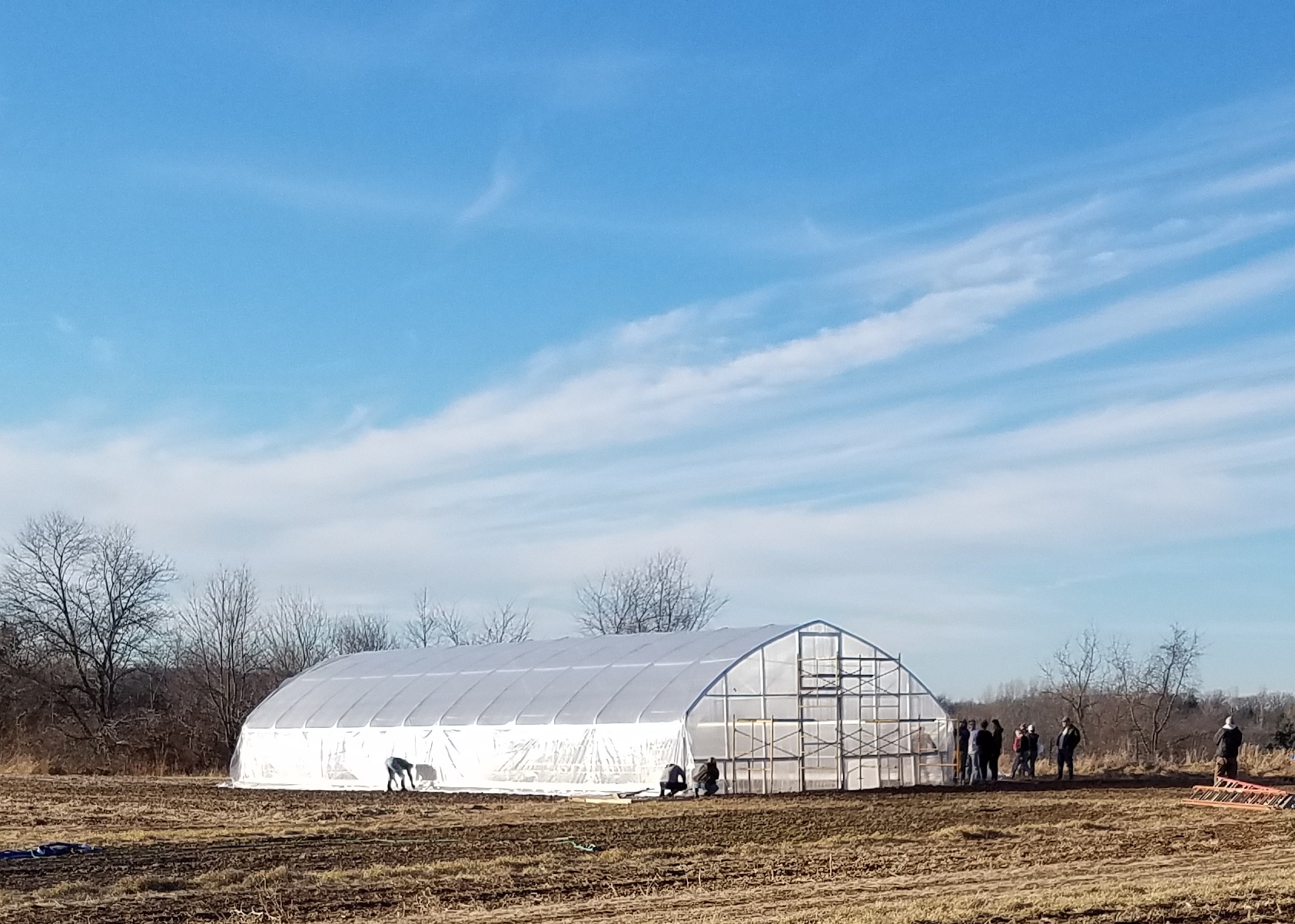
A lone bald eagle soared over Rapid Creek north of Wild Woods Farm. We were pulling plastic over the new high tunnel.

The eagle lofted in the wind as if it were summer. We would rather the wind died down until we finished. The project was well-organized and it took an hour and a half for 20 of us to get the plastic stretched over the aluminum frame.

Someone asked how many inches of frost were in the ground. That struck me as funny while standing in two inches of sloppy mud. We have yet to have a hard freeze this winter. Vegetable farmers have ordered seeds and as soon as they arrive plan to plant onions in trays. Spring planting will begin soon enough. With the ambient temperature at 50 degrees it doesn’t feel like we’ll have a winter even though an extended hard freeze would be good for farmers.

The fact of a warming atmosphere is all around us. Eagles attracted to open water in January is just part of it. Climate has changed, disrupting weather patterns we learned to expect coming up. Local vegetable farmers dealt with the weird weather last season and could use a break back to “normal” this year. A 50 degree January day may be a fluke — a welcome one for this project — but there have been too make flukes.

During wait time I finalized a spring soil-blocking schedule at the two farms. It was a productive day of catching up with friends in mid-winter… talking about spring.

Categories
Sustainability

Nuclear Disarmament in Trump World

B-61 Nuclear Bombs

Elimination of nuclear weapons remains a priority for many of us who followed disarmament progress through the years. Our work hasn’t ended. What should be our priorities in Trump World?

To a large extent, society answered that question in the Treaty on the Non-Proliferation of Nuclear Weapons (NPT), to which the United States is a party. Article VI has been and remains a sticking point in meeting treaty obligations. Here’s the text,

“Each of the Parties to the Treaty undertakes to pursue negotiations in good faith on effective measures relating to cessation of the nuclear arms race at an early date and to nuclear disarmament, and on a treaty on general and complete disarmament under strict and effective international control.”

Nuclear states have taken inadequate steps toward compliance with Article VI. U.S. backpedaling on disarmament treaties began when in 2002 President George W. Bush removed the United States from the Anti-Ballistic Missile Treaty (ABM) signed by President Richard Nixon in 1972. Under Donald Trump, the United States is expected to withdraw from the Intermediate-Range Nuclear Forces Treaty (INF), and negotiations for renewal of the New Strategic Arms Reduction Treaty (New START) have yet to commence. The Trump administration is heading the opposite direction of good faith negotiations to end the arms race. It is creating a political environment for a new arms race, a complete refurbishment of the U.S. nuclear triad, and development of new nuclear weapons.

Where should disarmament advocates focus their efforts? Here’s my list.

As the two largest nuclear states, the U.S. and Russia should de-escalate nuclear competition and establish a regular dialogue on strategic stability. At a minimum, we should make a mutual decision to extend the New START Treaty before it expires in 2021.

Russian President Vladimir Putin said publicly Russia would not make first use of nuclear weapons. The United States should adopt a no first use policy regardless of what Russia says or does.

During negotiations for U.S. Senate ratification of New START, Arizona Senator Jon Kyl negotiated a refurbishment of the nuclear weapons complex. Under President Trump, this budget has grown to over a trillion dollars. We should encourage the new U.S. House of Representatives leadership to cut back on the administration’s plan to upgrade the nuclear complex.

There has been talk of developing new types of more usable nuclear weapons. We should advocate to block administration plans to develop such weapons.

As President Trump withdraws from the Iran Nuclear Deal we should encourage and support our international partners to implement it without us.

Now is the time to implement realistic, action-for-action steps toward disarmament with North Korea. Any dialogue with North Korea should proceed with that goal as the basis for talks.

Finally, advocates should promote compliance with Article VI in the run up to the 2020 NPT Review Conference.

A nuclear weapons-free world remains possible. In Trump World making progress toward that goal will continue to be challenging. Like most citizens we have limited resources and a large number of issues wanting our attention. This list serves to focus on what’s most important politically, and look for opportunities to advance each item as they present themselves.

To learn more about nuclear disarmament efforts in the U.S., check out the Arms Control Association website by clicking here.

Categories
Environment Writing

Ice on the Lakes

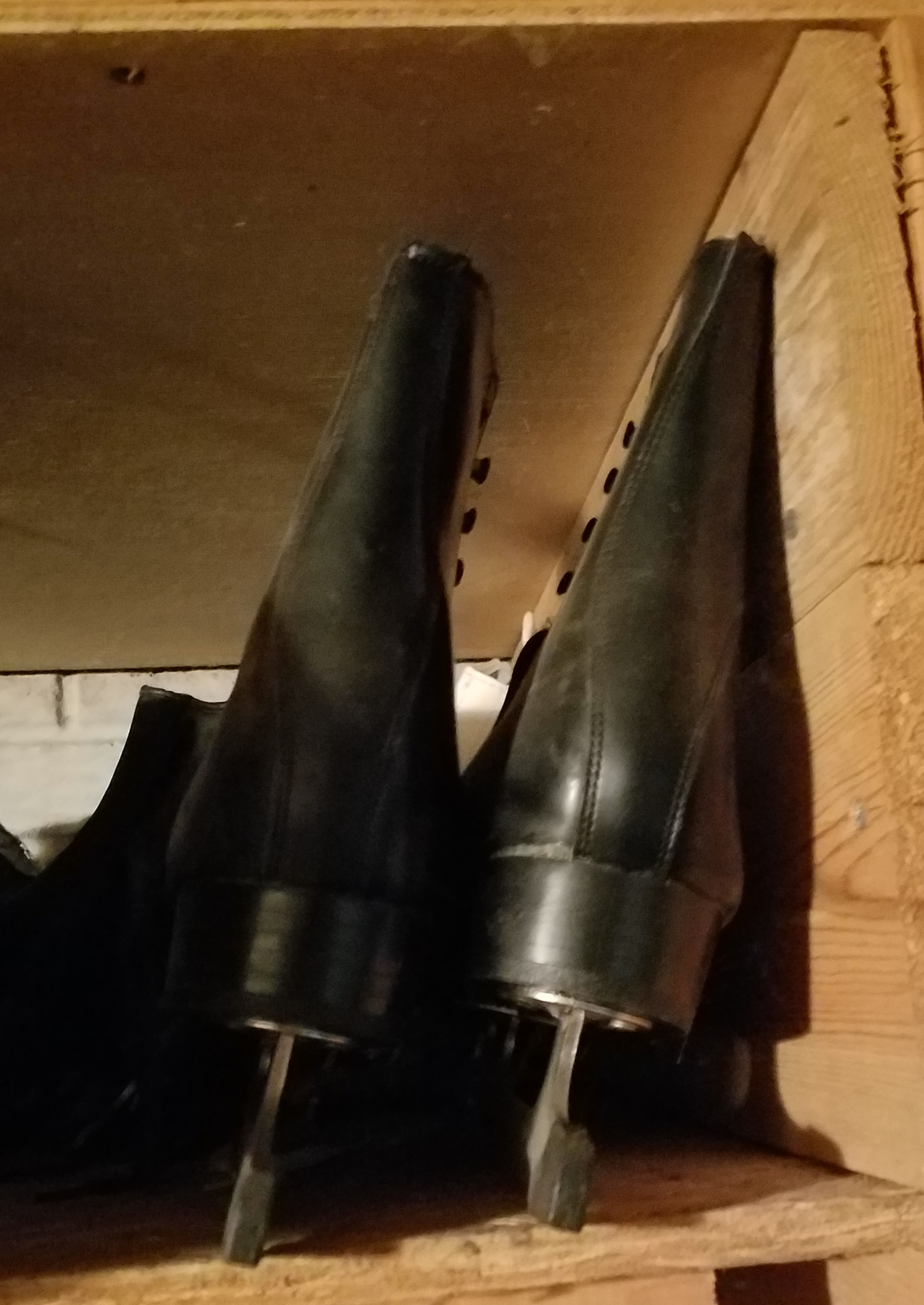
Ice Skates on a Shelf

On early morning walkabout the moon and stars were out, casting silvery light on me and everything.

Yesterday a thin layer of ice rested on the lakes, its mirrored surface perfect for skating if it thickens. Based on the forecast, we’ll see more open water soon.

When our daughter was a grader and the lake froze we’d don ice skates and cut a path all the way to the other shore. When snowmobiles plowed by we could feel the ice moving up and down taking us with it. We keep the skates on a shelf in our garage.

We live in a cold middle place where it’s not quite winter and not warm enough to work long outside. Our attention turns inward and to the possibilities of next year.

The best part of the coming holidays is people engage in things. A calm quiet falls over the Johnson County Lake District. If it were snowing one could hear flakes fall.

It’s a time for planning and writing here in Big Grove. What few fresh vegetables are left in the ice box will soon be eaten up… well, except maybe the turnips. I’ve been watching videos of Indian street vendors making gigantic woks of chicken fried rice. There’s a tub of leftover rice and plenty of eggs so I’ll try that for lunch or supper. I forget eggs are chickens.

And so it goes. Vonnegut taught us death can be absurd, tragic and predictable. It seems mostly random and will eventually take us all. I’d like to get back out on the ice and cut its clear, smooth surface in long figure eights. I’d watch fish swim through the ice and hope the crazing wouldn’t result in my going to live with them. Not yet anyway.

The hope of this holiday season is we can do positive things next year. Isn’t that always the case? So it goes, and here we go. Gliding along the surface until we take a plunge, hoping for a resurgence of living each moment as best we can.

That’s optimistic. Increasingly, that’s who I want to be, who I am.

Categories
Environment Writing

No Going Back to Coal

Coal Mine Demonstrators Going Down – 1950

On Aug. 10, 2016, Donald Trump appeared at a campaign event about 50 miles from my father’s home place in southwestern Virginia. He asserted coal miners would have one “last shot” in the election, cautioning that the coal industry would be nonexistent if Hillary Clinton won the election.

“Their jobs have been taken away, and we’re going to bring them back, folks. If I get in, this is what it is,” Trump said.

How do you tell if the president is lying? Check to see if his lips are moving.

There was no last shot. The coal industry is dying and the president’s efforts haven’t and won’t change that.

It is easy to dismiss his comments as campaign bluster. However, real lives are at stake and young couples are leaving Appalachia to find work in other professions and make a life. We are all driven by the need to make a living. Despite strong personal history and traditions in a place, the economics of living there may cause us to leave as it is doing in coal country where mining jobs continue to be in decline.

U.S. coal consumption is projected to decline by nearly four percent in 2018 to the lowest level since 1979, the U.S. Energy Information Administration said on Tuesday. At year-end, appetite for coal will be a staggering 44 percent below 2007 levels according to NBC News.

The cost per kilowatt hour of electricity generated by new solar arrays is less than those generated in existing coal-fired power plants. Cheap natural gas extracted by hydraulic fracturing has taken new coal-fired power plants off the drawing board. Right or wrong, the power industry is switching to gas. India, one of the top ten global carbon dioxide emitters, has cancelled plans to build nearly 14 gigawatts of coal-fired power plants with the price for solar electricity “free falling” to levels once considered impossible, according to Ian Johnston at the Independent.

There are no easy answers for people impacted by our changing energy economy. Families that relied on coal extraction to make a life will have to revisit their choices regardless of what the president does or says.

When I was coming up the home where I spent ten formative years had recently been heated by coal. When my parents bought it the large gravity furnace in the basement had been converted to natural gas. It was an inefficient way to heat our home, but it was very reliable, and natural gas was less expensive and more convenient than coal trucks plying the alley behind our house to deliver. There is no going back to coal in home heating, or anywhere else.

The sooner we generate our electricity from renewable sources, the better we reduce greenhouse gas pollution in the atmosphere. No amount of presidential bluster can save the old energy economy, nor would we want to. Our politics isn’t there yet, but we will act on climate change. There is an existential urgency that we do.


Categories
Environment

Environmental Issues 2018-style

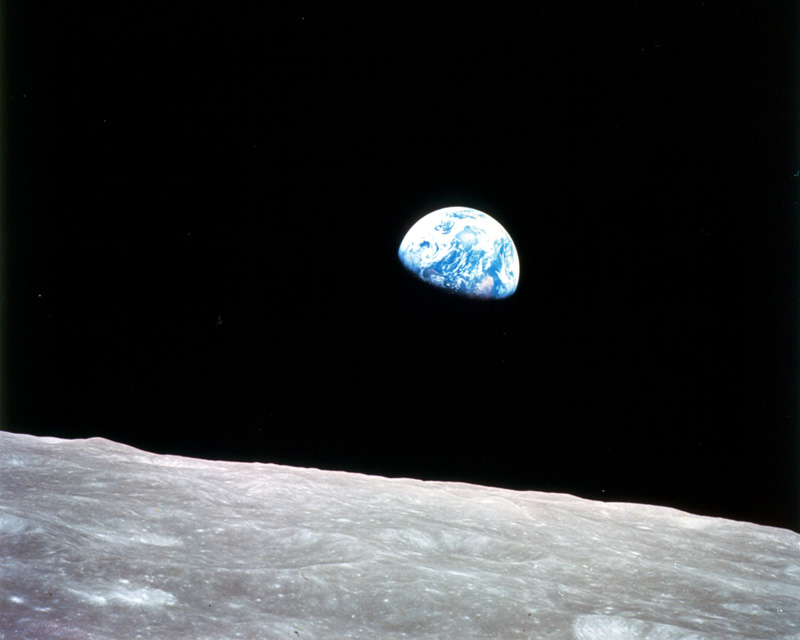
Earthrise by Bill Anders, Dec. 24, 1968

There was never any doubt that when Republicans won the 2016 election setbacks were in store for parts of the environmental movement that rely on government regulations.

Conservative think tanks like the Heritage Foundation were ready with swat teams to investigate every part of the executive branch and reverse anything and everything that could be to favor business interests during the president’s first term.

The funders of these operations have plenty to celebrate going into the new year. The rest of us took a step backward.

What I’ve learned in almost 50 years of being in the environmental movement is there is no parsing the actuality of environmental degradation. A person can summarize the greenhouse effect in as few as 200 words. The impacts of global warming are available to anyone who would recognize them. There is an inevitability of climate action with the main concern being we wait until it is too late to save ourselves.

The battle over the coal industry is being fought less by environmental advocates and more by market dynamics. So many electric utilities converted to natural gas because of its current low cost and availability. Why wouldn’t a utility want a thermal energy source delivered right to their door over a mineral that had to be delivered and handled by the rail car load at greater expense? Based on the home heating conversion of coal to natural gas, ongoing when I was a child, there is no going back to coal.

Natural gas is also a problem because of greenhouse gas emissions. While solar energy installations have stalled as a result of the president’s tariff policy, the market will figure it out to use the sun and wind directly. Renewable energy will prevail in the marketplace over extraction-based energy sources. Based on the science of climate change, they have to prevail if we hope to adapt to the deteriorating environment we created.

Symbolic gestures like the Green New Deal the House of Representatives is proposing are something. However, the problem of environmental degradation won’t be solved by governments alone. We need a resurgence of green habits. It is still too easy and inexpensive for someone to hop in the car and drive 20 miles to pick up groceries to expect them to change their behavior.

Progress made on environmental issues and policy during the Obama administration was no progress at all if it could be so easily reversed by the next administration. The idea a potential Democratic president in 2021 could reverse the damage done by Republicans is a shallow hope. We have to do better than this.

As 2018 draws to a close there is much to be done to reverse the deleterious effects of a changing climate. Some of it can’t be reversed yet we can’t lose hope. Despair is a form of climate denial.

“We do not have time for despair,” Al Gore said recently. “We can’t afford the luxury of feeling discouraged. Too much is at stake.”

Inside politics and out, now is the time for climate action.

Categories
Environment Living in Society

Note to my Congressman

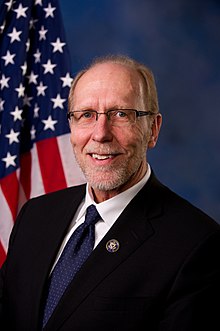
Congressman Dave Loebsack

Dave,

Congratulations on your reelection last month and thanks for the conversation after the Second District convention.

My wish list is brief, here it is.

Create a process to audit where defense dollars go. We are spending a lot on defense, more than I believe is needed. We ought to be able to determine where this money goes. I believe we can save money. I’d bet there is enough money to pay for the president’s wall, not that we should. Please work on such accountability for the Pentagon.

Protect Social Security and Medicare. I first paid into Social Security the summer of 1968 and 50 years later depend on my Social Security pension to help pay monthly bills. Most of my friends on Medicare believe it doesn’t cover enough. However, what we have adds value to our lives. Keep these both solvent and determine a better, more cost effective way to manage them.

No doubt you are aware of the dire reports on the potential consequences of climate change on society. The New Green Deal for which Nancy Pelosi has indicated support could be part of a government effort to mitigate the consequences of global warming and climate change. It is not enough. Scientists have indicated in the recent Intergovernmental Panel on Climate Change report that the horizon for catastrophic consequences is much closer than expected. It is time to act on climate change, and I hope you will do your part every day.

Thanks again for your representation. Best wishes for end of year holidays and an optimistic new year.

Regards, Paul

Categories
Environment

COP24 and What’s Next

Image of Earth 7-6-15 from DSCOVR (Deep Space Climate Observatory)

Like others, I was skeptical the broad coalition to act on climate formed during and after the 21st Conference of the Parties to the United Nations Framework Convention on Climate Change in Paris would last. This week at COP24 in Poland, three top oil producing states, the United States, Russia and Saudi Arabia, along with number nine, Kuwait, blocked acceptance of the Intergovernmental Panel on Climate Change report the conference commissioned.

The four oil producers objected to “welcoming” the report and preferred the vague language of “noting” the report. Because the conference proceeds only after reaching consensus, and they couldn’t, the report was not adopted.

“Opposition to climate action is one of the issues motivating Trump’s cozy relationship with the corrupt leaders in Russia and Saudi Arabia,” State Senator Rob Hogg tweeted Dec. 9. “This is not who we are as Americans, and we need to put a stop to it.”

“Under Trump, instead of leading the world to act on climate change, the United States joined with Russia and Saudi Arabia to stop the recognition of a scientific report about the increasingly urgent need for climate action,” he tweeted.

Absent U.S. leadership on climate I expect further dissent within the coalition that reached consensus Dec. 12, 2015 with the Paris Agreement. Our politics, led by moneyed interests, hinders efforts to do what makes sense regarding climate change. We can’t even agree on the facts about climate change. Accepting the IPCC report, or “welcoming” it to use the vernacular of the conference, should be a non-issue.

Although President Trump announced his intent to withdraw from the Paris Agreement, the U.S. continues to be party to it. We live in a time when the truth has become unhinged from reality and it’s hard to see what path our country will take regarding our need to act on climate going forward.

What we see in Iowa is changing weather patterns enhanced and made worse by climate change. The 2012 drought was unimaginably oppressive and reduced corn and soybean yields. After local storms on Sept. 19, 2013 knocked trees down and damaged our home I wrote, “Everywhere in the farming community, people are concerned about extreme weather. Weather is always a concern for farmers, but this is different.” New research shows change in the atmosphere is reducing the nutritional content of foods we take for granted. None of this was expected. All of it hits home.

Whether people use the words climate change is less the issue. What matters more is our lives are changing, with tangible costs, and people are worried about it. Not only for the monetary damages of a storm, or for reduced crop yields, but for what it means for the future.

The aspiration of the Paris Agreement was noble, but likely unfeasible without leadership from the United States. Regretfully President Obama did not get buy-in from Republicans in government before he signed the Paris Agreement. Once he was gone, politics took over and his efforts to mitigate the effects of climate change are rapidly being rendered null.

There’s no easy solution to climate change. Was there ever? The truth before us is we must act on climate before it’s too late. Whether society is capable of doing so remains an open question. COP24 provided another setback to action.

Categories
Environment

Protect Our Planet, Protect Ourselves – 24 Hours of Reality

It’s a fact: Fossil fuels are driving a climate crisis and threatening our health. On Dec. 3 – 4, Climate Reality and former Vice President Al Gore will be joined by an all-star line-up of artists, thought leaders, and scientists for 24 Hours of Reality: Protect Our Planet, Protect Ourselves. Tune in and learn how we can make a healthy future a reality: https://www.24HoursofReality.org.

Categories
Environment

Act On Climate

Earthrise by Bill Anders, Dec. 24, 1968

Every few years, interest in climate change spikes, according to internet search frequency reported by Google Trends. When the Intergovernmental Panel on Climate Change released their special report on the impacts of global warming of 1.5º C above pre-industrial levels on Oct. 8, searches spiked again. Searches are already trending downward.

Newspapers in our area ran stories about climate change, about one a day in recent weeks. Is there a new window of opportunity to act on climate? I doubt it. There is no window because the walls of the house we used to live in have been blown out.

It is time to act on climate.

Every environmental activist has a to-do list. Mine has four parts.

Reduce, reuse and recycle personally. I don’t seek to create a livable environment for me only as the late George Carlin derisively asserted about environmentalists. It is better to buy only food the household can use rather than let it go to waste. We live a life of making do with old clothing, old cars, and recycling single use bread and celery bags for our garden crops. It remains important to have a discussion with Waste Management about why they won’t recycle plastic. If enough people do it, maybe they will find a better way than baling and shipping it overseas or discarding it in landfills. This is a starting point for almost everyone.

Band together with like-minded people. We walk a tightrope in life in which the risks are many. On one side, we avoid the insularity of confirmation bias in which like minded people often find themselves. On the other, we are stronger together. A recent Stanford University study of 30 years of data about street protests found “citizen activism, which has been shown to impact state and firm policy decisions, also impacts electoral outcomes.” A single voice can be amplified if it joins a chorus of hundreds or thousands.

Advocate with elected officials to mitigate the effects of climate change. There is an art to political advocacy. Where groups have been successful, we found common ground with people of divergent backgrounds to unify around a single action. This is partly how we stopped two new coal-fired power plants from being built in Iowa. It is also how we changed the minds of legislators regarding new nuclear power plants in the state. Two tactics serve little purpose: contacting a legislator every time we disagree with any action they take, and group think of people who advocate for a carbon tax as their primary method to combat climate change. We must understand the diversity of solutions to the climate crisis, keep our powder dry for when it matters most, then act in unison.

Help educate people on the threat of unaddressed climate change. It goes without saying there is uneven understanding about the impacts of climate change in society. My popular post, Climate Change in 200 Words explains the basic science, about which there is little disagreement from even the most strident climate deniers. Where society gets hit hardest is in the impacts of warmer atmosphere and oceans. The news is full of examples. Few people have missed the fires in California, hurricanes in Florida, Texas and New Jersey, or the severe 2012 drought in Iowa. All of these events were made worse by global warming. Much of the intensification of our weather events is predictable and likely avoidable with societal action. Education is a valid and essential part of creating collective action to mitigate the effects of climate change.

Perhaps the important lesson about climate change derived from Google Trends is there are clear news hooks which can make climate action more likely. The problem hasn’t gone away and we can’t rely upon news events to precipitate our actions.

Whether we will act on climate before it is too late is unknown. What we do know is the human condition includes hope for survival and a better world. It is unrealistic to believe global societies will unite around a single course of action. Part of the brilliance of the 2015 Paris Agreement was it enabled every nation to participate in their own way toward a common goal of reducing greenhouse gas emissions. Whatever deficiencies existed in the agreement, it was a positive sign of what humanity is capable.

The IPCC special report is another scientific explanation we must act on climate before it is too late. This is my to-do list. What is yours?