LAKE MACBRIDE— Some part of the last 11 days has been paid work at one of four jobs. If it rains today, there will be a day off. No rain, and there are three possibilities for paid work. I’m hoping it rains, but a day off means working at home on a couple of the too many projects at hand. In this post-Reagan retirement there is never a real day off, but it’s fun to pretend. A lot can happen as the world wakes up this morning.
For now, it’s time to head to the kitchen, make breakfast and a list of priorities for today. That is, unless the phone call comes that there is work.
UPDATE: The phone call and email came, and I captured two work assignments.
LAKE MACBRIDE— At the end of the season, before the last gleanings from the garden have turned to compost, home cooks prep and cook and preserve to make use of summer’s bounty.
Foraging in the refrigerator as if it were foreign turf, forgetful of how the mix of cut onions, diverse greens and leftovers arrived, the best is culled for a hearty fall soup. Kale and onions, Brussels sprouts and broccoli stalks, celery and carrot, a turnip, some potatoes, frozen sweet corn, and everything else suitable goes into a large, stainless steel stock pot.
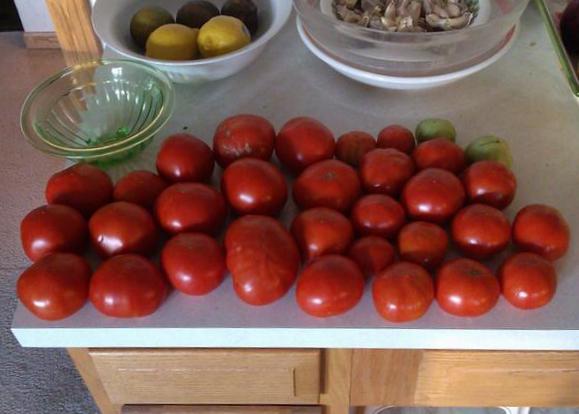
Tomatoes are selected from the counter, their numbers diminishing without replenishment from the garden patch. Cutting away the soft and dark spots, they were cored and pulsed on low speed in the blender, skins and all. The red puree was poured all at once into the simmering ingredients. A handful of leftover farfalle, bay leaves, some dried red and black beans, and chervil were added. The pot simmered more than an hour on low heat. It was soup for dinner.
At 3:15 a.m. I brought the graniteware water bath canner from downstairs to the kitchen. Using the wire rack, four quarts and a pint of applesauce, plus the pepper puree made this weekend, were lowered into the pot which was then filled with warm tap water. Moving the heavy pot to the stove, I turned the heat on high to process the jars of summer goodness. Now breakfast.
While working in the local food system, one never knows when or where the next paying job will come along. I finished the season at the orchard yesterday, at one CSA the work is clearing the field, which won’t take too long, then there is the planting in the high tunnel and fall share help, which will end soon as well. There is the prospect of cutting firewood at another farm, but weather seems likely to intervene before long. It begs the question, what’s next?
While invited to return to the warehouse after the season, it doesn’t pay enough given the investment in health and well being required. It is a fallback position to pay some of our bills should no other opportunities present themselves. There are a lot of low wage jobs around town, but they present the same problem of occupying space without providing enough income. I’m confident something will materialize.
While there is fresh food, I’ll continue to eat well and stock the pantry for winter. Mostly, we eat to live, and there is still time to make deposits in the food pantry. Hopefully there will be enough reserves to see us through until spring.
SOLON— Savvy Coffee and Wine Bar has been a place for friends to gather in Solon since the strip mall at 417 E. Haganman Lane was built in 2005. It is the only coffee shop in town, although the cachet of coffee shops has dulled with passing years. Nonetheless, there is Wi-Fi, coffee, a selection of pastries, hot food for breakfast and lunch, and ample space to meet with friends or hold a meeting. If you are gathering in Solon, this is a good place to do it.
Breakfast Burrito
In between jobs, I stopped for breakfast, and was the only customer in the place. Not sure what, if anything, that means, as it was a Hawkeye home game day, and I am not plugged into the college football season.
I took a photo of the menu and ordered a black coffee and a breakfast burrito. The bill came to $6.47 which seemed reasonable. When the order arrived, it was enough food to split and serve two. The dish was made fresh and for the price was a bargain. I have had the quiche ($4.25) and it has been good, and the muffins pictured ($2) were tempting. Everything I have ordered has been good, and the coffee is what one expects from a coffee shop. The food is an attraction, if not ready for three stars in the Michelin guide.
Like other restaurants in town, Savvy has changed owners a number of times. They have a tough row to hoe to stay in business because the wine bar aspect of the shop has been eclipsed by the new microbrewery in town. The number of bottles of wine stored in the restaurant has declined since last I visited, and it appears that aspect of the business is no longer being emphasized, even if the lights are on some evenings when I drive by.
A person needs a place to have coffee with friends from time to time, and Savvy serves that purpose in our town. Our life would be the less without them, so patronizing them is about more than just coffee.
RURAL SOLON— It was a blustery day at the two acre farm where work took me yesterday. Carrots to harvest, tomato cages to deconstruct and roll up, and irrigation line to find and remove to the roads for later pickup. It was cold to the bone.
My time in the military prepared me for days like this. The key is to focus on the work and the cold will take care of itself, falling neatly into the background. Once one accepts there is no place to go to get warm, and nothing to do but the work, life doesn’t seem so bad and neither does the cold.
It was recently reported that September was the 343rd consecutive month of above average global temperatures. No surprise there, and October will be the 344th. What I would rather see is a tally of the actions people take, on a daily basis, to reduce their carbon footprint. That and a measurement of the aggregate impact it has on global warming. We would do better to collect our progress and see how we are doing than tick off the number of months of doom.
Working in a sustainable agriculture operation is said to help solve the climate crisis. According to Wikipedia, sustainable agriculture is the act of farming using principles of ecology, the study of relationships between organisms and their environment. A couple of things seem most important. Sustainable agriculture is site-specific. What one farmer does on his/her land may last over the long term to satisfy human food and fiber needs, sustain the economic viability of farm operations, and enhance the quality of life for farmers and society as a whole. It is hard to find fault with this, and the connection to the climate crisis is clear.
Where it gets sticky is that as the environment changes, so too do the organisms encountered on a parcel of land. This suggests that the work of adaptation is never really complete in sustainable agriculture. Most farmers I know are engaged in a process of constant experimentation to determine what does and doesn’t work to solve ecological problems. What is worrisome is they seldom, if ever, talk in terms of adaptation to climate change, even if that is what sustainable agriculture represents at its core. Note to self: initiate this conversation.
After noon, the two of us harvesting carrots and working in the field were called to the barn for lunch. Grilled cheese sandwiches, vegetable soup and sweet carrot bread for desert. Much better than restaurant fare, and an unexpected perquisite to break the cold. Not to mention the conversation about the fall share, and our hopes, dreams and experiences. Brief and pleasant interval in another day’s work in our ever changing environment.
RURAL SOLON— While finishing a shift of deconstructing tomato cages, I walked along the row of frosted bell pepper plants toward the gate. It snowed yesterday and hard froze last night. I picked six pepper survivors for the flat side upon which to sit on the baking sheet. There was a lot of food that survived the snow and frost, but we enjoy stuffed peppers a time or two during each year, and that was my choice.
When it was time to begin preparing the meal, I cored, parboiled and stuffed the peppers with a mixture of rice, eggs, a blend of Italian cheeses, cooked onion and garlic, and dried rosemary and sage. They were topped with leftover pasta sauce and went into a 350 degree oven for 22 minutes. We had a working family supper, served with sweet corn and fresh tomato slices.
On a cold day food fresh from the oven, made with local ingredients raised by people we know is as good as it gets. It is a simple pleasure, one that bears repeating if that is possible.
SOLON— Word on the street is that the Dock Restaurant is doing a makeover. There had been some negative chatter about the restaurant in social media, the owners found out and are taking some new directions. As I wrote in my Aug. 18 review, “the food was good, and reasonably priced, and that is a positive. However, rather than the good food, the restaurant’s operational issues dominated the evening.” We’ll give it some time before the restaurant crawl makes it over for round two— the hope for redemption.
Needing to dispense with the two gas stations on the restaurant crawl, I stopped by Casey’s General Store and RJZ Express this week. If one’s view of dining options includes take out while stocking up on tobacco products, lottery tickets, fishing bait, beer, sugary drinks and salted snacks, these establishments are the ticket. Hands down, Casey’s is the better option for food.
The fare is similar, pizza by the slice, sandwiches made in house, chicken nuggets, and other items served in a rotating warmer. I’d go back for another slice of Casey’s pizza because it was freshly made. The RJZ Express pizza looked like it had been in the rotating warmer a day too long. The reason for the difference is corporate process.
According to their website, Casey’s operates more than 1,759 stores. Their “success has been attributed to (their) clean stores, restrooms, and the friendly employees who pride themselves in customer service. Casey’s customers have come to know that inside each store they will find dedicated, helpful, and well-trained employees, exceptional prepared food items, and a clean environment in which to shop.” Casey’s knows what it is, a large chain of convenience stores, and focuses on having processes and training to them. That includes food preparation, and managing a competitive pizza take-out business in small towns that might not have a pizzeria.
RJZ Express is a small-scale owner operator that sells BP fuels. It serves a need in town, but the freshly made sandwiches that persuaded me to include them on the crawl have apparently been replaced with made once in the morning sandwiches that twirl in the warmer all day. Not the same thing. They sell prepared food because their competitor within eyesight does. RJZ Express food is a pale imitation of what Casey’s provides.
That’s about it for gossip and gas stations. Be sure to stay tuned for the rest of our restaurant crawl.
LAKE MACBRIDE— While gaining an understanding of how the health insurance exchanges may change our family budget, I decided to wait until the government worked through the initial computer problems evident at the start-up of open enrollment. Last night, the glitches seemed resolved.
I logged on to healthcare.gov, created an account, applied, determined eligibility to choose a plan from the market place, live chatted with an agent who offered to have a specialist call me within 48 hours, and was ready to hit enroll on a plan (I didn’t) in less than 40 minutes. Given the challenges of the questions asked, the online experience met expectations.
When saying there were challenges, what I mean is a projection of 2014 household income is required to complete the application. That may be easy for a wage worker in steady employment, but for self-employed people it can be a bit of a WAG (wild-ass guess). Most people who work low wage jobs are focused on getting through the present and income forecasting is unfamiliar territory. We know how much we need to earn, but that is different from creating an accurate forecast of what we will earn, which is the question the ACA application asks.
There is an option to check a box that says, “I don’t know.” Because of the tax implications of the ACA, more specificity in the application can make it easier come tax time. That is, what we submit on the application impacts what, if any, tax credits might be available for the year. If we get it wrong, we will have to reconcile the tax credits taken to subsidize premiums with the government based on actual income. If income is understated, we may have to reimburse the government for part of the tax credit. The tax credits are an important consideration in the application process, as it impacts net health insurance policy pricing. I plan to discuss this aspect of the application process with an ACA specialist in hope of getting it right, so I can take the tax credit now, and not have to reimburse it when we file our 2014 tax return.
Something else that wasn’t expected was that only one of the two of us was eligible for a policy through the exchange. We expected to change to a family policy, not two individual policies and this introduced another variable in the evaluation process. After resolving how to project income for 2014, I will ask my individual health insurance policy agent about costs for a replacement policy for one of us. Based on similar situations with which we are familiar, we could still save about $100 to $200 per month over our current health insurance premiums. It is worth pursuing.
As I mentioned in the first post about navigating the change in health insurance, getting facts and working through them is essential, and there is no hurry to make a bad decision. In a society where instant gratification is the expected norm, spending this time runs against the grain. However, it is the only rational way to make a decision, and some of us still believe using reason and common sense when making a decision that impacts our family still matters.
SOLON— Coming off the cold, windy fields at one farm, heading to another, I stopped in Solon for lunch. Monday being ruhetag (rest day) for restaurants, the selection was restricted. D & D Pizza and Cafe was open. I went in, favoring it over the gas stations, grocery store and bar.
The building is the second newest on Main Street, having been rebuilt after a fire during our town’s annual Solon Beef Days festival burned the former Breadeaux Pizza to the ground, killing one occupant. The restaurant is now managed by the person who owns the town’s grocery store. A bedroom community like ours needs a pizza outlet, and this one has survived.
When I entered, more than a dozen people were sitting in five groups. Most were construction workers coming off a job for lunch. Two construction workers were sitting on the same side of their table, eating and watching a flat panel television that was tuned to The Chew, which is a celebrity chef program on ABC. Mario Batali was explaining low country cuisine, and preparing a Huguenot Tart made of Blondie apples. The place was busy.
Merci
The decor is sports schedule posters tacked up on the walls, with beer advertisements that appeared to be provided by a local distributor. Perhaps in reference to the cafe part of the name, a trash receptacle had the French word “merci” on it, instead of the expected “thank you.” There is no table service, and the idea is to bus your own.
The all-you-care-to-eat buffet is the main luncheon feature. It had six kinds of thin crust pizza, bread sticks, chicken strips, and a salad bar with twelve items, and four dressings. The salad was fresh and appetizing. Soup of the day was chili, which fit with the colder weather. Beverages were fountain drinks along with bottled beer. The lunch buffet cost $7.41 including tax and a beverage. A soup and salad combo was available for a dollar less.
My dining experience was positive. The thin crust pizza was what one expects, the salad was made of fresh ingredients with an adequate selection, and the chicken strip I tried appeared to be made from actual chicken. Based on this lunch, I’d go back, or bring a friend for conversation. It is difficult to convey the idea of freshness, but this salad bar accomplished it.
D & D Pizza and Cafe fills a small town need, which is a place on Main Street for workers to go for lunch. It competes with Casey’s General Store for pizza, and with the nearby Solon Station, which has been offering a $5.50 burger basket at lunch time. Other Monday lunch competitors are Sam’s Main Street Market and RJZ Express which has takeout sandwiches. I’m not sure how much competition the restaurants located in strip malls south of town provide. My point is there is an active lunch marketplace, more than what meets the eye. Part of D & D Pizza and Cafe’s success is it recognized and caters to the lunch trade. While visiting Solon for the day, it is worth a try.
LAKE MACBRIDE— On Friday we diverted from planting in the high tunnel to harvesting cabbage at another farm: 400 heads of cabbage in 80 minutes plus travel and storage time. Frost is coming, and we need the cabbage for the fall shares. As we used to say as union workers in the meat packing plant, “it all pays the same.”
Actually, farm work doesn’t all pay the same. There is a complex web of reliance among farmers, and when one needs something, another reaches out to help, making a deposit in the relationship bank. Who knows when we may need to make a withdrawal?
There is a frost advisory Sunday morning from 1 until 8 a.m. Whatever plants need saving should be covered with the worn sheets kept for that purpose. Mostly, it is the leafy green vegetables and the pepper plants, since the tomatoes are done. Gleaning plot #3, and harvesting is on today’s agenda, so whatever might get bitten by tomorrow’s frost will come in. That is, except the greens, which will continue growing outside until the last minute.
The days are getting shorter, and attention turns toward inside work. There is a lot to be done before the end of the year. When isn’t there?
LAKE MACBRIDE— Embers of the brush pile marked the final cleanup after the Sept. 19 storm. Uneven spots remain where the tree fell, but the lilac bushes retained a nice shape and appearance after trimming the damaged branches. Next order of business is to mow the lawn, which is still partly brown after the drought, and collect the grass clippings to use as mulch where the burn pile is now. It’s been two months since the lawn was mowed.
The season’s canning is mostly done, and I posted this to Facebook yesterday,
All the canning jars in the house have something in them, more than 30 dozen. Tomatoes, applesauce, hot peppers, soup stock, sauerkraut, dill pickles and hot pepper sauce. There is apple butter, pear butter, peach, raspberry and black raspberry preserves, and grape jelly. The freezer’s full too. Plenty of potatoes and onions. We will have the beginnings of plenty of winter meals. All was grown locally and organically. Think I’m done for this canning season.
Herbs are drying in trays in the dining room, and a lot of produce remains in the garden. The counters and bins in the house are full of tomatoes, winter squash, apples, onions and potatoes. By Monday we should have a hard frost which will end most of the growing season. The historical first hard frost is around Oct. 7, so the growing season extended by about two weeks this year. It’s not clear what weather history means any more, except to point out how different things are getting.
A farmer was talking about the weather last night, commenting that it has recently been extreme, with nothing in between. He was referring to the early snowstorm that killed an estimated 100,000 cattle in South Dakota earlier this week. What we want is a steady, soaking rain for about 48 hours to bring up the moisture level in the ground. It hasn’t happened, and we are left with heavy downpours, flooding and fires in the great plains and upper Midwest.
For some farmers, the soybeans are in. While they had the potential for a big crop, the average yield was about 40 bushels per acre. The pods formed but didn’t fill for want of rain. The corn crop is still coming in, so if it rains, nature could wait until the rest is in. The variation in yield is between 40 and 200 bushels per acre. There aren’t many places producing the high end of the range and average is coming in around 140. There is some hesitancy to say until it is all in, but yield will be better than last year during the record drought.
Everywhere in the farming community, people are concerned about the extreme weather. Weather is always a concern for farmers, but this is different. People seem worried like they haven’t been before. There has been no mention of climate change in these conversations, and I don’t bring it up. No need to assert my views when the connection between extreme weather and climate change will become obvious with the persistence of trouble, and the expansion of knowledge.
While our cleanup is finished, the extreme weather seems like it is only just beginning. We use the same language, developed over generations, to discuss farming. But there is a sense, a resonance of worry, unlike what has been present before. It will nag at people and hopefully result in action to mitigate the causes of climate change before it is too late.
You must be logged in to post a comment.