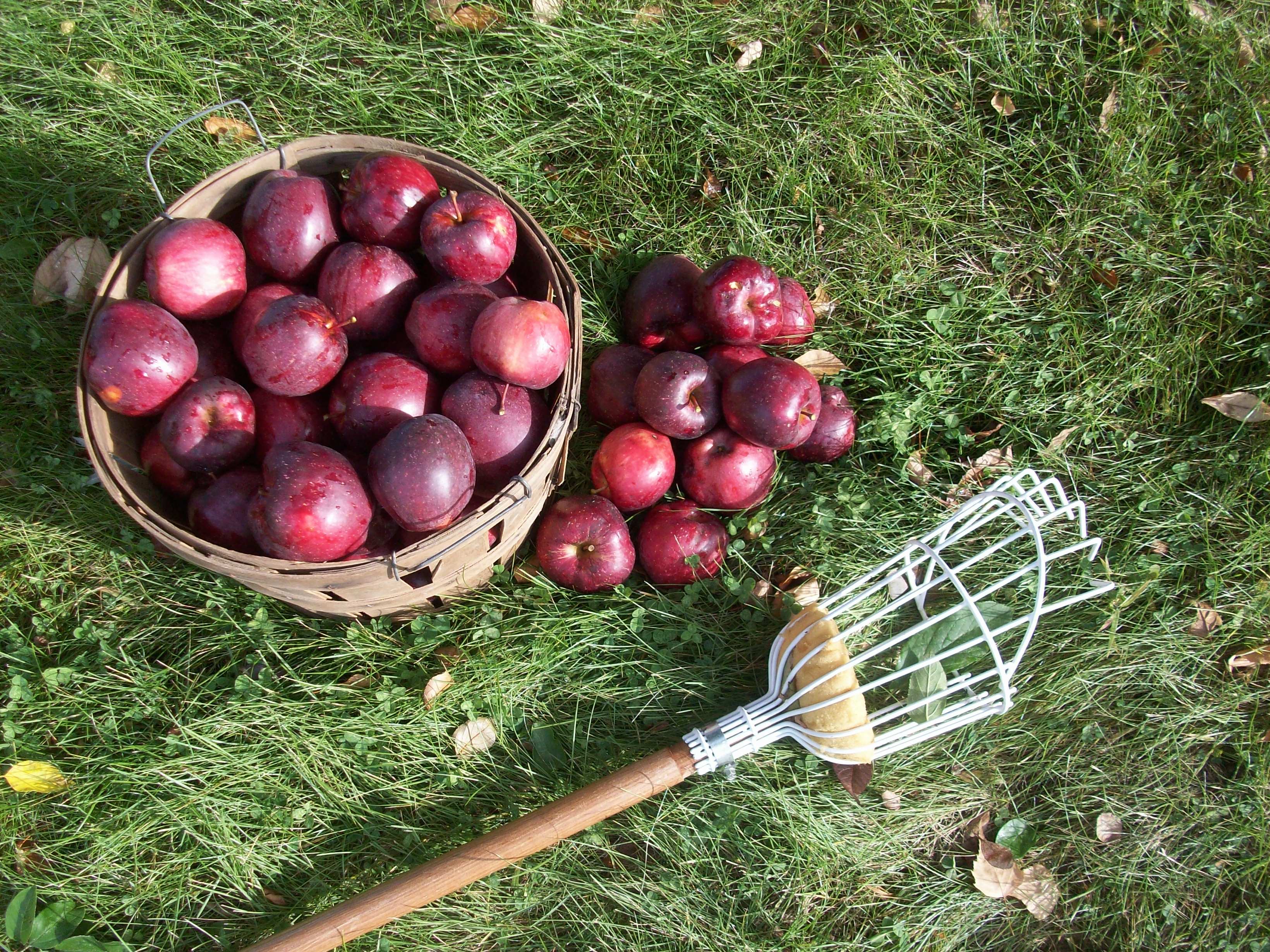
Midst falling leaves, grasses turned brown, and apples dropping to the ground, I mowed for the first time in over a month. It may be the last cut before winter.
Monday I visited the vegetable farms where I work each spring and caught up with the farmers. Both farms want me to soil block next year. I plan to do it.
I picked up vegetables for which I bartered: a fall share at one farm, seed garlic, storage onions and potatoes at the other. We cooked a spaghetti squash for dinner and had sides of a burger patty and fresh green beans. I made pasta sauce with tomatoes, garlic, basil and onions. A jug of apple cider is in the ice box, but we didn’t open it just yet. It’s been hard to keep up with the abundance since the garden began producing and the summer vegetable share began. We could feed a larger family than we have.
Fund raising letters have begun to arrive via snail mail. If we had the cash, I’d contribute to each one of them: Practical Farmers of Iowa, Catholic Worker Houses in Iowa City and Des Moines, Veterans for Peace, Physicians for Social Responsibility, and others.
I called the snow removal contractor for our home owners association and the receptionist took a message. He’s out of town until Wednesday. She said they haven’t really started thinking about snow removal because they have been so busy. Isn’t that true for us all.
During the next six months I’ll be re-engineering our lives to live on our social security, transition our health insurance to Medicare, and slow down on work I do mostly for the paycheck. After a two-day retreat, I head back to jobs which have daily shifts until Nov. 3. I need focus so I get the transition right. That means something has to give.
With the current political and economic climate, most everyone I know seems to be in transition. Each week some new affront comes out of our federal government. The same would be true in Iowa if the legislature were in session. It’s a time to re-group and figure a strategy to deal with an aging frame, diminished income potential, and unwelcome changes in society.
My posts have slowed down. Although there is plenty to write about, life’s turbulence has increased making it more difficult. The existential threat to our way of life manifests itself more each day. We will survive the next steps if we take time to do them right. Writing in public may take a back seat to the tasks of living for a while.
Fall going into winter is a great time to do that.
Continuous daily work shifts since July 31 have taken their toll. It’s been challenging to find time for mowing, cleaning, repairs and household chores. It’s also been hard to get enough sleep. And to write. I need time to take care of things.
Monday and Tuesday are job-free so I can prepare for winter. Yard maintenance is high on my to-do list as are catching up on community organizing and the apple harvest. I want to get organized for the next few days, but not too much. I plan to go with the flow of time for a while.
This week U.S. Senator Joni Ernst held a few town hall meetings in the state, including one in Iowa City. I’ve read every news article I could find about the event and I don’t see a political downside. Tough questions were asked of her, including some by people in my social network. Ernst gets credit for holding a public meeting in the liberal bastion simply because the senior Iowa senator has not for so long.
Iowa is a state that voted for Donald Trump by a 9.4 percent margin. In 2014, Ernst beat Democratic candidate Bruce Braley by a margin of 8.3 percent. The wide margin is significant. Ernst is enabled to point to it and say she represents Iowa when she votes for legislation many of us find reprehensible. I can’t think of many policy issues where I agree with Ernst, yet she won the election big. That she would hold a town hall meeting in the county that voted for Hillary Clinton and Bruce Braley only reinforces her status with the people who elected her. Ernst is not the senator Iowa City wanted in 2014 nor the one they want going forward. The lesson is Johnson County liberals don’t elect people statewide and Ernst knows it.
The topic of the day was the Graham Cassidy bill to repeal the Patient Protection and Affordable Care Act. Graham Cassidy was a loser from the git go. Reaction to the bill has been lopsidedly negative. With Senator John McCain (R-AZ) announcing he will vote no should it come up for a vote, it seems dead in the water.
Graham Cassidy dominated news media attention obscuring some important health care issues.
The Affordable Care Act is barely affordable, even with the federal insurance premium subsidies. If a person gets sick, the co-pays and deductibles are high enough to disrupt the financial life of those who qualify for participation in the ACA Marketplace. The total monthly premium for health insurance under the law is much higher than anyone can afford. It is also more expensive than the cost of Medicare. If the government were about saving money, those eligible for coverage under the ACA should be enrolled immediately in Medicare.
Health care sucked under the ACA. I had coverage through the Marketplace for two years and experienced something new. My doctor raised the issue of Essential Health Services during my annual appointment, saying what he could and could not do. Rather than listen to my questions as his predecessors in the small, rural clinic did for 20 years, he injected politics into my appointment. He was afraid to give me treatment either because of the ACA or because of instructions from his employer. I did not return to see him and he has since left the clinic.
Health care in Iowa has been bad on many fronts. The mental health consolidation was incomplete at best, failing to include a program for disabled children. Outsourcing Medicaid to private companies has been a costly disaster that delays patient treatment and provider compensation. Despite one of the best healthcare organizations in the country it is difficult to get needed care in this state.
The idea that Medicaid would be block granted to states, as proposed in Graham Cassidy, is one more in a thousand cuts to Iowans. The lesson is Senate Republicans don’t have a clue how to make health care meaningful, cost effective and do no harm.
My fall work session will address our family’s health care transition to Medicare as we both become eligible in January. It’s one more challenge to sustaining a life in a turbulent world.
The Johnson County Board of Supervisors disagrees on how to use the property known as the “Poor Farm” and that’s okay.
There’s no surprise something will be done with the property, especially to those paying attention. Supervisors recently decided what that may be.
In June, “The Johnson County Board of Supervisors on Friday voted (3-2) to move forward with a plan to restore and develop the historic county Poor Farm, including increasing the amount of land leased to small farmers and adding permanent affordable housing,” Iowa City Press Citizen reporter Stephen Gruber-Miller wrote.
I accept the 3-2 vote because we don’t elect supervisors with differing views to agree all the time. We want a diverse group of five supervisors. One that creates enough friction among themselves to hone the use of county assets and community resources in a way to make society better for everyone in this liberal-dominated community. Supervisor Rod Sullivan laid out the case for the board’s decision in a June 23, 2017 post on his website Sullivan’s Salvos. I’m confident something positive can come out of the board’s decision to develop the long-neglected county asset.
I like the idea of using county land as a way to help beginning farmers get started. The idea is different from reality. If they don’t have capital, farmers lease land — a temporary solution in which a lot of hard work building soil health can come to nought if they have to relocate. The cost of farm land remains high in Iowa. Every beginning farmer with whom I’ve spoken said their start-up issue is not only access to land, but the ability to purchase it. The county could help farmers by changing the definition of a “farm” from 40 acres to something smaller. In some cases an acre or two was all that was needed to get started in business. The point is local food operators can make a living farming less than ten acres. Resolution of this challenge does not lie in developing the Poor Farm.
In Johnson County there is a concern that if the farm size were changed, developers would take advantage of a smaller farm definition and build single homes on a larger acreages to serve the affluent local market of highly paid workers and retirees. The concern is not misplaced. This board of supervisors has the smarts to figure out how to enable beginning farmers to buy smaller acreages while protecting any changed land use ordinance from what the county deems undesirable development.
The key unanswered question about development of the Poor Farm is how do farmers make the transition from government dependency to independence via a stint there? Using the Poor Farm to provide land access presumes things I’m not sure are accurate — particularly a level of farming competence I’m not sure many have. It also presumes there will be a high failure rate from beginning farmers who take advantage of the program but then choose another career path. It seems obvious a better apprenticeship for new farmers would be to work on an established farm with an experienced farmer, as some local operators have done. On-site, subsidized housing is a way to help new farmers financially and makes some sense. Answering the question of how to enable a successful farmer to use and then leave the Poor Farm is the dominating question.
The idea of a “poor farm” is so Midwestern 19th century. I resist the idea of isolating beginning farmers from the agricultural community or outside the infrastructure of the city with its proximity to work, transportation, shopping and church. I would have thought we had learned a better way in the more than 175 years since Iowa was first settled.
We elected our board of supervisors to do what they think is right. If we don’t like it, we can elect someone else. That’s the way the system works. Based on the way they are handling development of the Poor Farm I’m not ready to fire any of them yet, despite unresolved issues.
It’s been difficult to get a grip on our 45th president. I don’t mean a golf grip.
His first six months in office have been so different from previous Republican presidents there is no comparison. It is important to relate — on a personal level — to our president, something not possible with Donald J. Trump.
My living memory goes back to Dwight Eisenhower. Our family was not an Eisenhower fan because we were Democrats. At the same time, we talked about World War II and Eisenhower’s role in the D-Day invasion of France. It became the subject of our neighborhood play. We cut 34 some slack despite his Republicanism.
We began to like him after the Federal Aid Highway Act of 1956. Our family was excited by the prospect of traveling via Interstate Highway because it reduced the amount of time it took to visit relatives in Illinois, Virginia, Tennessee and Florida.
Even with Republicans I disliked the most I have been able to find a connection. Nixon created the Environmental Protection Agency and the Clean Air Act, Reagan worked with Mikhail Gorbachev to reduce the number of nuclear weapons, and I was willing to give George W. Bush and “compassionate conservatism” a chance before he invaded Iraq after Sept. 11, 2001. No such commonalities exist with Trump.
Barack Obama teed up the ball for the next president to lead at home and abroad. As a golfer, 45 should have known what to do. Indications are Trump has neither interest nor the capacity to be a world leader.
If there’s to be no personal connection my work will go on: protecting our interests in the commons, and in government of, by, and for the people.
Those are Democratic values that won’t fade regardless of who is president.
~ First published as a letter to the editor of the Solon Economist July 13, 2017.
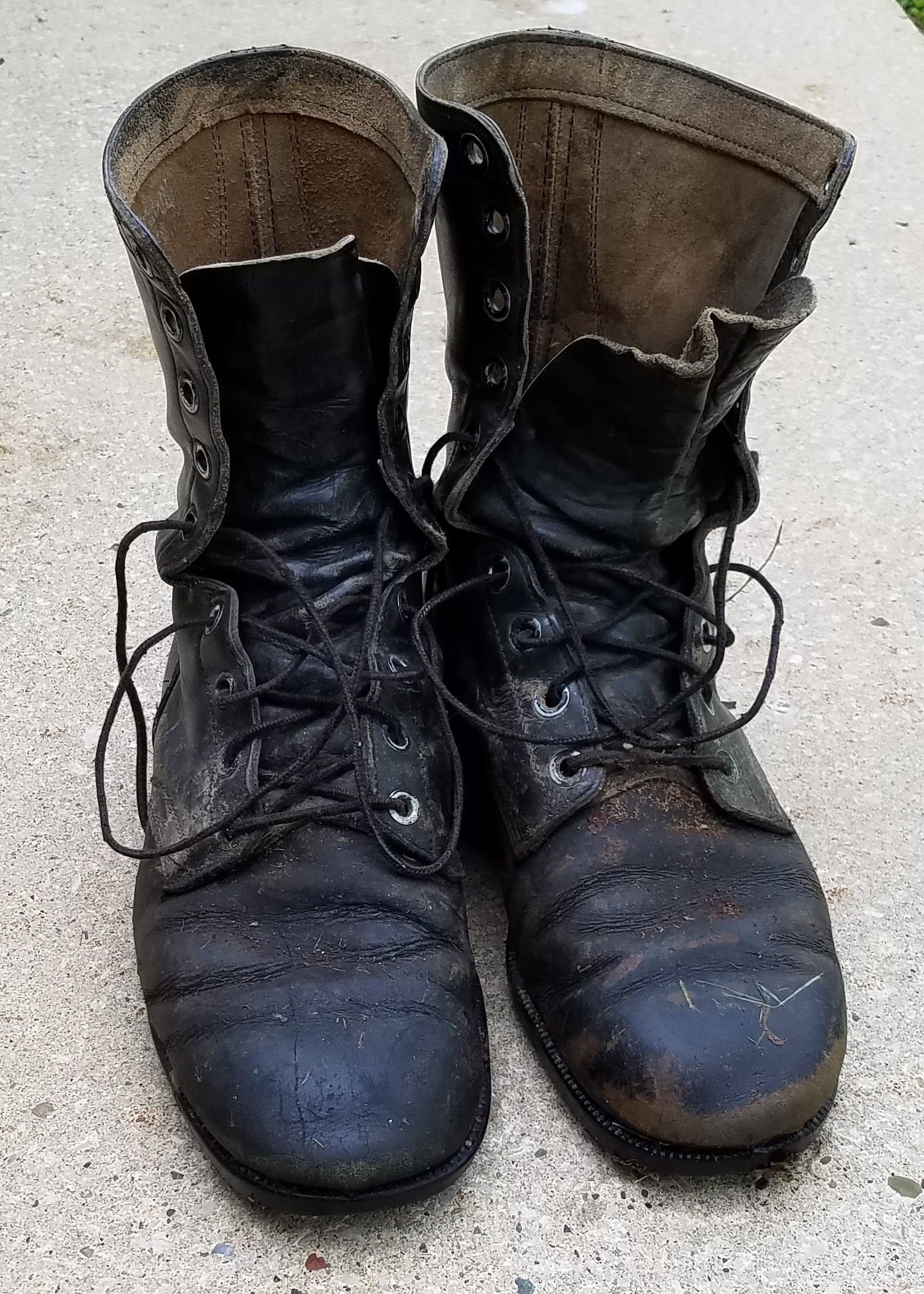
The debate was whether or not Army boots acquired in the 1970s should be retired.
I don’t think so.
I placed a set of inserts inside and they are as comfortable for walking as any of the expensive sneakers I bought to lighten the load of working on concrete floors all day at the home, farm and auto supply store.
At 40 years old they have a lot of life left in them. I have two pair.
They may make a fashion statement but I don’t wear them out in public very often so who knows? I plan to wear them in my garden and at the farms this weekend.
It has been impossible to get much done after a shift at the home, farm and auto supply store. With busy days combined with hot afternoons, I’ve had little energy left at 6 p.m.. Saturday has become the pivotal day in my garden life. With dry conditions, it will be again this weekend.
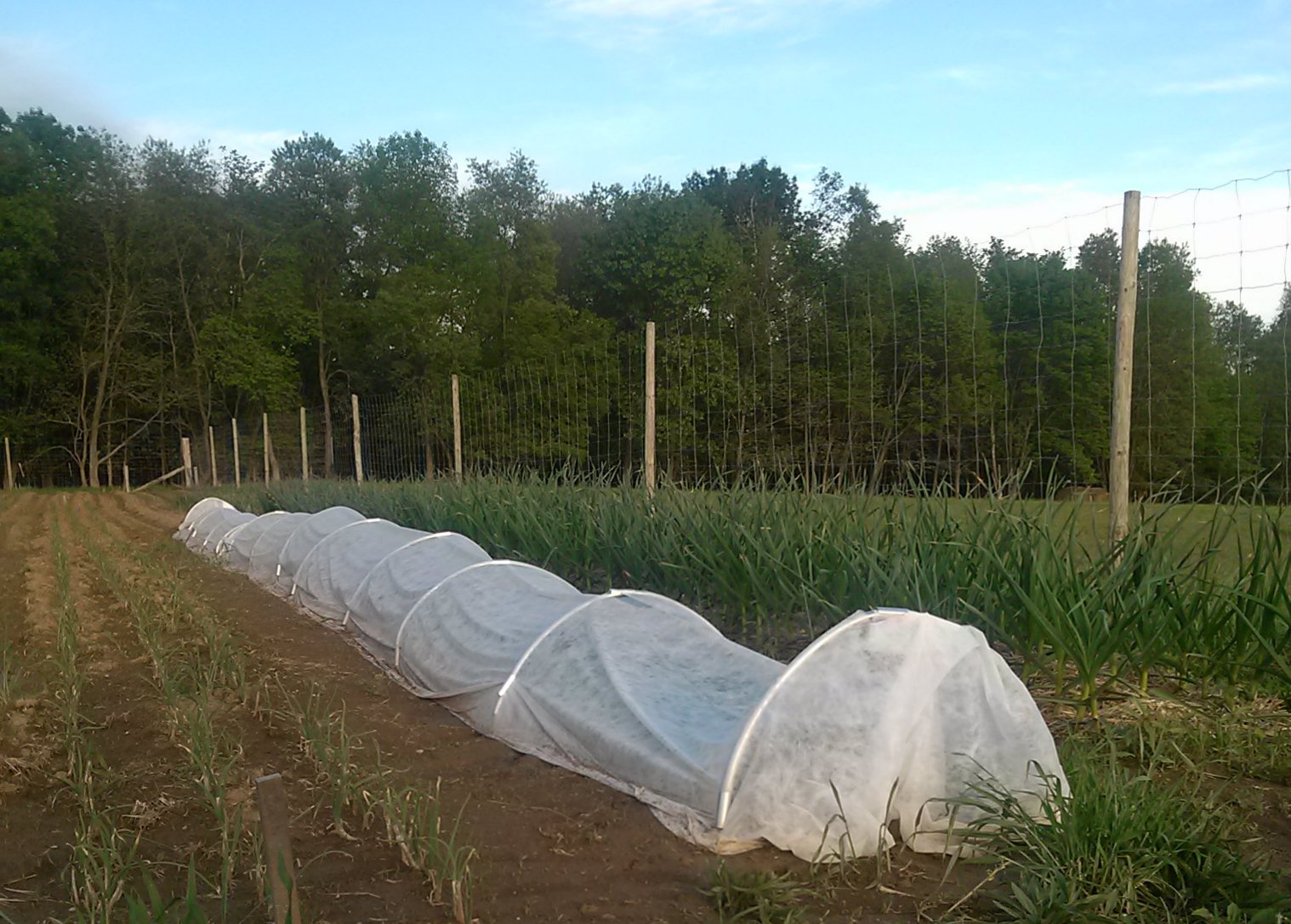
Main crops remaining to be planted are beans, cucumbers and peppers. Once that’s finished I can transfer to maintenance mode and focus on other aspects of yard maintenance. I have to get it finished though.
Other than non-stop work, this week has been uneventful. I may get across the finish line of spring planting before spring actually ends.
I’m putting together a spring newsletter for inclusion in the June billing.
Less than half the people who live in our association participate in the Facebook or Google Groups, so a newsletter is our chance to reach out to almost everyone.
There are some things that bear repeating each year, and I’ll include them. I also want to try something different this month.
If you have a short bit of news to report related to what’s going on in the association, please forward it to me by Monday afternoon. If you have a question about the association, and it has broader relevance, I’ll include your question (with your name), and address it. Any tidbits of local history would be welcome. I’m looking to post things specific to our subdivision in which everyone would be interested or could learn from. To keep the budget low, I’m planning on a single, one-sided sheet, so let’s fill it up with useful and interesting info.
The reason for the holiday is to honor the men and women who died in military service for our country.
I hope you and yours have a safe and peaceful Memorial Day Weekend.
Regards, Paul
~ Email to our home owners association Google Group sent May 25, 2017
Over the weekend a storm broke off a branch in one of the maple trees. The branch wedged between two others 20 feet above the ground. I couldn’t remove it myself.
The tree service came yesterday with chain saws, ladders and loppers to bring the branches safely down. After work at the home, farm and auto supply store I cleaned up the site and built a brush pile next to the garden. I’ve been thinking of adding two more plots, so maybe, after I burn the pile, this is the time.
Not knowing better in 1993, we planted the maple too close to the house. It needs taking down according to my arborist and climber.
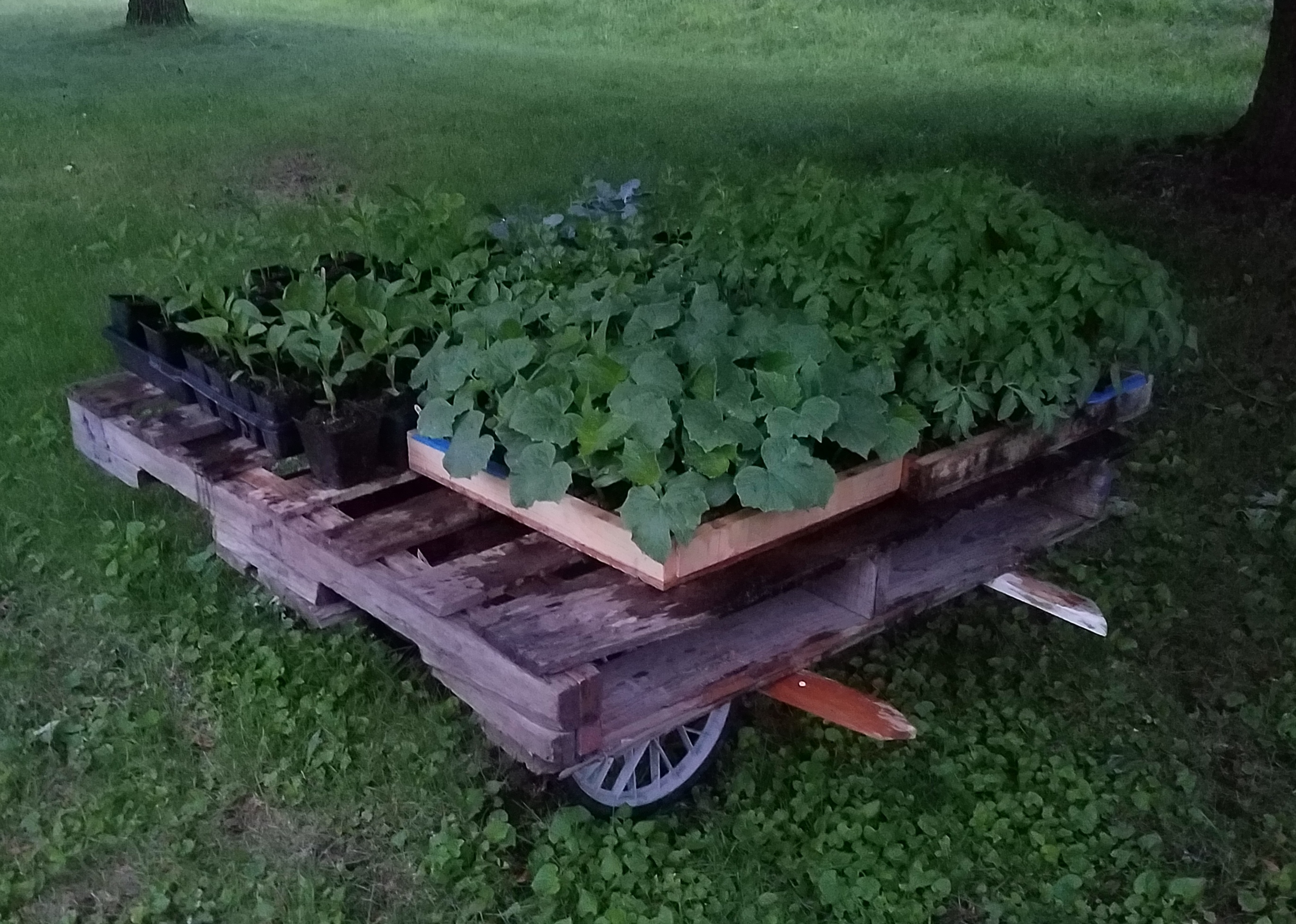
Seedling Cart
I’ve been working in the garden center at the home, farm and auto supply store. Foot traffic has been brisk with customers picking up flats of seedlings for flower and vegetable gardens. Working outdoor provided an opportunity to talk about gardening. I felt in my element.
At home, the lawn is overgrown and our garden is two-thirds planted. The seedlings are ready so I’m waiting for the intersection of dry-enough ground, time at home, and clear skies. As soon as that happens I’ll get more planted.
The folks I hang with in the local food system are focused on product.
Is the asparagus ready? What about the rhubarb? When should I plant peppers and tomatoes? How much should we put into a member share?
I’m interested in the answers, yet those aren’t my questions. My work in the local food system is to inform and supply culinary endeavors in our kitchen. Technique and creativity seem more important than the fungible commodity fresh produce is becoming. Objectifying and standardizing things, an American obsession, plays a role in the kitchen. At the same time inspiration, creativity and technique seem more important than consumable objects. That’s where I live.
My questions are different from farmer friends. What food can be sourced locally? How can I use an abundance of spring greens before they spoil? What seasoning tastes best with scrambled eggs? What is the best way to preserve food in the ice box? How many pints and quarts of tomatoes shall I can this year? How do I combine bits and pieces from the pantry with fresh food to make satisfying meals? At some point, questioning must yield to creativity.
There is something about Saturday afternoon in the kitchen. It’s partly immersion into the cooking process and partly reliving memories. Saturday was a time to work in the yard and garage, then cook a meal while my spouse worked in town. I used to listen to Iowa Public Radio all day. Due to budget priorities, those programs are gone. Cooking time came with the beginning of Garrison Keillor’s A Prairie Home Companion which is gone too. I now draw life from the task at hand without musical accompaniment.
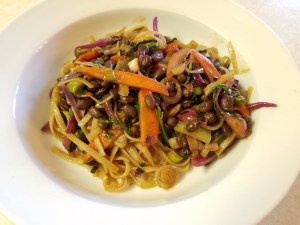
I made an Iowa version of pad thai last Saturday.
The dish has been in the works for a while. A couple of months ago I noticed the warehouse club sold USDA Certified Organic pad thai noodles for about $0.37 per serving. I bought a box on Friday.
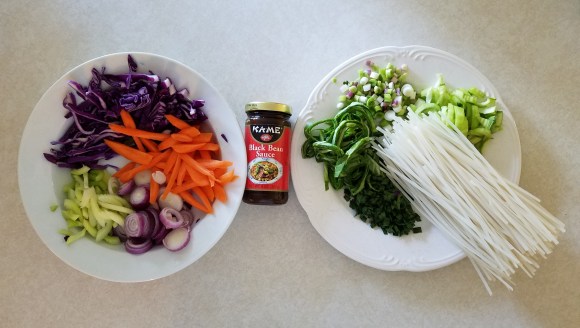
With cabbage, onions and carrots from last season; a drawer and more of cooking greens from the farm; spring garlic from the garden; and bits and pieces stored in the ice box and pantry, the dish came together. The resulting meal was tasty, filling and seasonal — satisfying on multiple levels.
My kitchen experience made the dish as much as the ingredients.
I stock basic kitchen staples — high smoke point oil, salt, extra virgin olive oil, celery, onions, carrots and cabbage. Sources included retail merchants and local farms, however, the essence of cuisine is using what’s ubiquitous and on hand. It’s a fine distinction. Regardless of source, what’s in the pantry, ice box and garden now is what’s on hand. Creativity is in that moment.
Except for the noodles, no specific shopping was needed to prepare pad thai. Canned black beans and a jar of fermented black bean sauce were the only prepared foods used and I stock both in the pantry.
Spring Garlic
Inspiration for the meal occurred at the intersection of discovery of a small patch of spring garlic in the garden and the memories it aroused. I recall a paper sack of garlic cloves brought home from the library and planting them more than a decade ago. The scent was intoxicating. I harvested enough for a meal.
Where is the creativity? Thinly cutting vegetables, sorting ingredients by cooking time, and measuring seasonings can all be taught. With an eye toward plating, carrots can be cut on the bias, green leaves julienned and celery stalks cut thick. Pad thai noodles are to cook 5-6 minutes, according to the package, then immersed in an ice water bath to stop the cooking. These techniques are like loading a palette with paint.
Creativity begins once the noodles are on and the wok is heated to high temperature. There’s no going back.
Using a high smoke point oil, onions, carrots, celery, cabbage go into the wok first. It’s “stir fry,” not “occasionally stir” fry, so full attention is required at the stove. Season with salt. Once the timer for the noodles expires, strain and dump into the ice water bath. When the first round of vegetables is tender and add plate two (spring garlic, garlic chives, sliced bok choy stems, and julienned bok choy leaves, stirring constantly. Add the drained and washed black beans and a generous serving of cooking greens. Once the greens are wilted, add a couple of tablespoons of fermented black bean sauce. Strain and add the noodles last, garnishing with a couple of tablespoons of extra virgin olive oil. Toss gently until heated. Plate and serve with your favorite sweet chili sauce.
Cheap, prepared food is everywhere in the United States. It’s convenient. It reduces time in the kitchen. It is engineered to appeal to our senses. Most of us eat at a restaurant or get help from the industrial food supply chain from time to time. However, there is no substitute for inspired cooking.
It provides engagement seldom found elsewhere in life. It’s a source of satisfaction hard to replicate. It sustains us in a turbulent world. This kind of inspiration and creativity is needed more than ever.
The weather forecast is for near-perfect spring weather. No rain and a high around 65 degrees.
The day began at 4 a.m. with reading and laundry. I moved the cars down the driveway and rolled the seedlings out of the garage before dawn.
There should be fewer seedlings on the cart by day’s end.
The lilacs are toward the end of the season. I stood inside the branches, lush with flowers, and let the scent envelope me.
Years ago our daughter kicked a soccer ball under the lilacs. For a moment I was distracted… I retrieved the ball then I saw her. This memory of her in sunlight from under the lilacs is part of me this warm spring day. I carried her with me as I prepared for a day of gardening.
After a shift at the home, farm and auto supply store I begin a nine-day vacation. I say “vacation” but really mean “reboot.”
I hope to plant most of the garden, work in the yard and re-engineer parts of our homelife for efficiency. Why? To reap that feeling of being organized and prepared for summer.
It’s not as easy as re-booting a computer. Old habits are embedded in the code of this life.
In any case, I’ll hit the switch and see what happens. Hopefully good will come of it.




 Journey Home
You must be logged in to post a comment.